

Saved Bookmarks
This section includes 7 InterviewSolutions, each offering curated multiple-choice questions to sharpen your Current Affairs knowledge and support exam preparation. Choose a topic below to get started.
| 1. |
Solve system of linear equations , using matrix method if exists 5x+y-z=7 4x-2y-3z=5 7x+2y+2z=7 |
|
Answer» |
|
| 2. |
If a ne 0 and the equation ax ^(2) + bx +c=0 has two roots alpha and beta such that alpha le -3 and beta gt 2, which of the following is always true ? |
|
Answer» `a (a+|b| +c) gt 0` |
|
| 3. |
Five balls are placed in three boxes. Each box can hold all the five balls. In how many different ways can we place the balls in the boxes so that no box remains empty if the balls as the boxes are identical. |
|
Answer» |
|
| 4. |
Five balls are placed in three boxes. Each box can hold all the five balls. In how many different ways can we place the balls in the boxes so that no box remains empty if the balls are different but the boxes are identical. |
|
Answer» |
|
| 5. |
On an average, rain falls 12 days in every 30 days. Find the probability that rain will fall on just 3 days of a given week. |
|
Answer» |
|
| 6. |
Evaluate the definite integrals int_(1)^(4)[abs(x-1)+abs(x-2)+abs(x-3)]dx |
|
Answer» |
|
| 7. |
There are n white and n black balls marked 1, 2, 3, …… n. The number of ways in which we canarrange these balls in a row so that neighbouring balls are of different colours are:- |
|
Answer» N! Case II: `B_1/1 W_1/2 B_2/3 W_2/4 B_3/5W_3/6` .....`B_n` `W_n/(2n^(th)"place")` =n! x n! So number of WAYS =`2(n!)^2` |
|
| 8. |
Consider the curve x=1-3t^(2),y=t-3t^(3). A tangent at point(-a3t^(2),t-3t^(3)) is inclined at an angle theta to the possitive x-axis and another tangent at point P(-2,2) cuts the curve agains at Q. The value of tan theta +sec theta is equal to |
| Answer» ANSWER :A | |
| 9. |
if phi (x) is adifferentiablefunctionx in R and a in R suchthat phi (0) =phi(2a), phi(a)=phi(3a) " and "phi(0) =phi(a) then showthat there is at leastone rootof equation phi(x+a) =phi(x) " in "(0,2a) |
| Answer» | |
| 10. |
The product of common differences of all possible AP which are made from values of 'x' satisfying cos^(2)((1)/(2)lambda x )+ cos^(2)((1)/(2) mu x )=1 |
|
Answer» `(4 pi^(2))/(LAMBDA^(2)-MU^(2))` |
|
| 11. |
If A=[{:(1,2),(4,1),(5,6):}],B=[{:(1,2),(6,4),(7,3):}], then verify that : (i) (2A+B)=2A'+B' (ii)(A-B)'=A'-B' |
|
Answer» |
|
| 12. |
If alpha, beta are non - real numbers satisfying x^3-1=0, then the value of : |(lamda+1,alpha,beta),(alpha,lamda+beta,1),(beta,1,lamda+alpha)| is equal to : |
|
Answer» 0 |
|
| 13. |
Consider the curve x=1-3t^(2),y=t-3t^(3). A tangent at point(-a3t^(2),t-3t^(3)) is inclined at an angle theta to the possitive x-axis and another tangent at point P(-2,2) cuts the curve agains at Q. The point Q will be |
|
Answer» `(1,-2)` |
|
| 14. |
If (2tan^(2)theta_(1)tan^(2)theta_(2)tan^(2)theta_(3)+tan^(2)theta_(1)tan^(2)theta_(2)+tan^(2)theta_(2)tan^(2)theta_(3)+tan^(2)theta_(3)tan^(2)theta_(1) = 1 then which of the following relations hold good ? |
|
Answer» `sin^(2)theta_(1) + sin^(2)theta_(2) + sin^(2)theta_(3) = 1` `rArr 2 + cot^(2)theta_(3) + cot^(2)theta_(1) + cot^(2)theta_(2) = cot^(2)theta_(1)cot^(2)theta_(2)cot^(2)theta_(3)` `rArr cosec^(2)theta_(1) + cosec^(2)theta_(2) + cosec^(2)theta_(3)-1` `=(cosec^(2)theta_(1)-1)(cosec^(2)theta_(2)-1)(cosec^(2)theta_(3)-1)` `rArr cosec^(2)theta_(1) cosec^(2)theta_(2)+cosec^(2)theta_(2)cosec^(2)theta_(3)+cosec^(2)theta_(3)cosec^(2)theta_(1)` `= cosec^(2)theta_(1)cosec^(2)theta_(2)cosec^(2)theta_(3)` `sin^(2)theta_(1)+sin^(2)theta_(2)+sin^(2)theta_(3) = 1` (A) of `cos2theta_(1)+cos2theta_(2)+cos2theta_(3) = 1` (B) |
|
| 15. |
Consider the curve x=1-3t^(2),y=t-3t^(3). A tangent at point(-a3t^(2),t-3t^(3)) is inclined at an angle theta to the possitive x-axis and another tangent at point P(-2,2) cuts the curve agains at Q. The angle between the tangents at P and Q will be |
|
Answer» `(PI)/(4)` |
|
| 16. |
If one root of x^(2)+px+q=0is twice the other, then thevalue of q in terms of p is |
|
Answer» <P>`(p^(2))/(5)` |
|
| 17. |
A man is known to speak truth 3 out of 4 times. He throws a dice and reports that it is a six. Find the probability that it is actually a six. |
|
Answer» |
|
| 18. |
In a certain college, 25% of the boys and 10% of the girls are studying mathematics. The girls constitute 60% of the student strength. If a student selected at radom is found studying mathematics, find the probability that the student is a girl. |
|
Answer» |
|
| 19. |
A balanced dice is tossed thrice. Find probability of getting an odd number at least once. |
|
Answer» |
|
| 20. |
Show that : (i) {i^(19) + (1/i)^(25)}^(2) = -4 ""(ii) {i^(17) - (1/i)^(34)}^(2) = 2i (iii) {i^(18) + (1/i)^(24)}^(3) = 0 "" (iv) i^n + i^(n+1) + i^(n +2) + i^(n + 3) = 0, for all n in N. |
|
Answer» |
|
| 21. |
10 persons are sitting in a row. Find the number of ways of selecting two persons out of them who are sitting adjacent to each other. |
|
Answer» |
|
| 22. |
Evaluate the definite integral int_(0)^(1)(xe^(x)+"sin"(pix)/(4))dx |
|
Answer» |
|
| 23. |
The sum of the binomial coefficients in the expansion of ((2x)/(3) + (3)/(2x^2))^n is 64 then the term independent of x is |
|
Answer» `20//3` |
|
| 24. |
x,y,zare distinct real numbers such that x+1/y = y + 1/z =z + 1/x The value of x^(2)y^(2)z^(2) is……….. |
|
Answer» |
|
| 25. |
4 digit number are formed using each of the digits 1 to 8 only out of them one number is picked at random. The probability that the selected number contains 3 is |
|
Answer» `1//2` |
|
| 26. |
(Transportaion problem) : There are two factories located one at place P and the other at place Q. From these locations, a certain commodity is to be delivered to each of the three depots situated at A,B and C. The weekly requirements of the depots are respectively 5,5 and 4 units of the commodity while the production capacity of the factories at P and Q are respectively 8 and 6 units. The cost oftransportaion per unit is given below: How many units should be transported from each factory to each depot in order that the transportation cost its minimum. What will be the minimum transportation cost? |
|
Answer» |
|
| 27. |
For 1 lt= i ,j lt= 3 let a_(ij) = int_(-pi//2)^(pi//2) cos (ix) cos (jx) dxand letA = (a_(ij))_(3xx3) . Then |
|
Answer» A is a SINGULAR matrix |
|
| 28. |
If veca, vecb and vecc are three units vectors equally inclined to each other at an angle alpha. Then the angle between veca and plane of vecb and vecc is |
|
Answer» `theta=cos^(-1)(cosalpha)/(cosalpha/2)` Then from the given conditions `veca.veca+(vecb-vecc).(vecb-vecc)=vecb.vecb+(vecc-veca).(vecc-veca)` `RARR vecc.(vecb-veca)=0` `rArr vec(BA).vec(OC)=0` Hence `AB bot OC`. Similarly, `BC bot OA` and `CA bot OB` |
|
| 29. |
If A=[[1,2,0],[0,1,3],[-2,5,3]],"then verify that"A=[[1,2,0],[0,1,3],[-2,5,3]]impliesA'=[[1,0,-2],[2,1,5],[0,3,3]]A+A' is symmetric |
|
Answer» <P> SOLUTION :Now P=A+A`=[[2,2,-2],[2,2,8],[-2,8,6]]``[[2,2,-2],[2,2,8],[-2,8,6]]` `[[2,2,-2],[2,2,8],[-2,8,6]]=P` `:.`A+A. is SYMMETRIC. |
|
| 30. |
Which of the following properties of the metal gets changed due to changed due to formation of interstitial carbide. |
|
Answer» Density |
|
| 31. |
If I_(n) = int tan^(n) " x dxthen " I_(0) + 2I_(2) + I_(4)= |
|
Answer» `(1)/(3) TAN^(3) X` + tan x |
|
| 32. |
If f (x)= 0 be a polynomial whose coefficients are alland whose roots are all real, then degree of f (x) can be : |
|
Answer» 1 |
|
| 33. |
A boy forgets the last two digits of his friend's telephone number. He however remembers that they are different numbers. If he dials at random, the probability that he dials correctly is |
| Answer» Answer :B | |
| 35. |
P isthe pointof contact of thetangent from theorignto thecurvey=log_(e)^(x ). the lengthof theperpendicular drawnfrom the originto the normalat P is |
|
Answer» `sqrt(E^(2)+1)` |
|
| 36. |
Evaluate the following integrals. int(log(1+x))/(1+x)dx |
|
Answer» |
|
| 37. |
A(4, 1), B(7, 4), C, D are the vertices of a rectangle. If (8, 1) is the centroid of DeltaABC, then D = |
|
Answer» (13, -2) |
|
| 38. |
Locus of a point that divides a chord having slope 4 hyperbola xy=1 in the ratio 1 : 2, is : |
|
Answer» `x^(2)+y^(2)=10` 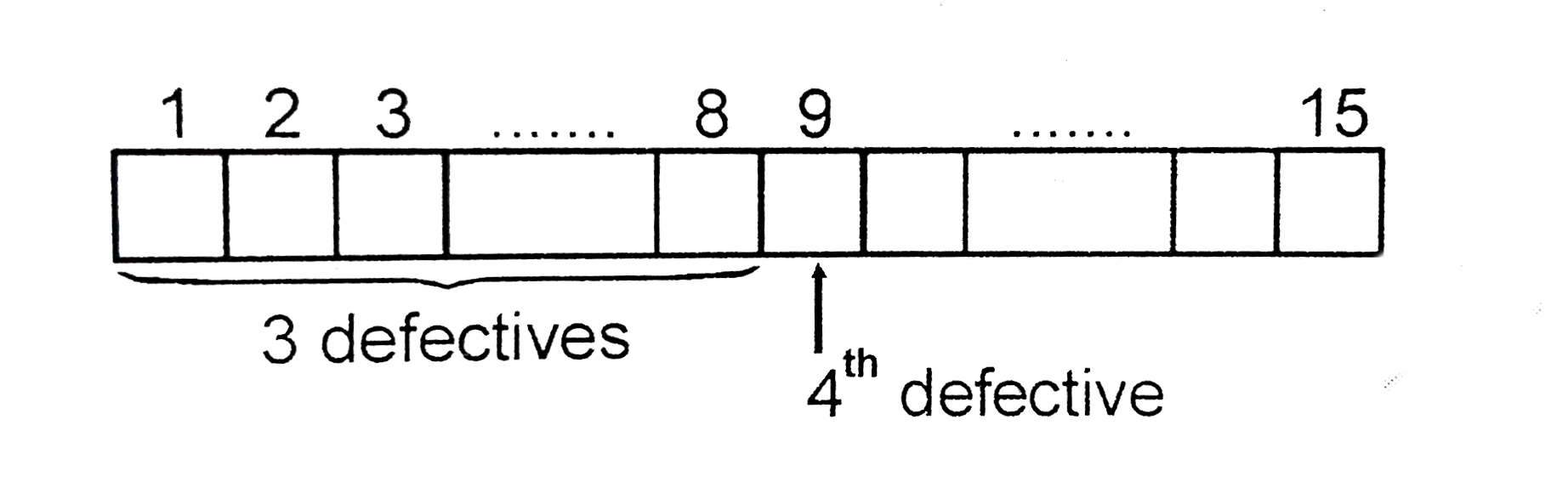 , PROBABILITY = `(.^(8)C_(3)xx1)/(.^(15)C_(4))` , PROBABILITY = `(.^(8)C_(3)xx1)/(.^(15)C_(4))`
|
|
| 39. |
Find the value of a, b, c and d from the equation: [(a-b,2a+c),(2a-b,3c+d)]=[(-1,5),(0,13)] |
|
Answer» |
|
| 40. |
int(dx)/(sinx+sin2x)= |
|
Answer» `1/6log(1-cosx)+1/2log(1+cosx)+2/3log\|1+2cosx|+C` |
|
| 41. |
int(1-cos2x)/(1+cosx)dx |
|
Answer» SOLUTION :`INT(1-cos2x)/(1+cosx)DX=int(2sin^2x)/(2cos^2x)dx` =`inttan^2xdx=int(sec^2x-1)dx` =tanx-x+C |
|
| 42. |
For how many natural numbers n between 1 and 2014 (both inclusive) is (8n)/(9999-n) an integer ? |
|
Answer» |
|
| 43. |
If the vectors a+ lambda b+3c, -2a+3b-4c and a-3b+5c are coplanar, then the value of lambda is |
|
Answer» 2 `a+lamda b+3c=x(-2a+3b-4c)+y(a-3b+5c)` On COMPARING the coefficient of a, b ANC C on both sides, we get `-2x+y=1, 3x=lamda` and `-4x+5y=3` On sloving FIRST and third equations, we get `x=-1/3, y=1/3` Since, the vectors are coplanar, therefore these values of x and y, also satisty the second equation i.e., `-1-1=lamda` `:.""lamda=-2` |
|
| 44. |
The system of equations ax+y+z=a-1,x+ay+z=a-1andx+y+az=a-1does not have unique solution if a = …….. |
| Answer» ANSWER :A | |
| 45. |
If D = |(1" "cosalpha" "1),(-sinalpha" "1" "-cosalpha),(-1" "sinalpha" "1)|, then D lies in the interval : |
|
Answer» `[-2,2]` |
|
| 46. |
Find the particular solution, satisfying the given condition, for the following differentialequation log((dy)/(dx))=3x-4y. Given that y=0 when x=0. |
|
Answer» |
|
| 47. |
Showthat , the function f(x)=|x-1|is not differentiable at x=1 but it has a local minimum at x=1. |
|
Answer» |
|
| 48. |
Differentiate the functions given in Exercises 1 to 11 w.r.t. x. x^(sin x)+(sin x)^(cos x). |
|
Answer» |
|
| 49. |
If phi(x)=intcot^(4)x dx+(1)/(3)cot^(3)x-cotx and phi((pi)/(2))=(pi)/(2) then phi(x)= |
|
Answer» `PI-X` |
|