Saved Bookmarks
This section includes 7 InterviewSolutions, each offering curated multiple-choice questions to sharpen your Current Affairs knowledge and support exam preparation. Choose a topic below to get started.
| 1. |
The value of intsec^2x /(cosec^2x)dxis |
|
Answer» `(TAN X/cot x)+C` |
|
| 2. |
Differentiate (x^(2)-5x+8)(x^(3)+7x+9) in three ways mentioned below : (i) by using product rule (ii) by expanding the product to obtain a single polynomial. (iii) by logarithmic differentiation. Do they all give the same answer? |
|
Answer» |
|
| 3. |
Find the angle between the cures given below : y^(2)=8x, 4x^(2)+y^(2)=32 |
|
Answer» |
|
| 4. |
If a_1,a_2,a_3,a_4 are the coefficients of 2nd, 3rd, 4th and 5th terms of (1+x)^n respectively then (a_1)/(a_1+a_2) , (a_2)/(a_2+a_3),(a_3)/(a_3+a_4) are in |
|
Answer» A.P. |
|
| 5. |
Define * on N by m*n=1cm (m,n) Show that * is a binary operaitn which is commutative as well as associative |
|
Answer» <P> Solution :We know that the 1CM of two NATURAL numbers is anatureal number So N is closed for *We know that 1cm (m,n) =1cm (n,m) OS *n=n*m ltbgt 1cm (m,n,p) =1cm {1cm (m,n),p)={m,(n,p)} |
|
| 6. |
Normal diffusion capacity of gases in human lungs in order is :- |
|
Answer» `O_(2) GT N_(2) gt CO_(2)` |
|
| 7. |
Let x,x_(1),x_(2),x_(3),x_(4),...,x_(8), be 10 real zeros, of the polynomial P(x)=x^(10)+ax^(2)+bx+c where a, b, c,in R. If the value of Q(x_(1))=(p)/(q), where p and q are coprime to each other. If Q(x_(1))=(x-x_(2))(x-x_(3))...(x-x_(8 ))andx_(1)=(1)/(2), then the value of q-p is....... |
|
Answer» |
|
| 8. |
Letz_(1), alpha, betabe complex numbers of whichalpha and beta constants andz_(1) varies. Ifz_(2) is given in terms ofz_(1)by oneof the following equations, it is required to find z_(2) corresponding toz_(1) thenThe given figure illustrates(##AAK_T1_MAT_C01_E05_003_Q01.png" width="80%"> |
|
Answer» `z_(2) = 1 + z_(1)` |
|
| 9. |
For each of the differential equations given in find a particular solution satisfying the given condition : (dy)/(dx)+2ytanx=sinx,y=0 when x=(pi)/(3) |
|
Answer» |
|
| 10. |
If the axes are turned through 45^(@), find the transformed form of the equation 3x^(2)+3y^(2)+2xy=2. |
|
Answer» |
|
| 11. |
Rectangle AKLD consists of 5 congruent rectangles , as shown in the figure below. Which of the following is the ratio of the length of bar(AK) to the length of bar(AD) ? |
|
Answer» `1:1` |
|
| 12. |
Show that |vec(a)|vec(b)+|vec(b)|vec(a) is perpendicualr to |vec(a)|vec(b)-|vec(b)|vec(a), for any to nonzero vectors vec(a) and vec(b). |
|
Answer» |
|
| 13. |
Integrate the function (x+2)/(sqrt(x^(2)+2x+3)) |
|
Answer» |
|
| 14. |
If a point P moves such that the sum of the distance from P to the point A(1, -1) and B(-1, 1) is always 4, then the equation for the locus of P is |
|
Answer» `16X^(2)-64x+7y^(2)=48` |
|
| 15. |
Find the equation of the circle which cuts the circle x^2 + y^2 + 4x - 6y + 11 = 0 and x^2 + y^2 - 10x - 4y + 21 = 0 rthogonally and has the diameter along the staight line 2x + 3y = 7. |
|
Answer» |
|
| 16. |
Let A={1,-1,I,-i} hbe the set of four 4th roots of unity prepare the commposition table for multiplication on A and show that ltrbgt (i) A is closed for multiplication (ii) multiplication isassociative on A (iii) multiplication is commutative on A (iv) 1 is the multiplicative identity (v) every element in A has its multiplicative iverse |
Answer» Solution :We MAY PREPAR the composition table for multiplication on A as GIVEN below 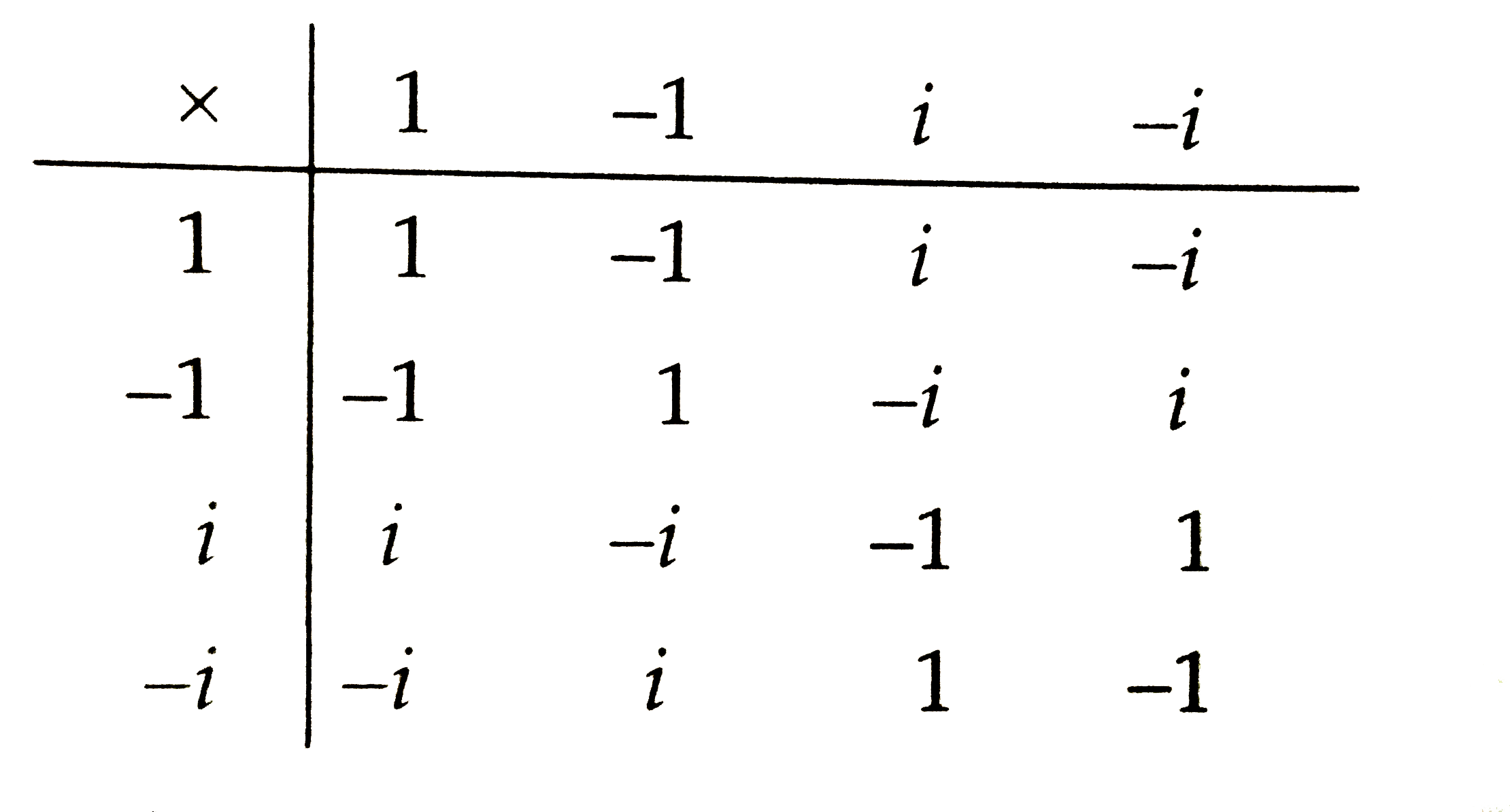 Clerly 1 is the identity ELEMENT `(1)^(-1)=1(-1)^(-1)=-1(i)^*(-1)=- and (-i)^(-1)=i` |
|
| 17. |
The value of int (sinx)/(sin4x) dzx is |
|
Answer» `(1)/(4)log|(sinx-1)/(sinx+1)|-(1)/(SQRT(2))log|(sqrt(2)sinx-1)/(sqrt(2)sinx+1)|+C` |
|
| 18. |
In [0,1], Lagrange's mean value theorem is not applicable to (a)f(x)={{:(1/2-x,xlt1/2),((1/2-x)^(2),xge1/2):} (b) f(x)={{:((sin)/(x),x ne 0),(1,x=0):} f(x)=x|x| (d) f(x)=|x| |
|
Answer» a |
|
| 19. |
If x= 3 sin t- sin (3t), y= 3 cos t- cos 3t, then find ((dy)/(dx))" at " t= (pi)/(3) |
|
Answer» |
|
| 20. |
If the coefficients of 2nd , 3rd and 4th terms of the expansion of (1+x)^(2n) are in A.P. then the value of 2n^2 -9n + 7 is |
|
Answer» `2n^2+9N+7=0` |
|
| 21. |
Find the centre and radius of each of the circles whose equations are given below: (i) 3x^(2)+3y^(2)-5x-6y+4=0 (ii) 3x^(2)+3y^(2)+6x-12-1=0 (iii) x^(2)+y^(2)+6x+8y-96=0 (iv) 2x^(2)+2y^(2)-4x+6y-3=0 (v) 2x^(2)+2y^(2)-3x+2y-1=0 (vi) x^(2)+y^(2)+2x-4y-4=0 (vii) x^(2)+y^(2)-4x-8y-41=0 |
|
Answer» (iii) `(-3,-4),11` (IV) `(1,(-3)/2),(sqrt(19))/2` V. `(3/4,(-1)/2),(sqrt(21))/4` (VI) `(-1,2),3` (vii) (2,4),`sqrt(61)` |
|
| 22. |
If 0 alpha ltbeta lt pi/2 then |
|
Answer» `(tan beta)/(tan alpha ) LT (alpha)/(beta)` we have , `f(x) = x sec^2 x + tan x gt 0 " for all " x In (0,pi//2)` `rArrf(x) is increasingon (0,pi//2)` `rArrf(alpha)lt f (beta) for 0 alpha lt beta lt (pi)/(2)` `rArralpha tan alpha lt beta ` `rArr /beta(tan beta)/(tan alpha)` |
|
| 23. |
If -2x ^(2)+ 5x-8 is multiplied by 4x-9, what is the coefficient of x in the resulting polynomial? |
| Answer» ANSWER :A | |
| 24. |
Two dice are rolled and given that the sum of them is atmost 11. Find the probability that they show even on both dice. |
|
Answer» |
|
| 25. |
Evaluate int_(0)^((1)/(2)) (x^(7))/(sqrt(1-x^(4))) dx |
|
Answer» |
|
| 26. |
Show that the function f(x)={:{(5-x"," x ge2),(x+1 "," x lt 1):} |
| Answer» | |
| 27. |
Integrate thefunction in Exercise. (x)/(sqrt(x+4)),x gt -4 |
|
Answer» |
|
| 28. |
If |bar(a)|=4 and -3le lambda le 2, then the range of |lambda. bar(a)| is ……….. |
|
Answer» [0, 8] |
|
| 29. |
Which of the following is a homogeneous differential equation? |
|
Answer» `(4x + 6Y + 5)dy - (3Y + 2X + 4)dx = 0` |
|
| 30. |
Let us define a relation R in R as aRb if a geb . Then, R is ....... |
|
Answer» an EQUIVALENCE relation |
|
| 31. |
Ify= tan^-1((1-x)/(1+x))+cot^-1((1-x)/(1+x)) then dy/dx ? |
|
Answer» -1 |
|
| 32. |
The points 2a + 3b - c, a - 2b + 3c, 3a + 4b - 2c, a - 6b + 6c are |
|
Answer» COLLINEAR |
|
| 33. |
Differentiate cos^2x+e^xcosx |
|
Answer» Solution :`y=cos^2x+e^xcosx` `(DY)/dx=d/dx(cosx)^2+d/dx(e^xcdotcosx)` `=2cosxcdotd/dx(cosx)+d/dx(e^x)cdotcosx+e^xcdotd/dx(cosx)` `-2COSX cdot SINX+e^xcdotcosx-e^x cdot sinx` |
|
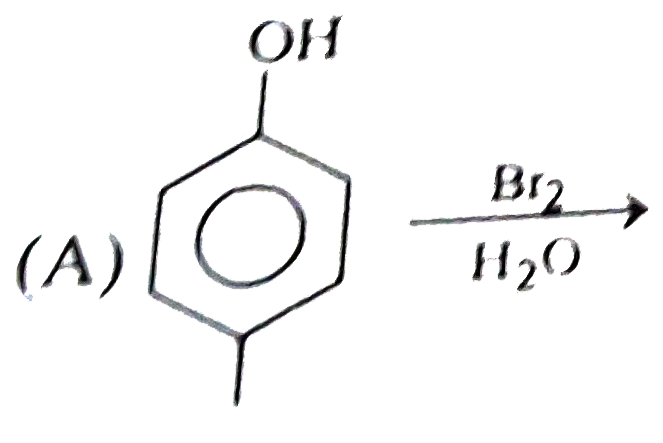
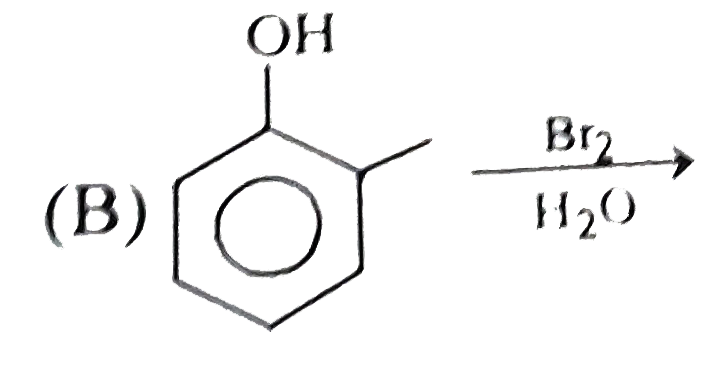
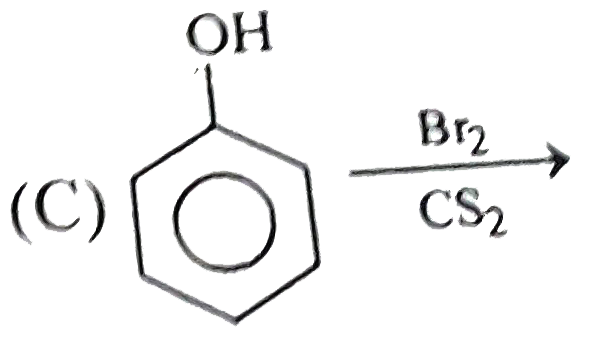
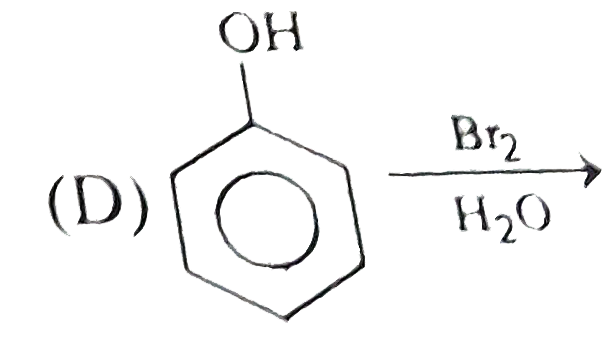
| 35. |
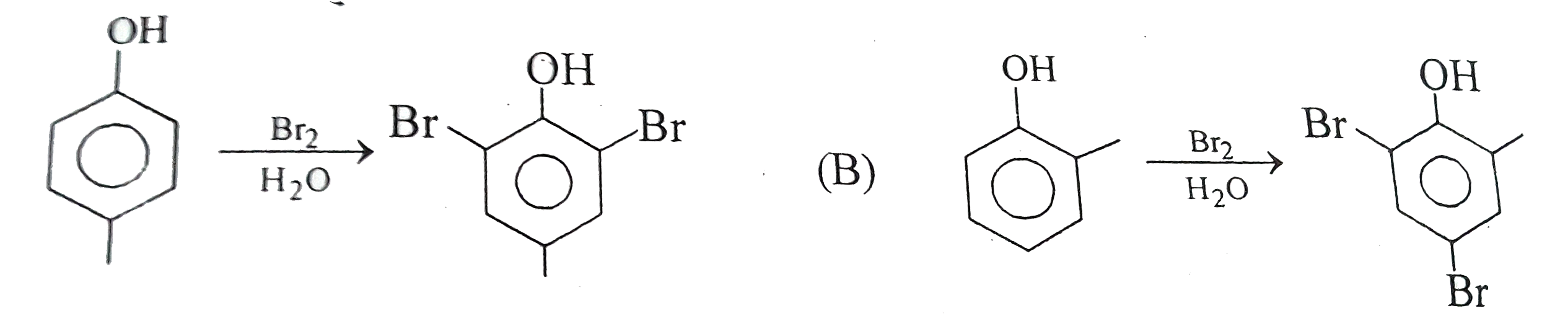
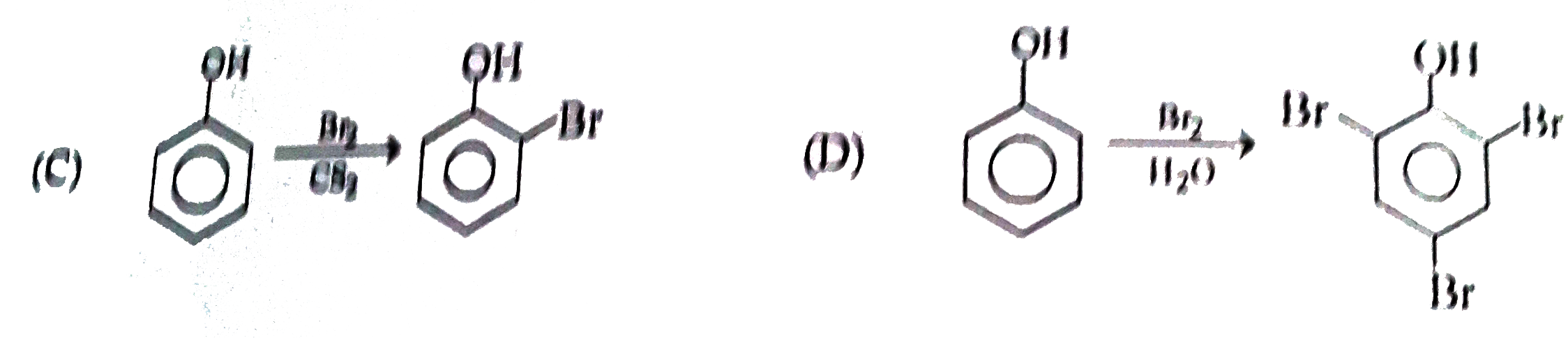
Which of following will form tri-bromo derivative of phenol ? |
|
Answer»
|
|
| 36. |
A gentlemen hosts a party of (m+n) guests and places 'm' at one round table and the remaining 'n' at the other round table. Number of ways the guests can be arranged is |
|
Answer» `((m +N)!)/(m*n)` |
|
| 37. |
Prove that the three lines drown from origin with direction cosines (l_1,m_1,n_1),(l_2,m_2,n_2),(l_3,m_3,n_3) are coplanar if [[l_1,m_1,n_1],[l_2,m_2,n_2],[l_3,m_3,n_3]]=0. |
| Answer» SOLUTION :LET ` OVERSETTOA=l_1i+m_1j+n_1koversettobl_2i+m_2j+n_2koversettocl_3i+m_3j+n_3k` The LINES co-planar if `oversettoa.(oversettobxxoversettoc)=0iff|(l_1,m_1,n_1),(l_2,m_2,n_2),(l_3,m_3,n_3):|=0` | |
| 38. |
From a point (h,k) three normals are drawn to the parabola y^2=4ax. Tangents are drawn to the parabola at the of the normals to form a triangle. |
|
Answer» `((3a-h)/(3),-(K)/(3))` |
|
| 39. |
From a point (h,k) three normals are drawn to the parabola y^2=4ax. Tangents are drawn to the parabola at the of the normals to form a triangle. The circumcentre O of triangle is |
|
Answer» `(-(a)/(2),K)` |
|
| 40. |
A is even ordered non singular symmetric matrix and B is even ordered non singular skew symmetric matrix such that AB = BA, then A^3B^3(B'A)^(-1)(A^(-1)B^(-1))'AB is equal to : |
|
Answer» `A^2B^2` |
|
| 41. |
From a point (h,k) three normals are drawn to the parabola y^2=4ax. Tangents are drawn to the parabola at the of the normals to form a triangle. The condition for the equilateral is |
|
Answer» `h=0,k=0` |
|
| 42. |
The perpendicular bisectors of the sides of a triangle are concurrent. |
|
Answer» |
|
| 43. |
Area bounded by curve y = tan pi x, x in [- (1)/(4) , (1)/(4) ] and X - axis is …..... |
|
Answer» `( LOG 2)/( 2PI)` |
|
| 44. |
A baised coin with probability p,0lt p lt of heads is tossed until a head appears for the first time. If the probabilitythatthe numberof tosses requiredis even is 2/5, then p is equal to |
|
Answer» <P> |
|
| 45. |
[(d)/(dx) sec^(-1)x]_(x = -3)=……. |
|
Answer» `(1)/(SQRT(X^(2)-1))` |
|
| 46. |
Mean of 100 observation is 45. It was later found that two observations 19 and 31 were incorrectly recorded as 91 and 13. Then the correct means is |
|
Answer» `44.0` |
|
| 47. |
If alpha variable takes the discrete values alpha + 4, alpha - 7/2, alpha - 5/2 , alpha - 3, alpha- 2, alpha + 1/2 , alpha - 1/2, alpha + 5, (alpha> 0) then the median is |
|
Answer» `ALPHA - 5/4` MEDIAN = `(alpha - 2 + alpha - 1/2)/2 = alpha - 5/4`. |
|
| 48. |
Find the direction cosines of the two lines which are connected by the relation l+m+n=0,mn−2nl−2lm=0 |
|
Answer» |
|
| 49. |
Evaluate the following lim_(xto2) (x -2)/(x^4-16) |
|
Answer» SOLUTION :`lim_(xto2) (X -2)/(x^4-16)` `=lim_(xto2)(x-2)/((x-2)(x+2)(x^2+4))` `=lim_(xto2)1/((x+2)(x^2+4))=1/(4xx8)=1/32` |
|