

Saved Bookmarks
This section includes 7 InterviewSolutions, each offering curated multiple-choice questions to sharpen your Current Affairs knowledge and support exam preparation. Choose a topic below to get started.
| 1. |
Define the term 'mobility' of charge carriers in a current carrying conductor. Obtain the relation for mobility in terms of relaxation time. |
|
Answer» Solution :Mobility of ELECTRONS (or other charge carriers) in a conductor MEANS drift SPEED of conduction electrons per UNIT electric FIELD. `therefore` Mobility`mu=(v_(d))/(E )` |
|
| 2. |
The image of a small electric bulb fixed on the wall of a room is to be obtained on the opposite wall 3m away by means of a large convex lens. What is the maximum possible focal length of the lens required for the purpose? |
|
Answer» SOLUTION :For fixed distance s between object and screen, the lens EQUATION does not give a real solution for u or v if f is GREATER than s/4. THEREFORE, fmax = 0.75 m. Therefore, `f_("max")=0.75m`. |
|
| 3. |
p-type semi conduor is |
|
Answer» NEGATIVELY charged |
|
| 4. |
Consider a beam of electrons (each electron with energy E_(0))Incident on a metal surface kept in an evacuated chamber .Then |
|
Answer» No electrons will be EMITTED as only photons can emit electrons. |
|
| 5. |
In H atomthe magnitude of magneticfield produced at the centredue ot orbital motion of an e revolvingin a orbit of quantum number (n ) is proportional to |
|
Answer» `(1)/(n^(5))` `I_(2)=(m)/(3).(l^(2))/(9xx12)xx3 I_(2)=1/9` `THEREFORE T_(2)=2pisqrt(I)/(9xxMH)=1/3T_(1)=2/3s` `T_(2)=2/3s` |
|
| 7. |
The axes of the polariser and analyser are inclined to each other at 45^(@). If the amplitude of the unpolarised light incident on the polariser is A, the amplitude of the light transmited through the analyser is |
|
Answer» `(A)/(2)` |
|
| 8. |
Statemetn 1: A compass needle suspended freely in a uniformly mag field experiences no not force but a torque that tends to align the magnetic needle along field Statement 2 Two equal and oppositemagnetic forces on poles of needle make total force zero and this couple tendsto align needle along field |
|
Answer» if bothstatementare true andstatement -2 is correct explanatio of STATEMENT -1 |
|
| 9. |
What is the angle between the electric dipole moment and the electric field strength due to it on the equatorial line |
|
Answer» `0^(@)` |
|
| 10. |
When a gas enclosed in a closed vessel was heated so as to increase its temperature by 5^(@)C, its pressure was seen to have increased by 1%. The initial temperature of the gas was nearly : |
|
Answer» `500^(@)C` `therefore T_(1)=(P_(1))/(T_(2))xxT_(2)=(100)/(101)(T_(1)+5)` `RARR T_(1)=500^(@)C` So, correct choice is (a). |
|
| 11. |
The adjacent figure shows cross section of a hollow glass tube of internal radius r_(1), eexternal radius R and index of refraction n. For two rays DE andABC ( in which De lies on ODE and DE and BC are parallel), the separation r_(1) will be |
|
Answer» `r_(1) = (n - 1)R` |
|
| 12. |
What is the unit of current gain of a transistor? |
|
Answer» No unit |
|
| 13. |
Four polaroids are so placed that the transmission-axis of each is inclined at an angle of 30^(@) from theaxis of the previous polaroid in the same direction. If unpolarised light-beam of intensity I_(0) falls on the first, polaroid, then what will be the intensity of the light emerging from the last polaroid? |
|
Answer» |
|
| 14. |
An electric dipole with dipole moment 4xx10^(-9) c m is aligned at 30^(@)calculate the magnitude of the torqueacting on the dipole |
| Answer» SOLUTION :`10^(-4)` NM | |
| 15. |
The relative density of a material of a body is found by weighing it first in air and then in water. If the wt. of the body in air is W_(1)=8*00+-0*05newton and weight in water is W_(2)=6*00+-0*05 newton. Then the relative density, p_(r)=(W_(1))/(W_(1)-W_(2)) with the maximum permissible error is : |
|
Answer» `4*00+-0*62%` `=(8*00)/(8*00-6*00)=4*00` `(Deltarho_(r))/(rho_(r))xx100=(DeltaW_(1))/(W_(1))xx100+(Delta(W_(1)-W_(2)))/(W_(1)-W_(2))xx100` `=(0*05)/(8*00)xx100+(0*05+0*05)/(2)xx100` `5.62%` `:.rho_(r)=4*00+-5*62%` Hence CORRECT choice is `(d)`. |
|
| 16. |
Mention differentparts of spectrometerand explain the prelimainary adjustments, Spectrometer: |
|
Answer» Solution :The spectrometer is an optical instrument used to study the spectra of different sources of light and to measure the refractive indices of materials. If consists of basically three parts. They are (i) collimator, (ii) prism table and (iii) Telescope. Adjustments of the spectrometer The following adjustments must be made before doing the EXPERIMENT using spectrometer. (a) Adjustment of the eyepiece. The telescope is turned towards an illuminated surface and the eyepiece is moved to and fro until the cross WIRES are clearly seen. (b) Adjustment of the telescope. Thetelescope is adjusted to receive parallel rays by turning it towards a distant object and adjusting the distance between the objective lens and teh eyepiece to get a clear image on the corss wire. ( C) Adjustment of the collimator. The slit of the colimator is illuminated by a source of light. The distance between the slit and the lens of the colimator is adjusted until a clear image of the slit is seen at the cross wire of the telescope is already adjusted for parallel rays, a well-defined image of the sit can be FORMED, only when the light rays emerging from the colimator are parallel. (iv) Levellingthe prism table. Theprism table is adjusted or levelled to be in horizontal position by MEANS of levelling screws and a spirit level. |
|
| 17. |
A horizontal spring block system executes SHM with amplitude A = 10 cm initial phase phi =0 and angular frequency omega. The mass of block is M = 13 kg and there is no friction between the block and the horzontal surface. The spring constant being 2500N/M At t = t_(1) sec [for which omega t_(1) = phi_(1) = 30^(@)]. A mass m = 12 kg is gently put on the block. [Assume that collision between the block adn the mass is perfectly inelastic and mass m remains stationary w.r.t. the block M always] The total energy of system after collision at any moment of time is |
|
Answer» 4 joule |
|
| 18. |
1200 turns of copper wire are wound onto a cardboard cylinder 60 cm long and 5 cm diameter. What is the inductance of the coil? |
|
Answer» |
|
| 19. |
Angle of prism is 'A' and its one surface is silvered. Light rays falling at an angle of incidence 2 A on first surface return back through the same path after suffering reflection at second silvered surface. Refractive index of the material of the prism is |
| Answer» Answer :A | |
| 20. |
A boy can throw a stone up to a maximum height of 10 m. The maximum horizontal distance that the boy can throw the same stone up to will be : |
|
Answer» 20 m `:. R_(max)=u^(2)/g=20m` |
|
| 21. |
Figure shows a graph of potential energy. Consider the following graphs of position and time. Which of the graphs could be the motion of a particle in the given potential? |
|
Answer» I |
|
| 22. |
(a) Six lead-acid type of secondary cells each of emf 2.0 V and internal resistance 0.015 Omegaarejoined in series to provide a supply to a resistance of 8.5 Omega . What are the current drawn fromthe supply and its terminal voltage ? (b) A secondary cell after long use has an emf of 1.9 V and a large internal resistance of 380 Omega. What maximum current can be drawn from the cell ? Could the cell drive the starting motorof a car? |
|
Answer» Solution :(a) Here emf of each cell `EPSI`= 2.0 V, INTERNAL resistance of each cell r = 0.015 `Omega `Number of cells n= 6 and external resistance R = 8.5 `Omega` ` therefore`In series arrangement total emf `epsi_(EQ) = n epsi = 6 xx 2.0 = 12 V ` and total internal resistance` r_(eq) = nr = 6 x 0.015 = 0.09 Omega` Current drawn from the SUPPLY`I = (epsi_(eq))/(R + r_(eq)) = (12 )/(8.5 + 0.09) = (12)/(8.59) = 1.4 A` `therefore ` Terminal voltage `V = epsi_(eq) - Ir_(eq) = 12 - 1.4 xx (0.09) = 11.9 V` (b) Here emf `epsi.` = 1.9 V, internal resistance `r. = 380 Omega`Maximum current which may be drawn from the cell `I. = (epsi.)/(r.) = (1.9)/(380) = 0.005A` As this current is extremely small, it cannot be used to drive the starting motor of a car. |
|
| 23. |
Eight wires cut the page perpendicularly at the pointsshown in figure . A wire labeled with the integer k(k=1.2…..80 carries the current ki, where i=2A . For those wires with odd k, the current is out of the page . For those with even k, it is into the page. the value of ointvecB.dvecs=0 along the closed path indicated and in the direaction shown. |
|
Answer» `10mu_(0)` |
|
| 24. |
A small uncharged metallic sphere is positioned exactly at a point midway between two equal and opposite point charges. If the sphere is slightly displaced towards the positive charge and released then |
|
Answer» it will oscillate about its original position `therefore`NET force=0 On displacing the sphere towards the +ve charge, force on sphere due to +ve charge will be more than due to the -ve positive charge, because it is nearer. so, sphere wil move further to the charge. |
|
| 25. |
Given that the angle of the prism is 60^(@) and its RI for a certain colour 1.645. Calculate the angle of minimum deviation. |
|
Answer» Solution :Given`A=60^(@)"" n =1.645"" D=`? `n=(SIN((A+D)//2))/(sinA//2)` `=(sin((60+D)//2))/(sin30)` `=(sin30^(@)cosD//2+cos30^(@)sinD//2)/(1//2)` `=(1//2 cos D//2+0.8660 sinD//2)/(1//2)` `0.8225="sin"(60+D)/(2)` `(60+D)/(2)=sin^(-1)0.8225` `(60+D)/(2)=55^(@)20.` `(60+D)=110^(@)40.` `D=50^(@)40.` |
|
| 26. |
A nuclear reactor generates power at 50% efficiency, by fusion ""_(92)U^(235) into two canal fragments of ""_(6)Pd^(116) with the emission of two gamma rays and three neutrons. The average B.E. per particle of U^(235) and Pd^(116) is 7.2 MeV and 8.2 MeV respectively. The energy released in one fission event is |
|
Answer» 180MeV FISSION reaction is `""_(92)U^(235)to 2_(46)Pd^(116)+3_(0)n^(1)+2gamma+Q` B.E. of nucleons of 2 `Pd^(116)" NUCLIE" =2 xx 8.2 xx 116=19.02.2MeV` Energy released due to mass defect =(1902.4-1692) =210.4MeV Energy GAINED by `2gamma-"rays"=2 xx 5.2 MeV=10.4 MeV`. Energy released per fission =(210.4-10.4)=200meV |
|
| 27. |
The ratio of times taken by feely falling body to cover first metre,second metre ,… is |
|
Answer» `sqrt(1):sqrt(2):sqrt(3)` |
|
| 28. |
A flowing of 10^7 electrons per second in a conducting wire constitutes a current of___________A |
|
Answer» `1.6 * 10^(-12)` |
|
| 29. |
A torch battery consisting of two cells of 1.45volts and an internalresistance 0.15 Omega , each cell sending currents through the filament of the lamps having resistance 1.5ohms. The value of current will be |
|
Answer» `16.11 AMP` |
|
| 30. |
A heavy wedgy of height h is released from rest with a light particle 'P' placed on it as shown. The wedge slides down a fixed incline which makes an angle theta with horizontal. All surface are smooth |
|
Answer» P strikes the inclined plane in time `t=sqrt((2H)/(G sin^(2)THETA))` `0=v-4(3-t_(1))"".......(2)` Form (1) and (2) `t_(1) = 2 sec` `v = 2(2) = 4 m//s` `s_(1)=(1)/(2)xx2xx2^(2)=4m` `s_(2)=(1)/(2)xx4xx1^(2)=2m` s = 6 m 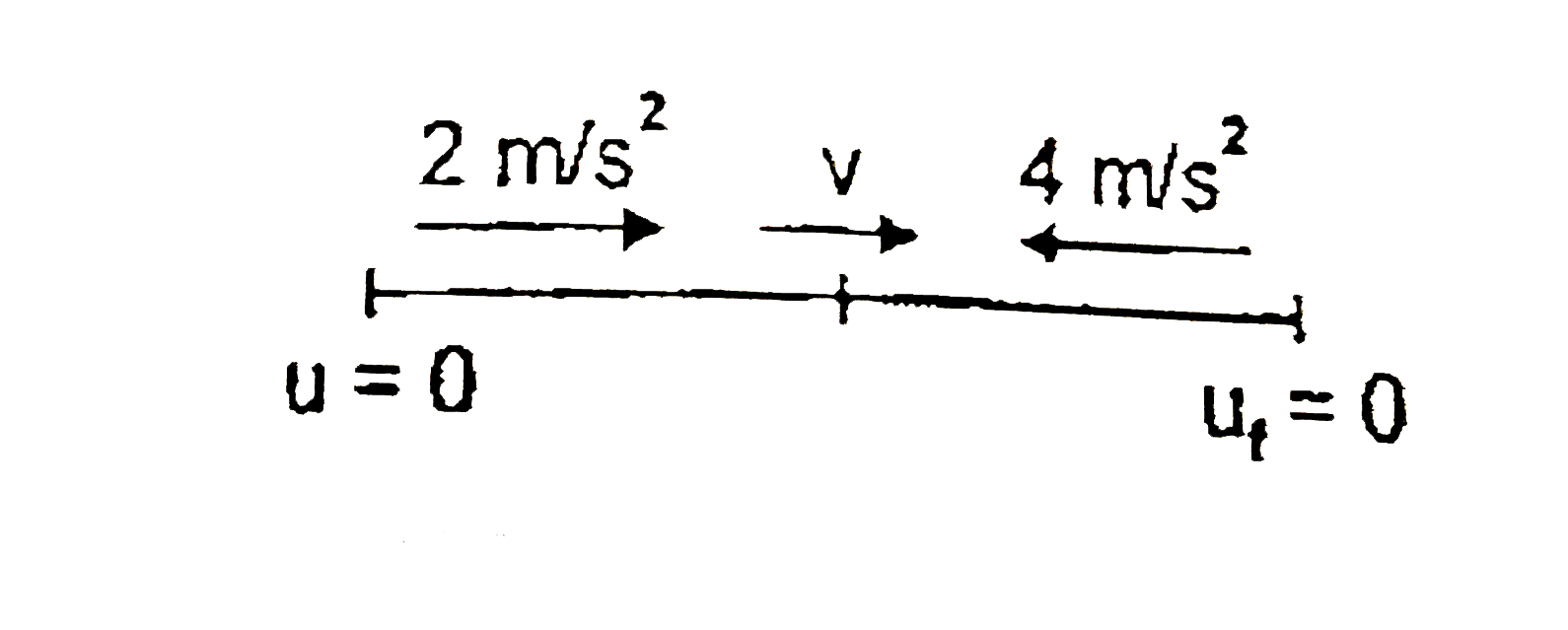
|
|
| 31. |
A tank of 2xx2xx3 is to be filled with water from a well of average depth 10 m. The work done will be |
|
Answer» `1176 XX 10^3 J` |
|
| 32. |
At what speed will the velocity head of a stream of water be equal to 40 cm of mercury? |
|
Answer» 10.32 (m/s) |
|
| 33. |
A 31.4Omega resistor and 0.1H inductor are connected in series to a 200V, 50Hz ac source. Calculate (iii) is the algebraic sum of voltages across inductor and resistor more than the source voltage ? If yes, resolve the paradox. |
|
Answer» Solution :Current in the CIRCUIT : (iii) `(V_L + V_R) GT V` because `V_L and V_R` are not in same phase. |
|
| 34. |
A nuclear reactor generates power at 50% efficiency, by fusion ""_(92)U^(235) into two canal fragments of ""_(6)Pd^(116) with the emission of two gamma rays and three neutrons. The average B.E. per particle of U^(235) and Pd^(116) is 7.2 MeV and 8.2 MeV respectively. 75. Amount of U235 consumed per hour to produce 1600 mega watt power is |
|
Answer» 0.02kg `=1600 xx 10^(6) xx 3600` `n=50% and n=("output energy")/("input energy")` Input energy `=2 xx 1600 xx 10^(6) xx 3600` `=1.152 xx 10^(13)J` No. of FISSION per hour `=(1.152 xx 10^(13))/(200 xx 10^(6) xx 1.6 xx 10^(-19))` No. of atoms in 1 gm of `U^(235)=(6.023 xx 10^(23))/(235)` Mass of `U^(235)` consumed per hour `=("no. of fission/hr")/("no. of atoms in 1 gm of "U^(235))` `=(1.152 xx 10^(32) xx 235)/(200 xx 10^(6) xx 1.6 xx 6.023 xx 10^(23))` `=(1.152 xx 235 xx 10^(3)gm)/(200 xx 1.6 xx 6.023)` `=0.14 xx 10^(3)gm=0.14kg`. |
|
| 35. |
An L-C circuit has a natural frequency f. If the capacitance and inductance are both doubled, the frequency would become : |
| Answer» Answer :A | |
| 36. |
Two identical bulbs A and B are connected in series acrossa source of emf E. now, bulb B is removed from the circuit. Compare the brightness of bulb A in both arrangements . |
|
Answer» <P> Solution :The POWER dissipated across bulb is `P=I^2R`Current `I=E/(R+R)=E/(2R)`, when both BULBS are CONNECTED in series . `therefore` Power across bulb A, `P=(E/(2R))^2=R=(E^2)/(4R)` Now, when bulb B is removed , current `I=E/R` `therefore` Power across bulb A, `P^.=(E/R)^2R=(E^2)/R` SINCE, power dissipated across bulb A is more when it is connected alone therefore it will glow more brightly in this arrangement . |
|
| 37. |
Zingerone having molecular formula C _(11) H_(14) O _(3) is constituent of ginger. It give following test. {:("Reagent" , "Observation"),("Natural" FeCl_(3), "Voilet colouration"):} {:(2,4 D.N.P., "Yellow orange colouration"),(NaCl, "Yellow ppt"):} Zingerone on bromination with bromine water produces mono brominated product. Structure of zingerone will be ? |
|
Answer»
 With BROMINE WATER produce MONO brominated product `to ` only OEN ortho position is left 
|
|
| 38. |
An object is at a distance of 0.5 in front of a plane mirror. Distance between the object and image is |
|
Answer» 0.25 m |
|
| 39. |
A concave mirror is placed on a horizontal table with its axis directed vertically upwards. Let O be the pole of the mirror and C its centre of curvature, A point object is placed at C. It has a real image, also located at C. If the object is placed at C. It has a real image, also located at C. If the mirror is now filled with water, the image will be : |
|
Answer» REAL, and will REMAIN at C (I) will be formed between C and O. 
|
|
| 40. |
What are null points ? |
| Answer» Solution :The LOCATIONS where FIELD INTENSITY is zero are called null POINTS . | |
| 41. |
A passenger in a moving train tosses a coin. If the coin falls behind him, the train must be moving : |
|
Answer» With a UNIFORM speed |
|
| 42. |
A thin spherical conducting shell of radius R has a charge q. Another charge Q is placed at the centre of the shell. The electrostatic potential at a point P at a distance R/2 from the centre of the shell is |
|
Answer» `(2Q )/( 4 pi epsi_0 R )` |
|
| 43. |
What is critical angle ? |
| Answer» Solution :It is an ANGLE of INCIDENCE in a denser MEDIUM for which angle of refraction in the rerer medium is `90^@` | |
| 44. |
The dimensional formula for power can be expressed as |
|
Answer» `ML^2T^-2` |
|
| 45. |
A material B has twice the specific resistance of 'A'. A circular wire made up of 'B' has twice the diameter of a wire made up of 'A'. Then, for the two wires to have same resistance, the ratio l_B/l_A of their respective length must be: |
|
Answer» 1 |
|
| 46. |
Along the straight line joining two consecutive displacement nodes in a pure stationary sound waveat different points |
|
Answer» the S.H.M's will be in different phases |
|
| 47. |
A certain particle of mass m has momentum of magnitude 2.00mc. What are (a) beta, (b) gamma and (c ) the ratio K//E_(0)? |
|
Answer» |
|
| 48. |
Arrive at an expression for drift velocity. |
Answer» Solution : In a conductor, the free electrons have thermal motion. They collide with atoms and travel in random directions. There is no net transfer of charges in any directions. The average velocity of electron is zero. i.e., `(1)/(N)underset(i=1)OVERSET(N)Sigma barV_(1)=0` N-Total number of electrons `barV_(i)` =Velocity of electron When the potential DIFFERENCE is applied across the conductor the free electrons experience electrostatic force Where `vecF=-evecE` Where `vecE` is the electric field in the conductor The -vesign indicates that the force on the electron is opposite to the direction of `vecE` `vecF=-evecE=mveca` `VECA=(-evecE)/(m)` where `veca` is the acceleration of the electron The electron will drift opposite to the direction of electric field and constiture the current 1. The accelerationg electron collides with the vibrating atoms and time between two successive collision of electron is called the relaxation time (`tau`)The drift velocity of the electron is `barV_(d)=u+at` `vecV_(d)=0+((-evecE)/(m))tau(because u=0,t=tau)` `vecV_(d)=(-evecE)/(m)tau` In magnitude =`V_(d)=(-EE)/(m)tau` |
|
| 49. |
How does the reactance of the device X vary with frequency of the ac? Show this variation graphically? |
|
Answer» Solution :IDENTIFICATION of the device X Expression of reactance Reactance ` X_c= (1)/( in _C)= (1)/( 2pi UC) ` 
|
|
| 50. |
Describe the various uses of geostationary satellite. |
| Answer» Solution :A geostationary satellite is ONE which is so positioned that it appears stationary to an OBSERVER on the earth. It serves as a fixed relay station for INTER CONTINENTAL transmission of television and ther communications. | |


