Saved Bookmarks
This section includes 7 InterviewSolutions, each offering curated multiple-choice questions to sharpen your Current Affairs knowledge and support exam preparation. Choose a topic below to get started.
| 1. |
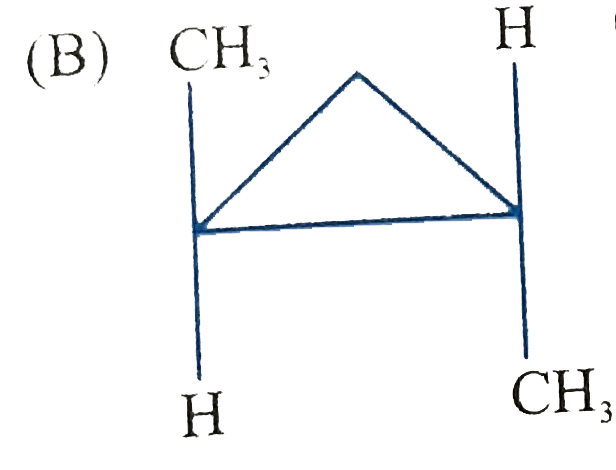
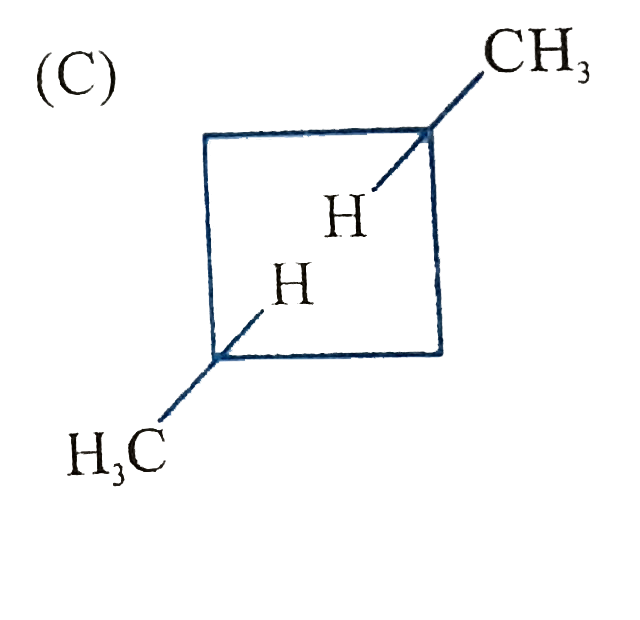
Among the following compounds how many can exhibit tautomerism? |
Answer»  an EXHIBIT TAUTOMERISM |
|
| 2. |
Among the following compounds having highest enol content. |
|
Answer» `CH_(3)COOCH_(3)` |
|
| 3. |
Among the following compound which is/are optically active? |
|
Answer» `CH_(3)-CH=C=CH-CH_(3)` |
|
| 4. |
Among the following compoundthat is readily soluble in water is |
|
Answer» `BeSO_(4)` |
|
| 5. |
Among the following cases, in which case mean free path increases |
|
Answer» With INCREASING altitude |
|
| 6. |
Among the following carbocation which is more stable |
| Answer» ANSWER :A | |
| 7. |
Among the following anions, the order of basic strength is "A)" CH_(3)^(-)"B)"NH_(2)"C)"OH-"D)"F- |
|
Answer» `A gt B gt C gt D` |
|
| 8. |
Among the following, boiling point is maximum for |
|
Answer» ISOBUTANE |
|
| 11. |
Among the following acids which has the lowest pK_(a) value ? |
|
Answer» `CH_(3)COOH` |
|
| 12. |
Among the following (a)P^(H)of water decreases withincrease in temperature (b)P^(H)of water decrease by the addition of base ©P^(H)of water increases by the addition of acid (d)At anytemperature P^(H)of water is equal toP^(K_w)//2 |
|
Answer» All are correct on adding BASE pH ` gt ` 7 , on adding acid `pH LT 7 ` |
|
| 13. |
Among the following (a)On dilution the P^(H)of an acid increases (b)A solution with P^(H)= 5 is 100 times more basic than a solution withp^(H)=3(3)A solution with P^(H)=8 is 1000 times more acidic than a solution with P^(H)=11 (4)The P^(H)of 10 ^(-9)M KOH is slightly greater than |
|
Answer» All are correct (b)pH `= 5 RARR [H^(+) ] = 10 ^(-5) ` ` pH = 11 rArr [H^(+) ] = 10 ^(-3) ` `therefore 100 `times more basic ( c )`pH = 8 rArr [H^(+) ] = 10 ^(-8)` `pH = 11 rArr [H^(+) ] =10 ^(-11) ` `therefore 100 `times more acidic (d)KOH is basic ` 10 ^(-9)` M KOH `rArr pH GT 7`but slightly GREATER |
|
| 14. |
x xx 10^(-2) gm of NaOH should be used up to prepare 200ml of a solution with P^(H)= 12. Find the value of x |
|
Answer» All are correct (b)pH `= 5 rArr [H^(+) ] = 10 ^(-5) ` ` pH = 11 rArr [H^(+) ] = 10 ^(-3) ` `THEREFORE 100 `times more basic ( c )`pH = 8 rArr [H^(+) ] = 10 ^(-8)` `pH = 11 rArr [H^(+) ] =10 ^(-11) ` `therefore 100 `times more acidic (d)KOH is basic ` 10 ^(-9)` M KOH `rArr pH gt 7`but SLIGHTLY GREATER |
|
| 15. |
Among the first lines of Lyman,Balmer, paschen and Brackett series in hydrogen atomic spectra,which has the highest energy? |
|
Answer» Lyman |
|
| 16. |
Among the.first lines of Lyman, Balmer, Paschen and Brackett series in hydrogen atomic spectra, which has higher energy? |
| Answer» Solution :`E= hc BAR(upsilon) = hc .z^2 R(1/(n_2^2) - 1/(n_2^2))` | |
| 17. |
Among the elements of the third period (Na to Ar), pick out the element that is the most reactive non metal. |
| Answer» SOLUTION :Group-17 HALOGENS are all non-metallic and also highly reactive as accepting ONE ELECTRON causes them to attain inert gas configuration. In the third PERIOD chlorine (Cl) shall be the mostreactive non-metal | |
| 18. |
Among the elements of the third period (Na to Ar), pick out the element with the largest atomic radius. |
| Answer» Solution :Across the period as NUCLEAR CHARGE INCREASES the size of an element decreases. Alkali metals are undoubtedly the LARGEST in their respective PERIODS. In the third period as a result Sodium (Na) shall be the largest in size. | |
| 19. |
Amongthe elements Li , K Ca S and Krwhichonehas thelowestfirstionization enthalpy ? Whichhasthehighest firstionizationenthalpy ? |
|
Answer» |
|
| 20. |
Among the elements of the third period (Na to Ar), pick out the element that is the most reactive metal. |
| Answer» Solution :With just ONE valence ELECTRON ALKALI metals not only happen to be the most reactive but also the most electropositive in their period. In the third period sodium (Na) SHALL be the most reactive METAL. | |
| 21. |
Among the elements given below________ has the highest value of electronegativity. |
|
Answer» Lithium |
|
| 22. |
Among the elements In, Ti, TI and Ca which element do not form hydride ? |
|
Answer» In, TL |
|
| 23. |
Amongthe elementsCa, Mg , P and C1 theorderof increasingatomicradiiis |
|
Answer» `Mglt Calt C1lt P ` `{:("GROUP " to,,12,,15,,17),("Period " 2,,Mg,,P,,C1),("Period " 3 ,,Ca,,-,,-):}` (i) Sinceatomicradiiincreasefrom top tobottomin a groupthereforeatomicradiusof Ca ismorethan thatof Mg i.e.,`Mg lt Ca` (ii) Sinceatomicradiidecreases alonga periodfromC1decrease in the order: `Mg gt P gt C1` or increase in THEORDER`: C1 lt P lt Mg` Combiningthese two trends the atomicradii of`Ca, Mg, P ` andC1 increase inthe order : `C1 lt P lt Mg lt Ca` i.e.,option ( b)is correct. |
|
| 24. |
Amongthe elementsfrom atomicnumber1 to 36the number of elementswhich havean unpairedelectronin the s-subshellis |
|
Answer» 4 `._(11)Na = 3s^(1), ._(19) K= [Ar] 4S^(1), ._(24) Cr= [Ar] 3d^(5)4s^(1) ` and `._(29) Cu =[Ar]3d^(10)4s^(1)` |
|
| 25. |
Amongthe elements B, Mg , A1 and Kthe correctorder ofincreasingmetalliccharacter is |
|
Answer» `B LT A1lt Mg lt K` |
|
| 26. |
Among the elements b, Al, C and Si (a)Which has the highest first ionization enthalpy? (b)Which has the most negative electron gain enthalpy? (c)Which has the largest atomic radius? (d) Which has the most metallic character? |
|
Answer» |
|
| 27. |
Among the elements B, AI, C and Si, (a) which element has the highest first ionisation enthalpy? (b) which element has the most metallic character ? Justify your answer in each case. |
Answer» Solution :The placing of elements are as  On moving from left to right in a period the IONISATION enthalpy increase with DECREASE in atomic size and also it decreases when we go from top to bottom with increase in atomic size. Hence, carbon has the highest ionisation enthalpy. (b) Metallic CHARACTER decreases from left to right but increases from top to bottom the GROUP. Therefore, ALUMINIUM has the most metallic character. |
|
| 28. |
Among the elements A, B, C and D having atomic numbers 7,8,9 and 12 the element having smallest size is _____ |
|
Answer» `A GT B gt C gt D` |
|
| 29. |
Amongthe elementB ,A1 , C and Si(i) Whichelementhas thehighestfirstionisationenthalpy? (ii)Whichelement has the mostmetalliccharacter? Justifyyouranswer in theeach case . |
|
Answer» Solution :ARRANGING theelements B, A1 , C and Siintodifferentgroupsand periods in orderof theirincreasingatomicnumberwe have , `{:(" Group " to ,,13,,14),("Period" 2,,B,,C),("Group" 3,,A1,,SI):}` (i) Sinceionizationenthalpyincreasesalonga PERIODAND decreasesdowna groupthereforeC has thehighestfirstionizationenthalpy (ii) Sincemetalliccharacterincreasesdowna groupanddecreasesalonga periodthereforeA1 isthe mostmetallicelement . |
|
| 30. |
Among the elements A, B, C and D having atomic numbers 9, 10, 11 and 12 respectively the correct order of ionisation energies is |
|
Answer» `A GT B gt C gt D` |
|
| 31. |
Among the diffrent kinds of water ,__________is vital for life processes. |
|
Answer» HEAVY WATER |
|
| 32. |
Among the compounds NaCl, KCI, RbCI and CsCl, the one with greatest ionic character is |
|
Answer» NaCI |
|
| 33. |
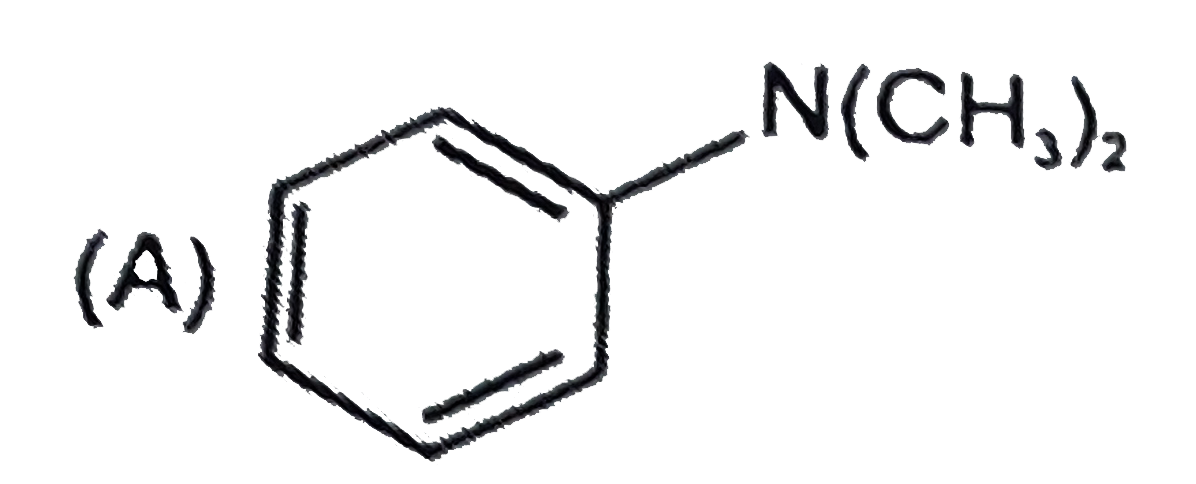
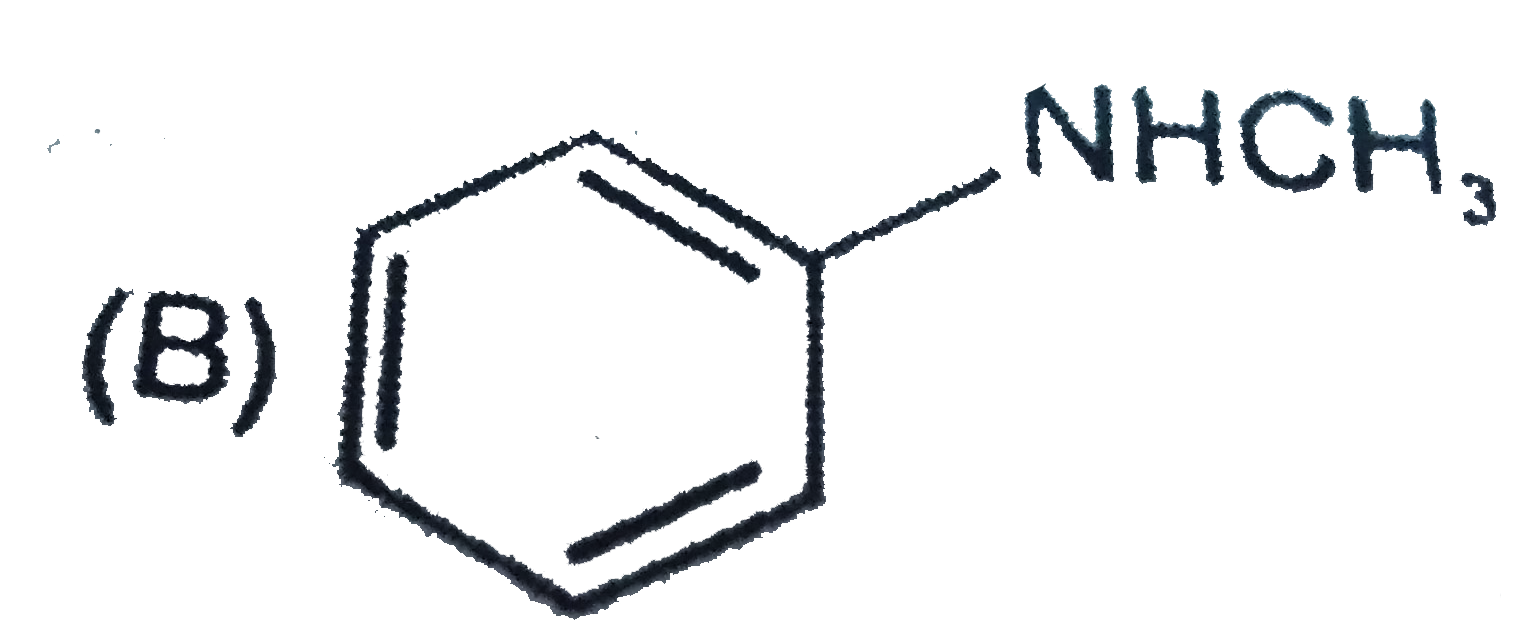
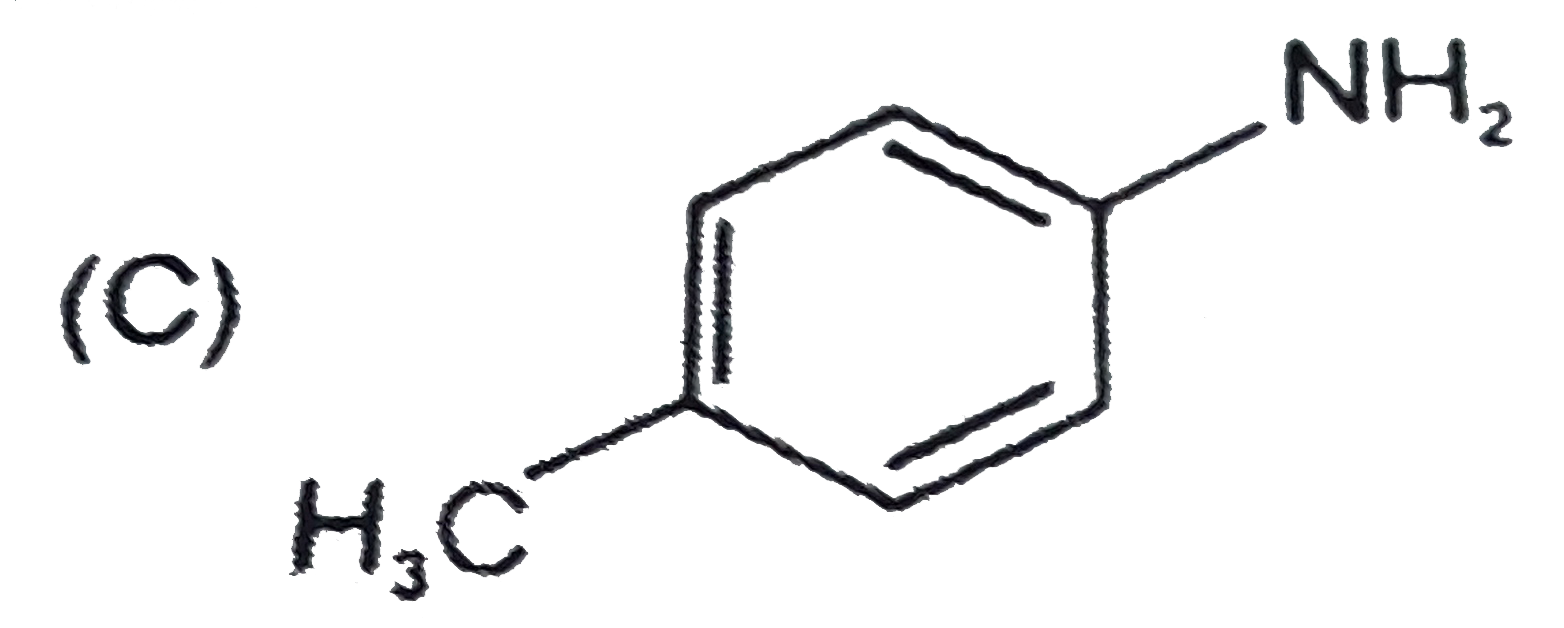
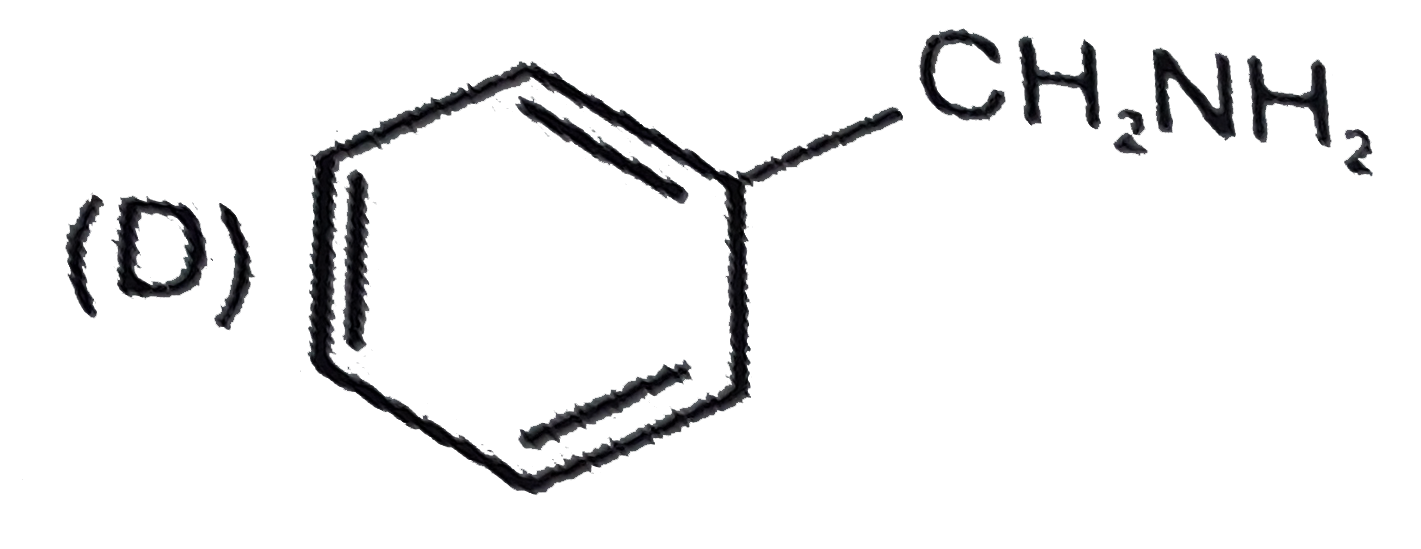
Among the compounds given, the one that would form a brilliant colored dye to on treatment with NaNO_(2) in dilute HCl followed by addition to an alkaline solution of beta-napthol is: |
|
Answer»
|
|
| 34. |
Among the alkenes which one produces tertiary butyl alcohol on acidhydration ? |
|
Answer» `CH_3CH_2CH=CH_2` |
|
| 35. |
Among the alkaline earth metals, the element forming predominantly covalent compound is..... |
|
Answer» Barium |
|
| 36. |
Among the alkaline earth metals, which is radioactive in nature? |
|
Answer» Beryllium |
|
| 37. |
Among the alkaline earth metals BeOis insoluble in water but oxides are soluble. Why ? |
| Answer» Solution :BEO is AMPHOTERIC, oxide is covalent due to the small SIZE of `Be^(2+)`ion. So BeO insoluble in water | |
| 38. |
Among the alkaline earth metal carbonates which one is least stable towards heat ? |
| Answer» SOLUTION :`BeCO_3` | |
| 40. |
Among the alkali metals which one form compounds with more covalent character? |
|
Answer» Sodium |
|
| 41. |
Among the alkali metals, the strongest reducing agent in aqueous medium is |
|
Answer» L i |
|
| 42. |
Among the alkali metal halides, which is covalent? Explain with reason. |
| Answer» Solution :All alkali METAL HALIDES are IONIC crystals. However lithium halides shows COVALENT CHARACTER, as it is the smallest cation that exerts high polarising power on the halides. | |
| 43. |
Amongthe alkalimetals, casesiumis thenucleusreactivebecasuse_____. |
|
Answer» Itsincompleteshellis NEARESTTO THENUCLEUS |
|
| 44. |
Among tertiary butyl and isopropyl carbon free radicals, why the first one is more stable ? |
| Answer» SOLUTION :In TERTIARY butyl CARBON free radical, nine C - H bonds CONTRIBUTE to hyperconjugative structures and in isopropyl carbon free radical , six C- H bonds contribute. | |
| 45. |
Among solids, the highest melting point is exhibited by |
|
Answer» Covalent solids |
|
| 46. |
Among s-block metals and transition metals, which are more metallic? |
|
Answer» s-block METALS |
|
| 47. |
Among PbS, CuS, HgS, MnS, Ag_(2)S,NiS,CoS,Bi_(2)S_(3), and SnS_(2) the total number of BLACK coloured sulphides is: |
|
Answer» |
|
| 48. |
Among PbS, CuS, HgS, MnS, Ag_(2)S, NiS, CoS, Bi_(2)S_(3) and SnS_(2), total number of black coloured sulphides is : |
|
Answer» Four |
|
| 49. |
Among paraffins, it is generally found that with an increase in molecular weight |
|
Answer» FREEZING POINT decreases |
|
| 50. |
Among ortho, meta and para substituted diahalobezenes which has high melting point ? Give reason with example. |
|
Answer» Solution :The boiling POINTS of isomeric dihalobenzene are nearly the same . The MELTING POINT of para issomer is generally higher than the melting point of ortho and meta isomers. The higher melting point of p-isomer is due to its symmetry which leads to more close PACKING of its moleculars in the crystal lattice and consequently strong intermolecular attractive force which REQUIRES more energy for melting. p-Dihalobenzene`gt` o-Dichlorobenzene ` gt` m-Dichlorobenzene. |
|