Saved Bookmarks
This section includes 7 InterviewSolutions, each offering curated multiple-choice questions to sharpen your Current Affairs knowledge and support exam preparation. Choose a topic below to get started.
| 1. |
Among the following which is more basic |
|
Answer»
|
|
| 3. |
Among the following, which is the fifth most abundant element? |
|
Answer» BERYLLIUM |
|
| 4. |
Among the following, which is not an allylic halide? |
|
Answer» 3-bromo-2-methyl PROPENE |
|
| 5. |
Among the following whichis less than ethene but gives Markovnikov's product in the addition of HBr |
|
Answer» Isobutane |
|
| 6. |
Among the following which is/are more stable than overset(*)(C)H_(3) |
|
Answer» `OVERSET(*)(C)H_(2)-OCH_(3)` |
|
| 7. |
Among the following which is/are correct regarding abnormal properties of lithium in IA group. A) LiHCO_(3) is not obtained in solid state while other hydrogen carbonates are solids B) Reddish brown NO_(2) is not obtained in the thermal decomposition of LiNO_(3) C) Lithium unlike other alkalimetals forns no ethynide on reaction with ethyne D)Lithium is much harder than other alkali metals |
| Answer» Answer :D | |
| 8. |
Among the following which is/are more stable C_(6)H_(5)overset(oplus)(C)H_(2) |
| Answer» ANSWER :A::C | |
| 11. |
Among the following, which has the highest boiling point ? |
|
Answer» `NH_(3)` |
|
| 12. |
Among the following which has L- configuration |
|
Answer»

|
|
| 13. |
Among the following which gases are heavier then air |
|
Answer» Dry `O_2` |
|
| 14. |
Among the following which does not react even with hot water ? |
| Answer» ANSWER :A | |
| 15. |
Among the following which can be liqufied easily ('a' values given in bracket in L^(2). atm "mol"^(-2) ) |
|
Answer» `He ( 0.034)` |
|
| 16. |
Among the following transition elements, pick out the element/elements with highest second ionisation energy |
|
Answer» V(At. No = 23) |
|
| 17. |
Among the following, total number of compound(s) which reduce(s) the yellow solution of FeCI_(3) are:{:("Tin(II)chloride",,"potassium iodide",),("hydroxylamine",,"hydrazine sulphate",),("ascorbic acid",,"hydrogen sulphide",),("sulphur dioxide",,"potassium dichromate",),("conc.nitric acid",):} |
|
Answer» |
|
| 18. |
Among the following total number of compounds, which give(s) white precipitate with calcium chloride solution: Na_(2)S_(2)O_(3), Na_(2)CO_(3), Na_(2)C_(2)O_(4),NaBr,NaI |
|
Answer» |
|
| 19. |
Among the following, total number of cations that tend to form soluble complex with excess NH_(4)OH(aq) and excess NaCN(aq): Pb^(2+), Cd^(2+), Hg^(2+), Bi^(3+), Cu^(2+), Ag^(+) |
|
Answer» |
|
| 20. |
Among the following, total number of anions, which decolourises the potassium peramagnate solution in acidic medium C_(2)O_(4)^(2-), NO_(2)^(-), (BaCI_(2)+SO_(4)^(2-)), S_(2)O_(3)^(2-), NO_(3)^(-) |
|
Answer» |
|
| 21. |
Among the following, total numbe of reagent(s) which gives yellow precipitate with ammonium chloride solution. Na_(3)[Co(NO_(2))_(6)], H_(2)[PtCI_(6)], (NaH.C_(4)H_(4)O_(6)), NaCIO_(4), NaOH |
|
Answer» |
|
| 22. |
Among the following, the total number of ions that form a precipitate with Na_(2)HPO_(4) in ammonical medium. Fe^(3+),Mn^(2+),AI^(3+),Mg^(2+),Ba^(2+) |
|
Answer» |
|
| 23. |
Among the following the total number of acidic radicals) that give catalytic test of iodine-azide reagent. CO_(3)^(2-),SCN^(-),S^(2-),S_(2)O_(3)^(2-),HCO_(3)^(-),SO_(3)^(2-) |
|
Answer» |
|
| 24. |
Amongthe followingthethird ionizationenergyis highestfor |
|
Answer» MAGNESIUM |
|
| 25. |
Among the following the strongest nucleophile is : |
| Answer» Solution :`N -= C - overset(-)(C) H_(2)` is strongest nuclephile as `C-` atom with negative charge has the lowest electronegativity | |
| 26. |
Among the following the strongest base is |
|
Answer» `C_(6)H_(5)NH_(2)`  is more basic than others. due to I effect is more basic than others. due to I effect
|
|
| 27. |
Among the following the strongest acid is |
|
Answer» `CH_(3) COOH` |
|
| 28. |
Among the following, the state function (s) is(are): |
|
Answer» internal ENERGY |
|
| 29. |
Among the following, the state function (s)is // are |
|
Answer» Internal ENERGY |
|
| 30. |
Among the following the standard oxidation potential is highest for |
| Answer» ANSWER :D | |
| 31. |
Among the following, the species having square planar geometry for central atom are (i) XeF_(4) (ii) SF_(4) (iii) [NiCl_(4)] (iv) [PtCl_(4)]^(2) |
| Answer» Answer :D | |
| 32. |
Among the following, the reaction that proceeds through an electrophilic substitution is |
|
Answer»
|
|
| 33. |
Among the following, the reaction that proceeds through an electrophilic substitution, is : |
|
Answer»
|
|
| 34. |
Among the following, the period that contains solid, liquid and gaseous elements is |
|
Answer» FIFTH PERIOD |
|
| 35. |
Among the following, the paramagnetic compound is- |
|
Answer» `Na_(2)O_(2)` |
|
| 36. |
Among the following the pair that is not a pair of metamers |
|
Answer» `CH_(3)OCH_(2)CH_(2)CH_(3)`&`CH_(3) CH_(2)OCH_(2)CH_(3)` |
|
| 37. |
Among the following the pair that is not a pair of metamers is |
|
Answer» `CH_(3)OCH_(2)CH_(2)CH_(3) " & " CH_(3)CH_(2)OCH_(2)CH_(3)` |
|
| 38. |
Among the following , the pair of elements having same electronegativity values are A) (H,P) "" B) (Be , Al) C) (N,Cl) "" D) (C,P) |
| Answer» Answer :C | |
| 39. |
Among the following the one which is not a 'greenhouse gas' is |
|
Answer» `N_2O` |
|
| 40. |
Among the following , the one which can act as both as Bronsted acid as well as Bronsted base is |
|
Answer» `H_(3)PO_(4)` |
|
| 41. |
Among the following, the one that is not a green house gas is..... |
|
Answer» SULPHUR DIOXIDE |
|
| 42. |
Among the following, the number of elements showing only one non-zero oxidation state is O,Cl,F,N,P,Sn,Tl,Na and Ti. |
| Answer» ANSWER :A | |
| 43. |
Among the following the number of element showing only one non zero oxidationstate is O,CI,F,N ,P,Sn,TI,Na,Ti |
|
Answer» |
|
| 44. |
Among the following the number of compounds which react with Fehling's solution is : |
|
Answer» |
|
| 45. |
Among the following, the number of compounds that can react with PCl_(5) to give POCl_(3)" is ":O_(2),CO_(2),SO_(2),H_(2)O,H_(2)SO_(4),P_(4)O_(10). |
|
Answer» (i) `2PCl_(5)+O_(2)overset(DELTA)to2POCl_(3)+2Cl_(2),` (II) `[PCl_(5)toPCl_(3)+Cl_(2), 2PCl_(2)+O_(2)to2POCl_(3)]` (iii) `PCl_(5)+SO_(2)toPOCl_(3)+SOCl_(2)` (iv) `PCl_(5)+H_(2)OtoPOCl_(3)+2HCl,` `POCl_(3)` further reacts with `H_(2)O` to give `H_(3)PO_(4)` `POCl_(3)+3H_(2)OtoH_(3)PO_(4)+3HCl` (V) `2PCl_(5)+H_(2)SO_(4)to2POCl_(3)+SO_(2)Cl_(2)+2HCl` (vi) `6PCl_(5)+P_(4)O_(10)to10POCl_(3)` |
|
| 46. |
Among the following, the number of carboxylic acids which easily undergoes decarboxylation on heating are HCOOH, (COOH)_(2), CH_(2)(COOH)_(2), C_(6)H_(5)COCH_(2)COOH, C_(6)H_(5)COCOOH, C_(6)H_(5)CHOHCOOH |
|
Answer» |
|
| 49. |
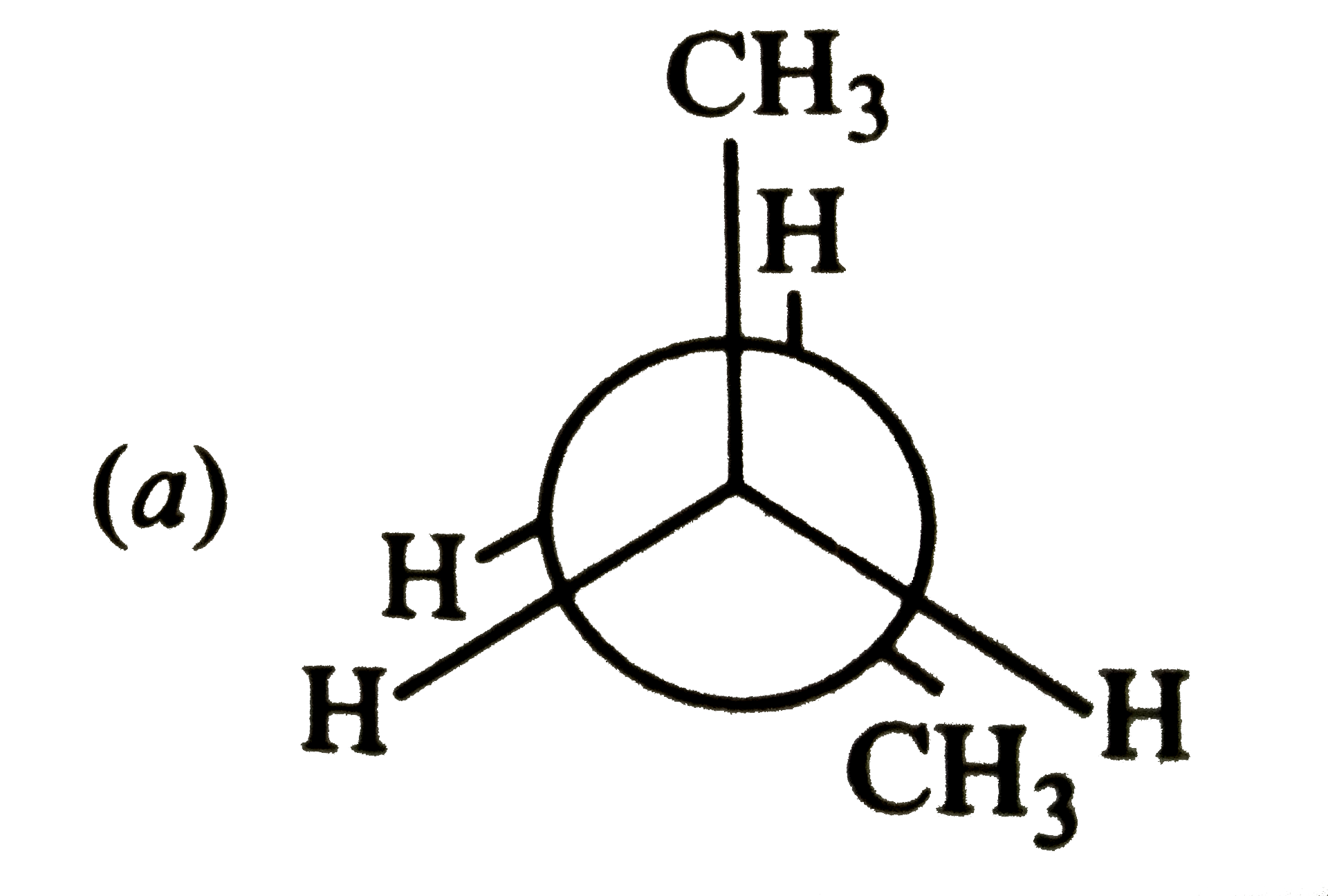
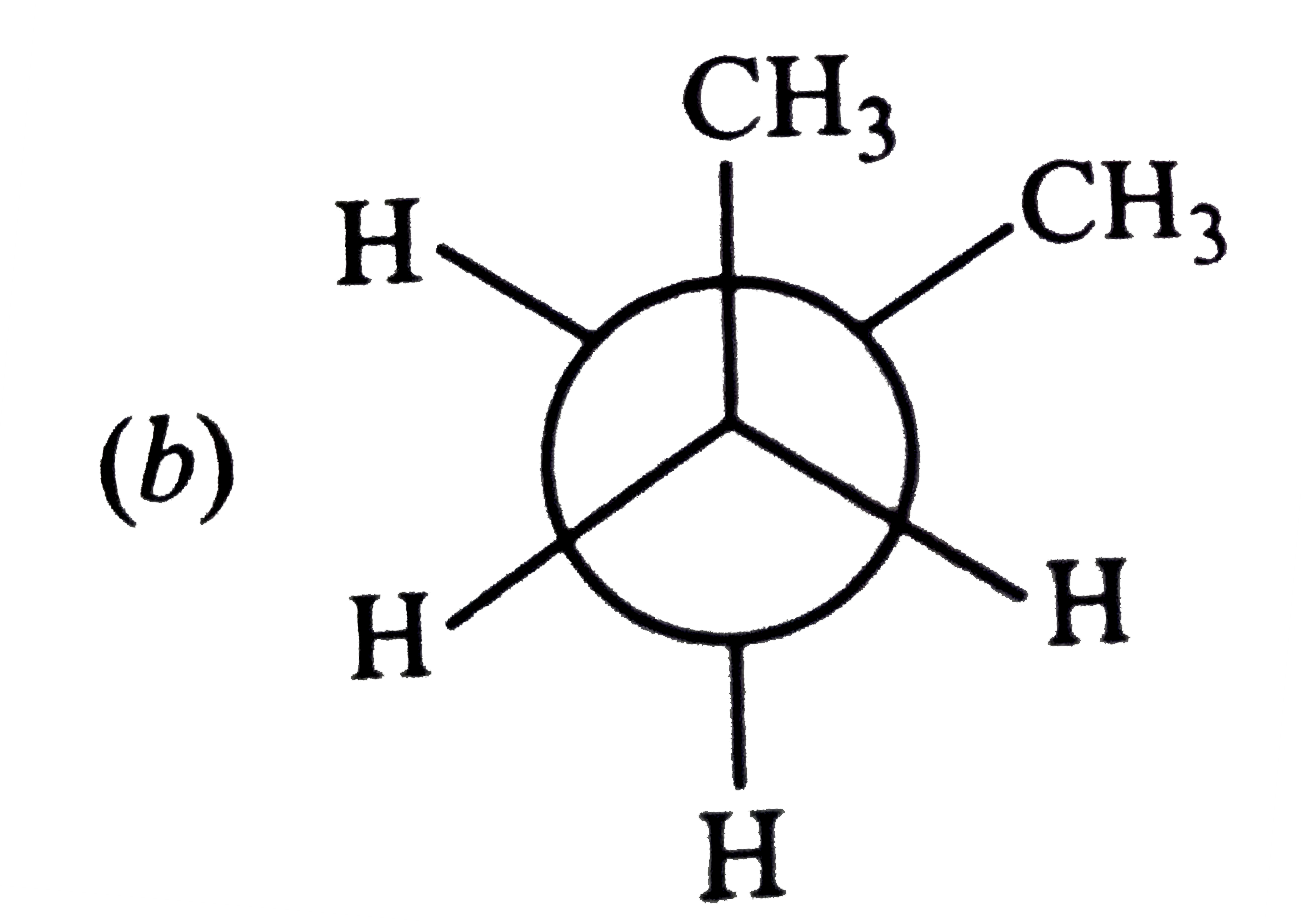
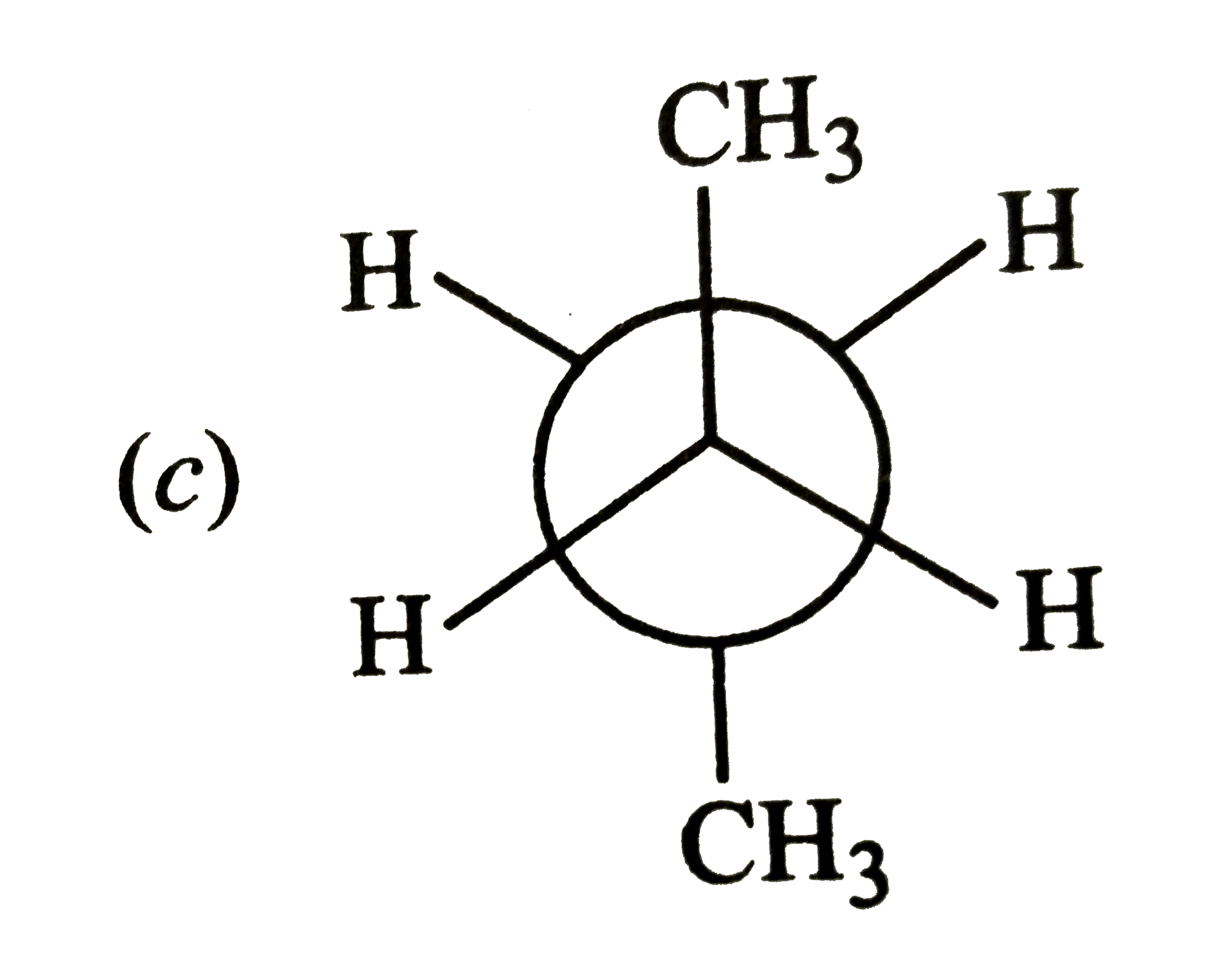
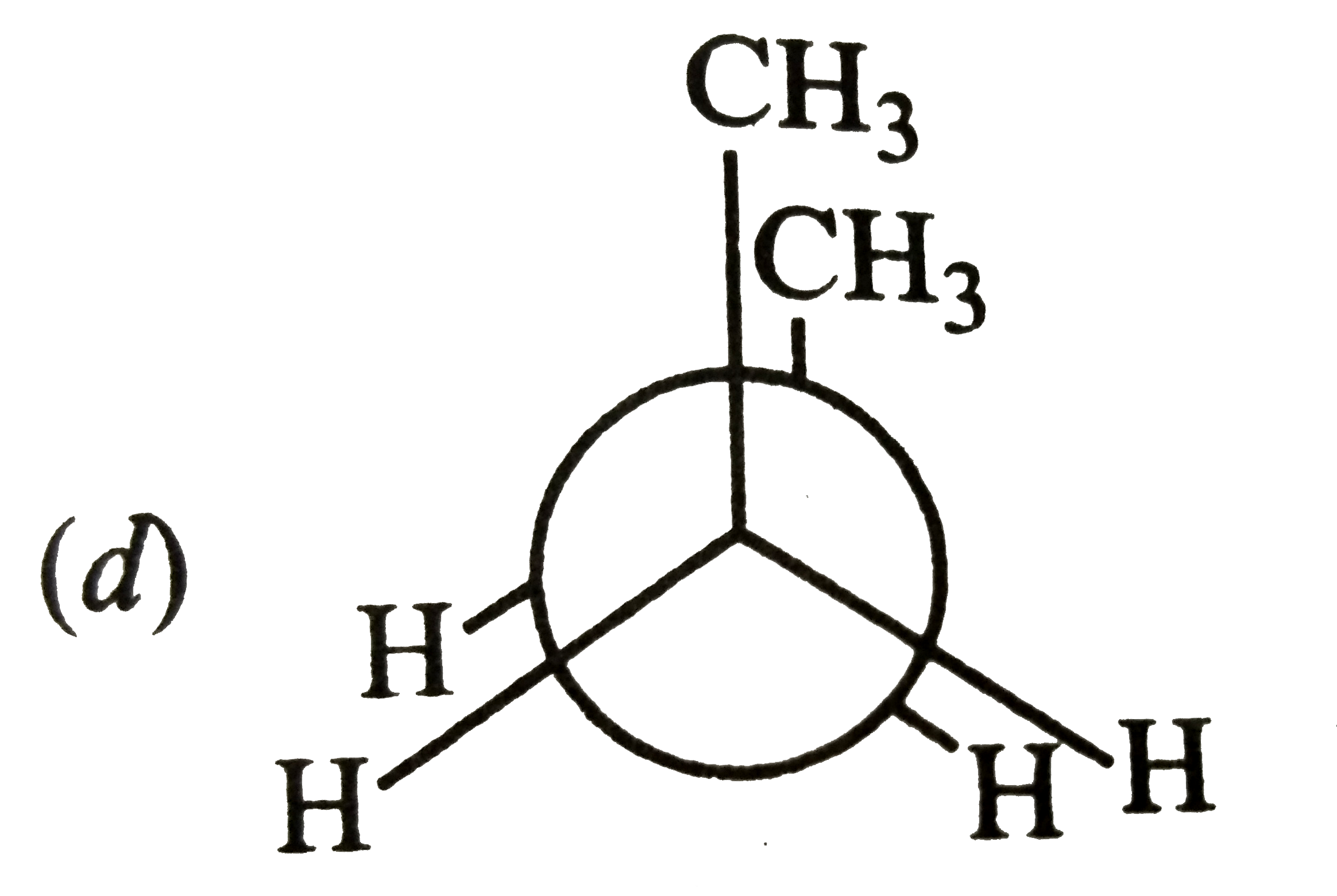
Among the following , the most stable conformation of n-butane is |
|
Answer»
|
|