

Saved Bookmarks
This section includes 7 InterviewSolutions, each offering curated multiple-choice questions to sharpen your Current Affairs knowledge and support exam preparation. Choose a topic below to get started.
| 1. |
Do we collect the vapours of the volatile substance in the Victor Meyer's experiment ? |
| Answer» Solution :No, we DONOT collect the vapours of the VOLATILE substance. It is the volume of the AIR which is DISPLACED by the VAPORS of the volatile substance. | |
| 2. |
DO value of a water sample is 6 ppm. The weight of dissolved oxygen present in 100 kg of water sample is x xx 10^(-1) gm. Then the value of x is ____. |
|
Answer» |
|
| 3. |
Do water gas and syn gas mean the same gaesous mixture? Explain . |
| Answer» Solution :WATER gas is a 1:1 MIXTURE of `CO + H_(2)` but SYN gas has a broader meaning it means any mixture of `CO + H_(2)` | |
| 4. |
DO value of a water sample is 6 ppm. Calculate the weight of dissolved oxygen present in 100 kg of water sample. |
|
Answer» SOLUTION :DO value 6 ppm means, 100 G of water contains 6g of dissolved OXYGEN. `10^(6)g " water " to 6g O_2` `100 kg (10^(5)g) " water " to (6 xx 10^(5))/(10^6)=0.6 g ` Amount of dissolved oxygen in water = 0.6 g |
|
| 5. |
Do the number of moles of reaction products increase, decrease or remain or remain same when each of the following equilibria is subjected to a decrease in pressure by increasing the volume? CaO(s)+CO_2(g)iffCaCO_3(s) |
| Answer» Solution :DECREASE of pressure wil favour backward direction because of the FORMATION of more GASEOUS substance, i.e., NUMBER of moles of reaction products decrease. | |
| 6. |
Does the number of moles of reaction products increase, decrease or remain same when the following equilibria is subjected to a decrease in pressure by increasing the volume? 3Fe(s) +4H_2O(g) iff Fe_3O_4(s)+4H_2(g) |
| Answer» SOLUTION :In this reaction , there is no change in the NUMBER of moles of gaseous reactants and PRODUCTS . So pressure will not have any effect on the equilibrium.i.e., number of moles of the products will remain the same . | |
| 7. |
Do the number of moles of reaction products increase, decrease or remain or remain same when each of the following equilibria is subjected to a decrease in pressure by increasing the volume? PCl_5(g) iff PCl_3(g)+Cl_2(g) |
| Answer» Solution :Applying Le Chatelier.s PRINCIPAL, as pressure DECREASES the SYSTEM will favour the forward direction where there is increase in the NUMBER of moles of gaseous products. i.e., Number of moles of reaction products increase. | |
| 8. |
Do the following conversions: (i) Methyl bromide to acetone (ii) Benzyl alcohol to 2-phenylacetie acid |
|
Answer» Solution :(i) `CH_3Br + Mg OVERSET("dry ether")toCH_3MgBr overset(CH_3CHO)to underset(CH_3)underset(|)overset(OMgBr)overset(|)(CH) - CH_3 overset(H_2O)to CH_3underset(CH_3)underset(|)CHOH underset(NH)overset(CU)to (CH_3)_2 CO` (ii) `C_6H_5CH_2OH + SOCl_2 to C_6H_5CH_2Cl+ KCN to C_6H_5CH_2CN overset(H_3O^(+))to C_6H_5COOH` |
|
| 9. |
Do (CH_(3))_(3)Nand (Me_(3)Si)_(3)have similarstructure ? Justify your answer . |
| Answer» SOLUTION :`(CH_(3))_(3) N` is pyramidal involving `SP^(3)`-hybridization of N atom.Nitrogenin `(Me_(3)SI)_(3)N` is, HOWEVER, `sp^(2)`-hybridized. The reasonbeing that the p-orbital of N containingthe lone pair of electronsoverlopwith avacant d-orbital of silicon.As a resultof this `ppi-dpi` backbonding, `(Me_(3)Si)_(3)N` is planar. Thus, `(CH_(3))_(3)N`and `(Me_(3)Si)_(3) N` are notisostructural .For structure. | |
| 10. |
Do atomic orbitals have sharp boundaries ? Explain why or why not ? or Why don't we draw a boundary surface diagram within which the probability of finding the electron is 100% ? |
| Answer» Solution :No, ATOMIC obitals do not have SHARP boundaries because the PROBABILITY of finding the electron EVEN at large distances may be very small but not equal to ZERO | |
| 11. |
Do all the metals possess a close-packed structure ? Name the different structures exhibited and give their packing fractions. |
| Answer» Solution :NON, METALS with HEP and cop arrangement have close packed structure with packing fraction=0.74 WHEREAS metals with be arrangements do not have close packed structure as packing fraction = 0.68 | |
| 12. |
Divide 0.9 with 4.26 and report the answer in significant figures. |
|
Answer» |
|
| 13. |
Disuss the shapes of the following molecules using VSEPR theory:BeCl_2,BCl_3,SiCl_4, H_2S, PH_3 |
Answer» SOLUTION :
|
|
| 14. |
Disuss the change in hybridisation of Al atom in the following reaction AlCl_3+Cl^1 rarr AlCl_4^- |
|
Answer» Solution :`AL_(GROUNDSTATE) [NE] 3s^23p_x^1` `AL_(EXCITED state) [Ne] 3s^13p_x^13p_y^13p_z^0` |
|
| 15. |
Distinguish the thermodynamic process depending upon heat absorbed or evolved in the overall process. |
Answer» SOLUTION :
|
|
| 16. |
Distinguish clearly between (a) hard and soft water, (b) temporary hardness and permanent hardness. |
Answer» SOLUTION :
|
|
| 17. |
Distinguish between the following . (i) Atomic and molecular mass (ii) Atomic mass and atomic weight (iii) Empirical and molecular formula (iv) Moles and molecules. |
Answer» SOLUTION :
|
|
| 18. |
Distinguish between temporary hardness permanent hardness. |
Answer» SOLUTION :
|
|
| 19. |
Distinguish between Temporary hardness and permannent hardness. |
Answer» SOLUTION :
|
|
| 20. |
Whatismeant byreversibleand irreversibleprocesses ? |
Answer» SOLUTION :
|
|
| 21. |
Distinguish between oxidation and reaction. |
Answer» SOLUTION :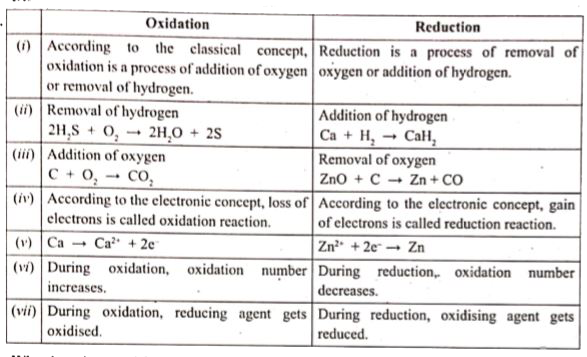
|
|
| 22. |
Distinguish between oxidation and reduction |
Answer» SOLUTION :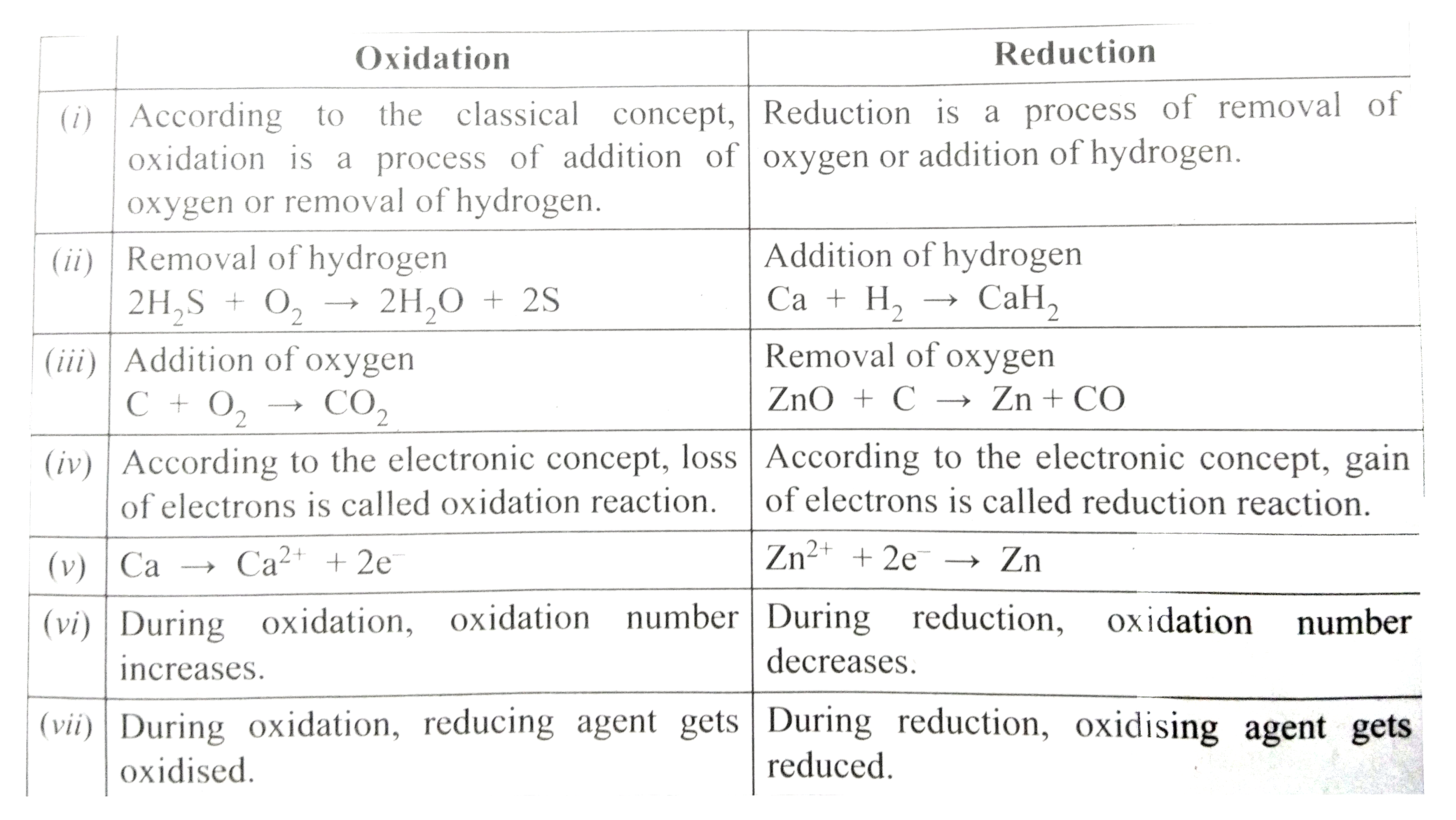
|
|
| 23. |
Distinguish between particle and wave. |
Answer» SOLUTION :
|
|
| 24. |
Distinguish between (i) Hexagonal and monoclinic unit cells. (ii) Face-centred and end-centred unit cells. |
|
Answer» Solution : For hexagonal unit cell, a =B `ne`C,`alpha=BETA=90^@, gamma= 120^@` For monoclinic unit cell, `a ne b ne c , alpha = gamma = 90^@,beta ne =90^@` (ii) A face-centred unit cell has ONE constituent particle present at the centre of each face in addition to the particles present at the CORNERS . An end-face centred has one constituent particle each at the centre of any two opposite faces in addition to the particles present at the corners |
|
| 25. |
Distinguish between : (i)Hexagonal and monoclinic unit cells. (ii)Face-centred and end-centred unit cells. |
|
Answer» Solution :(i) For hexongonal UNIT cell, ` a = b ne c, alpha = beta = 90^(@) , GAMMA= 120^(@)` for MONOCLINIC unit , ` a ne b ne c, alpha = gamma = 90^(@) , beta ne 90^(@)` , (ii)A face -centred unit cell has one constituent paticel present at the centre of each face in addition to the particles present at the corners. An end-face centred has one constituent particle each at the centre of any two opposite faces in addition to the particles present at the corners. |
|
| 26. |
Distinguish between homogeneous and hetergeneous equilibrium reaction. |
Answer» SOLUTION :
|
|
| 27. |
Distinguish between hard water and soft water. |
Answer» SOLUTION :
|
|
| 28. |
Distinguish between hard water and soft water |
Answer» SOLUTION :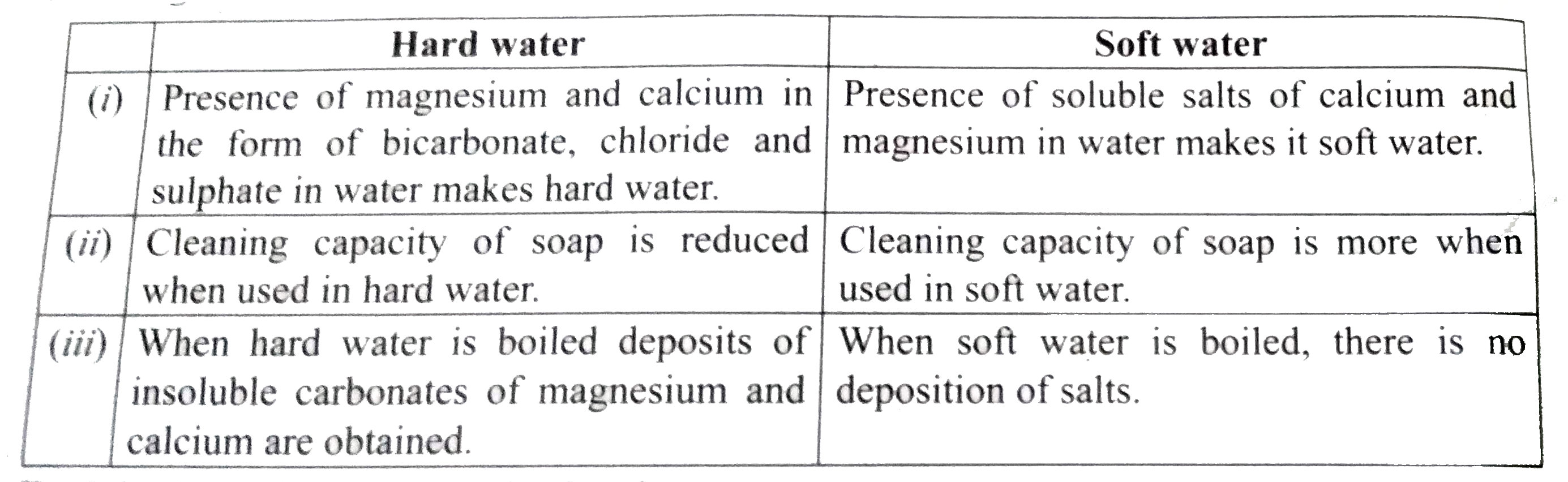
|
|
| 29. |
Distinguish between enantiomoers and diastereomers. |
Answer» Solution :Stereoisomers which are non-superimposable MIRROR images of each other are called enantiomers while stereoisomers which are not mirror images of each other are called diastereomers. For example, tartaric acid exists in three stereoisomers FORMS I, II and III Structures I and II are non-superimposable mirror images of each other and hence are enantiomers. But structures I and III (or II and III) are not mirror images and hence are DIASTEROMERS. 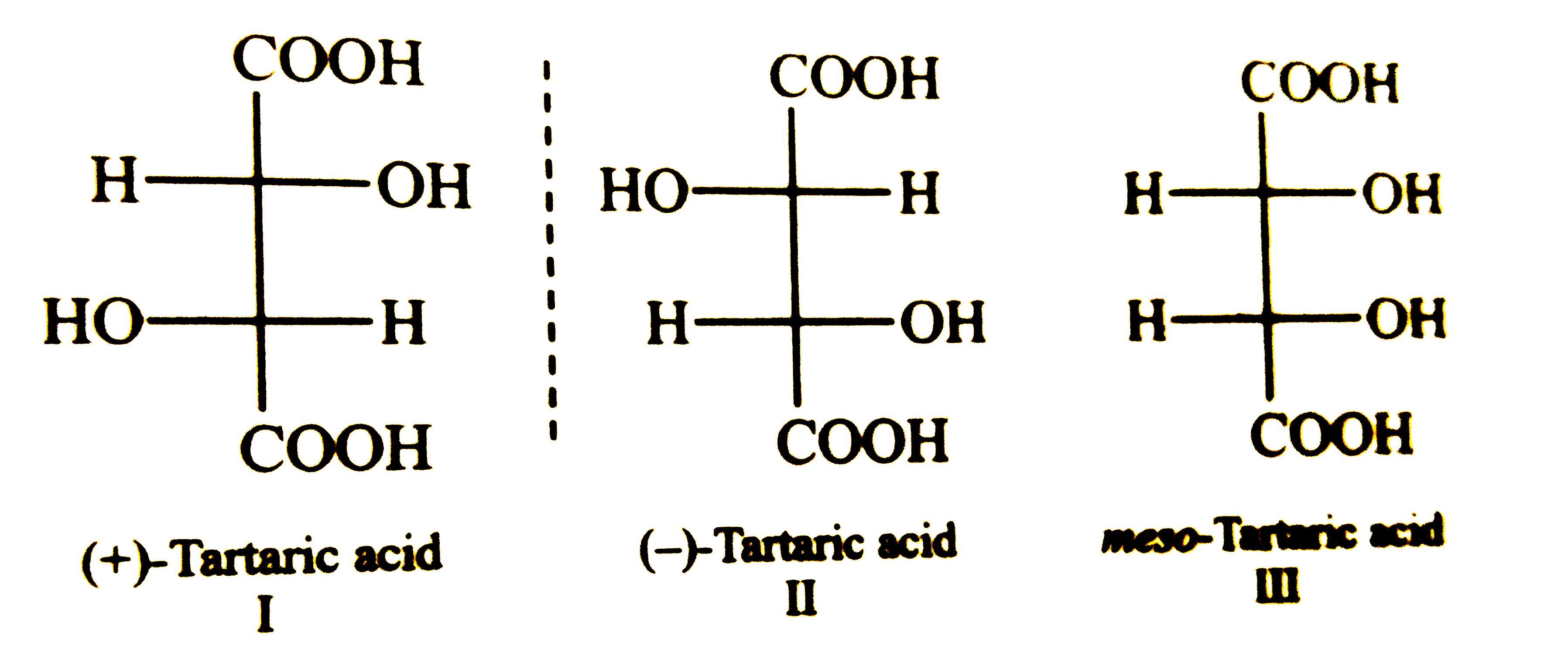
|
|
| 30. |
Distinguish between emission spectra and absorption spectra. |
|
Answer» Solution :Emission spectra : When an OBJECT is strongly heated, it starts to emit LIGHT. When the emitted light is SUBJECTED to depression, emission spectrum is obtained. Atomic spectra: When an atom of an element is strongly heated, it starts emitting light energy in different REGION. This emitted light when dispersed, a large NUMBER of closely spaced lines where formed they are called atomic spectra. |
|
| 31. |
Distinguish between electrophiles and nucleophiles |
Answer» SOLUTION :
|
|
| 32. |
Distinguish between electron affinity and electron negativity. |
Answer» SOLUTION :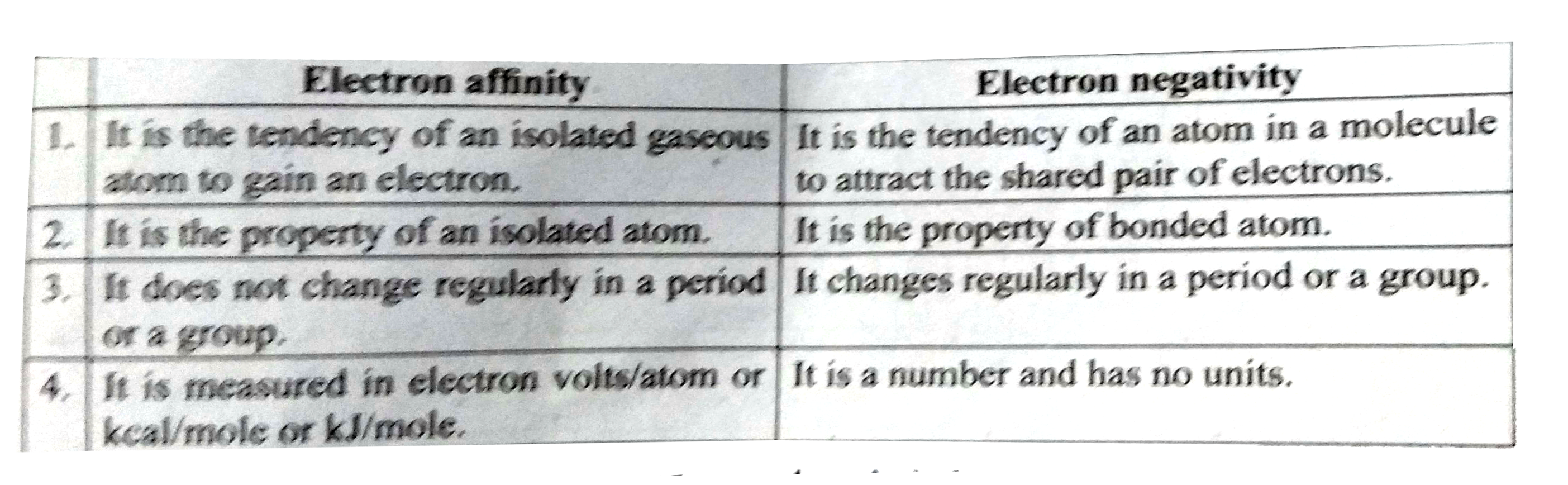
|
|
| 33. |
Distinguish between diffusion and effusion |
Answer» SOLUTION :
|
|
| 34. |
Distinguish between diffusion and effusion. |
| Answer» Solution :Most AEROSOL cans contain several ounces of a propellant carbon dioxide, propane or BUTANE. When exposed to flame, aerosol CONTAINERS experience temperatures and pressures significantly higher than they were designed to resist, CAUSING them to rupture violently into large fire balls. This occurs when the gas and liquid INSIDE expands when heated, increasing the pressure inside the container. | |
| 35. |
Distinguish between carbocation and carbanion. |
Answer» SOLUTION :
|
|
| 36. |
Distinguish between alkali metals and alkaline earth metals. |
Answer» SOLUTION :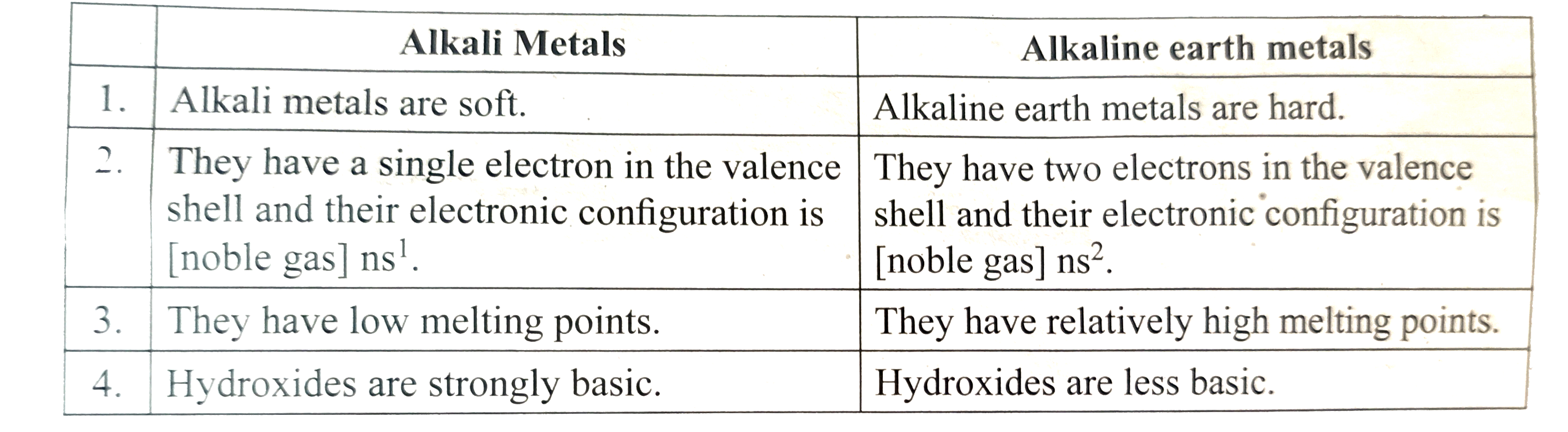 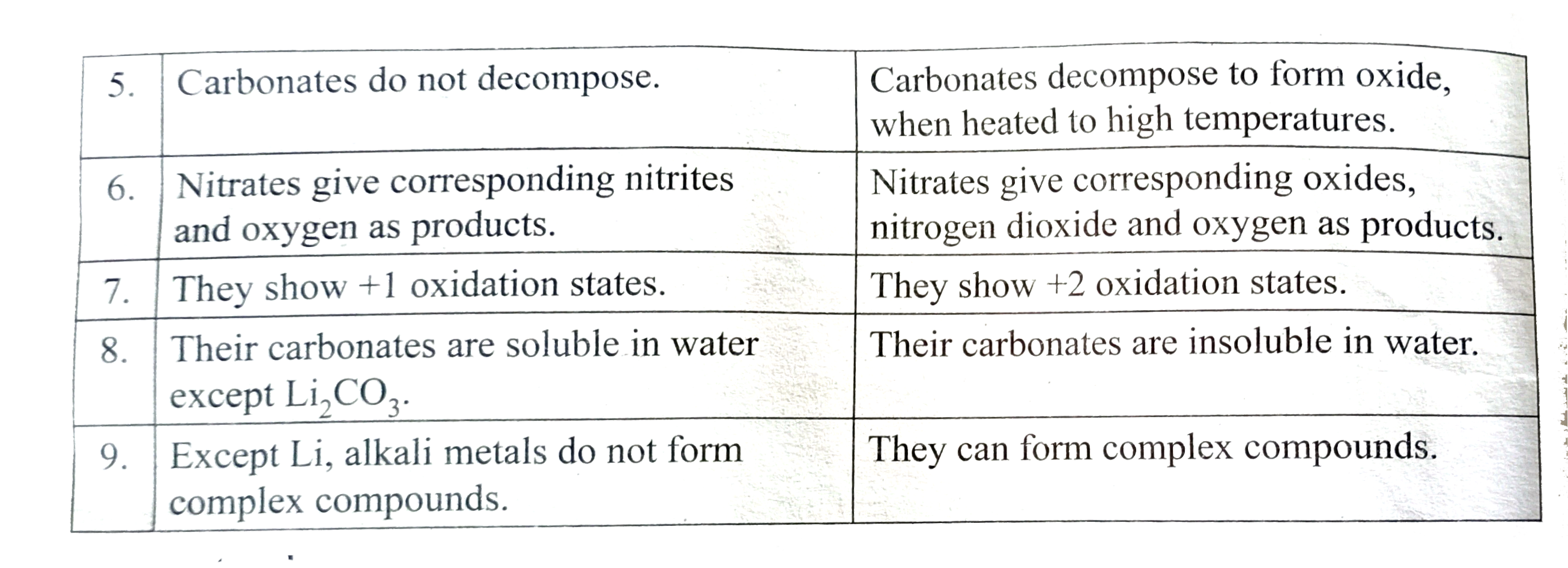
|
|
| 37. |
Distinguish between a molecule and a compound. |
Answer» SOLUTION :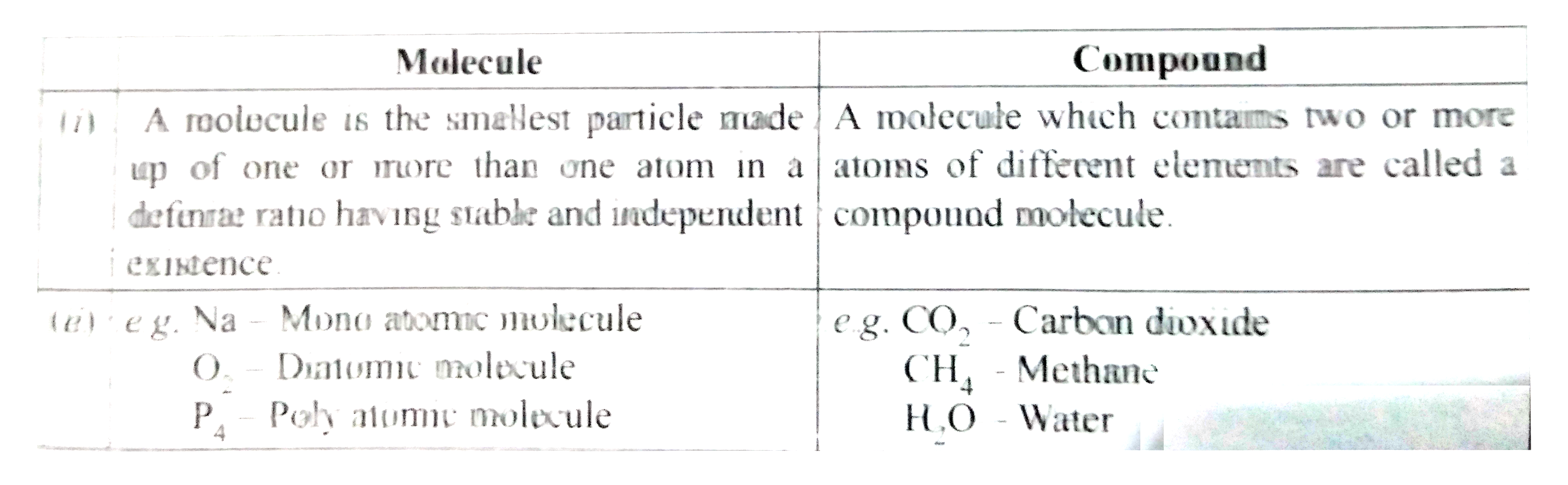
|
|
| 38. |
Distinguish sigma and pi - bonds. |
Answer» SOLUTION :
|
|
| 39. |
Distinguish among the different physical states of matter |
Answer» Solution :Differences among three PHYSICAL states of matter (solid, LIQUID and GAS) are as follows.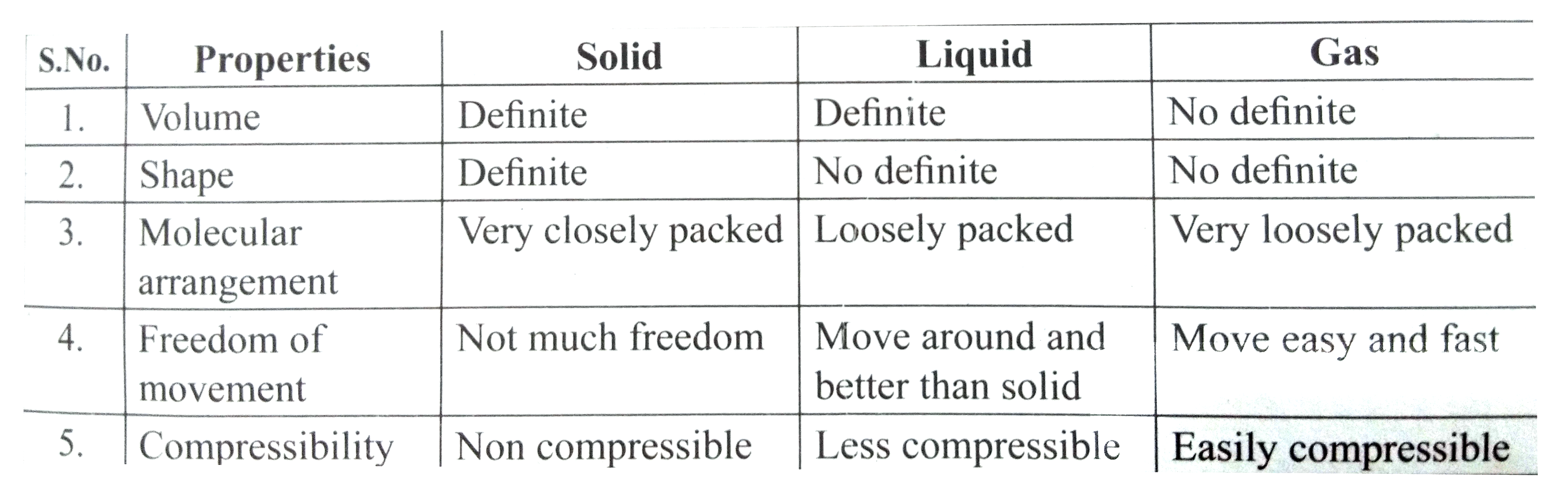
|
|
| 40. |
Distinguise between : (i) Antipyretice and antiseptics. (ii) Antiseptics and disinfectants. (iii) Broad and spectrum and narrow spectrum antibiotics. (vi) General and local anaesthetics. (v) Narcotics and hypnotics. (vi) Antioxidant and antimicrobial preservatives. |
|
Answer» |
|
| 41. |
Distinction between oxalic acid, malonic acid and succinic acid can be made by |
|
Answer» heating<BR>acidified `KMnO_(4)` 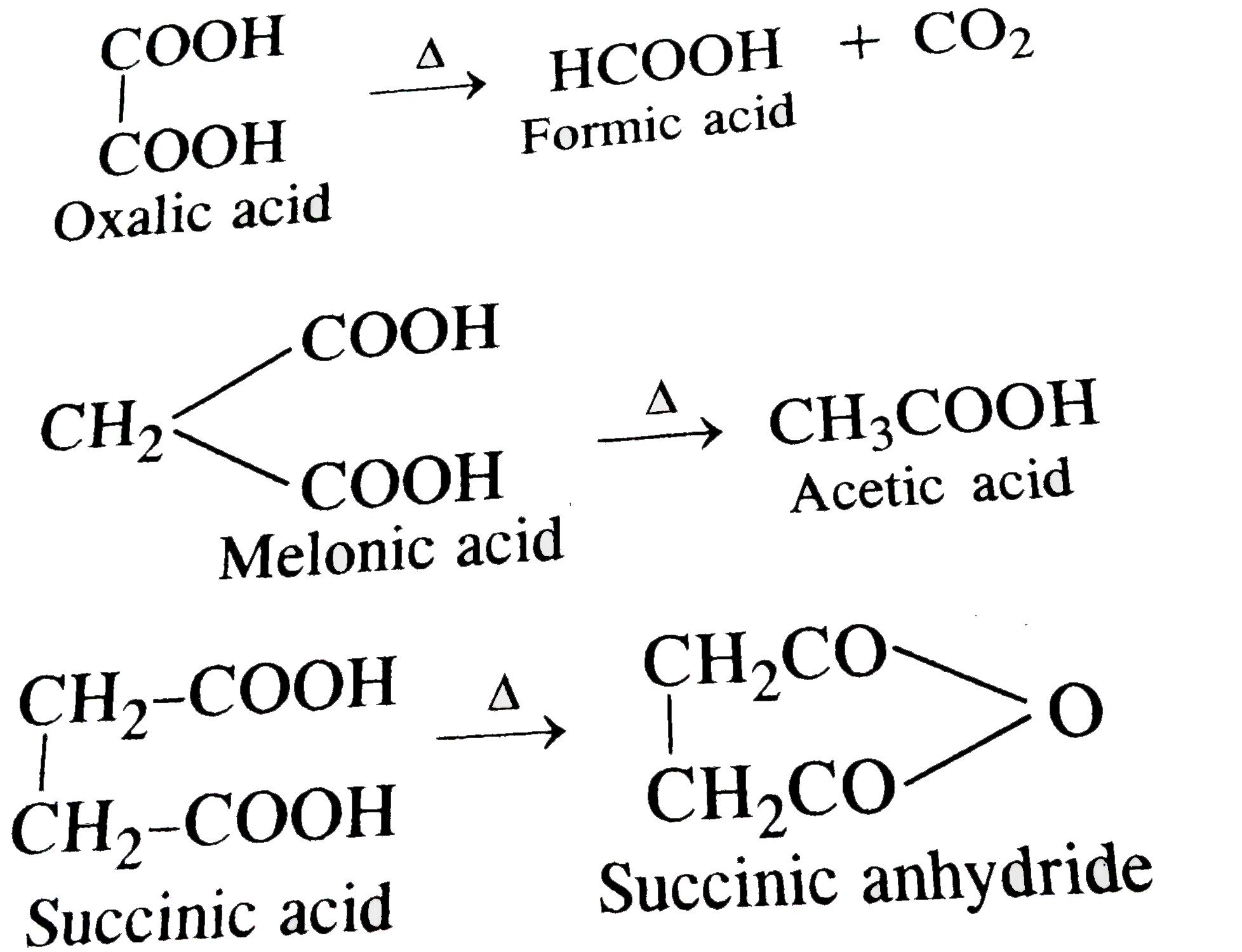
|
|
| 42. |
Distillation under reduced pressure method is used to purity the liquids in which the liquids |
|
Answer» have HIGH boiling points |
|
| 43. |
Distillation under reduced pressure is generally used to purify those liquids which |
|
Answer» have very low boiling POINTS |
|
| 44. |
Distance moved by the substance from base line is 5 and that of solvent is 10, what is retention factor? |
|
Answer» 5 |
|
| 45. |
Dissolving 120 gm of urea in 100 gm of water gave a solution of density 1.15 gm "lit"^(-1). The molarity of the solution is |
|
Answer» `1.78 M` volume of solution = `(1012)/(1.15)=973.91 gm ML^(-1)` Molarity = `(2)/(0.974)=2.05M` |
|
| 46. |
Dissolved oxygen values of four water samples A, B, C and D are respectively 6 ppm, 5 ppm, 1 ppm and 3 ppm. Which is more polluted? |
| Answer» Solution :LESSER the DO VALUE, greater the extent of pollution of water. THUS, C is the most polluted water sample. | |
| 47. |
Dissolved oxygen in water is very important for aquatic life. What processes are responsible for the reduction of dissolved oxygen in water ? |
| Answer» SOLUTION : The discharge of HUMAN sewage and organic waste from pulp and paper industry and presence of leaves grass, trash in water DUE to run off result in PHYTOPLANKTON GROWTH. The microorganisms which decompose this organic matter need oxygen. Hence, the amount of oxygen in water of lakes etc. decreases | |
| 48. |
Dissolved oxygen in water is very important for aquatic life. What processes are responsible for the reduction of dissolved oxygen in water? |
|
Answer» Solution :The discharge of human sewage and ORGANIC waste from pulp and paper industry and presence of leaves, grass, trash etc. in water due to run off result in phytoplankton GROWTH. The microorganisms which DECOMPOSE this organic matter need oxygen. Hence, the AMOUNT of oxygen in water of lakes etc. DECREASES. |
|
| 49. |
Dissolved oxygen in water is responsible for aquativ life. What processes are responsible for the reduction in dissolved oxygen in water? |
|
Answer» SOLUTION :(i) The oxygen is dissolved in water either from atmosphere or by photosynthesis, however at night, there is no photosynthesis, so amount of oxygen dissolved in water reduces. (ii) Thus, water contains only a limited amount of dissolved oxygen. (iii) Thus, the decomposition of a moderate amount of ORGANIC matter by aerobic bacteria can make water deficient in dissolved oxygen. |
|
| 50. |
Dissolved oxygen in water is responsible for aquatic life. What processes are responsible for the reduction in dissolved oxygen in water? |
| Answer» Solution :(i) Organie matter such as leaves, grass, trash can pollute water. Microorganisms present in water can decompose these organic matter and consume DISSOLVED oxygen in water. (ii) Eutrophication is a process by which water bodies receive excess nutrients that stimulates EXCESSIVE plant growth. This enhanced plant growth in water bodies is called algal bloom. (iii) The growth of algae in extreme abundance covers the water surface and reduces the oxygen concentration in water. THUS, bloom-infeded water inhibits the growth of otherliving organisms in the water body. (IV) This process in which the nutrient rich water support a dense plant population, kills animal life by depriving it of oxygen and results in loss of biodiversity is KNOWN as eutrophication. | |