

Saved Bookmarks
This section includes 7 InterviewSolutions, each offering curated multiple-choice questions to sharpen your Current Affairs knowledge and support exam preparation. Choose a topic below to get started.
| 1. |
In Huckel's (4n+2) rule of for aromaticity, 'n' represents |
|
Answer» NUMBER of CARBON ATOMS |
|
| 2. |
In HS^(-), I^(-), R-NH_(2), NH_(3), order of proton accepting tendency will be |
|
Answer» `I^(-) gt NH_(3) gt R - NH_(2) gt HS^(-)` |
|
| 3. |
In how many reactions CO_(2) gas is released out after reaction with NaHCO_(3) |
Answer» 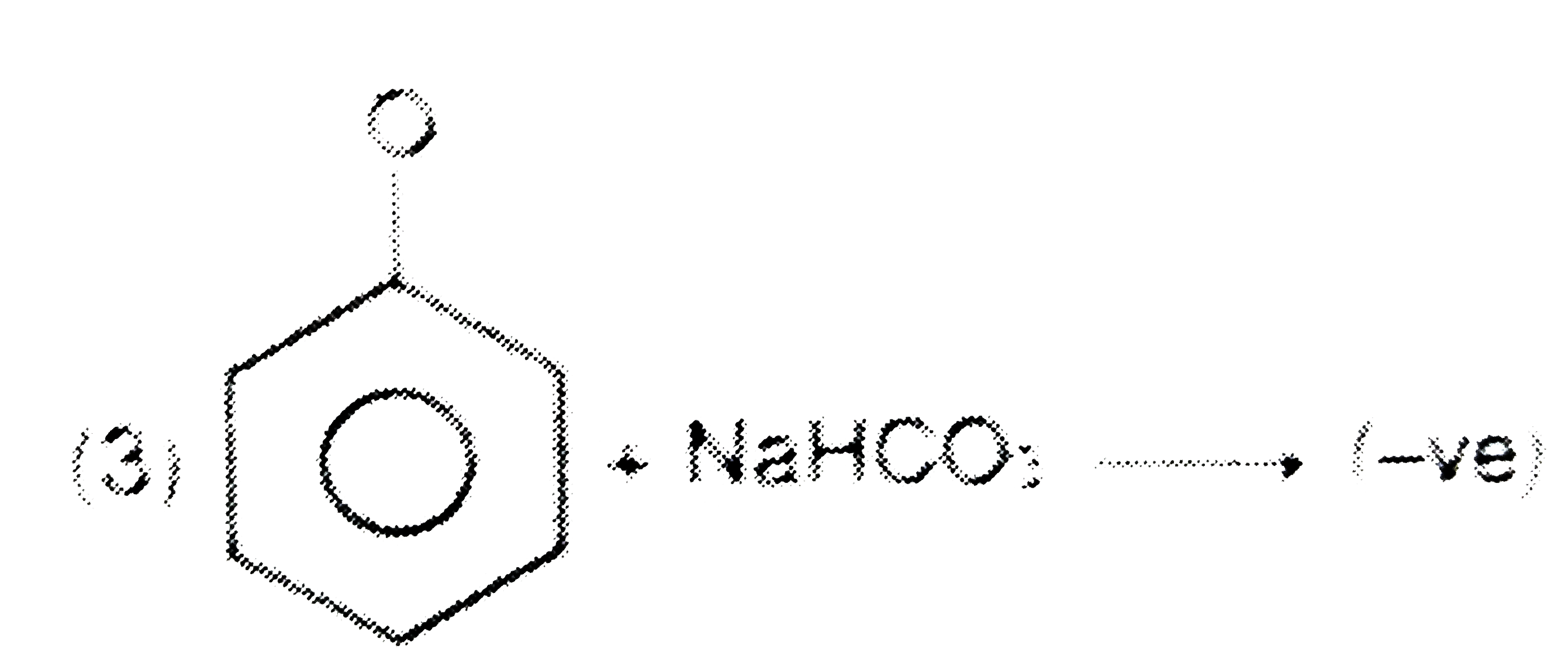
|
|
| 4. |
In how many of the folowinf reaction |H^(@)|gt|DeltaE^(@)|, assuming reacftion to be occurring at a constant temperature and pressure. H_(2)+(1)/(2)O_(2)rarrH_(2)O(l) Combustion of C_(2)H_(8)(g) at 400 K Dimerisation of NO_(2)(g) Fusion of water at 0^(@) C Vaporisation of any liquid at its boiling poing Dossociation of CaCO_(3)(s) Combustion of C_(2)H_(4) at 300m K |
|
Answer» |
|
| 5. |
In how many reaction CH_(3)-CHO is obtained as major product ? |
|
Answer» |
|
| 6. |
In how many of the following the concept of resonance can be observed CH_(2)=CH-Cl, CH_(3)-O-overset(+)(C)H-CH_(3) CH_(3)-O-CH_(2)overset(+)(C)H, CH_(3)-NH-CH_(2)-CH-CH_(3) CH_(3)-CH=CH-NH_(2), CH_(3)-CH_(2)=CH_NH-CH_(3) |
|
Answer» |
|
| 7. |
In how many of the following reactions, colored precipitate is obtained? (a). CuSO_(4)+NaoH("excess")to, (b) CuCl_(2)+NH_(3)("excess")to ltBrgt (c) ZnSO_(4)+NaOH("excess")to (d) ZnSO_(4)+NH_(3)("excess")to , (e) FeSO_(4)+NaOH("excess")underset(air)overset("in")to , (f) FeCl_(3)+NaoH("Excess")to (g) CuSO_(4)+Kl("excess")to, (h) ZnSO_(4)+NaHCO_(3)to (i) CuCl_(2)+NaNO_(3)to |
|
Answer» (b) `[Cu(NH_(3))_(4)]^(2+)(aq.)` (c). `Na_(2)[ZN(OH)_(4)](aq.)` (d). `[Zn(NH_(3))_(4)]^(2+)(aq.)` (e) `Fe(OH)_(2)darr("greenish")` (f) `Fe(OH)_(3)darr("reddish brown")` (g) CUL (white) (H) `ZnCO_(3)darr ("white")` (i) `Cu(NO_(3))_(2)darr(aq.)` |
|
| 8. |
In how many of the following processes, heat of neutralization released is less than 13.7 kcal (if 1gram equivalent of each is taken)? HCL(aq)+ NAOH(aq) HI(aq)+ NaOH(aq) HCN(aq)+KOH(aq) C_(6)H_(5)COOH(aq)+ NaOH(aq) HCl(aq)+ NH_(4)OH(aq) |
|
Answer» |
|
| 9. |
In how many of the following entropy increases? {:((a) N_(2(g)) + 3H_(2(g)) rarr 2NH_(3(g)),(b)PCl_(5(g)) rarr PCl_(3(g)) + Cl_(2(g))),((c ) H_(2)O_((s)) rarr H_(2)O_((g)),(d)H_(2)O_((l)) rarr H_(2)O_((g))),((e ) 2NaHCO_(3(s)) rarr Na_(2)CO_(3(s)) + H_(2)O_((g)) + CO_(2(g)),(f ) NH_(2)CO_(2)NH_(4(s)) rarr 2NH_(3(g)) + CO_(2(g))),((g) H_(2)O_((l)) rarr H_(2)O_((s)),(h) CO_(2(s)) rarr CO_(2(g))):} |
|
Answer» |
|
| 11. |
In how many of the following compounds Hyperconjugation effect is observed - |
|
Answer» |
|
| 12. |
In how many of the following cases, the negative charge is delocalised? |
|
Answer» |
|
| 13. |
In hot alkaline solution, Br_2disproportionates to 3Br_(2)- 6OH^(-) rarr 5Br^(-) + BrO_3^(-) +3H_(2)O .The equivalent weight of Br_(2)is 3M/x (mol wt = M). Then X is? |
|
Answer» <BR> Solution :For `3Br_(2)`MOLECULES change in. no = 5Change in OXIDATION number for 1 MOLECULE = `5/3` =n-factor equivalent weight of `Br_(2)= M/(5//3) =(3M)/5` |
|
| 14. |
in homologous series all the members have the same physical prperties |
|
Answer» |
|
| 15. |
In hexogonal systems of crystals, a frequently encountered arrangement ofatoms is described as a hexagonal prism. Here, the top and bottom of the cell are regular hexongonas and threeatoms are sandwiched inbetween them. A space filling model of this structure called haxagonal closed packed (HCP) is constituted of a sphere on a flat surface surrounded in the same plane by six identical spheres as closely as possible . Three spheres are then placed over the first layer so that they touch each other and represent the second layer. Finally, the second layer is covered with a third layer that is identical to the bottom layer that is identical to the bottom layer in relative position. Assume radius of every sphere to be 'r'. The empty space in this HCP unit cell is |
|
Answer» Solution :Space OCCUPIED by SPHERES in HCP = 74 % Empty space = ( 100 -74) % = 26 % |
|
| 16. |
In hexogonal systems of crystals, a frequently encountered arrangement ofatoms is described as a hexagonal prism. Here, the top and bottom of the cell are regular hexongonas and threeatoms are sandwiched inbetween them. A space filling model of this structure called haxagonal closed packed (HCP) is constituted of a sphere on a flat surface surrounded in the same plane by six identical spheres as closely as possible . Three spheres are then placed over the first layer so that they touch each other and represent the second layer. Finally, the second layer is covered with a third layer that is identical to the bottom layer that is identical to the bottom layer in relative position. Assume radius of every sphere to be 'r'. The number of atoms in this HCP unit cell is |
|
Answer» 4 `12 xx1/6 + 3 + 2 xx 1/2 = 6` |
|
| 17. |
In hexogonal systems of crystals, a frequently encountered arrangement ofatoms is described as a hexagonal prism. Here, the top and bottom of the cell are regular hexongonas and threeatoms are sandwiched inbetween them. A space filling model of this structure called haxagonal closed packed (HCP) is constituted of a sphere on a flat surface surrounded in the same plane by six identical spheres as closely as possible . Three spheres are then placed over the first layer so that they touch each other and represent the second layer. Finally, the second layer is covered with a third layer that is identical to the bottom layer that is identical to the bottom layer in relative position. Assume radius of every sphere to be 'r'. The volume of this HCP unit cell is |
|
Answer» `24sqrt2 r^(3)` |
|
| 18. |
In hexagonal systems of crystals, a frequently ecounted arrangement of atoms is described as a hexagonal prism. Here, the top and bottom of the cell are reqular hexagons and three atoms are sandwiched in between them. A space-filling model of this structure called hexagonal close-packed (HCP), is constituted of a sphere on a flat surface surrounded in the same plane by six identical spheres as closely as possible. There spheres are then placed over the first layer so that they touch each other and represent the second layer. Each one of these three sphere touches three spheres of the bottom layer. Finally the second layer is covered with third layer that is identical to the bottom layer in relative position. Assume radius of every sphere to be 'r' The volume of this HCP unit cell is |
|
Answer» `24sqrt2 r^(3)` |
|
| 19. |
In hexagonal systems of crystals, a frequently ecounted arrangement of atoms is described as a hexagonal prism. Here, the top and bottom of the cell are reqular hexagons and three atoms are sandwiched in between them. A space-filling model of this structure called hexagonal close-packed (HCP), is constituted of a sphere on a flat surface surrounded in the same plane by six identical spheres as closely as possible. There spheres are then placed over the first layer so that they touch each other and represent the second layer. Each one of these three sphere touches three spheres of the bottom layer. Finally the second layer is covered with third layer that is identical to the bottom layer in relative position. Assume radius of every sphere to be 'r' The number of atoms in the HCP unit cell is |
|
Answer» 4 |
|
| 20. |
In hexagonal systems of crystals , a frequenctly encountered arrangement of atoms is described as a hexagonal prism. Here, the top and bottom of the cell are regular hexagons and three atoms are regular hexagons and three atoms are sandwiched inbetween them. A space filling model of this structure called hexagonal closed packed (HCP) is constituted of a sphere on a flat surface surrounded in the same plane by six identical spheres as closely as possible . Three spheres are then placed over the first layer so that they touch each other and represent the second layer. Finally, the second layer is covered with a third layer that is identical to the bottom layer in relative position . Assume radius of every sphere to be 'r'. The empty space in this HCP unit cell is |
|
Answer» Solution :SPACE occupied by spheres in HCP =74% `therefore` EMPTY space =(100-74)%=26% |
|
| 21. |
In hexagonal systems of crystals , a frequenctly encountered arrangement of atoms is described as a hexagonal prism. Here, the top and bottom of the cell are regular hexagons and three atoms are regular hexagons and three atoms are sandwiched inbetween them. A space filling model of this structure called hexagonal closed packed (HCP) is constituted of a sphere on a flat surface surrounded in the same plane by six identical spheres as closely as possible . Three spheres are then placed over the first layer so that they touch each other and represent the second layer. Finally, the second layer is covered with a third layer that is identical to the bottom layer in relative position . Assume radius of every sphere to be 'r'. The volume of this HCP unit cell is |
|
Answer» `24sqrt3r^3` |
|
| 22. |
In hexagonal systems of crystals , a frequenctly encountered arrangement of atoms is described as a hexagonal prism. Here, the top and bottom of the cell are regular hexagons and three atoms are regular hexagons and three atoms are sandwiched inbetween them. A space filling model of this structure called hexagonal closed packed (HCP) is constituted of a sphere on a flat surface surrounded in the same plane by six identical spheres as closely as possible . Three spheres are then placed over the first layer so that they touch each other and represent the second layer. Finally, the second layer is covered with a third layer that is identical to the bottom layer in relative position . Assume radius of every sphere to be 'r'. The number of atoms in this HCPunit cell is |
|
Answer» 4 `=12xx1/6+3+2xx1/2`=6 |
|
| 23. |
In hexagonal system of crystals, a frequently encountered arrangement of atoms is described as a hexagonal prism. Here, the top and bottom of the cell are regular hexagonand three atomsare sandwiched in between them. A space filling model of this structure, called hexagonal close packed (HCP), is constituted of a sphere on a flat surface surrounded in the same plane by six identical sphere as closely as possible. Three spheres are then placed over the first layer so that they touch other and represent the second layer. Each one of the three spheres touches three spheres of the bottom layer. Finally, the second layer is covered with a third layer that is identical to the bottom layer in relative position. Assume radius of every sphere to be same The empty space in this HCP unit cell is |
|
Answer» 0.74 =`("Volume of the atoms in one unit CELL")/("Volume of one unit cell")=74%` `"EMPTY space"=26%` |
|
| 24. |
In hexagonal system of crystals, a frequently encountered arrangement of atoms is described as a hexagonal prism. Here, the top and bottom of the cell are regular hexagonand three atomsare sandwiched in between them. A space filling model of this structure, called hexagonal close packed (HCP), is constituted of a sphere on a flat surface surrounded in the same plane by six identical sphere as closely as possible. Three spheres are then placed over the first layer so that they touch other and represent the second layer. Each one of the three spheres touches three spheres of the bottom layer. Finally, the second layer is covered with a third layer that is identical to the bottom layer in relative position. Assume radius of every sphere to be same The volume of this HCP unit cell is |
|
Answer» `24sqrt2r^(3)` `"Base AREA" = 6timessqrt3/4(2r^(2))` `"VOLUME" = (6sqrt3)/4(2r)^(2)*SQRT2/(3)4r=24sqrt2 r^(3)` |
|
| 25. |
In hexagonal system of crystals, a frequently encountered arrangement of atoms is described as a hexagonal prism. Here, the top and bottom of the cell are regular hexagonand three atomsare sandwiched in between them. A space filling model of this structure, called hexagonal close packed (HCP), is constituted of a sphere on a flat surface surrounded in the same plane by six identical sphere as closely as possible. Three spheres are then placed over the first layer so that they touch other and represent the second layer. Each one of the three spheres touches three spheres of the bottom layer. Finally, the second layer is covered with a third layer that is identical to the bottom layer in relative position. Assume radius of every sphere to be same The number of atoms in this HCP unit cell is |
|
Answer» 4 `=12times1/6+2times1/2+3=6` |
|
| 26. |
In hexagonal close packing, the difference in the number of tetrahedral and octahedral voids per unit cell is |
|
Answer» `therefore" octahedral voids " =6,` tetrahedral voids =12, DIFFERENCE = 12-6=6 |
|
| 27. |
In hexa-1, 3-dien-5yne, the number of C-C, sigma, C-C pi and C-H sigma bonds respectively are |
|
Answer» 5, 4 and 6 C-C, `sigma`-BONDS=5 C=C, `PI`-bonds = 4 C-H, `sigma`-bonds = 6 |
|
| 28. |
In Heisenberg.s uncertainty experiment |
|
Answer» Use of HIGH INTENSITY light increases accuracy in the measurement of distance of `E^(-)` from thenucleus |
|
| 29. |
In hevy water molecule |
|
Answer» Both hydrogen ATOMS and OXYGEN atoms are heavier isotopes |
|
| 30. |
In heavy water molecualar |
|
Answer» Both HYDROGEN atomsand oxygen atoms are heavier isotopes |
|
| 31. |
In HCOO- ion, the two carbon-oxygen bonds are found to be equal length, what is the reason for it? |
|
Answer» The C = O BOND is weaker than the C - O bond 
|
|
| 32. |
In halogens, which of the following decreases from flourine to Iodine? |
|
Answer» BOND length |
|
| 33. |
In halogenation of aromatic hydrocarbon, a halogen carrier is used which is generally a Lewis acid. The main function of this reagent is to generate the species |
|
Answer» X |
|
| 34. |
In halogenationof aromaticcompounds, catalyst is |
|
Answer» LEWIS BASE |
|
| 35. |
In Hall's process, tha main reagent is mixed with |
|
Answer» NaF |
|
| 36. |
In haemoglobin, CO and not O_2 links to Fe (if both CO and O_2 are present ) because CO is a stronger ligand than O_2. The number of groups to which Fe is coordinated other than vacant site for CO in haemoglobin is |
|
Answer» |
|
| 37. |
In Haber's process 50.0 g of N_(2)(g) and 10.0 g of H_(2)(g) are mixed to produce NH_(3)(g). What is the number of moles of NH_(3)(g) formed? |
|
Answer» 3.33 |
|
| 38. |
In Haber process for the synthesis of ammonia which of the following catalysts are used ? |
|
Answer» `Fe, K_(2)O` |
|
| 39. |
In H_2O_2the degree of hydrogen bonding is |
|
Answer» Same as in WATER |
|
| 40. |
In H_2O_2molecule, the O-O bond length is |
|
Answer» `1.34A^(@)` |
|
| 41. |
In H_2O_2molecule, the H-O-O angle is |
|
Answer» `95^@` |
|
| 43. |
In H_(2(g)) + I_(2(g)) (violet) hArr 2HI_((g))if H_2 is added than at new equilibrium concentration and colour will be …. |
|
Answer» SOLUTION :(i) As the concentration of `H_2` increase, it more COMBINE with `l_2` so , `I_2` decrease and intensity of COLOUR decreases. (ii) The amount of `H_2` is less at equilibrium compare to initial. (III) The amount of `H_1` increases but `K_c` remain constant. |
|
| 44. |
In H-atoms, the energy of electron in the nth orbit is given as E_(n) = - (13.6)/(n^(2)) eV Show that E_((n +1)) - E_(n) = (13.6 xx 2)/(n^(3)) eV for large value of n. |
|
Answer» Solution :`E_((n +1)) - E_(n) = - (13.6)/((n +1)^(2)) - (-(13.6)/(n^(2))) = 13.6 [(1)/(n^(2)) - (1)/((n +1)^(2))] = 13.6 xx ((n +1)^(2)- n^(2))/(n^(2) (n +1)^(2))` `= (13.6 xx (2N +1))/(n^(2) (n +1)^(2)) = (13.6 xx 2n)/(n^(2) (n +1)^(2)) + (13.6)/(n(n + 1)^(2)) =(13.6 xx 2)/(n(n +1)^(2)) + (13.6)/(n^(2) (n + 1)^(2))` As n is LARGE, `n + 1 ~=n`. HENCE, `E_((n +1)) - E_(n) ~= (13.6 xx 2)/(n xx n^(2)) + (13.6)/(n^(2) xx n^(2)) = (13.6 xx 2)/(n^(3))` (Neglecting second term because `n^(4)` is very large) |
|
| 45. |
In gylcerine, |
|
Answer» One PRIMARY `-OH` group is present only |
|
| 46. |
Due to inert pair effect, the stability of +2 oxidation state increases on moving down the group 14. Why? |
| Answer» SOLUTION :DECREASE,Increases , inert PAIR EFFECT | |
| 47. |
In group 14, the tendency for catenation decreases with increasing atomic number . |
| Answer» Solution :As we move down the group 14, the atomic SIZE increasesand HENCETHE STRENGTH of the element -elementbond, i.e, the bonddissociationenthalphy decreasessteadily. Consequentlythe tendencyfor catendation decreasesdown the group with increasingatomic NUMBER. | |
| 48. |
In group 14 of the periodic table, the oxidising power of tetravalent species decreases in the ordera. Ge gt Pb gt Snb. Ge gt Sn gt Pbc. Pb gt Ge gt Snd. Pb gt Sn gt Ge |
|
Answer» `GE GT PB gt SN` |
|
| 50. |
In graphite, electrons are ……… |
|
Answer» localised on every third C-atom. |
|