Saved Bookmarks
This section includes 7 InterviewSolutions, each offering curated multiple-choice questions to sharpen your Current Affairs knowledge and support exam preparation. Choose a topic below to get started.
| 1. |
In the hydrogen atom, the electrons are excited to the 5th energy level. The number of lines that may appear in the spectrum will be |
|
Answer» 4 `= Sigma (n_(2) - n_(1)) = Sigma(5 -1) = Sigma4 = 4 + 3 + 2 + 1 = 10` |
|
| 2. |
In the hydrocarbon overset(7)CH_(3)-overset(6)CH_(2)-overset(5)CH=overset(4)CH-overset(3)CH_(2)-overset(2)C-=overset(1)CH the state of hybridisation of carbon 1,2,3,4 and 7 are in the following sequence. |
|
Answer» `SP,sp,sp^(3),sp^(2),sp^(3)` |
|
| 3. |
In the hydrocarbon CH_(3) - CH_(2) - CH = ""^(.)CH - CH_(2) - C-= CH the state of hybridisation of carbon 1,2,3,4 and 7 are in the following sequence. |
|
Answer» SP, sp, `sp^(3), sp^(2), sp^(3)` |
|
| 4. |
In the hydroboration-oxidation reaction of propene with dibroane, H_2O_2 and NaOH, the organic compound formed is : |
|
Answer» `CH_3CH_2OH` |
|
| 5. |
In the Hoope's process for refining of Al the fused materials form three different layers and they remain spearated during electrolysis also. This is because. |
|
Answer» The upper layer is kept attracted by cathode and lower layer is kept attracted by anode. |
|
| 6. |
In the hardening stage of plaster of paris, the compound formed is |
|
Answer» `CaSO_(4)` |
|
| 7. |
In the Haber process N_(2)+ 3H_(2) hArr 2NH_(3) pressure is about 200 atm in pressure of catalyst and temperature is kept 500^(@)C even though the reaction is exothermic. Reason : Energy needed for this reaction is easily obtained at this temperature. |
|
Answer» if both assertion and reason are correct and reason is CORRECTEXPLANATION for assertion. |
|
| 8. |
In the ground state, an element has 13 electrons in its "M - shell". The element is |
|
Answer» Copper |
|
| 9. |
In the gives reaction sequence CH_(3)CH_(2)underset(O)underset(||)C CH_(2)CH_(3)overset(Br_(2)//CH_(3)COOH)rightarrow Xoverset(Br_(2)//NaOH)rightarrow Y X,Y respectively are |
|
Answer» `CH_(3)CH_(2)COCHBrCH_(3)&CH_(3)CH_(2)COCBr_(2)CH_(3)` |
|
| 10. |
In the grand state, an element has 13 electrons in its M-shell. The element is |
|
Answer» Manganese `1s^(2) 2S^(2) 2P^(6) 3s^(2) 3p^(6) 3d^(5) 4s^(1) or 1s^(2) 2s^(2) 2p^(6) 3s^(2) 3p^(6) 3d^(5) 4s^(2)` Hence, the element is chromium (Z = 24) or manganes (Z = 25) |
|
| 11. |
In the given transformation, which the following is the most appropriate reagent? |
|
Answer» `NH_(2)NH_(2), overset(Θ)(OH)` |
|
| 12. |
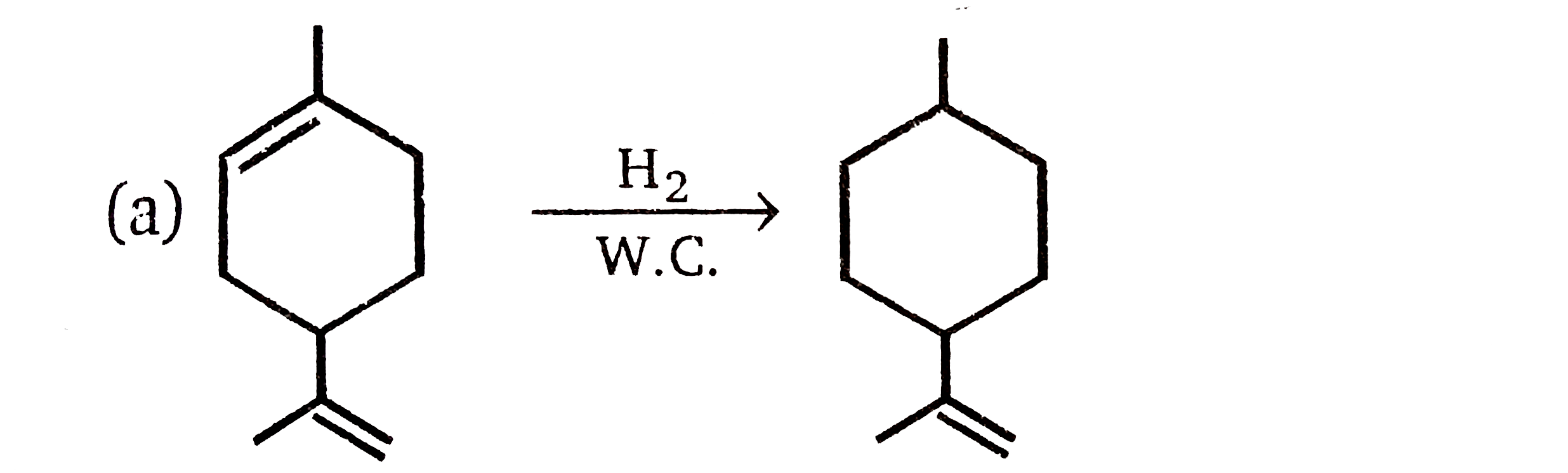
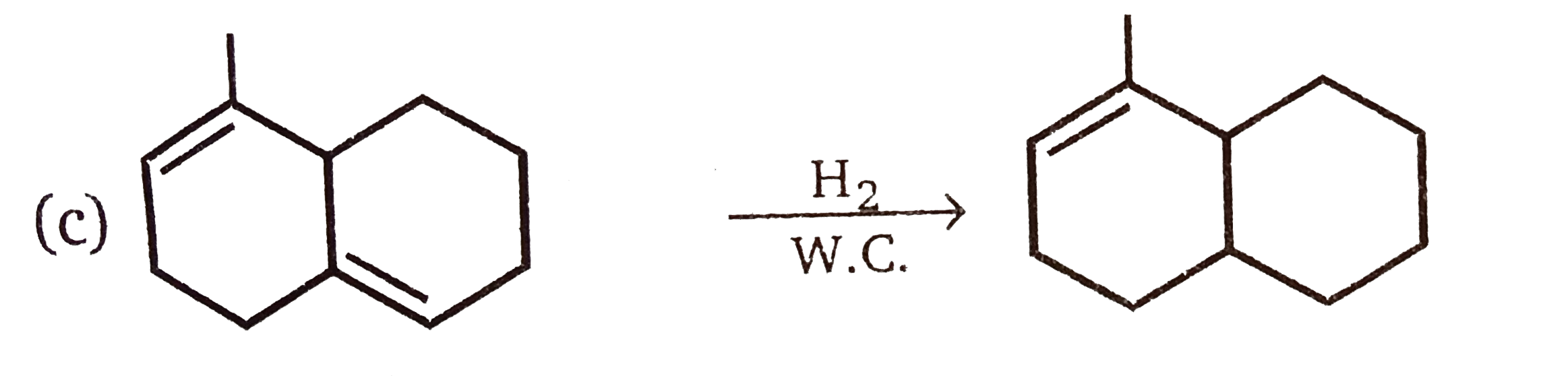
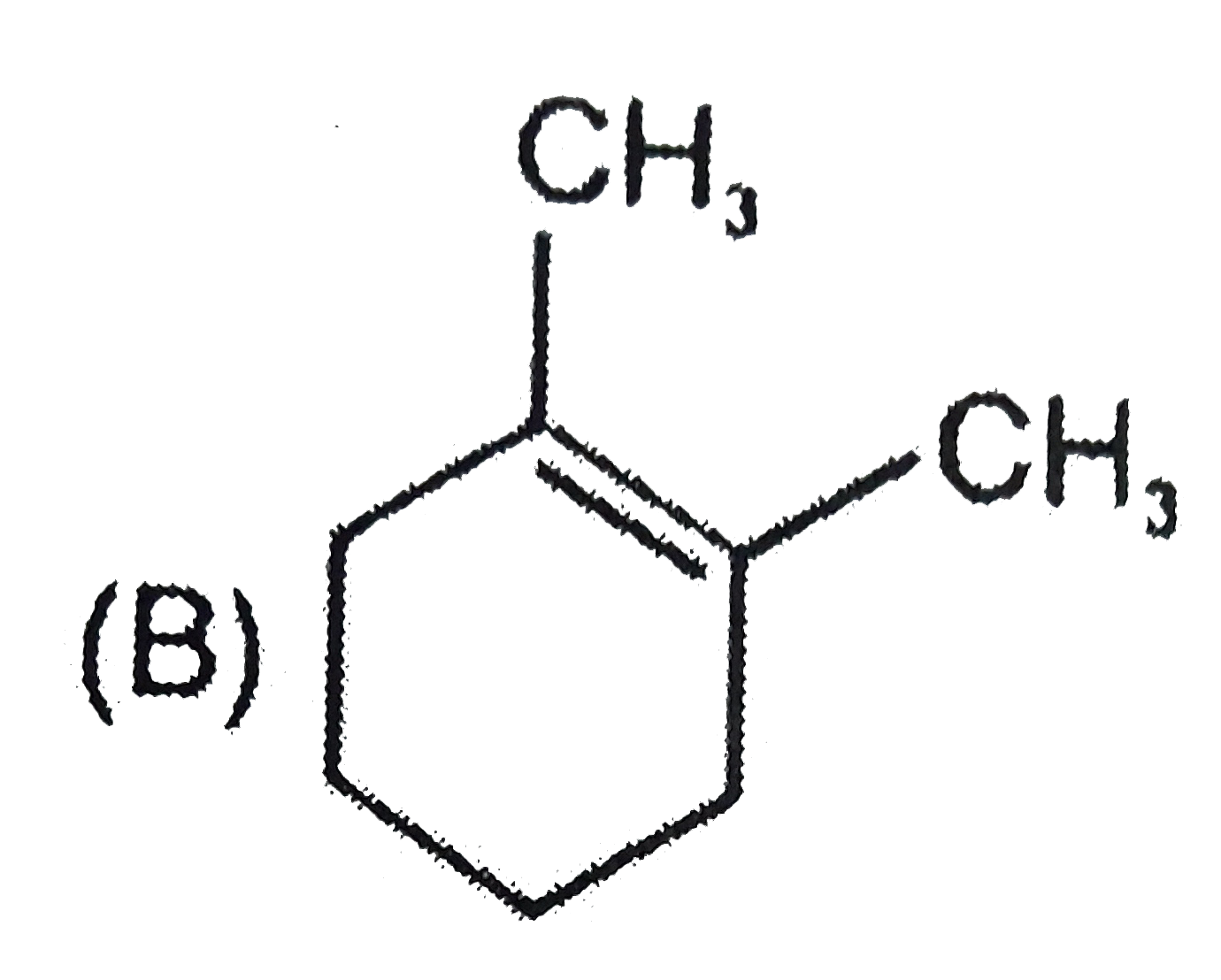
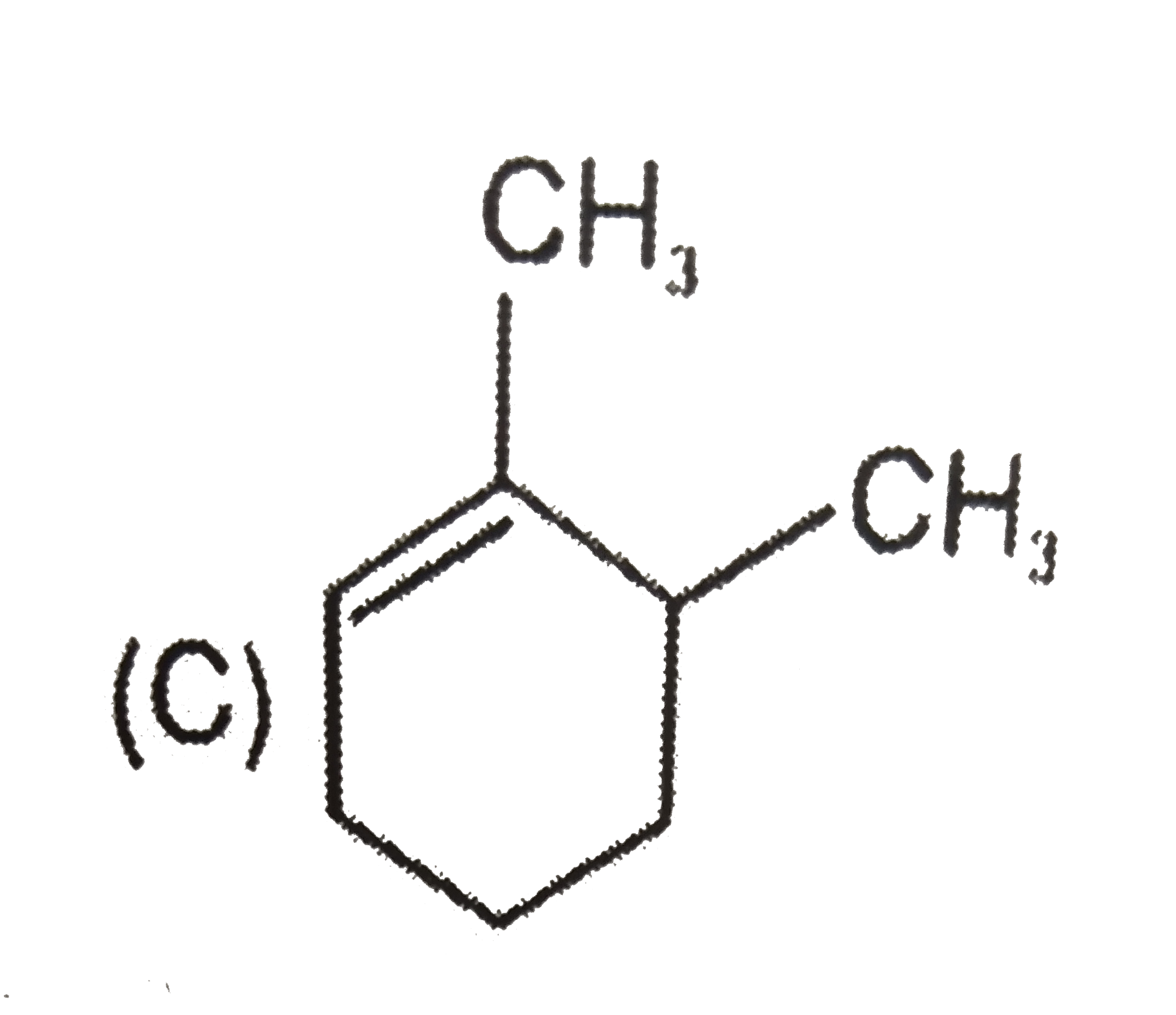
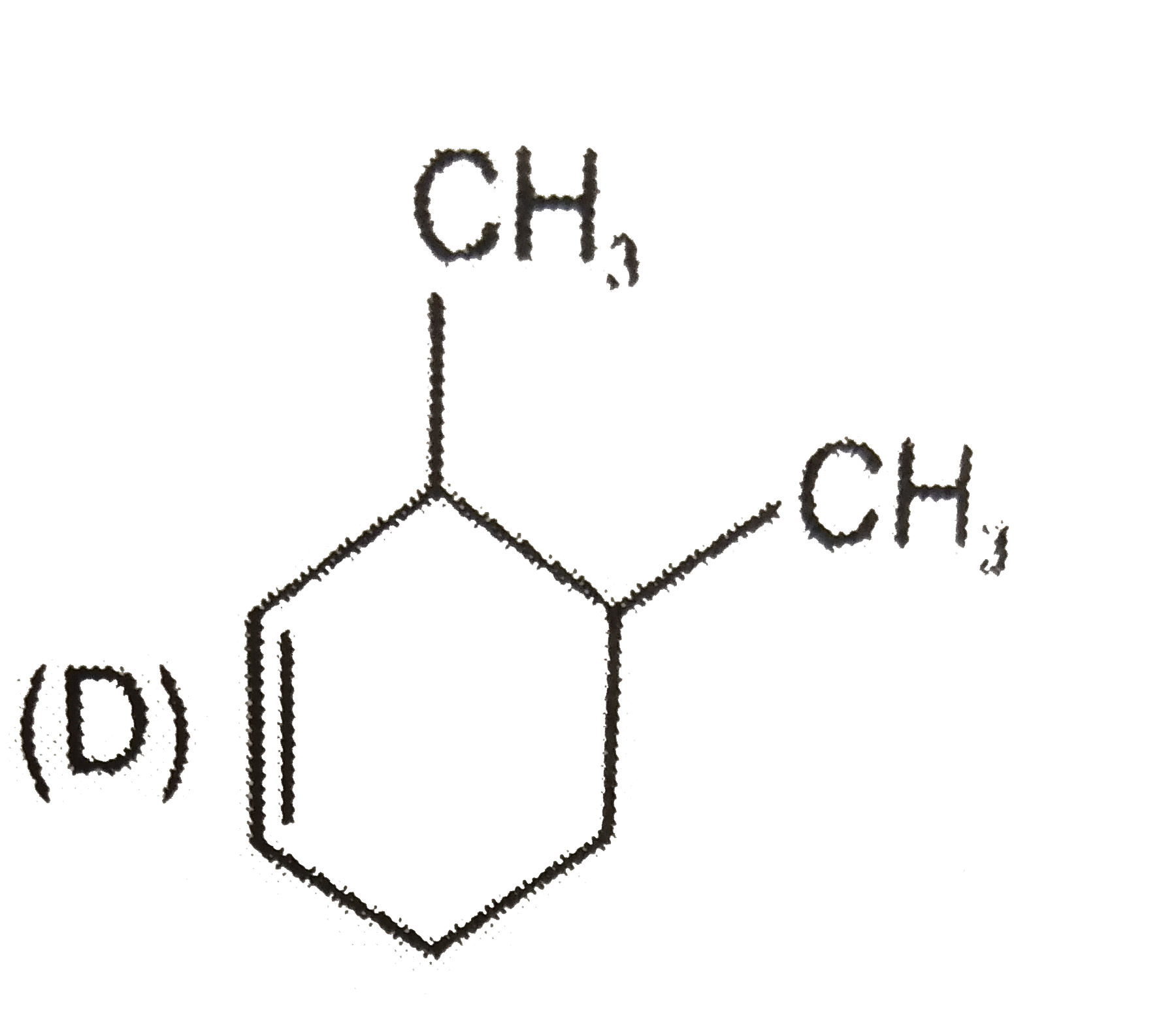
In the given selective hydrogenation which combination is incorrect? |
|
Answer»
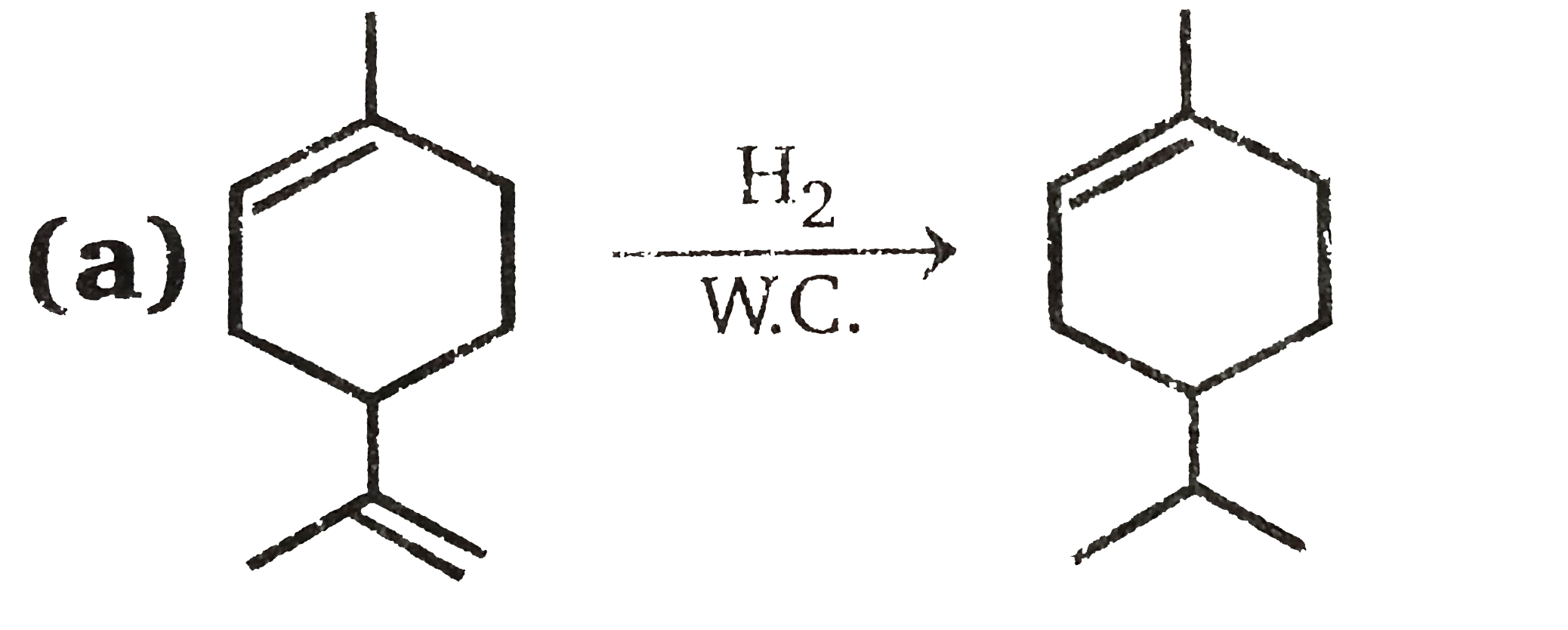 LESS stable and less sterically hindered ALKENE will undergo REDUCTION. |
|
| 13. |
In the given reactions: (i). CH_(3)Br overset(Na,ether)to X underset(hupsilon)overset(Br_(2))toY overset(Na,ether)Z (ii) CH_(3)COOH overset(NaOH)to X underset(CaO)overset(NaOH)to Y underset(h upsilon)overset(Br_(2))toZ Identify, X,Y and Z |
|
Answer» X-(i) `CH_(4)` (II) `CH_(3)COONA` |
|
| 14. |
In the given reactions M is the number of major products obtained in I^(st) reaction and N number of major products obtained in II^(nd) reaction. Report your answer as MN. |
Answer» 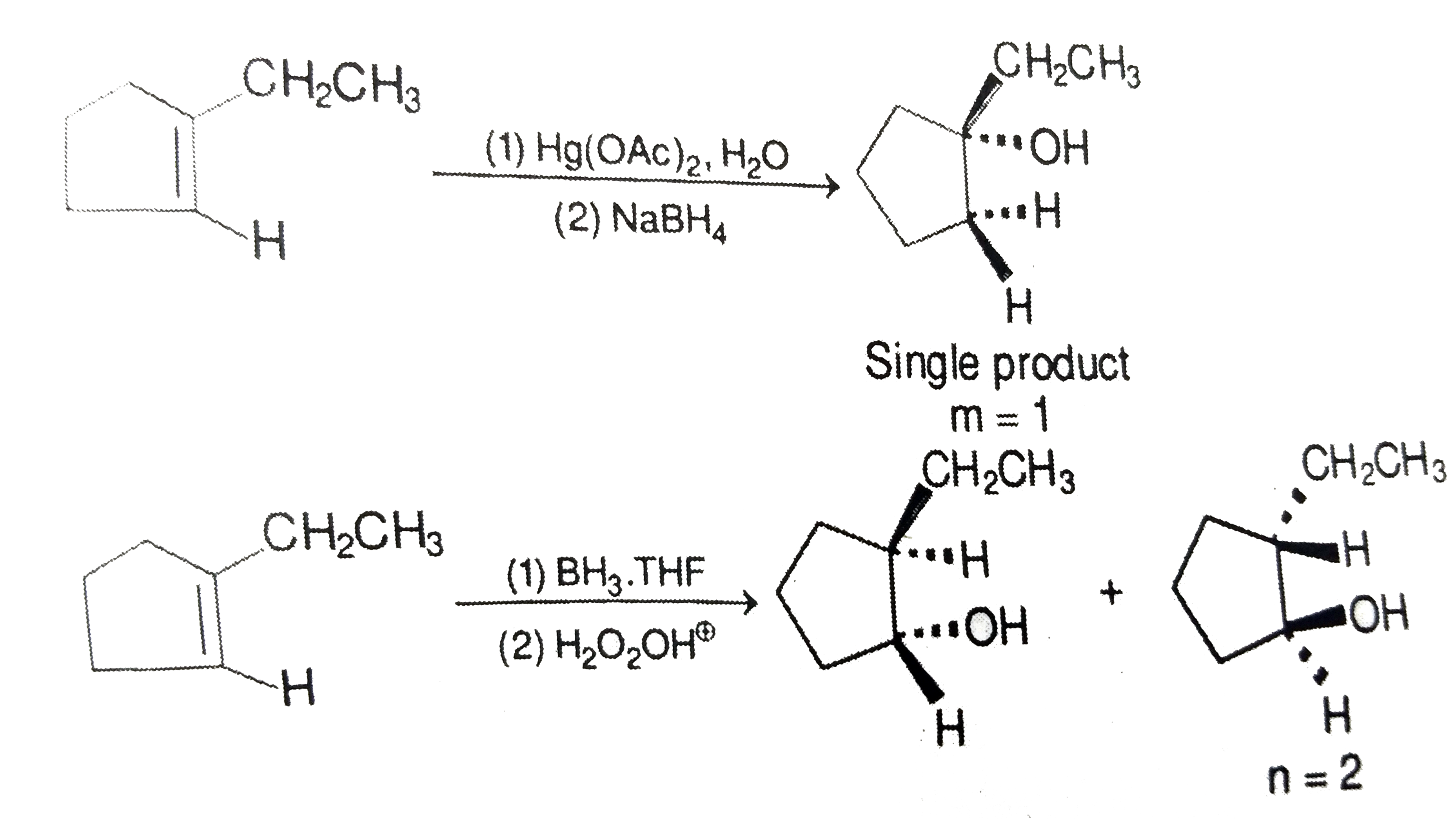
|
|
| 15. |
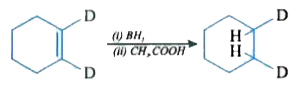
In the given reaction [X] will be : |
|
Answer»
|
|
| 16. |
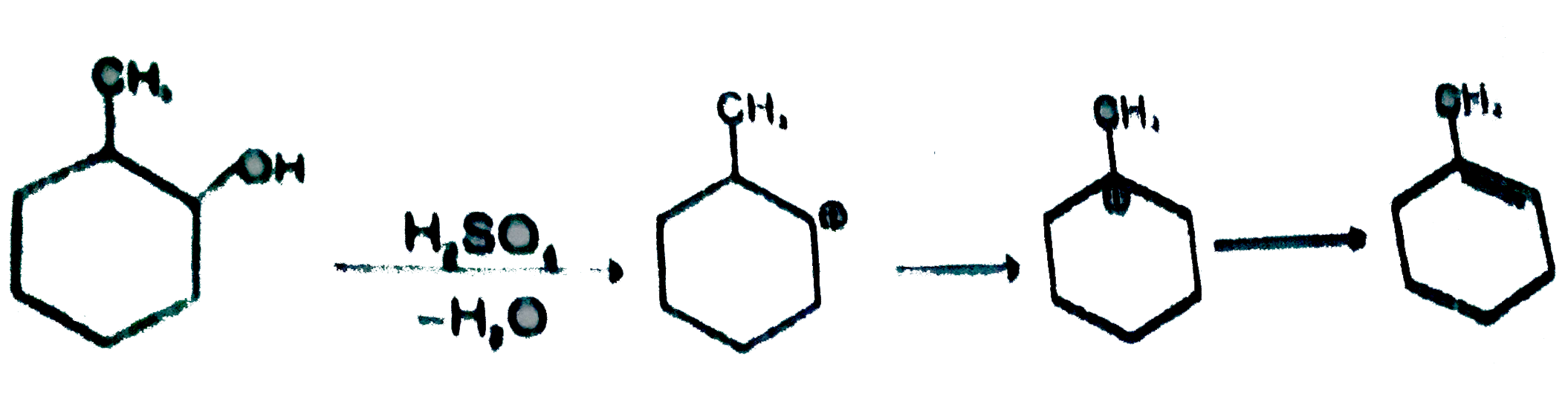
In the given reaction : [X] will be : |
|
Answer»
|
|
| 17. |
In the given reaction X is CH_(3)CHO + CH_(2) (COOH)_(2) overset("Pyridine" //Delta)rarr X |
|
Answer» `CH_(3)COOH` |
|
| 18. |
In the given reaction (x) underset("2)"H_2O //Zn)overset("1)"O_3)to underset("(only product)")(CH_3-overset(O)overset(||)C-CH_2-CH_2-CH_2-CH_2-CHO),(x) is |
|
Answer» `CH_3- OVERSET(CH_2)overset(||)C-CH_2-CH_2-CH_2-CH-CH_2` 
|
|
| 19. |
In the given reaction which of the following is the relation of between K_p and K_c ? N_(2(g)) + 3H_(2(g)) hArr 2NH_(3(g)) |
|
Answer» `K_p=K_c` |
|
| 20. |
In the given reaction sequence, Y is |
|
Answer» PHENYL glyoxal 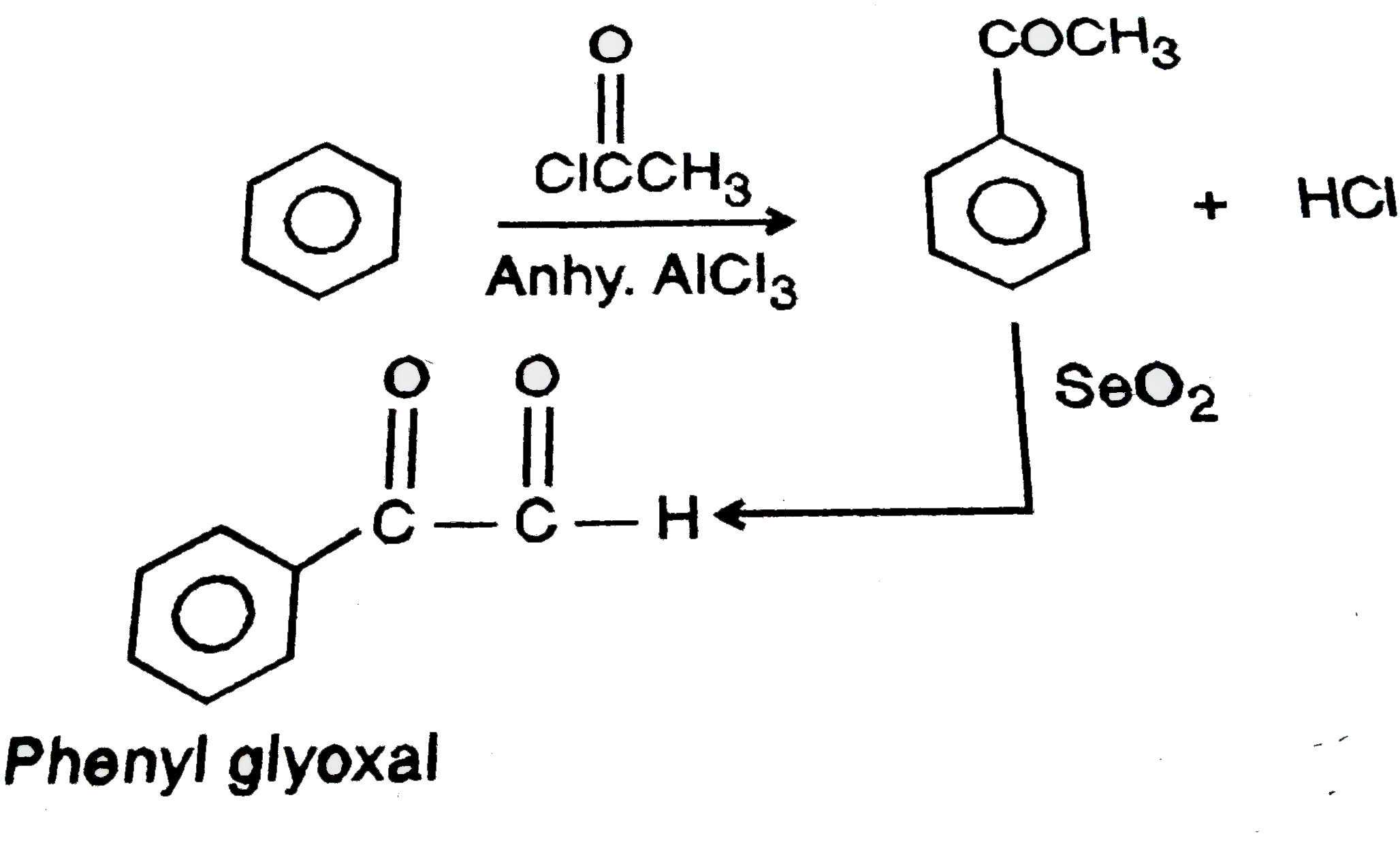
|
|
| 21. |
In the given reaction K_(2)Cr_(2)+XH_(2)SO_(4)+YSO_(2)rarrK_(2)SO_(4)+R_(2)(SO_(4))_(3)+ZH_(2)O X,Y,Z are |
|
Answer» 1,3,1 |
|
| 22. |
In the given reaction : overset(Conc. H_2SO_4)to [X] as major product [X] will be : |
|
Answer»
|
|
| 23. |
In the given reaction : CH_3-underset(Ph)underset(|)CH-oversetoverset(OH)(|)CH-CH_3underset(Delta)overset(conc. H_2SO_4)to Alkenes Total numberof alkenes (including stereo isomers) formed will be |
| Answer» | |
| 24. |
In the given reaction2X (g) + Y (g) hArr 2 Z (g) + 80kcal, which combination of pressure and temperature will give the highest yield of Z at equilibrium ? |
|
Answer» 1000 atm and `200^(@)C` |
|
| 25. |
In the given molecules the sites undergoes deprotonation and protonation most readily respectively arex & y the x+y=? overset(1)(N_(2)H)-underset(""^(2)NH)underset(||)C-overset(3)(NH)-CH_(2)-CH_(2)-CH_(2)-underset(""^(4)NH_(2))underset(|)CH-overeset(5)(COOH) How many of the following compounds will accept H^(o+) from ammonium ion. How many of the following compounds react with NaHCO_(3) and liberate CO_(2)(g) 1. Salicylic acid2.Pthalic acid3.Picric acid4 Resorcinol 5.Carbolic acid6.Aspirin7.Anisol8.Tarteric acid |
|
Answer» |
|
| 26. |
In the given molecules the sites undergoes deprotonation and protonation most readily respectively arex & y the x+y=? overset(1)(N_(2)H)-underset(""^(2)NH)underset(||)C-overset(3)(NH)-CH_(2)-CH_(2)-CH_(2)-underset(""^(4)NH_(2))underset(|)CH-overeset(5)(COOH) How many of the following compounds will accept H^(o+) from ammonium ion. Pyridine ,Aniline,Pyrrole,Tripheryl amine, Benzyl amine,Methyl amine,Di-methyl amine,Tri-methyl amine |
|
Answer» x=5,y=2so x+y=7 |
|
| 27. |
In the given chemical reaction, 2P+H_(2)O+CO_(2) to Q overset(H_(2)O+CO_(2))to 2R overset(NaCl)toS+NH_(4)Cl Identify S. |
|
Answer» `Na_(2)CO_(3)` `UNDERSET((P))(2NH_(3))+H_(2)O+CO_(2) to underset((Q))((NH_(4))_(2)CO_(3)) overset(H_(2)O+CO_(2))to underset((R))(2NH_(40HCO_(3)) overset(NaCl)to underset((S))(NaHCO_(3))+NH_(4)Cl` |
|
| 28. |
In the given compound the order of case with which hydrogen atom can be abstracted from carbon I to VI is : |
|
Answer» I gt VI gt IV = V gt I gt III |
|
| 29. |
In the Gattermann reaction of preparation of chlorobenzene from benzene, the catalyst used is …………….. . |
| Answer» SOLUTION :`Cu//HCl` | |
| 30. |
In the Friedel-Crafts acylation, the attacking species is |
|
Answer» `AlCl_3` |
|
| 31. |
In the free radical chlorination of methane, the chain initiating step involves the formation of |
|
Answer» CHLORINE RADICAL |
|
| 32. |
In the formation rection of NH_(3)from N_(2)and H_(2) 140 g of N_(2) and 40 g H_(2)were mixed. Select the option which is/are incorrect? |
|
Answer» Maximum MASS of `NH_(3)` which can be formed is 180 gm |
|
| 33. |
In the formation of SF_(6) molecule, the sulphur atom is in |
|
Answer» 1 ST EXCITED STATE |
|
| 34. |
In the formation of N_2^+, the electron is lost from : |
|
Answer» `SIGMA`-ORBITAL |
|
| 35. |
In the formation of homo diatomic neutral molecule, if 'N' atomic orbitals combine, then the total number of bonding molecular orbitals formaed is |
|
Answer» 2N |
|
| 36. |
In the formation of ethylene molecule , the carbon atom makes use of ___________ hybridisation . |
|
Answer» `sp` |
|
| 37. |
In the formation of covalent bond |
|
Answer» transfer of electrons take PLACE |
|
| 38. |
In the formation of B-H-B bridge in diborane, the orbitals involved in overlapping are |
|
Answer» 1 s orbital of 'H' atom and one of the each `sp^3`HYBRID orbital of BORON atoms CONTAINING one electron each |
|
| 39. |
In the formation of Al_(2)O_(3) from Al and O_(2), if 1.5 mole of oxygen is used up, the mass of aluminium that reacted is |
|
Answer» 27g |
|
| 40. |
In the formation of a homo diatomic neutral molecule, if N atomic orbitals combine, then the total number of bonding molecular orbital formed is |
| Answer» Answer :C | |
| 41. |
In the following which situation precipitation will be occurs ? |
|
Answer» `Q_(sp)=K_(sp)` |
|
| 42. |
In the following which is not glyceride ? |
|
Answer» Fats |
|
| 43. |
In the following which configuration shows halogen's configuration ? |
|
Answer» `[Ne] 2s^(2) 2p^(4)` |
|
| 45. |
In thefollowingthe element with thehighestionizationenergy is |
|
Answer» `[Ne] 3 s^(2) 3p^(1)` Due tohighesteffectivenuclearcharge , it has thefirstionizationenthalpy. Due tohighesteffectivenuclearcharge , it hasthefirstionizationenthalpy. |
|
| 47. |
In the following system at equilibrium, N_(2)+3H_(2)hArr2NH_(3), the reaction mixture contains 0.005 mol of N_(2), 0.012 mol of H_(2) and 0.002 mol of NH_(3) in a 2 litre vessel. Calculate K_(c). |
|
Answer» Solution :Volume of the vessel is 2 LITRE `[NH_(3)]=0.002/2=0.001"MOL"L^(-1),[N_(2)]=0.005/2=0.0025"mol"L^(-1)` `[H_(2)]=0.012/2=0.006"mol"L^(-1)` `K_(c)=([NH_(3)]^(2))/([N_(2)][H_(2)]^(3))=((0.001)^(2))/((0.0025)(0.006)^(3))=1.852xx10^(3)`. |
|
| 48. |
In the following structures |
|
Answer» Structure II is a meso compound |
|
| 49. |
In the following statements : (A) Ideal gases are liquefied only at very low temperature (B) Ideal gases cannot be liquefied (C) Ideal gas behaviour is observed by real gases at low pressure (D) Idealgases do not exist The correct statements are : |
|
Answer» A, B, C and D |
|
| 50. |
In the following six electronicconfiguration (remaining inner orbital are completely flled). Mark the correct optio(s). |
|
Answer» Order of spin MULTIPLICITY : `C-IIgtC-I=C-IIIgtC-IV` |
|