Saved Bookmarks
This section includes 7 InterviewSolutions, each offering curated multiple-choice questions to sharpen your Current Affairs knowledge and support exam preparation. Choose a topic below to get started.
| 1. |
X and Y are two elements which form X_(2)Y_(3 and X_(3)Y_(4). If 0.20 mol of X_(2)Y_(3) weighs 32.0g and 0.4mol of X_(3)Y_(4) weighs 92.8g, the atojic weights of X and are respectively: |
|
Answer» 16.0 and 56.0 |
|
| 2. |
Which of the following represents 3-methylpenta-1,3-diene? |
|
Answer» `CH_(2)=CH(CH_(2))_(2)CH_(3)` |
|
| 3. |
Write the electronic configurations of the following ions. (i). Mn^(2+) (ii). Fe^(3+) (iii) Ni^(2+) ltBrgt (iv). Cr^(3+). |
|
Answer» Solution :(i) `[Ar]3d^(5)4S^(0)` (ii) `[Ar]3d^(5)4s^(0)` (iii) `[Ar]3d^(8)4s^(0)` (iv) `[Ar]3d^(3)4s^(0)`. |
|
| 4. |
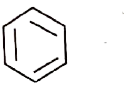
What are the necessary conditions for any compound to show aromaticaly? |
|
Answer» Solution :(i) The system (or species) must be planar (II) It should be cyclic (III) It must contain (4n+2) delocalised `pi` ELECTRONS where n is an integer (including Zero). THUS conjugated, planar cyclic systems containing 2,6,10,14…. Delocalised `pi` electrons will be aromatic |
|
| 5. |
Which of the following reagents cannot be used for the preparation of hydrogen peroxide ? |
|
Answer» SODIUM peroxide |
|
| 6. |
When R-Mg - X , Grignard's Reagent is treated with solvents can yield alkanes. . What is A ? |
|
Answer» `C_2H_6` 
|
|
| 7. |
What is oxidation number of oxygen in Na_(2)O_(2), Na_(2)O, OF_(2) compounds ? |
|
Answer» `-2, -1, 0` |
|
| 8. |
What is the ratio between the energies of two radiations, one with a wavelength of 6000 Å and the other with 2000 Å [1 Å = 10^(-10)m]? |
| Answer» SOLUTION :`(1)/(3)` | |
| 9. |
When an equimolar mixture of two gases A and B [M_(A)gtM_(B)] is allowed to effuse thrugh a pin hole : |
|
Answer» B COMES out at a faster rate |
|
| 10. |
Which one of the following is non-aromatic? |
|
Answer»
|
|
| 11. |
The reagents used fro softening of the temporary hardness of water is/are |
|
Answer» `Ca_(3)(PO_(4))_(2)` `Ca(HCO_(3))_(2) + Ca(OH)_(2) to 2CaCO_(3) darr + 2H_(2)O` `Ca(HCO_(3))_(2) + Na_(2)CO_(3) to CaCO_(3) darr + 2NaHCO_(3)` |
|
| 12. |
Which of the fallowing compounds can be best prepared by wurtz-reaction? |
|
Answer» iso-butane |
|
| 13. |
What is K_(H) inP_("solute")= K_(H) X_("solute") ? On what does the value of K_(H) depend ? |
|
Answer» |
|
| 14. |
Which does not form peroxides? |
|
Answer» Ba |
|
| 15. |
What is the mole fraction of the solute in a 1.0m aqueous solution ? |
|
Answer» `1.770` Mole fraction of solute `= (("1 mol"))/(1" mol"+((100g))/(("18 g mol"^(-1))))=(1)/(56.5)` `=0.0177`. |
|
| 16. |
When mercury is oxidised by H_2O_2the increase in oxidation state of mercury is |
|
Answer» 2 |
|
| 17. |
Using the ideal gas equation how will you calculate the values of R ? |
|
Answer» Solution :We can calculate R using the equation, `R=(PV)/(nT)` (i) P is 1 atm, volume `22.414 md^(3)`. For 1 OLE at 273.15 K. `R=(1 atm xx22.414 md^(3))/(1 "mol"xx273.15 k)` `=0.0821 dm^(3) atm. "mol"^(-1)K^(-1)` (II) (STP), Where `P=1 "bar" (10^(5)` pascal) `V=22.71xx10^(-3)m^(3) ` for 1 mole of gas at `273.15K` `R=(10^(5)Px xx22.71xx10^(-3)m^(3))/(1 "mol"xx273.15K)` `=8.314 Pam^(3) K^(-1) "mol"^(-1)` `=8.314xx10^(-2) "bar" m^(3) K^(-1) "mol"^(-1)` `=8.314xx10^(-2) "bar" dm^(3)K^(-1) "mol"^(-1)` `=8.314xx10^(-2) bar LK^(-1)"mol"^(-1)` `=8.314 J K^(-1) "mol"^(-1)` |
|
| 18. |
The volume of 2.8g of carbon monoxide at 27^@C and 0.821 atm pressure is (R= 0.0821 "lit-atm" mol^(-1) K^(-1)) |
| Answer» Answer :C | |
| 19. |
Write the IUPAC names of the following : |
|
Answer» SOLUTION :(i) 5-Methylhexa-1, 4-diene (II) But-1-en-3-yne (III) 6-Bromoheptanal. |
|
| 21. |
Which is the Acid in H_2O and CH_3COO^- which one is weak base ? |
| Answer» SOLUTION :CONJUGATE base of weak acid, `CH_3COO^-` will be strong and `H_2O` will be weak base. | |
| 22. |
Which of the following sulphides is yellow in colour ? |
|
Answer» CuS |
|
| 23. |
What is meant by ppm? Where is it used ? |
|
Answer» Solution :PARTS PER million `= PPM = ("Mass of the solute")/("Mass of solution") xx 10 ^(6)` (ii) ppm is used to express the quantity of solutes present in small AMOUNTS in solutions. |
|
| 24. |
What is the mass of carbon present in 0.5 moles of K_(4)[Fe(CN)_(6)] ? |
|
Answer» 0.5 mole of `K_(4)[Fe(CN)_(6)]` contain carbon = 3g atoms MASS of carbon in grams `= (12g)xx(("3 g atoms"))/(("1G ATOM"))=36G` . |
|
| 25. |
Which does have more atoms, 1.0 g of hydrogen or 1.0 g of oxygen ? |
| Answer» SOLUTION :1.0 G HYDROGEN. | |
| 26. |
The volumes of ozone and chlorine diffusingduring the same time are 35 ml and 29 mL respectively. If the molecular weight of chlorine is 71, calculate the molecular weight of ozone. |
|
Answer» |
|
| 27. |
Which of the following factors are responsible for theh increase in the rate of a surface catalysed reaction 1. A catalyst provides proper orientation for the reactant molecules to react. 2. Heat of adsorption of reactants on a catalyst helps reactant molecules of overcome activation energy. 3. The catalyst increases thhe activation energy of the reaction. 4. Adsorption increases thhe local concentration of reatant molecules on the surface of the catalyst Select the correct answer using the code given below:- |
|
Answer» 1 and 2 |
|
| 28. |
What is the mass of one molecule of methane ? |
|
Answer»
`= 2.657xx10^(-23)` |
|
| 29. |
Which one of the following is the correct set with reference to molecular formula, hybridisation of central atom and shape of the molecule? |
|
Answer» `CO_(2), SP^(2)` bent |
|
| 30. |
Which of the following reactions is/are feasible? (a) CH_(3)COOH+HC"OO"Na to""(b) HC=C-Na=H_(2)O to |
|
Answer» |
|
| 31. |
Which of the following properties of liquid increases on increasing temperature : |
|
Answer» VAPOUR pressure |
|
| 32. |
What weight of CaCO_(3) must be decomposed to produce the sufficient quantity of carbon dioxide to convert 21.2 kf of Na_(2)CO_(3) completely in NaHCO_(3). [Atomic mass Na=23, Ca=40] CaCO_(3) rightarrow CaO + CO_(2) Na_(2)CO_(3) + CO_(2) + H_(2)O rightarrow 2NaHCO_(3) |
|
Answer» 100Kg |
|
| 33. |
What are the uses of freons? |
|
Answer» Solution :(i) FREONS are USED as refrigerants in refrigerators and air conditioners. (II) It is used as a propellant for foams and aerosols. (III) It is used as a propellant for foams to spray out deodorants, shaving CREAMS and insecticides. |
|
| 34. |
Which type of hybridisation of each carbon is there in the compound ? CH_(3)-CH=CH-CN |
|
Answer» `SP^(3),sp^(2),sp^(2),sp` |
|
| 35. |
What is ionic equilibrium ? |
|
Answer» Solution :In AQUEOUS solution of weak ELECTROLYTES, the EQUILIBRIUM is set up between the IONS and the undissociated electrolyte is called ionic equilibrium. e.g. `CH_3COOH + aq HARR CH_3COO_((aq))^(-) + H_((aq))^(+)` |
|
| 36. |
What mass of MnO_2is reduced by 35mL of 0.16N oxalic acid in acid solution ? The skeleton equation is, MnO_(2) + H^(+) + H_(2)C_(2)O_(4) rarr CO_2+H_2O+Mn^(2+) |
|
Answer» SOLUTION :`1000xx(W)/55xx2=35xx0.16` `w = (35xx0.16xx55)/2000` `3x = -8 , w =(0.16xx35xx55)/(2xx1000)=024 g` |
|
| 37. |
Which of the following reaction will give alkyne ? |
|
Answer» `CH_3underset(Cl)underset(|)CH-underset(Cl)underset(|)CH-CH_3 underset(H_3O^(+))overset(NaNH_2)to ` `{:(CHCOOK),(||),(CHCOOK):} overset("Electrolysis")to {:(CH),(|||),(CH):} + 2CO_2 + 2KOH + H_2` `R-C -= CNa overset(R^(1)-X)to R -C -= C - R^(1) + NAX` `R-CHBr - CH_2Br - + 2NaNH_2 to R - C -= CH + 2NaBr` |
|
| 38. |
Which of the following compounds shall not produce propene by reaction with HBr followed by elemination (or) only direct elimination reaction |
|
Answer»
|
|
| 39. |
Which one of the following has an electrovalent linkage? |
|
Answer» `CH_(4)` |
|
| 40. |
Which one of the following compounds shows the presence of intra molecular hydrogen bond? |
|
Answer» CELLULOSE In acetic acid `H_(2) O_(2)` and HCN INTER molecular hydrogen bond PRESENT but in cellulose intramolecular hydrogen bond present. |
|
| 41. |
What is the structure of IF_7 ? |
|
Answer» SQUARE pyramidal |
|
| 42. |
The types or bonds present in CuSO_(4) 5H_(2)O (blue vitriol) are |
|
Answer» ELECTROVALENT and COVALENT |
|
| 43. |
Whichof the followingsetsrepresents a collectionof isoelectronicspecies? (Atnos. Cs = 55,Br= 35) |
|
Answer» `CA^(2+) , Cs^(+) Br` |
|
| 44. |
When an ideal gas at a pressure P, temperature T and volume V is isothermally compressed to ((V)/(n)), its pressure becomes P_("iso") and if the same process is carried out adiabatically and reversibly, its pressure becomesP_("adia"). Which of the following is correct for (P_("iso"))/(P_("adia")) ? |
|
Answer» 1 For ADIABATIC process `PV^(gamma)`= constant |
|
| 45. |
The work done when 65.38g of zinc dissolved completely in HCl in an open beaker at 300k |
|
Answer» `-2494 J` |
|
| 46. |
Which process is exothermic ? |
|
Answer» CONDENSATION |
|
| 47. |
What is the normality of 5.3%(w/v) aqueous solution of Na_(2)CO_(3)? |
|
Answer» |
|
| 48. |
Which of the following combination will produce H_(2) gas ? |
|
Answer» Cu metal and conc. `HNO_(3)` Fe becomes passive in conc. `HNO_(3)` DUE to the formation of an impervious layer of iron oxide on its surfacewhich prevents the further action. Au reacts with NaCN in presence of air to form soluble complex of dicyanoaurate (I) `underset("Dicyanoaurate "(I))(4Au + 8 NaCN+ 2H_(2)O + O_(2) to 4Na [Au(CN)_(2)]+4NaOH`) Only Zn reacts withe NaOH solution to evolve `H_(2)` gas `Zn+2NaOH overset(Delta)to underset("Sod. zincate")(Na_(2)ZnO_(2))+H_(2)` |
|
| 49. |
The type of isomerism shown by the following compounds is CH_(3)CH_(2)CH_(2)CH_(2)CH_(3),CH_(3)-overset(CH_(3))overset(|)(C)H-CH_(2)CH_(3),CH_(3)-underset(CH_(3))underset(|)overset(CH_(3))overset(|)(C)-CH_(3) |
|
Answer» POSITION isomerism |
|