Saved Bookmarks
This section includes 7 InterviewSolutions, each offering curated multiple-choice questions to sharpen your Current Affairs knowledge and support exam preparation. Choose a topic below to get started.
| 1. |
A very common adsorbent used in column chromatography is |
|
Answer» POWDERED charcoal |
|
| 3. |
A vertical hollow cylinder of height 1.52m is fitted with a movable piston of negligible mass and thickness. The lower half of the cylinder contains an ideal gas and the upper half of the mercury comes out of the cylinder Find the temperature assuming the thermal expansion of mercury to be negligible . |
|
Answer» |
|
| 4. |
A vertical hollow cylinder of height 1.52 m is fitted with a movable piston of negligible mass and thickness. The lower half portion of the cylinder contains an ideal gas and the upper half is filled with mercury. The cylinder is initially at 300 K. When the temperature is raised, half of the mercury comes out of the cylinder. Find this temperature, assuming the thermal ·expansion of mercury to be negligible. |
Answer» Solution : The EQUATION of state for a given mass of gas, `(P_(1)V_(1))/(T_(1)) = (P_(2)V_(2))/(T_(2))` Given conditionsFinal conditions `P_(1) = 1 + 1 =2 "atm" P_(2) = 1 + (1)/(2) = (3)/(2)` atm `V_(1) = 76 XX "(area)"V_(2) = 114 xx` (area) `T_(1) = 300K ""T_(2) =?` The temerature to which the cylinder is HEATED `T_(2) = (P_(2)V_(2)T_(1))/(P_(1)V_(1)) = (3)/(2) xx (114 xx 300)/(76 xx 2) = 342K = `59^(@)C` |
|
| 5. |
(A) Vapour pressure is a coliigative property. (R) Colligative property depends on the number of solute particles dissolved in the solution. |
|
Answer» Both (R) and (A) are TRUE and reason is the CORRECT EXPLANATION of assertion. |
|
| 6. |
(a) Use the following reactions to arrange the elements A ,B, C and D in order of their redox reactivity : (i) A+B^(+) rarr A^(+) +B (ii) B+D^(+) rarr B^(+)D (iii) C^(+) +D rarr No reaction (iv) B+C^(+) rarrB^(+) C (b) On the basis of above redox activity series predict which of the following reactions would you expect to occur. (i) A^(+)CrarrA+C^(+)(ii) A^(+) +DrarrA+D^(+) |
|
Answer» Solution :(a) The electrochemical series or redox activity is BASED on the decreasing order of reduction POTENTIALS. This MEANS that the species which gets reduced is higher in the electrochemical series as compared to the other which is to get oxidised (lose electrons ) In reaction (i), `B^(+)` gets reduced by A and THEREFORE B is higher than A in electrochemical series. In reaction (ii) `D^+` gets reduced by B and therefore , D is higher in electrochemical series than B. In reaction (iii) `C^+` does not get reduced by D, therefore , C is lower than D in electrochemical series. But according to reaction (iv) `C^(+)` gets reduced by B and therefore , C is higher in electrochemical, series than B Thus , the correct order is `D gt C gt B gt A ` (b) Both reactions donot occur because A cannot be reduced by C as well as D. |
|
| 7. |
(a) Urea is prepared by the reaction between ammonia and carbon dioxide. 2NH_(y(s))+CO_(2(g))to(NH_(2))_(2)CO_((aq))+H_(2)O_((2)) In one process, 637.2 g of NH, are allowed to react with 1142 g of CO_(2) (i)Which of the two reactants is the limiting reagent? (ii) Calculate the mass of (NH_(2))_(2) CO formed (im) How much of the excess reagent in grams is left at the end of the reaction? |
|
Answer» Solution :(a) (1) `underset(2 "moles")(2NH_(3(g))+underset(1" mole "CO_(2)(g))tounderset(1" mole") ((NH_(4))_(2)CO_((aq)))+H_(2)O_(1)` No. of moles of ammonia -=`(637.2)/(17)`=37.45 mol e No. of moles of `CO_(2)=(1142)/(44)` = 25.95 moles As per the balanced equation, one mole of Co, requires 2 moles of ammonia. No. of moles of NH, required to REACT with 25.95 moles of `CO_(2)`, is =`(2)/(1)xx25.95`=51.90moles `THEREFORE`37.45 moles of NH is not enough to completely react with `CO_(2)` (25.95 moles). Hence, NH must be the limiting reagent, and`CO_(2)`, is excess reagent. (ii) 2 moles of ammonia produce mole of urea. `therefore` Limiting reagent 37.45 moles of `NH_(3)`, can produce `(1)/(2)xx37.45` moles of urea. = 18.725 moles of URCA. The mass of 18.725 moles of urca =No. of moles` xx`Molar mass = `18.725xx60` =1123.5 g of urea. 2 moles of ammonia requires mole of `CO_(2)` `therefore`Limiting reagent 37.45 mol es of NII, will require `(1)/(2)xx37.45mol es of CO_(2)xx37.45` moles of `CO_(2)` =18.725 moles of `CO_(2)` No. of moles of the excess reagent (CO) lell -2595-18725 - =7225 The mass of the excess reagent `(CO_(2))`left =`7225xx44` = 3179g of `CO_(2)` |
|
| 8. |
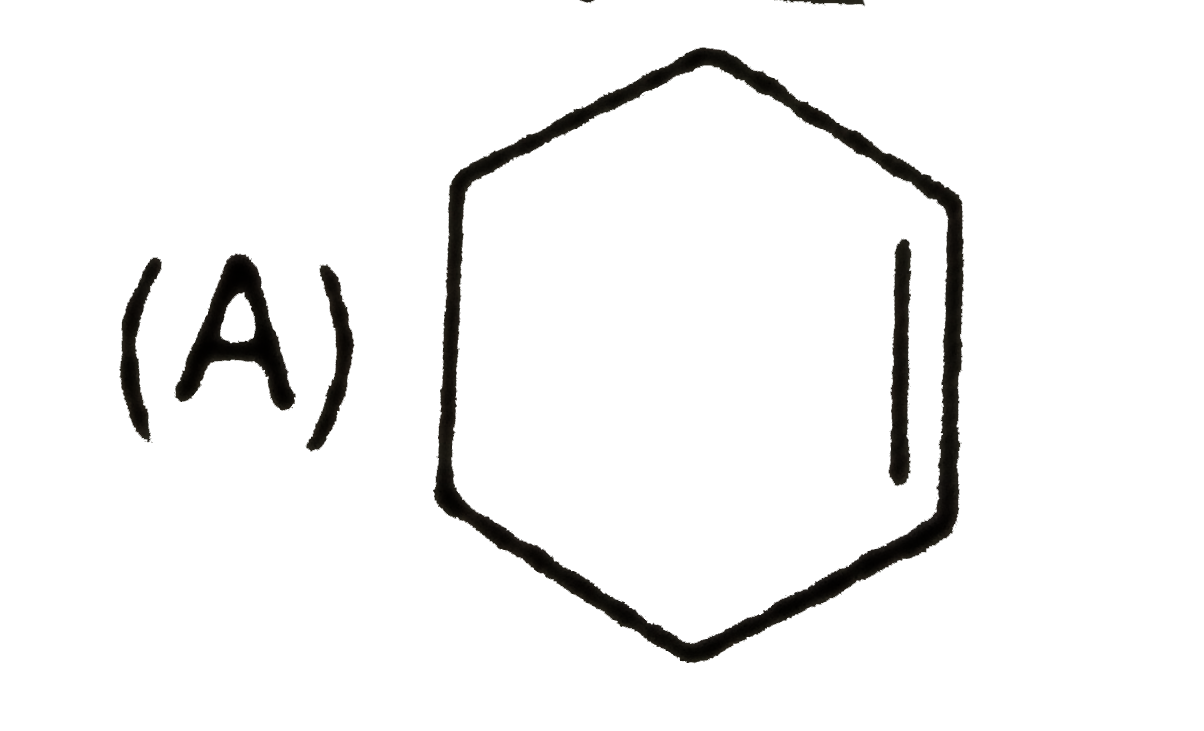
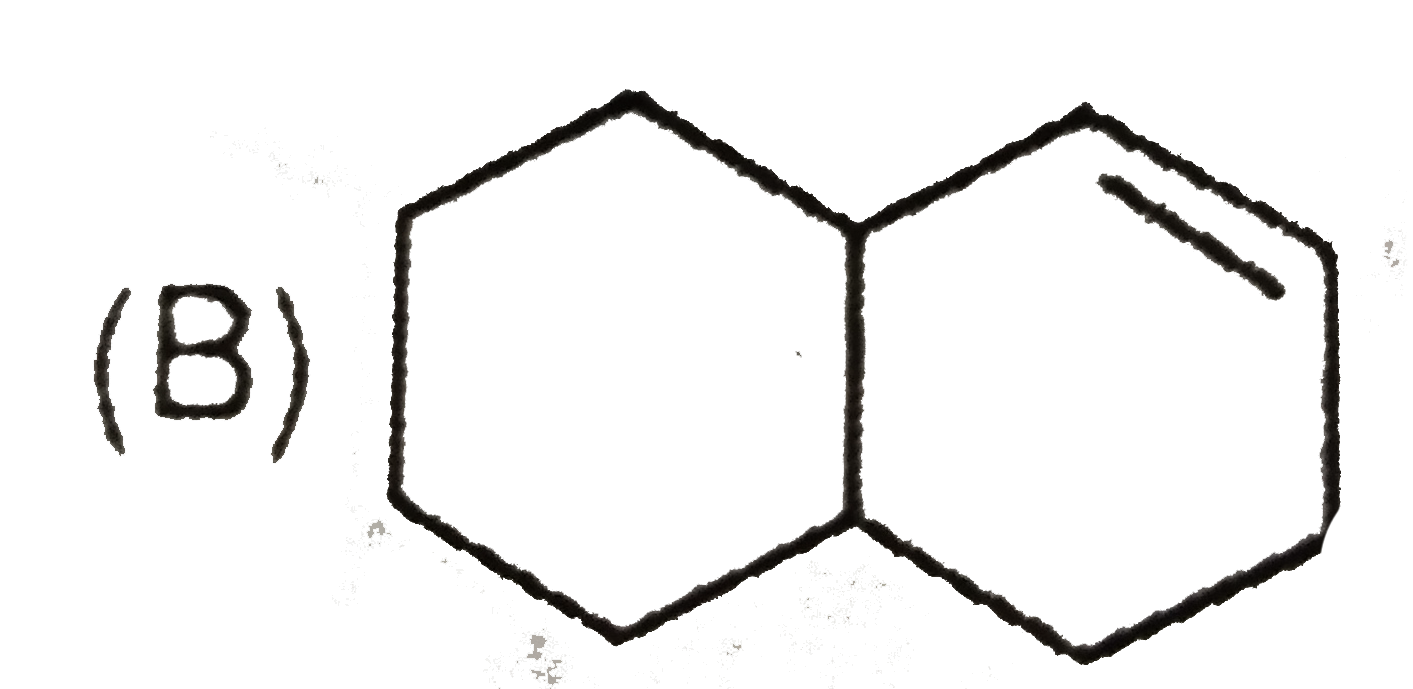
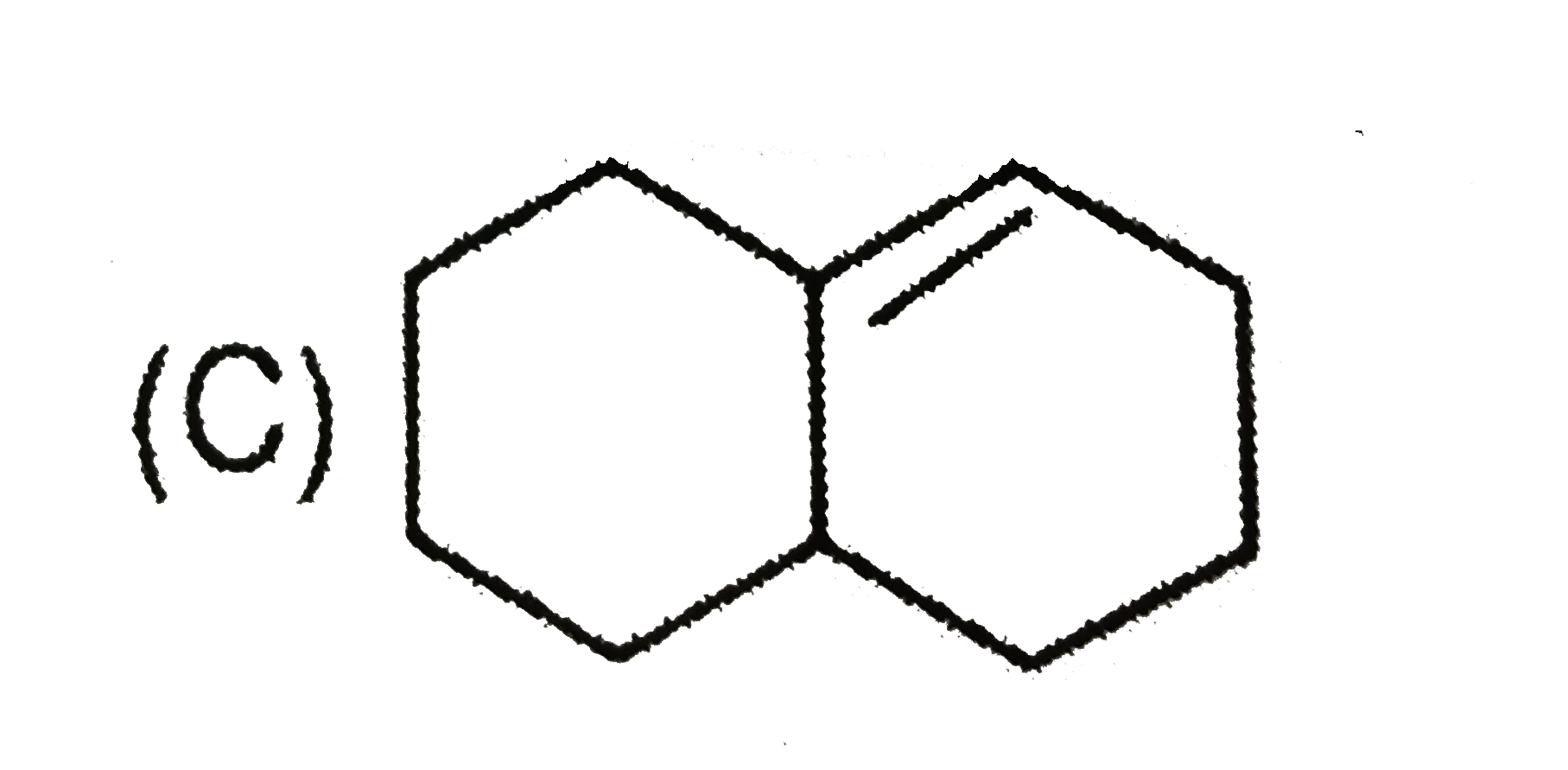
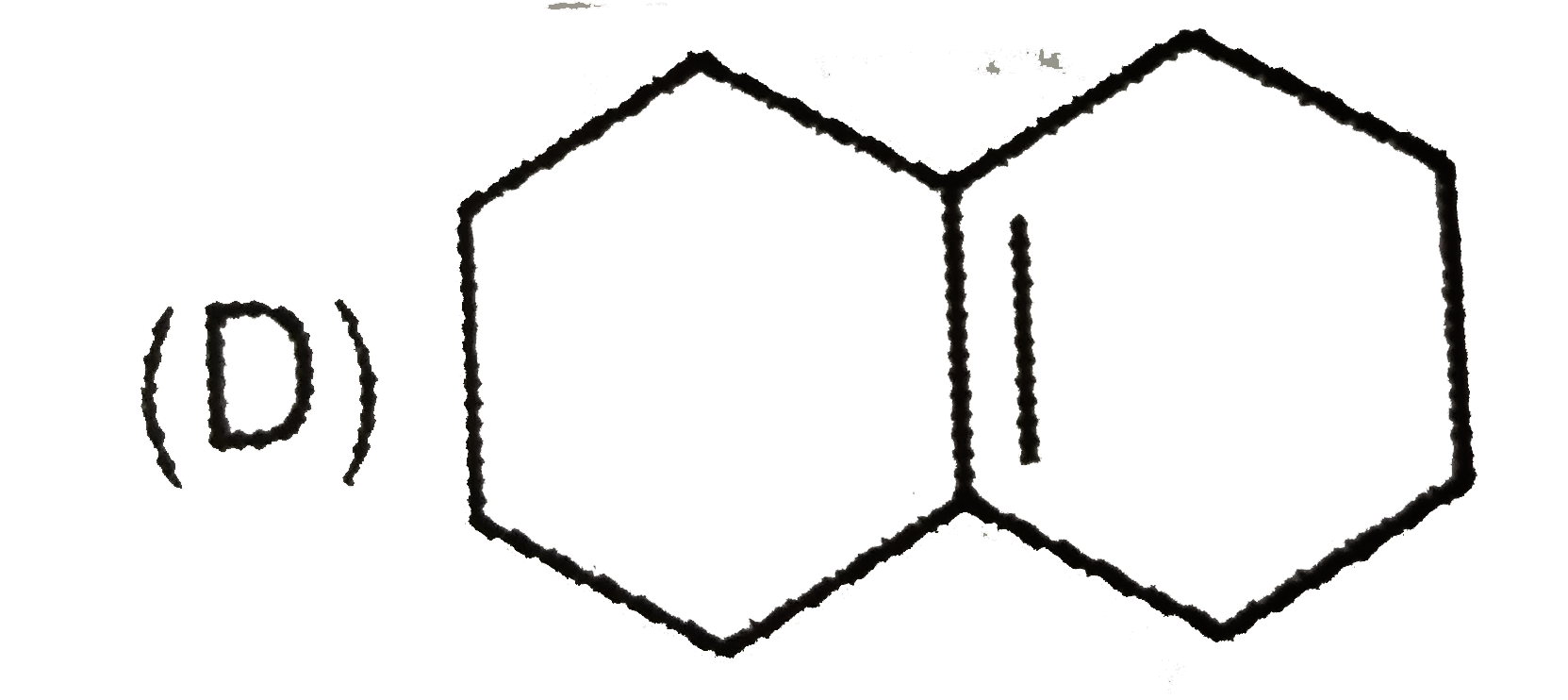
A unsaturated hydrocarbons (P) on reductive ozonolysis produce an dicarbonyl compound (Q).(Q) can form precipitate with 2,4-DNP but no with Tollen's reagent. Identify the structure of P |
|
Answer»
|
|
| 9. |
A uniform glass tube of 100 cm length is connected to a bulb containing hydrogen at one end and and another bulb containing oxygen at the other end at the same temperature and pressure. The two gases meet for the first time at the following distance from the oxygen end |
| Answer» Answer :C | |
| 10. |
A uni-univalment ionic crystal AX is composed of the following radii ( ar bitrary units) . {:( A^(+) , X^(-)),(1.0, 2.0):} Assuming that ions are hard spheres, predict giving reasons whether the crystal will have sodium chloride or cesium chloride structure.Calculate the volume of the unit cell. |
|
Answer» ( EDGE = ` 2 ( r_(+) + r_(-) = 6 "au"` . Volume =` ( 6 " au")^(3) = 216 ("au")^(3)` |
|
| 11. |
A uni-univalent ionic crystal AX is composed of the following radii (arbitrary units) : {:(A^+,A^-),(1.0,2.0):} Assuming that ions are hard spheres , predict giving reasons whether the crystal will have sodium chloride cesium chloride structure. Calculate the volume of the unit cell. |
|
Answer» Edge=2 `(r_++ r_-)` =6 au . Volume =`(6 au)^3=216(au)^3` |
|
| 12. |
A underset(H_(2)SO_(4))overset(K_(2)Cr_(2)O_(7))rarr Bunderset("Vigorous oxidation")overset([O])rarr CH_(3)COOH If B in the given sequence is propanone, then A is: |
|
Answer» Ethyl alcohol |
|
| 13. |
[A] underset("Catalyst")overset(H_2//"Lindler's")larr CH_3 - C -= C-CH_3 underset(liq. NH_3)overset(Na " in ")to [B] ,[A] and [B] respectively are |
|
Answer» cis, TRANS -2-butene |
|
| 14. |
A Typical characteristic of the representative element is that the first member of each group gives different present in that group. Lithium is no excepton. Through it is the first member of the alkali metal family (group f), it is anomalous in behaviour. This may be attributed to the small size of both Li and Li^(+) ion, high ionisation enthalpy, high polarising power, and non- availability of d-electrons in its valence shell. Lithium is the strongest reducing agent among the alkali metals due to which of the following characterisitics ? |
|
Answer» Ionisation ENTHALPY |
|
| 16. |
A type of zeolite used to convert alcohols directly into gasoline is |
|
Answer» ZEOLITE A |
|
| 17. |
A two litre flask contains a mixture of 16g of oxygen, 7g of nitrogen and 2g of hydrogen at 20^@C. Report the total pressure and partial pressures. |
|
Answer» Solution :Total number of moles of mixture ` = (16g " of"O_(2))/(32g"MOL"^(-1)) + (7g "of" N_(2))/(28 g"mol"^(-1)) + (1g "of" H_(2))/(2g "mol"^(-1))` Total number of moles ` = (1)/(2) + (1)/(4)+ 1 = (7)/(4)` USING ideal gas equation, `P = n (RT)/(V) = (7)/(4) xx (0.0821 xx 293)/(2) =21` atm Partial pressure of oxygen ` = P_(O_(2)) = ("number moles of " O_(2))/("total number of moles") xx "pressure" = (1)/(2) xx (4)/(7) xx 21 = 6` atm Similarly, `P_(N_(2)) = (1)/(4) xx (4)/(7) xx 21 = 3` atm Similarly, `P_(H_(2)) = (1)/(1) xx (4)/(7) xx 21 = 12` atm |
|
| 18. |
A triple bond between two carbon atoms is composed ofone..........and ...........bonds |
|
Answer» |
|
| 19. |
A trend common to both groups 1 and 17 elements in the periodic table as atomic number increases is |
|
Answer» Increase in oxidising power |
|
| 20. |
A translucent white waxy solid (A) on heating in an inert atmosphere is converted inot its allotropic form (B). Allotrope (A) onreaction with very dilute aqueous KOH liberates a highly poisonous gas (C) having rotten fish smell. With excess of chlorine (C) forms (D) which hydrolyses to compound (E). Identify (A) to (E). |
|
Answer» Solution :(i) Since a TRANSLUCENT white waxy SOLID (A), on heating in an inert atmosphere, is converted into its allotrope (B), therefore, (A) is white or yellow phosphorus while (B) is red phosphorus. `underset("White phosphorus")(P_(4)(s))overset("Heat, inert gas")tounderset("Red phosphorus")(P_(4)(s))` (ii) Since allotrope (A) on boiling with dilute aqueous KOH gives a highly poisonous gas (C) having rotten fish smell, therefore, it is confirmed that allotrope (A) is white phosphorus and the poisonous gas (C) is phosphine `(PH_(3))` `underset("White phosphine(A)")(P_(4)(s))+3KOH(aq)+3H_(2)O(l)overset("Heat")tounderset("Pot. hypophosphite")(3KH_(2)PO_(2)(aq))+underset("Phosphine (C)")(PH_(3)(g))` (iii) Since phosphine (C) reacts with EXCESS of CHLORINE to form a compound (D) which upon hydrolysis gives compound (E), therefore, (D) must be phsophorus pentachloride `(PCl_(5))` and (E) must be phosphoric acid `(H_(3)PO_(4))`. `underset("Phosphine (C)")(PH_(2)(g))+underset(("Excess"))(4Cl_(2)(g))tounderset("Phosphorus pentachloride (D)")(PCl_(5)(s))+3HCl(g)` `underset((D))(PCl_(5)(s))+4H_(2)O(l)tounderset("Phosphoric acid (E)")(H_(3)PO_(4)(aq))+5HCl(aq)` Thus, (A) is white phosphorus, (B) is red phosphorus, (C) is phosphine `(PH_(3))`. (D) is phosphorus pentachloirde `(PCl_(5))` and (E) is phosphoric acid `(H_(3)PO_(4))` |
|
| 21. |
A transition metal M forms a volatile chloride which has a vapour density of 94.8. If it contains 74.75% of chlorine the formula of the metal chloride will be |
|
Answer» `MCl_(2)` |
|
| 22. |
Atransition for H-atom from II to I orbit has same wavelength as from n^(th) orbit to 2^(nd) orbit for He^+ ion. The value of ‘n’ is _________ . |
|
Answer» |
|
| 23. |
A train travels with a velocity of 100 miles/hour. Express its velocity in SI units. |
|
Answer» |
|
| 24. |
A toy balloon blown up at 5^(@)C has a volume of 480 mL. At this stage, the balloon is distended to 7/8th of its maximum stretching capacity. (i) Will the balloon burst if it is brought to a room having temperature 30^(@)C? (ii) Calculate the temperature at which the balloon will burst. |
|
Answer» Solution :Since the pressure remains constant, Charles LAW is applicable, `(V_(1))/(T_(1))=(V_(2))/(T_(2))` `"or"V_(2)=(V_(1)T_(2))/(T_(1))` `""V_(2)=(480xx303)/(278)` `"or"V_(2)=(480xx303)/(278)` `"or"V_(2)=523mL` Maximum volume upto which the balloon balloon can be blows without bursting `=(480xx8)/(7)=548.6mL` `therefore"Balloon will not burst in a room at "30^(@)C.` (ii) Let us calculate the temperature at which volume becomes `"548.6 ml "(V_(2))` `(V_(1))/(T_(1))=(V_(2))/(T_(2))` `"or"T_(2)=(V_(2)T_(1))/(V_(1))` `T_(2)=(548.6xx278)/(480)=317.7K` `therefore"Balloon will butst at 317.7 K or "44.7^(@)C`. |
|
| 25. |
A tightly sealed 25.0 litre acetone drum was found to have 15.4 litre acetone (l) at 780mm hg pressure and 18^(@)C Sudddenly during transportaion the drum was dented and its internal volume was found th decrease by 4.6 litre If vapour pressure of acetone at 18^(@)C is 400mm of Hg calculate the pressure inside the drum after denting . |
|
Answer» |
|
| 26. |
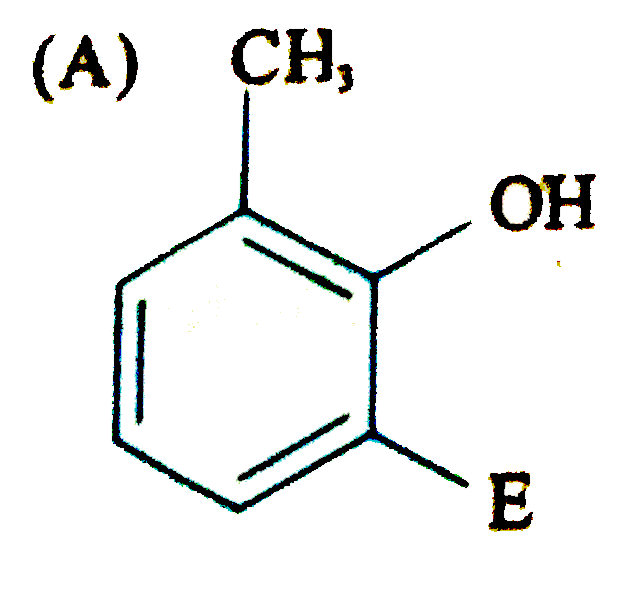
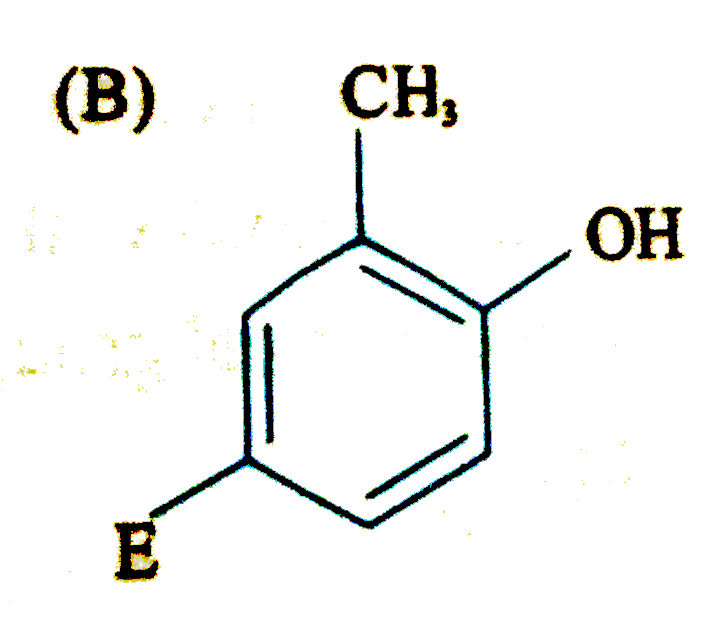
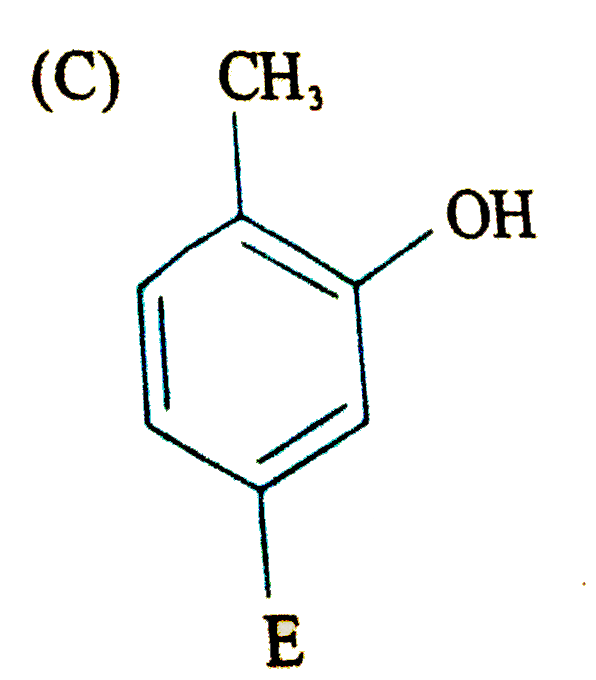
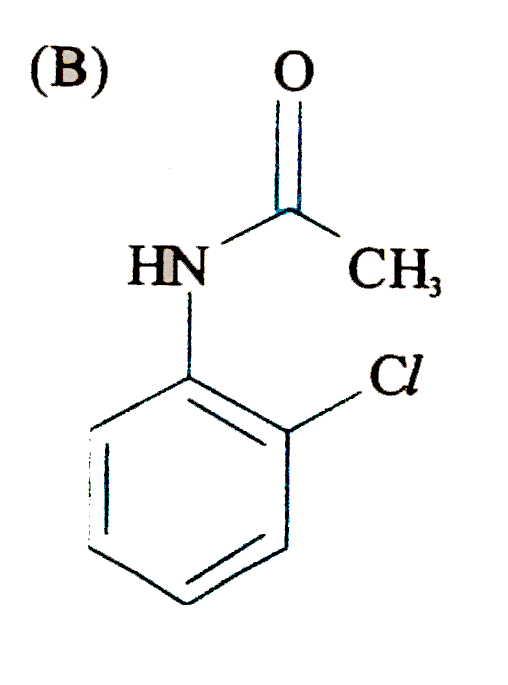
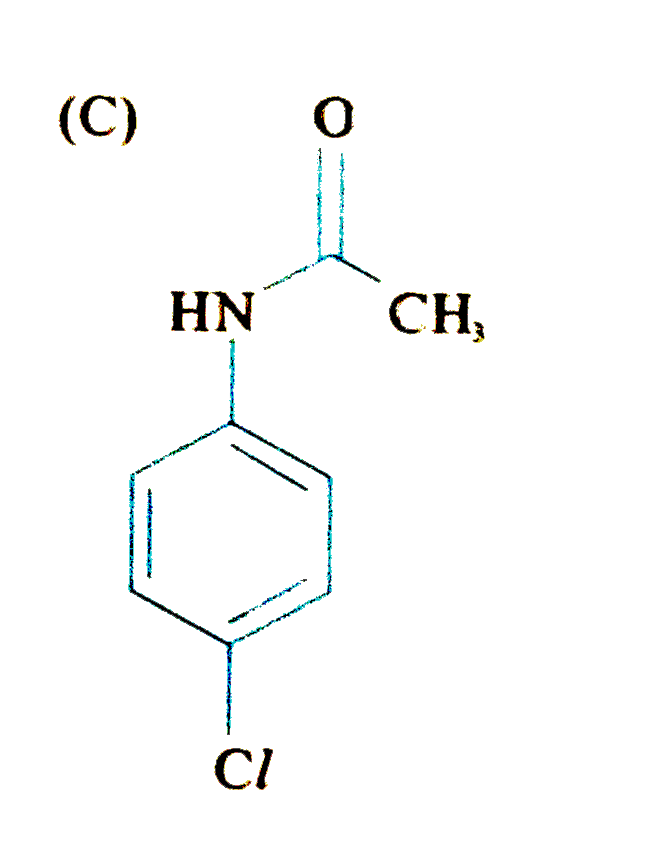
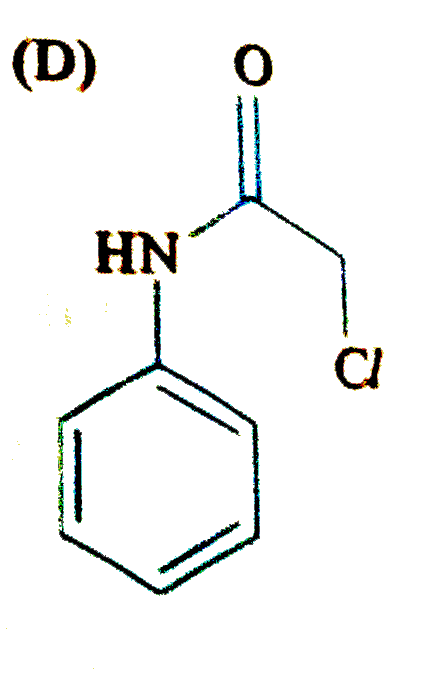
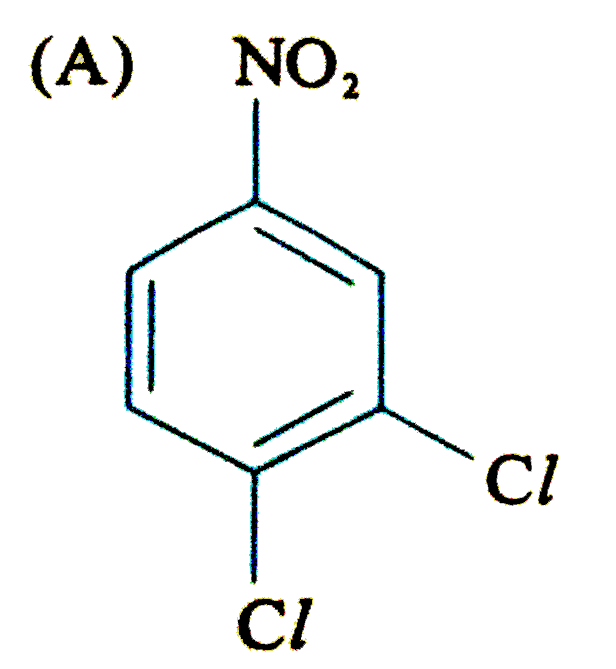
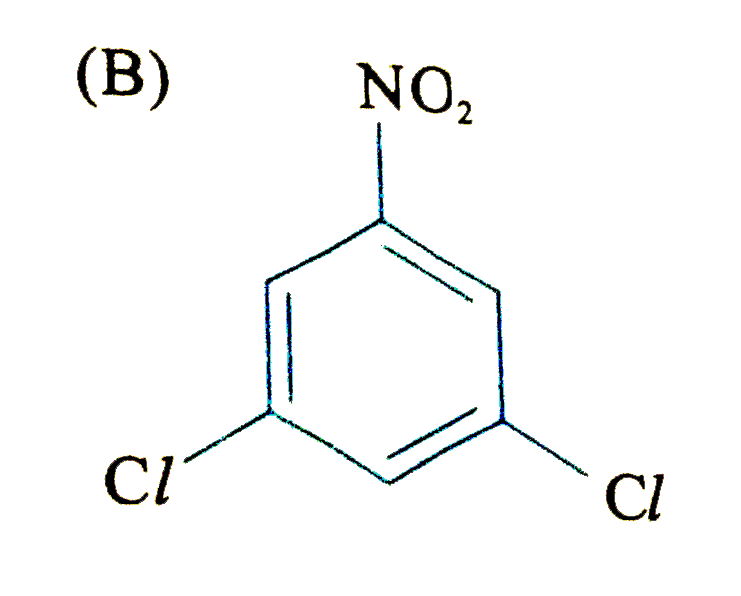
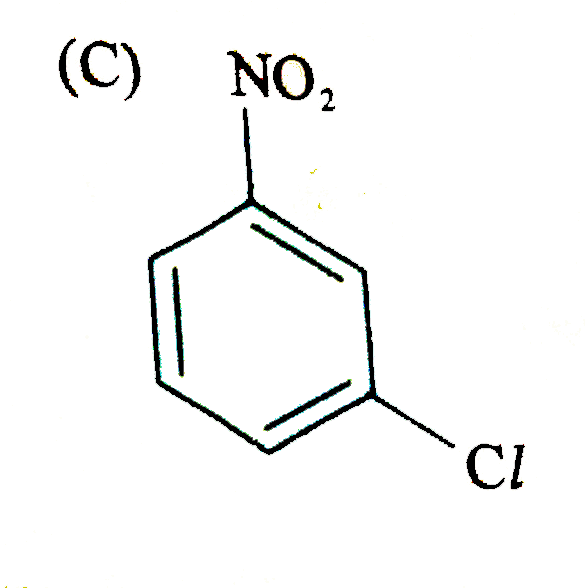
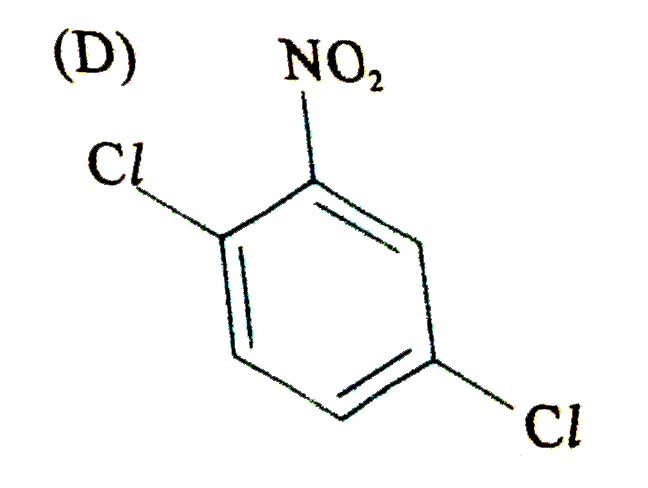
A third group is least likely to enter between two groups in the mta relationship. This is the result of steric hindrance and increases in importance with the size of the groups on the ring and with the size of the attaching species. When a meta-directing group is meta to an ortho-para directing group, the incoming group primarily goes ortho to the meta directing group rather than para. Q. |
|
Answer»
|
|
| 27. |
A third group is least likely to enter between two groups in the mta relationship. This is the result of steric hindrance and increases in importance with the size of the groups on the ring and with the size of the attaching species. When a meta-directing group is meta to an ortho-para directing group, the incoming group primarily goes ortho to the meta directing group rather than para. Q. |
|
Answer»
|
|
| 28. |
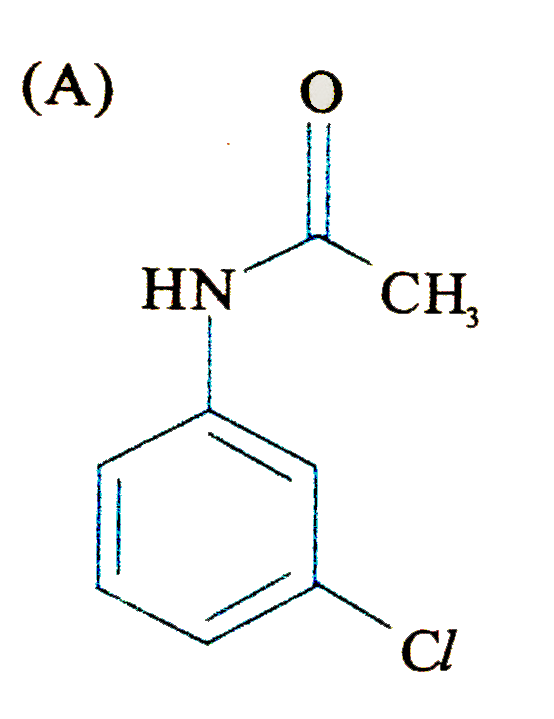
A third group is least likely to enter between two groups in the mta relationship. This is the result of steric hindrance and increases in importance with the size of the groups on the ring and with the size of the attaching species. When a meta-directing group is meta to an ortho-para directing group, the incoming group primarily goes ortho to the meta directing group rather than para. Q. Chlorination of m-chloro nitro benzene gives |
|
Answer»
|
|
| 29. |
A thermodynamic state function is a quantity whose value is ____ |
| Answer» SOLUTION :INDEPENDENT of PATH | |
| 30. |
A thermo chemical equation is a balanced ………..chemical equation that includes the enthalpy change. |
|
Answer» STOICHIOMETRIC |
|
| 31. |
(A) : Thermally hydrogen peoxide is unstable (R) : The peroxy bond length in H_(2)O_(2) molecule is 1.48 A The correct answer is |
|
Answer» Both (A) and (R) is TRUE and R is the correct EXPLANATION of (A) |
|
| 32. |
(A) There are two noda regions in 3s-orbital (R) : There is no nodal plane in 3s orbital The correct answer is |
|
Answer» Both (A) and (R) are true and (R) is the correct explanation of (A) |
|
| 33. |
(A): The second electron affinity f oxygen is endothermic. (R): Oxygen is the second highest electronegative element The correct answer is |
|
Answer» Both (A) and (R) are TRUE and (R) is the CORRECT explanation of (A) |
|
| 34. |
(A): The second ionisation energy of 'O' is greater than that of second ionisation energy of 'N' (R): The half filled p-orbitals cause greater stability for an atom. The correct answer is |
|
Answer» Both (A) and (R) are TRUE and (R) is the CORRECT EXPLANATION of (A) |
|
| 35. |
(A) : The reaction C + O_(2) rarr CO_(2) is an exothermic reaction Reason (R ): In this reaction that total enthalpy of the product is less than the total enthalpy of the reactants |
|
Answer» A and R are TRUE, R explains A |
|
| 36. |
(A): The ransition metal ions are generally paramagnetic in nature (R): Metal ions with incompletely filled d-orbitals are paramagnetic in nature. The correct answer is |
|
Answer» Both (A) and (R) are TRUE and (R) is the CORRECT EXPLANATION of (A) |
|
| 37. |
(A): The pH of normal rain is 5.6. (R) CO_2 present in atmosphere absorbed in moisture to give H^+ and HCO_(3)^(-) |
|
Answer» Both (A) and (R) are TRUE and (R) is the CORRECT EXPLANATION'of (A) |
|
| 38. |
(A) : The p-orbital has dumb-bell shape (R) : Electron present in p-orbital can have any one of the three values of magnetic number (0, +1, -1) |
|
Answer» Both (A) and (R) are true and (R) is the CORRECT EXPLANATION of (A) |
|
| 39. |
(A) : The number of isomeric amines possible for the formula C_(3)H_(9)N is four (R ): Primary, secondary and tertiary amines are functional isomers |
|
Answer» A and R are TRUE, R EXPLAINS A |
|
| 40. |
(A): The monoxides of alkali metals are colourless. (R): They are paramagnetic in nature |
|
Answer» Both A and R are CORRECT and R is the correct explanation of A. |
|
| 41. |
(a) The measured heats of neutralization of acetic acid, formic acid, hydrocyanic acid, and hydrogen sulphide are 13.20, 13.40, 2.90 and 3.80 KCal per g.equiv. respectively. Arrange these acids in a decreasing order of strength. (b) Heat of neutralization of formic acid by NH_(4)OH is 11.9 KCal per g.equiv. What is the heat of ionization of NH_(4)OH? |
|
Answer» Solution :`DeltaH_("(NEUTRALIZATION)")=DeltaH_("(ionization)")+DeltaH_((H^(+)+OH^(-)))` `therefore DeltaH_("(ionization)")=DeltaH_("(neutralization)")-DeltaH_((H^(+)+OH^(-)))` `57.32KJ = 13.2 KCAL` `DeltaH_("(neutralization)")" for all acids have a "-ve" sign."` `=-13.20-(-13.70)` `=+0.50"Cal/g.equiv"` `DeltaH` for ionization of formic acid `=-13.40+13.70` `=+0.30" Cal/g.equiv."` `DeltaH` for ionization of hydrocyanic acid `=-2.90+13.70` `=+10.80"kCal/g.equiv"` `DeltaH` for ionisation of hydrogen sulphide `=-3.80+13.70` `=+9.90" KCal/g.equiv"`. The acid with the lowest positive value of heat of ionization will be the strongest acid. Thus formic acid is the strongest and hydrocyanic acid the weakest acid. The trend in decreasing strength of acids is : Formic acid > acetic acid ? hydrocyanic acid > hydrogen sulphide. (b) Thermochemical EQUATIONS are : (1) `HCOOH+NH_(4)OHrarr HCOONH_(4)+H_(2)O""DeltaH_(1)=-11.9KCal` (2) `HCOOH rarr HCOO^(0)+H^(+)""DeltaH_(2)=+0.30KCal.` (3) `NH_(4)OH rarr NH_(4)^(+)+OH^(-).""DeltaH_(3)=x. KCal` (4) `H^(+)+OH^(-)rarr H_(2)O_((l)),""DeltaH_(4)=-13.70KCal` The sum of reaction (2), (3) and (4) should EQUAL reaction (1). `therefore DeltaH_(1)=DeltaH_(2)+DeltaH_(3)+DeltaH_(4)` `-11.90=0.30+x-13.70` . `=+1.50"KCal.g.equiv"^(-1)` `DeltaH` for ionization of `NH_(4)OH=+1.50" kCal/g.equiv"^(-1)` |
|
| 42. |
(A) : The law of conservation of mass holds good for all reactions.(B) : Nuclear reactions can not proceed according to law of conservation of mass. |
|
Answer» Both A and R are true and R is the CORRECT explanation of A |
|
| 43. |
(A): The lattice energy of superoxide of alkali metals increases with an increase in the size of the metal ion (R) : Lattice energy is directly proportional to size of the metal ion |
|
Answer» Both A and R are true, and R is CORRECT EXPLANATION of A |
|
| 44. |
(A): The IUPAC name of the compound CH_(3)- overset(overset(Cl)(|))(CH) - CH_(2) - overset(overset(OH)(|))(CH)CH_(2) - COOH is 4-Hydroxy-2-chlorohexanoic acid (R ): The order of preference of functional groups according to IUPAC is COOH gt - OH gt -Cl |
|
Answer» A and R are true, R EXPLAINS A |
|
| 45. |
(A): The hydrolysis of an ester in acidic medium does not change with pressure. (R): Pressure does not show effect on equilibrium reactions taking place in solution. |
|
Answer» both A & R are TRUE, R is the CORRECT explanation of A |
|
| 46. |
(A): The heat absorbed during isothermal expansion of an ideal gas against vacuum is zero. (R): The volume occupied by the molecules is zero. |
|
Answer» Both A and R are TRUE R is the correct explanation. |
|
| 47. |
(A): The hardness of silica is less than that of diamond . (R): In silica, each silicon atom is surrounded by two oxygen atoms whereas in diamond each carbon atom is surrounded by 4 carbon atoms |
|
Answer» a. Both A and R are true, and R is correct EXPLANATION of A |
|
| 48. |
(A) : The gas molecular collisions are perfectly elastic .(R) : Transfer of energy takes place among the colliding gas molecules . |
|
Answer» Both A and R are true and R in the CORRECT EXPLANATION of A |
|
| 49. |
(A): The entropy of the universe is continuously increasing. (R): All naturally occurring processes are accompanied by increase in entropy. |
|
Answer» Both A and R are TRUE and R is THECORRECT EXPLANATION |
|
| 50. |
(A): The first ionisation energy of B is less than that of Be (R) : The penetration ability of s- electrons is higher than that of p- electronsThe correct answer is |
|
Answer» Both (A) and (R) are TRUE and (R) is the CORRECT EXPLANATION of (A) |
|