Saved Bookmarks
This section includes 7 InterviewSolutions, each offering curated multiple-choice questions to sharpen your Current Affairs knowledge and support exam preparation. Choose a topic below to get started.
| 1. |
which of the following combination contains only isoelectronic series? |
|
Answer» 3,2,02,0,0 |
|
| 2. |
Write the half equations for each of the following redox reactions. Zn(s)+PbCl_(2)(aq)toZnCl_(2)(aq)+Pb(s) |
|
Answer» SOLUTION :`ZN(s)toZn^(2+)(aq)` oxidation half equation) `PB^(2+)(aq)toPb(s)` t(reduction half equation) |
|
| 3. |
When huge amount of sewage is dumped into a river the BOD will: |
|
Answer» Will INCREASE |
|
| 4. |
The spontaneity means, having the potential to proceed without the assistance of external agency. The processes which occur spontaneously are |
|
Answer» flow of heat from colder to warmer body Flowing of heat from warmer to colder body, expanding of gas and burning of carbon to give carbon dioxide, all are spontaneous PROCESS. |
|
| 5. |
Which element having maximum negative and which element having maximum positive electron gain enthalpy? |
| Answer» ANSWER :c | |
| 6. |
Which of the following alkenes will show maximum number of hyperconjugation forms ? |
|
Answer» `CH_(2)=CH_(2)` |
|
| 7. |
Which of the following are negatively charged colloid |
|
Answer» Gold (d) Basic dyes FORM water SOLUBLE cations, i.e., +vely charged colloids. |
|
| 8. |
Which of the following would be true for the reaction shown? |
|
Answer» the rate of the REACTION depends only on the alkyl BROMIDE concentration . |
|
| 9. |
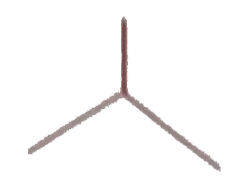
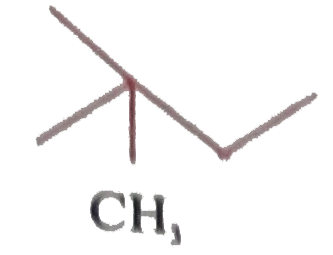
Write the IUPAC name of CH_(3)-CH=overset(CH_(3))overset(|)(C)-CH_(3)? |
|
Answer» |
|
| 10. |
Write the chemical reaction to form oxides, peroxide and superoxides of alkali metals elements. |
|
Answer» SOLUTION :`4Li+O_(2) to 2Li_(2)O` (Oxide) `2Na+O_(2) to Na_(2)O_(2)` (Peroxide) `M+O_(2) to MO_(2)` (Superoxide) where, M = k, Rb, Cs |
|
| 11. |
The shape of O_2F_2 resemble with shape of which of the following molecule ? |
|
Answer» `C_2H_2` |
|
| 12. |
What are the uses of potassium and its compounds? |
|
Answer» Solution :Potassium has a vital role in biological system (II) Potassium chloride is used as a fertilizer (iii) Potassium hydroxide is used in the MANUFACTURE of soft soap (IV) Potassium hydroxide is ALSO used as an excellent absorbent of CARBON dioxide. |
|
| 13. |
The spectrallineobtainedwhenelectronjumpsfrom n_(1)= 6 ton_(2) = 2state inhydrogenatombelongsto the |
|
Answer» Pfundseries |
|
| 14. |
TlCl has structure similar to CsCl, the coordination number of roman Tl^(+) is |
|
Answer» 4 |
|
| 15. |
You provided with a solid 'A' and three solutions of A dissolved in water- one saturated, one unsaturated, and one super saturated. How would you determine each solution ? |
|
Answer» Solution :(i) SATURATED solution: When maximum amount of solute is DISSOLVED in a solvent, any more ADDITION of solute will result in precipitation at a given temperature and pressure. Such a solution is called a saturated solution. (ii) UNSATURATED solution: When minimum amount of solute is dissolved in a solvent at a given temperature and pressure is called an unsaturated solution. (iii) Super saturated solution: It is a solution that HOLDS more solute than it normally could in its saturated form. |
|
| 16. |
What is properties difference between first element of groupand other elements of group ? |
Answer» SOLUTION :
|
|
| 17. |
What is chemical equilibrium? Write Kp and Kc for the reaction. N_(2(g))+3H_(2(g))hArrNH_(3(g)) |
|
Answer» |
|
| 18. |
The termquinhydrone means |
|
Answer» a QUINONE |
|
| 19. |
Whatis marsh gas |
|
Answer» Solution :(i) METHANEIS themajorcomponentof theatmosphereof jupiter , SaturnUranus and Neptur but onlyminorcomponentof earthatmspher. (II)Decomposition ofplantand animalmatterinan oxygendeficientenviromentlikeswamps.marshers bogsand thesediments of LAKES productsmethanegas . It isother knownas marshgas. |
|
| 20. |
When gypsum is heated to 393K, it forms: |
|
Answer» `CaSO_(4)*(1)/(2)H_(2)O` |
|
| 21. |
Two isomers (A) and (B) have the same molecular formula C_(2)H_(4)Cl_(2). Compound (A) reacts with aqueous KOH gives compound (C) of molecular formula C_(2)H_(4)O. Compound (B) reacts with aqueous KOH gives compound (D) of molecular formula C_(2)H_(6)O_(2). identify (A), (B), (C) and (D). |
Answer» SOLUTION :  . .
|
|
| 22. |
What are the maximum and minimum oxidation numbers of N,S and CI? |
|
Answer» Solution :(i)The highest OXIDATION number (O.N) of N is +5 since it has five electrons in the valence shell `(3 S^(2) 3 P^(4))` and its minimum O.N is -2 since it needs two more electons to acquire the nearest INERT gas (Ar) configuration (III) Likeswise the maximum O.N of CI is +7 since it has seven electrons in the valece shell `(3 S^(2) 3 P^(5))` and its minimum O.N is -1 since itneeds only one more electron to acquire the nearest (Ar) gas configuration |
|
| 23. |
The structure of alkene (P) is |
|
Answer»

|
|
| 24. |
Which of the following species will have the largest and the smallest size ? Mg, Mg^(2+),Al, Al^(3+). |
| Answer» Solution :Atomic radii decrease ACROSS a period. CATIONS are SMALLER than their PARENT atoms. Hence the largest SPECIES is Mg, the smallest one is `Al^(3+)` . | |
| 25. |
Which one of the following is the smallest atom? |
|
Answer» FRANCIUM |
|
| 26. |
The solutionof acetic acid in benzeneconains |
|
Answer» `CH_3 COO^(-)` ` therefore CH_3 COOH ` dimersizes |
|
| 27. |
Which of the following is not produced when mixture of borax and CuSO_(4) is heated at high temperature ? |
|
Answer» `CU(BO_(2))_(2)` |
|
| 28. |
Which of the following can produce a racemic mixture on monobromination |
|
Answer»
|
|
| 29. |
The wavelength of the spectral line, for the transition n = 2 to n=1 in the hydrogen emission spectrum is .X.. Which of the following spectral line also has a wavelength of X |
|
Answer» `.H_(ALPHA).`line in the Balmer series of SPECTRUM of .H. `""H ""He^(+)` `(1)^2 (1/((1)^2) - 1/((2)^2)) = (2)^2 ((1)/(n_1^2) - 1/(n_2^2))` on solving `n_1 = 2 , n_2 = 4` |
|
| 30. |
Which of the folllowing is an acceptable set of qunatum numbers (in the order n, l, m, m) |
|
Answer» `2, 1, 0, 0` |
|
| 31. |
What are the two exceptions of block division in the periodic table? |
|
Answer» Solution :(i) Helium has two electrons. Its electronic configuration is `1s^(2)`?. As per the configuration, is supposed to be placed in .s. block, but actually placed in `18^(th)` group which belongs to ‘p’ block. Because it has a completely filled valence shell as the other elements presenti `18^(th)` group. It also resembles with `18^(th)` group elements in other properties. Hence helium placed with other noble GASES. (ii) The other exception is hydrogen. It has only one s-electron and hence can be placed in group 1. It can also gain an electron to achieve a noble gas arrangement and hence it can behave as halogens (`17^(th)` group elements). Because of these ASSUMPTIONS, position of hydrogen BECOMES a SPECIAL case. Finally, it is placed separately at the top of the PERIODIC table. |
|
| 32. |
Tl(OH)_3 is less basic than TlOH. Why ? |
|
Answer» SOLUTION :`Tl(OH)_3` is less basic than TLOH, as the polarising power of `Tl^(3+)` is more than `Tl^(1+)`. `Tl-O` BOND in `Tl(OH)_3` becomes STRONGER than that in `TlOH.` As Tl-O bond becomes stronger, release of `OH^(-)` ion becomes less POSSIBLE. Hence basic nature of `Tl(OH)_3` is less. |
|
| 34. |
Which type of hybridization found in C-C single bond of alkane and C=C bond of alkene ? |
| Answer» SOLUTION :`SP^(3)` hybridization is observed in C-C of alkane. And `sp^(2)` hybridization is found in C=C of ALKENE. | |
| 35. |
The structure of water molecule is ____________ |
|
Answer» bent |
|
| 36. |
What will be the numberof electronin groundstate of Cr havingsubsidiary quantumnumberl=1and l=2respectively ? |
|
Answer» 12 and 4 |
|
| 37. |
What is A in the following reaction ? overset(t-BuOK)underset(t-BuOk)toA |
|
Answer»
|
|
| 38. |
Which of the following generally present in tonics? |
|
Answer» Ethanol |
|
| 39. |
Water does not react with ............... |
|
Answer» Sodium |
|
| 40. |
What is the density of chlorine relative to that of air? |
|
Answer» |
|
| 41. |
Which of thefollowingpairs of elementswouldhave anegativeelectrongainenthalpy ? (i)O or F(ii) F or Cl |
|
Answer» Solution :(i) bothO andf liein 2ndperiod . As wemovefrom O to F ,the ATOMICSIZEDECREASES and thenuclearcharge increases .Boththesefactorstendto increase the ATTRACTIONS of thenucleusfor theincomingelectron and henceelectrongain ethalpy becomesmorenegative , Further, gain ofone electronby F gives `F^(-)` ion whichhas stableinertgasconfigurationwhilethe gainof oneelectronby Ogives `O^(-)` ion whichdoesnot have stableinertgasconfiguration, Consequently the energy released is muchhigherin goingfromf `to F^(-)` than ingoingfrom `O to O^(-)` ,Inotherwordselectron gainenthalpyof F ismuchmorenegative (- 328 KJ `mol^(-1)`)than THATOF oxygen`(-141 kJ mol^(-1))` (ii)In general the electrongain enthalpy becomesless negativeon movingdown thegroup. Buttheelectrongainenthalpy of chlorine`(-349 kJ mol^(-1))` is morenegativethan thatof flurine(-328 kJ `mol^(-1)`). Thereasonfor thisdeviationis thesmallsizeof F atom. Dueto itssmall size theelectron electron repulsionsin therelatively compact 2p- subshellare comparativelylargeand hencethe incomingelectronis notacceptedwith thesameease as isthe case withlarge C1 atom.Consequentlyelectron gainenthalpy of C1 is morenegativethan thatof F. |
|
| 42. |
Which one of the following forms a basic oxide? |
|
Answer» B |
|
| 43. |
Which measurable property becomes constant in water hArr water vapour equilibrium at constant temperature ? |
| Answer» SOLUTION :VAPOUR PRESSURE. | |
| 44. |
The standard enthalpy of hydrogenation of cyclohexene is119 kJmol^(-1) . If enthalpies for formation of cyclohexane and benzene at 25^(@)C are respectively -156 and + 49 kJ mol^(-1) , estimate the magnitude of resonance energy of benzene. |
|
Answer» |
|
| 45. |
Which of these changes with temperature ? |
|
Answer» Molality |
|
| 46. |
Unlikeordinary fire thermite fire cannot be stoppedpouringwater. Explain . |
|
Answer» Solution :In ordinary fire, the water not only DECREASES the temperatureof the burningmaterial, it alsocuts off the SUPPLY of `O_(2)`. Howeverin thermite REACTION. `2Al + Fe_(2)O_(3) overset("Heat")rarr Al_(2)O_(3) + 2Fe` the oxygenneeded for REACTIONIS suppliedby the metaloxide (i.e,`Al_(2)O_(3)`), thereforecutting off thesupplyof atomospheric oxygehas no effect. Further, at high temperature(around `1270-1300 K`), Al reacts with `H_(2)O`to produce `H_(2)O` to produce `H_(2)`gas whichhelps to spread ratherthan extinguishing the fire. `2Al + 3H_(2)Ooverset(11270-1300K)rarr Al_(2)O_(3) + 3H_(2)` |
|
| 47. |
Which elements having highest electron gain enthalpy? |
| Answer» Solution :`CL (-349) KJ " MOL"^(-1))` | |
| 48. |
Which of the following have been arranged in order of decreasing oxidation number of sulphur? |
|
Answer» `H_2S_(2)O_7 GT Na_2S_4O_6 gt Na_2 S_2O_3gt S_8` `"*"H_(2)SO_(5) gt H_2 SO_(3)gt SCl_(2) gt H_2 S` |
|
| 49. |
Whichone of the following shows three possible isomeric structures |
| Answer» Answer :b | |