Explore topic-wise InterviewSolutions in .

This section includes InterviewSolutions, each offering curated multiple-choice questions to sharpen your knowledge and support exam preparation. Choose a topic below to get started.

86351.

Give an example for i) Globular proteins. ii) Naturally occurring optically inactive amino acid.

Answer»

Solution :(a)
(b) (i) Haemoglobin OR Albumin OR INSULIN OR thyroglobumin OR FIBRINOGEN OR Venoms (of snake, scropion, wasp, bees) OR Any suitable example.
(II) Glycine.
(c) DNA (or) Deoxyribo NUCLEIC acid.
86352.

Write the Haworth structure of D - sucrose. Why is a non - reducing sugar?

Answer»

SOLUTION :Both the reducing GROUPS of glucose & bructose are involved in GLYCOSIDE bond FORMATION.
86353.

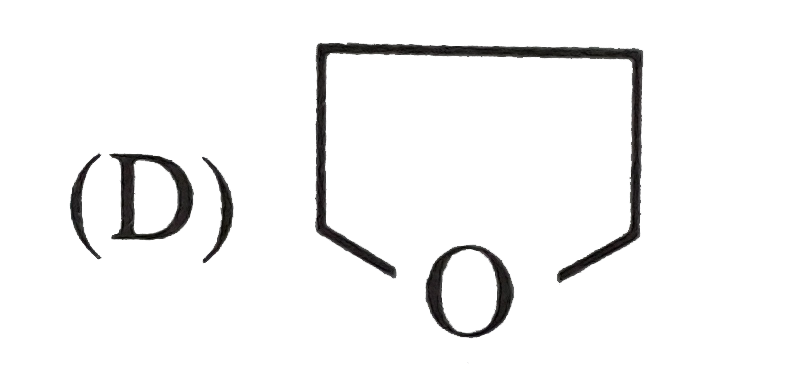
Draw the Haworth structure of beta-(D) fructofuranose.

Answer»

SOLUTION :
86354.

(a) What are non-essential amino acids?(b) Name the heterocyclic N-containing base present only in DNA but not in RNA.(c) Vitamin-C cannot be stored in the body. Give reason.

Answer»

Solution :(a)
(B) Amino ACIDS which can be synthesized by human body are called non-essential amino acids.
(c) THYMINE
(d) Excess of vitamin-C is excreted through urine.
86355.

(a) Write the Harworth's structure of maltose.(b) What are hormones? Give one biological function of insulin.(c )What are nucleosides?

Answer»

Solution :(a) (B) HORMONS are chemical substances secreted by endocrine glands.The function of the INSULIN is to regulate the blood sugar level.
(C ) Nucleaside is a compount CONTAINING nitrogen base and pentose sugar.
86356.

a. Write the equilibrium reaction to show the amphoteric behaviour of alanine in H_(2)O. b. Calculate the isoelctric pH of alanine, given pK_(a1, of cation of "alanine"=2.3 "and' pK_(a_2) of anion of alanine=9.7. c. Write equilibrium reaction for the dissociation of lysine, a basic amino acid and calculate its isoelectric point. pK_(a_1) of lysine with net (+2) charge=2.18 pK_(a_2) of lysin with net (+1) charge=8.95 pK_(a_3) of lysine with net (-1) charge=10.53 d. Write the equilibrium reaction for the dissociation of aspartic acid, an acidic amino acid and calculate its isoelectric point. pK_(a_1) of aspartic acid with net (+1) charge=1.88 pK_(a_2) of aspartic acid with net (-1) cahrge =3.65 pK_(a_3) of aspartic acid with net (-2) charge=9.60

Answer»

SOLUTION :a.
b. `PH` at ISOELECTRIC point `(pI)=((pK_(a_1)+pK_(a_2)))/(2)=(2.3+9.7)/(2)=6`
The isoelectric point `(pI)` is the `pH` at which the amino ACID exists only as a dipolar ion (armpholyte or zwitterion) with zero net charge.
c.
`:. pH` at isolectric point `(pI)=((pK_(a_2)+pK_(a_3)))/(2)=((8.95+10.53))/(2)=9.74`
`:. pI=9.74`
d.
`:. pH` at isoelctric point `(pI)=((pK_(a_1)+pK_(a_2)))/(2)=((1.88+3.65))/(2)=2.77`
`:. pI=2.77`
86357.

(a) Write the equations for the steps involved in the S_(N)1 mechanism of hydrolysis of 2-bromo 2 methyl propane. (b) (i) Name the product formed for the reaction of isopropyl iodide on alcoholic KOH. (ii) What is the condition to be satisfied for a compound to be chiral?(c) What is racemic mixtures?

Answer»

Solution :(a)The reaction between tert-butyl bromide and hydroxide ion gives tert-butyl alcohol. The rate of reaction depends only on the concentration of tert-butyl bromide. Hence it is a nucleophillic first order substitution reaction. `H_(3)C-underset(CH_(3))underset(|)overset(CH_(3))overset(|)(C)-Br+ OH^(-) to H_(3)C-underset(CH_(3))underset(|)overset(CH_(3))overset(|)(C)-OH+Br^(-)`
MECHANISM:
STEP 1: Polarised C- Br undergoes cleavage to produce planar CARBONATION.

Step 2: The CARBOCATION is then attacked by nucleophile `(OH^(-))` on either side to FORM tert-butyl alcohol. .
(b)(i) Propene
(ii) Compound should contain chiral carbon atom [Carbon bonded to four different groups/atoms] and its mirror image is non-superimposable.
(c)Equimolar mixture of d and / isomers.
86358.

Write the equations involved in the preparation of phenol from cumene.

Answer»

SOLUTION :PREPARATION of phenol from CUMENE.
Cumene (isopropyl benzene) is oxidesed in the presence of air to give cumene hydroperoxide. It is CONVERTED into phenol and acetone by treating with DILUTE acid. This process is called as cumenes process.
86359.

(a) Write the equations for the steps involved in SN^(1) mechanism for the conversion of tert-butyl bromide totert-butyl alcohol.

Answer»

Solution :(a)The reaction between tert-BUTYL bromide and hydroxide ion gives tert-butyl alcohol. The rate of reaction depends only on the concentration of tert-butyl bromide. HENCE it is a nucleophilic first order substitution reaction.
`H_(3)C_underset(CH_(3))underset(|)OVERSET(CH_(3))overset(|)(C)-Br)+OH^(-) to H_(3)C-underset(CH_(3))underset(|)overset(CH_(3))overset(|)(C)-OH+Br^(-)`
Mechanism:
Step 1: Polarised C-Br undergoes cleavage to produce planar carbocation.

Step 2: The carbocation is then attacked by NUCLEOPHILE `(OH^(-))` on either side to form tert butyl alcohol.

(b) When chlorobenzene is heated with acetyl chloride, 2-chloroacetophenone and 4-chloroacetophenone is obtained.

(c) Equimolar mixture of d and l isomers.
86360.

(a). Write the equations for the steps in S_(N^(1)) mechanism of the conversion of tert-butyl bromide into tert-bytyl alcohol. (b). Explain fittig reaction. (c). Name the reagent used in the dehydrohalogenation of haloalkans.

Answer»

SOLUTION :(a). N/A
(B). N/A
(c). ALCOHOLIC KOH is USED.
86361.

Name the reagent used in the dehydrohalogenation of haloalkanes.

Answer»

SOLUTION :(a)
(b) When aryl HALIDES REACTS with SODIUM metal in DRY ether, it forms diphenyl.

(c) Alcoholic potassium hydroxide.
86362.

Calculate the EMF of the cell for the reaction. Mg_((s))+2Ag_((aq))^+ Mg_((aq))^++2Ag(s) Given: E^@ Mg^(2+)//Mg=-2.37 V E^@ Ag^(+)//Ag=0.08V [Mg^(2+)]=0.001M,[Ag^+]=0.0001M log 10^5=5

Answer»

Solution :(a) At anode: `Pb(s) + SO_(4)^(2-) (aq) to PbSO_4(s) + 2e^(-)`
At cathode : `PbO_2(s) + SO_(4)^(2-)(aq) + 4H^(+) (aq0 + 2e^(-) to PbSO_4(s) + 2H_2O(1)`
(b) `DeltaG^0 = -nFE_("cell")^(0)`
`N = 6`
`F = 96487 c//mol`
`E_("cell")^(0) = E_(Al)^(0) - E_(MG)^(0) = -1.66V - (-2,36 V) = 0.7V`
`Delta G^(0) = -6 xx 96487 xx 0.7= -405245 J//mol OR -405.24 kJ//mol`.
86363.

(a) Write the equations for the reactions taking place at anode and cathode in the lead-storage battery. Calculate the value of DeltarG^(0)at 298 K for the cell reaction. 3Mg_(s) + 2Al^(3+)_(aq) to 3Mg^(2+)_(aq) + 2Al_(s)[Given , E_(mg)^(0) = -2.36V,E_(Al)^(0) = -1.66Vand F = 96487 C]

Answer»

Solution :(a)It is secondary cell mainly used in auto mobiles.
ANODE:Lead
Cathode:Gride of lead packed with `PbO_(2)`
Electrolyte:38% sulphuric ACID
Cell reactions: Anode:`Pb(s) + SO_(4)^(2-)(aq) rarr PbSO_(4)(s) + 2e^(-)`
Cathode:: `PbO_(2)(s)+SO^(2-)(4)(aq)+4H^(+)+2e^(-) rarr PbSO(4)(s)+2H_(2)O`
OVERALL reaction:`Pb(s)+PbO_(2)(s)+2H_(2)SO_(4)(aq) rarr 2PbSO_(4)(s)+2H_(2)O(l)`
(b) `E^(0)(cell)=E^(0)(Al^(+3)/Al)-E^(0)_(Mg^(+2)/Mg)` =+0.7V
`DELTAG^(0)=-nFE^(0)_(cell)`
= -6xx 96487xx0.7
86364.

a) Write the equation for SN^(2) mechanism between CH_(3)Cl and -OH. What is the stereochemical aspect of SN^(2) reaction?

Answer»

Solution :`SN^(2)` mechanism
The nucleophile `OH^(-)` ATTACKS electrons deficient carbon atom from the rear side [back side] of the carbon atom to form a transition state it is unstable. In the transition state a PARTIAL `(HO-C)` bond is formed and partial `C - Cl` bond is broken. The product methyl alcohol obtained has inversion CONFIGURATION.
86365.

(a) Write the electronic configuration of the element with atomic number 102. (b) What is lanthanoid contraction ? What is its effect on the chemistry of the elements which follow the lanthanoids?

Answer»

Solution :(a) NOBELIUM (Nb) has atomic number (102). It has the electronic configuration :
`1s^(2) 2S^(2) 2p^(6) 3s^(2) 3p^(6) 3d^(10) 4s^(2) 4p^(6) 4d^(10) 4f^(14) 5s^(2) 5p^(6) 5d^(10) 5f^(14) 6s^(2) 6p^(6) 7s^(2)`
(b) The decrease in atomic and ionic size with increase in atomic number among lanthanoids is called lanthanoid contraction.
The elements after lanthanoids CLOSELY resemble with the elements exactly above them due to similar ionic size, e.g., ZR and HF.
86366.

(a) Write the chemical reactions involved in the exraction of gold using sodium cyanide.

Answer»

SOLUTION :(a)` 4M+(8CN^-)+2H_2O+O_2to4[M(CN)_2]+4OH^_ 2[M(CN)_2]+Znto[Z_n(CN)_4]^2-+2Mdownarrow(M=Ag or AU)`(b) `Cu_2S+Fes`
86367.

(a) Write the chemical reaction involved in Wolf-Kishner reduction. (b) Arrange the following in the increasing order of their reactivity towards nucleophilic addition reaction : C_(6)H_(5)COCH_(3), CH_(3)-CHO, CH_(3)COCH_(3) (c) Why carboxylic acid does not give reactions of carbonyl group ? (d) Write the product in the following reaction. CH_(3)CH_(2)CH=CH-CH_(2)CN overset(1.(i-Bu)_(2)"AlH")underset(2. H_(2)O)(to) (e) A and B are two functional isomers of compound C_(3)H_(6)O. On heating with NaOH and I_(2), isomer B forms yellow precipitate of iodoform whereas isomer A does not form any precipitate. Write the formulae of A and B.

Answer»

Solution :(a) `R-CHunderset("Aldehyde")( = O) overset(NH_(2)NH_(2))(to)R-underset("Hydrazone")(CH="NNH"_(2)) overset(KOH, "glycol")underset(453-473)(to)underset("Alkane")(R-CH_(3))+N_(2)`
`CH_(3)underset("Acetone")(COCH_(3)) overset(NH_(2)NH_(2)KOH)underset("Glycol " 453-473K)(to)CH_(3)underset("Propane")(CH_(2)CH_(3)) + H_(2)O`
(b) `CH_(3)CHO gt CH_(3)COCH_(3) gtC_(6)H_(5)COCH_(3)`
acetaldehyde is more reactive towards nucleophilic addition REACTION because it is less sterically hindered and it has less alkyl group which make carbon more available for nucleophile.
(c) Due to the presence of pairs to `e^(-)` on the oxygen atom of the OH group, the carboxylic acids may be regarded as resonance hybrid of structures.
`R-overset(underset(||)(O))(C)-OH HARR R-overset(|)(O)(C)-O^(+)-H`
Whereas, in aldehyde and ketones due to resonance carbonyl carbon carries (+) ve CHANGE. Hence, it is more electrophilic in nature than carbonyl carbon in carboxylic group. Hence carboxylic acid don't give all the carbonyl reactions (nucleophilic addition reaction)
(d) `CH_(3)CH_(2)CH=CH-CH_(2)CN overset((i-Bu)_(2)"AIH")underset(H_(2)O)(to)CH_(3)CH_(2)CH=CHCH_(2)CHO`
(e) `A=CH_(3)CH_(2)CHO`
`B=CH_(3)COCH_(3)`
`CH_(3)CH_(2)CHO + NaOH +I_(2) to "No reaction"`
`underset(("Propanone"))(CH_(3)overset(underset(||)(O))(C)-CH_(3))+NaOH + I_(2) to underset(("Yellow ppt"))(CH_(3)COONa) + CHI_(3)`
86368.

(a) Write the chemical reaction of KMnO4 with : (i) KI "" (ii) H_(2)S "" (iii) FeSO_(4) (b) Draw the structure of MnO_(4)^(-),

Answer»

Solution :`(a) (i)2KMnO_(4) + underset((Dil))(3H_(2)SO_(4)+10KI to K_(2)SO_(4)+2MnO_(4)+8H_(2)O+5I_(2)`
(ii) `2KMnO_(4)+underset((Dil))(3H_(2)SO_(4))+5H_(2)S to K_(2)SO_(4)+2MnSO_(4)+3H_(2)O+5S`
`(iii) 2KMnO_(4)+underset((Dil))(8H_(2)SO_(4))+10FeSO_(4) to K_(2)SO_(4)+2MnSO_(4)+5Fe_(2)(SO_(4))_(3)+5H_(2)O`
(B) STRUCTRUE of `MnO_(4)^(-)`
86369.

(a) Write the chemical reaction involved in Wolff-Kishan reduction. (b) Arrange the following in the increasing order on their reactivity towards nucleophilic addition reaction : C_(6) H_(5) COCH_(3) , CH_(3) - CHO, CH_(3) COCH_(3) (c ) Why carboxylic acid does not give reactions of carbonyl group ? (d) Write the product in the following reaction : CH_(3) CH_(2) CH = CH - CH_(2) CN underset(2. H_(2)O ) overset( 1.(i-Bu)_(2) AlH) (rarr) (e ) A and B are two functional isomers of compound C_(3) H_(6) O. On heating with NaOH AND i_(2), isomer B forms yellow precipitate of iodoform whereas isomer A does not form any precipitate. Write the formulae of A and B.

Answer»

Solution :(a) Wolff - Kishner reduction `:`

(b) Increasing order of reactivity towards nucleophilic addition reaction
`C_(6) H_(5) COCH_(3) lt CH_(3) COCH_(3) lt CH_(3) CHO`
(C ) Carboxylic acid does not give reactions of carbonyl group `:`

Carboxyl CARBON is not able to get a positive charge because of the resonating structure of carboxylate ion. Without a positive charge, nucelophilic addition reaction of carbonyl compound is not possible.
(d) `CH_(3)CH_(2)CH = CH -CH_(2) CN underset(2.H_(2)O)overset(1.(i-Bu)_(2)AlH)(RARR) CH_(3) CH_(2) CH = CH - CH_(2) - CHO`
(e ) The formula (structure) of `A = CH_(2) = CH - CH_(2) OH ` or `CH_(2) = CH - O - CH_(3)` structure of B `= CH_(3) COCH_(3)`
A compound containing `CH_(3) CO^(-)` group gives iodoform test with NaOH and `I_(2)`.
86370.

(A) Write the chemical equation for the reaction involved in Cannizzaro reaction. (b) Draw the structure of the semicarbazone of ethanal. (c ) Why pK_(a)of F- CH_(2) - COOH is lower than that of Cl - CH_(2) -COOH ? (d) Write the product in the following reaction : CH_(3) -CH= CH- CH_(2) CN underset((ii) H_(2)O)overset((i)DIBAL-H)(rarr)(e ) How can you distinguish between propanal and propanone ?

Answer»

Solution :(a) Cannizzaro.s reaction
`HCHO+HCHO UNDERSET(NaOH)overset("Conc.")(rarr)underset("Sodium formate")(HCOONa)+underset("Methyl alcohol")(CH_(3)OH)`
(b) `underset("Semi carbazone of ethanal")(CH_(3)CH = N N HCONH_(2))`
(c )
Fluorine has a stronger -I inductive effect than chlorine. Therefore, fluoroacetic acid is stronger than chloroacetic acid. Greater the acid strength, smaller is the `pK_(a)` value
`pK_(a)= - log K_(a)`
Therefore, `F - CH_(2) COOH` hasa lower `pK_(a)` value than `CL - CH_(2) COOH`
(d ) `CH_(3) - CH = CH - CH_(2) CN underset((ii) H_(2)O)overset( (i)DIBAL-H)(rarr) CH_(3) - CH = CH - CH_(2) CHO`
( e ) Propanal GIVES the Tollen.s reagent test while propanone does not. Silver mirror is formed on adding ammonical silver nitrate solution to propanal and heating.
86371.

Write the chemical equation for the conversion of, i) phenol to salicylaldehyde ii) Salicylic acid to aspirin.

Answer»

SOLUTION :i) Phenol on heating with chloroform in the presence of SODIUM hydroxide at 340K followed by HYDROLYSIS GIVES O-hydroxy benzaldehyde (salicylaldehyde] this reaction is known as Reimer-Tiemann reaction.

ii) Sali - cylic acid reacts with acetic anhydride in the presence of concentrated sulphuric acid to give aspirin.
86372.

(a) Write the cell reaction and calculate the emf of the following cell at 298 K : Sn (s) | Sn^(2+) (0.004 M) | | H^(+) (0.020 M) | H^2 (g) (1 bar) | Pt (s) [Given : E_(Sn^(2+)//Sn)^(@) = - 0.14 V] (b) Give reasons : (i) On the basis of E° values, O_(2)gas should be liberated at anode but it is Cl_(2) gas whichis liberated in the electrolysis of aqueous NaCl. (ii) Conductivity of CH_3COOH decreases on dilution.

Answer»

Solution :`SN(s) to Sn^(2+) (aq) + 2e^(-)`
`2H^(+) (aq) + 2e^(-) to H_(2)(g)`
`Sn(s) + 2H^(+) (aq) to Sn^(2+) (aq) + H_(2)(g)`
emf of the cell `=E^(@) -0.059/2 log 0.004/(0.020)^(2)`
(i) In the electrolysis of NaCl solution, the following oxidation reactions are possible :
`Cl^(-) (aq) to 1/2 Cl_(2) (g) + e^(-), E_("cell"^(@) = 1.36 V`
`2H_(2)O (l) to O_(2) (g) + 4H^(+) (aq) + 4e^(-), E_("cell")^(@) = 1.23 V`
The reaction at anode with lower value of E° is PREFERRED and therefore, water should get oxidised in preference to `Cl^(-)`(aq). HOWEVER, on account of overpotential of oxygen, reaction (0 is preferred. Therefore `Cl_(2)`gas is liberated.
(ii) Number of ions present in a GIVEN volume of the solution decrease on dilution. Therefore the conductivity decreases.
86373.

a) Write the balanced chemical equation for the oxidation of acidified ferrous sulphate solution by chlorine.

Answer»

Solution :The BALANCED chemical equation for the OXIDATION of acidified ferrous sulphate solution by chlorine.
`Cl_(2)+H_(2)SO_(4)+2FeSO_(4)rarr Fe_(2)(SO_(4))_(3)+2HCL`
86374.

Write SN^(2) mechanism of the conversion of methyl chloride to methyl alcohol.

Answer»

Solution :When methyl bromide undergoes hydrolysis with aqueous POTASSIUM hydroxide, methyl alcohol is formed.
`CH_(3) - Br+ KOH to CH_(3)- OH+KBr` This mechanism involves only one step.
(b) (i) Resonance effect : haloarenes are resonance stabilized with halogen CARBON- double bond.
(ii) Hybridization : Carton in haloarene is `SP2` hybridized which has more s- characrer and can HOLD the electron pair of `C-X` more tightly than `sp3` carbon in haloalkanes.
(iii) Instability of phenyl cation : Phenyl cation is not resonance stabilized.
( c ) Carbon atom bonded to four different atoms or GROUPS.
86375.

a) Write S_(N)1 mechanism for the hydrolysis of 2-Bromo-2-methyl propane. Why are S_(N)1 reactions generally carried in polar protic solvents?

Answer»

Solution :`SN^(1)` mechanism FOLLOWS first order kinetics
`underset("2 - Bromo -2 methyl propane")(CH_(3)-overset(CH_(3))overset("|")underset(CH_(3))underset("|")"C "-Br+NAOH)rarr underset("2 - metylpropan -2- OL")(CH_(3)-overset(CH_(3))overset("|")underset(CH_(3))underset("|")"C "-OH+NaBr)`
2-Bromo-2 methyl propane on hydrolysis with aqueous `NaOH` gives 2-metylpropan 2- o1
Mechanism `SN^(1)` mechanism involves two steps
I Step (Slow step)
Tertiary butyl bromide ionises slowly to GIVEN `SP^(2)` hybridised planar 2-methylpropane. cation

II Step (Slow step)
The nucleophile `OH^(-)` from aqueous NaOH attacks planar carbocation on either side to GIVE (tertiary butyl alcohol) 2-Metylpropane cation

`3^(@)` Butyl alcohol obtained is a racemic mixture.
Protic solvents solvate halide ion and provide energy so generally carried in polar protic solvents.
86376.

(a) Write one chemical reaction to show that conc. H_2SO_4can be an oxidising agent.(b) Write the structural formula for XeO_3and PF_5 (c) Complete the following chemical equations : NaClO_3 (aq) + SO_2 (g) to

Answer»

Solution : (a) Concentrated` H_2SO_4`OXIDISES copper
`CU + 2H_2SO_4toCuSO_4 + SO_2 + 2H_2O`
(B) Structural formula:

(c ) `2NaClO_3 (aq) + SO_2 (G) to 2ClO_2(g) + Na_2SO_4 (aq)`
86377.

(a) Write ionic equations for the reaction of acidified potassium permanganate with following: (i) Oxalic acid, (ii) H_(2)S (iii) Sulphite ion. (b) Describe the reactivity of actinoids.

Answer»

Solution :(a) (i) `2MnO_(4)^(-)+ 16H^(+) +5C_(2)O_(4)^(2-) to 2Mn^(2+)+ 8H_(2)O+ 10CO_(2)`
(ii) `2MnO_(4)^(-)+ 16H^(+)+ 5S^(2-)to 2Mn^(2+)+ 8H_(2)O+5S`
(iii)`2MnO_(4)^(-)+ 6H^(+)+ 5SO_(3)^(2-) to 2Mn^(2+)+ 3H_(2)O+ 5SO_(4)^(2-)`
(b) Actinoids are highly reactive metals in the finely divided state DUE to LOW ionisation ENTHALPIES.
eg.(i) They react with boiling water.
(ii) They combine with most of the non-metals at moderate temperatures.
(iii) They are attacked by hydrochloric acid.
86378.

(a) Write ionic equations for the reaction of acidified potassium permanganate with following: (i) Oxalic acid, (ii) H_2 S,(iii) Sulphite ion.(b ) Describe the reactivity of actinoids.

Answer»

SOLUTION :(a) (i) ` 2MnO_(4)^(-) + 16 H^++ 5C_2 O_(4)^(2-)to2Mn^(2+)+8H_2O+10 CO_2`
`(ii)2MnO_(4)^(-)+ 5 S^(2-)to 2Mn^(2 +)+8H_2 O + 5S `
`(III)2MnO_4^(-)+ 6H^(+)+5SO_(3)^(2-)to 2Mn^(2+) +3H_2 O +5SO_(4)^(2-)`
(b) ACTINOIDSARE HIGHLY reactivemetalsin the finelydividedstatedueto lowionisationenthalpies
e.g(i) theyreactwithmostos the non- metalsat moderatetemperatures
(iii)they areattackedby hydrochloriceacid.
86379.

(a) Write Haworth structure of maltose.(b)What are non-essential amino acids? Name naturally occuring amino acid which is not optically active.(c) Which vitamin deficiency causes the disease 'scurvy'?

Answer»

SOLUTION :(B)These are the amino acids which can be SYNTHESIZED in the human body, e.g. glycine, ALANINE.
( C)Vitamin C.
86380.

(a) Write Haworth structure of "Lactose". (b) i) What are non-essential amino acids? ii) Write Zwitter ionic structure of "glycine". (c) Name the nitrogenous base present in RNA but not in DNA.

Answer»

Solution :
(b) (i) These are the amino acids where are synthesized in our BODY and need not be SUPPLIED through DIET.
(II) `NH_3 -CH_2-COO^(-) ""Nylon 6,6`.
86381.

Write equations for the steps in S_(N)1 mechanism of conversion of tertiary butyl bromide into tertiary butyl alcohol.

Answer»

Solution :(a) When t-butyl BROMIDE reacts with aqueous potassium hydroxide, t-butyl alcohol

STEP 1: The ALKYL halide undergoes slow ionisation to form a carbocation and bromide ion.

Step 2: The NUCLEOPHILE OH- ATTACKS the carbocation to form tertiarý butyl alcohol.

(b)A mixture of an alkyl halide and aryl halide gives an alkylarene when treated with sodium in dry ether.

( c)Finkelstein reaction.
86382.

(a) Write dispersed phase and dispersion medium in milk. (b) Write the chemical method by which Fe(OH_(3)) sol is prepared from FeCl_(3).

Answer»
86383.

(a) Write chemical reactions taking place in the blast furnace at reduction zone, slag formation zone and combustion zone during the extraction of Iron.

Answer»

SOLUTION :At reduction zone : Ferric oxide is reduced to iron CARBON monoxide
`Fe_(2)O_(3)+3COoverset(600-700^(@)C)rarr2Fe+3CO_(2)`
Slag formation zone : Limestone decomposes to form calcium oxide, which then combines with silica to form calcium silicate slag
`CaCO_(3)overset(900^(@)C)rarrCaO+CO_(2)`
`CaO+SiO_(2)rarrCaSiO_(3)` Calcium Silicate (slag)
Combustion Zone : Coke burns in oxygen to form carbon DIOXIDE.
`C+O_(2)overset(1500^(@)C)rarrCO_(2)`
86384.

(a) Write balanced equations to represent what happens when (i) Cu^(2+) is treated with KI. (ii) Acidified potassium dichromate solution is reacted with iron (II) solution (ionic equation). (b) (i) The figure given below illustrates the first ionisation enthalpies of first, second and third series of transition elements. Answer the questions that follow : Which series amongst the first, second and third series of transition elements have the highest first ionisation enthalpy and why ? (ii) Separation of lanthanoid elements is difficult. Explain. (iii) Sm^(2+), Eu^(2+) and Yb^(2+) ions in solution are good reducing agents but an aqueous solution of Ce^(4+) is a good oxidising agent. Why?

Answer»

Solution :(a) (i) `2Cu^(+)+4I^(-)toCu_(2)I_(2)(s)+I_(2)`
In this case `Cu^(2+)` oxidises `I^(-)` to `I_(2)`.
(ii) `Cr_(2)O_(7)^(2-)+14H^(+)+6Fe^(2+)to2Cr^(3+)+6Fe^(+)+7H_(2)O`
(b) (i) The third SERIES of transition elements have the highest first ionisation enthalpy. This is due to weak screening effect of f-orbitals and higher nuclear charge of the third series of transition elements.
(ii) Separation of lanthanoid elements is difficult because of the identical IONIC radii of these elements.
(iii) Lanthanoids show +3 oxidation state PREDOMINANTLY. That is why `Sm^(2+),Eu^(2+)` and `Yb^(2+)` act as REDUCING agents, they are themselves oxidised to `Sm3^(+),Eu^(3+)` and `Yb^(3+)` RESPECTIVELY which is the preferred oxidation state of lanthanoids. `Ce^(4+)` is a strong oxidising agent and reverts to +3 state. The `E^(@)` value for `Ce^(4+)//Ce^(3+)` is 1.74 V.
86385.

(a) Write balanced equations for the following reactions : (i) Chlorine reacts with dry slacked lime. (ii) Carbon reacts with concentrated H_2SO_4. (b) Describe the contact process for the manufacture of sulphuric acid with special referecen to the reaction conditions, catalysts used and the yields in the process.

Answer»

Solution :(a) (i) `2Cl_2+2Ca(OH)_2 to CaCl_2+Ca(OCL_2)+2H_2O`
(ii) `C+2H_2SO_4to CO_2+2SO_22H_2O`
(b) In the contact process the sulphur dioxide is mixed with air and the MIXTURE passed over a catalyst of VANADIUM (v) OXIDE `V_2O_5` at a relatively high temperature of about `450^@C` and at a pressure of between 1-2 atm. it is an exothermic oxidation .
`(1) 2SO_2(g)+O_2(g) HARR 2SO_3(g)""(DeltaH=-196kJmol^(-))`
`K_(P)=(PSO_(3)^(2))/(PSO_(2)^(2)PO_2)`
(2) The sulphur trioxide is DISSOLVED in concentrated sulphuric acid to form fuming sulphuric acid (oleum).
`SO_((3)(g))+H_2SO_((4)(l)) hArrH_2SO_((4)(l))`
(3) Water is then carefully added ot the oleum to produce concentrated sulphuric acid (`98%H_2SO_4`)
`H_2S_2O_(7(l))+H_2O_(l)hArr2H_2SO_(4(l)`
If the sulphur trioxide is added directly to water an acid mist from which is difficult to contain because the reaction to form sulphuric acid solution is very exothermic with a big K value.
86386.

What is heterogeneous catalysis? Give an example.

Answer»

<P>

Solution :(a)
(b) HETEROGENEOUS catalysis is a process where the REACTING substance and the catalyst are in DIFFERENT phases.
Example : `2SO_(2)(g) + O_(2)(g) overset(P(s)"catalyst")(rarr) 2SO_(3)(g)` Any suitable
Example .
(c) `x/m = kp^(1/x)`, where `(n > 1)`
86387.

(a) Write any two application of adsorption . (b) (i) What is 'Tyndall effect' ? (ii) In the coagulation of negative sol, arrange the following ions in ascendingorder oftheir flocculating power .Ba^2+Na+Al^3+ c) What is Heterogeneous catalysis ?

Answer»

Solution :(i) Puirfication of DRINKING water . (ii) In chromatographic analysis .
The phenomenon of scattering of light due to COLLOIDAL particles.
`Na+lt Ba^2ltAl^3+`.
if the REACTANTS and CATALYST are in different phase , this is CALLED Heterrgrnous catalysis.
86388.

(a) Write any two characteristics of chemical adsorption.(b) What is Brownian movement? What is the cause for it? (c) What is homogeneous catalysis?

Answer»

Solution :(a) (i) High specificity: Chemisorption is HIGHLY SPECIFIC and it will only occur when adsorbent and adsorbate molecules can chemically react with each other, e.g. oxygen is adsorbed on metals by oxide formation.
(ii)SURFACE area: Chemisorption increases with increase in surface area of the adsorbent.
Unbalanced bombardment of the particles of dispersed phase by molecules of dispersion medium cause Brownian motion. This stabilises the sol.
Brownian movement involves motion of colloidal particles in zig ZAG paths.
When the catalyst mixes homogeneously with the reactant(s) and form a single phase, the catalyst is said to be homogeneous and this kind of CATALYSIS isknown as homogeneous catalysis, e.g. (i) Catalytic oxidation of `SO_(2)` to `SO_(3)`, in presence of NO is an example of homogeneous catalysis.
`2SO_(2)(g) + O_(2)(g) overset("NO(g)")to 2SO_(3)(g)`
86389.

(a) Write a suitable chemicals equation to complete each of the following transformations : (i) Butan-1-o1 to butanoic acid (ii) 4-Methylacetophenone to benzene-1,4-dicarboxylic acid (b) An organic compound with molecular formula C_(9)H_(10)O froms 2-4-DNP derivative , reduces Tollen's reagent and undergoes Cannizzaro's reaction . On vigorous oxidation it gives 1,2-benzenedicarboxylic acid , Identify the compound .

Answer»

SOLUTION :(II)

86390.

(a) Write any two anomalous properties of fluorine. (b) Give an equation for the reaction of chlorine with hydrogen sulphide.

Answer»

Solution :(a)Fluorine has high ionization enthalpy, high electronegativity and high VALUE of electrode potential.
(ii) The ionic and COVALENT radii, bond dissociation enthalpy and negative ELECTRON gain enthalpy are quite low.
(iii) It forms only one oxoacid while other halogens form a number of oxoacids.
(iv) Hydrogen fluoride is a liquid due to strong intermolecular hydrogen bonding while other hydrogen HALIDES are gases.
The anomalous behavior of fluorine is due to its small size, highest electronegativity, low F-F bond dissociation enthalpy and non-availability ofd-orbitals in its valence shell.
(b)`H_(2)S + Cl_(2) rarr S + 2HCI`
86391.

(a) Write any two anomalous behaviour of oxygen. (b) Write the structure of Sulphuric acid .

Answer»

Solution : (i) Small ATOMICSIZE compare to othermembers in the group
(ii) High IONISATION energy ELECTRON affinity than other members .
(b) .
86392.

(a) Write a note of Dialysis. (b) What is the effect on Delta H and Delta S during the process of adsorption ? (c ) Give an example for heterogeneous catalysis.

Answer»

Solution :(a) It is a process of removing a dissolved substance [electrolyte] from a collodial solution by means by diffusion through a SUITABLE semipermeable membrane.
Example : Parchment Or cellophane
(b) `Delta H = -ve` Or `Delta H` decreases Or `Delta H lt 0`
`Delta S = -ve` Or `Delta S` decreases or `Delta S lt 0`
(c ) `N_(2)(g) + 3H_(2)(g) overset(Fe(s))rarr 2NH_(3)(g)` or Haber.s process
`2SO_(2)(g) + O_(2) overset(Pt(s))rarr 2SO_(3)(g)` Or CONTACT process
Alkene(g) `+H_(2)(g)overset(Ni(s))rarr` Alkane Or hydrogenation
Oil `+ H_(2)(g) overset(Ni(s))rarr` Vanaspathi or hydrogenation
`4NH_(3)(g) + 5O_(2)(g) underset("500 K, 9 bar")overset("Pt/Rh gauge catalyst")rarr 4NO(g) + 6H_(2)O(g)`
`CO(g) + 3H_(2)(g) overset(Ni(s))rarr CH_(4)(g)`
`CO(g) + H_(2)(g) overset(Cu(s))rarr HCHO(g)`
(a) Dialysis is the treatment that does some of the tings done by healthy kidneys.
Dialysis works on the principles of diffusion of solute and ultafiltration of fluid across membrane.
The process used to remove waste and extra fluid from the blood.
The filtered blood then returned to the body with the help of dialysis machine.
(b) effect on `Delta H` and `Delta S` during process of adsorption are as follows :
(i) `Delta H` is the enthalpy of adsorption i.e. heat released during the adsorption, means it is an exothermic process. For physical adsorption, it has small `-Delta H` value (about 20-40 kJ/mol), while for chemical adsorption it has larger (-) ve `Delta H` value (about 80-240 kJ/mol).
(ii) Entropy is the randomness. `Delta S` is entropy change during adsorption. As the molecule adheres to the surface, the residual force decreases and movement is RESTRICTED, so the value of `Delta S` also decreases.
(c ) Example of Heterogeneous catalysis :
The catalytic process , in which reactant and the catalyst are in different phases is known as Heterogeneous catalysis.
Oxidation of `SO_(2)` into `SO_(3)` in presence of Pt or `V_(2)O_(5)` as catalyst in contact process for manufacture of `H_(2)SO_(4)` is an example of Heterogeneous catalysis.
Here reactant is in gaseous state while catalyst is in SOLID state.
`2SO_(2)(g)+O_(2)(g)underset("(Solid-catalyst)")overset("Pt or " V_(2)O_(5))rarr 2SO_(3)(g)`
86393.

A woord specimen from an archeological centre shows a ._(6)^(14)C activity of 5.0 counts/min/gm of carbon. What is the age of the specimen (t_(1//2) " for " ._(6)^(14)C is 5000 years) and a freshly cut wood gives 15 counts/min/g of carbon

Answer»

`5.78 xx 10^(4)` YEARS
`9.85 xx 10^(4)` years
`7.85 xx 10^(3)` years
`0.85 xx 10^(4)` years

Solution :`t = (2.303)/(0.693) xx 5000 xx "LOG" (15)/(5)`
`= (2.303)/(0.693) xx 5000 xx log 3 = 7927 = 7.92 xx 10^(3) yrs`
86394.

Write a chemical reactions to elucidateGlucose contains five - OH groups.

Answer»

Solution :(a) (i) Acetylation of glucose with acetic anhydride gives glucose pentaacetate which confirms the presence of five OH groups.
or
Glucose + Acetic anhydride `rarr` Penta-acetyl glucose
(ii) When glucose heated with HI, it forms n-hexane, SUGGESTING that all six carbon atoms are LINKED in a straight chain.
or
Glucose + HI/red `P rarr n`-Hexane
(b) Denaturatio is loss biological activity of a protein.
Or
Secondary and tertiary structure of protein is DESTROYED due to heating and pH change.
Eg : The COAGULATION egg on heating, curdling of milk by BACTERIA.
(c ) `beta-D-2` deoxyribose OR deoxyribose
86395.

A wooden box excavated from Indus valley had an activity of 9.3 disintegration per minute per gm of carbon. What is the approximate age of this civilization?

Answer»

2000 years
5700 years
8100 years
Data insufficient

Solution :`t=(2.303xxt_(1//2))/(0.693)"LOG"(15.2)/(9.3)`
`=(2.303xx5760)/(0.693)"log"(15.2)/(9.3)`
`=(2.303xx5760)/(0.693)xx0.213`
`=4084.1` years=4084 years.
HENCE, the AGE of civilization is APPROXIMATELY 4000 years.
86396.

A wooden article and a freshly cut tree show activity 7.6 counts "min"^(-1) g^(-1) and 15.2 counts "min"^(-1) g^(-1) of carbon (t_(1//2) = 5760 years) respectively . The age of the article is :

Answer»

5760 YEARS
`5760 XX (15.2)/(6)` years
`5760 xx (7.6)/(15.2)` years
`5760 xx (15.2 - 7.6)` YEAR

Solution :`t = (2.303)/(0.693) xx 5760 xx log ((15.2)/(7.6)) , t = 5760` year
86397.

Wooden artifact and freshly cut tree are having 7.6 and 15.2 counts min-1 ga^(-1) of carbon (t^(1//2) = 5700 "years") respectively. Calculate the age of the artifact.

Answer»

5760 years
2880 years
17280 years
5760 years

Answer :A
86398.

A wood piece is 11460 years old. What is the fraction of ""^(14)C activity left in the piece ? (Half-life period of ""^(14)C is 5730 years)

Answer»

0.12
0.25
`0.50`
`0.75`

SOLUTION :`11460` YEARS = 2 HALF lives
Activity left = 25% = 0.25.
86399.

A wood piece is 11460 years old. What is the fraction of .^(14)C activity left in the piece (Half-life period of .^(14)C is 5730 years)

Answer»

0.12
0.25
0.5
0.75

Solution :11460 YEARS = 2 HALF lives
ACTIVITY left = 25%= 0.25
86400.

(A) Wolframiteimpurities are separated from cassiterite byelectromagnetic separation(R) Cassiterite beingmagnetic is attracted by the magnet and forms a separateheap.

Answer»

Both (A) and (R) are TRUE and (R) is the CORRECT EXPLANATION of (A)
Both (A) and (R) are true and (R) is not the correct explanationof (A)
(A) is true but (R) is false
Both (A) and (R) are false

ANSWER :C