Explore topic-wise InterviewSolutions in .

This section includes InterviewSolutions, each offering curated multiple-choice questions to sharpen your knowledge and support exam preparation. Choose a topic below to get started.

86551.

(A) whatare thedifferentproducts obtained on insertion ofn- pentane using diazomethane ?

Answer»

Solution :`CH_(2)N_(2)overset(HV)to :CH_(2)+N_(2)`
`CH_(3)-(CH_(2))_(3)-CH_(3)+CH_(2)N_(2)to CH_(3) -underset("n- Hexanae")(CH_(2))_(4)-CH_(3)+CH_(3)underset("2-methylpentane ")overset(CH_(3))overset(|)CHCH_(2)CH_(2CH_(3)+CH_(3)CH_(2)underset("3-Methylpentane") underset(CH_(3))underset(|)CHCH_(2)CH_(3)`
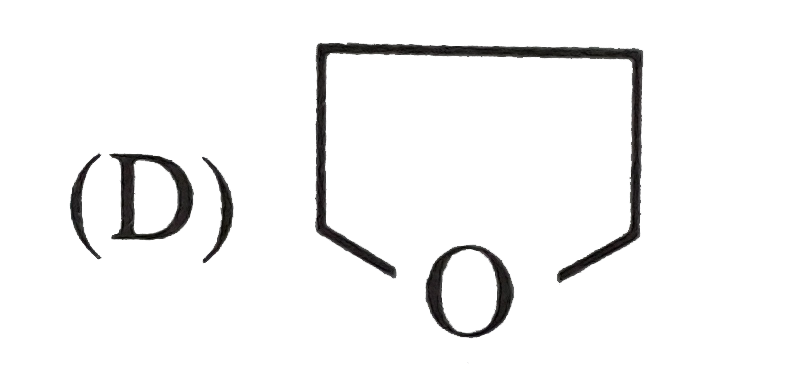
(B) whichof thefollowingalkanes will givesingleindertin PRODUCT?
86552.

(a) What are reducing and non-reducing sugars ? (b) Pyorrhoea is caused by the deficiency of which Vitamin ?

Answer»

Solution : (a) REDUCING SUGARS. The carbohydrates which contain aldehydic or ketonic group in the hemiacetal or hemiketal FORM and reduce Tollen.s reagent or Fehling.s solution are CALLED reducing sugars.
Non-reducing sugars. The carbohydrates which don.t reduce Tollen.s reagent or Fehling.s solution are called non-reducing sugars.
(b) PYORRHOEA is caused by the deficiency of vitamin C.
86553.

(a) What are nucleic acids ? How are they classified ? (b) What are its structural building blocks ?

Answer»

Solution :(a) Nucleic acids. These are the biologically significant polymers which are present in all the living CELLS. They direct the synthesis of proteins and are responsible for the TRANSFER of genetic information i.e. the hereditary characteristics. The repeating units of nucleic acids are called nucleotides. Nucleic acids are, therefore, also called polynucleotides.
There are two types of nucleic acids :
(i) DNA (deoxyribonucleic acid)
(ii) RNA (ribonucleic acid)
(b) Nucleic acids are polymers whose repeating units are called nucleotides. Each nucleotide UNIT has three components :
(i) A nitrogen containing heterocyclic base. These are two types of compounds known as purines or pyrimidines. The heterocycles present in nucleic acid are substituted FORMS of these compounds. The common examples are :
(A) adenine (G) and guanine are substituted purines (C) cytosine, thymine (T) and uracil (U) are substituted pyrimidines.
The structures of these compounds are shown below :

The purine adenine and guanine and substituted pyrimidine (cytosine) are found in both polymers DNA and RNA . However, RNA contains uracil instead of thymine presentin DNA.
(ii) A pentose sugar like ribose or deoxyribose . Their structures are shown in fig.

As the implies , DNA polymers contain deoxyribose sugar rings while RNA polymers contains ribose sugar rings.
(iii) A phosphate GROUP. These are responsible for the linkage in nucleic acid polymers.
In nucleic acid the sugar rings are attached to the nitrogen atom of the heterocycle by a bond between `C_1` atom of sugar and nitrogen atom of heterocycle. This linkage is called glycosidic bond and these compounds are called nucleosides. When the phosphate groups attached to the nucleoside, the compound formed is called nucleotide. Their structures are shown below:
86554.

(a) What are polyolefins ? (b) Name two polyolefins and give their preparation and uses.

Answer»

Solution :(a) Polyolefins. They are addition polymers formed by the polymerisation of molecules containing carbon-carbon double bonds. Their formation can be represented in GENERAL as :
`n(CH_2 =underset(G)underset(|)CH) to (-CH_2 - underset(G)underset(|)CH-)_n`
where G may be H, `-CH_3, -C_6H_5`, halogen etc.
(b) Polythene `(-CH_2-CH_2 -)_n` . When ethylene is heated under a high pressure in the presence of traces of oxygen, ethylene forms a long chain addition polymer having a molecular mass of about 20,000.
`underset("Ethylene")(nCH_2=CH_2) underset("Traces of oxygen")overset("Heat, pressures")to underset("Polythene")(-CH_2-CH_2-)_n`
Uses. It is used :
(i) in the manufacture of polythene pipes , buckets squeeze bottles and toys.
(ii) for packaging , coating for ELECTRICAL wires , cables and other materials.
2. Polypropylene`({:(-CHCH_2-),(" "|),(" "CH_3):})_n` When propylene is heated inthe presence of Zeigler Natta catalyst a MIXTURE of triethylaluminium and titanium tetrachloride, it results in the formation of polypropylene.
`nCH_3 - underset("Propylene")(CH)=CH_2 underset("Zeigler Natta Catalyst")overset(Heat")to`
Uses. It is used : `(underset("Polypropylene"){:(-CH-CH_2-),(" "|),(" "CH_3):})_n`
(i) in packing of textiles and foods.
(ii) for seat covers , CARPET fibres , ropes etc.
(iii) for making unshrinking WRAPS for records and other articles and making liners for bags.
86555.

(a) What are micelles ? How do they differ from ordinary colloidal particles ? Give the examples of micellear forming substances. (b) State Hardy-Schulze rule.

Answer»
86556.

(a) What are lyophilic and lyophobic sols ? Give one example for each. (b) What is Tyndall effect ?

Answer»

SOLUTION :(a) Lyophilic sol : has affinity towards DISPERSION medium
Example : Starch sol, albumin sol, gelatin, glue.
Lyophobic sol : Has no (or LITTLE) affinity towards dispersion medium.
Example : Sulphur sol, Metal sol, Metal oxide sol, slophide sols.
(B) Scattering of light by COLLOIDAL particles.
86557.

(a) What are interstitial compounds ? Write any one of their characteristics. (b) Out of the following elements, identify theelement which does notexhibit variable oxidation state : Cr, Co, Zn.

Answer»

Solution :(a) Compounds which are formed when small atoms LIKE H,C or N are TRAPPED inside the crystal lattices of metals
Characteristics : HIGH M.P, higher than those of pure metals
Very HARD, Retain metallic conductivity and chemically inertness. (
(b) Zn.
86558.

(a) What are intrinsic semiconductors ? Give an example. (b) What is the distance between Na^(+) and CI^(-) ions in NaCl crystal if tis density is 2.165 g cm^(-3) ? [Atomic Mass of Na = 23u, Cl = 35.5 u, Avogadro's number = 6.023 xx 10^(23)]

Answer»

Solution :(a) Intrinsic SEMICONDUCTOR also CALLED as undoped semiconductors or i-type semiconductor, the number of charge carries is therefore determined by the properties of the material itself instead of the amount of impurities. In intrinsic semiconductors, the number of located electrons and the number of holes are equal N = P.
The most common examples of the intrinsic semiconductors are silicon and germanium. Both of these are used frequently in MANUFACTURING of transistors and electronic products manufacturing.
(b) `d = (Z xx m)/(a^(3) xx N_(A))`
For NaCl = 2.165
`= (4("fcc")xx 58.5)/(a^(3) xx 6.02 xx 10^(23))`
`a^(3) = (4 xx 58.5)/(2.165 xx 6.02 xx 10^(23))`
`= 17.958 xx 10^(-23)`
`a^(3) = 179.58 xx 10^(-24)`
`a = 5.64 xx 10^(-8)`
= 564 pm
We know that
`2(R^(+) + R^(-)) = a`,
Where `R^(+) and R^(-)` are radius of sodium and chlorine ions respectively.
`(R^(+) + R^(-))` is the inter ionic distance
`therefore` Distance between `Na^(+) and Cl^(-)`
`= (564)/(2) = 282` pm
86559.

(a)What are interhalogen compounds ? Give examples. (b) Why are interhalogen compounds more reactive than halogens ?

Answer»

SOLUTION :(a) The COMPOUNDS of halogens among themselves are called interhalogen compounds. Examples:
`CIF_3 , ICl_3 , IF_5 , ICl ,IF_7` ETC
(B) This is because. (i) These are polar. (ii) These have LOWER bond energies than halogens.
86560.

(a) What are fuel cells? Explain the electrode reactions involved in the working of H_2-O_2 fuel cell. (b) Represent the galvanic cell in which the reaction Zn(s)+Cu^(2+) (aq) to Zn^(2+) (aq) +Cu(s) takes place.

Answer»

Solution :(a) The cells which convert chemical energy of a fuel directly into ELECTRICAL energy is known as fuel cells. The electrode reactions are:
Anode:
`[H_2(g)+2OH^(-) (aq)to2H_2O(L)+2e^(-) J TIMES 2`
Cathode:
`O_2(g)+2H_2O(l)+4e^(- ) to 4OH^(- ) (aq)`
NEt reaction:
`2H_2(g)+O_2(g) to 2H_2O (l)`
(b)
May be represented as `Zn(s)|Zn^(2+) (aq) ||Cu^(2+)(aq)|Cu(s)`
86561.

(a) What are enzymes ? How many enzymes have been identified so far ? (b) What are the important properties of enzymes ? (c) How do the enzymes catalysts work ? Give examples.

Answer»

Solution :(a) Enzymes. The enzymes are biological catalysts produced by living cells which catalyse the biochemical reactions. Without enzymes, the living process WOULD be very slow to sustain life. For example, without the presence of enzymes in our digestive tract, it would take about 50 years to digest a single meal. All enzymes are proteins. About 3000 enzymes have been identified.
(b) Properties of enzymes. The important properties of enzymes are :
1. Enzymes increase the speed of reactions upto 10 million times as compared to the uncatalysed reactions.
2. Extremely small quantities of enzymes -- as small as millionth of a mole — can increase the rate of reaction by factors of `10^3` to `10^6`.
3. The enzymes are highly specified in nature. Almost every biochemical reaction is CONTROLLED by its specific enzymes.
4. The enzymes are active at moderate temperature and pH.
5. The action of enzymes are controlled by various mechanisms and are inhibited by various organic and inorganic molecules.
6. The activity of most enzymes is closely regulated.
(c) Enzyme catalyse . Biochemists are trying to explain the exact molecular basis of enzyme catalysis. The various steps involved in the enzyme catalysed reaction are given below :

(i) Binding of the enzyme (E) to substrate (S) to form a complex.
`E + S to ES`
ES is called the enzyme -substrate complex.
(ii) Product formation in the complex where E-P is a complex of enzymes is present at certain specific regions on their SURFACES. These are called active sites or catslytic sites. The active sites have characteristic shape and fit suitably -shaped specific areas on the surfaces of the substrate molecules . Specific binding accounts for the high specificity of these enzymatic reactions. The enzyme is show in Fig.
86562.

(a) What are Elastomers? Give example.

Answer»

Solution :(a) The polymers that have elasticity, like rubber in which polymer chains are HELD together by the weakest intermolecular fores are referred to as ELASTOMERS. Example: NATURAL rubber, neoprene, vulcanized rubber
(B) NYLON:

(c ) rubber when heated with sulpur with an apporiate additive to a temperature of 373k to 415k is calledvulcanization of rubber
86563.

(a) What are carbohydrates ? Name four important functions of carbohydrates. (b) How are carbohydrates classified ?

Answer»

SOLUTION :(a) Carbohydrates. These are a class of compounds that contain the polyhydric aldehydes, polyhydric ketones and large polymeric substances which can be broken down to polyhydric aldehydes or ketones.
In the earlier days, the carbohydrates were regarded as the hydrates of carbon with the general formula `C_x (H_2 O)_y`. For example, carbohydrates such as glucose `(C_6 H_(12) O_6 )`, fructose `(C_6 H_(12) O_6 )`, sucrose `(C_(12) H_(22) O_(11))` satisfied this definition. However, there are CERTAIN substances which have the formula of hydrates of carbon but were not carbohydrates. For example, formaldehyde (HCHO or `CH_2 O`), acetic acid `(CH_3 COOH` or `C_2 H_4 O_2 )`. Therefore, these days carbohydrates are defined as polyhydric aldehydes or ketones.
Four important carbohydrates are : Ribose `(C_5 H_(10) O_5)`, glucose `(C_6 H_(12) O_6)`, fructose `(C_6 H_(12) O_6)`, sucrose `(C_(12) H_(22) O_(11))`.
(b) Classification of carbohydrates. Carbohydrates in general may be classified into two classes :
(i) Sugars. These are crystalline substances which are sweet and water SOLUBLE. For example, glucose, fructose and cane sugar.
(ii) Non-sugars. These are tasteless, insoluble in water and amorphous. For example, starch, cellulose, etc. However, these days carbohydrates are systematically classified into three classes :
(i) MONOSACCHARIDES. These are the simplest carbohydrates which contain a single carbohydrate unit and cannot be hydrolysed into simpler units. They contain upto six carbon atoms. They have the general formula `(CH_2O)_n`. They contain aldehydic or ketonic group. If the carbohydrates contain aldehydic group, they are named as aldoses and if they have ketonic group, they are commonly called ketoses. The common examples are ribose `(C_(5) H_(10) O_5)`, glucose `(C_6 H_(12)O)`, fructose `(C_6 H_(12)O)` etc.
(ii) Disaccharides. These are the carbohydrates which hydrolysed to give two monosaccharides. Sucrose is the common example and on hydrolysis it gives glucose and fructose. The other examples are maltose and lactose. These are formed by the condensation reaction between two monosaccharides. For example, sucrose is made up of one unit of glucose and one unit of fructose, lactose is made up of one unit of each glucose and galactose.
(iii) Polysaccharides. These are carbohydrates in which a large number of monosaccharide units are.linked to each other by oxygen bridges. These linkages are called glycosidic linkages. The common examples are cellulose, starch, etc. They get hydrolysed to give monosaccharides.
86564.

(a) What are carbohydrates? And how are they classified? (b) What is a peptide bond? How many peptide bonds are present in a tetra peptide?

Answer»

Solution :(a) Optically active polyhydroxy aldehydes or ketones or those compounds which yield these on hydrolysis.
CLASSIFIED as monosaccharides, OLIGOSACCHARIDES, polysaccharides.
(b) Elimination of a water molecule from TWO molecules of similar or DIFFERENT amino acids and formation of - CONH-bond.
3 - peptide bond are present in tetra peptide.
86565.

A well stoppered thermos flask contains some ice cubes. This is an example of a

Answer»

CLOSED system
Open system
Isolated system
Non-thermodynamic system

SOLUTION :In isolated system neither exchange of MATTER nor exchange of energy is possible with SURROUNDINGS.
86566.

A well stoppered thermos flask contains hot water .This is an example of

Answer»

CLOSED system
open system
isolated system
non THERMODYNAMIC system

Answer :C
86567.

A well known orange crystalline compound A when burnt imparts violet colour to flame. When heated with compound B in presence of concentrated sulphuric acid then it evolves a red coloured gas C which when passed through alkaline solution of lead acetate gives yellow precipitate of compound D. Identify D.

Answer»

`CrO_2 Cl_2`
`K_2 Cr_2 O_7`
`As_2 S_3`
`PbCr O_4`

SOLUTION :`A = K_(2) Cr_(2) O_(7) , B = NH_(4) Cl , C = CR O_(2) Cl_(2) , D = Pb CrO_(4) , E = NH_(3)`
86568.

A well stopped thermosflask contains some ice Cubes. This is an example of a

Answer»

CLOSED system
Open system
Isolated system
Non-thermodynamic system

Answer :C
86569.

A weather balloon filled with hydrogen gas at 1 atm and 27^(@)C has volume equal to 12000 litres. On ascending , it reaches a place where temperature is -23^(@)C and pressure 0.5 atm. The volume of the balloon is :

Answer»

<P>24000L
12000L
10000L
20000L

Solution :`p_(1) = ATM`,
`V_(1) =12000L`,
`T_(1) =27 + 273 = 300K`
`p_(2) = 0.5 atm`,
`V_(2) = ?`
`T_(2) = - 23 + 273 = 250 K`
`( p_(1) V_(1))/( T_(1)) = ( p _(2) V_(2))/( T_(2))`
or `V_(2) = ( p_(1) V_(1) T_(2))/( p_(2) V_(1)) = ( 1 XX 12000 xx 250)/( 0.5 xx 300)`
`= 20,000L`
86570.

A weak monobasic acid [pKa = 5 " at " 25^(@)C] is been neutralized by using NaOH. Select correct statement for the neutralisation process at 25^(@)C. [log3 = 0.48].

Answer»

PH of the solution at 50% neutralisation = pKa of the WEAK acid
pH of the solution at 25% neutralisation `= (1)/(2) pKa` of the weak acid
pH of the solution at 75% neutralisation `= (3)/(2)` pKaof the weak acid
pH of the solution at 100% neutralisation `lt`pKa of the weak acid

Solution :During neutralisation of a weak acid by a strong BASE we can get an acidic buffer solution if reaction is completed by9.09% to 90.0%. For an acidic buffer `pH= pKa + "log" (["salt"])/([W.A])`
Now At 50% neutralisation , [salt]= [W.A], pH= pKa
At 25% neutralisation, [salt] `=(1)/(3) [W.A]`, pH= pKa- log 3= 4.52
At 75% neutralisation, [salt] = 3 [W.A], pH= pKa + log 3= 5.48
At 100% neutralisation STAGE we will OBTAIN an aq. solution of salt of W.A/S.B then `pH gt 7.00`.
86571.

A weak monoprotic acid of 0.1 M, ionizes to 1% in solution. What will be the pH of solution

Answer»

1
2
3
11

Solution :`[H^(+)] = C. alpha`.
`[H^(+)] = 0.1 xx (1)/(100) = 10^(-3)`.
`pH = -LOG [H^(+)] = - log 10^(-3) = 3`.
86572.

A weak monobasic acid is 1% ionized in 0.1 M solution at 25^(@)C. The percentage of ionization in its 0.025 M solution is

Answer»

1
2
3
4

Solution :`HA HARR H^(+) + A^(-)`
`K = C alpha^(2) = 0.1 xx ((1)/(100))^(2), K = 10^(-5)`
`K = C alpha^(2)` or `10^(-5) = 0.025 xx alpha^(2)`
`alpha = sqrt((10^(-5))/(0.025)) RARR alpha = 0.02`
% age of ionization =2 .
86573.

A weak electrolyte having the limiting equivalent conductance of 400 S cm^(2)g. "equivalent"^(-1) at 298 K is 2% ionized in its 0.1N solution. The resistance of this solution (in ohms) in an electrolytic cell of cell constant 0.4 cm^(-1) at this temperature is:-

Answer»

200
300
400
500

Solution :`alpha=(wedge_(m))/_(wedge_(oo))`
`wedge_(oo)=400S" "cm^(2)g" "EQ^(-1)`
`wedge_(m)=wedge_(oo)xxalpha=400xx(2)/(100)=8`
`wedge_(m)=(kxx1000)/(C)`
`k=(1)/(R)xx`cell CONSTANT
`wedge_(m)=(1)/(R)xx`cell constant`xx(1000)/(C)`
`R=("cell constant")/(wedge_(m)xxC)xx1000`
`R=(0.4xx1000)/(8xx0.1)=500ohm`
86574.

A weak electrolyte, AB is 5% dissociated in aqueous solution. What is the freezing point of 0.1 111 aqueous solution of AB? (K_f of water = 1.86 Km^-1)

Answer»

-2.7°C
- 0.195°C
-0.534°C
0.15°C

Answer :B
86575.

A weak base BOH was titrated against a strong acid. The pH at one-fourthequivalence point was 9.24. Enough strong base was now added (6 m.e.) to completely convert the salt. The total volume was 50 mL. Find the pH at this point. 6 m.e. of the strong base, added, is used to convert the salt to the weak base. Thus before the addition of the strong base, m.e. of the salt and the base were 6 and 18 respectively. As 6 m.e. of the strong base shall combine with the same number of m.e. of the salt to produce 6 m.e. of BOH, total m.e. of BOH = 6 + 18 = 24 and thus molarity = 24/50 M. Now using K_b value, calculate the pH.

Answer»

SOLUTION :`(14-9.24) = pK_b + LOG((1//4)/(3//4)) `, CAL `K_b`
11.2
86576.

A weak base (50.0 mL) was titrated with 0.1 M HCl. The pH of the solution after the addition of 10.0 mL and 25.0 mL were found to be 9.84 and 9.24, respectively. Calculate Kb of the base and pH at the equivalence point.

Answer»


Answer :`K_(E)= 1.8 xx 10^(-5), 5.27`
86577.

A weak acid of dissociation constant 10^(-5) is being titrated with aqueous NaOH solution. The pH at the point of one-third neutralisation of the acid will be

Answer»

`5 + lgo2 - LOG 3`
`5- log 2`
`5-log 3`
`5-log 6`

Solution :Itformsabasicbuffer
So , `PH =pk_a+ log(["salt"])/(["acid"])`
onethirdneutralisation means `(["salt"])/(["acid"])= [(1)/(3) XX (3)/(2)]`
`pH =5+log[1/2] or pH= 5- log 2`
86578.

A weak acid (or base) is titrated against a strong base (or acid), volume V of strong base (or acid) is plotted against pH of the solution (as shown in fig).The weak electrolyte (i.e., acid or base) could be:

Answer»

`Na_(2)CO_(3)`
`Na_(2)C_(2)O_(4)`
`H_(2)C_(2)O_(4)`
`CH_(4)(CO OH)_(2)`

Answer :C::D
86579.

A weak acid of dissociation constant 10^(-5) is being titrated with aqueous NaOH solution. The pH at the point of one-third neutralization of the acid will be

Answer»

`5 + LOG 2 - log 3`
5 - log 2
5 - log 3
5 - log 6

Answer :B
86580.

A weak acid is 0.1 % ionised in 0.1M solution. Its pH is…..

Answer»

2
3
4
1

Solution :For a MONOBASIC acid `[H^+]=c.a`
`=1/10 times 0.001=10^-4`
`THEREFORE pH=-log_10[10^-4]=4`
86581.

A weak acid is 0.1% ionised in 0.1 M solution. Its pH is

Answer»

2
3
4
1

Solution :For a MONOBASIC acid
`[H^(+)] = C alpha = (1)/(10) xx 0.001 = 10^(-4) rArr pH =4`.
86582.

A weak acid HX has the dissociation constant 1xx10^(-5)M. It forms a salt NaX on reaction with alkali. The percentage hydrolysis of 0.1 M solution of NaX is :

Answer»

`0.0001 %`
`0.01%`
`0.1%`
`0.15%`

Solution :`NaX+H_(2)O rarr NaOH+HX`
HX is weak acid so that NaX is salt of weak acid and strong BASE
`K_(H)=(K_(w))/(K_(a))=(1.0xx10^(-14))/(10^(-5))=1.0xx10^(-9)`
Now `K_(h)=CH^(2)`
`10^(-9)=1.0 h^(2)`
`h^(2)=(1.0xx10^(-9))/(0.1)=10^(-8)` or `h=10^(-4)`
Percentage of HYDROLYSIS `=10^(-4)xx100`
`=10^(-2)%`or`=0.01 %`
86583.

A weak acid HX has the dissociation constant 1 xx 10^(-5) M. It forms a salt NaX on reaction with alkali. The precentage hydrolysis of 0.1 M solution of NaX is

Answer»

1.0E-6
0.0001
0.001
0.0015

Solution :`h = sqrt((K_(w))/(K_(a) xx c)) = sqrt((10^(-14))/(10^(-5) xx 0.1)) = 10^(-4)`,
Hence, % HYDROLYSIS `= 10^(-4) xx 100 = 0.01`
86584.

A weak acid, HA has a K_(a) of 1.00xx10^(-5). If 0.100 mol of this acid is dissolved in one litre of water, the percentage of acid dissociated at equilibrium is closest to :

Answer»

`1.00%`
`99.9%`
`0.100%`
`99.0%`

Solution :`alpha = sqrt((K_(a))/(c ))=sqrt((1.0xx10^(-5))/(10^(-1)))=10^(-2)`.
`therefore` PERCENTAGE of acid dissociated `=10^(-2)xx100`
`=1%`
86585.

A weak acid (50.0 mL) was titrated with 0.1 M NaOH. The pH values when 10.0 mL and 25.0 mL of base have been added are found to be 4.16 and 4.76, respectively. Calculate K_a of the acid and pH the equivalence point.

Answer»


ANSWER :8.73
86586.

A weak acid HA has a K_(a) of 1.00 xx 10^(-5). If 0.100 mol of this acid is dissolved in one litre of water the percentage of acid dissociated at equilibrium is closed to

Answer»

`99.0%`
`1.00%`
`99.9%`
`0.100%`

Solution :`K_(a) = 1 xx 10^(-5)`
`{:(HA,HARR,H^(+),+,A^(-)),(.1m//l,,0,,0),(.1-x,,x,,x):}`
`10^(-5) = (x^(2))/(1-x)`
Assume `x lt lt.1`
`x^(2) = 10^(-6)` or `x = 10^(-3)`, % DISSOCIATION `= (10^(-3))/(.1) xx 100 = 1%`
86587.

A weak acid fix ( K_(a) = 1 xx 10^(-5)) on reaction with NaOH gives NaX. For 0.1 m aqueous solution of NaX, the percentage hydrolysis is

Answer»

1.0E-5
0.0001
0.0015
0.01

Answer :B
86588.

A weak acid HA after treatment with 12 ml of 0.1M strong base BOH hasa PH of 5 . At the end point the volume of same base required is 26.6 ml .what is the value K_a acid ?

Answer»

`1.8xx10^(-5)`
`8.12xx10^(-6)`
`1.8xx10^(-6)`
`8.2xx10^(-5)`

ANSWER :B
86589.

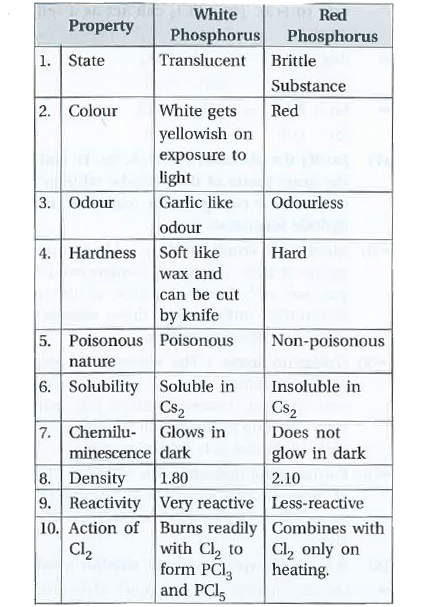
A waxy crystalline solid (X) with a garlic odour is obtained by burning white phosphorus in air. X reacts vigorously with hot water forming an acid and gas Y. Y is neutral towards litmus and produces a black residue Z when passed through cupric sulphate, What are Y and Z?

Answer»


ANSWER :`PH_(3),Cu_(3)P_(2)`
86590.

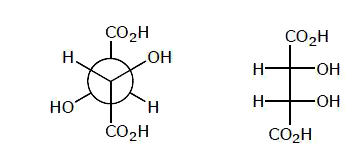
A water solubleC_6H_(14)O_2 ompound is oxidized by lead tetraacetate (or periodic acid) to a singleC_3H_6Ocarbonyl compound. Which of the following would satisfy this fact ?

Answer»

meso-2, 3-dimensthoxybutane
1,2-diethoxyethane
meso-2,5-hexanediol
meso-3,4-hexanediol

Answer :D
86591.

A water sample has ppm level concentration of following anions F^(-)=10, SO_4^(2-)=100 , NO_3^(-)=50 The anion/anions that make/makes the water sample unsuitable for drinking is/are

Answer»

Both `SO_4^(2-)` and `NO_3^(-)`
Only `F^-`
Only `SO_4^(2-)`
Only `NO_3^-`

Solution :Acceptable level
`F^-` upto 1 PPM
`NO_3^-` upto 50 PPM
`SO_4^(2-)` upto 500 PPM
86592.

A water sample has ppm level concentntion of following anions F^(-)=10,SO_(4)^(2-)=100,NO_(3)^(-)=50 the anion/anions that make/makes the water sampleunsuitable for drinking is/are :

Answer»

only `NO_(3)^(-)`
both `SO_(4)^(2-) and NO_(3)^(-)`
only `F^(-)`
only `SO_(4)^(2-)`

Solution :Above 2 ppm CONCENTRATION of `F^(-)` in drinking WATER cause BROWN mottling of TEETH.
86593.

A water sample has ppm level concentration of following anions F^(-)=10 , SO_(4)^(2-)=100 , NO_(3)^(-) =50 the anion/anions that make/makes the water sample unsuitable for drinking is/are

Answer»

only `F^(-)`
only `SO_(4)^(2-)`
only `NO_(3)^(-)`
both `SO_(4)^(2-)` and `NO_(3)^(-)`

ANSWER :A
86594.

A water insoluble organic mixture contained following compounds (1)Benzoic acid , (2)Salicylaldehyde (3)p-Hydroxybenzaldehyde, (4)alpha-Naphthylamine , (5)Naphthelene The following sequence of reagents are used to separate this mixture Insoluble compound at step Z is formed by compound .

Answer»

p-Hydroxybenzaldehyde
Salicylaldehyde
`ALPHA`-Naphthylamine
Naphthalene

Solution :Naphthelene does not FORM SALT with HCL, `NaHCO_3` and NAOH.
86595.

A water insoluble organic mixture contained following compounds (1)Benzoic acid , (2)Salicylaldehyde (3)p-Hydroxybenzaldehyde, (4)alpha-Naphthylamine , (5)Naphthelene The following sequence of reagents are used to separate this mixture Soluble compound at step Y is formed by compound .

Answer»

BENZOIC acid
p-Hydroxybenzaldehyde
`ALPHA`-Naphthylamine
Naphthalene

Solution :`-COOH` GROUP form SALT with `NaHCO_3`
86596.

A water insoluble organic mixture contained following compounds. (1) =Benzoic acid (2) = Salicylaldehyde (3) = p-Hdroxybenzaldehyde (4) = a-Naphthylamine (5)= Naphthalene The following sequence of reagents are used to separate this mixture

Answer»

<P>

Solution :
`X=4`: a-Napthylamine is soluble in aqueous `HCl` solution.
`Y=1`, BENZOIC ACID is soluble in aqueous `NaHCO_(3)` solution.
`Z=`: Naphthalene insolyble in aqueous `HCl, NaoH` or `NaHCO_(3)` solution.
`W=2`: Salicylaldehyde has lower b.p. than `p-` HYDROXY BENZALDEHYDE
86597.

A waterinsolubleN- containingorganiccompoundthat dissolvesin cold diluteHCIis likely to be a//n

Answer»

NITRO COMPOUND
AMINE
AMIDE
Nitrile

Solution :Aminesare waterinsolublebaseabsorbedby ACID
86598.

A water insoluble organic mixture contained following compounds (1)Benzoic acid , (2)Salicylaldehyde (3)p-Hydroxybenzaldehyde, (4)alpha-Naphthylamine , (5)Naphthelene The following sequence of reagents are used to separate this mixture Soluble compound at step X is formed by compound :

Answer»

BENZOIC acid
p-Hydroxybenzaldehyde
`alpha`-Naphthylamine
Naphthalene

Solution :`-NH_2` containing COMPOUND FORM salt with HCl.
86599.

(A): Water forms hydronium ion in acid solutions (R): The maximum covalency of oxygen is three

Answer»

Both (A) and (R ) are true and (R ) is the CORRECT EXPLANATION of (A)
Both (A) and (R ) are true and (R ) is not the correct explanation of (A)
(A) is true but (R ) is false
Both (A) and (R )are false

ANSWER :A
86600.

A volume of a gas weighing 8 g was allowed to expand at constant temperatureuntil the pressure of the gas reduced to one-half of its former value. It was found that 500 mL of the rarefied gas weighed 1.25 g. (i) What was the original volume of the gas? (ii) Determine the density of the gas in g/L.

Answer»

SOLUTION :1.6 L, 5.0 g/L