Explore topic-wise InterviewSolutions in .

This section includes InterviewSolutions, each offering curated multiple-choice questions to sharpen your knowledge and support exam preparation. Choose a topic below to get started.

87351.

A solution containing 10.2 g glycerine per litre of a solution is found to be isotomic with 2.0% solution of glucose (Molar mass 180). Calculate the molecular mass of glycerine.

Answer»


Solution :`"Molar conc. of glycerine "=10.2//M" (M = MOL. MASS)"`
`"Molar conc. of glucose "=(2)/(180)XX(1)/(100)xx1000="0.111 mol L"^(-1)""therefore""(10.2)/(M_(2))=0.111"or"M_(2)=91.9"G mol"^(-1)`.
87352.

A solution containing 10.2g of glycerene per litre is found to be isotonic with a 2% solution of glucose. Calculate the molecular weight of glycerene (mol.wt. of glucose =180)

Answer»


ANSWER :`91.8`
87353.

A solution containing 10 mole of ethylene glycol dissolved in 1000 g of water (K_(f) = 1.86 K "molality^(-1) will freeze at:

Answer»

273 K
2.544 K
254.4 K
25.44 K

Solution :`DELTA T_(f)= "MOLALITY" XX K_(f) = 10 xx 1.86 =18.6`
`Delta T_(f) = T^(@) - T rArr T=0 - 18.6`
`=-18.6^(@) + 273 K = 254.4 K`
87354.

A solution containing 10 g per "dm"^3 of urea (molar mass = 60) is isotonic with a 5% (mass by vol.) solution of a non-volatile solute. The molar mass (in g "mol"^(-1)) of non-volatile solute is

Answer»

350
300
250
200

Answer :B
87355.

A solution containing 10 g/litre of surcose has an osmotic pressure of 0.66 atm at 273 K. Calculate the value of the constant R.

Answer»

Solution :Here, we are GIVEN that `"C = 10 G/litre "=(10)/(342)" moles/litre"`
`""(because "Molar mass of sucrose "C_(12)H_(22)O_(11)="342 g MOL"^(-1))`
`PI=0.66 atm,"T = 273 K"`
Using the equation, `pi=CRT`, we have
`R=(pi)/(CT)=("0.66 atm")/((10)/(342)" mol L"^(-1)xx"273 K")=(0.66xx342)/(10xx273)"L atm K"^(-1)"mol"^(-1)="0.0827 L atm K"^(-1)"mol"^(-1)`.
87356.

A solution containing 1 mole of ethylene glycol dissolved in 1000 g of water (K_f = 1.86 K molality^-1) will freez at:

Answer»

`-5.2^@C`
`-0.52^@C`
`-18.6^@C`
`-1.86^@C`

ANSWER :C
87357.

A solution containing 0.90 g of a non-volatile solute in 100 mL of benzene having density 0.88 g mL^(-1) at 298 K, boils at a temperature 0.25^(@) higher than benzne. Calculate the molecular mass of solute. Molal boiling point elevation constant for benzenene is 2.52 K kg mol^(-1).

Answer»


Solution :`T_(b)^(@)=78^(@)C,T_(b)=78.28^(@)C,DeltaT_(b)=T_(b)-T_(b)^(@)=78.28-780.28^(@)C=0.28 K`
`K_(b)=1.15" K KG mol"^(-1), W_(B)=1.12 g, W_(A)=0.032 kg, M_(B)= ?`
`M_(B)=(K_(b)xxW_(B))/(DeltaT_(b)xxW_(A))=((1.5" K kg mol"^(-1))xx(1.12 g))/((0.28 K)xx(0.032 Kg ))=143.75" g mol"^(-1)`.
87358.

A solution containing 0.85g of ZnCl_(2) in 125.0 g of watcr freezcs at -0.23^(@)C. The apparent degree of dissociation of the salt is (K _(f) for water = 1.86 k kg mol ^(-1), atomic mas: Zn =65.3 and Cl =35.5)

Answer»

`1.36%`
`73.5%`
`7.35%`
`2.47%`

Solution :MOL wt. `= (k _(F) xx w xx 1000)/( Delta T _(f) xx W)`
`= (1.86xx0.85 xx1000)/( 0.23xx125)~~55 gm`
where
`w= 0.85g`
`W= 125g`
`Delta T_(f) =0^(@)C-(-23^(@)C)=23^(@)C`
Now, `i= (M_("normal"))/(M_("obscrved")) = (136.3)/(55) =2.47`
{:(Zn Cl_(2), HARR, Zn^(++), +, 2Cl^(-)), (1-alpha,, alpha,, 2 alpha):}`
Van't Hoff FACTOR (i)
`= (1- alpha _(eta) + alpha _(eta) +2 alpha_(eta))/(1) =2.47`
`therefore alpha eta = 0.735 = 73.5%`
87359.

A solution containing 0.85 g of ZnCI_(2) in 125.0g of water freezes at -0.23^(@)C. The apparent degree of dissociation of the salt is: (k_(f) for water = 1.86 K kg mol^(-1), atomic mass, Zn = 65.3 and CI = 35.5)

Answer»

`0.875 M`
`1.00M`
`1.75M`
`0.975M`

Solution :`M_("resultant") = (M_(1)V_(1)+M_(2)V_(2))/(V_("TOTAL"))`
`= (0.5 xx 750 + 2XX 250)/(1000)`
`= (375 +500)/(1000) = 0.875M`
87360.

A solutioncontaining 0.730 g of camphor(molarmass = 152 )in 36.8g of acetone (b.p. 56.30^(@)C) boils at 56.55^(@)C. A solutionof 0.564 g of an unknown compound in the same weightof solventboils at 56.46^(@)C . Calculatethe molarmass of the unknown compound.

Answer»

Solution :In this problem , THEVALUE of `k_(b)` is not given.The firstdata is used to calculate `k_(b)` WHICHIS used to calculatethe molar mass from the second data.
(i) Calculationof `k_(b)` foracetone .
`k_(b) = (Delta_(b) xx M_(B) xx w_(A))/(w_(B) xx 1000)`
`Delta T_(b) = 56.55 - 56.30 = 0.25^(@)C, M_(B)= 152`
`w_(B) = 0.730 g, w_(B) = 36.8 g`
`therefore ""k_(b) = (0.25 xx 152 xx 36.8)/(0.736 xx 1000) = 1.92 K m^(-1)`
(ii) Calculation of molarmass ofunknown COMPOUND.
`M_(B) = (k_(b) xx 1000 xx w_(B))/(Delta T_(b) xx w_(A))`
`k_(b) = 1.92 km^(-1) , Delta T_(b) = 56.46 = 56.30`
` = 0.16^(@)C`
`w_(B) = 0.564 g, w_(A) = 36.8 g `
`M_(B) = (1.92 xx 1000 xx 0.564)/(0.16 xx 36.8) = 183.9 g mol^(-1)`
87361.

A solution containing 0.73 g of camphor ( molar mass 152 g "mol"^(-1) ) in 36.8 g of acetone ( boiling point56.3^(@)C) boils at 56* 55^(@)C . A solution of 0.564 g of unknown compound in the same weight of acetone boils at 56.46^(@)C . Calculatethe molar massof the unknown compound .

Answer»

Solution :Given : MASS of camphor = `W_(2) = 0*73` g
Molar mass of camphor = `M_(2) = 152 g "mol"^(-1)`
Mass of acetone = `W_(1) = 36*8 ` g
Mass of unknown compound = ` W'_(2) = 0*564` g
Molar mass of compound = `M'_(2)= ?`
For solution of camphor in acetone ,
` DeltaT_(B) = T_(b)- T^(@)._(b)`
` = 329 * 55 - 329*30 = 0*25 ` K
`:. K_(b) = (Delta T_(b)xx W_(1)xxM_(2))/(W_(2) xx 1000)`
` = (0*25 xx 36*8 xx 152)/(0*73 xx 1000)`
` = 1*916 "Kkg mol"^(-1)`
For solution of unknown compound in acetone,
` DeltaT_(b) = T_(b) - T^(@)._(b)`
` = 329*46 - 329*30 = 0*16 ` K
` :. K_(b) = (DeltaT_(b)xxW_(1)xxM'_(2))/(E'_(2)xx1000)`
` M'_(2) = (K_(b)xxW'_(2)xx1000)/(DeltaT_(b)xxW_(2))`
` = (1*916 xx1000 xx0.564)/(0*16 xx36*8)`
` M'_(2) = 185*5` g/mol
Hence , the molar mass of the unknown compound is ` 183*5 "g mol"^(-1)`
87362.

A solution containing 0.52 g of C_(10)H_(8) in CCl_(4) produced an elevation in boiling point of 0.402^(@)C. On the other hand a solution of 0.62 g of an unknown solute dissolved in same amount of CCl_(4) produced an elevation of 0.65^(@)C. Molecular mass of solute is :

Answer»

85.53 g/mole
181.51 g/mole
94.38 g/mole
160.62 g/mole

Answer :C
87363.

A solution containing 0.5216g of naphthalene (mol.wt.=128.16) in 50mL of "CC"l_(4) shows boiling point elevation of 0.402^(@) while a solution of 0.6216g of an unknown solute in the same weight of solvent gave a boiling point elevation of 0.647^(@) . Find the molecular mass of the unknown solute.

Answer»

Solution :Suppose the weight of 50mL of solvent `"CC"l_(4)` is W grams.
For the FIRST solution , molality `=(0.5216//128.16)/(W)xx1000`
`=(521.6)/(128.16W)`
`K_(b)=(DeltaT_(b))/(m)`
`=(0.402)/(521.6//128.16W)`
As the second solution is prepared in the same weight of solvent,
so for the second solution molality `=(0.6216//M)/(W)xx1000`
`=(621.6)/(WM)`
`:.K_(b).=(0.647)/(621.6//WM)`
(M is the mol.wt. of the UNKNOWN SOLUTE)
Since the solvent in both the solutions is the same
`K_(b)=K_(b).`
Thus, `(0.402)/(521.6//128.16W)=(0.647)/(621.6//WM)`
`M=94.84`
87364.

A solutioncontaining0.513 g of naphthalene (molar mass = 128) in 50 gof C Cl_(4) gives a boiling point elevationof 0.402^(@)C whilea solutionof 0.625 g of an unknown solutegives a boilingpoint elevation of 0.650^(@)C . Findthe molar mass of the unknown solute .

Answer»


SOLUTION :Calculation of `k_(b)` :
`k_(b) = (Delta T_(b) XX w_(A) xx M_(B))/(1000 xx w_(B))`
` = (0.402 x 50 xx 128)/(1000 x 0.513) = 5.02 K m^(-1)`
`M_(B) = (5.02 xx 0.625 xx 1000)/(0.650 xx 50) =96.54`
87365.

A solution containing 0.5126 g of napththalene ("molar mass"= 128 g mol^(-1)) in 50.0 g of carbon tetrachloride gave aboiling point elecantion of 0.402 K. Find the molar mass of the unknown solute.

Answer»

SOLUTION :IN case of naphthalene
Mass of naphthlene `(W_(B))`=0.5126 g
Mass of carbon tetrachloride `(W_(A))`= 50.0g=0.050kg
MOLAR mass of naphthalene `(M_(B))`=128 g `mol^(-1)`
Elevation in boiling point `(DeltaT_(b))=0.647 K`
`K_(b)=(M_(B)xxDeltaT_(b)xxW_(A))/W_(B)=((128 g mol^(-1))XX(0.402 K)xx(0.50 kg))/((0.5126g))=5.019 K kgmol^(-1)`
In case unknown solute
Upon comparing the available infrmation both `W_(A)andK_(b)` values in two cases are the same. Therefore. by comparing in TERMS of these values,
`(M_(B)xxDeltaT_(b))/W_(B)("Naphthalene")=(M_(B)xxDeltaT_(b))/W_(B)("Unknown sloute")`
`((128 g mol^(-1)xx(0.402 K))xx(0.402K))/((0.5126 g))=(M_(B)xx(0.647K))/((0.6216 g))`
`M_(B)=((128 g mol^(-1))xx(0.402K)xx(0.6216 g))/((0.5126 g)xx(0.099 kg))=96.44 g mol^(-1)`
87366.

A solution containing 0.5126 g naphthalene (mol. Mass = 128) in 50.0 g of carbon tetrachloride yields a boiling point elevation of 0.402^(@)C while a solution of 0.6216 g of an unknown solute in the same weight of the same solvent gives a boiling point elevation of 0.647^(@)C. Find the molecular mass of the unknown solute.

Answer»

SOLUTION :In this case, the first data is USED to find the value of `K_(B)`. This value of `K_(b)` is used in the second data to find the molecular mass.
Srep I. To find `K_(b)` for `C Cl_(4)` from data on napthalene solution
`w_(2)=0.5126 g, w_(1)=50.00 g, M_(2)=128 g mol^(-1), Delta T_(b)=0.402^(@)C=0.402 K^(**)`
`K_(b)=(Delta T_(b).w_(1)M_(2))/(1000 w_(2))=(0.402 K XX 50 g xx 128 g mol^(-1))/(1000 g kg^(-1)xx0.5126 g)=5.02" K kg mol"^(-1)`
Steo II. To find the mol. mass of unknown solute.
The given data are : `w_(2)=0.6216 g, w_(1)=50.00 g, Delta T_(b)=0.647^(@)C=0.647 K`
`K_(b)=5.02 "K kg mol"^(-1)` (calculated above)
`M_(2)=(1000 K_(b)w_(2))/(w_(1)Delta T_(b))=(1000 g kg^(-1)xx5.02"K kg mol"^(-1)xx 0.6216 g)/(50g xx0.647 K)=96.46 g mol^(-1)`
87367.

A solution containing 0.45 g of urea in 22.50 g of water gave a boiling point elevation of 0.17 K. Calculate the molal biling point elevation constant for water. Molar mass of urea is 60 g mol^(-1)

Answer»


Solution :`DeltaT_(B)=0.17 K, W_(A)=22.50 g=0.0225 Kg, W_(B)=0.45 g,`
Mol. MASS of urea `(NH_(2)CONH_(2)), M_(B)=" g mol"^(-1), K_(b)=?`
`DeltaT_(b)=(K_(b)xxW_(B))/(W_(A)xxW_(A))`
`K_(b)=(DeltaT_(b)xxW_(A)xxM_(B))/W_(B)=((0.17 K)xx(0.0225kg)xx(60" g mol"^(-1)))/((0.45 g))=0.51" K kg mol"^(-1).`
87368.

A solution containing 0.319 gm of complex CrCl_(3).6H_(2)O was passed through cation exchanger and the solution given out was neturalised by 28.5 ml of 0.125 M NaOH. The correct formula of the complex will be : [Molecular weight of complex = 266.5]

Answer»

`[CrCl(H_(2)O)_(5)]Cl_(2).H_(2)O`
`[CrCl(H_(2)O)_(6)]Cl_(3)`
`[CrCl_(2)(H_(2)O)_(4)]Cl.2H_(2)O`
all are correct

Solution :`n_(CrCl_(3).6H_(2)O)=0.319/266.5`
m MOL of NaOH=3.5625
`3CL^(-)harr3OH^(-)rArr1.97xx3=3.5625`
`RARR [Cr(H_(2)O)6]Cl_(3)`
87369.

A solution containing 0.2563 g of naphthalene (molecular mass = 128) in 50 g of carbon tetrachloride yields a boling point elevation of 0.201^(@)C while a solution of 0.6216 g of an unknown solute in the same mass of the solvent gives a boiiling point elevation of 0.647^(@)C. Find the molecular mass of unknown solute.

Answer»

Solution :We KNOW that
`K_(B) = (DeltaT_(b) XX W_(1) xx Mw_(2))/(1000 xx W_(2))`
For `C Cl_(4) , K_(b) = (0.201 xx 50 xx 128) /(1000 xx 0.2563) = 5.019`
`Mw_(2) = (1000 xx K_(b) xx W_(2)) / ((DeltaT_(b) xx W_(1))`
`=(1000 xx 5.019 xx 0.6216) /(0.647 xx 50)`
`= 96.44`
87370.

A solution containing 0.319 g of CrCl_(3).6 H_(2)O was passed through a cation exchange resin and acid coming out of the cation exchange resin required 28.5 ml of 0.125 M NaOH. Determine correct formula of the complex [Mol. Wt. of the complex = 266.5]

Answer»

`[Cr(H_(2)O)_(6)]Cl_(3)`
`[Cr(H_(2)O)_(5)CL]H_(2)O.Cl_(2)`
`[Cr(H_(2)O)_(4)Cl_(2)]Cl.2H_(2)O`
`[Cr(H_(2)O)_(3)Cl_(3)].3 H_(2)O`

Solution :Suppose the number of ionizable `Cl^(-)` ions (present outside the coordination sphere = n). When the solution of the COMPLEX passes through the cation exchanger, these `Cl^(-)` ions will combine with `H^(+)` ions of the cation exchanger to form HCl
`nCl^(-)+nH^(+)RARR nHCl`
Thus, 1 mole of the complex will form n moles of HCl.
1 mole of the complex`-=` n moles of HCl `-=` n moles of NaOH
Moles of the comples `= (0.319)/(266.5)` =0.0012 mole
Moles of NaOH used `= (28.5xx0.125)/(1000)`
=0.0036 mole
0.0012 mole of the complex = 0.0036 mole NaOH `-=` 0.0036 mole HCl
`therefore` 1 mole of the complex `= (0.0036)/(0.0012)=3` mole of
HCl `-=` 3 moles of `Cl^(-)` ions
Thus, all the `Cl^(-)` ions are outside the coordination sphere. Hence, the complex is `[Cr(H_(2)O)_(6)]Cl_(3)`.
87371.

A solution containing 0.10 g of non-volatile solute X (molar mass : 100) in 200 g of benzene depresses the freezing point of benzene by 0.25^(@)C while 0.50 g of another non-volatile solute Y in 100 g of benzene also depresses the freezing point of benzene by 0.25^(@)C. What is the molecular mass of Y ?

Answer»

50
100
150
1000

Solution :`DeltaT_(f)=(1000K_(f)w_(2))/(w_(1)xxM_(2))=(1000K_(f)W'_(2))/(w'_(1)xxM'_(2))`
`or M'_(2)=(w'_(2))/(w'_(1))xx(w_(1))/(w_(2))xxM_(2)=(0.50)/(100)xx(200)/(1.10)XX100`
= 1000
87372.

A solution containing 0.1 mole of naphthalene and 0.9 mole of benzene is cooledout until some benzene freeze out. The solution is then decanted off from the solid and warmed upto 353 K where its vapour pressure was found to be 670 torr. The freezing point and boiling point of benzene are 278.5 Kand 353 K respectively and its and its enthalpy of fusion is 10.67" kJ mol"^(-1). Calculate the temperature to which the solution was cooled originally and the amount of benzene that must have frozen out. Assume ideal behaviour.

Answer»

Solution :`p^(@)=760` mm at the boiling POINT of benzene (353 K), `p_(s)=670` mm
Applying COMPLETE formula (for dilute/concentrated solution)
`(p^(@)-p_(s))/(p_(s))=(n_(2))/(n_(1))=(n_(2))/(w_(B)//M_(B))=(n_(N)xxM_(B))/(w_(B))`
`(760-670)/(670)=(0.1xx78)/(w_(B))"or"w_(B)=58.06g`
This is the mass of benzene present in the decanted solution.
Mass of benzene present in the original solution `=0.9xx78=70.2g`
`therefore"Benzene frozen out "=70.2-58.06=12.14g`
`DeltaT_(F)` of the original solution (0.1 mole naphthalene in 0.9 mole benzene)
`K_(f)xx "molality "=(RT^(2))/(1000l_(f))xx"molality...(i)"`
In the original solution, as 0.1 mole of naphthalene was present in 70.2 g of the solvent (benzene)
Molality of the original solution `=(0.1)/(70.2)xx"1000 mol kg"^(-1)`
`therefore""l_(f)" (latent heat of fusion/g of solvent)"=(10.67xx10^(3))/(78)"J g"^(-1)`
Substituting in eqn. (i), we get
`DeltaT_(f)=(8.314xx(278.5)^(2))/(1000xx(10.67xx10^(3))/(78))xx((0.1)/(70.2)xx1000)=6.72^(@)`
`therefore"Freezing point of the original solution "=278.5-6.72=271.78K`
In other words, the original solution was cooled to 271.78 K.
87373.

A solution contained Na_(2)CO_(3) and NaHCO_(3). 25 mL of this solution required 5 mL 0.1 N HClfor titration with phenophthalein as indicator . The titrationwas repeated with the same volume of the solution but woth methyl orange .12.5 mL of 0.1 N HCl was required this time . Calculate the amount of Na_(2)CO_(3) and naHCO_(3) in the solution .

Answer»

Solution :Neutralisation reaction with phenolphthalein is
`na_(2)CO_(3) +HCl to NaHCO_(3) +NACL`
while with methyl orange ,the REACTIONS are,
`Na_(2)CO_(3) + HCl to NaHCO_(3) +NaCl `
`naHCO_(3) +HCl to NaCl +H_(2)O + CO_(2)`
(produced)
and `naHCO_(3) +HCl toNaCl +H_(2)O +CO_(2)`
(originally present)
Thus ,
we have with phenolphthalein is
`na_(2)CO_(3) +HCl to NaCl +H_(2)O +CO_(2)`
( originally present)
Thus,
we have with phenolphthalein ,
m.e of `Na_(2)CO_(3) ` = " m.e of " 5 mL of `0.1 ` N HCl
` = 0.1 xx 5 = 0.5`
` :. ` eq . of `na_(2)CO_(3) = (0.5)/1000 = 0.005`
` :. ` wt of `Na_(2)CO_(3)= (0.0005 xx 106) g `
` = 0.053 g`
[ Eq. wt . of `na_(2)CO_(3)` in the GIVEN reactio is 106]
And with methyl orange ,
m.e of `Na_(2)CO_(3) +" m.eof " NaHCO_(3) + "m.e of " NaHCO_(3)`
(produced )(originally present )
= m.e of `12.5` mL of `0.1 ` N HCl
or `0.5 + 0.5 + " m.eof " NaHCO_(3) = 0.1 xx 12.5 = 1.25`
or `" m.e of "NaHCO_(3) = (0.25)/(1000) xx 84 = 0.021 g `
( eq. wt of `NaHCO_(3) =84`)
87374.

A solutio of white solid (A) insoluble in water and soluble in conc. HCl on exposure to air gradually turns green. The compound (A) also dissolves in NH_(3) to give a colourless solution. But on keeping in air the solution turns dark blue.The ammonical solution of compound (A) forms a red explosive compound with acetylene. Identify, (A) and explain the reactions.

Answer»

SOLUTION :`C_(2)Cl_(2)`
87375.

A solutio of sodium borate has a pH of approximately

Answer»

`LT 7`
`gt 7`
`=7`
Between 4 to 5

Solution :Borate ions are hydrolyzed to DEVELOP ALKALINE nature in solution.
87376.

A solute 'X' is trimerised in a solvent. The experimental molar mass is than that of calculated mass.

Answer»

SOLUTION :Higher association LEADS to decrease in colligative property. Molar mass is INVERSELY proportional. THEREFORE EXPERIMENTAL molar mass is higher than calculated mass.
87377.

A solute has 2:3 molar ratio of toulene to benzene. The vapour pressure of benzene and toulene at 25^@C are 95 and 28 bar respectively. The mole fraction of Toulene vapour is

Answer»

0.658
0.326
0.548
0.855

Answer :C
87378.

A solute forms a pentamer when dissolved in a solvent. The van't Hoff factors 'I' for the solute will be :

Answer»

0.5
5
0.2
0.1

Solution :`5X to X_5`
`i=1-(1-i/n)=1-(1-1/5)=0.2`
87379.

A solute containing 0.564g of solute in 36.8g of acetone boils at 56.46^(@)C. Calculate the molar mass of solute if the boiling point of acetone is 56.30^(@)C. [K_(b) for acetone 1.92K kg. mol^(-1)]

Answer»

SOLUTION :`183.9g" "MOL^(-1)`.
87380.

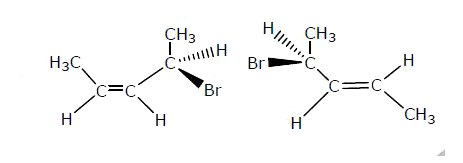
A soltuion of (+2)-2- chloro-2- phenylethan in toulene racemises slowly in the presence of a small amount of SbCl_(5). Due to the formaiton of:

Answer»

CARBANION
Carbene
Free-radical
Carbocation

Solution :
87381.

A soluble compound of a poisonous element M, when heated with Zn//H_(2)SO_(4) gives a colourless and extermely poisonous gaseous compound N, which on passing through a heated blue gives a silvery mirror of element M. Identify M and N.

Answer»
87382.

A solte is soluble in two immiscible liquids which are present in a mixture. The xncertration of the solute in the upper layer will be :

Answer»

same as in the lower layer
less than in the lower layer
more than in the lower layer
in the FIXED ratio with that of the lower layer.

Solution :The concentration of the in the two immiscivle liquids upon DISTRIBUTION will be in fixed ratio according to RAOULT's LAW.
87383.

A solid with high electrical and thermal conductivity is

Answer»

Si
Li
NaCl
Ice

Solution :Out of the given SUBSTANCES, only Li has HIGH ELECTRICAL and thermal CONDUCTIVITY as Li is a METALLIC solid.
87384.

A solids having no definite shape is called :

Answer»

AMORPHOUS solid
Crystalline solid
Anisotropic
None

Answer :A
87385.

A solid X melts slightly above 273 K and is a poor conductor of heat and electricity. To which of the following categories does it belong :

Answer»

IONIC SOLID
COVALENT solid
metallic
Molecular

Answer :D
87386.

A solid with high electrical and thermal conductivity from the following is

Answer»

si
li
naci
ICE

ANSWER :B
87387.

A solid solution of CdBr_(2) in AgBr contains

Answer»

SCHOTTKY DEFECTS
FRENKEL defects
colourcentres
frenkel as WELL schottky defects

ANSWER :D
87388.

A solid soluble in water on being heated gives brown gas and when dil. HCI is added to its aqueous solution, a white ppt is obtained. The solid is

Answer»

`Ca(NO_(3))_2`
`ZN(NO_(3))`
 `PB(NO_(3))_2`
`BA(NO_(3))_2`

Answer :C
87389.

A solid (S) is a compound of group 1 element and gives violet colour in the flame test. (S) is:

Answer»

NaCl
KCl
`MgCl_2`
LiCl

Answer :B
87390.

A solid organic compound (P). Of formula C_(15)H_(15)OH was found to be insoluble in water , dilute HCLor dilute NaOH in cold . After prolonged heating of P with aqueous NaOH, a liquid R was found to be floating on the surface of alkaline mixture . R did not solidfified on cooling to room tempreture, it was steam distilled and separated.Also acidification of alkaline mixture with HCI caused precipitation ofa white solid S(C_(8)H_(8) O_(2)).Some additional infromation are given below S on treatment with Br_(2)//FrBr_(3)" in " CCI_(4) produced a single isomer C_(8)H_(7)O_(2) Br while heating 'S' with soda lime gave toluene.

Answer»


ANSWER :(C)
87391.

A solid laboratory reagent (A) gives the following reactions. It imparts green colour to flame.

Answer»

Solution :`A-BaCl_(2)`
`2BaCl_(2)+K_(2)Cr_(2)O_(7)+3H_(2)SO_(4) rarr K_(2)SO_(4)+2CrO_(2)Cl_(2) +2BaSO_(4)+UNDERSET("RED gas")(3H_(2)O)`
87392.

A solid compoundX Y has NaCl structure. If radius ofX^+ is 100 pm . What is the radius of Y^- ion:

Answer»

120 pm
321.6 pm
136.6 pm
241.6 pm

Answer :B
87393.

A solid mixture weighing 5.00 g containing lead nitrate and sodium nitrate was heated below 600^(@)C until the mass of the mixture. (At wts. of Pb = 207, Na = 23, N = 14, O = 16)

Answer»

Solution :`{:(" "2Pb(NO_(3))_(2),overset(Delta)rarr,""2PbO,+4NO_(2)uarr+O_(2)uarr),(2xx331=662 g,,2xx233=446g,),(" "2 NaNO_(3),overset(Delta)rarr," "2NaNO_(2),+O_(2)uarr),(2xx85=170 g,,2xx69=138 g,):}`
Suppose `Pb(NO_(3))_(2)` in the MIXTURE = X g
Then `NaNO_(3)` in the mixture = (5 - x) g
`662 g Pb(NO_(3))_(2)` give residue = 446 g
`therefore xg Pb(NO_(3))_(2)` will give reside `=(446)/(662)xx x g=0.674 x g`
`170 g NaNO_(3)` give residue = 138 g
`therefore (5-x)g NaNO_(3)` will give reside `=(138)/(170)xx(5-x)g=0.812(5-x)g`
Actual residue obtained = Mass taken - Mass lost `=5-(28)/(100)xx5 g=3.6 g`
Thus, total reside `=0.674 x + 0.812(5-x)=3.6` or `0.138 x =0.46` or `x=3.33 g`
i.e., `Pb(NO_(3))` in the mixture = 3.33 g
`NaNO_(3)` in the mixture `=5-3.33 = 1.67 g` .
87394.

A solid mixture (5g) consistingof lead nitrate andsodiumnitrate was heated below 600^(@) Cuntil the weightof the residueis constant. If the loss in weight is 28%, findthe amountof the leadnitrate ad sodium nitrate in themixture.

Answer»

SOLUTION :The LOSS in weight `(28% of 5 g)`, i.e, 1 . 4 g, is due to the formation of thegases `NO_(2) and O_(2)`whichescape out
`{:(PB (NO_(3))_(2) ""to " " Pb O ""+"" ubrace(NO_(2)+O_(2))),("x g (say)(x - y) gy g (say) "),(" "NaNO_(3)" " to" " NaNO_(2)+ O_(2)),("(5 - x)(3 . 6 - x + y) ( 1 . 54 - y)" ):}`
Applying POAC for Pband NA atoms, we get respectively,
moles of Pb `(NO_(3))_(2) ` = moles of PbO
`(x)/( 331) = (x - y)/( 223) ""`{Pb`(NO_(3))_(2)` = 331, PbO = 223}
and moles of Na`NO_(3)`= moles of Na`NO_(2) [NaNO_(3) = 85 , NaNO_(2) = 69]`
fromwhich, we get,
x = 3 . 3246 g
`(5 - x)/( 85) = (3 . 6 - x + y)/( 69)b .(NaNO_(3) = 85, NaNO_(2) = 69)`
Thus, wt. of Pb `(NO_(3))_(2) = 3.3246 g`
wt. of `NaNO_(3) = 5 - 3 . 3246 = 1.6754` g
87395.

A solid mixture (5.0 g) consisting of lead nitrate and sodium nitrate was heated below 600^(@)C untill the weight of the residuewas constant . If the loss in weight is 20% find the amount of lead nitrate and sodium nitrate in the mixture.

Answer»

Solution :`underset(ag)(Pb(NO_(3))_(2))to PbO +2NO_(2) uarr + (1)/(2)O_(2) uarr`
`underset(bg)(NaNO_(3)) to NaNO_(2)+(1)/(2)O_(2)uarr`
`therefore a+b=5""…(1)`
The loss in weight for 5 g mixture `=5xx(28)/(100)=1.4 g`
`therefore` Residue left=5-1.4=3.6 g
The residue contain `PbO+NaNO_(2)`
`because` 331 g `(Pb(NO_(3))_(2)` gives=223 g PbO
`therefore agPb(NO_(3))_(2)` gives `=(223xxa)/(332)gPbO`
Similarly,
`therefore `85 g `NaNO_(3)` gives =`69 NaNO_(3)`
`therefore` bg `NaHO_(3)` gives `=(69xxb)/(85) g NaNO_(3)`
Solving EQUATION , (1) and (2)
a=3.32 g and b=1.68 g
87396.

A solid is made up of two elements P and Q. P atoms are in ccp arrangement while atoms Q occupy all the octahedral voids and half of thetetrahedral voids. The formula of the compound is :

Answer»

`PQ_(2)`
PQ
`PQ_(3)`
`P_(2)Q`

SOLUTION :For each Q atom, there will be two tetrahedral sites. Since only half tetrahedral sites are occupies, number of P atoms will be same as number of Q atoms . Formula `:` PQ
87397.

A solid laboratory reagent (A) gives the following reactions. Its solution does not give ppt. on passing H_(2)S.

Answer»

SOLUTION :`A-BaCl_(2)`
`CrO_(2)Cl_(2)+4NaOH rarr Na_(2)CrO_(4)+2NaCl+underset("solution")underset("YELLOW")(2H_(2)O)`
87398.

A solid laboratory reagent (A) give following reactions. (i) It impart green colour of flame : (ii) Its solution does not give ppt. on passong H_(2)S. (iii) When it is heated with K_(2)Cr_(2)O_(7) and conc. H_(2)SO_(4), a red gas (B) is evolved. The gas when passed in aq. NaOH solution turns it yellow (C). Identify (A), (B), (C) giving chemical reactions.

Answer»

Solution :`A rarr BaCl_(2)`
`B rarr CrO_(2)Cl_(2)`
`C rarr Na_(2)CrO_(4)`
87399.

A solid is made up of two elements A and B. Atoms of B are in ccp arrangement, while atoms A occupy all the tetrahedral sites. The formula of the compound is :

Answer»

`AB_(2)`
AB
`AB_(3)`
`A_(2)B`

SOLUTION :For each B ATOMS, there will be two tetrahedral sites. Since al the tetrahedral sites are occupies by A atoms, for each ATOM B, there will be two A atoms. HENCE, formula will be `A_(2) B`
87400.

A solid is made up of two elements A and B. Atoms A occupy all the tetrahedral sites while atoms B are in ccp arrangement. Derive the formula of the compound.

Answer»

Solution :SINCE B atoms are in ccp arrangements, there would be two TETRAHEDRAL sites associated PER B atom. Since all the tetrahedral sites are occupied by A atoms, there would be two A atoms for each B atom. Hence, the formula of the compound is `A_2B`.