Saved Bookmarks
This section includes 7 InterviewSolutions, each offering curated multiple-choice questions to sharpen your Current Affairs knowledge and support exam preparation. Choose a topic below to get started.
| 1. |
Find the number of positive integral solutions of x_1x_2x_3x_4x_5=210, such that x_1 ne 1 |
|
Answer» |
|
| 2. |
If int(1)/(x+x^(5))dx=f(x)+c, then the value of int(x^(4))/(x+x^(5))dx=..... |
| Answer» Answer :A | |
| 3. |
If denotes the area bounded by f(x)=|(sin x+ cos x)/(x)| x-axis , x=piand x=3x , then |
| Answer» Answer :D | |
| 4. |
Find the points on the curve y = x^(3) at which the slope of the tangent is equal to the y-coordinate of the point. |
|
Answer» |
|
| 5. |
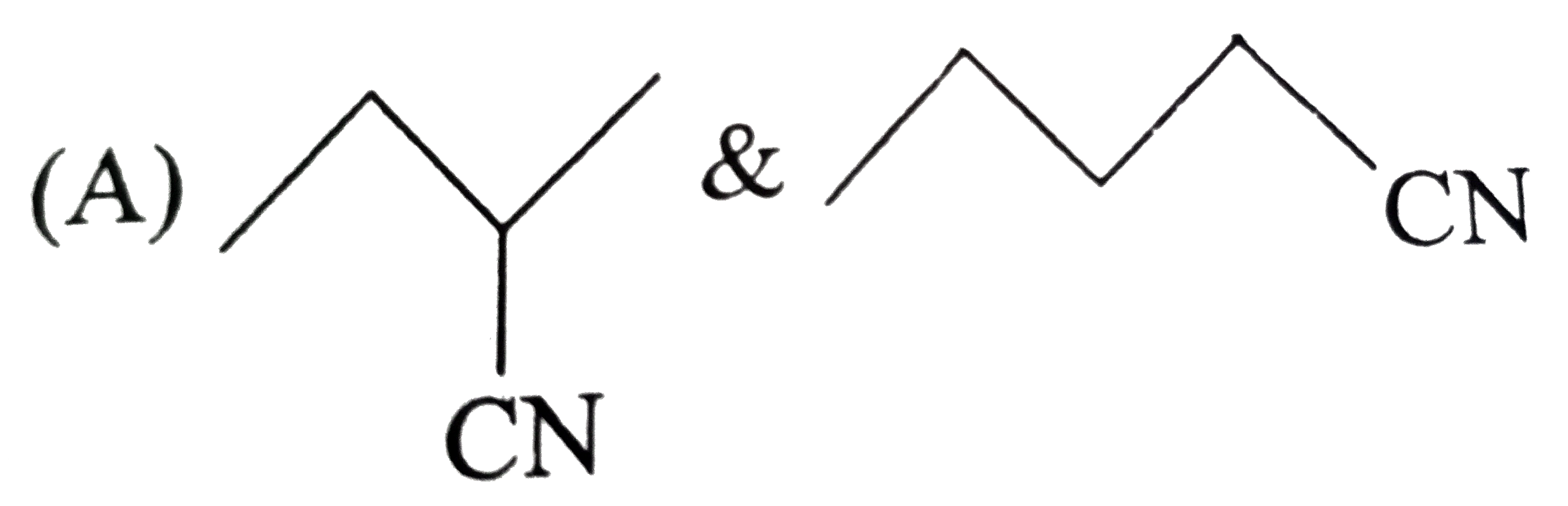
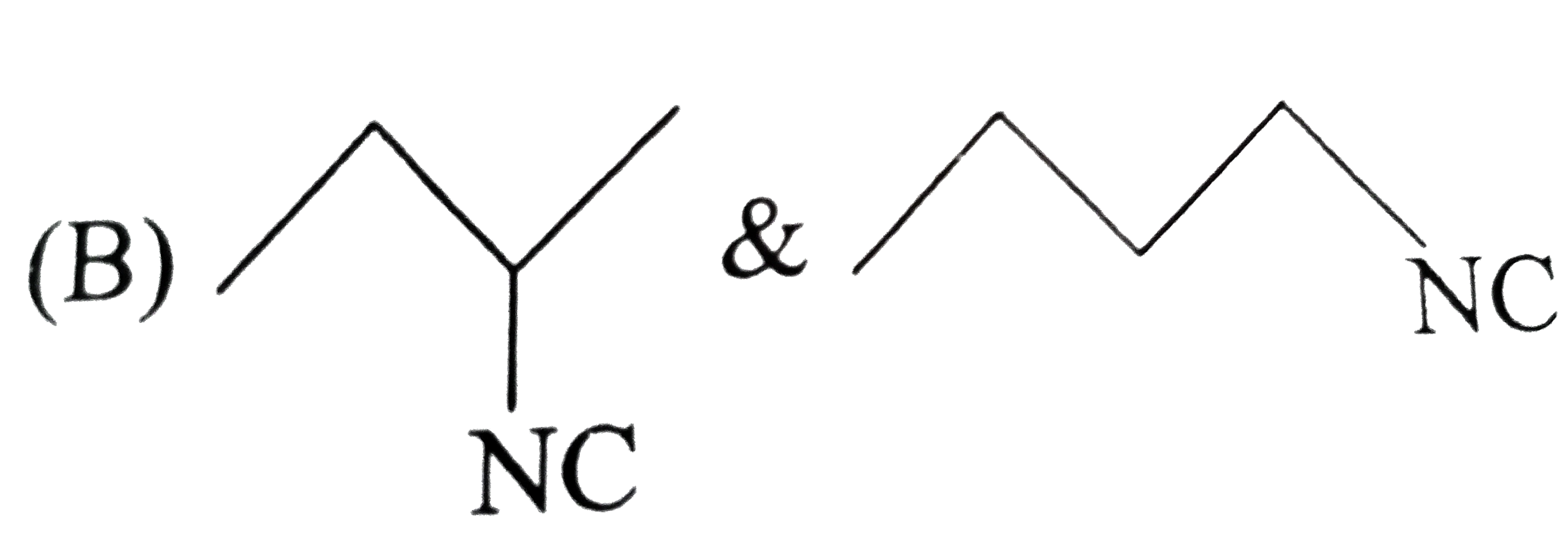
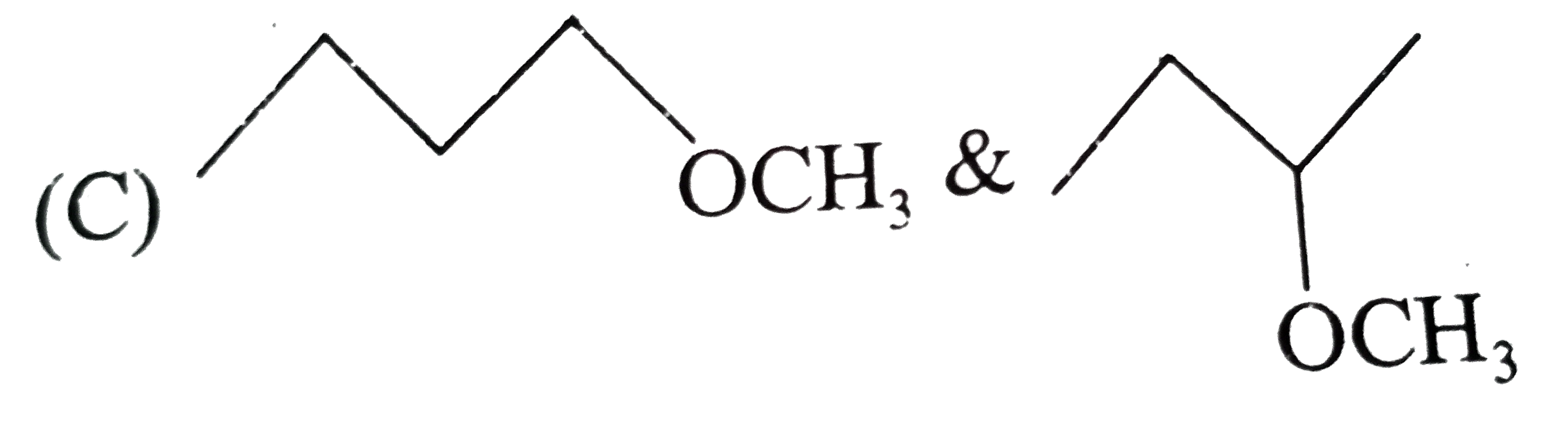
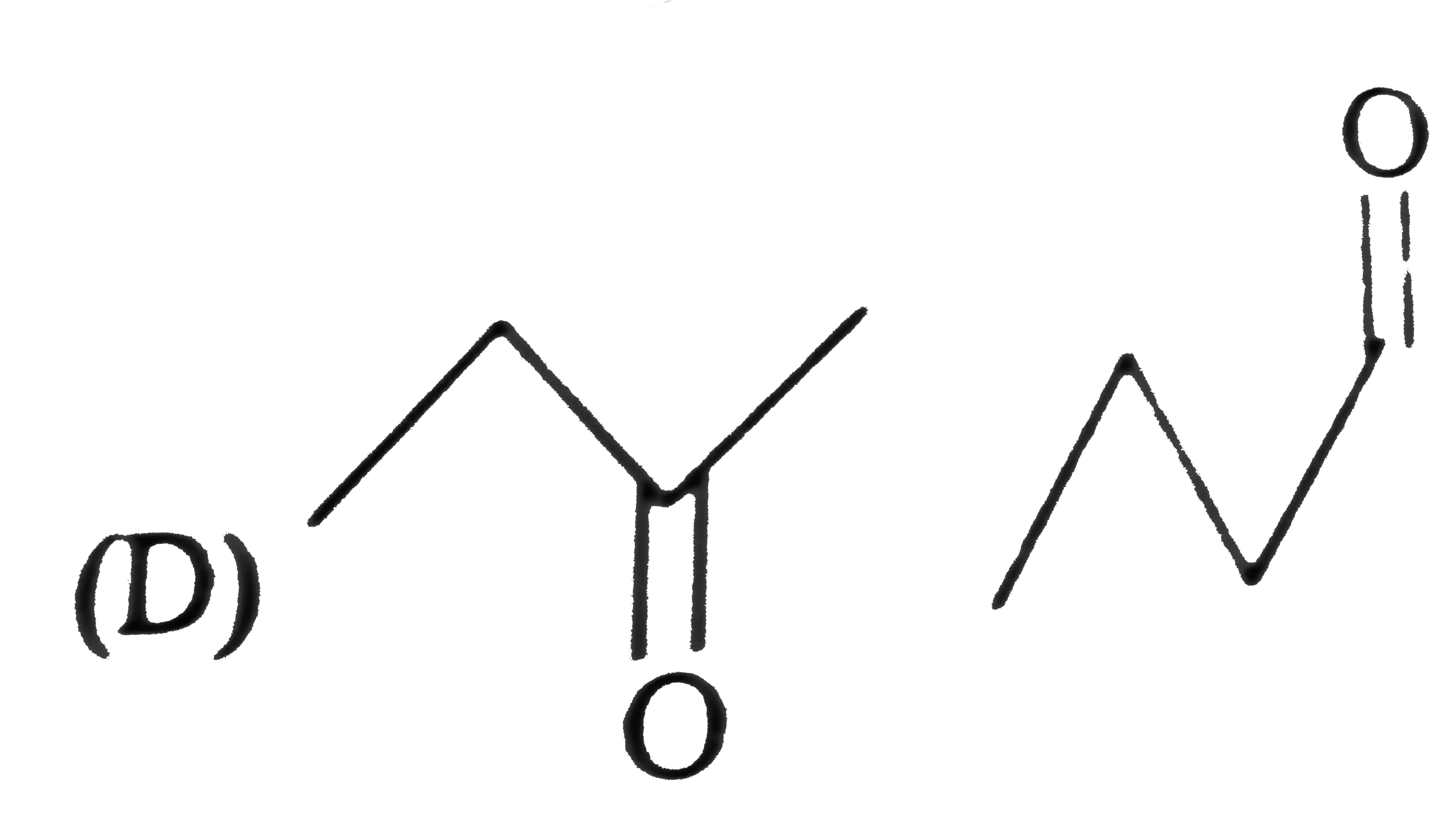
Identify the position isomer. |
|
Answer»
|
|
| 6. |
Examine the consistency of the system of linear equtions in 1 to 6 2x-y=5 x+y=4 |
|
Answer» |
|
| 7. |
For two vectors vec(a) and vec(b),|vec(a)|=4,|vec(b)|=3 and vec(a).vec(b)=6 find the angle between vec(a) and vec(b). |
|
Answer» |
|
| 9. |
If f(x)={((x-2)2^(-(1/(|x-2|)+1/(x-2))),x!=2),(0,x=2):} then f(x) at x=2 is |
|
Answer» Differentiable |
|
| 10. |
Match the conics in column I with statements/ex- pressions in Column II. |
|
Answer» <P> |
|
| 11. |
The range of a random variable X is {0, 1, 2}. Given that P(X=0)=3c^(3),P(X=1)=4c-10c^(2),P(X=2)=5c-1 where c is constant. Find (i) the value of c (ii) P(X lt 1) (iii) P(1lt X le2) (iv) P(0lt X le3) |
|
Answer» |
|
| 12. |
Using integration, find the area of the region bounded by the triangle whose vertices are (0, 1), (2,2) and (3, 1). |
|
Answer» |
|
| 13. |
int (dx)/(x(x^(n) + 1)) = c |
|
Answer» `(1)/(N) LOG |(X^(n))/(x^(n) + 1) | + C ` |
|
| 14. |
For which of the following function 9s) Lagrange's mean value theorem is not applicable in [1,2] ? |
|
Answer» `f (X)={{:((3)/(2)-x "," , x lt 3/2),(((3)/(2)-x)^(2)"," , x GE 3/2):}` |
|
| 15. |
If A and B are two events such that A subset B and P(B) != 0, then which of the following is correct? |
|
Answer» `P(A|B)=(P(B))/(P(A))` |
|
| 16. |
Show that int_0^a f(x) g(x) d x=2 int_0^a f(x) d x, if f and g are defined as f(x)=f(a-x) and g(x)+g(a-x)=4 |
|
Answer» SOLUTION :`|X-1|` = {(x-1), x ge 1 `-(x-1), xlt 1`} therefore `int_0^4 |x-1| dx` =`int_0^1 (1-x) dx + int_1^4 (x-1) dx` =`(x-x^2/2)_0^1 + (x^2/2 -x)_1^4` `(1-1/2) +((16)/2 -4)-(1/2 -1)` `=1/2+4+1/2 = 5.` |
|
| 18. |
For the reaction : N_(2)(g)+3H_(2)(g) to 2NH_(3)(g),DeltaH=-24KCal " at " 427^(@)C and 200 atm. Calculate magnitude of internal energy change ( in Kcal DeltaU), if 168 gm N_(2) gas and 30 gm H_(2) gas are allowed to react completely (100% reaction yield ) to form NH_(3) gas at 427^(@)C and 200 atm. |
|
Answer» Solution :[0106] MOLES of `N_(2)=(168)/(82)=6"" `Mole of `H_(2)=(30)/(2)=15` Limiting reagent is `H_(2)` `DeltaU=DeltaH=Deltan_(g)RT` `=(-24)xx5-(-2)xx(2)/(1000)xx700xx5=-106 kcal ` |
|
| 20. |
One mole of N_(2) and 3.0 moles of PCl_(5) were placedin a 100-liter vessel and heated to 227^(@)C. The equilibrium pressure was 2.05" atm. "Assuming ideal behaviour, calculate X. Where X=1000xxK_(P) of the reaction at 227^(@)C. |
|
Answer» Concen. At equilibrium `""(3-3alpha)""3alpha""3alpha` where `alpha` is degree of dissociation of `PCl_(5).` TOTAL moles of GASES in the vessel `{:(=n=N_(2)(1" MOLE")+PCl_(5)(3-3alpha)+PCl_(3)(3alpha)+Cl_(2)(3alpha)),("moles""moles""moles"):}` Or `n=4+3alpha` USING the ideal gas equation `n=(PV)/(RT)=(2.05xx100)/(0.082xx500K)=5.0" moles "` Or `4+3alpha=5" or "3alpha=1" or "alpha=1//3=0.333 ("degree of dissociation of" PCl_(5))` Partial PRESSURE of `PCl_(5)=(2)/(5)xx2.05=0.82" atm."` Partial pressure of `PCl_(3)=(1)/(5)xx2.05=0.41" atm. "` Partial pressure of `Cl_(2)=(1)/(5)xx2.05=0.41` `K_(P)=((0.41" atm")^(2))/((0.82" atm"))=0.205" atm."` `X=0.205xx1000=205` |
|
| 21. |
If the 4th, 10th and 16th terms of a G.P. are x, y and z, respectively. Prove that x, y, z are in GP. |
|
Answer» |
|
| 22. |
Three persons A, B ,C in order toss a die. The person who first throws 1 or 2 wins. The ratio of the probabilities of their success is |
|
Answer» `4:6:9` |
|
| 23. |
Consider a quadraticequaiton az^(2) + bz + c=0, where a,b,c arecomplex number. The condition that theequation has onepurely imaginary root is |
|
Answer» `(cbara -abarc)^(2)= (b barc+ cbarb)(abara - bara b)` `z_(1) = - barz_(1)` and`underline(az_(1)^(2) + bz_(1) + c)=0""(1)` `rArr az_(1)^(2) + bz_(1) + c = 0` `rArr bara barz_(1)^(2) + barb barz_(1) + c = 0` `rArr bar z bar z_(1)^(2) + bar b bar z_(1) + barc = 0` `rArr bar a bar z_(1)^(2) - bar b barz_(1) + barc = 0""(as barz_(1) = - z_(1))""(2)` Now Eqs. (1) and (2) musthave one common root. `therefore ( cbara-abarc)^(2) =(barbc+ cbarb) (-abarb - barab)` Let `z_(1)` and `z_(2)` be two purely IMAGINARY ROOTS. Then, `barz_(1) = -z_(1), barz_(2) = - z_(2)` Now , `underline(abarz^(2) + bz + c) = 0""(3)` or `AZ^(2) + bz + c=bar0` or `bara barz_(20 + barb barz + barc =0` or `bara z^(2) - barbz + barc = 0""(4)` Equations (3) and (4) must be identical as their roots are same. ` therefore (a)/(bara) = -(b)/(barb)=(c)/(barc)` `rArr abarc = barac,+ barab = 0` and `b barc +barbc=0` . Hence, `barac` is purely real and `abarb` and `bbarc`are purely imaginary . let `z_(1)` (purely real ) be a root of the givenequation . Then , `z_(1) = barz_(1)`LTBR gt and ``underline(az_(1)^(2) + bz_(1) + c)= bar0""(5)` or `az_(1)^(2) + bz_(1) + c=0` or `baraz_(1)^(2) + bz_(1) + c = bar0` or `baraz_(1)^(2) + barb z_(1) + c= 0""(6)` Now(5) and (6) must have one common root. Hence, `(cbara - abarc)^(2) = (b barc - cbarb)(abarb-barab)` |
|
| 24. |
The value of I=int_(-pi//2)^(pi//2) sqrt( cos x - cos^(3) x)" "dxis |
|
Answer» `0` |
|
| 25. |
Ifalpha, beta , gammaare therootsof x^3 -6x -4=0thentheequationwhoserootsare(betagamma+(1)/( alpha)) ,(gammaalpha+(1)/(beta)) , (alphabeta+(1)/( gamma))is |
|
Answer» `4x^3 -30 x^2 +125 =0` |
|
| 26. |
Evaluate the limit. underset(n to 00)("lim") (sqrt(n+1)+sqrt(n+2)+……..+ sqrt(n+n))/(nsqrt(n)) |
|
Answer» |
|
| 27. |
At anelectionthreewardsof atownof aarecanvassedbyby 3,4, and 5 menrespectivelyif 20menvolunteer, in howmanycan theybeallotedto thedifferentwards ? |
|
Answer» `""^(20)C_(5)` |
|
| 28. |
Let f(x)=[sqrt(n)+1/2] where [.] denotes greatest integer function AA, n epsilonN Then sum_(n=1)^(oo)(2^(f(n))+2^(-f(n)))/(2^(n)) is equal to ……… |
|
Answer» |
|
| 29. |
If a,b,c are sides of DeltaABC such that |{:(c,bcosB+cbeta,acosA+balpha+cgamma),(a,c""cosB+abeta,bcosA+calpha+agamma),(b,acosB+b""beta,c""cosA+aalpha+bgamma):}|=0 ("where" alpha,beta,gamma in R^+ and angleA,angleB,angleC ne pi//2) then DeltaABC is |
|
Answer» isosceies |
|
| 30. |
The position vector of a point lying on the line joining the points whose position vectors are hati+hatj-hatk and hati-hatj+hatk is |
| Answer» ANSWER :B | |
| 31. |
If f(x)= x^(2) sin ((1)/(x)), where x ne 0, then the value of the function f at x=0, so that the function is continuous at x= 0, is |
| Answer» Answer :A | |
| 32. |
Answer the following: If 6th term in the expansion of (x+*)^n is equal to "^nC_5x^(n-10) find *. |
|
Answer» Solution :Let 6th TERM of `(x+y)^N` is `^nC_5x^(n-10)` ` THEREFORE "^nC_5x6(n-5)y^5 = ^nC_5x^(n-10) = ^nC_5x(n-5).x^-5` `y^5 = x^-5 = 1/x^5` `therefore y = 1/x`. HENCE = 1/x |
|
| 33. |
IfA= cos 15^(@) - cos 75^(@) , B= tan 15^(@) + tan 75^(@) , C=cos^(2) 45^(@) - sin^(2) 15^(@)then ascending order is |
| Answer» ANSWER :B | |
| 34. |
If : int_(0)^(pi)ln(sin x) dx = k, then : int_(0)^(pi//4)ln (1+tan x)= |
|
Answer» `-(K)/(4)` |
|
| 35. |
A, B, C are three points on a vertical pole whose distances from the foot of the pole are in A.P. and whose angles of elevation at a point on the ground are alpha, beta and gamma respectively. If alpha + beta + gamma = pi, then tan alpha tan gamma is equal to |
|
Answer» 3 |
|
| 36. |
Find the equation of a straight line in the plane vecr.vecn=d which is parallel to vecr.vecn=d("where "vecn.vecb=0). |
|
Answer» `vecr=veca+((d-veca.VECN)/(N^(2)))vecn+lamdavecb` Therefore, EQUATION of the LINE parallel to `vecr=veca+lamdavecb` in the plane `vecr*vecn =d` is given by `""vecr=veca+ ((d-veca*vecn))/(|vecn|^(2))vecn+lamdavecb` |
|
| 40. |
For the plane prod= 4x – 3y + 2z – 3 = 0, the points A = (- 2, 1, 2), B = (3, 1, - 2) 1) lie on the same side of prod = 0 |
|
Answer» LIE on the same side of `PROD = 0` |
|
| 41. |
If f(x) = int_0^x tsint dt, then find f^'(x) |
|
Answer» cosx+xsinx |
|
| 43. |
If f(t) = int_(-t)^(t) (e^(-|x|))/(2) dx, then underset(t to oo)(lim) f(t) is equal to |
| Answer» ANSWER :A | |
| 45. |
If the circles x^(2) + y^(2) - 2lambda x - 2y - 7 = 0 and 3 (x^(2) + y^(2)) - 8x + 29 y = 0 are orthogonal the lambda is equal to |
|
Answer» 4 |
|
| 46. |
The probability that a man can hit a target is 3/4. He tries 5 times the probability that he will hit the target at most one time is |
| Answer» Answer :A | |
| 47. |
If the plane 2x + 3y + 4z=1 intersects X-axis, Y-axis and Z-axis at the points A, B and C respectively, then the centroid of a Delta ABC is ….... |
|
Answer» `((2)/(3) , 1, (4)/(3))` |
|
| 48. |
Using elementary transformations, find the inverseof the matrices [(4,5),(3,4)] |
|
Answer» |
|
| 49. |
If x = 1 + i is a root of x^(3) - ix + 1 - i = 0 , then the quadratic equation whoseroots are the remain - ing two roots of x^(3) - ix + 1 - i = 0 is |
|
Answer» `x^(2) + (1 + i) x + 1 + I = 0` |
|
| 50. |
Let the images of the point A(2, 3) about the lines y=x and y=mx are P and Q respectively. If the line PQ passes through the origin, then m is equal to |
| Answer» Answer :C | |