Saved Bookmarks
This section includes 7 InterviewSolutions, each offering curated multiple-choice questions to sharpen your Current Affairs knowledge and support exam preparation. Choose a topic below to get started.
| 1. |
If kx ^(2)-4x+3k + 1 gt 0 for atleast one x gt 0, then if k in S contains : |
|
Answer» `(1,OO)` |
|
| 2. |
Let f be a function such that f(xy) = f(x).f(y), AA y in R and R(1 + x) = 1 + x(1 + g(x)). where lim_(x rarr 0) g(x) = 0. Find the value of int_(1)^(2) (f(x))/(f'(x)).(1)/(1+x^(2))dx |
|
Answer» |
|
| 4. |
Show that (r_(1)+r_(2))sec^(2).(C)/(2)=(r_(2)+r_(3))sec^(2).(A)/(2)=(r_(3)+r_(1))sec^(2).(B)/(2) |
|
Answer» |
|
| 5. |
If f(x)=[x sinpix],(where [.] denotes the greatestinteger function) then f(x) is |
|
Answer» continuous at x= 0 |
|
| 6. |
Find the number of 4 letter words that can be formed from the letters of the word ALLAHABAD. |
|
Answer» |
|
| 7. |
By using elementary transformations , find the inverse of the matrix |
|
Answer» |
|
| 8. |
Let AD be a median of the Delta ABC. If AE and AF are medians of the triangle ABD and ADC, respectively, and AD = m_(1), AE = m_(2), AF = m_(3), " then " a^(2)//8 is equal to |
|
Answer» `m_(2)^(2) + m_(3)^(2) - 2m_(1)^(2)`  In `DeltaABC, AD^(2) = m_(1)^(2) = (c^(2) + b^(2))/(2) -(a^(2))/(4)` In `DeltaABD, AE^(2) = m_(2)^(2) = (AD^(2) + c^(2))/(2) - (((a)/(2))^(2))/(4)` [Apolloniun THEOREM] In `DeltaADC, AF^(2) = m_(3)^(2) = (AD^(2) + b^(2))/(2) -(((a)/(2))^(2))/(4)` `:. m_(2)^(2) + m_(3)^(2) = AD^(2) + (b^(2) + c^(2))/(2) - (a^(2))/(8)` `= m_(1)^(2) + m_(1)^(2) + (a^(2))/(4) -(a^(2))/(8) = 2m_(1)^(2) + (a^(2))/(8)` or `m_(2)^(2) + m_(3)^(2) - 2m_(1)^(2) = (a^(2))/(8)` |
|
| 9. |
Multiply (2 sqrt(-3) +3sqrt(-2)) by (4sqrt(-3) -5sqrt(-2)) |
|
Answer» SOLUTION :`(2 sqrt(-3) +3sqrt(-2)` by `(4sqrt(-3) -5sqrt(-2))` `=(2 sqrt(3i)+3sqrt(2I))(4sqrt(3i-5 sqrt(2i)` `i^2(2 sqrt3+3sqrt2)(4sqrt3-5sqrt2)` `=-1(24-10sqrt6+12sqrt6-30)` `=-1(-6+2sqrt6)=6-2sqrt6` |
|
| 10. |
If 215 and 22nd lens in the expansion of (1+x)^(44) one is equal, then x is equal to |
|
Answer» `(8)/(7)` |
|
| 11. |
int(overset(n)underset(r=i)pi(x+r))(overset(n)underset(k=1)sum(1)/(x+k))dx=.... |
|
Answer» `OVERSET(N)underset(r=i)sum(x+r)` |
|
| 12. |
Integrate the follwing functions: 1/(x^2-9) |
|
Answer» SOLUTION :`1/(x^2-9) = 1/((x-3)(x=3))` `= 1/6[1/(x-3) - 1/(x+3)]` `GT INT 1/(x^2-9) dx` =`1/6 [LOG|x-3|-log|x+3|]+c` =1/6 log |(x-3)/(x+3)| +c` |
|
| 13. |
Find values of x,if (i) |{:(2,4),(5,1):}|=|{:(2x,4),(6,x):}| |
|
Answer» 1 |
|
| 15. |
The vector form of the line 3x + 1 = 62 – 2, y - 1 = 0 is ......... |
|
Answer» `BARR=((-1)/(3),1,1/3)+K(2,0,1),k epsilon R` |
|
| 16. |
Let X be the random variable with following probability distribution. therefore E(X^(2))= ...... |
|
Answer» 3.6 |
|
| 17. |
Let = lim_(xto0)a-(sqrt(a^(2)-x^(2))-(x^(2))/(4))/(x^(4)),agt0. If is fintine, then |
|
Answer» a = 2 |
|
| 18. |
9! int_(0)^(1) x^(4) (1- x)^(5) dx is equal to. |
|
Answer» |
|
| 19. |
Let R be a relation defined on Q as follows: a, b in Q, aRB if and only if |a-b| le 1 Then which of the following is true? |
|
Answer» R is REFLEXIVE and SYMMETRIC |
|
| 20. |
If int (1)/(2 + cos x)dx= A tan^(-1) (B. tan""(x)/(2) ) + cthen (A, B) = |
|
Answer» `((1)/(SQRT(3)), (1)/(sqrt(2)) ) ` |
|
| 21. |
Find the equation of straight line passing through (1,2,3) and parallel to (-x-2)/1=(y+3)/7=(2z-6)/3 |
|
Answer» |
|
| 22. |
For, a 3xx3 skew-symmetric matrix A, show that adj A is a symmetric matrix. |
|
Answer» SOLUTION :`A=[{:(,0,a,b),(,-a,0,c),(,-b,-c,0):}] cot A=[{:(,c^(2),-BC^(2),CA),(,-bc,b^(2),-ab),(,ca,-ab,a^(2)):}]` adj A=`=(cot A)'=[{:(,c^(2),-bc^(2),ca),(,-bc,b^(2),-ab),(,ca,-ab,a^(2)):}]` which is symmetric |
|
| 23. |
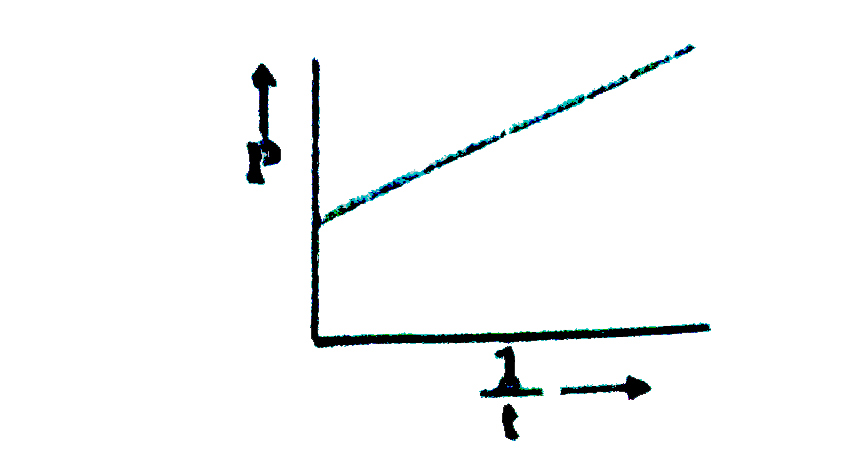
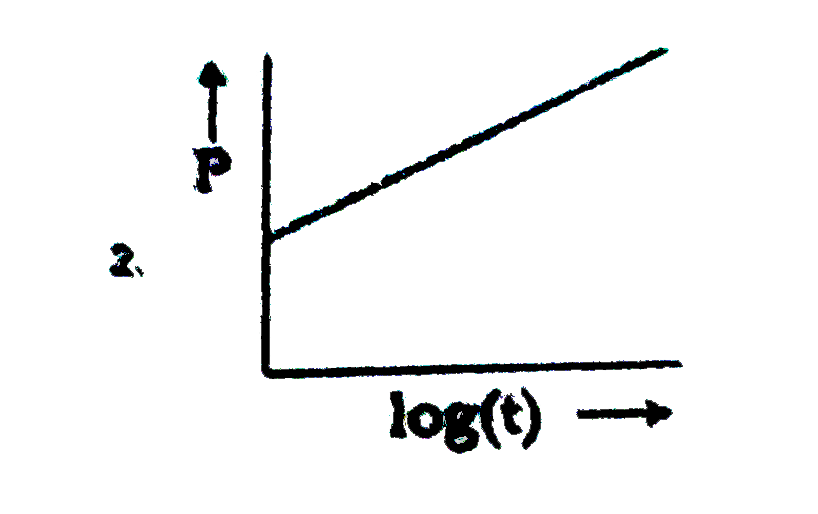
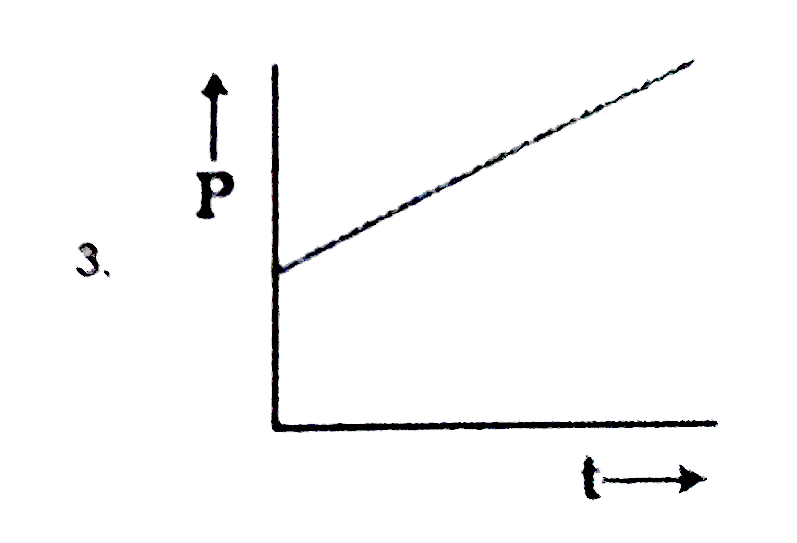
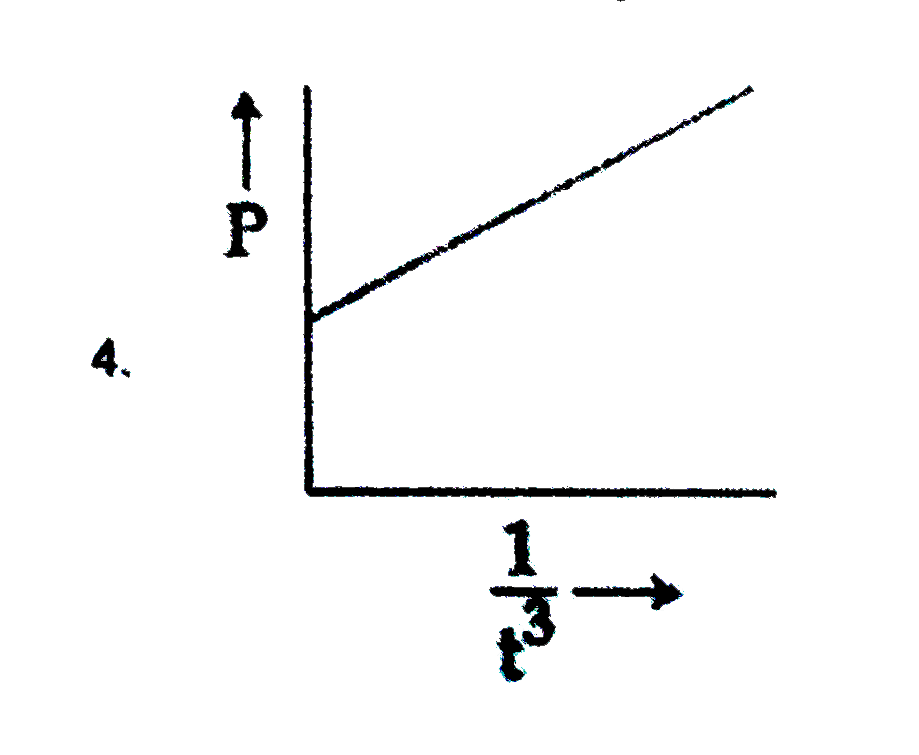
A soap bubble,blown by a mechanical pump at the mouth of a tube, increases in volume, with the time, at a constant rate. The graph that correctly depicts the time dependence of pressure inside the bubble is given by : |
|
Answer»
|
|
| 24. |
If f(x)=8x^(3), g(x)=x^(1//3), then fog (x) is |
|
Answer» 1.8x |
|
| 25. |
Integrate the following functions (x-1)/sqrt(x^2-1) |
|
Answer» Solution :`(x-1)/SQRT(x^2-1) = x/sqrt(x^2-1)-1/sqrt(x^2-1)` if we put t = `x^-1`, we have `DT = 2x DX GT XDX = dt/2` therefore` int x/sqrt(x^2-1) dx = int 1/sqrtt dt/2 = sqrtt = sqrt(x^2-1)` Thus, `int (x-1)/sqrt(x^2-1) dx` = `sqrt(x^2-1)-log|x+sqrt(x^2-1|+c` |
|
| 26. |
Find the area of the region enclosed by the curves y^(2)=8x and y= 2x |
|
Answer» |
|
| 27. |
The vertices of a triangle an A(1,2), B(-1,3) and C(3, 4). Let D, E, F divide BC, CA, AB respectively in the same ratio. Statement I : The centroid of triangle DEF is (1, 3). Statement II : The triangle ABC and DEF have the same centroid. |
|
Answer» STATEMENT I is true, Statement II is true, Statement II is a correct EXPLANATION for Statement I. |
|
| 28. |
Find the values of the other roots of the two equations. |
|
Answer» |
|
| 29. |
If 4 cards are drawn at random from a pack of 52 playing cards, then find the probability to get 2 red and 2 black cards. |
|
Answer» |
|
| 30. |
Ifalpha, beta , gammaare therootsofx^3 +x^2 + 2x +3=0then theequationwhoserootsbeta+ gamma , gamma+ alpha, alpha+ betais |
|
Answer» `x^3+ 2x^2 +3X -1=0` |
|
| 31. |
If first and second terms of a HP are a and b, then its n^(th) term will be - |
|
Answer» `(AB)/(a+(n-1)ab)` |
|
| 32. |
The value of "log"_(121)343 "log"_(49)125 "log"_(625)1331 is :- |
|
Answer» `9/16` |
|
| 33. |
Integrate the function in Exercise. (x^(2)+1)logx |
|
Answer» |
|
| 34. |
Find the number of 4 letter words that can be made from the letters of the word 'CONSIDER that are begin with C and end with R. |
|
Answer» |
|
| 35. |
Check the continuity of the function f given by f(x)= 2x+3" at "x=1. |
|
Answer» |
|
| 36. |
Find the maximum and minimum values, if any, of thefunctions given by f(x) = |sin 4x + 3| |
|
Answer» |
|
| 37. |
If the volume of an expanding cube is increasing at the rate of 4 cm^(3)//sec then the rate of change of surface area when the volume of the cube is 8 cubic cm is ……….. |
|
Answer» `8 cm^(2)//SEC` |
|
| 38. |
If 7 squares are chosen at random on a chess board, the probability that they lie on a diagonal line is |
|
Answer» |
|
| 39. |
A :x^2+x -12le0impliesx in[-4,3] R: ifalpha, betaare therootsofax^2+ bx+c=0 ,alphalt betathenalphaltx ltbetahArrax ^2 +bx+ candahaveoppositesigns . |
|
Answer» BOTHA are Rare tureR ISTHE correctexplanationOf A |
|
| 40. |
Find the locus of the mid-point of the chord of the hyperbola x^(2)/a^(2)-y^(2)/b^(2)=1 which subtends a right angle at the origin. |
|
Answer» `X^(2)//a^(4)+y^(2)//B^(4) =1//a^(2) +1//b^(2) ` |
|
| 41. |
int (1)/((x+1)sqrt(x^(2)+x+2)dx= |
|
Answer» `(1)/(SQRT(2))Cosh^(-1)((3-x)/(sqrt(7)(x+1)))+c` |
|
| 42. |
Fifteen person, among whom are A and B , sit down at random at a round table, the probability that there are exactly are 4 persons between A and B is |
| Answer» Answer :A | |
| 43. |
Let f(x) and g(x) be twocontinuousfunction andh(x)=lim_(n to oo) (x^(2n).f(x)+x^(2m).g(x))/((x^(2n)+1)). ifthelimit of h(x)exists at x=1, thenone root of f(x)-g(0) =0 is _____. |
|
Answer» |
|
| 44. |
If one of the linesof pair of straight lines ax^(2) + 2hxy + by^(2) = 0bisects the angle between the coordinate axes , then |
|
Answer» `a^(2) + B^(2) = H^(2)` |
|
| 46. |
int(1)/(x-sqrt(x^(2)+a^(2)))dx |
|
Answer» |
|
| 47. |
Which is following statement(s) is (are) correct? |
|
Answer» If a= det. (B) + det. `(B^(2))` + det. `(B^(3)) + "……"OO`, then MINIMUM value of a equals `(8)/(pi^(3)-8)`. |
|
| 48. |
Using differentials, find the approximate value of each of the up to 3 places of decimal. (401)^((1)/(2)) |
|
Answer» |
|
| 49. |
Assertion (A): The maximum value of log_(1//3)(x^(2)-4x+5) is zero Reason (R): log_(a)x le 0 for x ge 1 and 0 lt a lt 1 |
|
Answer» Both (A) (R) are TRUE and (R) is the CORRECT explanation of (A) |
|