

Saved Bookmarks
This section includes 7 InterviewSolutions, each offering curated multiple-choice questions to sharpen your Current Affairs knowledge and support exam preparation. Choose a topic below to get started.
| 1. |
Arrange the following in decreasing order of priority for functional group of organic compound? |
Answer» SOLUTION :
|
|
| 2. |
Arrange the following in decreasing order of basic strength. |
Answer» Solution :The BASIC character of these hydrides depends upon the STRENGTH of the ADDITIONAL element-hydrogen bond formed when the hydride accepts a proton.  On MOVING down the group, the size of the element increases and the strength of the E-H bond decreases. Consquently, the tendency of the hydride to ACCPET a proton decreases and hence the basic strength decreases down the group, i.e., `NH_(3)gtPH_(3)gtAsH_(3)gtSbH_(3)gtBiH_(3)`. |
|
| 3. |
Arrange the following in correct order of nucleophilicity :- CH_(3)-O - CH_(2) - O^(oplus)(I) "" Ph - CH_(2) - O^(oplus)(II) CH_(3) - O^(oplus)(III) "" ChCH_(2) - O^(oplus)(IV) |
|
Answer» `IV gt III gt II gt I` |
|
| 4. |
Arrange the following: (i) LiH, NaH and CsH in order of increasing ionic character. (ii) H-H, D-D and F-F in order of incresing bond dissociaton enthalpy. (iii) NaH, MgH_(2) and H_(2)O in order of incresing reducing powder. |
|
Answer» Solution :(I) Increasing ioninc CHARACTER: `LiH lt NaH lt CsH` Reason: The IONISATION ENTHALPHY decreases in the order `LI gt Na gt Cs`. This influences the ionic character adversely which increases as shown (ii) Increasing bond dissociation enthalphy: `F-F lt H-H lt D-D`. Reason: The bond dissociation enthalphy of `underset(..)overset(..)( :F)-underset(..)overset(..)(F: )`fluorine is very small `(242-6kJ mol^(-1))` due to the repulsion in the lone paris of electrons PRESENT on the two F atoms. Out of `H_(2) and D_(2)`, the bond dissociation enthalphy of `H-H(435.88 kJ mol^(_1))`is less than of `D-D(443.35kJ mol^(-1))` (III) Increasing reducing power: `H_(2)O lt MgH_(2) lt NaH`. Reason: NaH being ioninc in nature is the strongest reducing agent. Both `H_(2)O and MgH_(2)` are covalent in nautre but bond dissociation enthalpy of `H_(2)O` is higher. Therefore, it is weaker reducintg agent than `MgH_(2)`. |
|
| 5. |
Arrange the following : (i) -NO_(2), -COOH, -F, -CN, -I, in decreasing order of -I effect. (ii) CH_(3)^(-), D-, (CH_(3))_(3)C-, (CH_(3))_(2)CH-, CH_(3)CH_(2^(-)),in increasing order of +I effect. |
| Answer» SOLUTION :(i) `-NO_(2) GT -CN gt -COOH gt -F gt -I`(II) `D - lt CH_(3) - lt CH_(3)CH_(2^(-)) lt (CH_(3))_(2)CH- lt -C(CH_(3))_(3)`. | |
| 6. |
Arrange the following : (i) C_(6)H_(5)overset(*)(C)HCH_(3), C_(6)Hoverset(*)(C)HCH = CH_(2), C_(6)H_(5)CH_(2)overset(*)(C)H_(2), C_(6)H_(5)overset(*)(C)(CH_(3))_(2) in order of increasing stability. (ii) CH_(3)CH_(2)^(+), C_(6)H_(5)CH_(2)^(+), (CH_(3))_(3)C^(+), CH_(2) =CHCH_(2)^(+) in order of decreasing stability. (iii) HC -= C^(-), CH_(2) = CH^(-), CH_(3)CH_(2)^(-), CH_(3)^(-), (CH_(3))_(2)CH^(-), C_(6)H_(5)CH_(2)^(-)in order of increasing stability. |
|
Answer» Solution :`(i) C_(6)H_(5)CH_(2)overset(*)(C)H_(2) lt C_(6)H_(5)overset(*)(C)HCH_(3) lt C_(6)H_(5)overset(*)(C)(CH_(3))_(2) lt C_(6)H_(5)overset(*)(C)H - CH = CH_(2)`. (ii) `(CH_(3))_(3)C^(+) gt C_(6)H_(5)CH_(2)^(+) gt CH_(2) = CHCH_(2)^(+) gt CH_(3)CH_(2)^(+)`. (iii) `(CH_(3))_(2)CH^(-) lt CH_(3)CH_(2)^(-) lt CH_(3)^(-) lt CH_(2) = CH^(-) lt C_(6)H_(5)CH_(2)^(-) lt HC -= C^(-)`. |
|
| 7. |
Arrange the following, (i) CaH_(2), BeH_(2) and TiH_(2) in order of increasing electrical conductance. (ii) LiH, NaH, CsHis order of increasing ionic character(iii) H-H-D-D and F-F in order of increasing bond dissocation enthalpy. (iv) NaH, MgH_(2) and H_(2)O in order of increasing reducing property. |
|
Answer» Solution :(i) `BeH_(2)` is a covalenthydride, therefore, it does not conduct electricity at all. `CaH_(2)` conducts electricity in the FUSED statewhile `TiH_(2)` conducts electricity at room temperature. Thus, the order of increasing electrical conductance is : `BeH_(2) LT CaH_(2) lt TiH_(2)` (ii) Electronegativity decreases down the group from Li to Cs, therefore, the ionic CHARACTER of their hydrides increases in the same order, i.e., `LiH lt NaH lt CsH` (iii) Due to greater nuclear mass, the bondpair in D-D bond is attracted more strongly than in H-H bond. Therefore, bond dissociation energy of D-D bond is higher than that of H-H bond. However, due to repulsions between lone pairs of F and the bond pair, F-F bonddissociation enthalpy is the minimum . Thus the bond dissociation enthalpy increases in the order: ` F - F lt H -H lt D -D` (iv) Ionic hydrides are powerful reducing agents. Both `MgH_(2)` and `H_(2)O` are covalent hydrides but he bond dissociation energy of `H_(2)O` is much higher than that of `MgH_(2)` . Therefore, the reducing character increases in the order : `H_(2) O lt MgH_(2) lt NaH` 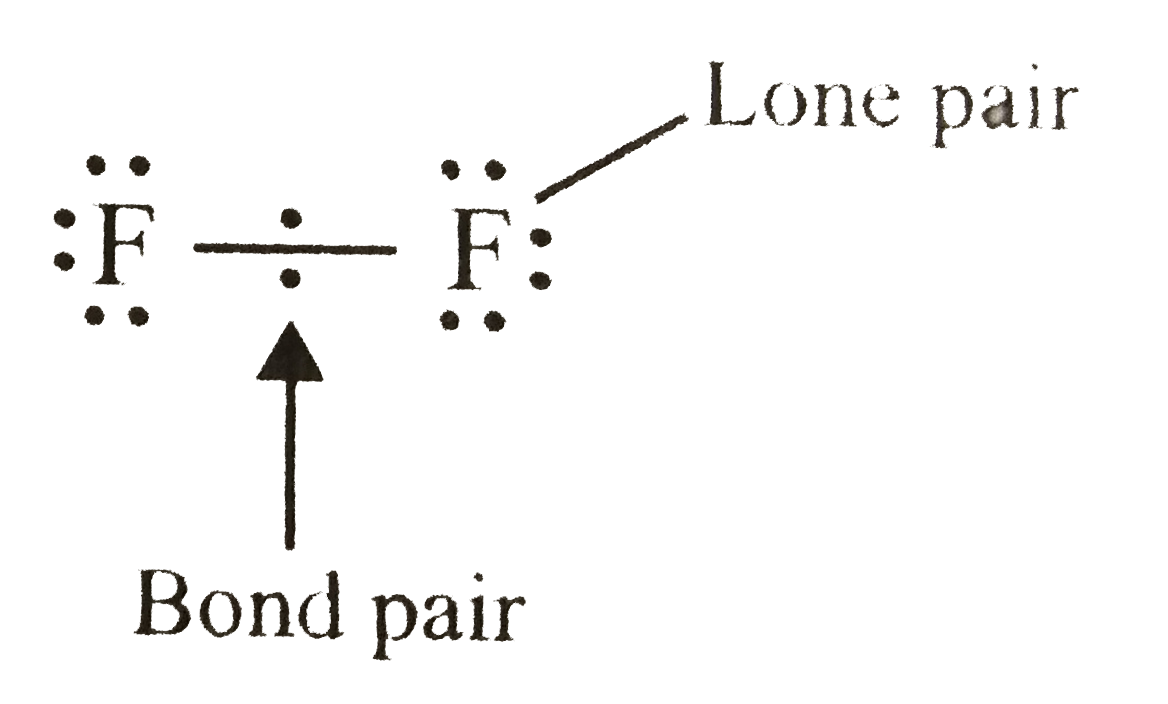
|
|
| 8. |
Arrange the following (i) CaH_2, BeH_2 and TiH_2 in order of increasing electrical conductance. (ii) LiH, NaH and CsH in order of increasing ionic character. (iii) H- H, D- D and F-F in order of increasing bond dissociation enthalpy. (iv) NaH, MgH_2and H_2O in order of increasing reducing property. |
|
Answer» SOLUTION :(i)`BeH_2 lt CaH_2 lt TiH_2` (II) LiH `lt` NAH `lt` CSH (iii) F-F `lt` H-H `lt` D-D (iv)`H_2O lt MgH_2 lt NaH` |
|
| 9. |
Arrange the following hydrogen halides in order of their decreasing reactivity with propene |
|
Answer» HCl gt HBR gt HI |
|
| 10. |
Arrange the following hydrogen halides in order of their decreasing reactivity with propene. |
|
Answer» `HCL gt HBr gt HI` |
|
| 11. |
Arrange the following halides in order of increasing S_(N)2 reactivity: (CH_(3))_(3)C Cl, CH_(3)Cl, CH_(3)Br, CH_(3)CH_(2)Cl, (CH_(3))_(2)CHCI |
| Answer» SOLUTION :`(CH_(3))_(3)Cl lt (CH_(3))_(2)CHCL lt CH_(3)CH_(2)Cl lt CH_(3)Cl lt CH_(3)Br` | |
| 12. |
Arrange the following groups in the increasing order of -M : (i) -NO_(2),-COOR,-CHO,-CN,-COR"(ii) "-overset(O)overset(||)(C)-F,-overset(O)overset(||)(C)-NH_(2),-overset(O)overset(||)(C)-O^(-) |
|
Answer» |
|
| 13. |
Arrange the following groups in the increasing order of +M : (i) -I,_Cl,-F,-Br"(ii) "-NH_(2),-OH,-O^(Theta) |
|
Answer» |
|
| 14. |
Arrange the following group in increasing order of nitration reaction : C_(6)H_(6), H_(6)H_(5)Cl, C_(6)H_(5)COOH, C_(6)H_(5)NH_(2) |
|
Answer» Solution :INCREASING ORDER of nitration reaction : `C_(6)H_(5)COOH LT C_(6)H_(5)Cl lt C_(6)H_(6) lt C_(6)H_(5)NH_(2)` |
|
| 15. |
Arrange the following free radicals in order of decreasing stability Methyl (I), Vinyl (II), Allyl (III) Benzyl (IV) |
|
Answer» `I GT II gt III gt IV` |
|
| 16. |
The order of metallic character of Si, Na, Mg, P is |
| Answer» Solution :Metallic CHARACTER increases down a group and decreases along a PERIOD as we move from LEFT to right. HENCE the order of increasing metallic character is, `Plt Si LT Be lt Mg lt Na. ` | |
| 17. |
Arrange the following elements in the increasing order of non - metallic character. B,C,Si,N,F |
| Answer» SOLUTION :METALLIC character increases down a group and DECREASES along a period as we MOVE from left to RIGHT. Hence the order of increasing metallic character is, `Plt Si lt Be lt Mg lt Na. ` | |
| 18. |
Arrange the following elements in the increasing order of metallic character: Si, Be, Mg, Na, P |
| Answer» Solution :METALLIC character increases down a group and decreases along a PERIOD as we MOVE from left to right. HENCE the ORDER of increasing metallic character is, `Plt Si lt Be lt Mg lt Na. ` | |
| 19. |
Arrange the followingelements in theincreasing order of metallic character : B ,Al, Mg, K. |
| Answer» SOLUTION :B `LT Al lt MG lt K` | |
| 20. |
Arrangethe followingelementsin orderofdecreasingelectrongainenthalpy : B, C,N , O. |
|
Answer» |
|
| 21. |
Arrange the following elements in increasing order of non - metallic character : B, C, Si , N, F . |
| Answer» Solution :SI, B,C,N,Fis increasing ORDER of non - metallic CHARACTER. | |
| 22. |
Arrangethe followingelementin theincreasingorderof theirnon - metalscharacter: B, C, SiN , F |
Answer» Solution :Arrangingthe elementsintodifferentgroupsandperiodsinorderof theirincreasingatomic numberwehave .  Sincethe metalliccharacterincreasesdown thegroupand non-metalliccharacterincreasesalong aperiodfrom leftto rightthereforeSi themostmetallicor theleast non-metallicelement . The overall increasingorderof non- metalliccharacteris `: Silt B LT C lt N lt F` |
|
| 23. |
Arrange the following compounds in the descending order of their reactivity towards electrophilic substitution. a) Chlorobenzene b) Nitrobenzene c) Benzene d) Phenol e) Toluene |
|
Answer» `D GT E gt C gt A gt B` |
|
| 24. |
Arrange the following compound in the descending order of their reactivity towards electrophilic substitution. a) Chlorobenzene b) Nitrobenzene c )Benzene d) Phenol e) Toluene |
|
Answer» `D GT E gt C gt A gt B` |
|
| 25. |
Arrange the following compounds in the increasing order of their boiling points:(i) CH_3CH = CHCH_3(cis) (ii) CH_3CH = CHCH_3 (trans) (iii) CH_3CH = CHCl (cis) (iv) CH_3CH = CHCl (trans) |
|
Answer» (ii) lt (i) lt (iii) lt (iv) |
|
| 26. |
Arrange the following compounds in the increasing order of bond length of O-O bond O_(2), O_(2) [AsF_(6)], KO_(2) Explain on the basis of ground state electronic of dioxygen in there molecules . |
|
Answer» Solution :`O_(2) [AsF_(6)]` has ` O_(2)^(-) ` ion while `KO_(2) ` has ` O_(2)^(-)` ion . E.C. of ` O_(2) = KK sigma _(2S)^(2) sigma _(2s)^(**2) sigma _(2p_(z))^(2) pi_(2p_(X))^(2)pi_(2p_(y))^(2)pi_(2p_(x))^(**1)pi_(2p_(y))^(**1) ""` Bond order ` (1)/(2) (8-4) = 2 ` E.C. of ` O_(2)^(+) = KK sigma _(2s)^(2) sigma _(2s)^(**2) sigma _(2p_(z))^(2) pi_(2p_(x))^(2)pi_(2p_(y))^(2)pi_(2p_(x))^(**1)pi_(2p_(y))^(**0) ""` Bond order ` = (1)/(2) (8-3) = 2.5` E.C. of ` O_(2)^(-) =KK sigma _(2s)^(2) sigma _(2s)^(**2) sigma _(2p_(z))^(2) pi_(2p_(x))^(2)pi_(2p_(y))^(2)pi_(2p_(x))^(**2)pi_(2p_(y))^(**1) ""` Bondorder `= (1)/(2) (8-5) = 1.5 ` Higher the bond order , smaller is the bond length . Hence , order of O-O bond length is : ` O_(2) [AgF_(6)] lt O_(2) lt KO_(2)`. |
|
| 27. |
Arrange the following compounds in the descending order of their boiling points a) n-pentane b) iso pentane c) neopentane |
|
Answer» `cgtbgta` |
|
| 28. |
Arrange the following compounds in order of their decreasing reactivity with an electrophile, E^+ (A)chlorobenzene , (B)2,4-dinitrochlorobenzene , (C )p-nitrochlorobenzene |
|
Answer» C gt B gt A |
|
| 29. |
Arrange the following compounds in order ofltbr. Increasing dipole moment Toluene (I), m-dichlorobenzene (II), o-dichloro-benzene (III) , p-dichlorobenzene (IV) |
|
Answer» `IltIVltIIltIII` 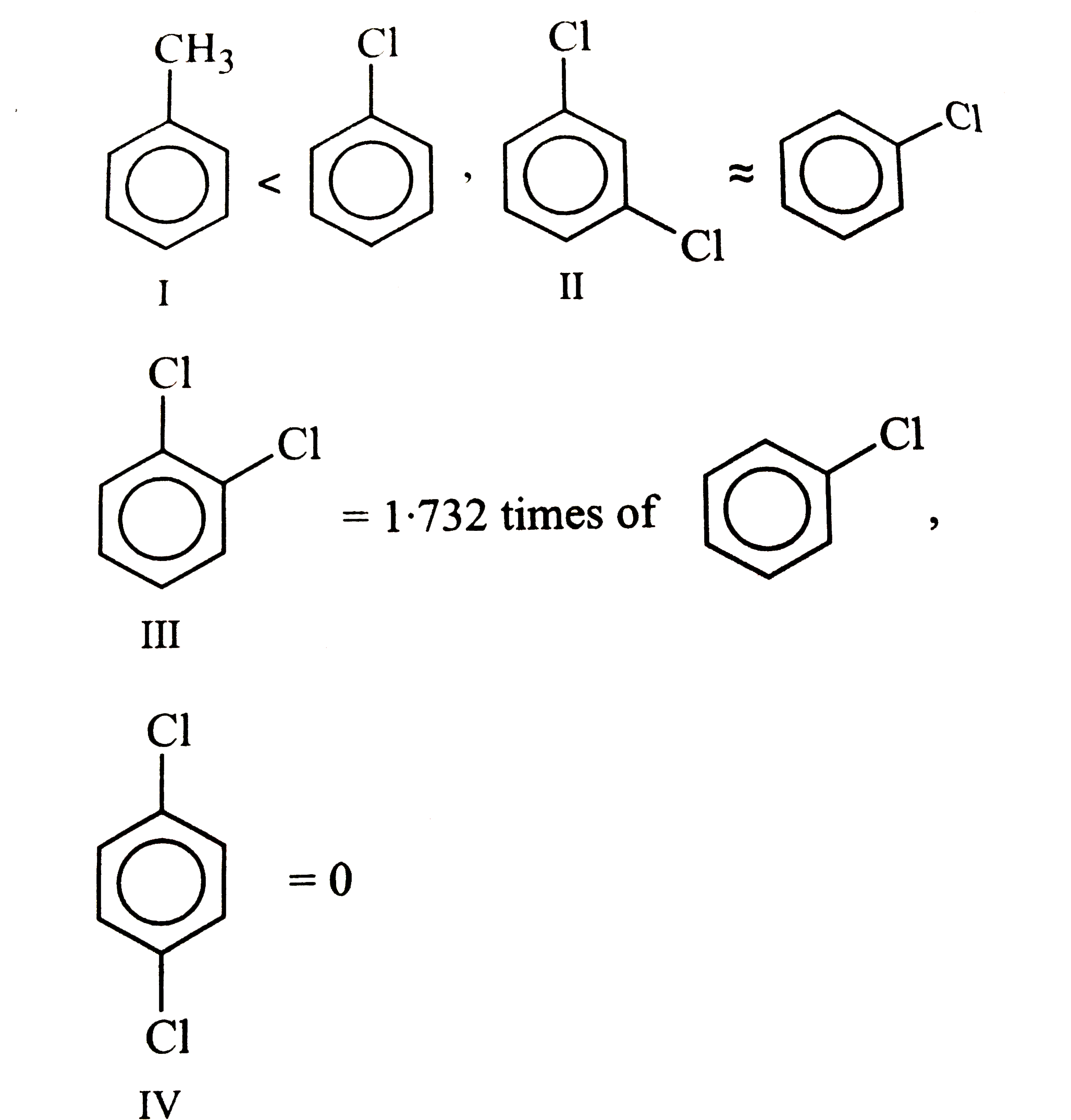
|
|
| 30. |
Arrange the following compounds in order of decreasing acidity : |
|
Answer» `II gt IV gt I gt III` |
|
| 31. |
Arrange the following compoundsin order of decreasing reactivity in the elimination (bimolecular ) reaction with C_2H_5ONa |
|
Answer» II GT I gt III gt IV |
|
| 32. |
Arrange the following compounds in order of decreasing acidity: |
|
Answer» `III GT I gt II gt IV` Here, `-Cl` has `-I` effect and `+R` effect, `-CH_(3)` has weak `+I` effect, `-NO_(2)` has `-I` and `-R` effect and `-OCH_(3)` has `-I` and `+R` effect. THUS CORRECT order is : `III gt I gt I gt IV`. |
|
| 33. |
Arrange the following compounds in increasing order of their density. (A) C Cl_4(B) CHCl_3(C ) CH_2Cl_2(D) CH_3Cl |
|
Answer» D LT C lt B lt A |
|
| 34. |
Arrange the following compounds in increasing order of their density? (A) C Cl_(4) (B) CHCl_(3) (C) CH_(2)Cl_(2) (D) CH_(3)Cl |
|
Answer» `D LT C lt B lt A` |
|
| 35. |
Arrange the following compounds in increasing order of their density. (A) C CI_4 ""(B) CHCI_3 "" (C) CH_2 CI_2 "" (D) CH_3 CI, |
|
Answer» `D ltClt B lt A ` |
|
| 36. |
Arrange the following compounds in increasing order of their acidic strength. |
|
Answer» `I LT II lt III lt IV lt V` |
|
| 37. |
Arrange the following compounds in increasing order of acidity. (i)CH_(3) CH (Br) CH_(2) COOH (ii)CH_(3) CH_(2) CH (Br) COOH (iii)CH_(3) CH_(2)C (Br)_(2) COOH (iv)CH_(2) Br CH_(2) CH_(2) COOH |
|
Answer» SOLUTION :` square ` Br group causes polarity . ` square ` As the distance between Br and COOH increases , ` square ` Order of acidity : ` III gt II gt I gt IV ` [Hint:INDUCTIVE effect DECREASES due to polarity ] . |
|
| 38. |
Arrange the following compounds in decreasing order of their reactivity order with E^(+) : C_(6)H_(5)NH_(2), C_(6)H_(5)NHCOCH_(3), C_(6)H_(6), C_(6)H_(5)SO_(3)H |
|
Answer» Solution :Decreasing order of their REACTIVITY order with `E^(+)` is as FOLLOWS : `C_(6)H_(5)NH_(2) gtC_(6)H_(5)NHCOCH_(3) gt C_(6)H_(6) gt C_(6)H_(5)SO_(3)H` |
|
| 39. |
Arrange the following compounds in decreasing order of acidic charater I. Butene II. But1-1-ene III. But-1-yne IV. Pt//H_(2) |
|
Answer» IgtIIgtIIIgtIV |
|
| 40. |
Arrange the following compounds in decreasing order of acidic character of CH. CH_(2)=CH_(2), CH_(3)-CH_(3), C_(6)H_(6), CH-=CH |
| Answer» Solution :`CH-= CH rarr CH_(2)=CH_(2) rarr C_(6)H_(6) rarr CH_(3)-CH_(3)` ACCORDINGLY the ACIDIC character of C-H decreases. | |
| 41. |
Arrange the following: CH_(3)CH_(2)CH_(2)Cl (I), CH_(3)CH_(2)-CHCI-CH_(3) (II), (CH_(3))_(2)CHCH_(2)CI (III) and (CH_(3))_(3) C-CI (IV) in order of decreasing tendency towards S_(N)2 reactions |
|
Answer» `I gt III gt II gt IV` `underset((I))(CH_(3)CH_(2)CH_(2)Cl) gt underset((III))((CH_(3))_(2)CHCH_(2)Cl) gt underset((II))(CH_(3)CH_(2)CHClCH_(3)) gt underset((IV))((CH_(3))_(3)C Cl)` This is because of increasing steric hindrance. |
|
| 42. |
Arrange the following carboxylic acids in the decreasing order of reactivites (1) CH_(3)COOH (2) ClCH_(2)COOH (3) Cl_(2)CHCOOH (4) Cl_(3)C COOH |
|
Answer» `2 GT 4 gt 1 gt 3` |
|
| 43. |
Arrange the following carbonions in order of their decreasing stability. (A)H_3C-C -=C^- , (B)H-C-=C^- , (C )H_3C-CH_2^- |
|
Answer» A gt B gt C |
|
| 44. |
Arrange the following carbanions in order of their decreasing stability. (A) H_(3)C-C-=C^(-) (B) H-C-=C^(-) (C) H_(3)C-bar(C)H_(2) |
|
Answer» `A gt B gt C` |
|
| 45. |
Arrange the following carbanions in order of their decreasing stability. (I). H_(3)C-C-=C^(-) (II). H-C-=C^(-) (III). H_(3)C-CH_(2)^(-) |
|
Answer» IgtIIgtIII |
|
| 46. |
Arrange the following carbocations in decreasing order of their stability: |
|
Answer» <P> |
|
| 47. |
Arrange the following carbanions in order of their decreasing stability. (I) H_(3)C-C-=C^(-) (II) H-C-=C^(-) (III) H_(3)C-CH_(2)^(-) |
|
Answer» IgtIIgtIII `underset((I))(H-C-=C^(-)) gt underset((I))(CH_(3)-C-=C^(-)) gt underset((III))(CH_(3)-CH_(2)^(-))` sp-hybridised carbon ATOM is more electronegative than `sp^(3)`-hybridised carbon atom annd hence, can accomodate the negative charge more effectively. `-CH_(3)` group has +I effect, therefore, it intensifies the negative charge and hence, destabilises the carbanion 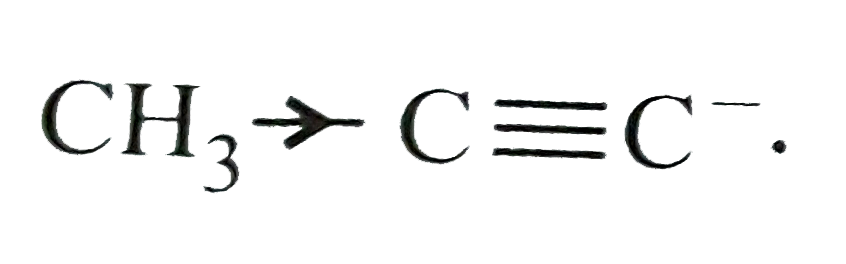 . .
|
|
| 48. |
Arrange the following carbocations in order of increasing stability I. (CH_(3))_(3)C CH_(2)^(+)II. (CH_(3))_(3)C^(+) III. CH_(3)CH_(2)CH_(2)^(+)IV. CH_(3)-overset(+)(C)H - CH_(3) |
|
Answer» `IV lt III lt II lt I` |
|
| 49. |
Arrange the following bonds in the order of increasing ionic character : C-H,F-H,Br,Na-I , K-F and Li-Cl |
| Answer» Solution :`CO_(2), 180^(@)` (DUE to linear structure) | |