Saved Bookmarks
This section includes 7 InterviewSolutions, each offering curated multiple-choice questions to sharpen your Current Affairs knowledge and support exam preparation. Choose a topic below to get started.
| 1. |
Discuss Fajan's rules ? |
|
Answer» Solution :Fajan.s rule are as follows : 1 SMALLER the size of CATION, more will be the its POLARIZING POWER and more will be the covalent character of ionic bond. When the cation has smaller size, its density is HIGH. It will have greater attraction for the electrons of the anion For example the polarizing power of `L^(+)` is greater than the polarizing power of `Na^(+)`, 2 Larger the size of anion, higher will bhe itspolarisability and more will be thecovalent character of ionic bond. When the size is larger, the electroncloud is less tightly held by the molecule. the electropns cloud gets easily distorted.  For example : I can be easily polarized that `Cl^(-)`. So Lil more covalent that LiCl. Similarly `AlCl_(3)` is covalent and `Alf_(3)` is ionic. |
|
| 2. |
Discuss diagonal relationship between beryllium and aluminum metal. |
|
Answer» Solution : The ionic radius of`Be^(2+)` is estimated to be 31pm, the charge/radius ratio is nearly the same as that of the`Al^(3+)`ion.Hence beryllium resembles ALUMINIUM in some ways. Some of the similarities are: (i) Like aluminium, beryllium is not readily attacked by acids because of the presence of an oxide film on the surface of the metal. (ii) Beryllium hydroxide dissolves in excess of alkali to give a beryllate ion, `[Be(OH)_(4)]^(2-)`just as aluminium hydroxide gives ALUMINATE ion, `[Al(OH)_(4)]^(-)`. (iii) The CHLORIDES of both beryllium and aluminium have `Cl^(-)`bridged chloride structure in vapour phase. Both the chlorides are soluble in organic solvents and are STRONG Lewis acids. They are used as Friedel Craft catalysts. (iv) Beryllium and aluminium ions have strong tendency to form complexes`[BeF_(4)]^(2-), [AlF_(6)]^(3-)`. |
|
| 3. |
Discuss briefly the similarities between beryllium and aluminium |
Answer» Solution :BERYLLIUM SHOWS a diagonal relationship with aluminium. In this case, the SIZE of these ions is not as close. HOWEVER, their charge per unit area and electro-negativity values are almost similar. Similarities between Beryllium and Aluminium 
|
|
| 4. |
Discuss briefly the similarities between Be and AI. |
|
Answer» Solution :(i)nBeryllium and aluminiem have same electrnegativily VALUES. (ii) Their changesper unit are Is closer. (iii) `BeCI_(2)` and `AICI_(3)` forms dimeric structure. Both are soluble in organic solvents and are strong Lewis acids. (iv) `Be(OH)_(2)` and `AI(OH)_(3)` dissolves in EXCESS alkali to give beryllate icon `[Be(OH)_(4)]^(2)` and alumianteion `[AI(OH)_(4)]`, respectvely. (v) Be and AI ions have stromg TENDECY to form complexes. `BeF_(4)^(2)` and `AIF_(6)^(3)`. (VI) Both `Be(OH)_(2)` and `AI(OH)_(3)` areamphoteric in nature. (VII) Both beryllium and aluminium are rendred passive by nitric acid. |
|
| 5. |
Discuss briefly de-mineralisation of water by ion exchange resin. |
|
Answer» Solution :SYNTHETIC resins method : Nowadays hard water is softened by using synthetic cation exchangers. This method is more efficient than zeolite process. Cation exchange resins : It contain large organic molecule with -`SO_3H` group and are water insoluble. Ion exchange resin `(RSO_3H)` is changed to RNa by treating it with NaCl. The resin exchanges `Na^+` ions with `Ca^(2+)` and `Mg^(2+)` ions present in hard water to make the water soft. Here R is resin anion. `2RNa_((s)) + M_((aq))^(2+) to R_2M_((s)) + 2Na_((aq))^(+)` The resin can be regenerated by adding aqueous NaCl solution. Pure de-mineralised (de-ionized) water free from all soluble mineral salts is obtained by passing water successively through a cation exchange in the `H^+` form) and an anion exchange in the `OH^-` form) resins. `2RH_((s)) + M_((aq))^(2+) hArr MR_(2(s)) + 2H_((aq))^(+)` In this cation exchange process, `H^+` exchanges for `Na^(+) , Ca^(2+), Mg^(2+)` and other cations present in water. This process results in proton release and thus makes the water acidic. Anion exchange process : `RNH_(2(s)) + H_2O_((l)) hArr RNH_(3)^(+) . OH_((s))^(-)` `RNH_3^(+) . OH_((s))^(-) + X_((aq))^(-) hArr RNH_3^(+) . X_((s))^(-) + OH_((aq))^(-)` `OH^-` exchanges for ANIONS like `Cl^(-), HCO_3^(-) , SO_4^(2-)` etc. present in water . `OH^-` ions, thus, liberated neutralise the `H^+` ions set free in the cation exchange. `H_((aq))^(+)+ OH_((aq))^(-) to H_2O_((l))` The exhausted cation and anion exchange resin beds are regenerated by treatment with DILUTE acid and alkali solutions respectively. |
|
| 7. |
Discuss and compare the trend in ionisation enthalpy of the elements of group-1 with those of group-17 elements. |
Answer» SOLUTION : The ionisation decreases regularly as we move from TOP to bottom from 1 ELEMENT to the other.  Given trend can be easily explained on the basis of increasing atomic size and screening effect are as follows: (i) On moving from top to bottom in the group, atomic size increases as the addition of a new principal energy shell at each succeeding element. Therefore, the distance between valence electrons from the nucleus increases. As the force of attraction by the nucleus for the valence electrons decreases and therefore, the ionisation ENTHALPY should decrease. (ii) Addition of new shells, the shielding effect increases attraction between nucleus the valence shell electron decreases and hence the ionisation enthalpy should decrease. (iii) As their is a increase in atomic number with increasing nuclear charge. As the force of attraction increase, the ionisation enthalpy should increase. Combined effect of the increase in the atomic size and the screening effect are more than compensates the effect of the increased nuclear charges. Valence electrons become less and less firmly HELD by the nucleus and hence the ionisation enthalpies gradually decrease as move from top to down the group. |
|
| 8. |
Discuss and compare the trend in ionisation enthalpy of the elements of group 1 with those of group 17 elements. |
Answer» 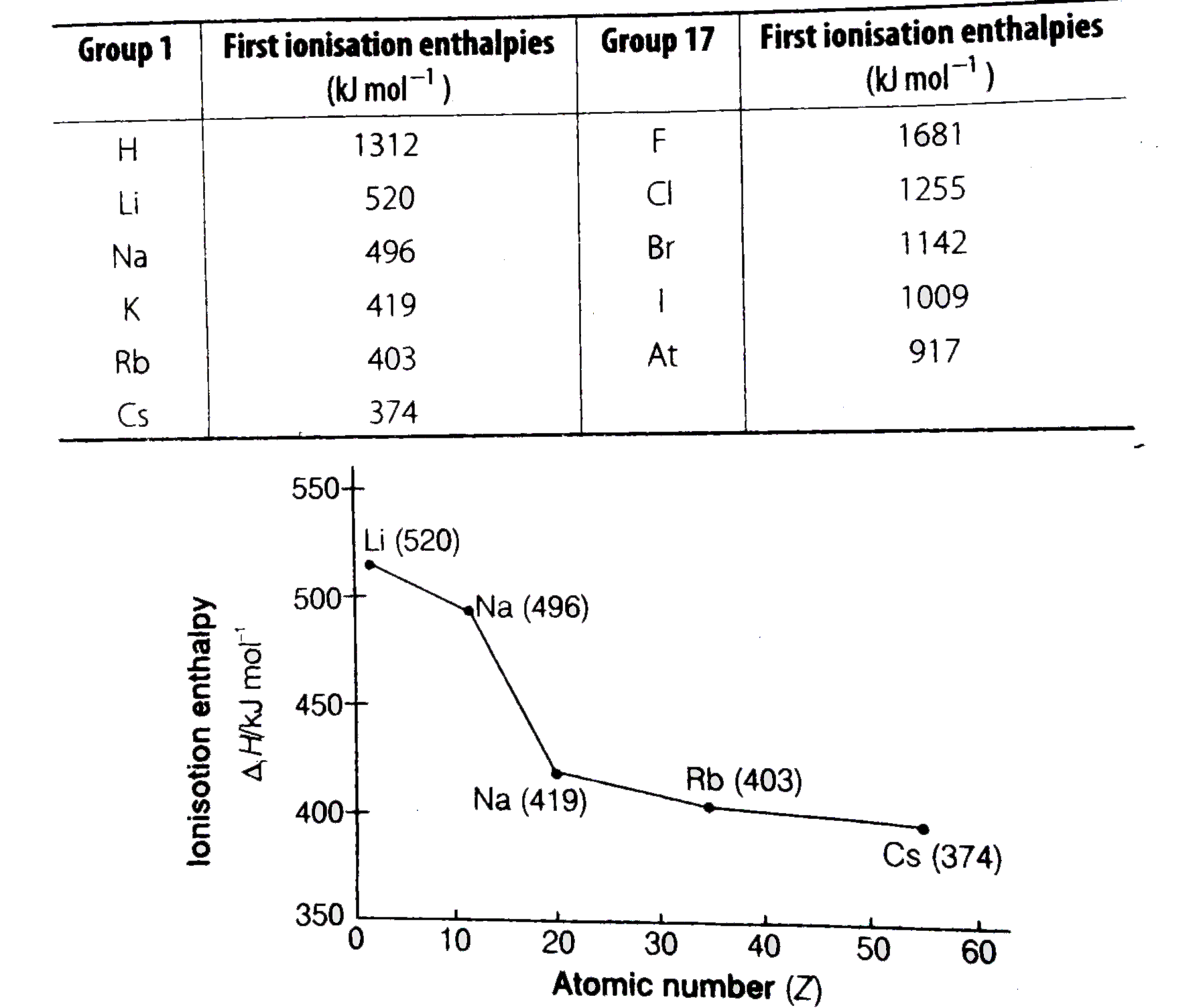 Given trend can be easily explained on the basis of increasing atomic size and screening effects as follows. i) On moving down the group, the atomic, size increases gradually due to the addiction of one new principle energy shell at each surrounding element. Hence, the distance of the valence electrons from the nucleus increases. Consequently, the force of attraction by the nucleus for the valence electrons decreases and hence hte ionisation enthalpy should decreases. ii) With the addition of new shells, the shielding or the screening effect increases. As a RESULT, the force of attraction of the nucleus for the valence electrons further decreases and hence the ionsation enthalpy should decreases. iii) Nuclear CHARGE increases with increase in atomic number. As a result, the force of attraction by the nucleus for the valence electrons should increase and accordingly the ionisation enthalpy should increases. The combined effect of the increase in the atomic size and the screening effect more than compensates the effect of the INCREASED nuclear charges. Consequently, the valence electrons become less and less firmly held by the nucleus and hence the ionisation enthalpies gradually decreases as move down the group. |
|
| 9. |
Discuss about place of He and H. |
|
Answer» SOLUTION :Two elements like hydrogen and helium are observed as an exception . Place of hydrogen in periodic table : Hydrogen contain le in ls orbital so it must be SITUATED in group-1. Hydrogen accept `1 e^(-)`and from stable structure like helium. So, it must be situated in group-17 But there is same difference observed between hydrogen and ist group and hydrogen and `17^(th)`group so hydrogen atom is situated in separately in periodic table. Place of helium in periodic table . Helium element having `1 ^(st)`electron configuration so it must be present in s-block. But its positioning in the p-block along with other group 18 elements is Justified. Because it has a completely filled valence SHELL `(1 s^(2))` and as a result, exhibits properties characteristic of other noble GASES. |
|
| 10. |
Discuss about dumas method and principles for estimation of N present in organic compound |
|
Answer» Solution :Estimation of nitrogen by dumas methods: The nitrogen containing organic compound, when heated with copper oxide in an ATMOSPHERE of carbon dioxide, yields FREE nitrogen in addition to carbon dioxide and water Reaction: `C_(x) H_(y) N_(z) + (2x + (y)/(2)) CuO overset(Delta)rarr xCO_(2) + (y)/(2) H_(2)O + (z)/(2)N_(2) + (2x + (y)/(2)) Cu` Traces of nitrogen oxides formed, if any, are reduced to nitrogen by passing the gaseous mixture over a heated copper gauze. The mixture of gases so produced is collected over an aqueous solution of POTASSIUM HYDROXIDE which absorbs carbon dioxide. Nitrogen is collected in the upper part of the graduated tube  Calculate of % composition of nitrogen: Mass of taken organic compound = m gm Volume of nitrogen collected `= V_(1) mL` Laboratory temperature `=T_(1)K` `((T_(1) "temperature"),("the pressure"),("of" N_(2)"gas"))= p_(1) = [(("Atmospheric"),("pressure"))- (("Aqueous"),("tension"))]` Volume of `N_(2)` at STP= V mL Atmospheric pressure at STP= 760mm Hg Temperature at STP= T= 273K `:. (p_(1)V_(1))/(T_(1)) = (PV)/(T) = (760 XX V)/(273)` `:. V= (p_(1) V_(1))/(T_(1)) xx (273)/(760)` Volume of 22400mL gas at STP= Molecules mass `:.` mass of 22400mL `N_(2)` gas at STP= 28gm so, mass of V mL `N_(2)` at STP- mass of `N_(2)` at STP `= (28 xx V)/(22400)gm` % of nitrogen `= (28 xx V xx 100)/(22400xx m)` `=(28)/(22400). (p_(1)V_(1) xx 273)/(T_(1) xx 760) xx (100)/(m)` `= 0.0449 xx (p_(1)V_(1))/(T_(1)m)` |
|
| 11. |
Discuse common ion effect on the solubility of an ionic salt. |
|
Answer» Solution :(1) Purification of common salt : In a saturated solution of common salt, the following equilibrium exists `NaClhArrNa_(aq)^(+)+Cl_(aq)^(-)` `K_(sp)=[Na^(+)][CL^(-)]` = a constant at constant temperature. If HCl gas is passed into the saturated solution, it ionises producing plenty of `Cl^(-)` ions `HCl toH^(+)+Cl^(-),Q_(sp)=[Na^(+)][Cl^(-)]` increases. According to Le Chatelier's principle, the reverse reaction gets favoured until `Q_(sp)` again becomes equal to `K_(sp)`. More NaCl(s) precipitates. Thus, pure NaCl crystals are obtained. Impurities present in common salt remain in the solution. (ii) Salting out of soap: Soap consists of sodium salts of fatty acids like `C_(17)H_(35)COONa`. A saturated solution of `C_(17)H_(35)COONa` formed during SAPONIFICATION contains plenty of dissolved `C_(17)H_(35)COONa`. It is recovered as follows : `C_(17)H_(35)COONa(s)hArrC_(17)H_(35)COO_(aq)+Na_(aq)^(+)` In a saturated solution, `K_(sp)=[C_(17)H_(35)COO^(-)][Na^(+)]` = a constant at constant temperature. If plenty of common salt is added to the above saturated solution, `[Na^(+)]` increases because NaCl ionises as `NaCl TONA^(+)+Cl^(-)` `Q_(sp)=[C_(17)H_(35)COO^(-)][Na^(+)]` increases. Now the backward reaction gets favoured until `Q_(sp)` becomes equal to `K_(sp).C_(17)H_(35)COONa(s)` precipitates. |
|
| 12. |
Discribe the theory associated with the radius of an atom as it loses an electron |
| Answer» SOLUTION :By LOSING an electron,an atom forms its cation which contains ONE electron less but the nuclear charge remains the same. Thus EFFECTIVE nuclear charge of COTAIN is higher than that of the parent atom and hence cations are smaller in size than the parent atoms. | |
| 13. |
Discribe the theory associated with the radius of an atom as it gains an electron |
| Answer» Solution :As a NEUTRAL atom GAINS and ELECTRONS to form anion, its size (radius) incraeses because the anion has the same nuclear CHARGE and more electron compared to the parent atom. Thus anions have less effective nuclear cahrge than the parent atoms and hence they are LARGER in size. | |
| 14. |
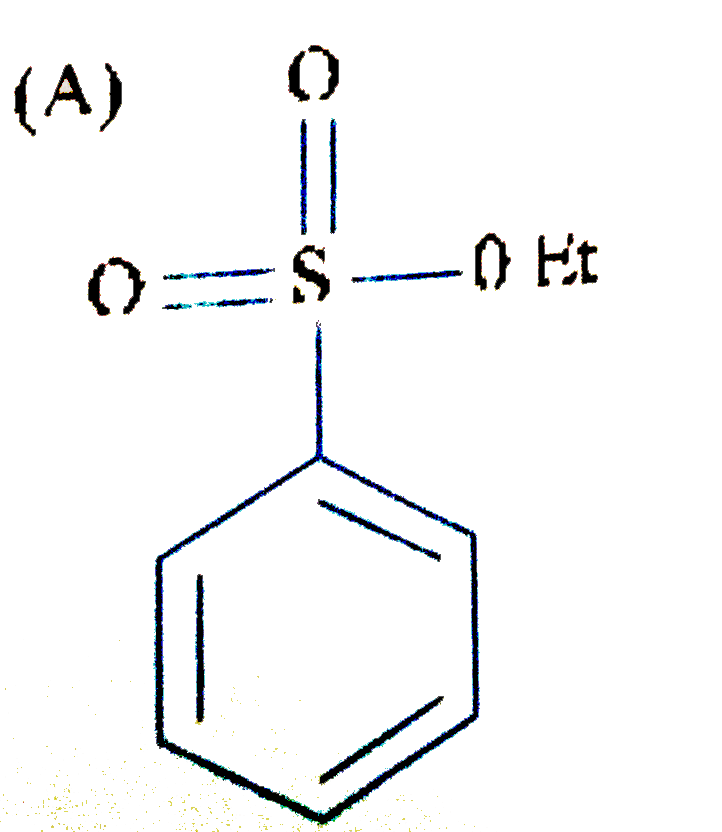
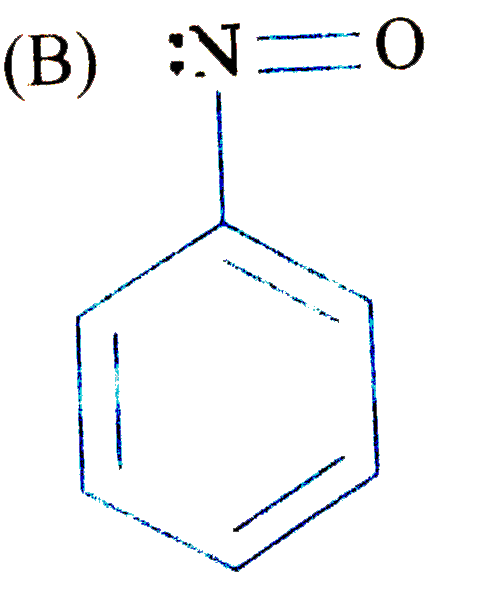
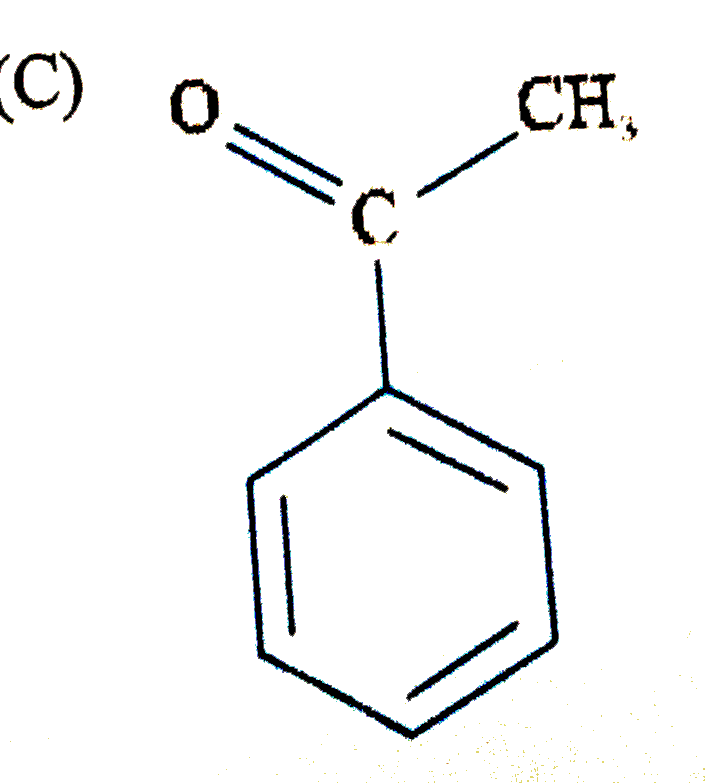
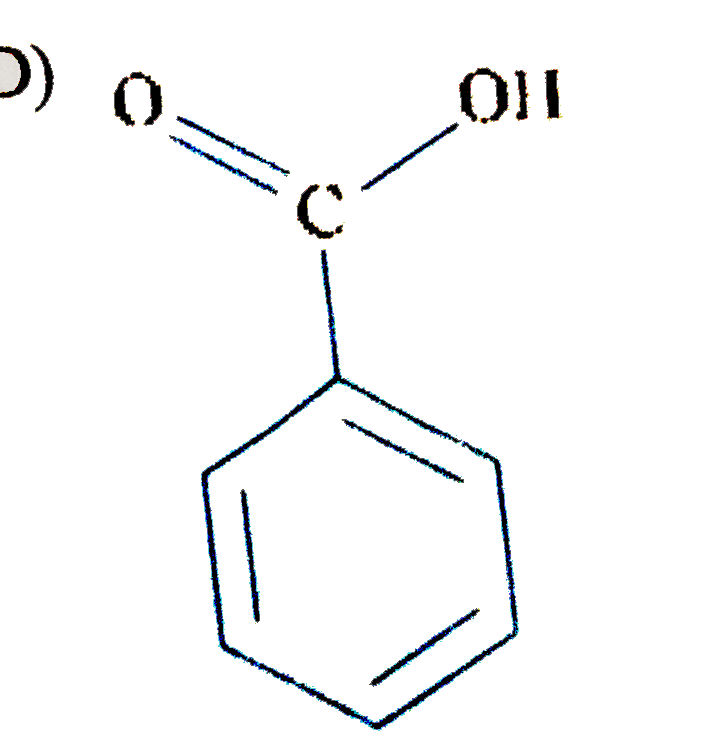
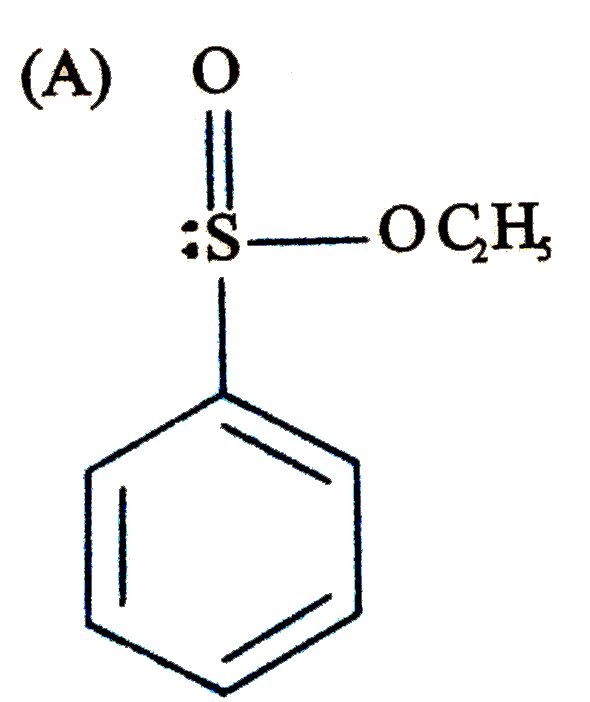
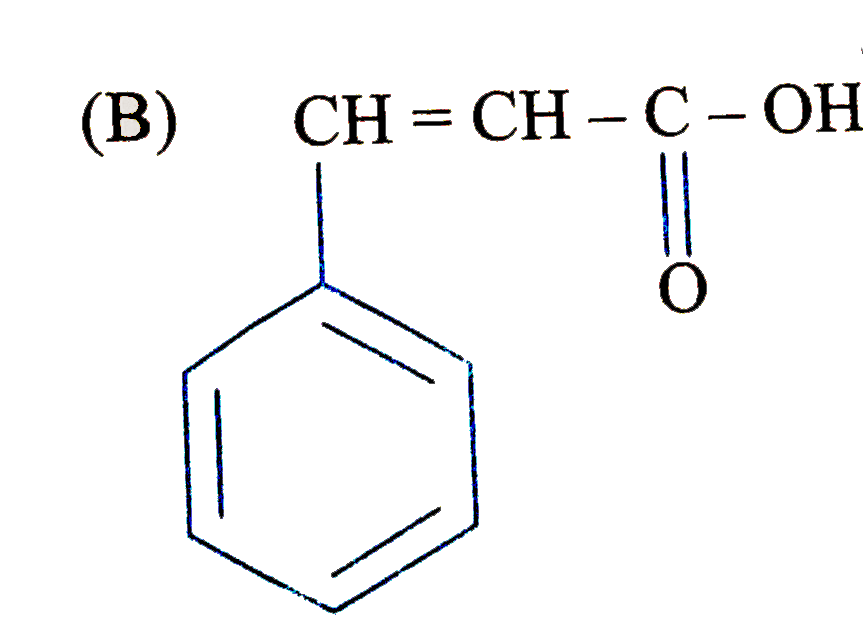
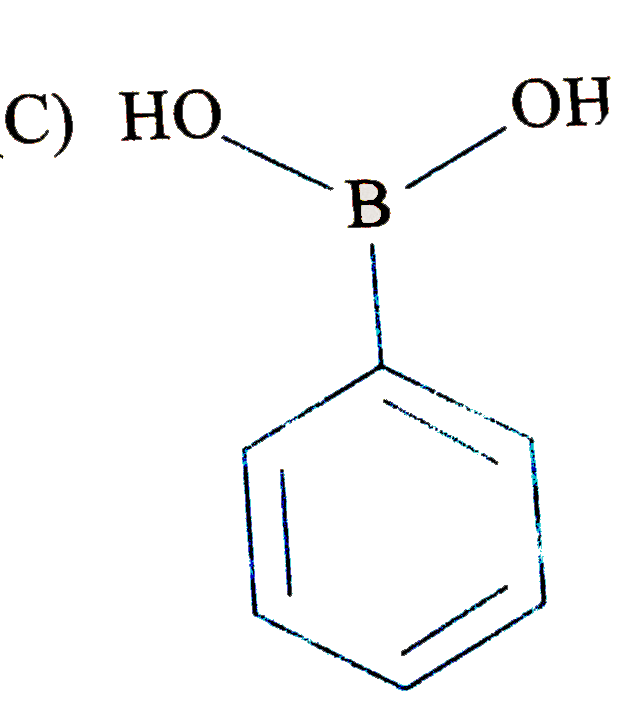
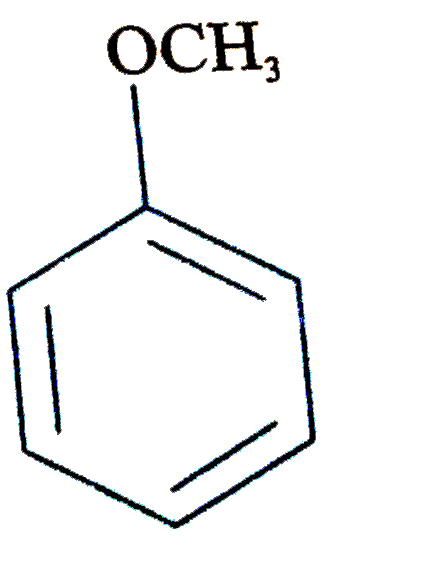
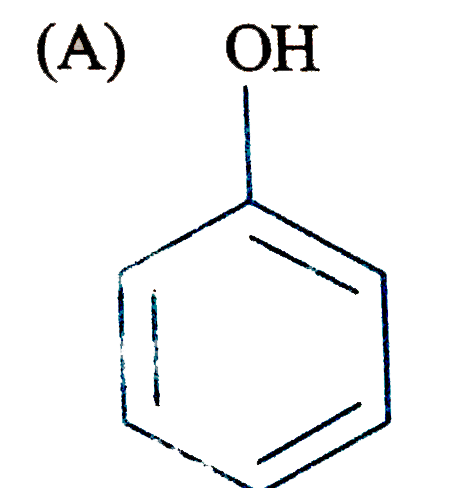
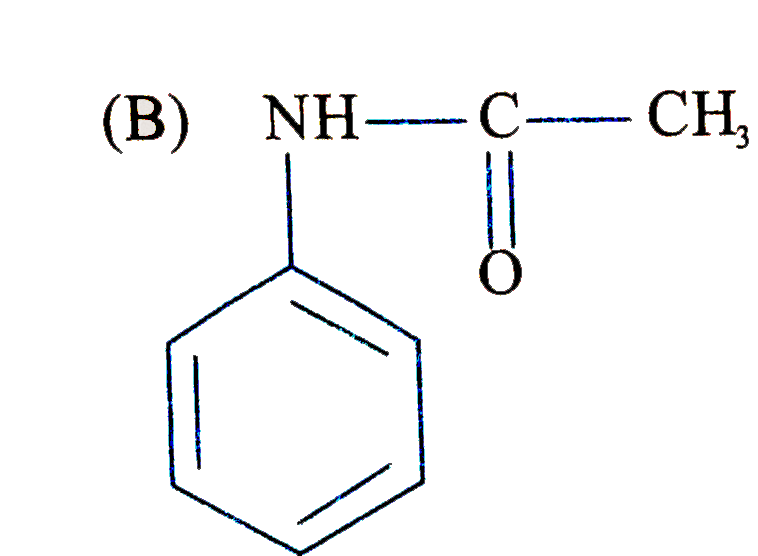
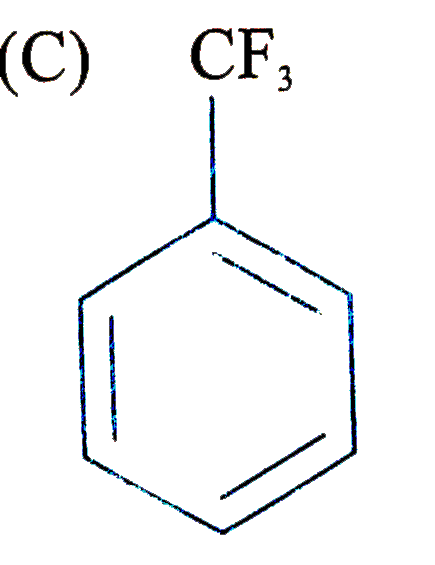
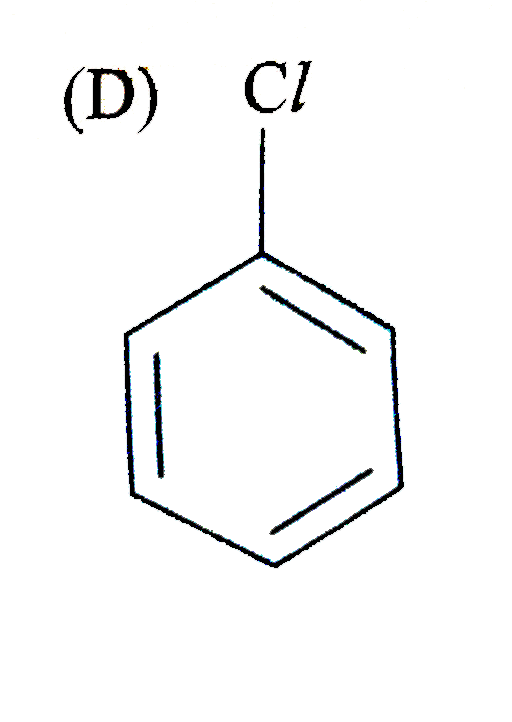
Directing nature of substituted aromatic compound is decided by stability of sigma-complex or areniumion. If sigma-complex is stabilised at O-and P-position by attacks of electrophile then the group is O-and P-directing, but if sigma-complex si stabilisd at m-position the group will be meta directing on the basis of above explanation. find out correct answers of following questions. Q. Which of the followin is -O- and p-directing |
|
Answer»
|
|
| 15. |
Directing nature of substituted aromatic compound is decided by stability of sigma-complex or areniumion. If sigma-complex is stabilised at O-and P-position by attacks of electrophile then the group is O-and P-directing, but if sigma-complex si stabilisd at m-position the group will be meta directing on the basis of above explanation. find out correct answers of following questions. Q. Which of the following is not O- and P-directing |
|
Answer»
|
|
| 16. |
Directing nature of substituted aromatic compound is decided by stability of sigma-complex or areniumion. If sigma-complex is stabilised at O-and P-position by attacks of electrophile then the group is O-and P-directing, but if sigma-complex si stabilisd at m-position the group will be meta directing on the basis of above explanation. find out correct answers of following questions. Q. Which of the following is m-directing. |
|
Answer»
|
|
| 17. |
Direct reduction of Fe_(2)O_(3) by CO is possible at temperature. |
|
Answer» LESS than 1123 K |
|
| 18. |
Direct reduction of Fe_(2)O_(3) by Carbon is possible at temperature. |
|
Answer» LESS than 1123 K |
|
| 19. |
Direct overlap leads |
|
Answer» `rho` BOND |
|
| 20. |
Diprotic and Triprotic acid |
|
Answer» Solution :Polyprotic acid : The ACIDS which have more than one ionizable proton per molecule of the acid. Such acids are known as polybasic or polyprotic acids. Diprotic acid : The acid which have two ionizable proton per molecule of the acid. Such acids are known as Dibasic or Diprotic acid e.g., `H_2X_((aq)) +hArr 2H^(+) + X^(2-) ,K_a` The ionization of the reaction is in two steps is as under , (i) `H_2X+ H_2O hArr H_3O^(+) + HX^(-) "" K_a`(i) (ii)`HX^(-) + H_2O hArr H_3O^(+) + X^(2-) "" K_a` (ii) In it, `K_a (i) gt K_a (ii)` and `K_a (i) xx K_a (ii) = K_a` Examples of diprotic acid :Oxalic acid `(H_2C_2O_4)`, Sulphuric acid `(H_2SO_4)` , CARBONIC acid `(H_2CO_3)` , SULPHUROUS acid `(H_2SO_3)` ,ASCORBIC acid etc. Examples of triprotic acid : Phosphoric acid `(H_3PO_4)`, Cytaric acid .... etc. In polyprotic acid solutionconstant mixture of acid like `H_2A, HA^(-)` and `A^(2-)` |
|
| 21. |
Dipolemoment of H_2 S is 0.950. Find the S-H bond moment. Bond angle in H_2 S is 96^@and cos 48^@is 0.66 |
|
Answer» Solution :`mu_(H_(2)S)=2xxmu_(S-H)COS (96^(@)//2)` `0.95=2xxmu_(S-H)xx0.66` S-H BOND MOMENT =0.72 D |
|
| 22. |
Dipolemoment is least in |
|
Answer» PARA - DICHLOROBENZENE |
|
| 23. |
Dipole moment of HCl is 1.03D. Bond length is 1.27A^@. Calculate the percentage ionic character of the HCl bond. |
|
Answer» |
|
| 24. |
Dipole moment of HCl = 1.03 D, Hi = 0.38D. Bond length of HCI = 1.3 Å and HI = 1.6 Å .The ratio of fraction of electric charge delta, existing on each atom in HCI and HI is |
|
Answer» `12:1` |
|
| 25. |
Dipole moment of H_2 X is 1.0 D. If the bond angle is 90^@, the approximate bond moment of H-X bond is (Cos 45^@= 0.7) |
|
Answer» `0.4D` |
|
| 26. |
Dipole moment of a compound W-CH_(2)-CH_(2)-W is 1.5 D.if dipole moment of its Gauche from is 6.0 D, what will be mole fraction of its anti from? |
|
Answer» `mu_("GAUCHE")=6.0` `x_(anti)=?` `mu_("net")=mu_("gauche")x_("gauche")+mu_("anti")x_(anti")` `1.5=6.0x_("gauche")+0` `x_("gauche")=0.25` `x_(anti)=1-x_(gauche)` `=1-0.5=0.75` |
|
| 27. |
Dipole moment of CO_(2) is zero. |
| Answer» SOLUTION :In the linear molecule, O=C=O the dipole due to oxygen from both sides are equal & OPPSITE. As a RESULT dipole moment is zero. | |
| 28. |
Dipole moment of CO_(2) is zero and which implies that |
|
Answer» carbon and oxygen have equal ELECTRONEGATIVITIES |
|
| 29. |
Explain why BeF_(2), molecule has zero dipolemoment although the Be-F bonds are polar. |
| Answer» SOLUTION : DUE to LINEAR SHAPE | |
| 30. |
Dipole moment is shown by |
|
Answer» Benzoyl chloride |
|
| 31. |
Dipole moment is possessed by (one or more) |
|
Answer» 1,4 -Dichlorobenzene 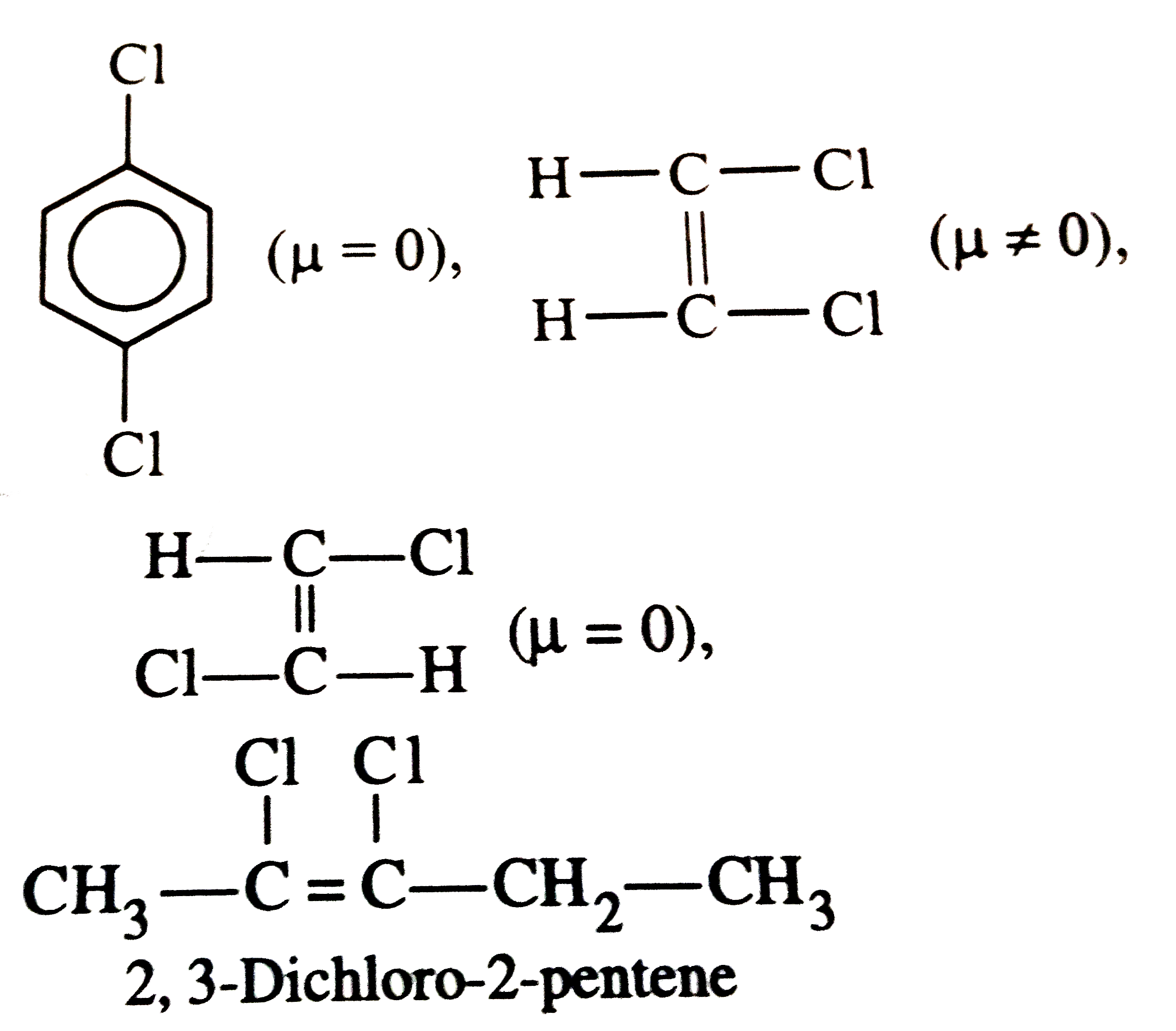 `{:(H-C-Cl),(""||""),(H-C-Cl):}(mu NE 0)` `{:(H-C-Cl),(""||""),(Cl-C-H):}(mu = 0)` `{:(""Cl-Cl),(""|""|),(CH_(3)-C=C-CH_(2)-CH_(3)),("2,3-Dichloro-2-pentene"):}` `{:(CH_(3)-C-Cl),(""||""),(" "Cl-C-CH_(2)CH_(3)),("trans"):}` |
|
| 32. |
Dipole-induced dipole interactions are present in which of the following pairs : |
|
Answer» `H_(2)O` and ALCOHOL 
|
|
| 33. |
Dipole moment is least in the molecule |
|
Answer» 1,2-dichlorobenzene |
|
| 34. |
Dipole-induced dipole interactions are present in which of the following pairs |
|
Answer» HCL and He ATOMS |
|
| 35. |
Dipole-dipole interaction energy between polar molecules in solids depends on the radius of the molecule (r) and it is directly proportional to |
|
Answer» `(1//r^(2))` |
|
| 36. |
Dipole-dipole forces act between the molecules possessing permanent dipole. Ends of dipoles possess 'partial charges'. The partial charge is |
|
Answer» more than UNIT ELECTRONIC charge |
|
| 37. |
Dipole-dipole forces are stronger than |
|
Answer» LONDON FORCES |
|
| 38. |
Dipole - dipole forces act between the molecules possessing permanent dipole. Ends of dipoles possess .partial charges.. The partial charge is |
|
Answer» more than unit ELECTRONIC charge. Partial charges present on ENDS of a dipole are always LOWER than the unit electronic charge. e.g. 
|
|
| 39. |
Dipole-dipole, dipole-incluced dipole and dispersion forces are collectively called as ……………………………. |
|
Answer» |
|
| 40. |
Dinitrogen and dioxygen are main constituents of air but these do not react with each other to form oxides of nitrogen because ........ |
|
Answer» the reaction is endothermic and requires very high temperature `N_(2(g)) + O_(2(g)) overset(3000^@C)to 2NO_((g))` |
|
| 41. |
Dinitrogen and dioxygen are main constituents of air but these do not react with each other to form oxides of nitrogen because ______ |
|
Answer» the reaction is endothermic and requires very high TEMPERATURE |
|
| 42. |
Dinitrogen and dihydrogen react with each other to produce ammonia according to the following chemical equation : N_(2(g))+H_(2(g)) rarr 2NH_(3(g)) (i) Calculate the mass of ammonia produced if 2.00xx10^(3)g dinitrogen reacts with 1.00xx10^(3) g of dihydrogen. (ii) Will any of the two reactants remain unreacted ? (iii) If yes, which one andwhat would be its mass ? |
|
Answer» 28 gm `N_(2)` react with 6 gm `H_(2)` `:. 2000 gm N_(2) rarr (?)` `= (2000 xx 6)/(28) = 428.57 g H_(2)` (i) Here, `N_(2)` is LIMITING reagent So, created volume of ammonia. From 28 gm `N_(2)`, 34 gm `NH_(3)` create. `:.2000 gm N_(2) rarr (?)` `= (2000xx34)/(28) = 2428.57 g NH_(3)` (ii) Here, `N_(2)` is limiting reagent So, `H_(2)` become excess. (unreacted) (III) REMAINING mass of `H_(2)` gas `= 1000-428.57` `= 571.43g` |
|
| 43. |
Dinitrogen and dihydrogen react with each other to produce ammonia according to the following equation : N_2(g) + 3H_2(g) to 2NH_3(g) (i) Calculate the mass of ammonia produced if 2.00 xx 10^3 g dinitrogen react with 1.00 xx 10^(3)g of dihydrogen. (ii) Will any of the two reactants remain unreacted? (iii) If yes, which one and what would be its mass? |
|
Answer» Solution :(i) `underset("1 MOLE 28 g")(N_(2)) + underset("3 MOLES of" 3 xx 2= 6g)(3H_(2)) to underset("2 moles" 2 xx 17 = 34 g)(2NH_(3))` `therefore` 28 g of `N_(2)` react with hydrogen = 6g `therefore 2.00 xx 10^(3) g` of `N_(2)` react with hydrogen `=6/28 xx 2.00 xx 10^(3) = 428.57 g` OBVIOUSLY, dihydrogen is in excess and dinitrogen is the LIMITING REAGENT, v 28 g of dinitrogen produce ammonia = 34 g `therefore 2.00 xx 10^3` g of dinitrogen will produce ammonia = `34/28 xx 2.00 xx 10^(3) = 2428.57 g` (ii) Dihydrogen will remain unreacted. (iii) Mass of `H_2` left unreacted = `1.00 xx 10^(3) - 428.57 = 571.43 g` |
|
| 44. |
Dimethylether is the isomer of |
|
Answer» DIETHYL ether |
|
| 45. |
Dimethyl ether decomposes as CH_(3)OCH_(3)(g)rarrCH_(4)(g)+CO(g)+H_(2)(g) When CH_(3)OCH_(3)(g) decomposes to 20% extent under certain conditions, what is the ratio of diffusion of pure CH_(3)OCH_(3)(g) with methane? |
|
Answer» `0.59:1` `=sqrt((16)/(46))xx(0.8)/(0.2)=2.36:1` |
|
| 46. |
Dimethyl amine (CH_3)_2NH is weak base and its ionization constant 5.4 xx 10^(-5). Calculate [OH^(-)], [H_3O^+], pOH and pH of its 0.2 M solution at equilibrium. |
| Answer» SOLUTION :`[OH^-]=1.04xx10^(-3)` M, `[H_3O^+]= 9.6xx10^(-12)` M , POH= 2.98 , pH=11.02 | |
| 47. |
Dimerisation in carboxylic acid is due to |
|
Answer» IONIC bond |
|
| 48. |
Dilute solutions of alkali metals in liquid NH_(3) are blue. It is the ammoniated electron which is responsible for the blue colour of the solution, and the electrical conductivity is due to the ammoniated cation, [M(NH_(3))_(x)]^(+) as well as the ammoniated electrons, [e(NH_(3))_(y)]^(-), values of x and y depend on the extent of solvation (by NH_(3)). Dilute solutions are paramagnetic due to free electrons. Ammoniated solution of alkali metals are reducing agents due to the presence of free ammoniated or solvated electrons that can reduce: [I] O_(2) to O_(2)^(2-)""[II] K_(2) [Ni(CN)_(4)] to K_(4) [Ni(CN)_(4)] [III] aromatic ring""[IV] non-terminal alkyne Choose the correct code |
|
Answer» `III` & `IV` `{:("excess",,"Ammoniated "bar(e)" responsible for"),(,,"BLUE color & reducing character."):}` If conc. of solution is increased, then association of solvated electrons get started hence, paramagnetism decreases. |
|
| 49. |
Dilute solution of hydrogen peroxide cannot be heated strongly for its concentration. Explain. |
| Answer» SOLUTION :Dilute solution of `H_(2)O_(2)` cannot be concentrated by heating beacause it DECOMPOSES into `H_(2)andO_(2)" on heating. " H_(2)O_(2)overset("HEAT")toH_(2)+O_(2)` | |
| 50. |
Dilute aqueous solution of …….. acid is used as antibiotic. |
| Answer» SOLUTION :ORTHOBORIC ACID | |