Saved Bookmarks
This section includes 7 InterviewSolutions, each offering curated multiple-choice questions to sharpen your Current Affairs knowledge and support exam preparation. Choose a topic below to get started.
| 1. |
Hyperconjugation describes the orbital interactions between the p-systems and the adjacent s-bond of the substituent group(s) in organic compounds. Hyperconjugation is also called as Baker and Nathen effect. The necessary and sufficient condition for the hyperconjugation are : i) Compound should have at least on sp2 hybrid carbon of either alkene, carbocation or alkyl free radical. ii) A-carbon with respect to sp2 hybrid carbon should have at least one hydrogen. Hyperconjugation are of three types: (i) s(C-H), p-conjugation. (iii) s(C-H), positive charge conjugation iv) s(C-H), odd electron conjugation The hyperconjugation may be represented as Number of resonating structures due to hyperconjugation = (n + 1) where n is the number of a-hydrogen. Greateris the number of such forms, more is the stability of the species under considersation. Which of the following carbocations will show highest number of Hyperconjugation forms? |
|
Answer» `CH_(3)-overset(+)(C)H_(2)` For a-3, HC, For b-6, Hc, For d-8, Hyper conjugative structures |
|
| 2. |
Hyperconjugation describes the orbital interactions between the p-systems and the adjacent s-bond of the substituent group(s) in organic compounds. Hyperconjugation is also called as Baker and Nathen effect. The necessary and sufficient condition for the hyperconjugation are : i) Compound should have at least on sp2 hybrid carbon of either alkene, carbocation or alkyl free radical. ii) A-carbon with respect to sp2 hybrid carbon should have at least one hydrogen. Hyperconjugation are of three types: (i) s(C-H), p-conjugation. (iii) s(C-H), positive charge conjugation iv) s(C-H), odd electron conjugation The hyperconjugation may be represented as Number of resonating structures due to hyperconjugation = (n + 1) where n is the number of a-hydrogen. Greateris the number of such forms, more is the stability of the species under considersation. Hyperconjugation is possible in which of the following species ? |
|
Answer» `CH_(3)-BAR(C)H-CH_(3)`  No other structure has the REQUIRED condition. |
|
| 3. |
Hyperconjugation is also known as |
|
Answer» |
|
| 4. |
Hyper conjugation phenomenon is possible in: |
|
Answer» `H_(2)C=CH_(2)` |
|
| 5. |
Hyper conjugation is most useful for stabilizing which of the following carbocations ? (a)neo-Pentyl (b) tert-Butyl (c) iso-Propyl (d)Ethyl (e) Methyl |
|
Answer» |
|
| 6. |
Hyper Conjugation is also known as |
|
Answer» no bond resonance |
|
| 7. |
Hyper conjugation involves overlap of the following orbitals |
|
Answer» `sigma-sigma` |
|
| 8. |
Hyper conjugation is most useful for stabilising which of the following carbocations ? |
|
Answer» Neo-pentyl `{:(""CH_(3)),("|"),(H_(2)C-C o+),("|"),(""CH_(3)):}` |
|
| 10. |
Hydroxylamine reduces iron III according to the equaction, 4Fe^(3+) + 2NH_(2)OH rarr N_(2) O + H_(2)O + 4 Fe^(2+) + 4H^(+). Orpm II thus produced is estimatedf by tiration with standard KMnO_(4)solution. The reaction is MnO_(4)^(-) + 5Fe^(2+)+ 8H^(+) rarr Mn^(2+) + 5Fe^(3+) + 4H_(2)O. A 10 mL of hydroxyamine solution was diluted to one litere. 50 mL of this diluted soltuion was boiledwith an excessof Fe^(3+) solution. The resulting solution required 12mL of 0.02M KMnO_(4) solutionfor complete oxidationof Fe^(2+). Calculatethe weight of NH_(2)OH in one litre of orignal solution. |
|
Answer» |
|
| 11. |
Hydroxyl ion is considered as a strong base. Give reasons. |
| Answer» SOLUTION :Hydroxyl ION is the conjugate base of water, `H_2 O HARR H^(+) +OH^(-)` Water is a very weak acid. Hence its conjugate base, hydroxyl ion is a strong base. | |
| 12. |
Hydroxyl amine reduces iron (III) according to following equation NH_(2)OH+ Fe_(2) (SO_(4))_3 rarr N_(2) (g) +H_2O+FeSO_4 +H_(2) SO_4 Which statement is correct |
|
Answer» n-factor for Hydroxyl AMINE is 12 |
|
| 13. |
Hydroxides of beryllium are _________ in nature |
| Answer» SOLUTION :AMPHOTERIC | |
| 14. |
Hydroxide of following ion is highly water soluble |
|
Answer» `Ni^(2+)` |
|
| 15. |
Hydrolytic reaction of fats by caustic soda is known as |
|
Answer» Acetylation |
|
| 16. |
Hydrolytic conversion of sucrose into glucose and fructose is known as |
|
Answer» Induction |
|
| 17. |
Hydrolysis of trichloromethane with aqueous KOH gives |
|
Answer» Potassium FORMATE `HCOOH + KOH rarr underset("formate")underset("Potassium")(HCOOK + H_(2)O)` In excess of KOH potassium formate is formed |
|
| 18. |
Hydrolysis of sucrose givesSucrose + H_(2)O hArr Glucose + Fructose Equilibrium constant K_(c) for the reaction is 2 xx 10^(13) at 300 K. Calculate Delta G^(@) at 300 K. |
|
Answer» SOLUTION :`DELTAG^(@) = - 2.303 RT log K_(c) =- 2.303 xx ( 8.314JK^(-1) mol^(-1)) xx 300 K xx log ( 2 xx 10^(13))` `= - 2.303 xx 8.314 xx 300 xx 13.301 J mol ^(-1) = - 76402 J mol^(-1) = -764 xx 10^(4) J mol^(-1)` |
|
| 19. |
Hydrolysis of sucrose gives, Sucrose + H_2O hArr Glucose + Fructose Equilibrium constant K_c for the reaction is 2xx10^13 at 300 K. Calculate DeltaG^ө at 300 K. |
|
Answer» Solution :`DeltaG^ө`=-RT LN `K_c` =-2.330 RT `log_10 K_c` `therefore DeltaG^ө =-2.303 (8.314 "J mol"^(-1)K^(-1)) (300 K) log (2xx10^13)` =-2.303(8.314)(300)(13.3010) =-76336.4 `=-7.634 XX 10^4 "J mol"^(-1)` |
|
| 20. |
Hydrolysis of sodium carbonate produce .... solution. |
|
Answer» Acidic |
|
| 21. |
Hydrolysis of SiCl_(4) gives |
|
Answer» `Si(OH)_(4)` |
|
| 22. |
Hydrolysis of phophodiester groups is the back bone of DNA, has DeltaG^circ=-5.5kcal//mol at 27^circC. Approximate equilibrium costant for the hydorysis reaction is : |
|
Answer» `10^9` |
|
| 23. |
Hydrolysis of ozonide of but-1-ene gives |
|
Answer» ETHYLENE only |
|
| 24. |
Hydrolysis of one mole of peroxodisulphuric acid produces..... |
|
Answer» TWO moles of sulphuric acid. |
|
| 25. |
Hydrolysis of ethyl acetate is catalysed by aqueous:- |
| Answer» Solution :`CH_(3)C O OC_(2)H_(5)+HOHunderset("Catalyst")overset(Conc." "H_(2)SO_(4))toCH_(2)CO OH+C_(2)H_(5)OH` | |
| 26. |
Hydrolysis of ..... Carbide , we get methane |
|
Answer» CALCIUM |
|
| 27. |
Hydrolysis of an ester gives acid A and alcohol B. The acid reduces Fehling's solution. Oxidation of alchohol B gives acid A. The ester is : |
|
Answer» METHYL formate 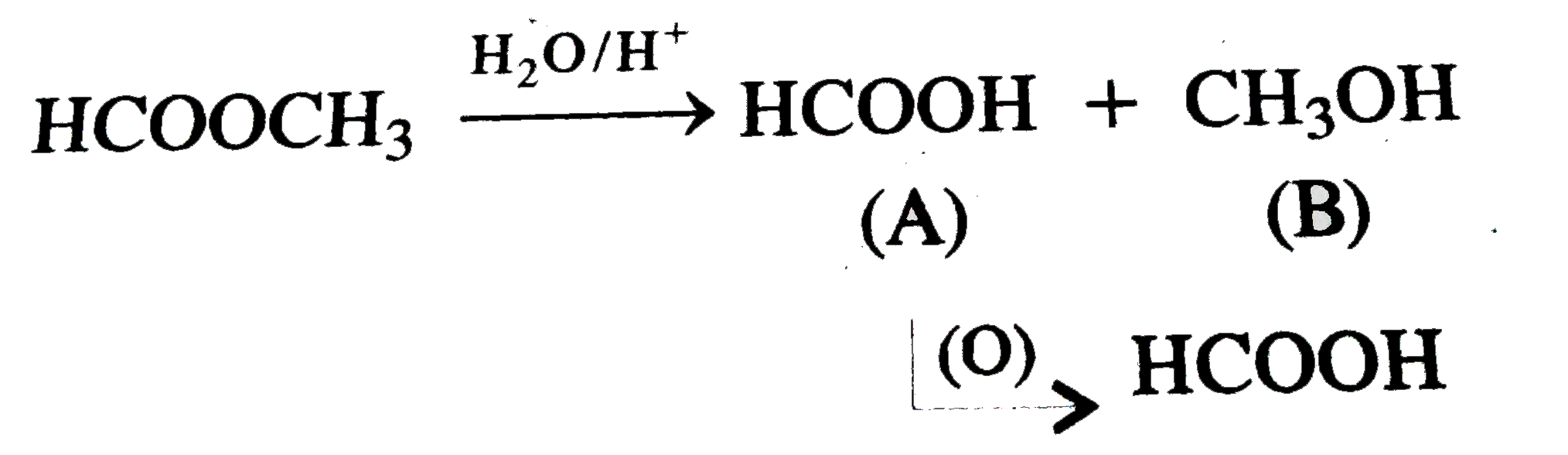 `HCOOH` REDUCES FEHLING solution |
|
| 28. |
Hydrolysis of an ester gives a carboxylic acid which on Kolbe's electrolysis yields ethane. The ester is |
|
Answer» ETHYL methonoate |
|
| 29. |
Hydrolysis of alkyl halide is an example for .............. |
| Answer» SOLUTION :NUCLEOPHILIC SUBSTITUTION | |
| 30. |
Hydrolysis of alkyl halides is an example for which type of reaction? Explain |
|
Answer» SOLUTION :Hydrolysis of alkyl halides is an example for nucleophilic substitution reactions. `CH_(3)Br overset("AQUEOUS OH^(ө))to CH_3OH + Br^(ө)` Hence , `OH^ө` is the incoming nucleophile or attacking species and `Br^ө` is the LEAVING GROUP. |
|
| 31. |
Hydrolysis of alkene. |
|
Answer» Solution :`H_(2)O` means `overset(+delta)(H) overset(-delta)(OH)`. Alkene reacts with `H_(2)SO_(4)`, an addition of `H_(2)O, -OH` (alcohol) is FORMED. This REACTION is addition of `H_(2)O` or dydrolysis of alkene or formation of alocohol from alkene. This reaction is electrophilic addition reaction. markonikov rule is applied. `underset("Ethene")(CH_(2)=CH_(2))+H_(2)O underset((H_(2)SO_(4)))overset(100^(@)C H^(+), Delta)rarr underset("Ethanol")(CH_(3)-CH_(2)OH)` `underset("Propene")(CH_(3)CH=CH_(2))+H_(2)O underset(H_(2)SO_(4))overset(373 K H^(+))rarr underset("Propane-2-ol")(CH_(3)-underset(OH)underset(|)(CH)-CH_(3))` `underset("2-Methyl prepene")(CH_(3)-underset(CH_(3))underset(|)(C)=CH_(2)+H_(2)O)underset(H_(2)SO_(4))overset(H^(+))rarr underset("2-Methyl prepane-2-ol")(CH_(3)-underset(CH_(3))underset(|)overset(OH)overset(|)(C)-CH_(3))` |
|
| 32. |
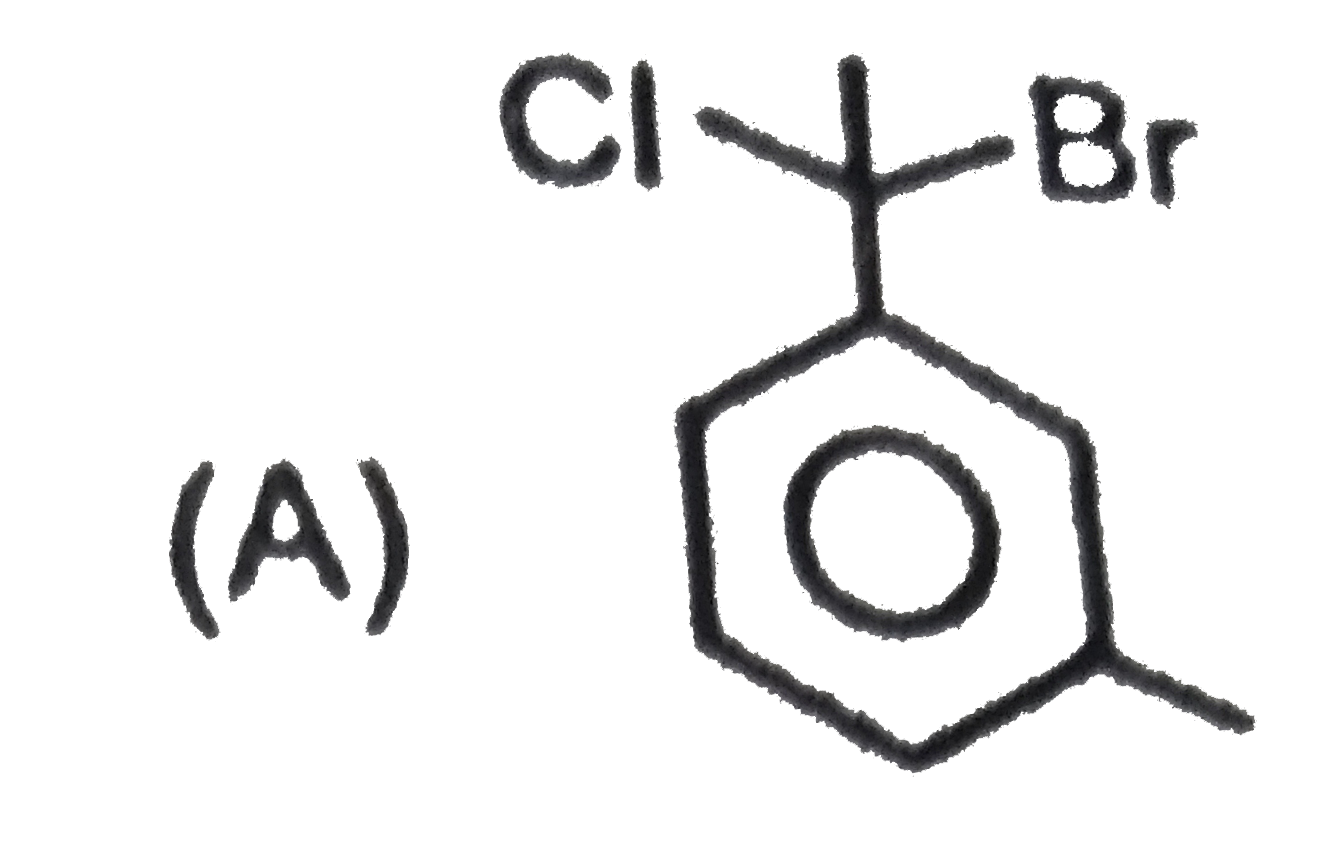
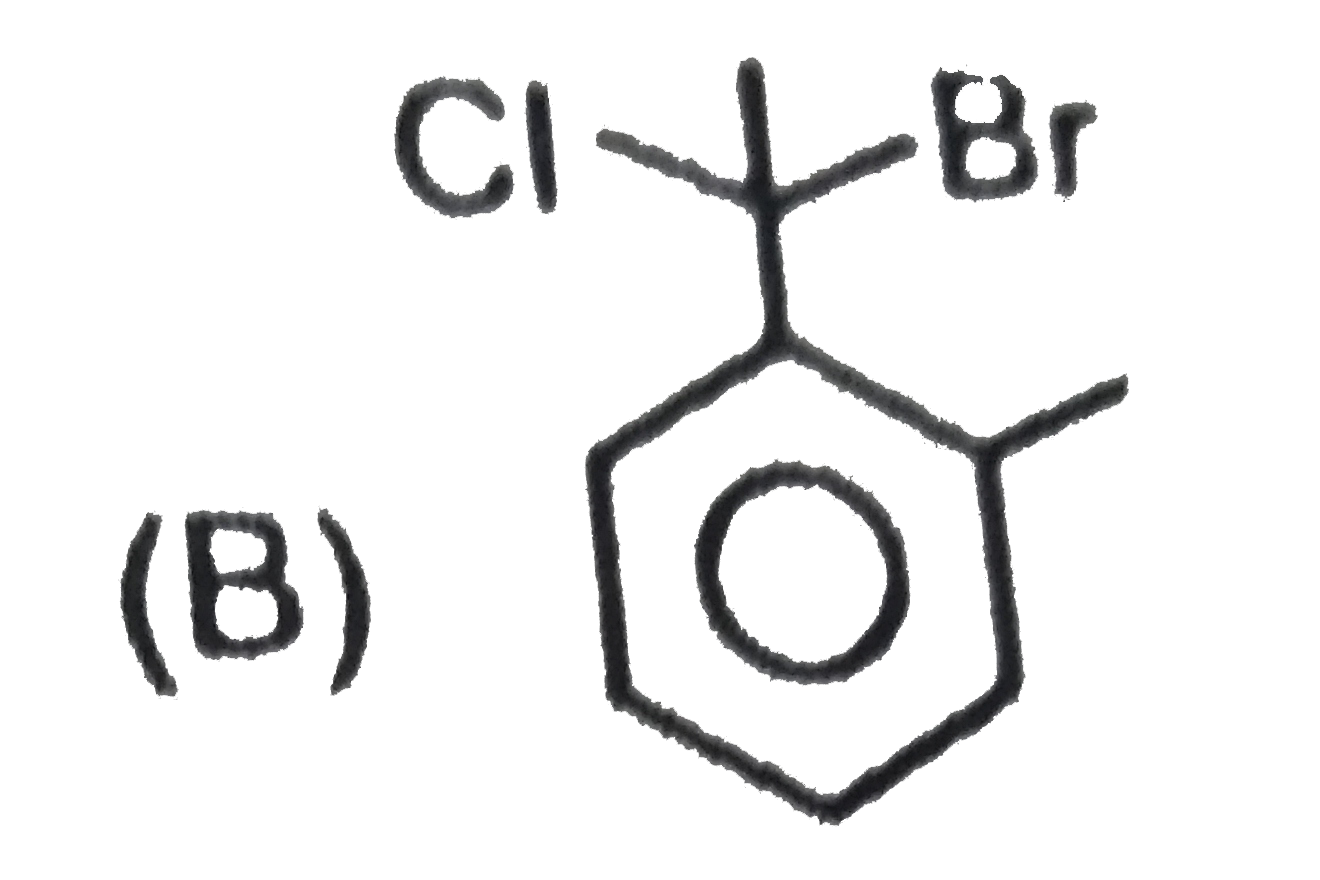
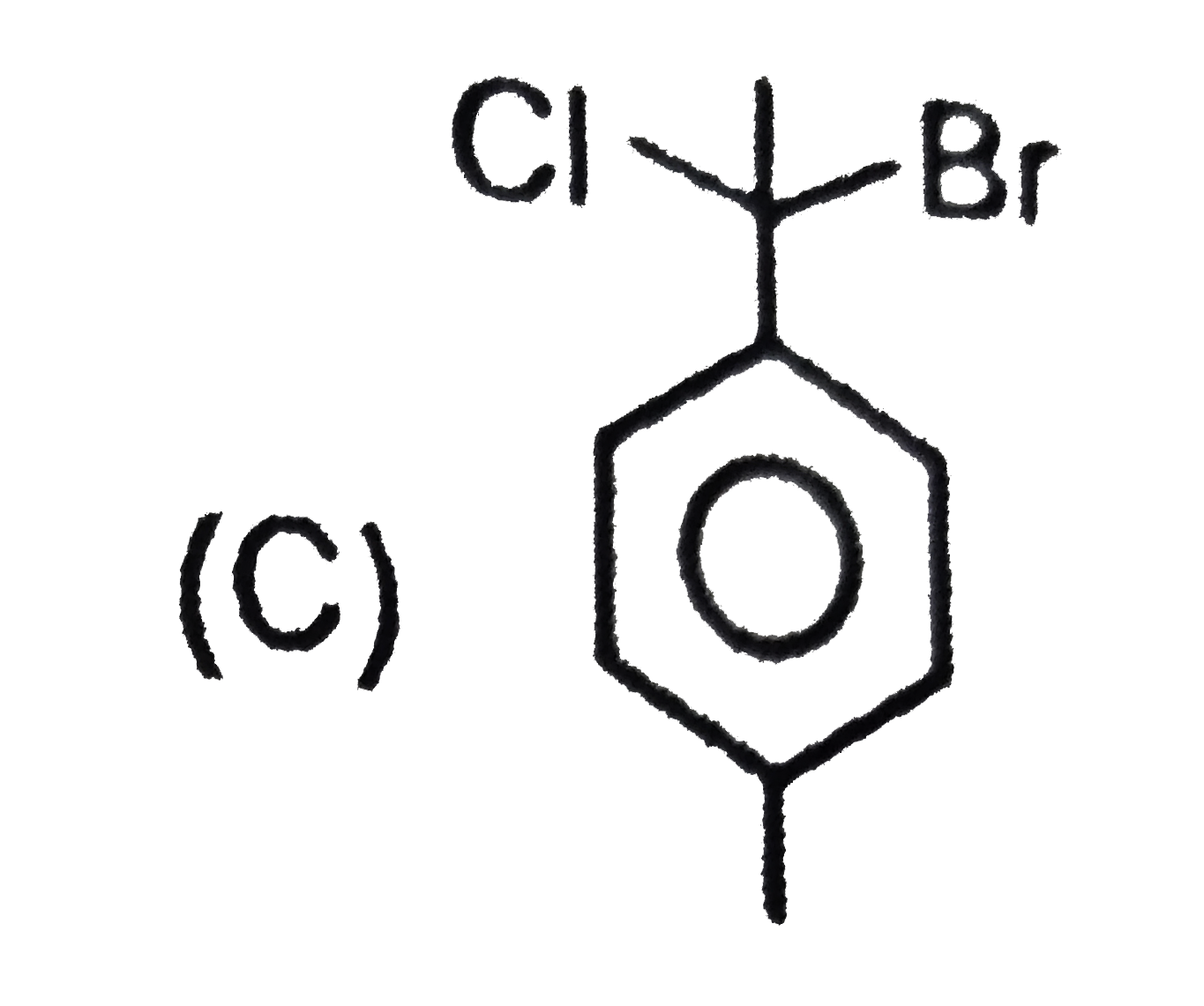
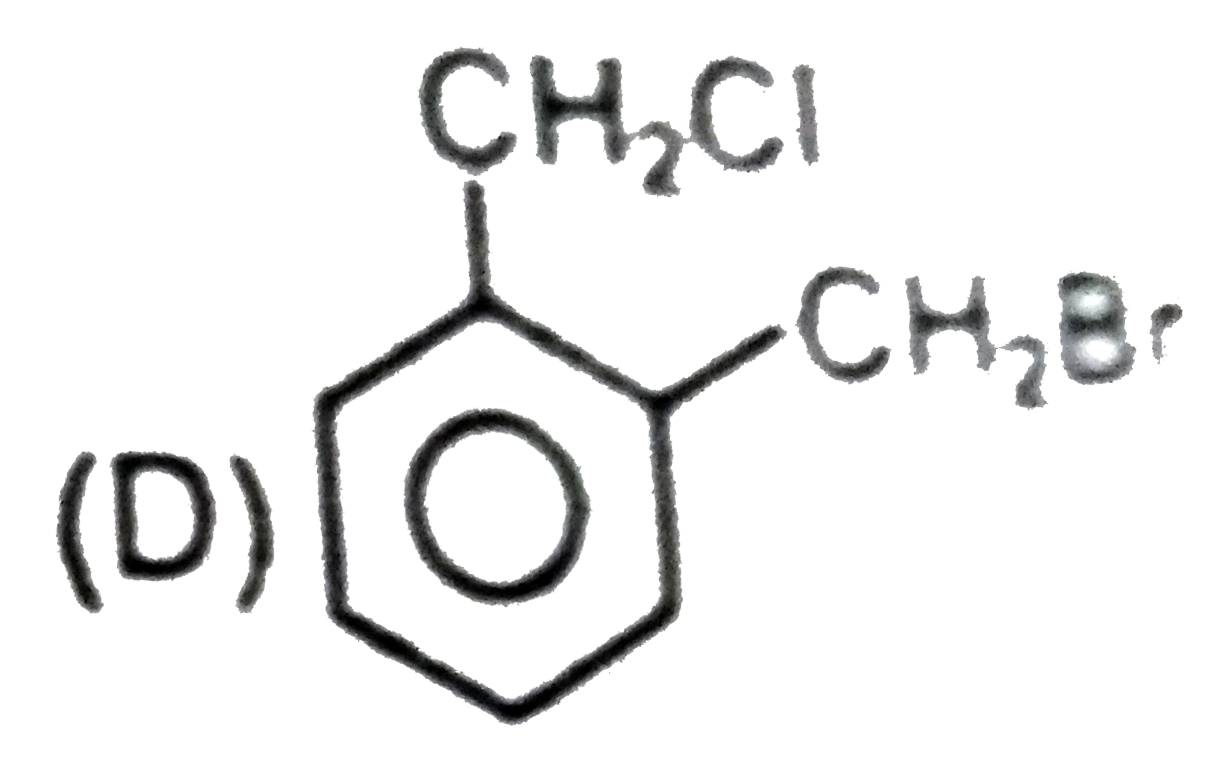
Hydrolysis of a compound C_(9)H_(10)ClBr (P) yields C_(9)H_(10)O(Q) (Q) gives positive haloform test ? Strong oxidation of (Q) yields a dibasic acid which gives only two mono-nitro derivative. What is the structure of (P) ? |
|
Answer»
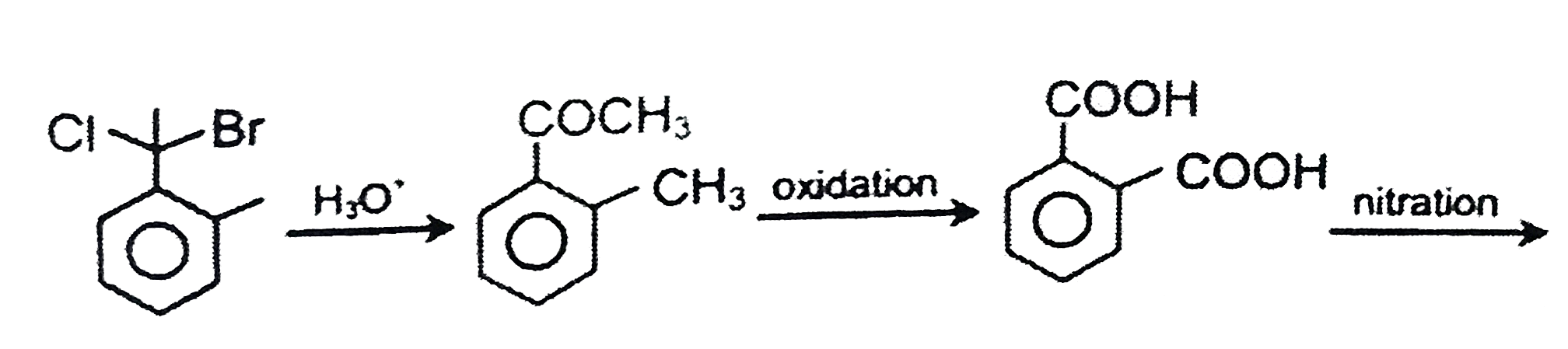
|
|
| 33. |
Hydrolysis constant for NH_4 Cl is 4xx 10^(-10). What is the dissociation constant of ammonium hydroxide ? |
| Answer» SOLUTION :` 2.5 XX 10^(-5)` | |
| 34. |
Hydrolysis constant of salt derived from strong acid and weak base is 2xx 10 ^(-5).The dissociation constant of the weak base is |
|
Answer» ` 5xx10 ^(-8) ` |
|
| 36. |
Hydrogne peroxide was discovered by ____________ |
|
Answer» Chadwick |
|
| 37. |
The hydrogenation of vegetable oil in the presence of nickel catalyst forms vanaspati ghee. Give reason. |
|
Answer» |
|
| 38. |
Hydrogenation of the adjoining compound in the presence of poisoned palladium catalyst gives. |
|
Answer» an OPTICALLY active compound |
|
| 39. |
Hydrogenation of C_(6)H_(5)CHOH - CHOH over Rh - Al_(2)O_(3) catalyst in methanol gives |
|
Answer» `C_(6)H_(5)CH_(2)COOH` |
|
| 40. |
Hydrogenation of benzoyl chloride in the presence of Pd//BaSO_(4) gives |
|
Answer» BENZYL alcohol |
|
| 41. |
Hydrogenation of benzoyl chloride in the presence of Pd and BaSO_(4) gives |
|
Answer» BENZYL alcohol |
|
| 42. |
Hydrogenation of benzoyl chloride in the presence of Pb on BaSO_(4) gives |
|
Answer» Benzyl ALCOHOL |
|
| 43. |
Hydrogenation of alkyne is |
|
Answer» ADDITION reaction |
|
| 44. |
Hydrogenation of alkenes and alkynes takes place in presence of certain catalysts. In sabatier-Senderen's reaction, the addition of hydrongen taken place in presence of nickel catalyst. Controlled hydrogenation of alkyne in presence of Lindlar's catalyst gives cis-alkene. Non terminal alkynes are reduced by Na or Li metal dissolved in liquid NH_(3). In this reaction trans alkenes are formed. Q. The product of the following reaction is |
|
Answer»
|
|
| 45. |
Hydrogenation of alkenes and alkynes takes place in presence of certain catalysts. In sabatier-Senderen's reaction, the addition of hydrongen taken place in presence of nickel catalyst. Controlled hydrogenation of alkyne in presence of Lindlar's catalyst gives cis-alkene. Non terminal alkynes are reduced by Na or Li metal dissolved in liquid NH_(3). In this reaction trans alkenes are formed. Q. In which of the following the reaction is most exothermic |
|
Answer»
|
|
| 46. |
Hydrogenation is done of hydrogen A of unsaturated hydrocarbon on addition of H_(2). Ozonolysis of A gives acetone, acetaldehyde and propane-1, 3-diol. Give the structure and name of X ? |
|
Answer» Solution :(i) On hydrogenation of A, 2 moler of `H_(2)` is added. Therefore in A, there are `2pi`-bond therefore in A there is 1 double bond and 1 triple bond. (ii) OZONOLYSIS of A gives three product. `underset("Acetone")overset((a))(CH_(3)COCH_(3))+underset("Acetaldehyde")overset((b))(CH_(3)CHO)+ overset((c))(CHOCH_(2)CHO)` No. of carbon `"3+2+3=8"` (III) From above PRODUCTS, A is diene and (a), (b) and (c) has double bonds reacts with X, STRUCTURE is as follows 2-methyl hepta-2, 5-diene. Formed product : `(H_(3)C-overset(CH_(3))overset(|)(C))/((a))=(CH-CH_(2)-CH)/((c))=(CH-CH_(3))/((b))` Hydrocarbon (A) |
|
| 47. |
Hydrogenation of adjoining compound in the presence of poisoned palladium catalyst gives |
|
Answer» An OPTICALLY active COMPOUND 
|
|
| 48. |
Hydrogen will not reduce heated |
| Answer» Answer :D | |
| 49. |
Hydrogen will not reduce.... |
|
Answer» heated CUPRIC oxide. |
|