

Saved Bookmarks
This section includes 7 InterviewSolutions, each offering curated multiple-choice questions to sharpen your Current Affairs knowledge and support exam preparation. Choose a topic below to get started.
| 1. |
In which one of the following the increase of presure favours the backward reaction? |
|
Answer» Formation of EQUILIBRIUM ammonia from `N_(2)(g) and H_(2)(g)` Hence, increases of pressure will favour forward reaction . (b) `2 HI (g) hArr H_(2) (g) + I_(2), n_(p) = n_(r). `Hence , presure has no effect . (c ) ` 2 SO_(2) (g) + O_(2) (g) hArr 2 SO_(3)(g), n_(p) ltn_(r).` Hence , increases of pressure will favour forward reaction . (d) `C(s)+ H_(2)O (g) hArr CO(g) + H_(2) (g) , n_(p) gt n_(r)` Hence, increase of pressure will favour BACKWARD reaction . (e) `3Fe (s) + 4H_(2)O (g) hArr Fe_(3)O_(4) (s) + 4 H_(2) (g) , n_(p) = n_(r) . ` Hence , pressure has no erffect. |
|
| 2. |
In which one of the following reactions, the yield of the products decreases by in creasing the pressure ? |
|
Answer» ` 2 SO_(2) (G) + O_(2) hArr 2 SO_(3) (g)` |
|
| 3. |
In which one of the following species the central atom has the type of hybridisation which is not the same as that present in the other three ? |
|
Answer» `PCl_(5)` `SbCl_(5)^(2-) = sp^(3) d^(2)` Thus OPTION (d) is correct. |
|
| 4. |
In which one of the following reactions, the yield of the product will be maximum ? 2 A + B hArr C, K = 10^(-5), C + 2 D hArr E, K = 10^(5) , D + 3 B hArr f, K = 10^(3). |
| Answer» Solution :HIGHER the value of EQUILIBRIUM CONSTANT K, greater is the yield of PRODUCTS. HENCE, yield of E will be maximum. | |
| 5. |
In which one of the following reactions H_(2) is liberated? |
|
Answer» `NaH+H_(2)O to` |
|
| 6. |
In which one of the following pairs, the two species are both isoelectronic and isotopic ? (Atomic number : Ca = 20, Ar = 18, K = 19, Mg = 12, Fe = 26, Na= 11) |
|
Answer» `.^(40)Ca^(2+) and .^(40)Ar` |
|
| 7. |
In whichone of thefollowing pairsthe twospeciesare bothisoelectronic andisotopic (atomicnumberCa = 2 , Ar = 18 , K = 19 mg = 12 ,fe = 26 , Na=11 ) |
|
Answer» `.^(40)Ca^(2+)` and `.^(40) Ar` |
|
| 8. |
In which one of the following pairs of experimental observations and phenomemnon does the experimental observation correctly account for phenomenon does the experimental observation correctly account for phenomenon |
|
Answer» `{:("Experimental OBSERVATION","Phenomenon"),("X-ray SPECTRA","Charge on the nucleus"):}` |
|
| 9. |
Which one of the following bond is stronger ? |
|
Answer» `O_(2)` |
|
| 10. |
In which one of the following does the given amount of chlorine gas exert the least pressure in a vessel of capacity of 1 dm^(3) at 273 K ? |
|
Answer» 0.0355 g (B) `0.71 g Cl_(2) = (0.71)/(71) =` mole `= 10^(-2)` mole (C) `6.023 xx 10^(21)` MOLECULES `= (6.023 xx 10^(21))/(6.023 xx 10^(23)) = 0.01` mole (D) 0.02 mole |
|
| 11. |
In which one, alI the bonds are not equal ? |
|
Answer» `BF_(4)^(-)` |
|
| 12. |
In which one of the following cases mean free path increases |
|
Answer» Helium MOLECULES in a container are REPLACED by OXYGEN molecules |
|
| 13. |
In which of the followinng compounds the carbon marked with asterisk is expected to have greatest positive charge? |
|
Answer» `overset(***)(C)H_(3)-CH_(2)-Cl` |
|
| 14. |
In which of the followinng functional group isomerism is not possible? |
|
Answer» ALCOHOLS |
|
| 15. |
In which of the following Tyndall effect is not observed? |
|
Answer» Suspensions |
|
| 16. |
In which of the following, the solubility of AgCl will be maximum? |
|
Answer» `0.1 M AgNO_3` |
|
| 17. |
In whichof the followingtheratioof thesizesof cation toanionis smallest? |
|
Answer» `NACL` |
|
| 19. |
In which of the following the oxidation state of chlorine is +5? |
|
Answer» `HClO_(4)` |
|
| 20. |
In which of the following the metal is getting oxidised ? |
|
Answer» `CuO_((s))+H_(2(G))rarrCu_((s))+H_(2)O_((g))` |
|
| 21. |
In which of the following compounds is hydrogen bonding strongest in liquid phase ? |
| Answer» Answer :A | |
| 22. |
In which of the following , the hydrogen bonding is strongest in the liguid phase? |
| Answer» Answer :A | |
| 23. |
In which of the following the hybridisation of carbon is more than one? |
|
Answer» `CH_(3)CH_(2)CH_(2)CH= CHCH_(3)` |
|
| 24. |
In which of the following the hybrid orbitals of the central atom have the same s-character- |
|
Answer» `CH_(4)` |
|
| 25. |
In which of the following, the group attached to the benzene ring shows + R effect ? |
|
Answer» |
|
| 26. |
Inwhich of the following , the double bond consists of both pi bonds |
|
Answer» `O_(2)` |
|
| 27. |
In which of the following the central atom has two lone pairs of electrons ? |
|
Answer» `SF_(4)` 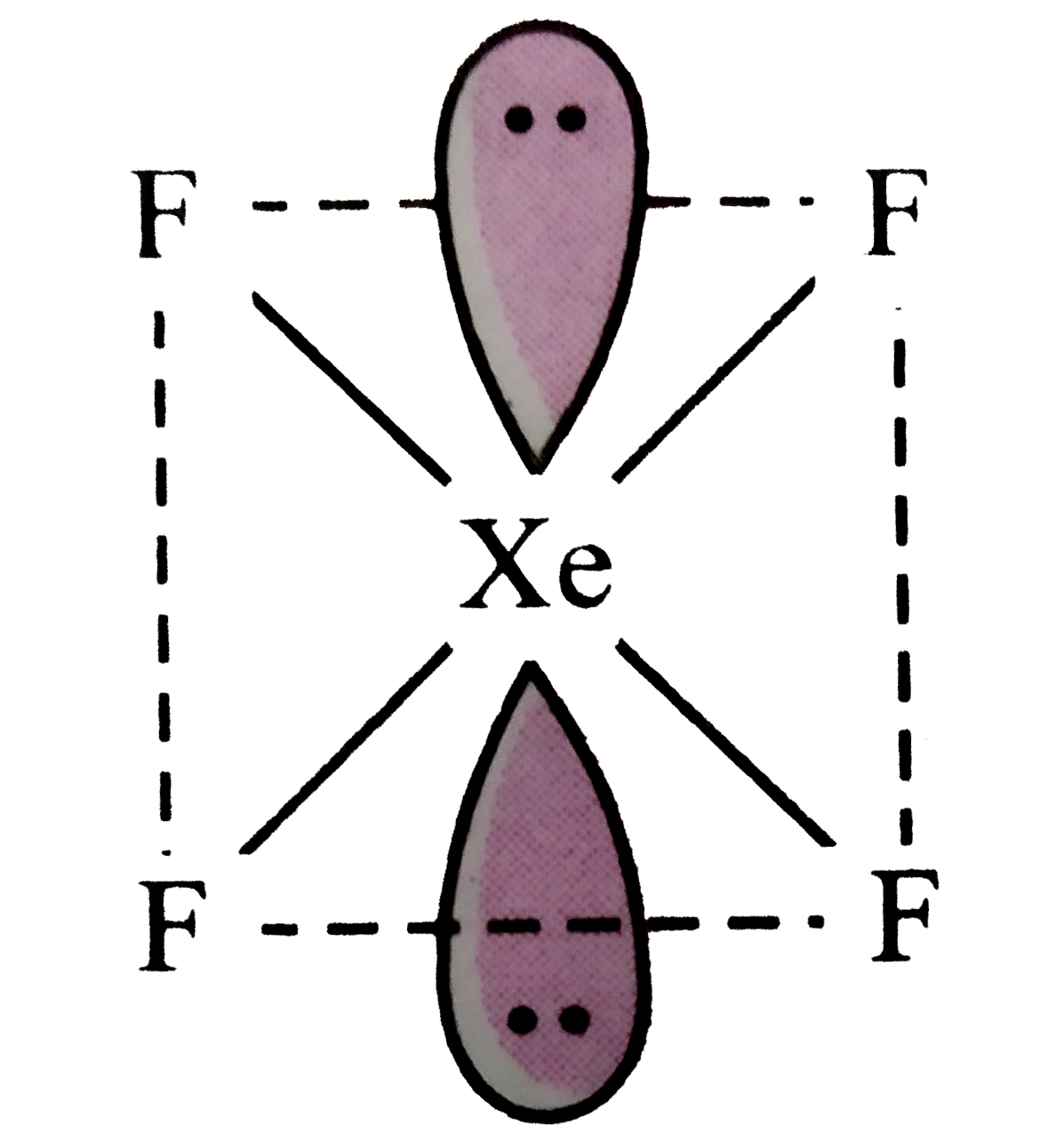
|
|
| 28. |
In whichof the following the central atom is not in the sp^(3) hybridised state? |
|
Answer» BORON in solid layered BORIC ACID |
|
| 29. |
In which of the following the central atom does not usesp^(3) - hydrid orbitals in its bonding. |
|
Answer» `BeF_(3)^(-)` |
|
| 30. |
In which of the following the C - O bonds are equal length |
|
Answer» `CH_(3) COO^(-)` |
|
| 31. |
In which of the following the bond energy between carbon atoms is highest |
|
Answer» `CH_(3)-CH_(3)` |
|
| 32. |
In which of the following systems the dispersed phase and dispersion medium are both solid |
|
Answer» Foam |
|
| 33. |
In which of the following substrates, rate of Benzoin condensation will be maximum? |
|
Answer»
 Benzoin condensation is due to STABILITY of intermediate (III) when negative charge on C is extensively delocalised in benzenne ring , NITRO and -`C^(@)` N group. INALL other cases, such dispersal is nor extensively possible . On theother hand, `NO_(2)-`is also creating a positive charge center on CARBONYL carbon, making it more susceptible to nucleophilic attack of `CN^(-)`. |
|
| 34. |
In which of the following substance will hydrogen bond be strongest ? |
| Answer» SOLUTION :HCl, HI and ` H_(2)S` do not FORM H-form H-bonds. Only `H_(2)O` forms H-bonds . | |
| 35. |
In which of the following substances will hydrogen bond be strongest ? |
|
Answer» HCI In HCI, HJ and `H_(2)`S do not FORM H-BONDS. But `H_(2)O` forms hydrogen bonds. On `H_(2) O ` molecule forms FOUR H-bonding . 
|
|
| 36. |
In which of the following substance, hydrogen bonding is absent ? |
|
Answer» HF |
|
| 37. |
In which of the following structures coordination number for cations and anions in the packed structure will be same ? |
|
Answer» `Cl^(-)` ion from fcc LATTICE and `Na^(+)` ions occupy all octahedral voids of the unit CELL. |
|
| 38. |
In which of the following states, the particle size would be greater than 300 m mu |
|
Answer» Suspension |
|
| 39. |
In which of the following states of matter the average distance between the molecules lies between 10^(-5) cm " to " 10^(-7) cm? |
|
Answer» solide |
|
| 40. |
In which of the following species the inter atomic bond angle is 109^(@).28? |
|
Answer» `NH_(3)(BF_(3))` |
|
| 41. |
In which of the following species the inter atomic bond angle is 109^@ .28? |
|
Answer» `NH_3 (BF_3)` |
|
| 42. |
In which of the following species is the underlined carbon having sp^3hybridisation ? |
|
Answer» `CH_(3)ul(C )OOH` |
|
| 43. |
In which of the following species hyperconjugation in possible? |
|
Answer» `CH_(3)-overset(-)(C)H_(2)` |
|
| 44. |
In which of the following solvents should KCI be soluble at 25^@ C ?(D = Dielectric constant value) |
|
Answer» `C_(6)H_(6)[D=0]` |
|
| 45. |
In which of the following solvents should KCl be soluble at 25^(@)C ? (D=Dielectric constnat value) |
|
Answer» `C_(6)H_(6)[D=0]` |
|
| 46. |
In which of the following solvents is silver chloride most soluble ? |
|
Answer» `0.1"mol dm"^(-3)AgNO_(3)" SOLUTION"` Thus, AgCl is most soluble in aqueous ammonia. |
|
| 47. |
In which of the following solvent soap will act as colloid ? |
| Answer» Answer :A | |
| 48. |
In which of the following solvent is silver chloride most soluble ? |
|
Answer» 0.1 mol `dm^(-3) AgNO_(3)` SOLUTION |
|
| 49. |
In Which of the following situations the heavier of the two particles have smaller de Broglie wavelength ? The two particles |
|
Answer» MOVE with same speed |
|
| 50. |
In which of the following sets, elements have nearly same atomic radii? |
| Answer» Answer :C | |


