Saved Bookmarks
This section includes 7 InterviewSolutions, each offering curated multiple-choice questions to sharpen your Current Affairs knowledge and support exam preparation. Choose a topic below to get started.
| 1. |
What sorts of informations can you draw form the following reaction : (CN)_(2)(g)+2OH^(-)(aq)rarrCN^(-)(aq)+CN^(-)(aq)rarrCN^(-)(aq)+CN^(-)(aq)+CNO^(-)(aq)+H_(2)O(l) |
|
Answer» Solution :Let x be the O.N of C `therefore` O.N of c in cayanogen `(cn)_(2)=2(x-3)=0 or x=+3` O.N of C in cyanide ion `CN^(-)=x-3=-1 or x =+2` O.N of C in cyantate ion CND = x-3 -2 =- 1 or x=-4 The following four information can be drawn from the above reaction (i) the reaction in volved decompostion of cyanogen `(CN)_(2)` to +2 in `CN^(-)` ion and INCREASES from +3 in `(CN)_(2)` to +4 is `CNO^(-)` ion of C thus cyangoen is simultaneously reduced to caynide ion andd oxidised to cyantate ion (III) it is an example of a redox reaction and a disportination in particular (IV) cyanogen is a pseudohalogen (behave like halogens) while cyanide ions is a peseudhalide ion (behave like halide ion) |
|
| 2. |
When 50 grams of sulphur was burnt in air, 4% of the impure residue is left over. Calculate the volume of air required at STP containing 21% of oxygen by volume. |
|
Answer» Solution :Weight of sample of SULPHUR taken = 50 g PERCENTANGE of impurity `=4%` Weight of impurity in sample `=(4xx50)/(100)=2gr` Weight of sulphur `=50-2=40" grams"` Combustion of sulphur gives sulphurdioxide `S+O_(2)rarrSO_(2)` `"1 mole of S"-="1 mole of"O_(2)` `"32 grams of S"="22.4 L of "O_(2)"at STP"` `"48 grams of S"=?` Volume of oxygen required at STP `=(48)/(32)xx22.4=33.6L` `"21 L of "O_(2)" is present in 100 L of air"` `"33.6 of "O_(2)" present in ?"` `"Volume of air required at STP"=(33.6)/(21)xx100=160L` |
|
| 3. |
Which of the following compound can give test with Tollen's reagent and yellow precipitate with iodinein NaOH ? |
|
Answer» `CH_(2)=O` |
|
| 4. |
Write note on Williamson's Synthesis |
|
Answer» Solution :Williamson.s SYNTHESIS: Haloalkanes when boiled with ·SODIUM alkoxide GIVES the corresponding ether. `underset("Bromo ETHANE ")(CH_(3)-CH_(2))Br+underset("Sodium ethoxide ")(CH_(3)CH_(2)ONa) rarr CH_(3)-CH_(2)-underset("DIETHYL ether ")O-CH_(2)-CH_(3)+NaBr` |
|
| 5. |
Which of the following compounds contain(s) no covalent bond(s) ?KCl, PH_3 , O_2 , B_2H_6, H_2SO_4 |
|
Answer» `KCL, B_2H_6` |
|
| 6. |
Which of the following statement is incorrect |
|
Answer» Liquid having high viscosity flows quickly |
|
| 7. |
Which is the structural formula of isobutyl group? |
|
Answer» `CH_(3)- CH_(3)- underset(underset(CH_(3))(|))(CH)-` |
|
| 8. |
Which one of the following will undergo meta substitution on mono chlorination? |
|
Answer» CHLORO benzene |
|
| 9. |
Which one of the halogn is prepared by only electrolysis method |
| Answer» Answer :C | |
| 10. |
Write the formulae of the first 5 members of homologous series starting with the underlined CH_3COCH_3 |
|
Answer» |
|
| 11. |
Which statement is true about Becl, in its vapour state ? |
|
Answer» Each Be is LINKED with two Cl 
|
|
| 12. |
When Zn metal is added to CuSO_(4) solution, Cu is precipitated, it is due to |
|
Answer» Reduction of Zn |
|
| 13. |
Which of the following is not hydrolysed ? |
|
Answer» `AsCl_(3)` |
|
| 14. |
Which of the following conclusions could not be derived from Rutherford’s a-particle scattering experiement ? |
|
Answer» Most of the space in the atom is empty. |
|
| 15. |
What is free expansion ? |
|
Answer» <P> Solution :Expansion of a GAS in vacuum `(p_(ex) = 0)` is called FREE expansion. |
|
| 16. |
Which of the following alcohols is the least soluble in water? |
|
Answer» Ethanol |
|
| 17. |
Which of the following statement is wrong |
|
Answer» The product of uncertainty in postion and uncertainty in moments is greater than or equal to `h/(2pi)` Heisenbergs uncertianity principle |
|
| 18. |
When the pressure of 2 litres of O_2 gas isdoubled and its temperature is also doubled from 300K to 600K, the final volume of the gas is |
|
Answer» 4 lit |
|
| 19. |
The value of ........ is less for D_2Ocompared to that of H_2O |
|
Answer» density `(GM^(-1))` at `20^@C` |
|
| 20. |
Which of the following has the maximum mass (a) 20 g of phosphorus (b) 5 moles of water (c) 12 xx 10^(24) atoms of hydrogen ? |
|
Answer» (b) 1 gram mole of WATER = 18.0 g 5 gram molesmoles water `= 18.0 xx 5 = 90.0 g` (C) `6.022 xx 10^(23)`atoms of hydrogen = 1.0 g `12.0 xx 10^(24)`atoms of hydrogen `= (12.0 xx10^(24))/(6.022xx10^(23))=19.93g` 5 moles of water have MAXIMUM mass = 90.0 g. |
|
| 21. |
The raw materials used in the manufacture of Na_2CO_3 by Solvay process are: |
| Answer» SOLUTION :The RAW MATERIALS are NACL, `CaCO_3and NH_3` . | |
| 22. |
Turpentine oil can be purified by: |
|
Answer» STEAM DISTILLATION |
|
| 23. |
What is working standard? |
| Answer» Solution :At the time of experiment, the solution with REQUIRED concentration is PREPARED by DILUTING the stock solution. Is diluted solution is usually called working STANDARD | |
| 24. |
Which of the following statements is not correct for a nucleophile ? |
|
Answer» AMMONIA is a nuelcophile |
|
| 25. |
Which species does not exhibit a plane of symmertry ? |
|
Answer»

|
|
| 26. |
What is the molality of a semimolar NaCl solution if the density of the solution is 1.16 g cm^(-3)? |
|
Answer» |
|
| 27. |
Which of the following are reversible reactions ? |
|
Answer» ` AgNO_(3) (AQ) + NaCl (aq) to` |
|
| 28. |
What is energy of Hydrogen bond ? |
| Answer» SOLUTION :ENERGY of H - BOND is 10 to 100 kJ `MOL^(-1)`. | |
| 29. |
Which of the following acid radical does not produce white ppt. with Pb(OAc)_(2) solution? |
| Answer» Answer :D | |
| 31. |
When a certain metal was irradiated with a light of frequency 3.2 xx 10^(16) Hz, the photoelectrons had twice the kinetic energy as emitted when the same was irradiated with light of frequency 2.0 xx 10^(16)Hz. Calculate the threshold frequency (v_(0)) of the metal. |
|
Answer» Solution :Kinetic energy of photoelectrons emitted `= hv - hv_(0) = h (v - v_(0))` In 1ST case, `(K.E.)_(1) = h (3.2 XX 10^(16) - v_(0))` In 2ND case, `(K.E.)_(2) = h (2.0 xx 10^(16) - v_(0))` But `(K.E.)_(1) = 2 (K.E.)_(2) ("Given") :. h (3.2 xx 10^(16) - v_(0)) = 2h (2.0 xx 10^(16) - v_(0))` or `v_(0) = 4 xx 10^(16) - 3.2 xx 10^(16) = 0.8 xx 10^(16) = 8 xx 10^(15) HZ` |
|
| 32. |
What happens when propene undergoes ozonolysis? |
Answer» SOLUTION :When PROPENE is added to ozone MOLECULE gives propene ozonide. Further on HYDROLYSIS of ozonide by ` H_(2) `O/Zn gives Acetaldehyde and formaldehyde. 
|
|
| 33. |
What happens when a borax solution is acidified ? Write a balanced equation for the reaction. |
| Answer» SOLUTION :`Na_2 B_4 O_7 + 2HCL + 5 H_2 O to 2NaCl + 4H_3 BO_3` | |
| 34. |
What will be the pressure exerted by a mixture of 3.2 g of methane and 4.4 g of carbon dioxide contained in a 9 dm^(3) flask at 27^(@)C ? |
|
Answer» Solution :Calculation of Partial Pressure : Methane `(CH_(4))=3.2` gm Molecular mass of methane = 16 g `mol^(-1)` MOLE of `CH_(4)=(3.2)/(16)=0.2 = n` `V=9 dm^(3)=9xx10^(-3)m^(-3)` `T=(27+273)=300K` `R=8.314 p_(a)m^(3)K^(-1)mol^(-1)` If partial pressure of methane is `p_(SH_(4))` then, `p_(CH_(4))=(n)/(V)RT` `= ((3.2 mol)(8.314 p_(a)m^(3)K^(-1)mol^(-1))(300 K))/(16xx9xx10^(-3)m^(3))` `= 55.43xx10^(3)p_(a)=5.543xx10^(4)p_(a)` Calculation of Partial Pressure of `CO_(2)` : Weight of `CO_(2)(m)=4.4 g` Molecular mass of `CO_(2)=12+2(16)=44g mol^(-1)` Mole of `CO_(2)(n)=(4.4g)/(44 g mol^(-1))=0.1` mol If Partial Pressure of `CO_(2)` is `p_(CO_(2))` then, `p_(CO_(2))=(n)/(V)RT` `= ((0.1 mol)(8.314 p_(a)m^(3)K^(-1)mol^(-1))(300 K))/(9xx10^(-3)m^(3))` `= 27.713xx10^(3)p_(a)=2.7713xx10^(4)p_(a)` `p_("TOTAL")=(p_(CO_(2))+p_(CH_(4)))` `= (2.7713xx10^(4)+5.543xx10^(4))p_(a)` `= 8.314xx10^(4)p_(a)` OR `p_("total")=(p_(CH_(4))+p_(CO_(2)))` `= ((0.2+0.1)(8.314 p_(a)m^(3)K^(-1)mol^(-1))(300K))/(9xx10^(-3)m^(3))` `= 8.314xx10^(4)p_(a)` |
|
| 35. |
Which of the following gases are heavier than air ? |
|
Answer» Argon |
|
| 36. |
Which of the following statement is wrong about Lother - Meyer's plot between atomic volume against atomic weight ? |
|
Answer» The most strongly electropositive ALKALI METALS occupy packs on the curve. |
|
| 37. |
What is Pneumoconiosis ? How does it our ? |
| Answer» SOLUTION :PNEUMOCONIOSIS is a disease of lungs such as LUNG cancer, bronchial ASTHMA, chronic bronchitis, etc. It is caused by small sized PARTICULATES which enter into lung through nose and provide a large surface area for adsorption of carcinogenic compounds such as polynuclear hydrocarbons, asbestos, etc | |
| 38. |
What is the formula of a compound in which the element Y forms ccp lattice and atoms X occupy 1/3rd of tetrahedral voids. |
|
Answer» Then, TETRAHEDRAL voids = 2n Atoms X present in the tetrahedral voids=`1/3xx2n ="2n"/3` `THEREFORE` Ratio of X:Y =`"2n"/3:n=2/3:1=2:3` Hence, the FORMULA is `X_2Y_3` |
|
| 39. |
What is critical temperature ? |
| Answer» Solution : ..What DENSITY of LIQUID and vapours BECOMES the same the clear BOUNDARY between liquid and vapours disappears. This temperature is called critical temperature... | |
| 40. |
What is Aromatic ? Explain with suitable examples. |
|
Answer» Solution :Benzene was considered as parent .aromatic. compound. Now the name is applied to all the ring SYSTEM whether or not having benzene ring, possessing following characteristics. (a) Requirements for aromatic character in compound : (i) Compound must havr cyclic (ring) structure. (ii) Cyclic compound must have all atoms in one planer structure. (iii) COMPLETE delocalisation of the `pi` electronsin the ring. (iv) Presence of `(4n+2)pi` electrons in the rinf where .n. is an inetger (n=0, 1, 2,...). This is often referred to as Huckel Rule. (b) Huckel.s rule for aromaticity : If the number of electrons in planar cyclic compound equals to (4n+2), then these compounds possess aromatic PROPERTIES, (aromaticity) where n = number of cyclic structures, (4n+2) = total delocalized ELECTRON of atoms present in aromatic ring). (c) Aromatic hydrocarbon compounds : (i) Benzene is aromatic in nature. Number of rings in benzene = n =1 NUmber of double bonds in benzene = 3 so, number of `pi2(p)` electrons = 6 `therefore` According to Huckel rule, if (4n+2) `pi` electrons are present in structure then it is considered as aromatic. So for benzene , n=1 and (4n+2) = 4(1) + 2 = 6, so benzen obeys Huckel rules and benzene is aromatic in nature and it possess aromatic characteristics.  (ii) Cyclopentadienyl anion aromatic in nature. According to Huckel rule, n = 1 and hence (4n+2) = 6 In cyclopentadienail anion two double bond have `2 xx 2 = 4pi` + two lone `pi` electrons, so it is aromatic in nature.  (iii) Cycloheptatrienyl cation is aromatic in nature. Number of ring = n = 1 `therefore (4n+2) = 6`  In this compound three double bonds are present, so no. of `pi` electrons `= (3 xx 2) = 6`. So it follows Huckel rule, so cycloheptatriene, n = 1(4n+2)=6, cation is aromatic in nature. It possess positive charge `sp^(2)` carbon so it also possess planarity. (iv) Nepthalene is aromatic in nature.  Number of ring = n= 2 It having five double bonds so no. of `pi` electrons `= (5 xx 2) = 10` electrons Napthalene follows Huckel rules and so it is aromatic innature. (v) Anthrecene and Phenanathrene are aromatic compounds. 
|
|
| 41. |
Which is the correct order of electron gain enthalpy ? |
|
Answer» `N lt O lt Cl lt AL` |
|
| 42. |
Which of the following is the major product for the given reaction ? |
|
Answer» 3-bromo-2-methylpentane |
|
| 43. |
Which of the following pairs has both members from the same group of the periodic table? |
|
Answer» Mg-Ba |
|
| 44. |
What is the trend of formation of ionic compound in alkaline earth metals? |
|
Answer» INCREASES down the group |
|
| 45. |
The value of Delta H and DeltaS or a reaction are respectively 30 kJ mol^(-1) and 100 KJ^(-1)mol^(-1). Then the temperature above which the reaction will become spontaneous is |
|
Answer» SOLUTION :`DeltaG=DeltaH-TDeltaS` At 300K, `DeltaG=30000Jmol^(-1)-300Kxx100KJ^(-1)mol^(-1)` `DeltaG=0` Above 300K: `DeltaG` will be negative and reaction becomes SPONTANEOUS. |
|
| 46. |
What is the shape of BF_(3)andNH_(3) |
| Answer» Solution :Shape of `BF_(3)` is TRIGONAL planer and `NH_(3)` is PYRAMIDAL. | |
| 47. |
Write the resonating structures for the following molecules. CO_(2) |
Answer» SOLUTION :
|
|
| 48. |
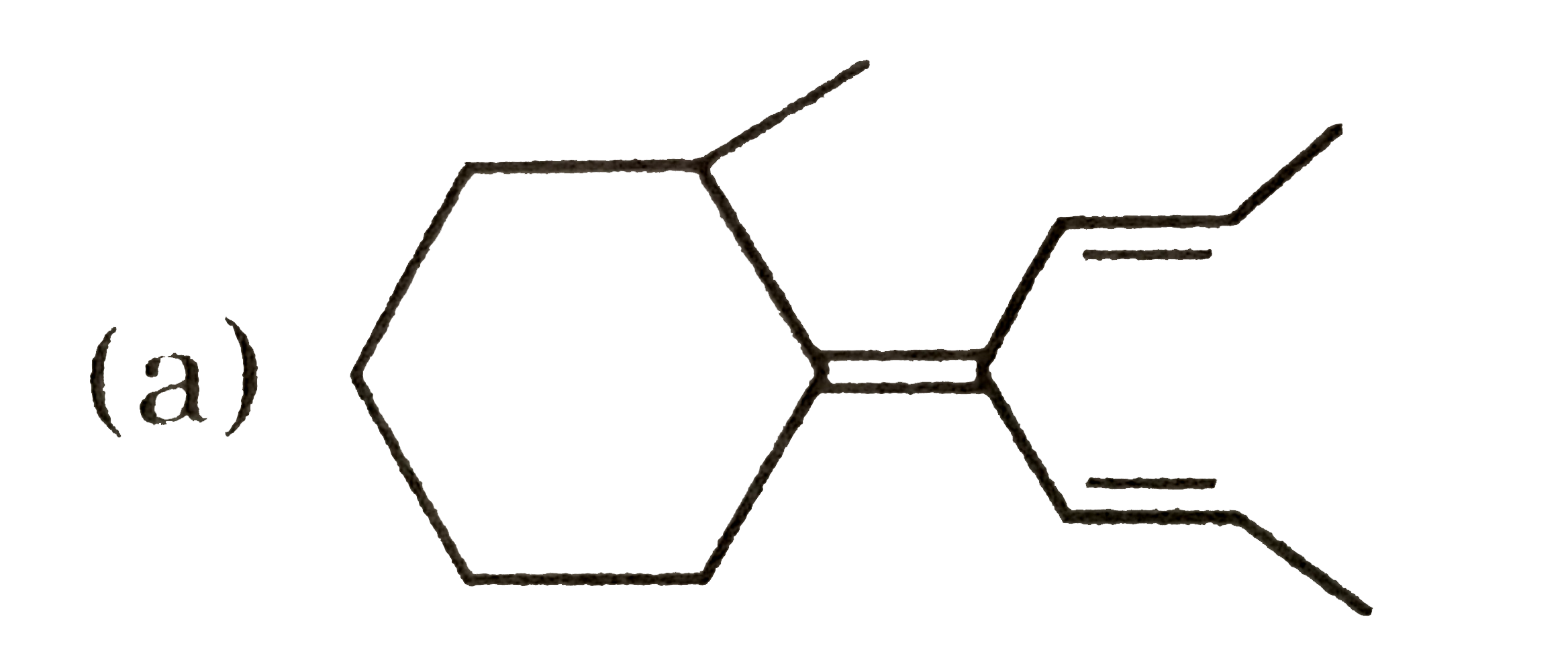
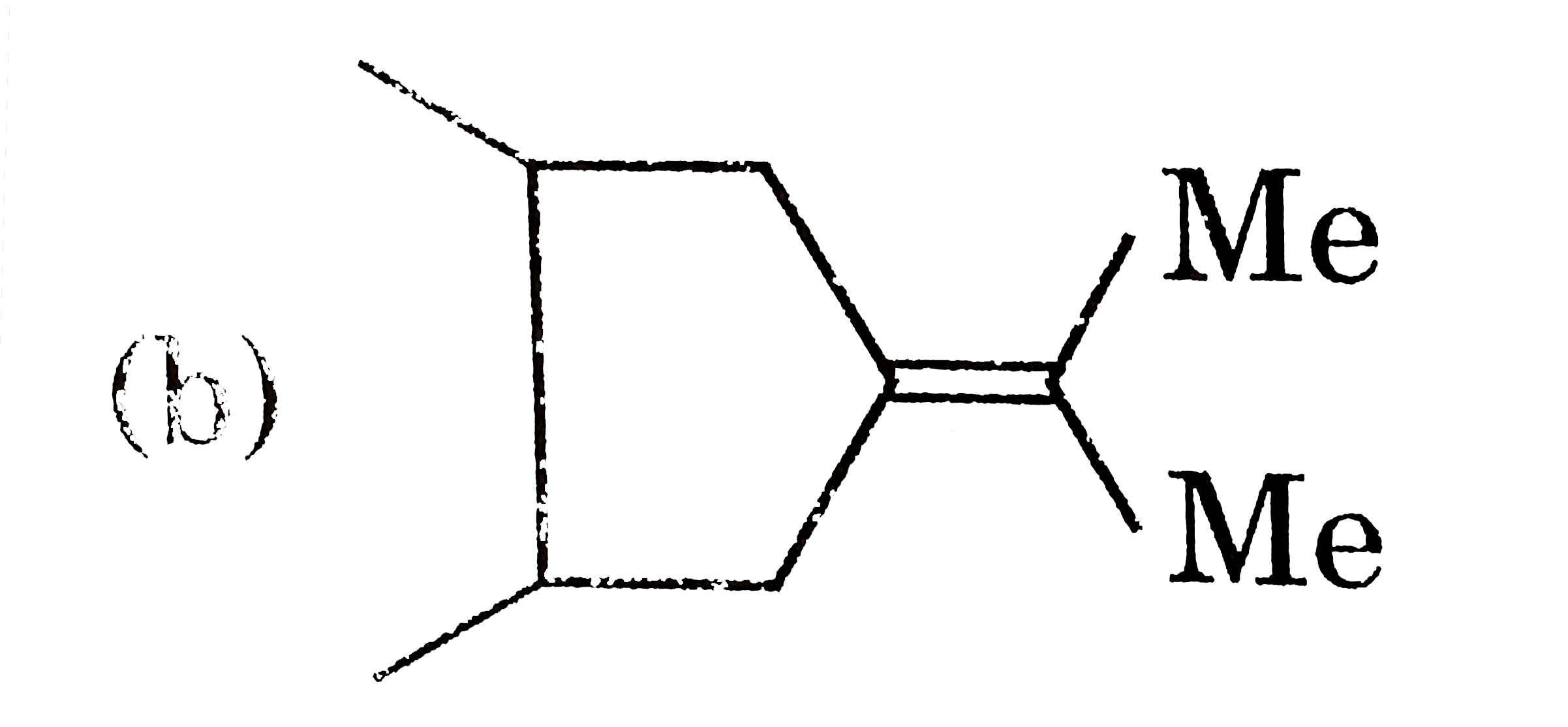
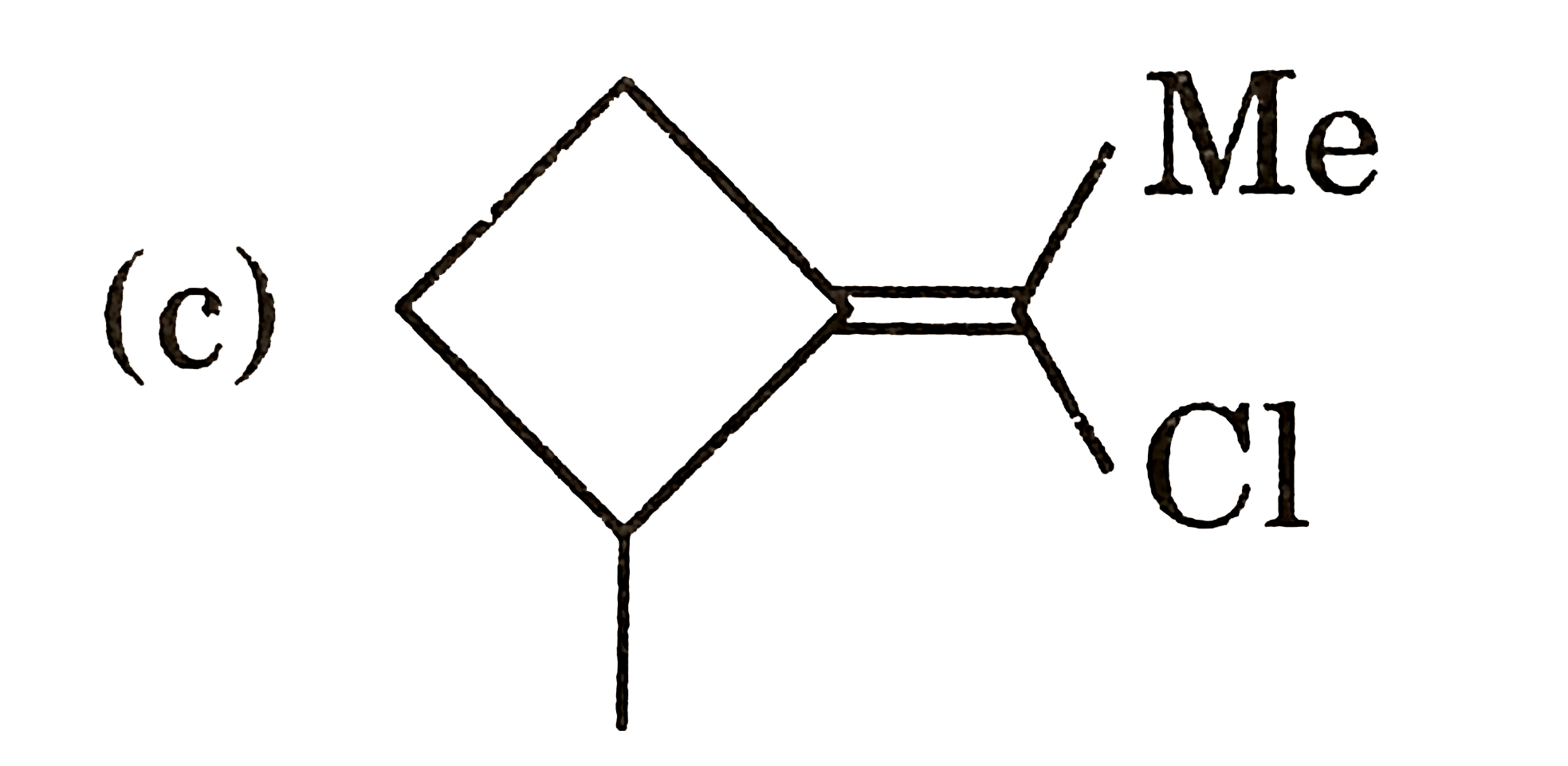
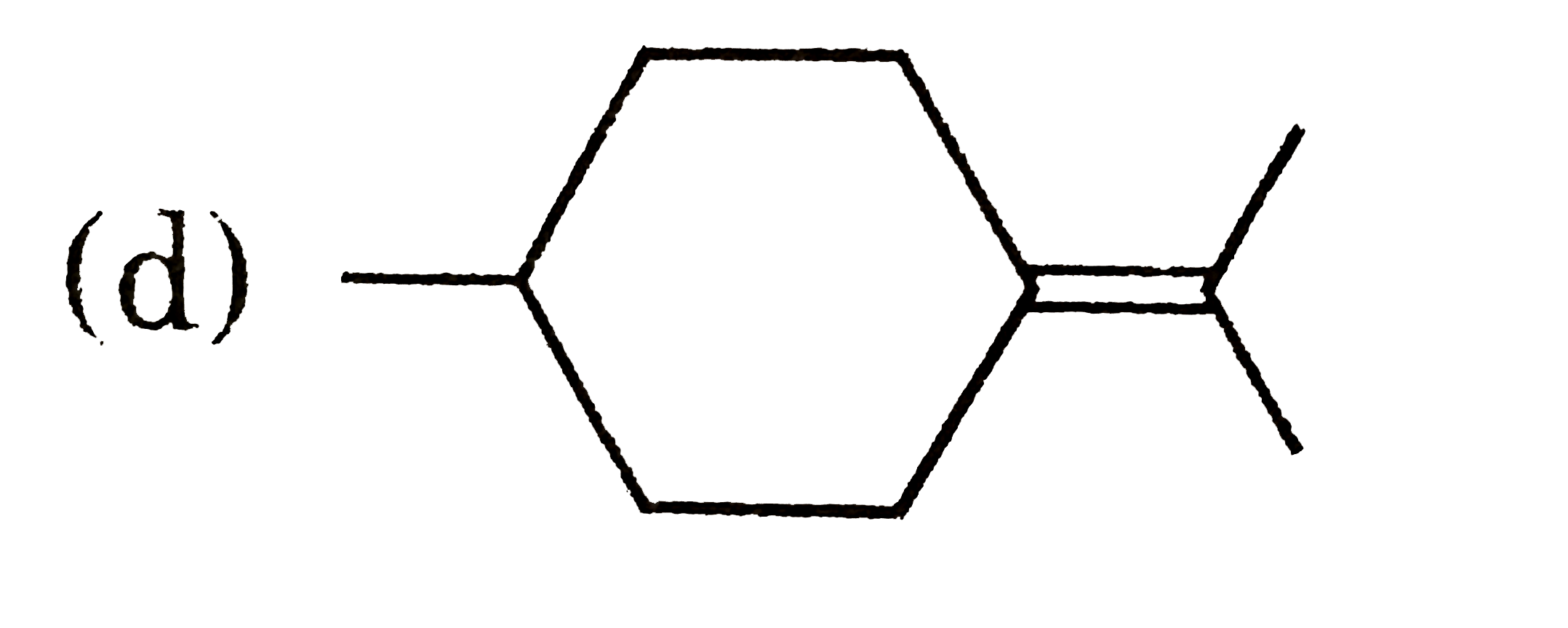
Which of the following will not show geometrical isomerism? |
|
Answer»
|
|
| 49. |
Which is/are true about nitration of chlorobenzene using conc. NO_(3)//H_(2)SO_(4) |
|
Answer» Nitration is catalyzed by chloro substitution on the ring. |
|
| 50. |
To neutralise completely 20 mL of 0.1M aqueous solution of phosphorus acid (H_3PO_3), the volume of 0.1 M aqueous KOH solution required will be ? |
|
Answer» Solution :`H_(3)PO_(3)` is a dibasic acid and ionises as follows: `H_(3)PO_(3) KOH is a monoacid base. Hence, 0.1 M KOH = 0.1 N KOH `0.1 M H_(3)PO_(3) = 0.2 N H_(3)PO_(3)` `underset(KOH)(N_(1)V_(1)) = underset(H_(3)PO_(3))(N_(2)V_(2))` `0.1 XX V_(1) = 0.2 xx 20` or `V_(1) = 40 mL` |
|