Saved Bookmarks
This section includes 7 InterviewSolutions, each offering curated multiple-choice questions to sharpen your Current Affairs knowledge and support exam preparation. Choose a topic below to get started.
| 2. |
An acidic buffer mixture consists of ..........and......... |
|
Answer» |
|
| 3. |
An acidic buffer contains equal concentration of acid and salt . The dissociation constant of acidis 10^(5)The P^(H)of the buffer solution is |
|
Answer» 5 |
|
| 4. |
An acidic buffer contains |
|
Answer» Excess of `H^(+) ` IONS , few anions and excess of undissociated MOLECULES of WEAK acid |
|
| 5. |
An acidic buffer contains 0.06 M salt and 0.02 M acid . The dissociation constant of acid is 10 ^(-4) "The" P^(H)of the buffer solution is |
| Answer» SOLUTION :`pH = 4 + LOG ""( 0.06)/( 0.02 )= 4+ 0. 48 = 4.48` | |
| 6. |
An acid type indicator, Hin differs in colour from its conjugate base (In^(-)) . The human eye is sensitive to colour differences only when the ratio ["In"^(-)]//["HIn"] is greater than 10 or smaller than 0.1. What should be the minimum change in the pH of the solution to observe a complete colour changes. (K_(a) = 1.0xx10^(-5))? |
|
Answer» SOLUTION :`"HIn" HARR H^(+) + In^(-), K_(a) = ([H^(+)][In^(-)])/(["HIn"]) or [H^(+)] = K_(a) (["HIn"])/([In^(-)])` When `([In^(-)])/(["HIn"])=10, [H^(+)]=10^(-5)xx(1)/(10) = 10^(-6), pH = 6` When `([In^(-)])/(["HIn"])=0.1 , [H^(+)]=10^(-5)xx10=10^(-4), pH=4" " :. ` Minimum change in pH = 2 |
|
| 7. |
An acid solution of KReO_(4) samplecontaining 26.83mg of combined rhenium was reduced by passage through a column of granulated zinc. The effulent solution includingthe washings from thecolumn, was thentitratedwith 0.5N KMnO_(4). 11.45mL of the standard KMnO_(4) was requiredfor the reoxidation of all the rhendiumof all the rehniuym to the perryhentate ion Re_O_(4)^(-) . Assumingthat rhenium was the only element reduced, what is the oxisation state to whichrheniumwas reduced by the zinc column? |
|
Answer» |
|
| 8. |
An acid having pH = 6 is diluted 1000 times. What will be thepH of the final solution ? |
|
Answer» Solution :pH = 6means `[H_(3)O^(+)=10^(-6)M`. After diluting 1000 times, `[H_(3)O^(+)]=10^(-6)//1000M = 10^(-9)M`. `:. [H_(3)O^(+)]` from `H_(2)O` cannot be neglected. Total `[H_(3)O^(+)]=10^(-9)+10^(-7)(10^(-2)+1)=10^(-7)(1.01)` `:. pH = - LOG (1.01xx10^(-7))=7-0.0043=6.9957`. |
|
| 9. |
An acid HA ionises as HA hArr H^(+)+A^(-) The pH of 1.0 M solution is 5. Its dissociation constant would be |
| Answer» Answer :A | |
| 10. |
An acid-base titration consists of the controlled addition of a dissolved base to a dissolved acid (or the reverse). Acid and base react rapidly to neutralize each other. At the equivalence point, equivalents of reacting substances are equal. The pH during a titration changes every time with a drop of titrant added, but the rate of this change varies enormously. A titration curve, graph of pH as a function of the volume of titrant, displays in detail how the pH changes over the course of an acid base titration. Significantly. the pH changes most rapidly near the equivalence point. The exact shape of a titration curve depends on the K_(a) and K_(b) of acid and base The suitable indicator for this titration will be: |
|
Answer» `HCL by NH_4 OH` |
|
| 11. |
An acid-base titration consists of the controlled addition of a dissolved base to a dissolved acid (or the reverse). Acid and base react rapidly to neutralize each other. At the equivalence point, equivalents of reacting substances are equal. The pH during a titration changes every time with a drop of titrant added, but the rate of this change varies enormously. A titration curve, graph of pH as a function of the volume of titrant, displays in detail how the pH changes over the course of an acid base titration. Significantly,the pH changes most rapidly near the equivalence point. The exact shape of a titration curve depends on the K_a and K_b, of acid and base. Which of the titration could it represent? |
|
Answer» `HCl by NH_4 OH` |
|
| 12. |
An acid-base titration consists of the controlled addition of a dissolved base to a dissolved acid (or the reverse). Acid and base react rapidly to neutralize each other. At the equivalence point, equivalents of reacting substances are equal. The pH during a titration changes every time with a drop of titrant added, but the rate of this change varies enormously. A titration curve, graph of pH as a function of the volume of titrant, displays in detail how the pH changes over the course of an acid base titration. Significantly. the pH changes most rapidly near the equivalence point. The exact shape of a titration curve depends on the K_(a) and K_(b) of acid and base The pH at equivalence point is: |
|
Answer» bromo THYMOL blue |
|
| 13. |
An acid-base titration consists of the controlled addition of a dissolved base to a dissolved acid (or the reverse). Acid and base react rapidly to neutralize each other. At the equivalence point, equivalents of reacting substances are equal. The pH during a titration changes every time with a drop of titrant added, but the rate of this change varies enormously. A titration curve, graph of pH as a function of the volume of titrant, displays in detail how the pH changes over the course of an acid base titration. Significantly,the pH changes most rapidly near the equivalence point. The exact shape of a titration curve depends on the K_a and K_b, of acid and base. < The suitable indicator for this titration will be : |
|
Answer» BROMO thymol blue |
|
| 14. |
An acid base indicator (K_(a) =10^(-5)) has its pH range 4.4 - 6.0. The correct statement (s)amongst the following is/are |
|
Answer» The indicator will be suitable for the titration of a strong acid against a weak base. (b)Acid colour dominate if pH ` lt 4.4 ` ` i.e. pK_(In)+log ""( In^(-))/(HIN) lt 4.4 ` `rArr log ""(In^(-))/(HIn) lt 4.4 -5=-0.6` ( c )basic colour will dominate if ` pH gt 6` ` rArr PK _(In)+log ""(I_n^(-) ) /(HIn)gt 6` `rArr log ""( I_n^(-))/( HIn)gt 6-5=1 rArr (I_n^(-))/(HIn) gt 10 ` |
|
| 15. |
An acid -base indicator has a Ka of 3.0 xx 10^(-5)The acid form of the indicator is red and the basic formis blue. Then |
|
Answer» pH is 4.05 whenindicator is 75 % RED ` if 75%red RARR ([HI_n])/([In^(-)])=(75)/(25) =3 ` ` rArr [H^(+) ] =3 XX 10 ^(-5)xx 3 ` ` pH =5- log 9 =4.05` ` if 75% blue rArr ([In^(-)])/([HI_n])= 3 ` ` [H^(+) ] = 10 ^(-5)rArr pH =5` |
|
| 16. |
An acid among the following is |
|
Answer» ` B(OH)_3` |
|
| 17. |
An AB_(2)type of sturcture is present in |
|
Answer» NaCl |
|
| 18. |
A^(n+1) is maximum oxidised by acidified KMnO_(4)solution into AO_3^(-)If 2.68 mmoles of A^(+(n+1))requires 32.16 mL of a 0.05 M acidified KMnO_4solution for complete oxidation, value of n is |
|
Answer» Change in oxidation no.of Mn = 5 `( 4 - n ) XX 2.68 = 5 xx 32.16 xx 0.05:. n = 1 ` |
|
| 19. |
A^(n+1) is maximum oxidised by acidified KMnO_(4) solution into AO_(3)^(-). If 2.68 m moles of A^(+(n+1)) requires 32.16 mL of a 0.05M acidified KMnO_(4) solution for complete oxidation,value of n is |
|
Answer» Change in oxidation no. of `Mn = 5` `(4n)X 2.68 = 5 xx 32.16 xx 0.05 :. N = 1` |
|
| 20. |
Amphoteric oxide (X) + 3C + Cl_(2) rarr Poisonous gas+ anhydrous chloride (Y) Element forming 'Y' other than 'CI' reacts with concentrated HCl but leads to passivation with conce. HNO_(3). Select the correct option |
|
Answer» `X = Z` and Y on reacting with `LiH` forms STRONG oxidising agent |
|
| 21. |
Amphoteric hydroxides react with both alkalies and acids . Which of the followingGroup 2 metal hydroxides is soluble in sodium hydroxides ? |
|
Answer» `Be(OH)_(2)` |
|
| 22. |
Amphoteric hydroxides react with both alkalies and acids. Which of the following Group-2 metal hydroxides is soluble in sodium hydroxide ? |
|
Answer» `Be(OH)_(2)` `Be(OH)_(2)+2HCl to BeCl_(2) +2H_(2)O` `Be(OH)_(2)+2NaOH to Na_(2)BeO_(2) +2H_(2)O` |
|
| 23. |
Amphoteric hydroxide among the following |
|
Answer» `Mg(OH)_(2)` |
|
| 24. |
Amount of oxalic acid present in solution can be oxidised by its titration with KMnO_(4) solution in the presence of H_(2)SO_(4). The titration gives unsatisfactory result when carried out in the presence of HCl, because HCl : |
|
Answer» oxidises oxalic acid to carbon dioxide and water |
|
| 25. |
Amount of oxalic acid required to prepare 250 mL of N//10 solution (Mol. Mass of oxalic acid =126) is : |
|
Answer» `1.5759` G |
|
| 26. |
Amount of oxalic acid present in a solution can be determined by its titration with KMnO_(4) solution in presence of H_(2)SO_(4) but not in presence of HCI ? Explain why ? |
|
Answer» SOLUTION :Both oxalic acid and HCI reduce `MbnO_(4)^(-) to Mn^(2+)` `2MnO_(4)^(-)+5C_(2)O_(4)^(2-)+16H^(+)rarr2Mn^(2+)+10CO_(2)+8H_(2)O` `2MnO_(4)^(-)+16 H^(+)+10CI^(-)rarr2Mn^(2+)+8H_(2)O+8H_(2)O+_5CI_(2)`ltbRgt As a result TITRATION does not give us the exact amount of oxalic acid present in the solution |
|
| 27. |
Amorphous solids that exhibit same physical properties in all the directions are called ---------. |
| Answer» SOLUTION :ISOTROPIC | |
| 28. |
Amorphous solid can also be called _____ |
|
Answer» PSEUDO solids |
|
| 29. |
Amorphous solid can alos be called …. |
|
Answer» pseudo SOLIDS |
|
| 30. |
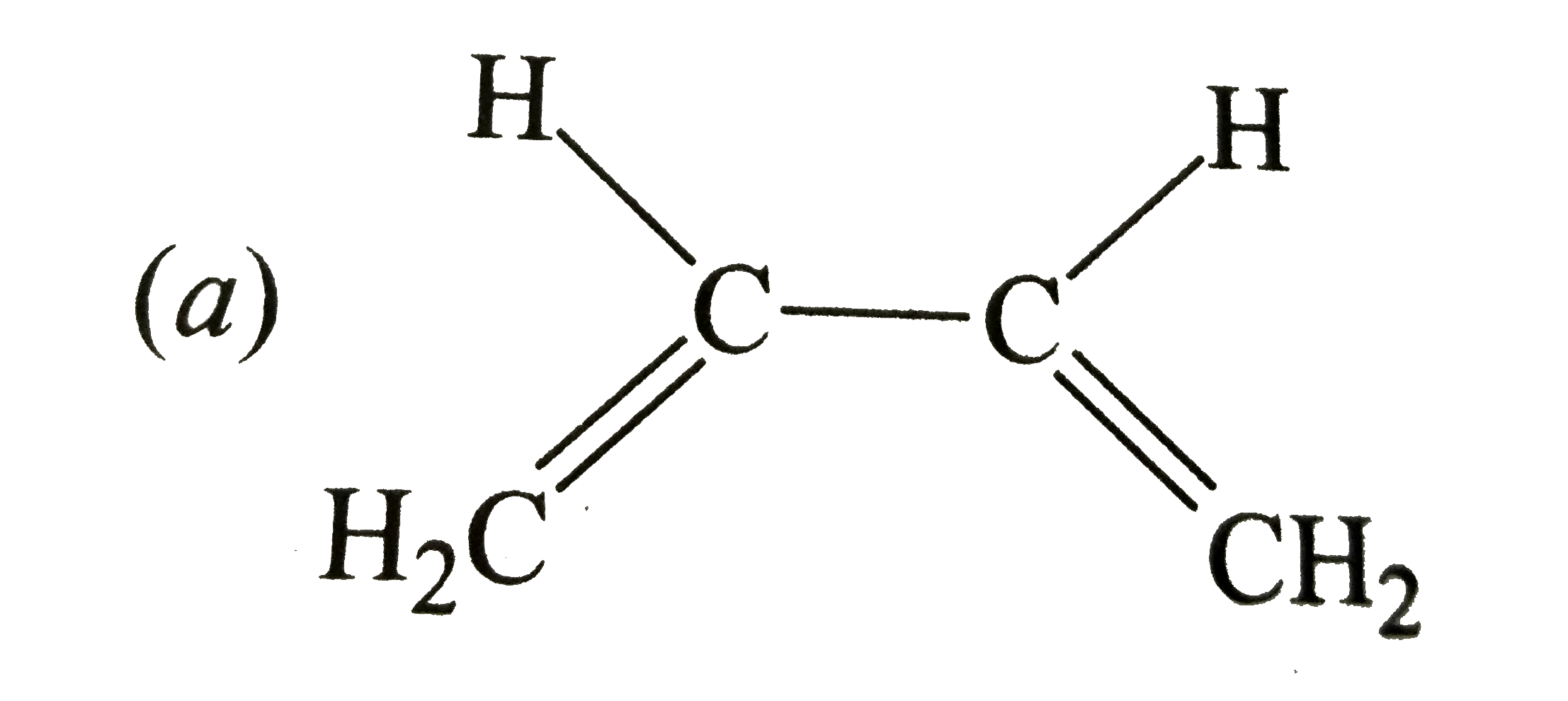
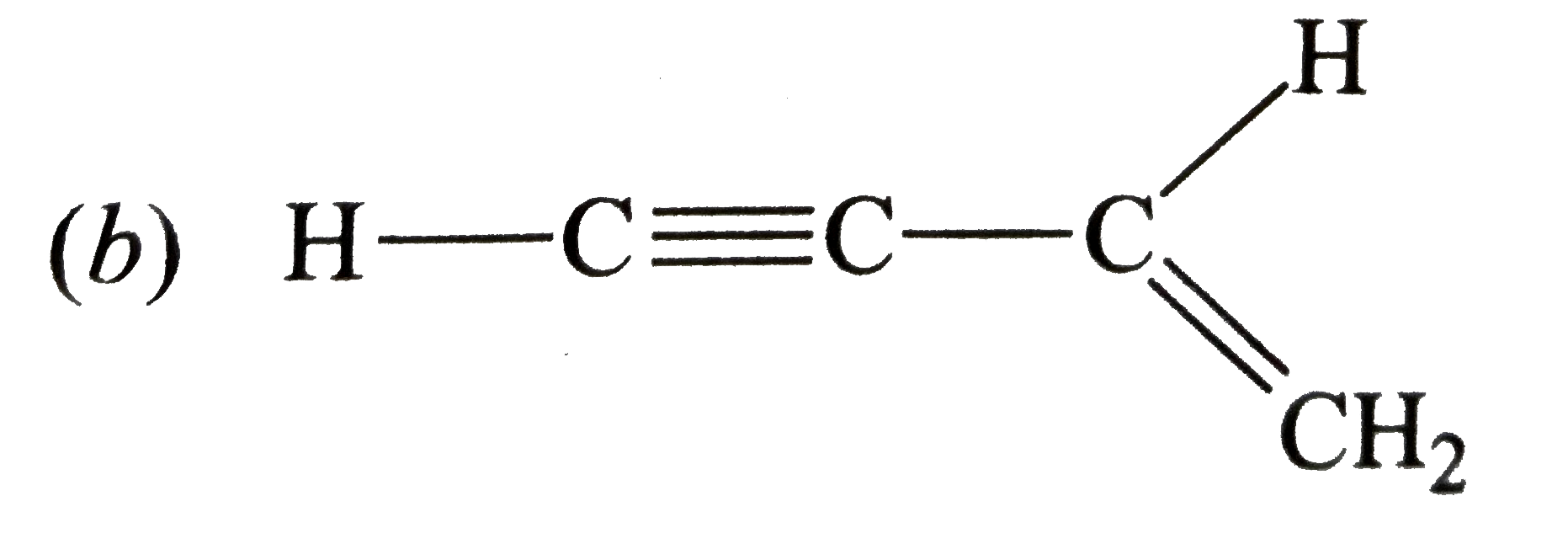
Amongst the given options, the compound in which all the atoms are in one plane in all the possible conformations (if any ), is (are) |
|
Answer»
|
|
| 31. |
Amongst the following the total number of nucleophiles is : SO_(3), NH_(2)^(-), R^(-), H_(2)O, OR^(-), ROH, AlCl_(3), H^(-), BF_(3). |
|
Answer» |
|
| 32. |
Amongst the following, the total number of compounds whose aqueous solution turns red litmus paper blue is KCN " " K_(2)SO_(4) " " (NH_(4))_(2)C_(2)O_(4) " " NaCl " " Zn(NO_(3))_(2) " " FeCl_(3) " " K_(2)CO_(3) " " NH_(4)NO_(3) " " LiCN |
|
Answer» |
|
| 33. |
Amongst the following the reagent that would convert 2-hexyne into trans-2-hexene is |
|
Answer» `H_(2).Pt//O_(2)` |
|
| 34. |
Amongst the following the one which can exist in free state as a stable compound is |
|
Answer» `C_(7)H_(9)O` DBE of `C_(8)H_(12)O` `= (8(4-2)+12(1-2)+1(2-2))/(2) +1=2+1 = 3` All other formulae have fractional values of DBE, i.e., `C_(7)H_(9)O, C_(6)H_(11)O` and `C_(10)H_(17)O_(2)` are 3.5, 3.5 and 2.5 respectively. |
|
| 35. |
Amongst the following, the most basic compound is |
|
Answer» benzylamine |
|
| 36. |
Amongst the following the most basic compound is |
|
Answer» p-Nitroaniline |
|
| 37. |
Amongst the following, the metals which become passive when dipped in conc. HNO_(3)" are "Sn,Pb,Fe,Cr,Zn,Ni,Hg,Al,Cu. |
|
Answer» |
|
| 38. |
Amongst the following, the maximumnumber of compounds which do not behaveas Lewis acids are : SnCl_(2),H_(3)BO_(3),AlCl_(3),CF_(4),SiF_(4),"CCl"_(4),BF_(3),SnCl_(4) |
|
Answer» |
|
| 39. |
Amongst the following , the maximum number of alkenes which show geometricalisomers are 1-pentene, 2-butene, 2-pentene, 1-pentene , 1-butene, propene, 2,3-dimethyl-2-butene, 3-hexene, 1-hexene. |
|
Answer» |
|
| 40. |
Amongst the following, the compound that can be most readily sulphonated |
|
Answer» Benzene |
|
| 41. |
Amongst the following the compound having the most acidic alpha hydrogen is |
|
Answer» `H_3"CC"HO` |
|
| 42. |
Amongst the following select the element havinghighest ionization enthalpy. |
|
Answer» SODIUM |
|
| 43. |
Amongst the following phenols which is most acidic |
|
Answer» Phenol |
|
| 44. |
Amongst the following molecules the one with the largest distance between the two adjacent carbon atoms is |
|
Answer» Ethane |
|
| 45. |
Amongst the following in above mention the total number of intensive physical properties. |
| Answer» Solution :Intensive PROPERTIES are independent on MASS. (a),(B) , (c ), (d) and (f). | |
| 46. |
Amongst the following, identify the species with an atom in +6 oxidation state ____ |
|
Answer» `MnO_(4)^(-)` |
|
| 47. |
Amongst the following elements whose electronic configurations are given below, the one having the highest ionisation enthalpy is |
|
Answer» [Ne] `3s^(2) 2p^(1)` In the electronic configuration of (B) and (D) half-filled 3p orbitals (B) represents PHOSPHORUS and (Q represents arsenic but (B) is smaller in size than (D) So, (B) has highest ionisation enthalpy. Ionisation enthalpy increases left to RIGHT in the periodic table as the size decreases. |
|
| 48. |
Amongst the following elements (whose electronic configurations are given below), the one having the highest ionization enthalpy is ……….. . |
|
Answer» `[Ne] 3S^(2) 3p^(1)` |
|
| 49. |
Amongst the following elements (whose electronic configurations are given below), the one having the highest first ionization energy is |
|
Answer» `[Ne]3S^(2)3p^(1)` |
|
| 50. |
Amongst the following elements whose electronic configurationaregiven below, the one having the highest ionisation enthalpy is |
|
Answer» `[Ne] 3s^(2) 3p^(1)` ionization enthalpy. |
|