Saved Bookmarks
This section includes 7 InterviewSolutions, each offering curated multiple-choice questions to sharpen your Current Affairs knowledge and support exam preparation. Choose a topic below to get started.
| 1. |
By X-ray diffraction methods, the unit length of NaCl is observed to be 0.5627 nm. The density of NaCl is found to be 2.164 g cm^(-3). What type of defect exists in the crystal ?Calculate the percentage of Na^+ and Cl^- ions missing. |
|
Answer» Solution :Calculated density , `rho=(ZxxM)/(a^3xxN_0)=(4xx58.5 "G mol"^(-1))/((0.5627xx10^(-7) cm)^3 xx (6.022xx10^23 "mol"^(-1))=2.1809 " g cm"^(-3)` Observed density =`2.164 "g cm"^(-3)` As observed density is less than theoretically calculated value, this means that some `Na^+` and `Cl^-` IONS missing from their lattice site, i.e., there is SCHOTTKY DEFECT. Actual formula units of NaCl per unit cell can be calculated as follows : `Z=(a^3xxrhoxxN_0)/M=((0.5627xx10^(-7)cm)^3 xx(2.164 cm^(-3))xx(6.022xx10^23 mol^(-1)))/(58.5 "g mol"^(-1))`=3.968 `therefore` Formula units missing per unit cell=4-3.968=0.032 `therefore` % missing =`0.032/4xx100`=0.8% |
|
| 2. |
By X -ray diffraction methods, the unit length of NaCl is observed to be 0.5627 nm. The densityof NaCl is found to be 2.164 cm^(-3). What type of defect exists in the crystal ? Calculate the percentage ofNa^(+) and Cl^(-) ions missing . |
|
Answer» Solution :Calculated density , ` p = (Z xxM)/(a^(3) xx N_(0)) = ( 4 xx 58.5 " g mol"^(-1))/((0.5627 xx 10^(-7) cm)^(3) xx ( 6.022 xx 10^(23) mol^(-1))) = 2.1809 " g cm"^(-3)` Observed density = ` 2.164" g cm"^(-3)` As observed density is less than theoretically calculated valuem this means that some ` Na^(+) and CL^(-1)` ions are MISSING from their lattice site , i.e, there is Schottky defect. Actual FORMULA units of NaCl per unit cell be calculated as follows : ` Z = ( a^(3) xx p xx N_(0))/M = (( 0.5627 xx 10^(-7) cm)^(3) xx ( 2.164cm^(-3)) xx ( 6. 022 xx 10^(23) mol^(-1)))/( 58.5 " g mol"^(-1))= 3.968` Formula unit missing per unit cell = 4- 3.968 = 0.032 % missing = ` ( 0.032)/4 xx 100 = 0.8 % |
|
| 3. |
By which process N_2 O mix in environment ? |
|
Answer» COMBUSTION of coal |
|
| 4. |
By which one of the following compounds both CH_4 and CH_3 - CH_3 can be prepared in one step? |
|
Answer» `CH_3I` II) `CH_3I + 2Na + ICH_3 underset("WURTZ REACTION")overset(DELTA)to CH_3-CH_3 + 2NaI` |
|
| 5. |
By whichof the followingequationatomicmass can beknown ? |
|
Answer» Z + N |
|
| 6. |
By which method, concentration of alkali metal can be determine ? |
| Answer» Solution : CONCENTRATION of alkali METAL can be determined by the respective flame TESTS and can be determined by flame photometry or ATOMIC absorption SPECTROSCOPY. | |
| 7. |
By which method atomic mass is obtained accurately ? |
|
Answer» |
|
| 8. |
By which factor, the percentage of covalent character is decide ? |
|
Answer» Solution :The percentage of character of covalent BOND : (i) Polarization power of POSITIVE ION. (ii) POLARITY of NEGATIVE ion. (iii) Magnitude of polarization |
|
| 9. |
By what name are the following principles known ? (i) Electrons with the same spin quantum number cannot be present in the same atomic orbital. (ii) The wavelength associated with a moving particle is given by lamda = h//p (iii) Of a pair of conjugate properties, both cannot be measured precisely at the same time |
| Answer» Solution :(i) Pauli (ii) DE Broglie (III) HEISENBERG. | |
| 10. |
By what factor does the average velocity of a gaseous molecule increase when the absolute temperature is doubled ? |
|
Answer» 1.4 If ABSOLUTE TEMPERATURE is doubled, new average velocity `=sqrt((8R.2T)/(piM))=sqrt(2)BAR(C )=1.4bar(c )` |
|
| 11. |
By what factor does the average velocity of a gaseous molecule increase when the temperature (in Kelvin) is doubled ? |
|
Answer» `2.8` |
|
| 12. |
By what factor does the average velocity of a gaseous molecule increase when the temperature (in Kelvin) is doubled? |
|
Answer» `2.0` |
|
| 13. |
Calculate the ionic radii of K^(+) and Cl^(-)ions in KCl crystal.The internuclear distance between K^(+) " an " Cl^(-)ions are found to be 3.14Å. |
|
Answer» SOLUTION :Given`d_(K^(+)-Cl^(-))=3.144oversetoA` `r_(K^(+))=?``r_(Cl^(-))=?` i.e. `r_(K^(+))+r_(Cl^(-))=3.14oversetoA`.........(i) We know that, `(r_(K^(+)))/(r_(Cl^(-)))=(Z_(EFF))_(Cl^(-))/((Z_(eff))_(K^(+)))` `(Z_(eff))_(Cl^(-))=Z-S` =`17-[(0.35xx7)+(0.85xx8)+(1xx2)]` =17-11.25=5.75 `(Z_(eff))_(K^(+))=Z-S` =`19-[(0.35xx7)+(0.85xx8)+(1xx2)]` =19-11.25=7.75 therefore `(r_((K^(+))))/(r_((Cl^(-))))=((Z_(eff))_(Cl^(-)))/((Z_(eff))_(Cl^(-)))=(5.75)/(7.75)=0.74` therefore`r_((K^(+)))=0.74r_((Cl^(-)))` `0.74r_((Cl^(-)))+r_((Cl^(-)))=3.14oversetoA` `1.74r_((Cl^(-)))=3.14oversetoA` therefore `r_((Cl^(-)))=(3.14oversetoA)/(1.74)=1.81oversetA` From(1), `r_(K^(+))=3.14-1.81` =`1.33oversetoA` therefore`r_(K^(+))=1.33oversetoA` and `r_(Cl^(-))=1.81 OVERSETOA` |
|
| 14. |
By using paulings method calculate the ionic radii ofK^(+)andCl^(-)ions in the potassium chloride crystal . Given thatd_(K^(+)-Cl^(-))=3.14Å. |
|
Answer» SOLUTION :`d_(K^(+)-Cl^(-))=3.14Å` `r_(K^(+))=`? `r_(K^(+))+r_(Cl^(-))=3.14Å`. We know that `(r_(K^(+)))/(r_(Cl^(-)))((Z_("eff"))Cl^(-))/((Z_("eff")K^(+)))` `(Z_("eff"))_(Cl^(-))=Z-S` `=17-[(0.35xx7)+(0.85xx8)+(1xx2)]` `=17-11.25=5.75` `(Z_("eff"))_(Cl^(-))=Z-S` `=19-[(0.35xx7)+(0.85xx8)+(1xx2)]` `=19-11.25=7.75` `therefore(R(K^(+)))/(r(Cl^(-)))=((Z_("eff"))_(Cl^(-)))/((Z_("eff"))_(K^(+)))=(5.75)/(7.75)=0.74` `thereforer_((K^(+)))=0.74r_((Cl^(-)))` Substitute the VALUE of `r_((K^(+)))`inequation (1) `0.74r_((Cl^(-)))+r_((Cl^(-)))=3.14Å` `1.74r_((Cl^(-)))=3.14Å` `thereforer_((Cl^(-)))=(3.14Å)/(1.74)=1.81Å` From (1) `r_((K^(+)))=3.14-1.81` `=_(-)1.33Å` `thereforer_((K^(+)))=1.33Åandr_((C^(-)))=1.81Å` |
|
| 15. |
By using activated carbon method, F^(-) ion concentration in water can be decreased from |
|
Answer» 12ppm to 5PM |
|
| 16. |
By the use of molecular orbital consideration, account for the fact that oxygen is paramagnetic. |
|
Answer» Solution :Electronic configuration of molecular orbitals of `O_(2)` is `(sigma1s)^(2)(SIGMA**1s)^(2)(sigma2s)^(2)(sigma**2S)^(2)(sigma2p_(Z))^(2)(pi2p_(x))^(2)` `(pi2p_(y))^(2)(pi**2p_(x))^(1)(pi**2p_(x))^(1)` The last two electrons are in `pi**2p_(x)` and `pi**2p_(y)` anti bonding orbitals so as to maximise pi electrons in accordance with Hund.s RULE. These two unpaired electrons confer paramagnetism in OXYGEN. |
|
| 17. |
By the reaction of carbon and oxygen, a mixture of CO and CO_(2) is obtained. What is the composition of the mixture by mass obtained when 20 grams of O_(2) reacts with 12 grams of carbon ? |
|
Answer» `n_(c)=1` mole `(n_(O_(2)))/(n_(c))=0.625` `O_(2)+CrarrCO+CO_(2)` `2xxn_(O_(2))=n_(CO)+2n_(CO_(2))""......(I)` `2xxn_(C)=n_(CO)+n_(CO_(2))"".....(II)` `implies (n_(CO)xx28)/(n_(CO_(2))xx44)=(21)/(11)` |
|
| 18. |
By the process of cystallization, we convert an impure compound into its crystals. The choice of the solvent is very crucial in this operations. Which of the following conditions must be fulfilled by the selected solvent? (i) It should not react chemically with the impure organic compund. (ii) Is should be the one in which the solid organic compound is very soluble at room temperature. (iii) The impurities should not dissolve at all in the solvent. (iv) If the impurities dissolve, they should be soluble to such an extent that they remain in the filtrate (mother liquor) upon crystallization. |
|
Answer» (i), (iii), (iv) If the impurities are more soluble in the cold solvent than is the compound being purified, then they will ALMOST certainly remain in the solution in the mother liquor (the residual cold solution from which the compound crystallizes). The impurities which are LESS soluble will also probably not be precipitate oncooling because they are UNLIKELY to be present in sufficiently HIGH concentration to form a saturated solution even at lower temperature. Moreover, even if some impurity is deposited with the pure compound on cooling, its proportion will be considerably less than in the original crude material, and it will be completely removed by further recrystallization. |
|
| 19. |
By the crystalisation of impure compound if mother liquor becomes colour then what shall be done to remove colour? |
| Answer» SOLUTION :The POWDER of activated charcoal is ADDED in solution and kept for some TIME. So colored particles absorb on charcoal and by filtration COLORLESS solution is obtained | |
| 20. |
By taking chemical properties into consideration, the atomic weights of the following elements were corrected |
|
Answer» TE & I |
|
| 21. |
By taking two J-tubes at constant temperature what is the difference in the levels of mercury in two columns? |
|
Answer» 1013.3 mm `(2.4) xx (760) = 1.8 xx (760 +h) implies h = 253.3`. |
|
| 22. |
By removing , one beta-particle from a radio active nucleus, the atomic number |
|
Answer» INCREASES by one |
|
| 23. |
By reduction of 1.27 gm Cu is obtained so what is the weight of oxygen. |
|
Answer» Solution :In `Cu_(2)O` weight of `Cu=127 gm = 1.27gm` MASS of `O=15 gm = (?)` `=(16 xx 1.27)/(127) =0.16 gm` |
|
| 24. |
By ................ rays nuclear reactions are induced in upper atmosphere to produce tritium? |
| Answer» SOLUTION :COSMIC RAYS | |
| 25. |
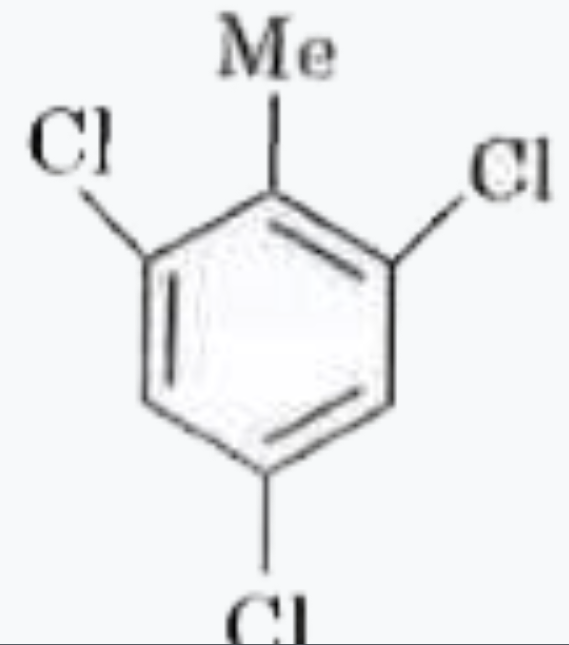
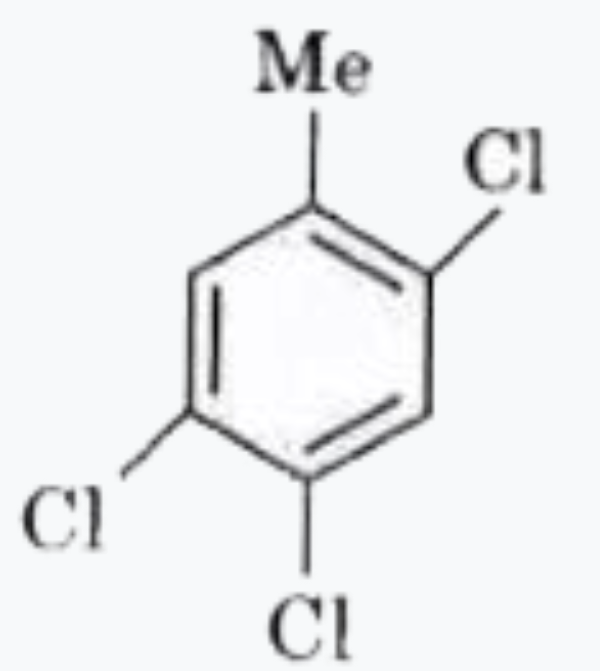
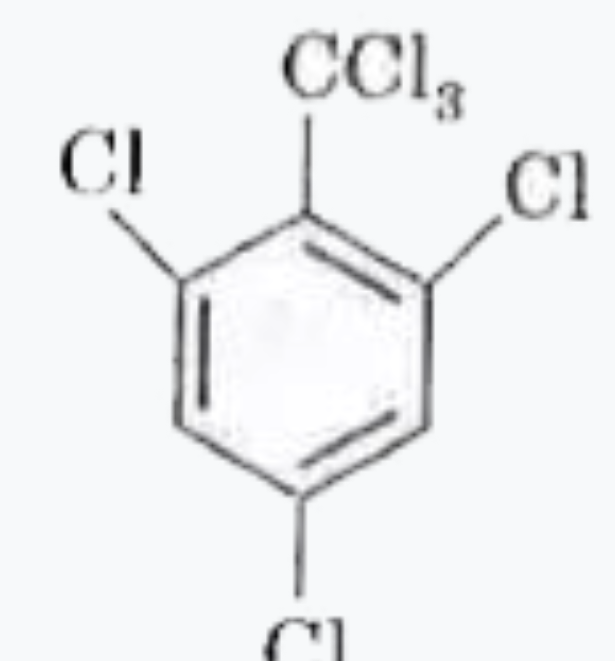
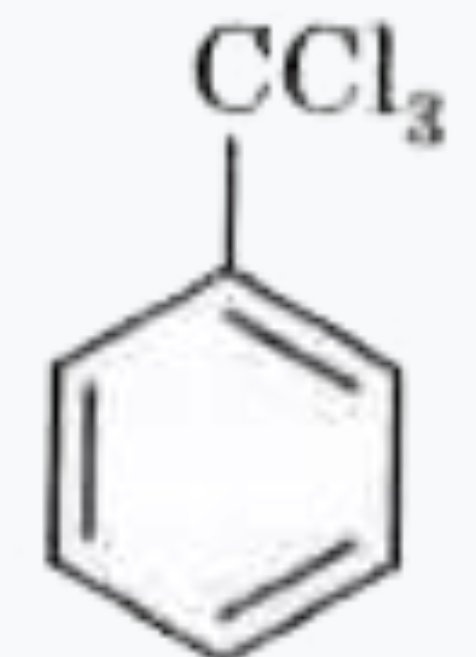
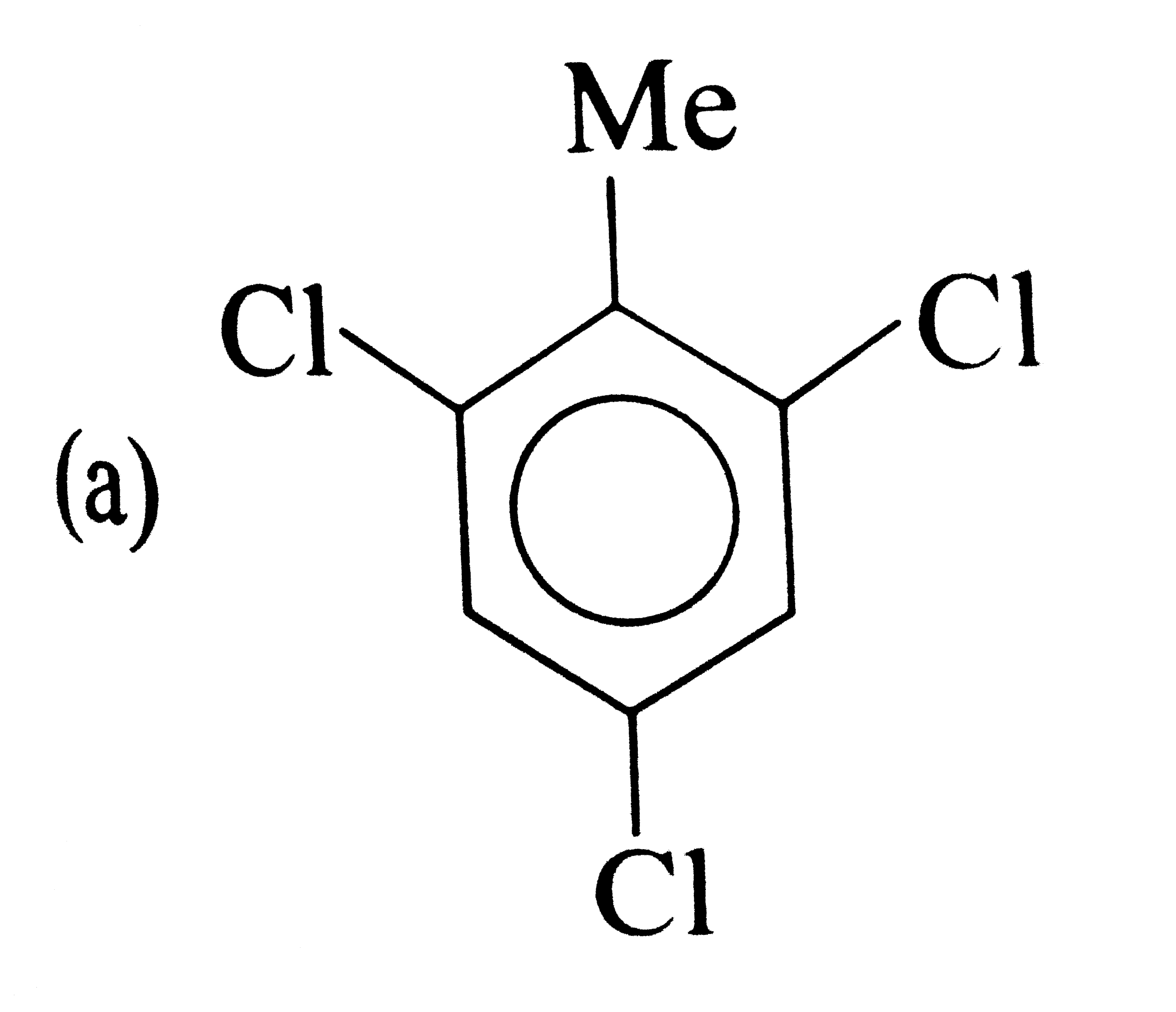
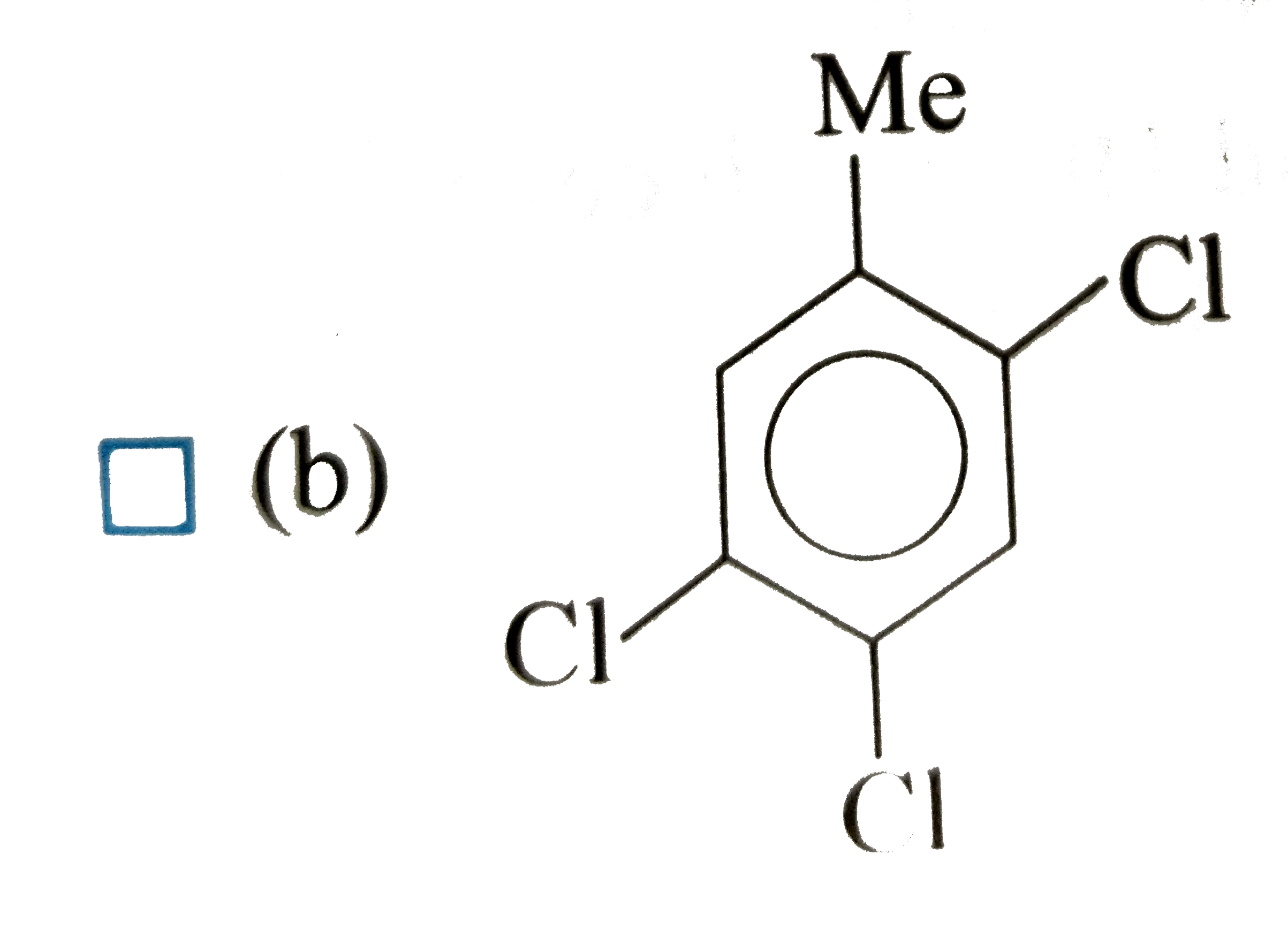
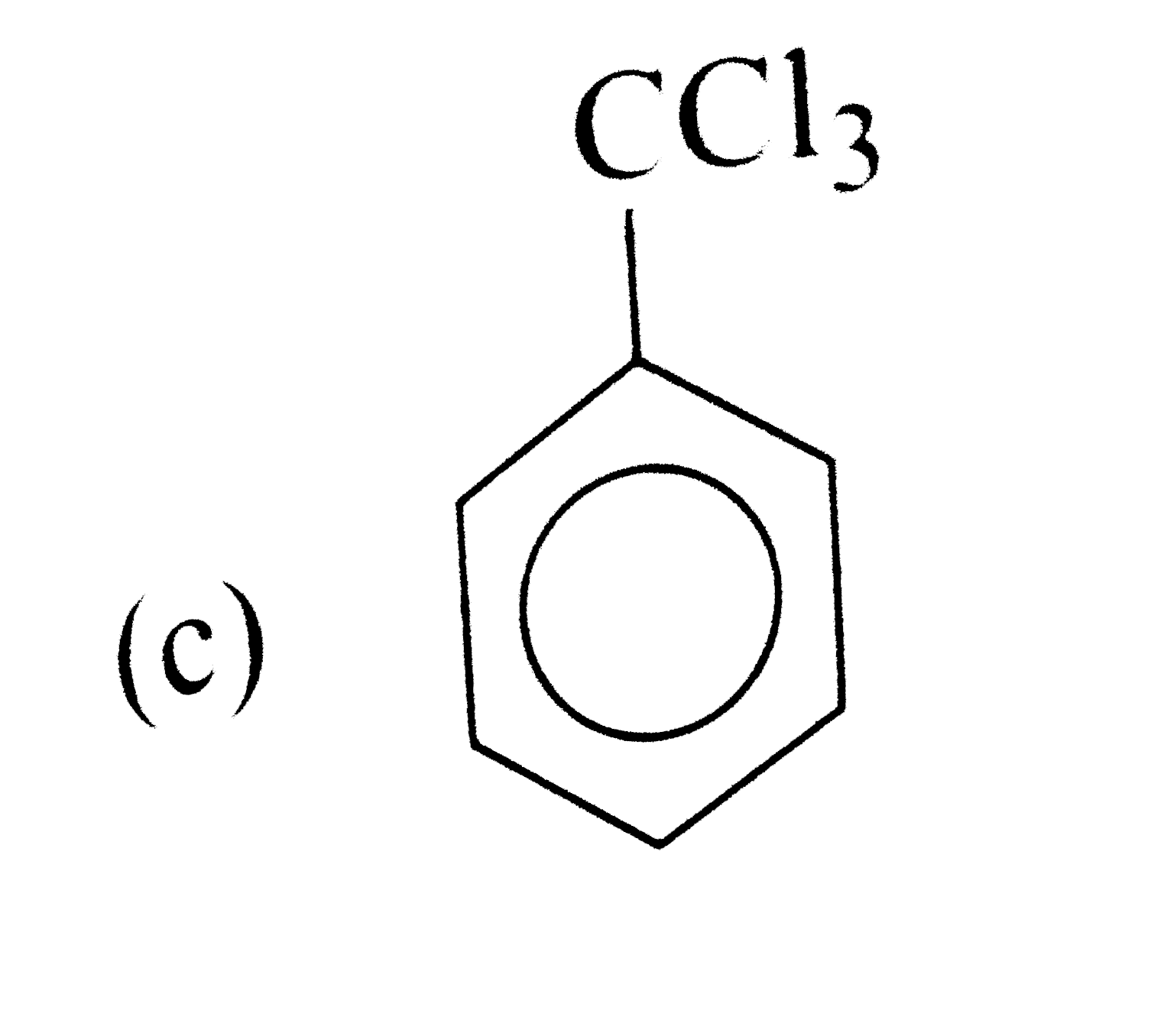
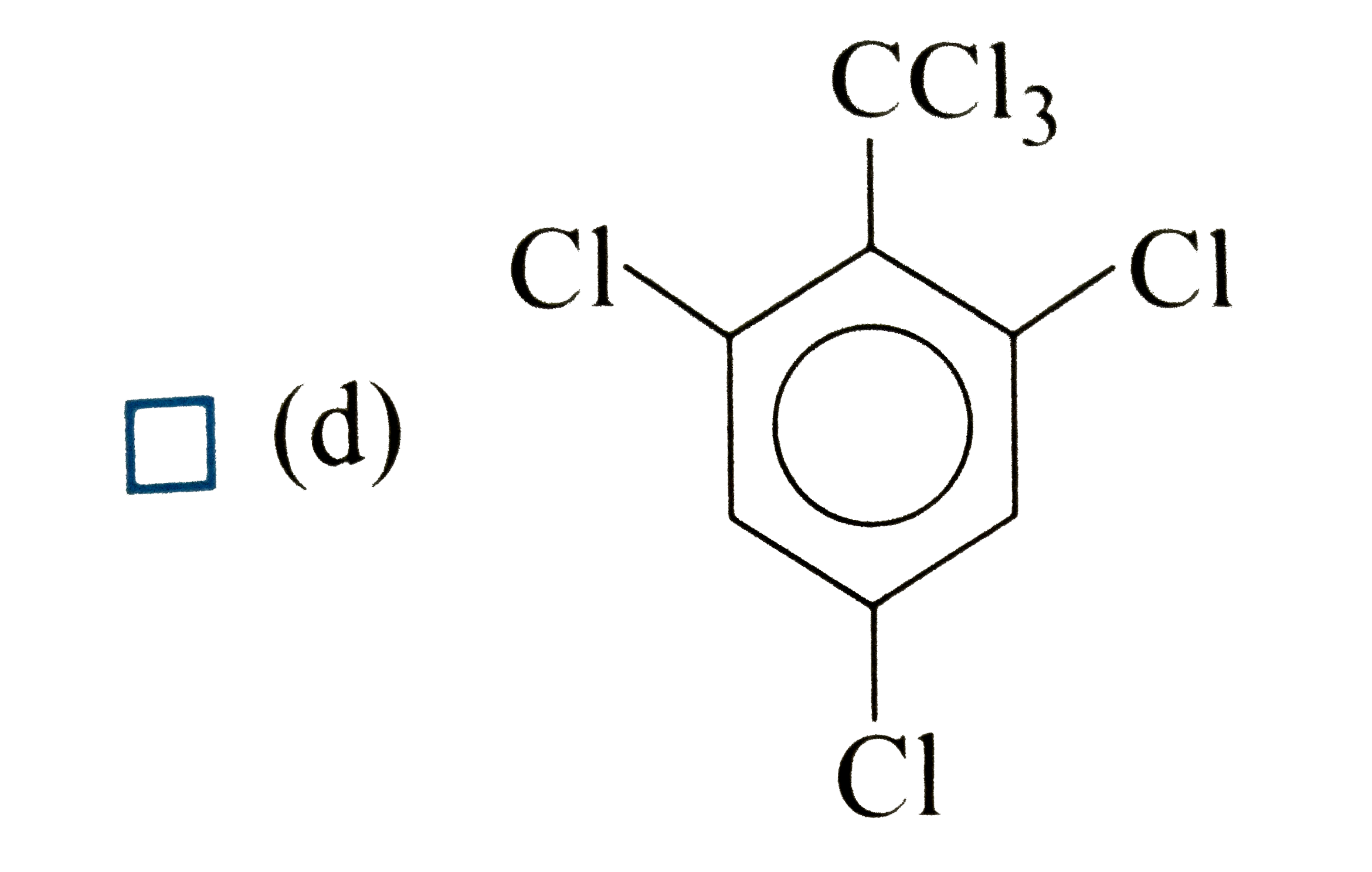
By passing excess of Cl_(2)(g) in boiling toluene, which one of the following compounds is exclusively formed? |
|
Answer»

|
|
| 26. |
By passing excess of CI_(2) (g) in boiling toluene, which one of the following compounds is exclusively formed ? |
|
Answer»
|
|
| 27. |
By mixing aqueous solutions of silver nitrate and ammonium chloride in a test tube, white precipitates are formed. In this process, test tube is ...... . |
|
Answer» universe |
|
| 28. |
By mistake, an alcohol (boiling point 97^(@)C) was mixed with a hydrocarbon (boiling point 68^(@)C). Suggest a suitable method to separate the two compounds. Explain the reason for your choice. |
| Answer» Solution :If the boiling POINTS of two components of a mixture differe by more than 20 then these components can be easily separated by simple distillation SINCE at the boiling point of low boiling liquid, the vapour WOULD consist entirely of only low boiling liquid without any CONTAMINATION of vapour of high boiling liquid and vice-verta | |
| 29. |
By mistake, an alcohol (boiling point 97^(@)C ) was mixed with a hydrocarbon (boiling point 68^(@)C ). Suggest a suitable method to separate the two compounds. Explain the reason for your choice. |
| Answer» Solution :The SEPARATION can be done with the HELP of simple distillation since the difference in BOILING POINT is more than `20^(@)C`. Low boiling hydrocarbon distils leaving alcohol in the distillation flask. This is possible only if alcohol and hydrocarbon are misicible with each other. For the detail of the process, consult section 12.35. | |
| 30. |
By mistake, an alcohol (boiling point 97^(@)C) was mixed a ketone (boiling point 68^(@)C). Suggest a suitable method to separate the two compounds. Explain the reason for your choice. |
| Answer» Solution :If the boiling of TWO components of a mixture differ by more than `20^(@)`, then components can be easily separated by simple distillation since at the boiling point of low boiling liquid, the VAPOURS would CONSIST entirely of only low boiling liquid without any COMBINATION of vapours of HIGH boiling liquid and vice-versa. | |
| 31. |
By means of a balancedequations show how B(OH)_(3 behaves as an acid in water. |
| Answer» Solution :`B(OH)_(3) + 2HOH rarr [B(OH)_(4)]^(-) + H_(3)O^(+)` | |
| 32. |
By heating which of the following the pure N_2 gas is obtained ? |
|
Answer» `NH_3` with CUO |
|
| 33. |
By combustion of 0.2475 gm organic compound 0.4950 gm, CO_(2) and 6.2025 gm, H_(2)O obtain, calculate the % of C, H, O |
| Answer» SOLUTION :%C = 54.54, %H = 9.09, %O = 36.37 | |
| 34. |
By change of which factors physical state of matter change ? |
|
Answer»
|
|
| 35. |
By applying Bohr's postulates, arrive at the radius of n^(th) orbit for hydrogen like atom. |
|
Answer» Solution :`implies` Applying Bohr.s postulates to a HYDROGEN LIKE ATOM (one electron species such as `H, He^+ and Li^(2+)` etc.) the radius of the `n^(th)` orbit and the energy of the electron REVOLVING in the `n^(th)` orbit were derived. The results are as follows: `r_n = ((0.529)n^2)/z Å"".....(1)` `E_(n)(-13.6(z^2))/(n^2) ev "atom"^(-1)""......(2)` (or) `E_(n) = ((-1312.8)Z^2)/(n^2) KJ mol^(-1) "".....(3)`. |
|
| 36. |
By applying the knowledge of chemical classification, classify each of the following into elements, compounds or mixtures(i) Sugar(ii)Sea water(iii) Distilled water(iv) Carbon dioxide(v)Copper wire(vi) Table salt(vii) Silver plate(viii) Naphthalene balls |
Answer» SOLUTION :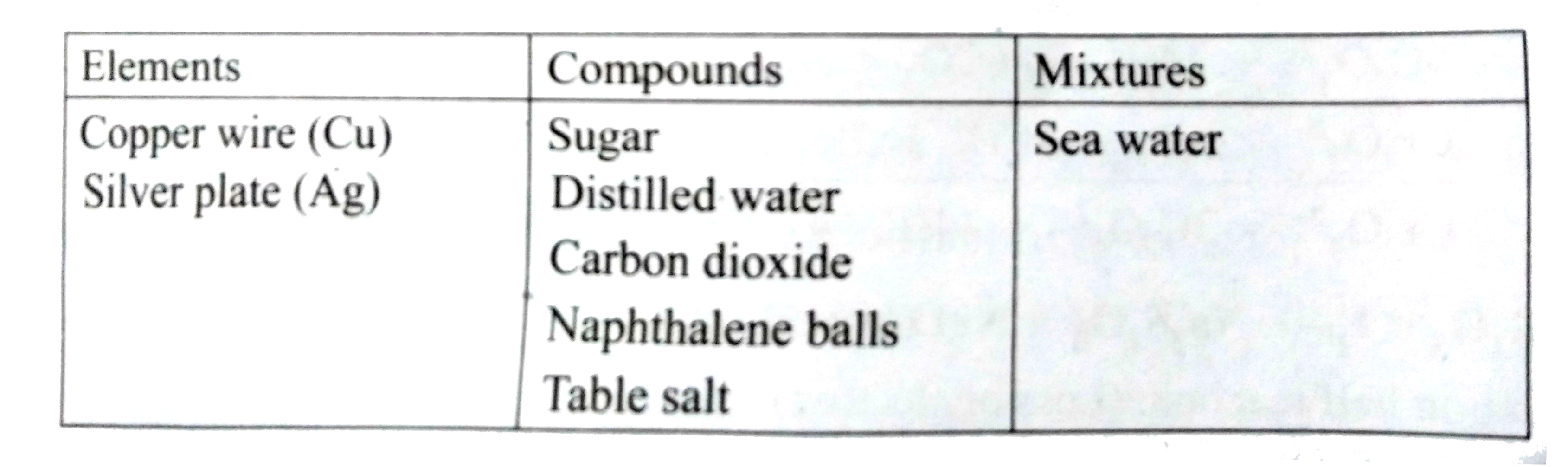
|
|
| 37. |
By aerial oxidation, which one of the following gives phthalic acid |
|
Answer» Naphthalene 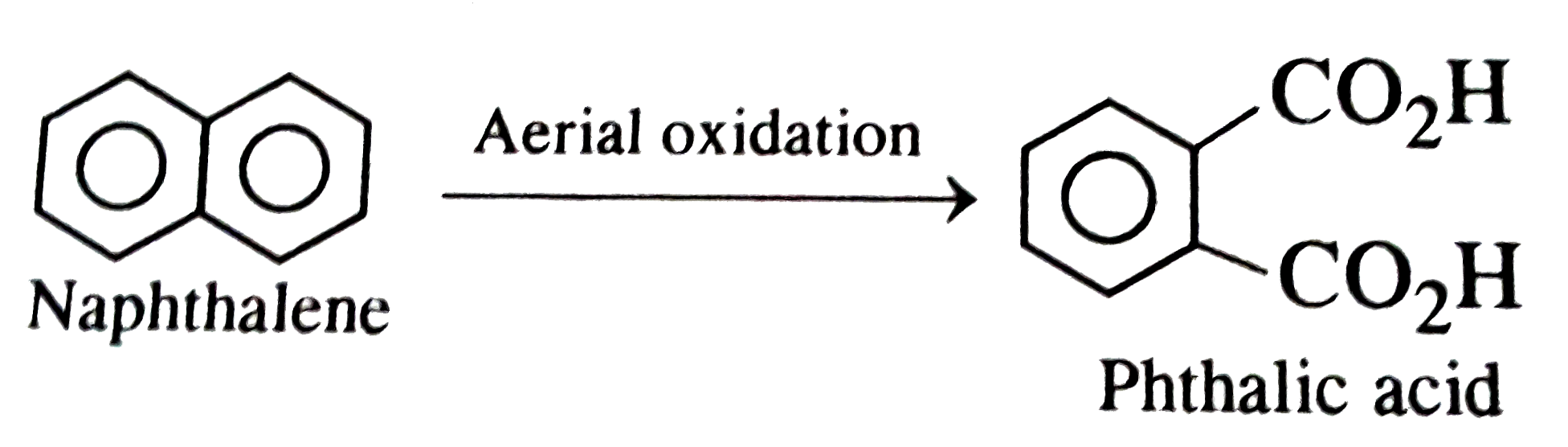
|
|
| 38. |
By adding gypsum to cement... |
|
Answer» setting TIME of cement becomes less. |
|
| 39. |
By adding 6 grams of NaOH to a 500 mL of buffer solution, its pH value changes from 3.8 to 4.2. Calculate the buffer capacity. |
|
Answer» Solution :MOLES of NAOH added PER one litre of buffer solution `= (12)/(40) =0.3` Buffercapacity `=("moles of base added ")/("change in pH")=( 0.3 )/( ( 4.2 -3.8 ))=( 0.3 )/( 0.4 ) = 0.75` |
|
| 40. |
Bxplaln the structure of CO_(2). |
|
Answer» Solution :Experimental BOND length : The EXPERIMENTALLY determined both carbon to oxygen bond length in `CO_(2)` is 115 pm. The length of a normal carbon to oxygen double bond (C = O ) and carbon to oxygen TRIPLE bond `(C equiv O )` are 121 pm and 110 pm respectively. The C - O bond lengths in lie between the values for C = O and C = O . Obxiouly, a single Lewis structure cannot depict this POSITION and it becomes necessary to WRITE more than one Lewis structures and to consider that the structure of `CO_(2)` is best described as a hybrid of the canonical or resonance forms I, II and III. The hybrid resonance (IV) shows the correct bond length.  OR Resonance structure by Lewis represent are as follow. 
|
|
| 41. |
Butyric acid contains only C, H and O. A 4.24 mg of sample butyric acid is completely burnt. It gives 8.45 mg of carbon dioxide and 3.46 mg of water. What is the mass percentage of each element in butyric acid ? The molecular mass of buryric acid is determined by experiment as 88 amu. What is its molecular formula ? |
|
Answer» Solution :Step I : Calculation of mass percentage of different elements Percentage of carbon. Percentage of carbon can be calculated as follows : `CO_(2)-=C` 44 parts 12 parts or 44 mg 12 mg 44 mg of `CO_(2)` CONTAIN C = 12 mg `:. 8.45` g of `CO_(2)` contain `C = (12)/(44)xx8.45 = 2.30` mg Percentage of `C=("Weight of carbon")/("Weight of compound")xx100=((2.30mg))/((4.24mg))xx100=54.3%` Percentage of HYDROGEN. Percentage of hydrogen can be calculated as : `H_(2)O -= 2H` 18 parts 2 parts 18 mg 2 mg 18 mg of `H_(2)O` contain H = 2mg `:. 3.46` of `H_(2)O` contain `H= (2)/(18) xx 3.46 = 0.384` mg Percentage of `H=("Weight of hydrogen")/("Weight of compound")xx100=((0.384mg))/((4.24mg))xx100=9%` The sum of the percentage of C and H `= 54.3 + 9 = 63.3 %` As this comes out to be less than 100, the balance must be oxygen. `:.` Percentage of `O = 100-63.3 = 36.7 %` Step II. Determination of empirical formula of the compound `{:("Elemenet","Percentage","Atomic mass","Gram ATOMS (Moles)","Atomic ratio (Molar ratio)","Simplest WHOLE no. ratio"),("C",54.3,12,(54.3)/(12)=4.52,(4.52)/(2.29)=1.97,2),("H",9.0,1,(9.0)/(1)=9.0,(9.0)/(2.29)=3.93,4),("O",36.7,16,(36.7)/(16)=2.29,(2.29)/(2.29)=1.0,1):}` The empirical formula of the compound `= C_(2)H_(4)O` Step III. Determination of molecular formula of the compound Empirical formula mass `= 2xx 12 + 4 xx1 +16 = 24 + 4+16 = 44` u Molecular mass = 88 u , `n=("Molecular mass")/("Empirical formula mass")=(88)/(44)=2` `:.` Molecular formula `= n xx` Empirical formula `= 2xx C_(2)H_(4)O=C_(4)H_(8)O_(2)` |
|
| 42. |
Butyne and Butadiene are |
|
Answer» CHAIN isomers `overset("BUTYNE")(C-C-C-=C)``overset("BUTADIENE")(C-C=C=C)` |
|
| 43. |
Butene-1 may be converted to butane by reaction with |
|
Answer» `Pd//H_2` |
|
| 44. |
Butanone + dil. NaOHGIVES how many different aldol products (including stereoisomers )? |
|
Answer» |
|
| 45. |
Butane nitrile may be prepared by heating |
|
Answer» PROPYL ALCOHOL with KCN |
|
| 46. |
Butan-2-one can be converted to propanoic acid by which of the following |
|
Answer» `NAOH, NAI, H^(+)` |
|
| 47. |
But -1- yneand but -2- yne aretreatedwith dil. H_(2) SO_(4)inpresenceof HgSO_(4) at 330 K. |
|
Answer» Solution :Addition of `H_(2)O`occursto formbutan -2- one ineachcase `CH_(3)CH_(2) -C-= CH+H_(2)O OVERSET(Dil. H_(2)SO_(4) ,HgSO_(4))underset(330K)(to) [CH_(3) CH_(2)-underset(OH)underset(|)(C)=CH_(2)] overset("Tautomerises ")(to)` `underset("Butan-2-one ")(CH_(3)CH_(2)-overset(O)overset(||)(C)-CH_(3))` `underset("But-2-yne")(CH_(3)-C-=C-CH_(3)+H_(2)O) overset(Dil. H_(2)SO_(4) ,HgSO_(4))underset(330K)(to) [CH_(3)-underset(OH)underset(|)(C)=CHCH_(3)] overset("Tautomerises")(to)` `underset("Butan -2-one ")(CH_(3) -underset(O)underset(||)(C)-CH_(2)CH_(3))` |
|
| 48. |
But-1-ene may be converted to butene by reaction with : |
|
Answer» Zn-HCl |
|
| 49. |
But-1-ene may be converted to butane by reaction with |
|
Answer» Zn-HCI |
|