

Saved Bookmarks
This section includes 7 InterviewSolutions, each offering curated multiple-choice questions to sharpen your Current Affairs knowledge and support exam preparation. Choose a topic below to get started.
| 1. |
Compare the stabilites of the following alkenes (a) CH_(3)-overset(CH_(3)) overset(|)C=CH-CH_(2) (b) CH_(3)-overset(CH_(3))overset(|)(CH) =CH-CH_(2) |
| Answer» SOLUTION :`(a) gt (c ) gt (B)` .This is because more the NUMBER of `alpha` HYDROGENS , more will be the stability of ALKENE. | |
| 2. |
Compare the stabilites of the following alkenes |
| Answer» SOLUTION :`(B) GT (a)` This is because more the NUMBER of `alpha ` - hydrogen , more will be the stability of alkene . | |
| 3. |
Compare the stabilites of the following alkenes |
Answer» Solution :`(a) gt (b)` Structure (b) is unsatble because `sp^(2)` carbon in a three -membered RING is unsatble due to the ring STRAIN . There is `12^(@) - 60^(@) ` strain in TWO carbons . |
|
| 4. |
Compare the stabilites of the following alkenes |
| Answer» Solution :`(a) GT (B)` .This is because STRUCTURE (a) is more SUBSTITUTED alkene than (b) and has more `alpha ` - hydogens.More the NUMBER of `alpha ` - hydrogen more will be the stability of alkene . | |
| 5. |
Compare the stabilites of the following alkenes |
| Answer» Solution :`(b) GT (a)` .This is because trans is more STABLE than C is when ring CONTAINS is more than 11 atoms . | |
| 6. |
Compare the stabilites of the following alkenes |
| Answer» Solution :`(b) GT (a)` .This is because s is more stable than trans when the NUMBER of CONSTITUENT atoms of the RING is less than 11 . | |
| 7. |
Compare the stabilites of the following alkenes |
| Answer» SOLUTION :`(a) gt (B)` .This is because there are more `ALPHA-` hydrogens ( `8alpha` -HYDROGEN ) in structure (a) than (b). | |
| 8. |
Compare the stabilites of the following alkenes |
| Answer» SOLUTION :`(a) GT (B)` .This is because STRUCTURE (a) is more STABLE because of a stable hyperconjugating structure . | |
| 9. |
Compare the stabilites of the following alkenes |
| Answer» Solution :`(a) gt (B) gt (c )` .This is because more the number of `ALPHA ` - hydrogen , more will be the STABILITY of ALKENE. | |
| 10. |
Compare the stabilites of the following alkenes |
|
Answer» Solution :The ORDER of stabilities of the GIVEN alkenes is as follows : `(B) gt (a) ` This is a because there are more `ALPHA-` HYDROGEN in structure (b) |
|
| 11. |
Compare the stabilites of the following alkenes {:("1-Hexene","2-Hexene","3-Hexene"),("(a)","(b)","(c)"):} |
| Answer» SOLUTION :`(b) gt (c ) gt (a)` .This is because more the number of `ALPHA` - hydrogen more will be the STABILITY of ALKENE . | |
| 12. |
Compare the solubility and thermal stability of the following compounds of the alkali metals with those of alkline earth metals. (a) Nitrates (b) Carbonates (c) Sulphate . |
|
Answer» Solution :(i) Solubility ,(a) Alkali metals . Nitrates , carbonates and sulphates of alkali metal are soluble in water . Their , solubility , however, increases as we move down the group since the lattice enthalpiesdecrease more rapidly than the hydrogen enthalpies . (b) Alkaline earth metals. Nitratesof all alkalineearth metalsare soluble in water . Their solubility , however , decreases we move down the group because their hydration enthalpies decrease more rapidly than the lattice enthalpies . The size of `CO_(3)^(2-)` and `SO_(4)^(2-)` anions is much larger than the cations ,therefore , within a particular group lattice enthalpies remain almost constant . Since the hydration enthalpies decrease down the group , therefore, the solubility of alkaline earth carbonates and sulphates decrease down the group . However , the hydration enthalphy of `Be^(2+)` and `Mg^(2+)` ions overcome the lattice enthalpy factor and therefore, `BeSO_(4) and MgSO_(4)` are readily soluble in water while the solubility of other sulphates decreases down the group from `CaSO_(4) and BaSO_(4)` . (ii) THERMAL stability .(a) NItrates , Nitrates of both alkali and alkaline earth metals decompose onheating . All alkaline earth metal nitrates decompose to form metal oxide , `NO_(2) and O_(2)^(-)` . `2 M (NO_(3))_(2) overset(DELTA)(to) 2 MO + 4 NO_(2) + O_(2)(M = Be , Mg , Ca , Sr` or BA) The nitrates of Na , K , Rb and Cs decompose to form metals nitrites and `O_(2)`. `2 M NO_(3) overset(Delta)(to) 2 MNO_(2) + O_(2) ( M = Na , K , Rb , Cs)` However , due to diagonal relationship between Li and Mg , lithium nitrate decomposes like `Mg(NO_(3))_(2)` to form metal oxide , `NO_(2)` and `O_(2)` . `4 Li NO_(3) overset(Delta)(to) 2 Li_(2)O + 4 NO_(2) + O_(2)` (b) Carbonates . Carbonates of alkaline earth metals decompose on heating to form metal oxide and `CO_(2)` `MCO_(3) overset(Delta) (to) MO + CO_(2) (M = Be` , Mg, Ca , Sr , Ba) Further , as the electropositive character of metal increases down the group , the stability of these metal carbonates increases or the temperature of the their decomposition increases as shown below : `{:(BeCO_(3) ,, MgCO_(3) ,, CaCO_(3) ,, SrCO_(3) ,, BaCO_(3)), ( lt 373 K ,, 813 K ,, 1173 K ,, 1563 K ,, 1633 K):}` Due to diagonal relationship between Li and Mg `Li_(2)CO_(3)` decomposes in the same way as `MgCO_(3)` . `Li_(2)CO_(3) overset(Delta) (to) Li_(2)O + CO_(2)` All other alkali metal carbonates are stable and do not decompose even at high temperatures (c) Sulphates . Sulphates of alkaline earth metals decompose on heating giving the oxides and `SO_(3)`. The temperature of decomposition of these sulphates increases as the electropositive character of the metal or the basicity of the metal hydroxide increases down the group . For example , `{:("Compound :" ,, BeSO_(4) ,, MgSO_(4) ,, CaSO_(4) ,, SrSO_(4)) , ("TEMP. of decomposition" : ,, 773 K ,, 1168 K ,, 1422 K ,, 1644 K):}` Among alkali metals due to diagonal relationship , `Li_(2)SO_(4)` decompose like `MgSO_(4)`to from the corresponding metal oxide and `SO_(3)`. `Li_(2)SO_(4) overset(Delta)(to) Li_(2)O + SO_(3) , MgSO_(4) overset(Delta) (to) MgO + SO_(3)` Other alkali metal sulphates are stable to heat and do not decompose easily . |
|
| 13. |
Compare the solubility and thermal stability of the following compounds of the alkali metals with those of the alkaline earth metals. (a) Nitrates (b) Carbonates (c) Sulphates. |
|
Answer» Solution : (a) Nitrates : (i) Thermal stability : Nitrates of alkali metals, except `LiNO_(3)`, decompose on strong heating to form nitrites. `2KNO_(3(s)) to 2KNO-(2(s)) + O_(2(g))` `LiNO_(3)`on decomposition gives OXIDE. ` 2LiNO_(3(s)) overset(Delta)to 2CaO_((s)) +4NO_(2(s))+O_(2(g))` As we move down group-1 and group-2, the thermal stability of nitrate increases. (II) Solubility : Nitrates of both group-1 and group-2 metals are soluble in water. (b) CARBONATES : (i) Thermal stability: The carbonates of alkali metals are stable towards heat. However, carbonate of lithium, when heated, decomposes to form lithium oxide. The carbonates of alkaline earth metals also decompose on heating to form oxide and carbon dioxide. `Na_(2)CO_(3) overset(Delta)to ` No reaction. `Li_(2)CO_(3) overset(Delta)to Li_(2)O+CO_(2)` `MgCO_(3) overset(Delta)to MgO+CO_(2)` (ii) Solubility : Carbonates of alkali metals are soluble in water with the exception of `Li_(2)C0_(3)`. Also, the solubility increases as we move down the group. Carbonates of alkaline earth metals are insoluble in water. (c) Sulphates : (i) Thermal stability : Sulphates of both group-1 and group-2 metals are stable towards heat. (ii) Solubility : Sulphates of alkali metals are soluble in water. However, sulphates of alkaline earth metals show VARIED trends. `BeSO_(4)` - Fairly soluble `MgSO_(4)` - Soluble `CaSO_(4)` - Sparingly soluble `SnSO_(4)` - Insoluble `BaSO_(4)` - Insoluble In other words, while moving down the alkaline earth metals, the solubility of their sulphates decreases. |
|
| 14. |
Compare the relative stability of the following species and indicate their magnetic properties : O_(2), O_(2)^(+), O_(2)^(-) (superoxide), O_(2)^(2-) (peroxide). |
| Answer» Solution :Conceptual Q [3] Q6. (Page 69) | |
| 15. |
Compare the size of (a)Na atomwith Na^(+) ion (b)C1 atomwith C1^(-) ion |
|
Answer» SOLUTION :(a) `NA^(+) LT N`( a cationhas asmallersize than itsatom ( b)`C1^(-) gt C1` ( an anionhasa largersizethan itsatom ) |
|
| 16. |
Compare the relative stability of the following species and indicate the magnetic properties : O_(2), O_(2)^(+) , O_(2)^(-) (supper oxide) : O_(2)^(2-) (Peroxide) |
|
Answer» SOLUTION :Electron configuration and bond order of `O_(2), O_(2)^(+) , O_(2)^(-)` : `O_(2)^(2-)` : Total electron = 16 + 2= 18 Electron configuration in MO for `O_(2)^(2-)` : , `(sigma_(1s))^(2) (sigma_(1s)^(**))^(2) (sigma_(2s))^(2) (sigma_(2s_(Z)))^(2) (pi_(2p_(x)))^(2) (pi_(2p_(y)))^(2) (pi_(2p_(x))^(**))^(2)(pi_(2p_(y))^(**))^(2) ` Bond order of `O_(2)^(2-) = (1)/(2) (N_(b) - N_(a)) ` = `(1)/(2) ( 10 - 8 )` = 1 Stability : Bond order increase, as stability increase. The order of stability or under `O_(2)^(+) (2.5) GT O_(2) (2.0) gt O_(2)^(-) (1.5) gt O_(2)^(2-) (1.0)` `larr` bond order and stability increase `larr` Magnetic property : One more unpaired electron so `O_(2) , O_(2)^(+) , O_(2)^(-)` PARAMAGNETIC and in `O_(2)^(2-) ` all electron are paired , so `O_(2)^(2-)` is diamagnetic . |
|
| 17. |
Compare the relative stability of the following species and indicate their magnetic properties: O_(2), O_(2)^(+), O_(2)^(-) (superoxide), O_(2)^(2-) (peroxide) |
|
Answer» SOLUTION :`O_(2) ` - BOND order = 2 paramagnetic `O_(2)^(+)` - Bond order = 2.5, paramagnetic `O_(2)^(-)` - Bond order = 1.5, paramagnetic `O_(2)^(2-)` - OND order = 1, diamagnetic Order of relative STABILITY is: `UNDERSET((2.5))(O_(2)^(+))gtunderset((2.0))(O_(2))gtunderset((1.5))(O_(2)^(-))gtunderset((1))(O_(2)^(2-))` |
|
| 18. |
Compare the relative stability of following species and indicate their magnetic properties : O_2 , O_(2)^(+),O_2 ^(-) ,(superoxide), O_(2)^(-2) (peroxide) |
|
Answer» SOLUTION :Bond orders of different species are: `O_(2)-2.0,O_(2)^(+)-2.5,O_(2)^(-)-1.5,O_(2)^(-2)-1.0` Relative STABILITY `O_(2)^(+)gtO_(2)gtO_(2)^(-)gtO_(2)^(-2)` Magnetic PROPERTIES `O_(2)^(+)` is para `O_(2)` is para, `O_(2)^(-)` para `O_(2)^(-2)` is DIA |
|
| 19. |
Compare the reaction and identify the products. CH_3CH_2 OH overset(Cl_2//"water")to ?overset(2Cl_2)to ?overset(Ca(OH)_2)to ? |
| Answer» SOLUTION :`underset("(Ethanol)")(CH_3CH_2OH) underset("water")OVERSET(Cl_2)to underset("(Acetaldehyde)")(CH_3CHO ) overset(3Cl_2)to underset("(Choral)")("CC"l_3CHO)overset(Ca(OH)_2)to underset("(Chloroform)")(CHCl_3) + (HCOO)_2 Ca` | |
| 20. |
Compare the rates of diffusion of ""^(235)UF_(6) and ""^(238)UF_(6). |
|
Answer» SOLUTION :MOLECULAR mass of `""^(235)UF_(6)=235+6xx19=349` , Molecular mass of `""^(238)UF_(6)=238+6xx19=352` `:. (r_(1)(""^(235)UF_(6)))/(r_(2)(""^(238)UF_(6)))=sqrt((M_(2))/(M_(1)))=sqrt((352)/(349))=1.004` THUS,`R(""^(235)UF_(6)) : r(""^(238)UF_(6))=1.004 : 1` |
|
| 21. |
Compare the rate of diffusion of HCl and NH_(3) (Atomic massses of H1u, cl=35.35 u, N=14u) |
| Answer» Solution :`(r_(NH_(3)))/(r_(HCl))= SQRT((M_(HCl))/(M_(NH_(3)))) sqrt((36*5)/(17))= sqrt(2*14)=1*46 _(NH_(3))=1*46 r_(HCl)` | |
| 22. |
Compare the radii of H atom, H^(+) ion and H^(-) ion. |
| Answer» Solution :`H^+` is the NUCLEUS of H atom. Its RADIUS is very small. H-ion has number of ELECTRONS more than number of PROTONS. Its size is more than that of H atom.The radius is in the order : `H^(+) < H < H^(-)`. | |
| 23. |
Compare the quantityof heat produced by the combustion of 1.0 g glucose (C_(6)H_(12)O_(6)) with that producedby 1.0 gsucrose(C_(12)H_(22)O_(11)). Given that the standard heats of formation ofCO_(2), H_(2)O , glucose ans sucrose are -393.5, -285.9 , -1260 and -2221 kJ mol^(-1) respectively. |
|
Answer» `Delta_(r) H^(@) = [ 6 Delta_(r)H^(@) (CO_(2))+6Delta_(r) H^(@)( H_(2)O) ] = [ Delta_(r)H^(@) ( C_(6) H_(12)O_(6))+ 6 Delta_(f) H^(@) (O_(2))]` `= [6( - 393.5) + 6( -285.9)]-[(- 1260)+ 6(0)] = - 2816kJ mol^(-1)` `:. `Heat produced from 1G glucose `= ( 2816.4)/( 180) =15.6 kJ ` `C_(12) H_(22)O_(11)+ 12O_(2) rarr 12CO_(2) + 11H_(2)O` `Delta_(r)H^(@) =[ 12 ( - 393.5) +11( - 285.9) ] - [ -2221+0]= -5645.9 kJ mol^(-1)` `:.` Heat produced from 1 g sucrose ` =( 5645.9 ) /(342) kJ = 16.5 kJ ` |
|
| 24. |
Compare the properties of ortho and para hydrogen |
Answer» SOLUTION :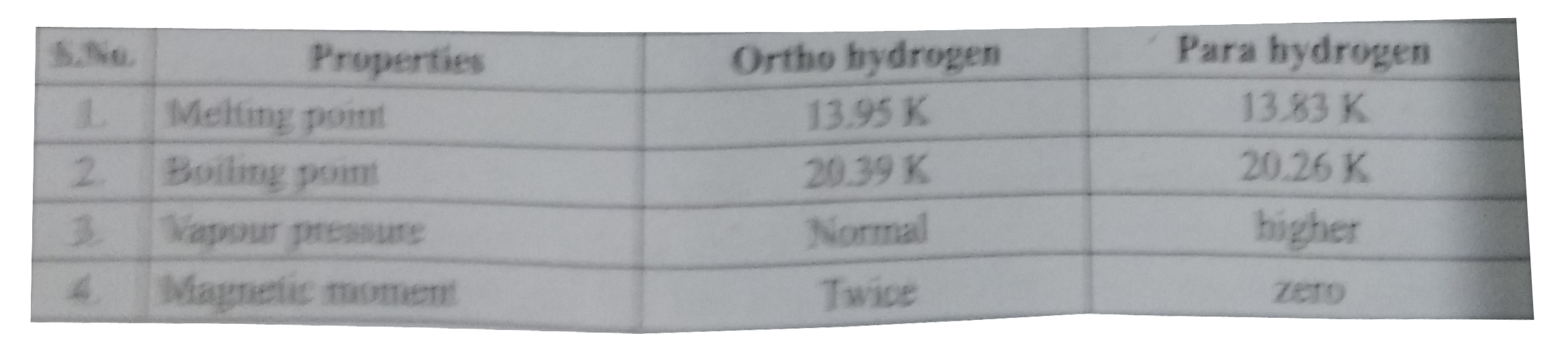
|
|
| 25. |
Compare the properties of two isomeric produces x and y formed in the following reaction. |
|
Answer» |
|
| 26. |
Compare the properties of isotopes of hydrogen. |
Answer» SOLUTION :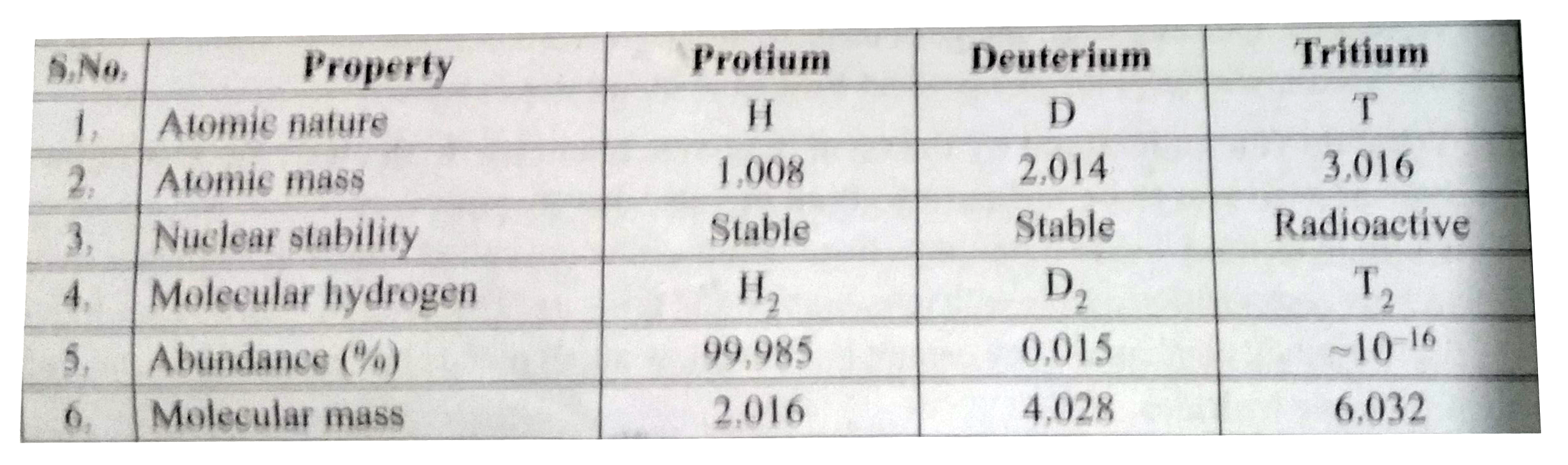
|
|
| 27. |
Compare the properties of Eka-aluminium and gallium. |
Answer» SOLUTION :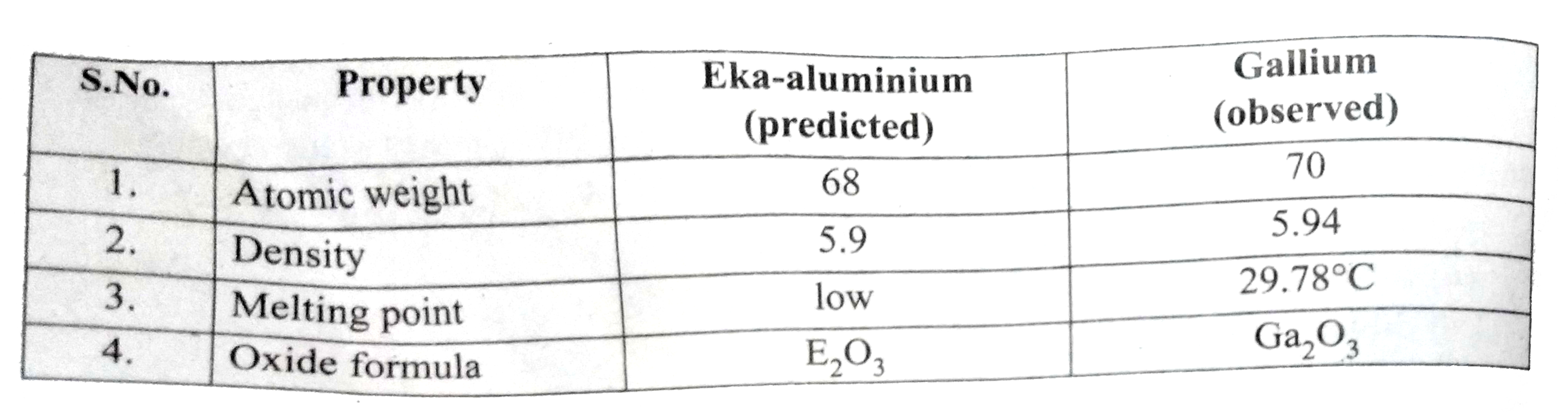
|
|
| 28. |
Compare the pressure of aniline and water in vapour phase destitution |
|
Answer» SOLUTION :In MIX vapour of LIQUID and water, `p_(1)=` vapour pressure of water vapour `p_(2)`= vapour pressure of water vapour p= Total pressure of vapour of (liquid + water) This is a solution so it is boiled under 273K temperature and pressure `therefore p_(1) lt p and p_(2) lt p` MEANS `p_(1) lt p_(2) lt p` |
|
| 29. |
Compare the polarity nature of NH_(3) and NF_(3). |
Answer» Solution :Both `NH_(3) and NF_(3)` have PYRAMIDAL sphaes with a long pair of electrons on NITROGEN atom Fluorine is more electronegatvie than nitrogen. Dipole moment of N-II bond is less than that of N-f bond. Inspite of this the dipole moment of `NH_(3)(4.9xx10^(30) cm)` is greater than that of `NH(0.8xx10^(-30)` cm). This can be explained by observing the structure of `NH_(3) and NF_(3)`. The dipole due to lone pair of electrons is acting in the same direction as the resultant dipole moment of N-H bonds. The two actions put together result in ammonia having higher dipole moment.  In `NF_(3)` the direction of ORBITAL dipole moment due to lone pari is opposite to the direction of resultant dipole moment of `3N-F` bonds. The magnitudes of dipole MOMENTS are not same. As a result the net dipole omement of `NF_(3)` will decreases. |
|
| 30. |
Compare the properties of beryllium with other elements of the same group. |
Answer» SOLUTION :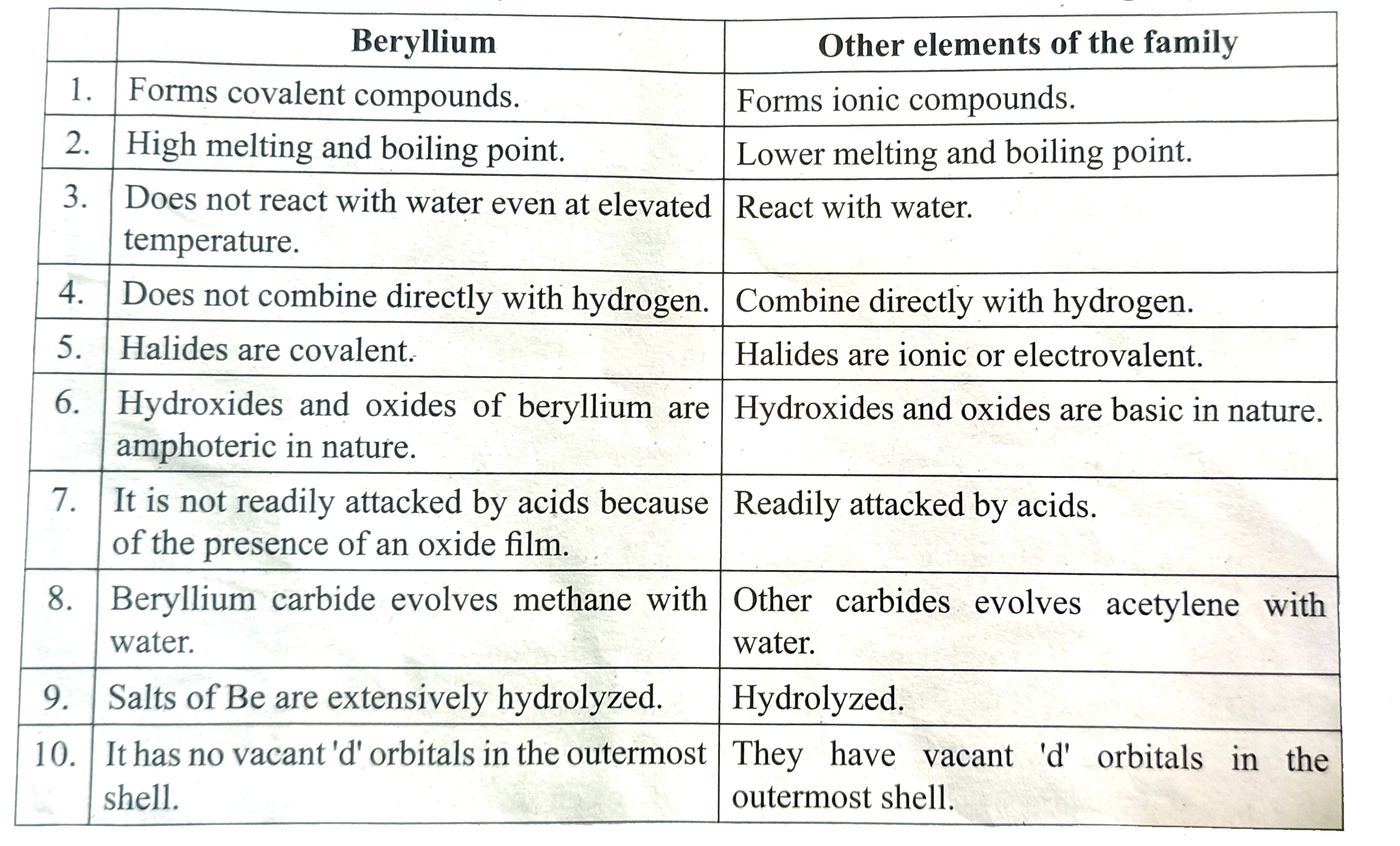
|
|
| 31. |
Compare the oxidation ability of sulphur and chlorine. |
|
Answer» Solution :`Cl + bareto Cl^(-) , S + 2E^(-) to S^(2-)` Chlorine is BETTER oxidant than sulphur. Electron gain enthalpy is more for chlorine. Chlorine ACCEPTS electron easily and becomes stable chloride. |
|
| 32. |
Compare the mean free path of hydrogen with that of oxygen molecules under the same conditions. |
| Answer» SOLUTION :The covalent RADIUS of oxygen is more than that of hydrogen, and mean free path is inversely PROPORTIONAL to MOLECULAR size. Therefore mean free path of oxygen is smallest than that of hydrogen. | |
| 33. |
Compare the first ionization energies of Carbon and Boron and give reason. |
|
Answer» Solution :ELECTRON configuration of carbon `C : (Z = 6) 1s^(2) 2s^(2) 2p^(2)`. Electron configuration of boron `B : (Z = 5) 1s^(2) 2s^(2) 2p^(2)` . The first ionization energy of c will be higher than that of B, this is simply because the size of Cis smaller than that of B .DUE to the smaller size of C ATOM, the valence electron of atom feels grater NUCLEAR charge as compare to the valence electron of B . |
|
| 34. |
Compare the bond lengths and select the correct option: |
|
Answer» `x=y=z` |
|
| 35. |
Compare the bond length C - X inhaloarenes and C - X in haloalkanes. |
|
Answer» Solution :(i) Due to this DOUBLE bond character of C -X bond in HALOARENES,the C -X bond length is shorter length and STRONGER than in HALOALKANES. (III) Example : 
|
|
| 36. |
Compare the basic strength of the following compounds: underset((I))(C_(2)H_(5)O^(-))""underset((II))(C_(2)H_(5)^(-))""underset((III))(C_(2)H_(5)NH^(-))""underset((IV))(NH_(2^(-)))""underset((V))(F^(-)) |
|
Answer» |
|
| 37. |
Compare the basic strength of the following compound: |
|
Answer» |
|
| 38. |
Compare the alkali metals and alkaline earth metals with respect to solubility of hydroxides. |
| Answer» SOLUTION :The alkali METAL hydroxides are much more soluble in WATER as compared to the corresponding ALKALINE earth metal hydroxides. This is because LATTICE enthalpies of alkaline earth metals are much higher than those of alkali metals. | |
| 39. |
Compare the alkali metals and alkaline earth metals with respect to (i) ionization enthalpy (ii)basicity of oxides and (iii) solubility of hydroxides . |
|
Answer» Solution :(i) Ionization enthalpy `(Delta_(i)H)` . Because of higher nuclear charge , the `Delta_(i)H` of alkaline EARTH metals are higher than those of the CORRESPONDING alkali metals . (ii) Basicity of oxides . The oxides of alkali and alkaline earth metals dissolve in water to form their respective hydroxides. These hydroxides are strong bases . However , since the ionization enthalpy of alkali metals is LOWER or the electropositive character of alkali metals is higher than that of the corresponding alkaline earth metals , therefore , the M-OH bond in alkali metals can more easily ionize `(MOH to M^(+) + OH^(-))` , than in alkaline earth metals and hence alkali metal oxides are more basic than the corresponding alkaline earth metal oxides . (iii) SOLUBILITY of hydroxides . Because of smaller size and higher ionic charge , the lattice enthalpies of alkaline metals are much higher than those of alkali metals and hence the solubility of alkali metals hydroxides is much higher than that of alkaline earth metal hydroxides. However , the solubility of the hydroxides of both alkali and alkaline earth metals increase down the group due to larger decrease in their lattice enthalpies as compared to their hydration enthalpies . |
|
| 40. |
Compare the alkali metals and alkaline earth metals with respect to ionization enthalpy(ii) basicity of oxides and(iii) solubility of hydroxides. |
|
Answer» SOLUTION :Ionization ENTHALPY: Because of high nuclear CHARGE the ionization enthalpy earth metals are higher than those of the corresponding alkali metals. (ii) Basicity of OXIDES: Basicity of oxides of alkali metals are higher than that of alkal metals. (iii) Solubility of hydroxides: Solubility of hydroxides of alkali metals are higher than alkaline earth metals. Alkali metals due to lower ionization enthalpy are more electron than the corresponding group 2 elements |
|
| 41. |
Compare thealkali metals and alkaline earth metals with respect to (i) ionisation enthalpy (ii) basically of oxides and (iii) solubility of hydroxides |
| Answer» Solution :Alkali METAL oxides are more BASIC than the CORRESPONDING alkaline earth metal oxides. This is because alkali METALS are more ELECTROPOSITIVE than the corresponding alkaline earth metals. | |
| 42. |
Compare the alkali metals and alkaline earth metals withrespect to (i) ionization enthalpy (ii) basicity of oxides and (iii) solubility of hydroxides. |
Answer» SOLUTION :
|
|
| 43. |
Compare the acidic strengths of the hydrides in periods and groups. |
|
Answer» Solution :In periods, the ACIDIC strength increases in the order, `CH_4lt NH_3lt H_ 2Olt HF ` Acidic strength of non-metal hydrides increases with increase in the electronegativity of ELEMENTS FORMING the hydrides. Methane almost has no acidic nature. Hydrogen fluoride is a CLEAR proton donor in aqueous solutions. But in groups H-Abond strength is more important factor in detemining the acidity than its polar nature. As the size of A increases down the group, H-A bond strength decreases and the acidic strength increases. EG. Acidic strength order of hydrogen halides is `HF lt HCI lt HBr lt HI` |
|
| 44. |
Compare the acidic strengths of ethyne, propyne and 2-butyne. |
|
Answer» Solution :Ethyne has two ACIDIC hydrogen atoms. Propyne has only one acidic hydrogen ATOM. 2-Butyne has no acidic hydrogen atoms. Alkyne with hydrogen atom PRESENT attached directly to .sp hybridised carbon atom is acidic. Hence, the correct order of acidic strength is : Ethyne `GT` Propyne `gt` 2-Butyne. |
|
| 45. |
Compare stability and dihedral angle of ethane using sawhorse and newman projection. |
|
Answer» Solution :Conformations or Ethane: In ethane, the two tetrahedral methyl groups can rotate around the carbon-carbon bond to YIELD several arrangements. Out of te infinite number of possible isomers two extreme arrangements are called (i) Eclipsed conformation (ii) staggered conformation. Eclipsed form: In this form, hydrogen atoms of ONE carbon are ECLIPSING the hydrogen atoms of the other. (ii) Staggered form : In this form, the hydrogen atoms of the two carbon atoms are oriented in such a WAY that they lie far apart from each other. infinite number of other conformations which are in between the eclipsed and staggered conformations are called skew conformations. it may be noted that the eclipsed and staggered forms can be converted into one another by rotation of `60^(@)` about the C - C bond axis. the newman's projection formulas for ethane are given in Fig. In the the Sawhorse projection formulase, front carbon is shown at the lower end of the line while the rear carbon at the upper end. the lines attached to each carbon are at an angle of `120^(@)`. (The Sawhorse projection formulae of staggered and eclipsed conformations of ethane are given, in Fig. The staggered conformation of ethane is more stable than other conformations this is because, in staggered conformation as energy associated is minimum, repulsive interactions between the hydrogen atoms attached to the two carbon atoms are minimum due to the maximum distance between them. In eclipsed conformation the energy associated is maximum due to maximum repulsive interactions between the hydrogen atoms attached to the two carbon due to minimum distance between them. 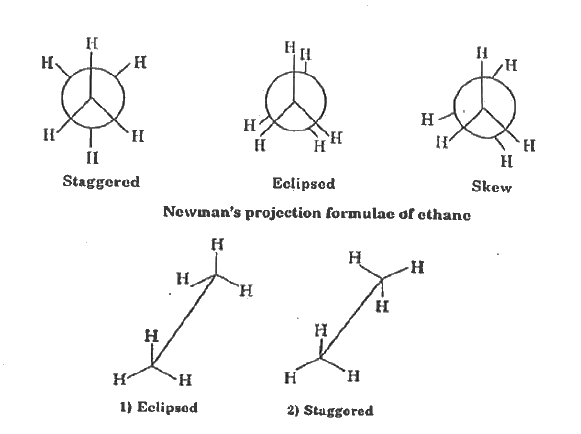
|
|
| 46. |
Compare S_(N^1)and S_(N^2 reaction mechanisms. |
Answer» SOLUTION :
|
|
| 47. |
Compare S_(N^(1)) and S_(N^(2)) reaction mechanisms. |
Answer» SOLUTION :
|
|
| 48. |
Compare S_(N)1 and S_(N)2 reaction mechanisms. |
Answer» SOLUTION : . .
|
|
| 49. |
Compare List I and List II and choose the correct matching codes from the choices given: {:(List I,ListII),((A)"Glycerol",(i)"Sublimation"),((B)"o-nitrophenol",(ii)"Beilstein's test"),((C)"Anthracene",(iii)"Victor-Meyer's method"),((D)"Halogens",(iv)"Steam distillation"),((E)"Molecular weight",(v)"Vacuum distillation"),(,(iv)"Eudiometry"):} |
|
Answer» `(A-v),(B-iv),(C-i),(D-ii),(E-iii)` |
|
| 50. |
Compare four properties of alkali metals and alkali earth metals. |
| Answer» Solution :`{:("Alkali metals", "Alkali earth metals"),(i. "The show + 1 oxidation state", i. "They show + 2 oxidation state"),(ii."They are SOFT metals",ii. "They are harder than alkali metals"),(iii. "They do not FORM compleses excep Li", iii. "They can form complex compound"),(iv. "Their CARBONATES are SOLUBLE in water except "Li_(2) CO_(3), iv "Their carbonates are insoluble water"):}` | |