

Saved Bookmarks
This section includes 7 InterviewSolutions, each offering curated multiple-choice questions to sharpen your Current Affairs knowledge and support exam preparation. Choose a topic below to get started.
| 1. |
Explainwhycationsare smallerand anionsare largerin radiithan theirparentatoms ? |
| Answer» Solution :The Ionicradius ofcation isalwayssmaller than theparent ATOM because theloss of one ORMORE elecrons increasesthe effectivenuclear charge. As aresult the forceof ATTRACTION of nucleus for theelectronsincreases and hencethe ionicradiidecrease. Incontrast the ionicradiusof an anionis always large than it parentatombecausethe addition of one or more elecrons decreases the effectivenuclear charge . As aresult , the forceof attraction of the nucleus for the electrons decreases andhencethe ionic radii increase. | |
| 2. |
Explain why cation are smaller and anions larger in radii than their parent atoms? |
|
Answer» Solution :Radius of positive ion : An atom lose electron and form positive ion, SIZE of position ion is less than its parental atom. Because, positive ion having less electron than parental atom but NUCLEAR charge is same in positive ion and positive charged ion. So, size of positive ion becomes less due to attraction of electron. e.g. Radius of SODIUM atom is 186 pm but radius of `(Na^(+))` ion is 95 pm. Size of positive ion is same in different positive ion in same atom. e.g. `Na^(+) gt Mg^(2+) " and " Mg^(+) gt Mg^(2+)` Radius of NEGATIVE ion : Electron gain electron and becomes negative ion size of negative ion is more than parental atom. e.g. Radius of Fluorine atom is 95 pm but radius of Fluoride ion is 136 pm. Because one or more electron added in parental atom REPULSION between electronelectron is increases and effective nuclear charge decreases. |
|
| 3. |
Explain why cation are smaller and anions are larger in radii than their parent atoms? |
| Answer» Solution : cation is smaller than the parent atom because it has FEWER electrons while its nuclear charge remains the same. The SIZE of anion will be larger than that of parent atom because the addition of one or more electrons would result in increased REPULSION among the electrons and a decrease in effective nuclear charge. | |
| 4. |
Explain why Ca(OH)_(2) is used in white washing . |
|
Answer» Solution :`Ca(OH)_(2)` used in white washing, this is due to disinfectant nature. (ii) Calcium hydroxide reacts with `CO_2` in AIR to FORM thin layer of calcium CARBONATE on the walls. It gives a shiny finish to the walls |
|
| 5. |
Explain whyCa(OH)_(2) is used in white washing. |
| Answer» Solution :White WASH due to its DISINFECTANT NATURE. | |
| 6. |
Explain why alkali and alkaline earth metals cannot be obtained by chemical reduction methods? |
| Answer» Solution :Metals of group 1 and 2 are reducing agents by themselves. So they cannot be formed by reduction. | |
| 7. |
Explain why can alkali and alkaline earth metals not be obtained by chemical reduction methods ? |
| Answer» Solution :Alkali metals and alkaline earth metals are themselves very strong reducing agents, much stronger than the COMMONLY USED reducing agents. Therefore, they cannot be obtained by chemical REDUCTION METHODS. | |
| 8. |
Explain why both N and Bi do not form pentahalides while phosphorus does. |
|
Answer» Solution :N does not FORM a pentahalide because it does not have d-orbitals to which 2s electron may be excited to make available FIVE half-filled orbitals needed for the formation offive N-halogen bonds. Refer to Ans. To Q .1, page 11//142. In contrast, Bi in principle, can form a pentahlide because it has VACANT 6d-orbitals to which 6s-electron can be excited to make available five half orbitals needed for the formation of five Bi - halogen bonds.  But due to inertpair effect, the energy needed for excitation of 6s-electron to 6d-orbital is much more than the energy released when two additional Bi-halogen bonds are formed. Thus, BISMUTH does not form a pentahalide (excpt `BiF_(5)`) but forms only a trihalide. |
|
| 9. |
Explain why boiling point of solution is greater than that of pure solvent ? |
| Answer» Solution :When a non volatile solute is added to a pure solvent at its BOILING point, the vapour PRESSURE of the solution is LOWERED below 1 atm. To BRING the vapour pressure again to 1 atm the TEMPERATURE of the solution has to be increased. As a result, the solution boils at a higher temperature `(T_(b))` than the boiling point of the puire solvent `T_(b) ^(@)).` This increase in the boiling point is known as elevation of boiling point `Delta T_(b) =T_(b)-T_(b)^(@).` | |
| 10. |
Explain why BeH_(2) molecule has a zero moment although the Be-H bonds are polar. |
|
Answer» Solution :This is because `BeH_(2)` MOLECULE is LINEAR `(H -Be-H)` so that the two Be-H bond mements are equal and OPPOSITE and HENCE cancel out. |
|
| 11. |
Explain why BeH_2 molecule has zero diple moment even though the Be-H bond are polar. |
| Answer» SOLUTION :Be is sp hybridised in `BeH_2` and the molecule is LINEAR. Hence the two `Be-H` bond moments cancal out resulting in zero NET DIPOLE moment. | |
| 12. |
Explain why beryllium forms a covalent hydrids while calcium forms an ionic hydride. |
| Answer» Solution :Because of HIGHER electronegativity , Be (E.N. =1.5) FORMS a covalent HYDRIDE while due to lower electronegativity CA (E.N.=1.0) forms an ionic hydride. | |
| 13. |
Explain why BeH_(2) molecuJe has a zero dipole moment although the Be - H bonds are polar. |
|
Answer» Solution :`BeH_(2)` MOLECULE is linear. In Be - H bond Be (1.6) and ii (2.1) ELECTRONEGATIVITY So, bonding `e^(-)` pair is away from Be & NEAR to H so bond is polar. Be : H and `Be^(+delta) - H^(-delta) & " Be" OVERSET(rarr)(_) ` H but `BeH_(2)` is linear. B-A-B type molecule. So both BO-H dipole arrange in opposite direction . So their vector ADDITION is zero. So `BeH_(2)` is non polar . `H larr " Be" larr H equiv [""^(-delta)H - overset(+2 delta)("Be") - H^(-delta)]^(0)` `BeH_(2)` is linear hence it is non polar. |
|
| 14. |
Explain why BeH_(2) molecule has a zero dipole moment although the Be - H bonds are polar. |
|
Answer» Solution :The Lewis structure for `BeH_(2)` molecule is as FOLLOWS: H : Be : H There is no lone PAIR at the central atom (Be) and there are two bond PAIRS. Hence, `BeH_(2)` is of the type `AB_(2).` It has a linear structure.  Dipole moments of each Be--H bond are equal and opposite in direction. THEREFORE, they NULLIFY each other. Hence, `BeH_(2)` hasa net zero dipole moment. |
|
| 15. |
Explain why BeH_(2) molecule has a zero dipole moment although be Be-H bonds are polar. |
| Answer» SOLUTION :`BeH_(2)` MOLECULE is linear (H-Be-H). Its bond angle is `180^(@)`. The two Be-H bond MOMENT are equal and opposite and HENCE cancel out each other. | |
| 16. |
Explain, why an organic liquid vapourises at a temperature below its boiling point on steam distillation? |
| Answer» SOLUTION :It is because in steam DISTILLATION the sum of VAPOUR pressure of organic COMPOUND and steam should be EQUAL to atmospheric pressure. | |
| 17. |
Explain why are alkanes referred to as saturated hydrocarbons? |
| Answer» Solution :In an ALKANE, the FOUR valence bonds of CARBON are ORIENTED at their normal tetrahedral angle of `109^@ 28.`and there is no strain in the molecule. This is why alkane molecules are stable and less reactive. | |
| 18. |
Explain why an organic liquid vapourises at a temperature below its boiling point in steam distillation. |
|
Answer» |
|
| 19. |
Explain, why an organic liquid vapourises at a temperature below its boiling point in its steam distillation ? |
|
Answer» <P> Solution :In steam distillation, the mixture CONSISTING of the organic liquid and water boils at a temperature when the sum of the vapour PRESSURE of the liquid `(p_(1))` and that of water `(p_(2))` becomes equal to the atmospheric pressure (p), i.e., `p = p_(1) + p_(2)`.Since the vapour pressure of water around the boiling point of the mixture is QUITE high and that of liquid is quite low (10 -15mm), therefore, the organic liquid at a pressure MUCH lower than the atmospheric pressure. In other words, the organic liquid vapourises at a temperature much lower than its normal boiling point. |
|
| 20. |
Explain why an organic liquid vaporises at a temperature below its boiling point in its steam distillation? |
| Answer» Solution :In steam distillation, steam is PASSED in the liquid so, the vapours of WATER and liquid mixture EMITS and then freeze. The temperature of steam is 373K and that temperature the liquid ALSO boils so, the BOILING point of liquid is below 373K. ..At 1 atmospheric pressure the liquid boils, so its boiling point is less... | |
| 21. |
Explain : "Why alkyne compound gives electrophilic addition reaction ?" |
|
Answer» Solution :In alkyne compound triple bond between TWO carbon atoms has two `pi` bond, and the negative charged `pi` electron cloud is far away from the closed edges. So `pi` bond electrophilically attracted towards `pi` electron and hence it gives electrophilic reactions. Also, `pi` electrons have weak force of attraction towards centre and hence, `pi` bond is EASILY break and thus, electrophilic reactant from `pi` bond and give addition PRODUCT. So, "alkyne easily gives electrophilic addition reaction".  Alkyne gives all electrophilic addition reaction such as HYDROGENATION with `H_(2)`, halogenation with `X_(2)`, hydro-halogenation with HX and Hydration with `H_(2)O`. |
|
| 22. |
Explain why alkyl groups are electron donors when attached to a pi system? |
|
Answer» |
|
| 23. |
Explain why alkyl groups act as electron donors when attached to a pi system. |
| Answer» Solution :The ORBITAL of C-H PARALLEL ARRANGE to the 2p orbital of `pi` bond and OVERLAP in which it donate electron of C-H bond in `CH_(3)`. The C-H bond electron of alkyle GROUP act as a electron donor to the `pi` bond of non-bonding resonance of C-H | |
| 24. |
Explain why alkyl group act as electron donors when attached to a pi-system. |
Answer» SOLUTION :Due to hyerpconjugation, ALKYL groups act as electron donors when ATTACHED to a `PI`-system as SHOWN below : 
|
|
| 25. |
Explain why alkali and alkaline earth metals cannot be obtained by chemical reduction methods ? |
|
Answer» Solution : In the process of chemical reduction, OXIDES of metals are REDUCED USING a stronger reducing agent. Alkali metals and alkaline earth metals are among the STRONGEST reducing agents and the reducing agents that are stronger than them are not available. THEREFORE, they cannot be obtained by chemical reduction of their oxides. |
|
| 26. |
Explain - Why 2,2-dimethyl-3-ethyl pentane is not true name of (CH_(3))_(3)C CH(C_(2)H_(5)). |
| Answer» Solution :In IUPAC nomenclature method, to write the NAMES of substituted groups we should follow the alphabetica order. Here, ETHYL is WRITTEN after methyl which is wrong. But to write true name methyl is written after the name of ethyl group. So for given structure the true IUPAC name is 3-ethyl-2,2-dimethyl pentane. | |
| 27. |
Explain which type of mechanism is involved in alkylation of benzene ? |
Answer» Solution :Alkylation of benzene means attachment of ALKYL `(R^(+))` group with hydrogen of benzene by following in reaction.  The carbocation FORM during the alkylation of benzene is attached in two steps. Step -1 This step is slower. In which carbocation `overset(+)(C)H_(3)//CH_(3)overset(+)(C)H_(2)` attaches to the benzene ring and form `sigma`-complex. Step-2 : In this second step `sigma`-complex loses `H^(+)` and form alkyl benzene. This step is fast and form SUBSTITUTION product.  In the FIRS step of this reaction electrophiles are added and stable `sigma`-complex form by resonance. The resonance forms of `sigma`-complex A, B, C and hybride structure (D) are as follows.  Second fast steps : `sigma` -complex is not aromatic in nature, the intermediate is unstable. So, in second steps, it immediately loses its `H^(+)` and form stable aromatic alkyl benzene. 
|
|
| 28. |
Explain whether H^(+) ions will have greater mobility in ice or liquid water . |
|
Answer» Solution :MOBILITY of `H^(+)` ions in liquid water is ledd than that in ice . thatis because of the following TWO reasons. (i) Density of liquid water`(1gL^(-1))` is greater than that of ice `(0.92 g mL^(-1))` (ii) In liquid water `H^(+)` ions get hydrated and thus BECOME heavier as compared to ice. |
|
| 29. |
Explain whether a gas approaches ideal behaviour or deviates from ideal behaviour if (a) it is compressed to a small volume at constant temperature (b) the temperature is raised while keeping the volume constant © more gas is introduced into the same volume and at the same temperature |
|
Answer» Solution :(a) if a gas is compressed to a smaller volume at constant temperature, pressure is increased. At high pressure with a smaller volume, the gas deviates from ideal behaviour. (b) If a gas temperature is raised keeping the volume constant, the pressure fo the gas will INCREASE. At high pressure, the gas deviates from ideal behaviour. (c) If more gas is introduced into the same volume and at the same temperature, the NUMBER of moles are increasing. If the volume remains same, the increased number of moles collide with each other and kinetic energy INCREASES and pressure DECREASES. At increased pressure, the gas deviates from ideal behaviour. |
|
| 30. |
Explain whether a gas approaches ideal behavior or deviates from ideal behavaiour if the temperature is raised at while keeping the volume constant |
| Answer» SOLUTION :If a GAS temperature is raised keeping the valume CONSTANT, the PRESSURE of the gas will increases. | |
| 31. |
Explain when we go top to bottom in same group what change is observed in ionisation enthalpy ? |
|
Answer» Solution : Ionisation enthalpy and atomic radius are corelated with each other. When we go top to bottom in group ionisation enthalpy decreases and atomic radius INCREASES.  In same group when we go top to bottom OUTER most electron is arranged more distance with nucleus so SHIELDING effect becomes more. In this SITUATION, when we go top to bottom in same group shielding effect is more important than effective NUCLEAR charge so less energy required to lose electron. So due to shielding effect ionisation enthalpy is decreases. |
|
| 32. |
Explain whether a gas approaches ideal behavior or deviates from ideal behavaiour if It is compressed to a smaller volume at constant temperature. |
| Answer» SOLUTION :If a GAS is compressed to a SMALLER volume at constant temperature, pressure US uncreased. At HIGH pressure with a smaller volume, the gas deviantes from ideal behavior. | |
| 33. |
Explain whether a gas approaches ideal behavior or deviates from ideal behavaiour if more gas is introduced into the same volume, and at the same temperature |
| Answer» SOLUTION :If more GAS is introduced into the same volume and at the same temperature the number of moles are INCREASING. | |
| 34. |
Explain what happenswhen boric acidis heated. |
|
Answer» Solution :Boric ACID , on heating , loseswater inthere differentstages at differenttemperatures ultimately givingborontrioxide or borican hydride. `underset(" Boric acid ")(H_(3)BO_(3))OVERSET(370 K)RARR underset(" Metaboric acid ")(HBO_(2)) + H_(2)O` `underset(" Metaboric acid ")(4HBO_(2)) underset(-H_(2)O)overset(410 K)rarrunderset(" Tetraboric acid ")(H_(2)B_(4)O_(7))overset("Red HEAT")rarr underset(" Borontrioxide ")(2B_(2)O_(3)) + H_(2)O` . |
|
| 35. |
Explain what happens when boric acid is heated. |
|
Answer» Solution :On HEATING orthoboric acid `(H_2BO_3)` at 370 K or above, it changes to METABORIC acid `(HBO_2)`. On further heating, this yields BORIC oxide `B_2O_3`. `H_3BO_3 overset(370 K) toHBO_2 to B_2O_3` |
|
| 36. |
Explainvisiblespectrumand continuousspectrum. |
| Answer» SOLUTION :WAVELENGTH SPECTRUM: Whitelightpossesthewavelengthof allwhen itconverintocolouredbandsit is calledspectrum. | |
| 37. |
Explain VSEPR theory . Applying this theory to predict the shapes of IF_(7), and SF_(6). |
|
Answer» Solution :(i) The shape of the molecules depend on the number of VALENCE shell electron pair around the central atom. (ii) i) There are two types of electron pairs namely, bond pairs and lone pairs. (iii) Each pair of valence electrons around the central atom repel each other and hence they are located as far away as possible in three dimensional space to minimise the repulsion between them. (IV) The repulsive interaction between the different types of electron pairs is in the following order: `lp-lpgtlp-bpgtbp-bp` lp : lone pair, bp : bond pair (v) The lone pair of electrons are localised only on the central atom and interact with only one nucleus whereas the bond pairs are shared between two atoms and they interact with two NUCLEI. Because of this, the lone pairs OCCUPY more space and have greater repulsive power than the bond pairs in a molecule. `IF_(7)` :It is an `AB_(7)` type molecule. This molecule has 7 bond pair of electrons and no lone pair of electrons. DUE to bond pair-bond pair interaction of electrons, `IF_(7)` has pentagonal bipyramidal shape. 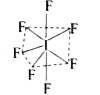 `SF_(6)`:It is an `AB_(6)` type molecule. This molecule has 6 bond pairs of electrons and no lone pair of electrons. Due to bond pair-bond pair interaction of electrons, `SF_(6)`has octahedral shape. 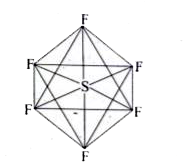
|
|
| 38. |
Explain velocity distribution curve ? |
|
Answer» SOLUTION : ..At constant speed, fraction of MOLECULES will be remains constant.. which is known as distribution curve which is known as Maxwell and Boltzman.s distribution Curve. Maxwell and Boltzman indicated that ..distribution of molecules at gases and depend upon temperature and molecule mass of gases... Maxwell DERIVE formula of number of molecules having certain speed. Graph of Maxwell Boltzman speed distribution : The curve is speed of molecules against number of molecules. This curve is known as speed distribution of Maxwell Boltzman.  Information of Graph : (i) The fraction of molecules with very low or very high speeds is very small. (ii) The fraction of molecules POSSESSING higher and higher speeds goes on increasing till it REACHES the peak and then it starts decreasing. (iii) The maximum fraction of molecules possesses a speed correcponding to the peak in the curve. The speed correcponding to the peak in the curve is called most probable speed `(u_(mp))`. |
|
| 39. |
Explain various types of constitutional isomerism (structural isomerism) in organic compounds. |
|
Answer» Solution :Constitutional isomers: These isomers having the same molecular FORMULA but differ in their bonding sequence. It is classified into 6 types: (i) Chain (or) nuclear (or) skeletal isomerism: The phenomenon in which the isomers have similar molecular formula but differ in the nature of carbon skeleton (ie., straight (or) branched) e.g., `C_(5)H_(12)`: (i) `underset(n-"pentane")(CH_(3)-CH_(2)-CH_(2)-CH_(2)-CH_(3))` (ii) `underset("ISOPENTANE")(CH_(3)underset(CH_(3))underset(|)-CH-CH_(2)-CH_(3))` (iii) `underset("Neopentane")(CH_(3)-underset(CH_(3))underset(|)overset(CH_(3))overset(|)C-CH_(3))` (ii) POSITION isomerism: If different compounds belonging to same homologous series with the same molecular formula and carbon skeleton but differ in the position of substituent or functional group or an unsaturated linkage are said to exhibit position isomerism. e.g., `CH_(5)H_(10)` (i) `underset("Pent-1-ene")(CH_(3)-CH_(2)-CH_(2)-CH=CH_(2)` (ii) `underset("Pent-2-ene")(CH_(3)-CH_(2)-CH=CH-CH_(3)` (iii) Functional isomerism: Different compounds having same molecular formula but different functional groups are said to exhibit functional isomerism. e.g., `C_(3)H_(6)O` : (i) `CH_(3)-CH_(2)-CHO` Propanal (Aldehyde group) (ii) `CH_(3)-underset(O)underset(||)C-CH_(3)` Propane (Ketone group) (iv) Metamerism: This isomerism arises due to the unequal distribution of carbon atoms on either side of the functional group or different alkyl groups attached to either side of the same functional group and having some molecular formula. e.g., `C_(4)H_(10)O` (i) `underset("1-methoxy propane")(CH_(3)-O-C_(3)H_(6))` (ii) `underset("Ethoxy ethane")(C_(2)H_(5)-O-C_(2)H_(5))` (iii) `underset("2-methoxy propane")(CH_(3)-O-CH_(2)-CH_(3))` (v) Tautomerism: It is an isomerism in which a single compound exists in two readily inter convertible structures that differ markedly in the relative position of atleast one atomic nucleus generally HYDROGEN. e.g., `C_(2)H_(4)O`:  (vi) Ring chain isomerism: It is an isomerism in which compounds having same molecular formula but differ in TERMS of bonding of carbon atom to form open chain and cyclic structures. e.g., `C_(3)H_(6)` : (i) `underset("propeme")(H_(3)C-CH=CH_(2))` (ii) 
|
|
| 40. |
Explain various methods of preparation of alkane. |
|
Answer» Solution :`1.` Prepartion of alkanes from catalytic reduction of unsaturated hydro-carbons. When a mixture hydrogen gas with alkane or alkyne gas is passed over a CATALYST such as platinum or PALLADIUM at room temperature, an alkane is produced. This process of addition of `H2` to unsaturated compounds is known as hydrogenatione above process can be catalysed by nickel at `298K`. This reaction is known as Sabatier-Senderness reaction Example : `underset("Propane")(CH_(3)-CH=)CH_(2)+H_(2)overset(Pt)(to)underset("Propane")(CH_(3)-CH_(2)-CH_(3))` `underset("Ethene")(CH_(2)=CH_(2))+H_(2)overset(Ni)underset("Ethane")(to)underset("Ethane")(CH_(3)-CH_(3))` `underset("Prop"-1-"yne")(CH_(3)-C-=CH)+2H_(2)overset(Pt)(to)underset("Propane")(CH_(3)-CH_(2)-CH_(3))` `2.` Preparation of alkanes from carboxylic acids: `i)` Decarboxylation of sodium salt of carboxylic acid When a mixture of sodium salt of carboxylic acid and soda lime (sodium hydroxide `+` calcium oxide) is heated, alkane is formed. The alkane formed has one carbon atom LESS than carboxylic acid. This process of eliminationg carboxylic group is known as decarboxylation. Example : `underset("Sodium acetate")(CH_(3)COONa)+NaOH overset(CaO)underset(Delta)(to)underset("Methane")(CH_(4)+Na_(2)CO_(3))` `ii)` Kolbe's Electrolytic method : When sodium or potassium salt of carboxylic acid is electrolyzed, a higher alkane is formed. The decarboxylative dimerization of TWO carboxylic acid occurs. This method is suitable for preparing symmetrical alkanes `(R-R)`. `{:(underset(darr"Electrolysis")(2CH_(3)COONa+2H_(2)O)),(ubrace(H_(3)C-CH_(3)+2CO_(2)+)_("at Anode")ubrace(H_(2)+2NaOH)_("at Cathode")):}`: `3.` Preparation of alkanes using alkyl halides (or) HALO alkanes : `i)` By reduction with nescent hydrogen : Except alkyl fluorides , other alkyl halides can be converted to alkanes by reduction with nascent hydrogen. The hydrogen for reduction may be obtained by using any of the following reducing agents : `Zn+HCl`, `Zn+CH_(3)COOH`, `Zn-Cu` couple in ethanol , `LiAIH_(4)` etc., Example : `CH_(3)-CH_(2)-underset("Propane")underset(CH_(3)-CH_(2)-CH_(3)+HCl)underset([H]darrZn//HCl)underset("Chloro propane")(CH_(2)-Cl)` `ii)` Wurtz reaction : When a solution of halo alkanes in dry ether is treated with sodium metal, higher alkanes are produced. This reaction is used to prepare higher alkanes with even number of carbon atoms. Example : `underset("Methyl bromide")(CH_(3)-Br+2Na)+Br-CH_(3)underset("Ether")underset("dry")(to)CH_(3)-underset("Ethane")(CH_(3)+NaBr)` `iii)` Carey-House Mechanism : An alkyl halide and lithium di alkyl cuprate are reacted to give higher alkane. Example : `underset("Ethyl bromide")(CH_(3)CH_(2)Br)+(CH_(3))_(2)underset("Propane")underset(CH_(3)CH_(@)CH_(3)+CH_(3)Cu+LiBr)underset(darr)(LiCu)` `4.` Preparation of Alkanes from Grignard reagents : Halo alkanes reacts with magnesium in the presence of dry ethers to give alkyl magnesium halide which is known as Grignard reagents. Here the alkyl group is directly attached to the magneisum metal make it to behave as carbanion. So, any compound with easily replaceable hydrogen reacts with Grignard reagent to give corresponding alkanes. Example : `underset("Chloromethane")(CH_(3)-Cl+Mg)overset("Dry ether")(to)underset("Methyl magneisum bromide")(CH_(3)MgCl)` `CH_(3)MgCl+H_(2)Otounderset("Methane")(CH_(4))+Mg(OH)Cl` |
|
| 41. |
Explain vapour pressure of liquid. |
|
Answer» Solution :EQUILIBRIUM OR Saturated Vapour Pressure : If an evacuated container is partially filled with a liquid, a portion of liquid evaporates to fill the remaining volume of the container with vapour. Initially the liquid evaporates and pressure exerted by vapours on the walls of the container (vapour pressure) increases. After some time it becomes constant, an equilibrium is established between liquid phase and vapour phase. Vapour pressure at this stage is known as .equilibrium vapour pressure. or .saturated vapour pressure.. Since process of vapourisation is temperature dependent , the temperature must be mentioned while reporting the vapour pressure of a liquid. Boiling and Boiling point and its type : Boiling : liquid is heated in an open vessel, the liquid vapourises from the surface. At hte temperature at which vapour pressure of the liquid becomes equal to the external pressure, vapourisation can occur throughout the bulk of the liquid and vapours expand freely into the surroundings. The condition of free vapourisation throughout the liquid is called boiling. Boiling point : The temperature at which vapour pressure of liquid is equal to the external pressure is called boiling to the external pressure is called boiling point temperature at that pressure. Normal and Standard boiling point : At 1 atm. pressure boiling temperature is called .normal boiling point. and 1 bar then the boiling point is called .standard boiling point.. Standard boiling point of (1 bar) `lt` Normal boiling point of (1 atm.) `e.g. (("Standard boiling"),("point of "H_(2)O),(99.6 ""^(@)C(372.6 K)))lt (("Normal boiling"),("point of "H_(2)O),(100 ""^(C)(373 K)))` because, 1 bar pressure `lt 1` atm. pressure Effect of Pressure on Boiling Point and its Uses :If pressure decreases boiling point decreases height increases then pressure decrease, If pressure increases boiling point will be increases. ex. - 1 : Pressure is less on mountain so boiling point is very less so we can.t make tea properly. ex. - 2 : Boiling point will be increases by increases pressure cooker so cooking will be proper. e.g. - 3 : In hospitals surgical instruments are sterilized in autoclaves in which boiling point of water is increase by increasing the pressure above the atmospheric pressure by using a weight covering the vent.  Critical temperature : Boiling does not occur when liquid is heated in a closed vessel on heating continuously vapour pressure increases. At first a CLEAR boundary is visible between liquid and vapour phase because liquid is more dense than vapour. As the temperature increases more and more molecules go to vapour phase and density of vapour rise. At the same time liquid becomes less dense. It expands because molecules MOVE apart. When density of liquid and vapour becomes the same the clear boundary between liquid and vapours disappears. This temperature is called critical temperature. |
|
| 42. |
Explain value of electron gain enthalpy of noble gases. |
Answer» Solution :Value of electron GAIN enthalpy is positive. Electron gain enthalpy of Ne is MAXIMUM positive. Remaining elements having electron gain enthalpy is positive but uncertain. Electron gain enthalpy of same as element is positive because its OCTET is positive because its octet are complete so more ENERGY is required to gain any electron . |
|
| 43. |
Write any three main features of the VSEPR theory. |
|
Answer» SOLUTION :Bonding : The bond formation takes PLACE if there exists impaired electron in the valance shell. Shape : The geometry or the shape of molecules depends on the number of valence shell electrons surroundigns. The central atom. Repulsion : Electron PAIR TEND to repell one another because electron cloudshave similar charge. Stability. As a result of electron pair repulsion these electron pairs to stay apart as possible in order to attain minimum energy and maximum stability. Repulsive interaction : Lane pair with lane pair electrons are having maximum repulsive interaction,bond pair- bond electrons are having minimum repulsive interaction. When angle of repulsion decreases angle between the electrons pair increases. (`109^(@),28.` less repulsion, `104^(@)` more repulsion) |
|
| 44. |
Explain Valence Bond Theory. |
|
Answer» SOLUTION :The covalent bond is formedby overlapping of those orbital which contains unpaired electrons. When the overlapping is ALONG axis, the overlapping becomes maximum and strong, called as a SIGMA bond. During overlapping the electrons present in the valence orbit must have opposite SPIN. Covalent molecule have lower energy than COMBINING atoms. Therefore resulting molecule are always stable. |
|
| 45. |
Explain uses of indicator in analysis of redox reaction. |
|
Answer» Solution :(i) In one situation, the reagent itself is intensely coloured, e.g., permanganate ion, `MnO_(4)^(-)`. Here `MnO_(4)^(-)` acts as the self indicator. The visible end point in this case is achieved after the last of the reductant `(Fe^(2+)orC_(2)O_(4)^(-2))` is oxidised and the first lasting tinge of pink COLOUR appears at `MnO_(4)^(-)` CONCENTRATION as low as `10^(-6)"mol"dm^(-3)(10^(-6)"mol"L^(-1))`. This ensures a minimal .overshoot. in colour beyond the equivalence point, the point where the reductant and the oxidant are equal in terms of their mole stoichiometry. (ii) If there is no dramatic auto-colour CHANGE (as with `MnO_(4)^(-)` titration), there are indicators which are oxidised immediately after the last bit of the reactant is consumed, producing a dramatic colour change. The best example is afforded by `Cr_(2)O_(7)^(2)`, which is not a self-indicator, but oxidises the indicator substance diphenylamine just after the equivalence point to produce an intense blue colour, thus signalling the end point. (iii) There is yet another method which is interesting and quite common. Its use is restricted to those REAGENTS which are able to oxidise `I^(-)` ions, say, for example, `2Cu_((aq))^(+2)+4I_((aq))^(-)toCu_(2)I_(2(s))+I_(2(aq))` This method relies on the FACTS that iodine itself gives an intense blue colour with starch and has a very specific reaction with thiosulphate ions `(S_(2)O_(3(aq))^(-2))`, which too is a redox reaction : `I_(2(aq))+S_(2)O_(3(aq))^(-2)to2I_((aq))^(-)+S_(4)O_(6(aq))^(-2)` `I_(2)`, though insoluble in water, remains in solution containing Kl as `KI_(3)`. On addition of starch after the liberation of `Cu^(2+)` ions on iodide ions, an intense blue colour appears. This colour disappears as soon as the iodine is consumed by the thiosulphate ions. Thus, the end-point can easily be tracked and the rest is the stoichiometric calculation only. |
|
| 46. |
Explain types of physical equilibrium by giving example. |
|
Answer» Solution :(i) Solid-Liquid equilibrium : There is only ONE temperature (melting point) at 1 atm. (1.013 bar) at which the two phases can coexist. It there is no exchange of HEAT with the surroundings the mass of the two phases remain constant. `{:(H_2O_((s)), hArr, H_2O_((l))),("solid",hArr,"liquid"):}}` ( Conclusion : Melting point is fixed at constant pressure.) (ii) Liquid-Vapour equilibrium : At a given definite temperature the vapour pressure is constant between liquid and its vapour in close vessel. `{:(H_2O_((l)), hArr, H_2O_((g))),("liquid",hArr,"vapour"):}}` (Conclusion: Constant temperature, `p_(H_2O)` remain constant in close vessel.) (iii) Solid-Gas equilibrium : In close vessel, at constant temperature the equilibrium occur between solid and vapour. This system known sublimation. `{:(NH_4Cl_((s)) , hArr , NH_4Cl_((g))),("solid",hArr, "vapour"):}}` (Conclusion :Constant temp., in close vessel the mass of solid and vapour.) (iv) Equilibrium involving dissolution of solid in LIQUIDS : At constant temp., saturated solution of solid is dissolution of solid in liquid TYPE equilibrium and solubility remain constant. `"Solute"_"(solid)" hArr "Solute"_"(solution)"` `"Sugar"_"(solid)" hArr "Sugar"_"(solution)"` (Conclusion : Concentration of solute in solution is constant at a given temperature.) (v) Equilibrium involving dissolution of gases in liquids : "At constant temperature in closed vessel in the saturated solution of gas in liquid the equilibrium established between soluble gas in liquid and FREE gas. In a closed vessel the concentration of gas in liquid is directly proportional to the pressure of gas. `{:("Gases"_(g),hArr,"Gas"_"(aq)"),(CO_(2(g)),hArr, CO_(2(aq))):}}` (Conclusion : `"Gas"_"(aq)" // "Gas"_"(g)"` is constant at a given temperature `CO_(2(aq))//CO_(2(g))` is constant) . |
|
| 47. |
Explain types of particulate pollutants. |
|
Answer» Solution :Particulates pollutants are the minute solid particles or liquid droplets in air. These are present in vehicle emissions, smoke particles from fires, dust particles and ash from industries. There are two types of particulates present in the atmosphere : (a) VIABLE (b) Non-viable (a) Viable Particulates : The viable particulates like bacteria, FUNGI, moulds, algae etc. are minute living organisms that are dispersed in the atmosphere. Human beings are allergic to some of the fungi found in air. They can also cause plant diseases. (b) Non-viable particulates : Non-viable particulates may be classified according to their nature and size as follows: (i) Smoke : Smoke particulates consist of solid or mixture of solid and liquid particles formed during combustion of organic matter. e.g., cigarette smoke, smoke from burning of fossil fuel, garbage and dry leaves, oil smoke etc. (ii) Dust : Dust is composed of FINE solid particles. It produced during crushing, grinding and attribution of solid materials. e.g., sand from sand blasting, saw dust from wood works, pulverized coal, cement and fly ash from factories, dust storms etc. (III) Mists : Mists are produced by particles of spray liquids and by condensation of vapours in air. e.g., sulphuric acid mist and herbicides and insecticides that miss their targets and travel through air and form mists. (iv) Fumes : Fumes are generally obtained by the condensation of vapours during sublimation, distillation, boiling and several other chemical reactions. e.g., organic solvents, metals and METALLIC oxides form fume particles. |
|
| 48. |
Explain types of Hydrogcn bond example and its effect on physical properties. OR Give difference between intermolecular hydrogen bond and intramolecular hydrogen bond. |
Answer» Solution :There are TWO TYPES of H - bonds (i) Intermolecular hydrogen bond (II) [ntramolecular hydrogen bond. 
|
|
| 49. |
Explain two methods of preparation of ethylene dichloride. |
|
Answer» Solution :(i) ADDITION of `Cl_2` to ETHYLENE : `UNDERSET("Ethylene")(CH_2=CH_2) + Cl_2 to underset("Ethylene DICHLORIDE ")(underset(Cl)underset(|)CH_2-underset(Cl)underset(|)CH_2)` (ii) Action of `PCl_5` on Ethylene GLYCOL : `underset("Ethylene glycol ")(underset(OH)underset(|)(CH_2) - underset(OH)underset(|)(CH_2))+ 2PCl to underset("Ethylene dichloride ")(underset(Cl)underset(|)CH_2-underset(Cl)underset(|)CH_2) + 2POCl_3 + 2HCl` |
|
| 50. |
Explain tropospheric pollution spaced by oxides of nitrogen. |
|
Answer» Solution :Dinitrogen and DIOXYGEN are the main constituents of air. These gases do not react with each other at a normal temperature. At high altitudes when lightning strikes, they combine to form oxides of nitrogen `NO_2` is oxidised to nitrate ion, `NO_3^-` which is washed into soil, where it serves as a fertilizer. In an automobile engine, (at high temperature) when fossil fuel is burnt, dinitrogen and dioxygen combine to yield significant quantities of nitric OXIDE (NO) and nitrogen dioxide `(NO_2)` as given below : `N_(2(g)) + O_(2(g)) overset(1483 K)to 2NO_((g))` No REACTS instantly with oxygen to give `NO_2`. `2NO_((g)) + O_(2(g)) to 2NO_(2(g))` Rate of production of `NO_2` is FASTER when nitric oxide reacts with ozone in the stratosphere. `NO_((g)) + O_(3(g)) to NO_(2(g)) + O_(2(g))` The irritant red haze in the traffic and congested places is due to oxides of nitrogen. Higher concentrations of `NO_2` damage the leaves of plants and retard the rate of photosynthesis. `NO_2` is a lung irritant that can lead to an acute respiratory disease in children. It is toxic to living tissues also. Nitrogen dioxide is also harmful to various textile fibres and metals. |
|