

Saved Bookmarks
This section includes 7 InterviewSolutions, each offering curated multiple-choice questions to sharpen your Current Affairs knowledge and support exam preparation. Choose a topic below to get started.
| 1. |
Match the species in Column I with the type of hybrid orbitals in Colunm II. {:("ColumnIColumn II " ),((i) SF_(4) "(a)"sp^(3) d^(2) ),((ii) IF_(5) "(b) "d^(2) sp^(3)),((iii)NO_(2)^(+)""(c)sp^(3) d ),((iv) NH_(4)^(+)""(d) sp^(3)),(""(e) sp ),():} |
|
Answer» |
|
| 2. |
Match the species in Column-I with the type of hybrid orbitals in Column-II : |
|
Answer» Solution :(A - 3)(B- 1)(C - 5)(D -4) (A) `SF_(4)` = NUMBER of bp (4) + number of lp (1) = `sp^(3) ` d hybridization (B) `IF_(5)` = number of bp (5) + number of lp (1) = `sp^(3)d^(2)` hybridization (C) `NO_(2)^(+)` = number of bp (2) + number of lp (0) = sp hybridization (D) `NH_(4)^(+) = ` number of HP (4) + number of lp (0) = `sp^(3)` hybridization |
|
| 3. |
Match the species in Column-I with the geometry/ shape in Column-II : |
|
Answer» Solution :(A - 5)(B - 1)(C - 2)(D - 3) (A) `H_(3) O^(+)` = 3bp + 1lp pyramidal shape (B) HO `EQUIV` CH linear as sp hybridised shape. (C) `ClO_(2)^(-) ` = 2bp + 2lp = angular shape (D) `NH_(4)^(+)` = 4 bp + 0lp terahedral shape |
|
| 4. |
Match the species in Column I with the geometry/shape in Column II. {:("ColumnIColumn II " ),((i) H_(3)O^(+) "(a) Linear"),((ii) HC-=CH "(b) Angular"),((iii)ClO_(2)^(-)""(c)Tetrachedral ),((iv) NH_(4)^(+)"(d)Trigonal bipyramidal"),(""(e) Pyramidal):} |
|
Answer» <P> |
|
| 5. |
Match the species in Column I with corresponding properties in Column II and select the answer from the codes given . |
|
Answer» |
|
| 6. |
Match the species in Column I with the bond order in Column II {:("ColumnIColumn II " ),((i) NO "(a)" 1.5),((ii) CO"(b)" 2.0),((iii)O_(2)^(-)""(c) 2.5),((iv) O_(2)"(d)" 3.0):} |
|
Answer» |
|
| 7. |
Match the species in Column I with the bond order in Column II. |
|
Answer» i-c,ii-d,iii-a,iv-b |
|
| 8. |
Match the species in Column I with the bond order in Column II : |
|
Answer» Solution :(A - 5)(B - 1)(C - 2)(D - 3) (A) NO (7 + 8 = 15) = `sigma 1S^(2) , sigma^(**) 1s^(2), sigma 2S^(2), sigma^(**) 2s^(2), sigma 2p_(z)^(2) pi 2p_(x)^(2) = pi 2p_(y)^(2) pi^(**) 2p_(x)^(1)` Bond order= `(1)/(2) (N_(b) - N_(a)) (10 - 5)/(2)` = 2.5 (B) CO (6 + 8 = 14) = `sigma 1s^(2) , sigma^(**) 1s^(2) , sigma 2s^(2) , sigma^(**) 2s^(2) , sigma 2p_(z)^(2) , pi 2p_(x)^(2) = pi 2p_(y)^(2)` Bond order = `(10 - 4)/(2)` = 3 (C) `O_(2)^(-) (8 + 8 + - 16) = sigma 1s^(2), sigma^(**) 1s^(2) sigma 2s^(2), sigma^(**) 2s^(2), sigma 2p_(z)^(2), pi 2p_(x)^(2) = pi 2p_(y)^(1)` Bond order = `(10 - 7)/(2) ` = 1.5 (D) `O_(2) ( 8 + 8= 16) = sigma 1s^(2), sigma^(**) 1s^(2) , sigma 2s^(2) , sigma^(**) 2s^(2), sigma 2p_(x)^(2) , pi 2p_(x)^(2) = pi 2p_(y)^(2) , pi^(**) 2p_(x)^(1) = pi^(**) 2p_(y)^(1)` Bond order= `(10 - 6)/(2)` = 2 |
|
| 9. |
Match the species given in Column I with the properties mentioned in Column II {:(,"Column-I",,"Column-II"),("A.","BF"_(4)^(-),1.,"Oxidation state of central atom is +4"),("B.","AlCl"_(3),2.,"Strong oxidising agent"),("C.","SnO",3.,"Lewis acid"),("D.","PbO"_(2),4.,"Can be further oxidised"),(,,5.,"Tetrahedral shape"):} |
|
Answer» Solution :A. `BF_(4)^(-)` Tetrahedral shape `sp^(3)` HYBRIDISATION regular geometry B. `AlCl_(3^(-))` Octet not complete of Al, act as Lewis acid C. `SnO Sn^(2+)` can show +4 oxidation state D. `PbO_(2)` Oxidation state of PB in `PbO_(2)` is +4. Due to inert pair effect `Pb^(4+)` is less stable than `Pb^(2+)`, ACTS as strong oxidising agent. |
|
| 10. |
Match the species given to in Column I with the properties mentionedin Column II. {:(,"Column I",,,"Column II"),((i),BF_(4)^(-),,(a),"Oxidation state of central atom is +4"),((ii),AlCl_(3),,(b), "Strong oxidising agent"),((iii),SnO,,(c),"Lewis acid"),((iv),PbO_(2),,(d),"Can be further oxidised"),(,,,(e),"Tetrahedral shape"):} |
|
Answer» |
|
| 11. |
Match the species given in Column-I with the properties mentioned in Column-II. |
Answer»  (B) Gallium with unusually LOW MELTING point (303K), could exist in liquid state during summer. Its high boiling point (2676 K) makes it a useful material for measuring high temperatures. (C) Borax is used as a flux for SOLDERING metals, for heat, scratch and stain resistant glazed coating to earthenwares. (D) Zeolites are aluminosilicates and widely used as a catalyst in PETROCHEMICAL industries for cracking of hydrocarbons and isomerization, e.g., ZSM-5 (A type of zeolite) used to convert alcohols directly into gasoline. (E) Quartz, cristobalite and tridymite are some of the crystalline forms of silica. |
|
| 12. |
Match the species given in Column-I with the properties mentioned in Column-II. |
|
Answer» (B) In `AlCl_3` octet of Al is not complete , electron deficient compound. (C)In SNO oxidation state of Sn is +2 and can be CHANGED in to +4. (D) In `PbO_2` , oxidation state of Pb is +4 ,it is LESS stable due to inert pair effect and +2 oxidation state is more stable . `Pb^(4+)` , changes in to `Pb^(2+)` acts as a strong oxidizing agent. |
|
| 13. |
Match the species given in Column I with the hybridstiongiven in Column II. |
|
Answer» |
|
| 14. |
Match the species given in Column-I with the hybridizations given in Column-II. |
|
Answer» (B) In `[Al(H_2O)_6]^(3+)`coordination number of Al is 6 and geometry is octahedral. (C) In `B_2H_6`, each B atom uses `sp^3` hybrid orbitals for bonding. Out of the four, `sp^3` hybrids on each B atom, one is without an electron. (D) All the carbon atoms are equal and they undergo `sp^2` hybridization. Each carbon atom FORMS three sigma bonds with other three carbon atoms. (E) The basic structural unit of silicates is `SiO_4^(4-)`in which silicon atom is BONDED to four oxygen atoms in tetrahedron fashion.  (F) In `[GeCl_6]^(2-)` , Ge has coordination number 6 and it has octahedral geometry and central atom Ge is `sp^3d^2` hybridized. |
|
| 15. |
Match the species given in column I with prperties given in Column II. |
|
Answer» |
|
| 16. |
Match the speciesgiven in Column I with properties given in Column II. {:(,"Column I",,,"Column II"),((i),"Dibroane",,(a),"Used as a flux for soldering metals"),((ii),"Gallium",,(b),"Crystalline form of silica"),((iii),"Borax",,(c ),"Banana bonds"),((iv),"Aluminosilicate",,(d),"Low melting , high boiling, useufl for measuring high temperature"),((v),"Quartz",,(e),"Used as catalyst in petrochemical industries"):} |
|
Answer» |
|
| 17. |
Match the species given in Column I with properties given in Column II {:(,"Column-I",,"Column-II"),("A.","Diborane",1.,"Used as a flux for soldering metals"),("B.","Gallium",2.,"Crystalline form of silica"),("C.","Borax",3.,"Banana bonds"),("D.","Aluminossilicate",4.,"Low melting, high boiling, useful for measuring high temperatures"),("E.","Quartz",5.,"Used as catalyst in petrochemical industries"):} |
|
Answer» Solution :A. `BH_(3)` is unstable forms diborane `B_(2)H_(6)` by 3 centre-2 electron bond show banana bond B. Gallium with low melting POINT and high boiling point makes it useful to measure high TEMPERATURES C. Borax is used as a flux for SOLDERING metals for heat, scratch resistant coating in EARTHENWARES D. Alumino silicate used as catalyst in petrochemical industries E. Quartz, is a crystalline form of silica. |
|
| 18. |
Match the species given column I with prooperties given in column II |
|
Answer» |
|
| 19. |
Match the species given in Column I with hybridisation given in Column II. {:(,"Column-I",,"Column-II"),("A.","Boron in"[B(OH_(4))]^(-),1.,sp^(2)),("B.","Aluminium in"[Al(H_(2)O)_(6)]^(3+),2.,sp^(3)),("C.","Boron in "B_(2)H_(6),3.,sp^(3)d^(2)),("D.","Carbon in buckminster fullerene",,),("E.","Silicon in "SiO_(4)^(4-),,),("F.","Germanium in"[GeCl_(6)]^(2-),,):} |
|
Answer» Solution :A. BORON in `[B(OH)_(4)]^(-)sp^(3)` hybridised B. ALUMINIUM in `[Al(H_(2)O)_(6)]^(3+)sp^(3)d^(2)` hybridised C. Boron in `B_(2)H_(6)sp^(3)` hybridised D. Carbon in BUCKMINSTERFULLERENE `sp^(2)` hybridised E. Silicon in `SiO_(4)^(4-)sp^(3)` hybridised F. Germanium in `[GeCl_(6)]^(2-)sp^(3)d^(2)` hybridised. |
|
| 20. |
Match the spcies given in Column I withthe hybridisation given in Column II. {:(,"Column I",,,"Column II"),((i),"Boron in" [B(OH)_(4)]^(-),,(a),sp^(2)),((ii),"Aluminium in" [Al(H_(2)O)_(6)]^(3+),,(b),sp^(3)),((iii),"Boron in" B_(2)H_(6),, (c), sp^(3)d^(2)),((iv),"Carbon in Buckminsterfullerene",,,),((v),"Silicon in" SiO_(4)^(4-),,,),((vi),"Germanium in " [GiCl_(6)]^(2-),,,) :} |
|
Answer» |
|
| 21. |
Match the solids in List-I with their properties in List-II: |
|
Answer» |
|
| 22. |
Match the shape of molecules in Column-I with the type of hybridization in Column-11. |
|
Answer» Solution :(A- 3)(B - 1)(C - 2) (A) Tetrahedral shape - `sp^(3)` hybridization (B) TRIGONAL shape - `sp^(2)`hybridization (C) LINEAR shape - sp hybridization |
|
| 23. |
Match the shape of molecules in Column I with the type of hybridisation in Column II. {:("ColumnIColumn II " ),((i) "Tatradedral(a)"sp^(2) ),((ii)"Trigonal(b)sp"),((iii)"Linear(c)"sp^(3)):} |
|
Answer» |
|
| 24. |
Match the salts/mixtures listed in column-I with their respective name listed in column-II. |
|
Answer» |
|
| 25. |
Match the reducing agents of List-II with the reaction of List-I and select the correct answer using the code given below the lists. |
|
Answer» <P>`{:(P,Q,R,S),(4,3,1,2):}` |
|
| 26. |
Match the redox process in Column - I with n - factor for underlined species in Column - II |
|
Answer» `I_(2)rarr I^(-) +IO_(3)^(-) -5//3` `H_3 PO_(2) rarr PH_3 + 2H_(3)PO_(3) -4//3` `H_(3)PO_(2) +NAOH rarr -1 NaH_(2)PO_(2)+H_(2)O` |
|
| 27. |
Match the reagents used for the detection of elements in organic compounds Correct match is |
|
Answer» `{:(A,B,C,D),(3,1,2,4):}` |
|
| 28. |
Match the reagents a-j with products A-J. There is one best product for each reaction. The molecule (x) is the starting material for all reactions in problem. Do the ones you know first and then tackle the rest by deductive reasoning |
Answer» 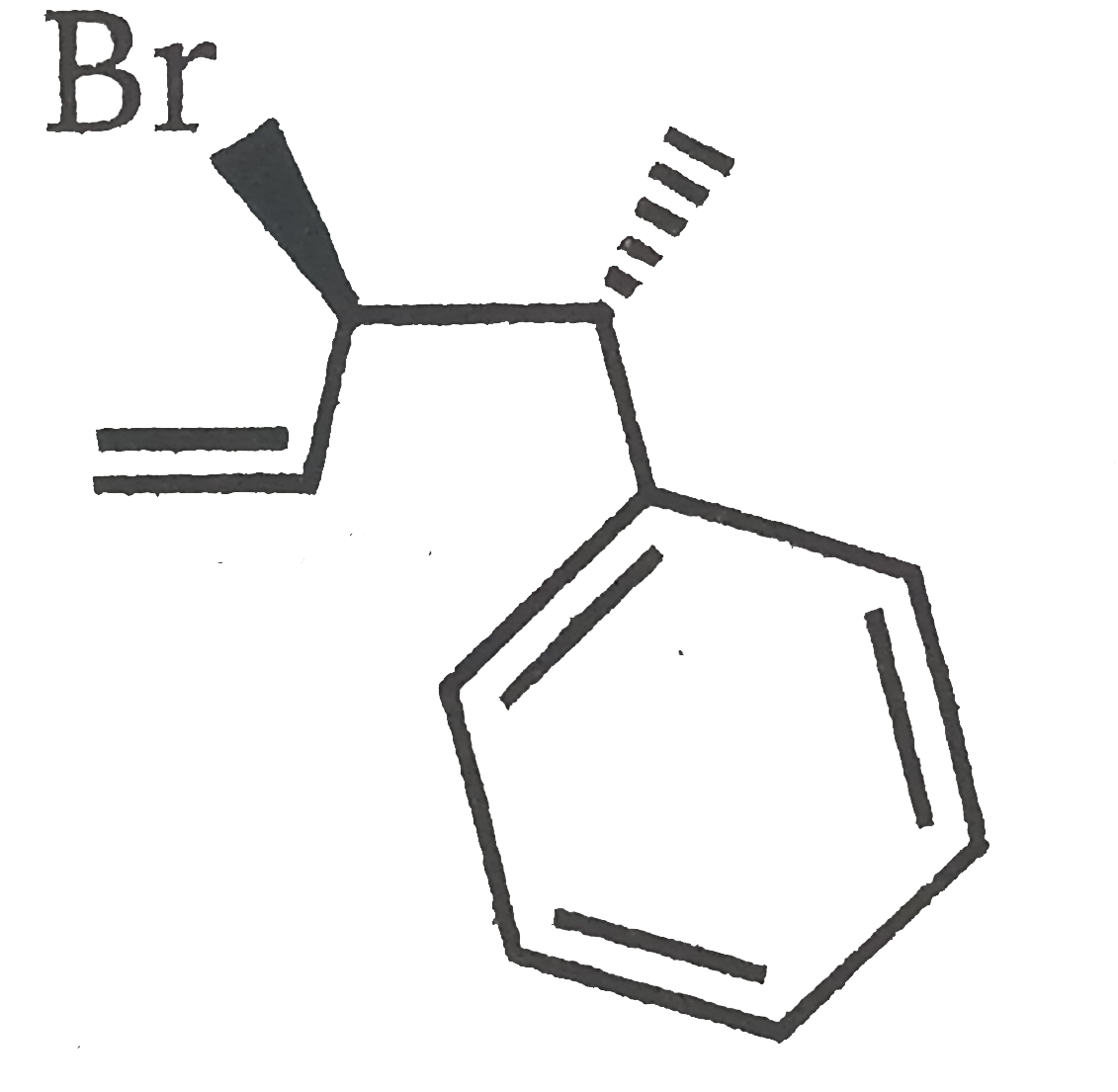 is the starting MATERIAL for all reactions in problem. Do the ONES you know first and then tackle the rest by deductive reasoning is the starting MATERIAL for all reactions in problem. Do the ONES you know first and then tackle the rest by deductive reasoning 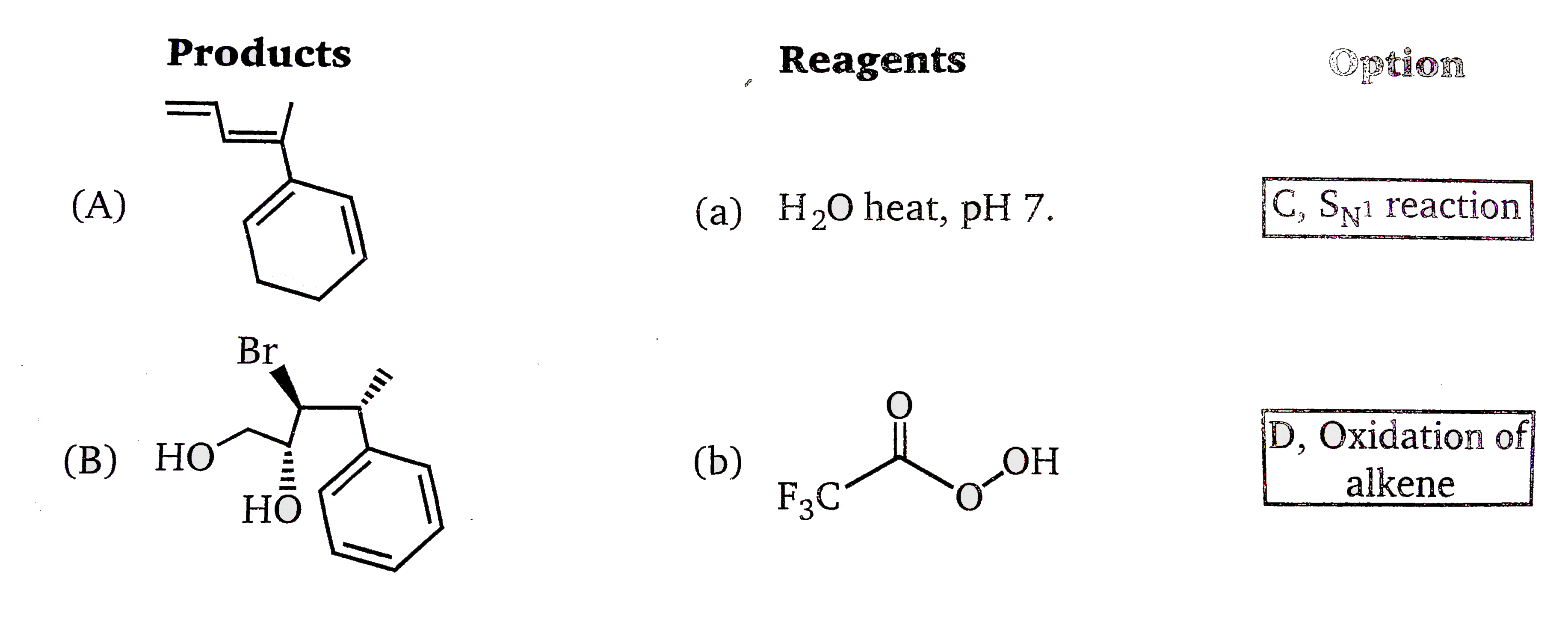 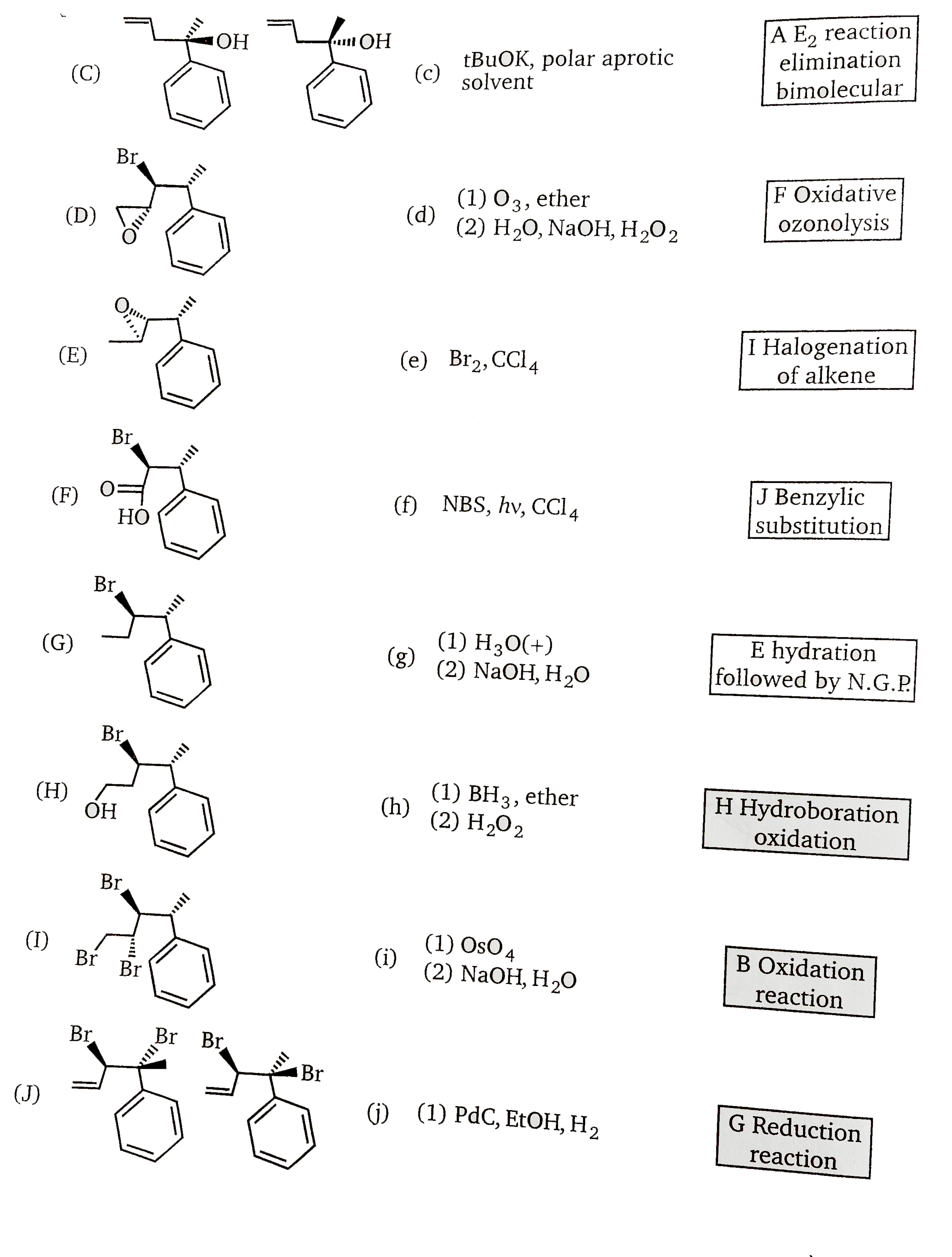
|
|
| 29. |
Match the reactions/reaction conditions listed in column-I with the characteristics/precipitate colour of the reaction products listed in column-II. |
|
Answer» (B) `CO^(2+) +4SCN^(-) rarr [Co(SCN)_(4)]^(2-)` (c) `CuCI_(2)+NaOH rarr underset(("Blue"))(Cu(OH)_(2)darr) overset(Delta)rarr underset(("Black"))(CuOdarr)` (e) `PbSO_(4)darr` (White ppt. soluble in `CH_(3)COONH_(4))` `rArr [Pb(CH_(3)COO)_(4)]^(2-)` (f) `PbCrO_(4)darr` (yellow ppt. soluble in `NaOH)` `rarr Pb(OH)_(4)^(2-)` (g) `HgI_(2)darr` (Scarlet/Red ppt.) |
|
| 30. |
Match the reactions listed in column(I) with characteristic(s) of the products/typee of reactions listed in column(II). . |
|
Answer» |
|
| 31. |
Match the reactions listed in column-I with the colour of the the reaction precipitates listed in column-II. |
|
Answer» (B) `Bi(C_(6)H_(3)O)_(3)darr` (Yellow PPT.) (c) `Ag_(3)AsO_(4)darr` (Brownish red) (d) `MnO(OH)darr` (Browm) |
|
| 32. |
Match the reactions listed incolumn-I with the characteristic (s) of the products listed in column-II. |
|
Answer» |
|
| 33. |
Match the reactions in Column I with the types of products/the use of products in Column II. |
|
Answer» `{:(P,Q,R,S),(1,3,2,4):}`  Hydroquinone acts as developer (Q) `BaCl_(2)+K_(2)Cr_(2)O_(7)+3H_(2)SO_(4)toK_(2)SO_(4)+2CrO_(2)Cl_(2)+2BaSO_(4)+3H_(2)O` LTBR. (R) `FeSO_(4)+K_(3)[FE(CN)_(6)]toKF e^(II)[Fe^(III)(CN)_(6)]+K_(2)SO_(4)` (S) `CO(NO_(3))_(2)+ZnOoverset(Delta)toCoZnO_(2)` or COO. ZnO |
|
| 34. |
Match the reactions in Column I with nature of water in Column II and mark the correct option from the codes given below : |
|
Answer» |
|
| 35. |
Match the reactions given in Column I with the types of reactions given in Column II. |
| Answer» SOLUTION :(a)-(ii), (B)-(iv), (C)-(V), (d)-(i), (e)-(III) | |
| 36. |
Match the reactions given in Column I with the reaction types in Column II. {:("Column I","Column II"),((i)CH_(2)=CH_(2)+H_(2)Ooverset(H^(+))rarr CH_(3)CH_(2)OH,"(a) Hydrogenation"),((ii)CH_(2)=CH_(2)+H_(2)overset(pd)rarrCH_(3)-CH_(3),"(b) Halogenation"),((iii) CH_(2)=CH_(2)+Cl_(2)rarrCl-CH_(2)-CH_(2)-Cl,"(c )Hydration"),((iv)3CH-=CHoverset("Cutube")underset("Heat")rarr C_(6)H_(6),"(d) Hydration"),(,"(e) Condensation"):} |
|
Answer» |
|
| 37. |
Match the reactions given in Column Iwith the suitable reagents given in Column II. |
Answer» 
|
|
| 38. |
Match the reactions given in column-I with the characteristic(s) of the reaction products given in column-II |
|
Answer» (B).  (C). `2KMnO_(4)overset(750K)toK_(2)MnO_(4)` green (one unpaired electron so d-d transition is possible)+ `MnO_(2)+O_(2)`. (D). `K_(2)Cr_(2)O_(7)+2H_(2)SO_(4)to2CrO_(3)` bright orange (diamagnetic) `+2KHSO_(4)+H_(2)O`. |
|
| 39. |
Match the reactions given in column-I with nature of reactions/type of the products given in column-II |
|
Answer» |
|
| 40. |
Match the reaction products of the reactions listed in column-I with the colour of the precipitate (product)/characteristics listed in column-II. |
Answer» 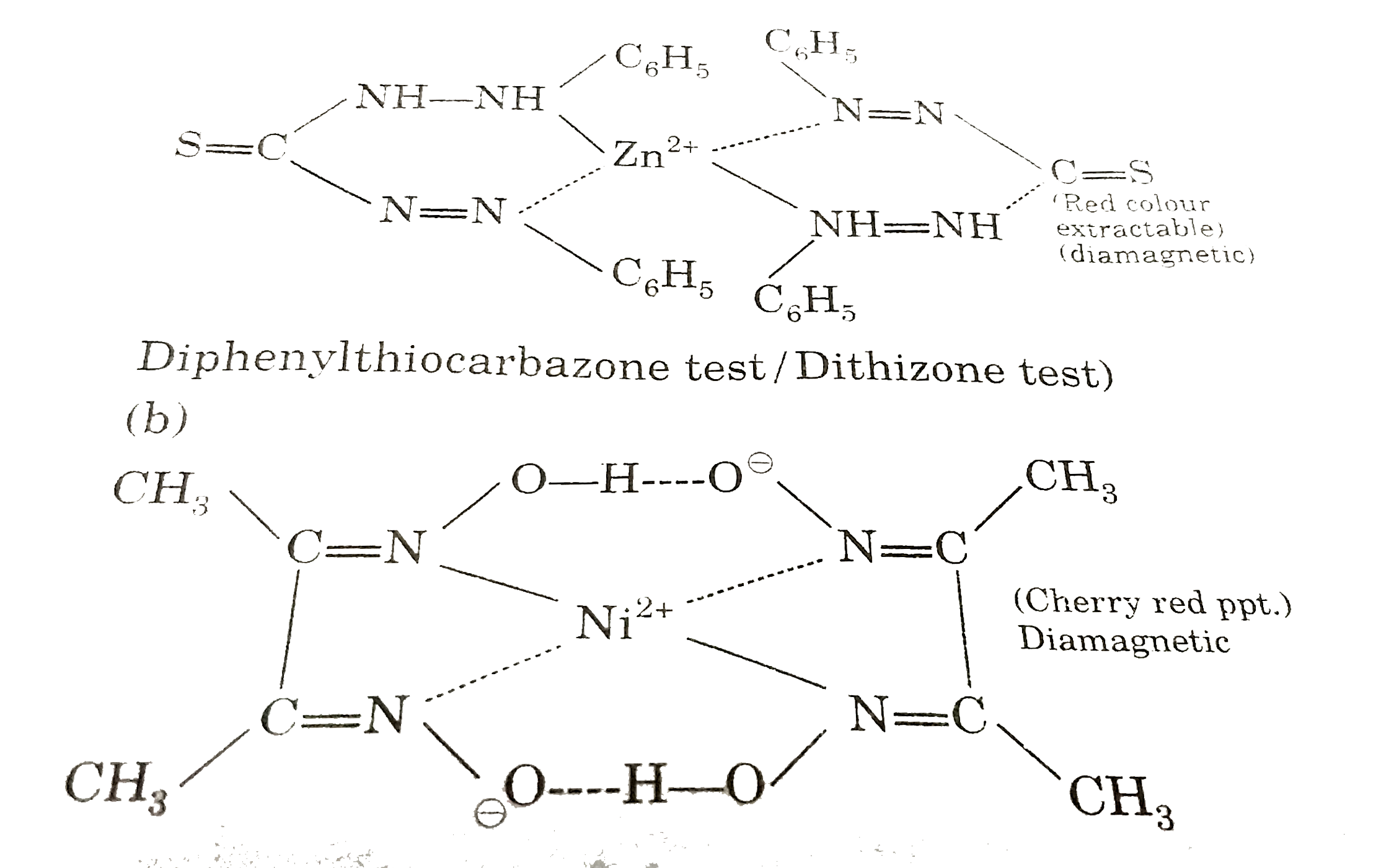 (c) `CO[HG(SCN)_(4)]` (DEEP BLUE ppt.) diamagnetic (d) `Hg_(2)CrO_(4)` (Red ppt.) diamagnetic |
|
| 41. |
Match the reaction in column I with nature of the reactions/type of the products In Column II. . |
| Answer» SOLUTION :(A-p,s),(B-r),(C-p,Q),(D-p) | |
| 42. |
Match the reaction in column I with appropriate type of steps// reactive intermediate involved these reaction as given in column II. |
|
Answer» <P> |
|
| 43. |
Match the quantum numbers with the information provided by these |
| Answer» Solution :(i - B), (ii - d), (iii - a), (IV - C) | |
| 44. |
Match the products of the reactions listed in column-I with the colour of the precipitate(s) listed in column-II |
|
Answer» (B) `BiI_(3)darr overset(DELTA)underset(H_(2)O)rarr underset(("Orange turbidity"))(BiOIdarr)` (c) `[Fe_(3)(OH)_(2)(CH_(3)COO)_(6)]^(+) overset(H_(2)O)underset("Boil")rarr underset(("Reddish brown ppt"))(Fe(OH)_(2)(CH_(3)COOdarr)` (d) `Ag_(2)SO_(3)darr overset(H_(2)O)underset("Boil")rarr underset(("Black"))(Agdarr) +SO_(4)^(2-)+H^(+)` |
|
| 45. |
Match the products of reactions listed in column-I with their characteristic(s) listed in column-II |
|
Answer» (b) `Na_(2)CrO_(4)` (Coloured, soluble, `d^(3)s`, diamagnetic) (c) `Na_(2)[Pb(OH)_(4)]+Na_(2)CrO_(4)` (d) `[Zn(OH)_(4)]^(2-) +[Fe(CN)_(6)]^(4-)` |
|
| 46. |
Match the pollutant(s) in Column-I with the effect(s) in Column- II. |
|
Answer» (B) The irritant red haze in the traffic and CONGESTED PLACE is due to oxides of nitrogen. (C) The increased amount of `CO_2` in air is mainly responsible for global warming. (D) EXCESS nitrate in drinking water cause methemoglobinemia (blue BABY syndrome). (E) Lead can damage kidney, liver, reproductive system etc. |
|
| 47. |
Match the pollutants given in Column-I with their effects given in Column-II. |
|
Answer» (B) Methane oxidises to `CO_2` which causes, global warming. (C) Synthetic detergents increases BOD level. (D) Nitrogen oxide mix with water forming NITRIC acid. |
|
| 48. |
Match the particulars/statements listed in column-I with the appropriate reagent (s) listed in column-II |
|
Answer» `2Bi(OH)_(3)+3[Sn(OH)_(4)]^(2-) rarr 2Bidarr + 3[Sn(OH)_(6)]^(2-)` |
|
| 49. |
Match the particle pollutants given in Part-I with their particles given in Part-II. |
| Answer» SOLUTION :(A-4), (B -2) ,(C-3), (D-1) | |