Saved Bookmarks
This section includes 7 InterviewSolutions, each offering curated multiple-choice questions to sharpen your Current Affairs knowledge and support exam preparation. Choose a topic below to get started.
| 1. |
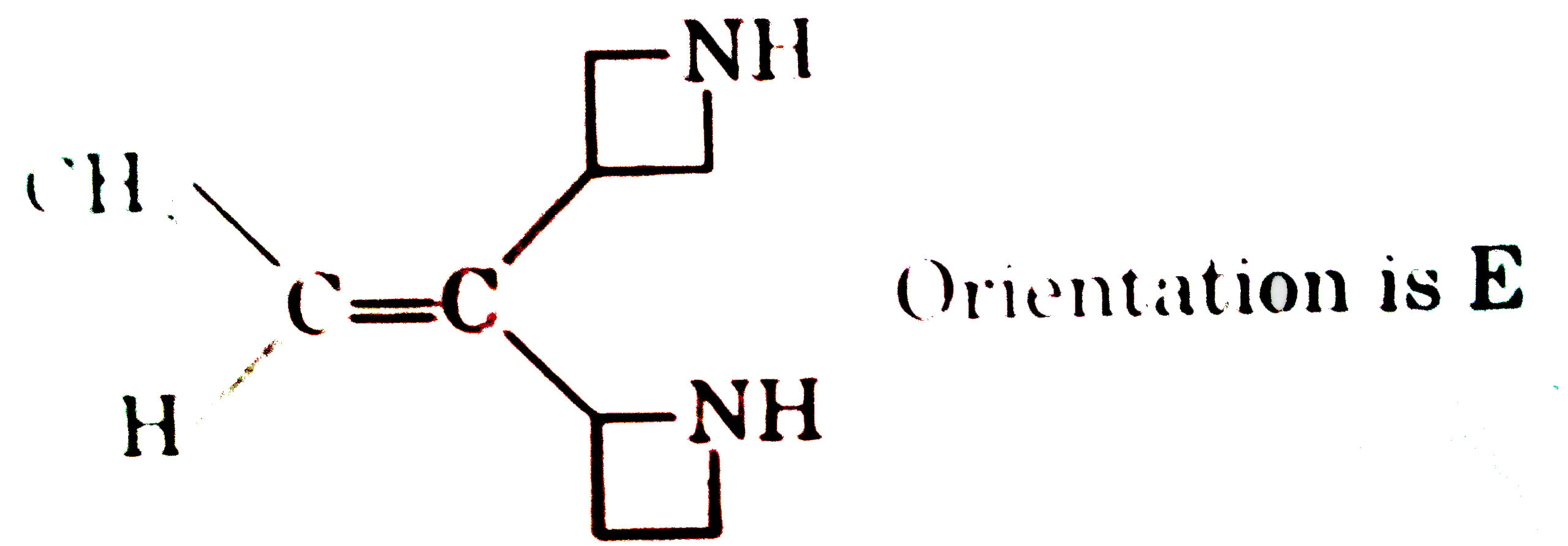
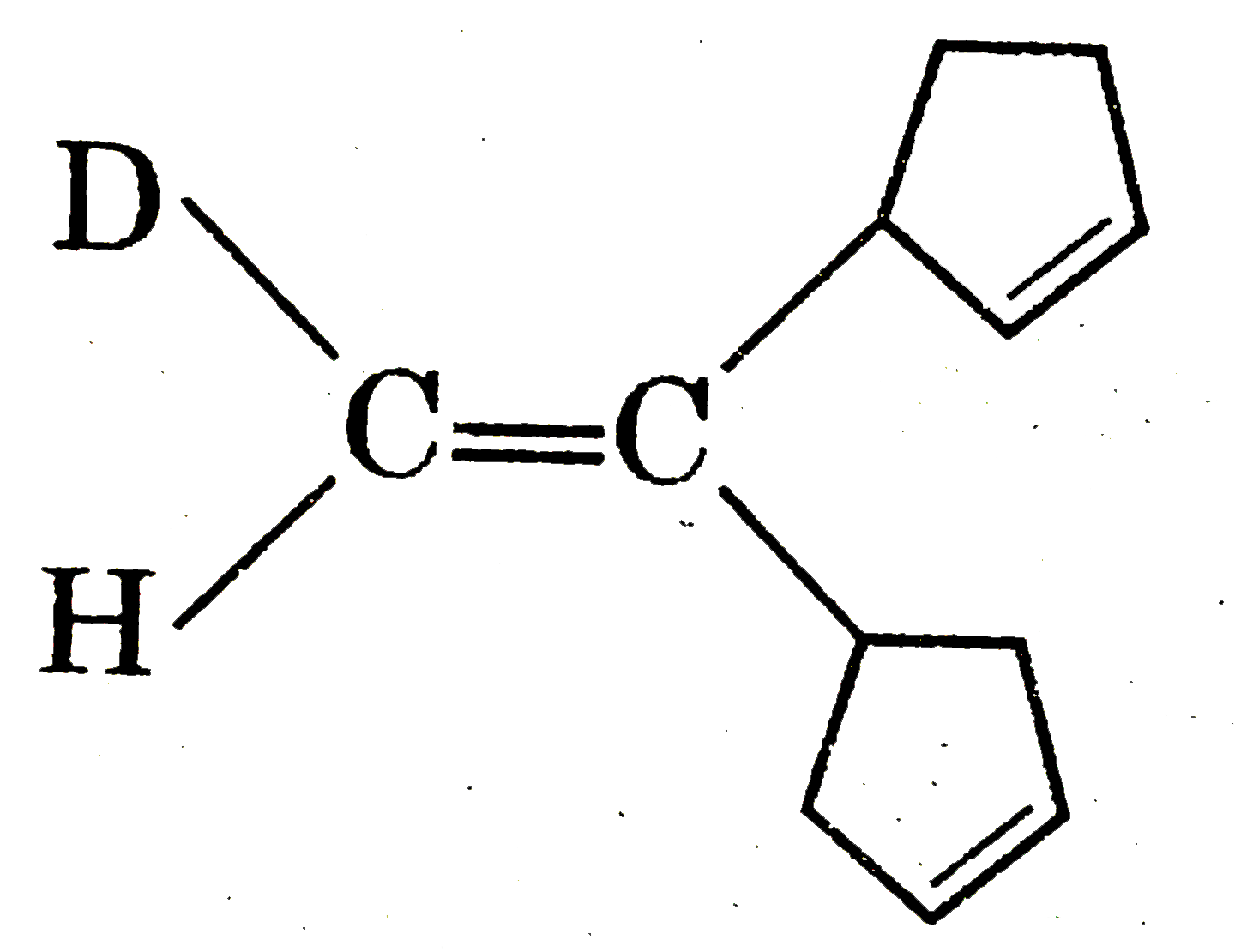
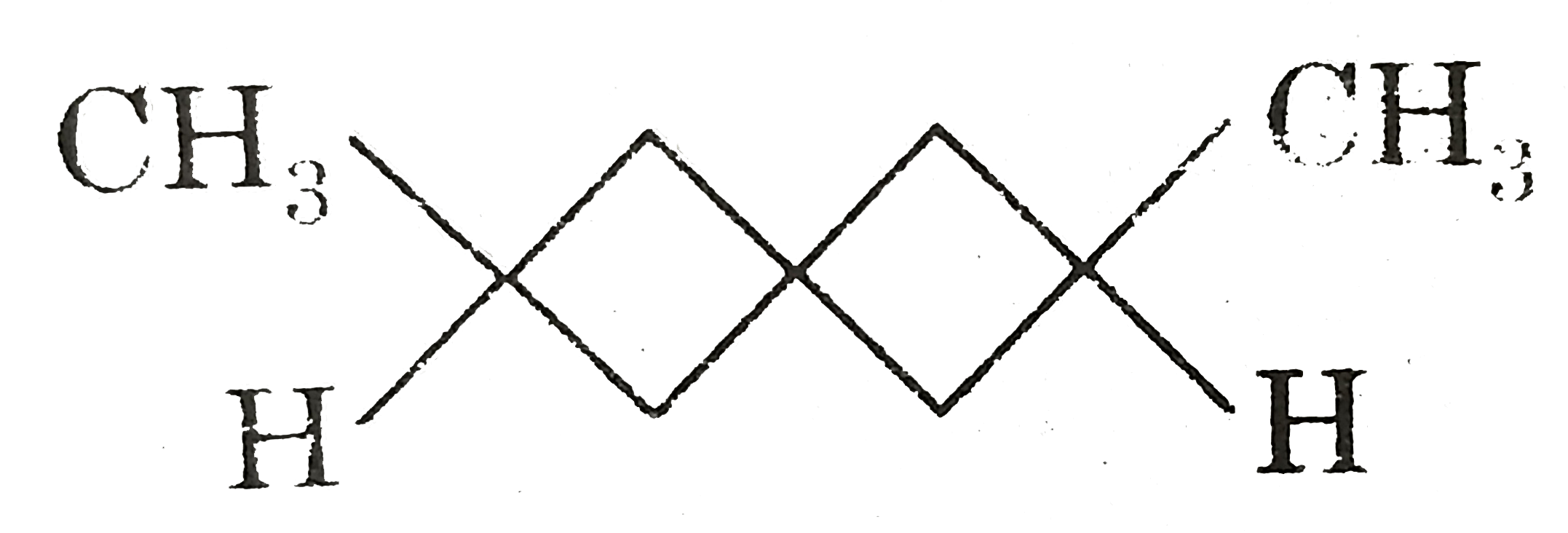
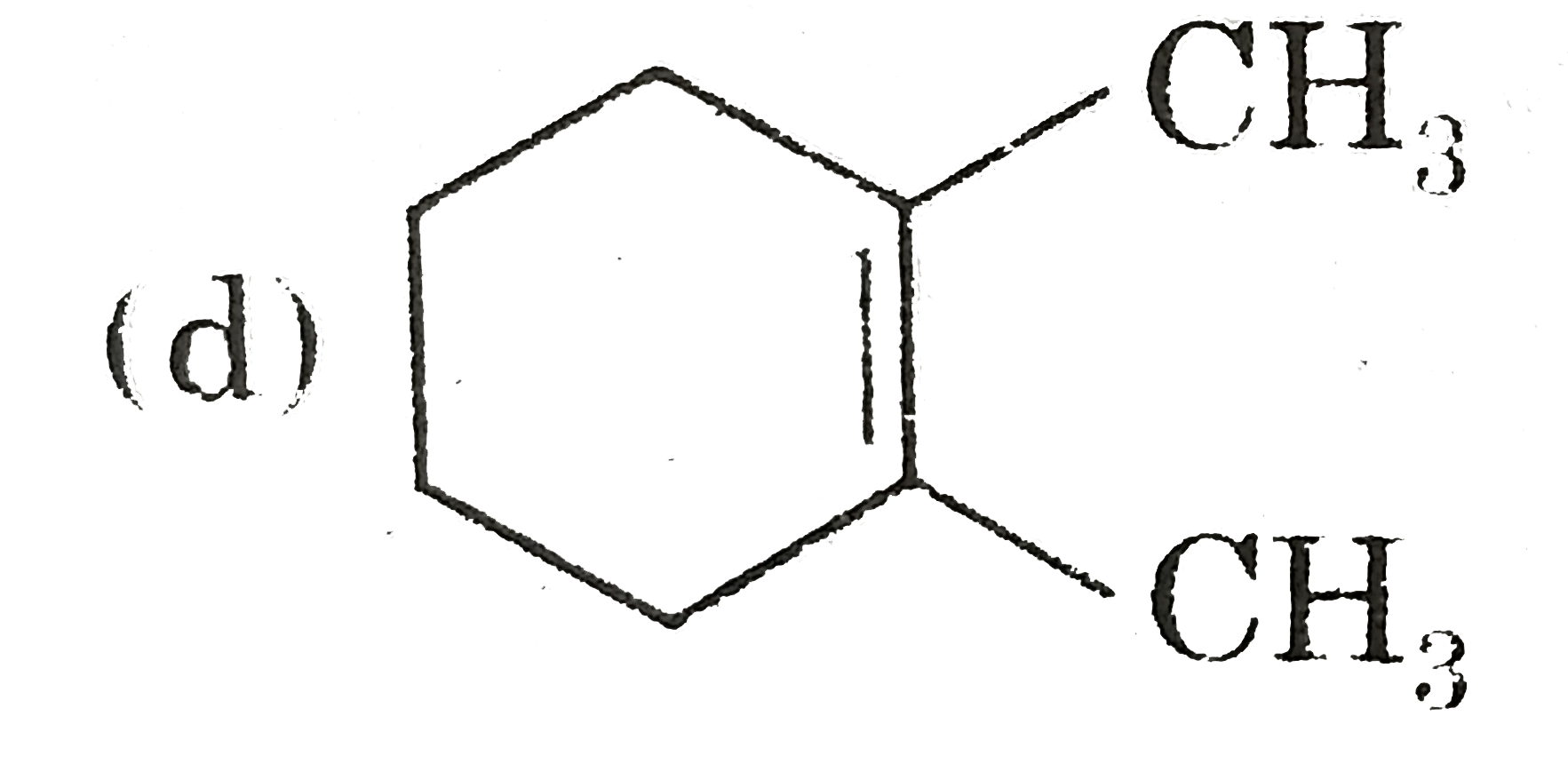
Find out the correct option (s) : |
|
Answer»
|
|
| 2. |
Findout thebrached hydrocarbon form the following compounds |
|
Answer» 1-propane |
|
| 3. |
Find out ratio of alkylgroup, silicon and chlorine in alkyl substiuted chloro silicon which is used in formation of cyclic silicons which have four oxygen atom |
|
Answer» `1 : 1: 1` |
|
| 4. |
Find out the atomic number, mass number, number of protons, electrons and neutrons present in the element with the notation ._(92)^(238)U |
|
Answer» SOLUTION :Atomic number (Z) = 92, Mass number (A) = 238 But we know that No. of protons = No. of electrons = Atomic number (Z) `:.` No. of protons = 92 and No. of electrons = 92 Further, No. of NEUTRONS = Mass number - Atomic number `A - Z= 238 - 92 = 146` |
|
| 5. |
Find out percentange of carbon in acetic acid. |
| Answer» Solution :Mol. MASS of acetic acid `(CH_(3)COOH) = 60 "AMU" :. % C = (2 XX 12)/(60) xx 100 = 4%`. | |
| 6. |
Find out number of heavy water molecules present in one drop of ordinary water whose volume is 0.05ml (density of H_2O = 1g/ml). |
|
Answer» SOLUTION :Weight of one DROP of water = density of water x VOLUME of water drop = 1 x 0.05 = 0.05 g 1g of `D_2O`is present per 6000 g of ordinary water. Weight of `D_2O` present in 0.05 g of ordinary water = `1/6000 xx 0.05 = 0.833 xx 10^(-5) g ` One GRAM mole of `D_2O` (20 g) contains ` 6.023 xx 10^23 D_2O` MOLECULES Number of `D_2O` molecules present in `0.833 xx 10^(-5) g. D_2O` which is present in a drop of water = `(0.833 xx 10^(-5))/(20) xx 6.023 xx 10^23 = 2.5 xx 10^17` |
|
| 7. |
Find out number of dimerize products by following reaction H_3C - Cl + H_3C - CH_2 - Cl + H_3C - CH_2 - CH_2 -Cl underset("Dry ether ")overset(Na)to |
|
Answer» |
|
| 8. |
Find out equivalent mass of KIO_(3) in given reaction. 2Cr(OH)_(3)+4OH^(-)+KIO_(3)to2CrO_(4)^(-2)+5H_(2)O+KI KIO_(3) (Molecular Mass = M) |
|
Answer» SOLUTION :`UNDERSET(+5)underset(darr)(KIO_(3))" converting into "underset(-1)underset(darr)(KI)` Oxidation number is changed by `6E^(-)`. `therefore` Equivalent mass = `("Molecular mass")/6=M/6` |
|
| 9. |
Find numbers of atom in the following. (i) 17 mole of As (ii) 17 mole of Cl (iii) 17 mole of Li |
|
Answer»
|
|
| 10. |
Find one wrong statement regarding H_2O_2 |
|
Answer» It ACTS only as an oxidising reagent. |
|
| 11. |
Find oiut the oxidatoin number of chlorine in the following compunds arrange them in increasing order of oxidaiton number of chlorine NaCI_(4),NCIO_(3), NaCIO,KCIO_(3),CI_(2)O_(7),CI_(2)O,NaCI,CI_(2)CIO_(2) which oxidation state is not present in any of the above compounds |
|
Answer» SOLUTION :Let the O.N of CI in these compound be x O.N of CI in `NaCIO_(4)therefore+1+x+4(-2)=0or x=+7` ltvbrgt O.N of CI in `NaCIO_(3)therefore +1 +x+3(-2)=0or x=+5` O.N of cI in `NaCIOtherefore+1 +x+1 (-2)=0orx=+1` O.N of CI in `NaCIO_(2)therefore+1+x+2(-2)=0 or x=+3` P.N of CI in `CIO_(3)thereforex+3(-2)=0 or x=+6` O.N of CI in `CI_(2)Otherefore2x+1(-2)=0or x=+1` O.N of CI in `CI_(2)therefore2x=0or x=0` O.N of CIin `CIO_(2)therefore2x=0 or x=0` O.N of CI in `CIO_(2)thereforex+2 (-2)=0 or x=+4` None of the compounds have an O.N of +2 increasing ORDER of O.N of CI is : -1,0,+1,+3,+4,+5,+6+7 |
|
| 12. |
Findneutronelectronandproton in thefollowing |
Answer» SOLUTION :
|
|
| 13. |
Find molecular mass of the following compounds. (i) CaCO_(3)(ii) NH_(3)(iii) NaHCO_(3) |
|
Answer» |
|
| 14. |
In thisspectrumof Li^(2+) the difference of twoenergylevelis 2and sum is 4. Find thewavelengthof photonfor differenceof thesetwoenergystate. (note n_(1) + n_(2) =4andn_(2)=2 so taken_(1) =1and n_(2)=3 |
| Answer» Solution :`E= 2.18 XX 10^(18)Jlambda= 9.18 xx 10^(8) m` | |
| 15. |
Find molceular mass of the following compounds. (i) C_(2)H_(5)OH(ii) C_(12)H_(22)O_(11)(iii)C_(6)H_(12)O_(6) |
|
Answer» |
|
| 16. |
Find incorrect statement |
|
Answer» Due to viscosity, velocity of flow of WATER at the SURFACE is more than that at the bottom in a river. |
|
| 17. |
Find incorrect match |
|
Answer» UNIT of surface energy `= J-m^(-2)` |
|
| 18. |
Find (in terms of a ) the amount of energy required to raise the temperature of a substgance from, 3 K to 5 K at constant pressure. At low temperatures, C_(p)=aT^(3). Express your answer after dividing by a. |
|
Answer» |
|
| 19. |
Find (i) the total number of neutrons and (ii) the total mass of neutrons in 7 mg of .^(14)C (assuming that mass of neutron=mass of hydrogen atom). |
|
Answer» |
|
| 20. |
Find theratioof energyfor radiations heaving6000aand 4000 Awavelength (h= 6.62 xx 10^(-34) Js , C= 3xx 10^(8) ms^(-1)) |
| Answer» SOLUTION :`2.83 XX 10^(19) J s ` and `4.95 xx 10^(19) J` | |
| 21. |
Findenergyof eachof thephoton which (I )Correspondto lightof frequency3xx 10^(15) Hz (ii) havewavelengthof 0.50 A |
|
Answer» Solution :(i)`3xx 10^(15)Hz`FREQUENCYOF light E=-hv `= (6.626 xx 10^(34) J s )(3 xx 10^(15) s^(-1))` (II)wave energy of 0.50 A E=hv= `(hc )/( lambda) ` `=((6.626 xx 10^(34) J s)(3.0 xx 10^(8) ms^(1)))/(0.50 xx 10^(10) m)` So`0.50 AE= 3.98 `xx 10^(15)` |
|
| 22. |
Find correct chemical reactivity order for the (a) ethane (b) ethee and (c) ethyne |
|
Answer» `(a) gt (b) gt (c)` |
|
| 23. |
Final product of hydrolysed alkyl cyanide is |
|
Answer» `RCOOH` |
|
| 24. |
Final product formed on reduction of glycerol by hydriodic acid is |
|
Answer» Propane |
|
| 25. |
Fill up the blanks with appropriate choice. Lithium and magnesium react slowly with water. their hydroxides are_____soluble in water. Carbonates of Li and Mg____easily on heating. Both LiCl and MgCl_(2) are_____in ethanol and are_______.they crystallise from their aqueous solutions as_____. |
|
Answer» More, do not DECOMPOSE, soluble, hygroscopic, hydrates |
|
| 26. |
Fill up the balnk. In Lassaigne's test for N, Prussian blue colour is formed due to the formation of …… |
|
Answer» |
|
| 27. |
Fill up a sutiable figure in each set in respective choices forpsi_(3,1,0) in Be^(3+) ion: |
|
Answer» 3,9,3,3 |
|
| 28. |
Fill in the blanks with appropriate words. Benzene has a planar structure. All carbon atoms in benzene are (I)____ hybridised.The ring structure of benzene was proposed by (II)________. It shows (III)_______substitution reactions. It reacts with (IV)_________in presence of aluminium chloride to form acetophenone. |
|
Answer» `I-sp^(2)`,II-Kekule, III-electrolphilic, IV-acetyl CHLORIDE |
|
| 29. |
Fill in the blanks with appropriate choice. Bond ordr of N_(2)^(+) is ul(" "P)while that of N_(2) is ul(" "Q). Bond order of O_(2)^(+) is ul(" "R) while that of O_(2) is ul(" "S). N - N bond distance ul(" "T) when N_(2) changes to N_(2)^(+)and when O_(2) changes to O_(2)^(+) , the O - O bond distance ul(" "U). |
|
Answer» `{:(P,Q,R,S,""T,""U),(2,2.5,2.5,1,"INCREASES","decreases"):}` B.O. ` = 1/2 xx (9-4) = 2.5` `N_(2) : B.O. = 1/2 xx (10 - 4) = 3` `O_(2)^(+) : (sigma1s^(2))(sigma^(**)1s^(2))(sigma2s^(2)) (sigma^(**)2s^(2))(sigma2p_(z)^(2))(pi 2p_(x)^(2)pi 2p_(y)^(2))(pi^(**)2p_(x)^(1))` B.O. ` = 1/2 xx (10 - 5) = 2.5` ` O_(2) : B.O. = 1/2 xx (10 - 6) = 2` Since `N_(2)^(+)` has lower BOND order than `N_(2)`, bond length of N - N in `N_(2)^(+)` increases. In `O_(2)^(+)`, bond order increases from 2 to`2.5` hence, bond length decreases. |
|
| 30. |
Fill in the blanks : A strong acid has a weak.......and a weak base has a strong........ |
| Answer» SOLUTION :CONJUGATE BASE, conjugate ACID. | |
| 31. |
Fill 1 in OMR sheet if the eequilibrium is favorred in forward direction and fall 2 in OMR sheet if the equilibrium is favoured in backward direction for example if all the eqilibrium are favoured in forward dirtection fill 1111 as anewer, and if olny first two are favoured in forward direcftion fill 1122 in OMR sheet. |
|
Answer» |
|
| 32. |
Figure out the variation of bond order in the followingconversions. NO to (NO)^(+) + e^(-) |
Answer» SOLUTION :`NO to (NO)^(+) + E^(-)`  `No to (NO)^(+) + e^(-)` BOND ORDER INCREASES |
|
| 33. |
Figure out the variation of bond order in the followingconversions. C_(2) + e^(-) to C_(2)^(-) |
Answer» SOLUTION :`C_(2) + E^(-) to C_(2)^(-)`  `C_(2) + e^(-) to C_(2)^(-)` Bond ORDER INCREASES |
|
| 34. |
Fifteen milliliters of gaseous hydrocarbon (A) was required for complete combustion 357 mL of air (21% oxygen by volume) and gaseous products occupicd 327mL (all volumes being measured at STP) Which isomers of M on reaction with Mg or Na will give cyclopropane? |
|
Answer»

|
|
| 35. |
Fifteen milliliters of gaseous hydrocarbon (A) was required for complete combustion 357 mL of air (21% oxygen by volume) and gaseous products occupicd 327mL (all volumes being measured at STP) Which isomers of M on reaction with DEM will give cyclobutane derivative? |
|
Answer»

|
|
| 36. |
Fifteen milliliters of gaseous hydrocarbon (A) was required for complete combustion 357 mL of air (21% oxygen by volume) and gaseous products occupicd 327mL (all volumes being measured at STP) The value of M is : |
|
Answer» 2 
|
|
| 37. |
Fifteen milliliters of gaseous hydrocarbon (A) was required for complete combustion 357 mL of air (21% oxygen by volume) and gaseous products occupicd 327mL (all volumes being measured at STP) The molecular formula of the hydrocarbon (A) is: |
|
Answer» `C_2H_6` `CxHy (g) + (x + (y)/(4)) O_2(g) to x CO_2(g) + (y)/(2) H_2O(l)` ` mL ( x+ (y)/(4)) mL ""xmL-` `15mL ( x+ (y)/(4)) mL ""15xmL-` VOLUME of `O_2 = (357 xx 21)/(100) = 75 mL ` volume of `N_2 = 357-75=282mL` volume of `CO_2` = 327-282 = 45mL `:. 15x - 45 , x =3 :.({:(15(x+ (y)/(4))=75),(x + (y)/(4)=5):}` ` 3 + (y)/(4) =5`, On solving , we get y = 8 formula of (A)=`C_3H_8` |
|
| 38. |
Fifteen milliliters of gaseous hydrocarbon (A) was required for complete combustion 357 mL of air (21% oxygen by volume) and gaseous products occupicd 327mL (all volumes being measured at STP) The value of N is : |
|
Answer» 2 
|
|
| 39. |
Few statements are given regarding nodes in the orbitals. Mark the statement which is not correct. |
|
Answer» <P>In case of `p_(z)`-orbital, xy PLANE is a nodal plane. |
|
| 40. |
Few pairs of molecules are given below. Which bond of the molecule of the pairs is more polar ? (i) H_(3)C - H, H_(3)C - " Br " (ii) H_(3)C - NH_(2), H_(3)C - OH (iii) H_(3)C - OH, H_(3)C - SH (iv) H_(3)C - CI, H_(3)C - " Br " |
|
Answer» C - Br, C - N, C - 0 , C - Br (ii) 0 is more electronegative than N. (iii) 0 is more electronegative than S. (iv) Cl is more electronegative than Br. |
|
| 41. |
Few reactions of alkanes are given below. Identify the name of the reaction which is not correctly matched with the reaction. |
|
Answer» `CH_(3)CH_(2)CH_(2)CH_(3) overset(AlCl_(3)+HCl) to UNDERSET("ISOMERISATION")(CH_(3)-overset(CH_(3))overset(|)(C)H-CH_(3))` |
|
| 42. |
Few pairs of molecules are given below. Which bond of the molecule of the pairs is more polar? (i) H_(3)C-H,H_(3)C-Br (ii) H_(3)C-NH_(2),H_(3)C-OH (iii) H_(3)C-OH,H_(3)C-SH (iv) H_(3)C-Cl,H_(3)C-SH |
|
Answer» `C-Br,C-N,C-O,C-Br` |
|
| 43. |
Few drops of salt solution are shaken with chloroform followed by chlorine water. Chloroform layer becomes orange. Solution contains: |
|
Answer» `NO_(2)^(-)` ions<BR>`NO_(3)^(-)` ions `2NaBr + Cl_(2) rarr 2 NaCl + underset(("orange colour"))(Br_(2))` |
|
| 44. |
Few drops of dilute solution of AgNO_3 are added to a litre of 0.1 M solution of KCl and it is found that some AgCl settles down at the bottom . If concentration of Ag^(+)is 10^(-x), find x, (K_(sp) =10^(10)) |
|
Answer» ` [Ag^(+) ] =(10^(-10))/(10^(-1) ) = 10 ^(-9) ` |
|
| 45. |
Ferromagnetic subtances make permanent magnets. Give reason. |
| Answer» SOLUTION :When ferromagnetic subtances ( like Fe, Co, Ni and ` CrO_(2))` are placed in a MAGNETIC FIELD, all the domains get oriented in the DIRECTION of the magnetic field. As a result, the subtance has high magnetic moment. The ORDERING of domains remains even when the external magnetic field is removed. Hence, the substance remains permanently magnetised. | |
| 46. |
Ferromagnetic substances make permanent magnets. Give reason. |
| Answer» SOLUTION :When FERROMAGNETIC substances (like Fe , Co, Ni and `CrO_2`) are placed in a magnetic field , all the domains GET ORIENTED in the direction of the magnetic field. As a result, the substance has high magnetic moment. The ordering of domains remains even when the external magnetic field is removed. HENCE, the substance remains permanently magnetised. | |
| 48. |
Ferrites are the compounds with the general formula ___________ |
| Answer» SOLUTION :`A^(2+) Fe_(2)^(3+)O_4 (A^(2+)=Zn^(2+),MG^(2+) "ETC")` | |
| 49. |
Ferric oxide crystallizes in a hexagonal close packed array of oxide with two out of every there octahedral holes occupied by ferric ions.Derive the formula of the ferric oxide. |
|
Answer» Solution :SUPPOSE the number of oxide IONS ` ( O^(2-))`in the packing =n. No. of OCTAHEDRAL voids =n As 2/3rd of the octahdral voids are occupied by FERRIC ions, therefore, number of ferric ions present ` = 2/3 xx n = (2n)/3` Ratio of ` Fe^(3+): O^(2-) = ( 2n)/3 : n = 2:3 ` Hence, the formula of ferric oxide is ` Fe_(2)O_(3+)` |
|
| 50. |
Ferric oxide crystallizes in a hexagonal close packed array of oxide ions with two out of every three octahedral holes occupied by ferric ions. Derive the formula of the ferric oxide. |
|
Answer» Solution :SUPPOSE the number of OXIDE ions `(O^(2-))` in the packing =N `therefore` No. of OCTAHEDRAL voids =n As 2/3rd of the octahedral voids are OCCUPIED by ferric ions, therefore , number of ferric ions present `=2/3xxn="2n"/3` `therefore` Ratio of `Fe^(3+) : O^(2-)="2n"/3 : n=2:3` Hence, the formula of ferric oxide is `Fe_2O_3` |
|