Saved Bookmarks
This section includes 7 InterviewSolutions, each offering curated multiple-choice questions to sharpen your Current Affairs knowledge and support exam preparation. Choose a topic below to get started.
| 1. |
For a good quality cement the ratio of (CaO)L (lime quick) to SiO_(2), Al_(2)O_(3) and Fe_(2)O_(3) is |
|
Answer» `(%CAO)/(%SiO_(2)+%Al_(2)O_(3)%Fe_(2)O_(3))=2` |
|
| 2. |
For a given reaction K_p lt K_c. Increase of pressure favours |
|
Answer» the backward REACTION `:.` on increasing pressure, reaction goes in the forward DIRECTION |
|
| 3. |
For a given reaction, DeltaH = 35.5kJ mol^(-1) and DeltaS = 83.6 JK^(-1) mol^(-1) .The reaction s spontaneous at : ( Assume atDeltaHand DeltaS do not vary with temperature ) |
|
Answer» `T lt425 K` For the reaction to be spontaneous , `DeltaG = - ve` As`DeltaH` and`DeltaS` both are positive,`DeltaG` can be `-ve` only if`T DeltaS gt DeltaH`or`T gt ( DeltaH)/( DeltaS)` `i.e,T gt ( 35.5xx 1000J)/( 83.6JK^(-1)) ` or `T gt 425 K` |
|
| 4. |
For a given reaction, DeltaH = 35.5 kJ"mol"^(-1) and DeltaS = 83.6 J K^(-1) "mol"^(-1). The reaction is spontaneous at (assume that DeltaH and DeltaS do not vary with temperature. |
|
Answer» `T gt425K` For a reaction to be at EQUILIBRIUM, `DeltaG =0` `DeltaH = TDeltaS` or `T = (DeltaH)/(DeltaS) = (35.5 xx 10^(3))/(83.6)` ` = 425 K` Since reaction is endothermic, it will be sponatneous at `T gt 425 K` |
|
| 5. |
For a given reaction at a particular temprature, the equilibrium constant value. Is thevalue of Q also constnat ? Explain. |
| Answer» Solution :In the chemical REACTION, as the reaction proceeds., there is a containuous CHANGE in the CONCENTRATION of reactants and products and also the Q value until the reaction reaches the EQUILIBRIUM.So even at particular TEMPERATURE, Q is not constant. Even once the equilibrium in achieved then change in concentrationof reactants or products, pressure, volume will change the value of Q. | |
| 6. |
For a given reaction, at a particular temperature, the equilibrium constant has value. Is the value of Q also constant ? Explain. |
|
Answer» |
|
| 7. |
For a given mass of gas, if pressure is reduced to half and temperature is increased two times, then the volume of gas would become ___ times . |
|
Answer» |
|
| 8. |
For a given mass of a gas, if pressure is reduced to half and temperature is doubled, then volume V will become |
| Answer» SOLUTION :`4V` | |
| 9. |
For a given gas, T_(C) = 40 K, then T_(i) is |
|
Answer» 40 K `T_(C) = (8a)/(27 Rb) = (4)/(27) ((2a)/(Rb))` `:. T_(C) = (4)/(27) T_(i)` `T_(i) = (27 xx T_(C))/(4) = (27 xx 40)/(4) = 270 K` |
|
| 10. |
For a given exthermic reaction , K_(p) nd K_(p)are the equilibrium constants at temperature T_(1) and T_(2) respectively . Assumbing that heat of reaction is constant in temperature range between T_(1) and T_(2)it is readily observed that |
|
Answer» <P>` K_(p) gt K_(p)'` ` log = (K'_(p))/(K_(p))= -(DeltaH)/(2.303 R) (1/T_(2)-1/T_(1))` For EXOTHERMIC reaction, `Delta H=-ve` Also ,as `T_(2)gt T_(1), (1/(T_(2)) - 1/T_(1)) = - ve ` ` :. log = (K'_(p))/(K_(p)) = -ve or log K'_(p) - - log K_(p) = -ve` i.e.,` log .K'_(p) lt log K_(p) or K'_(p)lt K_(p) or K_(p) gt K'_(p)` |
|
| 11. |
For a given exothermic reaction, K_(p) and K_(p) are the equilibirum constants at temperature T_(1) and T_(2) respectively. Assuming that heat of reaction is constant in temperature range between T_(1) and T_(2), it is readily observed that |
|
Answer» `K_(p) gt K'_(p)` `:.``K_(p) gt K'_(p)`(Assumuing `T_(1) lt T_(2)`). |
|
| 12. |
For a general reaction given below, the value of solubility product can be given us {:(A_(x)B_(y),=xA^(+y),+yB^(-x)),(a,0,0),(a-s,xs,ys):} K_(sp)=(xs)^(x).(ys)^(y) (or) K_(sp)=x^(x)y^(y) (S)^(x+y) Solubility product gives us not only an idea about the solubility of an electrolyte in a solvent but also helps in explaining concept of precipitation and calculation [H^(+)] ion, [OH^(-)] ion. It is also useful in qualitative analysis for the idetification and separation of basic radicals Potussium chromate is slowly aded toa solution containing 0.20M Ag NO_(3), and 0.20M Ba(NO_(3))_(2). Describe what happensif the K_(sp) for Ag_(2),CrO_(4), is 1.1 xx 10^(-12) and the K_(sp) of BaCiO_(4), is 1.2 xx 10^(-10), |
|
Answer» The ` Ag_2CrO_4` pecipitates first out of solution and then `BaCrO_4 ` preciptates. ` [CrO_4^(2-) ]_(BA^(+2) ) =(Ksp)/([Ba^(+2)])=(1.2xx 10^(-10))/( 0.2 0) = 6 xx 10^(-10) ` ` therefore Ag_2 Cr O_4 `ppts first |
|
| 13. |
For a gaseous reaction : A(g)to3B(g)+C(g),DeltaH is positive and the reaction attains equilibrium at 1 bar total pressure and 400 K. Identify the incorrect statement(s) regarding the above reaction: |
|
Answer» On increase of TEMPERATURE,equilibrium will be shifted in FORWARD direction. |
|
| 14. |
For a gaseous phase reaction A_((g)) + 3 B_((g)) hArr 2 C_((g)) , initial pressure is 600 mm at 1 : 3 molar ratio of A and B . If the equilibrium pressure of A is 100 mm , that of B & C respectively are (in mm) |
|
Answer» 300 , 100 |
|
| 15. |
For a gaseous mixtue of 2.41g of helium and 2.79g of neon in an evacuated 1.04 dm^(3) container at 298 K Calculate the partial pressure of each gas and hence find the total pressure of the mixture. |
|
Answer» No. of moles of He = `("Mass")/("Molar Mass") = (2.41)/(4) = 0 . 6 0 25 `moles Mass Of Ne= 2 . 79 g No. of moles of Ne ` = ("Mass")/("Molar Mass") = (2.79)/(20)` = 0 . 1395 moles Volume of the Total no. of moles of the mixture TEMPERTURE T= 298 K Pressure P` = (1)/(V) RT` ACCORDING to ideal gas equation PV = nRT ` P = ( 0 7 4 2 0 XX 0 . 0 821 xx 298 )/( 1 . 0 4) = 17 . 45` atm Partial pressure P = molefraction ` xx`Total pressure ` = (nA)/(nA + nB) xx P ` Partial Pressure of Helium ` = P_(He) = (0 . 6025)/(0.7420) xx 17 . 45 ` According to Dalton's law of partial pressure = 3 . 280 atm `P = P_(1) + P_(2) + P_(3). . . . ` ` P_("total") = P_(He) + P_(Ne) = 14. 169 + 3 . 280 = 17 . 449 ` atm |
|
| 16. |
For a gaseous homogeneous reaction at equilibrium, number of moles of products are greater than the number of moles of reactants. Is K_C is larger or smaller than K_P ? |
|
Answer» Solution :For a homogeneous reaction at equilibrium, number of MOLES of products `(n_p)` are GREATER than the number of moles of reactants `(n_R)`, then `Deltan_g = + ve` `n_P gt n_R` `:. Deltan_g = +ve ` If `Deltan_g` is + ve, `K_P` VALUE is greater then `K_C` `K_P = K_C. (RT)^(+ve)` `:.K_P gt K_C` Example :`PCl_5 (g) HARR PCl_3(g) + Cl_2(g)` ` 2 - 1 = 1` `:.K_P = K_C(RT)^1` `K_P gt K_C` |
|
| 17. |
For a gaseous homogeneous reaction at equilibrium number of moles of products are greater than the number of moles of reactants. Is K_c. is larger or smaller than K_p |
Answer» SOLUTION :For a homogenous reaction at EQUILIBRIUM , NUMBER of MOLES of proudcts `(n_p)` are greater than the number of moles of reaction `(n_g) `, then `Deltan_g = + ve` 
|
|
| 18. |
For a gaseous homogeneous reaction at equilibrium, number of moles of products are greater than the number of moles of reactants. Is K_(C) is larger or smaller than K_(P') |
|
Answer» Solution :`PCl_(5)(G)hArrPCl_(3)(g)+Cl_(2(g))` `Deltan_(g)`= No. moles of product - No. of moles of reactnt `Deltan_(g)=2-1=1` When `Deltan_(g)=+"ve"` `K_(P)=K_(C)(RT)^(+"ve")` `K_(P)gtK_(C')` |
|
| 19. |
For a gas having molar mass M, specific heat at constant pressure can be given as: |
|
Answer» `(GAMMA R)/(M (gamma-1)) ` |
|
| 20. |
For A _((g)) + B _((s)) to 2 C _((g)) , Delta H and Delta S respectively are 50 KJ and 100 J/K respectively. Then at 228 ^(@)C |
|
Answer» `DELTA G =02` |
|
| 21. |
For a Friedel - Craft reaction using AlCl_3which compound can be used as solvent, benzene or nitrobenzene ? |
|
Answer» NITROBENZENE but not BENZENE |
|
| 22. |
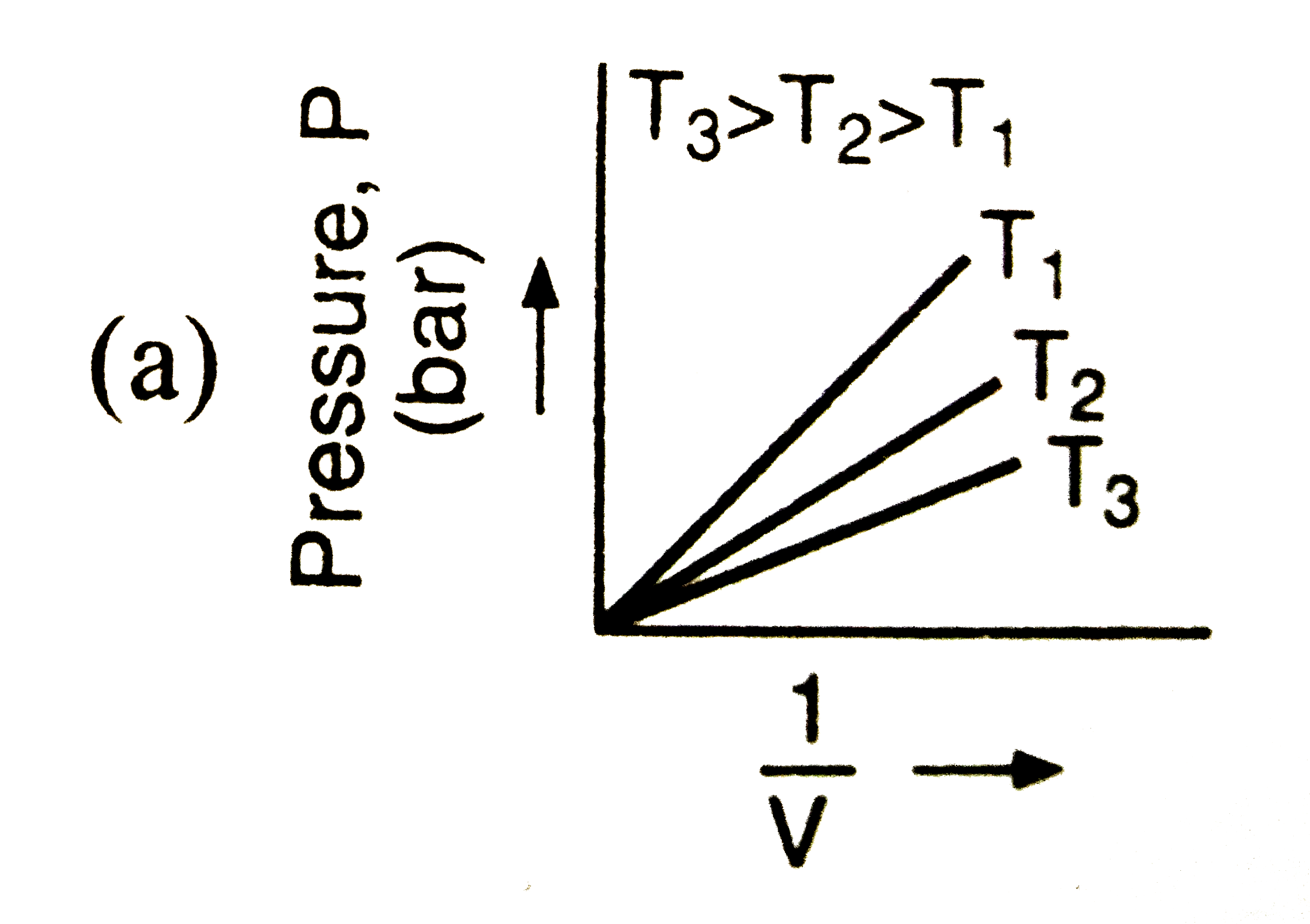
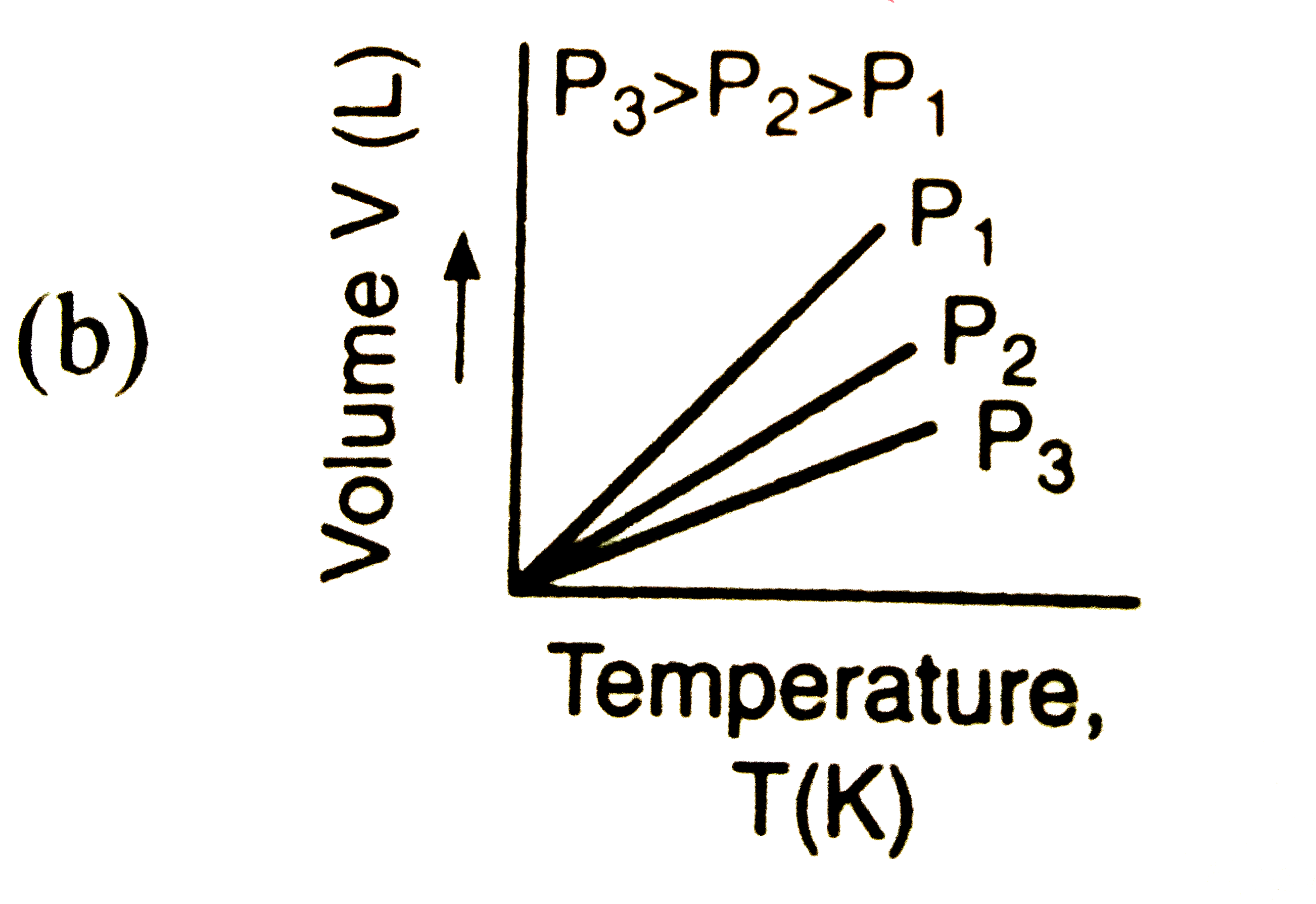
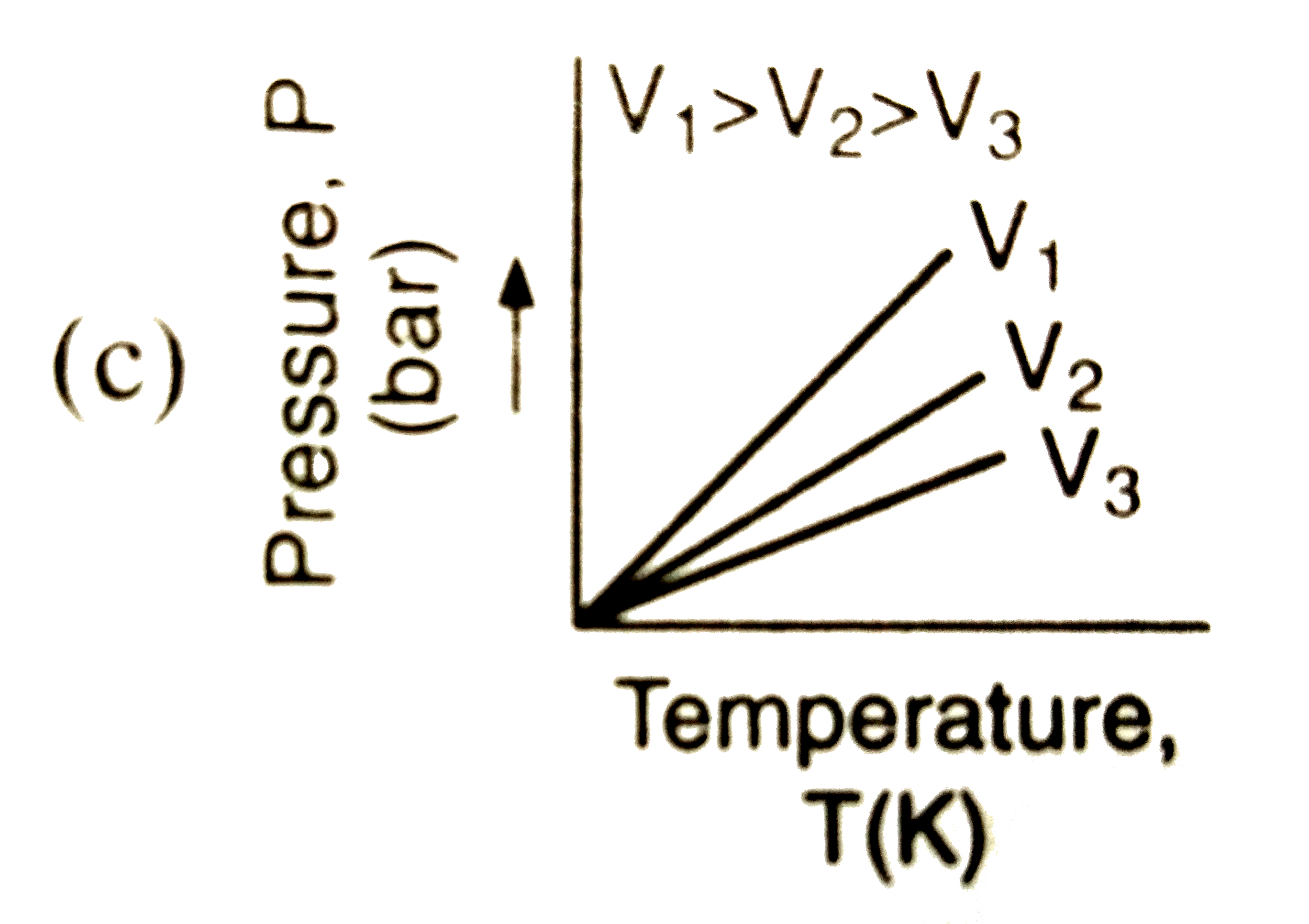
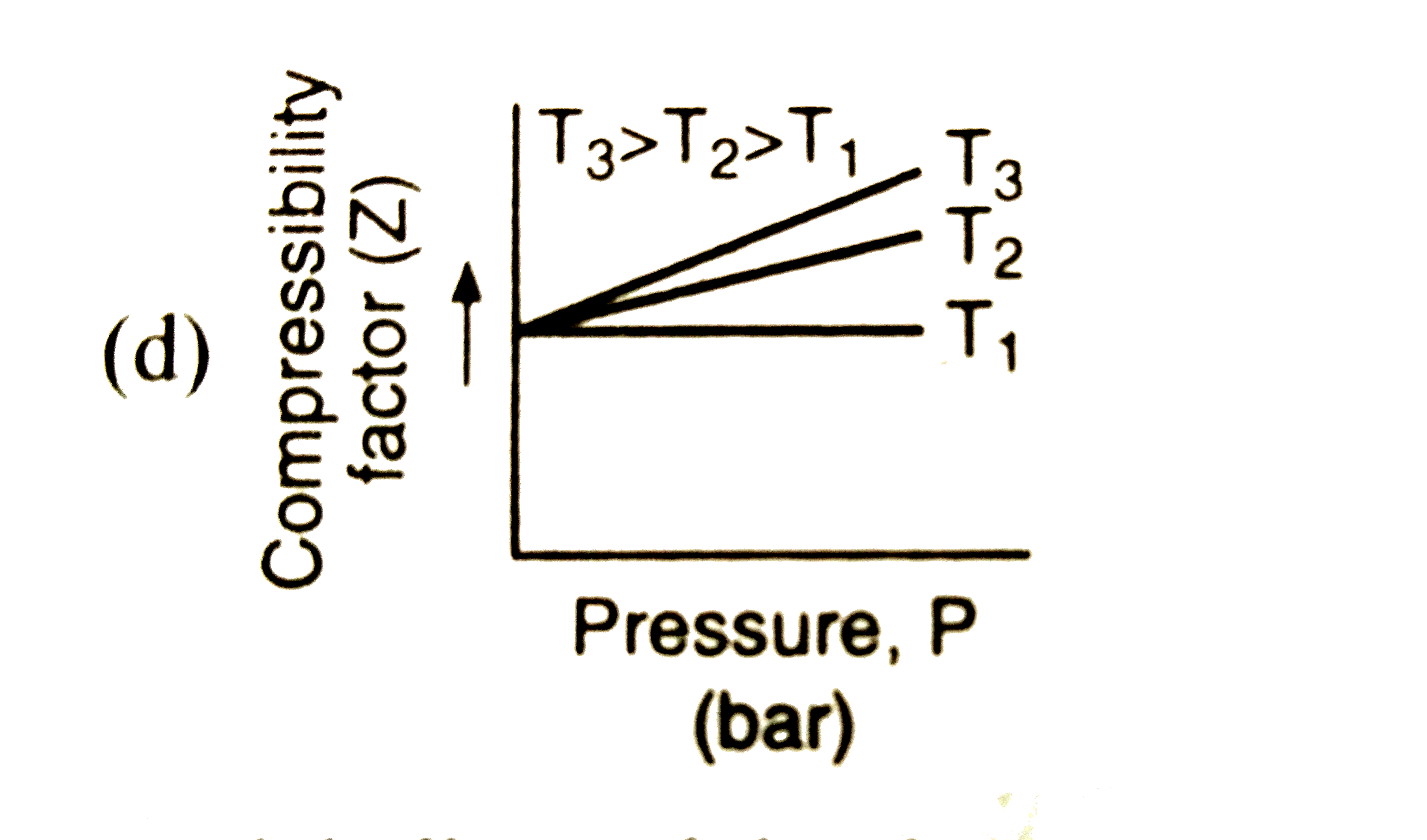
For a fixed mass of an ideal gas the correct representation is: |
|
Answer»
|
|
| 23. |
For a equilibrium mixture in a closed vessel. N_(2(g)) + 3H_(2(g)) hArr 2NH_(3(g)) the value of equilibrium on constant depends. |
|
Answer» Temperature |
|
| 24. |
For a cyclic process, the change in internal energy of the system is ____ |
| Answer» SOLUTION :EQUAL to ZERO | |
| 25. |
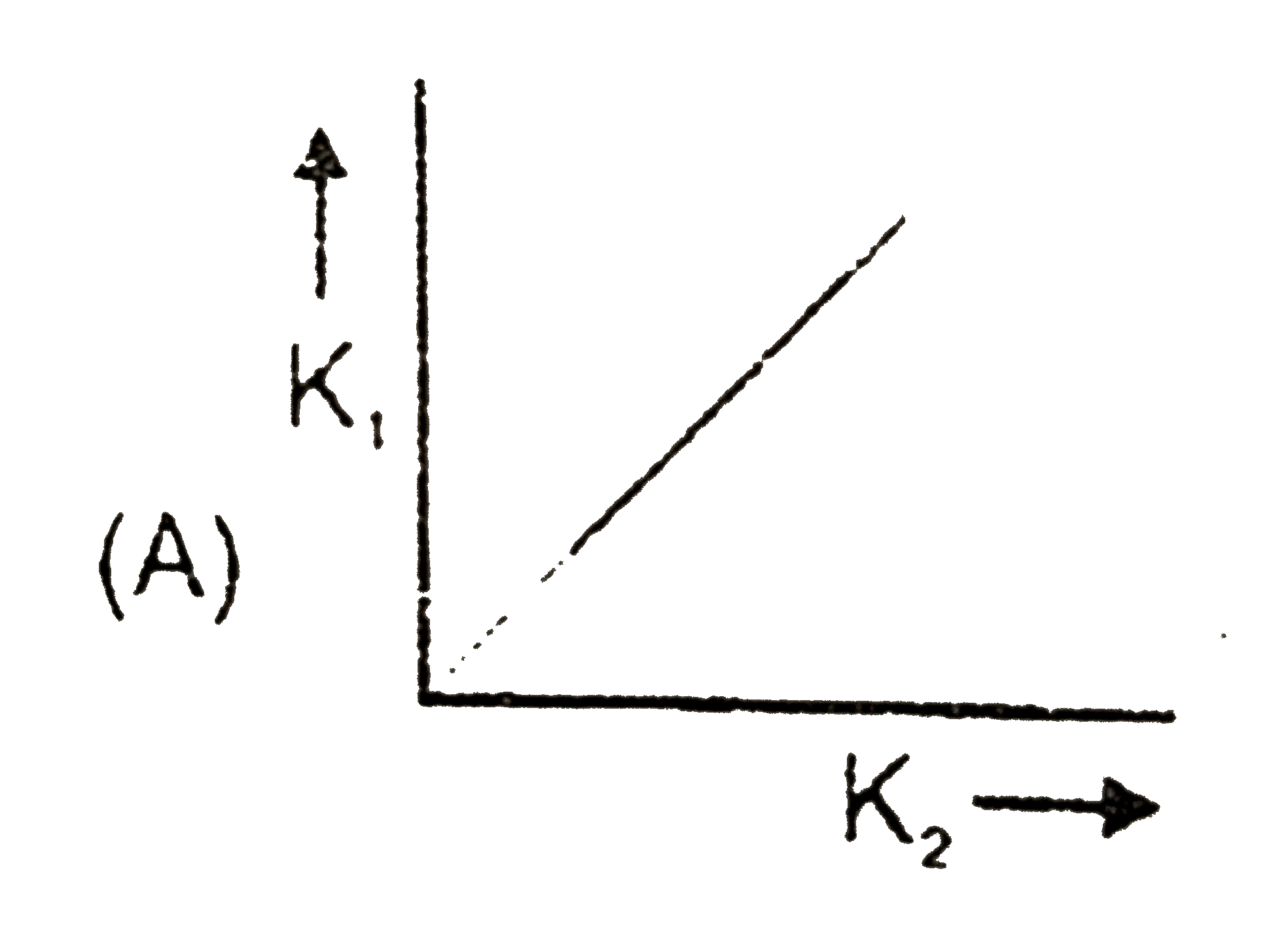
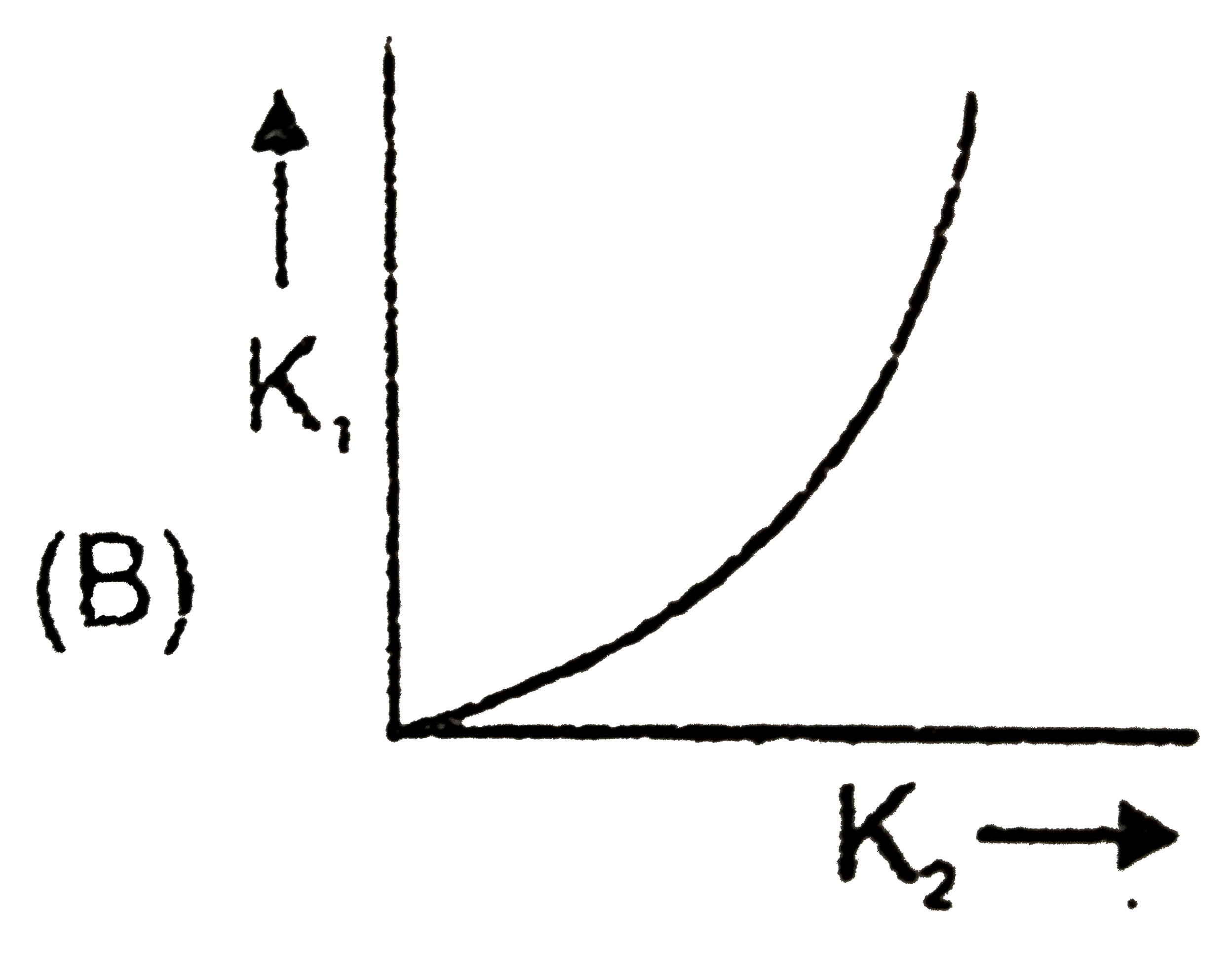
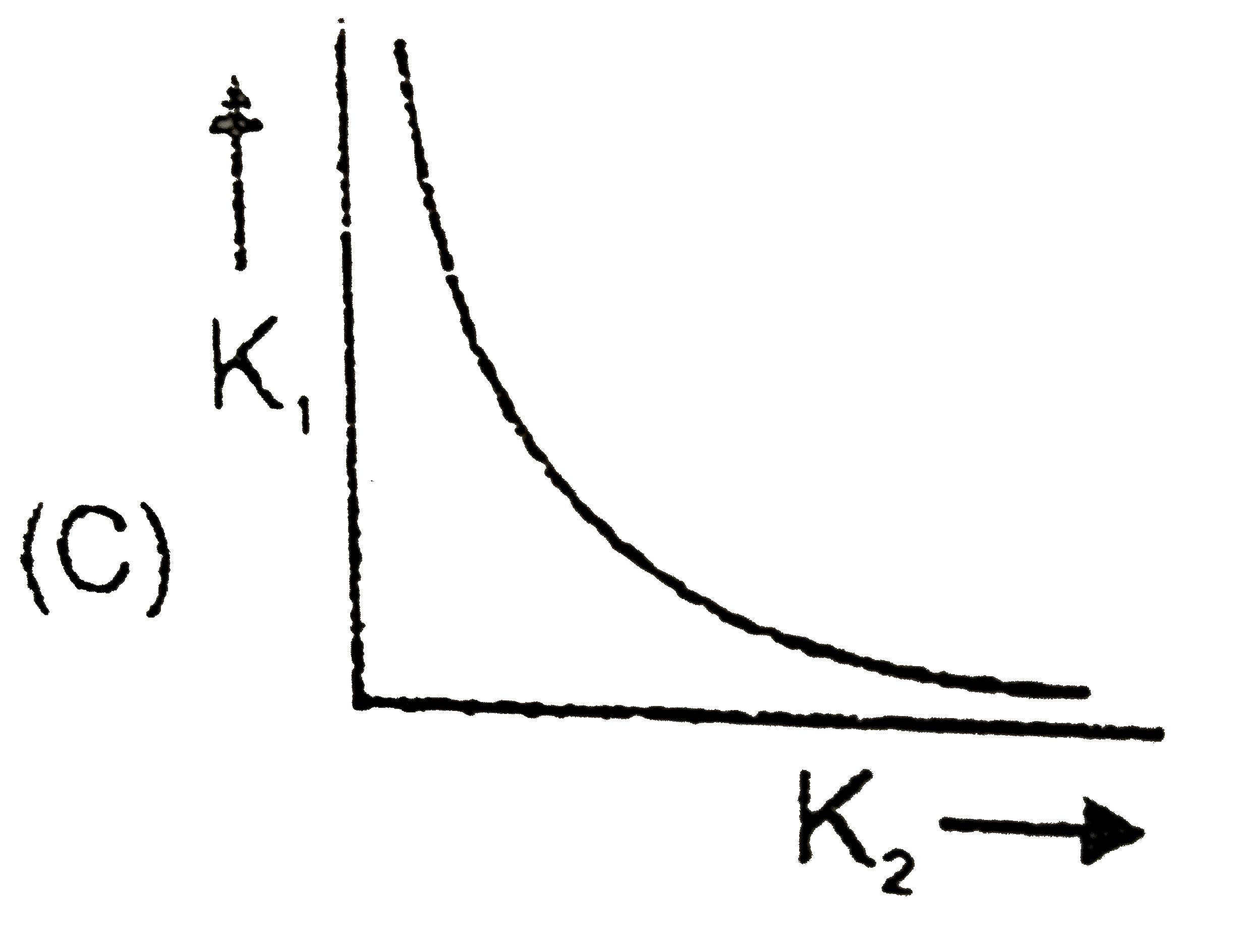
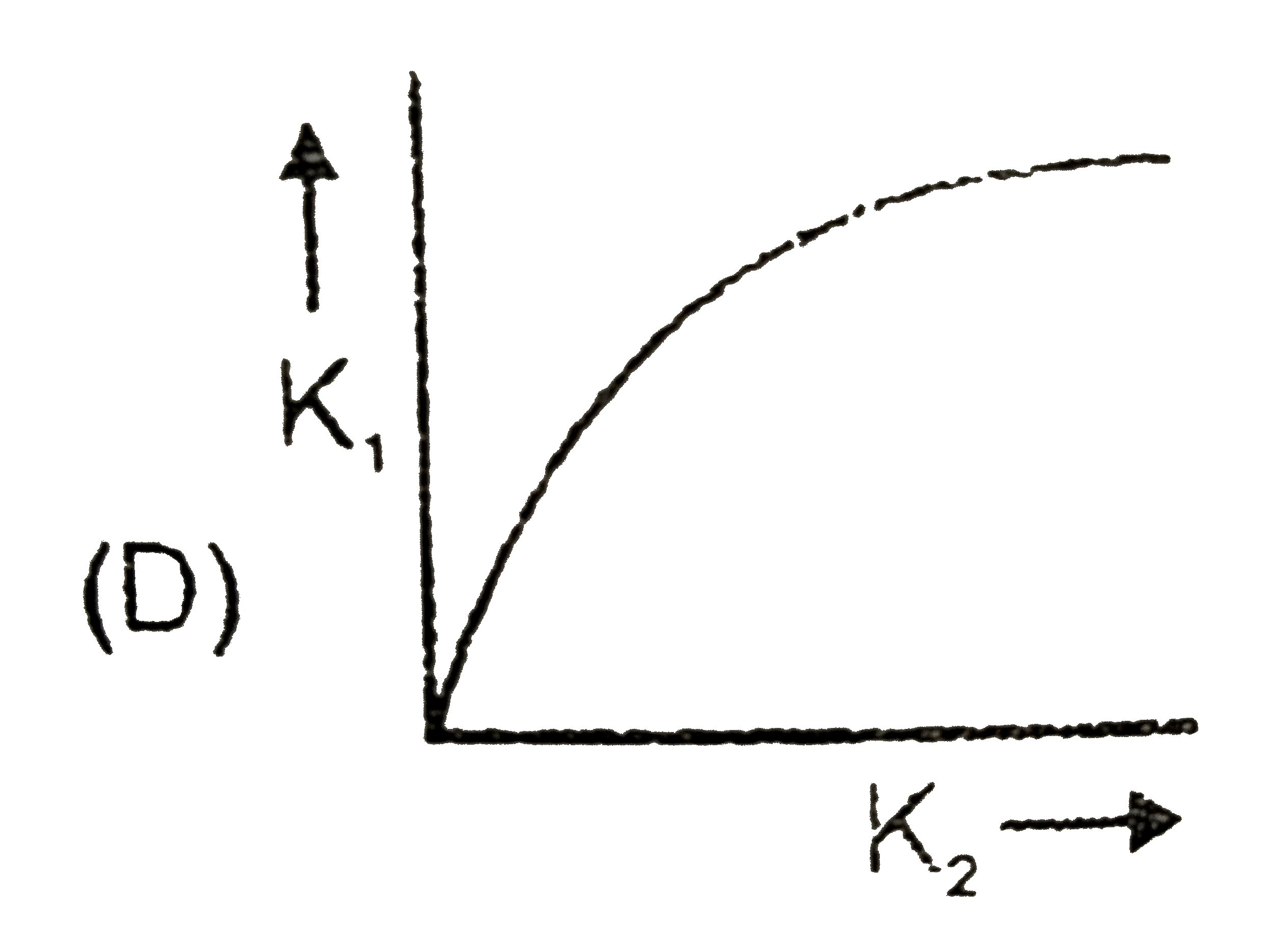
For a container contining A(g),B(g),C(g) "&" D(g) with rigid walls, an experiment is carried upon. This experiment involves increase in temperature of container in stepsof 1^(@)C and system is allowed to attain equilibrium, followed by calculation of K_(1) "&" K_(2) at each step, where K_(1) "&" K_(2) are equilibrium constants for reaction (1) & (2) respectively. A(g)+2B(g)hArrC(g)+D(g) ....(1) C(g)+D(g)hArrA(g)+2B(g) .....(2) Select the graph showing correct relationship- |
|
Answer»
|
|
| 26. |
For a conjugate acid -base pair , K_a and K_b are related as |
|
Answer» `K_a.K_b =1` `K_h =(K_W)/( K_a)=K_b RARR K_a.K_b =KW ` |
|
| 27. |
For a concentrated solution ofa weak electrolyte, A_(x) B_(y) of concentration 'C', the degree of dissociation alpha is given by |
|
Answer» `alpha=sqrt(K_(eq)//C (x+y))` `K_(eq)=((xcalpha)^(x)(ycalpha)^(y))/(c(1-alpha))~~((xcalpha)^(x)(ycalpha)^(y))/(c)` `""("Taking"1-alpha~~1)` `or" "K_(eq)=(x^(x)y^(y)c^(x+y)alpha^(x+y))/(c)=x^(x)y^(y)c^(x+y-1)alpha^(x+y)` `:.alpha=(K_(eq)//c^(x+y-1)x^(x)y^(y))^(1//(x+y))` |
|
| 28. |
For a compound LiAl(SiO_(3))_(2),What is thecharge on the SiO_(3) unit. What is the arrangement of oxygenatoms aroundthe siliconatom ? |
|
Answer» Solution :Since lithiumhas one unit `+ve`chargeand aluminium has THREE units+ve charge, therefore, TOTAL+ve chargeon cations is 4. Sincethe mineral`LiAl(SiO_(3))_(2)` is electricity neutral, therefore, total -ve chargeon TWO `SiO_(3)` unitsis `-4`or each `SiO_(3)` unit mustcarry two units-ve chargeand must berepresentedas `SiO_(3)^(2-)`. We know that all silicates consist of `SiO_(4)^(4-)`tetrahedra. But from theformula of thegiven silicate, it appears that there areonly 3oxygenper SILICON atom. This canbe explainedif two of theoxygenatoms ofeach `SiO_(4)^(4-)`unitshare with each othergiving a simple chainstructure for the silicate, `LiAl(SiO_(3))_(2)` as shown below: 
|
|
| 29. |
For a compound to be aromatic it must have (4n + 2) pi electrons. |
|
Answer» |
|
| 30. |
For a closed system consisting of a reaction N_(2) O_(4(g)) rarr 2NO_(2(g)), the pressure "_____________". |
|
Answer» REMAINS constant |
|
| 31. |
For a chemical reaction the values of DeltaH and DeltaS at 300 K are - 10 kJ mol^(-1)and-203 K^(-1)mol^(-1) respectively. What is the value of DeltaG of the reaction? Calculate the DeltaG of a ran. at 600K assuming DeltaH and DeltaS values are constantDeltaHand DeltaS values are constant. Predict the nature of the reaction. |
|
Answer» Solution :Given: `DeltaH = -10 kJ mol^(-1) = -10000 J mol^(-1)` `DeltaS = - 20 JK^(-1)mol^(-1)` `T = 300 K` `DeltaG = ?` `DeltaG = DeltaH-TDeltaS` `DeltaG = - 10 kJ mol^(-1)- 300 K xx (-20xx10^(-3) ) kJ K^(-1)mol^(-1)` `DeltaG = (-10+6) kJ mol^(-1)` `DeltaG = (- 4 kJ mol^(-1)` At 600 K `DeltaG = -10 kJ mol^(-1)- 600 K xx (-20 xx10^(-3) ) KJ K^(-1)mol^(-1)` `DeltaG = (-10 + 12) kJ mol^(-1)` `DeltaG = + 2 kJ mol^(-1)` The value of `DeltaG` is NEGATIVE at 300K and the reaction is spontaneous, but at 600K the value `DeltaG` becomes positive and the reaction is non-spontaneous. |
|
| 32. |
For a chemical reaction the values of DeltaH and DeltaS at 300 K are - 10 kJ "mol"^(-1) and -20 J "deg"^(-1) "mol"^(-1) respectively. What is the value of DeltaG of the reaction? Calculate the DeltaG of a reaction at 600K assuming DeltaH and DeltaS values are constant. Predict the nature of the reaction. |
|
Answer» Solution :`DeltaH=-10 "kJ mol"^(-1) =-10000 "J mol"^(-1)` `DeltaS=-20 J K^(-1) "mol"^(-1)` T=300 K `DELTAG`=? `DeltaG=DeltaH-TDeltaS` `DeltaG=-10 "kJ mol"^(-1) -300 K xx (-20 xx10^(-3))kJ K^(-1) "mol"^(-1)` `DeltaG=(-10+6) "kJ mol"^(-1)` `DeltaG=-4 "kJ mol"^(-1)` At 600 K `DeltaG=-10 "kJ mol"^(-1) -600 K xx(-20 xx10^(-3))kJ K^(-1) "mol"^(-1)` `DeltaG=(-10+12) "kJ mol"^(-1)` `DeltaG=+2 kJ mol^(-1)` The VALUE of `DeltaG` is NEGATIVE at 300K and the reaction is spontaneous, but at 600K the value `DeltaG` BECOMES positive and the reaction is non-spontaneous. |
|
| 33. |
For a certain reaction, Delta H^(0) " & " Delta S^(0) respectively are 400kJ & 200 J/mol/K. The process is non-spontaneous at |
| Answer» Answer :C | |
| 34. |
For a balanced reversible gaseous reaction : A(g)+ B(g) hArr 3C(g)+2D(g), which is non-spontaneous at low temperature? Identify the corrrect option(s). [Assume DeltaH^(circ)and DeltaS^(circ) of reaction to be independent of temperature.] |
|
Answer» It will be non-spontaneous even it higher temperatures. |
|
| 35. |
Show that A ∪B =A ∩ B impliesA = B |
|
Answer» `[-2.303 xx 2 xx 300]KJ ` |
|
| 36. |
For , A + B hArr C. the equilibrium concentration of A and B at a temperäture are 15 mol lit^(-1) When volume is doubled the reaction has equilibrium concentration of A as 10 mol lit^(-1) then |
|
Answer» `K_(c) = 2` mole `lit^(-)`  Since, on increasing volume, pressure decreases and the reaction proceeds in the direction where it shows an increase in mole i.e backward reaction. con. II EQULIBRIUM `[(15)/(2)+x][(15)/(2)+x][(a)/(2)-x]` `:. (15)/(2) +x=10 :. x=(5)/(2)` Now `Kc=([C])/([A][B])=([(a)/(2)-(5)/(2)])/([(15)/(2)+(15)/(2)][(15)/(2)+(15)/(2)])` ...(1) `Kc=([C])/([A][B])=(a)/(15 xx 15)` ...(2) Kc are same `:. (((a-5))/(2))/(10 xx 10)=(a)/(15 xx 15) implies a=45M` Now, `Kc=(45)/(15 xx 15)=0.2 "mole"^(-1)` lit |
|
| 37. |
For A + B hArr C + D,Delta H = -Q KJ , K_(f) & K_(b) respectively are 0.25 & 5000 at 400 K . Now ,K_(c) for same process at 500 K may be |
|
Answer» `4 XX 10^(-5)` |
|
| 38. |
For a 3s- orbital Psi (3s) = 1/(9sqrt(3)) ((1)/(a_0))^(3//2) (6 - 6sigma + sigma^2)e^(-sigma//2), where sigma = (2rZ)/(3a_0) . What is the maximum radial distance of node from nucleus? |
|
Answer» `((3+ SQRT(3))a_0)/(z)` `sigma = 3 + sqrt3 , r =3/2 ((3+sqrt3)/(2))a_0` |
|
| 39. |
For 8g of helium gas (assume ideal behaviour), what is the slope of the straight line in PV VS T graph |
|
Answer» 1 lt. ATM. `K^(-1)` PV = VS T slop = NR = `8/4 xx 0.0821` `= 2 xx 0.0821 = 0.1642`. |
|
| 40. |
From quantization of angular momentum, one gets for hydrogen atom. the radius of the n^(th) orbit as r_(n) = (n^(2))/(m_(e)) ((h)/(2 pi))^(2) ((4 pi^(2) epsilon_(0))/(e^(2)) )for a hydrogen like atom of atomic number 'Z'. |
|
Answer» |
|
| 41. |
For 2H_(2)O_(2)to2H_(2)O+O_(2) What is the oxidation number of Oxygen in (2)? |
|
Answer» |
|
| 42. |
For 2HIhArrH_(2)+I_(2), the equilibrium constant is K. What is the equilibrium constant for HIhArr1/2H_(2)+1/2I_(2) at the same temperature? |
|
Answer» SOLUTION :For `2HIhArrH_(2)+I_(2),""K=([H_(2)][I_(2)])/([HI]^(2))` For `HIhArr1/2H_(2)+1/2I_(2)""K^(1)=([H_(2)]^(1//2)[I_(2)]^(1//2))/([HI])` `thereforeK^(1)=sqrtK` |
|
| 43. |
For 2H_(2)O_(2)to2H_(2)O+O_(2) What type of Redox reaction is it? |
Answer» SOLUTION :DISPROPORTIONATION or DISPROPORTIONATE REACTION. 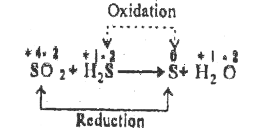
|
|
| 44. |
For 1s orbital Hydrogen atom radial wave function is given as: R(r) =1/(sqrtpi) ((1)/(a_0))^(3//2) e^(-r//a_0) (where a_0 = 0.529 A^@) .The ratio of radial probability density of finding electron at r = a_0 to the radial probability density of finding electron at the nucleus is given as (x.e^(-y)). Calculate the value of (x + y). |
|
Answer» r=0`therefore x + y =3` |
|
| 45. |
For 2A + 2B hArr2C + 2D K_(c) = (1)/(16) then K_(c)for C + DhArr A + B is _______ |
|
Answer» |
|
| 47. |
For 1-methoxy-1,3-butadiene, which of the following resonating structure is the least stable? |
|
Answer» `H_(2)OVERSET(Ө)(C)-overset(OPLUS)(C)H-CH=CH-O-CH_(3)` |
|
| 48. |
For 1 - methoxy- 1,3- butadience ,which of the following resonating structure is the least stable ? |
|
Answer» `H_(2)overset(+) (C )-overset(+)CH-Ch=CH-O-CH_(3)` |
|
| 49. |
Following two equilibria are established seperately in 2 different containers of unequal volume. PCl_(5)(g)hArrPCl_(3)(g)+Cl_(2)(g) COCl_(2)(g)hArrCO(g)+Cl_(2)(g) Now the containers are connected together by a thin tube of negligible volume. Select incorrect statements. (Assume T constant) |
|
Answer» Degree of dissociation of both `PCl_(5)(g)"&"COCl_(2)(g)` will decrease |
|
| 50. |
Following two equilibrium is simultaneously established in a container. PCI_5(g)hArrPCI_3(g)+CI_2(g) CO(g)+CI_2(g)hArrCOCI_2(g) If some Ni(s) is introduced in the container forming Ni(CO)_4(g) then at new equilibrium. |
|
Answer» `PCI_3` concentration will INCREASE. |
|