

Saved Bookmarks
This section includes 7 InterviewSolutions, each offering curated multiple-choice questions to sharpen your Current Affairs knowledge and support exam preparation. Choose a topic below to get started.
| 1. |
Give the monosubstituon product in the following reactions : |
Answer» Solution :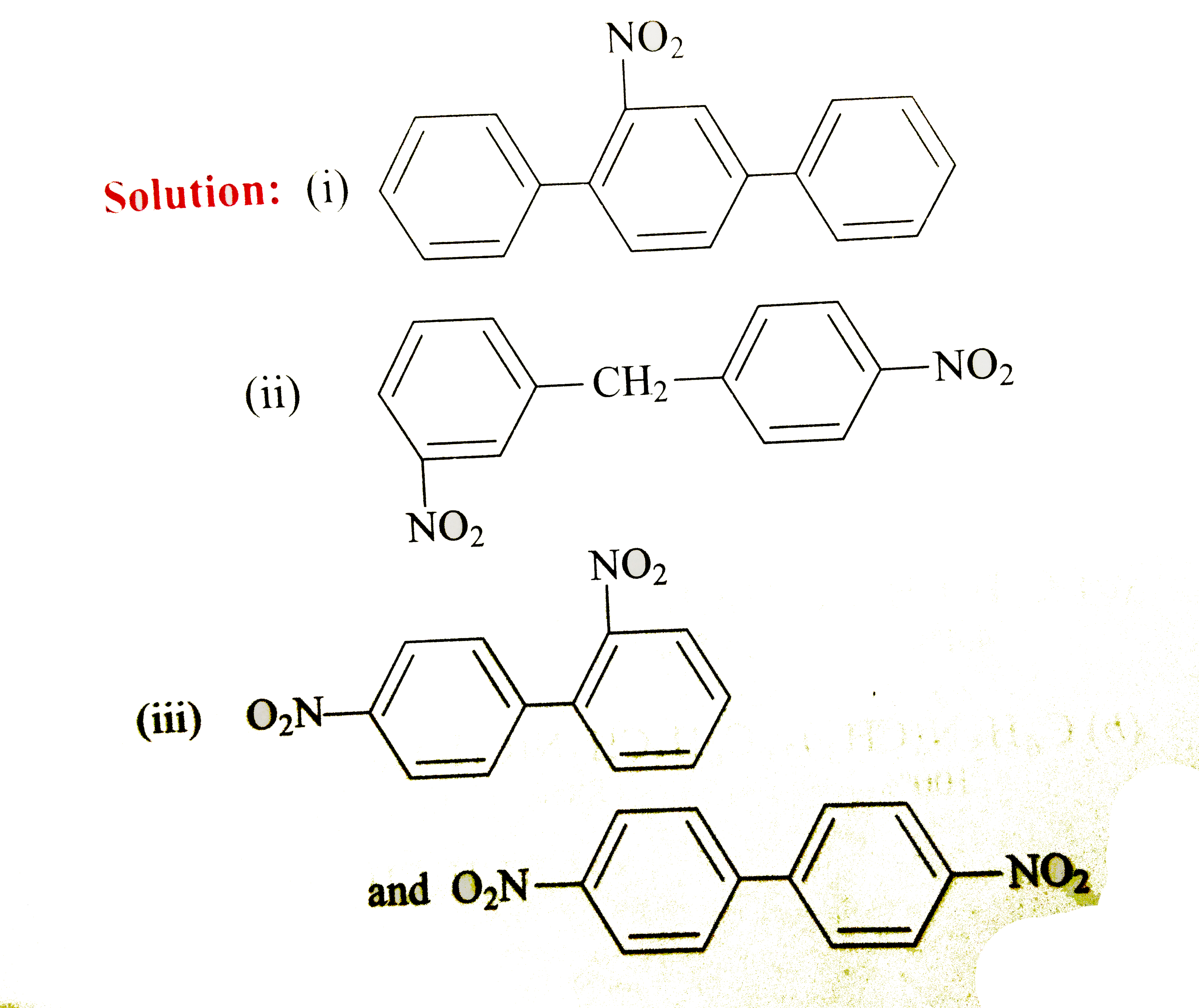 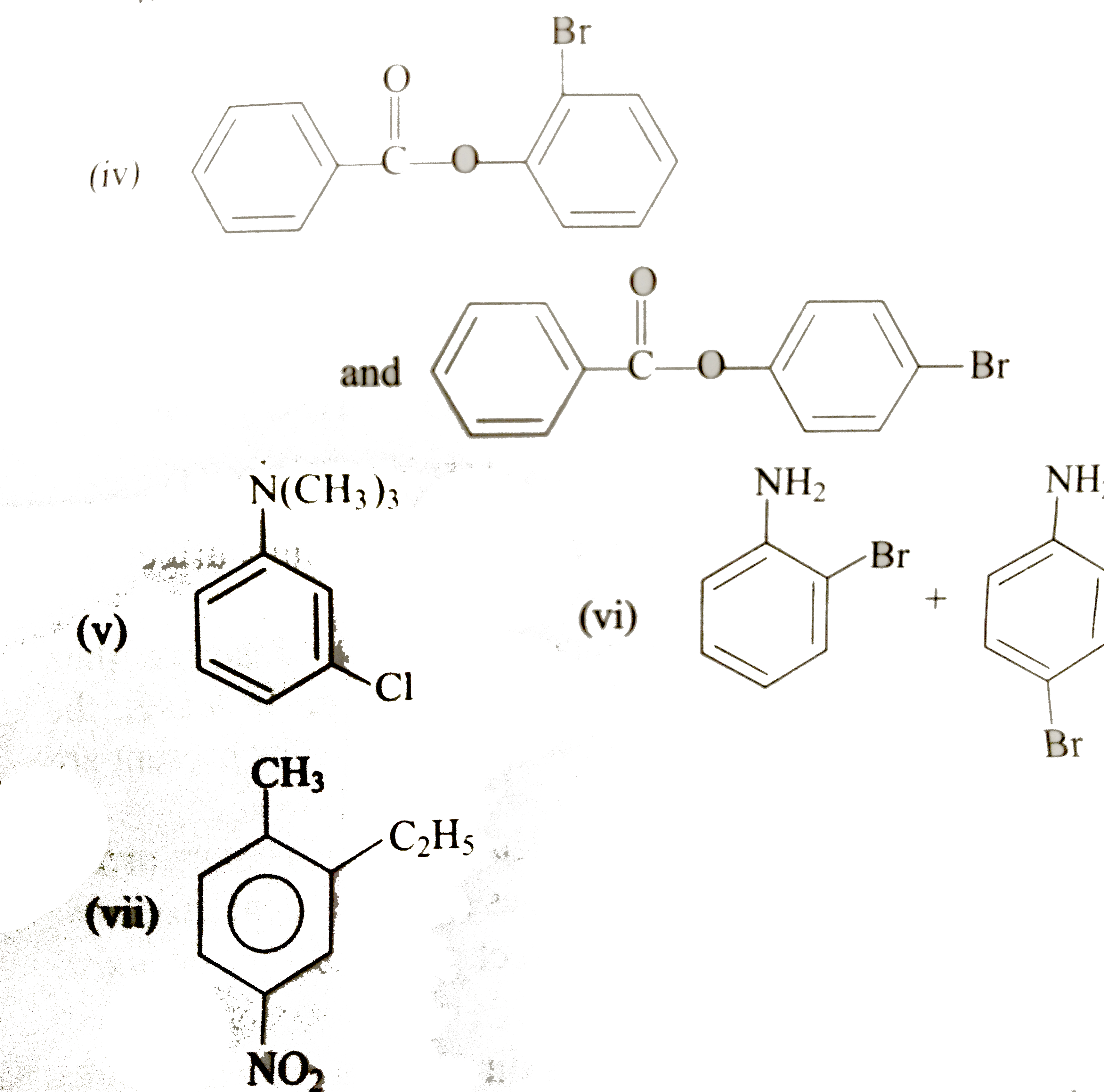 `("Hyperconjugative effect of"-CH_(3) "is more than that of "-C_(2)H_(5) "GROUP").` |
|
| 2. |
Give the molecular formula, strucutral formula full structure and line structure of (i) 2-Methyl-pentane (ii) 3-Ethylpentane and (iii) 2,3-dimethyl butane. |
|
Answer» Solution :(i) 2-Methyl PENTANE : (a) Molecular formula : `C_(6)H_(14)` (b) STRUCTURAL formula : `CH_(3)-underset(CH_(3))underset(|)(CH)-CH_(2)-CH_(2)-CH_(3)` (c) Hole structure with his bonds :  (d) LIne structure :  (ii) 3-Ethylpentane : (a) molecular formula : `C_(5)H_(14)` (b) Structral formula : `CH_(3)-CH_(2)-overset(CH_(3))overset(|)(CH) - CH_(2)-CH_(3)` (c) Hole structure with his bonds `H-underset(H)underset(|)overset(H)overset(|)(C)-underset(H)underset(|)overset(H)overset(|)(C)-underset(H)underset(|)underset(H-C-H)underset(|)overset(H)overset(|)(C)-underset(H)underset(|)overset(H)overset(|)(C)-underset(H)underset(|)overset(H)overset(|)(C)-H` (d) Line structure :  (iii) 2, 3-Dimethyl butane : (a) Molecular formula : `C_(6)H_(14)` (b) Structural formula : `CH_(3)-underset(CH_(3))underset(|)(CH)-underset(CH_(3))underset(|)(CH)-CH_(3)` (c) Hole structure with his bonds : `H-underset(H)underset(|)overset(H)overset(|)(C)-underset(H)underset(|)underset(H-C-H)underset(|)overset(H)overset(|)(C)-underset(H)underset(|)overset(H)overset(|)overset(H-C-H)overset(|)(C)-underset(H)underset(|)overset(H)overset(|)(C)-H` (d) Line structure : 
|
|
| 3. |
Give the method of three-dimensional representation of organic molecule |
|
Answer» Solution :(a) Dashed-wedge formula (b) Method of PREPARATION of molecular model (i) Framework model (II) Ball- and -stick model and (iii) Space filling model. |
|
| 5. |
Give the major products of following reaction : |
|
Answer» |
|
| 6. |
Give the main feature of Lewis approach of chemical bonding. |
| Answer» Solution :valency SHELL can accommodate 8 ELECTRONS called octet. It REPRESENTS stable electronic ARRANGEMENT. Elements: TRY to attain octet configuration to attain stability by gaining, losing or sharing electrons | |
| 7. |
Give the main feature of Kossel's explanation of chemical bonding. |
| Answer» Solution :valency SHELL can accommodate 8 electrons called octet. It REPRESENTS STABLE electronic arrangement. Elements try to ATTAIN octet configuration to attain stability by gaining, losing or sharing electrons. | |
| 8. |
Give the IUPAC nomenclature of following structures with its proper rule of IUPAC. (a) (CH_(3))_(2)CH-CH_(2)-CH(CH_(2)CH_(3))_(2) (b) CH_(3)-CH_(2)-CH_(2)CH[CH(CH_(3))_(2)]-CH(CH_(3))-C(CH_(2)-CH_(3))_(3) |
|
Answer» Solution :(a) Expand structure of `(CH_(3))_(2)CH-CH_(2)-CH(CH_(2)CH_(3))_(2)` : `{:(""CH_(3)""CH_(2)-CH_(3)),("|""|"),(CH_(3)-CH-CH_(2)-CH-CH_(2)-CH_(3)),("4-ethyl-2-methylhexane"):}` Rule : (i) Long chain is of 6-CARBON atom. (ii) As per English alphanet ethyl substitution is written first than methyl. (iii) Staring from left side carbon giving number-1, substitution has 2 for methyl and 4 for ethyl. (iv) Giving numbering from right side substitution has 3 for ethyl and 5 for methyl. Considering left side numbering, IUPAC NOMENCLATURE is : `{:(""CH_(3)""CH_(2)-CH_(3)),("|""|"),(overset(1)(C)H_(3)-""^(2)CH-overset(3)(CH_(2))-""^(4)CH-overset(5)(C)H_(2)-overset(6)(C)H_(3)):}` (b)Expand structure of `CH_(3) - CH_(2)-CH_(2)CH[CH(CH_(3))_(2)]-CH(CH_(3))-C(CH_(2)-CH_(3))_(3)` :  Rule : (i) Long chain carbon atom is of 8 carbons. (ii) Substitutions are DIETHYL, methyl `(CH_(3))` and isopropyls `(-CH(CH_(3))_(2))`. As per the alphabet, it is written as diethyl, isopropyl methyl octane. (iii) Giving numbering for left side carbon as 1. Substitution has numbering as follows : 6,6-diethyl-4-isopropyl-5-methyl (iv) Giving numbering from light carbon as 1, substitution number is given as follows : 3,3-diethyl-5-isopropyl-4-methyl Numberinggivenfromrightsidecarbon-1andsubstitutionhas leastnumberIUPACnomenclatureandstructureis as follows 
|
|
| 9. |
Give the IUPAC names or write the structure, as appropriate, of the following compounds: (i) HO_(2)C CH_(2)underset(NO_(2))underset(|)(CH)CHCO_(2)H (ii) Benzoic acid (iii) CH_(3)underset(NH_(2))underset(|)(CH)-overset(O)overset(||)(C)-O^(-)Na^(+) (iv) 4-hydroxypentanoic acid (v) (vi) 2,2-Dibromohexanedioc acid (vii) (viii) 4-(1,1-Dimethylwthyl)benzoic acid (ix) HCOONH_(4) (x)underset(Br)underset(|)CH_2-undersetunderset(Br)(|)(CH)-COOK (xi) alpha,beta-Dimethylvaleric acid (xii) Phthalic acid (xiii) Isophthalic acid (xiv) Terephthalic acid Strategy: We need prior knowledge to write down the structures of specificnames The class suffix of caroboxylic acids is -oic acid and the carnoxyl C atom is numbered as 1. |
|
Answer» SOLUTION :(i) `2`-Nitrobutanedioic acid (ii) Benzencarboxylic acid (III) Sodium `2`-aminopropanaoate (iv) `CH_(3)overset(OH)overset(|)(CH)CH_(2)CH_(2)CO_(2)H` (v) `5`-Bromo-`3`-chloroheptanoic acid (vi) `HOOC CH_(2)CH_(2)CH_(2)-underset(Br)underset(|)overset(Br)overset(|)(C)-CO_(2)H` (vii) `4,4`-Dimethyl cyclohexane carboxyclic acid (viii) 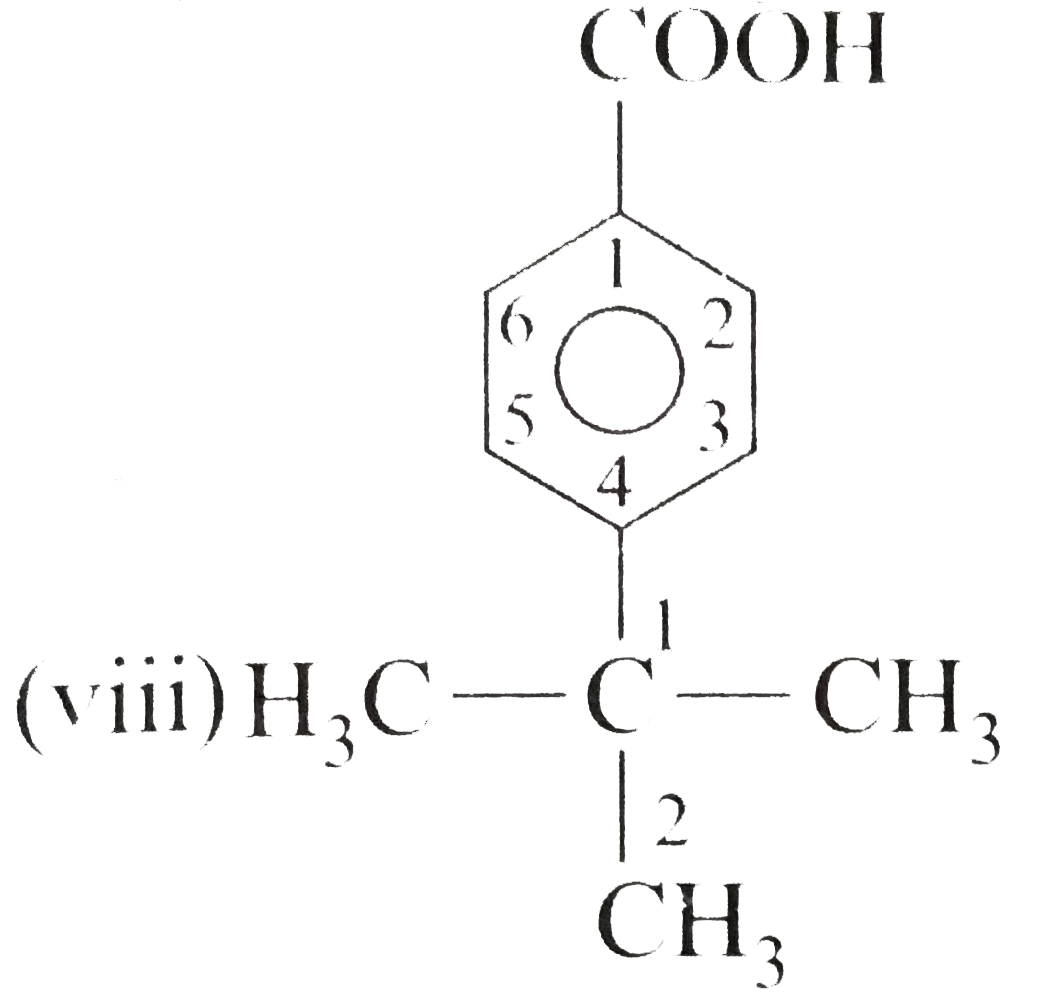 (IX) Ammonium formate (x) Postanssium `2,3`-dibromopropanoate (xi) 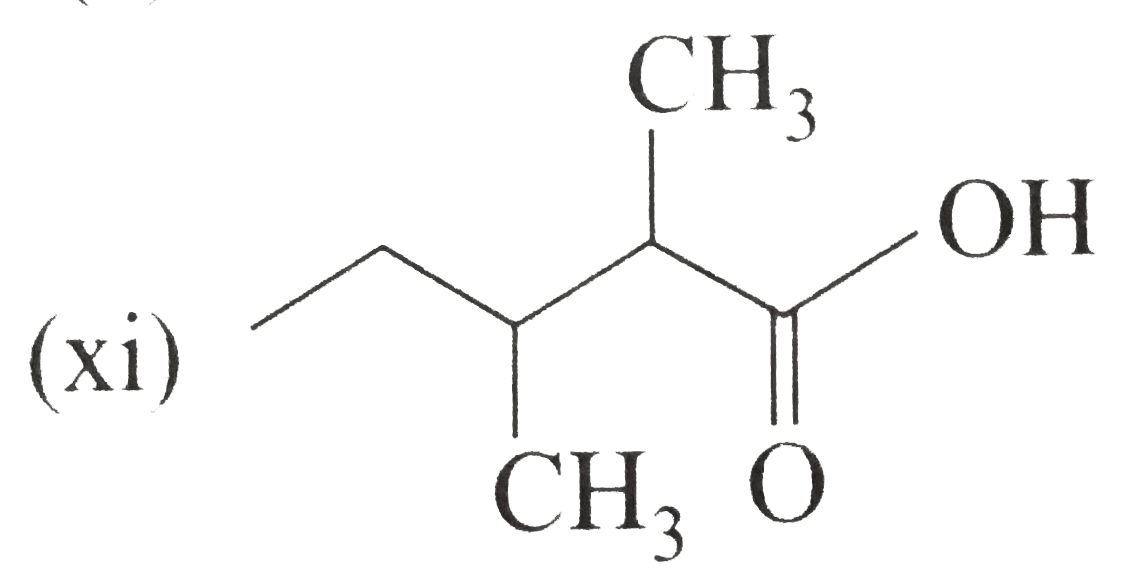 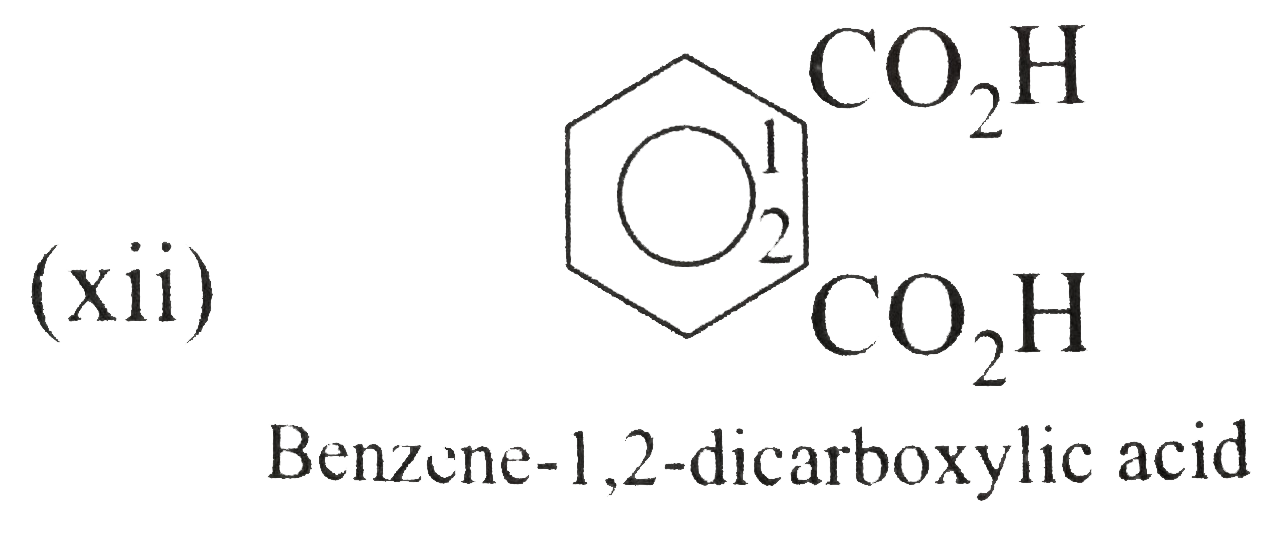 (xiii) 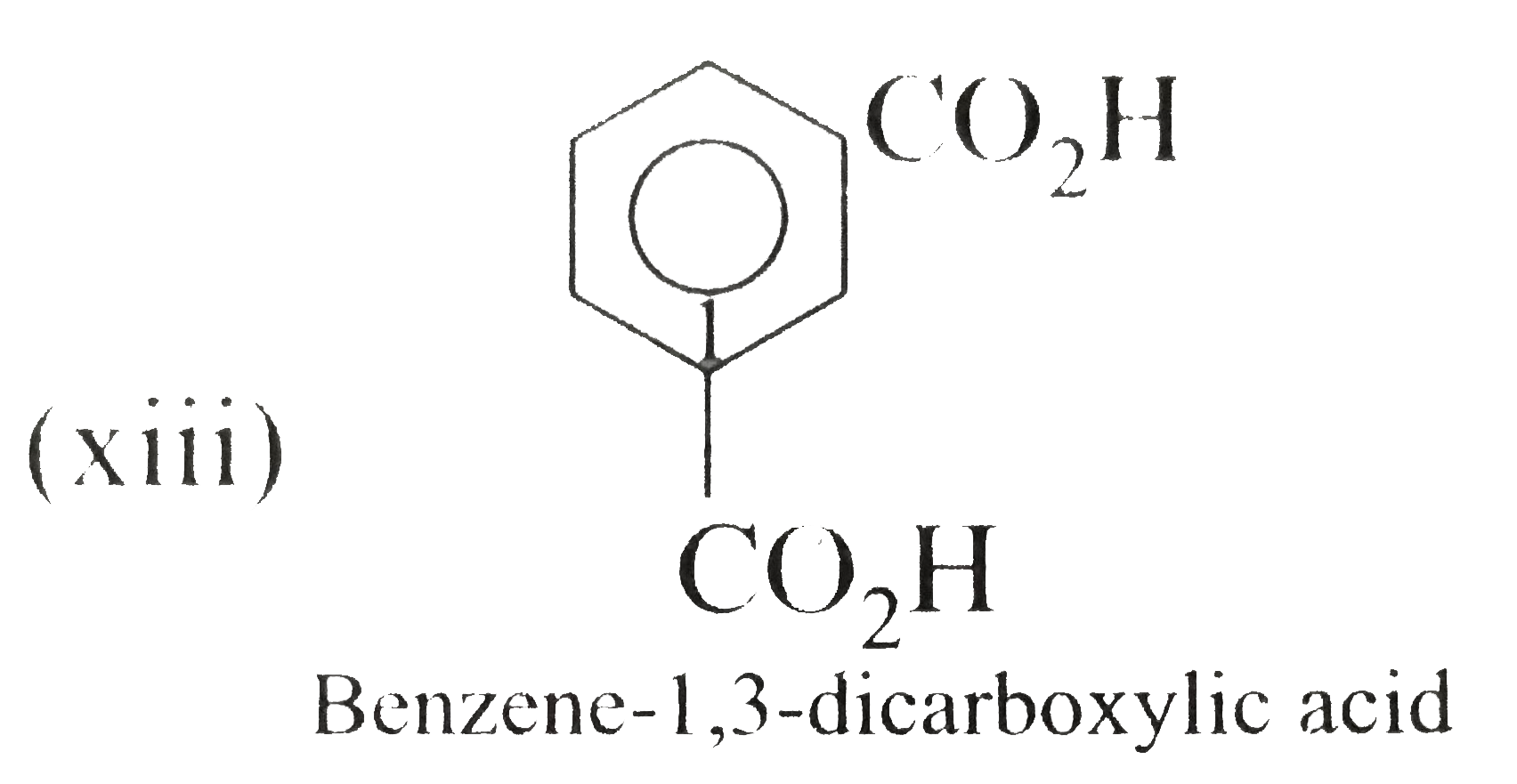 (xiv) 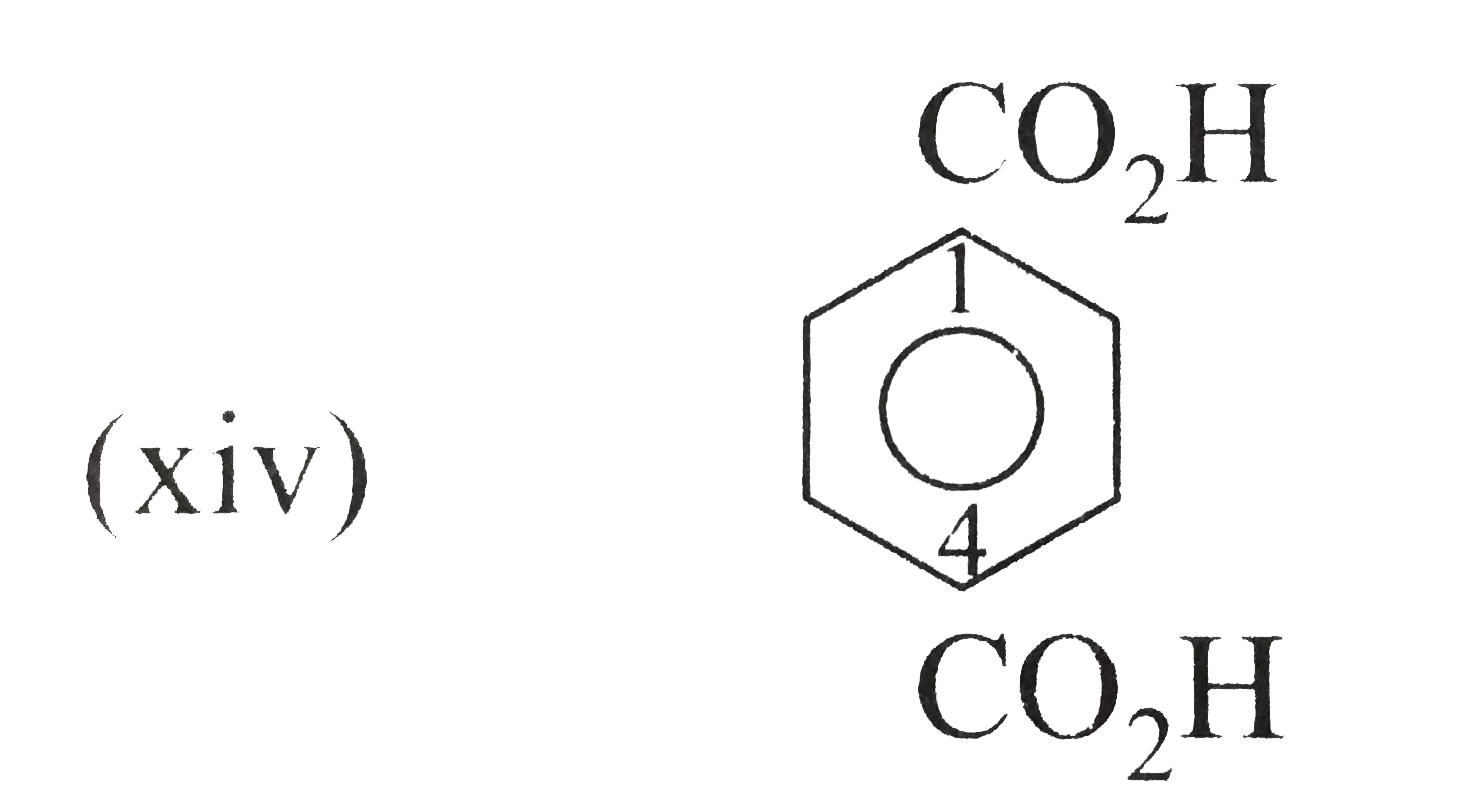
|
|
| 10. |
Give the Kp expression of the equation H_(2)(g)+I_(2)(g)hArr2HI(g). |
|
Answer» |
|
| 12. |
Give the IUPAC names of the following : (i) CH_(3)-CH=CH-CH=CH_(2) (ii) CH_(3)-CH_(2)-CHO (iii) CH-overset(O)overset(||)(C)-CH_(2)-CH_(3) |
|
Answer» SOLUTION :(i) PENTA 1,3-diene (II) PROPANAL (III) Butan-2-one |
|
| 13. |
Give the IUPAC names of the following compounds: (i) o-Bromobenzaldehyde (ii) Diethyl ketone (iii) 4-Hydroxy-3-methoxybenzaldehyde (iv) (v) Propargyladehyde (vi) (vii) ClCH_(2)CH_(2)CH_(2)CH_(2)-overset(O)overset(||)(CH) (viii) Phenylacetadehyde (ix) (x) Allymethyl ketone (xii) Salicyladehyde (o-hydroxybenzaldehyde) (xiii) p-nitrobenzaldehyde (xiv) Isopropyl methyl ketone (xv) Benzyl methyl ketone (xvi) Strategy: The IUPAC names of aldehydes and ketones are derived from the name of the parent hydrocarbon. The suffix-al is added to the characteristic stem in aldehydes while the suffix -one is added in ketones |
Answer» Solution :(i) 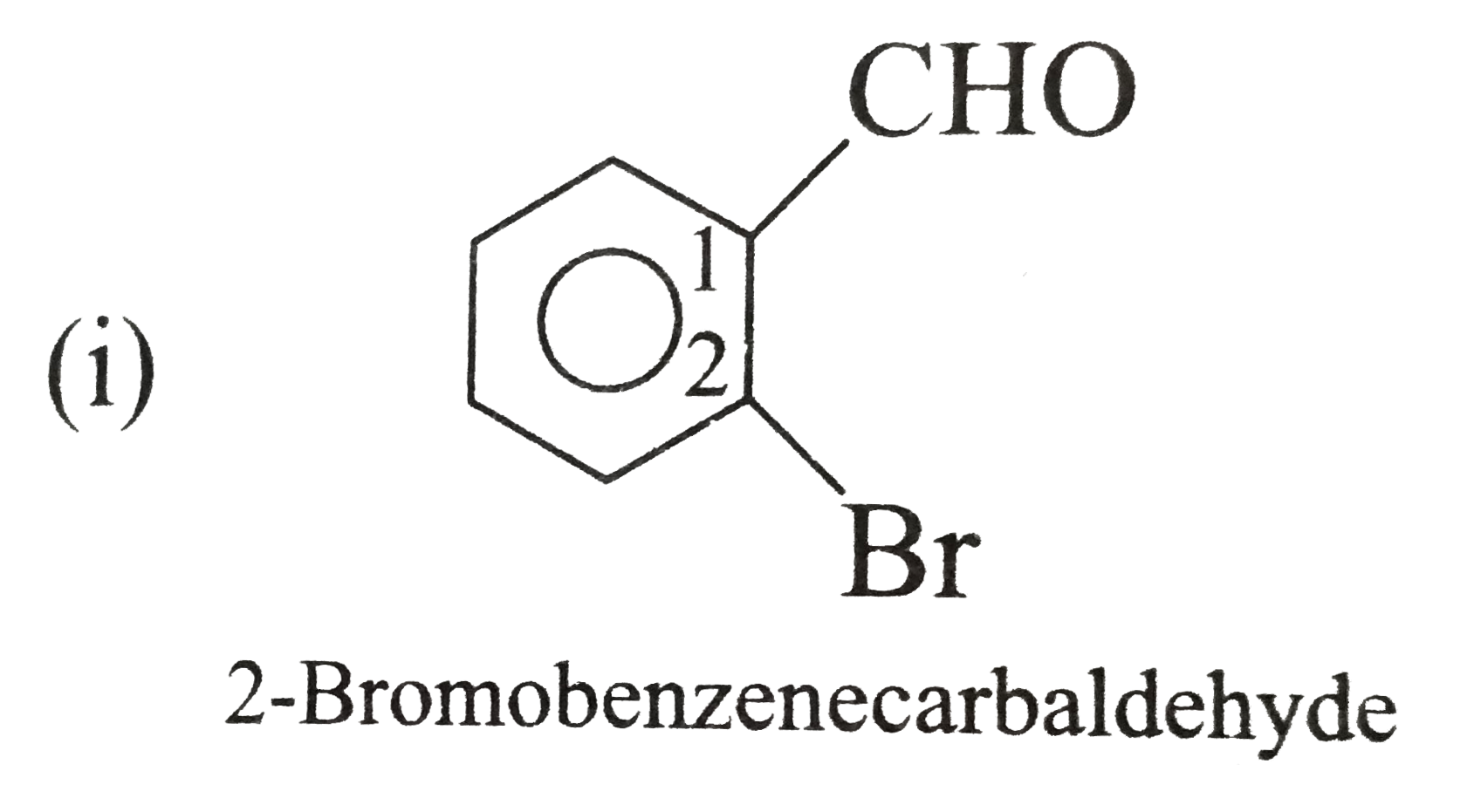 (ii) `OVERSET(1)(CH_(2))overset(2)(CH_(2))underset("Pentan-3-one")(underset(O)underset(||)overset(3)(C)overset(4)(CH_(2)overset(CH_(3))` (iii) 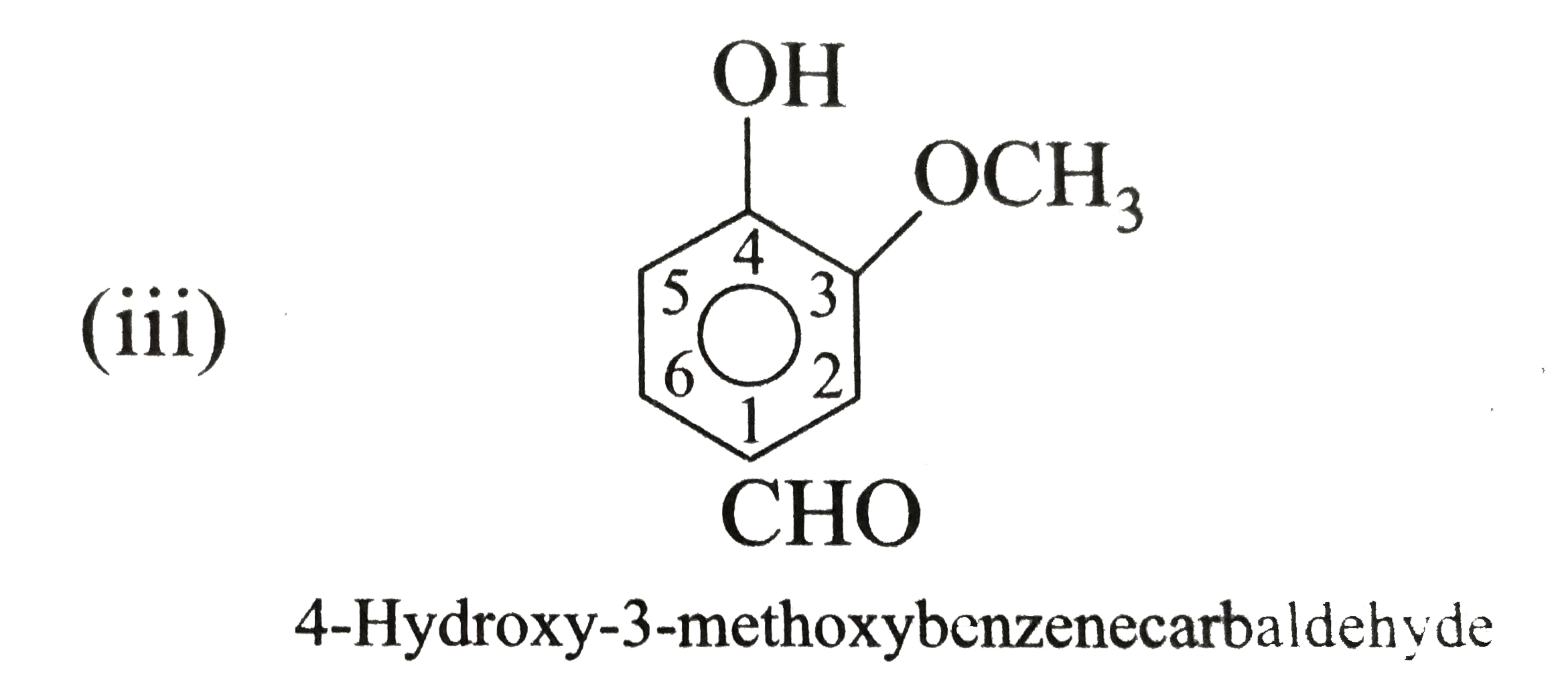 (iv) `4`-chloro-`6`-methylheptan-`3`-one (v) `HCunderset("propynal")(-=overset(O)overset(||)C CH)` (vi) `5`-Bromo-`3`-ethylnycycloheptanone (vii) `5`-Chloropentanal (VIII) `C_(6)H_(5)underset("Phenylethanal")(CH_(2)-overset(O)overset(||)(C)-H)` (ix) `2`- Naphthalenecarbaldehyde (X) `CH_(3)-underset(("not pent-1-en-4-one"))underset("Pent-4-en-one")(underset(O)underset(||)(C)-CH_(2)-CH=CH_(2))` (xi) 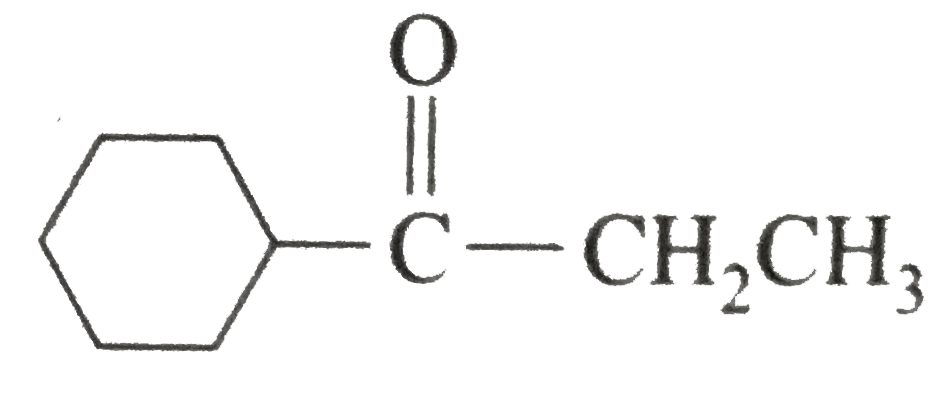 (xii) 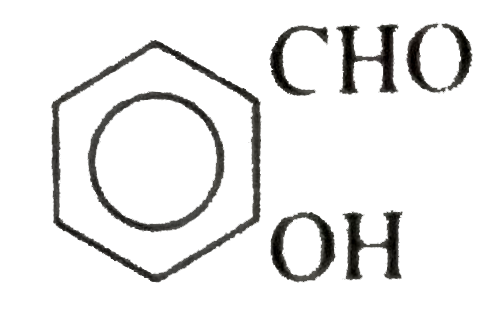 (xiii) 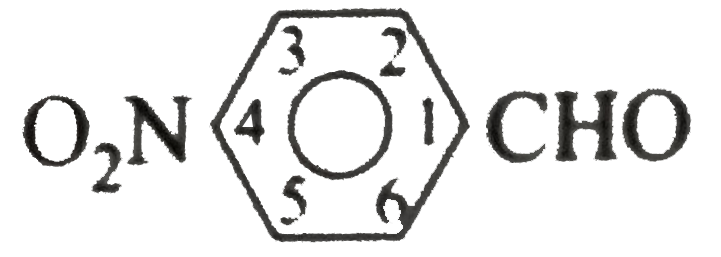 (xiv) `CH_(3)-underset("3-Methylbutanone")(underset(CH_(3))underset(|)overset(3)(CH)-underset(O)underset(||)overset(2)(C)-overset(1)(CH_(3)))` (xv) 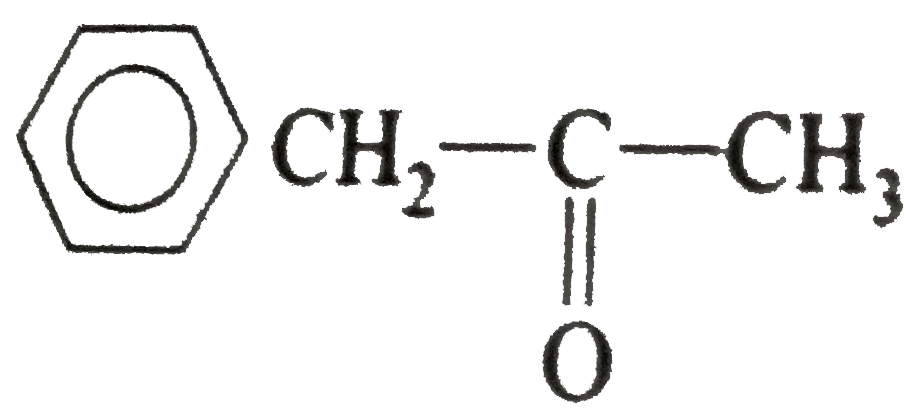 (xvi) `4`-Methylpheny-`3`-nitrophenylmethanone |
|
| 14. |
Give the IUPAC names of the following compounds (i) CH_(3)CH(Cl)CH(Br)CH_(3) (ii) CHF_(2)CBrClF (iii) ClCH_(3)C-=C CH_(2)Br (iv) (C Cl_(3))_(3) C Cl (v) CH_(3)C(p-ClC_(6)H_(4))_(2)CH(Br)CH_(3) (vi) (CH_(3))_(3)C CH=C(Cl)C_(6)H_(4)I-p |
|
Answer» Solution :(i) `overset(4)CH_(3)UNDERSET(CL)underset(|)overset(3)CH-underset(Br)underset(|)overset(2)CH-overset(1)CH_(3)` :2-Bromo-3-chlorobutane (ii) `F_(2)CH-underset(Cl)underset(|)overset(F)overset(|)C-Br` : 1-Bromo-1-chloro-1,2,2-trifluoroethane (iii) `Cloverset(4)CH_(2)overset(3)C-=overset(2)C overset(1)CH_(2)Br` : 1-Bromo-4-chlorobut-2-yne (iv) `overset(3)C Cl_(3)-underset(overset(1)C Cl_(3))underset(|)overset(C Cl_(3))overset(2|)C-Cl` : 2-(Trichloromethyl)-1,1,1,2,3,3,3-heptachloropropane (v) `overset(4)CH_(3)underset((p-ClC_(6)H_(4))_(2))underset(|)overset(3)C-overset(Br)overset(2|) CH-overset(1)CH_(3)` : 2-Bromo-3,3-bis(4-chlorophenyl)butane (vi) `(overset(4)CH_(3))_(3)overset(3)C overset(2)CH=underset(Cl)underset(|)overset(1)C(C_(6)H_(4)I-p)` :1-Chloro-1-(4-iodophenyl)-3,3-dimethylbut-1-ene |
|
| 15. |
Give the IUPAC names of the following compounds. H_(3)C-CH_(2)-COOH |
| Answer» SOLUTION :IUPAC NAMES- PROPANOIC ACID | |
| 16. |
Give the IUPAC names of the following compounds: Cl_(2)CHCH_(2)OH |
Answer» Solution : IUPAC name :1 phenylpropane or n-propyl benzene  therefore `overset(5)(CH_(3)) overset(4)(CH) underset(underset(CH_(3))(|))overset(4)(CH) overset(3)(CH - overset(2)(CH_(2)) - overset(1)(CN)` IUPAC name: 3-Methylpentanentrile therefore `overset(5)(CH_(3)) overset(4)(CH) underset(underset(CH_(3))(|))overset(4)(CH) overset(3)(CH - overset(2)(CH_(2)) - overset(1)(CN)` IUPAC name: 3-Methylpentanentrile  therefore `underset(1)(C )H_(3)- underset(2)overset(overset(CH_(3))(|))(CH)- underset(3)(CH_(2))- underset(4)(CH_(2))-underset(underset(CH_(3))(|5))(CH)-overset(6)(CH)_(2)-underset(7)(C )H_(3)` IUPAC name: 2, 5-dimethylheptane therefore `underset(1)(C )H_(3)- underset(2)overset(overset(CH_(3))(|))(CH)- underset(3)(CH_(2))- underset(4)(CH_(2))-underset(underset(CH_(3))(|5))(CH)-overset(6)(CH)_(2)-underset(7)(C )H_(3)` IUPAC name: 2, 5-dimethylheptane  therefore `CH_(3)- CH_(2) - underset(underset(Br)(|))overset(overset(CL)(|))(C )-CH_(2)-CH_(2)-CH_(2)-CH_(3)` therefore `CH_(3)- CH_(2) - underset(underset(Br)(|))overset(overset(CL)(|))(C )-CH_(2)-CH_(2)-CH_(2)-CH_(3)` IUPAC name: 3-bromo-3-chloroheptane  therefore `overset(3)(CH_(2))Cl -overset(2)(C )H_(2)- overset(1)(C )HO` IUPAC name: 3-chloropropanal therefore `overset(3)(CH_(2))Cl -overset(2)(C )H_(2)- overset(1)(C )HO` IUPAC name: 3-chloropropanal (f) `Cl_(2)CHCH_(2)OH` therefore `H- underset(underset(Cl)(|))overset(overset(Cl)(|))(C^(2))-overset(1)(C )H_(2)OH` IUPAC name: 2, 2-dichloroethanol |
|
| 17. |
Give the IUPAC names of the following alkynes :CH_3 - C -= C - oversetunderset(|)(CH_3)(C)H - CH_2 - CH_2 CH_3 |
| Answer» SOLUTION : 4-methylhept-2-yne | |
| 18. |
Give the IUPAC names of the following alkynes :CH_3 - C -= C - oversetunderset(|)(C_2H_5)(C)H - CH_3 |
| Answer» SOLUTION :4-methylhex-2-yne | |
| 19. |
Give the IUPAC names of the following alkynes : CH -= C - CH_2 - oversetunderset(|)(CH_3)(C)H - C -= CH |
| Answer» SOLUTION :3-methylhexa-1,5-diene | |
| 20. |
Give the IUPAC names of the following : |
|
Answer» SOLUTION :(i) Bicyclo [2.2.0] hexane (ii) Bicyclo [4.4.0] DECANE (iii) Bicyclo [1.1.1] PENTANE (iv) Bicyclo [2.2.1] hexane (v) SPIRO [2.5]OCTANE (vi) Bicyclo [3.2.1] octane (vii) 1,7,7-Trimethylbicyclo [2.2.1] heptane-2-one (viii) 1,1',2',1''-Tercyclopropane (ix) Bicyclo [3.1.0] hexane (x) Spiro [3,5] nonane. |
|
| 21. |
Give the IUPAC names of the following : |
|
Answer» Solution :(i) 4-Cyclopentylbut-1-ene, (ii) Cyclohexylcyclohexane (III) 2-Hydroxycyclohexanecarbonyl CHLORIDE, (iv) 2-(2-Methylcyclobut-1-enyl) ETHANAL (v) 4-Cyclobutylbut-3-en-2-one, (vi) 2-Ethyl-1, 4-dimethylcyclohexane (vii) 1-(4-hydroxycyclohexyl) pentane-1, 5-diol, (viii) 2-Isoproyl-5-methylcyclohexanol (ix) 4-(4-Nitrocyclohexyl) benzaldehyde, (X) 2-Nitrocyclohexanecarboxamide. |
|
| 22. |
Give the IUPAC names of the following : |
|
Answer» SOLUTION :(i) 4-Cyclopentylbut-1-ene (ii) Cyclohexylcycohexane (iii) 2-Hydroxycyclohexanecarbonyl chloride (iv) 2-(2-Methylcyclobut-1-enyl) ethanal (v) 4-Cyclobutylbut-3-en-2one (vi) 2-Ethyl-1,4-dimethylcyclohexane (VII) 1-(4-hydroxycyhlohexyl)pentane-1,5-diol (VIII) 2-Isopropyl-5-methylcyclohexanol (ix) 4-(4-Nitrocyclohexyl) BENZALDEHYDE (x) 2-Nitrocyclohexanecarboxamide. |
|
| 23. |
Give the IUPAC names for the following (i) CH_(2)=CH-underset(CH_(3))underset(|)CH-CH_(3) (ii) (CH_(3))_(2)CH-CH=CH-CH_(2)-underset(CH_(2)CH_(3))underset(|)underset(H_(3)C-CH-CH)underset(||)(CH_(2) (iii) (iv) CH_(2) = C(CH_(2)CH_(2)CH_(3))_(2) (v) (vi) ( vii)CH_2=CH-CH_2oversetoverset(CH_3)(|)CHCH_3 (viii) CH_(2)=CH-underset(CH_(2)CH_(2)CH_(3))underset(|)(CH)(CH_(2))_(4)CH_(3) (ix) CH_(3)CH_(2)CH_(2)CH_(2)-overset(H_(3)C)overset(|)(C )=overset(CH_(2)CH_(3))overset(|)(C(CH_(2))_(3)CH_(3) (x) (xi) (xii) (xiii) (xiv) Tetramethylethlene (xv) (xvi) Strategy: Select the longest possible continuous carbon chain or ring containing the largest number of double bonds and carrying the maximum number of side chains. Change the suffix of the parent alkane from -ane to -ene.The parent chain is numbered from the end closer to C = C, whoese position is indicated by assigning the lower possible number to the first doubly bonded C. Subsitituents are designated in exactly the same way as done for branched alkanes. |
|
Answer» Solution :(i) `3`-Methylbut- `1`-ene (ii) `2, 8`-Dimethyldeca- `3,6`-diene. (iii) OCTA- `1,3,5,7`-tetraene (iv) `2-(1`-Prophyl) pent -`1`-ene (v) `4`-Enthyl-`2, 6`-dimethyldec-`4`-ene (vi) `3-n`-Prophylpenta-`1, 4`-diene (vii) `4`-methylpent-`1`-ene (viii) `3`-prophyloct-`1`ene (ix) `5`-ETHYL-`6`-methyldec-`5`-ene (x) `2,3`-Dimethylhept-`2`-ene (xi) trans-Hept-`3`-ene (xii) `1,3`-Dimethylcyclohexene (xiii) `3`-Prophylhept-`1`-ene (xiv) `(CH_(3))_(2)C = C(CH_(3))_(2), 2,3`-Dimethylbut-`2`-ene (xv)`4`-Ethyl-`2`-methylhex-`1`-ene (xvi) `3,5`-Dimethylcyclohexene |
|
| 24. |
Give the IUPAC names for the following ethers: (i) tert-Butylphenyl ether (ii) CH_(3)underset(OCH_(3))underset(|)(CH)CH_(2)CH_(2)CH_(3) (iii) (iv) sec-Butyl isopropyl ether (v) beta-Chloroethyl methyl ether (vi) Ethyl p-nitrophenyl ether (p-nitrophenetole) (vii) cyclohexy n-propyl ether (viii) Benzy vinyl ether (ix) Cyclopentyl t-butyl ether (x) (xi) overset(1)(CH_(3))underset(OH)underset(|)overset(2)(CH)CH_(2)CH_(2)overset(5)(CH_(2))OCH_(3) (xii) 3-Cyclohexenylisopropyl ether (xiii) (xiv) Strategy: In the IUPAC system, ethers are named as alkoxyalanes. To write the IUPAC names of the commonly named ethers, first with the structure. |
|
Answer» SOLUTION :(i) `C_(6)H_(5)Ooverset(2)-underset(("tert-Butoxy benzene"))(underset(.^(3)CH_(3))underset(|)overset(.^(1)CH_(3))overset(|)(C)-CH_(3))` (ii) `2`-METHYLPENTANE (III) `1`-Ethoxy-`4`-methylbenzene (iv) `overset(2)(CH_(3))-underset(CH_(3))underset(|)overset(1)(CH)-O-underset(2-(1-"Methylmethoxy")but an )underset(2-"Isopropoxybutane")(underset(1CH_(3))underset(|)overset(2)(CH)-overset(3)(CH_(2))-overset(4)(CH_(3))` (v) `Cl overset(1)CH_(2)overset(2)CH_(2)CH_(3)` , 1-Choloro-2-methoxyethane (vi)  (vii)  (viii) `H_(2)C=OH-O-CH_(2)CH_(6)H_(5)` (ix) 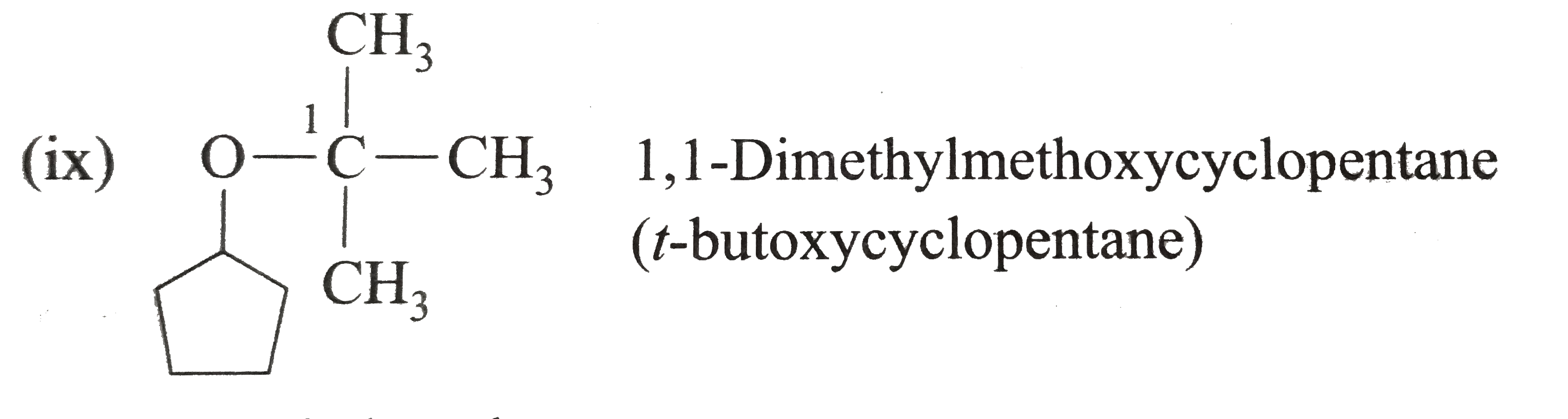 (x) `1,3`-Dimethoxybenzene (xi) `5`-Methoxypentan-`2-ol` (xii)  (xiii) Phenyloxirane (xiv) Ethyloxirane [ `1`-epoxybutane or `1,2`-Buteneoxide] |
|
| 25. |
Give the IUPAC name of Cl_2CHCH_2OH |
|
Answer» |
|
| 26. |
Give the IUPAC name on ozonolysis of following : (i) 3,4-Dimethyl hept-3-ene (ii) 2-Methyl-but-2-ene (iii) 2-Ethyl-2-methyl-pent-2-ene (iv) Hex-1-ene (v) Hex-3-ene |
Answer» SOLUTION : 
|
|
| 27. |
Give the IUPAC name of the saturated hydrocarbon having the following carbon skeleton. {:(C-C-C-C-C-C-C),("|""|""|""|"),(C-C-C""C""C" "C):} |
| Answer» SOLUTION :5-Ethyl-2,3,4-trimethyloctane | |
| 28. |
Give the IUPAC name of the product formed when isobutylene is treated with a few drops of concentrated sulphuric acid. |
Answer» SOLUTION :This follows Markovnikov RULE to give 2-methyl-2-propanol as major PRODUCT. 
|
|
| 29. |
Give the IUPAC name of the hydrocarbon represented by Swastik sign. |
Answer» SOLUTION :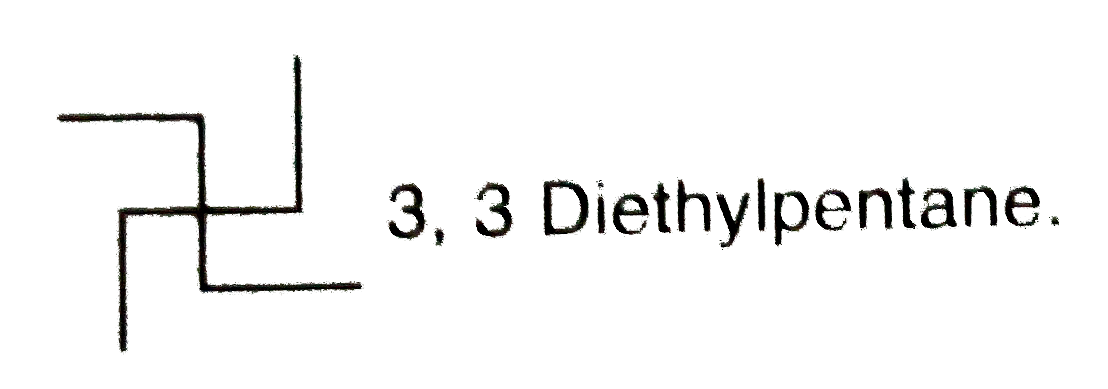 3, 3 Diethylpentane. 3, 3 Diethylpentane.
|
|
| 30. |
Give the IUPAC name of the following compounds. (i) H_(3)C-underset(CH_(3))underset(|)(CH)-CH_(2)-CH_(2)-CH_(2)OH (ii) H_(3)C-underset(CH_(3))underset(|)overset(CH_(3))overset(|)C-CH_(2)OH (iii) CH_(3)-CH_(2)-underset(O)underset(||)C-OH |
| Answer» Solution :(i) 4-methylpentan-b-ol (II) 2, 2-dimethylpropan-1-ol (III) Propanoic ACID | |
| 31. |
Give the IUPAC name of the following compounds |
Answer» SOLUTION :
|
|
| 32. |
Give the IUPAC name of the following compounds. |
|
Answer» |
|
| 33. |
Give the IUPAC name of the following compound |
|
Answer» 5, 6-diethyl-2-9 -dimethyl-dec-4-ene |
|
| 34. |
Give the IUPAC name of the following alkenes :(CH_3)_2C = C(CH_3)_2 |
| Answer» SOLUTION :2, 3-dimethylbut-2-enel | |
| 35. |
Give the IUPAC name of the following alkenes :CH_3 - oversetunderset(|)(CH_3)(C)H - oversetunderset(|)(CH_3)(C) = CH - oversetunderset(|)(CH_3)(C)H - CH_3 |
| Answer» SOLUTION :2,3,5-trimethylhex-3-ene | |
| 36. |
The IUPAC name of the compound CH_(2)=CH-CH(CH_(3))_(2) is |
| Answer» SOLUTION :3-Methylbut-1-ene | |
| 37. |
Give the IUPAC name of the following alkenes :CH_2 = CH - CH = CH_2 |
| Answer» SOLUTION : Buta-1, 3-diene | |
| 38. |
Give the IUPAC name of N-= C-CH_(2)- underset(underset(C -=N)(|))(C H)-CH_(2)- C -=N |
|
Answer» 3-cynopentane-1, 5-dinitrile |
|
| 39. |
Give the IUPAC name of (i) CH_(3)-CH_(2)-underset(CH_(3))underset(|)(CH)-CH_(2)-CH_(2)-CN (ii) CH_(3)-underset(CONH_(3))underset(|)(CH)-CH-CH_(3) (iii)CH_(3)-underset (OH)underset(|)(CH)-CH_(2)-CH-CH-CH_(3) |
| Answer» SOLUTION :(i) 4-methylhexanenitrite (II) 2-methyl but-3-en AMIDE (III) Hex-4-en-2-ol | |
| 40. |
Give the IUPAC name of (i) CH_(3)-CH_(2)-CH_(2)-underset(CH_(3))underset(|)(CH)-CH_(2)-CH_(3) (ii) CH_(3)-underset(CHO)underset(|)(CH)-CH_(2)-CHO (iii) CH_(3)-CH_(2)-underset(COOH)underset(|)(CH)-CH-CH_(3) |
| Answer» SOLUTION :(i) 3-methylhexane (II) 2-methylbutanul (III) 2-ethylbut-3-enoic ACID | |
| 41. |
Give the IUPAC name of each of the following: (iv) |
|
Answer» |
|
| 42. |
Give the IUPAC name of the following:CH-=C-CH=C=CH_2 |
|
Answer» |
|
| 43. |
Give the IUPAC name of [(CH_(3))_(3)C]_(4)C |
|
Answer» Tetra neo BUTYL methane |
|
| 44. |
Give the IUPAC name of CH_(3)- underset(underset(OCH_(3))(|))(C H)- underset(underset(O)(||))(C )- underset(underset(OCH_(2)CH_(3))(|))(CH)-CH_(3) |
|
Answer» 4-methoxy-2-ethoxy-2-one |
|
| 45. |
Give the IUPAC name of CH_(3)- underset(underset(CH_(3))(|))(CH)- CH_(2) underset(underset(CH_(3))(|))(CH)- CHOHCH_(3) |
|
Answer» 2-hydroxy-3, 5-dimethylhexane |
|
| 46. |
Give the IUPAC name of an isomer of hexane which has only two differentsets of structurally equivalent hydrogen atoms. |
|
Answer» SOLUTION :`underset"2,3-Dimethylbutane"(CH_3-undersetunderset(CH_3)|CH-undersetunderset(CH_3)|CH-CH_3)` It has 12 EQUIVALENT `1^@` HYDROGENS and 2 equivalent `3^@` hydrogens. |
|
| 47. |
Give the IUPAC name of alkene, product obtained on ozonolysis. (i) 2 moler propanone (Acetone) (ii) Ethanal and propanal (iii) Ethanal and pentane-3-one (iv) Ethanal and butanal (v) Propanone and butane-2-one |
|
Answer» Solution :(i) Product : `underset(""uarr "ozonolysis")(underset("Acetone")(CH_(3)-overset(O)overset(||)(C)-CH_(3))+underset("Acetone")(CH_(3)-overset(O)overset(||)(C)-CH_(3)))` Structure of alkene : `CH_(3)-underset(CH_(3))underset(|)(C)=underset(CH_(3))underset(|)(C)-CH_(3)` IUPAC name : 2, 3-Dimethyl-But-2-ene (II) Product : `underset(uarr "ozonolysis")underset("Ethanol")(CH_(3)CHO)+underset("PROPANAL")(CH_(3)CH_(2)CHO)` Structure of alkene : `CH_(3)CH=CHCH_(2)CH_(3)` IUPAC name : 2-Pentane (III) Product : `underset("Ethanol")(CH_(2)CHO) + underset("Pentane-3-one")(CH_(3)CH_(2)COCH_(2)CH_(3))` `uarr "Ozonolysis " O_(3), Zn, H_(2)O, -H_(2)O_(2)` Structure of alkene : `{:(CH_(3)CH=C-CH_(2)CH_(3)),("|"),(""CH_(2)CH_(3)):}` IUPAC name : 3-ethyl-pent-2-ene (iv) Product : `underset("Ethanal")(CH_(3)CHO) + underset("Butanal")(CH_(3)CH_(2)CH_(2)CHO)` `uarr` Oxonolysis (i) `O_(3)`, (ii) `Zn, H_(2)O, -H_(2)O` Name of alkene : `CH_(3)CH=CHCH_(2)CH_(2)CH_(3)` IUPAC Name : 2-Hexene (v) product : `[["propanone + Butane-2-one"],[CH_(3)COCH_(3)+CH_(3)COCH_(2)CH_(3)]]` `"Ozonolysis " uarr` Structure of alkene :`CH_(3)-underset(CH_(3))underset(|)(C)=underset(CH_(3))underset(|)(C)-CH_(2)CH_(3)` IUPAC Name : 2,3-Dimethyl-pent-3-ene |
|
| 48. |
Give the IUPAC name of |
|
Answer» |
|
| 49. |
Give the IUPAC name of |
|
Answer» 3-ethyl-4, 4-dimethylhetane |
|
