

Saved Bookmarks
This section includes 7 InterviewSolutions, each offering curated multiple-choice questions to sharpen your Current Affairs knowledge and support exam preparation. Choose a topic below to get started.
| 1. |
Give the reaction for the preparation of following from propene. (i) 2,2-dibromopropane (ii) Propanone (iii) Propane and (iv) Propen-2-ol |
Answer» Solution : (iii) Propyne `RARR` Propane : `CH_(3)C-=CH underset(Pt//Pd, Ni)overset(+H_(2))rarr [CH_(3)CH=CH_(2)]underset(Pt//Pd, Ni)overset(+H_(2))rarr underset("Propane")(CH_(3)CH_(2)CH_(3))` (iv) Propene-2-ol from propyne : `CH_(3)C-=CH+H_(2)O underset(underset("temperature")("Lower"))overset(Hg^(2+), H^(+))rarr underset("Propene-2-ol")(CH_(3)-underset(OH)underset(|)(C)=CH_(2))` |
|
| 2. |
Give the ration of Cu in Natural & Synthetic sample of cupric carbonate. |
|
Answer» `1:1` |
|
| 3. |
Give the purification technique of following mixture. (i) Chloroform and aniline (ii) Impure acetone (iii) Impure aniline (iv) Chlorobenzene and bromobenzene |
|
Answer» Solution :(i) SIMPLE distillation because high DIFFERENCE between BOILING POINT. (ii) Simple distillation (iii) Steam distillation is more simple. Simple distillation is also aplied. (iv) Partition distillation because LOW difference between boiling point |
|
| 4. |
Give the proportion of Hydrogen & Oxygen in water ? |
|
Answer» `1.008:8` |
|
| 5. |
Give the products with their stereoisomers, if any. a. b. cis -2,- Dibromobut-2-ene c. trans-2,3- Dibromobut-2-ene d. e. underset("pent-2-ene")((H)"trans-2,3-Dibromo-")overset(H_(2)+PtO_(2))rarr(I) f.underset("pent-2-ene")((J)"cis-2,3-Dibromo-")overset(H_(2)+Pt+C)rarr(K) g. cis - But -2-eneoverset(D_(2)+Pt)rarr h. trans- But -2- eneoverset(D_(2)+Pd)rarr i. Why is the stereochemical product same when cis - or tans - pent -2- ene is hydrogenated with D_(2), in the presence of platinum ? j. Classify the two reactions :(i)hydrogenenation of alkene with transition metala (Pt or Pd or Ni) and (ii) hydrogenation with Wilkinson's catalyst in terms of catalyst used and their mechanism of hydrogenation with Wilkinson's catalyst. |
Answer» Solution : `a.`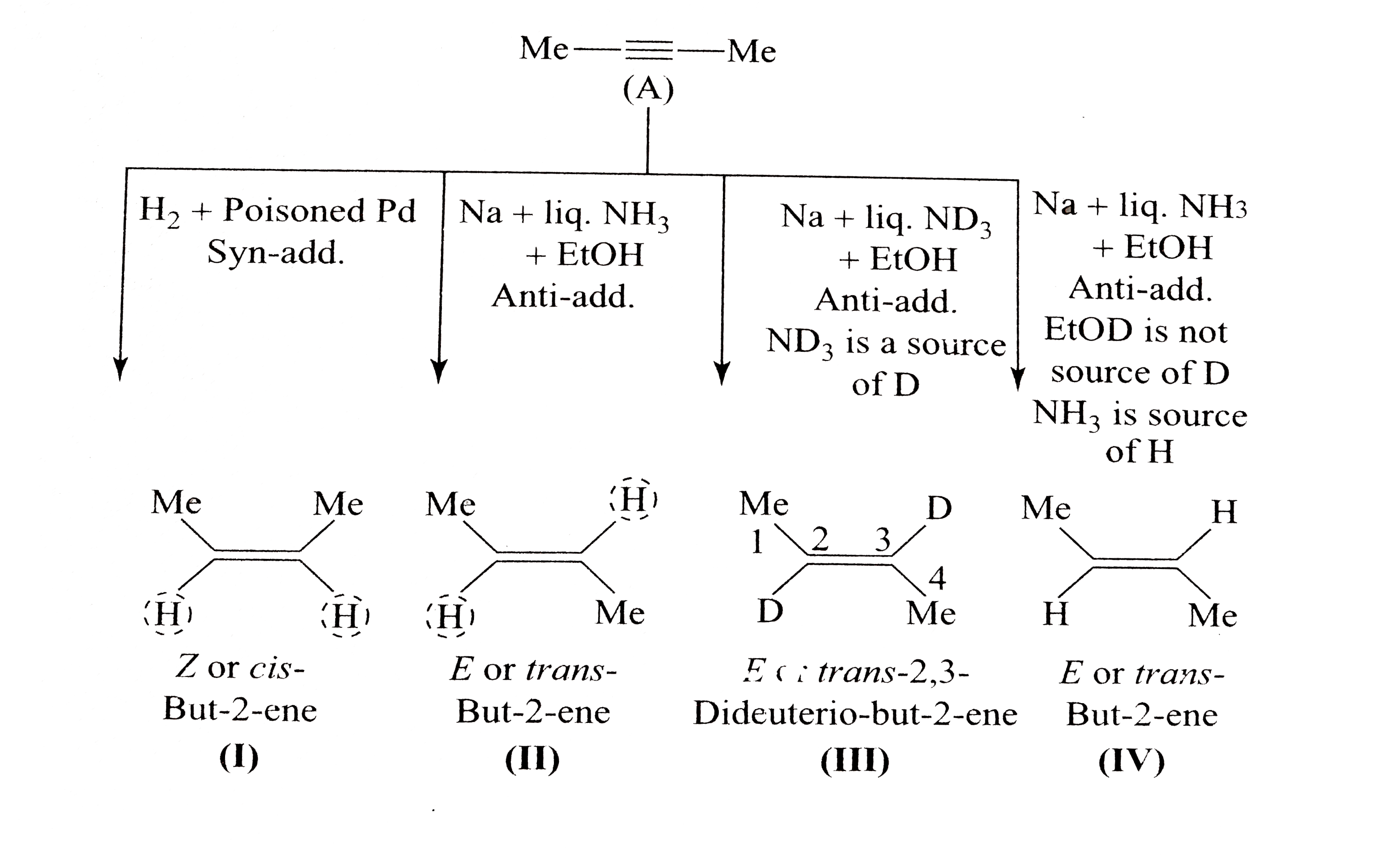 `b.` Note: Metal `+H_(2)` does not reduce `(R-X)` to `(R-H)` but reduces `(Ar-X)` to `(Ar-H)`. Reactant is cis `+` mechanism of addition is syn `rarr` product is meso.  `c.` Reactant is trans `+` mechanism of addition is syn `rarr` product is `dl` or `(+-)` racemic.  `d.` Reactant is cis `+` mechanism of addition is syn `rarr` product is meso.  Meso`-1,2-`dymethyl cyclohexane `(O.I.A.)` `e.` Reactant with two different GROUPS `+` mechanism of addition is syn `rarr` product is `dl` or `(+-)` or racemic.  `dl-2,3-` Dibromopentane `dl-2,3-` Dibromopentane `F.` Reactant is cis with two different groups `+` mechanism of addiciton is syn `rarr` product id `dl` or `(+-)` or racemic.  dl`-2,3-`Dibromopentane dl`-2,3-`Dibromopentane `g.` Reactant is cis `+` meachanism of addition is syn `rarr` product is meso.  `h.` Reactant is trans `+` mechanism of addition is syn `rarr` product is `(+-)`or `dl` or racemic.  `dl-2,3-`Dideutereo`-` butane `dl-2,3-`Dideutereo`-` butane `i.` Reactant cis or trans `(` with different groups `)+` mechanism of addiction is syn `rarr` Product is always `(+-)` or `dl` or racemic.  As there are two different groups in the alkene, the plane of symmetry is not attained. So the product is never obtained in meso from but optical isomers `d` and `l` are obtained from cis `-` or trans `-` alkene. `j.`  Both REACTIONS are catalytic hydrogenation. Reation `(1)` is HETEROGENOUS catalytic hydrogenation in which the solid catalyst is in a different phase from the reactant `(A)(` GAS phase `).` Reaction `(2)` is homogenous cataytic hydrogenation because the reactant and the catalyst are in the same gaseous phase. |
|
| 6. |
Give the properties of H_3BO_3 |
|
Answer» Monobasic and STRONG LEWIS acid. |
|
| 7. |
Give the products formed on reductive ozonolysis with LAH and oxidative ozonolysis with H_(2)O_(2), from the compounds in question. |
|
Answer» SOLUTION :In reductive ozonolysis with `LAH` or `NaBH_(4)`, convert aldehyde and ketone into ALCOHOL and in oxidative ozonolysis with `H_(2)O_(2)` (or the reagent given in the chapter), the ketone remains unchanged and CONVERTES aldehyde to acid. `a.i. ` Reductive ozonolysis with `LAH`. 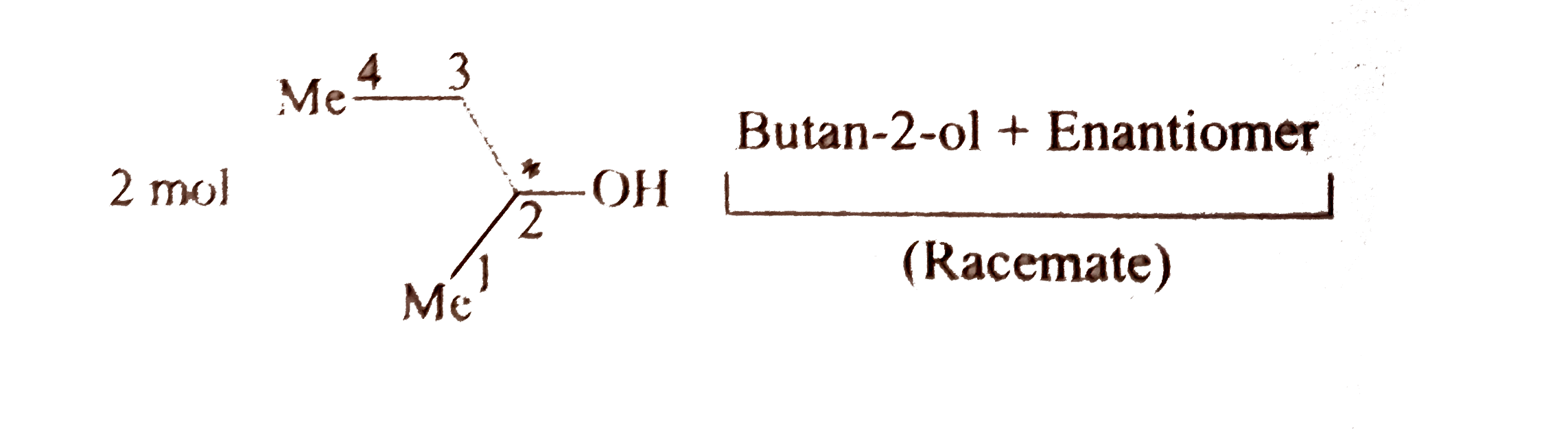 `ii.`Oxidative ozonolysis, same answer  `b.i. ` Reductive ozonolysis with `LAH`. 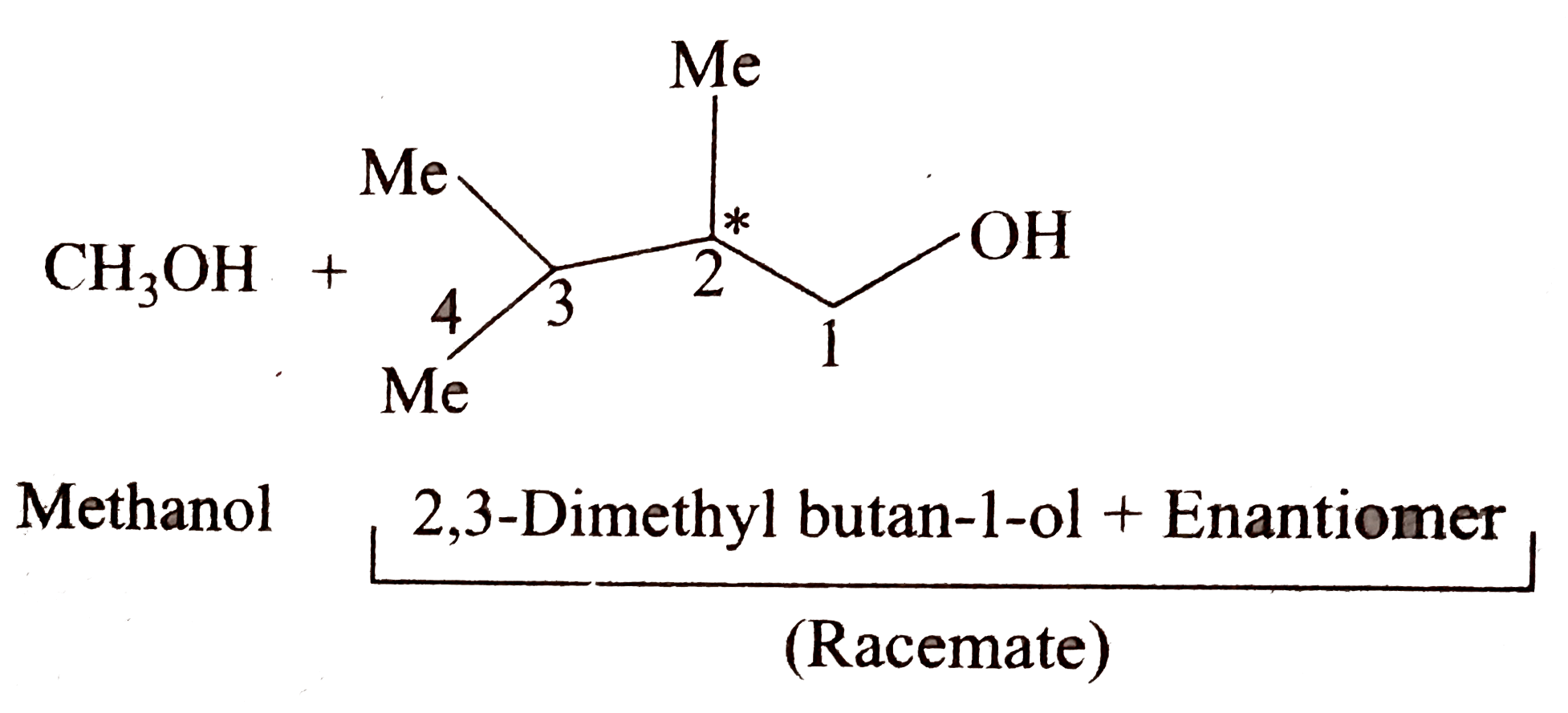 `ii.` Oxadative ozonolysis. 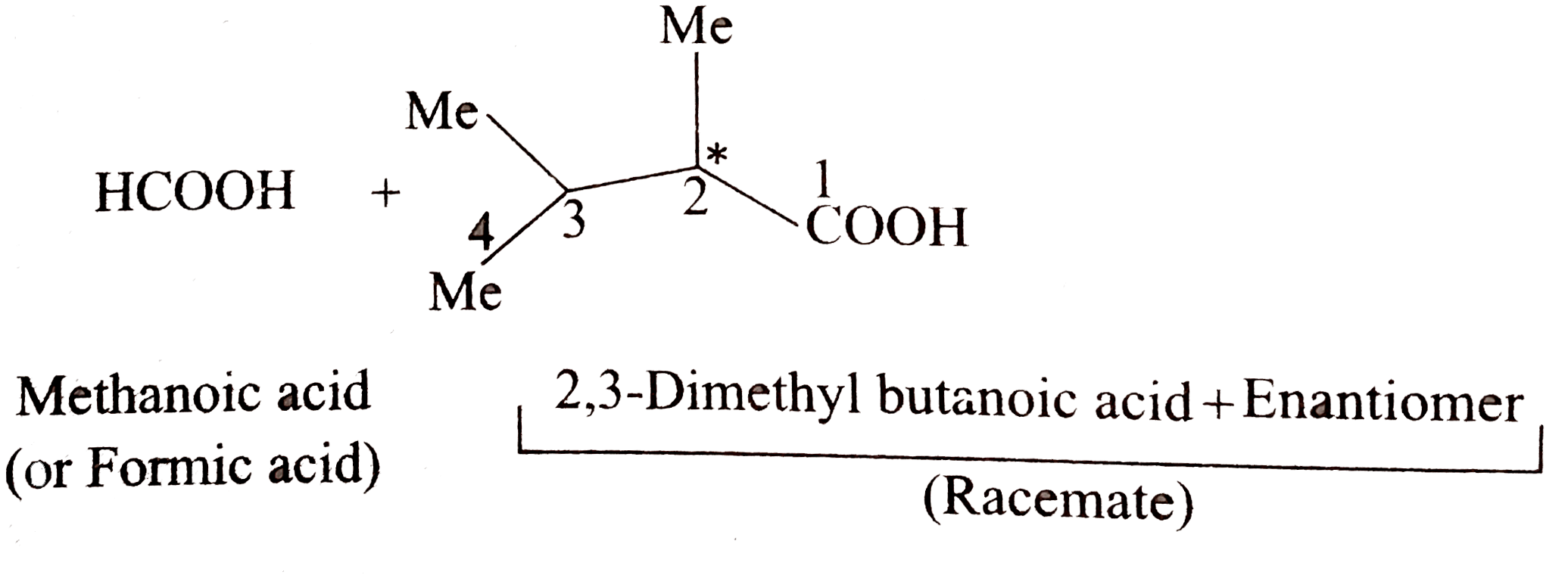 `c.i. `Reductive ozonolysis with `LAH`. 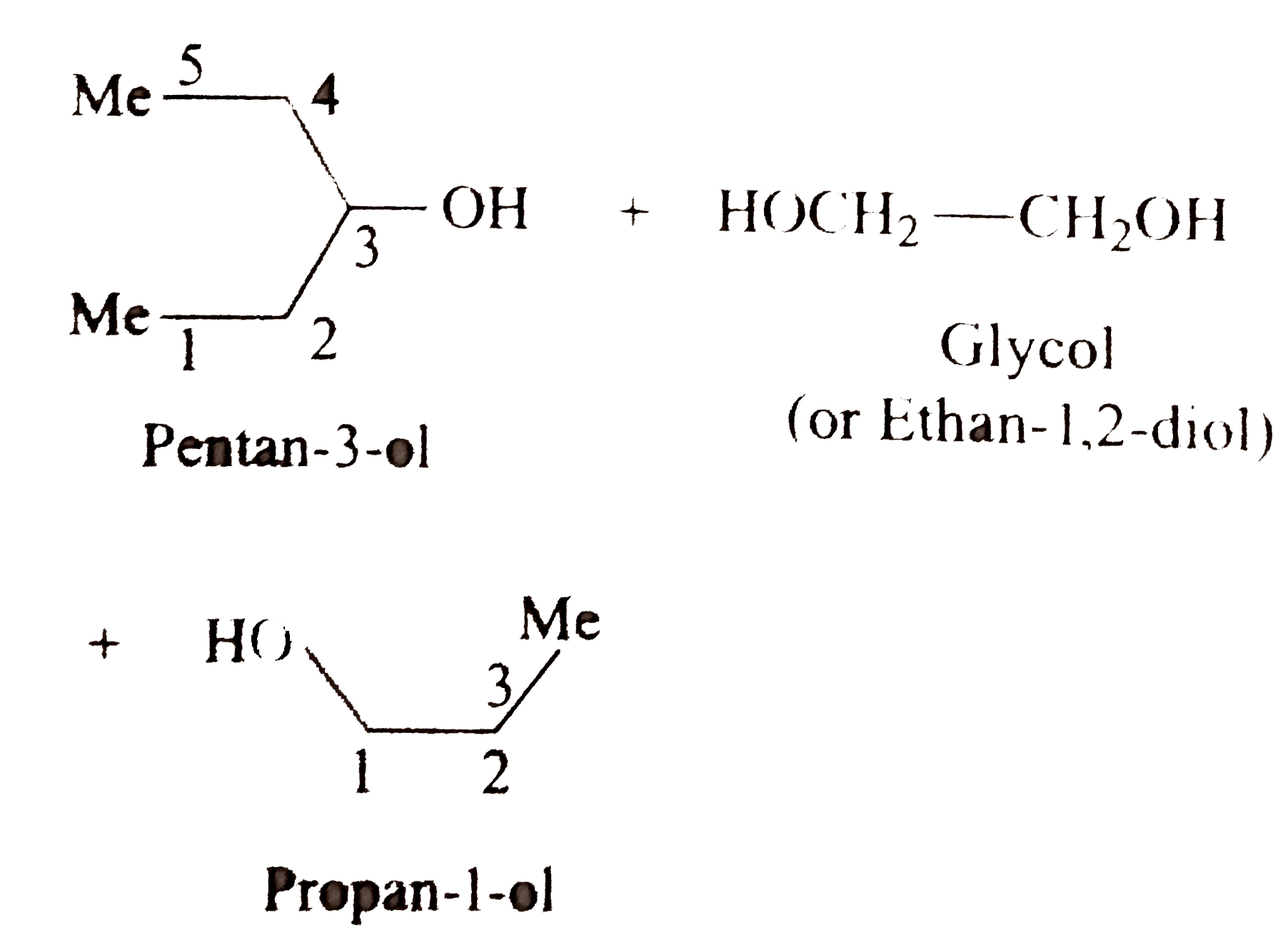 `ii.` Oxidative ozonolysis. 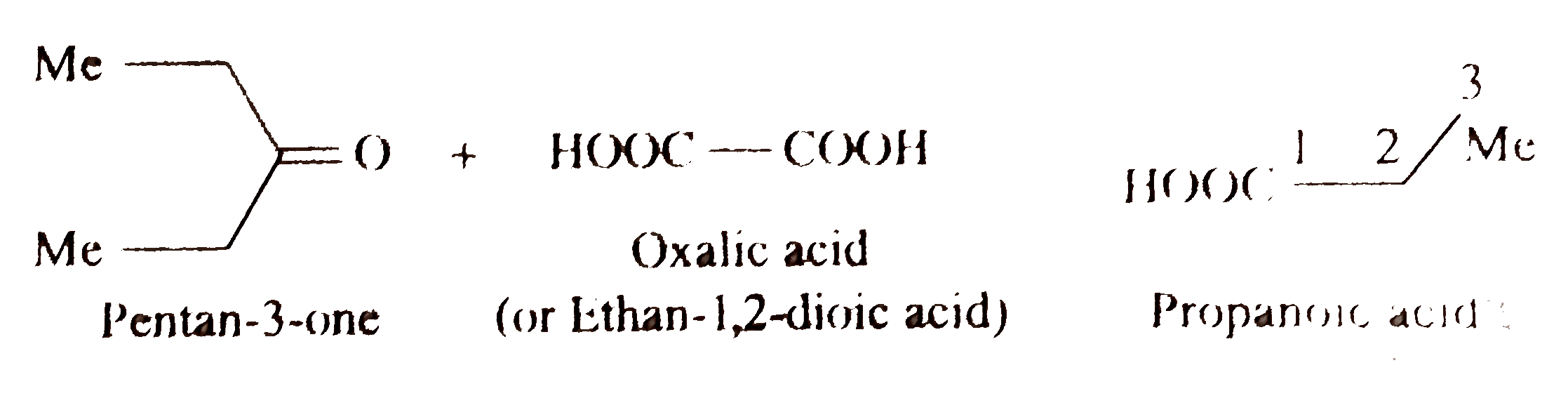 `d.i.` Reductive ozonolysis with `LAH`. 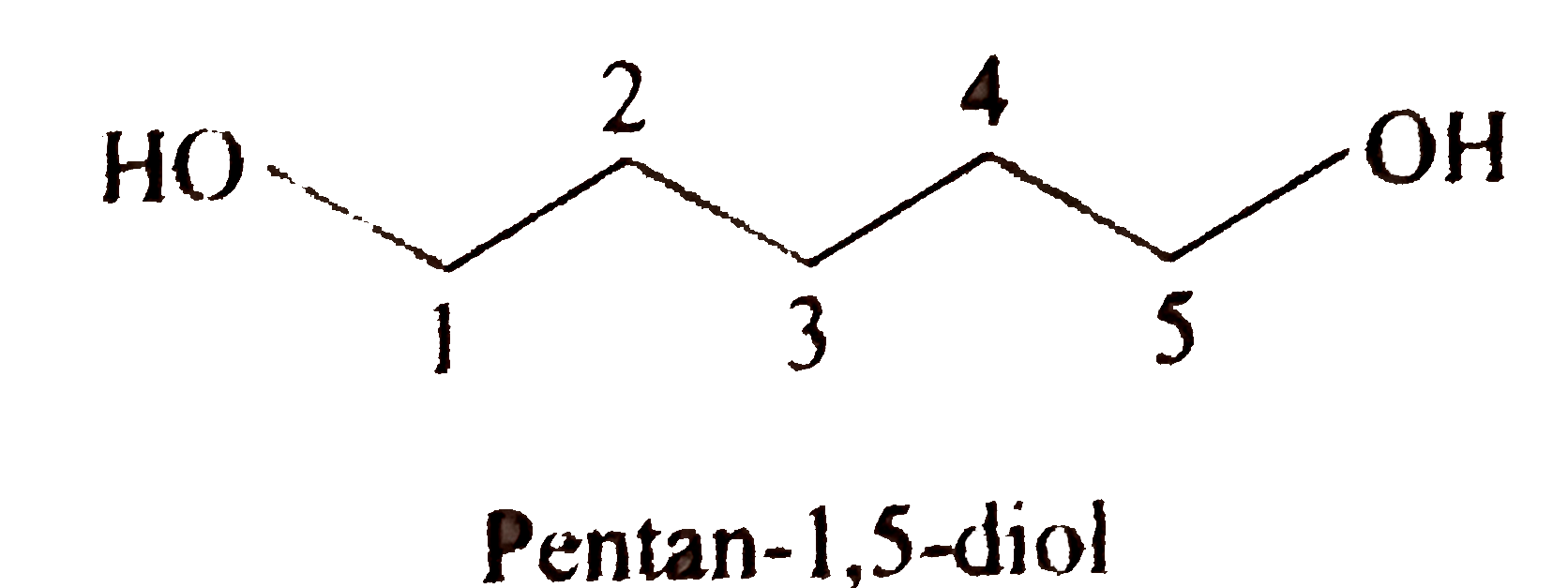 `ii.` Oxidative ozonolysis.  `e. i.`Reductive ozonolysis with `LAH`. 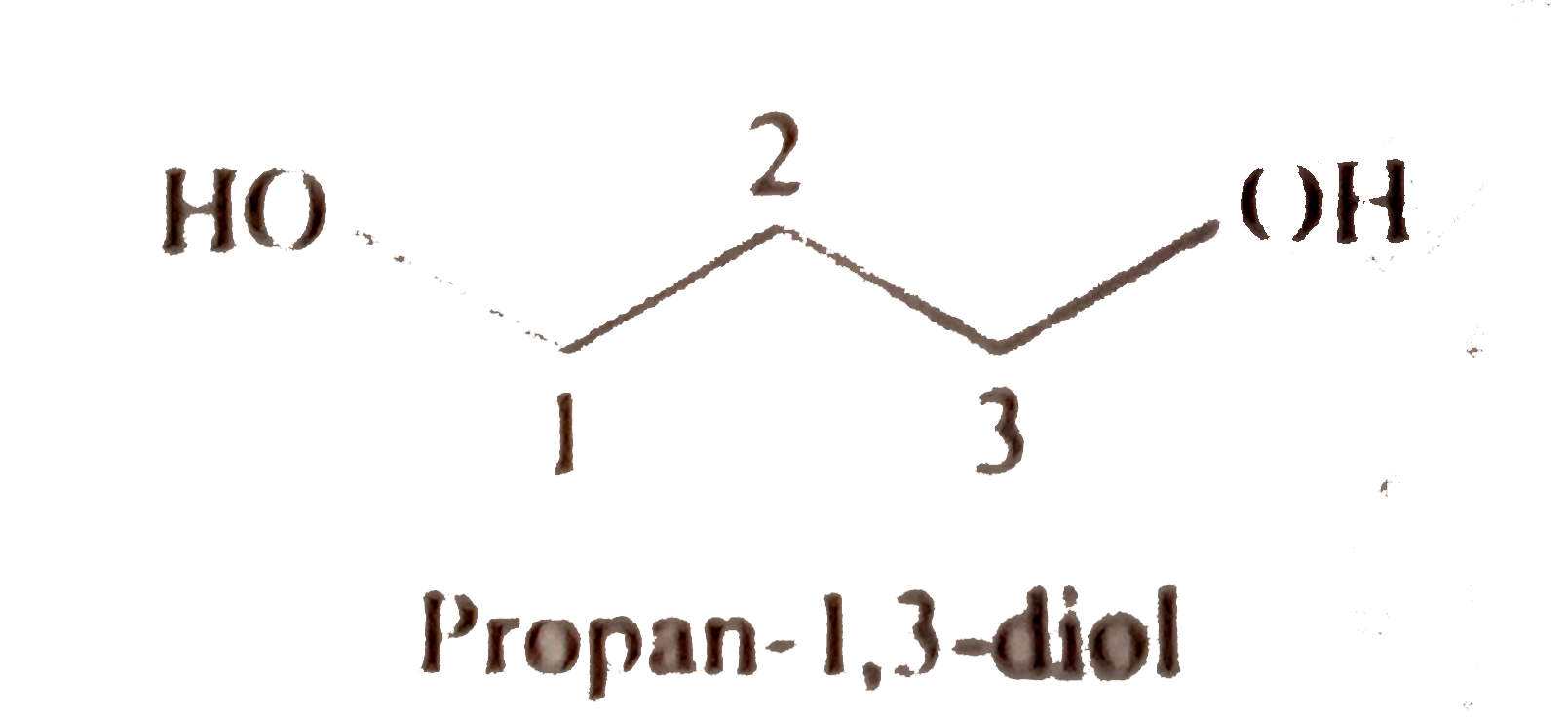 `ii.` Oxidative ozonolysis. 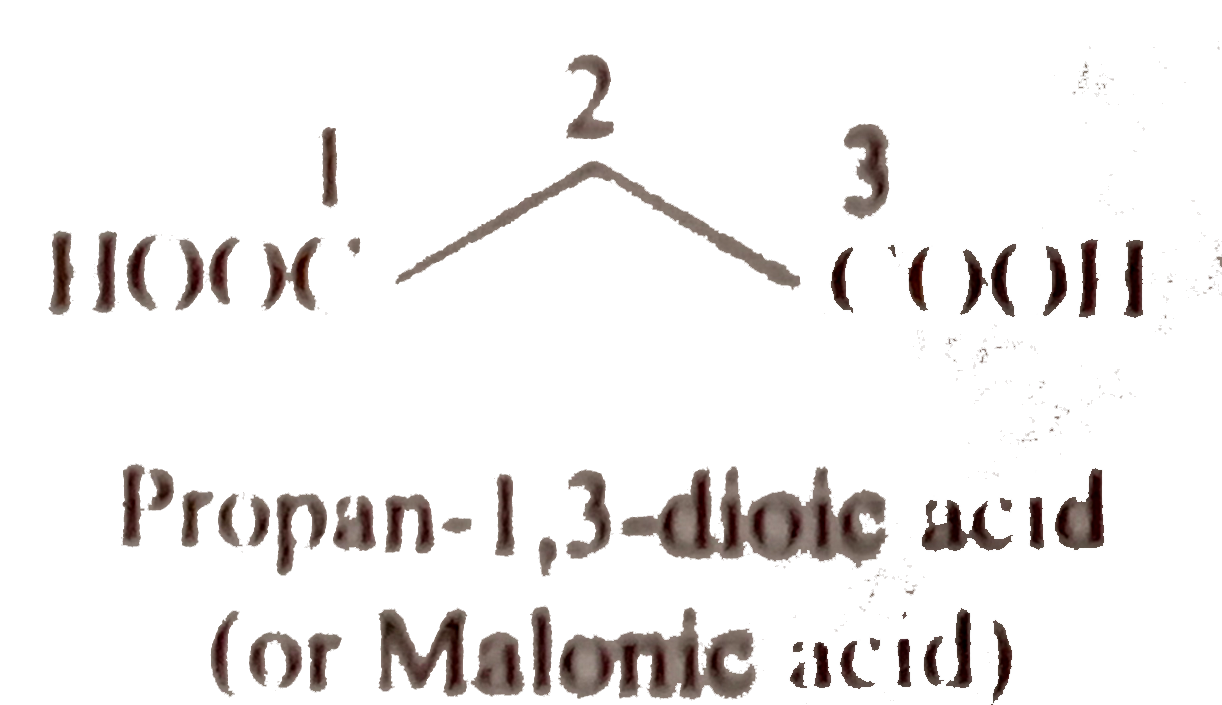 `f.i.` Reductive ozonolysis with `LAH`.  `ii.` Oxidative ozonolysis.  `g. i.` Reductive ozonolysis with `LAH`.  Three stereoisomers are possible. Chiral `C` ATOM `=2` Terminal group same. `2^(n-1)=2^(2-1)=2^(1)=` Optically active isomers `(` paire of enantiomers `)` `2^((n-2)//2)=2^(0)=1=`MESO `(` opticaly inactive `)` `ii.` Oxidative ozonolysis. 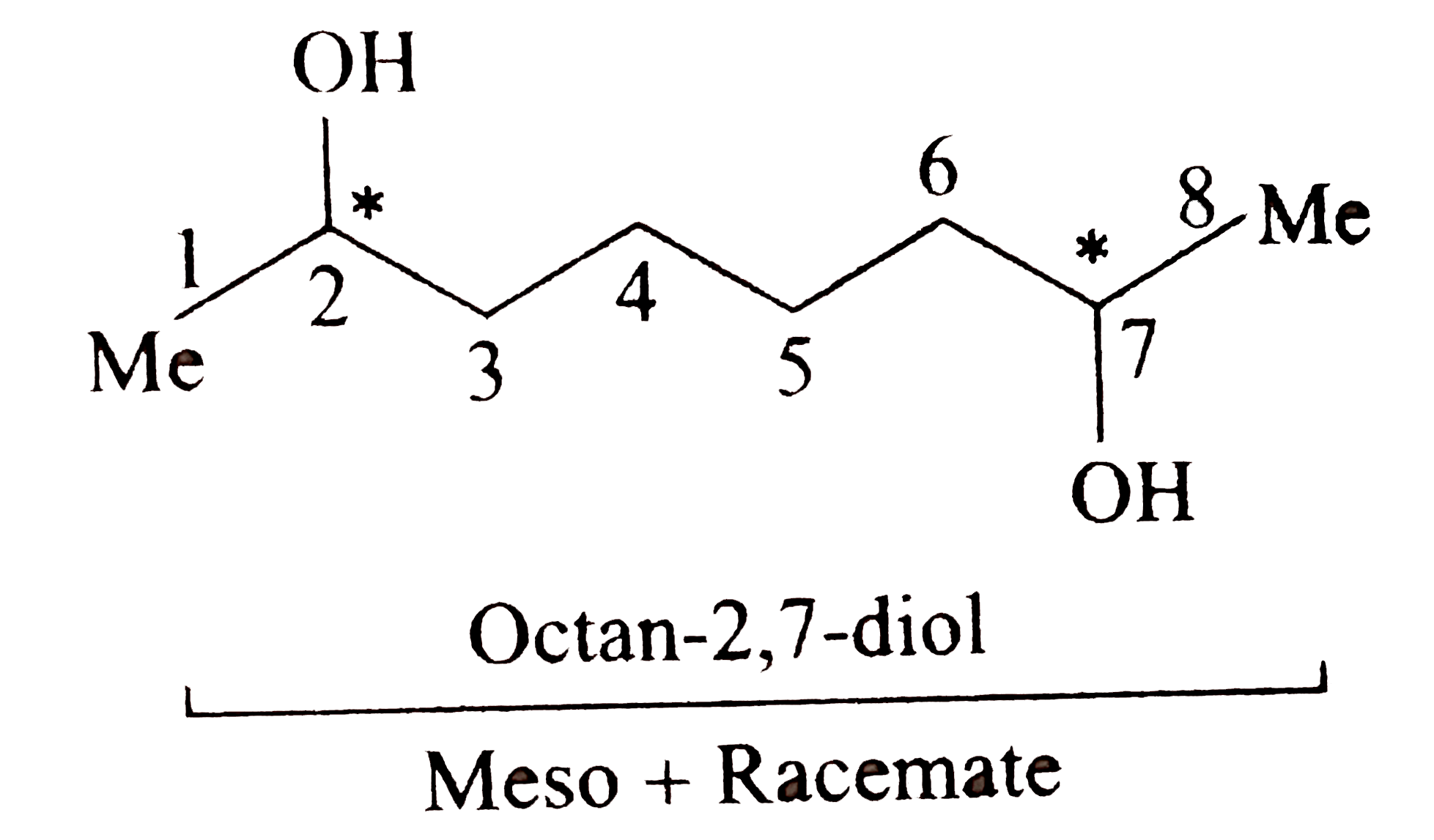 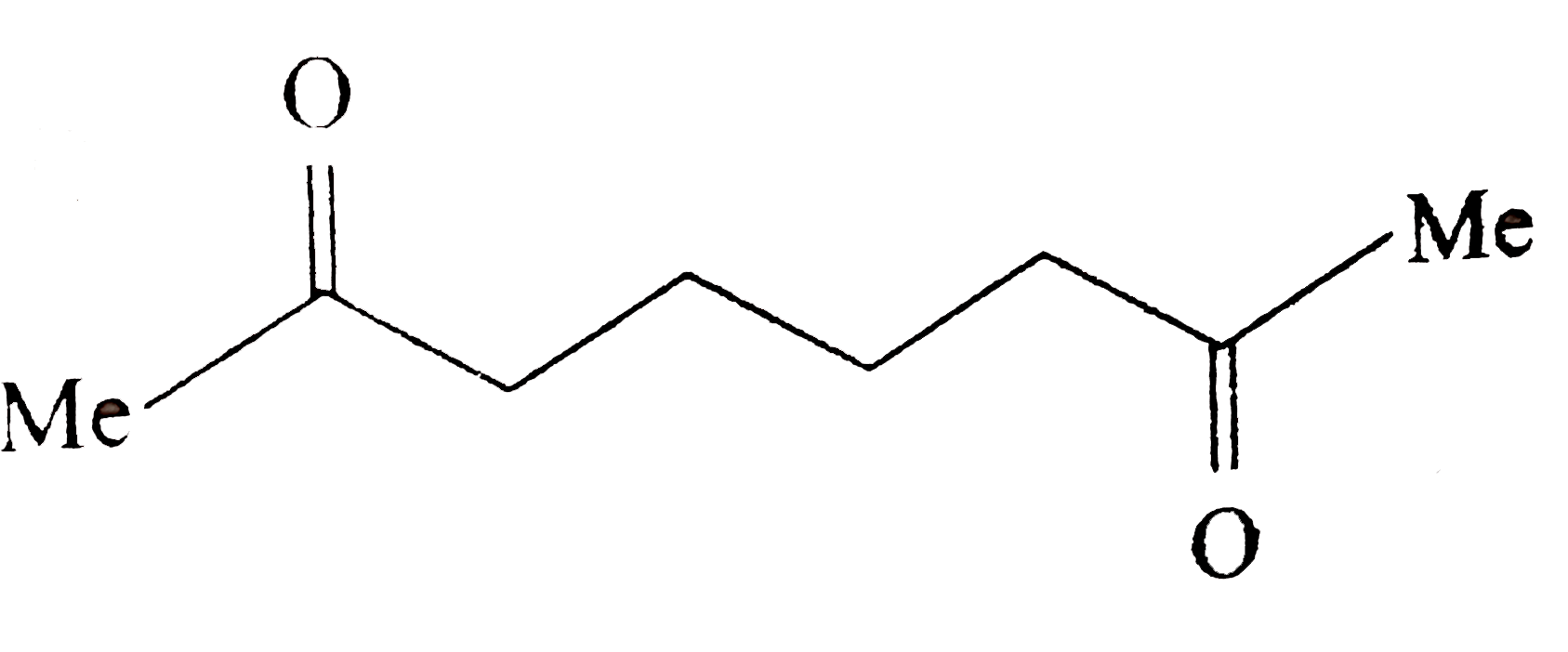
|
|
| 8. |
Give the product of the following reactions |
Answer» SOLUTION :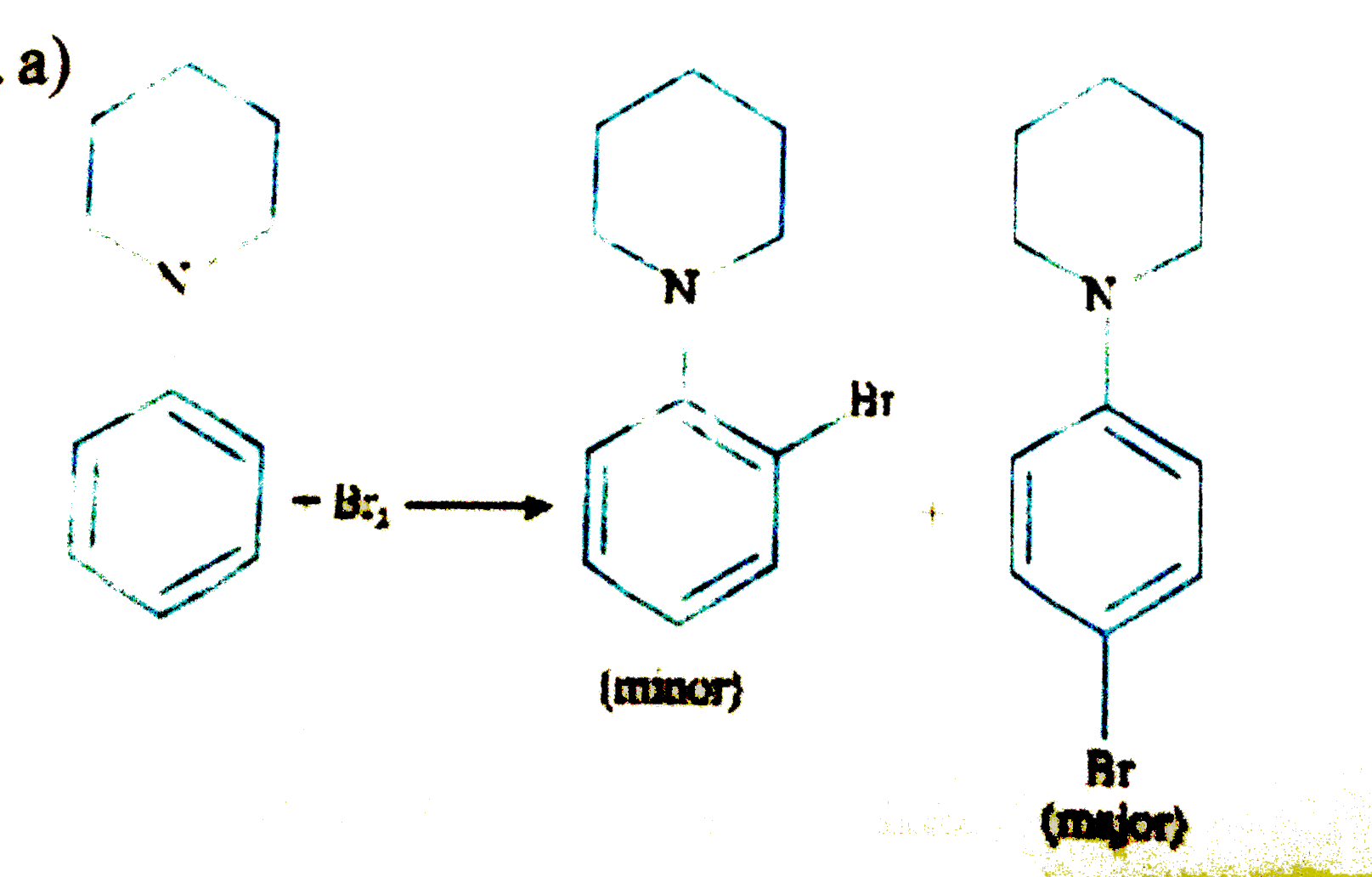 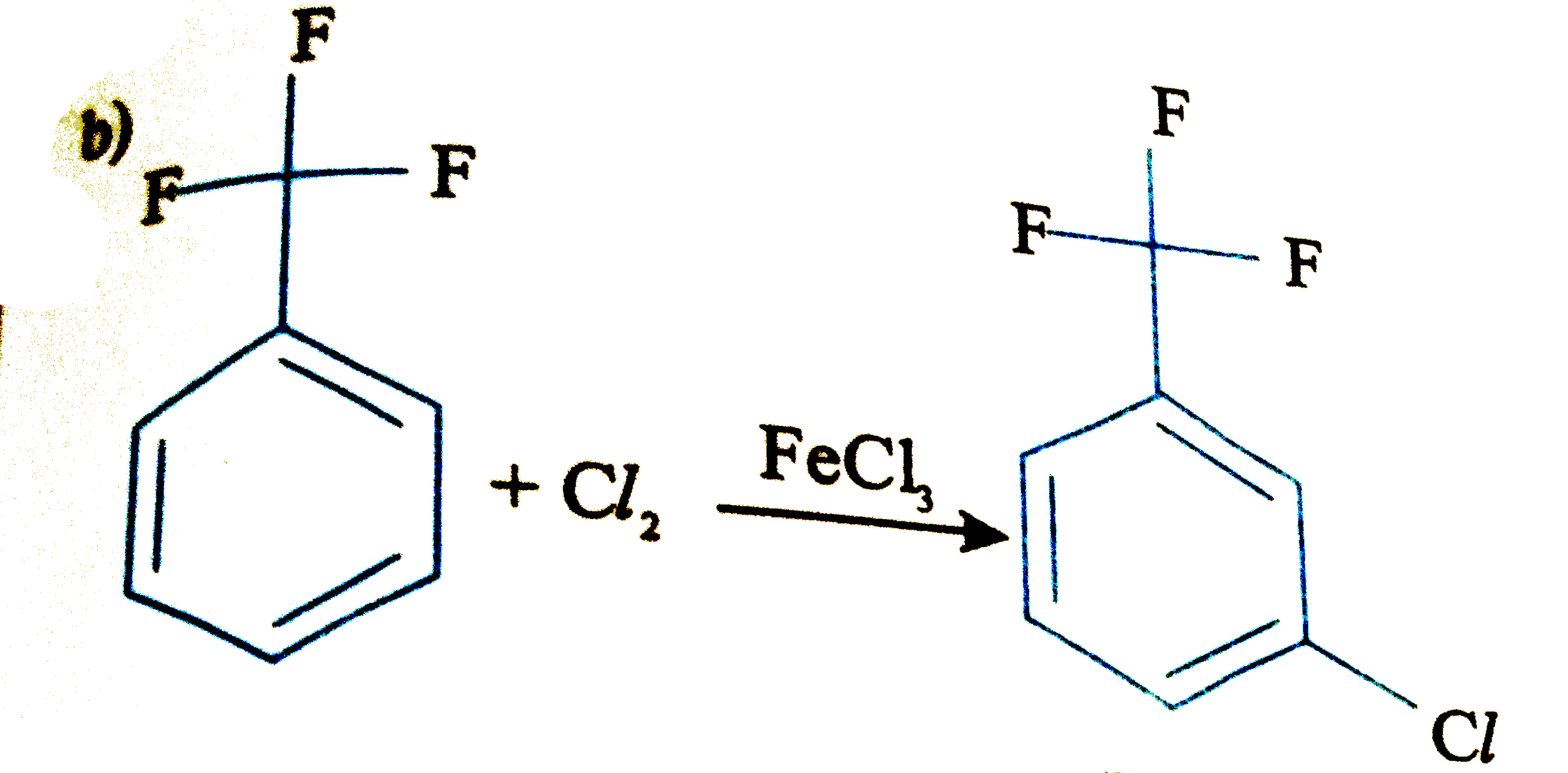
|
|
| 9. |
Give the principle of extraction in separatory funnel |
| Answer» SOLUTION :The SOLUBILITY of ORGANIC COMPOUNDS in organic solent is more than WATER | |
| 10. |
Give the primary information about alkyne. |
|
Answer» Solution :Alkynes are also unsaturated and hydrocarbons. They CONTAIN 1 triple bond between two carbon `(C-=C)` there general formula is `C_(n)H_(2n-2)`. Fist MEMBER of ALKYNE series is ethyne which is popularly known as acetylene. Acetylene is used for arc welding purposes in the form of oxyacetylene flame obtained by MIXING acetylene with oxygen gas . Alkynes are starting materials for a large number of organic compounds. |
|
| 11. |
Give the principle involved in the estimation of halogen in an organic compound by Carius method. |
|
Answer» Solution :Estimation of halogens: Carins method (i) A KNOWN mass of the organic compound is HEATED with fuming `HNO_(3)` and `AgNO_(3)` (ii) C, H and S gets oxidised to `CO_(2)` , `H_(2)O` and `So_(2)` and halogen combines with `AgNO_(3)` to form a precipitate of silver halide `X overset("Fuming"HNO_(3))underset(AgNO_(3))rarrAgXdarr` (iii) The precipitate AgX is FILTERED washed, dried and weighed. (iv) From the mass of AgX and the mass of organic compound taken, the percentage of halogens are calculated. (v) `% "of chlorine"=(35.5)/(143.5) xx ("WT. % of chlorine")/("wt. of organic compound") xx 100` `% "of Bromine"=(80)/(188) xx ("wt. % of bromine")/("wt. of organic compound") xx 100` `% "of Iodine"=(127)/(235) xx ("wt. % of iodine")/("wt. of organic compound") xx 100` |
|
| 12. |
Give the preparations of alkane ? Give the general reaction. |
|
Answer» Solution :For, the preparation of ALKANE, important reactions are as follows : (i) From unsaturated hydrocarbons :  `underset("Alkyne")(-C-=C)+2H_(2) underset("Pressure")overset(Ni, Delta)rarr-underset("Alkane")(underset(H)underset(|)overset(H)overset(|)(C)-underset(H)underset(|)overset(H)overset(|)(C)-)` ......(ii) (ii)From alkyl halides : `underset("Alkyl halide")(R-CL)+H_(2)underset("Reduction")overset(Zn+HCl(dil))rarr underset("Alkane")(RH)+HCl` (III) Wurtz reaction of from alkyl halide using wattz reaction : `2Na+R-underset("Alkyl halide")(Cl+Cl-R) overset(+NaOH(CaO))rarr underset("Alkane")(R-R)+2NaCl` * SODA lime means mix of CaO and NaOH. (iv) From carboxylic acid : `underset("Carbocylic acid")(RCOOH)underset(Delta)overset("Soda lime")rarr (RCOO^(-)Na^(+)) underset((CaO))overset(+NaOH)rarr underset("Alkane")(RH+Na_(2)CO_(3))` * Soda lime means mix of CaO and NaOH. (v) Kolbe.s electrolysis or preparation of alkene from the salt of carboxylc acid in the form of sodium of pottassium into the presence of aqueous solution during electrolysis. `underset("Carbocylic acid")(RCOOH)underset(-H_(2)O)overset(+NaOH)rarr underset("Sodium carbocylate")((RCOO^(-)Na^(+)))underset(-2CO_(2), -H_(2))overset("Electrolysis")rarrunderset("Alkane")(R-R)` Petroleum and Natural gas are the main sources. [Note : Replace R with `-CH_(3), CH_(3) CH_(2)-` in reaction try it] |
|
| 13. |
Give the preparation of alkane from carboxylic acid by the electrolysis. |
|
Answer» Solution :* An aqueous solution of SODIUM or potassium salt of a carboxylic acid on electrolysis gives alkane containing even number of carbon atoms Example : Salt of Na of acetic, ETHANE is obtained by the electrolysis of sodium acetate is as follows.  In this reaction there is always a formation of even carbon product of alkane. Reaction : (a) In aqueous solution of sodium salt of acid, `CH_(3)COO^(-)` is anion and `Na^(+)` is cation in a solution. `2CH_(3)COO^(-)Na^(+) hArr 2CH_(3)COO_((aq))^(-) + 2Na_((aq))^(+)` ...(a) (B) (i) Oxidation at anode : Anion `CH_(3)COO^(-)` goes to the anode, losses its electon and doesoxidation and `CH_(3)` is formed.  (ii) `H_(3)OVERSET(.)(C)+overset(.)(C)H_(3) rarr UNDERSET("Ethane(gas)")(CH_(3)-CH_(3))uarr` (c) Reduction at cathode : Cation does not reduced at cathode but `H_(2)O` gets reduced and hydrogen `(H_(2))` is being released. (i) `H_(2)O + e^(-) rarr ""^(-)OH + overset(.)(H)` (ii) `2overset(.)(H)rarr H_(2) uarr` `2Na^(+) + 2H_(2)O + 2e^(-) rarr 2NaOH + H_(2(g))` ...(c) (d) Total reaction = (a) + (b) + (c) are as follows  Limitations : MEthane cannot be prepared by this by this method. |
|
| 14. |
Give the preparation of alkane from the unsaturated hydrocarbons. |
|
Answer» Solution :Defination of Hydrogenation : Dihydrogen GAS adds to alkenes and alkynes in the PRESENE of finely divided CATALYSTS like platinum, palladium or nickel to form alkanes. This process is called hydrogenation. * Work of catalyst : These metals absorb dihydrogen gas on their surfaces and ACTIVATE the hydrogen-hydrogen bond. Platinum and palladium catalyse the reaction at room temperature but relatively higher temperatureand pressure are required with nickel catalysts. * Some examples of hydrogenation reaction : When hydrogen is added to unsaturated hydrocarbons like alkene and alkyne and alkane is formed, such type of reaction is known as alkane. (i) `underset("Ethene")(CH_(2))=CH_(2)+H_(2)underset(or Ni, Delta)overset(Pt//Pd)rarrunderset("Ethane")(CH_(3))-CH_(3)` (ii) `underset("Propane")(CH_(3))-CH=CH_(2)+H_(2)underset(or Ni, Delta)overset(Pt//Pd)RARR underset("Propane")(CH_(3))-CH_(2)-CH_(3)` (iii) `underset("Propyne")(CH_(3))-C-=C-H+2H_(2)underset(or Ni, Delta)overset(Pt//Pd)rarrunderset("Propane")(CH_(3))-CH_(2)-CH_(3)` Note : Rany nickel is used as catalyst. It is a working nickel catalyst and used in the form of powder. |
|
| 15. |
Give the prencipal monosubstitution products from the following reactions and indicate whether each reaction is faster or slower than with benzene. (a) Nitration of PhNHCOCH_(3) (b) Bromination of PhCBr_(3) ( c) Chlorination of PhC(CH_(3))_(3) (d) Nitration of Ph-Ph ( e) Nitration of PhCOOCH_(3) (f) Sulphonation of PhCH(CH_(3))_(2) (g) Nitration of PhC-=N (h) Bromination of PhI |
Answer» SOLUTION :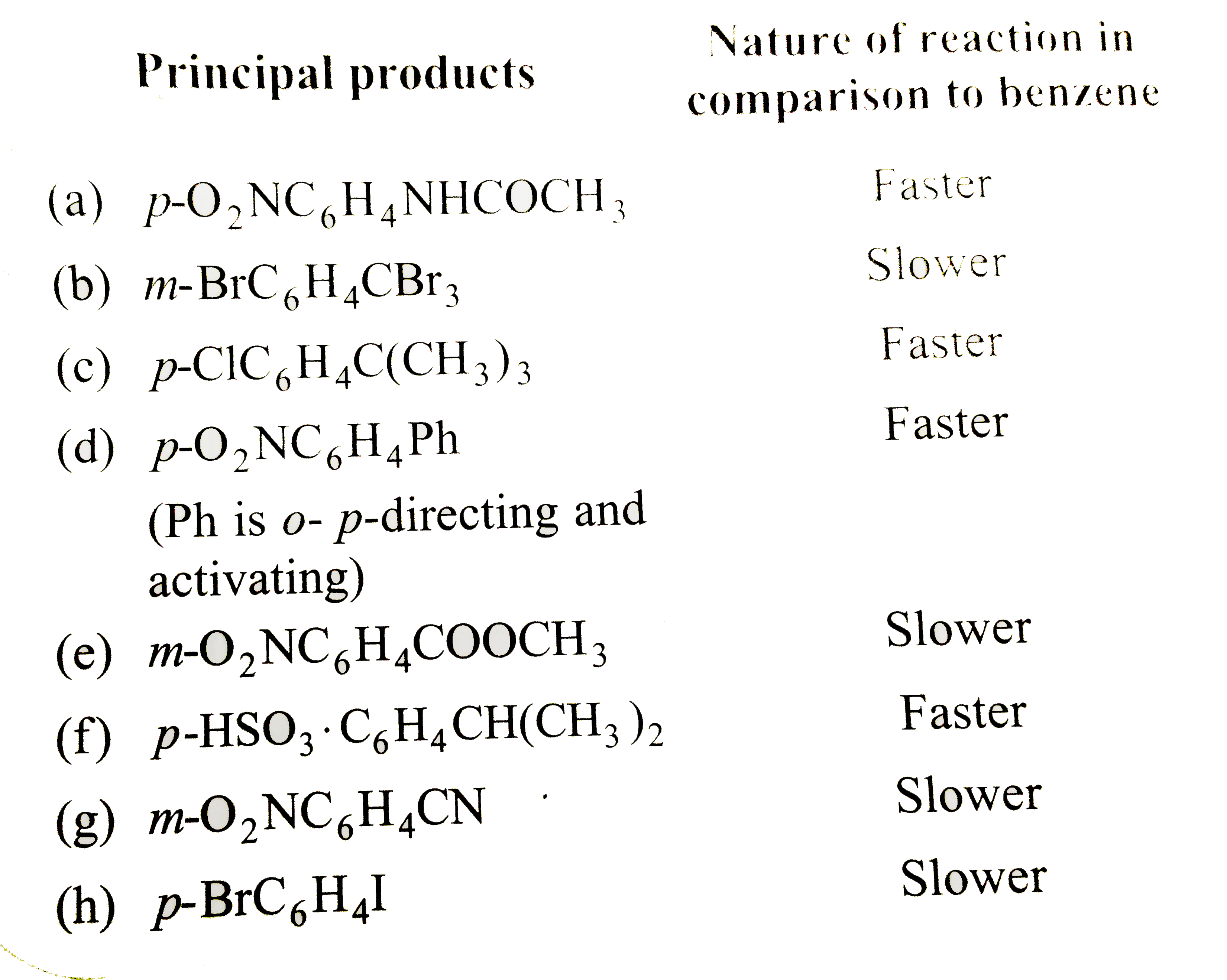
|
|
| 16. |
Give the physical properties of alkene ? |
|
Answer» Solution :Physical properties : Alkenes as a class resemble alkanes in physical properties, except in types of isomerism and DIFFERENCE in polar nature. Physical conditions : The first three members are gases, the next fourteen are liquids and the higher ones are solids, Ethene is a colourless gas with afaint sweet. All other alkenes are colourless and odouless, INSOLUBLE in water but fairly soluble in nonpolar solvents like benzene, petroleum ether. Boiling point : As there is increase in size and molecular weight of alkene, their is increase in boiling point. On adding `-CH_(2)` group, boiling point increases 20-30 K.  Boiling point and MELTING point alkene are higher than alkanes. Chain isomer of ALENE boiling point are higher than the branched isomer of alkene. Boiling point of trans isomer is higher than CIS and melting of trans isomer is less than cis isomer. |
|
| 17. |
Give the outer shells configuration of d-block and f-block elements. |
|
Answer» |
|
| 18. |
Give the order of the stabilities of the following : (i) (a) PhCH_2^(oplus) (b) Ph_2C overset (oplus) H ( c) Me_2Ch^(oplus) (d) Me_3C^(oplus) ( e) C_2 H_5^(oplus) (f) Ch_3^(oplus) (ii) (1) PH_3 dot C (b) Ph dot C H_2 ( c) Me_3 dot C (d) dot C_2 H_5 ( e) dot C H_3 (iii) (a) b) Ph_3C^(Ө) ( c) Me_2 CH^(Ө) (d) overset (Ө) CH_3 ( e) overset (Ө) C_2 H_5 (f) Me_3 C^(Ө). |
|
Answer» Solution :(i) `Ph_2 CH^(OPLUS) gt PhCH_2^(oplus) gt Me_3 C^(oplus) gt Me_2 CH^(oplus) C_2 H_5^(oplus) gt CH_2^(oplus) (b gt a gt d gt c gt e gt f)` (ii) `Ph_3 DOT C gt Ph dot C H_2 gt Me_3 dot C gt dot C_2 H_5 gt dot CH_3 (a gt b gt c gt d GTE )` (ii) `a gt b gt d gt e gt c gt f` (a) Aromatic (six `overline e` systems with conjugation, resonance stabilised) (b) Triphenyl methane carbanion (stabilished by resonance by three `Ph` GROUPS) (c) `overset (Ө) CH_3` (`1^@` carbanion) ( d) `overset (Ө)C_2 H_5` (ethyl carbanion) (e) `2^@` Carbanion (f) `3^@` carbanion (the stability of carbanion : `1^@ gt 2^@ gt 3^@`). |
|
| 19. |
Give the order of number of molecules in 100 mL O_(2), NH_(3) and CO_(2)respectively at STP. |
|
Answer» `O_(2) lt NH_(3) lt CO_(2)` |
|
| 20. |
Give the order of bond strength of H-Cl-H-Br, H-I. |
|
Answer» Solution :H-Cl has `430.5 kJ MOL^(-1)` HIGH BOND STRENGTH. <BR> H - Br `363.7 kJ mol^(-1)` |
|
| 21. |
Givethe orderof energyof orbitalsinmultielectronatom |
|
Answer» Solution :Order of energyof orbitals: Theenergyorderof orbitals of MULTI- electronatomsin ground - stateis shown in followingdiagramin itthesubsidiaryquantum NUMBER (l ) ischangethen energyof orbitalalsochange Thusenergyorderof orbitalsalsochange THUS energyorderoforbitals `1slt 2s lt 3s lt 3p lt 4slt 3d ` `lt 4plt 5s lt 4dlt 5P lt 6s lt 4f lt` order of energy In H 2s = 2p in other2 s `lt`2pandenergyof 2s in H `lt ` energyof2s of other etc  factors of affectingthe energy of orbitals : (i) Theattraction of orbitaltowardsthe nucleus(ii) Theshieldingamount of outershelltoelectronof innershellorbital(ii) the ammountof effectivenuclearchargeon outershellorbital (v ) The distanceof nucleus tooutershellis dependson thevalueof l in orbital. Shielding : Theelectronsin inner shellbetween nucleus and outershellelectrondreceasethe effectof positivechargeof nucleuson outercompleteattraction of nucleus . thiseffect iscalledshielding . shieldingmeansdecreasein positivechargeof nucleuson outerelectronby innershellelectron. |
|
| 22. |
Give the order of acidic character of the following : (i) (a) p-Nitrobenzoic acid (b) 2,4-dinitrobenzoic acid ( c) 2,4,5-Trimethylbenzoic acid (d) 2,3,4-Trinitrobenzoic acid (ii) (a) Ph_3 CH (b) Ph_2Ch_2 ( c) PhCH_3 (iii) 2,6-Di-tert-butyl phenol is a much weaker acid than phenol. (iv) (a) Phenol (b) Cyclohexanol ( c) p-Bromophemol (d) p-Methoxy phenol (v) (vi) (a) Benzoic acid (b) p-tert-Butylbenzoic acid ( c) p-Nitrobenzoic acid. |
Answer» Solution :(i) 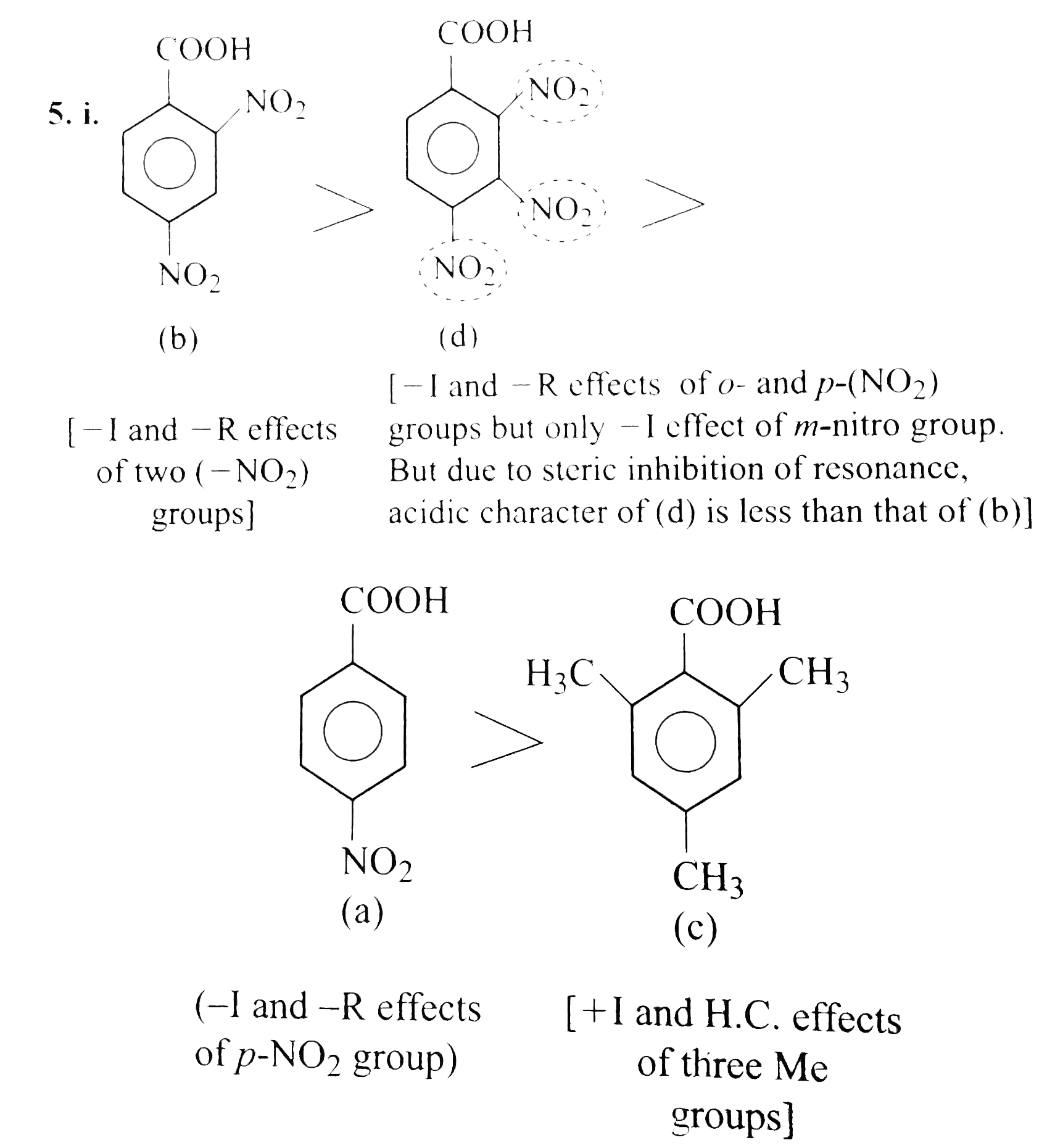 So the order is: `b gt d gt a gt c`(ii) `a gt b gt c` a. `Ph_(3) CH + H_(2)O rarr underset(["RESONANCE stabilised by three Ph groups"])(Ph-underset(Ph)underset(|)overset(ddotTheta)C-PH+H_(2)overset(o+)O)` b. `Ph_(2)CH_(2)+H_(2)Orarrunderset(["Resonance stabilised by two Ph groups"])(Ph-overset(ddotTheta)underset(H)underset(|)(C)-Ph+ H_(3)O^(o+))` c. `underset(["Resonance stabilised by ONE Ph groups"])(PhCH_(3)+H_(2)OrarrPh-overset(Theta)CH_(2)+H_(3)O^(o+))` (iii) 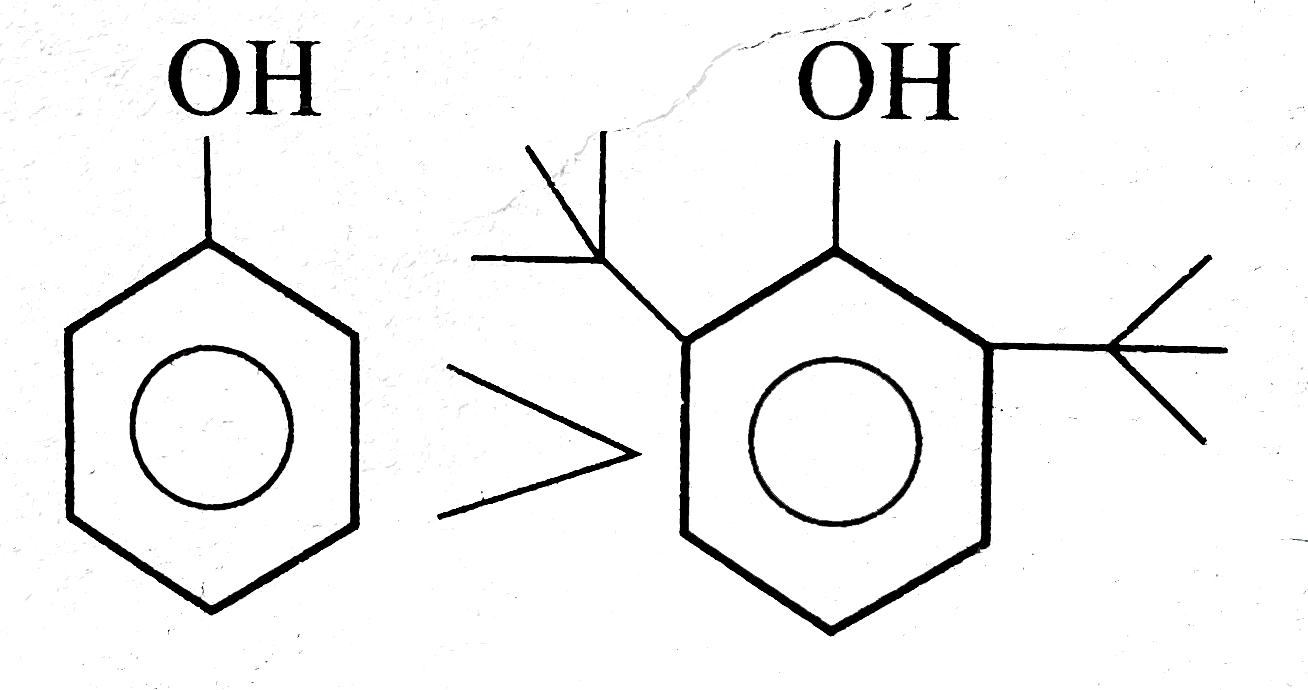 Due to steric inhibition of resonance of bulky ortho-t-buty1 groups, it prevents the solvation of corresponding phenoxide ion, making it less stable than phenoxide ion. Hence, the OBSERVED effect. (iv) `c gt a gt d gt b` [(c )(-I effect of Br at o-) gt (a) Standard (phenol) gt -I and `+ R` effects of `(-OMe)` group at `p- gt (b)` CYCLIC alcohol (resonance does not take place)] (v) `a gt b` The carbanion derived from `(a)` is better stabilished by the aromatic rings which have to be coplanar than in the carbanion from `(b)` in which the aromatic rings prefer to be in different planes for steric reasons. Complanarity allows maximum `p-`ORBITAL overlap. (vi) `c gt a gt b` [( c) `- I` and `-R` effect of `(-NO_2) gt (a)` Standard `gt ( c) + I` effect of t-buty1 group.] |
|
| 23. |
Give the order for the substitution of hydrogen atoms in alkane compounds. |
| Answer» SOLUTION :`3^(@) GT 2^(@) gt 1^(@)` | |
| 24. |
Give the numbers of product obtained by substitution of two hydrogen atoms from the benzene ring and also give its examples. |
Answer» Solution :Disubstituted benzene COMPOUNDS : If two hydrogen atroms of the benzene REPLACE by EITHER two same or DIFFERENT mono valent atoms or groups, then different three position isomers are POSSIBLE.  Some examples are as follows : 
|
|
| 25. |
Give the number of isomers of methane ethane, propane, butane, pentane, hexane, heptane and decane. |
Answer» SOLUTION :* Methane `(CH_(4))` ETHANE `(C_(2)H_(6))` and propane `(C_(3)H_(8))` do not have ISOMERS. They have only one structure. 
|
|
| 26. |
Give the nomenclature IUPAC of following : (i) (CH_(3))_(3)C CH_(2)C(CH_(3))_(3) (ii) (CH_(3))_(2)C(C_(2)H_(5))_(2) (iii) Tetra-tert-butylmethane |
|
Answer» Solution :(i) `(CH_(3))_(3)C CH_(2)C(CH_(3))_(3)` detailed STRUCTURE as follows : `underset("2,24,4-Tetramethylpentane")(H_(3)overset(1)(C)-underset(CH_(3))underset(|)overset(CH_(3))overset(|)(""^(2)C)-overset(3)CH_(2)-underset(CH_(3))underset(|)overset(CH_(3))overset(|)(""^(4)C)-overset(5)(CH_(3)))` (there are 4`(-CH_(3))` group, prefix is given as tetra) (ii) `(CH_(3))_(2)C(C_(2)H_(5))_(2)` detailed structure as follows : (iii) Tetra-butyl methyl structure is as follows : `(CH_(3))_(3)C-underset(C(CH_(3))_(3))underset(|)overset(C(CH_(3))_(3))overset(|)(C)-C(CH_(3))_(3)` (where `-C(CH_(3))_(3)` is tertiary butyl group) Here the detailed structure of the given SHORT structure is as under.  3,3-di-tert-butyl-2,2,4,4-tetramethylpentane |
|
| 27. |
Give the numaber of electrons in the species H_(2)^(+), H_(2) and O_(2)^(+). |
|
Answer» Solution :`H_(2)=._(1)H+._(1)H=2` ELECTRONS `:. H_(2)^(+)` has `=2-1=1` ELECTRON `O_(2)=O_(8)+._(8)O=16` electron `:. O_(2)^(+)` has `=16-1=15` electrons. |
|
| 28. |
Give the names, structure of the isomers of 4^(th) member of alkene. |
Answer» Solution :`5^(th)` member of alkyne has molecular formula `C_(5)H_(8)`. There are 2 isomers as shown in table.  Position isomers : (I) and (II) are POSITIONAL isomers. They have different position of triple BOND. Structure (III) is a branched. Where as (I) and (II) do not have branched. |
|
| 29. |
Give the names structure and preparation of 6 membered cyclic ring structure C_(6)H_(12), C_(6)H_(6) and C_(7)H_(8). |
|
Answer» Solution :`C_(6)H_(12)` cyclohexane, `C_(6)H_(6)` benzene and `C_(7)H_(8)` methyl benzene. Preparation of (`C_(6)H_(12)` and `C_(6)H_(6)`) :  Preparation of `C_(7)H_(8)` : 
|
|
| 30. |
Give the names of two elements which act as metalloids. |
|
Answer» |
|
| 31. |
Give the names of seven f-orbitals and how they are represented. |
Answer» Solution :A COMPLETE set of seven `F`-orbitals is shown in the table and the figure given here.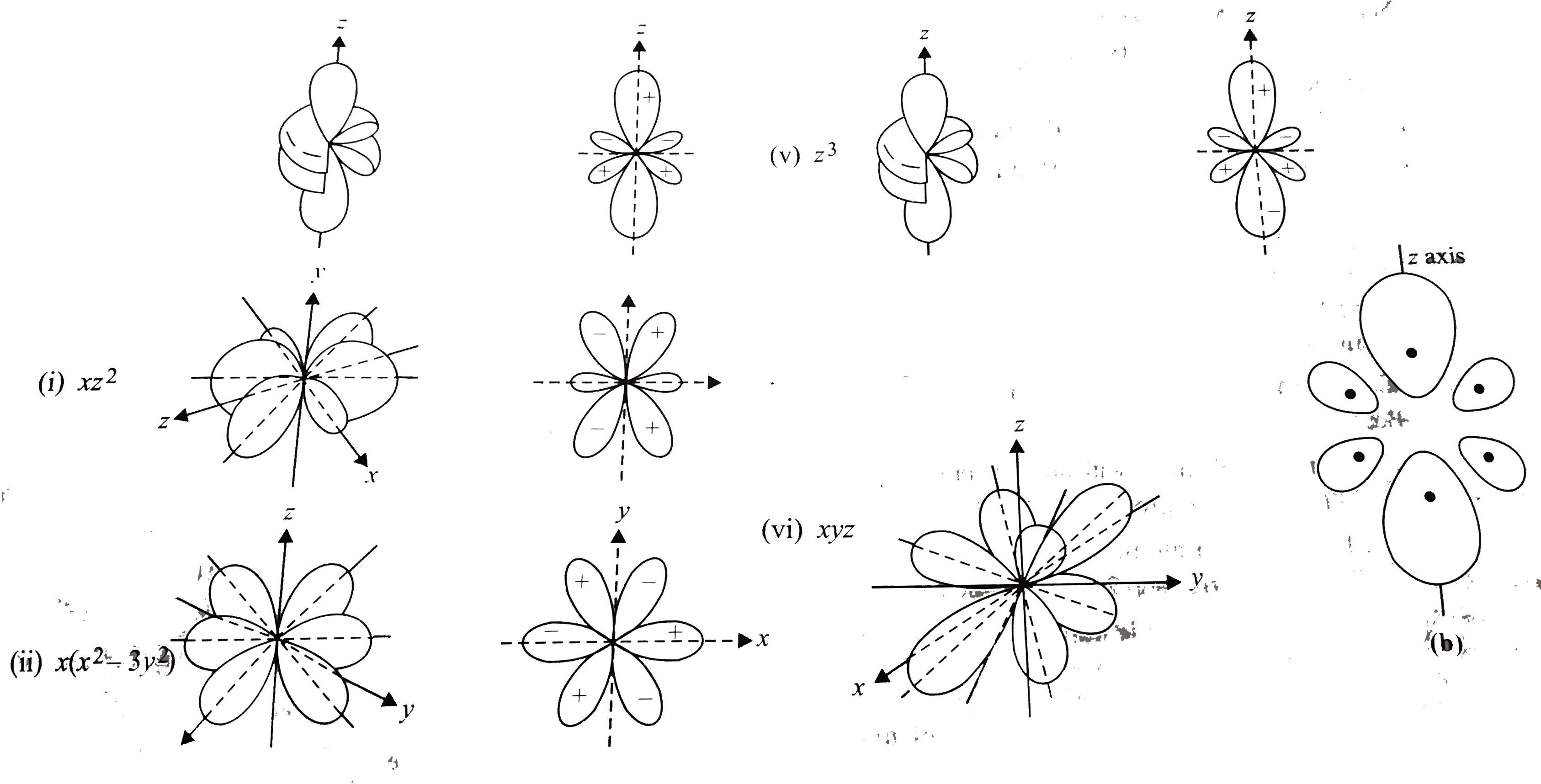 (i) 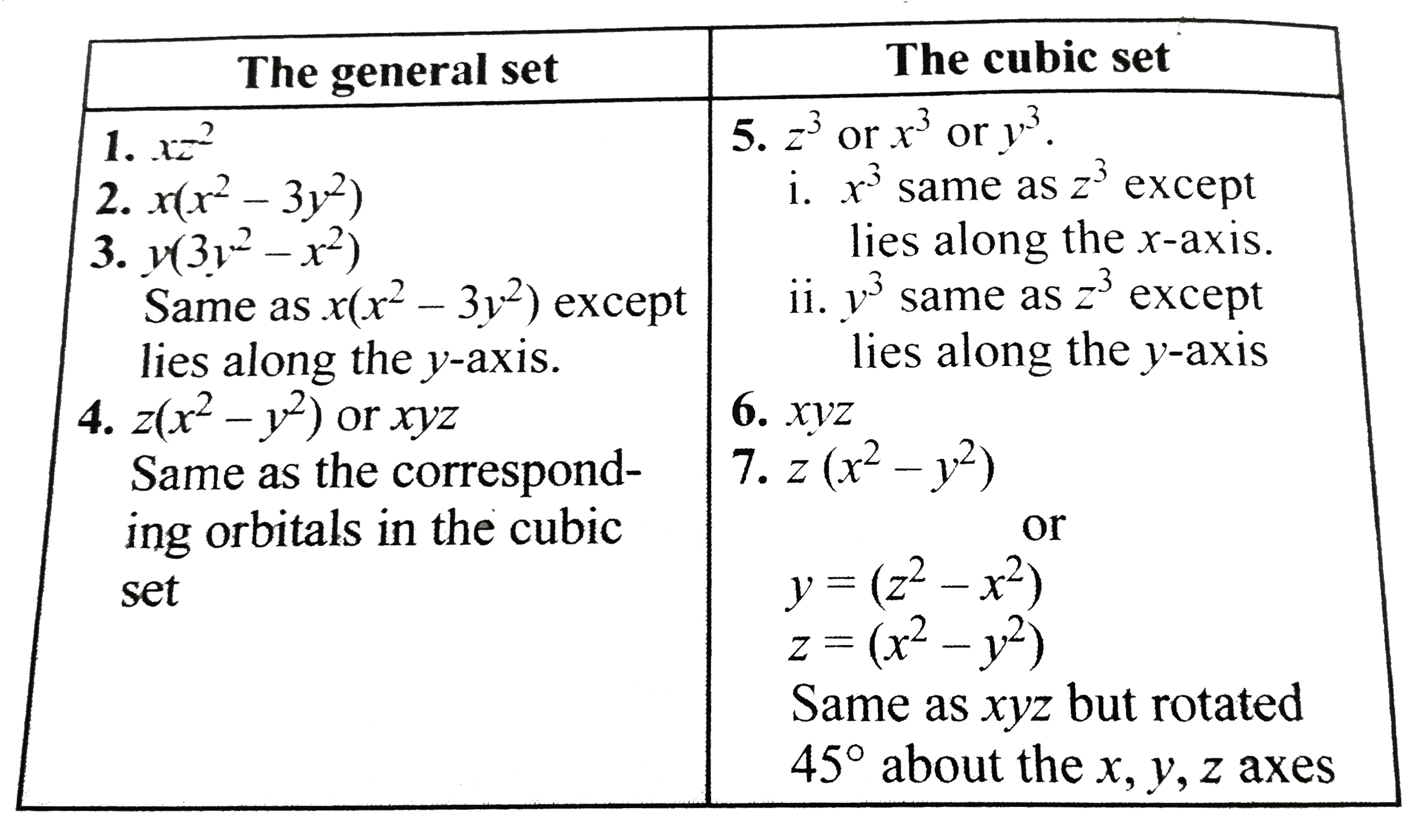 (iii) `y(3y^(2)-x^(2))` Same as `x(x^(2)-3y^(2))` except lies along the `y` axis. (iv) `{:(z(x^(2)-y^(2)),,),(xyz,,):}}` Same as the corresponding orbitals in the cubic set. As with `d`-orbitals, there is no unique way of representing them, nor is there even a way which is optimum for all problems. The figure presents two sets, 'General set' and a 'cubic set'. The latter is advantageous in considering the PROPERTIES of the orbitals in cubic (i.e., OCTAHEDRAL andtetrahedral fields). (vii) `{:(z(x^(2)-y^(2)),,),(y(z^(2)-x^(2)),,),(x(z^(2)-y^(2)),,):}} {:("Same as the xyz but rotated" 45^(@)),("about the x, y and z axe"):}` |
|
| 32. |
Give the names of green house gases. |
| Answer» Solution :Carbon DIOXIDE, methane, ozone, chlorofluorocarbon compounds and water vapour are the GREEN HOUSE GASES. | |
| 33. |
Give the name of unsaturated hydrocarbon gives the product 2 moles methanal and 1 mole glyoxal, Give the structure and IUPAC name. |
|
Answer» SOLUTION :Buta-1, 3-diene `{:(,(CH_(2))/(darr),=,(CH-CH)/(darr),=,(CH_(2))/(darr)),(,CH_(2)=O,+,O=CH-CH=O,+,CH_(2)=O),("or",HCHO,+,CHO-CHO,+,HCHO),(,"Methanal",+,"Glyoxal",+,"Methanal"):}` |
|
| 34. |
Give the name of the gases responsible for the acid rain. |
| Answer» SOLUTION :OXIDES of sulphur and oxides of nitrogen are responsible for the ACID RAIN. | |
| 35. |
Give the name of scientist who discover fullerene. |
| Answer» SOLUTION :FULLERENES was DISCOVERED by H.W. Kroto, E.Smalley and R.F.Curl. | |
| 36. |
Give the name of particulate pollutants with examples. |
| Answer» SOLUTION :Particulate POLLUTANTS are as FOLLOW : (i) The viable PARTICULATES : BACTERIA, fungi, moulds, algae. (ii) The non-viable particulates : Smoke, dust, mists. | |
| 37. |
Give the name of oxidizing and reducing smog. |
| Answer» Solution :Classical SMOG is a reducing smog and PHOTOCHEMICAL smog is a OXIDIZING smog. | |
| 38. |
Give the name of elements, symbol and atomic number which one obtained for the name of the scientists Glenn T Seaborg, Mendeleev and Ruther Ford. |
Answer» SOLUTION :
|
|
| 39. |
givethename ofdifferentpartsof the electromagnaticspectrum. |
| Answer» SOLUTION :Radiofrequencyregion . MICROWAVE regionradarinfraredregion.UltravioletregionvisiblelightX-RAY`LAMBDA `-ray ETC | |
| 40. |
Give the name of dehydrohalogenation and dehydration of alcohol compound in presence of acid. |
| Answer» SOLUTION :`BETA`-ELIMINATION TYPE. | |
| 41. |
Give the name of commercial production method for sodium hydroxide. |
| Answer» SOLUTION : Sodium hydroxide is generally prepared COMMERCIALLY by the electrolysis of sodium chloride in CASTNER- Kellner cell. | |
| 42. |
Give the name of basic structural unit and its examples . |
|
Answer» SOLUTION :BASIC structural unit of silicates is `SiO_4^(-4)` e.g. , Feldspar, ZEOLITES, Mica and ASBESTOS. |
|
| 43. |
Give the name, formula and structure of the cycloalkane which have only one structure. |
Answer» SOLUTION :* In series of ALKANE, top 3 members do not have isomers. First 3 members are methane, ethane and propane. Structure are as FOLLOWS : 
|
|
| 44. |
Give the name and use of compound produce during incomplete combustion of alkane. |
|
Answer» Solution :Carbon black is obtained on incomplete COMBUSTION or combustion of alkane in presence of less amount of dioxygen. Carbon black is used to prepare ink, PRINTER ink and black pigments. It is used as filler at certain places. `CH_(4(G))+O_(2(g)) overset("Incomplete combustion")rarr C_((s)) + 2H_(2)O_((l))` and `"Alkane" + O_(2)overset("Incomplete combustion")rarr CO + H_(2)O` |
|
| 45. |
Give the name and symbol of the element having atomic number 118. |
|
Answer» Solution :`{:("Number",1,1,8),("SYMBOL","UN","un","oct"),("ABBREVIATION",u,u,o):}` `:. ` Add SUFFIX ium to Un un oct and name of the element is Un un oct ium. |
|
| 46. |
Give the name and symbol of the element having atomic number 103. |
|
Answer» Solution :`{:("Number",1,0,3),("Symbol","Un","nil","TRI"),("Abbreviation",U,n,t):}` `:.` ADD SUFFIX IUM to Un, nil, tri and named of the element is Un nil trjum and symbol is "Unt". Its IUPAC official name is lawrencium. |
|
| 47. |
Givethenameand atomicnumber of theinertgas atomin whichthe totalnumberof d- elementis equal todifference innumberif totalp- ands-electrons. |
|
Answer» SOLUTION :The firstinert GAS whichcontainsd- electrons is krypton. Itsatomic numberis 36and itselectronicconfigurationis `: 1s^(2)2s^(2)p^(6)3s ^(2)p^(6)3 d^(10)4 s^(2)4p^(6)` LTBGT Totalnumber ofd- electrons = 10 Total numberof - electrons= 6+6 += 18 Totalnumber ofs- electrons= 2+ 2 + 2 +2 = 8 `:. ` Differencein totalnumberof p - ands- electrons = 18 - 8 = 10 . Thus the INERTGAS iskrypton. |
|
| 48. |
Give the name and structure of functional isomers of C_(4)H_(8). |
|
Answer» Solution :1 TRIPLE bond and 1-double bonded functional isomers are formed. (I) `underset("But-1-yne")(OVERSET(4)(C)H_(3)-overset(3)(C)H_(2)-overset(2)(C)-=overset(1)(C)H)` (II) `underset("But-1,3-diene")(overset(4)(C)H_(2)-overset(2)(C)H-overset(3)(CH)-=overset(4)(C)H_(2))` (III) `underset("But-1,2-diene")(overset(1)(C)H_(2)-overset(2)(C)-overset(3)(CH)-=overset(4)(C)H_(3))` (I) is functional isomers of (II) and (III). |
|
| 49. |
Give the name and electronic configuration of elements of 1^(st) group and 2^(nd) group. |
|
Answer» Solution :Elements of `1^(ST)` group are CALLED alkali metals. Their ELECTRONIC configuration is `NS^(1)`. Elements of `2^(nd)` group are called alkaline earth metals. Their electronic configuration is `ns^(2)` |
|
| 50. |
Give the name and atomic number of the inert gas atom in which the total number of d-electrons is equal the difference between the numbers of total P and total s electrons |
|
Answer» |
|