Saved Bookmarks
This section includes 7 InterviewSolutions, each offering curated multiple-choice questions to sharpen your Current Affairs knowledge and support exam preparation. Choose a topic below to get started.
| 1. |
Identify the product in the following reaction CH_(3)-CH_(2)-CH_(2)Broverset(alc.KOH)underset(Delta)(to)underset(("major"))("Product") |
|
Answer» `CH_(3)CH_(2)OH_(2)` |
|
| 2. |
Identify the product for the following reaction: CH-=CH+HOCl to |
|
Answer» `Cl_(2)CHCHO` 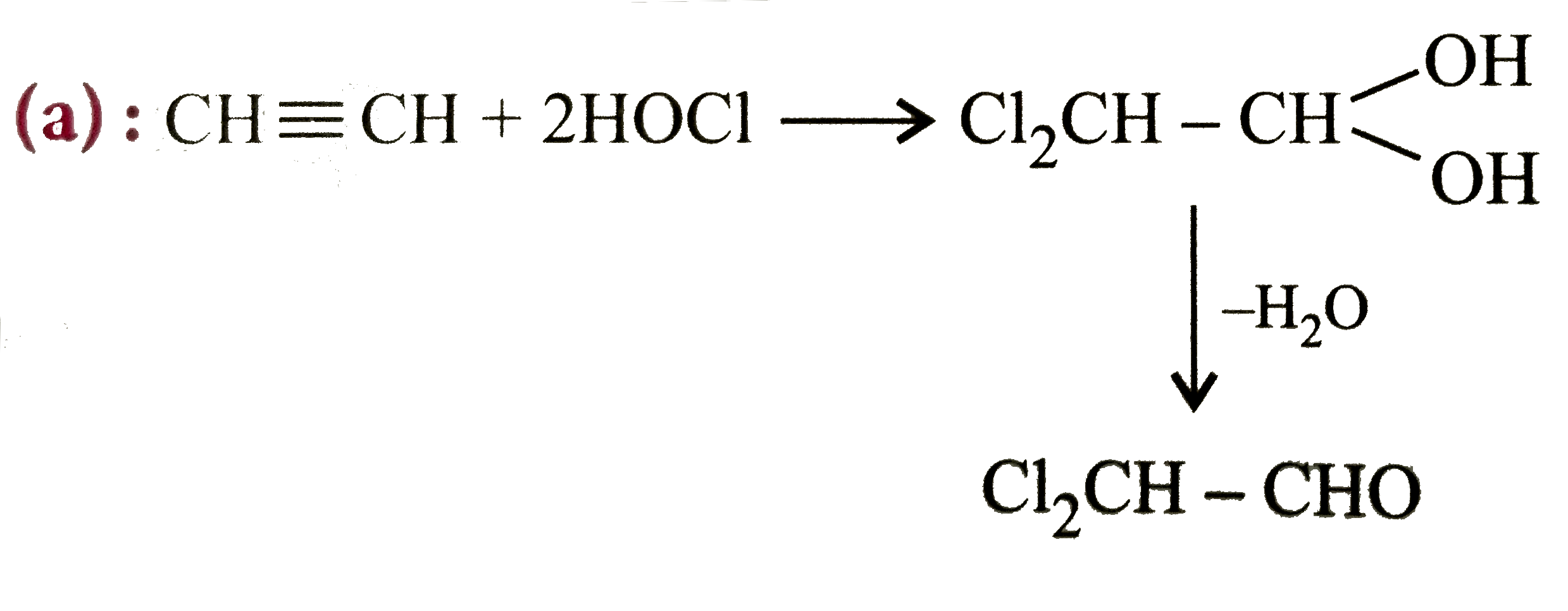
|
|
| 3. |
Identify the product C in the series CH_(3)CN overset(Na// C_(2)H_(5)OH)rarr A overset(HNO_(2))rarr B overset(Cr_(2)O_(7)^(2-) //H^(+))rarr |
|
Answer» `CH_(3)COOH` |
|
| 4. |
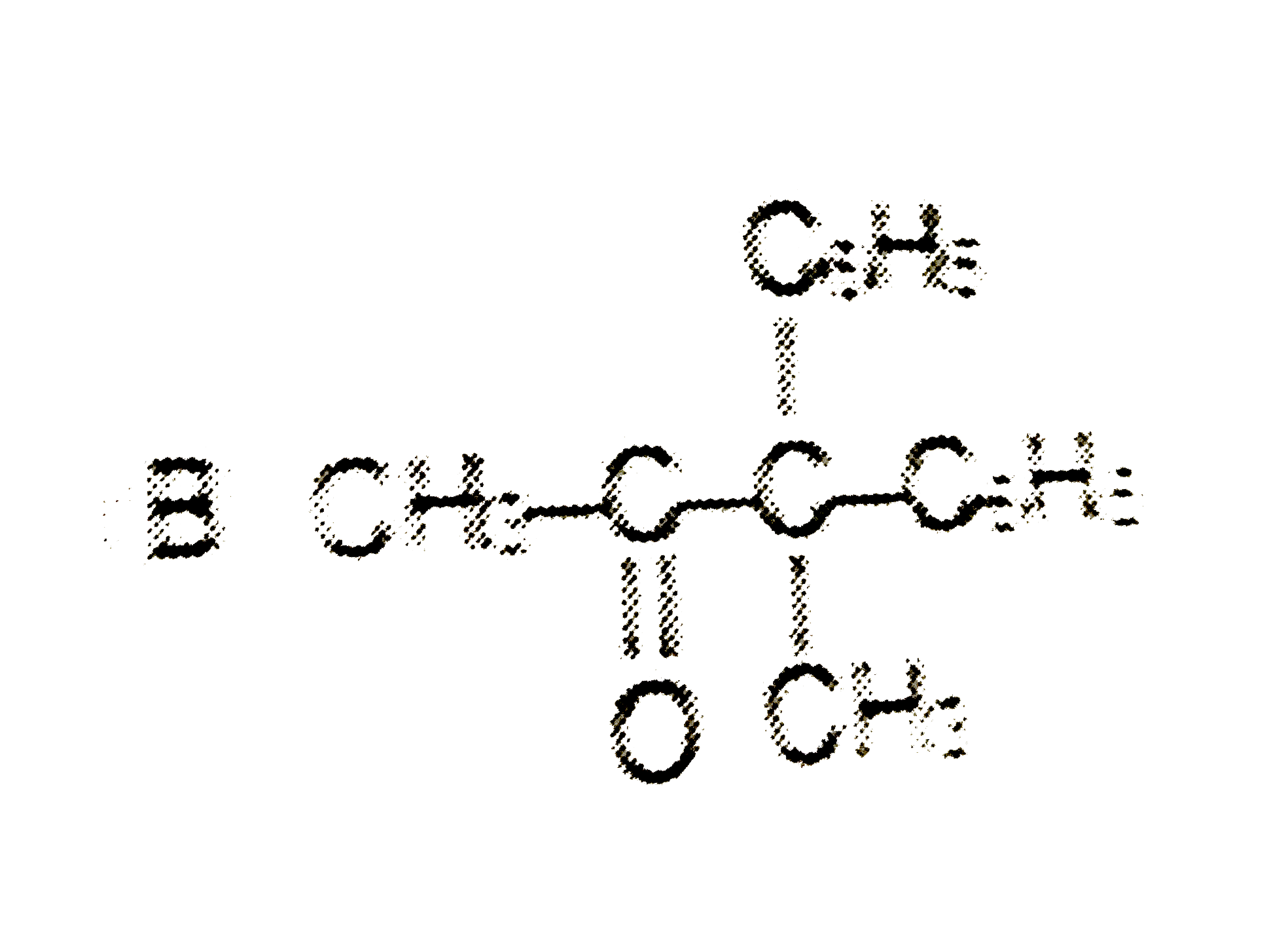
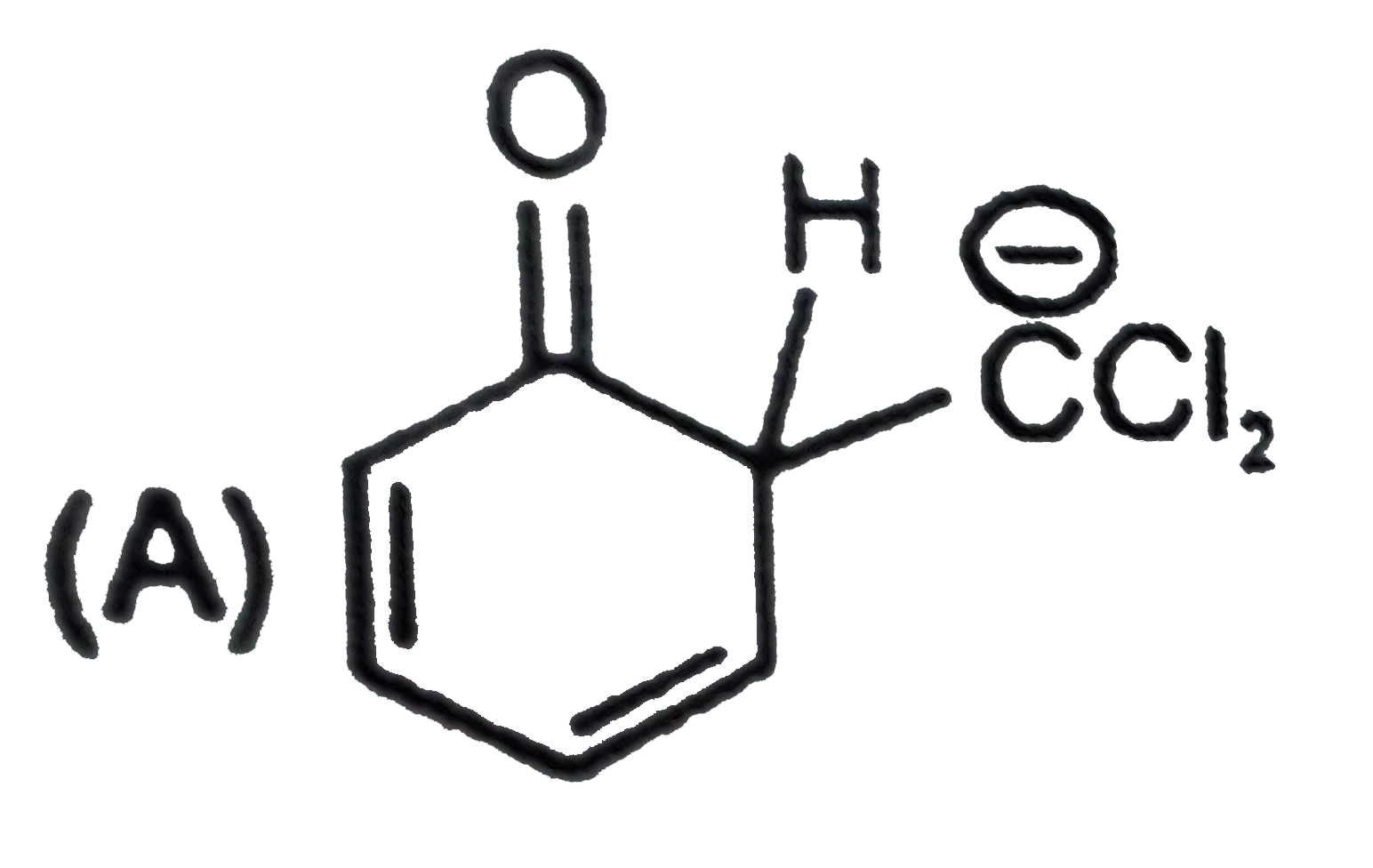
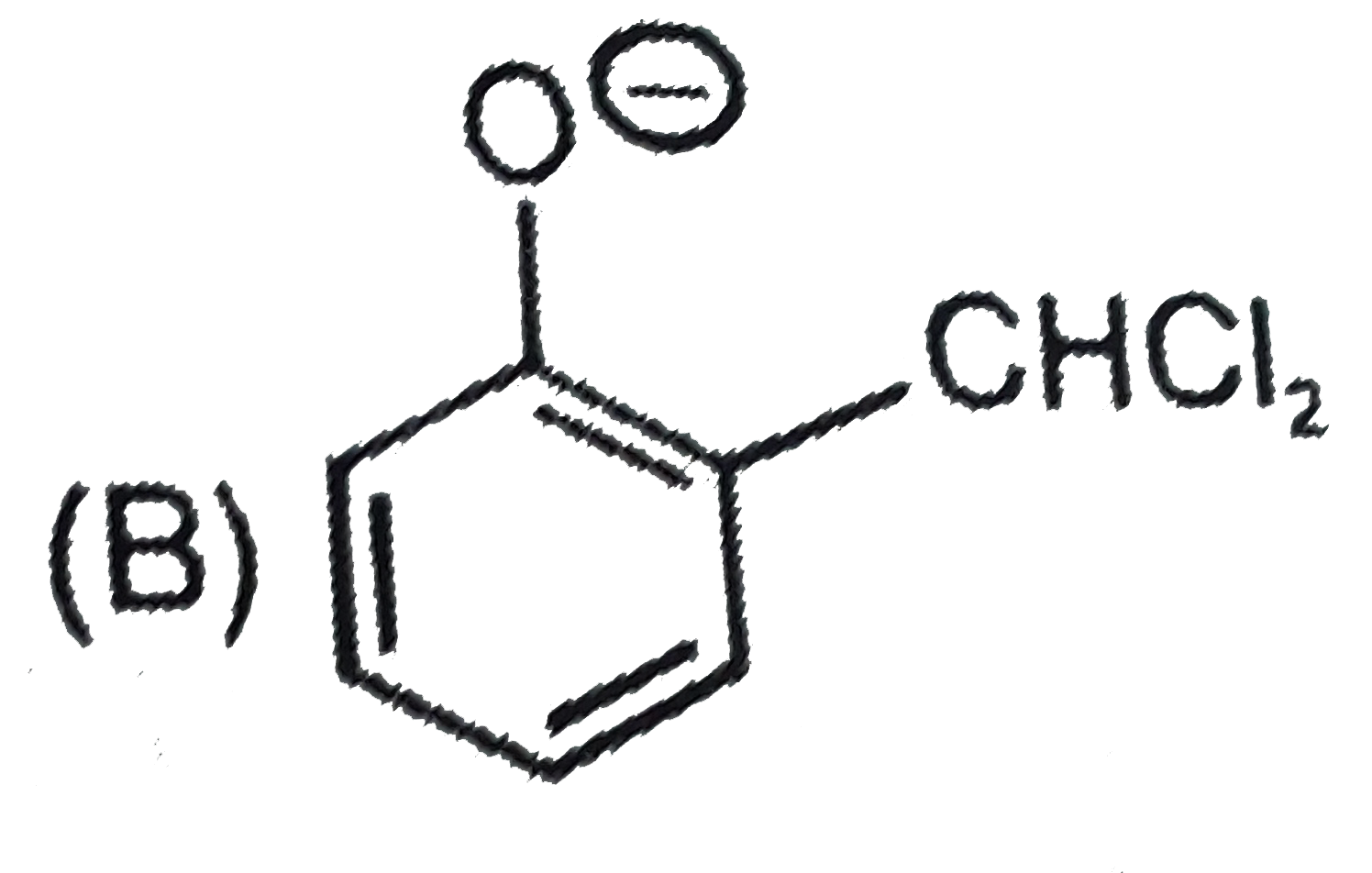
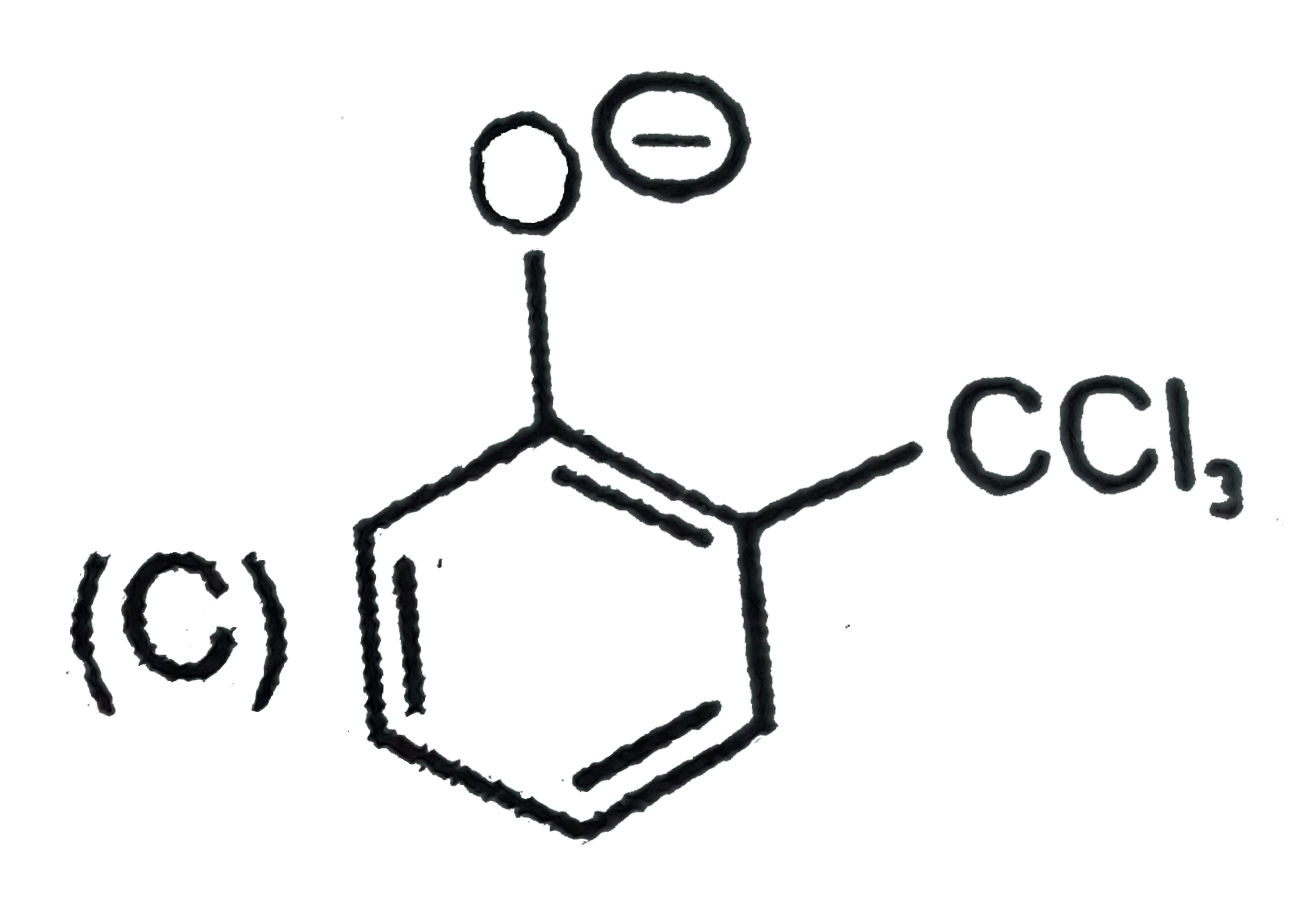
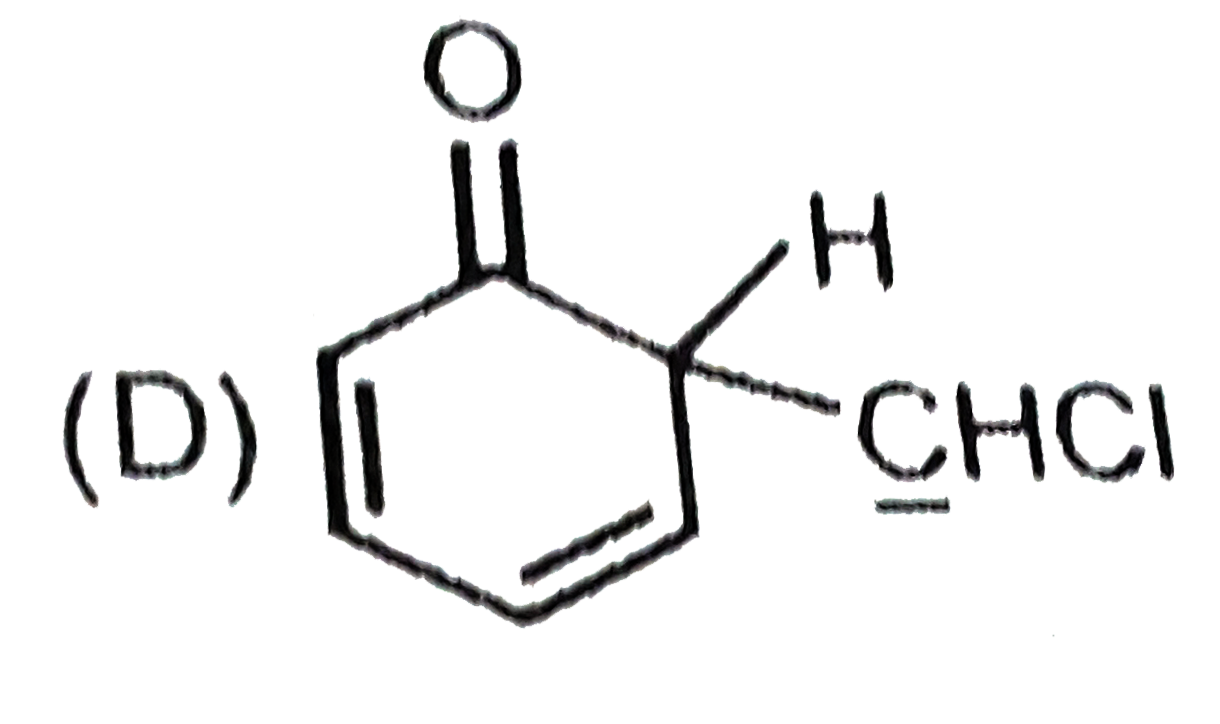
Identify the product (B) |
|
Answer»

|
|
| 5. |
Identify the product and mention the type of organic reaction CH_3-overset(Br)overset(|)CH-CH_3 underset(C_2H_5ONa)overset(C_2H_5OH)to ? |
Answer» SOLUTION : This is ONE of the ELIMINATION REACTION. |
|
| 7. |
Identify the paramagnetic species among the followingusing molecular orbital theory. |
Answer» SOLUTION :`O_(2)^(2-) , N_(2), C_(2)^(+)`  `C_(2)^(+)` is PARAMAGNETIC. |
|
| 8. |
Identify the possible set of quantum numbers for outer shell electron in element K. |
|
Answer» `n=4,l=0,m=0 , s = PM 1/2` |
|
| 9. |
Identify the pairs which are not of isotopes? (1) ""_(6)^(12) X,_(3)^(16) (2) ""_(17)^(35) X,_(17)^(37) (3) ""_(6)^(14) X,_(7)^(14) (4) ""_(4)^(8) X,_(5)^(8)Y |
|
Answer» `1&2` |
|
| 10. |
Identify the pairs which are not of isotopes |
|
Answer» `._(6)^(12)X ,._(6)^(13)X` |
|
| 11. |
Identify the pairs which are not of isotopes ? |
|
Answer» `._(16)^(12)X, ._(6)^(13)Y` |
|
| 12. |
Identify the pair of species that possess same bond order . |
|
Answer» `O_(2)^(2-), B_(2)` |
|
| 13. |
Identify the pair of isomers which are geometrical isomers of each. |
|
Answer»
|
|
| 14. |
What is redox reactions ? Identity the substance oxidised and the substance reduced in the following reactions : MnO_(2)+4HCl to MnCl_(2)+2H_(2)+Cl_(2) |
Answer» Solution :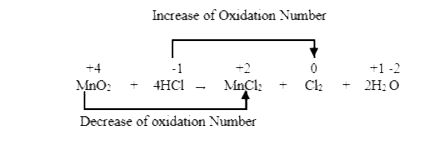 As it is clear, MANGANESE decrease its OXIDATION number from +4 to +2. HENCE, `MnO_2` gets reduced and it is an OXIDISING agent. Chlorine atom in HCl increases its oxidation number from -1 to 0. Thus, HCl gets oxidised and it is reducing agent. |
|
| 15. |
Identify the oxidising agent, reducing agent, substance oxidised and substance reduced in the following reactions. MnO_2 + 4HCl to MnCl_2 + Cl_2 + 2H_2O |
Answer» SOLUTION :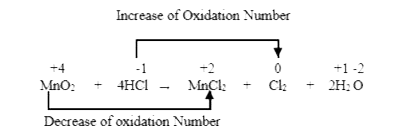 As it is CLEAR, manganese decrease its oxidation number from +4 to +2. Hence, `MnO_2` gets reduced and it is an oxidising agent. Chlorine atom in HCl increases its oxidation number from -1 to 0. Thus, HCl gets oxidised and it is REDUCING agent. |
|
| 16. |
Identify the oxidant and resultants in the following reactions: (a) CH_4(g)+4Cl_2(g)rarr"CCl"_4(g)+2HCl(g) (b) C_2H_4O_4(aq)+2H^(+)+MnO_2(s) rarrMn^(2+)(aq)+2CO_2(g) +2H_2O(l)(c) I_2(aq)+S_2O_3^(-2)(aq)rarr2I^(-)(aq)+S_4O_6^(2-)(aq) (d) Cl_2(g)+2Br^(-)(aq)rarr2Cl^(-)(aq)+Br_2(aq) |
|
Answer» (a) `Cl_2, CH_4` (B) `MnO_2, C_2H_4O_4` , (c) `I_2, S_2O_3^(2-)` (d) `Cl_2,Br^(-)`. |
|
| 17. |
Identify the oxidant and the reductant in the following chemical reactions: 2I^(-)(aq)+Cl_2(g) to 2Cl^(-) (aq)+I_2(s) |
|
Answer» SOLUTION :`2I^(-)(AQ)+Cl_2(G) to 2Cl^(-) (aq)+I_2(s)` OXIDANT is `Cl_2(g)` and the reductant is `I^(-)(aq).` |
|
| 18. |
Identify the oxidant and reduction in the following reactions. (a) Zn(s) +1/2 O_2(g)rarrZnO(s) (b) CH_4(g) + 4Cl_2(g) rarr "CCl"_4(g) + 4HCl(g) (c) I_2(aq) +2S_2O_3^(2-)(aq)rarr2I^(-) (aq)+S_4O_6^(2-)(aq) (d) Zn(s)+2H^(+)(aq) rarr Zn^(2+) +(aq) +H_2(g) |
|
Answer» Solution :(a) `Zn(s) +1/2O_2(G) rarr ZnO(s)` In this reaction, ZINC donates electrons to O to give zinc ions and oxide ions. Thus, Zn acts as reluctant while oxygen acts as OXIDANT. (b) `CH_4(g)+4Cl_2(g)rarr"CCl"_4 (g) + 4HCl(g) CH_4` is oxidised and acts as reluctant while `Cl_2` is reduced and acts as oxidant. (c) `I_2(aq)+2S_2O_3^(2-)(aq) rarr 2I^(-)(aq) +S_4O_6^(2-)(aq)` `I_2` gains electrons and is reduced . Therefore , it acts as oxidant. `S_2O_3^(2-)` acts as reluctant. (d) `Zn(s)+2H^(+)(aq) rarr Zn^(2+) (aq) +H_2(g)` Zinc loses electrons and gets oxidised . Therefore , it acts as reluctant . Hydrogen gets reduced and acts as an oxidant. |
|
| 19. |
Identify the oxidant and reductant in the folowing rection : (a) 10 H^(+)(aq)+4Zn(s)+NO_(3)^(-)(aq)rarr4Zn^(2+)(aq)+NH_(4)^(+)(aq)+3H_(2)O(l) (b)I_(2)(g)+H_(2)S(g)+H_(2)S(g)rarrHI(g)+S(s) |
|
Answer» Solution :(a) Writing the O.N of all the atoms above their symbols we have `10 overset(+1)H^(+)(aq)+4overset(0)Zn(s)+overset(+5)BO_(3)^(-)(aq) to 4 overset(+2)Zn^(2+)(aq)+ overset(-3)NH_(4)^(+)(aq)+3overset(+1)H_(2)O(l)` here there is no change in the O.N of H toms But hte O.N of Zn changes from zero in Zn to +2 in `Zn^(+)` therefore it is oxidised and hence Zn acts as a reductant The O.N of N decresses FORM +5 in `NO_(3)^(-) to -3 in NH_(4)^(+)` and therefore it is reduced and hence `NO_(3)^(-)` acts as the oxidant (b) Writing the O.N of all hte atoms above their symbols we have `I_(2)^(0)(g) + H_(2) overset(-2)H_(2)(g) to 2 overset(+1) overset(-1)I(g)+overset(0)S(s)` Here O.N of H does not change The O.N of `I_(2)` DECREASE frm zero in `I_(2)` to -1 in HI therefore `I_(2)` is REDUCING and hence it acts as an oxidant The O.N of S increases form -2 in `H_(2)S` to zero in S therefore `H_(2)S` is oxidation and hence it acts as th reductant |
|
| 20. |
Identify the oxidant and reductant in the following reactions: I_2(g)+H_2S(g)to2IH(g) +S(s). |
|
Answer» Solution :Writing the oxidation number of all the atoms above their symbols, we have `overset0(I_2)(g)+overset(+1)(H_2)overset(-2)(S)(g)tooverset(+1)(2H)overset(-1)I(g) +overset(0)S(s)` The oxidation number of `I_2` decreases from ZERO in `I_2` to -1 in HI, THEREFORE, `I_2` is reduced and HENCE it acts as an oxidant. THe O.N of S INCREASE from -2 in `H_2S` to zero in S, therefore , `H_2 S` is oxidised and hence it acts as the REDUCTANT. |
|
| 21. |
Identify the oxidant and reductant in the following reactions: 10H^(+)(aq)+4Zn(s)+NO_3^(-) (aq)to4Zn^(2+) (aq)+NH_4^(+) +3H_2O(l) |
|
Answer» Solution :Writing the oxidation number of all the atoms above their symbols, we have `OVERSET(+1) 10H^(+)(AQ)+overset0 4Z(s)+overset(+5)(NO_3^(-))(aq) to overset(+2)(4Zn^(2+))(aq)+overset(-3)(NH_4^(+))+overset(+1)(3H_2) overset(-2)O(L)` Oxidation number of Zn changes from zero in Zn to +2 in `Zn^(2+)` and therefore, it is oxidized and hence Zn acts as a reductant. THe oxidation number of N decrease from +5 in `NO_3^(-)` to -3 to `NO_4^(+)` and therefore, it is REDUCED and hence `NO_3^(-)` acts as the oxidant. |
|
| 22. |
Identify the oxidant and reductant in the following reaction: Zn(s)+2H^+(aq)toZn^(2+)(aq)+H_2(g) |
| Answer» SOLUTION :Zn is the REDUCING agent (reductant) where as `H^+` is the oxidising agent (OXIDANT). | |
| 23. |
Identify the organic compound X formed in the following reaction . CH_(3)COOAg + I_(2) rarr X + AgI + Y (the equation is unbalanced) |
|
Answer» Iodomethane `CH_(3)COOAg + CH_(3)I rarr CH_(3)COOCH_(3) + AgI` (Methyl iodide is most reactive of all the alkyl HALIDES i.e., `CH_(3)CL, CH_(3)Br, CH_(3)I`) `2CH_(3)COOAg + I_(2) rarr 2AgI + CO_(2) + underset("Methyl ethanoate")(CH_(3)COOCH_(3))` This reaction is known as Birbaum -Simonini reaction |
|
| 24. |
Identify the oxidant and reductant in the following reaction: Zn(s)+1/2O_2(g) toZnO(s) |
| Answer» SOLUTION :ZN is the reducing agent (REDUCTANT) and `O_2` is the oxidising agent (oxidant) | |
| 25. |
Identify the one which does not come under the organic addition reaction. |
|
Answer» Hydration |
|
| 26. |
Identify the one which does not come under the organic additiori reaction. |
|
Answer» HYDRATION |
|
| 27. |
Identify the number of compounds in which positive charge will be delocalised? |
|
Answer» |
|
| 28. |
Identify the nature of hydrides that are formed by the elements of atomic numbers 15, 19, 23, 44 with dihydrogen. Compare their reactivity towards water. |
|
Answer» Solution :(i) Element of ATOMIC number 15 belong to p-block and fonns covalent hydride `(PH_3)`. (ii) Element of atomic number 19 belong to s-block and forms saline hydride (KH). (iii) Element of atomic no. 23 belong to d-block and fonns interstitial hydride `VH_(1.6)` which is a non-stiochiometric hydride. (IV) Element of atomic number 44 belong to d-block :-it is ruthenium. It does not from any hydride (v) Only ionic hydride KH REACTS violetly with water and involved in hydrogen gas PRODUCTION. `KH+H_2OtoKOH+H_2uparrow` |
|
| 29. |
Identify the most stable species in the following set of ions giving reasons : (i) overset(+)(C)H_(3), overset(+)(C)H_(2)Br, overset(+)(C)HBr_(2), overset(+)(C)Br_(2)(ii) overset(Θ)(C)H_(3), overset(Θ)(C)H_(2)Cl, overset(Θ)(C)HCl_(2),overset(Θ)(C) Cl_(3) |
|
Answer» Solution :(i) `overset(C)H_(3)` is the most STABLE species because the -I-effect of Br intensifies the +ve charge and hence destability the species. Further, more the number of Br atoms, less stable is the species. Thus, the stability of the species decreases in the order : `overset(+)(C)H_(3) gt overset(+)(C)H_(2)Br gt overset(+)(C)HBr_(2) gt overset(+)(C)Br_(3)` (ii) -I effect of the Cl atom DISPERSES the -ve charge and thus stabilizes the species. Further, more the number of Cl atoms, more is the DISPERSAL of the -ve charge and hence more stable is the species. Thus, `.^(-)C Cl_(3)` is the most stable species. The stability of other species decreases in the order `.^(-)CHCl_(2) gt .^(-)CH_(2)Cl gt .^(-)CH_(3)`. |
|
| 30. |
Identify the most stable species in the following set of ions giving reasons. (a) overset(+)(C )H_(3), overset(+)(C )H_(2) Br, overset(+)(C )HBr_(2), overset(+)(C )Br_(3) (b) overset(Θ)(C )H_(3), overset(Θ)(C )H_(2)Cl, overset(Θ)(C )HCl_(2), overset(Θ)(C )Cl_(3) |
|
Answer» Solution :(a) `overset(+)(C )H_(3)` is the most STABLE SPECIES because the -I effect of Br intensifies the +ve charge and hence destabilise the species. Further, more the number of Br atoms, less stable in thespecies. Thus, the STABILITY of these species decreases in the order. `overset(+)(C )H_(3) gt overset(+)(C )H_(3)Br gt overset(+)(C )HBr_(2) gt Br_(3)` (b) `-I` effect of the Cl atom disperse the -ve charge and thus stabilizes the species. Further, more th number of Cl atoms, more is the dispersal of the -ve charge and hence more stable is the species and hence more stable is the species. Thus, `-C Cl_(3)` is the most stable species. Thus stability of other species decreases in the order. `-CHCl_(2) gt -CH_(2)Cl gt -CH_(3)` |
|
| 31. |
The most stable hydride of the following |
|
Answer» NaH |
|
| 32. |
Identify the most acidic hydrogen containing compound from the following |
|
Answer»
|
|
| 34. |
Identify the molecule with zero dipole moment. |
|
Answer» `"CCL"_(4)` |
|
| 35. |
Identify the molecule with bond order 1 |
|
Answer» 1) `N_(2)` |
|
| 36. |
Identify the missing quantum numbers and the sub energy level |
Answer» SOLUTION :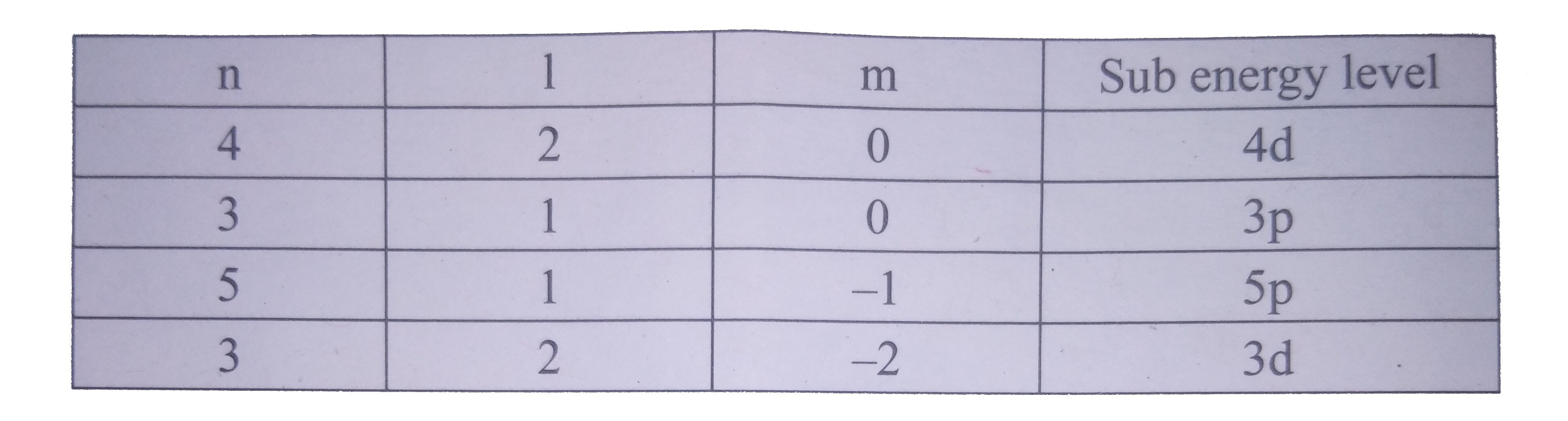
|
|
| 37. |
Identify the major products in the following reactions ? CH_3-CH_2-undersetunderset(""CH_3)(""|)oversetoverset(""CH_3)(""|)(.^(o+)N)-CH_2-CH_2-CH_3 overset(overset(Theta)(O)H//Delta)to |
|
Answer» `CH_3-CH=CH_2` |
|
| 38. |
Identify the magnetic nature of the anion of Na_(2)O_(2). |
|
Answer» Solution :The ANION of `Na_(2)O_(2) " is "O_(2)^(2-)` (peroxide ion ). No. of electrons in `O_(2)^(2-) : 8 + 8 + 2 = 18 e^(-)` Electronic configuration: `( sigma_(1s))^(2) (sigma_(1s)^(**))^(2) ( sigma_(2)^(s))^(2)(sigma_(2)^(s^(**)))(sigma_(2)p_(Z))^(2)(pi_(2)p_(x))^(2)(pi_(2)p_(y))^(2)(pi_(2)^(**)p_(x))^(2) (pi_(2)^(**)p_(y))^(2)` Bond ORDER : `1/2 (N_(b) - N_(a)) = 1/2 (10 - 8) = 1` Magnetic Nature : Has no unpaired electrons. HENCE diamagnetic. |
|
| 40. |
Identifythe leststable ion amongst the following? |
|
Answer» `Li^(-)` |
|
| 41. |
Identify the least stable ion amongst the following. |
|
Answer» `LI^(-)` |
|
| 42. |
Identify the Lanthanide series. |
|
Answer» `Z = 90 " to " Z = 103` |
|
| 43. |
Identify the isotopes and isobars from the following list of atoms with given number of protons and neutrons. A:8p+9nB:8p+8nC:18p+22nD:20p+20n. |
| Answer» Solution :A and B have the same NUMBER of PROTONS but different number of neutrons. Hence A and B are isotopes. C and D have different number of protons, but the sum of the protons annd neutrons, in both the CASES, are the same. Hence, C and D are isobars. | |
| 44. |
Identify the intermediates of the following reaction. |
|
Answer» |
|
| 45. |
Identify the incorrectly matched set ffrom the following |
|
Answer» |
|
| 46. |
Identify the incorrect statement(s): |
|
Answer» ALKYNES are more REACTIVE than ALKENES towards electrophilic ADDITION reaction |
|
| 47. |
Identify the incorrect statements |
|
Answer» `H_(2)O_(2)` gives yellow colour on REACTION with `Cr(OH)_(3)` |
|
| 48. |
Identify the incorrect statements. |
|
Answer» At BOYLE's temperature, there exists a pressure where compressibility of a real gas is more than that of ideal gas. |
|
| 49. |
Identify the incorrect statement with respect to hybridisation . |
|
Answer» Hybridisation is intermixing of orbitals of nearly EQUAL energies . |
|