

Saved Bookmarks
This section includes 7 InterviewSolutions, each offering curated multiple-choice questions to sharpen your Current Affairs knowledge and support exam preparation. Choose a topic below to get started.
| 1. |
The correct equation for the degree of an associating solute, 'n' molecules of which undergoes association in solution, is …………. |
|
Answer» 1) `ALPHA = (n (i-1))/(n -1)` |
|
| 2. |
The correct electronic configuration of Ti (Z=22) atom is |
|
Answer» `1s^2 2s^2 2p^6 3s^2 3p^6 4s^2 3d^2` |
|
| 3. |
The correct electronic configuration of alkaline earth metal is_________ |
|
Answer» [noble GASES]ns1 |
|
| 4. |
The correct electronic configuration of ._(29)Cu^(2+) is |
|
Answer» `[Ar] 4s^(1) 3D^(10)` |
|
| 5. |
The correct differential form of van't Hoff equation is …………. |
| Answer» SOLUTION :`(d(ln k))/(dT) = (Delta H^(@))/(RT^(2))` | |
| 6. |
The incorrect electronic arrangment is |
|
Answer» 2,8,13,1 |
|
| 7. |
The correct descending order of the heat liberated (in kJ) during the neutralization of the acids CH_(3)C O O H(W),HF(X), HCO OH (Y) and HCN(Z) under indentical conditions (K_(a) " of" CH_(3) CO OH = 1.8 xx 10^(-5), HCO OH = 1.8 xx 10^(-4), HCN = 4.9 xx 10^(-10)and HF = 3.2 xx 10^(-4)) is |
|
Answer» `Y GT X gt Z gt W` `HF gt HCO OH gt CH_(3)CO OH gt HCN` Weaker the acid, greater is the energy used for ionization and less is the HEAT liberated or stronger the acid, more the heat is liberated. Hence, order of liberation of heat is `HF gt HCO OH gt CH_(3) CO OH gt HCN` or `X gt Y gt W gt Z` |
|
| 8. |
The correct decreasing order of stability of I,II and III carbocations is: (I) CH_(3)-overset(+)(C)H-CH_(3) (II) CH_(3)-overset(+)(C)H-COCH_(3) (III) CH_(3)-overset(+)(C)H-OCH_(3) |
|
Answer» `I GT II gt III` |
|
| 9. |
The correct descending order of the heat librated (in kJ) during the neutralisation of the acids CH_(3)COOH(W), HF(X), HCOOH(Y) AND HCN(Z) under identical conditions (K_(a) of CH_(3)COOH = 1.8 xx 10^(-5), HCOOH = 1.8xx 10^(-4), HCN = 4.9 xx 10^(-10) and HF = 3.2 xx 10^(-4)) is |
|
Answer» `Y gt X gt Z gt W` `HF(X)gt HCOOH(Y) gt CH_(3)COOH(W) gt HCN(Z)` Stronger the acid, higher is the heat liberated during the neutralisation because lesser ENERGY is required for ionisation.Therefore, correct order of heat liberated is `X gt Y gt W gt Z`. |
|
| 10. |
The correct decreasing order of surface tension for water , ethanol and n - hexane is |
|
Answer» n hexane `lt` ETHANOL `lt` water |
|
| 11. |
The correct descending order of solubility of sulphate salts of alkaline earth metals in water is... |
|
Answer» `BeSO_(4) gt CaSO_(4) gt MgSO_(4) gt BaSO_(4)` |
|
| 12. |
The correct decreasing order of priority for the functional groups of organic compounds in the IUPAC system of nomenclature is……. |
|
Answer» `-SO_(3)H, -COOH, -CONH_(2), -CHO` |
|
| 13. |
The correct decreasing order of priority for the functional groups of organic compounds in the IUPACsystem of nomenclature is |
|
Answer» `-SO_(3)H,-COOH,-CONH_(2),-CHO` |
|
| 14. |
The correct decreasing order of priority for the functional groups of organic compounds in the IUPAC system of nomenclature is |
|
Answer» `-CONH_(2),-CHO,-SO_(3)H,-COOH` |
|
| 15. |
The correctdecreasingorder of firstionizationenthalpiesof fiveelementsof thesecondperiodis |
|
Answer» `Be gtB gt C gt N gt F ` `F gt N gt C gt Be gt B` i.e.,option( c) is correct. |
|
| 16. |
The correct decreasing order of ease of acid catalysed estrification is : |
|
Answer» `CH_(3)[CH_(2)]_(3)OH gt CH_(3)CH_(2)C(OH)CH_(3) gt (CH)_(3)COH` |
|
| 17. |
The correct decreasing order for the function groups of organic compounds in the IUPAC system of nomenclature is |
|
Answer» `-CONH_(2), -CHO, -SO_(3)H, -COOH` |
|
| 18. |
The correct decreasing order for acid strength is : |
|
Answer» `CHCH_(2)COOH gt O_(2)NCH_(2)COOH lt FCH_(2)COOH lt ClCH_(2)COOH` |
|
| 19. |
The correct bond order in the following specie is : |
|
Answer» `O_(2)^(2+) lt O_(2)^(+) lt O_(2)^(-)` ACCORDING to molecular ORBITAL theory (MOT) `"" O_(2)^(-) O_(2)^(+) O_(2)^(2+)` NUMBER of `E^(-)` : 1715 14 Bond order :1.5 2.53.0 |
|
| 20. |
The correct arrangenment of O, P and N in order of increasing radii is |
|
Answer» <P>O < N < P |
|
| 21. |
Thecorrectarrangementfor theionsin theincreasingorder oftheirradii is |
|
Answer» `Na^(+), C1^(-) , Ca^(2+) ` |
|
| 22. |
The correct arrangement for decreasing order of electrophilic Substitution reactions of I)Toluene II) Benzene III) Phenol IV) Chlorobenzene |
|
Answer» `I gt II gt III gt IV` |
|
| 23. |
The correct acidity order of the following is |
|
Answer» `(III) gt (IV) gt (II) gt (I)` |
|
| 24. |
The correct acidic order of the following is |
|
Answer» `I GT II gt III` |
|
| 25. |
The coordination number of each sphere in hexagonal close packing is ______ while that of body-centred cubic packing is _______ |
|
Answer» |
|
| 26. |
The coordination number of CI^- ion in NaCL structure is ______________whereas that in CsCl structure _____________ |
|
Answer» |
|
| 27. |
The coordination number of cation and anion in Fluorite CaF_(2) and Zinc blende ZnS are respectively x : y and a : b. Find (x + y + a + b) |
|
Answer» |
|
| 28. |
The coordination number of Al in the crystalline state of AlCl_3 is |
|
Answer» |
|
| 29. |
The coordination number of a tetrahedral void is _________ while that of an octahedral void is _________ |
|
Answer» |
|
| 30. |
The coordination number of Alin the crystalline ofAlCl_(3) is |
|
Answer» |
|
| 31. |
The coordinate of the three corners of a shaded face on a cubic unit cell are(1/2 , 1/2 ,1) , ( 0,1, 1/2) and ( 1,1, 1/2) as shown in the figure. Determine the Miller indices of the plane. |
|
Answer» SOLUTION :The intercepts of the shaded plane with the AXES are ` oo, ` 2b and 2 C respecitvely , WEISS indices are ` oo`2,2,. Reciprocals of We3iss indices ar ` 1/oo, 1/2 , 1/2 or 0, 1/2 ,1/2` or expressed. |
|
| 32. |
The cooling caused by the expansion of a compressed gas below its inversion temperature without doing external work is called |
|
Answer» JOULE Thomson effect |
|
| 33. |
The conversion KMnO_(4)rarrK_(2)MnO_(4) is an example of |
|
Answer» OXIDATION HALF reaction |
|
| 34. |
The conversion of fresh precipitate to colloidal state is called peptization. (r) It is caused by addition of common ions. |
|
Answer» IF both (A) and (R) are correct and (r) is the correct EXPLANATION for (a). |
|
| 35. |
The conversion of ethylene to ethyne involves |
|
Answer» `Br_(2)` treatment FOLLOWED by AQUEOUS KOH reaction <BR>ALCOHOLIC KOH treatment followed by `Br_(2)` reaction |
|
| 36. |
The conversion of ethylene to ethyl alcohol is known as |
|
Answer» a)ELIMINATION |
|
| 37. |
The conversion of -COOH group to -NH_(2) group can be made by : |
|
Answer» SANDMEYER's REACTION |
|
| 38. |
The conversion of chlorobenzene to phenol by the action of NaOH is called ……………….. . |
| Answer» SOLUTION :Dow.s PROCESS | |
| 39. |
The conversion of CH_(3)OH into CH_(3)COOH can be brought about by the following reagents |
|
Answer» `K_(2)Cr_(2)O_(7)//H^(+)` |
|
| 40. |
The conversion of bromoalkane to fluroalkane by heating with AgF is called ………………….. . |
| Answer» SOLUTION :SWARTZ REACTION | |
| 41. |
The conversion of benzene diazonium chloride to chlorobenzene in the presence of Cu_2Cl_2 + HCl is named as ………………….. . |
| Answer» SOLUTION :SANDMEYER REACTION | |
| 42. |
The conversion of atomic hydrogen to dihydrogen is a ______________ change. |
|
Answer» endothermic |
|
| 43. |
The conversion of aldehyde having no alpha hydrogen to a mixture of carbonylc acid and primary alcohol is known as cannizzaro reaction. The most important features of this reaction is the conjugate base of hydrate of aldehye.Which of the following cannot undergo intramolecular cannizzaro reaction ? |
|
Answer» `H-underset(O)underset(||)(C)-underset(O)underset(||)(C)-H` Iosn with more electron DENSITY arebetter hybride donors. In`PH-underset(O)underset(||)(C)-underset(O)underset(||)(C)-Ph` ALDEHYDIC - Hisabsent |
|
| 44. |
The conversion of aldehyde having no alpha hydrogen to a mixture of carbonylc acid and primary alcohol is known as cannizzaro reaction. The most important features of this reaction is the conjugate base of hydrate of aldehye. Write order of best hydride ion donar in cannizzaro reaction |
|
Answer» III gt IIgt IV gt I Iosn with more ELECTRON density arebetter HYBRIDE donors. In`PH-underset(O)underset(||)(C)-underset(O)underset(||)(C)-Ph` ALDEHYDIC - Hisabsent |
|
| 45. |
The conversion of aldehyde having no alpha hydrogen to a mixture of carbonylc acid and primary alcohol is known as cannizzaro reaction. The most important features of this reaction is the conjugate base of hydrate of aldehye.Order of the above reaction is |
|
Answer» 1 Iosn with more electron DENSITY arebetter hybride donors. In`PH-UNDERSET(O)underset(||)(C)-underset(O)underset(||)(C)-Ph` Aldehydic - Hisabsent |
|
| 46. |
The conversion of a keto form into enol is enolisation. It depends on structural factor, temperature and nature of solvent. Resonance and hydrogen bonding increases enol content. Enolic form of phenol is more stable than keto form by-13 kcal/mol of energy hence phenol exist exclusively as an enol. Enolic tautomer is less polar due to intramolecular hydrogen bonds than the corresponding keto form. Any polar solvent would decrease the enolisation and fovour keto form intramolecular hydrogen bonding stabilized enol form by 7kcal/mol and resonance stabilizes enol form by 15 kcal/mole The enol content of ethyl acetoacetate is highest in |
|
Answer» WATER |
|
| 47. |
The conversion of a keto form into enol is enolisation. It depends on structural factor, temperature and nature of solvent. Resonance and hydrogen bonding increases enol content. Enolic form of phenol is more stable than keto form by-13 kcal/mol of energy hence phenol exist exclusively as an enol. Enolic tautomer is less polar due to intramolecular hydrogen bonds than the corresponding keto form. Any polar solvent would decrease the enolisation and fovour keto form intramolecular hydrogen bonding stabilized enol form by 7kcal/mol and resonance stabilizes enol form by 15 kcal/mole Ketonic form predominates in |
|
Answer» `CH_(3)-CO-CH_(3)` 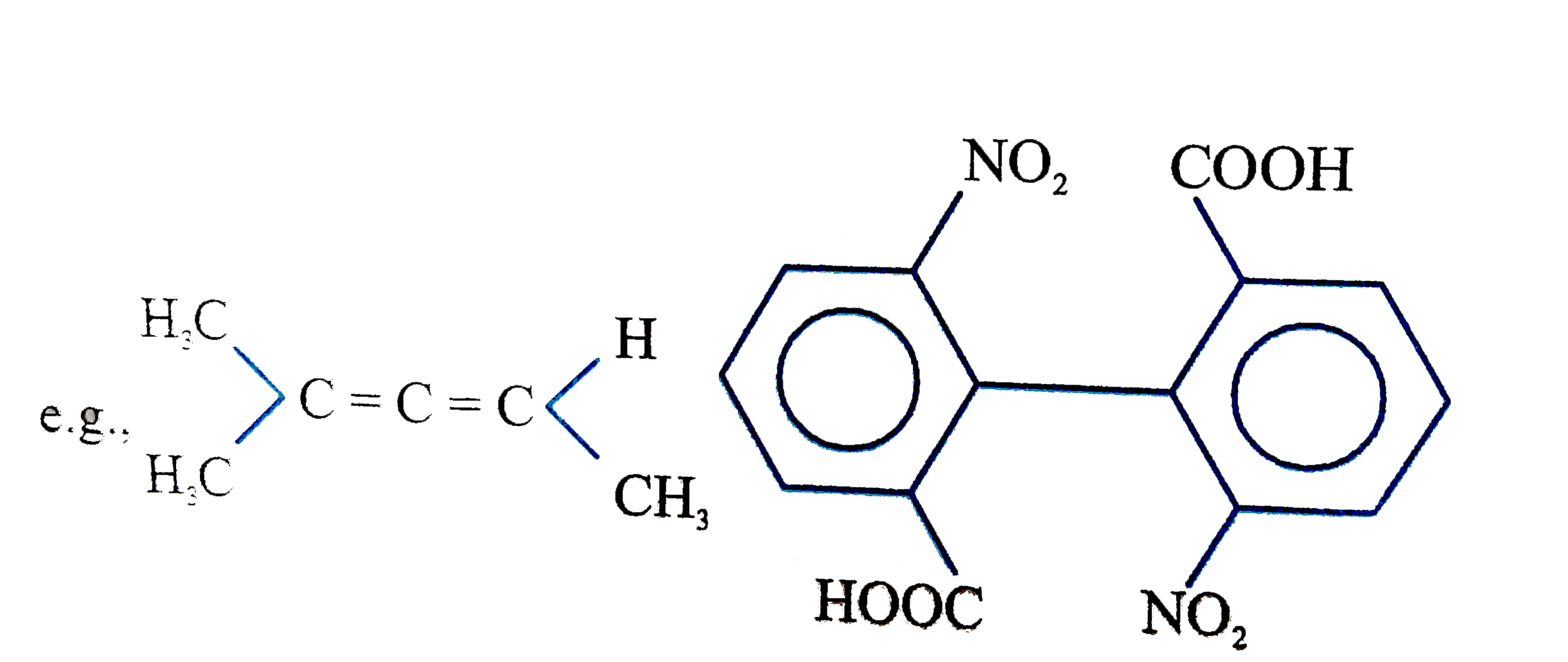
|
|
| 48. |
The conversion can be performed suitable by |
|
Answer» I) `BH_3 - THF` II) `H_2O_2 , OH^(-)` B) I. Hbr peroxideII. `OH^(-)` |
|
| 49. |
Tin contains only 5 - 10 % of tin as SnO_(2), the rest being Siliceous matter, wolfram and pyrites of iron copper and arsenic. It is not attached by water. Only molten tin reacts with steam liberating hydrogen. In stannous oxide, tin is +2 oxidising state. So stannous oxide is also described as tin (II) oxide Which of the following ionic species is more stable |
|
Answer» `Sn^(+2)` |
|
| 50. |
Tin contains only 5 - 10 % of tin as SnO_(2), the rest being Siliceous matter, wolfram and pyrites of iron copper and arsenic. It is not attached by water. Only molten tin reacts with steam liberating hydrogen. In stannous oxide, tin is +2 oxidising state. So stannous oxide is also described as tin (II) oxide Tin is attacked by |
|
Answer» Hot KOH `Sn+ 2HCl rarr SnCl_(2) +H_(2)` `4Sn+ 4HNO_(3) rarr H_(2)SnO_(3) + 4NO_(2) + H_(2)O` |
|