Saved Bookmarks
This section includes 7 InterviewSolutions, each offering curated multiple-choice questions to sharpen your Current Affairs knowledge and support exam preparation. Choose a topic below to get started.
| 1. |
Let vec a = hat i + hat j + hat k , vec b = hat iand vec c = c_(1)hat i+ c_(2)hat j + c_(3)hat k. If c_(1) = 1 and c_(2) = 2 , find c_(3) which makes vec a, vec b and vec c coplanar. |
|
Answer» |
|
| 2. |
The mean deviation of an unground data is 50. If each observation is increased by 2% then the new mean deviation is |
|
Answer» 50 |
|
| 3. |
Assertion (A) 1: (3)/(2!) +(5)/(4!) +(7)/(6!) + ..... = e Reason (R) : The coefficent of x^2 in 1+ (2+3x)/(1!) + ((2+3x)^2)/(2!) + .....oois (9e^2)/(2) |
|
Answer» A is TRUE, R is true and R is correctexplanation of A |
|
| 4. |
If x^(2) + x + y^(2) - 1 = 0, where x > 0 and y > 0 then maximum value of xsqrt(y) is |
|
Answer» `1/(3sqrt2)` `(x^(2) + x/2 + x/2 + y^(2))/(4) GE ((x^4 y^2)/4)^(1//4` `1/4 ge (xsqrt(y))/(sqrt(2)) implies xsqrt(y) implies xsqrt(y) le 1/(2sqrt2)`. |
|
| 5. |
Choose the correct answer from the bracket The slope of the normal to the curve y=2x^2+3 sin x at x = 0 is. |
|
Answer» `3` |
|
| 6. |
3. C_0-5. C_1+ 7. C_2 - 9. C_3 + ….. (n+1) terms = |
|
Answer» 0 |
|
| 7. |
Ifalpha, beta, gammaare therootsofx^3 -7x + 6 =0theequationwhoserootsarealpha+ beta, beta+ gamma, gamma+ alphais |
|
Answer» `x^3 +7X +6=0` |
|
| 8. |
Solve system of linear equations , using matrix method if exists 3x+y=4 6x+2y=8 |
|
Answer» |
|
| 9. |
Let x^2-2(a - 1)x + a - 1 = 0 (a in R)be a quadratic equation, then find the value of 'a' for which (a) Both the roots are positive (b)Both the roots are negative (c)Both the roots are opposite in sign. (d) Both the roots are greater than 1. (e)Both the roots are smaller than 1. (f) One root is small than 1 and the other root is greater than 1. |
|
Answer» |
|
| 10. |
Find : (a) the points of extrumumand thepoints of inflection on the graphof the function. I = int_(0)^(x) (t - 1) (t - 2)^(2) dt (b)curvature of the line defined by the parametric equations : {{:(x = a sqrt(x) int_(0)^(t)cos"" (pi t^(2))/(2) dt),(y = a sqrt(pi) int_(0)^(t) sin""(pi t^(2))/(2) dt):} (the Cornu spiral) |
|
Answer» (b) `(SQRT(PI)t)/(a)` |
|
| 11. |
Find the distance of the point (-1, -5, -10) from the point of intersection of the line vecr=2hati-hatj+2hatk+lambda(3hati+4hatj+2hatk) and the plane vecr.(hati-hatj+hatk)=5 |
|
Answer» |
|
| 12. |
Find the9^(th) term of(1-(3x)/(4))^((4)/(5)) |
|
Answer» |
|
| 13. |
If veca=vecb+vecc , then is it true that |veca|=|vecb|+|vecc|? Justify your answer . |
|
Answer» |
|
| 14. |
A man observes a tower AB of height h from a point P on the ground. He moves a distance (3d)/4 in the same direction and finds the angle of elevation is three times that of at the point P. Prove that 36h^(2) = 35d^(2). |
|
Answer» |
|
| 15. |
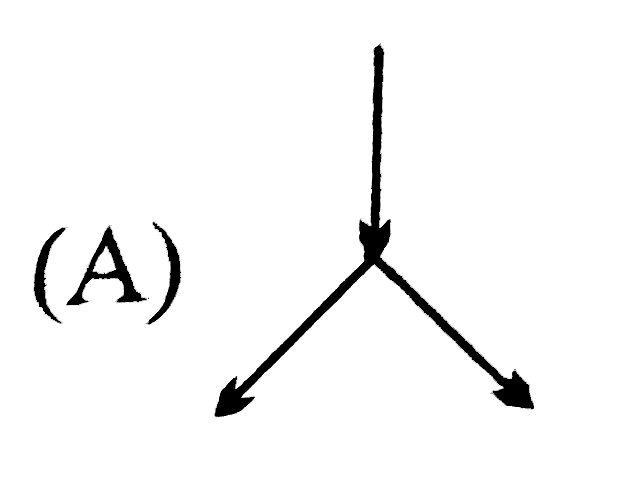
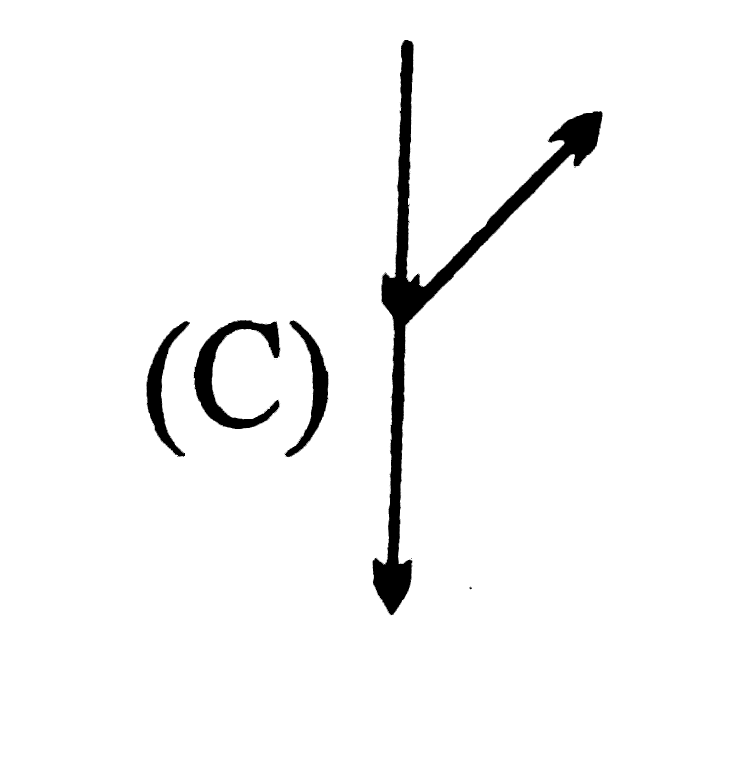
A cloud chamber is a device, which makes the tracks of moving charged particles visible. A light charged particle collides with a nucleus and rebounds elastically. Which of themomentum vector diagrams shown below indicates the event to a good approximation. |
|
Answer»
|
|
| 16. |
The locus of the poles of the line ax+by+c=0 w.r.t a system of circles x^(2)+y^(2)=lamda where lamda is parameter is |
|
Answer» `ax+by=lamda` |
|
| 17. |
The top and bottom margins of a poster are each 6 cms and the side margins are each 4 cms . If area of the printed material on the poster is fixed at 384 cms^(2), find the dimension of the posterwith the smallest area . |
|
Answer» |
|
| 18. |
Find dy/dx where y={f(x)}^n |
| Answer» | |
| 19. |
There are three coins. One is a two headed coin (having head on both faces), another is a biased coin that comes up heads 75% of the time and third is an unbiased coin. One of the three coins is chosen at random and tossed, it shows head, what is the probability that it was the two headed coin? |
|
Answer» |
|
| 20. |
Find dy/dx where y=(sec^-1x)^2 |
| Answer» | |
| 21. |
Find dy/dx where y=log sin (logx) |
| Answer» | |
| 22. |
Equation of the hyperbola, whose eccentricity 3/2 and foci at (pm2,0) is . . . |
|
Answer» `(X^(2))/(4)-(y^(2))/(5)=4/9` |
|
| 23. |
There are 12 seats in a row of which 4 are to be occupied. Find the number of ways of arranging 4 persons so that There should be atleast 2 empty seats between any two persons. |
|
Answer» |
|
| 24. |
Find the number of terms in the expansion of (2x+3y+z)^(7) |
|
Answer» |
|
| 25. |
There are 12 seats in a row of which 4 are to be occupied. Find the number of ways of arranging 4 persons so that No two persons sit side by side, |
|
Answer» |
|
| 26. |
If sqrt(x+ iy) = pm (a + ib) then sqrt(x-iy) = |
|
Answer» `PM (B +IA` |
|
| 27. |
Find the number of 5 - digit numbers that can be formed using the digits 0,1,1,2,3. |
|
Answer» |
|
| 28. |
If the angle between the lines whose direction cosines are ((2)/(sqrt(21)), (C )/(sqrt(21)), (1)/(sqrt(21))) and ((3)/(sqrt(54)), (3)/(sqrt(54)), (6)/(sqrt(54))) is (pi)/(2) then the value of C is |
|
Answer» 6 |
|
| 29. |
Find the equation of circles determined by the following conditions. The radius is 5 and circle is tangent to both axes. |
|
Answer» Solution :As the circle is tangent to both the axes, we have its centre at (5, 5). `THEREFORE` EQUATION of the circle is or, `(x+-5)^2+(y+-5)^2=25`  or, `x^2+25+-10x+y^2+25+-10y=25` or, `x^2+25+-10x+y^2+25+-10y=25` or, `x^2+y^2+-10x+-10y+25=0` |
|
| 30. |
Find delta f and df when f(x) = (x+1)^3 , x =8, deltax = 0.04 |
|
Answer» Solution :`f(X) = (x+1)^3 , x =8, deltax = 0.04` `deltaf = f(x+deltax)-f(x)` = `(9.04)^3 - (8+1)^3` `= (9.04)^3 -9^3 = 9.7632` Again `DF = (3x+1)^2 dx = 3 xx 9^2 xx 0.04` `243 xx 0.04 = 9.72` |
|
| 31. |
int_(1)^(sqrt3)(dx)/(1+x^(2)) |
| Answer» | |
| 32. |
Statement-1: The slopw of the tangent at any point P on a parabola, whose axis is the axis of x and vertex is at the origin, is inversely proportional to the ordinate of the point P . Statement-2: The system of parabolas y^(2)=4axsatisfies a differential equation of degree 1 and order 1. |
|
Answer» |
|
| 33. |
Discuss the continuity of the function f given by f(x)= |x| " at " x=0. |
|
Answer» |
|
| 34. |
If z_0 lies on the curve zbar(z) - (4 + i) bar(z) - (4 -i) z+13=0 , then |
|
Answer» |
|
| 35. |
If x^(2)+y^(2)-4x-2y+5=0 "and" x^(2)+y^(2)-6x-4y-3=0 are members of a coaxial system of circles, then the centre of a point circle in the system is |
| Answer» ANSWER :A | |
| 36. |
The slope of the normal to the curve y=2x^(2)+3 sin x at x = 0 is |
| Answer» SOLUTION :N/A | |
| 37. |
The set of solutions satisfying both x^(2)+5x+6 ge 0 and x^(2)+3x-4 lt 0 is |
|
Answer» (-4, 1) |
|
| 38. |
Form the differential equation representing the family of curvesgiven by (x - aa)^(2) + 2y^(2) = a^(2),where a is an arbitrary constant. |
|
Answer» |
|
| 39. |
Let R_(+) be the set of all non-negative real numbers. Show that the function f: R_(+) to [4,oo] defind by f(x) = x^(2)+4 Is invertible and write the inverse of f. |
|
Answer» |
|
| 41. |
Intergrate the following inte^x tane^x dx |
|
Answer» Solution :`inte^x tane^x dx` [PUT `e^x=t` then `e^xdx=DT`] `inttant dt` `Inabs(sect) +C` `Inabs(sece^x)+C` |
|
| 42. |
Find angle theta between the vectors veca=hati+hatj-hatkandvecb=hati-hatj+hatk. |
|
Answer» `cos^(-1)"" 1/3` |
|
| 43. |
If P(A)=1//4,P(B)=2//5 then find the range of P(AuuB) |
|
Answer» `(1//5,13//20)` |
|
| 44. |
Find the equation of the circum circle of the triangle formed by the linesx- y -2=0, 2x - 3y + 4=0, 3x - y + 6 =0 |
|
Answer» |
|
| 45. |
Solve system of linear equations , using matrix method if exists 4x-3y+2z=4 3x-2y+3z=8 4x+2y-2z=2 |
|
Answer» |
|
| 46. |
A, A^(1)are the vertices , S, S^(1)are the foci of an ellipse . The tangent at any point 'P' on the ellipse is the external angular bisector of |
|
Answer» `lfloorA^(1)PS` |
|
| 48. |
The matrix A=[(0,0,5),(0,5,0),(5,0,0)] is a : |
|
Answer» SCALAR MATRIX |
|
| 49. |
thevalue of Sigma_(r=2)^(n) (-2)^(r )|{:( ""^(n-2)C_(r-2),,""^(n-2)C_(r-1),,""^(n-2)C_(r)),(-3,,1 ,,1),(2,,-1,,0):}| (n gt 2) |
|
Answer» `2n -1+(-1)^(n)` `S=overset(n)UNDERSET(R=2)(Sigma)(-2)^(r ) |{:(.^(n)C_(r),,.^(n-2)C_(r-1),,.^(n-2)C_(r )),(0,,1,,1),(0,,-1,,0):}|` `=overset(n)underset(r=2)(Sigma) (-2)^(rn)C_(r ) =overset(n)underset(r=0)(Sigma) (-2)^(r" " n)C_(r )-(.^(n)C_(0)-2.^(n)C_(1))` `=(1-2)^(n)-(1-2n) =2n-1+(-1)^(n)` |
|
| 50. |
The volume of a sphere is increasing in volume at the rate of 3pm cm^(3) /sec. The rate of change o its radius when radius is (1)/(2) cm …............ |
| Answer» Answer :A | |