Saved Bookmarks
This section includes 7 InterviewSolutions, each offering curated multiple-choice questions to sharpen your Current Affairs knowledge and support exam preparation. Choose a topic below to get started.
| 1. |
A RADAR signal is beamed towards a planet and its echo is received 7 minutes later. If the distance between the planet and the Earth is 6.3 xx 10^(10) m. Calculate the speed of the signal. |
|
Answer» Solution :The distance of the planet from the Earth `d = 6.3 xx 10^(10)` m Timet = 7 MINUTES = `7 xx 60` s The speed of signalv = ? The speed of SIGNAL `v = (2d)/(t) = (2xx63xx10^(10))/(7xx60) = 3XX10^(8) ms^(-1)` |
|
| 2. |
A body of mass 5kg at rest is acted upon by two mutually perpendicular forces 6N and 8N simultaneously. Its kinetic energy after 10s is |
|
Answer» 100J |
|
| 3. |
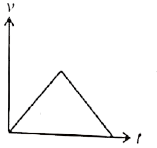
A lift is going up. The total mass of the lift and the passengers is 1500 kg . The variation in the speed of the lift is given by the graph as shown in figure. (a) What will be the tension in the rope pulling the lift at time t equal to (i) 1 sec(ii)6 sec(iii)11 sec? (b) What is the height to which the lift lakes the passengers? What will be the average velocity and the average acceleration during the course of the entire motion? |
|
Answer» |
|
| 4. |
The length of a cylinder is measured as 5cm using a vernier calipers of least count 0.1mm. The percentage error is |
|
Answer» `0.5%` |
|
| 5. |
Figure shows a siphon. The liquid shown is water. The pressure diffeence P_(B)-P_(A) between the points A and B is |
|
Answer» `400N//m^(2)` |
|
| 6. |
An engine develops 10KW of power. How much time will it take to lift a mass of 200kg to a height of 40m. (g= 10ms^(-2)) |
|
Answer» 4s |
|
| 7. |
A sphere is rolling down a plane of inclination theta to the horizontal. The acceleration of its centre down the plane is |
|
Answer» `g sin theta` `a=(g sin theta)/(1+(I)/(mR^(2)))or alt gsin theta` . |
|
| 8. |
A uniform rod of mass M_(1)is hinged at its upper end. A particle of mass M_(2)moving horizontally strikes the rod at its mid point elastically. If the particle comes to rest after collision, the value of (M_(1))/(M_(2)) is - |
|
Answer» `(3)/(4)` `omega=(2M_(2)v)/(2M_(1)L)""…(1)` for `e=1, v_(CM)=v -(omegaL)/(2)""…(2)` `RARR (2V)/(L)=(3M_(2)v)/(2M_(1)L)` `rArr (M_(1))/(M_(2))=(3)/(4)` |
|
| 9. |
A motor car A is travelling with a velocity of 20 m/s in the north-west direction and another motor car B is travelling with a velocity of 15 m/s in the north-east direction. The magnitude of relative velocity of B with respect to A is |
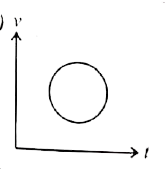
|
Answer» 25 m/s |
|
| 10. |
Mention any two arbitrary initial conditions in order to determine the linear simple harmonic motion. |
| Answer» Solution :Initial position and VELOCITY or amplitude and phase of ENERGY and phase are two ARBITRARY initial conditions to determine SHM SUFFICIENTLY. | |
| 11. |
What type of quantity is Avogadro's number ? |
|
Answer» SOLUTION :Avogadro's NUMBER is a dimensionless CONSTANT MEASURED in `"MOLE"^(-1)` |
|
| 12. |
Is it possible to heat a body without causing any rise in temperature ? |
| Answer» SOLUTION :YES, during change of phase there is no RISE in temperature. | |
| 13. |
The upper half an inclined plane of inclination q is perfectly smooth while the lower half is rough. A block starting from rest at the top of the plane will again come to rest at the bottom. The coefficient of friction between the block and the lower half of the plane is given by |
|
Answer» `MU = 2 TAN THETA ` |
|
| 14. |
When dancer dancing on ice folds her hands into body its speed increases as moment of inertia decreases. |
|
Answer» |
|
| 15. |
While reading the temperature of body, only the bulb is immersed in it. The percentage error committed while calculating the length of the mercury column corresponding to a temperature rise Delta T°C, ignoring the expansion of glass bulb will be (volume expansivity of mercury is 182 xx 10^(-6)//°C and linear expansivity of glass is 8.3 xx 10^(-6)//°C ) |
|
Answer» `5%` |
|
| 16. |
Explain Aerofoil or lift in aircraft wing . |
|
Answer» Solution :In figure an aerofoil is shown , which is a solid piece SHAPED to PROVIDE an UPWARD dynamic lift when it moves horizontally through air . The cross section on the wings of an aeroplane looks somewhat like the aerofoil (shown in figure ) with streamlines around it. When the aerofoil moves against the wind, the orientatin of the WING RELATIVE to flow direction causes the streamlines to crowd together above the wing more then those below it . The flow speed on top is higher than that below it . Thisbalances the weight of the plane. |
|
| 17. |
Compute the distancebetween anti-node and neighbouring node . |
| Answer» SOLUTION :For `n^(TH)` mode , the distance between antinode and NEIGHBOURING NODE is `DELTA x_(n) = ((2n+ 1)/(2)) (lambda)/(2) - n (lambda)/(2) = (lambda)/(4)` | |
| 18. |
Action and reaction can never balance out because |
|
Answer» they are equal but not opposite ALWAYS |
|
| 19. |
Distinguish between macrocosm and microcosm. |
Answer» SOLUTION :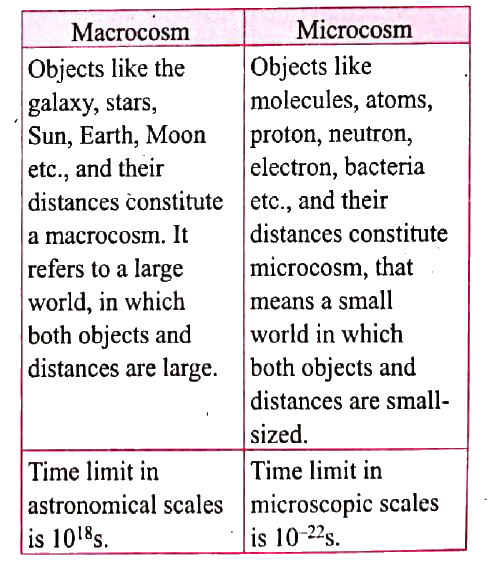
|
|
| 20. |
An iron wire of length 4m and diameter 2mm is loaded with a weight of 8kg. If the Young's modulus 'Y' for iron is 2xx10^11 Nm^(-2)then the increase in length of the wire is |
| Answer» Answer :2 | |
| 21. |
When boiling water is put in a thick bottomed drinking glass,the glass cracks.Why? |
| Answer» Solution :Due to poor CONDUCTIVITY of GLASS,the inner and outer SURFACES of the glass SUFFER unequal expansion.So it CRACKS. | |
| 22. |
(A): A work done in moving a body over a closed loop is zero for every force in nature. (R ): Work done depend on nature of force. |
|
Answer» Both 'A' and 'R' are TRUE and 'R' is the CORRECT explanation of 'A's |
|
| 23. |
Express the given angles into radian. (a) 1^(@) (b) 12 sec. |
|
Answer» Solution :(a) We know, `(2pi) "rad" = 360^(@)` `1^(@)=((PI)/(180))"rad"` `IMPLIES 1^(@)=1.74xx10^(-2)"rad"` (b) `1^(@)= 60.= 3600..` `implies 1..= (1^@)/(3600)` `implies 12..=12xx((1)/(3600))^(@)` `implies 12.. = 12xx(1)/(3600)xx1.74xx10^(-2)"rad"` `cong 5.8xx10^(-5)"rad"`. |
|
| 24. |
What is the work done by the centripetal force in circular motion ? |
| Answer» Solution :The workdone by a centripetal FORCE in circular MOTION is ZERO. | |
| 25. |
The gravitational field in a regioin is given by vecE=(5hati+12hatj)N//kg , The change in gravitational potential energy if a particle of mass 1 Kg is taken from the origin to the point (12m, 5m) . |
|
Answer» SOLUTION :`DeltavecU="m"int_("(0,0)")^("(12,5)")vecE.vec(dr)=int_("(0,0)")^("(12,5)")(E_(x)hati+E_(y)hatj).(dxhati+dyhatj)` `=int_(0)^(12)E_(x)dx+int_(0)^(5)E_(y)dy=int_(0)^(12)5dx+int_0^512dy` `=5x]_(0)^(12)+12y]_0^5=60+60=120J` |
|
| 26. |
At what position of a body executing shm its acceleration (i) maximum and (ii) zero. |
| Answer» Solution :(i) at the EXTREME POSITIONS (ii) at the EQUILIBRIUM position | |
| 27. |
Frequency of variation of kinetic energy of a simple harmonic motion of frequency n is |
|
Answer» 2n |
|
| 28. |
Two wires of the same material and same length but diameters in the ratio (1 : 2) are stretched by the same force. The potential energy per unit volume of the two wires will be in the ratio ......... |
|
Answer» Solution :The potential energy per unit volume `u = 1/2 (("stress") ^(2))/( " Young.s modulus") = (S ^(2))/( 2 Y) ""...(1)` In stress `S = F/A, F` is CONSTANT `therefore S prop (1)/(A)` `therefore (S_(1))/( S _(2)) = (A_(2))/( A _(1)) = (pi D _(2) ^(2))/( pi D _(1) ^(2)) = ((D _(2))/( D _(1)) ) ^(1) ""...(2)` Both the wires are of same MATERIAL so their Young.s modulus is ALSO same So from equation (1) `u prop S ^(2)` `(u _(1))/( u _(2)) = ((S _(1))/( S _(2)) ) ^(2)` ` = ((D _(2))/( D _(!))) ^(4)` (From equation (2)) `= ((2)/(1)) ^(4) = (16)/(1)` `therefore u _(1) : u _(2) =16:1` |
|
| 29. |
When the average acceleration of the particle becomes instantaneous acceleration ? |
| Answer» SOLUTION :When the ACCELERATION is CONSTANT. | |
| 30. |
When a cricket player catches the ball he pulls hishand gradually in the direction of the ball 's motion given reason |
| Answer» SOLUTION :If hestopshishandssoonaftercatching theballthenhe ballcomesto restveryquicklyHencetheaverageforceactingon the bodywillbe verylarge. DUE tothislargeaverageforcethehandswillgethurt . THEPLAYER bringthe BALLTO restslowlyto AVOID gettinghurt. | |
| 31. |
The motion of a particle along the x-axis is described by the following velocity function v(t)={:{((t^(3)+t^(2)+1),0 le t lt 3,"sec"),((2t+5),3 le t lt 5,"sec"),((t^(2)-6t),5 le t,"sec"):} where v is in m/sec and t is in second If initially, the particle was at x=0, then the position of particle at t=2 second will be |
|
Answer» 10 m |
|
| 32. |
A L shaped, uniform rod has its two arms of length l and 2l. It is placed on a horizontal table and a string is tied at the bend. The string is pulled horizontally so that the rod slides with constant speed. Find the angle thetathat the longer side makes with the string. Assume that the rod exerts uniform pressure at all points on the table. |
|
Answer» |
|
| 33. |
The motion of a particle along the x-axis is described by the following velocity function v(t)={:{((t^(3)+t^(2)+1),0 le t lt 3,"sec"),((2t+5),3 le t lt 5,"sec"),((t^(2)-6t),5 le t,"sec"):} where v is in m/sec and t is in second Which of the following statements is true ? |
|
Answer» INITIAL VELOCITY of the PARTICLE is zero |
|
| 34. |
A structurual steel rod has a radius of 10 mm and a length of 1.0 m. A 100 kN force stretches it along its length. Calculate (a) stress, (b) elongation, and (c ) strain on the rod. Young's modulus. Of structural steel is 2.0xx10^(11)" N "^(-2). |
|
Answer» Solution :We assume that the rod is held by clamp at one end, and the force F is applied at the other end, parallel to the length of the rod. Then the stress on the rod is given by stress = ` (F)/(A)= (F)/(pi r^(2))= (100 XX 10^(3))/(3.14 xx (10^(-2))^(2))= 3.18 xx 10^(8) NM^(-2)` The elongation ` Delta L = ((F//A)L)/(Y)` `=((3.18 xx 10^(8)) (1))/(2 xx 10^(11))= 1.59 xx 10^(-3)m ` `= 1.59 MM` The strain is given by Strain = `Delta L // L = (1.59 xx 10^(-3))//(1)` ` = 1.59 xx 10^(-3)= 0.16 %` |
|
| 35. |
The motion of a particle along the x-axis is described by the following velocity function v(t)={:{((t^(3)+t^(2)+1),0 le t lt 3,"sec"),((2t+5),3 le t lt 5,"sec"),((t^(2)-6t),5 le t,"sec"):} where v is in m/sec and t is in second The chagne in acceleration of particle from t=3 sec to t=4 sec is |
| Answer» Answer :C | |
| 36. |
A liquid flows through a horizontal tube. The velocities of the liquid in the two sections which have area of cross section A_(1) and A_(2) are v_(1),v_(2) respectively. The difference in the levels of liquid in the two vertical tubes is h. |
|
Answer» <P>the volume of liquid flowing through the TUBE in unit time is `A_(1)v_(1)` `(P_(1))/(rho)+(v_(1)^(2))/(2)=(P_(2))/(rho)+(v_(2)^(2))/(2)impliesP_(1)-P_(2)=(rho)/(2)(v_(2)^(2)-v_(1)^(2))` `impliesv_(2)^(2)-v_(1)^(2)=2gh` The energy per unit mass of the liquid is the same in both sections. |
|
| 37. |
(A): Specific heat is defined as the amount of heat required to raise the temperatrue of unit mass of the substance through unit degree. (R): A gas has unique value of specific heat |
|
Answer» Both (A) and ( R) are true and (R ) is the CORRECT explanation of (A) |
|
| 39. |
A ball moving along a straight line collides elastically with another stationary ball of the same mass. At the moment of collision, the angle between the straight line passing through the centres of the balls and the direction of tr initial motion of the striking ball is theta, find the fraction of the kinetic energy of the striking ball converted into potential energy at the moment of the maximum deformation. |
Answer» Solution :Let a ball `A` of mass `m` moving with velocity `vecv` collide with stationary ball `B` as shown in figure. As there is no external force, the linear momentum is conserved. As collision is two dimentional, the `x` and `y` components of the linear momentum are separately conserved.  Let `vecv_(1)` and `vecv_(2)` be the velocities of the particle after collision. Then conservation of linear momentum along `x` - axis gives `"mu"costheta=mv_(1x)+mv_(2x)` `impliesv_(1x)+v_(2x)=ucostheta`..........i and conservation of linear momentum along `y`-axis gives `"mu"costheta=mv_(1x)+mv_(2y)` `impliesv_(1y)+v_(2y)=usintheta`............ii ltbr. at the moment of maximum deformation `implies v_(1xy)=v_(2x)=(ucostheta)/2` [using eqn i ] and the TANGENTIAL velocities iof balls before and after collision should be equal. `usintheta=v_(1y)` and `v_(2y)=0` Initial `KE E_(i)=1/2"mu"^(2)` Final `KE` `E_(f)=1/2mv_(1x)^(2)+1/2mv_(1y)^(2)+1/2mv_(2x)^(2)+1/2mv_(2y)^(2)` `=1/2m(v_(1x)^(2)+v_(2x)^(2))+1/2mv_(1y)^(2)+/2mv_(2y)^(2)` `mv_(1x)^(2)+1/2mv_(1y)^(2) +0` (since `v_(1x)=v_(2x))` `=m((ucostheta)/2)^(2)+1/2m(usintheta)^(2)` `=1/4"mu"^(2)cos^(2)THETA+1/2"mu"^(2)sin^(2)theta` `=1/2"mu"^(2){1/2cos^(2)theta+sin^(2)theta}` `=1/2"mu"^(2){cos^(2)theta+sin^(2)theta-1/2cos^(2)theta}` `=1/2"mu"^(2){1-1/2cos^(2)theta}` Fraction of `KE` converted into `PE` at the moment of maximum deformation `f=(E_(i)-E_(f))/E_(i)=(1/2mu^(2)-1/2"mu"^(2)(1-(cos^(2)theta)/2))/(1/2mu^(2))=(cos^(2)theta)/2` Here `theta=45^(@)`, `:. f=(cos^(2)45^(@))/2=1/4=0.25` |
|
| 40. |
The surface energy of liquid film on a ring of area 0.15 m^(2) is (surface tension of liquid is equal to Nm^(-1)) |
|
Answer» 0.75J |
|
| 41. |
Particles of masses 1gm, 2gm, 3gm and 4 gm are placed at x = 1 cm, x = 2cm, x = 3 cm, x = 4 cm respectively. Then X_(cm)= |
| Answer» Answer :C | |
| 42. |
A particle is moving a circular path in xy-plane. When it crosses x-axis, it has an acceleration along the path of 1.5 m//s^(2), and is moving with a speed of 10 m/s in -ve y - direction. The total accelration is |
|
Answer» `50hat(i) - 1.5hat(J) m//s^(2)` |
|
| 43. |
A particle experiences a perfectly elastic collision with a stationary particle. Determine the ratio of their masses, if after this head-on collision, the particles fly apart in opposite directions with equal speeds. |
|
Answer» |
|
| 44. |
Which of the following pairs of physical quantities may be represented by the same unit? |
|
Answer» Heat and Temperature |
|
| 45. |
A block of mass 'm' is placed on the floor of a lift, moving upward with an uniform acceleration a = g. (muis the coefficient of friction between block and the floor of lift). If a horizontal force of umg acts on the block, then horizontal acceleration of the body is ....... |
|
Answer» 2 |
|
| 46. |
A rod with rectangular cross section oscillates about a horizontal axis passing through one of its ends and it behaves like a seconds pendulum, its length will be 1.5 m |
| Answer» ANSWER :A | |
| 47. |
A sphere falls on a stationary horizontal plane from some height, after bouncing off the surface it comes back to the plane again after 1 s. if the coefficient of restitution is 1/4 find the initial height from which the sphere had fallen. |
|
Answer» |
|
| 48. |
Supposing Newton's Law of gravitation for gravitation forces F_1 and F_2between two masses my and m, at positions r_1 and r_2readF_1=-F_2=-(r_(12))/(r_(12^3))GM_0^2((m_1m_2)/(M_0^2))^(2) where M_0is a constant of dimension of mass,r_(12) =r_1 -r_2and n is a number. In such a case, |
|
Answer» the ACCELERATION DUE to GRAVITY on the earth will be different for different objects `r_(12) =r_1-r_2` Acceleration due to gravity, `g=(|F|)/("mass")` `=(GM_0^2(m_1m_2)^n)/(r_(12)^2(M_0)^(2n))xx1/(("mass"))` Here, g is not constant , HENCE constant of proportionality will not be constant in Kepler.s third law . Hence , Kepler.s third law will be invalid But, first two Kepler.s laws will be valid. For negative, n g = `(GM_0^2(m_1m_2)^(n))/(r_(12)^(2)(M_0)^(-2n))xx1/(("mass"))` `=(GM_0^(2(1=1)0)(m_1m_2)^(-n))/(r_12^(2)""(mass))` `g=(GM_0^2)/(r_12^2)((M_0^2)/(m_1m_2))^nxx1/((mass))` Here, `M_0 gt m_1 "or " m_2`. So that `g gt 0` , hence is this case situation will reverse i.e. object lighter than water will sink in water. |
|
| 49. |
A planet moves around the sun in nearly circular orbit. Its period of revolution 'T' depends upon. (i) radius 'r' or orbit, (ii) mass 'm' of the sun and. (iii) The gravitational constant G show dimensionally that T^(2) prop r^(3). |
|
Answer» Solution :Let `T=Kr^(a)M^(b)G^(c )"…(1)"` Where `K=a` dimensionless constant dimensions of the various quantities are [T] `=T,[r]=L, [M]=M` `[G]=(FR^(2))/(m_(1)m_(2))=(MLT^(-1)L^(2))/(MM)` `=M^(-1)L^(3)T^(-2)` Substituting these dimensionally in equation (1) we get, `[T]=[L]^(a)[M]^(b)[M^(-1)L^(3)T^(-2)]^(c )` `M^(0)L^(0)T^(1)=M^(b-c)=M^(b-c)=M^(b-a)L^(a+3c)T^(-2c)` Equating the dimensions of M, L and T, we get `b-c=0, a+3c=0,-2c=1` on solving, `a=(3)/(2), b=-(1)/(2), c=-(1)/(2)` `THEREFORE T=Kr^(3//2)M^(-1//2)G^(-1//2)` or `T^(2)=(K^(2)R^(3))/(MG)rArrtherefore T^(2) prop r^(3)` |
|
| 50. |
A small sphere of mass m suspended by a thread is first takena side, so that the thread forms the right angle with the vertical and then released, then which options are correct (Here thetaimplies is the angle of deflection) |
|
Answer» Thetotal acceleration of the sphere as a functionof `THETA` is `gsqrt(1+3cos^(2)theta)` |
|