Saved Bookmarks
This section includes 7 InterviewSolutions, each offering curated multiple-choice questions to sharpen your Current Affairs knowledge and support exam preparation. Choose a topic below to get started.
| 1. |
In a single slit diffraction the distance between the first minima on either side of the central maximum is 5mm. The screen is place data distance of 75 cm from the slit and the wavelength of light used is 546nm. Calculate the slit width. |
|
Answer» Solution :Distance between FIRST MINIMUM and central maximum`y=5/2=2.5mm=2.5xx10^(-3)m` We have `THETA=(n lamda)/a, n=1`and `lamda=546xx10^(-9)m` Also `theta=Y/D, D=75cm=75xx10^(-2)m` `:.(n lamda)/a=y/d` `a=(nlamdaD)/y=(75xx10^(-2)xx1xx546xx10^(-9))/(2.5xx10^(-3))` i.e. slit WIDTH`a=1.638xx10^(-4)m=0.1638mm` |
|
| 2. |
In the circuit shown in figure charge stored in the capacitor of capacity 5mufis |
|
Answer» `16muC` |
|
| 3. |
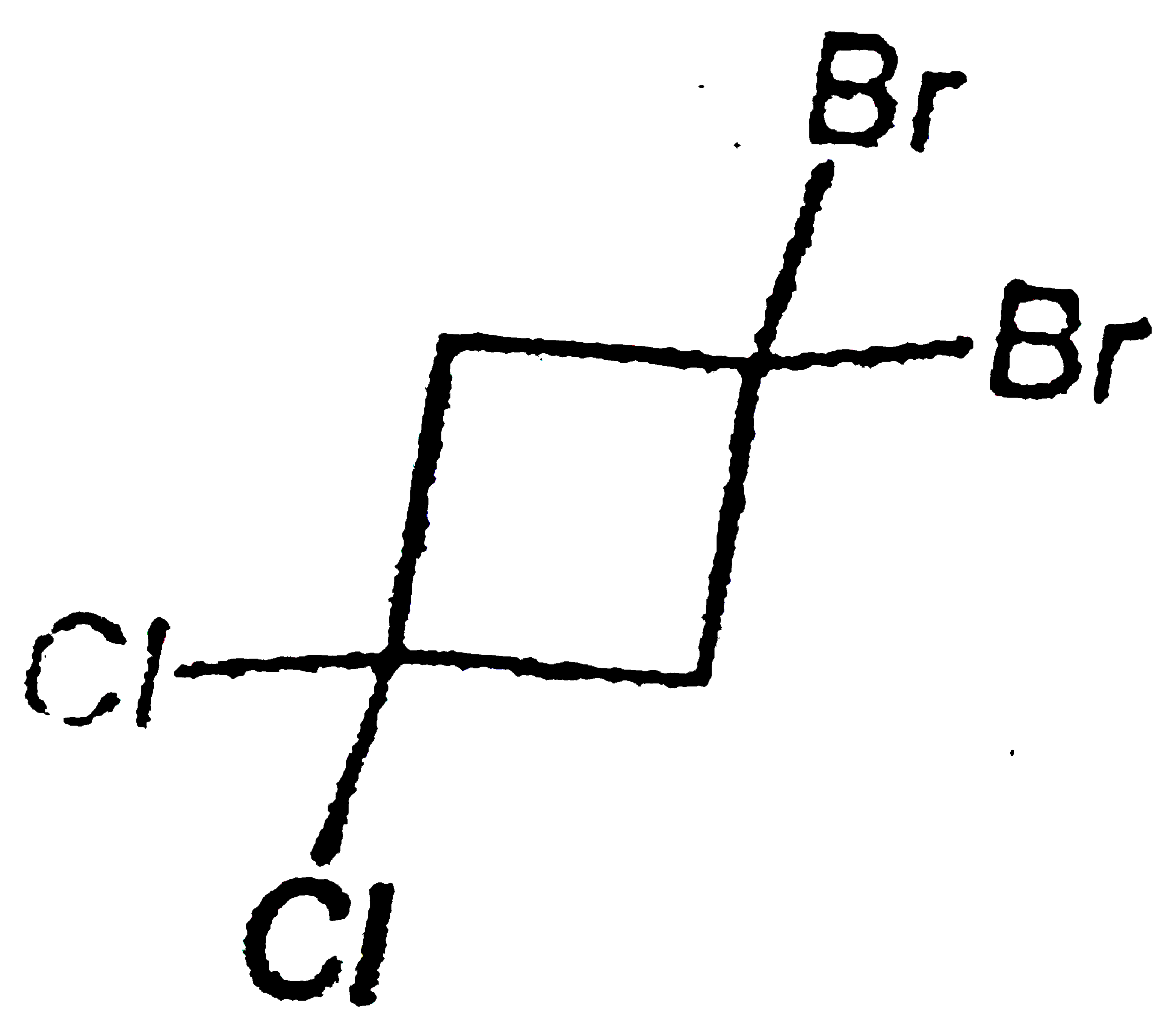
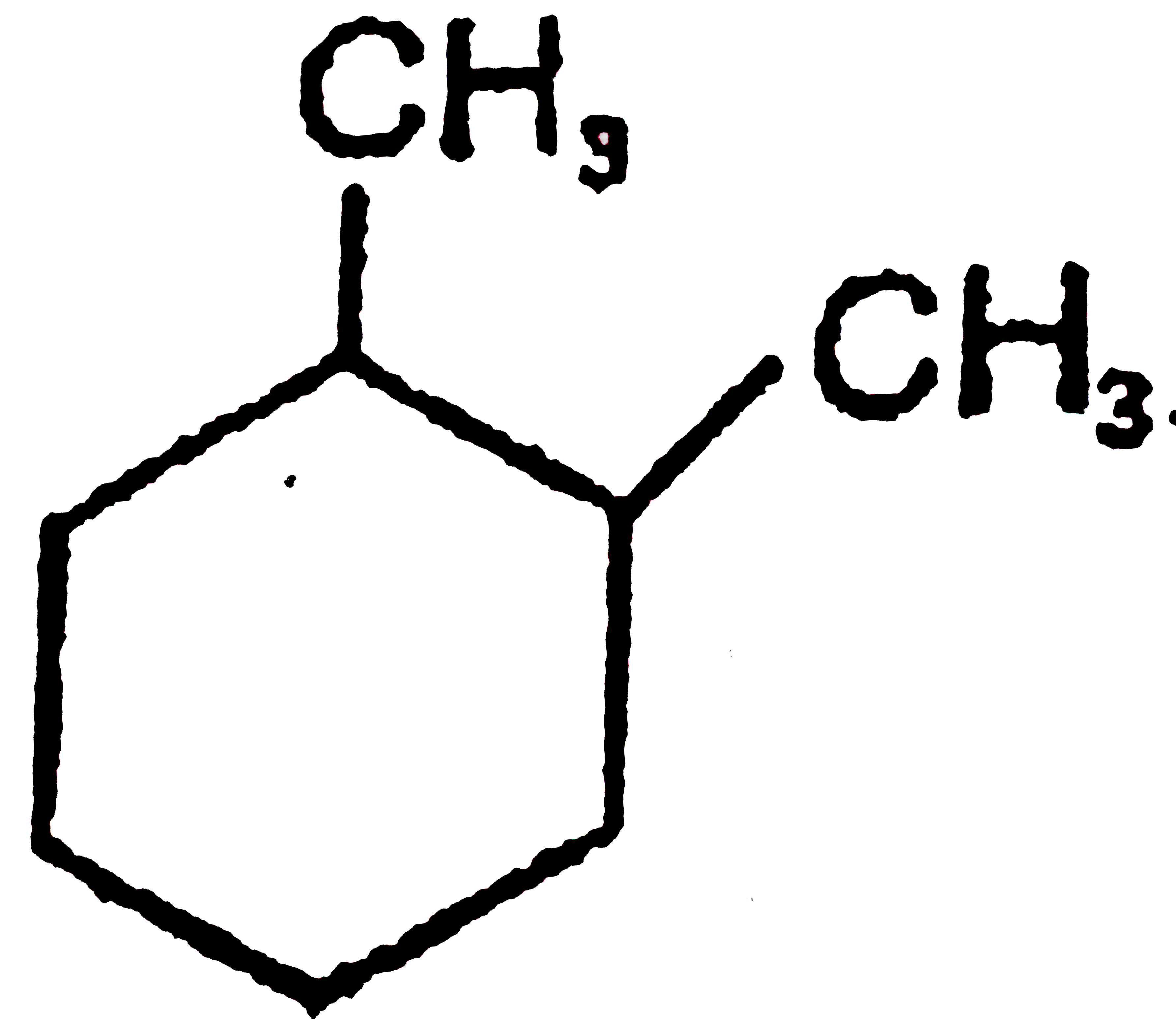
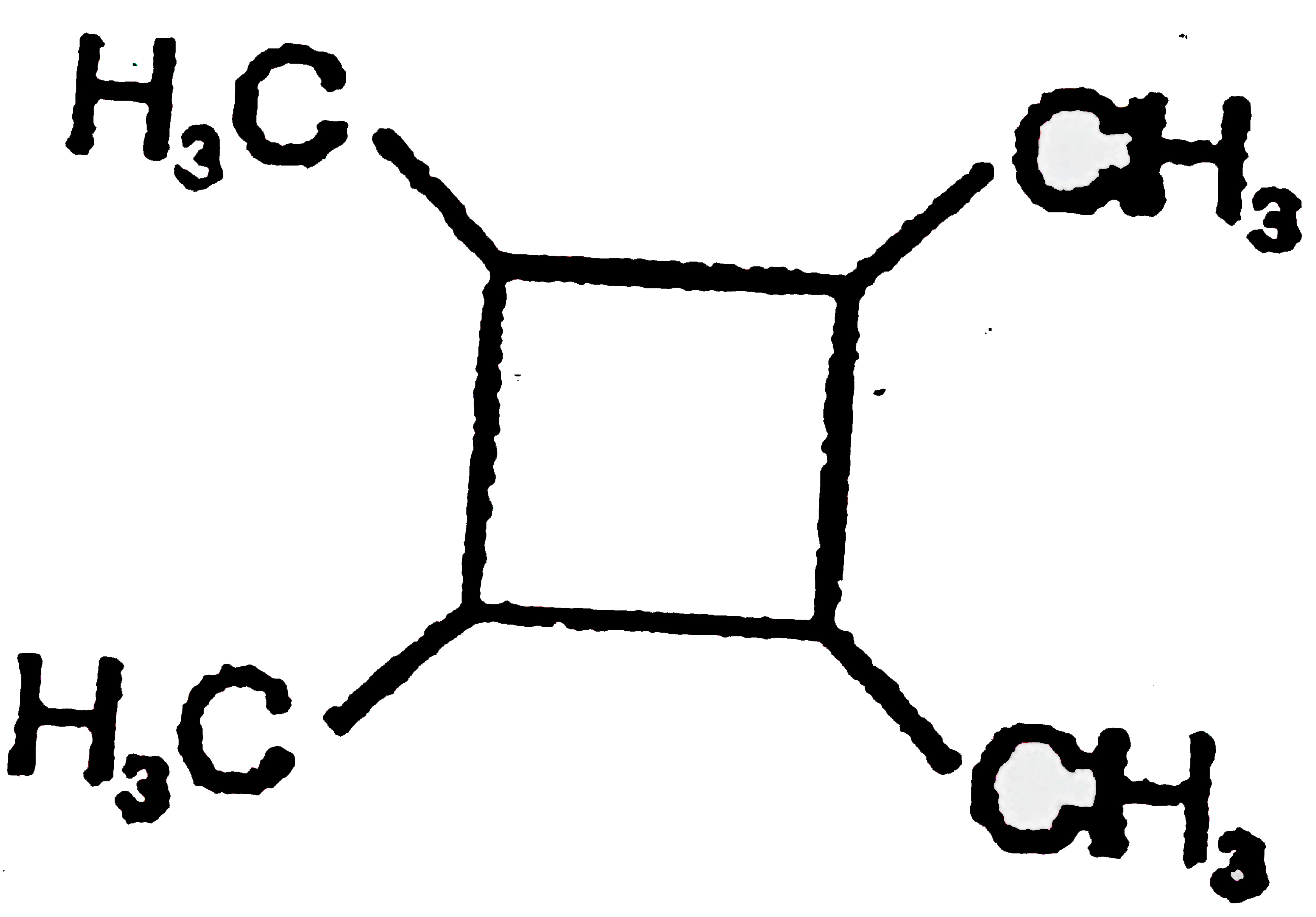
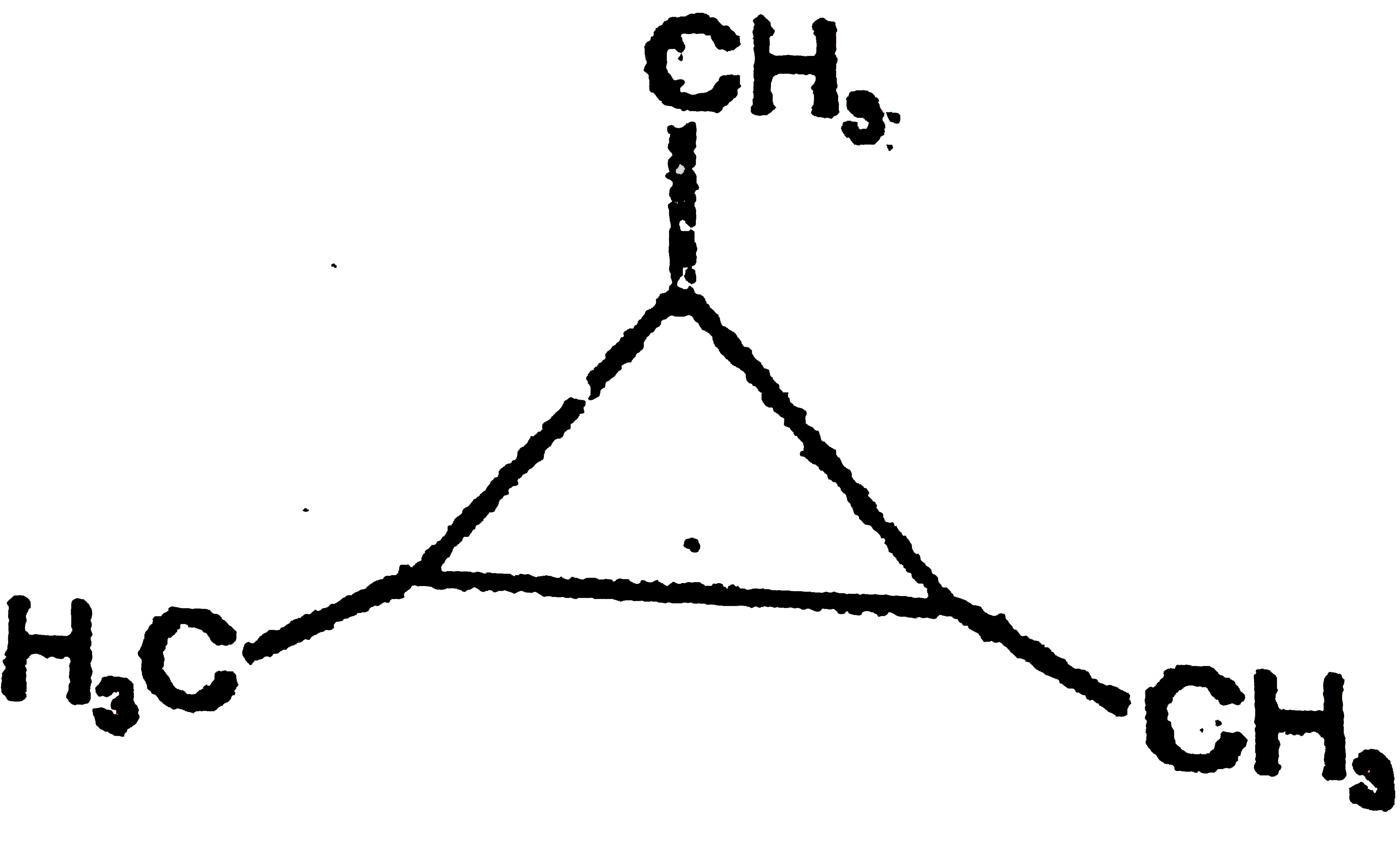
Which of the following compound can not show geometrical isomerism ? |
|
Answer»
|
|
| 4. |
The induced emf is sometimes called back emf. Why? |
| Answer» SOLUTION :It is because INDUCED emf OPPOSES the APPLIED voltage. | |
| 5. |
A rocket I fired upwards vertically with a net acceleration of 4m//s^(2) and initial velocity zero.After 5 seconds its fuel is finsihed and it deccelerated with g.At the highest point its velocity becomes zero. There after it accelerates downwards with acceleration g and return back to ground. i)Plot velocity-time graph for complete journey ii)Displacement-time graph for the complete journey. (Take g=10m//s^(2)) . |
|
Answer» Solution :STAGE:1To find velocity of ROCKET after 5 seconds. `V_(A)=0+at_(OA)=(4)(5)=20MS^(-1)` StageII:To find further TIME of ascent after 5 seconds . 0=2 `"gt"_(AB)""therefore t_(AB)=(20)/(10)=2seconds` Here,the total vertical displacement of stage (i) and Stage (ii) is=area of OAB `=(1)/(2)(7)(20)=70 m.` 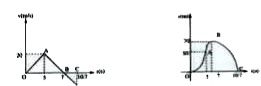
|
|
| 6. |
Pollen grain has a prominent two layered wall. The inner wall Is made up of |
|
Answer» CELLULOSE and pectin |
|
| 7. |
Suppose while sitting in a parked car, you notice a jogger approaching towards you in the side view mirror of R = 2 m. If the jogger is running at a speed of 5 m s^(-1), how fast the image of the jogger appear to move when the jogger is (a) 39 m, (b) 29 m, (c) 19 m, and (d) 9 m away. |
|
Answer» Solution :From the mirror equation, Eq. (9.7), we get `v=(fu)/(u-F)` For convex mirror, since R = 2 m, f = 1 m. Then for `u=-39m, v=((-39)xx1)/(-39-1)=(39)/(40)m` Since the jogger moves at a constant speed of `5 m s^(-1)`, after 1 s the position of the image v `("for "u = 39 + 5 = 34)` is `(34//35 )m`. The shift in the position of image in 1 s is `(39)/(40)-(34)/(35)=(1365-1360)/(1400)=(5)/(1400)=(1)/(280)m` Therefore, the average speed of the image when the jogger is between 39 m and 34 m from the mirror, is `(1//280) m s^(-1)` SIMILARLY, it can be seen that for `u = -29 m, -19 m and -9 m`, the speed with which the image appears to move is `(1)/(150)ms^(-1),(1)/(60)ms^(-1) and (1)/(10)ms^(-1)`, respectively. Although the jogger has been moving with a constant speed, the speed of his/her image appears to INCREASE substantially as he/she moves closer to the mirror. This phenomenon can be noticed by any person sitting in a stationary car or a BUS. In case of moving vehicles, a similar phenomenon could be observed if the vehicle in the rear is moving closer with a constant speed. |
|
| 8. |
The force of repulsion between two like or point charges + 2C and + 6C is 12 N, when charge q is added to both, the force of attraction between them will be 4 N, so q =......C. |
|
Answer» `+4` `therefore F_(1)/F_(2) = (q_(1)q_(2))/(q_(1)^(.)q_(2)^(.))` `therefore -12/4 = ((2)(6))/((2+q)(6+q))` (By TAKING repulsive force .-ve and attractive force .+ve.) `therefore 12 + 8Q + q^(2) =-4` `therefore q+4=0` `therefore q=-4 C` |
|
| 9. |
A proton enters a magnetic field of flux density 1.5Wb/m^2with a speed of 2×10^7m/s at angle of 30^owith the field. Find the force on the proton . |
|
Answer» `[2.4 * 10^(-12)]` N |
|
| 10. |
A rod of length 20 cm carries a charge of +150 muC that is uniformly distributed along its length. Find the electric field intensity at a point, which is 20 cm away from both the ends of the rod. |
| Answer» SOLUTION :`3.9xx10^7` N/C | |
| 11. |
A magnet NS is suspended from a spring and while it oscillates, the magnet moves in and out of the coil C. The coil is connected to a galvanometer G. Then as the magnet oscillates, |
|
Answer» G shows DEFLECTION to the left and right with constant amplitude |
|
| 12. |
(a) A circular coil of 30 turns and radius 8.0 cm carrying a current of 6.0 A is suspended vertically in a uniform horizontal magnetic field of magnitude 1.0 T. The field lines make an angle of 60^@ with the normal of the coil. Calculate the magnitude counter torque that must be applied to prevent the coil from turning. (b) Whould your answer change, if the circular coil in (a) were replaced by a planer coil of some irregular shape that encloses the same area? (All other particulars are also unaltered). |
|
Answer» Solution :Here, `N = 30, R = 8.0 cm = 8 xx 10^(-2) m , I = 6.0 A , theta = 60^@ and B = 1.0 T` (a) `:.` The magnitude of the counter torque = magnitude of the DEFLECTING torque `= N A I B sin theta = N cdot (PI R^2) I B sin theta` `= 30 xx 3.14 xx (8 xx 10^(-2)) xx 6.0 xx 1.0 xx sin 60^@` `= 3.14 N m`. (b) The answer would not change as area enclosed by the coil as WELL all other particulars remain unaltered and the formula `tau = N A I B sin theta` is true for PLANAR coils of any shape. |
|
| 13. |
The temperature coefficient of resistance of a wire is 0.00125 per ""^(@)C. At 300 K, its resistance is 1Omega. The resistance of the wire will be 2Omega at ………………. . |
| Answer» ANSWER :D | |
| 14. |
A bar magnet of moment 'M' is bent into a shape . If the length of the each part is same, its new magnetic moment will be |
|
Answer» `M/sqrt3` `M^(1)=M/sqrt5` |
|
| 15. |
A superconductor exhibits perfect |
|
Answer» FERRIMAGNETISM |
|
| 16. |
The potential difference applied to an X-ray tube is 5 kV and the current through it is 3.2 mA. The number of electrons stricking the target per second is ......(Take e=1.6xx10^(-19)C) |
|
Answer» `4xx10^(16)` `:. n=(It)/(e)=(3.2xx10^(-3)xx1)/(1.6xx10^(-19))` `:.n=2xx10^(16)` |
|
| 17. |
A resistance R is canected to a cell of EMF E and has an internal resistance r as shown in the figure. The voltage across R is measured using an ideal voltmeter and circuit current is measured by an ammeter. A rheostate of negligible resistance is used to vary the current in the circuit. ( ##ANE_RJB_PHY_XII_C03_E03_034_Q01.png" width="80%"> Write down the expression for current in the circuit and voltage across R at any instant. |
| Answer» SOLUTION :`I = E/R + r^1 V= IR` | |
| 18. |
A ray parallel to principal axis, after striking a convex mirror passes through |
|
Answer» CENTER of curvature |
|
| 19. |
A passenger travels along a straight line with a velocity u_1 for the first half time and velocity u_2 for the next half time. What is the average velocity. |
| Answer» SOLUTION :`x=v_1t``y=v_2t` `v_(AV)=(x+y)//2T=(v_1t+v_2t)//2t=(v_1+v_2)//2` | |
| 20. |
An ac generature G with anadjustmentable frequency of oscillation is used in the circuit as shown Thermal energy produced by the reisistance R in time duration 1ms, using the source at resonant condition, is |
|
Answer» 0J |
|
| 21. |
Can an alternating static charge at one end of an iso lated conductor, developed by an alternating current, be detected by a gold-leaf electroscope? |
|
Answer» Solution :Yes, a gold-leaf electroscope can detect alternating STATIC charges. The divergence of the gold leaves in this electroscope DEPENDS only on the magnitude of charge in a test body, not on the nature of charge, i.e., not on whether the charge is positive or negative. The average of this magnitude of charge, over a complete period of the alternating source, has a finite value-this average is never zero. So, when the test body is brought NEAR the disc of a gold-leaf electroscope, this average non-zero value of charge will be the input on the electroscope. The leaves will diverge ACCORDINGLY. |
|
| 22. |
Two small and similar bar magnets have magnetic dipole moment of 1.0 Am^(2) each. They are kept in a plane in such a way that their axes are perpendicular to each other. A line drawn through the axis of one magnet passes through the centre of other magnet. If the distance between their centers is 2 m, find the magnetic field at the mid point of the line joining their centers. |
Answer» Solution :`m= 1Am^(2), d_(1) = d_(2) = 1 m, mu_(0) = 4PI xx 10^(-7) TMA^(-1), B=(?)`  The magnetic field at`d_1` distance on the axis of bar magnet, `B_1 = (mu_0)/( 4pi ). (2m)/( d_(1)^(3) ) = (4pi xx 10^(-7) xx 2 xx 1)/( 4pi xx (1)^(3) )= 10^(-7)` T Magnetic field at a distance `d_(2)` on equator of bar magnet is, `B_(2) = (mu_0)/( 4pi) .(m)/( d_(2) ^(3) ) = (4pi xx 10^(-7) xx 1)/( 4pi xx (1)^(3) ) = 10^(-7)` T The magnetic field at the MID point R of the line joining between TWO centres of magnets, `B= sqrt(B_(1)^(2)+ B_(2)^(2) ) = sqrt((2 xx 10^(-7) )^(2) + (10^(-7) )^(2) )` `therefore B= sqrt((2)^(2) + (1)^(2) xx 10^(-7) ) = sqrt(5) xx 10^(-7)` T |
|
| 23. |
A flow of 10^7 electrons per second in a conducting wire constitutes a curent of |
|
Answer» `1.6xx10^-26 A` |
|
| 24. |
Magnetic field induction at centre of circular coil of radius 5 cm and carrying a current 0.9 A is (in S.I. units) (in_(0)=absolute permittivity of air S.I. units, velocity of light = 3xx10^(8)m/s) |
|
Answer» `1/(in_(0)10^(16))` |
|
| 25. |
How are infrared waves produced? Why are these referred to as 'heat waves'? Write their one improtant use. |
|
Answer» Solution :Infrared rays are produced by hot bodies and molecules. Broadly speaking, Laser, GLOBAR, atc. Are the laboratory sources for the PRODUCTION of infrared rays. This MAY involve vibration and bending of molecules. Infrated BAND lies adjacent to low frequency or long wavelength END of the visible spectrum. Innfrared waves are sometimes referred to as heat waves. Infrared rays are used to take photographs in darkness. |
|
| 26. |
Calculate the energy released by fission from 2 g of ""_(92)^(235)Uin k Wh. Given that the energy released per fission is 200 Mev. |
|
Answer» `4.54 xx10^(4)` kWh |
|
| 27. |
When a nucleus in an atom undergoes radioactive decay, the electronic energy levels of the atom |
|
Answer» Do not CHANGE for any TYPE of RADIOACTIVITY |
|
| 28. |
A bar magnet of magnetic moment p is divided into two equal parts by cutting parallel to its length. the magnetic moment of either piece will be : |
|
Answer» p/4 |
|
| 29. |
To form one AND gate require …….. NOR gates. |
|
Answer» 1 |
|
| 30. |
A step up transformer operates on a 230 V line and a load current of 2 ampere. The ratio of the primary and secondary windings is 1:25. What is the current is the primary? |
|
Answer» Solution :USING the RELATION `(N_(P))/(N_(S))=(I_(S))/(I_(P)),I_(P)=(N_(S)I_(S))/(N_(P))` Here `N_(P)//N_(S)=1//25(or) N_(S)//N_(P)=25//1=25 and I_(S)=2A` CURRENT in primary, `I_(P)=25xx2=50A` |
|
| 31. |
If we see the outside objects by keeping an eye at a depth h inside water, then the value of RADIUS of circle of view for outside objects will be |
|
Answer» `h/SQRT(U^(2)-1)` |
|
| 32. |
The condition for the uniform sphere of mass m of radius r to be a black hole is (G = gravitational constant) : |
|
Answer» `((2Gm)/(r ))^(1//2) ge C` `therefore ((2Gm)/(r ))^(1//2) ge c`. Thus correct CHOICE is (a). |
|
| 33. |
A source of sound producing wavelength 50 cm is moving away from a stationay observer with ((1)/(5) )^(th) speed of sound. Then what is the wavelength of sound received by the observer? |
|
Answer» 55 CM Speed of the sound = v speed of the source , `v_(s) = (1)/(5) ` V As the source is moving away from the stationary OBSERVER, therefore the wavelength of sound received of sound received by the observer is `lambda. = ((v + v_(s))/(v)) lambda= ((V + (1)/(5) v))/(v)lambda` ` = (6)/(5) lambda = (6)/(5) xx 50 ` cm = 60 cm . correct choice is c. |
|
| 34. |
When 100 V dc is applied a coil, a current of 1 Aflows through it. When 100 V 50 Hz ac is applied to the same coil, only 0.5 A flows. The indcutance of the coil is |
|
Answer» 5.5 MH ` Z = (V_(rms))/( 1_(rms)) =(100 V)/(0.5 A )= 200 Omega ` ` As R^(2) + X_(L)^(2)= Z^(2)` ` X_(L)= sqrt(Z^(2) -R^(2)) = sqrt( 200^(2) - 100^(2)) = 100sqrt3 Omega ` As `X_(L) = OmegaL = 2 pi xx 50 xx L ` ` L = ( X_(L))/(100 pi) = (100 sqrt(3))/(100 pi)= 0.55 H` |
|
| 35. |
Figure 8-32 shows a water-slide ride in which a glider is shot by a spring along a water-drenched (frictionless) track that takes the glider from a horizontal section down to ground level. As the glider then moves along the ground-level track, it is gradually brought to rest by friction. The total mass of the glider and its rider is m=200 kg, the initial compression of the spring is d=5.00m, the spring constant is k=3.20xx10^(3) N/m, the initial height is h=35.0 m, and the coefficient of kinetic friction along the ground-level track is mu_(s)=0.800. Through what distance L does the glider slide along the ground-level track until it stops? |
|
Answer» Solution :KEY IDEA First of all we need to examine all the forces and then determinewhat our system should be. Only then can we decide what equation to wirte. Do we have an isolated system (our equation would be for the conservation of energy) or a system on which an external force does work (our equation would relate that work to the system.s change in energy ? Forces : The normal force o the glider from the track does no work on the glider because the direction of this force is always perpendicular to the direction of the glider.sdisplacement. The gravitational force does work on the glider, and because the force is conervative we can associate a POTENTIAL energy with it. As the spring pushes on the glider to get it moving, a spring force does work on it, transferring energy from the elastic potential energy of the compressed spring to kinetic energy of the glider. The spring force also pushes against a rigid wall. Because there is friction between the glider and the ground-level track, the sliding of the glider along that track section increases their thermal energies. 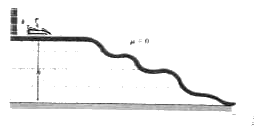 System : Let.s take the system to contain all the interacting bodies: glider, track, spring, Earth, and wall. Then, because all the force INTERACTIONS are within the system, the system is isolated and thus its total energy cannot change. So, the equation we should use is not that of some external force doing work on the system. Rather, it is a conservation of energy. We write this in the form of `E_(mec,2) = E_(mec, 1) - Delta E_(th)`. This is like a money equation : The final money is equal to the initial money minus the amount stolen away by a thief. Here, the final mechanical energy is equal to the initial mechanical energy minus the amount stolen away by friction. None has magically appeared or disappeared. Calculations : Now that we have an equation, let.s find distance L. Let subscript 1 correspond to the initial state of the glider (when it is still on the compressed spring) and subscript 2 correspond to the final state of the glider (when it has come to rest on the ground-level track). For both states, the mechanical energy of the system is the sum of any potential energy and an kinetic energy. We have two types of potential energy : the elastic potential energy `(U_(e) = (1//2 kx^(2))` associated with the compressed spring and the gravitional potential energy `(U_(g) = mgy)` associated with the glider.s elevation. For the latter, let.s take ground level as the reference level. That means that the glider initially at height y = h and finally at height y = 0. In the initial state, with the glider stationary and elevated and the spring compressed, the energy is `E_(mec, 1) = K_(1) + U_(e1) + U_(g1)` `= 0+(1)/(2) kd^(2) = mgh`. In the final state, with the spring now in its relaxed state and the glider again stationary but no longer elevated the final mechanical energy of the system is `E_(mec, 2) = K_(2) + U_(e2) + U_(g2)` `= 0+0+0`. Let.s next go after the change `Delta E_(th)` of the thermal energy of the glider and ground-level track.we can substitute for `Delta E_(th)` with `f_(k)L` (the product of the frictional force magnitude and the distance of rubbing). We KNOW that `f_(k) = mu_(k)F_(N)`, where `F_(N)` is the normal fore. Because the glider moves horizontally through the region with friction, the magnitude of `F_(N)` is equal to mg (the upward force matches the DOWNWARD force). So, the friction.s theft from the mechanical energy amounts to `Delta E_(th) = mu_(k) mgL`. (By the way, without further experiments, we cannot say how much of this thermal energy ends up in the glider and how much in the track. We SIMPLY know the total amount.) `0 = (1)/(2)kd^(2) + mgh - mu_(2) mgL`. and `L = (kd^(2))/(2mu_(k) mg) + (h)/(mu_(k))` `= ((3.20 xx 10^(3) N//m)(5.00 m)^(2))/(2(0.800)(200 kg)(9.8 m//s^(2))) + (35m)/(0.800)` `= 63.3 m` Finally, note how algebraically simple our solution is. By carefully defining a system and realizing that we have an isolated system, we get to use the law of the conservation of energy. That means we can relate the initial and final states of the system with no consideration of the intermediate states. In particular. we did not need to consider the glider as it slides over the uneven track. If we had, instead, applied Newton.s second law to the motion, we should have had to know the details of the track and would have faced a far more difficult calculation. |
|
| 36. |
Inside the solenoid, magnetic field lines in the middle part are ______ |
|
Answer» PARALLEL to axis |
|
| 37. |
what is principle quantum number ? |
| Answer» Solution :In BOHR model of ATOM, only those orbits corresponding to integral VALUES of n are allowed. The INTEGAR n is called principle QUANTUM number. | |
| 38. |
Consider the following statements in case of young's double slit experiment. (1)A slit S is necessary if we use an ordinary extended source of light. (2)A slit S is not needed if we use an ordinary but well collimated beam of light. (3)A slit S is not needed if We use a spatially coherent source of light. Which of the above statements are correct? |
|
Answer» (1),(2) and (3) |
|
| 39. |
The frequency of X - rays, gamma - rays and Ultraviolet rays are respectively a, b and c then |
|
Answer» `AGTB,bgtc` |
|
| 40. |
A metalic spherical shell has an inner radius R_1 andouter radius R_2 . A charge Q is placed at the centre of the spherical cavity. What will be surface charge density on (i) the inner surface and (ii) the outer surface? |
|
Answer» Solution :Due to presence of a charge Q at thecentre of SPHERICAL CAVITY chrage -Qis induced on the inner surface of shell and a charge +Qis induced on the outer surface as shown in (i) ` therefore ` Surface charge density on inner surface `sigma_1 =(-Q)/(A_1) =(-Q)/(4piR_1^(2)) ` (ii) `therefore ` Surface charge density on the outer surface `sigma_2=(+Q)/(A_2) =+(Q)/(4pi R_2^(2))` ` (##U_LIK_SP_PHY_XII_C01_E08_038_S01.png" width="80%"> |
|
| 41. |
Magnetic force exerted on charge moving in magnetic field is _____ |
|
Answer» in the direction of MAGNETIC field. `rArr` Direction of `vecF` will be in the direction of `(vecvxxvecB)`, which is perpendicular to both, `vecv` as WELL as `vecB`. |
|
| 42. |
The relation x= (C)/((T-T_C))for a ferromagnetic material above the Curie's temperature T_C is known as _________ . |
| Answer» SOLUTION :Curie-Weiss LAW | |
| 43. |
In an experiment if the measured values of a physical quantity have a high degrec of closeness to the true value. These measurements are said to be |
|
Answer» both PRECISE and ACCURATE |
|
| 44. |
The refractive index of carbon dioxide at the wavelengths 509, 534 and 589 nm is equal to 1.647, 1.640, and 1.630 respectively. Calculate the phase and group velocities of light in the vicinity of lambda = 534 nm. |
|
Answer» Solution :The PHASE velocity of light in the vicinity of `lambda = 534 NM = lambda_(0)` is obtained as `v(lambda_(0)) = (c )/(n(lambda_(0))) = (3 xx 10^(8))/(1.640) = 1.829 xx 10^(8) m//s` To get the group velocity we need to calaculate `((dn)/(d lambda))_(lambda = lambda_(0))`. we shall use linear interpolation in the two intervals. Thus `((dn)/(d lambda))_(lambda = 521.5) =-(007)/(25) =- 28 xx 10^(-5) pernm` `((dn)/(d lambda))_(lambda = 561.5) =-(01)/(55) =- 18.2 xx 10^(-5) pernm` There `(dn//d lambda)` values have been assigned to the mid-points of the two intervals. INTERPOLATING again we get `((dn)/(d lambda))_(lambda = 534) = [-28 + (9.8)/(40) xx 12.5] xx 10^(-5) per nm =- 24.9 xx 10^(-5) per nm`. FINALLY `u=(c )/(n)-lambda(d)/(d lambda) ((c )/(n)) = (c )/(n) [1+(lambda)/(n) ((dn)/(d lambda))]` At `lambda = 534` `u = (3 xx 10^(8))/(1.640) [1- (534)/(1.640) xx 24.9 xx 10^(-5)] m//s = 1.59 xx 10^(8) m//s` |
|
| 45. |
A stationary observer receives a sound from a source of frequency 2000Hz moving with constant velocity. The apparent frequency varies with as shown in the figure The value of f_(m) is (2300-10x)Hz. Find the value of x. (Take speed of sound =30m//s and neglect the time taken by sound to reach the stationary observer). |
|
Answer» Solution :`t_(m)=(V)/((v-v_(s)costheta)_("min"))xxf` `1800=(v)/((v+v_(s)costheta)_("min"))xxf` On SOLVING `f_(m)=2250 HZ` `=2300-50` |
|
| 46. |
What is magnifying power of simple magnifier? |
|
Answer» Solution :Magnifying power is DEFINED as the RATIO between IMAGE distance to object distance. M = v/u Where v = mage distance. u= object distance. |
|
| 47. |
An infintie nonconducting sheet a surface density of change sigma Around the foot og the perpendicular from a point P a circle of radius r is drawn .Find the valume of r at which the field at P product by changes inside this circle is half of the total strength of the feld due to the entire sheet . The distance of the point P is a from the plane. |
|
Answer» |
|
| 48. |
Earth's magnetic field always has a horizontal component except at |
|
Answer» the equator |
|
| 49. |
Magnetostatic potential energy of a magnet with magnetic dipole moment overset(to)(m), in a uniform magnetic field overset(to)(B) is given as …... |
|
Answer» `overset(to)(m).overset(to)(B)` `therefore U= - overset(to)(m).overset(to)(B)` |
|