Saved Bookmarks
This section includes 7 InterviewSolutions, each offering curated multiple-choice questions to sharpen your Current Affairs knowledge and support exam preparation. Choose a topic below to get started.
| 1. |
Derive an expression for electric potential energy of a systemm of charges in an electric field. |
|
Answer» <P> Solution :CONSIDER an electric dipole in an uniform electric FIELD `vec(E)` with its dipole moment `vec(p)` making an angle `theta` with the field as shown in fig.The torque acting on the dipole is `tau = pE sin theta` ………(1) If the dipole is rotated through a small angle `d theta` against the torque acting on it, the small amount og work DONE during this process is `d W = tau d theta` .......(2) From (1) `dW = p E sin theta d theta` .........(3) `therefore` The total amount of work done in rotating the dipole from its orientation `theta_(1)` to `theta_(2)` is `W = underset(pi//2)overset(theta)int pE sin theta` `= pE [-cos theta]_(pi//2)^(theta)` `= pE[-cos theta - cos""(pi)/(2)] "" | therefore cos""(pi)/(2) = 0` `W = -pE cos theta` ..........(3) This work done is stored as the ELECTROSTATIC potential energy of the dipole `therefore U = -pE cos theta` `U = -vec(p).vec(E)` 
|
|
| 2. |
A non-relativistic electronoriginates at a point A lyingon the axis of a striaghtsolenoidand moveswith velocity v at an angle alphato the axis. The magnetic induction of the field is equal to B. Findthe distance r fromthe axisto the point onscreen intowhichthe electronstrickes. The screeen into which the electronstrikes. Thescreen is orientedat rightangles to the axisand is located at a distance l fromthe point A. |
|
Answer» Solution :Let us take the point `A` as the origin`O` and the axis of the solenoid as z-axis. At an arbitary moment of time let us resolvethe VELOCITY of electroninto its two recantgularcomponents, `vec(v_(|\|))` alongthe axis and `vec(v_(_|_))` to the axisof solenoid. We know the magnetic force does no work, so thekineticenergy as well as thespeed of theelectron `|vec(v_(_|_))|` will remain constant in the `x-y` plane. THUS `vec(v_(_|_))` can change only its DIRECTION as shwon in the Fig. `vec(v_(|\|))` will remain constant as it is parallel to `vec(B)`. Thus at `t = t` `v_(x) = v_(_|_) cos omega t = v sin alphacos omega t` `v_(y) = v_(_|_) sin omega t = v sin alpha sin omega t` and `v_(z) = v cos alpha`, where `omega = (eB)/(m)` As at `t = 0`, we have `x = y = z = 0`, so the MOTION law of the electron is. `{:(z=v cos alpha t),(x=(v sin alpha)/(omega) sin omega t),(y=(v sin alpha)/(omega)(cos omega t-1)):}]` (The equcation of the helix) On the SCREEN, `z = l`, so `t = (l)/(v cos alpha)`, Then `r^(2) = x^(2) + y^(2) = (2 v^(2) sin^(2) alpha)/(omega^(2)) (1 - "cos" (omega l)/(v cos alpha))` `r = (2 v sin alpha)/(omega)|"sin"(omega l)/(2 v cos alpha)| = 2 (mv)/(eB) sin alpha| "sin"(l eB)/(2 mv cos alpha)|` |
|
| 3. |
A body of mass 5kg is under the action of 50N on the horizontal surface. If coefficient of friction in between the surfaces is one, the distance it travels in 3 s is |
|
Answer» 2m |
|
| 4. |
Two charged particles are fixed to an x axis : Particle 1 of charge q_(1) = 2.1 xx 10^(-8) C is at position x = 20 cm and particle 2 of charge q_(2) = -4.00 q_(1) is at position x = 70 cm. (a) At what coordinate on the axis (other than at infinity) is the net electric field produced by the two particles equal to zero ? (b) What is the zero-field coordinate if the particles are interchanged ? |
| Answer» SOLUTION :(a) -30 CM, (B) 120 m | |
| 5. |
Water is flowing in a river at 2 ms^(-1). The river is 50 m wide and has average depth of 5 m. The power available by current in the river is : (Density of water 1000 Kgm^(_3)) |
|
Answer» 0.5 MW |
|
| 6. |
In a pure inductive circuit, the current |
|
Answer» Lags behind the APPLIED emf by an ANGLE `PI` |
|
| 7. |
A simple pendulum is suspended inside a trolly which is sliding down on an inclined plane, which is frictionless. It oscillates, mean position of that pendulum will be |
|
Answer» EXACTLY vertical |
|
| 8. |
The purpose of oscillation in the AM transmitter is to |
|
Answer» PROVIDE modulatingg signal |
|
| 9. |
What is atomic number? |
| Answer» Solution :The number of protons in the nucleus is CALLED the ATOMIC number and it is denoted by Z. | |
| 10. |
(a) Six lead-acid type of secondary cells each of emf 2.0 V and internal resistacne 0.015Omega are joined in series to provide a supply to a resistance of 8.5 Omega. What are the current drawn from the suply and its terminal voltage ? (b) A secondary cell after long use has an emf of 1.9 Vand a large internal resistance of 380 Omega. What maximum current can be drawn from the cell? Could the cell drive tghe starting motor of a car ? |
|
Answer» Solution :Here no. of rows, m = 1 No. of CELLS in one row, N = 6 emf of one cell, `epsilon ` =2 V External resistance , R = 8.5 `Omega` (a) Here, CURRENT passing above closed loop is, I = `("mne")/(mR + nr)` `therefore I = (1 xx 6 xx 2)/((1 xx 8.5 ) + (6 xx 0.015))` `therefore I = (12)/(8.59)` `therefore I = 1.3969 A = 1.4` A Now, terminal VOLTAGE of given source will be, V= IR = (1.4) (8.5) `therefore V = 11.9 ` Volt (b) Maximum current that can be drawn from given source is , `I_("max") = (epsilon)/(r) = (1.9)/(380)` ` therefore I_(max) = 0.005 ` A Motor of a car can not be started with above current because while starting the motor of a car (i.e. for triggering the engine of a car) minimum 100 A current is required. |
|
| 11. |
A parallel monochromatic beam of light is incident normally on a narrow slit and the resulting diffraction pattern is formed on a screen placed perpendicular to the direction of incident beam. At the first minimum of the diffraction pattern, the phase diffraction between the waves coming from the edges of the slit is |
|
Answer» 0 |
|
| 12. |
The radius of a planet is (1)/(4) of earth's radius and it's acceleration due to gravity is double that of the earth's acceleration due to gravity. How many times will the escape velocity at the planet's surface be as compared to it's value on the earth's surface |
|
Answer» `(1)/(sqrt(2))` `(V_(S_(1)))/(V_(S_(2)))=sqrt((g_(1)R_(1))/(g_(2)R_(2)))=sqrt(((2G)(R//4))/((G)R))=(1)/(sqrt(2))` `V_(S_(1))=V_(S_(2))/(sqrt(2))` |
|
| 13. |
A small telescope has an objective lens of focal length 140cm and an eyepiece of focal length 5.0cm. What is the magnifying power of the telescope for viewing distant objects when (a) the telescope is in normal adjustment (i.e., when the final image is at infinity)? (b) the final image is formed at the least distance of distinct vision (25cm)? |
|
Answer» 0.036 |
|
| 14. |
A power transmission line feeds input power at 2300 V to a step-down transformer with its primary windings having 4000 turns. What should be the number of turns in the secondary in order to get output power at 230 V ? |
|
Answer» <P> SOLUTION :Here, `V_(P) = 2300 V,N_(P) = 4000, V_(s) = 230 V`AS `V_(s)/V_(p) = N_(s)/N_(p)` `therefore N_(s) = (V_(s).N_(p))/V_(p) = (230 XX 4000)/2300 = 400` |
|
| 15. |
Define the magnetic moment of a bar magnet. What is its direction? |
| Answer» Solution :Magnetic moment of a magnet is the moment of COUPLE ACTING on the magnet when placed at right angles to the direction of a uniform magnetic induction field of unit STRENGTH. Magnetic moment is a vector quantity and is directed from south pole to NORTH pole along the axis of the two magnet. | |
| 16. |
Derive an expression for potenstial energy of bar magnet in a uniform magnetic field. |
Answer» Solution :When a bar magnet ( magnetic dipole) of dipole moment `vecp_(m) ` is held at an angle `theta` with the direction of a UNIFORM magnetic field `vecB`, as shown in Figure the magnitude of the torque acting on the dipole is `|vectau_(B)| = |vecp_(m)||vecB|sin theta ` If the dipole is rotated through a very small ANGULAR displacement `d theta ` against the torque `tau_(B) ` at constant angular VELOCITY, then the work done by external torque `(vectau_("ext"))` for this smallangular displacement is given by `dW = |vectau_("axt")|d theta ` Since the bar magnet to be moved at constant angular velocity , it implies `|vectau_(B)|=|vectau_("ext")|` ` dW = p_(m) B sin theta d theta` Total workdone in rotaiting the dipole from `theta'" to " theta ` is `W = underset(theta)overset(theta)int tau d theta = underset(theta)overset(theta)intp_(m) B sin theta d theta = p_(m) B [ - cos theta d theta ]_(theta )^(theta ) `, `W = p_(m) B ( cos theta - cos theta')` This work done is stored as potential energy in bar magnet at an angle `theta` when it is rotated from `theta'" to " theta` and it can be WRITTEN as `U = p_(m) B ( cos theta - cos theta')` ....(1) In fact, the equation (1) gives the difference in potential energy between the angular position `theta'` and `theta ` . We can choose the reference point `theta' = 90^(@) ` , so that second term in the equation BECOMES zero and the equation (1) can be written as ` U = - p_(m) B ( cos theta ) ` ....(2) The potential energy stored in a bar magnet in a uniform magnetic field is given by ` U = - vecp_(m) * vecB ` .......(3) Case 1 (i) If `theta = 0^(@) , ` then ` U = p_(m) B ( cos 0^(@)) = - p_(m) B ` (ii) If ` theta = 180^(@) `, then ` U = p_(m) B ( cos 180^(@)) = p_(m) B ` We can infer from the above two results , the potential energy of the bar magnet is minimum when it is aligned along the external magnetic field and maximum when the bar magnet is aligned anti - parallel to external magnetic field. |
|
| 17. |
A solid cube of the edge a is molten and moulded in eight identical small solid cubes and are placed on one other on a straight line with the edge of the bottom cube on the same horizontal plane on which big cube was placed , then the vertical shift in the centre of mass is |
| Answer» Answer :A | |
| 18. |
A source of sound attached to the bob of a simple pendulum execute S.H.M. The difference between the apparent frequency of sound as received at the mean position of the S.H.M. is 2% of the natural frequency of the source. The velocity of the source at the mean position is: (velocity of sound in the air is 340 m/s). [ Assume velocity of sourrd source |
|
Answer» 1.4 m/s |
|
| 19. |
Quasars are thought to be the nuclei of active galaxies in the early stages of their formation. If a quasar radiates energy at the rate of 2.00xx10^(41)W, at what rate is the mass of this quasar being reduced to supply this energy? Express your answer in solar mass units per year, where one solar mass unit (1 smu =2.0xx10^(30)kg) is the mass of our Sun. |
|
Answer» |
|
| 20. |
An aircraft having a wingspan of 20.48 m flies due north at a speed of 40 ms^(-1). If the vertical component of earth.s magnetic field at the place is 2xx10^(-5) T. Calculate the emf induced between the ends of the wings. Data : l=20.48m, v=40 ms^(-1), B=2xx10^(-5)T, e=? |
|
Answer» SOLUTION :e = - B l v` `= - 2 XX 10^(-5) xx 20.48xx40` `e = - 0.0164` volt |
|
| 21. |
A small telescopehas an objective lens of focal length 125 cm and aneyepiece of focal length 2 cm. What isthe magnification of the telescope? What is the separation between the objective and eyepiece? Two stars separatedby 1' will appearat whatseparation when viewed through the telescope? |
|
Answer» Solution :`f_(o)=125cm,f_(e)=2cm,m=?L=?,theta=?` Equation for magniification of telescope, `m = (f_(o))/(f_(e))` Substituting, `m = (125)/(2) = 62.5` Equation for approximate length of telescope, `L = f_(o) + f_(e)` Substituting, `L=125+2=127cm=1.27m` Equationforangular magnification, `m=(theta_(i))/(theta_(o))` REWRITING, `theta = m xx theta_(o)` Substituting, `theta_(i)=62.5xx1.=62.5.=(62.5)/(60)=1.04.` |
|
| 22. |
The cap of the pen can easily be opened with the help of two fingers than with one finger ? |
| Answer» Solution :When two fingers are applied, two equal and opposite forces ACT on the CAP, there by CONSTITUTING a COUPLE. | |
| 23. |
Through what minimum potential must an electron in an X-ray tube be accelerated so that it can produce X- rays with wavelength of 0.050 nm ? |
|
Answer» 12.62KV Given `lambda=0.050 nm=0.050 XX 10^(-9)m` `h=6.626 xx 10^(-34) JS, c=3 xx 10^(8)m` and `e=1.6 xx 10^(-19)C` `V=(6.626 xx 10^(-34) xx 3 xx 10^(8))/(1.6 xx 10^(-19) xx 0.050 xx 10^(-9))` `=2.48475 xx 10^(4) V=24.847kV` |
|
| 24. |
In the figure shown in key is switched on a t = 0. Let I_(1) and I_(2) be the current through inductors having self inductances L_(1) and L_(2) at any time t respectively. The magnetic energy stored in the inductors 1 and 2 be U_(1) and U_(2). Then U_(1)//U_(2) at any instant of time is |
|
Answer» `(L_(2))/(L_(1))` `e_(1)=e_(2)`or `L_(1)(di_(1))/(dt)=L_(2)(di_(2))/(dt)RARR L_(1)i_(1)=L_(2)i_(2)` Now `(U_(1))/(U_(2))=(e_(1)i_(1))/(e_(2)i_(2))=(i_(1))/(i_(2))=(L_(2))/(L_(1))` |
|
| 25. |
calculate the longest wavelength in Balmer series and the series limit . (Given R=1.097xx10^(7)m^(-1) ) |
|
Answer» Solution :`overline(v)=(1)/(lamda)=R((1)/(n_(1)^(2))-(1)/(n_(2)^(2)))` For shortest WAVELENGTH `n_(1)=2,n_(2)=oo` Substitution with final answer `lamda=3646Å or lamda=3.646xx10^(-7)m` For longest wavelength `n_(1)=2,n_(2)=3` Substitution with final answer `lamda=6563Å or lamda=6.563xx10^(-7)m` Important Note: Any other relevant or ALTERNATE answer may be considered. Detailed Answer: The lines of BALMER series is given by `(1)/(lamda)=R[(1)/(2^(2))-(1)/(n_(2)^(2))]` For short wavelength, `n=-oo` `(1)/(lamda)=R[(1)/(4)-(1)/((-oo)^(2))]` `(1)/(lamda)=(R)/(4)` `Rlamda=4` `lamda=(4)/(1.097xx10^(7))` `lamda=(4)/(1.097)xx10^(-7)` `lamda=3646Å`, For LONG wavelength `(1)/(lamda_("long"))=R[(1)/((2)^(2))-(1)/((3)^(2))]` `(1)/(lamda_("long"))=R[(1)/(4)-(1)/(9)]` `(1)/(lamda_("long"))=R[(9-4)/(36)]`. `(1)/(lamda_("long")=R[(5)/(36)]` `lamda(5R)=36` `lamda=(36)/(5R)xx10^(-7)=(36)/(5xx1.097xx10^(+7))` `lamda_("long")=6.563xx10^(-7)=6563`Å |
|
| 26. |
A student with defective eye-sight cannot see clearly anything that is father from his eyes than 50 cm. What kind of lens would enable him to see distant objects clearly and what would be the power required? |
|
Answer» |
|
| 27. |
Non-relativistic protons accelerated by a potential difference U from a round beam with current I. Find the magnitude and direction of the Poynting vector the beam at a distance r from its axis. |
|
Answer» Solution :Here `N e v = I//piR^(2)` where `R =` radius of cross section of the conductor and `n =` change density (per unit volume) Also `(1)/(2)mv^(2 = eU` or `v = sqrt((2eU)/(m))` Thus, the moving protons have a charge per unit length `= n epi R^(2)=I sqrt((m)/(2eU))`. This gives rise to an electric field at a distance `r` given by `E =(1)/(epsilon_(0)) sqrt((m)/(2eU))//2pi r` The magnetic field is `H = (I)/(2pir)` (for `r gt R)` Thus `S = (I^(2))/(epsilon_(0)4pi^(2)r^(2)) sqrt((m)/(2eU))` RADIALLY OUTWARD from the axis This is the Poynting vector. |
|
| 28. |
A point charge Q is place at the center of a cube of side, l lthe electric flux emerging the cube is |
|
Answer» `6ql^2/epsilon_0` |
|
| 29. |
An alternating voltage is given by V = V_0 sin(omegat + pi/3) When will be the voltage maximum for the first time ? |
|
Answer» `T/6` |
|
| 30. |
A point moves rectilinearly with deceleration whose modulus depends on the velocity v of the particle as alpha=ksqrt(v),where k Is a positive constant.At the initial moment the velocity of the point is equal to V0.What distance will it take to cover that distance ? |
|
Answer» Solution :Let `t_(0)` be the tine in which it comes to a stop. GIVEN that `-(dv)/(DT)=ksqrt(V) underset(0)overset(t_(0))INT kdt=underset(v_(0))overset(0)int-(dv)/(sqrt(V))` `therefore kt_(0)=2sqrt(v_(0)) ""therefore t_(0)=(2)/(k)sqrt(v_(0))` Now to find the distance covered before stopping. `(dv)/(dt)=(dv)/(DS)-(ds)/(dt)=v(dv)/(ds)` But, `(dv)/(dt)=-ksqrt(V)`, `thereforev(dv)/(ds)=-ksqrt(V)` `therefore sqrt(vdv)`=-kds `therefore underset(v_(0))overset(0)sqrt(vdv)=-underset(0)overset(s)int dsimpliess=(2)/(3k)V_(0)^((3)/(2))`. |
|
| 31. |
Can electric field exist longitudinal to an equipotential surface ? Give reason . |
| Answer» Solution :Electric FIELD cannot exist LONGITUDINAL to an equipotential SURFACE . Along an equipotential surface , electric POTENTIAL V = a constant , and hence `E =- (DV)/(dt) = 0` . | |
| 32. |
A sinusoidal A.C. current flows through a resistor of resistance R. If the peak current is I_(P), then the power dissipated is |
|
Answer» `I_(p)^(2)Rcostheta` |
|
| 33. |
When light travels from a rares to a denser medium, the speed of light decreases. Does the reduction in speed imply a reduction in the energy ? |
| Answer» Solution :No, reduction in speed on passing from a rarer to a denser MEDIUM does not IMPLY a reduction in ENERGY of light because the frequency of light remains unchanged and the energy of a light PHOTON DEPENDS only on its frequency. | |
| 34. |
Give relation between vacuum permittivity, vacuum permeability and speed of light. |
|
Answer» Solution :As we know that, `1/(4piepsi_(0))=9XX10^(9)(Nm^(2))/c^(2)andmu_(0)/(4pi)=10^(-7)(Tm)/A` Now, `mu_(0)epsi_(0)=(mu_(0)/(4pi))((4piepsi_(0))/1)` = `(1xx10^(-7))(1/(9xx10^(9)))=1/(9xx10^(16))` = `1/((3xx10^(8))^(2))` but `3xx10^(8)m//s` is the speed of light in VACUUM. `thereforemu_(0)epsi_(0)=1/c^(2)` `thereforec=1/sqrt(mu_(0)epsi_(0))` |
|
| 35. |
Which of the following is irrational number? |
|
Answer» 0.140140014000... |
|
| 36. |
Zener diode is used for |
|
Answer» amplification |
|
| 37. |
Which field vector, electric or magnetic is used to represent polarisation of an electromagnetic wave ? |
| Answer» SOLUTION :ELECTRIC FIELD VECTOR. | |
| 38. |
The direction of motion of a conductor carrying current due to effect of magnetic field is given by |
|
Answer» FLEMING's LEFT hand RULE |
|
| 39. |
A satellite is orbiting close to the earth and has a kinetic energy K. The minimum extra kinetic energy required by it to just overcome the gravitation pull of the earth is |
|
Answer» `sqrt(3)K` ` K_("entre ")= (GMM)/(R )-K = 2K - K =K` |
|
| 40. |
A Body start from origin and move along x-axis such that velocity at any instant is given by 4t^(3)-2t is in second and velocity in m/s Find acceleration of the particle when it is at a distance of 2 m from the origin: |
|
Answer» `28 ms^(-2)` `implies int dx =int (4t^(3)-2t)dt` `x=(4t^(4))/(4)-(2t^(2))/(2)implies x=t^(2)(t^(2)-1)` when x=2 then 2 =`t^(4)-t^(2) implies t^(4)-t^(2)-2 =0` `implies t^(4)-2t^(2)+t^(2)-2=0` `t^(2)(t^(2)-2)+1(t^(2)-2)=0` `implies (t^(2)-2)(t^(2)+1)=0 implies t^(2)=2 implies t=sqrt(2)` Now `a=(dv)/(dt)=12t^(2)-2 implies a=12xx2-2=22m//s^(2)` |
|
| 41. |
A thin liquid convex lens is formed in glass. Refractive index of liquid is 4/3 and that of glass is 3/2. If f is the focal length of the liquid lens is air, its focal length and nature in the glass is |
|
Answer» F, convex |
|
| 43. |
An element A decays into element C by a two-step process : A rarr B + ._2 He^4 B rarr C + 2 e overline Then. |
|
Answer» A and C are isotopes `._(Z-2)^(A-4)B to ._Z^(A-4)C + 2_(-1)^0 e` Hence, A and C are isotopes |
|
| 44. |
V_(radial) is considered…….when the source moves away from the observer. |
|
Answer» NEGATIVE |
|
| 45. |
A capacitor |
|
Answer» offers EASY path to ac blocks DC |
|
| 46. |
Briefly describe the valve in electronics. |
|
Answer» Solution :Vaccum tubes which is ALSO called valve. The valve consists of a different number electrodes (plates). The following is their name from the number of plates. Vaccum diode : The glass tube has a vaccum and has two electrodes. One of them calls the anode (plate) and the other is called cathode. Vacuum triode: The glass tube has a vacuum and has three electrodes. There is a mash ELECTRODE between the anode and the cathode is called the grid. Vacuum terode : The glass tube has a vacuum and having four electrodes is called tetrode. Vacuum pentode: The glass tube has a vacuum havingfive electrodes is called pentode. In a vacuum tube, the thermonic electrons are supuplied by a heated cathode or from a filament placed near the cathode by passing current. Voltage is varying between different electrodes to control the flow of electrons passing through vacuum. Vacuum is required in the inter-electrode SPACE, OTHERWISE in moving electrons may lose their energy on collision with the AIR (gas) molecules in their path. In these devices the electrons can flow only from the cathode to the anode. (i.e. is only in one direction). Therefore, such devices are known as valves. |
|
| 47. |
A converging lens of focal length f_(1) is placed coaxially in contact with a diverging lens of focal length f_(2)((f_(1) gt f_(2)). Determine the power and nature of the combination in terms of f_(1) and f_(2). |
|
Answer» Solution :Consider two thin lenses A and B of focal lengths `f_(1)` and `f_(2)` placed in contact. Let a POINT object be placed at O, beyond the focus of first LENS A. Lens A forms a real image at `I_(1)`. This image serves as a virtual object for second lens B and the final real image is formed at I. For image `I_(1)` formed by first lens, we have `1/(v_(1))-1/u=1/(f_(1))` and for the image I formed by the second lens, we have `1/v-1/(v_(1))-1/(f_(2))` ...(ii) Adding (i) and (ii), we have `1/v-1/u=1/(f_(1))+1/(f_(2))` ...(iii) 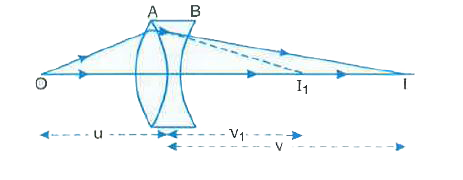 If the two lens system is considered as equivalent to a single lens of focal LENGTH f, then `1/v-1/u=1/f` ..(iv) Comparing (iii) and (iv), we get `1/f=1/(f_(1))+1/(f_(2))` or `P=P_(1)+P_(2)` As 1st lens is converging one but 2nd lens is diverging, hence `f_(1)` is +ve but /2 is -ve and moreover `f_(1)gtf_(2)`. `thereforeP=P_(1)+P_(2)=1/(f_(1))+1/((-f_(2)))=(f_(1)-f_(2))/(f_(1)f_(2))=-ve`, i.e. the COMBINATION behaves as a diverging lens. |
|
| 48. |
Give the principle of AC generator. |
| Answer» Solution :ALTERNATORS work on the principle of electromagnetic INDUCTION. The relative motion between a conductor and a magnetic FIELD change the magnetic FLUX linked with the conductor which in turn, induces as emf . The magnitude of the induced emf is given by Faraday.s law of electromagnetic induction and its direction by Fleming.s right hand rule. | |
| 49. |
Three infinite planes have a uniform surface charge distribution sigma on its surfaces. All charges are fixed. On each of the three infinite planes, parallel to the yz plane placed at x = -a, x =0, and x = a, there is a uniform surface charge of the same density, sigma. The potential difference between A and C is |
|
Answer» `(2sigma)/(epsilon_0)a` |
|
| 50. |
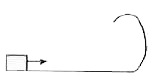
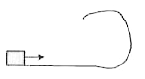
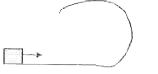
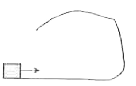
A small block is projected into each of the four tracks as shown below. Each of the tracks rises to the same height. The speed with which the block enters the track is the same in all cases. At the highest point of the track, the normal reaction is maximum in |
|
Answer»
|
|