

Saved Bookmarks
This section includes 7 InterviewSolutions, each offering curated multiple-choice questions to sharpen your Current Affairs knowledge and support exam preparation. Choose a topic below to get started.
| 1. |
Antimony Sulphide (Sb_(2)S_(3)) reacts with sulphuric acid (H_(2)SO_(4)) to form Antimonic (H_(3)SbO_(4)) and sulphur dioxide (SO_(2)). What are the coefficients of H_(2)SO_(4),H_(3)SbO_(4),SO_(2) respectively in the balanced redox reaction. |
|
Answer» `11,2,11` (i) Oxidation PART :  (ii) Reduction part :  Reduction `xx11:=11H_(2)SO_(4)to11SO_(2)" "...(R)` (III) REDOX : (O) + (R) = Redox `Sb_(2)S_(3)+11H_(2)SO_(4)to2H_(3)SbO_(4)+14SO_(2)` ... Redox (iv) Balancing O and H by `H_(2)O` : `Sb_(2)S_(3)+11H_(2)SO_(4)to2H_(3)SbO_(4)+14SO_(2)+8H_(2)O` (v) Coefficient of `H_(2)SO_(4)` = 11 Coefficient of `H_(3)SbO_(4)` = 2 Coefficient of `SO_(2)` = 14 |
|
| 2. |
Antifertility drugs are |
|
Answer» TERFENADINE |
|
| 4. |
Anti Markownikoff's addition of HBr is not observed in |
| Answer» Answer :D | |
| 5. |
Anti Markownikoff addition of HBr is not observed in : |
|
Answer» Propene |
|
| 6. |
Anti-Markownikoff addition of HBr is not observed in |
|
Answer» PROPENE 1-butene, pent-2-ene. As 2-butene is symmetrical so in its CASE anti Markownikott.s addition will not be observed. |
|
| 7. |
Anti Markovnikov's rule or peroxide effect (Kharas effect) or free radical addition reaction with example ? |
|
Answer» Solution :(a) Rule of Kharash effect or peroxide effect : Unsaturated alkene e.g. : Addition of Hbr to unsymmetrical alkenes like propene, take PLACE contrary to the Markonikov rule. Rule : In this presence of peroxide, addition HBr to unsymmetrical alkenes like propene takes place contrary to the Markonikov rule this happens only with Hr but, not with HCl and HI. This addition reaction was observed by M.S. Kharash and F.R. Mayo in 1993 at the university of chicago. This reaction is known as peroxide or kharash effect or addition reaction anti markonikov rule. Note : Reaction is done with HBr only but HI and HCl do not give reaction. (b) Reaction of Markonikov rule :  (C) Peroxide effect in free radical electrophilic addition reaction : From peroxide, free radical is formed, on BREAKING of `pi`-bond the stable radical is formed for electrophilic addition reaction. Reactivity of stable free radical : Series is `3^(@) gt 2^(@) gt 1^(@) gt overset(.)(C)H_(3)`. Most stable radical if formed first and that is a main product.   Think : On breaking of Hbr, H is added and `Boverset(.)(r)` is formed. On addition of `Boverset(.)(r)` but it is not formed. "In these reaction, free radical is formed electrophilic addition reaction product is formed". (d) In presence of peroxide, HCl and HI donot give reaction with propene Reason : (i) H-Cl bond energy is `430.5 kJ mol^(-1)`. H-Cl bond being stronger `(430.5 kJ "more"^(-1))` than H-Br bond (`363.7 kJ mol^(-1))`, is not cleaved by the free radical, where as the H-I bond is weaker `(298.8 kJ mol^(-1))` and iodine free radicals combine to form iodine molecular instead of additing to the double bond. 
|
|
| 8. |
Anti Markonikov's addition of HBr is not applicable in |
|
Answer» 1-butene |
|
| 9. |
Anthropogenic water pollutant is |
|
Answer» VEGETABLE matter |
|
| 10. |
Anthracene is purified by : |
|
Answer» Filtraction |
|
| 11. |
Answer the following questions with respect to I law of thermodynamics. (i) State the law (ii) Give its mathematical expression (iii) List out its limitations |
|
Answer» Solution :Statement : ENERGY can by converted from one from to another , but cannot be created or by destroyed. (ii) Mathematical Extra : `DeltaE=Q-w,DeltaE-`Internal energy change of the systemw - amount of work , q - amount of heat. (III) Limitations of law : It provides on information REGARDING the feasibility of such transformation . No information regarding the direction in which a process will take place. ( SPONTANEOUS or non- spontaneous) . |
|
| 12. |
Answer the following : On what factors does the bond energy value depend ? |
| Answer» Solution :LARGER the BOND enthalpy , stronger will be the bond. The bond ENERGY value depends on the size of the ATOMS and the nubmer of bonds between the BONDED atoms. Larger the size of the atom involved in the bond, lesser is the bond enthalpy. | |
| 13. |
Answer the following : Name the most abudant form of hydrogen isotope. [Ans. 11H] |
|
Answer» |
|
| 15. |
Answer the following : Name the compound when can be used as a hair beach, mild antisepticin the form of perhydrol. |
|
Answer» |
|
| 16. |
Answer the following : Name the catalyst used in Haber’s Process for manufacture of NH_3(g). |
|
Answer» |
|
| 17. |
Answer the following : Mixture of CO and H_2 is used for preparation ......... . |
|
Answer» |
|
| 18. |
Answer the following: (i) What type of drug terfenadine (seldane) is ? (ii) Give the names of some opium drugs. (iii) What type of drug phenacetin is ? (iv)Name the names chemical responsible for antiseptic properties of dettol. (v) Give the name of first antibiotic. (vi) Give the name with structure of a broad spectrum antibiotic. (vii) Name the drug which is used to bring down body temperature during fever. (viii) What type of drug chloramphenicol is ? (ix) What are tranquillizers ? (x) What is aspartame and what is its use ? |
|
Answer» (ii) Morphine, codeine, heroin and marijuane. (iii) Antipyretic (iv) Chloroxylenol (v) Penicillin (vi) Chloramphenicol,  (vii) Paracetamol or Phenacetin (viii) Broad spectrum Antibiotic. (xi) The chemical compounds which relieve anxiety and result in a more calm outlook without producing any marked degree of SEDATION or hypnosis are called tranquillizers , (x) It is the methyl ester of dipeptide DERIVATIVE derived from phenyl alanine and aspartic acid. It is about 150 times swetter than sucrose. it is used as an artificial sweetener in COLD FOOD and soft drinks. |
|
| 19. |
Answer the following : (i) What is soda ash? (ii) Which electrolyte is used to obtain sodium in Castner's Process? (iii) What is the intermeidate product is Solvy's porcess? (iv) Which product is formed when monoxide is passed through soidum hydroxide under pressure? (v) Out of Na and K, which has higher melting point? (vi) What do we get when crystals of washing soda are exposed to air? (vii) What is the chemical formula of Carnallite? (viii) Why is the solution of sodium in liquid ammonia conducting in nature? |
|
Answer» Solution :(i) Soda ash is anhydrous sodium carbonate `(Na_(2)CO_(3))`. (ii) FUSED NaOH is used. (iii) Sodium hydrogen carbonate is formed as the intermediate product. (iv) Sodium formate is formed as a result of the REACTION. `NaOH + CO overset(5 to 10 atm)(to) underset("Sod formate")(HCOONa)` (v) Na has higher melting point than K. (vi) Upon exposing the crystal of washing soda `(Na_(2)CO_(3).10H_(2)O)` monohydrate `(Na_(2) CO_(3) H_(2)O)` is formed as a result EFFLORESCENCE. The powder is called washing powder. (vii) Carnallite is KCI `MgCI_(3) 6H_(2)O`. (viii) Solution is CONDUCTING due to the formation of ammoniated electrons. |
|
| 20. |
Answer the following : (i) What is the harmful effect of hyperacidity ? (ii) With the help of an example explain how dotranquillizers control the feeling of depression ? (iii) which type of drugs come under antimicrobial drugs ? (iv) What is the commonality between the antibiotic arsphenamine and azo dyes ? (v) Which site of an enzyme is called allosteric site ? (vi) Dishwashing soaps are synthetic detergents. What is their chemical nature ? (vii) What type of forces are synthetic detergents. What is their chemical nature ?(viii) What is the difference between bathing soap and washing soaps ? (ix) Both antacids and antiallergic drugs are antihistamines but they can not replace each other. Explain why ? (x) Explain why some times foaming is seen in river water near the place where sewage water is poured after treatment ? |
|
Answer» (ii) Noradrenaline plays an important role in mood change. If the level of noradrenaline is low, the person suffers from depres-sion. (iii) Antiseptics, antibiotics, disinfactants and sulpha drugs. (iv) Antibiotic, Arsphenamine possesses -As=As- linkage that resembles -N=N- linkages in azo dyes. (v) Sites different from ACTIVE site of enzymes where a molecule can bird and affect the active site is called allosteric site. Some drugs may also bind at this site. (vi) Non-ionic detergents such as polyethylene glycol STEARATE are used as dishwashing soaps. (vii) Hydrogen bonding, ionic bonding, van der WAALS' interaction, dipole-dipole interaction etc., are involved in binding. (viii)Bathing soaps are potassium salts of long chain fatty acids. They are usually soft and also free from unused alkali. While washing soaps are sodium salts of long chain fatty acids. They are usually hard and also contain some RESIDUAL alkali. (ix) Antihistamines are the drugs which controll the allergy effects produced by histamines. ANTACIDS are the substances which neutralise gastric acidity. Antihistamine do not affect the secretion of acid in stomach and the reason is that both antiallergic and antacid drugs work on diferent receptors. Detergents (which are not biodegradable) persist in water even after sewage treatment and that causes foaming in river water. |
|
| 21. |
Answer the following : (i) Name a drug in case of mental depression. (ii) Write the names of some antacids. (iii) Write the name of chemicals used in food. (iv) Give four examples of anti-histamines. (v) Namethe medicines which can act as bothanalgesic as well as an antipyretic. (vi) Name the main species responsible for malaria. (vii) Which alkaloid is used for : (a) Hypertension , (b) Malaria fever (c ) Severe pain , (d) Dilation of eyes (viii) Write two examples of macromolecules that are chosen as drug targets. (xi) Name one estrogen which forms a part of an oral contraceptive. Give the composition of one oral contraceptive. |
|
Answer» (ii) Ranitidine, Cimetidine, Omeprazole and Pentaprazole, etc. (iii) (a) Preservatives (Sodium benzoate) (b) Antioxidants (BHA, BHT) (c ) ARTIFICIAL sweetening agents (saccharin), (d) Edible colours (Chlorophyll, Saffron) (iv) (a) DIPHENHYDRAMINE (Benadryl) (b) Pheniramine maleate (Avil and Cough syrups) (c ) Promethazine (Phenargan) (d) Chlorotheophyllinate salt (Avomine) (v) Aspirin, Paracetamol, Ibuprofen, DICLOFENAC sodium, Combiflam, etc., (vi) Plasmodium vivax, Plasmodium vivax, Plasmodium malariae, Plasmodium ovale, Plasmodium falciparum (vii) (a) Reserpine (b) Quinine (c ) Morphine (d) Atropine. (viii) Drugs usually interact with the biological macromolecules such as carbohydrates, proteic acid and lipids, are CHOSEN as drug targets or target molecules. (ix) Mestranol (Ethynyl estradiol mono methyl ether) oral contra-ceptive is a mixture of synthetic estrogen and progesterone. |
|
| 22. |
Answer the following : How does the size of atom infiuence bond length ? |
| Answer» Solution :The bond LENGTH DEPENDS on the size of the atom and the number of bonds (MULTIPLICITY ) between the combining atoms. Greater the size of the atom, greater will be the bond length . Increase in the number of bonds between the two atoms decreases the bond length. | |
| 23. |
Answer the following : Give the formula of Zeolite used in ion exchange method to removepermanent hardness of water. |
|
Answer» |
|
| 24. |
Answer the following : During Clark’s method. Name the compound in which Mg isprecipitated out. |
|
Answer» |
|
| 25. |
Answer the following (a) How many sigma, pi non - bonding electrons present in (i) P_(4)O_(6) (ii) P_(4)O_(10) (b) Which of the following are isostructural and isocelectonic ? NO_(3), CO_(3)^(2-),CIO_(3)^(Θ), SO_(3) (c ) Why CO_(2) and SO_(2) are not isostructural ? (d) Why PCI_(5) dissociate to give PCI_(3) and CI_(4) whereas SF_(6) does not dissociate to give SF_(4) and F_(2) on heating ? (e) Discuss the shapes of molecular orbitals formed by the combination of the following atomic orbitals (i) 2p_(z) and 2p_(z) (ii) 2p_(x) and 2p_(x) (f) Why IF_(7) dissociate to give IF_(2) + (5)/(2)F_(2) not IF_(2) + F_(2) Expalin (g) Why axial bonds of PCI_(5) are longer than equatorial bonds ? (h) BH_(4)^(Θ) and overset(o+)NH_(4) are isolobal Explain (i) Name the anion which is isostructural with BF_(3) (j) Name the cation which is isostructural with CH_(4) (k) Which of the following alkali metal chlorides is expected th have the highest melting point (i) LiCI (ii) KCI (iii) RbCI (iv) NaCI . |
|
Answer» Solution :`sigma` bonds `=12` `pi` BOND = Zero Each `P` has 1 lp of `e^(-')s` Four `P` ahs `4lp's =8` non-bonding `e^(-)s` Each O-atom has `2lp' s of e^-'s =32` `sigma` bonds `=12 + 4 =16` `pi` bond = 4 P-atom does not have `lp' s` of `e^-'s` The O-atom has `2 xx 10 = 20 lp's =40` non-bonding `e^-'s` (B) `NO_(3)^(Θ)` and `CO_(3)^(2-)` are isoelectronic and isostructural Number of `e^-'s` in `NO_(3)^(Θ) = 7 + 24 + 1 = 32` Number of `e^-'s` in `CO_(3)^(2-) = 6 + 24 + 2 = 32` Hence they are isoelectronic Therefore, hybridisation of central atom is both cases is `sp^(2)` Hence they are isotructural also (c )`C` in `CO_(2)` is sp hybridised and is linear `S` in `SO_(2)` in `sp^(2)` hybridised and is bent molecule (d)`PCI_(5)` and refer to Section 2.21 (5) for `SF_(6)` (h) Both are `sp^(3)` hybridised and have tetrahedral shape (i) `NO_(3)^(Θ)` (Triangular planar) (j) `overset(o+)(NH_(4)` (Tetrahedral) (k) LATTICE energey `(Delta_(U)H^(Θ))` decrease down the group `(darr)` . Although `Delta_(U)H^(Θ)` of LiCI is higher than that of NaCI but `LiCI` is covalent and NaCI is ionic in NATURE After `NaCI Delta_(U)H^(Θ)` decreases as the size of alkali metal ion increases As melting point depends upon lattice energy and ionic/covalent nature of the compounds thus naCI has the highest melting point . 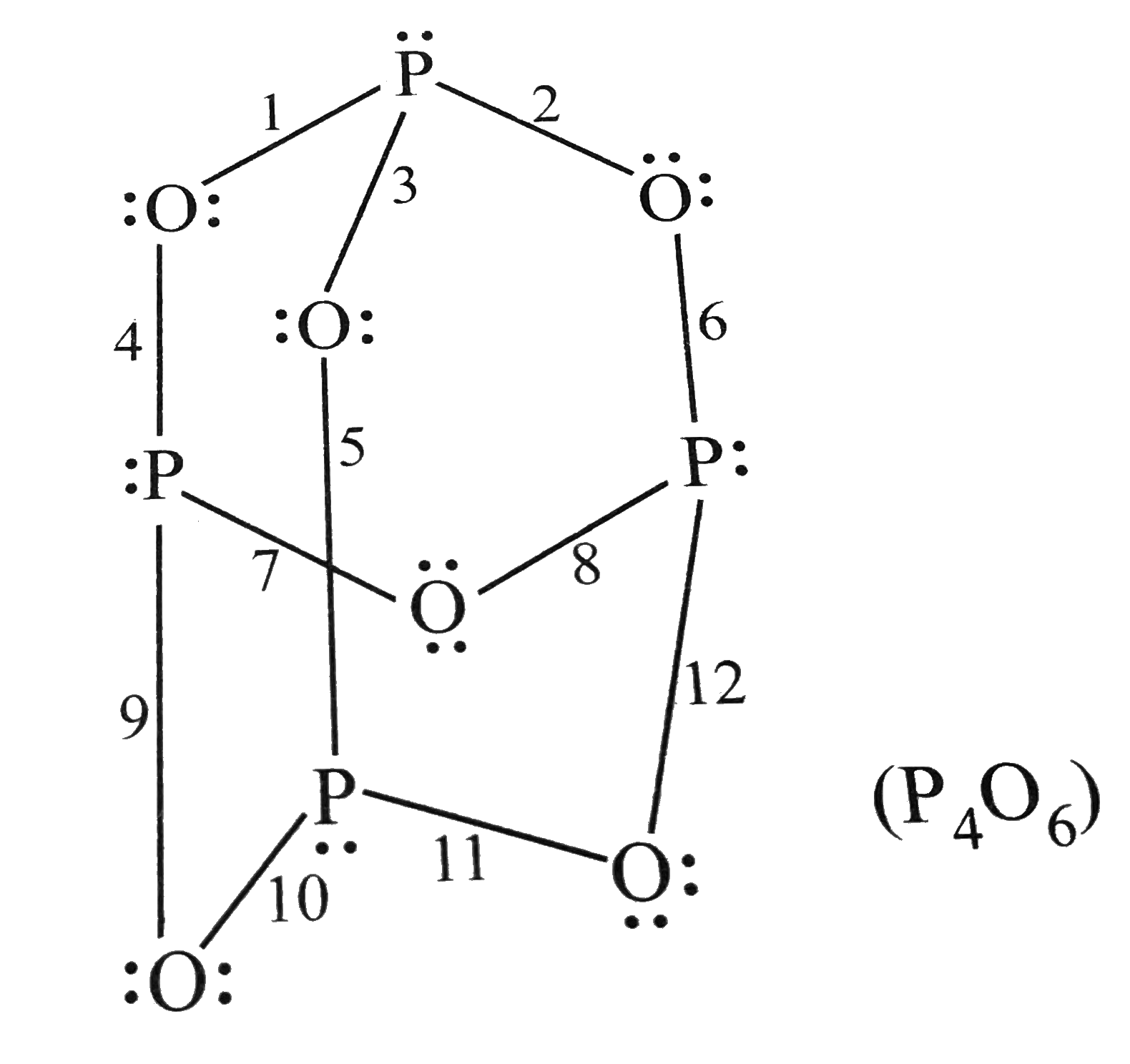 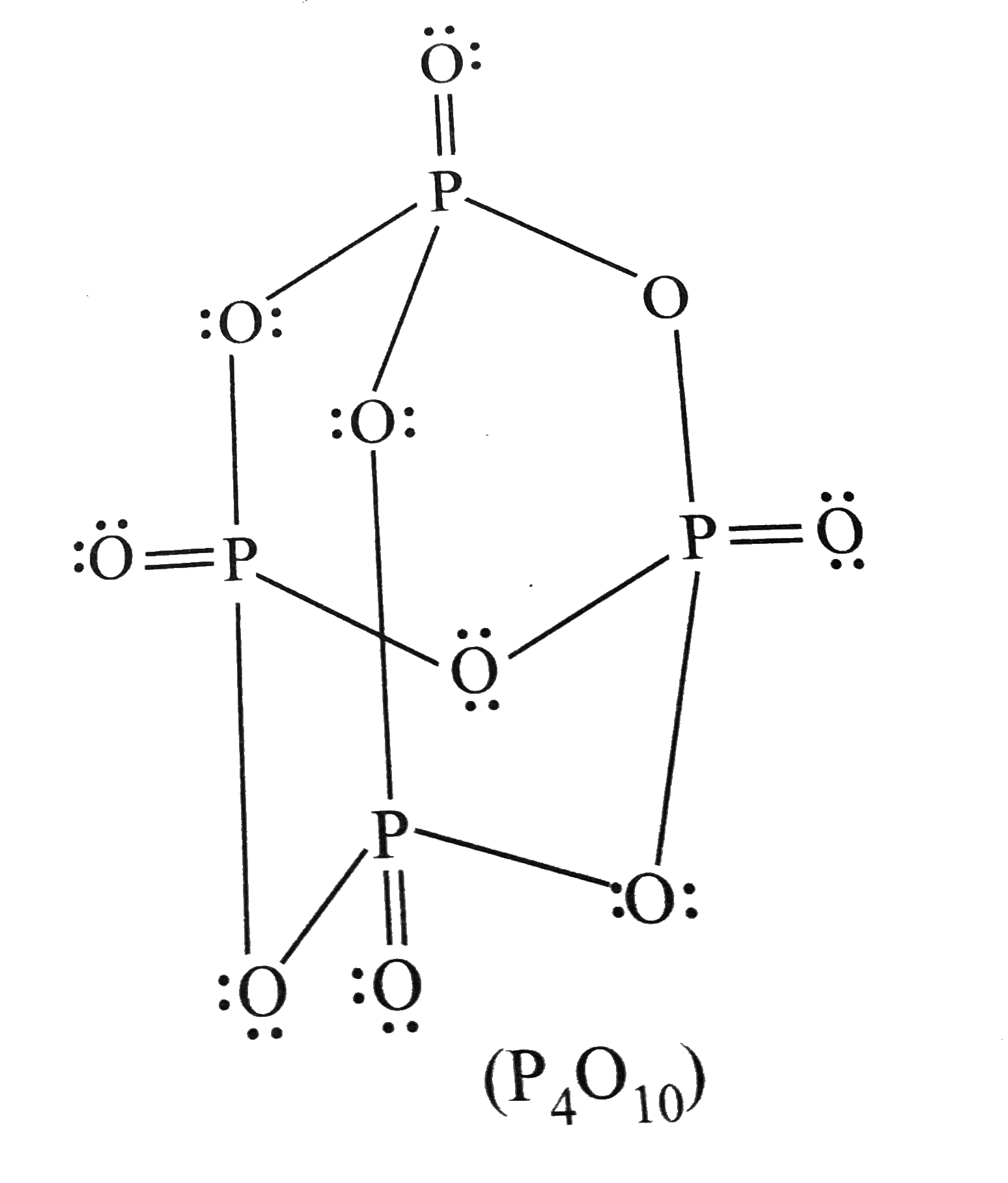 . .
|
|
| 26. |
Answer the following: (a) Both conc. HCl and conc. H_(2)SO_(4) cannot be used to preapre hydrogen gas by reacting with zinc metal. (b) Pure zinc metal cannot be used for preparing hydrogen gas. (c ) Moist hydrogen connot be dried by passing through conc. H_(2)SO_(4). |
|
Answer» Solution :(a) Zinc metal reacts conc. HCl to evolve `H_(2)` gas. But as the acid is also highly voltile, it is vaporus get mixed with hydrogen vapours an as a result, thje gas will be contaminated and not pure. Conc. `H_(2)SO_(4)` is a very strong oxidising agent. It oxdises hydrogen hydrogen envoled inthe reaction to form water. Along with that sulphur dioxide will be also evolved in the reaction. `H_(2)SO_(4)("conc.")+Znto ZnSO_(4)+H_(2)` `H_(2)SO_(4) to H_(2)O+SO_(2)+O` `H_(2)+O to H_(2)O` `2H_(2)SO_(4)("conc.")+Zn to ZnSO_(4)+SO_(2)+2H_(2)O` Therefore, conc `H_(2)SO_(4)` can be used to PREPARE hydrogen gas by reacting with zinc metal. (b) When pure zinc metal is used for peparing hydrogen gas, a thin FILM of the gas is FORMED on the SURFACE of hte metal and checks further and checks further action by the acid.In case the metal is impure, then a film of hydrogen does not stick on the metal surface and the metal surface and the metal completely reacts with the acid. Actually, small cells are produced by zinc and impurities present in it which accelerate the rate of reaction between the metal and the acid. Keeping this in mind, a small amount of `CuSO_(4)` is generally mixed with dilute `H_(2)SO_(4)` to act as impurity and to help in the formation of cells. (c ) Hydrogen being a powerful reducing agent REDUCES conc.`H_(2)SO_(4)` (strong oxidising agent) to evolve of `SO_(2)` gas as follows: `H_(2)SO_(4)+H_(2) to H_(2)O+SO_(2)` Therefore, moist hydrogen cannot be dried by passing through conc. `H_(2)SO_(4)`. |
|
| 27. |
Answer of the following: (i) The type of hybridization, which carbon atoms undergo in the formation of ethane molecule is. (ii) The type of hybridization, which carbon atoms undergo in the formation of ethene molecule (H_(2)C=CH_(2)) is. (iii) The type of hybridization, which carbon atoms undergo in the formation of ethyne molecule (HC-=CH) is. (iv) Carbon-carbon bond distance in benzene is intermediate between the C-C bond distances in ethene and ethane. (v) Alcohols have higher boiling points than the corresponding isomeric ethers. (vi) CH_(3)OH has higher boiling point than CH_(3)SH. (vii) The o-and p-chlorophenols have different boiling points. (viii) The three carbon-oxygen bonds are equal in carbonate ion. (ix) Carbon-oxygen bond lengths in formic acid are 1.23 Ã… and 1.36Ã… and both the carbon-oxygen bonds in sodium formaate have same value, i.e., 1.27Ã…. (x) A mixture of plant pigments is separated by which method? (xi) The purity of an organic solid is tested by which physical property? (xii) C-C bond lengths in ethane, ethylene and acetylene are. (xiii) What are the bond angles in sp^(3)-sp^(2)-and sp-hybrid orbitals? (xiv) Chloral hydrate, C CI_(3)CH(OH)_(2) is stable although it has two hydroxyl groups attached to the same carbon atom. (xv) C=C bond length is shorter than the C-C bond length. (xvi) Why o-hydroxy benzaldehyde is a liquid at room temperature while p-hydroxy benzaldehyde is a high melting solid? |
|
Answer» |
|
| 28. |
Answer briefly . NaCl is less covalent than LiCl - Justify . |
| Answer» Solution :LITHIUM chloride is more covalent than SODIUM chloride . Thesize of `Li^(+)` is smaller than `Na^(+)` and hence the polarising power of `Li^(+)` is more. Lithium iodide is more covalent than lithium chloride as the size of `I^(-)` is larger than the `CL^(-)` Hence `I^(-)` will be more polarised than `Cl^(-)` by the cation , `Li^(+)`. | |
| 29. |
Answer briefly . Compare the covalency of CuCl and NaCl. |
|
Answer» Solution :CuCl is more covalent than NaCl . Compared to `NA^(+) (1.13 Å). Cu^(+) (0.6 Å)` is small and have `3s^(2) 3p^(6) 3d^(10)` configuration . Electronic configuration of `Cu^(+)` `[AR] 3s^(2) . 3p^(6) . 3d^(10)` Electronic Conguration of `Na^(+)` [He] `2s^(2), 2P^(6)` |
|
| 30. |
Answer briefly . Arrange the following compounds as per their increasing covalent character and give reason. MgCl_(2) , NaCl, AlCl_(3) |
| Answer» SOLUTION :LET us consider three IONIC compounds aluminum chloride , magnesium chloride and sodium chloride . Since the charge of the cation increase in the order `Na^(+) lt Mg^(2+) lt AL^(3+) `, the COVALENT character also followsthe same order `NaCl lt MgCl_(2) lt AlCl_(3)`. | |
| 31. |
Answer 12, 13 and 14 by appropriately matching the information given in the three columns of the following table. In which amongs the following aromatic product will not form? |
|
Answer» (I)(i)(P) |
|
| 32. |
Answer 12, 13 and 14 by appropriately matching the information given in the three columns of the following table. Which combination will give hydrogen gas? |
| Answer» Answer :C | |
| 33. |
Answer 12, 13 and 14 by appropriately matching the information given in the three columns of the following table. In which product formation is not possible ? |
|
Answer» (I)(ii)(Q) |
|
| 34. |
Anong the following which one has the highest cation to anion size ratio? |
|
Answer» CsI |
|
| 35. |
Anodized aluminium is aluminium |
|
Answer» OBTAINED on anode |
|
| 36. |
Anionic radius is higher than the corresponding neutral atom. Give reason. |
| Answer» Solution :When an atom gain one or more electrons it forms anion. During the formation of anion, the NUMBER of ORBITAL electrons become greater than the nuclear charge. Hence, the electrons are not strongly ATTRACTED by the LESSER number of nuclear charges. Hence ANIONIC radius is higher than the corresponding neutral atom. | |
| 37. |
Aniline when diazotied in cold and then treated with dimethyl aniline gives a coloured product. Its structure would be: |
|
Answer»
|
|
| 38. |
Aniline is separated from a liquid maxture containing non-volatile impurity by : |
|
Answer» FRACTIONAL crystallisation |
|
| 39. |
Impure Aniline is purified by |
|
Answer» SIMPLE distillation |
|
| 40. |
Aniline is more reactive than which of the following towards electrophilic substitution |
|
Answer» Chlorobenzene |
|
| 42. |
Enthalpy of neutralization is defined as the enthalpy change when 1 mole of acid/base is completely neutralized by base/acid in dilute solution. For strong acid and strong base neutralization net chemical change is H_((aq))^(+) + OH_((aq))^(-) rarr H_(2)O_((l)), Delta H_(r )^(0)-= - 55.84 kJ//mol If enthalpy of neutralization of CH_(3)COOH by NaoH is -49.86 kJ/mol then enthalpy of ionisation of CH_(3)COOH is |
| Answer» SOLUTION :LEVELLING EFFECT in HCl | |
| 43. |
Anhydrous magnesium sulphate is used for drying solvents but anhydrous calcium sulphate cannot used . Why so ? |
| Answer» SOLUTION :ANHYDROUS `MgSO_(4)` combines with WATER to form `MgSO_(4) . 7H_(2)O` (Epsom salt) and hence it is used as a drying agent for drying solvents . In contrast , anhydrous `CaSO_(4)` does not combine with water to form `CaSO_(4) . 2 H_(2)O` and hence cannot be used as a drying agent . | |
| 44. |
Anhydrous formic acid cannot be obtained from aqueous solution by fractional distillation because : |
|
Answer» it is SOLUBLE in water |
|
| 45. |
Anhydrous calcium chloride is which type of compound? |
| Answer» SOLUTION :STRONG HYGROSCOPIC | |
| 46. |
Anhydrous brium nitare and mgnesium nitrate both decompose on heating , evolving nitrogen dioxide and oxygen and forming an nitrogen dioxide and oxygen and forming an oxide . Choose the incorrect statement abounta this decompostion |
|
Answer» NITROGEN dioxide is EVOLVED ata a lower TEMPERATURE from magnesium nitrate then from barium nitrate |
|
| 47. |
Anhydrous BaO_(2) is not used for preparing H_(2)O_(2) . Why ? |
| Answer» Solution :Anhydrous `BaO_(2)` is not used because the `BaSO_(4)` formed during the reaction forms a PROTECTIVE LAYER AROUND unreacted `BaO_(2)` and the reaction STOPS some TIME. | |
| 48. |
Anhydrous aluminium chlorideis used as a catalyst. |
| Answer» Solution :The Alatom in `AlCl_(3)`,has only6 electronsin itsvalenceshell.It NEEDS two more electronsto complete its octet. It,therefore,acts as a LEWIS andcatalystin Friedel-Crafts alkylationand acylation reactionof benzeneand other aromatic compounds . In these reaction, it helpsto generatethe electrophile (`R^(+)` from`R-Cl`or `RCO^(+)`from `RCOCl` or `(RCO)_(2)O)` which thenthen attacksthe benzee/aromaticring. | |
| 49. |
Anhydrous AlCl_3 is used in the Friedel craft's reaction because it is |
|
Answer» ELECTRON rich |
|



