

Saved Bookmarks
This section includes 7 InterviewSolutions, each offering curated multiple-choice questions to sharpen your Current Affairs knowledge and support exam preparation. Choose a topic below to get started.
| 1. |
How will you convert the following compounds into benzene ? (i) Ethyne , (ii)Ethene , (iii)Hexane |
Answer» Solution :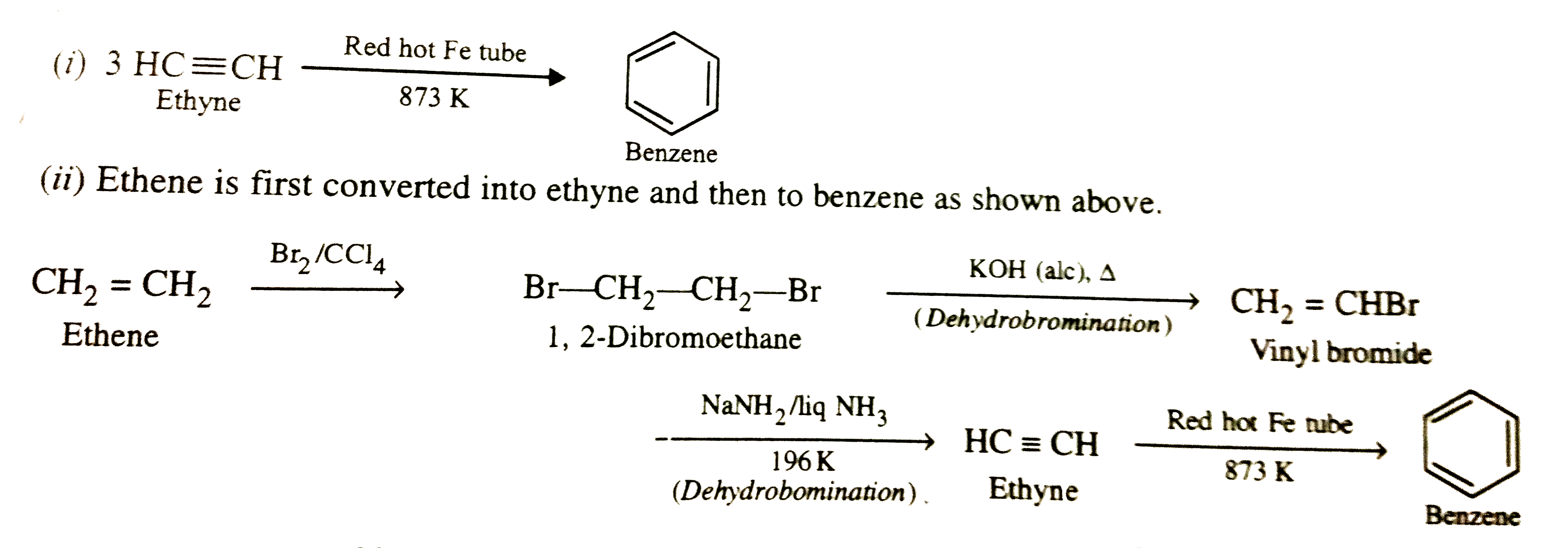 (iii)When vapours of hexane are passed over heated catalyst consisting of `Cr_2O_3, Mo_2O_3 ` and `V_2O_5` supported over `Al_2O_3` at 773 K under 10-20 ATM pressure , cyclization and aromatization OCCURS SIMULTANEOUSLY to AFFORD benzene. 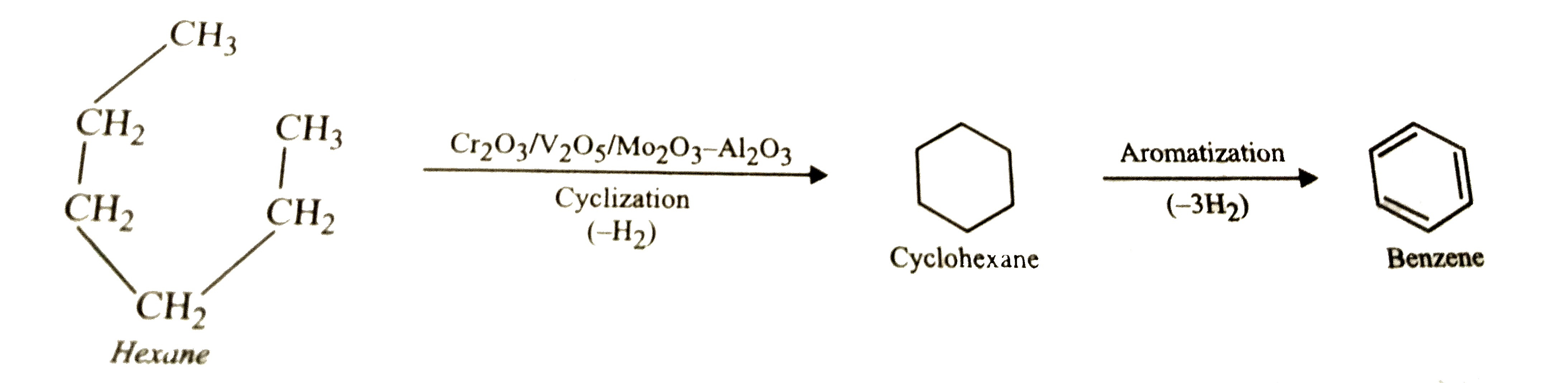
|
|
| 2. |
How will you convert t-butyl bromide into t-butyl alcohol? Explain the process through the mechanism in stepwise manner. |
|
Answer» Solution :`S_(N)1` stands for unimolecular nucleophilic substitution `S_(N)1` reaction follows FIRST order kinetics and occurs in two steps. (ii) We understand `S_(N)1` reaction mechanism by taking a reaction between tertiary butyl bromide with aqueous KOH. `underset("Tert-Butyl bromide")(CH_(3)-underset(CH_(3))underset(|)overset(CH_(3))overset(|)(C)-Br) underset(-Br)overset("OH (AQ)")to underset("Tert-Butyl alcohol")(CH_(3)-underset(CH_(3))underset(|)overset(CH_(3))overset(|)(C)-OH)` This reaction takes place in two steps as shown below: STEP-1 Formation of carbocation, (i) The polar C-Br bond breaks forming a carbocation and bromide ion. this step is slow and hence it is the rate determining step.  (ii) The carbocation has 2 equivalent lobes of the vacant 2p orbital, so it can react equally rapidly from either face. Step-2: (i) The nucleophile immediately reacts with the carbocation. This step is fast and hence does not affect the rate of the reactions.  (ii) As shown above, the nucleophilic reagent OH-can attac carbocation from both the sides. (iii) In the above example the substrate tert-butyl bromide is not optically active, hence the OBTAINED product is optically inactive. if halo alkane substrate is optically active then, the product obtained will be opticallly inactive racemic mixture. as nucleophilic reagent OH-can attack carbocation from both the sides, to form equal proportion of dextro and levortotary optically active isomers which results in optically inactive racemic mixture. |
|
| 3. |
How will you convert propene to 2, 3-dimethylbutane? |
| Answer» Solution :`CH_3 - CH = CH_2 OVERSET(HBR)(to) CH_3 - oversetunderset(|)(Br)(C)H - CH_3 underset("wurtz reaction") overset("2Na/ether")(to) CH_3 - oversetunderset(|)(CH_3)(C)H - oversetunderset(|)(CH_3)(C)H - CH_3` | |
| 4. |
How will you convert propene to 2-bromopropane |
| Answer» Solution :`CH_3 - CH = CH_2 overset(HBR)(to) CH_3 - oversetunderset(|)(Br)(C)H - CH_3` | |
| 5. |
How will you convert propene to propane |
| Answer» SOLUTION :`CH_3 - CH = CH_2 UNDERSET(NI or Pt) OVERSET(H_2)(to) CH_3 - CH_2 - CH_3` | |
| 6. |
How will youconvert phenol into benzene |
|
Answer» SOLUTION :Whenphenolvapoursare passedzincdustit isreduced to benzene `C_(6)H_(3)OH +ZN to C_(6)H_(5) +ZNO` |
|
| 7. |
How will you convert n-hexane into benzene? |
Answer» Solution :Alkanes with six to ten carbon ATOMS are converted into HOMOLOGOUS of benzene at higher temperature and in the presence of a catalyst. This process is known as AROMATISATION For example, -Hexane passed over Cr, o, supported on ALUMINA at 873 K gives benzene, `CH_(3)-CH_(2)-CH_(2) -CH_(2)-CH_(3)overeset(CrO_(3)|AI_(2)|O_(3))UNDERSET(873K)to` 
|
|
| 8. |
How will you convert methane to ethane |
| Answer» SOLUTION :`CH_4underset(HNO_3)overset(I_2)(to) CH_3I UNDERSET("wurtz reaction")overset(2NA//"ETHER")(to) CH_3 -CH_3` | |
| 9. |
How will you convert ethyne into ethanol |
|
Answer» Solution :Ethyneundergonhydrationon warmingwithmercuricsulphateand dil`h_(2)SO_(4)` at 333 KTO formethanol `CH= CH+ H_(2)Ounderset( 333K )OVERSET( H_(5)H^(@)) (to)CH_(3)CHO` |
|
| 10. |
How will you convert ethyl chloride into (i) ethane (ii) n - butane |
|
Answer» SOLUTION :(i) Conversion of ethyl chloride into ethane: `underset(("Ethyl chloride"))(CH_(3) - CH_(2) - Cl) + 2[H] overset(ZN + HCl)rarr CH_(3) - underset(("Ethane"))(CH_(3)) + HCl` (II) Conversion of ethyl chloride into n-butance: WURTZ reaction: `underset(("Ethyl chloride"))(CH_(3) - CH_(2) - Cl) + 2Na + underset(("Ethyl chloride"))(Cl - CH_(2) - CH_(3)) overset("DRY ether")rarr CH_(3) - CH_(2) - CH_(2) -CH_(3) + underset(("n-butane"))(2NaCl)` |
|
| 11. |
How will you convert ethyl chloride in to (i) ethane (ii) n butane |
|
Answer» Solution :(i) Conversionof ethylchloride intoethane: `CH_(3) -CH_(2)-CI+ 2[H] overset(Zn+HCI)(to)CH_(3)- CH _(3)+ HCI` (II)Convertedof ethylchlorideinton- butane : `CH_(3)-CH_(2)Ci= 2Na +Ci -CH_(3) - CH_(3)overset(DRY ETHER)(to)CH_(3) -CH_(2) -CH_(3)+2NaCI` |
|
| 12. |
How will you convert ethyl chloride in to (i) ethane(ii) n - butane |
|
Answer» Solution :(1) Ethyl Chloride `rarr` Ethane : is formed. This is KNOWN as .dead burnt plaster. (ii) Ethyl chloride `rarr` n-Butane (WURTZ REACTION) : `CH_(3) underset ("Ethyl chloride")(-CH_(2))-Cl+2Na+Cl-CH_(2)-CH_(3) overset ("Dry Ether") rarr CH_(3)underset ("n-Butane") (-CH_(2)-)CH_(2)-CH_(3)+2NaBr` |
|
| 13. |
How would you convert ethanol to ethene? |
| Answer» SOLUTION :`CH_3 - CH_2OH UNDERSET(433-443 K -H_2O) OVERSET(CONC. H_2SO_4)(to) CH_2 = CH_2` | |
| 14. |
How will you convert ethanoic acid into benzene ? |
Answer» SOLUTION :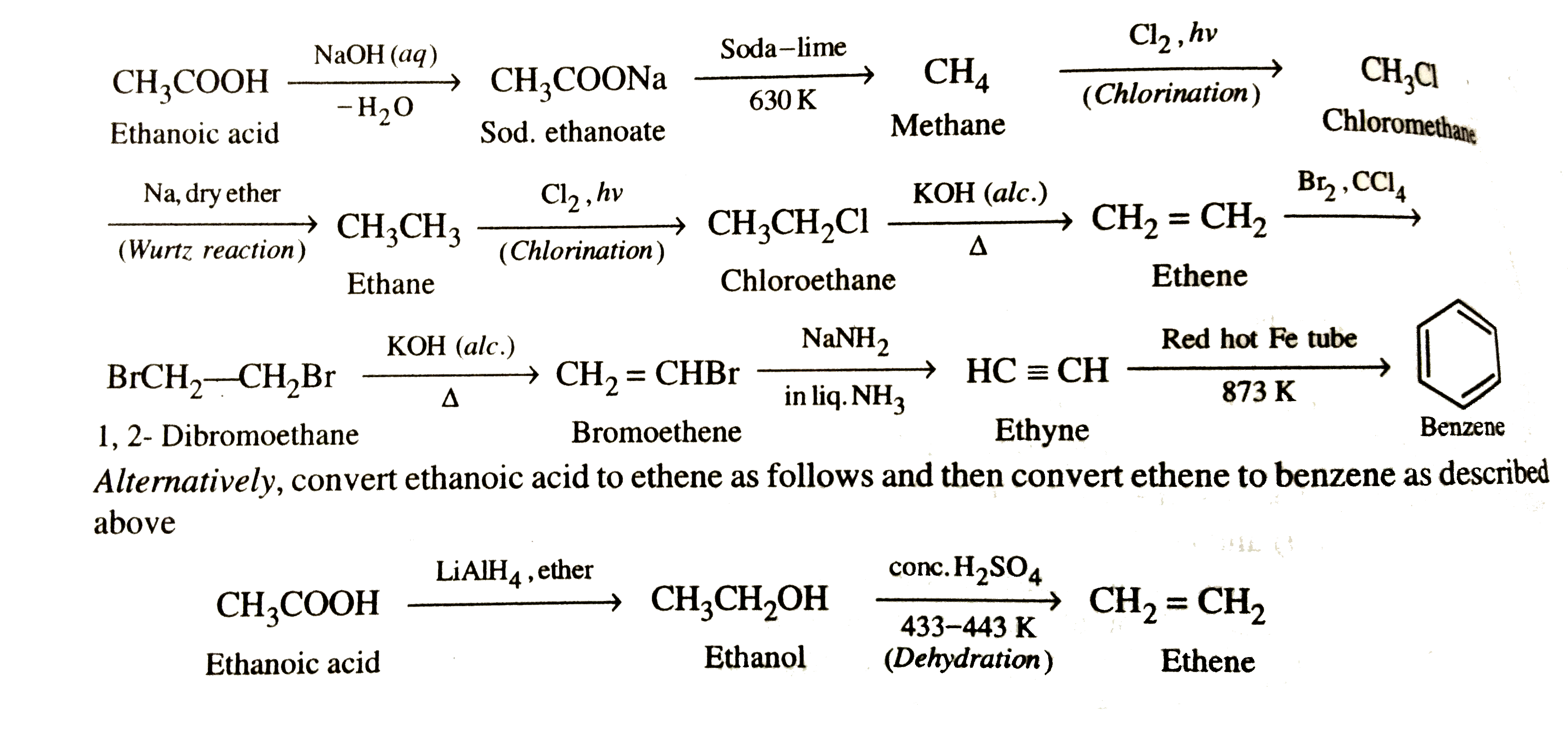
|
|
| 15. |
How will you convert ethane to ethene |
| Answer» SOLUTION :`CH_3CH_2 underset(HIO_3)OVERSET(I_2)(to) CH_3CH_2I underset(-HI)overset(ALK. KOH)(to) CH_2 = CH_2` | |
| 16. |
How will you convert ethane to methane? |
| Answer» Solution :`CH_3CH_2 underset(HNO_3)overset(I_2)(to) CH_3CH_2I underset(-KI)overset("aqueous KOH")(to) CH_3CH_2OH underset(K_2Cr_2O_7 + H_2SO_4) overset(O)(to) CH_3COOH overset(NAOH + CAO , "heat")(to)CH_4 ` | |
| 17. |
How will you convertethane to butane |
| Answer» SOLUTION :`CH_3CH_3 UNDERSET(HNO3)OVERSET(I_2)(to) CH_3CH_2I underset("wurtz REACTION")overset("2Na/ether")(to) CH_3 - CH_2 - CH_2 - CH_3` | |
| 18. |
How will you convert carbon tetrachloride to chloroform ? |
| Answer» SOLUTION :`underset("CARBON tetrachloride") (C Cl_(4)) + 2 [H] overset(Fe//HCl)(to) underset("CHLOROFORM") (CHCl_(3)) + HCl` | |
| 19. |
How will you convert benzene into (i)p-nitrobromobenzene (ii)m-nitrochlorobenzene (iii)p-nitrotoluene (iv)acetophenone ? |
Answer» Solution :(i)The two substituents in the benzene ring are present at p-positions. THEREFORE , the sequence of reactions should be such that FIRST an o,p-directing GROUP , i.e., Br atom should be introduced in the benzene ring and this should be followed by nitration. Thus,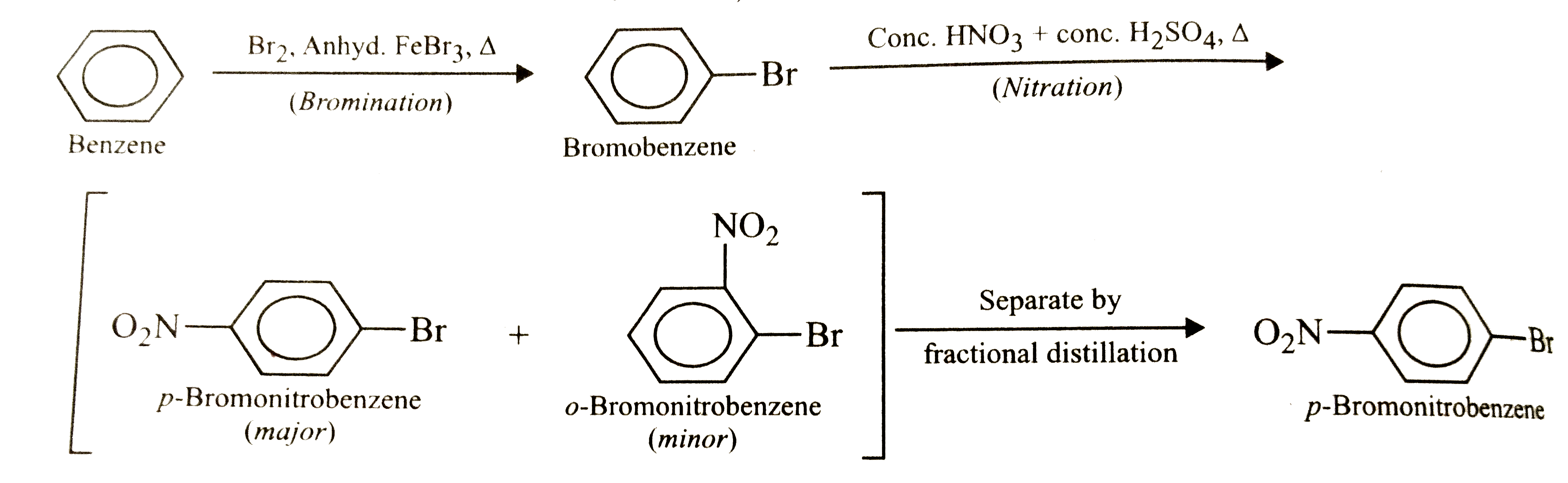 (II)Here, since the two substituents are at m-position w.r.t. each other , therefore , the first substituent in the benzene ring should be a m-directing group (i.e., `NO_2`) and then the other group (i.e., Cl) should be introduced. Therefore , the sequence of reactions is :  (iii)Here, since the two substituents are at p-position w.r.t. each other , therefore , the first substituent in the benzene ring should be a o,p-directing group (i.e. , `CH_3`) and then the other group (i.e., `NO_2`) should be introduced. 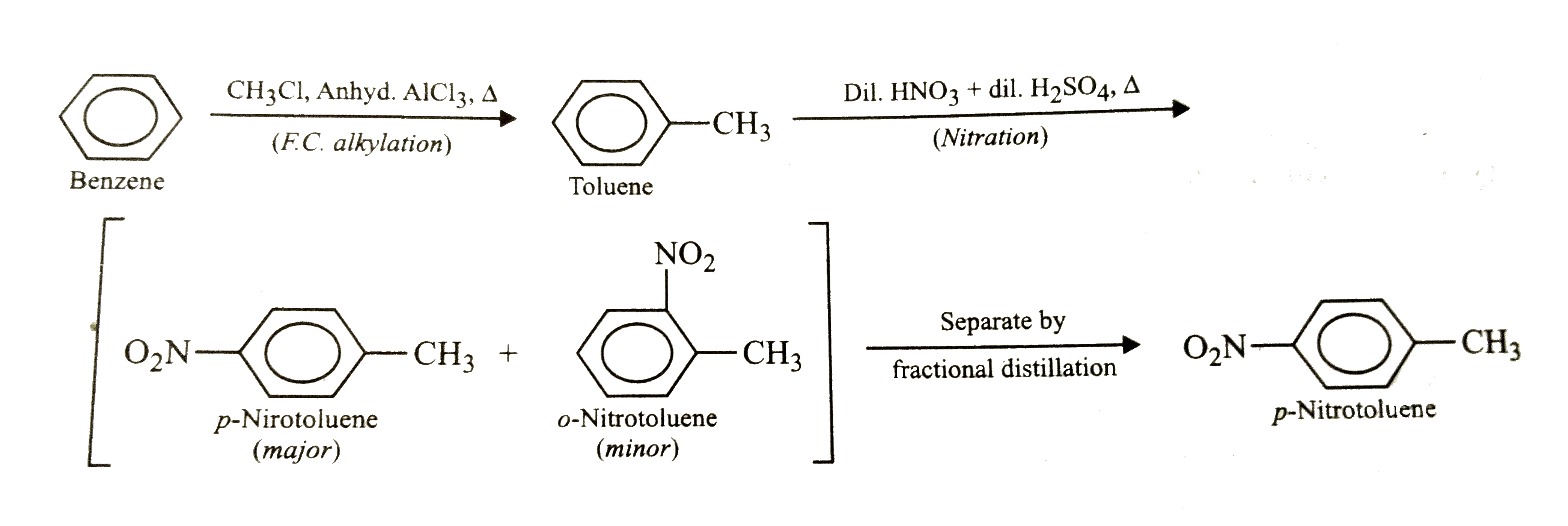 (iv)Acetophenone can be prepared by F.C. acylation using EITHER acetyl chloride or acetic anhydride  or 
|
|
| 20. |
How will you convert benzene into (a) p-nitrobromobenzene (b) m-nitrobromobenzene |
Answer» SOLUTION :
|
|
| 21. |
How will you convert benzene into (i)p-nitrobromobenzene , (ii) m-nitrobromobenzene |
Answer» SOLUTION :(II)Here, since the substituents are at m-position w.r.t. to each other , therefore, the first SUBSTITUENT in the benzene ring should be m-directing (i.e., `NO_2`) and then the other group (i.e., Br) should be introduced .Therefore, the sequence of REACTIONS is
|
|
| 22. |
How will you convert benzene into (i) p-nitrobromobenzene (iii) p-nitrotoluene (ii) m-nitrochlorobenzene (iv) acetophenone ? |
Answer» SOLUTION :(i) BENZENE can be CONVERTED into p-nitrobromobenzene as : 
|
|
| 23. |
How will you convert benzene into cyclohexane? |
Answer» SOLUTION :Benzene UNDERGO catalytic hydrogenation in presence of platinum to GIVE CYCLOHEXANE. 
|
|
| 24. |
How will you convert benzene in to (a) p-nitrobromobenzene (b) m-nitrobromobenzene |
|
Answer» Solution :(a) Benzene into p-nitrobromobenzene : <BR> `C_(6)H_(6)+Br_(2)` (In presence of an hyd. `FeBr_(3)`) `rarr C_(6)H_(5)Br+HBr` `C_(6)H_(5)Br + Conc. HNO_(3) + Conc. H_(2)SO_(4) rarr` p-nitrobromobenzene (b) Benzene into m-nitrobromobenzene: `C_(6)H_(6) + Conc. HNO_(3) + Conc. H_(2)SO_(4) rarr C_(6)H_(5)NO_(2)` `C_(6)H_(5)NO_(2)+ Br_(2)` (In presence of ANHY. `FeBr_(3)`) r `rarr` m-nitrobromobenzene. |
|
| 25. |
How will you convert benzene into (i) p-nitrobromobenzene (ii) m-nitrochlorobenzene (iii) p -nitrotoluene (iv) acetophenone |
Answer» SOLUTION :
|
|
| 26. |
How will you convert alcohol into aldehyde? |
|
Answer» SOLUTION :When primary alcohol REACTS with acidified potassium dichromate to gives aldehyde. `R -underset ("Alcohol")(CH_(2))-OH OVERSET(H^(+)|K_(2)Cr_(2)O_(7)) tounderset("Aldehyde") (R-CHO)` |
|
| 27. |
How will you convert: (a) Ethyl chloride to propanoic acid. (b) 1-Bromopropane to 2-bromopropane (c) tert-butyl bromide to isobutyl bromide |
| Answer» SOLUTION :(B) Lithium ION is very small ion and therefore, it hasstrong positive field around it. Therefore, it can stabilize only a small ANION `O^(2)`. Sodium is large and it can stablize large anion `O_(2)^(2-)` whereas potassium and rubidium being very large in size can easily stabilize larger SUPEROXIDE `O_(2)^(-)` ion. | |
| 28. |
How will you convert 1-chloropropane to propene? |
| Answer» Solution :`CH_(3) underset("1 - chloropropane")(-CH_(2)- C) H_(2) Cl + " ALCOHOLIC " KOH underset("Dehydro halogenation ") (to) CH_(3) - underset(" Propene") (CH) = CH_(2) + KCL + H_(2) O` | |
| 29. |
How will you convert 2-bromopropane to 2-deuteriopropane ? |
Answer» SOLUTION :
|
|
| 30. |
How will you control photochemical smog? |
| Answer» Solution :The formation of photochemical smog can be suppressed by preventing the release of NITROGEN OXIDE and hydrocarbons into the ATMOSPHERE from the motor vehicles by using catalytic convertors in ENGINES. PLANTATION of certain trees like Pinus, Pyrus Querus vitus and Juniparus can metabolise nitrogen oxide. | |
| 31. |
Howwill you convert 1- bromorpropane into propene |
|
Answer» Solution :`CH_(3) - C H_(2) -CH_(2) -BR OVERSET(alc. KOH) (to)CH_(3)-CH = CH_(2)+ KBr + H_(2) O` 1- bromopropanereactswith alcoholicKOHand elminatehydrogenbromineresulting in theformationofpropene. |
|
| 32. |
How will you contest photochemical smog ? |
| Answer» Solution :The formation of photochemical smog can be suppressed by PREVENTING the release of nitrogen oxides and hydrocarbons iinto the atmosphere from the motor vehicles by USING CATALYTIC convertors in engines. PLANTATION of certain trees like Pinus, Pyrus, Querus Vitus and JUNIPARUS can metabolise nitrogen oxide. | |
| 33. |
How will you concentrate H_2O_2 ? Show differences between structures of H_2O_2 and H_2O_2 by drawing their spatial structures. Also mention three important uses of H_2O_2 |
|
Answer» Solution :Industrially method : Industrially it is prepared by the auto-oxidation of 2-alklylanthraquinols. (2-ethyl anthraquinol) `underset(H_2//Pd)undersetlarr overset(O_2"(air)")to H_2O_2` + (Oxidised product.) In this case 1% `H_2O_2` is formed. It is extracted with water and concentrated to ~30% (by mass) by distillation under reduced pressure. It can be further concentrated to ~85% by careful distillation under low pressure. The remaining water can be frozen out to obtain pure `H_2O_2`.  (a) Bent SHAPE of `H_2O`. (b) Dipole moment containing structure of `H_2O` (c) Hybridisation containing structure of `H_2O` Importance of `H_2O_2` : (i) In DAILY life it is used as a hair bleach and as a mild disinfectant. As an ANTISEPTIC it is sold in the market as perhydrol. (ii) It is used to manufacture CHEMICALS like sodium perborate and per-carbonate, which are used in high quality detergents. (iii) It is used in the synthesis of HYDROQUINONE, tartaric acid and certain food products and pharmaceuticals etc. (iv) It is employed in the industries as a bleaching agent for textiles, paper pulp, leather, oils, fats etc. (v) Nowadays it is also used in Environmental (Green) Chemistry. For example, pollution control treatment of domestic and industrial effluents, oxidation of cyanides, restoration of aerobic conditions to sewage wastes, etc. |
|
| 34. |
How will you carry out the following conversions? a) Toluene to p-toluidine b) p-toluene diazonium chloride to p-toluic acid |
Answer» SOLUTION :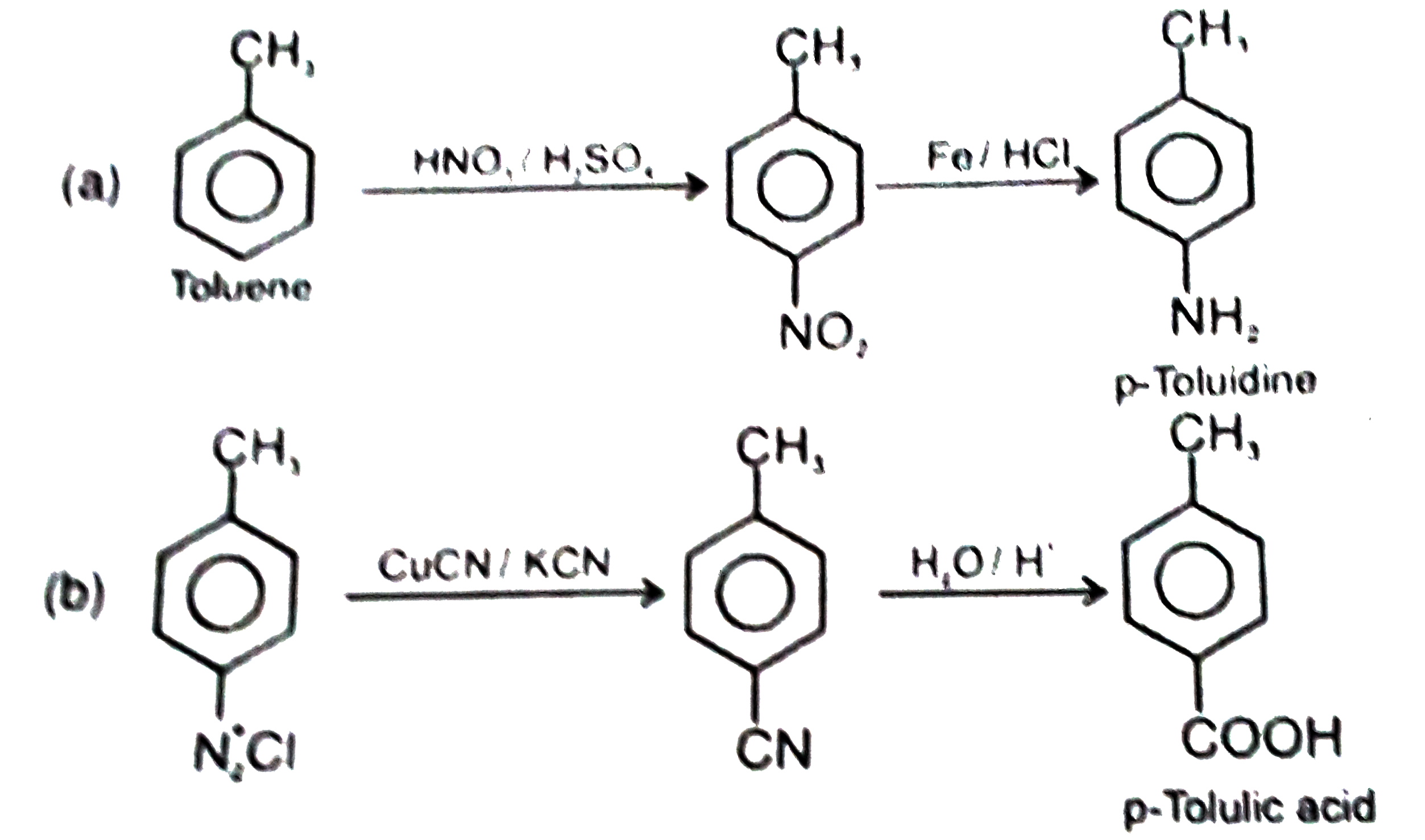
|
|
| 35. |
How will you carry out the following conversion? |
Answer» SOLUTION :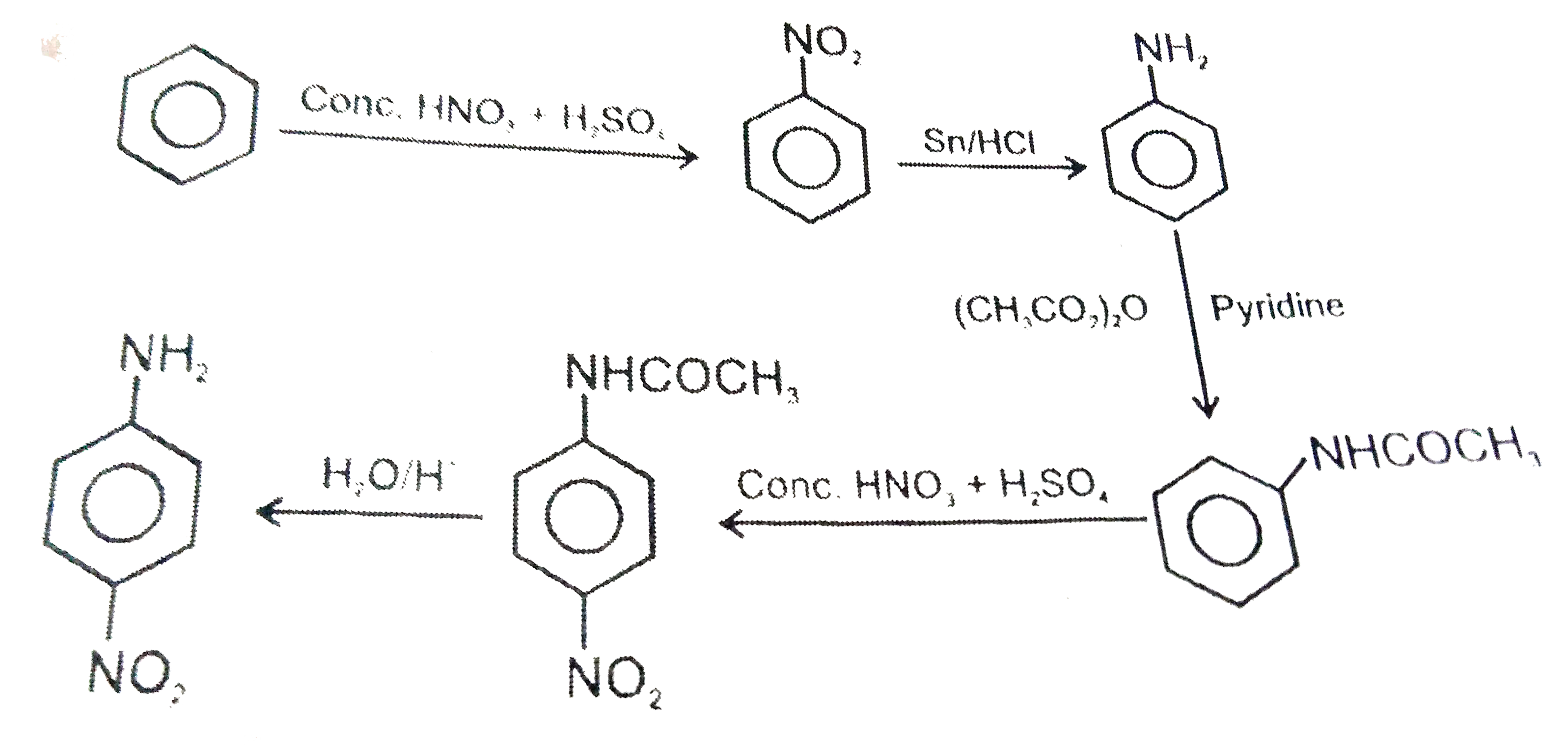
|
|
| 36. |
How will you carry out the following conversion? |
Answer» SOLUTION :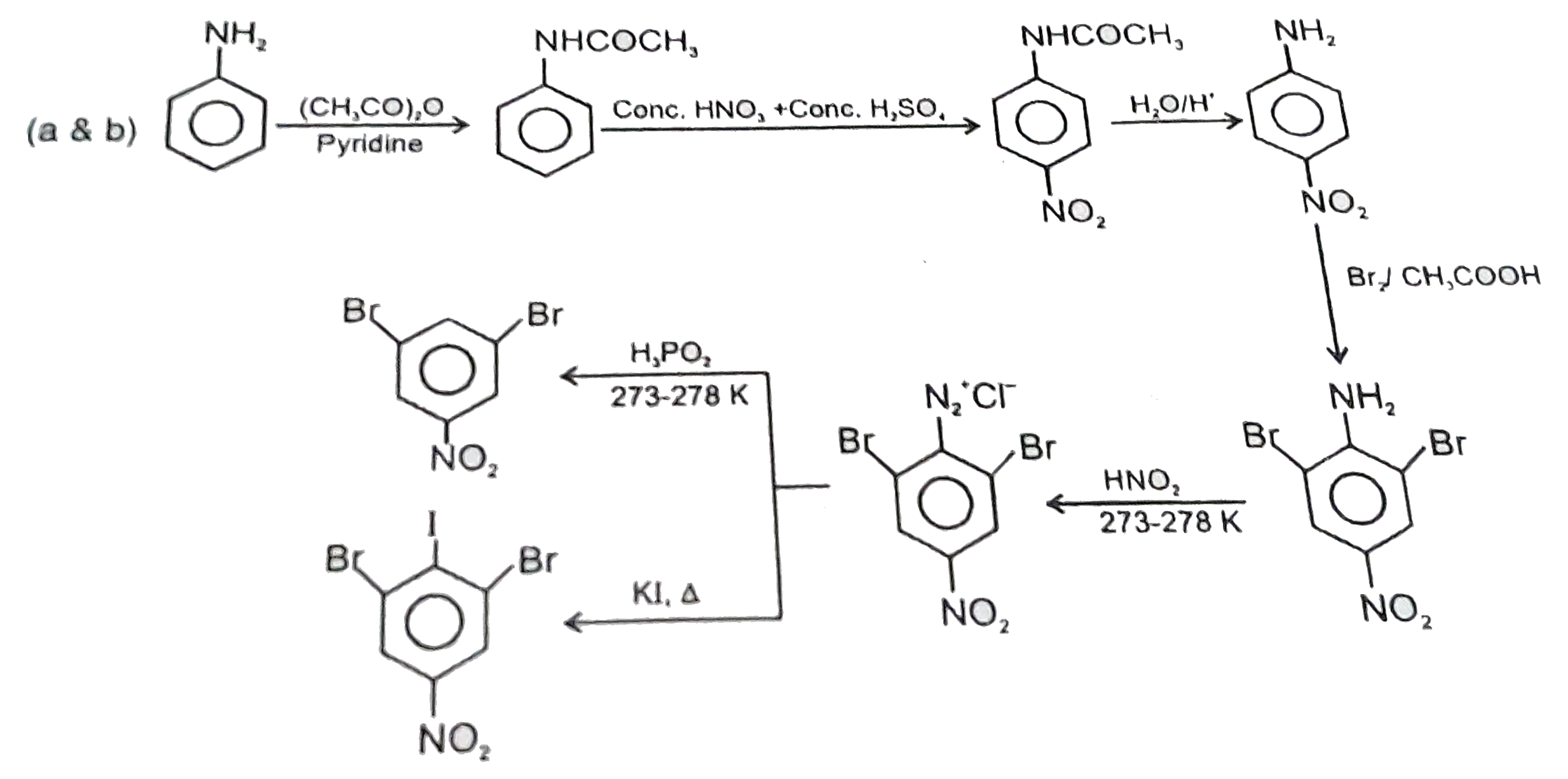
|
|
| 37. |
How will you calculate work done on an ideal gas in a compression, when change in pressure is carried out in infinite steps? |
|
Answer» <P> Solution :Work done can be CALCULATED with the HELP of p -V plot. A p-V plot of the work of compression is carried out by change in pressure in finite steps as shown below.(Fig.4)  Work done is EQUAL to the shaded area represented in the graph. |
|
| 38. |
How will you calculate work done on an ideal gas in a compression, when change in pressure is carried out in infinite steps ? |
Answer» Solution :When compression is carried out in infinite STEPS with CHANGE in pressure, it is a reversible process. The work done can be calculated form `p - V` plot as shown in the given FIGURE. Shaded AREA under the CURVE represents the work done on the gas. 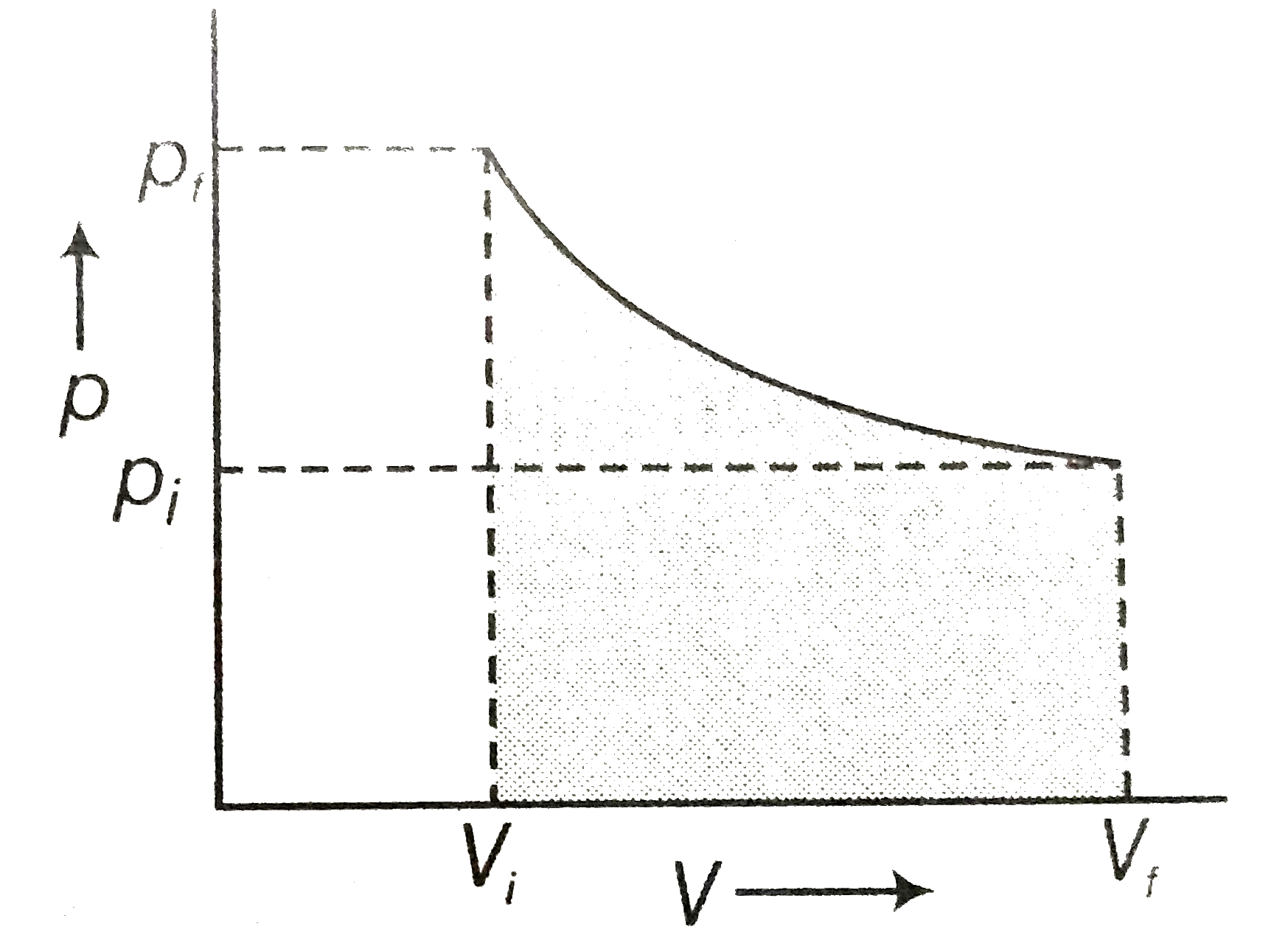
|
|
| 39. |
How will you calculate the partial pressure in terms of mole fraction ? |
|
Answer» Solution :MIXUTRE containing three GASES, 1,2 and 3 with partial pressure `p_(1), P_(2) and p_(3)`in container with volume v, the TOTAL pressure `P_("total")` will be given by `P_("total") p_(1)+p_(2)+p-(3)""....(1)` Assuming that the gases behave ideally, `p_(1)=n_(1)(RT)/(V), p_(2)=n_(2) (RT)/(V), p_(3) =n_(3) (RT)/(V)` `P_("total")=n_(1)(RT)/(V)+n_(2)(RT)/(V)+n_(3)(RT)/(V)` `=(n_(1)+n_(2)+n_(3))(RT)/(V)` `P_("total")=n_("total") ((RT)/(V)) ""....(2)` The partial pressure can also be EXPRESSED as`((RT)/(V))` can expressed as `(p_(1))/(n_(1)) or (p_(2))/(n_(2)) or (p_(3))/(n_(3)) or` in general `(p-(i))/(n_(i))` Therefore `P_("total")=n_("total")(p_(i))/(n_(i))=(n_("Total"))/(n_(1))p-(i)` `rArr p_(i) =(n_(i))/n_("total") p_("total")=x_(i)P_("Total") ""....(3)` Where `x^(i)` is themole FRACTION of the `i^(th)` component. |
|
| 40. |
How will you bring the following conversions? (a) Ethanol to but-1-yne (b) Ethane to bromoethene (c) Propene to 1-nitropropane (d) Toluene to benzyl alcohol (e) Propene to propyne (f) Ethanol to ethyl fluoride (g) Bromomethane to propanone (h) But-1-ene to but-2-ene (i) 1-Chlorobutane to n-octane (j) Benzene to biphenyl |
|
Answer» Solution :(a) `underset("Ethanol")(CH_(3)CH_(2)OH) underset(py)overset(SOCl_(2))to CH_(3)CH_(2)Cl` `HC-=CH+NaNH_(2) underset(195 K)overset("Liquid" NH_(3))to underset("Sodium acetylide")(HC-=C^(-)NA^(+))` `CH_(3)CH_(2)Cl+HC-=C^(-)Na^(+) to underset("But-1-yne")(CH_(3)CH_(2)-=CH)+NaCl` (b) `underset("Ethane")(CH_(3)CH_(3))+Br underset(520-670 K)overset(HV)to underset("Bromoethane")(CH_(3)CH_(2)Br) underset(-KBr)overset("alc. KOH, heat")to underset("Ethene")(CH_(2)=CH_(2)) overset(Br_(2), C Cl_(4))to BrCH_(2)-CH_(2)Br underset(-KBr)overset("alc. KOH, heat")to underset("Bromoethene")(CH_(2)=CHBr)` (c) `underset("Propene")(CH_(3)CH=CH_(2)) underset("PEROXIDES")overset(HBr)to underset("1-Bromopropane")(CH_(3)CH_(2)CH_(2)Br) underset(C_(2)H_(5)OH // H_(2)O)overset(AgNO_(2))to underset("1-Nitropropane")(CH_(3)CH_(2)CH_(2)NO_(2))` (d) 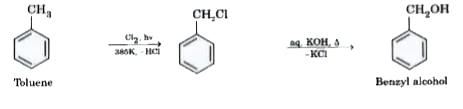 (e) `underset("Propene")(CH_(3)CH=CH_(2)) overset(Br_(2), C Cl_(4))to CH_(3)-underset(Br)underset(|)CH-underset(Br)underset(|)CH_(2) underset(-2KBr, -2H_(2)O)overset(alc. KOH, Delta)to underset("Propyne")(CH_(3)C-=CH)` (f)`underset("Ethanol")(CH_(3)CH_(2)OH) underset(-SO_(2), -HCl)overset(SOCl_(2), py)to CH_(3)CH_(2)Cl underset(-Hg_(2)Cl_(2))overset(Hg_(2)F_(2))to underset("Ethyl fluotide")(CH_(3)CH_(2)F)` (g) `underset("Bromoethane")(CH_(3)Br) overset(alc.KCN)to CH_(3)CN underset("ether")overset(CH_(3)MgBr)to [CH_(3)-underset(CH_(3))underset(|)C=NMgBr] underset(-NH_(3),-Mg(OH)Br)overset(H^(+),H_(2)O)to underset("Propanone")(CH_(3)-overset(O)overset(||)C-CH_(3))` It can also be prepared as: `CH_(3)Br underset(-NaBr)overset(HC-=CNa^(+))to underset("Propyne")(CH_(3)-C-=CH) underset(330K)overset(H^(+),H_(2)O,Hg^(2+))to underset("Propanone")(CH_(3)-overset(O)overset(||)C-CH_(3))` (h) `underset("But-1-ene")(CH_(3)CH_(2)CH= CH_(2)) underset("Markovnikov rule")overset(HBr)to CH_(3)C_(2)-underset(Br)underset(|)CH-CH_(3) underset(-HBr)overset(alc. KOH, Delta)to underset("But-2-ene")(CH_(3)CH=CH-CH_(3))` (i) `underset("1-Chlorobutane")(2CH_(3)CH_(2)CH_(2)CH_(2)Cl)+2Na underset("Wurtz reaction")overset("Dry ether")to underset("n-Octane")(CH_(3)(CH_(2))_(6)CH_(3))+2NaCl` (j) 
|
|
| 41. |
How will you calcualte work done on an ideal gas in a compression , when change in pressure is carried out in inifinite steps ? |
Answer» Solution :When the COMPRESSION is carried out in an INFINITE number of steps with CHANGE in pressure, it is a reversible expansion. The work done can be calculatd from P-V plot as SHOWN in figure, below. Shadedarea under the curve represents the work done on the GAS.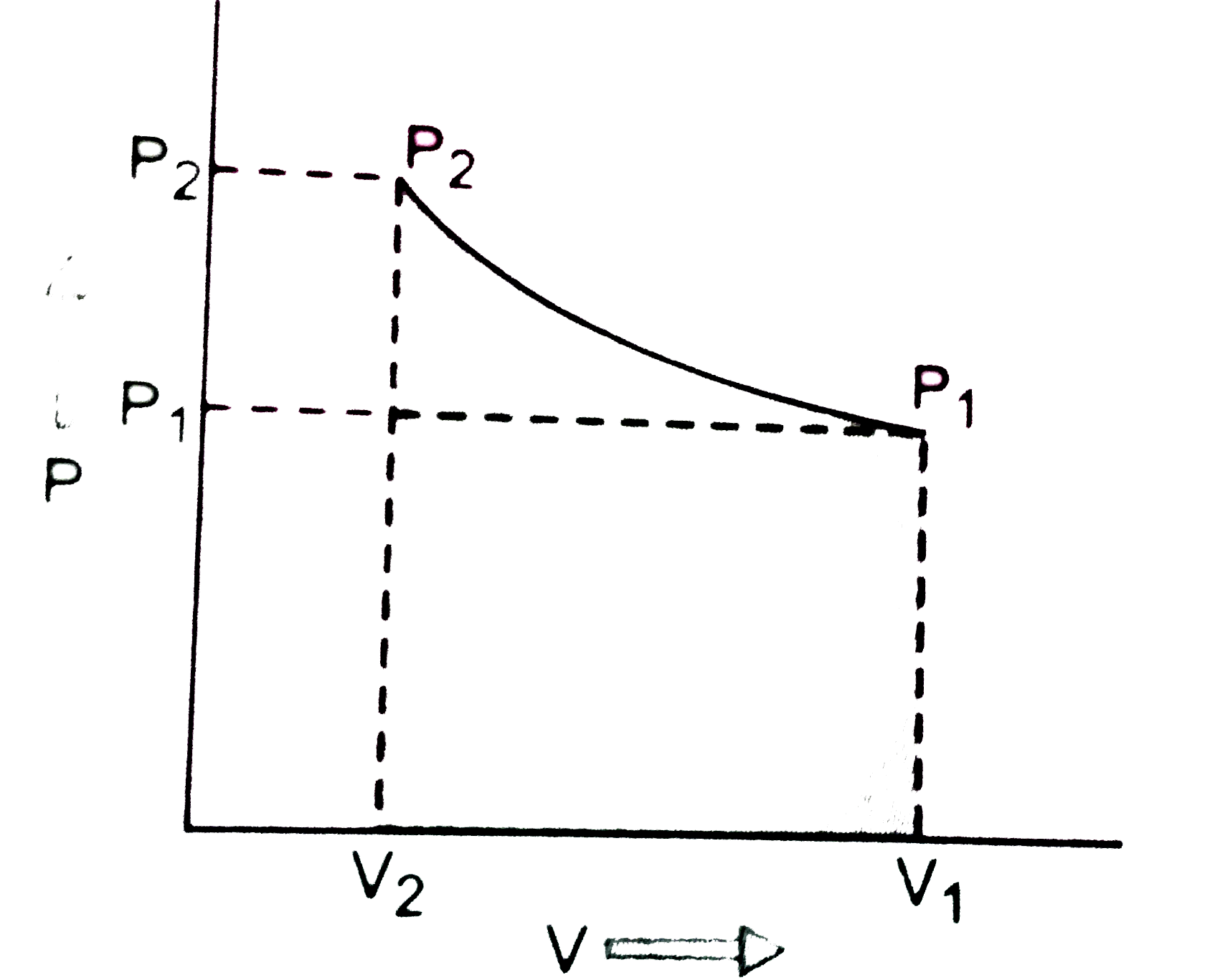
|
|
| 42. |
How will you bring out the following conversions ? Ethyne to methane |
| Answer» SOLUTION :`CH -= CH UNDERSET(H_2SO_4+HgSO_4) overset(H_2O)(to) CH_3CHO underset(K_2Cr_2O_7 + H_2SO_4)overset(O)(to) CH_3COOH overset(NaOH + CaO)(to) CH_4` | |
| 43. |
How will you bring out the following conversions ? Ethyne to ethane |
| Answer» SOLUTION :`CH -= CH UNDERSET(NI)OVERSET(H_2)(to) CH_2= CH_2 underset(Ni)overset(H_2)(to) CH_3 - CH_3` | |
| 44. |
How will you bring out the following conversions ?Ethyne to but-2-yne |
Answer» SOLUTION :
|
|
| 45. |
How will you bring out the following conversions ?Ethene to ethyne |
| Answer» SOLUTION :`CH_2 =CH_2 underset("CCl"_4)overset(Br_2)(to) oversetunderset(|)(Br)(C)H_2 - oversetunderset(|)(Br)(C)H_2 underset(-2HBr)overset(ALC. KOH)(to) CH -=CH` | |
| 46. |
How will you bring out the following conversions ?Ethane to ethyne |
Answer» SOLUTION :
|
|
| 47. |
How will you bring about the following conversions? Propene to propane-1-ol. |
| Answer» Solution :`underset("Propene")(CH_(3))-CH=CH_(2) underset("Peroxide")OVERSET("HBR")to underset("1-Bromo PROPANE")(CH_(3)-CH_(2)-CH_(2))-Br overset("KOH(aq)")to underset("Propene-1-ol")(CH_(3)-CH_(2)-CH_(2)-OH)` | |
| 48. |
How will you bring about the following conversions? Propene to propyne |
| Answer» Solution :`underset("PROPENE")(CH_(3))-CH=CH_(2)underset("CCl"_(4))overset(Br_(2))to underset("1,2-Dibromopropane")(CH_(3)-underset(Br)underset(|)(C)H-underset(Br)underset(|)(C)H_(2)) underset(-2HBr)overset(NaNH_(2)//NH_(3))to underset("Propyne")(CH_(3)-C-=CH)` | |
| 49. |
How will you bring about the following conversions? Propene to 1-nitro propane. |
| Answer» SOLUTION :`underset("Propene")(CH_(3))-CH=CH_(2)underset("PEROXIDE")OVERSET(HBr)to underset("1-Bromo penpane")(CH_(3)-CH_(2)-CH_(2)-BR) underset(-AGBR)overset(AgNO_(3))to CH_(3)-CH_(2)-CH_(2)-underset("1-Nitro propane")(NO_(2))` | |
| 50. |
How will you arrive at the unit of equilibrium constant ? |
|
Answer» Solution :(i) The units of `K_(p)` and `K_(c)`depend on the value of `Deltan_(g)` (ii) If number of moles of REACTANTS and products are equal (ie) `Deltan_(g)=0,` Then `K_(p)` and `K_(c)` have no units If there is increase or decrease in the number of moles of the reaction, then `square`Unit of `K_(p)` is `"(atmosphere)"^(Deltan_(g))` `square`Unit of `K_(c)` is `"(mol per LITRE)"^(Deltan_(g))` |
|