Saved Bookmarks
This section includes 7 InterviewSolutions, each offering curated multiple-choice questions to sharpen your Current Affairs knowledge and support exam preparation. Choose a topic below to get started.
| 1. |
Lassaigne's test is used for detection of elements N, S, X and P. The sodium fused extract is tested for these elements with appropriate reagents. The observation made in to identify the element present in the organic compound.The sodium fusion of extract of an organic compound containing S, N on treatment FeCl_(3) solution gives a coloured solution. The colour of the solution is |
| Answer» Solution :In Lassaigne.s TEST, organic compound containing both N & S gives blood red COLOUR. | |
| 2. |
Lassaigne's test is used for detection of elements N, S, X and P. The sodium fused extract is tested for these elements with appropriate reagents. The observation made in to identify the element present in the organic compound.Sulphur is organic compound on fusion with metallic sodium will be converted into |
|
Answer» `Na_(2)SO_(4)` |
|
| 3. |
Lassaigne's test is used for detection of elements N, S, X and P. The sodium fused extract is tested for these elements with appropriate reagents. The observation made in to identify the element present in the organic compound.The sodium fusion extrat is treated with FeSO_(4), followed by H_(2)SO_(4), gave blue colour. The element present in the compound is |
|
Answer» sulphur |
|
| 4. |
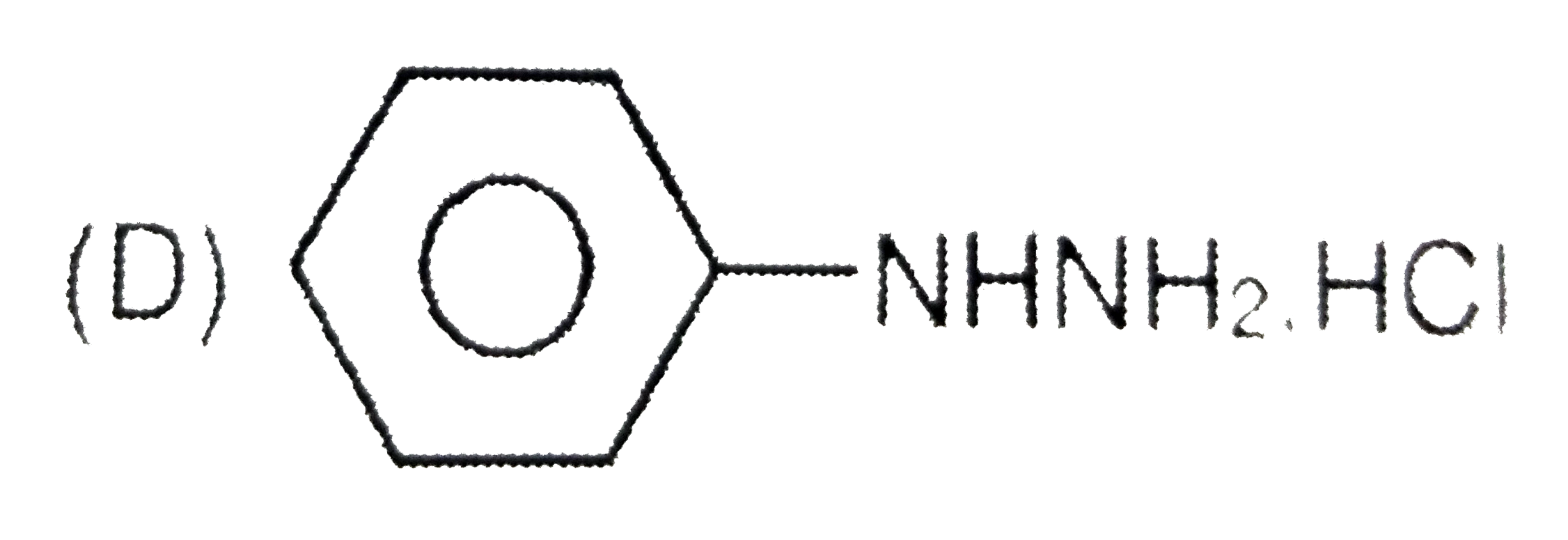
Lassaigne's test is not shown by diazonium salts. Why ? |
| Answer» Solution :DIAZONIUM salts usually LOSE `N_(2)` on heating much before they have a chance to react with FUSED sodium metal. Therefore, diazonium salts do not show positive LASSAIGNE's test for nitrogen. | |
| 6. |
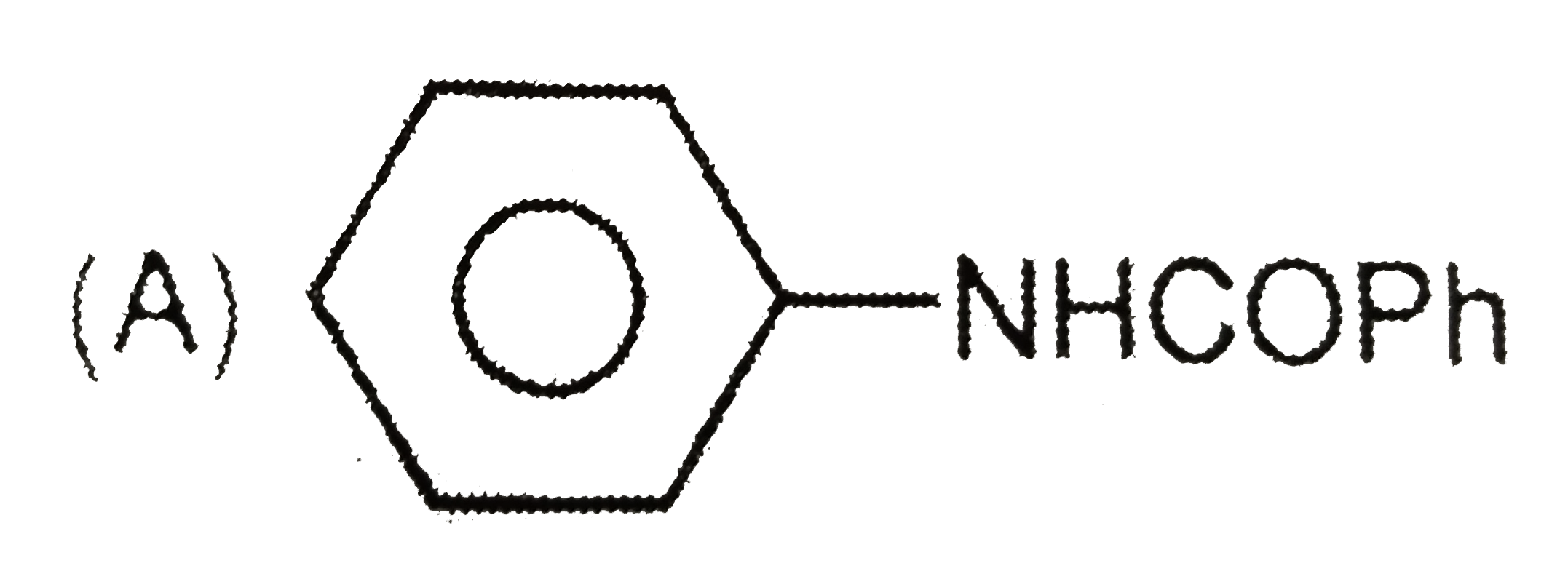
Lassaigne's test for the detection of nitrogen fails in |
|
Answer» `NH_(2)CONHNH_(2)*HCl` |
|
| 7. |
Lassaigne's test fails in |
|
Answer» `NH_2NH_2` |
|
| 8. |
Lassaigne's solution is boiled with HNO_3before testing for halogens because |
|
Answer» SILVER halides are INSOLUBLE in `HNO_(3)` |
|
| 9. |
Lassaigne's test for the detection of nitrogen fails in ............. . |
|
Answer» `H_(2)N-CO-NH.NH_(2).HCl` |
|
| 10. |
Lassaigne's solution gives violet colouration with sodium nitroprusside. It indicates the presence of |
|
Answer» nitrogen |
|
| 11. |
Lassaigne's extract is prepared in distilled water and not in tap water. Explain. |
| Answer» Solution :Tap water generally contains in it chloride IONS `(Cl^(-))`. Therefore, it cannot be used to TEST the presence of chlorine in an organic COMPOUND. Keeping this in view, the Lassaigne's EXTRACT is normally PREPARED in distilled water. | |
| 13. |
Larger the size of the atom ,lesser is the ionisation energy . Explain. |
| Answer» Solution :Reason :The ionization energy decreases with the INCREASING size of ATOM. This is due to the fact , in LARGER atoms electrons are loosely bound to the NUCLEUS , i.e LESSER energy is required for removal of electrons from larger atoms than the smaller one.Hence ionization energy is lower for larger atoms. | |
| 14. |
Largest bond angle is present in |
|
Answer» `CH_4` |
|
| 15. |
Larger number of oxidation states are exhibited by the actinoids than those by the lanthanoids. This can be best explained as |
|
Answer» lesser ENERGY difference between 5F and 6d than between 4f and 5d ORBITALS |
|
| 16. |
Large -scale source of florine is |
|
Answer» `CaF_(2)` |
|
| 17. |
Lanthanoids used in glass blower's goggles are |
| Answer» Answer :A | |
| 18. |
Lanthanum belongs to |
|
Answer» s-block |
|
| 19. |
Lanthanoidsare |
|
Answer» 14 elementsin thesixthperiod(atomicno= 90 to103 ) thatare filling4f- sublevel |
|
| 20. |
Lanthanoids and actinoids are placed in separate rows at the bottom of the periodic table .Explain. |
| Answer» Solution :LANTHANOIDS and actinoids are placed in separate rows at the bottom of the periodic table to MAINTAIN its structure and to preserve the principle of classification by keeping elements with similar PROPERTIES in a single column. | |
| 21. |
Lanthanoids and actinoidsare placed inseparate rowsat thebottomof theperiodictable,Explain the reason for thisarrangement. |
| Answer» SOLUTION :These have beenplacedseparatelyat the bottomof theperiodictable FORCONVENIENCE . If theyare placedwithin the bodyof the periodictable inserialorder to increasingatomic NUMBERTHE periodictablewill becomeextremely longand cumbersome. | |
| 22. |
Lanthanoid contraction occurs because |
|
Answer» the 4f electrons, which are gradually added, CREATE a strong SHIELDING effect |
|
| 23. |
Lanthanides are separated best by |
|
Answer» FRACTIONAL crystallisation |
|
| 24. |
Lanthanides are characterized by the filing of the |
|
Answer» penultimate 4F energy LEVEL |
|
| 25. |
Laminar flow of a liquid means |
|
Answer» Regular gradation of VELOCITY for LAYERS in passing from one layer to the NEXT layer of a liquid |
|
| 26. |
Lakes containing excess of nutritious substance are called |
|
Answer» Polluted lakes |
|
| 27. |
Lakes containing excess of nuritious substance are called |
| Answer» Solution :Eutrophic lakes | |
| 28. |
Laevulinic acid is a |
|
Answer» `ALPHA-`KETO acid |
|
| 29. |
Lactic acid overset(X)rarr Lactile chloride. The compound X is |
| Answer» Solution :`underset("Lactic ACID")(CH_(3) overset(O)overset(|)(C)H COOH) overset(PCl_(5))rarr underset("Lactyl chloride")(CH_(3) overset(Cl)overset(|)(C)HCOCl) + POCl_(3) + HCl` | |
| 30. |
Lactic acid on heating with dill. H_(2)SO_(4) gives |
|
Answer» Acetic acid |
|
| 31. |
Lactic acid on oxidation by alkaline postassium permanganate gives |
|
Answer» Tartaric ACID |
|
| 32. |
Lactic acid on heating with conc. H_(2)SO_(4) gives |
|
Answer» ACETIC ACID |
|
| 33. |
Lactic acid is: |
|
Answer» propionic ACID |
|
| 34. |
Laboratory grade concentrated sulphuric acid has a density 1.82g cc^(-1) .Weight percentage of acid is 98. Calculate the normality of solution. |
|
Answer» SOLUTION :NORMALITY of solution is given as N `=(10xx%xxd)/(GEW)=(10xx1.82xx98)/(49)` Normality of solution =36.4 eq `L^(-1)` |
|
| 35. |
L. fetimes of the molecules in the excited state are often measured by using pulsed radiation soruce of duration nearly in the nano second range. If the radiation source has the duration of 2 ns and the number of photons emitted during the pulse source is 2.5 xx 10^(15), calculate the energy of the source. |
|
Answer» SOLUTION :FREQUENCY `= (1)/(2 xx 10^(-9) s) = 0.5 xx 10^(9) s^(-1)` Energy `= N HV = (2.5 xx 10^(5)) (6.626 xx 10^(-34) Js) (0.5 xx 10^(9) s^(-1)) = 8.28 xx 10^(-10) J` |
|
| 36. |
L_(1)is the length between two adjacent carbon atoms in a layer and L_(2)is the length in-between two layers of graphite. The approximate ratio between L_(1) and L_(2) |
|
Answer» `1:1` |
|
| 37. |
l = 3, then the values of magnetic quantum numbers are |
|
Answer» `pm 1 , pm 2 , pm 3` |
|
| 38. |
K_w=1xx10^(-14) calculate the concentration of [H_3O^+] in 10^(-8)M HCl. |
|
Answer» `1.0xx10^(-8)` M `10^(-8) M LT 1 xx 10^(-7)M` of `H_3O^+` `THEREFORE` Total `[H_3O^+]=(1xx10^(-8)+1xx10^(-7))` `=1.1xx10^(-7) approx 1.0525xx10^(-7)` M `[H^+][OH^-]=10^(-14)` `therefore (10^(-8)+X)x=10^(-14)=0` `therefore x=9.5xx10^(-8)` Total `[H^+]=1xx10^(-8)+9.5xx10^(-8)` `=1.05xx10^7` M |
|
| 39. |
What is the minimum volume of water required to dissove 1g of calcium sulphate at 298K ? (For calcium sulphate, K_(sp) is 9.1xx10^(-6)). |
|
Answer» Solution :Solubility product of calcium sulphate, `K_(sp)` for `CaSO_4 = 9.1 XX 10^(-6)` Solubility of `CaSO_4= SQRT(K_(sp))= 3.016 xx 10^(-3)mol L^(-1)` Solubility of `CaSO_4 = 3.016 xx 10^(-3)xx136 = 0.41 g L^(-1)` 0.41 gram of `CaSO_4` is dissolved in a solution of VOLUME one litre. Volume of solution in which 1 gram of `CaSO_4` is dissolved `=" weight " xx (1)/("solubility ")=1 xx (1)/(0.41 ) = 2.441` . |
|
| 40. |
K_(sp) of PbI_2 is 1.4xx10^(-8) . The molecular mass of PbI_2 is 461 g mol^(-1) . Then molecular mass of Pb(NO_3)_2 is 331.9 mol^(-1)So, (a) In 500 mL water (b) 500 mL 0.10 M KI (c) What is the weight of PbI_2 when soluble in 1.33 g Pb(NO_3)_2 containing 500 mL solution ? |
| Answer» SOLUTION :(a)0.346 G , (B)`0.322xx10^(-3)` g , (b) 0.15 g | |
| 41. |
K_(sp) of PbI_2 is 1xx10^(-8) .Then what is the solubility of PbI_2 in 0.1 M KI ? |
| Answer» SOLUTION :`y=K_(sp)/[I^-]^2=(1xx10^(-8))/(0.1)^2=1xx10^(-6)` M (Solubility in pressure of COMMON ION) | |
| 42. |
K_(Sp)of MX =K_(sp)" of "MX_2. Which is more soluble ? |
|
Answer» Mx ` x^(2)=K and 4y^(3)=K` ` x= sqrt(K)and y =3sqrt( (K)/(4)) because K LT 1, y GT x ` |
|
| 43. |
K_(sp) of M(OH)_(x), is 27 xx 10^(-12) and its solubility in water is 10^(-3) mol litre^(-1) . Find the value of X |
|
Answer» ` K_(sp)=S(XS)^(x) ` ` 27 XX 10 ^(-12)= (10 ^(-3)) ( X 10 ^(-3)) ^(x) ` ` 27 xx 10 ^(_12)= 10 ^(-3-3x), X^(x) rArr 3^(3) =27 ,x=3` |
|
| 44. |
K_(sp) of BaSO_4=1.05xx 10^(-10) at same temperature is the concentration of Ba^(2+) and SO_4^(2-) in saturated solution. |
|
Answer» Solution :The ionic equilibrium in concentratedof `BaSO_4` is under. `BaSO_(4(s)) hArr Ba_((AQ))^(2+) + SO_(4(aq))^(2-)` So, `K_(sp)=[BA^(2+)][SO_4^(2-)]` but `[Ba^(2+)]=[SO_4^(2-)]`= solubility S MOL `L^(-1)` `K_(sp)=(S) (S) =S^2 =1.05xx10^(-10)` `therefore S=[Ba^(2+)]=[SO_4^(2-)]` `=(1.05xx10^(-10))^(1/2)` `=1.0247xx10^(-5) "mol L"^(-1)` |
|
| 45. |
Ksp of AgBr, AgCl,Ag_(2)CO_(3) and Ag_(3)AsO_(4) are 5 xx 10^(-13), 1.8 xx 10^(-10), 8.1 xx 10^(-12) and 10^(-22) respectively. Silver nitrate is added to the solution each having 0.1 M concentration of Br^(-),Cl^(-),CO_(3)^(+) and AsO_(4)^(3-). Select the correct statements |
|
Answer» `AgBr` will be precipitated before `AGCL` |
|
| 46. |
K_(sp) of A_2B_(3)in water at 25^(@) C.is 1.1 xx 10^(-23)concentration of A^(+)ions is |
|
Answer» `1xx10^(-5)` ` KsP=108S^(5) RARR 108S^(5)=1.1 XX 10 ^(-23) ` ` S ~~1 xx 10 ^(-5), [A] =2S = 2xx 10 ^(-5)` |
|
| 47. |
Determine the mass by mass percentage concentration of a 100 g salt solution which contains 20 g salt. |
|
Answer» ` 2XX10^(-6) M` ` KsP=4S^(3)=4 xx 10 ^(-12)rArr S =10 ^(-4)= [M^(+2)]` |
|
| 48. |
K_(sp)of a salt , having the generalformula MX_2in water 4xx10^(-12)The concentration of M^(2+)ions inthe aqueous solution of the saltis |
|
Answer» ` 2xx10^(-6) M` ` KsP=4S^(3)=4 XX 10 ^(-12)rArr S =10 ^(-4)= [M^(+2)]` |
|
| 49. |
K_(sp)for Ca(OH)_(2) is 5.5xx10^(-6). What is the maximum pH that can be attained in a sewage tank treated with slaked lime ? |
|
Answer» `9.35` `K_(SP)=[Ca^(2+)][OH^(-)]^(2)=5.5xx10^(-6)` (Given) `:.s(2s)^(2)=5.5xx10^(-6)` or `4s^(3)=5.5xx10^(-6) ` or `s^(3)=1.375xx10^(-6)` `:. S=1.11xx10^(-2)M` `:. [OH^(-)]=2s=2.22xx10^(-2)M` `:.pOH=-log(2.22xx10^(-2))=2-0.3464=1.65` `:.pH=14-1.65=12.35` |
|
| 50. |
K_(sp) (25^(@)C)of Ag_(2)CrO_(4) is 4 xx 10^(-12). Which of the following mixer will bring about precipitatin of Ag_(2)CrO_(4). |
|
Answer» `10 mL 3 xx 10^(-4) M AgNO_(3) + 10 mL10^(-4) M Na_(2)CrO_(4)` In B & D option `[AG^(+)]^(2) [CrO_(4)^(2-)] gt K_(sp)` `:.` Precipitation occurs in case of `B` & D |
|