Saved Bookmarks
This section includes 7 InterviewSolutions, each offering curated multiple-choice questions to sharpen your Current Affairs knowledge and support exam preparation. Choose a topic below to get started.
| 1. |
The coagulation value in millimoles per litre of electolytes used for the coagulation of As_2S_3 are as below : |
|
Answer» IgtIIgtIIIgtIV |
|
| 2. |
The coagulation of 200 mL of a positive colloid took place when 0.73 g HCl was added to it without changing the volume much. The flocculation value of HCl for the colloid is |
|
Answer» 0.365 `=(20xx1000)/(200)=100` m mol. |
|
| 3. |
The coagulation of 10 cm^(3) of Gold sol is completely prevented by addition of 0.025 g of starch to it. The gold number of starch is |
|
Answer» 0.025 `therefore` Gold number of starch `=0.25xx1000=25 (mg)` |
|
| 4. |
Theco-ordination number of a metal crystallising in a hexagonal closepacking structure is |
|
Answer» 12 |
|
| 5. |
The CMC of a given soap in water is 10^(-3) mol L^(-1). A 10^(-4) " mol " L^(-1) solution of this soap in water in a |
|
Answer» LYOPHILIC sol |
|
| 6. |
The closed packed structure have both octahedral and tetrahedral voids. In ccp structure, there is one octahedral void at the centre of body and twelve octahedral voids on the edge. Each one of which is common to four other unit cells. In ccp structure, there are eight tetrahedral voids. These voids lie on body diagonals. Two tetrahedral voids are located at each body diagonal. Shortest distance between two octahedral voids is : |
|
Answer» `(a)/(2)` |
|
| 7. |
The closest distance between the centres oi iwo molecules of a gas taking part in collision is called |
|
Answer» MOLECULAR DIAMETER |
|
| 8. |
The closed packed structure have both octahedral and tetrahedral voids. In ccp structure, there is one octahedral void at the centre of body and twelve octahedral voids on the edge. Each one of which is common to four other unit cells. In ccp structure, there are eight tetrahedral voids. These voids lie on body diagonals. Two tetrahedral voids are located at each body diagonal. Shortest distance between two tetrahedral voids is : |
|
Answer» `asqrt(3)` |
|
| 9. |
The closed packed structure have both octahedral and tetrahedral voids. In ccp structure, there is one octahedral void at the centre of body and twelve octahedral voids on the edge. Each one of which is common to four other unit cells. In ccp structure, there are eight tetrahedral voids. These voids lie on body diagonals. Two tetrahedral voids are located at each body diagonal. The distance between an octahedral and tetrahedral void in fcc lattice would be : |
|
Answer» `asqrt(3)` |
|
| 10. |
The electronic configuration of group III elements is |
|
Answer» `ns^(2)` `np^(3)` |
|
| 11. |
The cleavage of covalent bond A-B to A^(*)+B^(*) is known as |
|
Answer» Heterolytic fission 
|
|
| 12. |
The cleavage of C-H bond in aldehydes leads to formation of ................ |
| Answer» SOLUTION :CARBANION | |
| 13. |
The cleavage of C-Br bond in tert-butyl bromide leads to formation of ................ |
| Answer» SOLUTION :CARBOCATION | |
| 14. |
The number of periods present in the long form of the periodic table |
|
Answer» ATOMIC weight |
|
| 16. |
The chromatography is used for which type of compounds? |
| Answer» Solution :(i) For COLOURED compounds. (II) for the compound which produce colour with IODINE. (iii) For the compound which produce different spot by spraying the solution of APPROPRIATE reagent. (iv) e.g `Pb^(2+), Cd^(2+), Cu^(2+)` different spot of sulphide with `H_(2)S` | |
| 17. |
The chloride that can be extracted with ether is |
| Answer» SOLUTION :`LiCl` | |
| 18. |
The chlorination of ethane is an example for which type of the following reactions? |
|
Answer» NUCLEOPHILIC substitution |
|
| 19. |
The chloride salt which is soluble in ethanol is- |
|
Answer» `BeCl_2` |
|
| 20. |
The chloride of a metal .M. contains 47.23% of the metal. 1 g of this metal displaced from a compound 0.88 g of another metal .N.. Find the equivalent weight of .M. and .N. respectively. |
| Answer» SOLUTION :31.77, 27.96 | |
| 21. |
The chirality of the compounds H_(3)C=overset(Br)overset(|)underset(Cl)underset(|)C-H is |
|
Answer» R  ACCORDING to CIP RULES CONFIGURATIONS is (S) |
|
| 22. |
The chief source of iodine, in which it is present as sodium iodate, is |
|
Answer» Carnallie |
|
| 23. |
The properties of lithium are similar to those of Mg. This is because |
|
Answer» they have the same atomic size |
|
| 24. |
The chemistry of lithium is very similar to that of magnesium even though they are placed in different groups. Its reason is |
|
Answer» Both are found together in nature |
|
| 25. |
The chemical that is added to water in order to remove temporary hardness is __________ |
| Answer» ANSWER :A | |
| 26. |
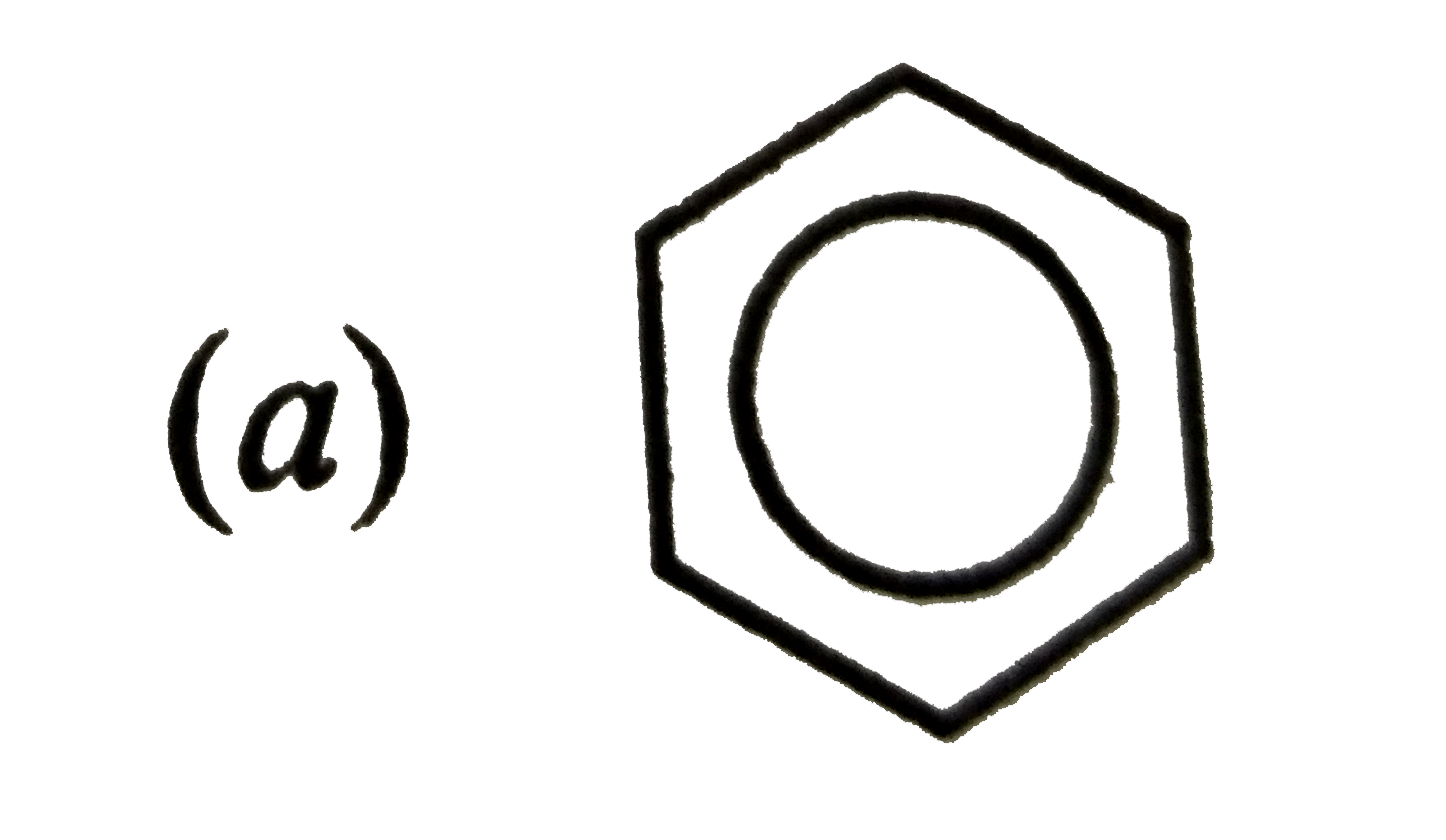
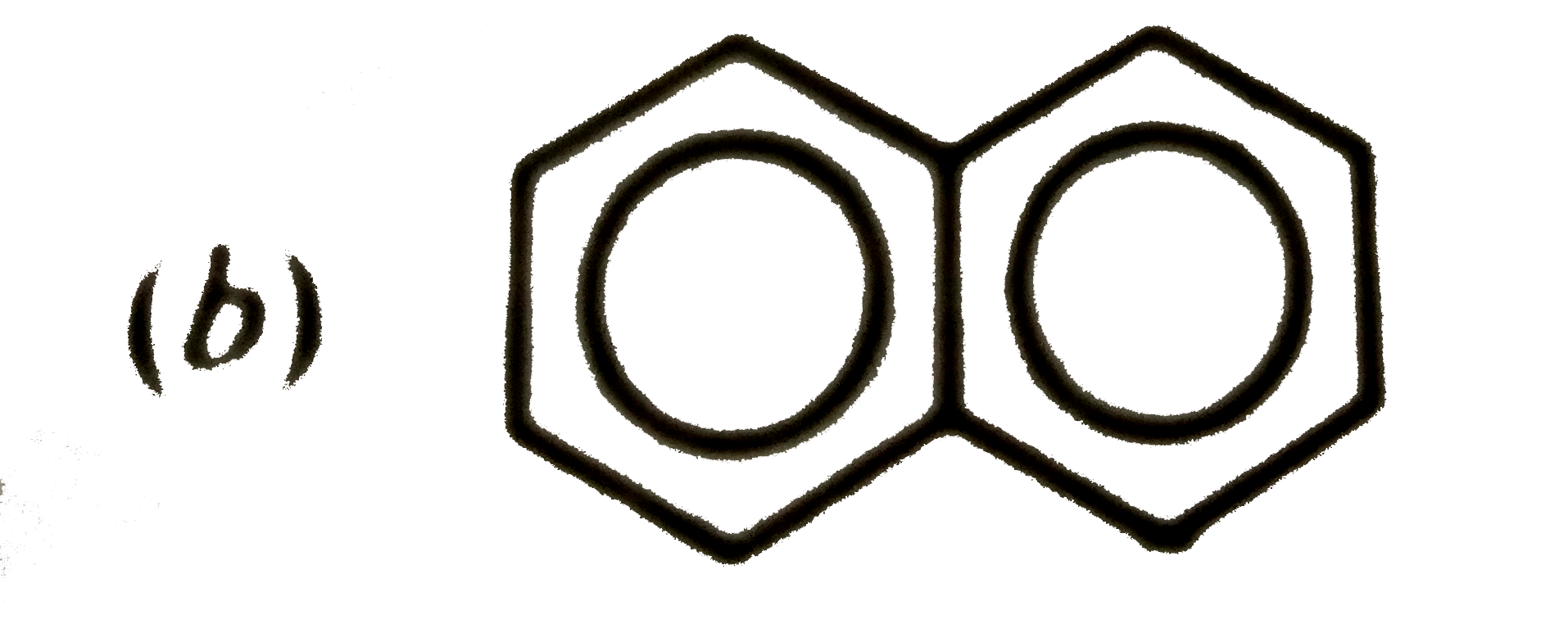
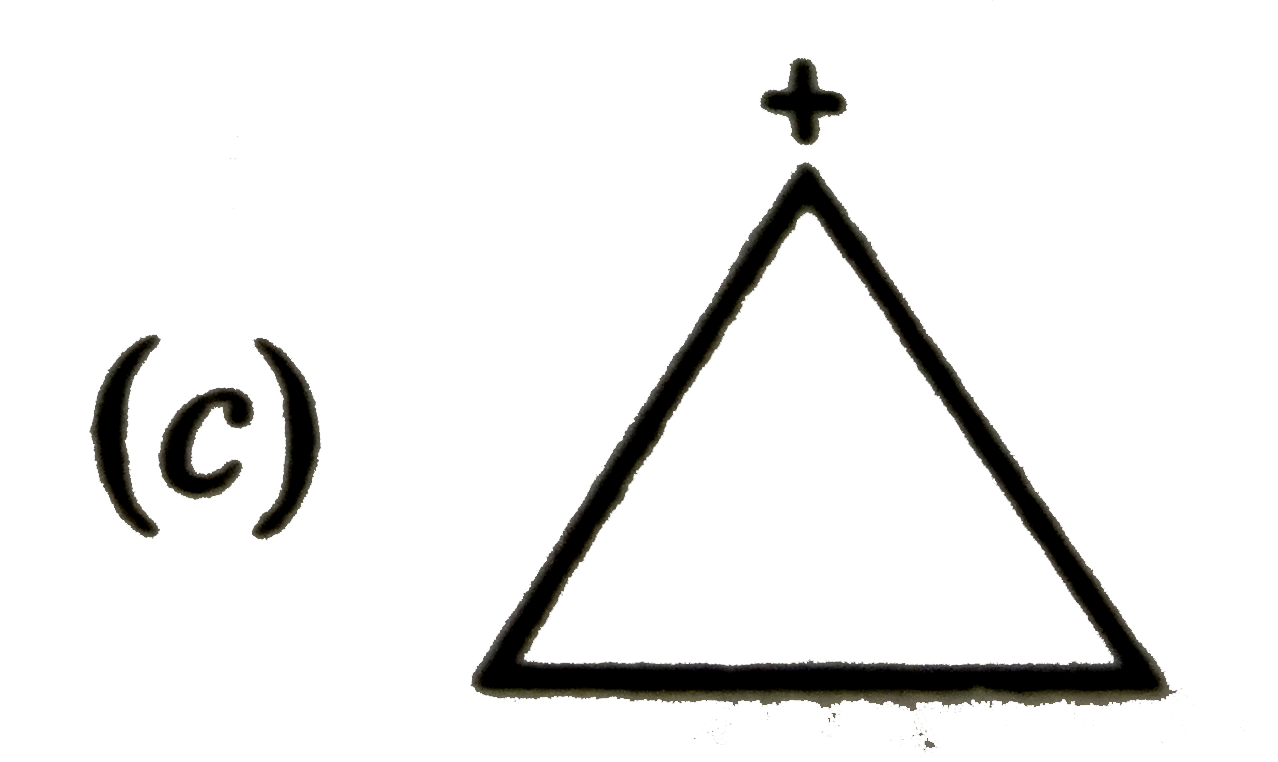
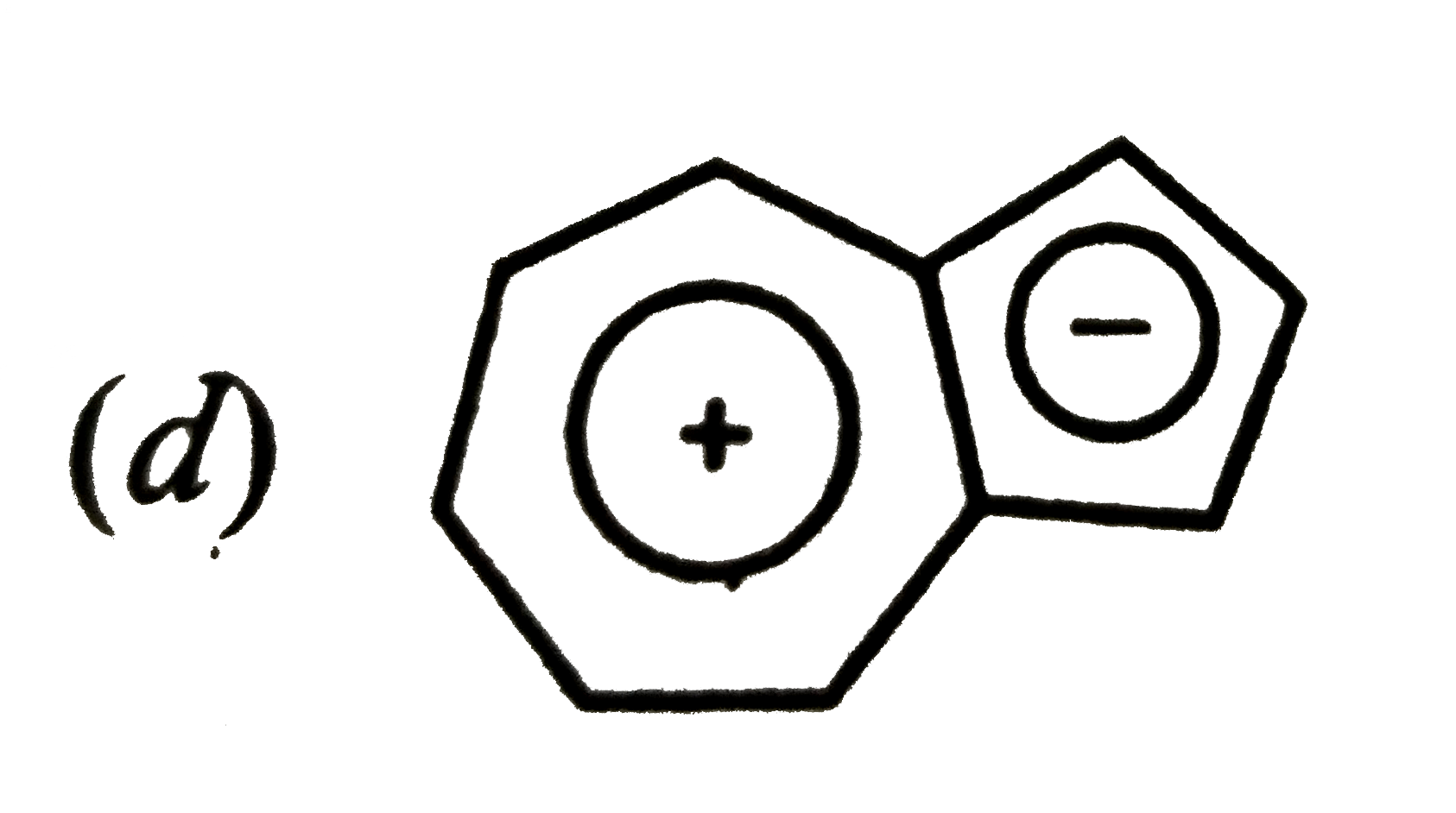
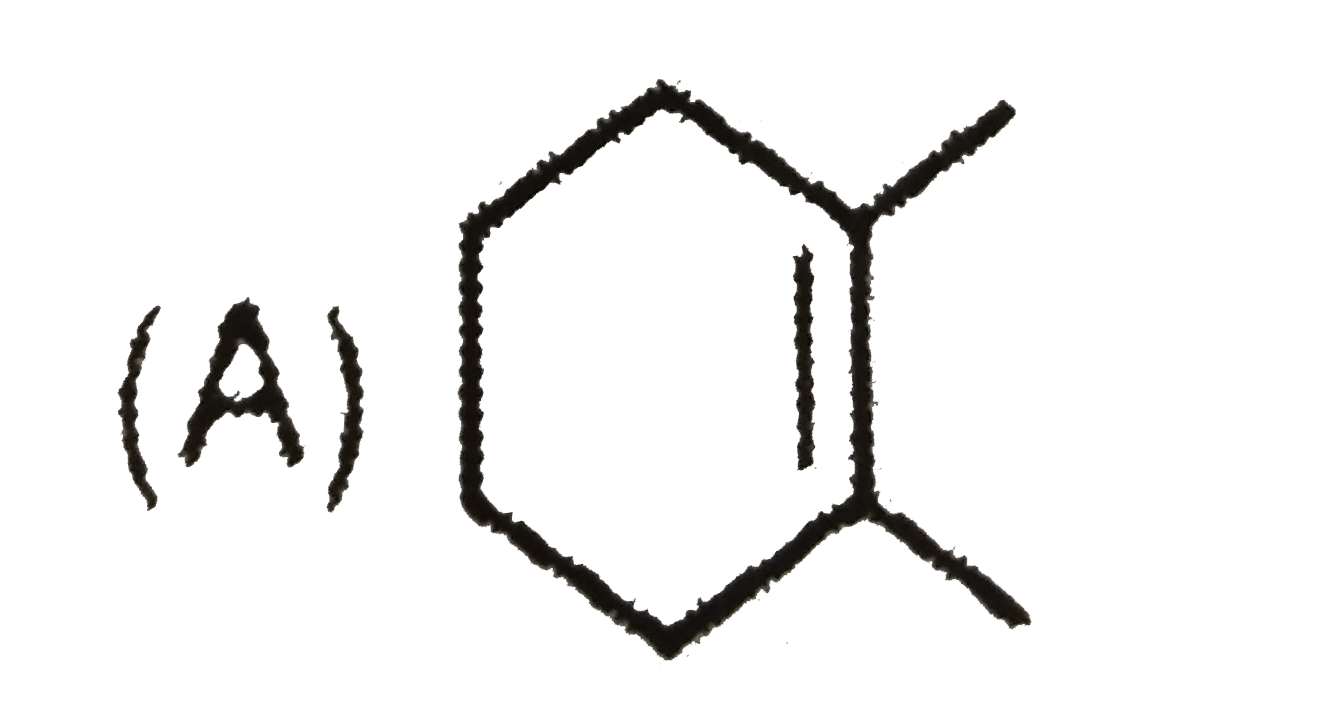
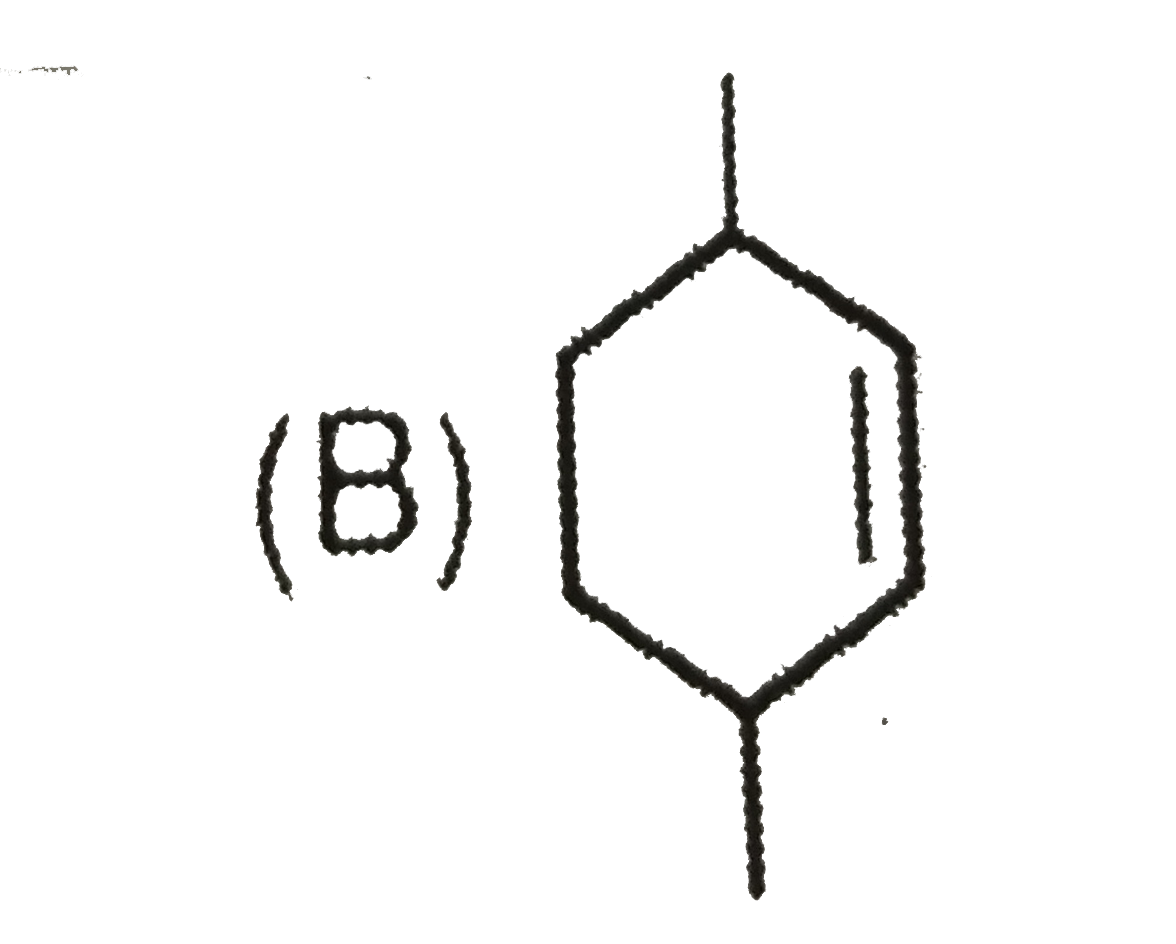
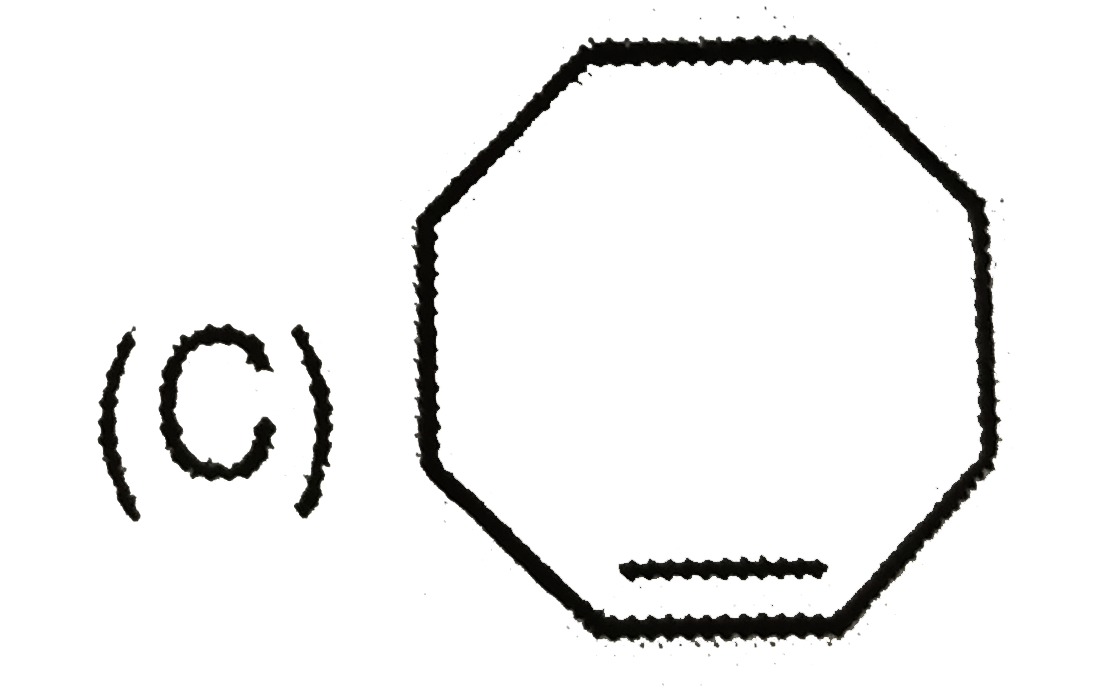
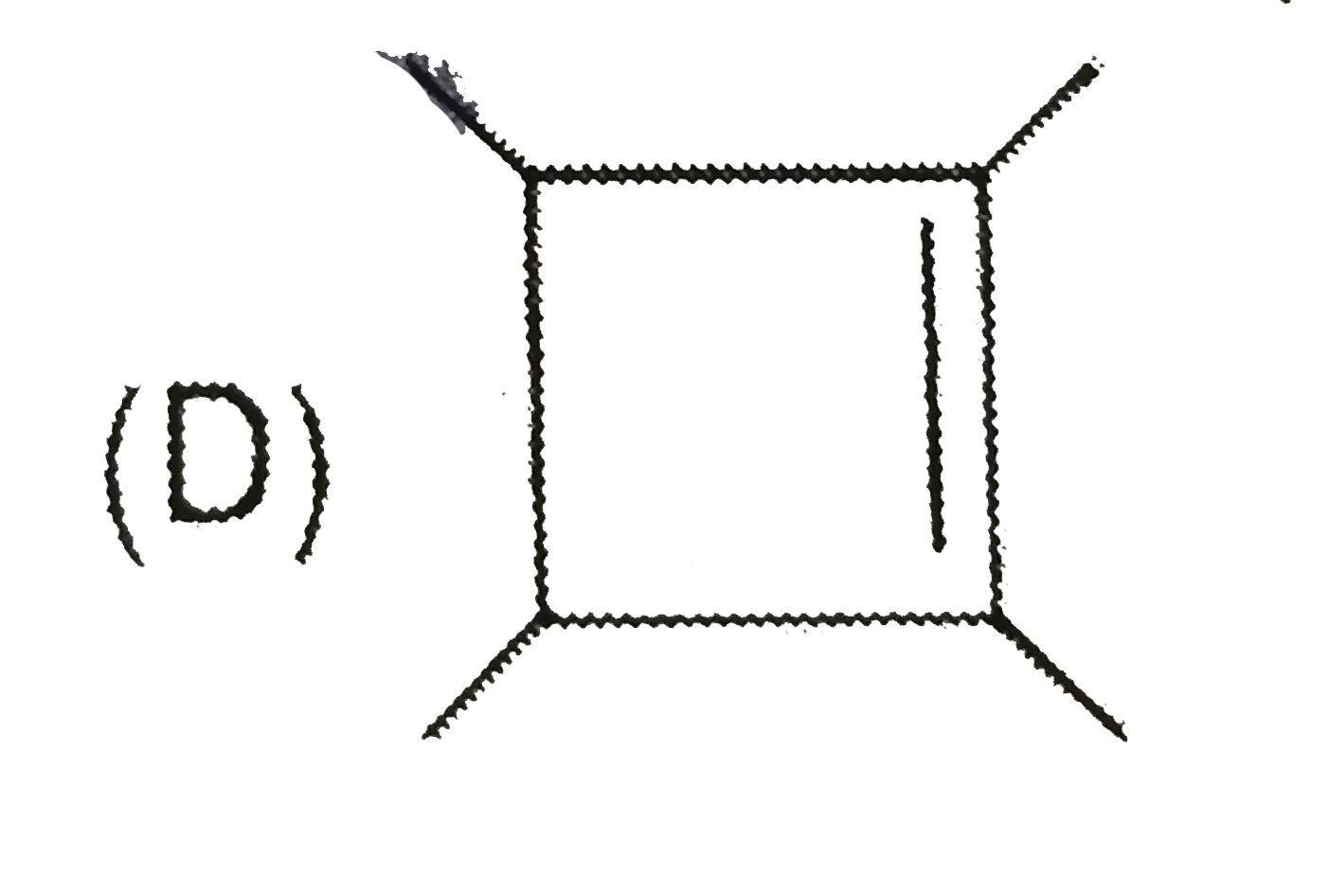
The chemical system that is non-aromatic is |
|
Answer»
|
|
| 27. |
The chemical system at equilibrium is not affected by addition of …………….. |
| Answer» SOLUTION :CATALYST | |
| 29. |
The chemical reaction of esters with another alcohol in excess is called |
|
Answer» Trans-alcoholisation |
|
| 30. |
The chemical reaction of an unsaturated compound 'M' are given below. Determine the possible structural formula of 'M' |
|
Answer»
|
|
| 31. |
The chemical process involved in the combustion reactions is |
|
Answer» Oxidation |
|
| 32. |
The chemicalnameand symbol of theatomwithatomicnumber112 are……….And ……….. Respectively |
| Answer» SOLUTION :COPERNICIUM CN | |
| 33. |
The chemical formula of the chelating agent Versence is C_(2) H_(4) N_(2) (C_(2) H_(2) O_(2) Na) If each mol of this compound could bind 1 mol of Ca^(2+), what would be the rating of pure Versene, expressed as mg CaCO_(3) bound per g. Of chealting agent? Ca^(2+) is expressed in terms in terms of amount of CaCO_(3) it could form. [Mw "of vesene" = 380, Mw "of" CaCO_(3) = 100 g mol^(-1)] |
|
Answer» SOLUTION :For each mol of compound: WEIGHT of `CaCO_(3) = (1 mol Ca^(2+)) ((1 mol CaCO_(3))/(mol Ca^(2+)))` `((100 g CaCO_(3))/(mol CaCO_(3))) ((10^(3) mg)/(g))` `= (1 xx 1 xx 100 xx 10^(3))/(1) = 1.0 xx 10^(5)` Weight of `CaCO_(3)//g` of versene `= (1.0 xx 10^(5) mg CaCO_(3))/(380 g "versene")` `= 263 mg` |
|
| 34. |
The chemical entities present in thermosphere of the atmosphere are |
|
Answer» `O_2^+ , O^+ , NO^+` |
|
| 35. |
The chemical compounds are represented by both Empirical and Molecular formulae. Whereas the former is only theoritical, the latter is the actual formula of a compound. In some cases, the two may be even same. A very popular organic compound is a major constituent of alcoholic drinks. (i) What is the empirical of the compound ? (ii) What is its molecular formula ? (iii) Give the chemical name of the compound (iv) Find the percentage composition of the compound ? |
|
Answer» Solution :(i) The empirical formula is `C_(2)H_(6)O` (ii) The molecular formula is ALSO the same i.e., `C_(2)H_(6)O or C_(2)H_(5)OH` (iii) The compound is known as ethanol or ethyl alcohol (iv) Molecular mass of `C_(2)H_(5)OH=2xx` Atomic mass of C + Atomic mass of `O + 6 xx` Atomic mass of H `= 2xx12+16 +6 xx1=46` u Percentage of carbon `(C)=("Mass of C")/("Molecular mass of "C_(2)H_(5)OH)XX100=((24u))/((46u))xx100=52.2` Percentage of oxygen `(O)=("Mass of O")/("Molecular mass of "C_(2)H_(5)OH)xx((16u))/((46u))xx100=34.8` Percentage of HYDROGEN `(H)=("Mass of H")/("Molecular mass of "C_(2)H_(5)OH)xx100=((6U))/((46u))xx100=13.0`. |
|
| 36. |
The chemical composition of cryolite mineral is |
|
Answer» `Al_(2)O_(3)` |
|
| 37. |
The chemical bond fonned due to electron trdllsfer is called ionic bond or electro valcnt bond, Ionic bond will be formed more easily between the elements with low ionization potential and high electron affinity. Energy changes involved during the fonnatioo of ionic compound can be calculated by Born-Haber cycle. Lattic enthalpy changes are directly proportional to the stability of ionic compound Most stable ionic compound among the following is |
| Answer» Answer :B::C | |
| 38. |
The chemical bond fonned due to electron trdllsfer is called ionic bond or electro valcnt bond, Ionic bond will be formed more easily between the elements with low ionization potential and high electron affinity. Energy changes involved during the fonnatioo of ionic compound can be calculated by Born-Haber cycle. Lattic enthalpy changes are directly proportional to the stability of ionic compoundBoron-Haber cycle is based on |
|
Answer» FARADAY's LAW |
|
| 39. |
The Chemical bond fonned due to electron transfer is called ionic bond or electro valent bond Ionic bond will be formed more easily between the elements with low ionisation potential and high electron affinity. Energy changes involved during the fonnation of ionic compound can be calculated by Born - Haber cycle. Lattice enthalpy changes are directly proportional to the stability of ionic compound. Which or the following has electrovalent bond ? |
|
Answer» `HCI` |
|
| 40. |
The chemical behaviour of dihydrogen is determined, to a large extent, by bond dissociation enthalpy. The H-H bond dissociation enthalpy is the highest for a single bond between two atoms of any element. What inferences would you draw from this fact? It is because of this factor that the dissociation of dihydrogen into its atoms is only 0.081% around 2000K which increases to 95.5% at 5000K. Also, it is relatively inert at room temperature due to the high H-H bond enthalpy. Thus the atomic hydrogen is produced at a high temperature in an electric arc or under ultraviolet radiations. Since its orbital is incomplete with Is' electronic configuration, it does combine with almost all the elements. Which of the following bond dissociation enthalpies is the highest for a single bond between two atoms of any element ? |
|
Answer» H-H |
|
| 41. |
The chemical behaviour of dihydrogen is determined, to a large extent, by bond dissociation enthalpy. The H-H bond dissociation enthalpy is the highest for a single bond between two atoms of any element. What inferences would you draw from this fact? It is because of this factor that the dissociation of dihydrogen into its atoms is only 0.081% around 2000K which increases to 95.5% at 5000K. Also, it is relatively inert at room temperature due to the high H-H bond enthalpy. Thus the atomic hydrogen is produced at a high temperature in an electric arc or under ultraviolet radiations. Since its orbital is incomplete with Is' electronic configuration, it does combine with almost all the elements. Atomic hydrogen can accomplish reactions byI)losing the only electron to give H^+II) gaining an electron to form H^-III) sharing electrons to form a single covalent bond The correct statement/s is/ are |
| Answer» Answer :D | |
| 42. |
A compound on analysis gave the following percentage composition : Na= 14.31%, S = 9.97%, H = 6.22%, O = 69.50%. Calculate the molecular formula of the compound on the assumption that all the hydrogen in the compound is present in combination with oxygen as water of crystallisation. Molecular mass of the compound is 322. (At. wt. of Na = 23, S = 32, H = 1, O = 16) |
Answer» Solution :Calculation of EMPIRICAL formula:  `therefore` The empirical formula of the given compound is `Na_(2)SH_(20)O_(14)`. Calculation of MOLECULAR formula : Empirical formula MASS = `(2 xx 22.99) + 32.06 + (20 xx 1.008) + (14 xx 16.0) = 322.2` Molecular mass (given) = 322 `n=("Molecular mass")/("Empirical formula mass")` `=322/(322.2) = 0.99938=1` `therefore` Molecular formula = `1 xx` Empirical formula `=1 xx Na_(2)SH_(20)O_(14)` `=Na_(2)SH_(20)O_(14)` Since, as per question, all the 20 hydrogen atoms in COMBINATION with oxygen are present as water of crystallisation , one molecule of the given compound must contain 10 molecules of `H_2O`. This is because 20 atoms of hydrogen present in the molecular formula obtained above will combine with 10 atoms of oxygen to FORM 10 molecules of water. Now, only 14 - 10 = 4 atoms of oxygen are left. They must be present in the main molecule. Hence, the molecular formula of the given compound can be written as `Na_(2)SO_(4).10H_(2)O` |
|
| 43. |
The chemical behaviour of dihydrogen is determined, to a large extent, by bond dissociation enthalpy. The H-H bond dissociation enthalpy is the highest for a single bond between two atoms of any element. What inferences would you draw from this fact? It is because of this factor that the dissociation of dihydrogen into its atoms is only 0.081% around 2000K which increases to 95.5% at 5000K. Also, it is relatively inert at room temperature due to the high H-H bond enthalpy. Thus the atomic hydrogen is produced at a high temperature in an electric arc or under ultraviolet radiations. Since its orbital is incomplete with Is' electronic configuration, it does combine with almost all the elements.At which of the following temperatures, the dissociation of dihydrogen into its atoms will be maximum ? |
|
Answer» 2500K |
|
| 44. |
The chemical added to leaded petrol to prevent the deposition of lead in the combustion chamber is |
|
Answer» Iso-octane |
|
| 45. |
The charge to mass ratio of electron was found to be |
|
Answer» `1.6022 xx 10^(-19) C kg^(-1)` |
|
| 46. |
The charge/sizeratio of a cation determines its. polarizing power. Whichone of the following sequences respresents the increasing order of the polarizing power of the cationic species ,K^(+), Ca^(2+), Mg^(2+), Ba^(2+)? |
|
Answer» `Ca^(2+) lt Mg^(2+) lt Be^(2+) lt K^(+)` ratio of cation increases which in TURN increases as the charge increases and size decreases , i.e., `K^(+) lt Ca^(2+) lt Mg^(2+) lt Be^(2+)` . |
|
| 47. |
The charge/size ratio of a cation determines its polarizing power. Which one of the following sequences represents the increasing order of the polarizing power of the cationic species, K^(+), Ca^(2+), Mg^(2+), Be^(2+)? |
|
Answer» `CA^(2+) lt Mg^(2+ ) lt Be^(2+ ) lt K^(+)` HIGH charge and small size of the CATIONS increases pol.arisation. As the size of the given cations decreases as `K^(+) gt Ca^(2+) gt Mg^(2+) gt Be^(2+)` Hence, polarising power decreases as `K^(+) ltCa^(2+) ltMg^(2+) ltBe^(2+)` |
|
| 48. |
The charge present on one mole of azide ion (in Faradays) |
|
Answer» 1 |
|
| 49. |
The charge present on 1 mole electronsis |
| Answer» Answer :A | |
| 50. |
The charge on eletron was determined by |
|
Answer» Schrodinger |
|