Saved Bookmarks
This section includes 7 InterviewSolutions, each offering curated multiple-choice questions to sharpen your Current Affairs knowledge and support exam preparation. Choose a topic below to get started.
| 1. |
A metallic cylindrical vessel whose inner and outer radii are r_(1) and r_(2) is filled with ice at 0^(0)C. The mass of the ice in the cylinder is m. Circular portions of the cylinder is sealed with completely adiabatic walls. The vessel is kept in air. Temperature of the air is 50^(0)C. How long will it take for the ice to melt completely. Thermal conductivity of the cylinder is k and its length is l. Latent heat of fusion is L. |
|
Answer» `(mLln(r_(2)//r_(1)))/(100pi kl)` |
|
| 2. |
Can we get out of smooth surface by taking jump on it ? |
| Answer» SOLUTION :No.Asmoothsurfacedoesnotprovidereaction(FORCE) | |
| 3. |
Two bodies of masses m_1 and m_2 (m_1gtm_2) are moving with velocities v_1 and v_2. If there momenta P_1 and P_2 are equal, which of the following is true ? |
| Answer» Answer :A | |
| 4. |
The ratio of the length of two rods is 4:3. The ratio of their coefficients of cubical expansion is 2:3. Then the ratio of their linear expansions when they are heated through same temperature difference is |
|
Answer» `2:1` |
|
| 5. |
To a man walking at the rate of 3km/h the tain appears to fall vertically. When he increases his speed to 6km/h it appears to meet him at an angle of 45^(@) with vertical. Find the angle made by the velocity of rain with the vertical and its value. |
Answer» Solution : From the diagram `TAN 45^(@) = (3)/(y)` ….(i) and `Tan theta = (3)/(y)` ……..(2) From (1) and (2) `theta = 45^(@)` and `therefore sin 45^(@) = (3)/(V_(R)), (1)/(sqrt(2)) = (3)/(V_(R))` `V_(R) = 3sqrt(2)` kmph |
|
| 6. |
The force of surface tesion on a paper disc floating on the surface of water is F. If aother paper disc of same outer radius with a hole at its centre is floating force of ST o it if radius of the hole ishalf of outer radius |
|
Answer» F/2 |
|
| 7. |
What are the physical quantitise having maximum value at the mean position in SHM? |
| Answer» SOLUTION :Is SHM at mean position VELOCITY and KINETIC ENERGY will have maximum values. | |
| 8. |
A racing car travelling at 35 ms^(-1) along a circular path of radius 700 m, starts picking up speed at the rate of 2 ms^(-2) What is its total acceleration ? |
|
Answer» Solution :`v = 35 ms^(-1),r = 700 m`, TANGENTIAL accleration `=a_(1) = 2 ms^(-2)` RADIAL acceleration `=a_(r) = v^(2)/r = (35 xx 35)/700 = 1.75 ms^(-2)` Total acceleration `a = sqrt(a_(l)^(2) + a_(r)^(2)) = sqrt(2^(2) + (1.75)^(2)) = 2.66 ms^(-2)` |
|
| 9. |
When equal volumes of two metal are mixed together, the specific gravity of alloy is 4. When equal masses of the same two metals are mixed together the specific gravity of the alloy is 3. calculate the specific gravity of each metal. |
|
Answer» |
|
| 10. |
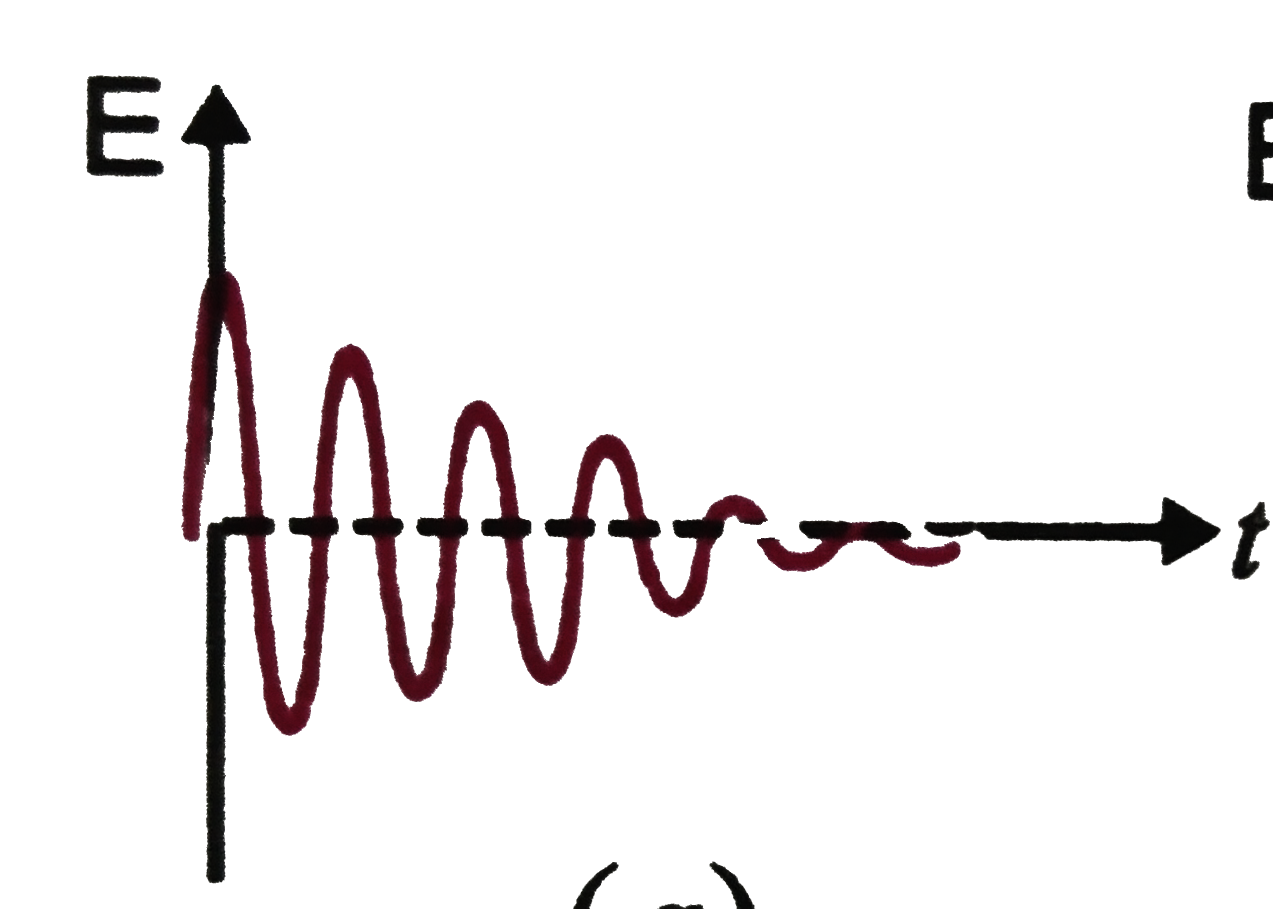
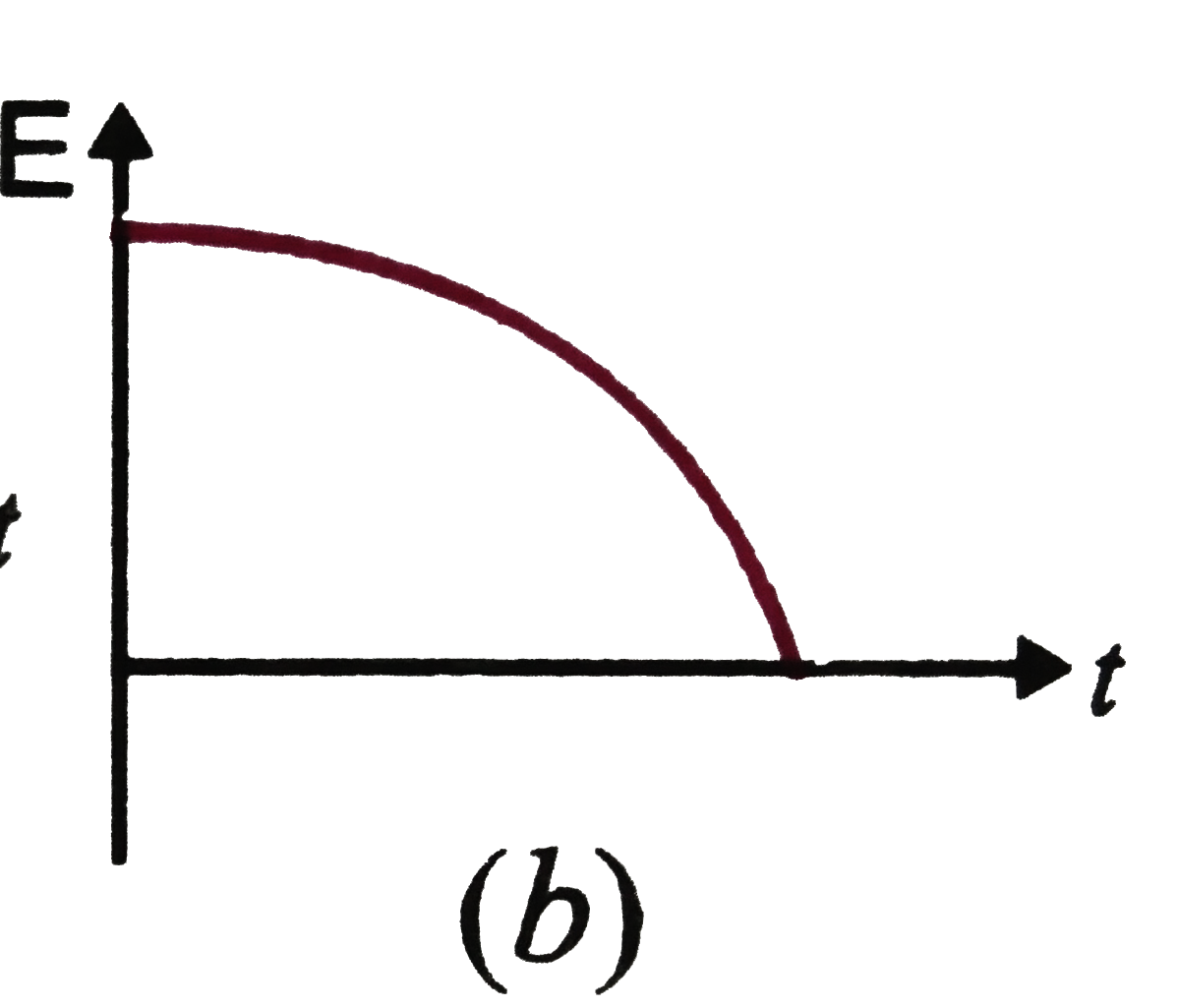
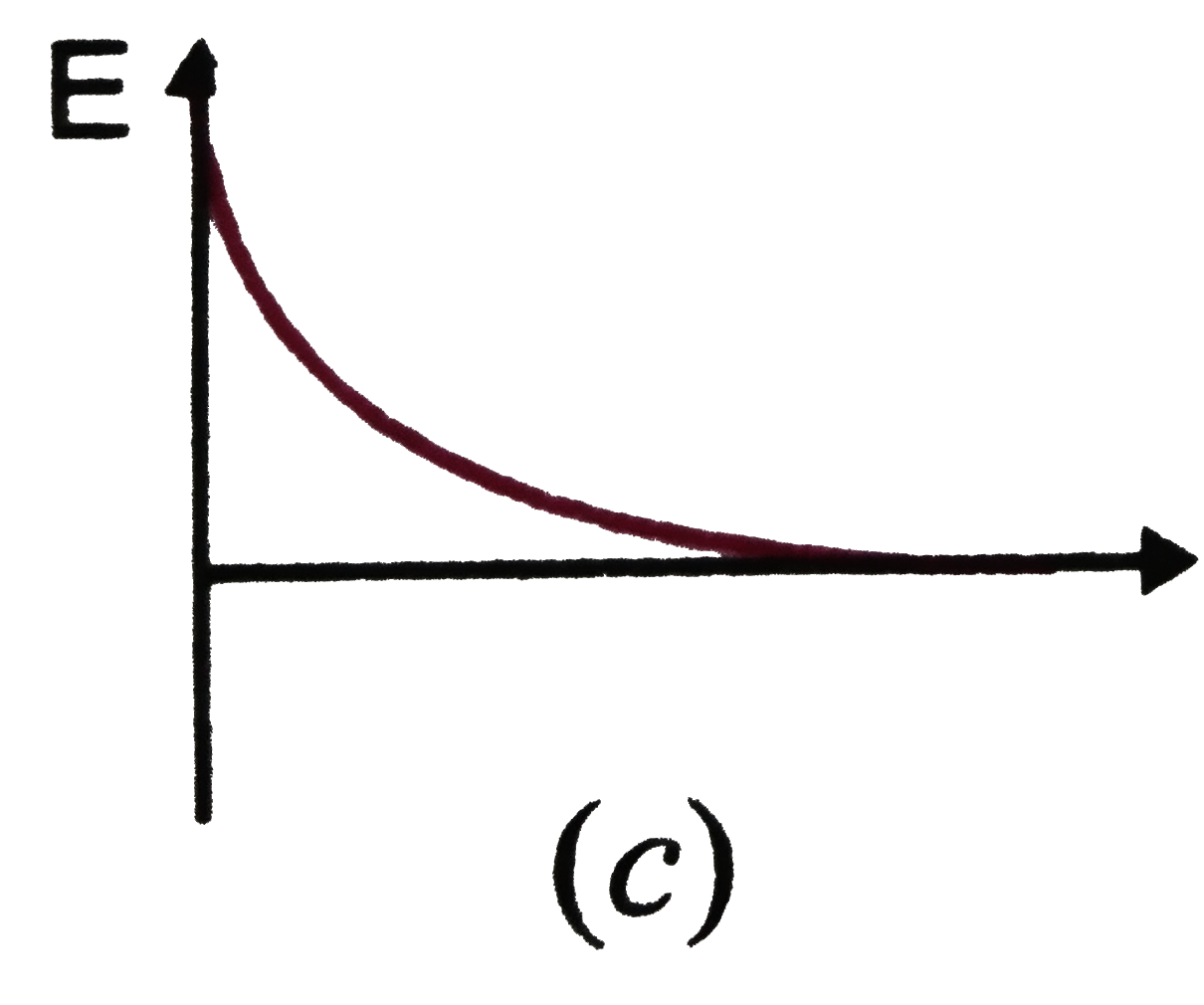
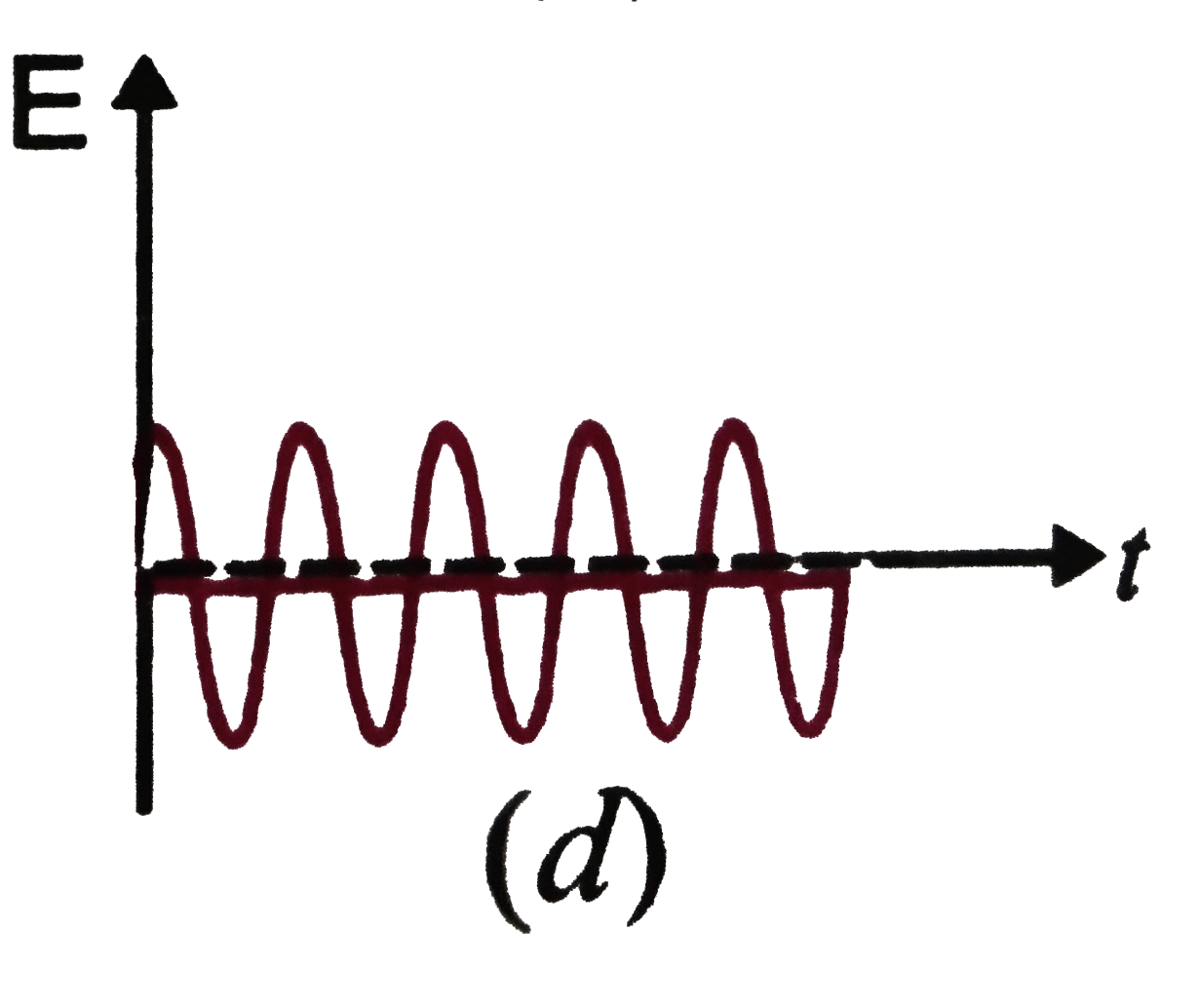
Which of the diagrams shown in figure, represents variation of total mechanical energy of a pendulum oscillating in air as function of time ? |
|
Answer»
|
|
| 11. |
The average translational kinetic energy of O, (molar mass 32) molecules at a particular temperature is 0.048 eV. The translational kinetic energy of N_(2) (molar mass 28 molecules in eV at the same temperature os ) |
|
Answer» 0.0015 |
|
| 12. |
The prism A and B are in contact with each other have angular dispersion of 2^@ and 4^@ respectively. The dispersive power of A is 0.002. If the combination produces dispersion without deviation the dispersive power of B is |
|
Answer» 0.001 |
|
| 13. |
For a liquid in a vessel if force of Adhesion is more than force of cohesion a) shape of the meniscus is cancave upwards b) shape of the meniscus is convex upwards c) liquid level rises in the capillary tube d) liquid level drops in the capillary tube |
|
Answer» a, C are correct |
|
| 14. |
A pendulum clock that keeps correct time on the earth is take to the moon. It will run |
|
Answer» at correct rate |
|
| 16. |
Write the differences between conservative and Non - conscrvative force. Give two examples each. |
|
Answer» Solution :CONSERVATIVE FORCE : EG. Gravitational force and electrostatic force. Non-Conservative force: e.g., forces of friction and viscosity |
|
| 17. |
A force is applied for a duration of 10 sec on a body of mass 5kg that is at rest. As a result the body acquires a velocity of 2ms^(-1). Find the magnitude of the force applied. |
| Answer» Answer :A | |
| 18. |
Name a physical quantity which has the same dimensions as that of torque ? What is the difference between the two ? |
| Answer» Solution :Work is SCALAR PRODUCT of R and FBut TORQUE is their vector product. | |
| 19. |
Let the speed of the planet at the perihelion P be V_pand the sun-planet distance SP be r_p .Relate (r_p, V_p)to the corresponding quantities at the aphelion (r_A,V_A) . Will the planet take equal times to transverse BAC and CPB? |
Answer» Solution : According to law of conservation of angular momentum. Angular momentum of the planet at P= Angular momentum of the planet at A ` rArr =mV_p r_p = m V_A r_A "or " V_P/V_A = r_A/r_P` Since `r_A gt r_P` so `V_P gt V_A` Here area SBAC is greater than the area SCPB. According to Kepler.s second law, as the areal VELOCITY of the planet is constant around the sun, i.e equal areas are swept on equal TIMES, the planet will TAKE longer time to traverse BAC than CPB. |
|
| 20. |
If the gravitational field intensity at a point is given by g = (GM)/(r^(2.5)) . Then the potential at distance r is(Take gravitational potential at infinity is zero ) |
|
Answer» `(-2GM)/(3R^(1.5))` |
|
| 21. |
The acceleration - time graph of a particle moving along a straight line ( starting from rest) is shown. After what time the particle attins its initial position ? |
|
Answer» 2.8sec |
|
| 22. |
A mass M is broken into two parts m and (M-m). What should be the ratio between m and M. So that the force of gravitation between them is maximum |
| Answer» ANSWER :B | |
| 23. |
A spring made of steel not copper. Why? |
| Answer» SOLUTION :As Young.s MODULUS of STEEL is greater than that of copper, springs are MADE of steel. | |
| 24. |
When two identical spheres are kept in contact, the gravitational force between them is F. If two spheres of same material but with twice the radius are radius are kept in contact, then the gravitational force between them would be |
|
Answer» `F//4` |
|
| 25. |
The number of significant figure in 6.320 is |
|
Answer» 4 |
|
| 26. |
Which one of the following is correct? According to perpendicular axes theorem: |
|
Answer» `I_(X)=I_(y)+I_(Z)` |
|
| 27. |
5.74 g of a substance occupies 1.2 cm^(3) Express its density to correct significant figures. |
|
Answer» Solution :Density = `("MASS")/("VOLUME") = (5.74)/(1.2) = 4.783 g//cm^(3)` Here least significant FIGURE is 2, so density = `4.8 g//cm^(3)` . |
|
| 28. |
A uniform rod is fixed at one end to a rigid support, its temperature is gradually increased the representation of graph strain (e) versus increment in temperature Delta thetais |
|
Answer» d |
|
| 29. |
A thin disc rotates about an axis passing through its centre and perpendicular to its plane with a constant angular velocity .omega. I is the moment of inertia of that disc and .L. is its angular momentum about the given axis. Then rotational kinetic energy of the disc .E. is (A) Ealpha L^(2) (B) E alpha E^(-2) (C) E alpha (D) E alpha 1^(-1) (if L constant) |
|
Answer» A & C are correct |
|
| 30. |
In the last problem if it is allowed to apply the force F in any direction, find the minimum force F_("min") needed to move the block on the incline. |
|
Answer» |
|
| 31. |
The minimum and maximum velocities of a projectile are 10ms^(-1) and 20ms^(-1) respectively. The horizontal range and maximum height are respectively (g=10 ms^(-2)) |
|
Answer» `10sqrt(3)m` and 20 m |
|
| 32. |
Moment of inertia of a rigid body depends on (A) Mass of body(B) Postion of axis of rotation(C ) Angular velocity of the body(D) Time period of its rotation |
|
Answer» A and B are correct |
|
| 33. |
Explain the relative velocity and its two cases. |
Answer» Solution :Case 1 TWO observes and one moving object : 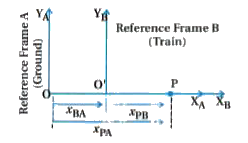 Let A be the frame of reference associated with person standing on the ground. B is the frame of reference associated with the train moving with UNIFORM velocity. Both these reference frames are inertial frames of reference. From the figure, `x_(PA)=x_(PB) +x_(BA)` Differentiating with respect to t, `(dx _(PA))/(dt) = (dx _(PB))/(dt )+ (dx _(BA))/(dt)` But ` (dx _(PA))/(dt) = v _(PA),( dx _(PB))/(dt)= v _(BA)` `THEREFORE v (PA) = v _(PB) + v _(BA)` `therefore v _(BA) = v _(PA) - v_({PB)` Where `v _(PA)=` Velocity of P with respect to reference frame A. `v _(PB)=` Velocity of P with respect ot reference frame B. `v _(BA)=` Velocity of reference frame B with respect to reference frame A. Case 2 One observer and two moving objects :  Suppose particales A andB motion in reference of frame O- XY O - YZ in ground. Suppose velocities of two particles A and B are respectively `vec(v _(A)) and vec(v_(B))` releative to a FARME of reference (suppose earth) then velocity `v _(AG) and v _(GB).` Then velocity of B relative to A is, `v _(BA)= v _(GA) - v _(GB)` `=- v _(GB) + v _(GB)` ` therefore v_(BA) =-v _(BG)-v_(AG)` `[because v_(BG) =- v _(GB) and v _(GA) =-v _(AG) ]` `=v _(B) -v_(A)` and velocity of A relative to B is `v_(AB) =v_(A) -v_(B)` `= v _(AG)-v_(BG)` |
|
| 34. |
Fill in the blanks using the word from the list appended with each statement. Viscosity of gases cdots with temperature (increase /decrease) |
|
Answer» |
|
| 35. |
An object take 1 second to slide down a rough 45^(@) inclined plane. Determine the time taken by it so slide down a smooth 30^(@) inclined plane having the same slope length (mu=0.5) |
|
Answer» SOLUTION :`2^(-1//4)s` |
|
| 36. |
Three balls A,B and C are projected from ground with same speed at same angle with the horizontal. The balls A,B and C collie with the wall during a flight in air and all three collide perpendicu lary and eleastically with the wall as shown in Fig. 5.119 it the time taken by the ball A to fall back on ground is 4 seconds and that by ball B is 2 seconds. Then the time taken by the ball C to reach the ground after projection will be: |
|
Answer» Since in second case going up time is 1s and coming BACK time 1s. So in third case PARTICLE will take 3s to hit the plane and 3s to come back so total time in case 3 is 6S. |
|
| 37. |
When an ideal diatomic gas is heated at constantpressure, the fraction of the heat energy supplied which performs work on the gas is |
|
Answer» `(2)/(5)` |
|
| 38. |
A copper block of mass 1 kg slides down on a rough inclined plane of inclination 37^(@) at a constant speed. Find the increase in the temperature of the block as it slides down through 60 cm assuming that the loss in mechanical energy goes into the copper block as thermal energy. (Specific heat of copper=420 J kg^(-1) K^(-1), g=10ms^(-2)) |
|
Answer» `6.6xx10^(-3).^(@)C` |
|
| 39. |
A body of mass m is accelerated uniformly from rest to a speed v in a time T. The instantaneous power delivered to the body as a function of time, is given by |
|
Answer» `(MV^(2))/(T^(2))t` |
|
| 40. |
A ball of mass m moving horizontal at a speed 'v' collides with the bob of a simple pendulum at rest. The mass of the bob is also m. |
|
Answer» If the COLLISION is inelastic, the height to which the two balls rise after the collision is `v^(2)//8g` |
|
| 41. |
Which falls faster , big rain drops or small rain drops ? |
|
Answer» Solution :TERMINAL VELOCITY of rain drop , `v_(t)=(2)/(9)r^(2)g((rho-sigma)/(eta))` `THEREFORE` According to `v_(t)propr^(2)`, large drop have more terminal velocity so , it falls quickly. |
|
| 42. |
One mole of a monoatomicideal gasis contained in a rigidcontainer ofvomlume V_(0) with walls of total surface area A , thickness x and thermal conductivityK . The temperature outsideis T_(s) (T_(s) gt T_(0)). |
|
Answer» Solution :Sincethe volume of thecontainer is fixed , only the TEMPERATUREAND pressure of the gasvarieswith time, Further the outsidetemperature beings MORETHAN that of the gas , heat from surroudingenters into the gas . If P andT bethe pressure and temperatureof the gas at ANYINSTANT , then `(P)/(T) = (P_(0))/(V_(0))"".......(i) ` The heat flowinginto the gas , duringa small time interval dt will be`dQ = (KA(T_(s) - T)dt)/(x) ............(ii)` But `dQ = 1((3)/(2)R) dT [ because dQ = nC_(v)TD and C_(v) = 3R//2` fora monoatomicgas ] `therefore ` EQ.(ii) can be rewritten as `(3RdT)/(2) = (KA)/(x) (T_(s)T)dt (or ) (dT)/((T_(s) - T)) = (2KA)/(3Rx) dt` sinceat `t = 0 , T = T_(0)` and at`t = t , T = T` `thereforeint_(T_(0))^(T) (dT)/((T_(s) - T)) = (2KA)/(3Rx) int_(0)^(1) dt rArrIn ((T_(s) - T)/(T_(s)-T_(0))) = (-2At)/(3Rx)` i.e.,`T_(s) - T = (T_(s)- T) e^((2KA t)/(3Rx)) ` or `T = T_(s) - (T_(s) - T_(0))e^((2KAt)/(3Rx)) therefore "From Eq." (i) P = (P_(0))/(V_(0)) [T_(s) - (T_(s) - T_(0))e^((2KAt)/(3Rx))]` |
|
| 43. |
When an ideal diatomic gas is heated atconstant pressure, the fraction of the heat energy supplied which increases the internal energy of the gas is |
|
Answer» `2//5` |
|
| 44. |
A Blackbody, a Whitebody, A Bluebody and a Red coloured body are heated to same temperature and are allowed lo cool in the same surroundings. Then the body that cools early is |
| Answer» ANSWER :D | |
| 45. |
In a screw gauge pick up the correct statement(s) |
|
Answer» POSITIVE error exists when the head scasle's zeroth DIVISION is above the base line of the pitch scale, when the TWO studs are in contach. |
|
| 46. |
A man who can swin with a velocity v_(b) in still water wants to cross a rivera river in minimum possible time, if the river is flowing with a velocity v_(w) and b , x are the width and drift respectively, the actual distance travelled by the man is . |
|
Answer» x |
|
| 47. |
A mass m in attached to a mass less string and swings in a horizontal circle, forming a conical pendulum, as shown in the figure. The other end of the string passes through a hole in the table and is dragged slowly so as to reduce the length l. The stringis slowly drawn up so that the depth h shown in the figure becomes half. By what factor does the radius (r) of the circular path of the mass m change? |
|
Answer» |
|
| 48. |
Find the dimension of universal gravitational constant taking the units of density D velocity V and work W as base units instead of those of mass, distance and time. |
|
Answer» Solution :From Newton.s LAW of gravitation F = `G(M_(1)M_(2))/r^(2)` we [G] = `([F][r^(2)])/[[m^(2)])=(MLT^(-2)xxL^(2))/(M^(2))=M^(-1)L^(3)T^(-2)` Let`M^(-1)L^(3)T^(-2)=D^(X)V^(y)W^(z)` `=(ML^(-3))^(x)xx(LT^(-1))^(y)xx(ML^(2)T^(-2))^(z)` `= M^(x+z)xxL^(-3x+y+2z)XXT^(-y-2z)` Equating powers of same bases, x+z = -1 -3x+y+2z=3 and `""` -y-2z = -2 Solving x,y,z, we get x = `-(1)/(3),y=(10)/(3) "and"z=-(2)/(3)` `:." "[G]="D"^(-(1)/(3))"V"^(10/(3))"W"^(-(2)/(3))` |
|
| 49. |
Which of the following is the most precise divice for measuring length |
|
Answer» Vernier callipers with 20 DIVISIONS on the sliding SCALE |
|
| 50. |
Cloudy nights are warmer than clear nights-why? |
| Answer» Solution :Clouds, being bad CONDUCTOR ,prevent the HEAT from escaping into the SPACE that it remains in the ATMOSPHERE and HENCE the night are warmer. | |