Saved Bookmarks
This section includes 7 InterviewSolutions, each offering curated multiple-choice questions to sharpen your Current Affairs knowledge and support exam preparation. Choose a topic below to get started.
| 1. |
A solenoid is of length 50 cm and has a radius of 2cm. It has 500 turns. Around its central section a coil of 50 turns is wound. Calculate the mutual inductance of the system. |
|
Answer» <P> Solution :`N_(P)=500, N_(S)=50, A=pi XX 0.02 xx 0.02 m^(2)``mu_(0)=4pi xx 10^(-7) H m^(-1), I=50 cm=0.5 m` Now, `M=(mu_(0)N_(P)N_(S)A)/(L)` `=(4pi xx 10^(-7) xx 500 xx 50 xx pi xx (0.02)^(2))/(0.5)H` `=789.8 xx 10^(-7)H=78.98 mu H` |
|
| 2. |
Compare the drift speed obtained above with (i) Thermal speed of copper atoms at ordinary temperatures. (ii) Speed of propagation of electric field along the conductor which causes the drift motion |
|
Answer» Solution :(i) At a temperature T, the thermal speed of a copper atom of mass is obtained from `(1)/(2) M_(e) V_(rms)^(2) = [(3)/(2)] K_(B) T` `IMPLIES V_(rms) = sqrt((3K_(B) T)/(M_(e)))` Here `K_(B) = 1.38 xx 10^(-23)` `T = 300 K, M_(e))= 9.1 xx 10^(-31) kg` `implies V_("rms") = sqrt((3 xx 1.38 xx 10^(-23) xx 300)/(9.1 xx 10^(-31)))` `= sqrt((1.38 xx 9 xx 10^(10))/(9.1))` ltBrgt `= sqrt(1.36) xx 10^(5) m//s` `:.` Thermal speed, `V_("rms") = 1.17 xx 10^(5) m//s` `(V_(d))/(V_(rms)) = (1.225 xx 10^(-3))/(1.17 xx 10^(5)) = 1.047 xx 10^(-8)` `:.` drift speed of ELECTRON`(V_(d)) = 1.047 xx 10^(-8)` `= 10^(-8)` times of thermal speed at ordinary temperature. (ii) The electric field TRAVELS along conductor with speed of EMW. `C = 3 xx 10^(8) m//s` `V_(d) = 1.25 xx 10^(-3) m//s` `(V_(d))/(C ) = (1.225 xx 10^(-3))/(3 xx 10^(8))` `V_(d) =0.408 xx 10^(-11) C` `:.` Drift speed is, in comparision of C, extermely smallar by a factor of `10^(-11)`. |
|
| 3. |
A person weighing 30 kg walks on a level platform witha speed of 2 m/sec. The work done by the person against force of gravity is: |
|
Answer» ZERO |
|
| 4. |
Classically, an electron can be in any orbit around the nucleus of an atom. Then what determines the typical atomic size? Why is an atom not, say, thousand times bigger than its typical size ? The question had greatly puzzled Bohr before he arrived at his famous model of the atom that you have learnt in the text. To simulate what he might well have done before his discovery, let us play as follows with the basic constants of nature and see if we can get a quantity with the dimensions of length that is roughly equal to the known size of an atom (-10^(-10)m) Construct a quantity with the dimensions of length from the fundamental constants e, m_(e) and c. Determine its numerical value. |
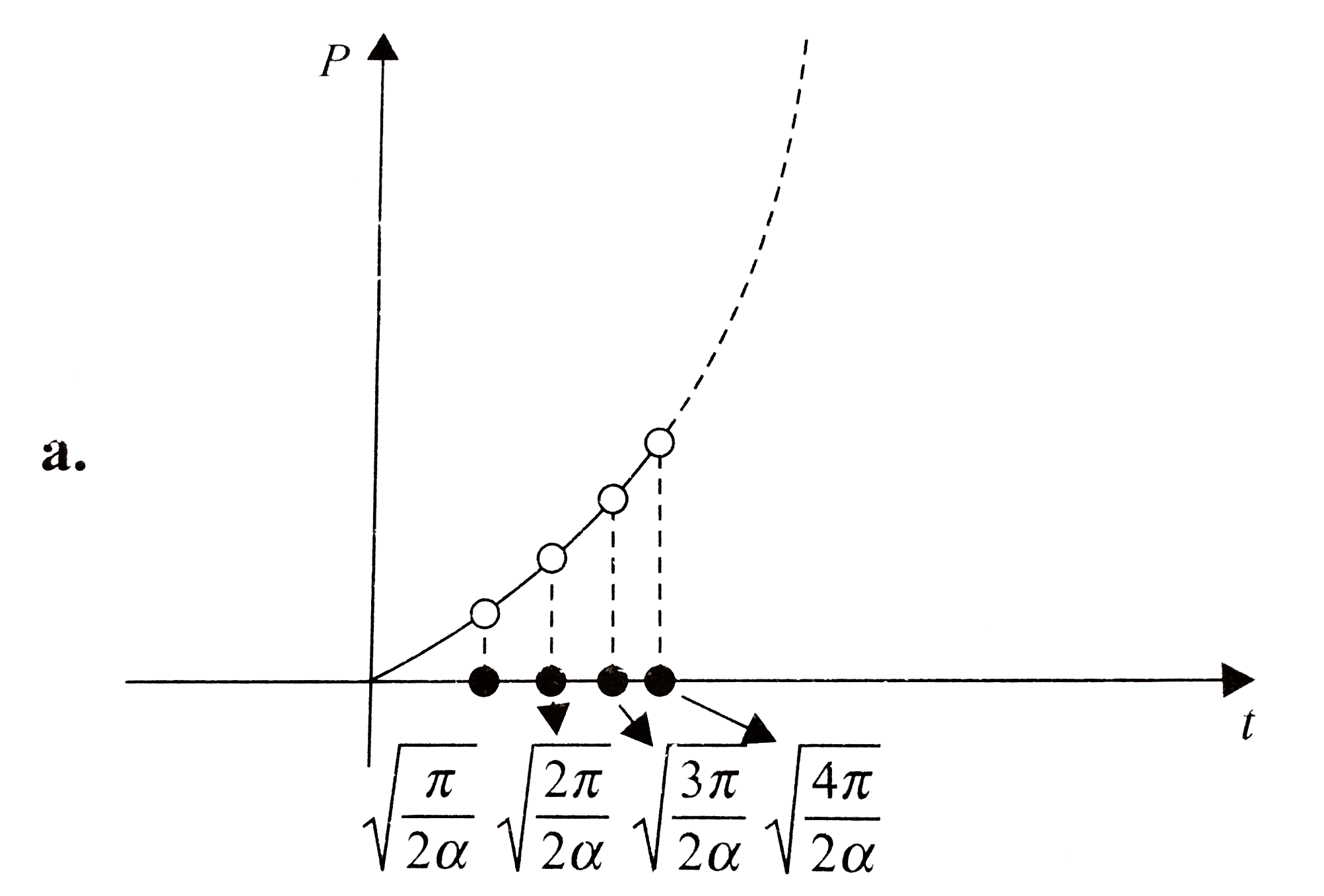
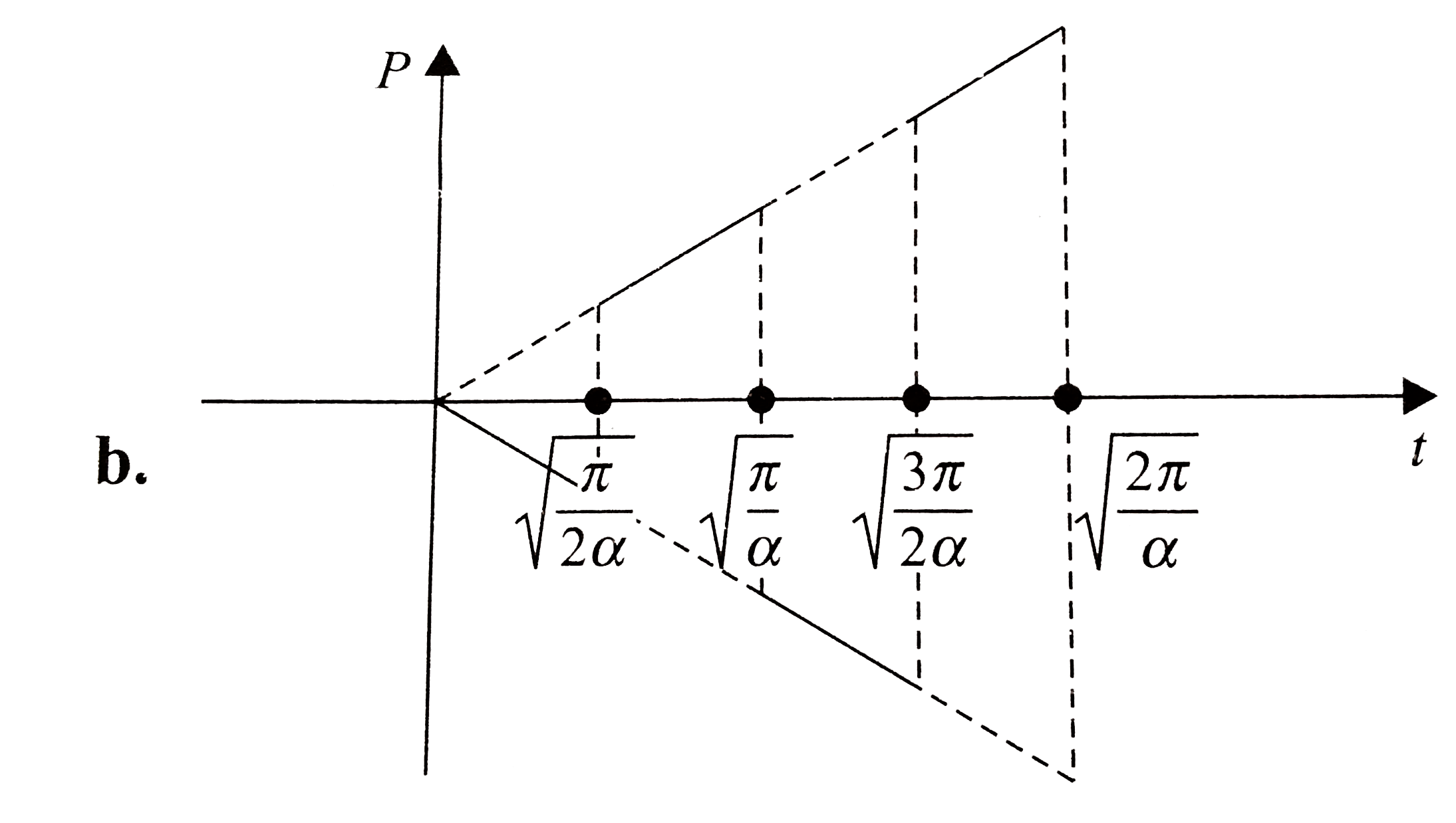
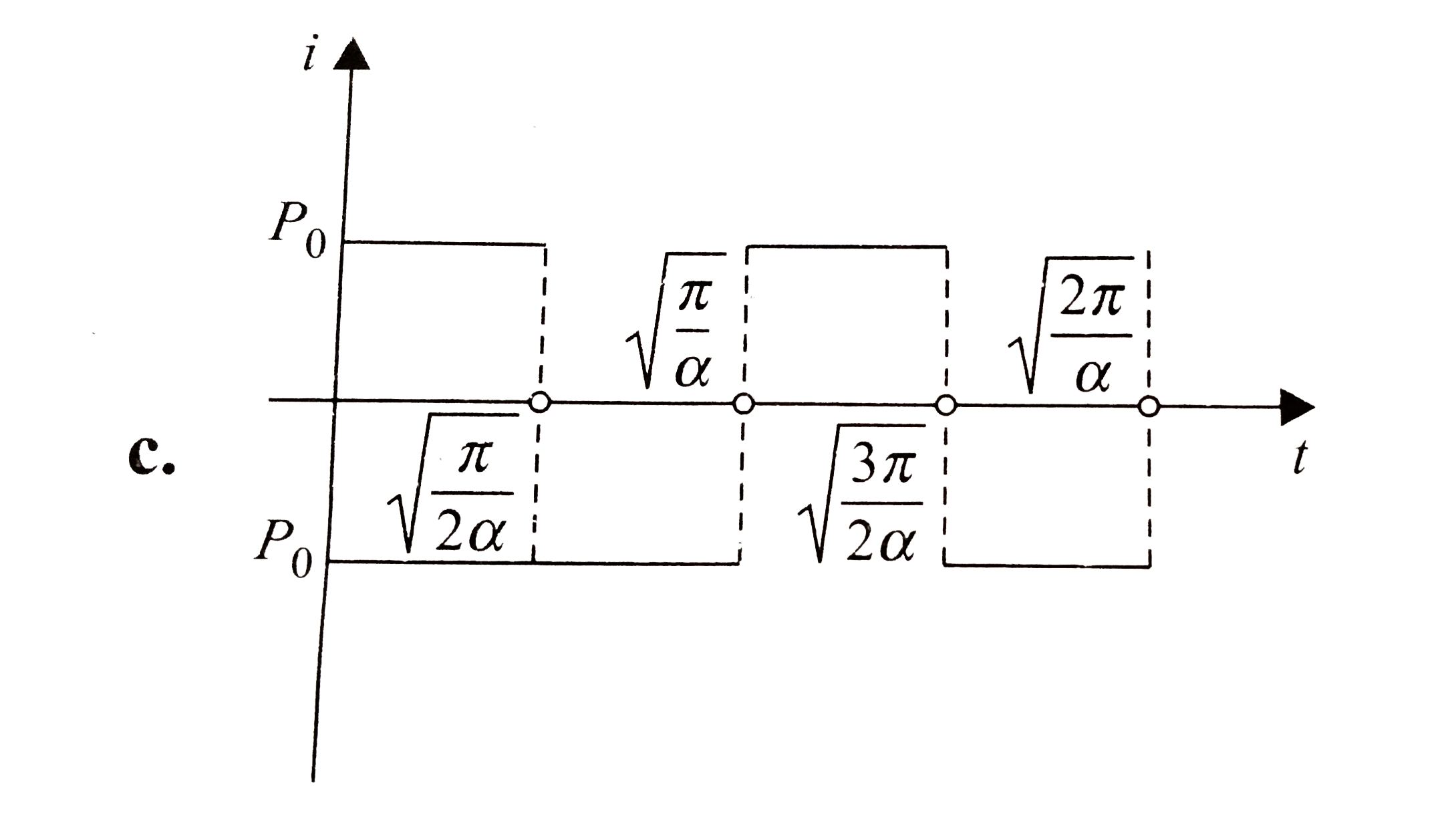
|
Answer» Solution :Coulomb force between nucleus and ELECTRON of a hydrogen is `F=(1)/(4pi epsi_(0))*(e^(2))/(r^(2))` `:. F*r` work or energy= `mc^(2)` `:.F*r=(e^(2))/(r)` `:. mc^(2)=(ke^(2))/(r)` `:.r=(ke^(2))/(mc^(2))` Hence, dimension of `(ke^(2))/(mc^(2))` is the dimension of length, `[(ke^(2))/(mc^(2))]=([k][e^(2)])/([m][c^(2)])=(M^(1)L^(3)T^(-2),Q^(-2)xxQ^(2))/(M^(1)xxL^(2)T^(-2))=[L]` `:. (ke^(2))/(mc^(2))`has the dimension of lenght [L] `:. ln r=(ke^(2))/(mc^(2)), k=9xx10^(9)Nm^(2)C^(-2)`, `e=1.6xx10^(-19)C` `m=9.1xx10^(-31)kg,c=3xx10^(8)MS^(-1)` `:.r=(9xx10^(9)xx(1.6xx10^(-19))^(2))/(9.1xx10^(-31)xx(3xx10^(8))^(2))` `:.r-2.8xx10^(-15)m` m which is much SMALLER than the dimension of a typical atom. |
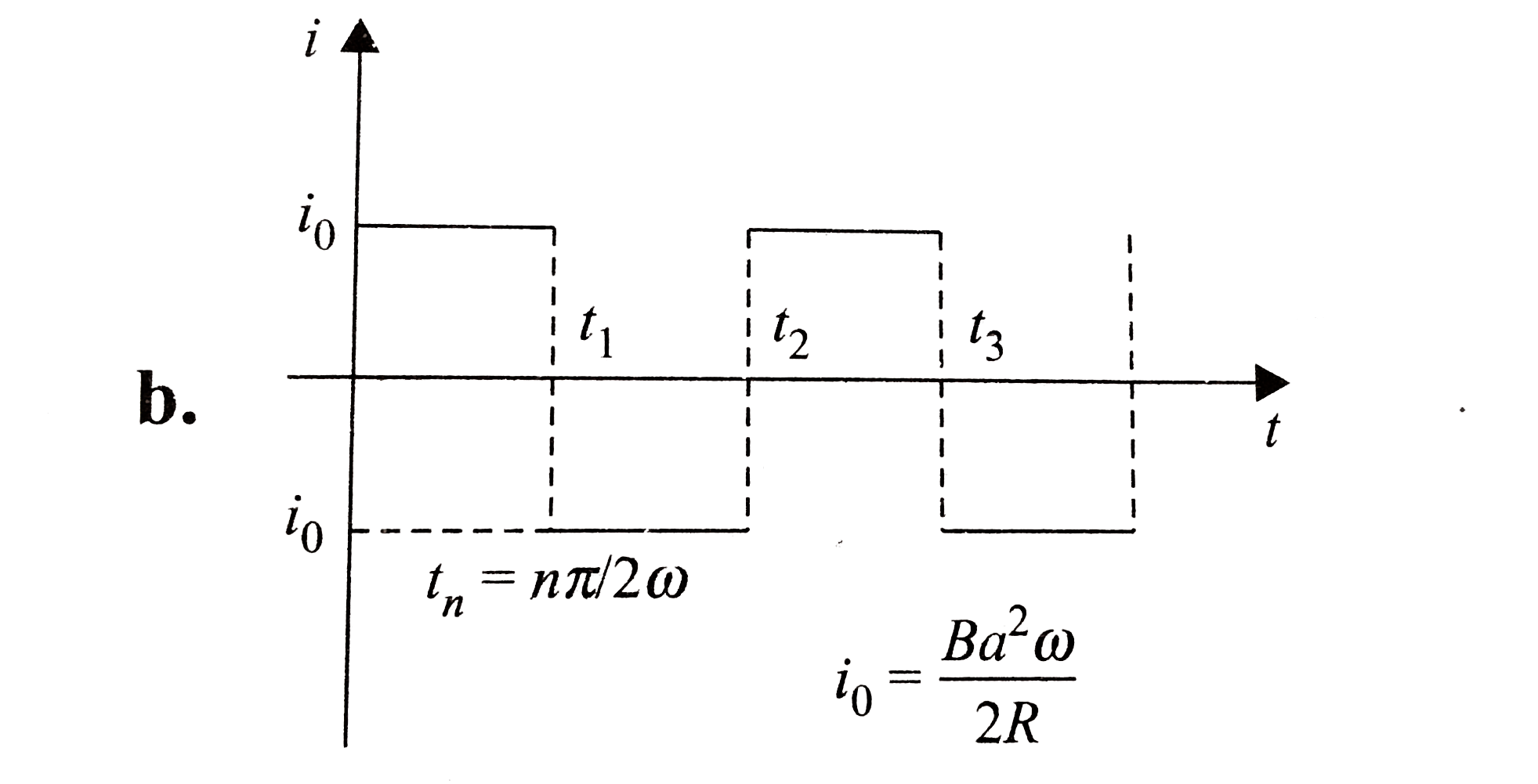
|
| 5. |
यदि f(x)=(4x+3)/(6x-4), x!=2/3 , तो सभी x!=2/3 के लिए fof(x) है - |
| Answer» Answer :A | |
| 6. |
As a charged particle q movinga velocity vec(v) enters a uniform magnetic field vec(B). It experiences a force vec(f) = q (vec(v) xx vec(B)) For theta = 0^(@) or 180^(@), theta being the angle between vec(v) and vec(B). Force experienced is zero and particle passes undeflected. For theta = 90^(@), the particle moves along a circule are and the magnetic force (qvB) provides the necessary centripetal force ((mv^(2))/(r )). For other values of theta (theta != 0^(@), 180^(@), 90^(@)), the charged particle moves along a helical path which is the resultant motion of simultaneous circular and translational motions. suppose a particle that carries a charge of magnitude q and has a mass 4 xx 10^(-15) kg. is moving in a region containing a uniform magnetic field vec(B) = - 0.4 hat(k)T. At a certain instant , velocity of the particle is vec(v) = (8hat(i) - 6 hat(j) + 4 hat(k)) xx 10^(6) m/s and force acting on it has a magnitude 1.6 N Which of the three components of acceleration have non-zero values ? |
|
Answer» X and y |
|
| 7. |
(a) A comb run through one's hair attractssmall bitsof paper. Why ? What happens if the hairare wet or if it a rainy day? (b) Ordinary rubber is an insulator. But the specailrubbertyresof aircrafts are made slightly conducting. Why is this neccessary? (c) Vehicles carrying inflammable materialsusually have metallicropestouchingthe groundduringmotion. Why ? (d) A bird perches on a bare high power line, and nothinghappensto the bird. A manstandingon the groundtouches the same line and getsa fatal shock. Why? |
|
Answer» Solution :(a) This is because the comb gets chargedby friction. If the hairare wet, or if it is a rainy day, frictionbetween the hairand the combreduces. The comb does not getcharged, and it will notattract small bits of paper. (b) The specail rubbertyresof AIR crafts are madeslightly condutingso thatelectricity generatedon accountof frictionbetween the tyresand the runway goes to EARTH. (c) When a vehiclemoves, its body gets charged on account of friction betweenthe tyres and the ROAD. Themetallic ropesfrom the vehicletouchingthe groundenable theaccumulatedcharge on accountof frictionbetweenthe tyresand the road = The metallic ropesfrom the vehicle touchingthe groundenable the accumulated charges to flow to earth. Thiswouldotherwisebe hazordous to the INFLAMMABLEMATERIALS. (d) Whena birdperches on singlebare high powerline, NOTHING happens to him as nocurrentflowsthrough his body. Currentflowsthorugh his bodyresulting in a fatal shock. |
|
| 8. |
As a charged particle q movinga velocity vec(v) enters a uniform magnetic field vec(B). It experiences a force vec(f) = q (vec(v) xx vec(B)) For theta = 0^(@) or 180^(@), theta being the angle between vec(v) and vec(B). Force experienced is zero and particle passes undeflected. For theta = 90^(@), the particle moves along a circule are and the magnetic force (qvB) provides the necessary centripetal force ((mv^(2))/(r )). For other values of theta (theta != 0^(@), 180^(@), 90^(@)), the charged particle moves along a helical path which is the resultant motion of simultaneous circular and translational motions. suppose a particle that carries a charge of magnitude q and has a mass 4 xx 10^(-15) kg. is moving in a region containing a uniform magnetic field vec(B) = - 0.4 hat(k)T. At a certain instant , velocity of the particle is vec(v) = (8hat(i) - 6 hat(j) + 4 hat(k)) xx 10^(6) m/s and force acting on it has a magnitude 1.6 N Which of the following is correct? |
|
Answer» motion of the PARTICLE is non-PERIODIC but y and z - position co-ordinates vary in a periodic manner |
|
| 9. |
Classically, an electron can be in any orbit around the nucleus of an atom. Then what determines the typical atomic size? Why is an atom not, say, thousand times bigger than its typical size ? The question had greatly puzzled Bohr before he arrived at his famous model of the atom that you have learnt in the text. To simulate what he might well have done before his discovery, let us play as follows with the basic constants of nature and see if we can get a quantity with the dimensions of length that is roughly equal to the known size of an atom (-10^(-10)m) You will find that the length obtained in (a) is many orders of magnitude smaller than the atomic dimensions. Further, it involves c. But energies of atoms are mostly in non-relativistic domain where c is not expected to play any role. This is what may have suggested Bohr to discard c and look for something else' to get the right atomic size. Now, the Planck's constant h had already made its appearance elsewhere. Bohr's great insight lay in recognising that h, m_(e) and e will yield the right atomic size. Construct a quantity with the dimension of length from h, m_(e) and e and confirm that its numerical value has indeed the correct order of magnitude. |
|
Answer» SOLUTION :ORBITAL radius of electron in `n^(th)` orbit from Bohr formula `r_(n)=(n^(2)h^(2) epsi_(0))/(pi me^(2))` for first orbit n=1, `r_(1)=(h^(2)epsi_(0))/(pi me^(2))` `=((6.625xx10^(-34))^(2)xx8.85xx10^(-12))/(3.14x9.1xx10^(-31)xx(1.6xx10^(-19))^(2))` `=0.53xx10^(-10)m` `:.r_(1)=0.53Å`which is the order of the dimension of the atom. |
|
| 10. |
The length of the antenna required for the transmission of frequencies of em waves of band width having AF range is |
|
Answer» 15 km |
|
| 11. |
Calculate the permeability and susceptibility of a magnetic substance of cross - sectional area 0.2cm^2 having a magnetic flux 2.4xx10^(-5) Weber. Given magnetic intensity H = 300A/m |
|
Answer» |
|
| 12. |
A 100 W bulb produces an electric field of 2.9 V/m at a point 3m away. If the bulb is replaced by 400 W bulb without disturbing other conditions. Then the electric field produced at the same point is |
|
Answer» a. 2.9 V/m |
|
| 13. |
Two blocks m_(1) and m_(2) are placed on a smooth inclined plane as shown in figure. If they are released from rest. Find : (i) acceleration of mass m_(1) and m_(2) (ii) tension in the string (iii) net force on pulley exerted by string. |
|
Answer» Solution :F.B.D. of `m_(1)` : `m_(1)gsintheta-T=m_(1)a` 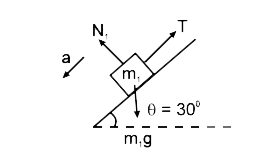 `(sqrt(3))/(2)G-T=sqrt(3)a . . . . . . . . .(i)` F.B.D. of `m_(2)` : `T-m_(2)gsintheta=m_(2)a` 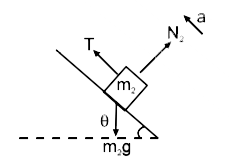 `T-1.(sqrt(3))/(2)g=1.a . . . . . . . . . .(ii)` Adding e.q. (i) and (ii) we GET a=0 Putting this VALUE in eq. (i) we get `T=(sqrt(3)g)/(2)` F.B.D. of pulley `F_(R)=sqrt(2)T` `F_(R)=(sqrt(3))/(2)g` 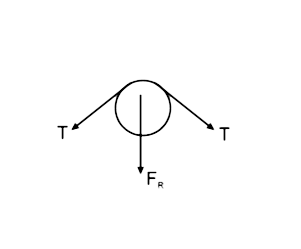
|
|
| 14. |
During elastic collision, which of the following statements is correct? |
|
Answer» LINEAR momentum of the system is CONSERVED |
|
| 15. |
Assertion : The poles of magnet cannot be separated by breaking into two pieces. Reason: The magnetic moment will be reduced to half when a magnet is broken into two equal pieces. |
|
Answer» If both assertion and REASON are TRUE and reason is the correct EXPLANATION of assertion. Explanation : As we know EVERY atom of a magnet acts as a dipole, so poles cannot be separated . When magnet is broken into two equal pieces, MAGNETIC moment of each part will be half of the original magnet. |
|
| 16. |
Figure shows two charge particles on an axis. The charges are free to move. At one point, however, a third charged particle can be placed such that all three particles are in equilibrium. (a) Is that point to the left of the first two particles to their rightm or between them? (b) should the third paricle be positively or negatively charged? (c ) Is the equilibrium stable or unstable? |
|
Answer» SOLUTION :(a) Right because third PARICLE should be placed near the charge smaller in MAGNITUDE and not between the charges. (b) The third particle should be negatively charged. Only then net force on any charge due to other two charges can be zero. (c ) Equilibrium is unstable, because if we displace any of hte charged particles from its equilibrium POSITION, it may not RETURN to its initial position for all directions of displacement. |
|
| 17. |
The measured mass and volume of a body are 22.42g and 4.7cm^3 respectively with errors 0.01g and 0.1cc. The maximum error in density is |
| Answer» ANSWER :D | |
| 18. |
Describe brieflyDavisson - Germer experimentwhichdemonstratedthe wave nature ofelectrons. |
|
Answer» Solution :Davisson - Germer experiment : (i) De Broglie hypothesis of matter waves was experimentally confirmed by Clinton Davisson and Lester Germer. (II) They demonstrated that electron beams are DIFFRACTED when they fall on crystalline solids. Since crystal can act as a THREE dimensional diffraction grating for matter waves, the electron waves incident on crystals are diffracted off in certain specific directions. (iii) The filament F is heated by a low tension (L.T.) BATTERY. Electrons are emitted from the hot filament by thermionic emission. (iv) They are then accelerated due to the potential difference between the filament and the anode aluminium cylinder by a high tension (H.T.) battery. (v) Electron beam is collimated by using two thin aluminium diaphragms and is allowed to strike a single crystal of Nickel. (vi) The electrons scattered by Ni atoms in different directions are received by the electron detector which measures the intensity of scattered electron beam. (vii) The detector is rotatable in the plane of the paper so that the angle `phi` between the incident beam and the scattered beam can be changed at our will. The intensity of the scattered electron beam is measured as a function of the angle `theta`. 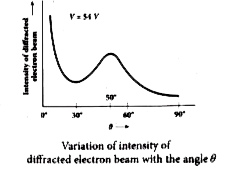 (viii) Figure shows the VARIATION of intensity of the scattered electrons with the angle `theta` for the accelerating voltage of 54V. For a given accelerating voltage V, the scattered wave shows a peak or maximum at an angle of `50^@` to the incident electron beam. (ix) This peak in intensity is attributed to the constructive interference of electrons diffracted from various atomic layers of the target material. (x) From the known value of interplanar spacing of Nickel, the wavelength of the electron wave has been experimentally calculated as 1.65 Å. (xi) The wavelength can also be calculated from de Broglie relation for V = 54 V from equation as `lamda = (12.27)/sqrtV""Å = (12.27)/sqrt(54)` `lamda = 1.67 Å` (xii) This value agrees well with the experimentally observed wavelengti of 1.65Å. Thus this experiment directly verifies de Broglie.s hypothesis of the wave nature of moving particles. |
|
| 19. |
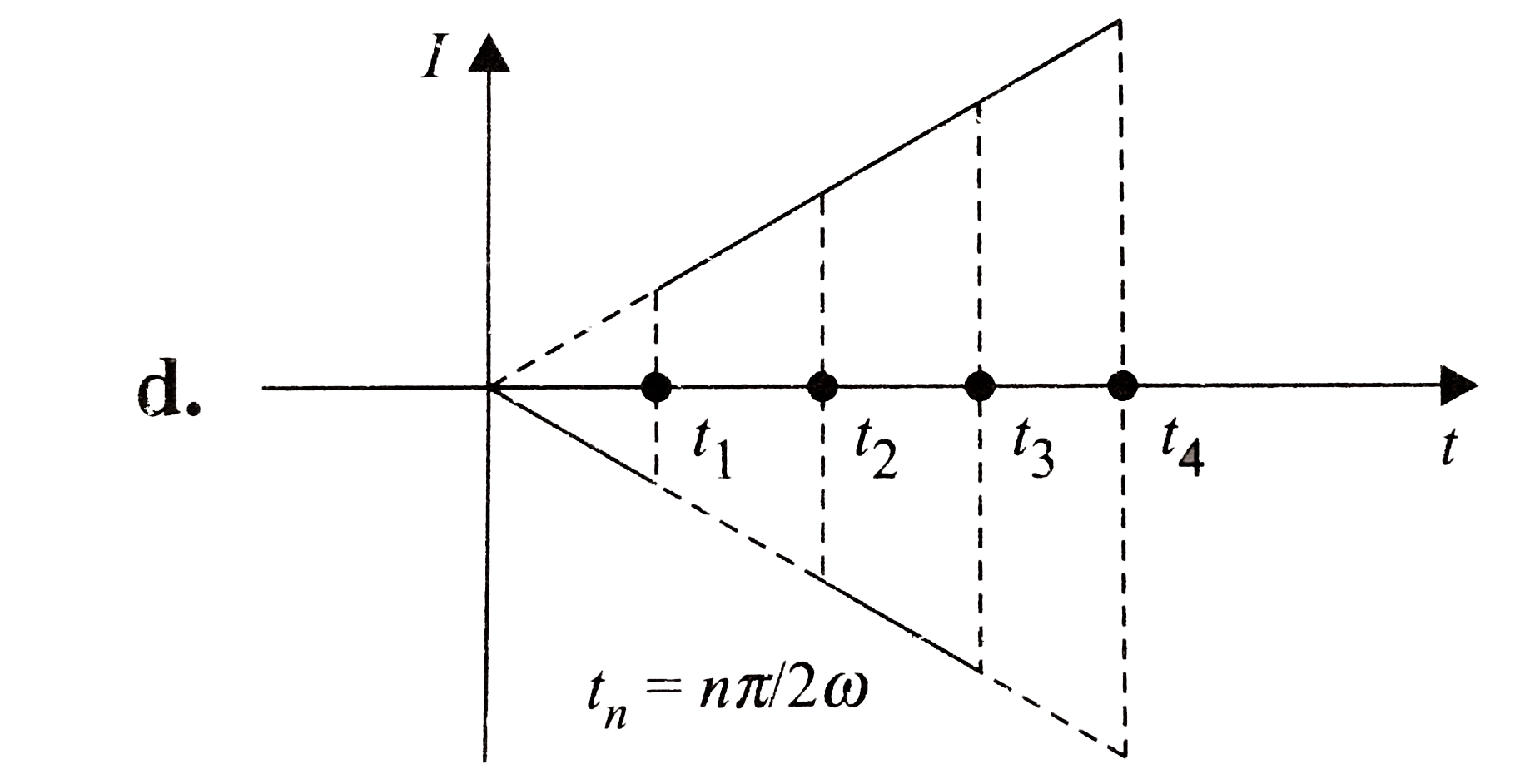
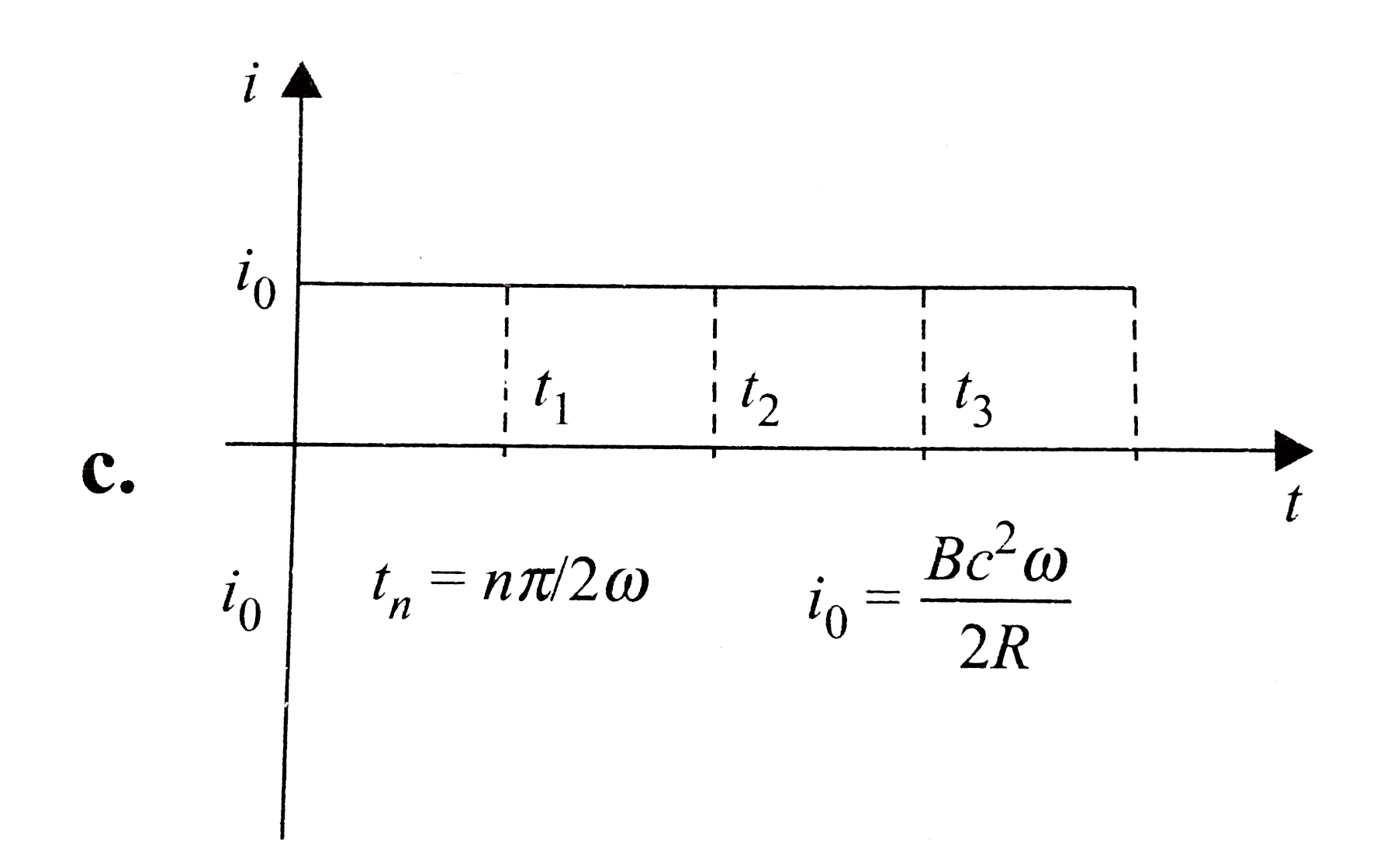
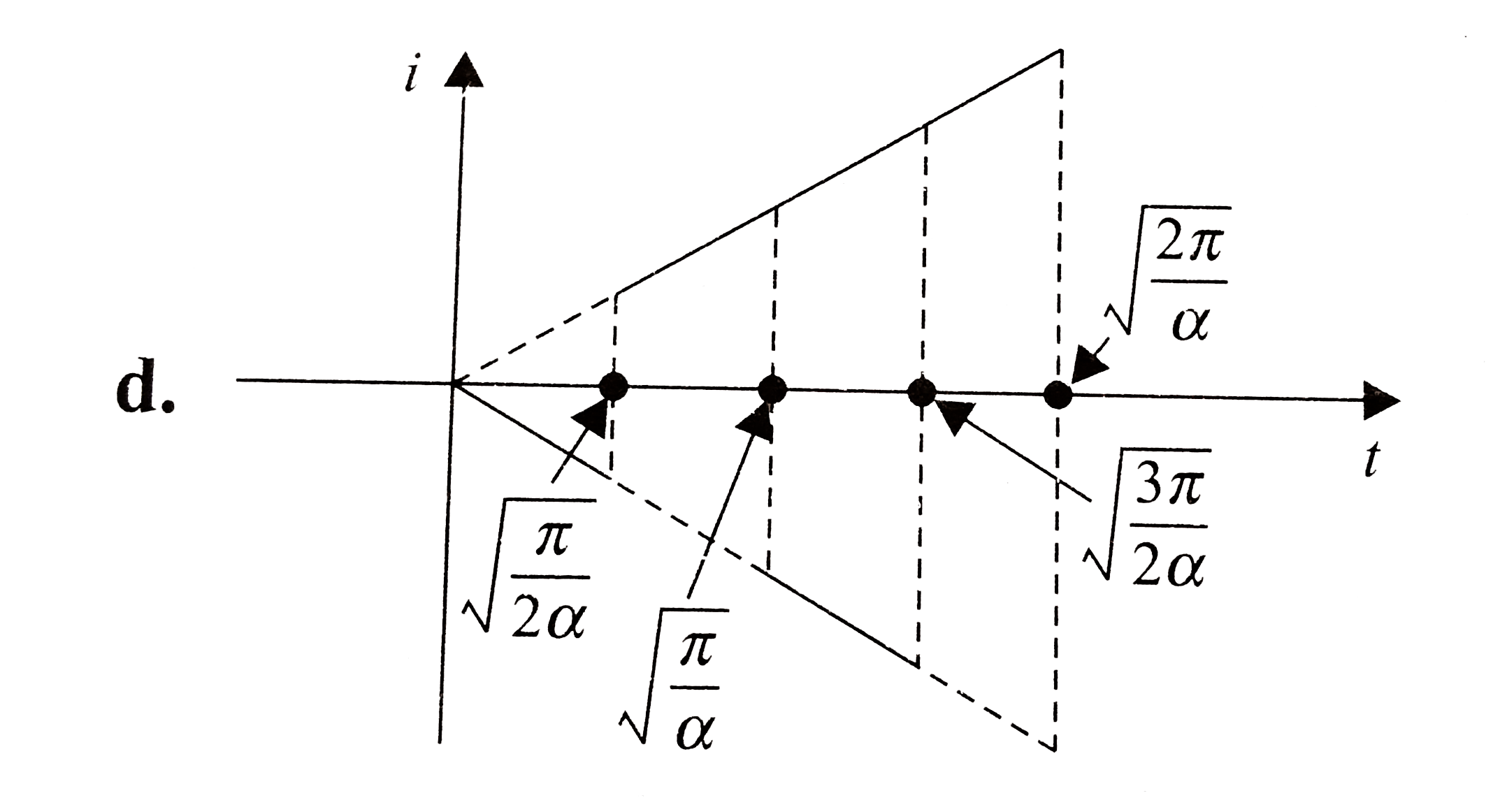
In a cylindrical region of radius a, magnetic field exists along its axis but the direction of magnetic field is opposite in the four quadrants of the region as shown in Fig. A or AB rotates with its end A at the centre of magnetic field and other end B slides on a smooth wire at the periphery of the region of magnetic field. At t = 0 the rod was situated along the +X direction. Find and plot the time dependence of the thermal power in the resistance R when rod rotates with a constant angular acceleration (alpha) |
|
Answer»
`e= +- 1/2 B(a)(aomega)= +- 1/2 Ba^(2)omega` `:. i=(e)/(R)=+- (Ba^(2)omega)/(2R)` so, for `t=0 to T/4, T/2 to (3T)/(4)` and so on, `i=-(Ba^(2)omega)/(2R)` The i-t graph is as shown in FIG. the i-t equation can be written as, `i=1/(2R) (-1)^(n+1) Ba^(2)omega` where `n=1,2,3 ... and t_(n) =(n pi)/(2 omega)` Here positive current means current from left to right through the resistance and vice-versa. 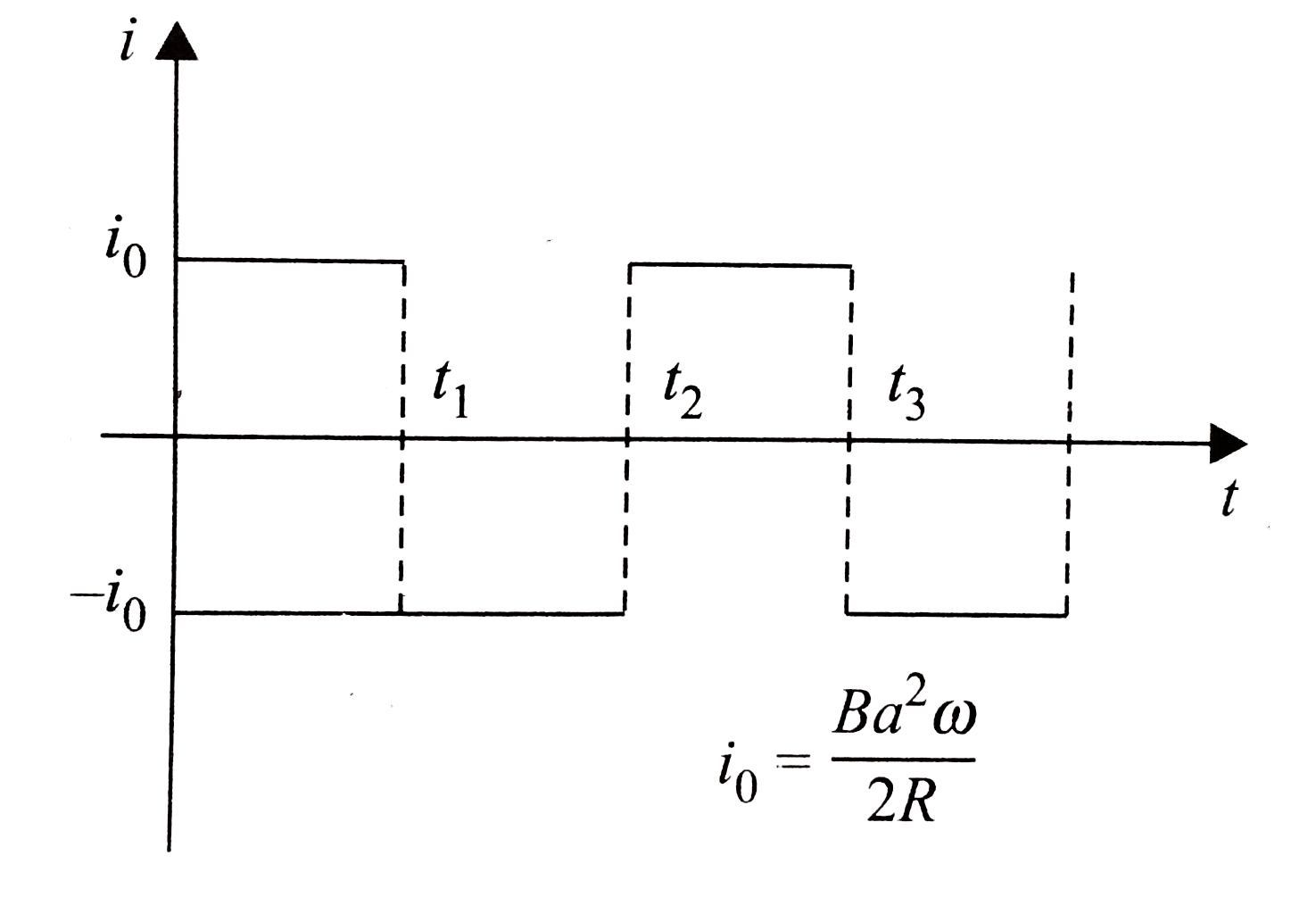 (b) `ALPHA` = constant. `omega=alpha t` `epsilon = (bomegal^(2))/(2) = ((Bl^2)/(2)) alpha*t, I=E/R = [(Bl^(2)alpha)/(2R)]*t` I is negative in quardrant I I is positive in quadrant II I is negative in quadrant III I is positive in quadrant IV 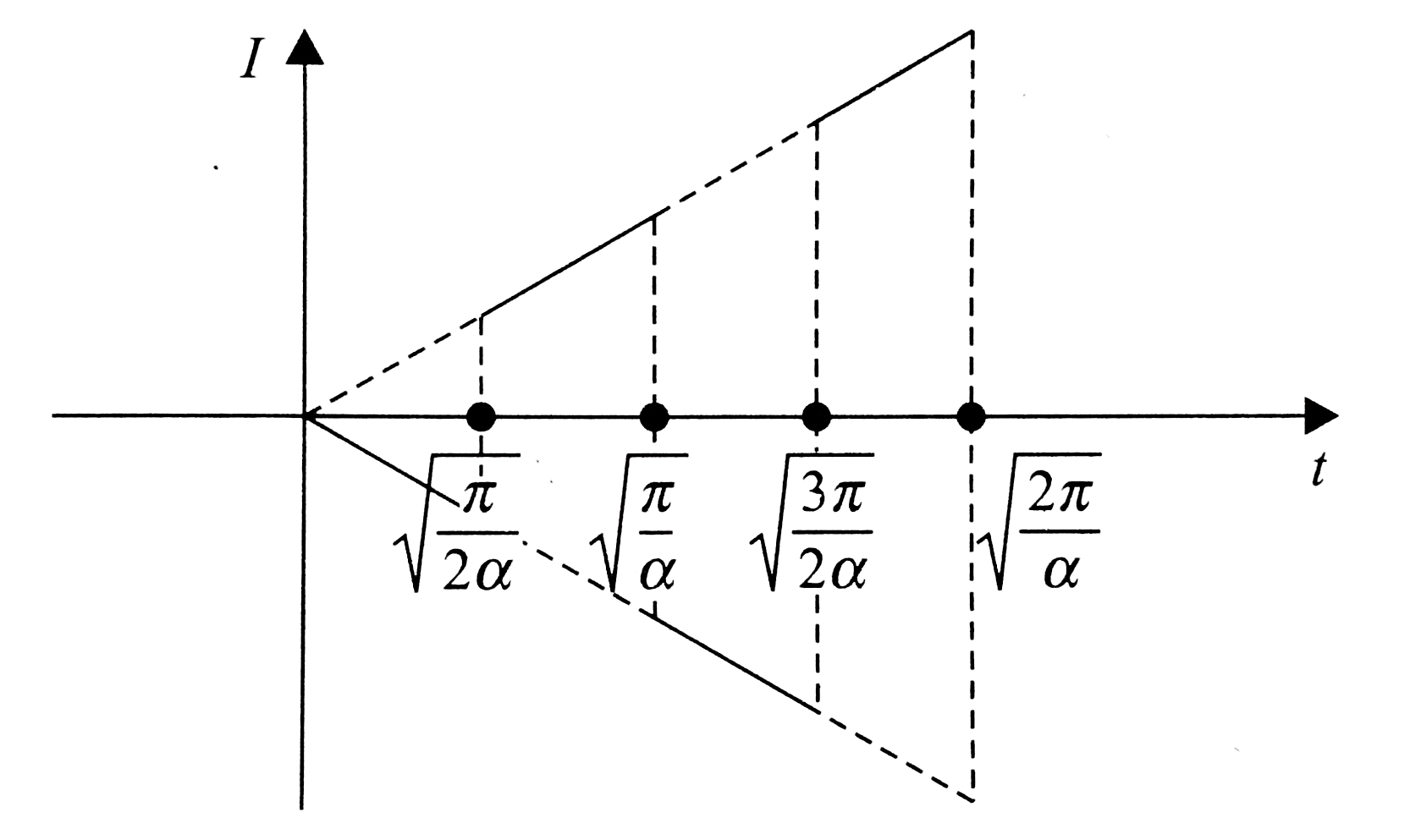 also, `t_(1)//4, t_(1)` `1/2 alpha (t_(1)^(2))/(4), t_(1//4) = sqrt((pi)/(2 alpha))` `t_(1//2) = sqrt((2 pi)/(2alpha)), t_(3//4)=sqrt((3pi)/(4alpha) xx 2)= sqrt((3 pi)/(2alpha))` `sqrt(3)-sqrt(2)-sqrt(1)` `PR=I^(2)R = [(Bl^(2)alpha)/(2R)]^(2) * R*t^(2) P prop t^(2) , y = AX^(2)` EXCEPT at`sqrt((pi)/(2 alpha)), sqrt((2PI)/(2 alpha)), ... sqrt((n pi)/(2 alpha)) (nepsilon N)` where `P=0` 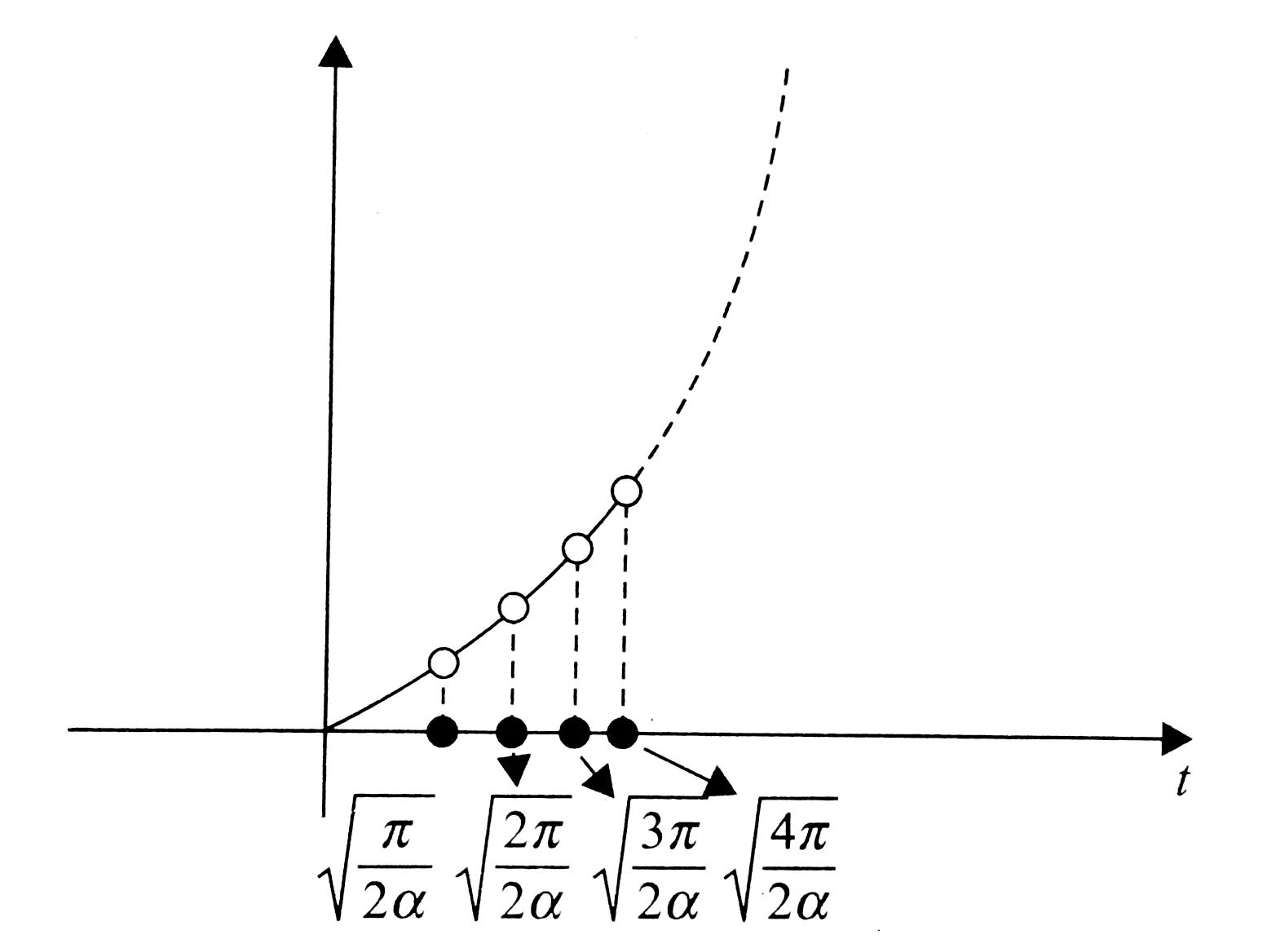 . .
|
|
| 20. |
When a glass rod is rubbed with a silk cloth, charges appear on both. A similar phenomenon is observed with many other pairs of bodies. Explain how this observation is consistent with the law of conservation of charge. |
| Answer» Solution :When two electrically neutral bodies (with net CHARGE zero) are rubbed with each other part of energy spent for rubbing is given to some electrons which get transferred from one body to another body. If first body loses N no. of electrons then second body gains equal no. of electrons. Thus, in this PROCESS of "charging by friction" final charge on first body becomes + NE and final charge on second body becomes - Ne. Hence, total final charge in the final condition would be Ne + (- Ne) = 0, same as total initial charge which was 0 + 0 = 0. Thus, total charge gets conserved. (It should be noted that here, total MASS is ALSO conserved). | |
| 21. |
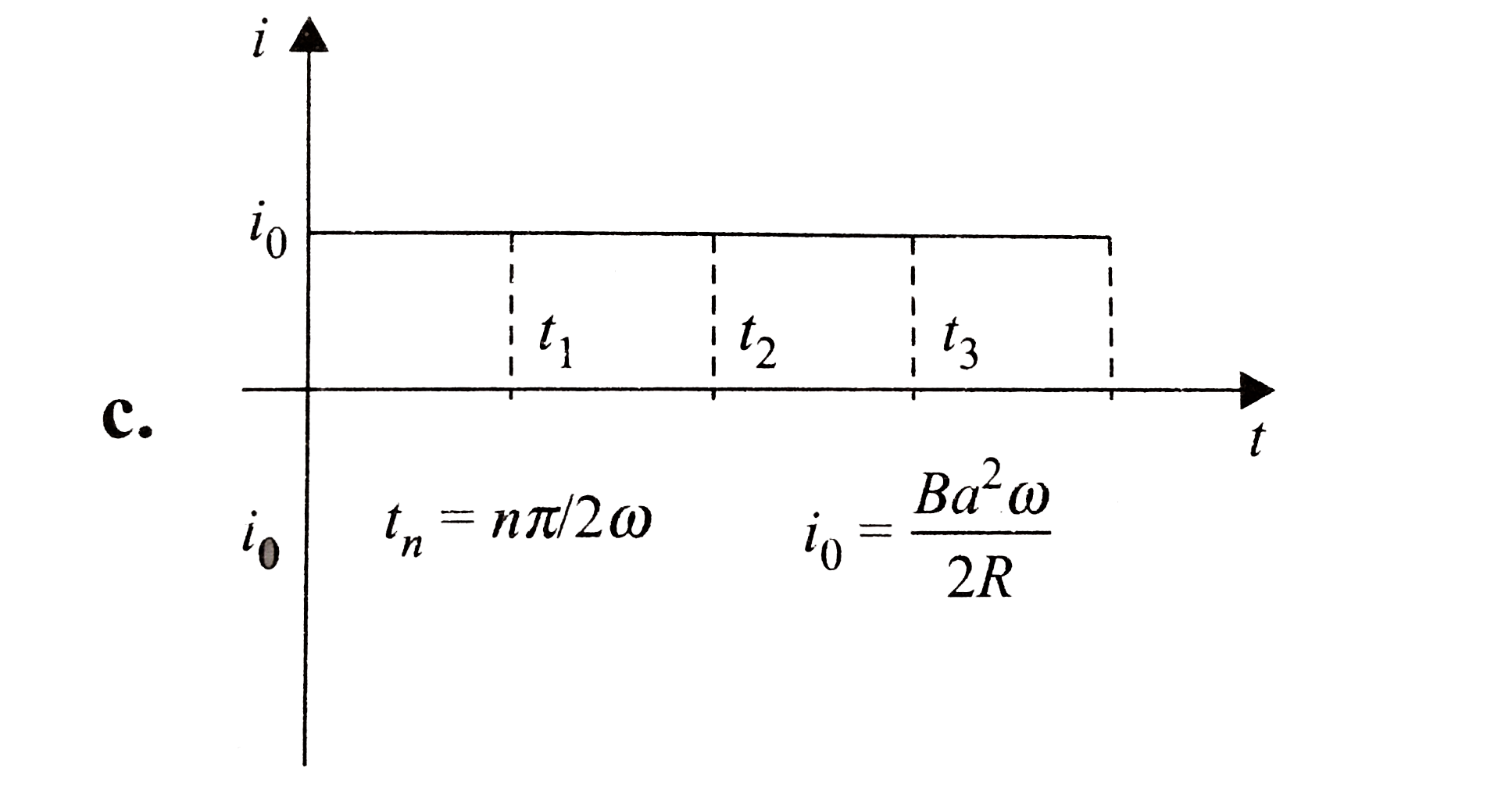
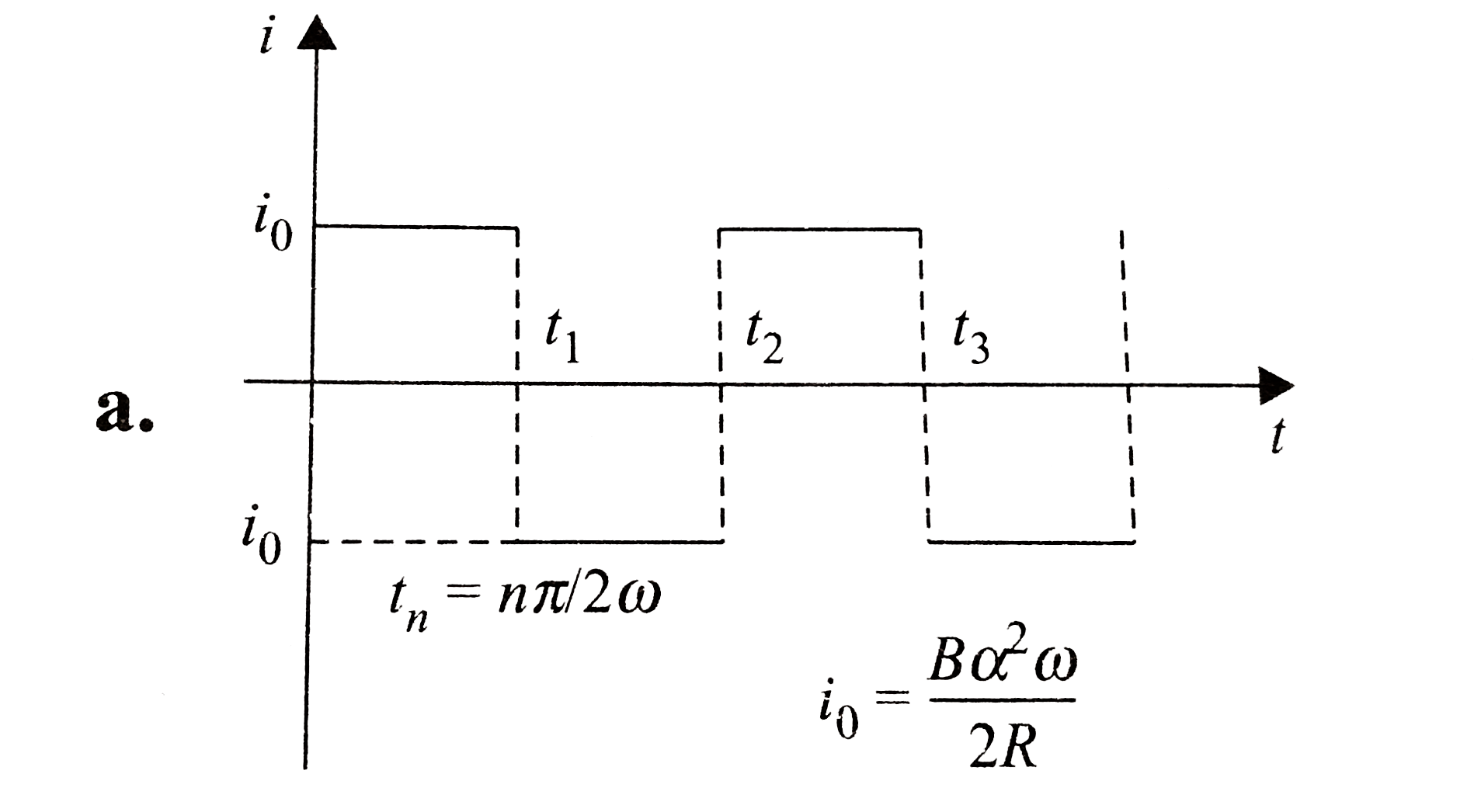
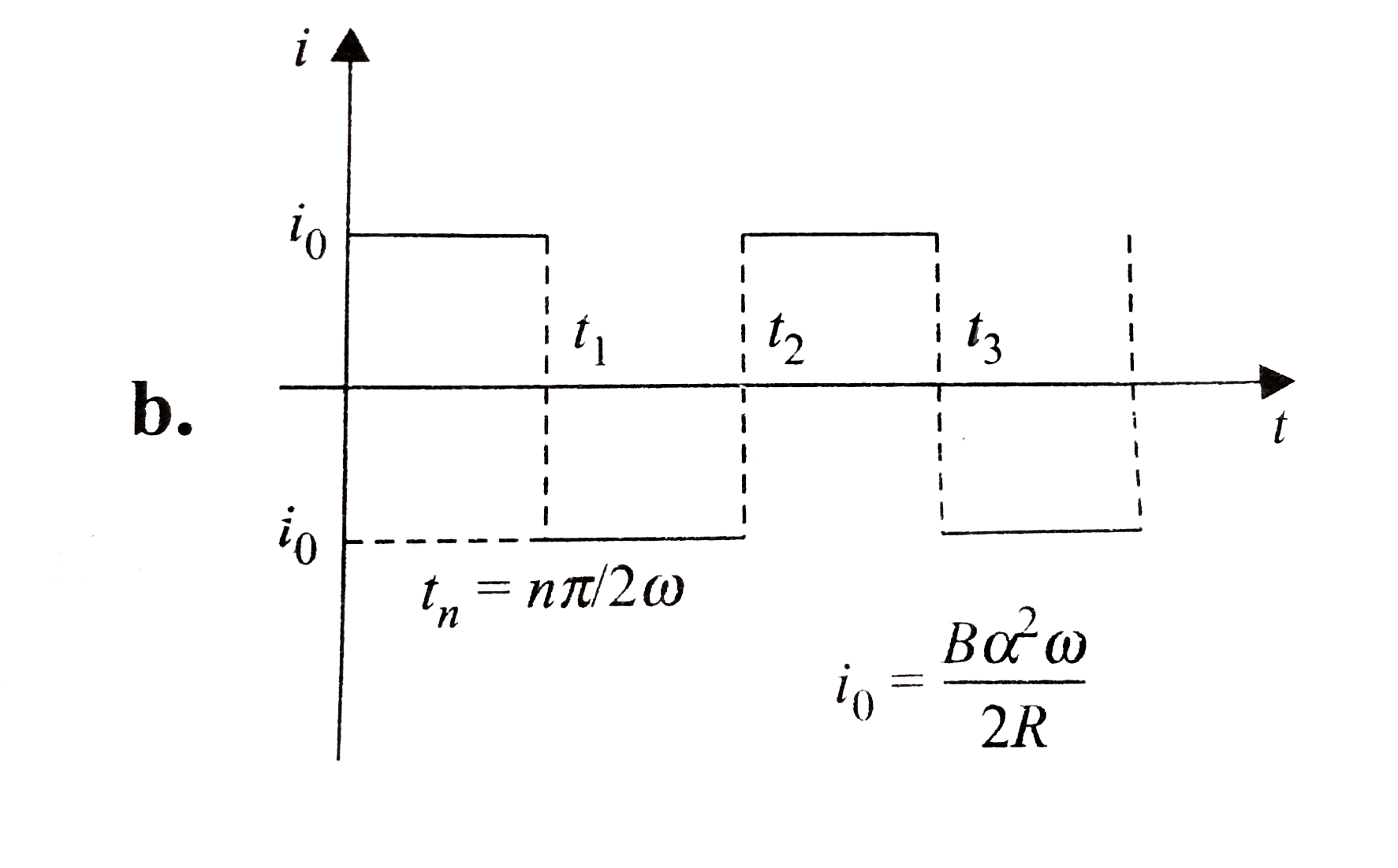
In a cylindrical region of radius a, magnetic field exists along its axis but the direction of magnetic field is opposite in the four quadrants of the region as shown in Fig. A or AB rotates with its end A at the centre of magnetic field and other end B slides on a smooth wire at the periphery of the region of magnetic field. At t = 0 the rod was situated along the +X direction. Find and plot the time dependence of the current in the resistance R when rod rotates with a constant angular velocity (omega). |
|
Answer»
|
|
| 22. |
A ground state electron is trapped in the one dimensional infinite potential well of fig.38-2, with width L = 100 pm. (a) What is the probability that the electron can be detected in the left one third of well (x_(1)=0" to "x_(2)=L//3) What is the probability that the electron can be detected in the middle one third of the well? |
|
Answer» Solution :KEY IDEAS If we prove the left one third of the welcome there is no guarantee that we will detect the electron. HOWEVER, we can calculate the probability of detecting it with the integral of EQ. (2) The probability very much depends on which state of electron is in that is, the value of quantum number n. Calculations: Because there the electron is in the ground state, we set n =1 in Eq. 38-13 . we also set the limits of integration as the POSITIONS `x_(1)=0 and x_(2)=L//3`set the amplitude constant a s so that the wave function is normalised we then see that `({:("Probability of detection"),("in left one - third"):})=int_(0)^(L//3)(2)/(L)sin^(2)((1pi)/(L)x)dx.` We could find this probability by substituting `100xx10^(-12)m` for L and then using a graphing calculator for computer maths package to EVALUATE the integral. Here however we should evaluate the integral ..by hand... First we switch to and new integration variable y: `u=(pi)/(L)x and dx=(L)/(pi)dy.` From the first of these equation, we find the new limits of integration to be `y_(1)=0` and `y_(2)=pi//3` for `x_(2)=L//3`.We then must evaluate `"Probability"=((2)/(L))=((L)/(pi))int_(0)^(pi//3)(sin^(2)y)dy.` Using integral 11 in Appendix E, we then find `"Probability"=(2)/(pi)((y)/(2)-(sin2y)/(4))_(0)^(pi//3)=0.20`. Thus, we have `({:("Probability of detection"),("in left one - third"):})=0.20` That is if we repeatedly Pro the left one third of the well then on average we can detect the electron with `20%` of the probs . Reasoning : We now KNOW that the probability of the detection in the left one third of the well is 0.20 by symmetry the probability of the detection in the right one third of the well is also 0.20. because the electron is certainly in the welcome of the probability of detection in the entire well is one. Thus theprobability of detection in the middle one third of the well is `({:("Probability of detection"),("in middle one - third"):})=1-0.20-0.20` `=0.60` |
|
| 23. |
In a cylindrical region of radius a, magnetic field exists along its axis but the direction of magnetic field is opposite in the four quadrants of the region as shown in Fig. A or AB rotates with its end A at the centre of magnetic field and other end B slides on a smooth wire at the periphery of the region of magnetic field. At t = 0 the rod was situated along the +X direction. Find and plot the time dependence of the current in the resistance R when rotates with a constant angular acceleration (alpha) |
|
Answer»
|
|
| 24. |
Formula for velocity of electromagnetic wave in vacuum (C ) is ….. |
|
Answer» `sqrt(mu_(0)epsilon_(0))` |
|
| 25. |
A narrow slit of width 1mm is illuminated by monochromatic light of wave length 600 nm. The distance between the first minima on either side on a screen at a distance of 2m is |
|
Answer» 1.2cm |
|
| 26. |
Critical angle of prism is 40^@. Its prism angle should be ...... to get raywith minimum deviation. |
|
Answer» `40^@` and for prism A = `r_1 + r_2` ``A=2r Here `r = 40^@` given as critical ANGLE. `therefore` Prism angle `A=2xx40=80^@` |
|
| 27. |
Give any two practical limitations of Ohm's law. |
| Answer» Solution :1. It is not applicable for metallic conductors at very low and very high temperatures. 2. It is not applicable for semiconductors, SUPERCONDUCTORS, triodes, DIODES, thermistors and discharge tubes. 3. Ohm.s LAW applicable only, when the physical conditions like TEMPERATURE, pressure and tension remains constant. | |
| 28. |
A 50 mH coil carries a current of 2 ampere. The energy stored in joules is |
|
Answer» 1 |
|
| 29. |
A plane mirror and a person are moving towards each other with same velocity v. Then the velocity of the image is |
|
Answer» v |
|
| 30. |
The equation of a travelling wave on a string is y =(0.10 mm) sin[31.4 m^(-1)x + (314 s^(-1))t] |
|
Answer» WAVE is TRAVELLING along negative x- axis. |
|
| 31. |
A freshly prepared radioactive source of half life 2 hours emits radiation of intensity which is 64 times the permissible safe level. The minimum time after which it would be possible to work safely with this source is |
|
Answer» 6 Hrs |
|
| 32. |
When a number of capacitors are connected in series or parallel, the total energy stored = U = _____. |
|
Answer» |
|
| 33. |
What is the theme of the story Deep Water? |
| Answer» Answer :A | |
| 34. |
A light ray is incident at an angle of incidence (pi//4). The graph of sin(A-pi//6)versus sin e is shown in fig. The minimum angle of deviation corresponds to a prism with angle. (e = angle of emergence) |
| Answer» Answer :B | |
| 35. |
Resistance of wire having diameter 2 mm and length 100 cm is 0.7 Omega, so resistivity of wire = ..... |
|
Answer» 14.4 `mu Omega` m R= `(rho L)/(PI r^(2))` `rho = (pi r^(2) R)/(l) = (22)/(7) XX ((10^(-3))^(2) xx 0.7)/(1)` = `2.2 xx 10^(-6) Omega m= 2.2 mu Omega` m |
|
| 36. |
A current passes through a wire of nonuniform cross section. Which of the following quantities are independent of the cross- section? |
|
Answer» the CHARGE CROSSING in a given time interval |
|
| 37. |
In an A.C. circuit the peak value of voltage is 424 V . Its effective voltage is : |
| Answer» ANSWER :D | |
| 38. |
Li has 3 electrons with electronic configuration 2, 1. Calculate the energy required to remove the electron from Li^(+ +) |
|
Answer» |
|
| 39. |
If 10^10 electrons move out of a body to another body every second, how much time is required to get a total charge of 1 C on the other body ? |
| Answer» SOLUTION :APPROX 20 YEARS. | |
| 40. |
Four cells each of internal resistance0.8 Omegaand emf 1.4 V, d areconnected(i)in series(ii)in parallel. Theterminalsofthe battery are joined to the lamp of resistance 10 Omega. Findthe currentthroughthe lampand eachcellinboththe cases. |
| Answer» SOLUTION :`Is = 0.424 A, IP = 0.137 A `currentthrougheachcell is`0.03 A ` . | |
| 41. |
The IUPAC name of CH_(3)-overset(OH)overset(|)(CH)-CH_(2)-overset(CH_(3))overset(|)(CH)-COOH is : - |
|
Answer» `2-` Hydroxy`-4-`methypentanoic ACID |
|
| 42. |
Why do we sometimes use a concave mirror instead of a plane mirror as a common mirror ? |
|
Answer» |
|
| 43. |
A pulse travelling on a string is represented by the function y =a^(2)/((x-vt)^(2) + a^(2)) where a =5 mmv = 20 cm/s where the maximum of pulse is located at t = 0, Is and 2s. Take x = 0 in the middle of the string |
|
Answer» x = 0, 20 cm and 40 cm |
|
| 44. |
The motion of copper plates is damped when it is allowed to oscillate between the two poles of a magnet. If slots are cut in the plate, how will damping be affected ? |
| Answer» Solution :If SLOTS are cut in a COPPER plate which is oscillating between the pole pieces of a magnet, the DAMPING EFFECT is reduced by a LARGE extent. | |
| 45. |
Magnitude of emf produced in a coil when a magnet is inserted into it does not depend on |
|
Answer» number of TURNS in the coil |
|
| 46. |
What is a wavefront? |
| Answer» Solution :The LOCUS of all points that are in the same PHASE. The SURFACE of constant phase. | |
| 47. |
A beam of light converges towards a point O, behind a convex mirror of focal lnegth 20cm. Q. Similarly, as in above question when point O is 30cm behind the mirror. |
|
Answer» 2(virtual, inverted) Here, `u=+10cm ` and `f=+20cm` So, `(1)/(V)+(1)/(+10)=(1)/(+20)rArri.e.,v=-20cm` i.e., the image will be at a distance of 20cm in front of the mirror and will be REA, ERECT and enlarged with `m=-(20//10)=+2`  b. For this situation also, object will be virtual as shown in the figure. Here, `u=+30cm ` and `f=+20cm` `(1)/(v)+(1)/(+30)=(1)/(+20) i.e., v=+60CM` i.e., the image will be at a distance of 60cm behind the mirror and will be virtual, inverted, and enlarged with `m=-(+60//30)=-2` 
|
|
| 48. |
The new ground state energy of electron will be |
|
Answer» more than that found with BOHR atom |
|
| 49. |
If the value of excess pressure in a soap bubble is four times that of other , then the ratio of their volumes will be |
|
Answer» `64:1` |
|
| 50. |
Draw an equipotential surface for a system, consisting of two charges Q,-Q separated by a distance 'r' in air. |
Answer» Solution :EQUIPOTENTIAL SURFACES are closed loops around the TWO charges as shown in Fig. 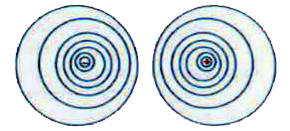
|
|