Saved Bookmarks
This section includes 7 InterviewSolutions, each offering curated multiple-choice questions to sharpen your Current Affairs knowledge and support exam preparation. Choose a topic below to get started.
| 1. |
The current flowing through an inductor of self inductance L is continuously increasing plot a graph showing the variation of magnetic potential energy stored varsus the current. |
|
Answer» Solution :MAGNETIC POTENTIAL ENERGY versus current : `U=(1)/(2)LI^(2)` `UalphaI^(2)` 
|
|
| 2. |
A jet plane is travelling towards west at a speed of 1800 km/h. What is the voltage difference developed between the ends of the wing having a span of 25 m, if the Earth's magnetic field at the location has a magnitude of 5 xx 10^(-4) and the dip angle is 30^(@)? |
|
Answer» Solution :Here speed of jet PLANE `v = 1800 km/h = 1800 xx = 5/18 MS^(-1) = 500 ms^(-1)`, length between the ends of the wing of plane `I = 25 m, B_(E) = 5 xx10^(4) + T` and dip angle `delta =30^(@)` `THEREFORE` Vertical component of Earth.s magnetic field `B_(V) = B_(E). sin delta = 5 xx 10^(-4) xx sin 30^(@) = 2.5 xx 10^(-4) ` `therefore` Voltage DIFFERENCE developed `V = B_(V) .l.v1 = 2.5 xx 10^(-4) xx 25 xx 500 = 3.125 V = 3.1 V. |
|
| 3. |
The formula V =IR is applicable to |
|
Answer» OHMIC CONDUCTOR only |
|
| 4. |
A body of mass 'm' slides down a smooth inclined plane having an inclination of 45^(@)with the horizontal. It takes 2S to reach the bottom. It the body is placed on a similar plane having coefficient friction 0.5 What is the time taken for it to reach the bottom ? |
|
Answer» Solution :Mass = m, `theta = 45^(@)` Time taken to reach the bottom `T_(1) =2 SEC mu = 0.5` Time taken by the body to touch the bottom without friction is `T_(1) = sqrt((2L)/(g SIN theta))` Time taken with friction is `T_(2) = sqrt((2l)/(g(sin theta- mu.cos theta)))` `T_(1)/T_(2) = sqrt((sin theta. mu cos theta)/(sin theta))` `T_(2) = T_(1) sqrt((sin theta)/(sin theta- mu cos theta)) = 2.828` sec |
|
| 5. |
A compound microscope consists of an objective lens of focal length 2.00 cm and an eyepiece of focal length 6.25 cm separated by a distance of 15.0 cm. How far (in cm) from the objective lens should an object be placed in order to obtain the final image at the least distance of distinct vision (25.0 cm)? |
Answer»  For the eyepiece: `(1)/(f_(e)) = (1)/(v_(e)) -(1)/(u_(e)), (1)/(u_(e))= (1)/(v_(e))- (1)/(f_(e)) = (1)/(-25) - (1)/(6.25) (" as " u_(e)= -D= -25)` `(1)/(u_(e))= - (1)/(5) or u_(e)= - 5cm` or As `v_(0) +|u_(e)|=L= 15CM, v_(0) = 15-|u_(e)\=15-5= 10cm` For the OBJECTIVE. `(1)/(f_(0))= (1)/(v_(0)) - (1)/(u_(0))` or `(1)/(2)= (1)/(10) - (1)/(u_(0))` or `(1)/(u_(0))= (1)/(10) -(1)/(2)= -(4)/(10)` or `u_(0)= -2.5cm` Thus, the object should be PLACED at a distance 2.50 CM in front of the objective. |
|
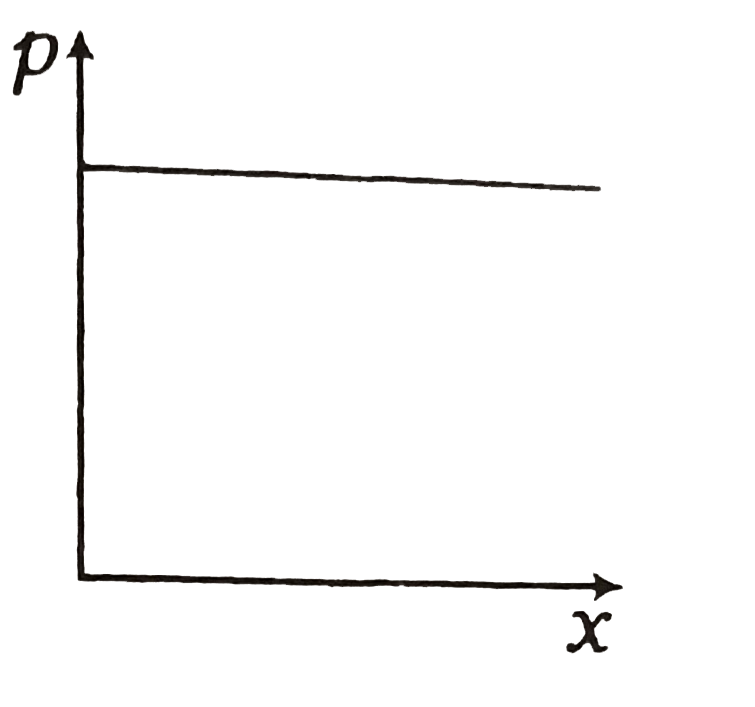
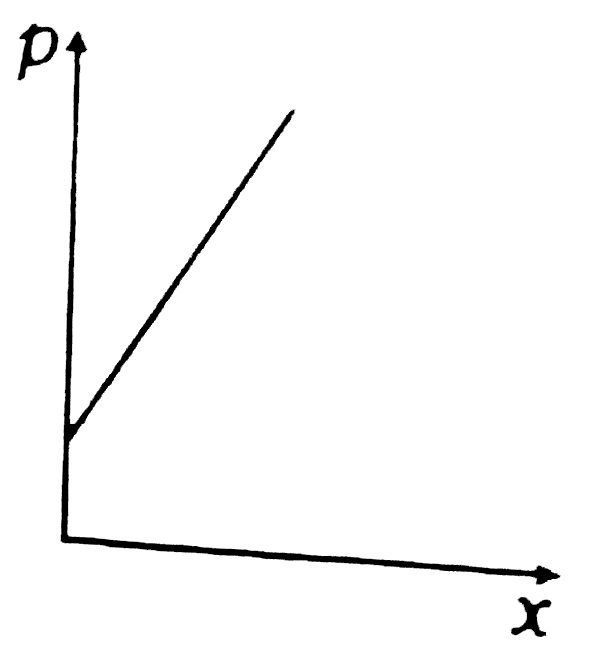
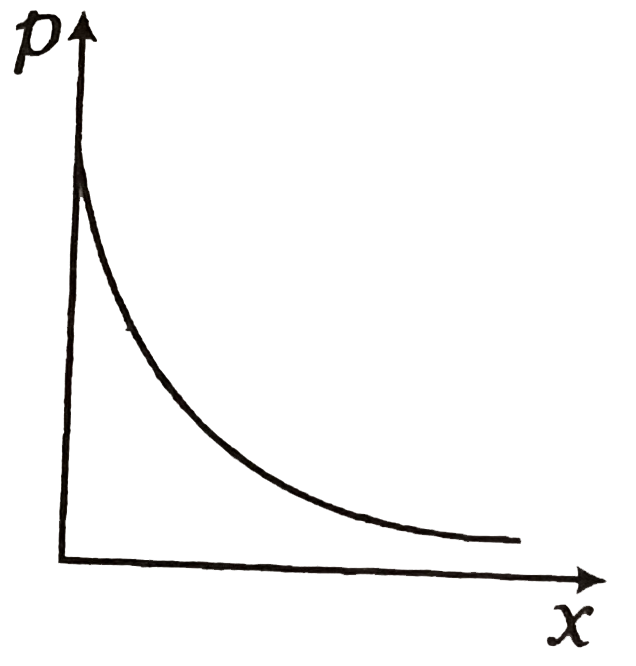
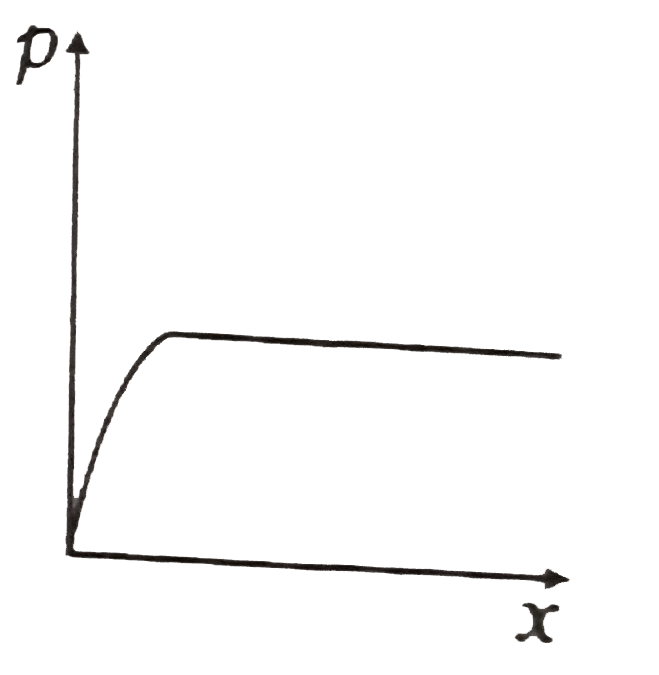
| 6. |
Explain orbital magnetic moment and spin magnetic moment. |
|
Answer» Solution :1. Any charge in uniform circular motion WOULD have an associated magnetic moment given by an expression, `mu_(l)=e/(2m_(e))(l)` 2. This dipole moment is labelled as the orbital magnetic moment it having value equal to `9.27xx10^(-24)Am^(2)`. 3. Besides the orbital moment the electron has an intrinsic magnetic moment, which has the same numerical value as `9.27xx10^(-24)Am^(2)`. It is called spin magnetic moment. 4. But we hasten to add that it is not as THOUGH the electron is spinning. The electron is an elementary PARTICLE and its does not have on AXIS to spin around like a top or our earth. |
|
| 7. |
What is the energy of He electron in first orbit? |
|
Answer» `40.8eV` `E_(n)=(-Z^(2)13.6)/(n^(2))`, Here `He^(+),Z=2` `:.E_(1)=(-(2)^(2)13.6)/((1)^(2))eV=-54.eV` |
|
| 8. |
What is an n-type semiconductor ? What are the majority and minority charge carriers in it? |
|
Answer» SOLUTION :If a pentavalent impurityis added to pure tetravelentsemiconductor, it is CALLED n-type SEMICONDUCTOR. In n-type semiconductormajority CHARGE carriers are electronsand minority charge carriers are holes. |
|
| 9. |
Which of the following methods can be used to measure the speed of light in laboratory? |
|
Answer» Roemer method |
|
| 10. |
Three diagrams are given each has equal radial of curvature of the curved surfaces. All the lenses have refractive index mu = 1.5If P and R are used in combination as shown in the diagram (S), then ratio of magnitude of the focallength of P and S is |
|
Answer» `1:2` |
|
| 11. |
The capacitance of a parallel capacitor is 5muF. When glass slab inserting between two plates, its potential difference becomes (1)/(8) the times hence the dielectric constant of a slab ...... |
|
Answer» `1.6` ` C = (Q)/(V)` for dielectric medium and C = KC `:. (Q)/(V) = K (Q)/(V)` `:. V = (V)/(K) ` `:. K = (V)/(V) ` but ` V = (V)/(8) :. K =8` |
|
| 12. |
In an intrinsic semiconductor, the number of conduction electrons is 6xx10^19 per cubic metre. How many holes are there in a semiconductor of size 1 cm |
|
Answer» `6xx10^19` |
|
| 13. |
Three diagrams are given each has equal radial of curvature of the curved surfaces. All the lenses have refractive index mu = 1.5The arrangement P behaves like .......... (Focal length of Q is 20 cm) |
|
Answer» Convex MIRROR of focal length 40 cm |
|
| 14. |
Three diagrams are given each has equal radial of curvature of the curved surfaces. All the lenses have refractive index mu = 1.5The ratio of focal lengths of P, Q, R is |
|
Answer» `1: -2 : 1` |
|
| 15. |
Find the ratio of de-Broglie wavelengths, associated with (i) Protons, accelerated through a potential of 128 V, and (ii) alpha-particles, accelerated through a potential of 64 V. |
|
Answer» <P> Solution :`lambda=(h)/(sqrt(2meV))`(i) for problem, `lambda_(1)=(h)/(sqrt(2m_(p)exx128))`….(1) (ii)For `alpha`-PARTICLE , `lambda_(2)=(h)/(sqrt(2m_(alpha).(2e)xx64))`…(2) Divide EQ.(1) by eq.(2) `(lambda_(1))/(lambda_(2))=sqrt((m_(alpha)xx128)/(m_(p)xx128))` `=sqrt((m_(alpha))/(m_(p)))` `=sqrt((4m_(p))/(m_(p)))=sqrt4=(2)/(1)` |
|
| 16. |
Suppose that the electron in Fig. having a total energy E of 5.1 eV, approaches a barrier of height U_(b)=6.8eV and thickness L = 750 pm. (a) What is the approximate probability that the electron will be transmitted through the barrier, to appear (and be detectable) on the other side of the barrier? (b) What is the approximate probability that a proton with the same total energy of 5.1 eV will be transmitted through the barrier, to appear (and be detectable) on the other side of the barrier? |
|
Answer» Solution :KEY IDEA The probability we seek is the transmission coefficient T as given by Eq. 37-22 `(T~~e^(-2bL))`, where `b=sqrt((8pi^(2)m(U_(b)-E))/(h^(2)))` Calculations : The numberator of the fraction under the square - root sign is `(8pi)(9.11xx106(-31)KG)(6.8eV-5.1eV)XX(1.60xx106(-19)J//eV)=1.965xx10^(-47)J.kg`. Thus, `b=sqrt((1.956xx106(-47)J.kg)/((6.63xx10^(-34)J.s)^(2)))=6.67xx10^(9)m^(-1)`. The (dimensionless) quantity 2bL is then `2bL=(2)(6.67xx10^(9)m^(-1))(750xx10^(-12)m)=10.0` and, from Eq. 37-22, the transmission coefficient is `T~~e^(-2bL)=e^(-100)=45xx10^(-6)` . Thus, of every million electrons that striks the barier, about 45 will tunnel through it, each appearing on the other side with its original total energy of 5.1 eV. (The transmission through the barrier does not alter in electron.s energy or any other property.) Reasoning : The transmission coefficient T (and thus the probability of transmission) depends on the mass of the particle. Indeed, because mass m is one of the factors in the exponent of e in the equation for T, the probability of transmission is very sensitive to the mass of the particle. This time, the mass is that of a proton `(1.67xx10^(-27)kg)`. which significantly greater than that of the electron in (a). By substituting the proton.s mass for the mass in (a) and then continuing as we did there, we find that `T~~10^(-186)`. Thus, although the probability that the proton will be transmitted is not exactly ZERO, it is barely more than zero. For even more massive particles with the same total energy of 5.1 eV, the probability of transmission is EXPONENTIALLY lower. |
|
| 17. |
Water falls from a height of 500m . What is the rise of temperature of water at the bottom if whole energy is used up in heating water ? |
|
Answer» `.96^@C` |
|
| 18. |
If P.v and E denotes the momentum velocity and K.E. of a particle then |
|
Answer» `p=(DE)/(dt)` DIFFERENTIATING both SIDES w.r.t.v, we have `(dE)/(dv)=1/2m.2vimplies(dE)/(dv)=P="momentum"` |
|
| 19. |
नर में द्वितीयक लैंगिक लक्षणों के लिए अनिवार्य हॉर्मोन है : |
|
Answer» प्रोजेस्टेरोन |
|
| 20. |
If the magnetic monopoles existed then which of the following Maxwell's equations would be modified ? |
|
Answer» `oint VECE. VEC(DS) =(q)/(epsilon_(0))` |
|
| 21. |
If young's modulus y, surface tension s and time t are the fundamental quantities then the dimensional formula of density is |
|
Answer» `s^(2)s^(3)t^(-2)` |
|
| 22. |
In the adjacent figure, when key K 10 V opened, the reading of ammeter A will be |
| Answer» Answer :D | |
| 23. |
Though the lamp posts on a road are of the same height, the distant posts appear shorter -explain the reason. |
| Answer» Solution :The angle subtended at the eye the object is called the visual angle. If the visual angle increases , the size of the IMAGE formed on the retina also increases. i.e ., the object APPEARS to be of large size . The lamp POSTS situated at large distances from a viewer subtend small angles at the EYES. Hence the lamp posts SEEN from large distances appear to be relatively short. | |
| 24. |
When two resistances are connected in parallel then the equivalent resistance is __. When one of the resistance is removed then the effective resistance is 2Omega. The resistance of the wire removed will be |
| Answer» Answer :A | |
| 25. |
The gravitationalwaveswere theoreticallyproposed by ………… . |
|
Answer» CONRAD Rontgen |
|
| 26. |
Apolythene piece rubbled with wool is found to have a negative charge 3xx10^(-7)C. Estimate the number of electrons transferred (from which to which?) |
|
Answer» Solution :(a) `2XX10^(12)` form woolto polythene (b) yes but of a negligible AMOUNT (`=2xx10^(-18)` KG in the example ) |
|
| 27. |
From amongst the following curves, which one shows the variation of the velocity v with t for a small sized spherical body falling vertically in long column of viscous liquid |
|
Answer»
|
|
| 28. |
In a sinusoidal a.c. circuit the rms value of current (I_(rms) ) is related to the current amplitude (10) as per relation |
|
Answer» `I_(RMS) = I_(0)/PI` |
|
| 29. |
In the above problem the specific heat of iron will be |
|
Answer» 0.72 |
|
| 30. |
When an ideal diatomic gas is heated t constant pressure, the fraction of the heat energy supplied which increases the internal energy of the gas is : |
|
Answer» `2/5` |
|
| 31. |
One picofarad is equal to : |
|
Answer» `10^-9F` |
|
| 32. |
Equal currents each 'i' are flowing in three infinitely long wires along positive x,y and z axes, Find the magnetic field at the point (0,0,-a), |
|
Answer» Solution :`bar(B)` due to in x - direction `vec(B)_(x) = (mu_0i)/(2 pia) hatj` `BARB` due to current in y -direction `barB_y = (mu_0i)/(2pia)(- HATI)` `barB` due to current in Z-direction is ZERO since the point is present on the line of the current CARRYING conductor. `B_Z = 0` `bar (B) = bar(B_x) + bar(B_y) + bar(B_z)` `bar(B)_("(0,0,a)")= (mu_0i)/(2pia) hatj - (mu_0i)/(2pia)hati` `|barB_("(0,0,-a)")|=(mu_0i)/(2pia) sqrt(2)` `|barB| = (mu_0i)/(2pia)sqrt(2)` |
|
| 34. |
Where should an object be placed in front of a concave mirror to get a magnified image ? |
|
Answer» |
|
| 35. |
In as resonance -column experiment, a long tube, open at the top, is clamped vertically. By a separate device, water level inside the tube can be moved up or done. The section of the tube from the open end to thewater level acts as a cloed organ pipe. A vibrating tuning fork is held above the open end, and the water level is gradually pushed down. The first and the second resonance occur when the water level is 24.1cm and 74.1cm respectively below the open end. The diameter of the tube is 2cm |
| Answer» ANSWER :B | |
| 36. |
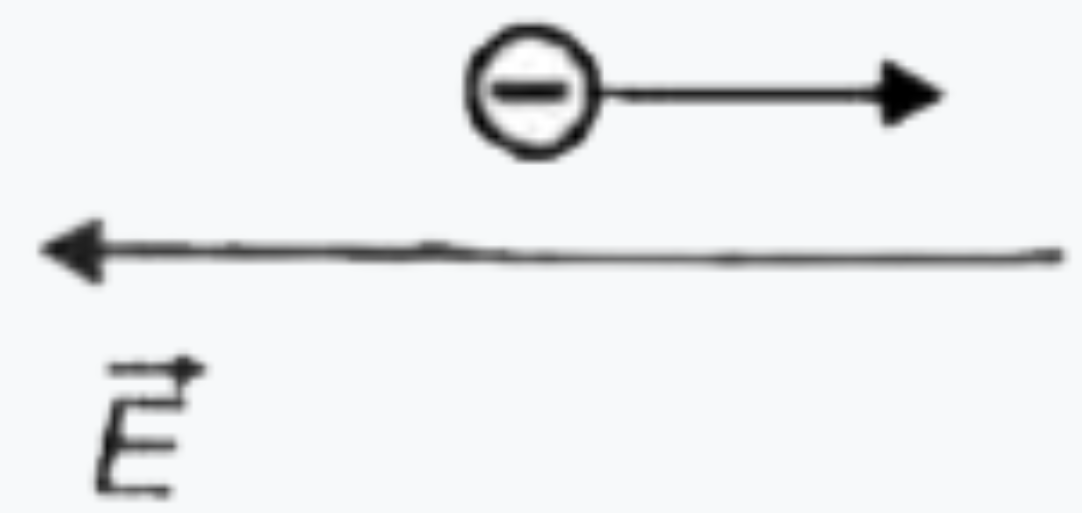
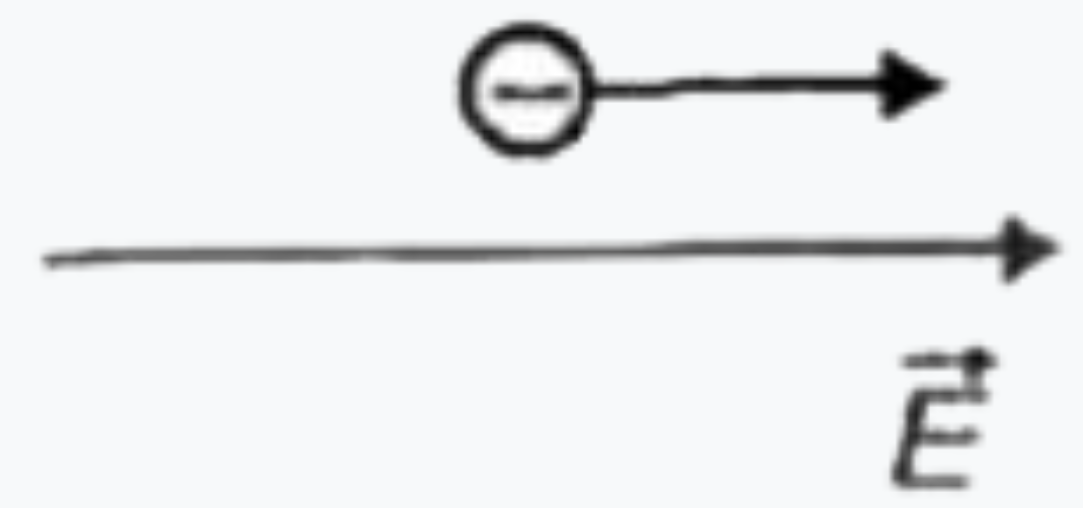
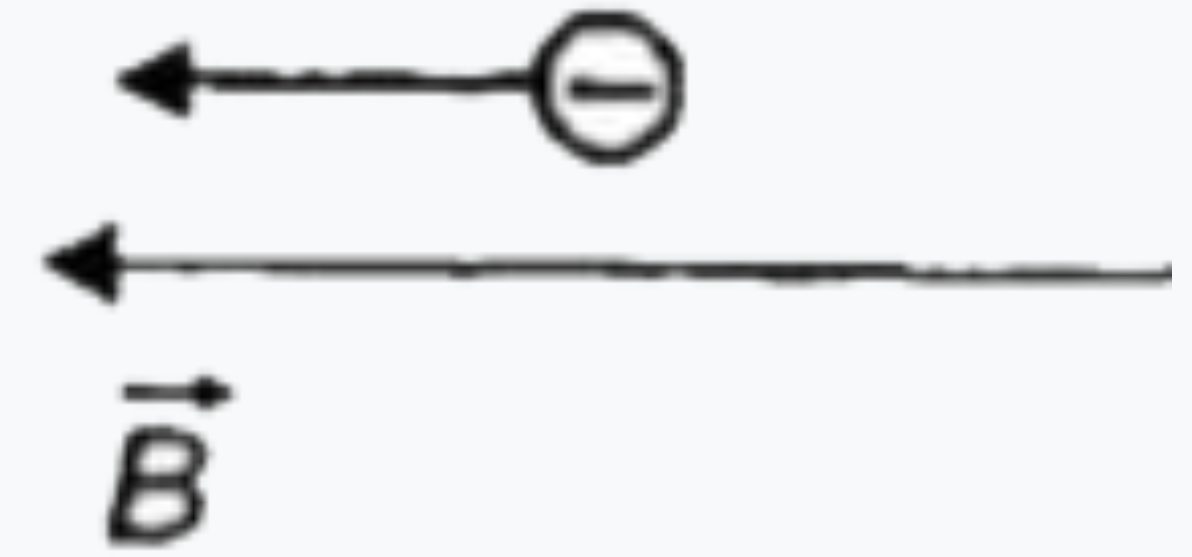
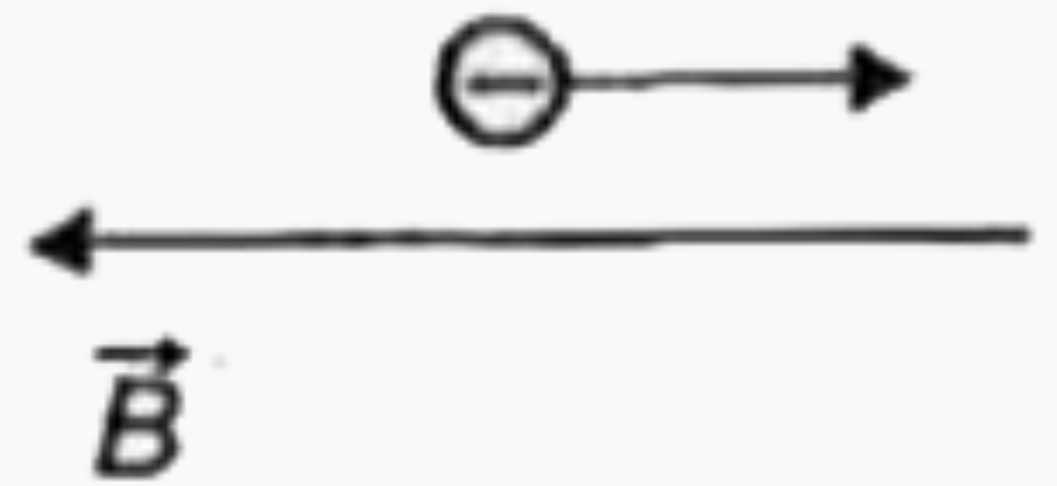
Figure shows four situations in which an electron is moving in electric /magnetic field . In which case the de Broglie wavelength of electron is increasing ? |
|
Answer»
|
|
| 37. |
Equivalent dielectric constant of given arrangement is |
|
Answer» 7.2 `C_(24)=(epsi_(0)(24)((A)/(2)))=12C` `C_(5)=(epsi_(0)(5)((A)/(2)))/(d)=2.5 C` `C_(EQ)=7.2C+2.5C` =9.7C |
|
| 38. |
What is absolute refractive index ? On what factor does it depend. |
|
Answer» Solution :ABSOLUTE refractive index : The refractive index of a medium with respect to vacuum (or in practice air) is called its absolute refractive index. `THEREFORE n-c/v` Dimensional formula of refractive index : `M^@ L^@ T^@` Value of refractive index of any medium depends on TYPE of medium, temperature of medium and wavelength of LIGHT. |
|
| 39. |
A person tries to broadcast with the same antenna both the signals at 10^(7) Hz and 10^(6) Hz. If the reciver at some distance has to receive an equal strenght for both the frequencies, then the broadcaster has to approximately increase the signal strenght at 10^(6) Hz to 10^(7) Hz by |
|
Answer» `(1)/(10)"times"` or `P prop V^2`, where, v = frequency so`P_1/P_2 = v_1^2/v_2^2` GIVEN, `v_1 = 10^7 Hz, v_2 = 10^6 Hz` `P_1/P_2 = ((10^7)/(10^6))^2 = 100` `rArrP_1 = 100P_2` Power of frequency `10^7` is 100 times GREATER than `10^6`. So, sighnal stregth of frequency `10^6` Hz need to be increased by 100 times for equal strength at some distance . |
|
| 40. |
If g is the acceleration due to gravity on the earth's surface, the gain in the potential energy of an object of mass m raised from the surface of earth to the radius R of the earth is : |
|
Answer» `(1)/(2)MG R` |
|
| 41. |
A current carrying loop acts like a ...... |
|
Answer» MAGNETIC pole |
|
| 42. |
Is it reasonable to expect the coefficient of friction to exceed unity ? |
| Answer» Solution :For NORMAL plane surfaces the coefficient of friction is less than unity But, when the SURFACE are so IRREGULAR that sharp minute projections and cavities exist in the surfaces, the coefficient of friction MAY be greater than one | |
| 43. |
10C and -10C are placed at y = 1 m and y=-1 m on y-axis 1c charge is placed on x-axis at x = +1. Now find the change in PE of system when 1 coulomb is displaced from x= +lm to x=-1 m keeping other two charges as fixed is |
| Answer» Answer :D | |
| 44. |
An alternating voltage of 100 virtual volt is applied to a circuit of resistance 0.5 Omega and inductance 0.01 H, the frequency being 50 Hz. What is the current and lag in time between voltage and current ? |
|
Answer» |
|
| 46. |
Assertion: If a conducting medium is placed between two charges, then electric force between them becomes zero. Reason:Force between two point charges placed in a material medium is directly proportional to its dielectric constant. |
|
Answer» Both Assertion and Reason are true and Reason is the CORRECT explanation of Assertion |
|
| 47. |
The maximum accleration of the train in which a box lying on its floor will remain stationary, given that the co-efficient of static friction between the box and the train's floor is 0.15 is |
|
Answer» `2.5 MS^(-2)` |
|
| 48. |
The distance of object when a concve mirror produces an image of magnification 'm' : |
|
Answer» `((m-1)/m)F` |
|
| 49. |
In the given figure, the wires P_(1)Q_(1) and P_(2)Q_(2) are made to slide on the rails with same speed of 5 cm s^(-1). In this region, a magnetic field of 1 T exists. The electric current in the 9 Omega resistance is |
|
Answer» zero if both wires slide toward left `BLV = 1xx4xx10^(-2)xx5x10^(-2)=20xx10^(-4)V` The polarity of the battery can be given by Fleming.s right hand rule. When both wire move in opposite direction, the circuit diagram look like as shown in figure (a). The effective emf of the two batteries shown in the diagram is zero. So, choice (b) is correct and choice (d) is wrong. When both wires move towards left, the circuit diagram looks like as shown in figure (b).  Effective emf of two batteries shown is `E=(20xx10^(-4)V)` and RESISTANCE is same `(2Omega)` therefore `i_(1)=i_(2)` Hence, current in the circuit is, `i=(20xx10^(-4))/(10)=0.2 mA` Hence, choice (c ) is correct and choice (a) is wrong. |
|
| 50. |
Show that a convex lens produces an N times magnified image when the object distances from the lens have magnitudes (f+- f/N) Hence, find the two values of object distance for which a convex lens of power 2.5 D will produce an image that is 4 times as large as the object ? |
|
Answer» Solution :We know that magnification produced by a lens is given by `m=v/u = f/(u +f)` Hence, in present case `+- N =f/(u+f)` SIGNS are used for virtual and real IMAGES RESPECTIVELY] `u+f =+- f/N rArr u =-f +- f/N` or `|u| =f+- f/N` In present numerical problem `P = +2.5 D`, hence, `f = 1/P = 1/2.5 m = 40 cm`, and magnification `N=+-4` `therefore u=f +-f/N = 40 +- 40/4 = 40 +- 10 = 50 cm` or 30 cm |
|