Saved Bookmarks
This section includes 7 InterviewSolutions, each offering curated multiple-choice questions to sharpen your Current Affairs knowledge and support exam preparation. Choose a topic below to get started.
| 1. |
Calculate the molarity of a solution prepared by dissolving its 4g NaOH in enough water to form 250mL of the solution. |
|
Answer» Solution :Since molarity (M) `=("NUMBER of MOLES of solute(n)")/("Volume of solution in litres (v)")` `=n=w/(MW)=("WEIGHT")/("MOLECULAR weight")` `=(4g//40g)/(0.250L)=0.4"mol L"^(-1)=0.4M` |
|
| 2. |
Calcium sulphate is available naturally as |
|
Answer» Gypsum |
|
| 3. |
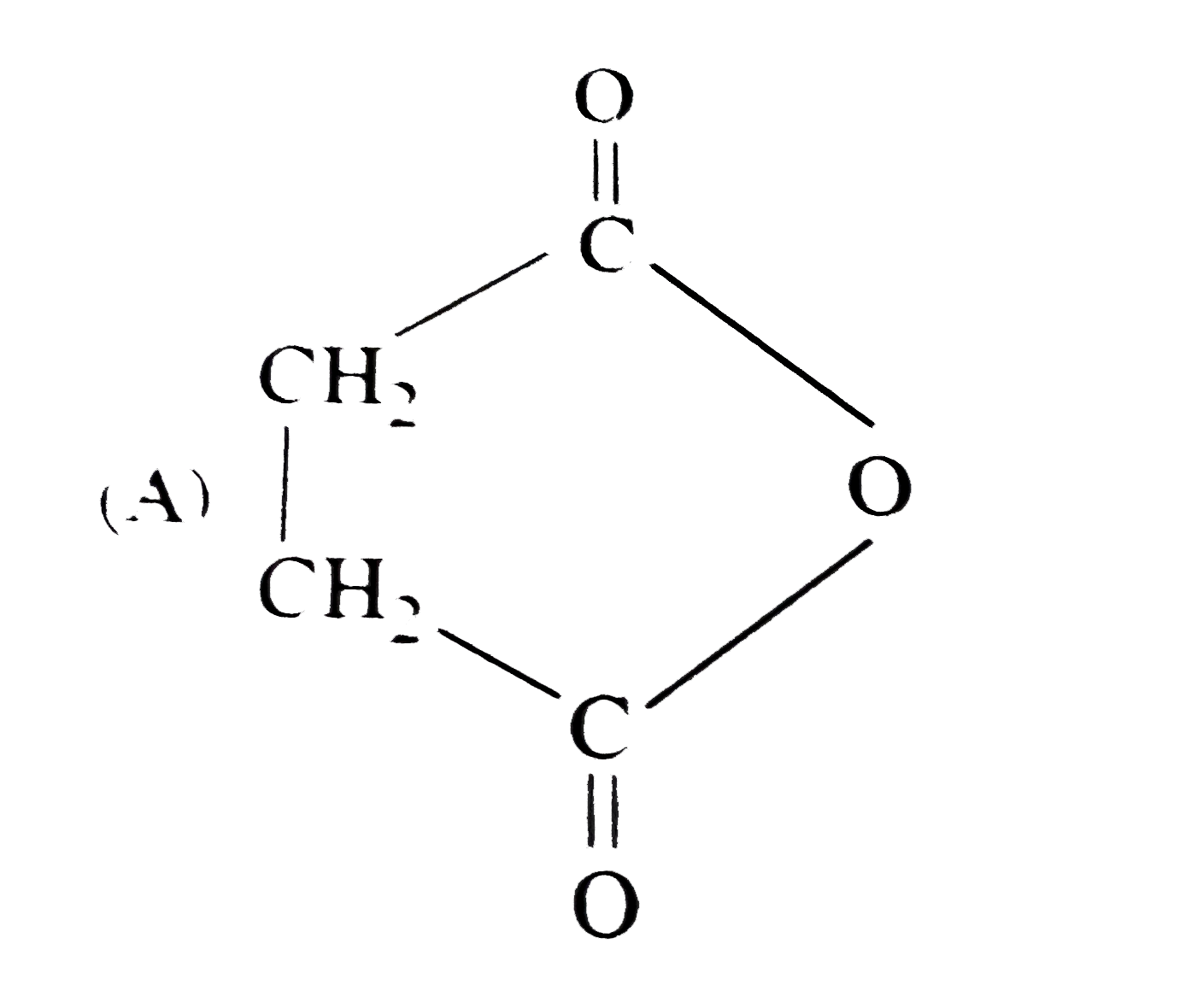
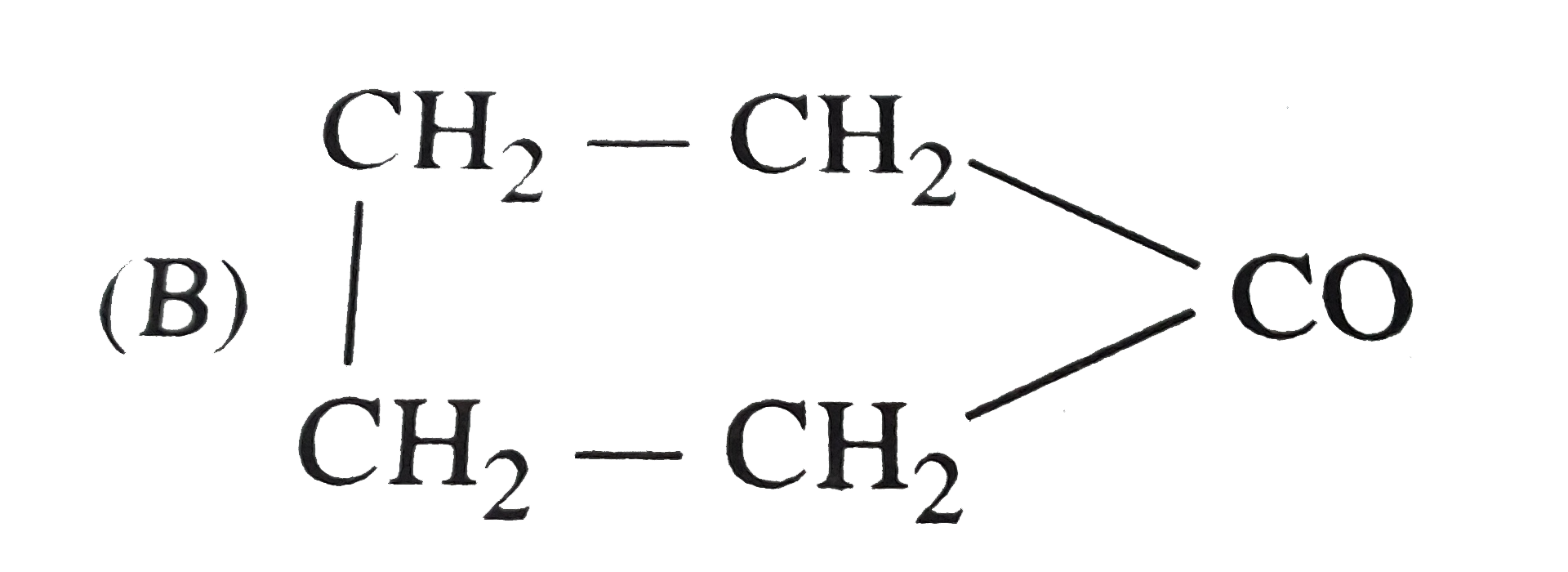
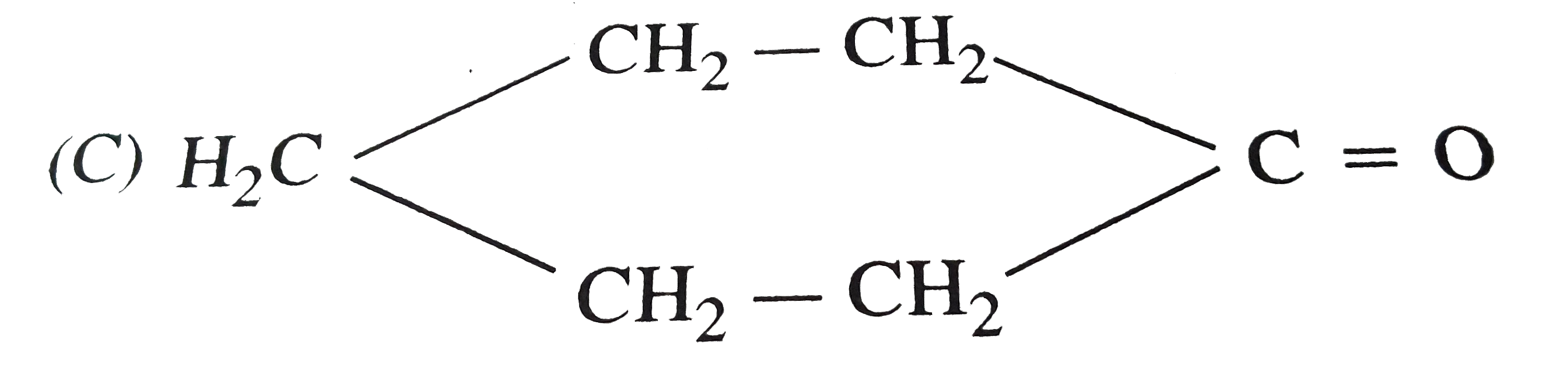
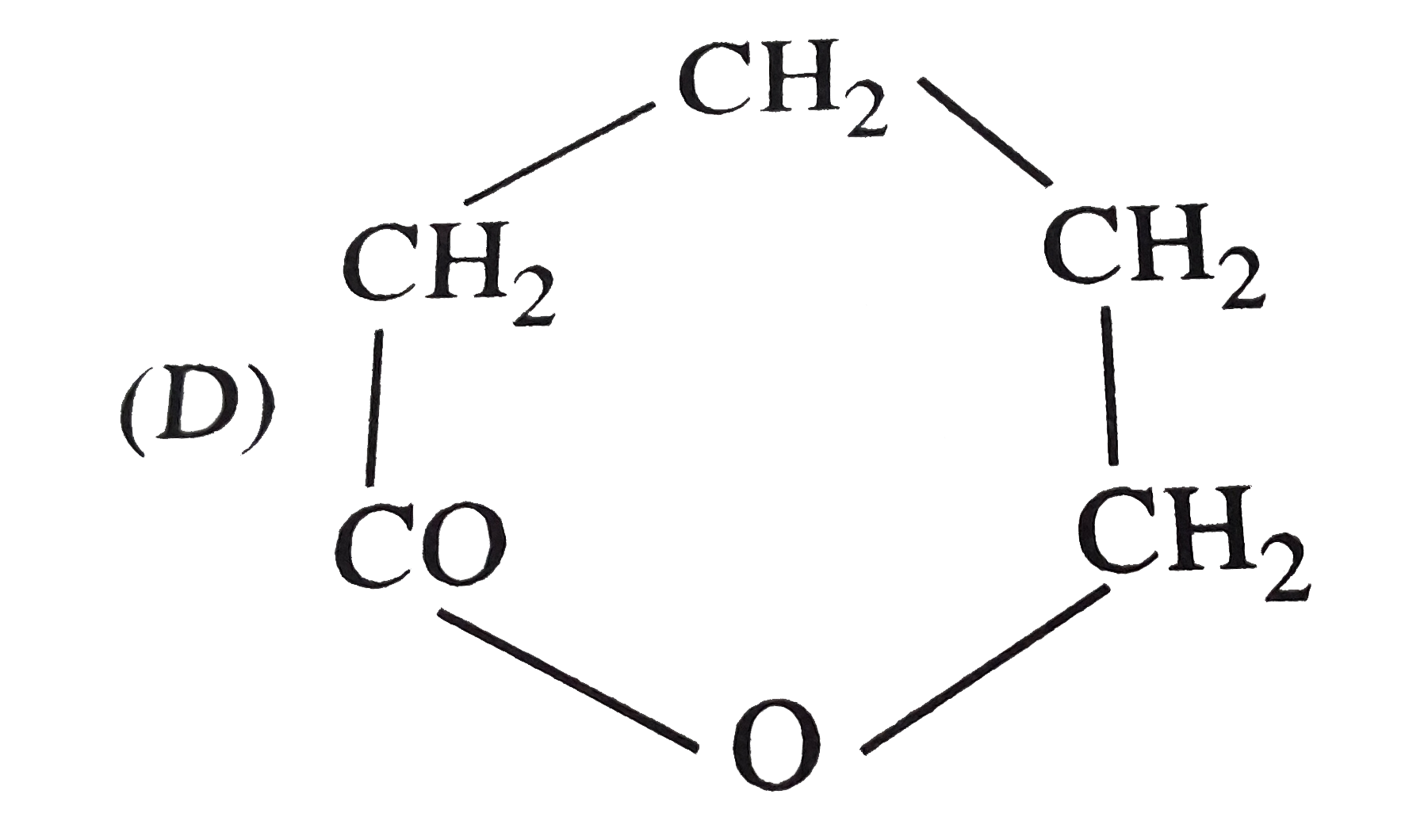
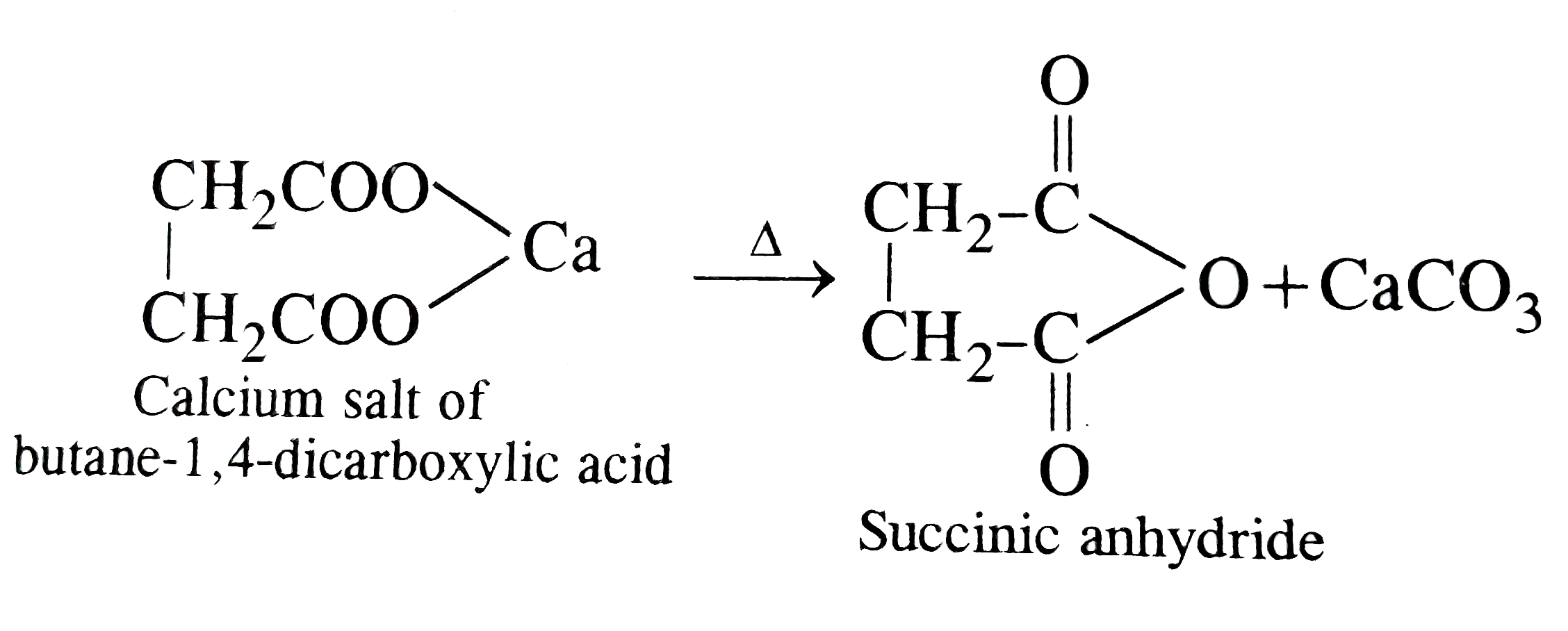
Calcium salt of butan-1, 4-dicarboxylic acid on distillation yields |
|
Answer»
|
|
| 4. |
Calcium salt of propionic acid is distilled in dry conditions. The product will show |
|
Answer» FEHLING TEST positive 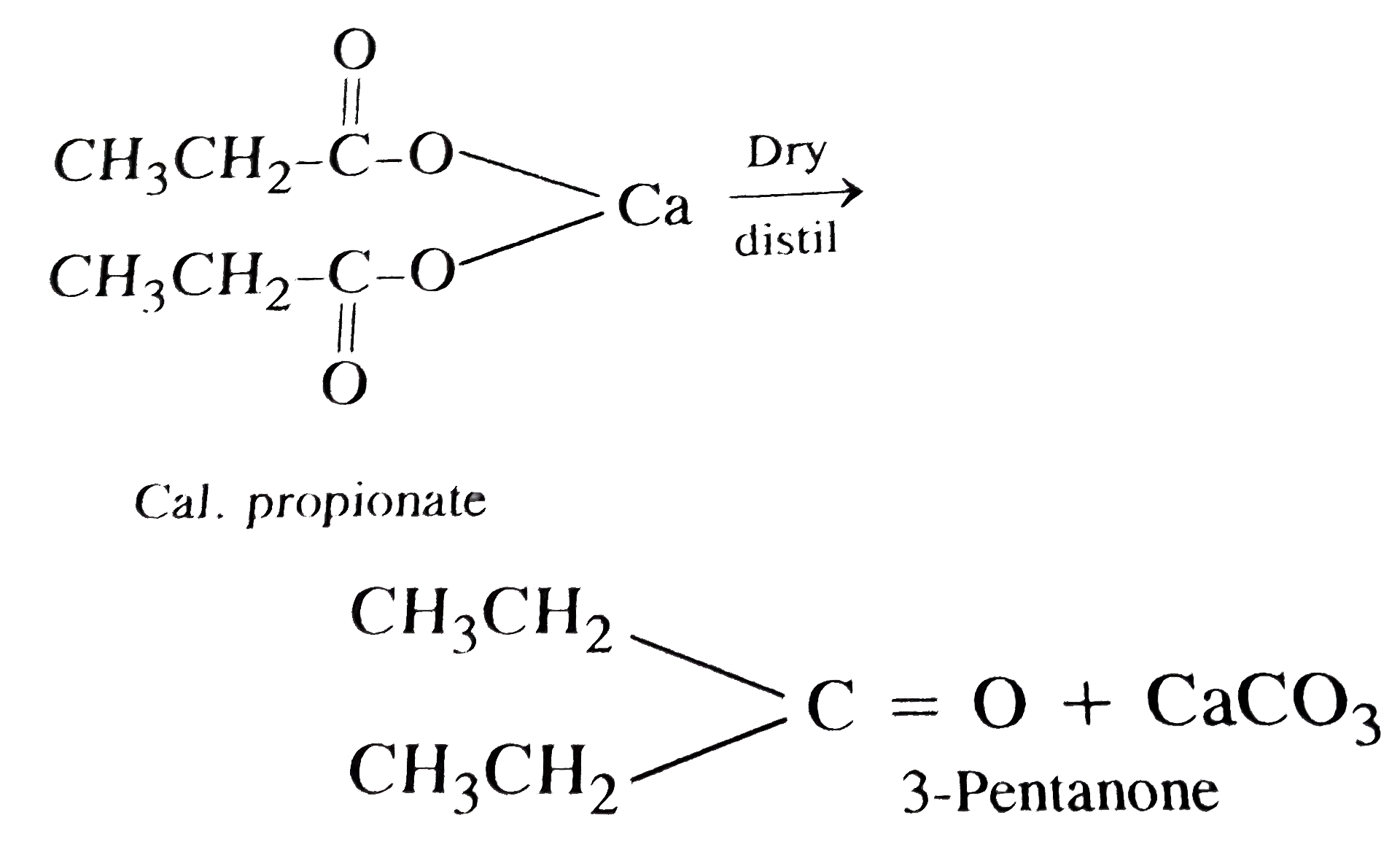
|
|
| 5. |
Calcium oxide on mixing with caustic soda formed ..... |
|
Answer» Sodalime |
|
| 6. |
Calcium oxide is obtained by the..... |
|
Answer» Roasting of LIMESTONE. |
|
| 8. |
Calcium metal is used to produce high vaccum because it |
|
Answer» can remove water |
|
| 9. |
Calcium metal crystallizes in a face -centred cubic lattice with edge of 0.556 nm. Calculate the density of the metal if it contains (i)0.5 % Frenkel defects (ii)0.2 % Schottky defects . |
|
Answer» Solution : (i) Frenkel defects have no effect on the density because number of atoms PERUNIT cell remains the same. For FCC, Z = 4 , ForCa, M= ` 40 " g mol"^(-1)` Also, a = 0.556 nm = ` 0.556 xx 10^(-7)` cm. Density , ` p = (Z xx M)/(a^(3) xx N_(0)) = (( 3.992) ( 40 " g mol"^(-1)))/(( 0.556xx 10^(-7) cm)^(3) ( 6.022 xx 10^(23) "mol"^(-1)))= 1.5427" g cm"^(-3)` |
|
| 10. |
Calcium metal crystallizes in a face-centred cubic lattice with edge length of 0.556 nm. Calculate the density of the metal if it contains (i)0.5% Frenkel defects (ii)0.2% Schottky defects. |
|
Answer» SOLUTION :(i)Frenkel defects have no effect on the density because NUMBER of atoms per unit cell remains the same . For FCC, Z=4. For Ca, M=`40 g mol^(-1)`. Also, a=0.556 nm =`0.556xx10^(-7)` cm `therefore ` Density, `rho=(ZxxM)/(a^3xxN_0)=(4xx40 "g mol"^(-1))/((0.556xx10^(-7)cm)^3xx(6.022xx10^23 mol^(-1)))=1.5458 g cm^(-3)` (ii)If there were not DEFECT (or there were only Frenkel defects) , number of atoms per unit cell=4 (being FCC). There would have been no change in density . Due to 0.2 % Schottky defect, number of atoms per unit cell decreases. THUS, now number of atoms per unit cell =`4-0.2/100xx4=3.992` `therefore` Density , `rho=(ZxxM)/(a^3xxN_0)=((3.992)(40 g mol^(-1)))/((0.556 XX 10^(-7) cm)^3 (6.022xx10^23 mol^(-1)))=1.5427 g cm^(-3)` |
|
| 11. |
Calcium lactate is a salt of weak organic acid and represented as Ca(Lac)_(2). A saturated solution of Ca(Lac)_(2) contains 0.13 mole of this salt in 0.50 litre solution. The pOH of this solution is 5.60 . Assuming complete dissociation of the salt , calculate K_(a) of lactic acid. |
|
Answer» Solution :In solution, `Ca(Lac)_(2)` is hydrolysed as follows : `Ca(Lac)_(2)+2H_(2)O hArr Ca(OH)_(2) + underset(underset("(weak)")("lactic acid"))(2HLac)` or `Ca^(2)+2 Lac^(-1) + 2 H_(2)O hArr Ca^(2+) + 2 OH^(-) + 2 HLAC` or `2 Lac^(-) + 2H_(2)O hArr 2 OH^(-) + 2 HLac` or `Lac^(-) + H_(2)O hArr OH^(-)+ HLac` Hydrolysis constant, `K_(h) = ([OH^(-)][HLac])/([Lac^(-)])` But `[Ca(Lac)_(2)]=0.26 ` MOL `L^-1)` so that `[Lac^(-)]=0.52 ` mol `L^(-)` and `pOH = 5.60 ` so that `- log [OH^(-) ] = 5.60` or `[OH^(-)] = ` antilog `(-5.6)=2.51xx10^(-6)M` `:. K_(h) = ((2.51xx10^(-6))^(2))/(0.52)=1.21xx10^(-11)` Further, `HLac hArr H^(+) + Lac^(-)` `K_(a) = ([H^(+)][Lac^(-)])/([HLac]) " " ...(ii)` Also `K_(w) = [H^(+)][OH^(-)]` ...(iii) From (i), (ii) and (iii), `K_(a)=(K_(w))/(K_(h))=(10^(-14))/(1.21xx10^(-11))=8.26xx10^(-4)` |
|
| 12. |
Calcium is obtained by... |
|
Answer» Rosting of lime stone Cathode : `Ca^(+2)+2E^(-) to Ca` Anode : `2Cl^(-) to 2e^(-) +Cl_(2)` |
|
| 13. |
Calcium is obtained by the |
|
Answer» ROASTING by LIMESTONE |
|
| 14. |
Calcium is generally preferred over sodium to remove traces of water from alcohol. |
| Answer» Solution :Both these metals should be used to remove moisture from alcohol as they have strong affinity for WATER. However, sodium is NORMALLY not preferred SINCE it also reacts with alcohol and evolves hydrogen gas. On the other hand, CALCIUM has no action with alcohol and its, therefore, preferred over sodium to remove water or moisture from alcohol. | |
| 15. |
Calcium is obtained by |
|
Answer» Electrolysis of molten `CaCl_(2)`  At cathode: `Ca^(2+)+2e^(-)rarrCa` At anode: `2Cl^(Θ)rarrCl_(2)+2e^(-)` |
|
| 16. |
Calcium Hydroxide cannot be used to remove permanent hardness of water why? |
| Answer» Solution :`MgCl_2+Ca(OH)_2toMg(OH)_2+CaCl_2` REMOVAL of permanent hardness means (Mg &Ca) chlorides and sulphates are CONVERTED to insoluble CARBONATES but we can use `Ca(OH)_2` means formed calcium chlorides only does not form insoluble carbonates | |
| 17. |
Calcium cyanamide on hydrolysis gives a gas B which on oxidation with bleaching powder gives another gas C. When magnesium is heated in gas C and the resultant compound D on adding to water gives the same gas B. Then B,C and D are |
|
Answer» `NH_(3), N_(2), Mg_(3)N_(2)` 
|
|
| 18. |
Calcium crystallises in a face centred cubic unit cell with a =0.556nm. Calculate the density if it contained 0.1% Schottky defects. |
|
Answer» `1.5463g//cm^(3)` |
|
| 19. |
Calcium chloride is used as a dehydrating agent because |
|
Answer» it has a strong affinity for WATER |
|
| 20. |
Calcium chloride and potassium chloride solutions could easily be distinguished from one another by |
|
Answer» PERFORMING a FLAME TEST |
|
| 21. |
Calcium carbonate reacts with aqueous HCl to give CaCl_(2) and CO_(2) according to the reaction given below : CaCO_(3(s)) + 2HCl_((aq)) rarr CaCl_(2(aq)) + CO_(2(g)) + H_(2)O_((l)) Whatmass of CaCl_(2) will be formed when 250 mL of 0.76 M HCl reacts with 1000 g of CaCO_(3) ? Name the limiting reagent. Calculate the number of moles of CaCl_(2) formed in the reaction. |
|
Answer» Solution :Molar MASS of `CaCO_(3)=40+12+3xx16` `=100 g "mol"^(-1)` MOLES of `CaCO_(3)` in 1000 g `n_(CaCO_(3))=("Mass")/("Molar mass")` `n_(CaCO_(3))=(1000)/(100)=10 `mol Molarity `=("Moles of solute"xx 1000)/("Volume of solution")` `0.76=(n_(HCl)xx1000)/(250)` `n_(HCl)=(0.76xx250)/(1000)=0.19` mol `{:(CaCO_(3(s)),+,2HCl_((aq)),RARR,CaCl_(2(aq)),+,CO_(2(g)),+H_(2)O_((l)),),(1 "mol",,"2 mol",,,,,,):}` According to the equation, 1 mole of `CaCO_(3)` reacts with2 moles HCl `:.` 10 moles of `CaCO_(3)` will react with `(10xx2)/(1)=20` moles of HCl. But we have only 0.19 moles HCl, so HCl is limiting reagent and it limits the yield of `CaCl_(2)`. Since, 2 moles of HCl PRODUCES 1 mole of `CaCO_(2)` 0.19 mole of HCl will produce `(1xx0.19)/(2)=0.095` mol of `CaCl_(2)` Molar mass of `CaCl_(2)=40+(2xx3.35.5)=111g "mol"^(-1)` `:.0.095` mole of `CaCl_(2)=0.095xx111=10.54g` |
|
| 22. |
Calcium carbonate reacts with aqueous HCl to give CaCl_(2) and CO_(2) according to the reaction, CaCO_(3(s)) +2HCl_((aq)) rarr CaCl_(2(aq))+CO_(2(g))+H_(2)O_((t)) What mass of CaCO_(3) is required to react completely with 25 mL of 0.75 M HCl ? |
|
Answer» `0.75= (w xx 1000)/(36.5xx25)` `w= (0.75xx36.5xx25)/(100)= 0.6844g` `CaCO_(3(s)) + 2HCl_((AQ)) rarr CaCl_(2(aq))+CO_(2(g)) + H_(2)O_((l))` `100 "" 2xx 36.5 = 73` 73 g HCl for complete `r" rea"^(N) 100 g CaCO_(3)` CONSUM So, `0.6844 gm HCl rarr (?)` `= (100xx0.6844)/(73) = 0.9375 gm` |
|
| 23. |
Calcium carbonate reacts with aqueous HCl to give CaCl_(2) and CO_(2) according to the reaction, CaCO_(3) (s) + 2 HCl (aq) to CaCl_(2) (aq) + CO_(2)(g) + H2O(l) What mass of CaCO3 is required to react completely with 25 mL of 0.75 M HCl? |
|
Answer» Solution :Molarity (M) of a solution is given by: `w=(MM.V)/1000` In the present case, M = 0.75, M. = 1 + 35.5 = 36.5, V = 25 ML, w =? Substituting the values, we have `w=(0.75 xx 36.5 xx 25)/1000 = 0.6844 G` Therefore, the mass of HCI present in the given solution is 0.6844 g. The given EQUATION is: `underset("1 mole 100 g")(CaCO_(3)(s)) + underset("2 moles " 2 xx 36.5 = 73 g)(2HCl(aq)) to CaCl_(2)(aq) + CO_(2)(g) + H_(2)(l)` `therefore` 73 g of HCI require for complete REACTION the mass of `CaCO_3 = 100 g` `therefore` 0.6844 g of HCI will require `CaCO_(3) = 100/73 xx 0.6844 = 0.939 g` |
|
| 24. |
Calcium carbonate decomposes on heating to give calcium oxide and carbon dioxide. How much volume of CO_2 will be obtained by thermal decomposition of 50g CaCO_3 ? |
|
Answer» 1L 100g of `CaCO_3` at STP gives 22.4 L of `CO_2` 50g of `CaCO_3` will produce `(22.4)/(100)xx50=11.2L " of " CO_2` |
|
| 25. |
Calcium carbonate and soil are the raw materials for cement production. |
| Answer» SOLUTION :TRUE STATEMENT | |
| 26. |
Calcium carbide + heavy waterto ? The product of the above reaction is |
|
Answer» `C_2H_2` |
|
| 27. |
Calcium burns in nitrogen to produce a white powder which dissolves in sufficient water to produce a gas (A) and an alkaline solution . The solution on exposure to air produces a thin solid layer of (B) on the surface . Identify the compounds A and B . |
|
Answer» Solution :Ca burns in air to form CAO and `Ca_(3)N_(2)`. `2 Ca + O_(2) overset(DELTA)(to) 2 CaO , 3 Ca + N_(2) overset(Delta)(to) Ca_(3)N_(2)` Calcium nitride on HYDROLYSIS with `H_(2)O` gives AMMONIA (A) `Ca_(3) N_(2) + 6 H_(2)O to 3 Ca(OH)_(2) + underset(A) (2 N)H_(3)` The alkaline solution of `Ca(OH)_(2)` thus formed reacts with `CO_(2)` present in the air to form `CaCO_(3)` which being INSOLUBLE forms a thin solid layer on the surface . `Ca(OH)_(2) + CO_(2) to underset(B)(CaC)O_(3) + H_(2)O` Thus , A = `NH_(3)` and `B = CaCO_(3)` (white powder) |
|
| 28. |
Calcium burns in nitrogen to produce a white powder which dissolves insufficient water to produce a gas A and an alkaline solution. The solution on exposure to air produces a thin solid layer of b on the surface. Indentify the compounds A and B. |
|
Answer» Solution :Gas is ammonia and SOLID `B` is CALCIUM `3Ca+N_(2)rarrCa_(3)N_(2)` `Ca_(2)N_(2)+6H_(2)Orarr3Ca(OH)_(2)+2NH_(3)(A)` `Ca(OH)_(2)+CO_(2)rarrCaCO_(3)(B)+H_(2)O` |
|
| 29. |
Calcium burns in nitrogen a white solid which sufficient water to produce a gas (A) and an alkaline solution. The solution o nexposure to air produces a solid layer of (B) on the surface. Identify the compound (A) and (B). |
|
Answer» Solution :The chemical reaction involved as follows: `3Ca+N_(2) OVERSET("Heat")to underset("Cal.Nitrite")(Ca_(3)N_(2)),+6H_(2)O to underset("ALKALINE")(3Ca(OH)_(2))+underset(A)(2NH_(3))` `CA(OH)_(2)+CO_(2)("air")to underset("Cal. carbonate")(CaCO_(3))+underset(A)(H_(2)O)` |
|
| 30. |
Calcium and beryllium have flame color ...... and ....... respectively. |
| Answer» SOLUTION :BRICK RED, LIGHT GREEN | |
| 31. |
Calcination of limestone containing clay at high temperature is fusible slag is formed. The slag is |
|
Answer» `CaSiO_(3)` |
|
| 32. |
Calamine is an ore of |
|
Answer» Zn |
|
| 33. |
Caffeine contains 49.5% C, 28.8% N, 16.5% 0 and 5.20% H. Calculate the molecular formula. Given that 0.2 moles of caffeine weigh 38.04 g. |
Answer»  The empirical formula of caffeine = `C_4N_2OH_5` Calculation of molecular formula : 0.2 moles of caffeine weigh = 38.84 G `therefore` 0.1 mole of caffeine will weigh `=38.84/0.2 XX 1 = 194.2` `therefore` Molecular mass of caffeine = 194.2 amu Empirical formula mass = `(12.01 xx 4) + (2 xx 14.01( + 16.0 + (5 xx 1.008) = 97.1` `therefore n =("Molecular mass")/("Empirical formula mass") = (194.2)/(971.1) = 2` Hence, the molecular formula of caffeine `= 2 xx C_(4)N_(2)OH_(5) = C_(8)N_(4)O_(2)H_(10)`. |
|
| 34. |
Caculatethe number of protonsneutronsandelectronsin ._(35)^(80)Br. |
|
Answer» Solution :In this case `._(35)^(8)Br A= 80 ` andZ= 35speciesisneutral Number of PROTONS= number of electrons =35 = z Number of neutrons = 80 -35 =34 |
|
| 35. |
Caculate the energyassociatedwith the firstorbitof He^(+).What isthe radiusof thisorbit ? |
|
Answer» SOLUTION :Electionconfigurationof `He^(+)= 1s^(1)` ENERGYOF `N^(TH)`orbitpossessingone `vec ( e)= E_(B)` for`He^(+)=n =1` andz=2 Theradiusof theorbitr=` ((0.0529 nm) n^(2))/( Z)` for `He^(+)` so`1s^(1) ` and `n=1z=2 ` `r_(1) = (0.0529 nm (1)^(2))/( 2 )` `=0.0264 nm` `52.9pm = 0.0529` nm `1PM= 10^(3) nm` |
|
| 36. |
CaCO_(3)(s)hArrCaO(s)+CO_(2)(g) CO_(2)(g)hArrCO(g)+(1)/(2)O_(2)(g) For above simultaneous equilibrium if CO_(2) is added from out side at equilibrium then: |
|
Answer» `P_(CO_(2)` will increase |
|
| 37. |
CaCO_(3(s)) rarr CaO_((s))+CO_(2(g))Delta H = +180 KJ If entropies of limestone, lime and carbon dioxide are 93, 39 and 213J/mol/K. Then Delta S_("total") in JK^(-1) at 300 K is |
| Answer» Solution :`Delta S = S_(P) - S_(R)` | |
| 38. |
CaCO_(3)overset(Delta)underset(1073)rarr CaO+CO_(2) (Reverse reaction takes place). To prevent backward reaction |
|
Answer» `CO_(2)` is REMOVED from reaction MIXURE |
|
| 39. |
CaCO_(3).MgCO_(3)overset(Delta)rarrX+Y+Z |
|
Answer» `CaCO_(3), MGO and CO_(2)` |
|
| 40. |
CaCO_(3(a))overset(Delta)(rarr)A_((s))+B_((g)) , A_((s))+"carbon"overset(Delta )(rarr)C_((s))+D_((s)). The compounds A and C. |
|
Answer» `CaO & CaC_(2)` `CaO + 3C rarr CaC_(2) + CO` |
|
| 41. |
CaCO_(3)reactswithdiluteacidtoliberate________. |
|
Answer» `CO ` |
|
| 42. |
CaCO_(3) overset(Delta)rarr CaO +CO_2 CaO+3C rarr CaC_(2) +CO CaC_(2) +2 H_(2)O rarr Ca (OH)_(2) +C_(2) H_(2) The weight of CaCO_(3)needed for the preparation of 2.24 lit of Acetylene gas under S.T.P conditions is |
| Answer» Answer :A | |
| 43. |
CaCO_(3) is used is preparation of mortar. |
| Answer» SOLUTION :False statement (`CA(OH)_(2)` isused to prepare MORTAR.) | |
| 44. |
CaCO_(3)+HNO_(3) to products |
|
Answer» `CA(NO_(3))_(2),H_(2)O,CO_(2)` |
|
| 45. |
CaCO_(3) hArr CaO + CO_(2) reaction in a lime kiln goes to completion because |
|
Answer» It is a heterogeneous REACTION |
|
| 46. |
CaCO_(3) exists in two forms,calcite and aragonite. The conversion of 1 mole of calcite to aragonite is accompanied by internal energy change equalto +0.21 kJ. Given that the densities of calcite and aragoniteare 2.61 gcm^(-3) and 2.93 g cm^(-3) respectively , calculate the enthalpy change at the pressureof1.0bar. |
|
Answer» Solution :`DeltaH= DELTAU + P DeltaV` Here, `DeltaU =+ 0.21kJmol^(-1)=0.21xx 10^(3)J mol^(-1)= 210J mol^(-1)` `P =1 ` bar `=10^(5)` P `DeltaV =`Molar VOLUME of aragonite `-` Molar volume of calcite `= ( 100)/( 2.93)- (100)/( 2.71) cm^(3) mol^(-1)``( :'` Molar mass of`CaCO_(3) = 100 G mol^(-1))` `= 100 (( 1)/( 2.93 )- (1)/( 2.71)) =100 xx ( -0.22)/(2.93xx2.71) = -2.77 cm^(3) mol^(-1) = - 2.77 xx 10^(-6) m^(3) mol^(-1)` `:. DeltaH = 210 +10^(5) ( - 2.77 xx 10^(-6))=210- 0. 277 J = 209. 72 J mol^(-1)` |
|
| 47. |
CaCN_(2) + H_(2) O to |
| Answer» Solution :`CaCN_(2) + 5H_(2)O to CaCO_(3) + 2NH_(4)OH` | |
| 48. |
CaCl_(2).6H_(2)Ooverset(473k)(to)CaCl_(2).xH_(2)Ooverset("fusion")(to)CaCl_(x) is |
|
Answer» `{x=2}` |
|
| 49. |
CaCl_2 will introduce Schottky defect if added to AgCl crystal. Explain. |
| Answer» Solution :The `Ag^+` ions will be replaced by one `Ca^(2+)` ions to maintain electrical neutrality. Thus, a hole is CREATED at the LATTICE SITE for EVERY `Ca^(2+)` ion INTRODUCED | |
| 50. |
CaCl_(2)will introduce schottky defect if added to AgCl crystal. Explain. |
| Answer» Solution :TWO `AG^(+)`ions will be replaced by one `Ca^(2+)` ions to maintain electrical NEUTRALITY .THUS a hole is created at the lattice site for every ` Ca^(2+)` ion introduced. | |