Saved Bookmarks
This section includes 7 InterviewSolutions, each offering curated multiple-choice questions to sharpen your Current Affairs knowledge and support exam preparation. Choose a topic below to get started.
| 1. |
In the titration between oxalic acid ad acidified potassium permanganate, the manganous salt formed catalyses the reaction. The manganous salt is:- |
|
Answer» A promoter |
|
| 2. |
In the third period the first ionization potential is of the order. |
|
Answer» `Na GT Al gt MG gt SI gt P` |
|
| 3. |
In the test of halogen, why the nitric acid is added before the silver nitrate sodium fusion extract? |
| Answer» SOLUTION :In sodium fusion extract, the sodium HYDROXIDE is in by the reaction between sodium and water, in which directly `AgNO_(3)` added and form precipitate AgOH. By ADDING of `HNO_(3)`, neutrallisation of NAOH is occurs and the solution become acidic and there is no interference in test of halogen. | |
| 4. |
In the synthesis of sodium carbonate , the recovery of ammonia is done by treating NH_(4)Cl with Ca(OH)_(2) . The by-product obtained in this process is |
|
Answer» `CaCl_(2)` |
|
| 5. |
In the system A_((s)) hArr2B_((g)) + 3C_((g)) . If the concentration of C at equilibrium is increased by a factor of 2. It will casuse the equilibrium concentration of B to change to: |
|
Answer» TWO times the original value `K_(c)=(B)^(2)(C)^(2) IMPLIES (B)^(2)=((B)_(1)sqrt(K_(c)))/(2sqrt2 (C)^(3//2))` |
|
| 6. |
In the synthesis of sodium carbonate, the recovery of ammonia is done by treating NH_(4)Clwith Ca(OH)_(2). The by-product obtained in this process is |
|
Answer» `CaCl_(2)` `NH_(3)+H_(2)O+underset("Ammonium bicarbonate")(CO_(2) to NH_(4)HCO_(3))` `NaCl +NH_(4)HCO_(3) underset("Sodium bicarbone")(toNaHCO_(2)darr)+NH_(4)Cl` `2NaHCO_(3)overset(Delta)to underset("Sodium carbone")(Na_(2)CO_(3))+H_(2)O+CO_(2)` `NH_(3)` is recovered from `NH_(4)HCO_(3)` and `NH_(4)Cl` and in this process `CaCl_(2)` is FORMED as a by product ACCORDING to the following reactions: `NH_(4)HCO_(3)overset("heat")to NH_(3)+H_(2)O+CO_(2)` `underset("chloride")underset("Ammonium")(2NH_(4)Cl)+Ca(OH)_(2)tounderset("Ammonia")(2NH_(3))+underset("chloride")underset("Calcium")(CaCl_(2))+2H_(2)O` |
|
| 7. |
In the synthesis of sodium carbonate, the recovery of ammonia is done by treating NH CI with Ca(OH)_(2). The by-product obtained in this process is |
|
Answer» `CaCl_(2)` |
|
| 8. |
In the synthesis of HI, the amounts of H_(2(g)), I_(2(g)), and HI_((g)) , at equilibrium were found to be 0.8, 0.8 and 2.4 mole respectively in 10 liter vessel then calculate equilibrium constant of given reaction at constant temp and also calculate equilibrium constant of reverse reaction. H_(2(g)) +I_(2(g)) hArr 2HI_((g)). |
| Answer» SOLUTION :`K_c=9` and for REVERSE REACTION `K_c=1/9` | |
| 9. |
In the synthesis of glycerol from propene, the steps involved are |
|
Answer» Glycerol `beta`-chlorohydrin and ALLYL chloride |
|
| 10. |
In the sulphur by Carius method, 0.468 g of an organic sulphur compound afforded 0.668 g of barium sulphate. Find the percentage of sulphur in the given compound. |
|
Answer» Solution :Here, the MASS of the SUBSTANCE taken = 0.468 g Mass of `BaSO_(4)` FORMED = 0.668 g Now 1 mole of `BaSO_(4) -= 1g` atom of S or `(137 + 32 + 4 xx 16) = 233 g` of `BaSO_(4) -= 32 g` of S Applying the relation, Percentage of SULPHUR `= (32)/(233) xx ("Mass of " BaSO_(4) " formed")/("Mass of substance taken") xx 100` `= (32)/(233) xx (0.668)/(0.468) xx 100 = 19.60`. |
|
| 11. |
In the sulhonation, acetylation and formylation of benzene the group of effective electrophiles would be |
|
Answer» `SO_(3)^(+),CH_(3)overset(o+)(CH_(2)),HC^(+)=O` |
|
| 12. |
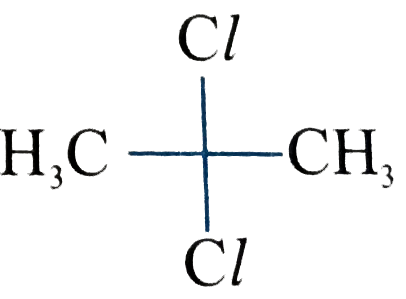
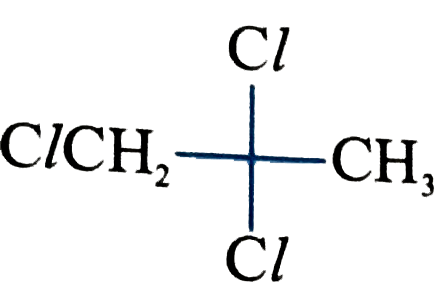
In the study of chlorination of propane, four product (A,B & C,D) of the formula C_(3)H_(6)Cl_(2) were isolated. Each was further chlorinated to provide trichloro products (C_(3)H_(5)Cl_(3)). It was found that A provide one trichloro product, B gave two and C&D each gave three. It is found that D is optically active. Q. Correct formula of the compound D is |
|
Answer» `CH_(3)C Cl_(2)CH_(3)` |
|
| 13. |
In the study of chlorination of propane, four product (A,B & C,D) of the formula C_(3)H_(6)Cl_(2) were isolated. Each was further chlorinated to provide trichloro products (C_(3)H_(5)Cl_(3)). It was found that A provide one trichloro product, B gave two and C&D each gave three. It is found that D is optically active. Q. Correct formula of the product of chlorination of B is- |
|
Answer» `Cl_(2)CHCH_(2)CH_(2)Cl` |
|
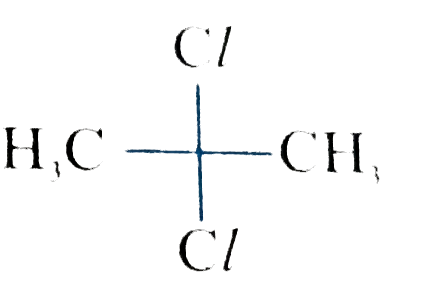
| 14. |
In the study of chlorination of propane, four product (A,B & C,D) of the formula C_(3)H_(6)Cl_(2) were isolated. Each was further chlorinated to provide trichloro products (C_(3)H_(5)Cl_(3)). It was found that A provide one trichloro product, B gave two and C&D each gave three. It is found that D is optically active. Q. Formula of the compound A is |
|
Answer»
|
|
| 15. |
In the structure of hydrogen peroxide which of the following is correct? |
|
Answer» `O-H gt O-O` (bond length) |
|
| 16. |
In the structure of silica, each silicon atom is bonded to how many oxygen atoms ? |
|
Answer» |
|
| 17. |
In the structure of HNO_(3) molecule, N-O bond (121 pm) is shorter than N-OH bond (140 pm). |
Answer» Solution :`HNO_(3)` is a resonance HYBRID of the following TWO canonical structures :  Due to resonance N-O BOND has some DOUBLE bond character. In contrast, N-OH has only pure single bond character. Since single bonds are longer than double bonds, therefore, N-OH bond is longer (140 pm) than N-O bond (121 pm) in `HNO_(3)`. |
|
| 19. |
In the structureof diborane |
|
Answer» All hydrogen atoms LIE in ONE PLANE and boronatoms lie in a plane perpendicularto thisplane |
|
| 20. |
In the structure of diborane.... |
|
Answer» All hydrogen ATOMS LIE in one PLANE and boron atoms lie in a plane perpendicular to this plane. 
|
|
| 21. |
In the structure of diborane |
|
Answer» All hydrogen atoms lie in ONE plane and boron atoms lie in a plane perpenduicular to this plane |
|
| 22. |
In the structure of CIF_3 , the number of lone pairs of electrons on central atom 'Cl' is |
|
Answer» three  T-shape(NUMBER of LONE PAIR ELECTRONS) two. |
|
| 23. |
In the stoichiometry of nautral faujasite-a zeolite with formula Na_(x)[(AlO_(2))_(56)(SiO_(2))_(136)] 250H_(2)O the value of x is |
|
Answer» 56 |
|
| 24. |
In the standardization of Na_2S_2O_3 using K_2Cr_2O_7 by iodometry, the equivalent weight of K_(2)Cr_(2)O_(7) is |
|
Answer» (MOLECULAR WEIGHT)/2 |
|
| 25. |
In the standardization of Na_(2)aS_(2)O using K_(2)Cr_(2)O_(7) by iodmetry the equivalent weight of K_(2)Cr_(2)O_(7) is |
|
Answer» `("MOLECULAR weight")//2` Since `K_(2)Cr_(2)O_(7)` accepts 6 electrons for its REDUCTION to `Cr^(3+)` ions `therefore` Eq. wt. `=` MOL wt/ 6 |
|
| 26. |
In the standardization of Na_(2)S_(2)O_(3) using K_(2)Cr_(2)O_(7) by eudiometry, the equivalent weight of K_(2)Cr_(2)O_(7) is _____ |
|
Answer» `("MOLECULAR weight")/2` |
|
| 27. |
In the standardisation of Na_(2)S_(2)O_(3) using K_(2)Cr_(2)O_(7) by iodometry theequivalent mass of K_(2)Cr_(2)O_(7) is: |
|
Answer» Molecular `MASS//2` `(Cr_(2)O_(7))^(2-)+14H^(+)+6e^(-)rarr2Cr^(3+)+7H_(2)O` Equivalent mass of `K_(2)Cr_(2)O_(7) = "(Molecular )/(6) mass"` |
|
| 28. |
In the sphalerite (ZnS) structure S^(2-) ions form a face-centred cubic lattice. Then Zn^(2+) ions are present on the body diagonals at |
|
Answer» `(1)/(3)` RD of the DISTANCE |
|
| 29. |
In the Solvay process , can we obtain sodium carbonate directly by treating the solution containing (NH_(4))_(2) CO_(3) with sodium chloride ? Explain . |
|
Answer» Solution :In Solvay process , we cannot obtain directly SODIUM carbonate by treating the solution CONTAINING `(NH_(4))_(2)CO_(3)` with sodium chloride because both `Na_(2)CO_(3)` and `NH_(4)Cl` are highly soluble and the equilibrium will not shift in the FORWARD DIRECTION `(NH_(4))_(2) CO_(3) + 2 NaCl hArr Na_(2)CO_(3) + 2 NH_(4)Cl` |
|
| 30. |
In thesolvayprocess,NH_(4)Cl is treatedwithmalkof limeto recover_____. |
|
Answer» `NACL` |
|
| 31. |
In the Solvay process, can we obtain sodium carbonate directly by treating the solution containing(NH_(4))_(2) , CO_(3) with sodium chloride? Explain. |
| Answer» SOLUTION :`(NH_(4))_(2), CO_(3)` reacts with NaCl and the products are `Na_(2)CO_(3) and NH_(4)Cl`. Both the products are HIGHLY soluble in water and equilibrium can not shift in forward direction. That.s why `Na_(2)CO_(3)`cannot by prepared directly. | |
| 32. |
In the sodium chloride structure, formula per unit cell is equal to |
|
Answer» 2 |
|
| 33. |
In the sixth period, the orbitals being filled with electrons are |
|
Answer» 5ss, 5p, 5D |
|
| 34. |
In the second group of qualitative analysis, H_(2)S is pass through a solution acidified with HCl in order to : |
|
Answer» LIMIT the concentration of `S^(2-)` ions `H_(2)S overset((AQ))hArr 2H^(+) (aq) + S^(2-) (aq)` `HCl overset((aq))rarr H^(+) (aq) + Cl^(-) (aq)` |
|
| 35. |
In the salt bridge KCI is used because |
|
Answer» it is an electrolyte |
|
| 36. |
In the ring test of NO_(3)^(-)ion,Fe^(2+) ion reduces nitrate ion to nitric oxide, which combines with Fe^(2+) (aq) ion to form brown complex. Write the reactions involved in the formation of brown ring. |
|
Answer» Solution :`underset("Nitrate ion")NO_(3)^(-)(aq)+3Fe^(2+)(aq)+4H^(+)(aq)tounderset("NITRIC axide")(NO(g))+3Fe^(3+)(aq)+3H_(2)O(l)` `[Fe(H_(2)O)_(6)]^(2+)+NO(g)tounderset("Pentaaquanitrosnium IORN (I) (Brown complex)")([Fe(H_(2)O)_(5)NO]^(2+)+H_(2)O` |
|
| 37. |
If the three interaxial angles defining the unit cell are all equal in magnitude, the crystal cannot belong to the |
|
Answer» 100mg |
|
| 38. |
In the ring test for identification of nitrate ion, what is the formula of the compound responsible for the brown ring formed at the interface of the two liquids ? |
|
Answer» SOLUTION :The formula of the compound RESPONSIBLE for brown ring in the test for IDENTIFICATION of NITRATE ION is : `[Fe(H_(2)O)_(5)NO]^(2+)SO_(4)^(-)` Pentaaquanitrosoniumiron (I) sulphate |
|
| 39. |
In the representation of specific rotation ([alpha]_(D)^(250C)), .D. indicates |
|
Answer» DEXTRO rotation |
|
| 40. |
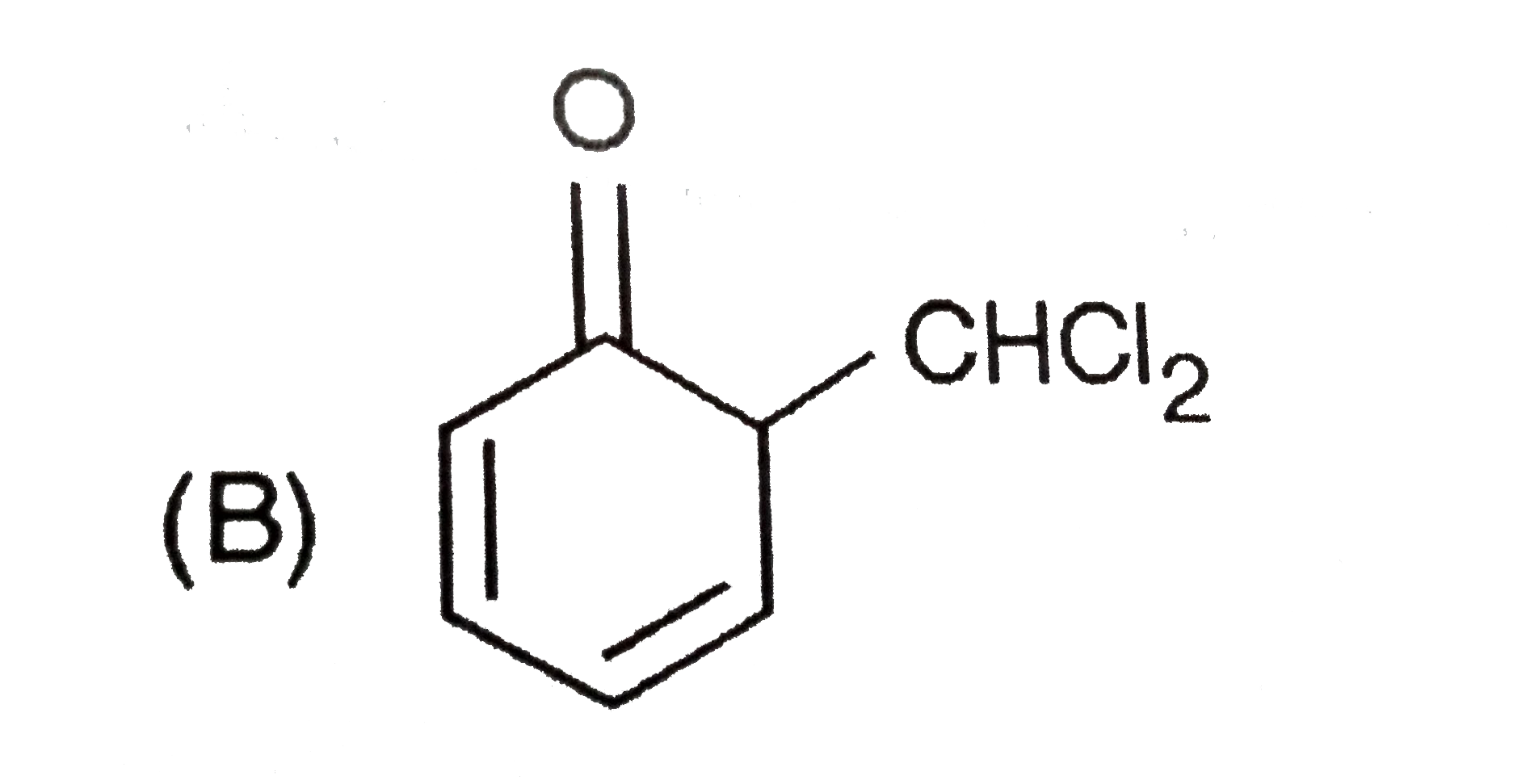
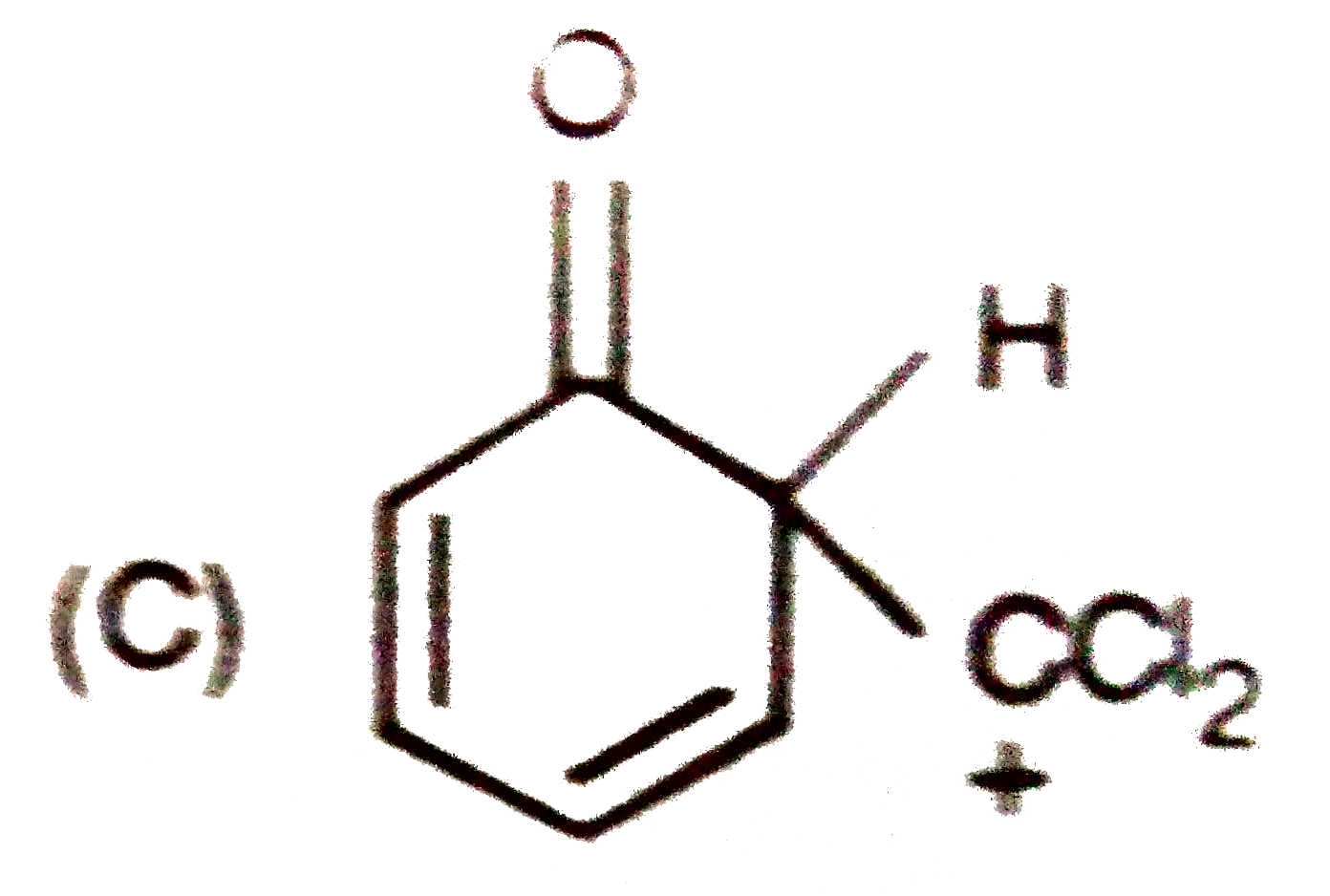
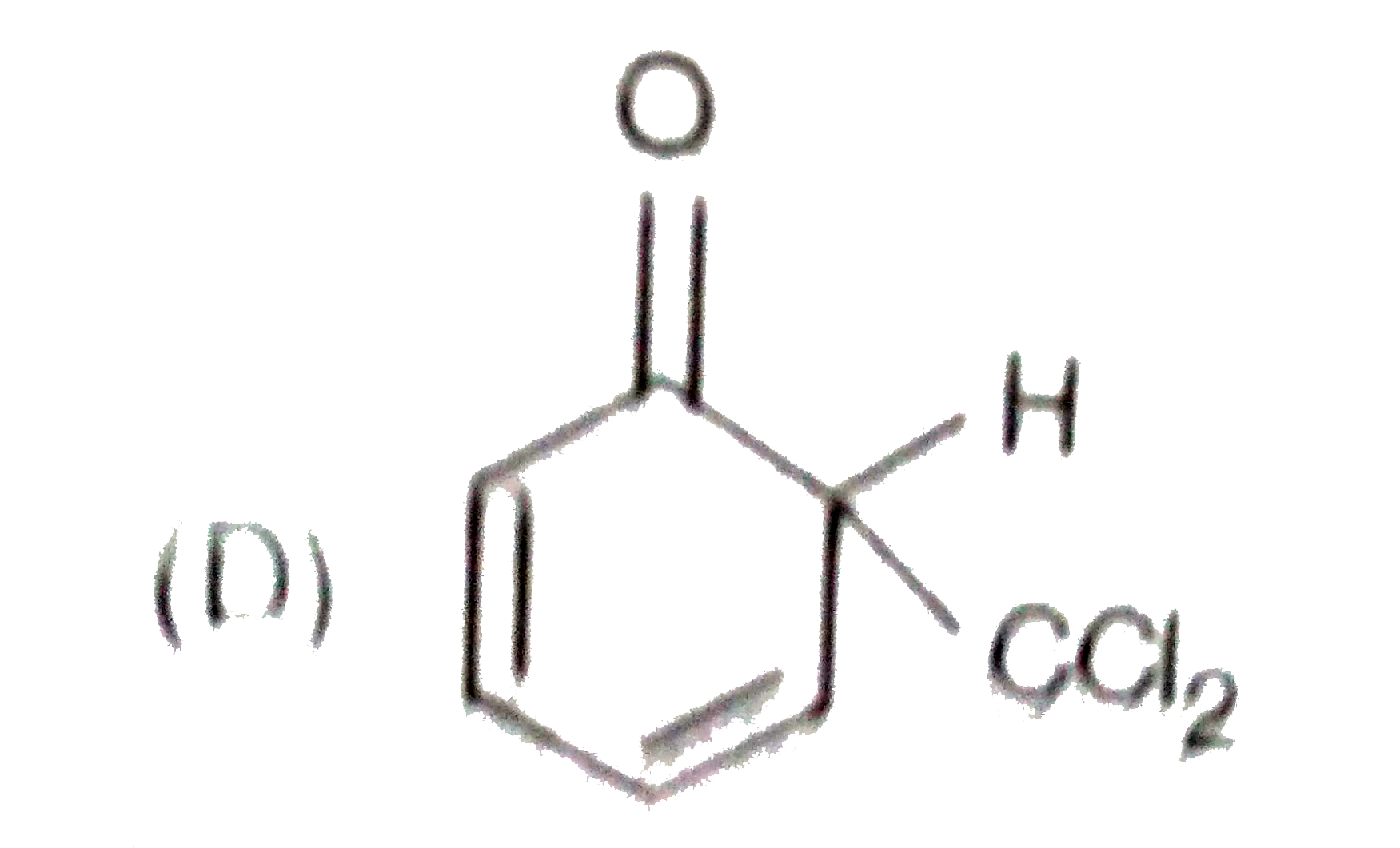
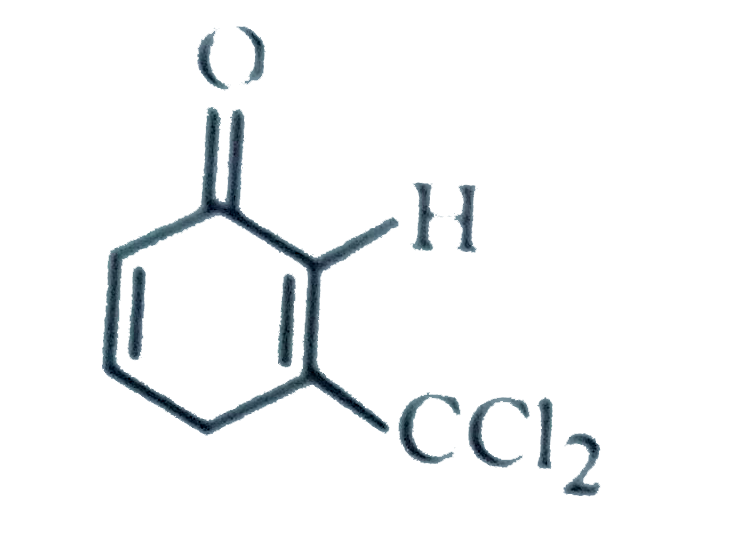
In the Reimer Teimann reaction the intermediate involved is |
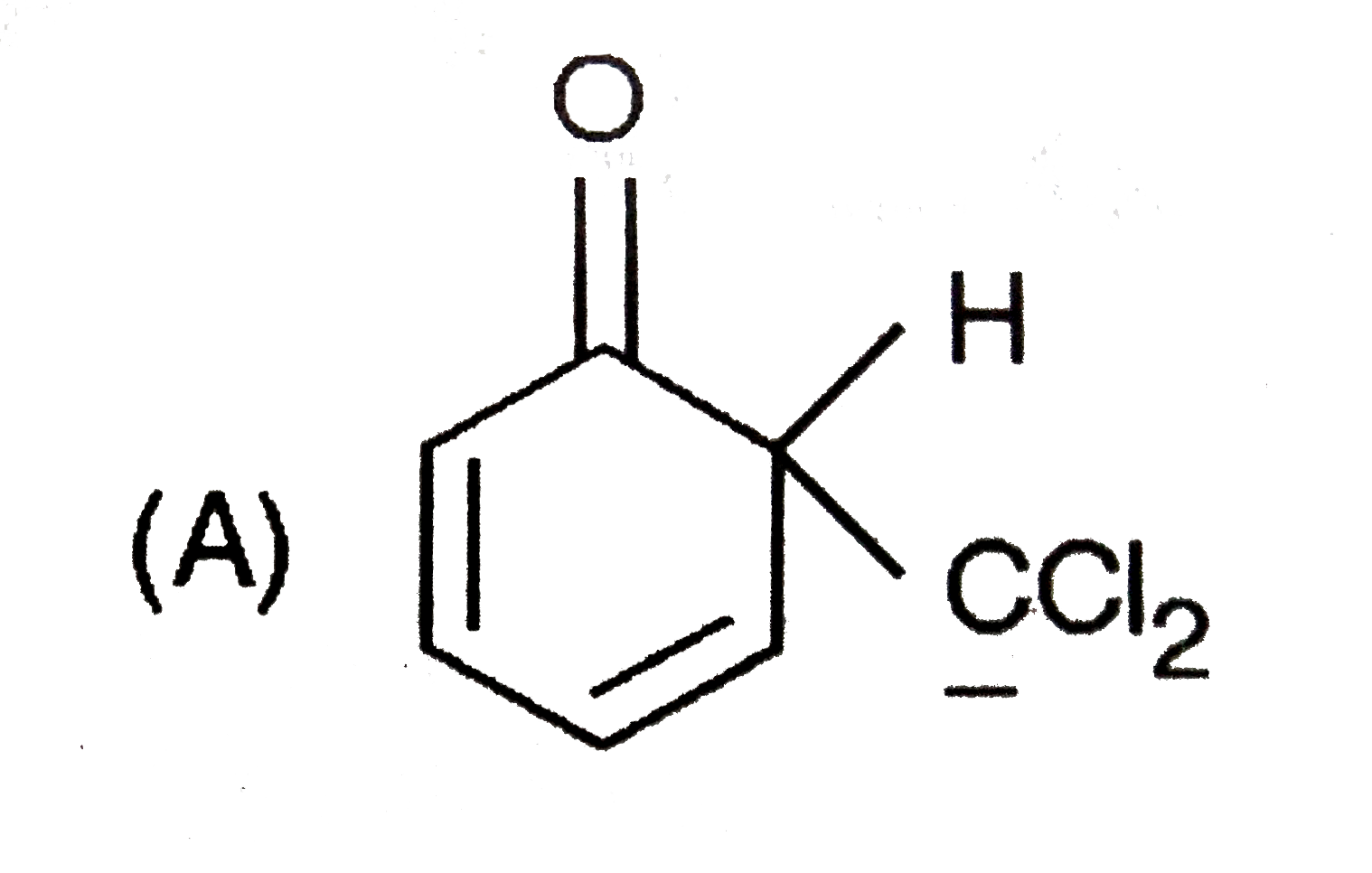
|
Answer»
|
|
| 41. |
In the redox reaction : xKMnO_(4) to +yNH_(3) to KNO_(3)+MnO_(2)+KOH+H_(2)O |
|
Answer» x=4, y=6 |
|
| 42. |
In the redox reaction MnO_(4)^(-) +8H^(+)+Br^(-)rarrMn^(2+)+4H_(2)O+5//2br_(2) which one is the reducing agent ? |
|
Answer» `H^(+)` |
|
| 43. |
In the redox reaction. 2MnO_(4)^(-)+5H_(2)O_(4)^(2-)+16H^(+)hArr2Mn^(2+)+10CO_(2)+8H_(2)O The ion acting as autocatalyst is:- |
|
Answer» `MnO_(4)^(-)` |
|
| 44. |
In the redox reactin xKMnO_(4)+NH_(3)rarryKNO_(3)+MnO_(2)+KOH+H_(2)O |
|
Answer» x=4,y=6 `NH_(3)+9OH^(-)rarrNO_(3)^(-)+6H_(2)O+8e^(-)[XX` `8MnO_(4)^(-)+3NH_(3)rarr8MnO_(2)+3NO_(3)^(-)+5OH^(-)+2H_(2)O` or `8KMnO_(4)+3 NH_(3)rarr8MnO_(2)+3KNO_(3)+5KOH+2H_(2)O` THUS coefficient of `KmnO_(4)=8` and that of `KNO_(3)=3` |
|
| 45. |
In the rection 2S_(2)O_(3)^(2-)+I_(2)rarrS_(4)O_(6)^(2-)+2I^(-) |
|
Answer» `S_(2)O_(3)^(2-)` gets oxidised to `S_(4)O_(6)^(2-)` `S_(2)O_(3)^(2-) "is oxidised to" S_(4)O_(6)^(2-)` `I_(2) "is reduced to" I^(-)`ion |
|
| 46. |
In the rection NH_(4)(s) hArr (g)+HCl (g) the value of Deltan_(g) is ....... |
|
Answer» <P> |
|
| 47. |
In the redox ionic equation 2MnO_(4)^(-)+Br^(-)+H_(2)O -> 2MnO_(2)+BrO_(3)^(-) +2OH^(-) the equivalent weight of potassium permangante of molar mass M g mol""^(-1) is |
|
Answer» `M/5` |
|
| 48. |
In the reactions given below, identify the species undergoing oxidation and reduction : (i) H_(2)S_((g))+Cl_(2(g))to2HCl_((g))+S_((s)) (ii) 3Fe_(3)O_(4(s))+8Al_((s))to9Fe_((s))+4Al_(2)O_(3(s)) (iii) 2Na_((s))+H_(2(g))to2NaH_((s)) |
|
Answer» Solution :(i) `H_(2)S` is oxidised because a more electronegative element, chlorine is added to hydrogen (or a more electropositive element, hydrogen has been removed from S). Chlorine is reduced due to addition of hydrogen to it. (ii) ALUMINIUM is oxidised because oxygen is added to it. Ferrous ferric oxide `(Fe_(3)O_(4))` is reduced because oxygen has been removed from it. (iii) With the CAREFUL application of the concept of electronegativity only we may infer that sodium is oxidised and hydrogen is reduced. Reaction (iii) chosen here prompts us to think in terms of ANOTHER way to define redox REACTIONS. |
|
| 49. |
In the reactions Sn Cl_2+HgCl_2toSnCl_4+Hg_2Cl_2 which is the oxidant and which is the reductant? |
| Answer» SOLUTION :`SnCl_2` is a REDUCTANT and `HgCl_2` is an OXIDANT. | |
| 50. |
In the reactions given below identify the species undergoing oxidation and recuction (i) H_(2)S(g)+CI_(2)(g)rarr2HCI(g)+S(s)(ii)3Fe_(3)O_(4)(s)+8AI(s)rarr9Fe(s)+4AI_(2)O_(3)(s)(iii)Na(s)+H_(2)(g)rarr2NaH(s) |
| Answer» Solution :(i) here `H_(2)S` is oxidised to S because hydorgen has been removed form it whil `CI_(2)` has been reduced to (II) here aluminium is oxidised to aluminium oxid because oxygen has been added to it while ferrous ferric oxide (or magnetic oxide) has been reduced to IRON because oxygen has been removed from it (ii) as SHOWN in SODIUM is oxidised to sodium io while hydrogen is reduced to hydride ion | |