Saved Bookmarks
This section includes 7 InterviewSolutions, each offering curated multiple-choice questions to sharpen your Current Affairs knowledge and support exam preparation. Choose a topic below to get started.
| 1. |
Freon-12 is commonly used as |
|
Answer» an insecticide |
|
| 2. |
Frenkel defect is shown by crystals having __________ coordination number and ___________difference in the size of the cations and the anions. |
|
Answer» |
|
| 3. |
Frenkel defect is shown by crystals having…… coordination number and ………. Differencein the size of the cations and the anions. |
|
Answer» |
|
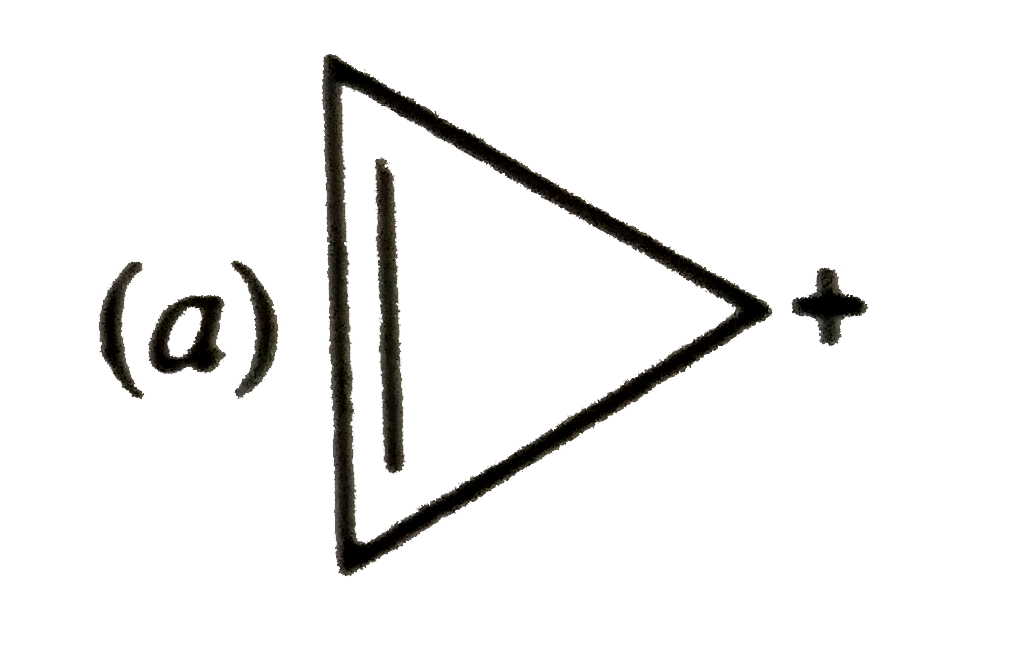
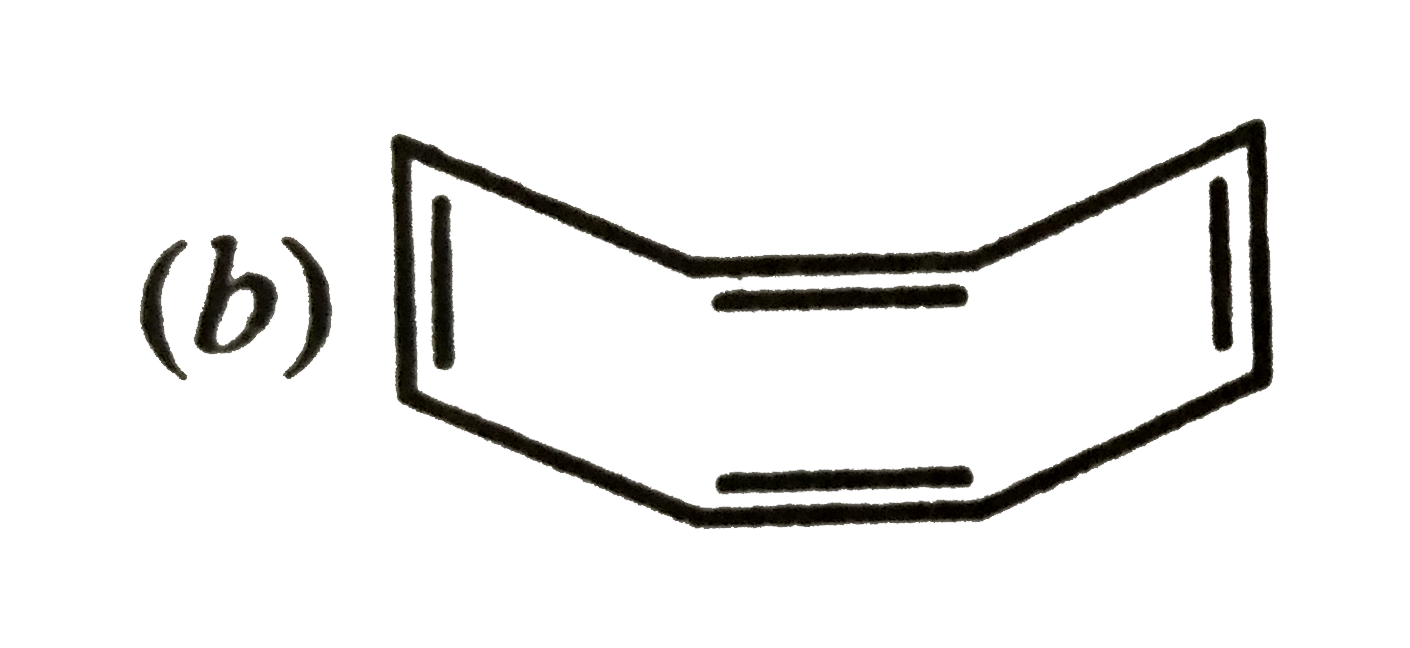
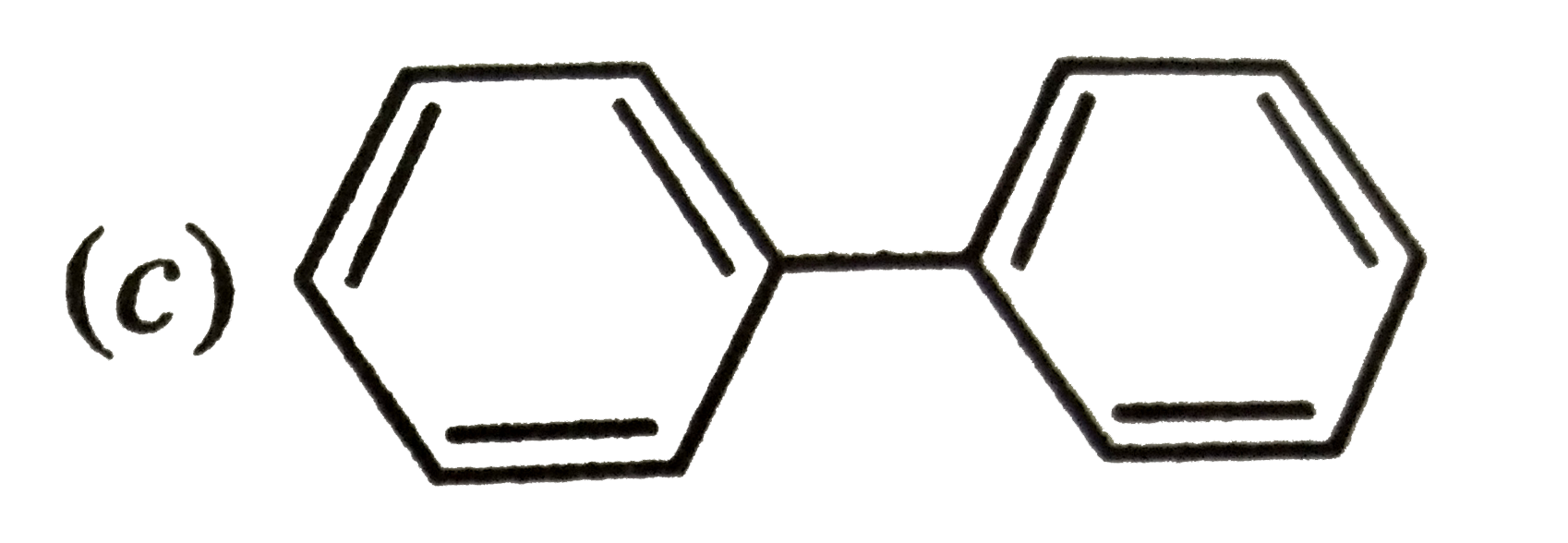
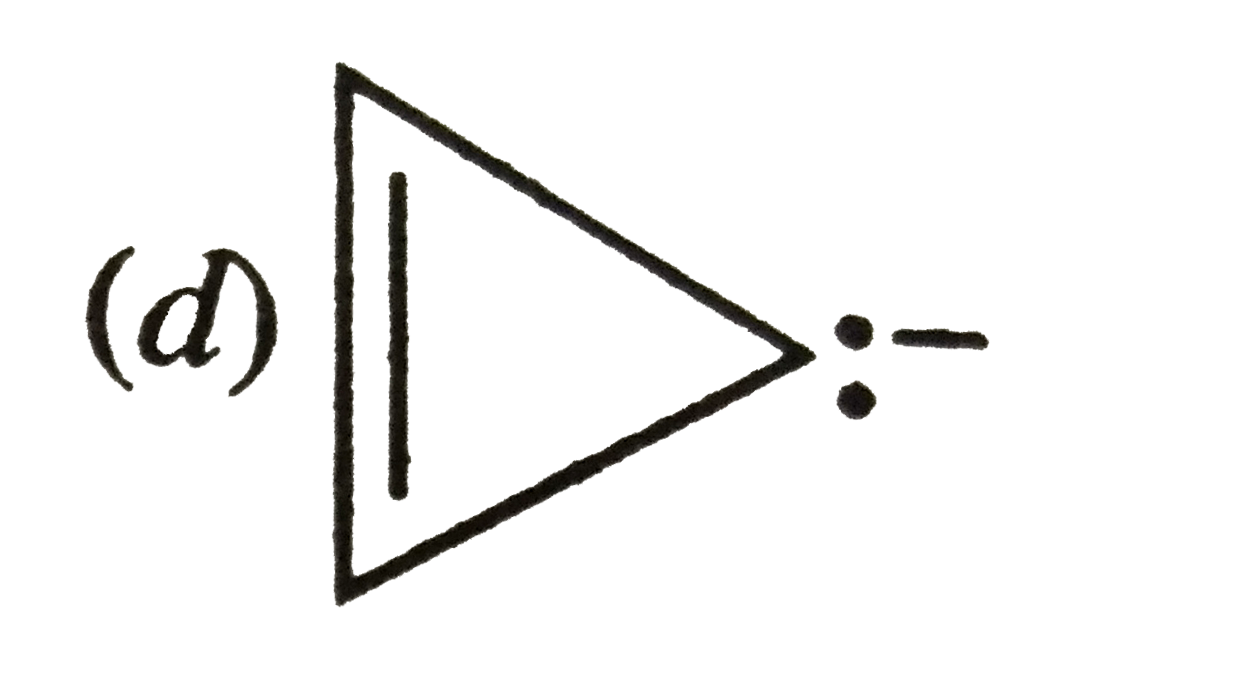
| 4. |
Frenkel defect is also known as……… |
|
Answer» STOICHIOMETRIC defect |
|
| 5. |
Frenkel defect is also known as _____ |
|
Answer» STOICHIOMETRIC DEFECT |
|
| 6. |
Free radicals can undergo |
|
Answer» rearrangement to a more STABLE FREE radical |
|
| 7. |
Free radical reactions |
|
Answer» Occur in gas phases |
|
| 8. |
Free energy change ( DeltaG) is related to the total entropy change (DeltaS_("total") vizDeltaS_("system") + DeltaS_("surrounding")) as ".....................". |
| Answer» SOLUTION :`DELTA G = - T Delta S_("TOTAL")` | |
| 9. |
Free energy change for a reversible process is |
|
Answer» `GT0` |
|
| 10. |
Fractional crystallization is carried out to separate |
|
Answer» Organic solids MIXED with inorganic solids |
|
| 12. |
Fraction of the total octahedral voids occupied will be : |
|
Answer» `(1)/(2)` |
|
| 13. |
Fraction of molecules (eta) are related with velocity according to relation eta'=-(3)/(4)v^(2)+3v-(9)/(4)(1levle3) Then find most probable speed? |
|
Answer» 0 |
|
| 14. |
Fraction of oxygen molecules ((dN)/(N)) in the range U_("mps") to U_("mps")+fU_("mps") whre fltlt1d: |
|
Answer» `(4f)/(2sqrt(PI))` |
|
| 15. |
Foure gases P, Q, R and S have almost same values of 'b' but their 'a'values (a, b are Vander Waals Constants) are in the order QltRltSltP. At a particular temperature, among the foure gases the most easily liquefiable one is |
|
Answer» P |
|
| 16. |
Four ten litre flasks are separately filled with the gases hydrogen, helium, oxygen and ozone at the same temperature and pressure. The ratio of the total number of atoms of these gases present in different flasks would be |
|
Answer» `1:2:3:2` |
|
| 17. |
Four structures are given in options (A) to (D), Examine them and selet the aromatic structure. |
|
Answer»
Planarity (ii) complete DELOCALIZATION of the electrons in the ring (iii) Presence of (4n+2) electrons in the ring where N is an integer (n=0,1,2,…). This is often REFERRED to as Huckel Rule. (i)  THEREFORE, (i) and (iii) are aromatic structures. THEREFORE, (i) and (iii) are aromatic structures.
|
|
| 18. |
Four structures are given in options (a) to (d) . Examine them and select the aromatic structures . |
|
Answer»
Cyclooctatetraene is not planar and also it has `8pi`-electrons. Therefore, in accordance with Huckel rule , it is not aromatic. (c )DIPHENYL has two benzene rings each one of which is planar and has 6 `pi`-electrons . Therefore, like benzene, it is also aromatic. (d)Cyclopropenyl anion although planar has only 4 `pi`-electron. Therefore, in accordance with Huckel rule, it is not aromatic. |
|
| 19. |
Four structures are given in option (1) to (4). Examine them and select the aromatic structure. |
|
Answer»
|
|
| 20. |
Four statements for Cr and Mn are given below: (i) Cr^(2+) and Mn^(3+) have the same electronic configuration. (ii) Cr^(2+) is a reducing agent while Mn^(3+) is an oxidising agent. (iii) Cr^(3+) is an oxidizing agent while Mn^(3+) is a reducing agent. (iv). both Cr and Mn are oxidizing agents. The correct statemetns are |
|
Answer» `i`,III,IV |
|
| 21. |
Four species are listed below: (i) HCO_3^- (ii) H_3O^+ (iii)HSO_4^- (iv)HSO_3F Which one of the following is the correct sequence of their acid strength ? |
|
Answer» `iii LT I lt iv lt ii` `HSO_3^(-) to` 10.25 `H_3O_(+) to` -1.74 `HSO_4^(-) to` 1.92 Lesser the `pK_a` value, higher will be its acidic strength. Hence SEQUENCE of acidic strength will be,`HSO_3F gt H_3O^(+) gt HSO_4^(-) gt HSO_3^(-)` |
|
| 22. |
Four samples of water A. B, C and D have the D.O. levels of 4 ppm. 3.8 ppm, 2.1 ppm and 4.9 ppm respectively 1he most polluted sample of water is |
|
Answer» D |
|
| 23. |
Four processes are indicated below : The processes that do not produce 1-methylcyclohexanol are |
|
Answer» II , IV |
|
| 24. |
Four particles have speed 2,3,4 and 5 cm/s respectively. Their rms speed is: |
|
Answer» 3.5 cm/s |
|
| 25. |
Four particles have speed 2,3,4 and 5 cm/s respectively. Their rms speed is : |
|
Answer» 3.5 cm/s |
|
| 26. |
Four moles of NaNO_(3) when heated to 800^(@) C , totally how many moles of paramagnetic gas molecules liberated ? |
|
Answer» |
|
| 27. |
Four one litre flasks are seperately filled with gases O_2,F_2, CH_4 and CO_2 under same conditions. The ratio of number of molecules in these flasks is |
|
Answer» `2:2:4:3` |
|
| 28. |
Four moles of acidified KMnO_(4) reacts with excess of H_(2)O_(2)to produce 2X moles of O_(2) Then X is..... |
|
Answer» `2-5` `4-?` |
|
| 29. |
Four metals A,B,CD have standard electrode potentials of -3.05,-1.66,-0.40 and +0.8V respectively.The metal which is most easily reduced is : |
|
Answer» A |
|
| 30. |
Four hydroxy compounds have functional groups as shown X : -CH_(2)OH , Y : -overset(|)(C)HOH Z : Ph-OH, W : Ph-underset(|)(C)HOH The purple colouration with FeCl_(3) will be given by |
|
Answer» X only |
|
| 31. |
Four isomeric carboxylic acids are formed from four different area ethyl benzene rarr benzoic acid , xylene rarr pthalic acid m- Xylene rarr isophthalic acid, and p- xylene rarr terphthalic acid |
| Answer» | |
| 32. |
four grams of hydrocarbon (C_(x)H_(y)) on complete combustion gave 12grams of CO_(2). What is the empirical formula of the hydrocarbon ? (C=12 , H=1) |
|
Answer» `CH_(3)` |
|
| 33. |
Four grams of hydrocarbon (C_(x)H_(y)) on complete combustion gave 12grams of CO_(2). What is the empirical formula of the hydrocarbon ? (C = 12, H = 1) |
| Answer» Answer :D | |
| 34. |
Four grams of copper chloride on analysis was found to contain 1.890 g of copper and 2.110 g of chlorine (Cl). What is the empirical formula of copper chloride ? |
|
Answer» Percentage of `Cu=(1.89)/(4.0)xx100=47.25,` Percentage of `CL =(2.11)/(4.0)xx100=52.75` Step II. Empirical formula of copper CHLORIDE `{:("Element","Percentage","ATOMIC MASS","Gram atoms (Moles)","Atomic ratio (Molar ratio)","Simplest whole no. ratio"),("Cu",47.25,63.5,(47.25)/(63.5)=0.74,(0.74)/(0.74)=1,1),("Cl",52.75,35.5,(52.75)/(35.5)=1.48,(1.48)/(0.74)=2,2):}` Empirical formula of the COMPOUND `= CuCl_(2)`. |
|
| 35. |
Four gases P, Q , R and S have almost same values of 'b' but their 'a' values (a,b are Van der Waals Constants) are in the order Q lt R lt S lt P. At a particular temperature, among the four gases the most liquifiable one is ……………. . |
|
Answer» <P>P |
|
| 36. |
Four molecules have the velocities 3 xx 10 cms^(-1), 4 xx 10^4cms^(-1), 2 xx 104cms^(-1)and 5 xx 10^4cms^(-1).. Find the RMS velocity of the molecules. |
| Answer» SOLUTION :`3.685 XX 10^(4) CMS^(-1)` | |
| 37. |
Four gas balloons P, Qlt R and S of equal volumes containing H_(2),N_(2)O,CO,CO_(2) respectively were pricked with needle and immersed in a tank containing CO_(2). Which of them will shring after sometime- |
|
Answer» <P>`P` |
|
| 38. |
Four elements A, B, C and D form a series of compounds havingthe formulae AB,B_(2), CB_(3), DB_(2)andDB_(3). If the jumbled up atomic numbers of A, B, C and D are 13, 19 , 26 and 35 , What are the ordered atomic numbers of A, BC and C ? |
|
Answer» Solution :` 13 = Al = 1s^(2) 2s^(2) 2p^(6) 3s^(2) 3p_(x)^(1)` (can lose `1 e ^(-))` ` 19 = K = 1ss^(2) 2s^(2) 2p^(6) 3s^(2) 3p^(6) 4s^(1)(can lose `1e ^(-))` 26 =` Fe= 1s^(2)2s^(2) 2p^(6) 3s^(2) 3p^(6)3d^(6) 4s^(2) `(can lose ` 2e^(-) or 3 r^(-))` 35 ` = Br = 2s^(2) 2s^(2) 3p^(6) 3s^(2)3p^(6) 3d^(10)4s^(2) 4p_(x)^(2) 4p_(y)^(2) 4p_(z)^(1) ` (can gain or SHARE ` 1 e ^(-)` ) Compunds formed will be ` KBR , Br_(2), AlBr_(3), Fe Br_(2) and FeBr_(3).` Hence ,` A = K = 19 , B= Br = 35 , C = Al = 13 , D = Fe = 26.` |
|
| 39. |
Four different identical vessels at same temperature contains one mole each of C_(2)H_(6),CO_(2),Cl_(2) and H_(2)S at pressure P_(1),P_(2),P_(3) and P_(4) respectively. The value of van der Waal's constnat 'a' for C_(2)H_(6),CO_(2),Cl_(2) and H_(2)S is 5.562,3.640,6,579 and 4.490 atm L^(2) "mol"^(-2) respectively. Then: |
|
Answer» `P_(3)ltP_(1)ltP_(4)ltP_(2)` |
|
| 40. |
Four elements A ,B ,C and Dalongwith theirelectonic configurationare givenbelow : Elements:ABCD Electronic configuration :2,12,82,8,12,8,8 Nowanswerthe followingquestions : (i)Which two elements belongto thesameperiod ? (ii)Which two elements belongto thesamegroup ? (iii) Whichtwo elements belongto the 18thgroup ? (iv) Which element out of Aand C ismorereactiveand why ? (v) Whichelementout of Aand B formsthemaximumnumber tocompounds ? |
|
Answer» Solution :(i) Elementsin aperiodhave samenumberof shells . Thuselements A and Beach withtwo shellsbelongto secondperiod whileelements C and Dwhichhavethreeshells each belongto thirdperiod. (ii)elements in a grouphavesamenumber of valenceelectrons. thuselements A and Cbelongto THESAME group . (iii) Elementshaving all shellscompletely filledbelongto group 18 (noblegases. ) ThuselementsB and Dbelongto 18thgroup . (iv) BECAUSEOF biggersizeand weakerforcesof attraction of thenucleus on thevalenceelectronelementC (2,8,1)is morereactivethanelement A. (V) Bbeinga noblegas doesnot formcompounds . Butelement Ahas onlyelectronin thevalenceshellwhich ITCAN loseveryeasily. therefore, ELEMENT A formsmaximumnumberof compounds. |
|
| 41. |
Four diatomic species are listed below in different sequences. Which of these represents the correct order of their increasing bond order- |
|
Answer» `C_(2)^(2-) LT He_(2)^(+)lt NO lt O_(2)^(-)` |
|
| 42. |
Four diatomic species are listed below in different sepuences . Which of these presents the correct order of their increasing bond order ? |
|
Answer» `O_(2)^(-) lt NO lt C_(2)^(2-) lt He_(2)^(+)` `((1)/(2)) ""(1(1)/(2))""(2(1)/(2))""(3)` |
|
| 43. |
Four diatomic species are listed below, identify the correct order in which the bond order is increasing- |
|
Answer» `NO LT O_(2)^(-) lt C_(2)^(2-)He_(2)^(+)` |
|
| 44. |
Four aromatic carboxylic acids on heating with soda-lime at 630 K, give toluene as the only product. Write the structures of the four aromatic carboxylic acid. |
Answer» Solution :SINCE all the four aromatic carboxylic acids on DECARBOXYLATION with soda-lime give toluene, THEREFORE, three of the acids MUST be o-, m- and p-toluic acids while the fourth must be phenylacetic acid as shown below : 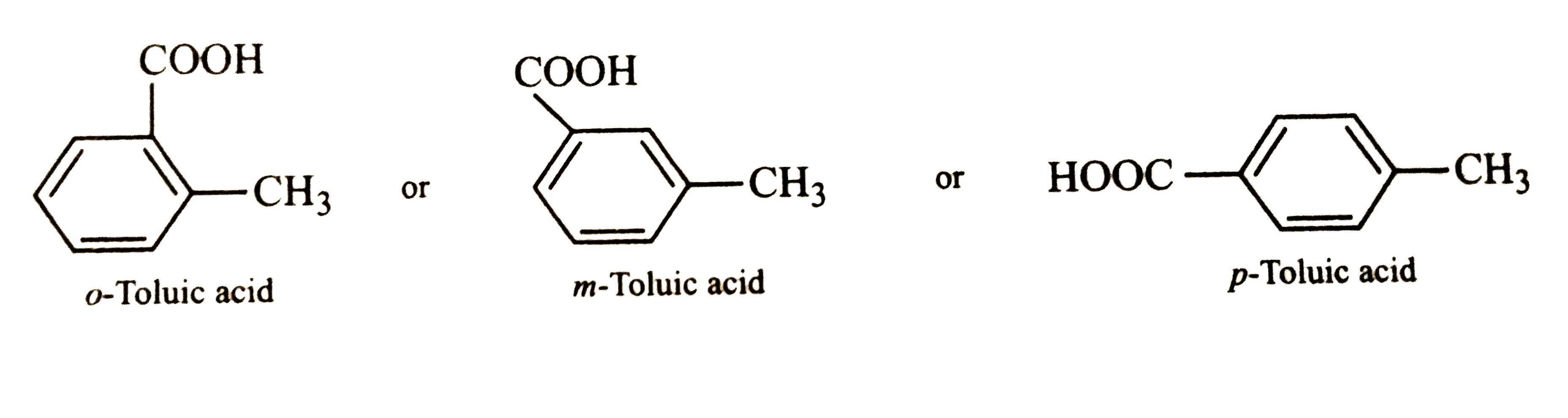 
|
|
| 45. |
Formulation of SO_(3) takes place according to the reaction 2 SO_(3) + O_(2) hArr 2 SO_(3), DeltaH=-45*2 " kcal " Which of the following factors favours the formulation of SO_(3) ? |
|
Answer» INCREASE in temperature |
|
| 46. |
Formulate possible compounds of ‘Cl’ in its oxidation state is:0, -1, +1, +3, +5, +7 H_(2)O_(2) act as an oxidising agent as well as reducing agent where as O_(3) act as only oxidizing agent. Prove it. |
|
Answer» Solution :(i) Cl oxidation number 0 in `Cl_(2)`. (ii) Cl oxidation number-1 in HCl. (iii) Cl oxidation number +3 in `HClO_(2)` . (iv) Cl oxidation number +5 in `KClO_(3)` . (v) Cl oxidation number +7 in `Cl_(2)O_(7)` . In `H_(2)O_(2)` oxidation number of OXYGEN is -1 and it can vary from 0 to -2 (+2 is POSSIBLE in `OF_(2)`). The oxidation number can decrease or increase, because of this `H_(2)O_(2)` can act both oxidising and REDUCING agent. Ozone `(O_(3))` only acts as oxidising agent since it decomposes to give NASCENT oxygen. |
|
| 47. |
Formulae of metaborate and borate ions respectively are |
|
Answer» `BO_(3)^(3-) and BO_(2)^(-)` |
|
| 48. |
Formula of iron (III) oxide according to stock notation nomenclature method is…. |
|
Answer» `FeO_(2)` `therefore2x=6` `thereforex =+3` |
|
| 49. |
formula of Gypsum is |
|
Answer» `CaSO_(4)2H_(2)O` |
|
| 50. |
Formula of cane sugar is C_(12)H_(22)O_(11). No. of molecules present in 34.2 g of cane sugar is |
|
Answer» `6.022 xx 10^(21)` `= 12xx12 +22 xx 1 +16 xx11` `= 342.0 G` 342.0 g of can sugar contain `=6.022 xx 10^(23)` MOLECULES 34.2 g of cane sugar contain `= (34.2)/(342)xx6.022xx10^(23)` `=6.022 x 10^(22)` molecules. |
|