Saved Bookmarks
This section includes 7 InterviewSolutions, each offering curated multiple-choice questions to sharpen your Current Affairs knowledge and support exam preparation. Choose a topic below to get started.
| 1. |
From the following enthalpies of combution, deduce which of the quoted expressions gives the heat of formation at a fixed temp. C(s) +O_(2) (g) rarr CO_(3)(g) , DeltaH=c H_(2)(g)+1//2O_(2)(g) rarr H_(2)O(l),Delta =h CH_(4)(g)+2O_(2)(g) CO_(2)(g)+2H_(2)O(l),Delta H=m |
|
Answer» c+h-m To OBTAIN this equation (i) + 2 `xx (II)-(III)` `DeltaH_(f)=c+ 2h-m` |
|
| 2. |
From the following dipole moment (in Debye) values of methyl halides, identify the value of CH_(3)-F |
|
Answer» `1.460` |
|
| 3. |
From the following data of Deltah, of the following reactions, a. C(s) +1//2O_(2)(g) rarr CO(g),DeltaH^(Theta) =- 110 kJ b. C(s) +H_(2)O(g) rarr CO(g)+H_(2)(g), DeltaH^(Theta) = 132 kJ Calculate the mole composition of the mixture of steam and oxygen on being passed over coke at 1273K, keeping the tempertaure constant. |
|
Answer» Solution :The first reaction is exothermic and SECOND one is endothermic. If a MIXTURE of STEAM and `O_(2)` is passed over heated coke, and the temperature is KEPT constant, the conversion of each of `CO` should not show any heat change, i.e. heat evolved in reaction (a) = total heat absorbed in reaction (b). `[(1)/(2) "mol of" O_(2) = 110 KJ, n_(1) "mol of" =(110 xx n_(1))/(1//2)]` `:. n_(1) xx 2 xx 110 = n_(2) xx 132` `(n_(1))/(n_(2)) = (132)/(2xx110) = (0.6)/(1)` where `n_(1)` and `n_(2)` are moles of `O_(2)` and `H_(2)O`, respectively, used during reaction: `(n_(2))/(n_(1)) = (1)/(0.6) = 1.66` |
|
| 4. |
From the following data of DeltaH, of the following reaction, C_((s))+(1)/(2)O_(2(g))rarr CO_((g)),DeltaH=-110kJ C_((g))+H_(2)O_((g)) rarr +H_(2(g)),DeltaH=132kJ Calculate the mole composition of the mixture of steam and oxygen on being passed over coke at 1273K, keeping temperature constant. |
|
Answer» |
|
| 5. |
From the following data. CH_(4)+2O_(2)rarrCO_(2)+2H_(2)O DeltaH^(@)=-890kJmol^(-1) H_(2)O_((l))rarrH_(2)O_((g))DeltaH^(@)=44kJ mol^(-1) " at "298 K Calculate the enthalpy of the reaction CH_(4)+2O_(2)rarrCO_(2)+2H_(2)O ""DeltaH^(@)=? |
|
Answer» Solution :`Ch_(4)+2O_(2)rarrCO2_((g))+2H_(2)O_((l))DeltaH^(@)=-890kJ mol^(-1)` `H_(2)O_((l))rarrH_(2)O_((g))DeltaH^(@)=44kJ mol^(-1) " at " 298K` `DeltaH^(@) " for "CH_(4)+2O_(2_((g)))rarrCO_(2_((g)))+2H_(2)O_((g))` `=-890+44=-846KJ mol^(-1)` |
|
| 6. |
From the following data, calculate the enthalpy change for the combustion of cyclopropane at298 K.The enthalpy of fomrationof CO_(2)(g), H_(2)O(l)and propene (g) are -393.5, -285.8 and 20.42kJ mol^(-1)respectively. The enthalpy of isomerisation of cyclopropane to propeneis -33.0 kJ mol^(-1) |
|
Answer» We are given `: (i) C+O_(2) rarr CO_(2),DeltaH= - 393.5 KJ ` (II) `H_(2) + (1)/(2) O_(2) rarr H _(2)O, DeltaH = - 285kJ` (iii) `3C + 3H_(2)rarr CH_(3) - CH = CH_(2),DeltaH= 20.42kJ` (iv) 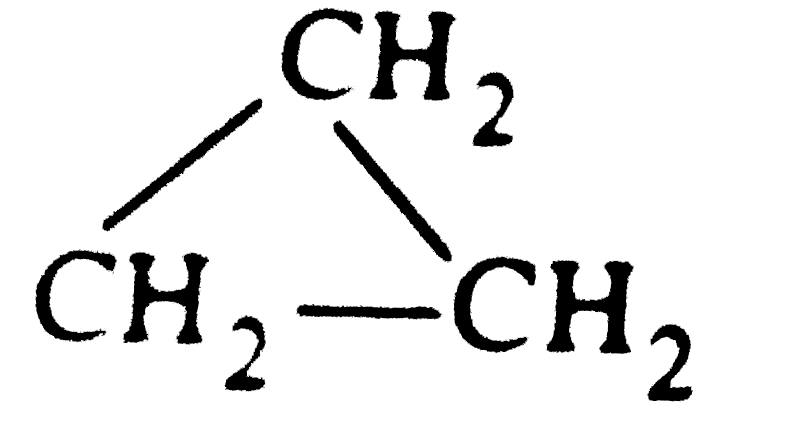 ` rarrCH_(3)- CH=CH_(2), DeltaH = -33.0 kJ ` ` rarrCH_(3)- CH=CH_(2), DeltaH = -33.0 kJ `3` xx` Eqn. (i) `+3 xx` Eqn.(ii) `+` Eqn (iv) -Eqn. (iii) gives the requiredresult. |
|
| 7. |
From the following data, calculate the enthalpy change for the combustion of cyclopropane at 298 K. The enthalpy of formation of CO_(2)(g), H_(2)O(l) and propene (g) are - 393.5, -285.8 and 20.42 kJ"mol"^(-1) respectively.The enthalpy of isomerisation of cyclopropane to propene is -33.0 kJ"mol"^(-1). |
|
Answer» Solution :The given equations are : (i) `C(s) + O_(2)(g) to CO_(2)(g) DELTAH = -393.5 kJ` (ii) `H_(2)(g) + 1/2 O_(2)(g) to H_(2)O(l) DeltaH = -285.8 kJ` (iii) `3C(s) + 3H_(2)(g) to C_(3)H_(6)(g) DeltaH = 20.42 kJ` (iv)  The required equation(v) can be obtained by multiplying equation(i) and (ii) by 3 and adding these, then subtracting equation(ii) from these and adding equation(iv), i.e `DeltaH = [Eq.(i) xx 3] + [Eq.(ii) xx 3] - [Eq.(iii)] + [Eq.(iv)]` `= (-395.5 xx 3)+(-285.8 xx 3) - (20.42) + (-33.0)` ` = -2091.32 kJ` |
|
| 8. |
From the following data at constant volume for combustion of benzene, calculate the heat of this reaction at constant pressure condition. C_(6)H_(6(1))+71//2O_(2(g))rarr 6CO_(2(g))+13H_(2)O_((l)) |
|
Answer» Solution :`DeltaE_(25^(@)C)=-781.1 kcal` `DeltaH=DELTAE+DeltangRT` `DeltaE=-781.1K.cal` `Deltan_(g)=6-71//2=-1.5` `(-1.5)xx1.987xx298` `DeltaH=(-781.1+)/(1000)` `=-781.1-0.888` `therefore DeltaH=-782k.cal` |
|
| 9. |
From the following data at 25^(@)C {:("Reaction ",Delta_(r) H^(@) kJ//mol),((1)/(2)H_(2)(g) + (1)/(2)O_(2)(g) rarr OH (g),42),(H_(2)(g) + (1)/(2)O_(2)(g) rarr H_(2)O_(g),-242),(H_(2)(g) rarr 2H(g),436),(O_(2)(g) rarr 2O(g),495):} Which of the following statement(s) is/are correct: Statement (a): Delta_(r)H^(@) for the reaction H_(2)O(g) rarr 2H(g) + O(g) Statement (b): Delta_(r)H^(@) for the reaction OH(g) rarr H(g) + O(g) is Statement (c) : Enthalpy of formation of H(g) is -218 kJ/mol Statement (d): Enthalpy of formation of OH(g) is 42 kJ/mol |
|
Answer» Statement C `Delta H = 2 Delta H_(f_(H)) + Delta H_(f_(0)) - Delta H_(f_(H_(2)O))` `= 4.36 + (495)/(2) - (-242) = 925.5` (b) `Delta H rarr H + O` `Delta H = Delta H_(f_(H)) + Delta H_(f_(O)) - Delta H_(f_(OH))` `= (436)/(2) + (495)/(2) - 42= 423.5` (c ) `Delta H_(F) " of" H= (436)/(2) = 218` (d) `Delta H_(f)" of " OH = 42` |
|
| 10. |
From the following data at constant volume for combustion of benzene, calculate the heat of this reaction at constant pressure condition. C_6H_(6(l)) +7 1/2O_(2(g)) to 6CO_(2(g)) +3H_2O_((l)) DeltaU at 25^@C =-3268.12 kJ |
|
Answer» SOLUTION :Given `T=25^@C`=298 K `DeltaU=-3268.12 "KJ MOL"^(-1)` `DeltaH` = ? `DeltaH=DeltaU+Deltan_gRT` `DeltaH=DeltaU+(n_p-n_r)RT` `DeltaH=-3268.12+(6 -7/2)xx8.314xx10^(-3) xx298` `DeltaU=-3268.12+(2.5xx8.314xx10^(-3)xx298)` `DeltaU`=-3268.12+6.19 `DeltaU`=-3261.93 kJ `mol^(-1)` |
|
| 11. |
From the following data at 25^(@)C, calculate the bond energyof O-H bond : (i) H_(2)g rarr 2H(g) ,Delta H _(1)= 104.2 kcal(ii) O_(2)(g) rarr 2O(g), Delta H _(2) = 118 . 4 kcal (iii)H_(2)(g) + (1)/(2) O_(2)(g)rarr H _(2)(g) , Delta H_(3) = - 57.8 kcal |
|
Answer» `- 57.8 =104.2 + ( 1)/(2) xx 118.4 - 2 xx B.E. ( O-H)` or`2 xx B.E. ( O-H) = 221. 2 kcal`or ` B.E. ( O-H) = 110.6 kcal` |
|
| 12. |
From the following compounds which two has oxidation number +1 and 0.5 of oxygen ? O_(2)F_(2),H_(2)O,H_(2)O_(2),CsO_(2) |
|
Answer» `H_(2)O,CsO_(2)` |
|
| 13. |
From the following compounds H_(2)S,PH_(3),CaH_(2),BeH_(2) which pair is having oxidation number same as hydrogen ? |
|
Answer» `H_(2)S,CaH_(2)` are hydride compounds so oxidation number of H is -1 while oxidation number of H in `H_(2)SandPH_(3)` is +1. THEREFORE the oxidation number of H of GIVEN pair in option (A) is (+1,-1), in option (B) it is (+1,-1), in option ( C) it is (+1, +1) and in option (D) it is (+1,-1). So it is clear that the pair given in option ( C) having oxidation number same as HYDROGEN. |
|
| 14. |
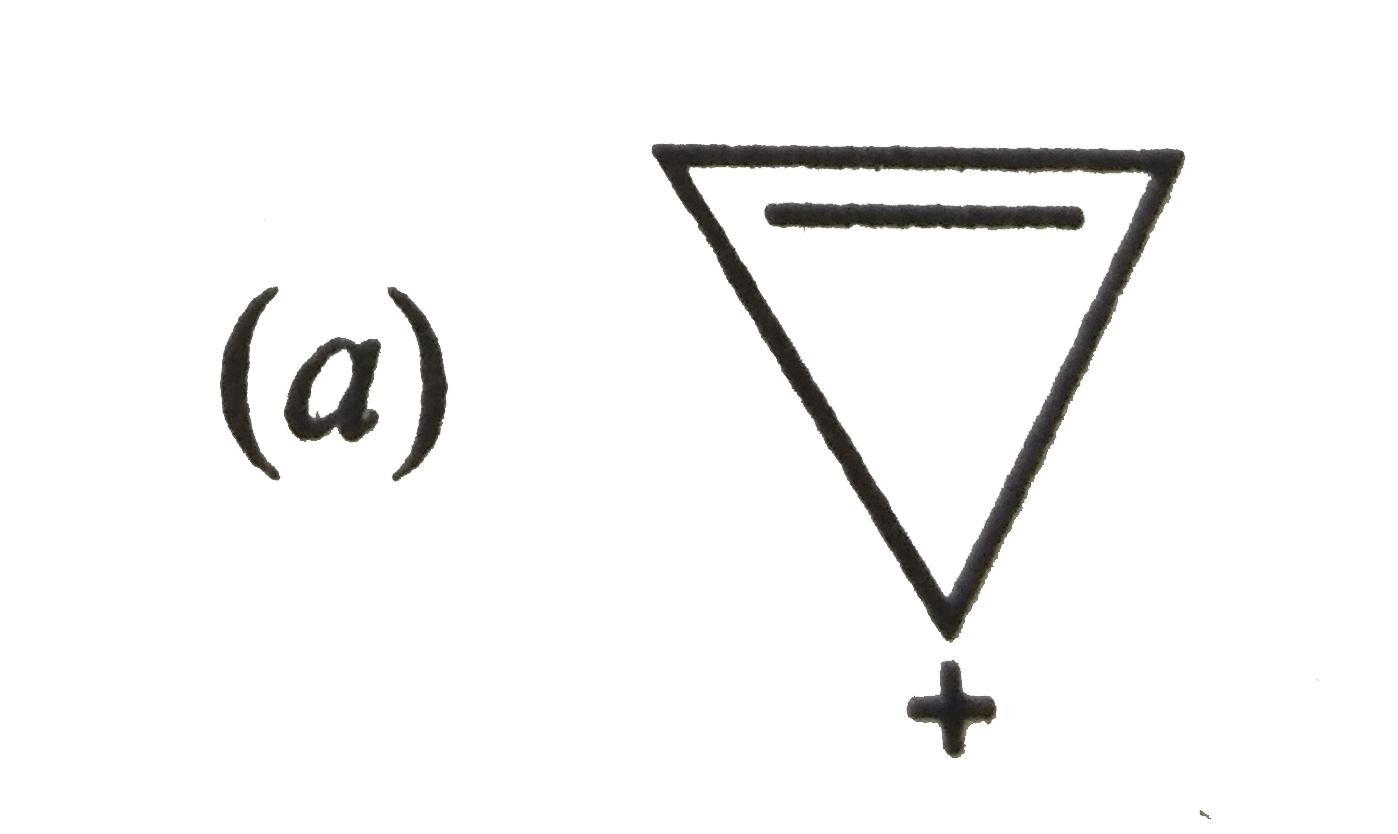
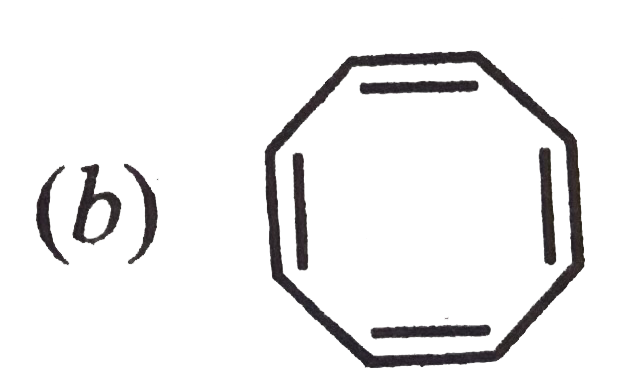
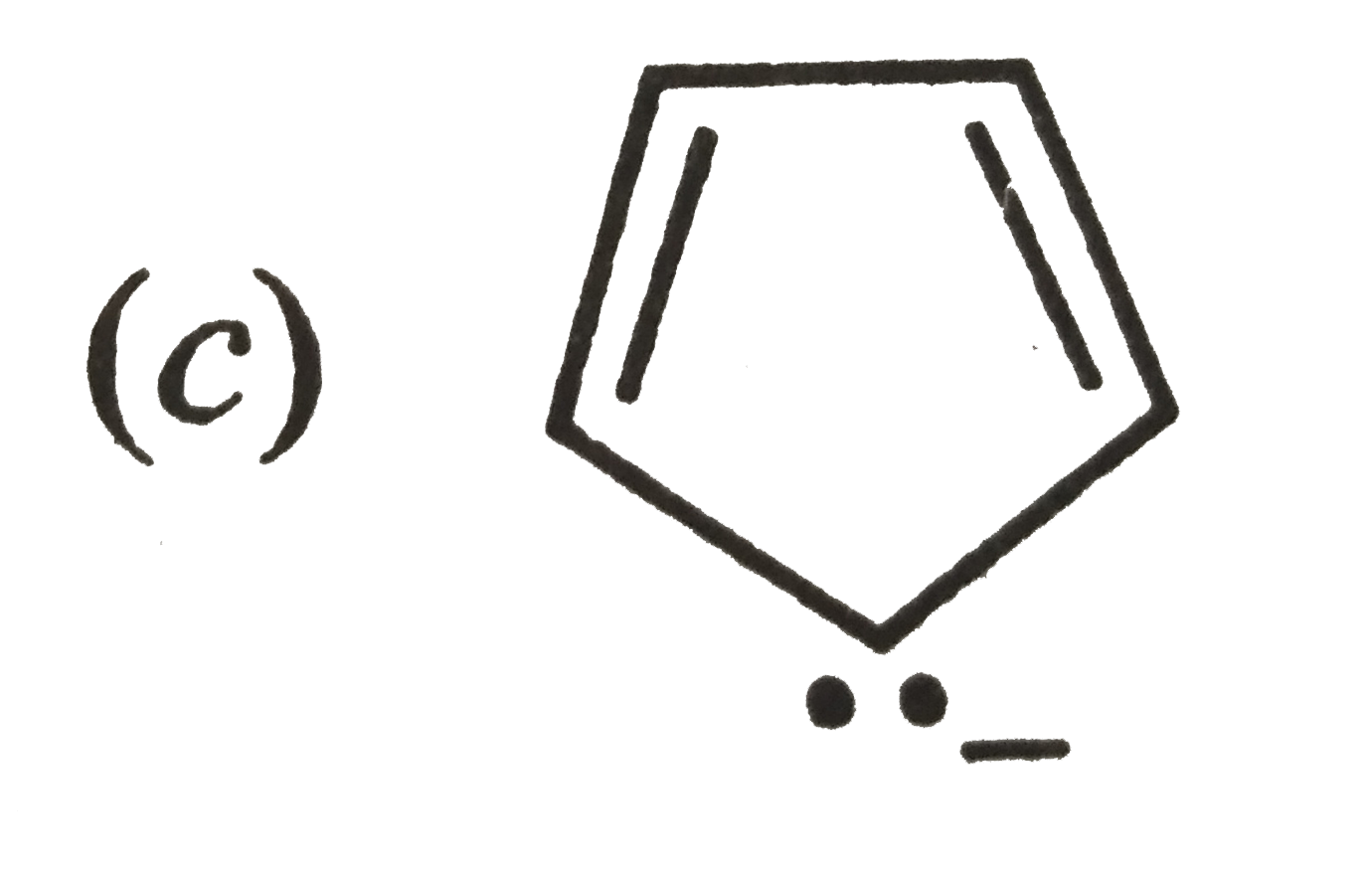
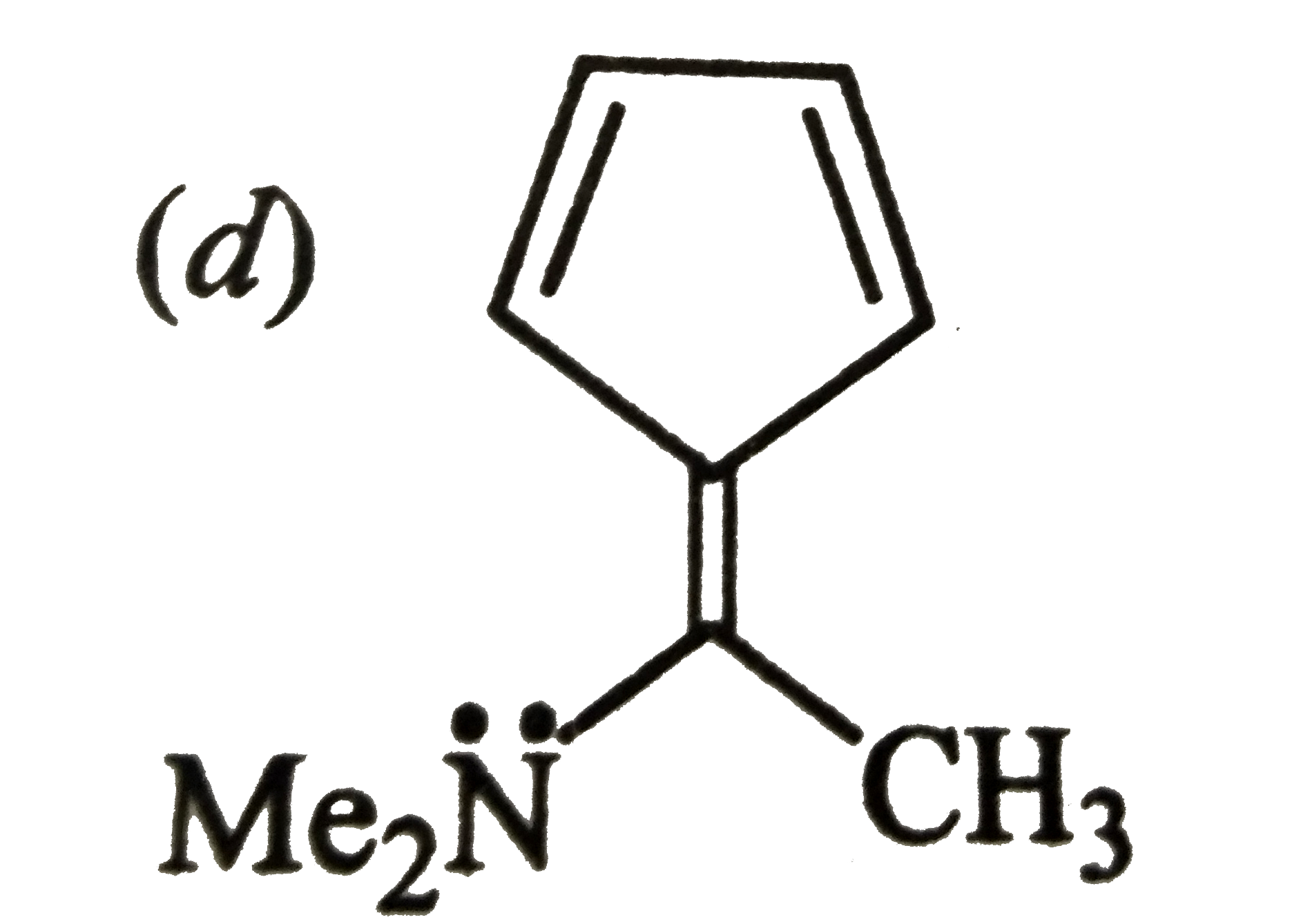
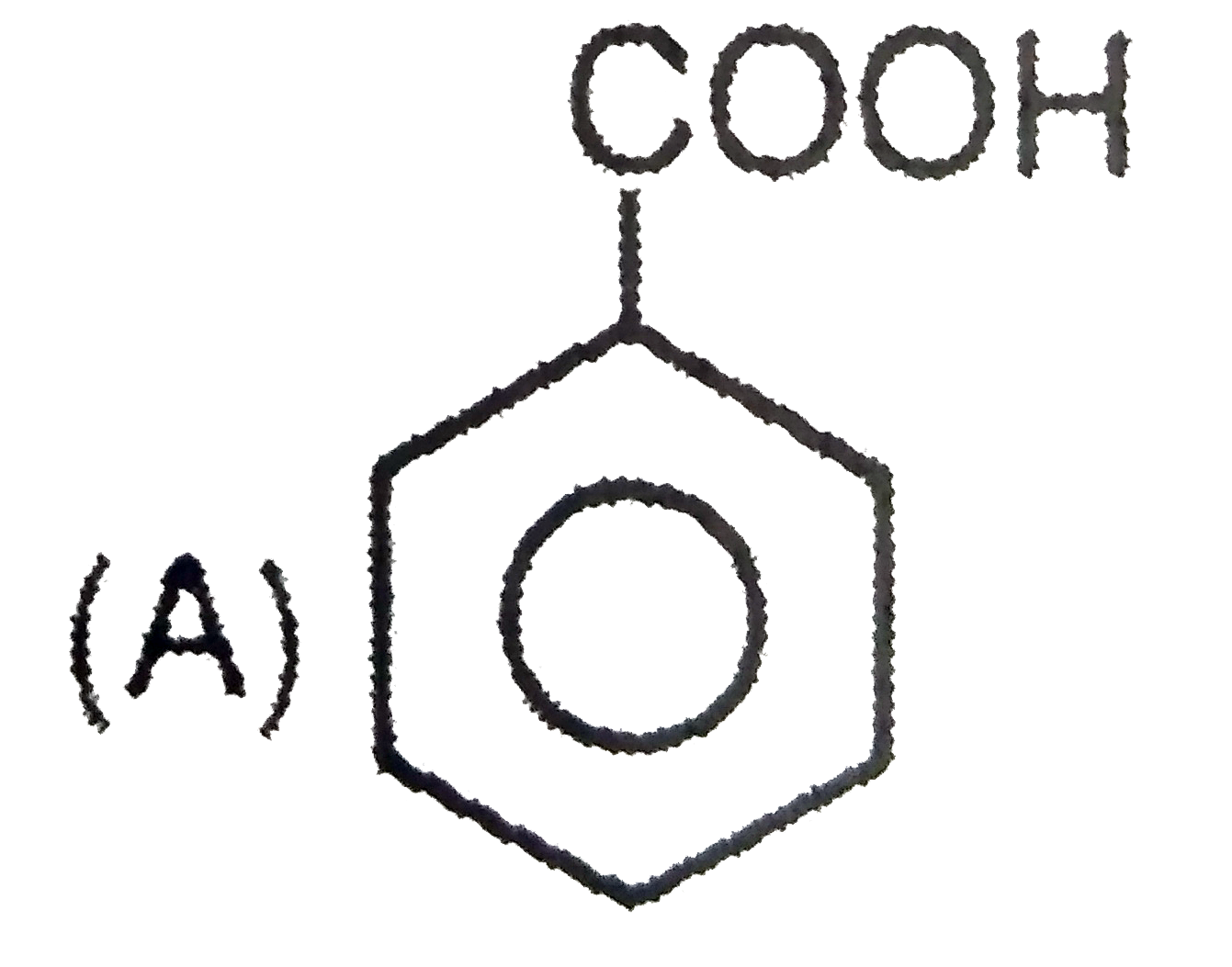
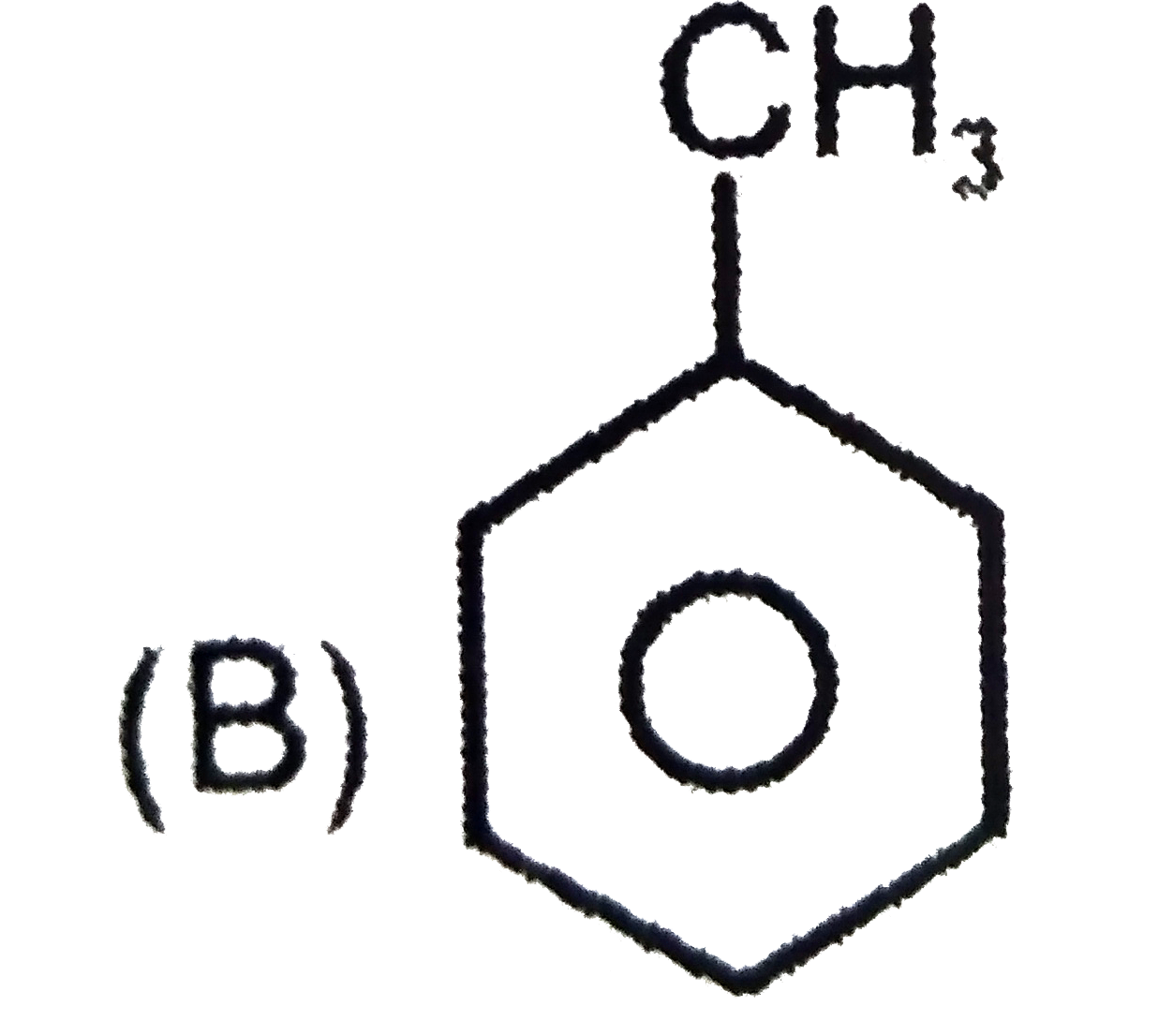
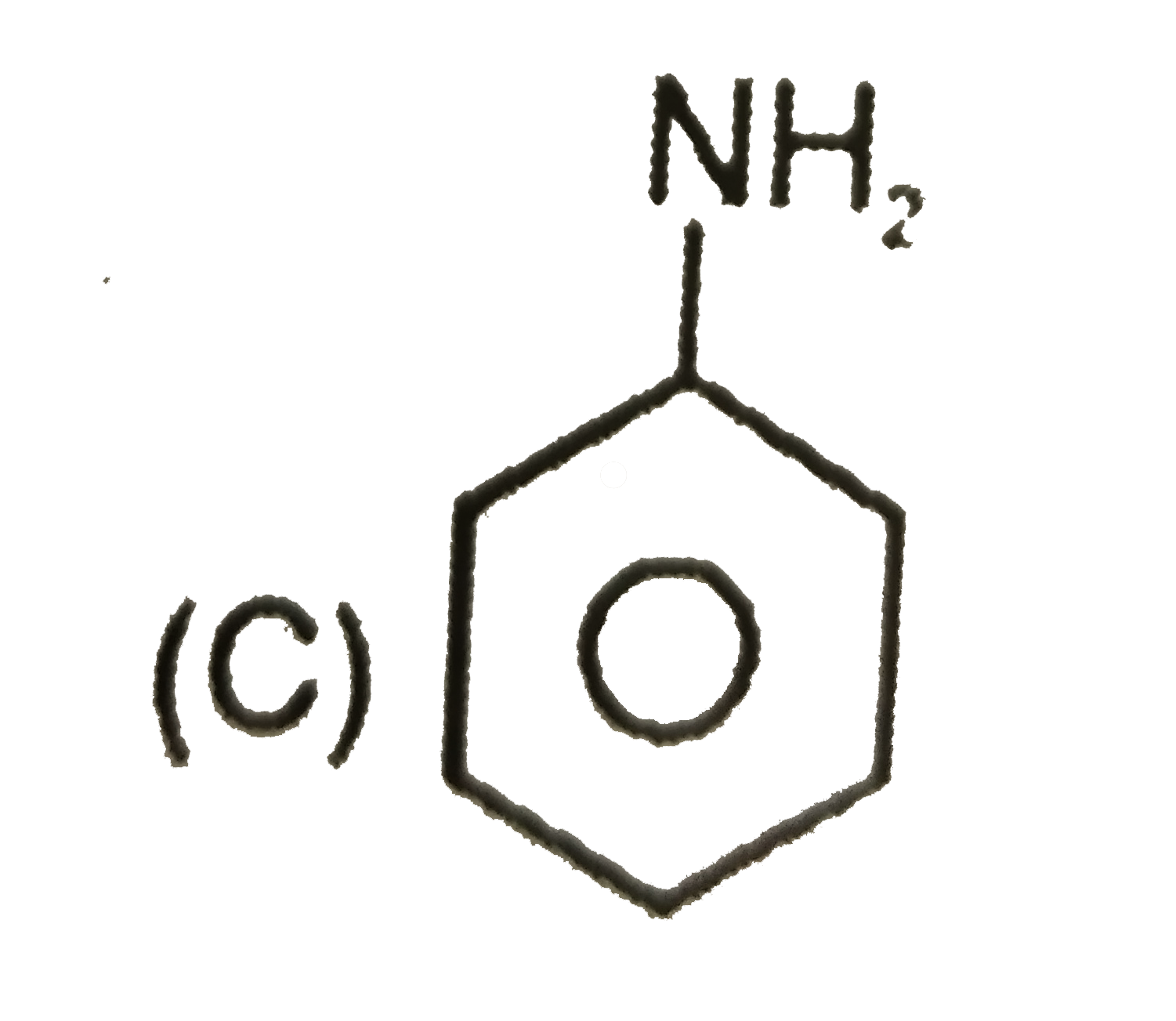
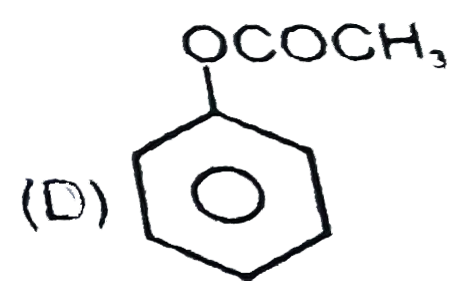
From the following compounds choose the one which is not aromatic ? |
|
Answer»
(C ) contains `6pi`-electrons and hence is aromatic. (d) contains `6pi`-electrons and hence is aromatic. 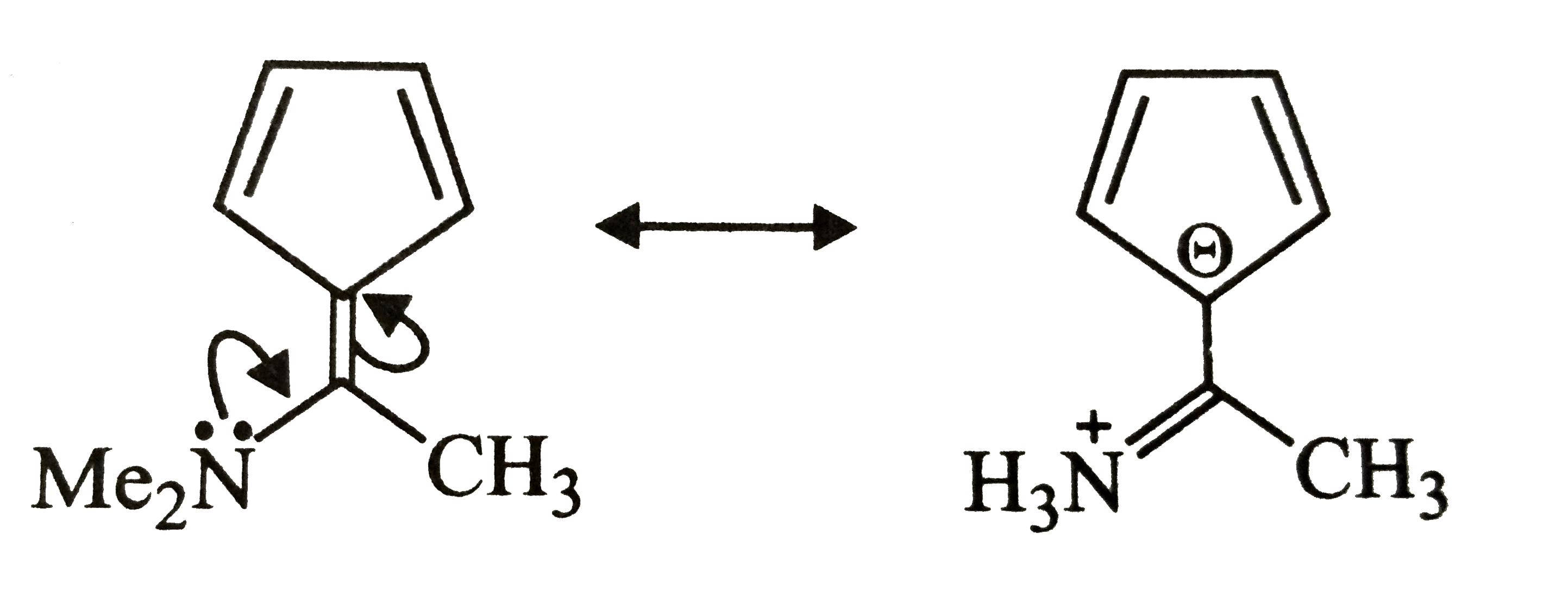 )(b)neither contains 4n+2 `PI`-electrons (actually contains `8pi`) nor is planar (actually tub-shaped ) and hence is not aromatic. |
|
| 15. |
From the following CFC is used in ........ |
|
Answer» FOAM PLASTIC cup |
|
| 16. |
From the followig whichtypes of ethere's angle will be constant which angle will be changed ? |
| Answer» Solution :All types of ethan.s angle will be constant but DIHEDRAL angle will be changed to `0^(@)` to `360^(@)`. | |
| 17. |
From the electronic structure of four elementspredict thewith greater tendency to form electrovalent bond is greatestin |
|
Answer» `1S^(2)` |
|
| 18. |
From the data given below at 298 K for the reaction : CH_(4)(g) + 2O_(2)(g) rarr CO_(2)(g) + 2H_(2)O(l) Calculate the enthalpy of formation of CH_(4)(g) at 298 K. Enthalpy of reaction is = -893.5 kJ Enthalpy of formation of CO_(2)(g) = 393. kJ mol^(-1) Enthalpy of formation of H_(2)O(l) = 286.0 kJ mol^(-1). |
|
Answer» Solution :`Delta H = Delta H_(f)CO_(2)(g) + 2DELTA H_(f)H_(2)O(L) - Delta H_(f)CH_(4)(g) - Delta H_(f)O_(2)(g)` `-890.5 KJ = -393.5 kJ + 2 XX -286 kJ - Delta H_(f)CH_(4)(g) - 0` `Delta H_(f)CH_(4) = -75.0 kJ`. |
|
| 19. |
From sp^(3), sp^(2) and sp hybrid orbital, …..is most and ……is least electronegative |
| Answer» SOLUTION :`SP and sp^(3)` | |
| 20. |
From NO, NO_(2) , CO , CO_(2)which has odd electron ? |
| Answer» SOLUTION :NO and `NO_(2)`. POSSESS ODD ELECTRONS. | |
| 21. |
From Lithium to Caesium stabilities of peroxides and superoxides of alkali metals ------ and the most stable superoxide is ----- due to ---- |
|
Answer» Increases, `LiO2_(2)` high HYDRATION ENERGY |
|
| 22. |
From following redox reaction co-efficient of (a), (b) and ( c) are respectively ____ (a)MnO^(-)+(b)Br^(-)+(c)H^(+)toMn^(2+)+Br+H_(2)O |
|
Answer» `2,10,16` |
|
| 23. |
From each set, choose the element with highest ionization enthalpy and explain your answer. F,O,N |
| Answer» Solution :The element fluorine (F) has the highest ionization enthalpy because in GENERAL it increases along a PERIOD. These elements belong to the SECOND period in the order N, O, F. Therefore, the last element has the highest ionisation enthalpy. | |
| 24. |
From each set, choose the element with highest ionization enthalpy and explain your answer. Mg,P,Ar |
|
Answer» <P> Solution : The element argon (AR) has the highest ionisation enthalpy because it increases along a period and these elements BELONG to the third period in the order Mg, P, Ar. Moreover, Ar is also a NOBLE GAS element with very high ionisation enthalpy. |
|
| 25. |
From each set, choose the element with highest ionization enthalpy and explain your answer. B,Al,Ga |
| Answer» Solution :The element B has the highest ionisation enthalpy because in general the value decreases down the group. All these elements belong to group 13 in the ORDER B, Al, Ga. THEREFORE, the first element B is expected to have the LARGEST value. | |
| 26. |
From cis and Trans-2-butene, which one is stable? Explain ? |
Answer» Solution :Trans-2-butane is more stable than the cis-2-butene. Hydrogenation energy is as FOLLOWS :  Energy of cis `(120 kJ mol^(-1)) GT` Energy of trans `(115 kJ mol^(-1))` Stability of cis `lt` stability of trans. Trans-but-2-ene `5kj mol^(-1)` is more stable than cis-but-2-ene. cis and trans are DIFFERENT stable structure. |
|
| 27. |
From each of the following pairs, select the molecule with higher value of the property mentioned against each pair :NH_(3), PH_(3) : bond angle(ii)NF_(3), NH_(3): dipole moment (iii)MgO, CaO: hardness (iv)HCl, HBr : ioniccharacter |
| Answer» Solution :`(i) NH_(3) (ii) NH_(3) (III) MgO (IV) HCl` | |
| 28. |
Fromeach setchoosethe atomwhichhas thelargestionizationenthalpyand explain youranswer (a)F, O , N (b) Mg, P , Ar (c )B , AI, Ga |
|
Answer» (B) Mg, P, Ar alllie in the3rdperiod.AmongtheseAr has THEHIGHEST`Delta_(i) H_(1)` because it hasstableinertgas configuration (c ) B, A1, Ga alllie ingroup 13.Bhas thehighest `Delta_(i) H_(1)` DUE toitssmallestsize |
|
| 29. |
From Be to Ba electropositive or metallic character |
|
Answer» Increases |
|
| 30. |
From below, .......... is not intensive property. |
|
Answer» HEAT capacity |
|
| 31. |
From analysis and molecular weight determination the molecualr fomula of a compound (A) is C_3H_7NO. The compound gives the following information. (i) On hydrolysis it gives an amine (B) and a carboxylic acid (C). (ii) Amine (B) reacts with benzene sulphonyl chloride and gives a product which insoluble in aqueous sodium hydroxide solution. (iiI) Acid (C) on reaction with Tollens's reagent gives a silver mirror. What are (A) , (B) and (C) ? Explainthe reactions with the help of equations. |
Answer» SOLUTION :Acid (C) GIVES silver mirror with Tollens's reagent, thus, the acid (C) is formic acid (The acid which possesses aldehydic group), i.e., `H-overset(O)overset(||)C-OH`. Compound (B) gives a product with benzene sulphonyl chloride which is insoluble in aqueous `NaOH`. Hence , (B) is a secondary AMINE ,i.e., 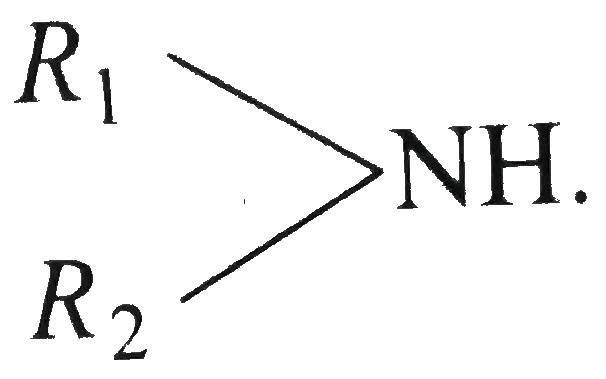 (B) and (C) are obtained from compound (A) on hydrolysis. Thus, the compound (A) is amide, i.e., amide of formic acid `(C_3H_7NO)`. 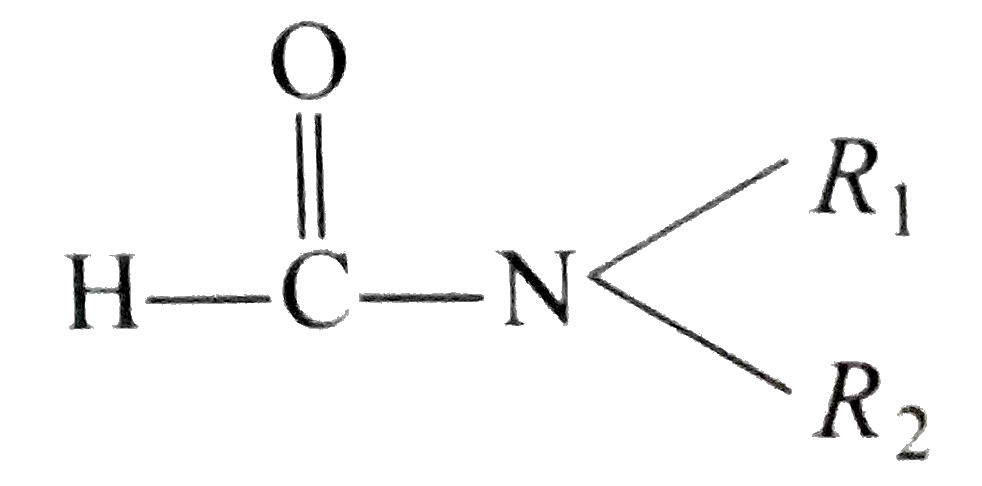 The compound (A) contains only 3 carbon atoms. thus, `R_1` and `R_2` contain one carbon atom each. The structure of (A) is, 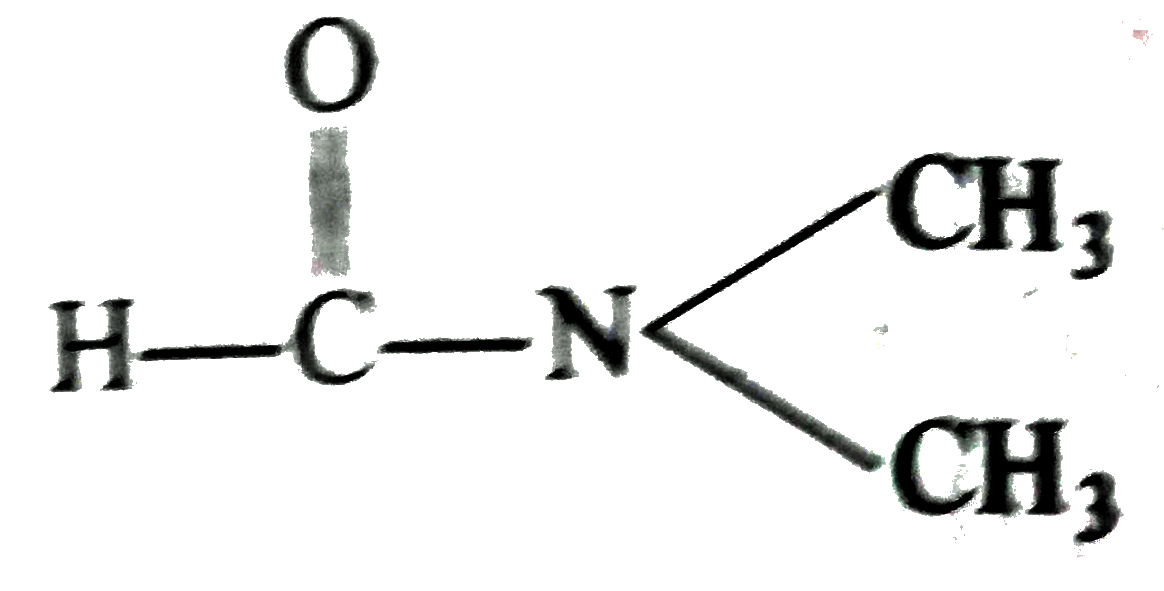 Reactions : `underset((A))(HCON)(CH_3)_2+H_2Otounderset((C))(HCOOH)+underset("Dimethylamine")underset((B))underset(sec-"Amine")((CH_3)_2NH` `underset((B))((CH_3)_2)NH+C_6H_5SO_2CIto(CH_3)underset(("insoluble in NaOH"))(NSO_2C_6H_5+HCI` `underset((C))(HCOOH)+Ag_2OtoH_2O+CO_2+underset("Silver Mirror")(2Ag)` |
|
| 32. |
From amongst the following triatomic molecules the least bond angle is in |
|
Answer» `O_(3)` In `O_(3)` , bond angle |
|
| 33. |
Fromamongst Be, B and C, Choosethe elementwith highestand lowestfirstionizationenthalpy. |
| Answer» Solution :Carbonbecauseof its HIGHER nuclearcharge andsmallersize has thehighest `Delta_(i) H_(1)`amongst thegivenelements . B haslowest `Delta_(i) H _(1)` because incase of B , a 2p- electronis to belost whichis lessstronglyattracted by the nucleuswhilein CASEOF Be, a 2p-electronis to belostwhich ismore stronglyby THENUCLEUS. | |
| 34. |
From AB_(4), AB_(4) F, AB_(4) E, SF_(4)is which type ? |
| Answer» SOLUTION :It is `AB_(4)E ` type. In it, A means Four S - F bonding electron PAIR around S and one nonbonding `e^(-)` pair on S. | |
| 35. |
From 200 mg of CO_(2), 10^(21)molecules are removed. How many moles of CO_(2) are left? |
|
Answer» Solution :Total no. Of moles of `CO_(2) = ("WT.in g")/("MOL. Wt")` `=0.2/44 =0.00454` No. Of moles REMOVED `=(10^(21))/(6.022 XX 10^(23)) = 0.00166` No. Of moles of `CO_(2)` left `=0.00454 - 0.00166=0.00288` |
|
| 36. |
Friedel-Craft's reaction of Toluene with ethanoic ahydride produces |
|
Answer» Acetophenone |
|
| 37. |
Friedel-Crafts reaction of bromobenzene with methyl chloride gives |
|
Answer» o-bromotoluene  Bromine ATTACHED to BENZENE RING is o- and p-directing. |
|
| 38. |
Friedel-Crafts alkylation and acylation are useful in the preparation of certain compounds which cannot be prepared by other methods Benzene is heated with n-butyl chloride in presence of AlCl_3. The product is |
|
Answer» n-BUTYL BENZENE 
|
|
| 39. |
Friedel-Crafts alkylation and acylation are useful in the preparation of certain compounds which cannot be prepared by other methods "Napthalene" underset(+ AlCl_3)overset("succinic anhydride")to A underset(HCl)overset(Zn-Hg)to B underset(Delta)overset(H_2SO_4)to C underset(HCl)overset(Zn-Hg)to D overset(Pd-c or Se)to E |
|
Answer»

|
|
| 41. |
Freundlich equation for adsorption of gases ( in amount of x g) of a solid ( in amount of m g ) at constant temperature can be expressed as |
|
Answer» <P>`LOG(x/m)=LOGP+(1)/(n) log k` |
|
| 42. |
Freshly prepared solution of sodium nitroprusside is added to the sodium extract. Appearance of a deep violet colour indicates the presence of |
|
Answer» nitrogen |
|
| 43. |
Freshly prepared pure dilute solution of sodium in liquid ammonia: |
|
Answer» shows copper-bronze colour |
|
| 44. |
Frequency of the X-rays emitted by an element is 100 s^(-1). If constant in the Moseley equation are a = b = 1, the element will be |
|
Answer» Na `:. Sqrt100 = 1 (Z - 1) or Z = 10 + 1 = 11`. Hence, the ELEMENT is sodium (Na) |
|
| 45. |
Freons are not recommendedto be used in refrigeratorsbecausethey |
|
Answer» cause global warming |
|
| 46. |
Freons are not recommended to be used in refrigerators because they cause |
|
Answer» GLOBAL warming |
|
| 47. |
Freons are boon to industry, but curse to environment. Justify. |
| Answer» Solution :Freons are fluorochlorocarbons (CFC). They are EXTENSIVELY used as foaming against and are CHEAP. HENCE , they are boon to industry.Freons they get Photolysis and produce chlorine free radicals. These radicals are very reactive with OZONE and decrease the CONCENTRATION of ozone in stratosphere. Hence they are curse to environment . | |
| 48. |
Freons are ................. |
| Answer» SOLUTION :Chlorofluoroalkanes | |
| 49. |
Freon-12 is manufactured from tetrachloromethane by ………………… . |
|
Answer» WURTZ REACTION |
|