Saved Bookmarks
This section includes 7 InterviewSolutions, each offering curated multiple-choice questions to sharpen your Current Affairs knowledge and support exam preparation. Choose a topic below to get started.
| 1. |
Given that interionic distance in Na^(+), F^(-) crystal is 2.31 Å and r_(F^(+)) = 1.36 Å, which of the following predictions will be right |
|
Answer» `r_(Na^(+))//r_(F^(-)) ~~ 0.7` `:. R_(Na^(+))//r_(F^(-)) ~~ 0.7` (coordination = 6, rock structure) |
|
| 2. |
Given that dipole moment of H_(2) Omolecule is 1.84 D, bond angle is 105^(@), O -H bond distance 0.94Å, cos 75Å = 0.2588,calculate the charge on oxygen atom in H_(2) Omolecule . |
|
Answer» Solution :`mu_(H_(2)O) = sqrt(mu_(O-H)^(2) + mu_(O-H)^(2)+ 2 mu_(OH)^(2)cos 105^(@))` `(1.84)^(2) = 2mu_(O-H)^(2) + 2mu_(O-H)^(2)XX(-0.2588)(because cos 105^(@) = cos (180^(@) - 75^(@)) = - cos 75^(@))` ` 3.3856 = mu_(O-H)^(2) (1 - 0.2588)`  or` 1.4824 mu_(O-H)^(2)= 3.3856 or mu_(O-H) = 1.51 D` but` mu _(O-H) ` = charge `(delta) xx ` bond distance (d) ` therefore1.51 xx10^(-18)` esu cm = ` delta xx (-0.94 xx10^(-10) cm)` or ` delta = 1. 606 xx10^(-10)` esu As O-atom ACQUIRES charge = ` 2delta ` (one from each O-H bond) , THEREFORE , charge on O-atom ` =2xx 1.606 xx10^(-10) EQU = 3.212xx10^(-10) ` esu . |
|
| 3. |
Given that DeltaH = 0for mixing of two gases. Explain whether the diffusion of these gases into each other in a closed container is a spontaneous process or not ? |
| Answer» Solution :It is a SPONTANEOUS process because although `DELTAH = 0 , i.e., ` energy factor has no role to PLAY but randmness increases, i.e.,randomness factor FAVOURS the process. | |
| 4. |
Given that Delta H = 0 for mixing of two gases. Explain whether the diffusion of these gases into each other in a closed container is a spontaneous process or not ? |
| Answer» Solution :The mixing of two GASES have `Delta H` equal to zero. Therefore, it is spontaneousprocess because energy FACTOR has no role to PLAY but randomness increases i.e., randomness factor FAVOURS the process. | |
| 5. |
Given that CH_3CHO + 5/2O_2 rarr 2CO_2 + 2H_2O, DeltaH = -1168 KJ//"mole" CH_3COOH + 2O_2 rarr 2CO_2 + 2H_2O, Delta H = -876 KJ//"mole" DeltaH for the reaction CH_3CHO + 1/2O_2 rarr CH_2COOH in KJ//mol is |
| Answer» ANSWER :A | |
| 6. |
Given thatC_((g)) + O_(2(g)) to CO_(2(g))DeltaH^(@) =- 1KJ , 2 CO_((g))+O_(2(g)) to2CO _(2(g)) DeltaH^@=- b KJ , calculatetheDeltaH^@ for thereactionC_((g))+1//2 O_(2(g)) to CO_((g)) |
|
Answer» `(b+2A)/(2)` `C +O_2to CO_2 "" DeltaH^(@)=- a KJ ………(1)` ` 2CO +O_2 to2CO_2"" DeltaH^@=- bKJ………(2)` `C + ^(1//2 )toCO"" DeltaH^@ =?` ` (1)xx 2 ` ` 2C+ 2O_2toCO_2Delta H^@=-2a KJ ........ (3)` reverseofrequation(2)willbe ` 2CO_2to2CO +O_2DeltaH^@ = b-2aKJ.....(5)` `(5)div2 ` ` C+ O _2toCO""DeltaH^@= (b-2a)/(2) KJ` |
|
| 7. |
Give that C_(s) +O_(2_(g))to CO_(2_((g))), Delta H^(0)=-xkJ 2CO_((g))+O_(2_((g)))to 2CO_(2_((g))), Delta H^(0)=-ykJ. |
|
Answer» `(y - 2X)/(3)` |
|
| 8. |
Given that C_((g))+O_(2(g)) to CO_(2(g)) DeltaH^@=-a kJ , 2 CO_((g))+ O_(2(g)) to 2CO_(2(g)) 'DeltaH^@=-b kJ , Calculate the DeltaH^@ for the reaction C_((g)) +1//2O_(2(g)) to CO_((g)) |
|
Answer» `(b+2a)/(2)` |
|
| 9. |
Given that C+ O_(2) to CO_(2)DeltaH^(@) = -x kJ 2CO+ O_(2) to 2CO_(2) DeltaH^(@) = -y kJ The enthalpy of formation of CO will be |
|
Answer» `y -2x` (ii) `2CO+ O_(2) to 2CO_(2)DeltaH = -y kJ` The REQUIRED equation is `C + 1/2O_(2) to CODeltaH` = ? Divinding eqn (ii) by 2 (iii) `CO+1/2O_(2) to CO_(2) DeltaH = -y/2 kJ` SUBTRACT eqn (iii) from eqn (i) `C + 1/2 O_(2) to CODeltaH - x + y/2` or `= (y - 2x)/(2)`. |
|
| 10. |
Given thatC+O_(2) rarrCO_(2), Delta H^(@) = - x kJ 2CO+ O_(2) rarr 2CO_(2) ,Delta H ^(@) = - y kJThe enthalpy of formation of carbonmonoxide will be |
|
Answer» `y - 2X` |
|
| 11. |
Given that C + O_2 rarr CO_(2) , DeltaH^@ = -xkJ 2CO + O_2 rarr 2CO_2 , DeltaH^@ = -y kJ The enthalpy of formation of carbon monoxide will be |
|
Answer» `(2X-y)/(2)` |
|
| 12. |
Heats of atomisation of chlorine and hydrogen are 243 kJ mol^(-1) and 435 kJ mol^(-1) respectively. Heat of formation of HCl is -92 kJ mol^(-1). Calculate the bond energy of HCL. |
|
Answer» `380 KJ mol^(-1)` |
|
| 13. |
Given that bond energies of H - H and Cl -Cl are 430 "kJ/mol"^(-1) and 240 "kJ/mol"^(-1) respectively and DeltaH_(f) for HCI is -90 "kJ/mol"^(-1), bond enthalpy of HCI is |
|
Answer» 380 KJ/mol `DeltaH_(HCI) = sum B.E` of reactant `- sumB.E` of products `-90= (1)/(2) xx 430 + (1)/(2) + (1)/(2) xx 240 - B.E.` of `HCI` `therefore B.E`. of HCI `= 215 + 210 + 90` `= 425 "kJ mol"^(-1)` |
|
| 14. |
Given suitable explanation for the following facts about gases. Gases don't settle at the botton of a container. |
| Answer» SOLUTION :GASES don't SETTLE at the BOTTOM of a CONTAINER : | |
| 15. |
Given strength of pollutant agent of hydrocarbons which are use as fuel. |
|
Answer» SOLUTION :* Least POLLUTED domestic fuel : LPG * Least polluted fuel used in VEHICLE : CNG * MORDENT polluted domestic fuel : KEROSENE |
|
| 16. |
Given suitable explanation for the following facts about gases. diffuse through all the space available to theml. |
|
Answer» Solution :Gases diffuse through all the space available to them : DIFFUSION is the process of two or more gases mixiing TOGETHER and spreading out evenly so as to form a homogeneous mixture. Gas MOLECULES diffuse to mix thorughly and fill the container, since they have greater KINETIC energy and lesser intermolecular FORCE of attration. |
|
| 17. |
Given set of quantum numbers for a multielectron atom is: {:(n,l,m,s),(2,0,0,+1//2),(2,0,0,-1//2):} What is the next higher allowed set of 'n' and 'l' quantum numbers for this atom in the ground state? |
|
Answer» n=2,l=0 |
|
| 18. |
Given r_(n+1) - r_(n-1)=2r_(n) where r_n , r_(n-1) , r_(n+1) are Bohr radius for hydrogen atom in n^(th) , (n+1)^(th) and (n-1)^(th) shell respectively . Calculate the value of n. |
|
Answer» |
|
| 19. |
Given RMS velocity of hydrogen at 300 K is 1.9 xx 10^(3) m//sec. The RMS velocity of oxygen at 1200 K will be |
|
Answer» `7.6 XX 10^(3) m//sec` `U_(O_(2))=sqrt((3Rxx1200)/32)=2/4 sqrt((3Rxx300)/2)` `=1/2xx1.7xx10^(3) ms^(-1)=0.95xx10^(3) ms^(-1)` |
|
| 20. |
Given reasons: (i) During the test of nitrogen in Lassaigne's filtrate, sometimes red colouration is obtained when ferric chloride is added. (ii) Why is sodium extract made acidic with acetic acid before the addition of lead acetate in the test of sulphur? (iii) In the test of nitrogen, freshly prepared solution of ferrous sulphate is always used. (iv) During the test for halogens, why is sodium extract first boiled with a few drops of conc. HNO_(3)? (v) Why the organic compound is fused with sodium metal during detection of nitrogen, sulphur, halogens, etc.? (vi) What is the role of copper sulphate and potassium sulphate in Kjeldahl's process for the estimation of nitrogen in an organic compound? (vii) Is Beilstein test a satisfactory test for detection of halogens? (viii) Why C CI_(4) will not give white precipitate of AgCI on heating with AgNO_(3)? |
|
Answer» (ii) Lead acetate is hydrolysed by `NaOH` present in sodium extract. It is neutralised FIRST with acetic acid before the addition of lead acetate. (iii) Ferrous sulphate gets hydrolysed if its solution is stored. (iv) As to decompose `NaCN` or `Na_(2)S` if present in the sodium extract. (v) As to CONVERT nitrogen, sulphur or halogens present in an organic compound into ionisable substances. (vi) Copper sulphateacts as a catalyst while potassium sulphate raises the boiling point of `H_(2)SO_(4)`. (vii) It is not always reliable. Substances such as urea, thiourea, pyridine, organic acids, etc., ALSO impart COLOUR to flame. (vii) Because `C CI_(4)` is a covalent compound and hence does not ionise to give `CI^(-)` ions which is the essential requirement for `AgNO_(3)` test. |
|
| 21. |
Given reason for the following: H_(2)^(+) and H_(2)^(-) ions have the same bond order but H_(2)^(+) ions are more stable than H_(2)^(-) . |
|
Answer» Solution :`H_(2)^(-) ` has one electron in the antibonding `sigma_(1S)^(**)` molecular orbitals due to which there is some DESTABILIZING effect and HENCE is less STABLE than ` H_(2)^(+)` ion (which has no electron in the entibonding orbital). |
|
| 22. |
Given reaction are of which type ? (a) CH_(3)CH_(2)OH overset("Conc." H_(2)SO_(4))rarr CH_(2)=CH_(2)+H_(2)O (b) CH_(2)BrCH_(2)Br + Zn overset(Delta)rarr CH_(2)=CH_(2)+ZnBr_(2) (c) CH_(3)CHBr - CH_(2)Br + Zn overset(Delta)rarr CH_(3)CH = CH_(2) + ZnBr_(2) (d) RC-=CR' + H_(2) overset("Na, liquid "NH_(3))rarr RCH = CHR' (e) CH_(3)CH_(2)Cl + KOH underset(KOH)overset("Ethanol")rarr CH_(2)=CH_(2) + KCl + H_(2)O |
|
Answer» SOLUTION :(a) Dehydrogenation or `beta`-Elimination. (B) DEHALOGENATION. (C) Dehalogenation (d) Alkyl portion reduction (hydrogenation) (e) dehydrogenation OR `beta`-Elimination. |
|
| 23. |
Given: Pt(s)"|"underset(1"bar")H_2(g)"|"0.1MNH_4OH(aq)"||"0.1MCH_3COOH(aq)"|"underset(1"bar")H_2(g)"|"Pt(s) pK_b(NH_4OH)=5, (CH_3COOH)=5,(2.303RT)/F=0.06 Volume of 0.1 m NH_4OH in anode half cell=100ML Volume of 0.1 M CH_3COOH in cathode half cell =100mL Which is /are correct statement? |
|
Answer» The EMF of given cell is 0.48V. |
|
| 24. |
Given packing efficiency and coordination number of the following crystal structres . (a) body centred cubic(b) cubic close packing |
|
Answer» Solution :(a) packing efficiency of bcc= 68 % , corrdination NUMBER = 8 (b) packing efficiency of ccp (FCC) = 74% , COORDINATION number = 12 |
|
| 25. |
Given one example for beta - elemination reaction. |
Answer» SOLUTION :The reaction in which two substituent are eliminated from the molecule with the formation of a NEW C - C double bond is called ELIMINATION reaction. 
|
|
| 26. |
Given : NH_(3)(g)+3Cl_(2)(g) hArr NCl_(3)(g), +3HCl(g), -DeltaH_(1)N_(2)(g) + 3H_(2)(g) hArr 2NH_(3)(g), -DeltaH_(2) H_(2)(g) + Cl_(2)(g) hArr 2HCl(g), DeltaH_(3) The heat of formation of NCl_(3)(g) in terms of Delta H_(1), DeltaH_(2)andDeltaH_(3)is |
|
Answer» `DeltaH_(F) = - DeltaH_(1)+ ( DeltaH_(2))/( 2) - ( 3)/( 2) DeltaH _(3)` `(1)/(2) `Eqn. (II) `+ (3)/(2)`Eqn. (iii) and SUBTRACTING the sum fromEqn. (i) gives the required equation.Hence, `DeltaH _(f)= - DeltaH_(1) - [(- DeltaH_(2))/( 2)+(3)/(2) DeltaH_(3)]` `= - DeltaH_(1) + ( DeltaH_(2))/( 2) - (3)/(2)DeltaH_(3)` |
|
| 27. |
Given name , symbol , Atomic numbers of the elements of 1 to 7 period of last and first elements. |
Answer» SOLUTION :
|
|
| 28. |
Given name, atomic number, electronic configuration of third period and 12^(th) group. |
|
Answer» |
|
| 29. |
Given : N_(2)(g) + 3H_(2)(g)rarr2NH_(3)(g), Delta_(r)H^(@) +- 92.4 kJ mol^(-1).What is the standard enthalpy of formation of NH_(3) gas ? |
|
Answer» Solution :Reaction for the enthalpy of `NH_(3)(G) ` is `:(1)/(2) N_(2)(g) +(3)/(2) H_(2)(g) rarr NH_(3)(g)` `:. Delta_(F)H^(@) = - 92.4//2 = - 46.2 kJ MOL^(-1)` |
|
| 30. |
Given N_(2(g)) + 3H_(2(g)) to 2NH_(3(g)) , Delta_(r) H^( @) = -92.4 "kJ mol"^(-1) What is the standard enthalpy of formation of NH_(3) gas ? |
|
Answer» Solution :`(1)/(2) N_(2(g)) + (3)/(2)H_(2(g)) to NH_(3(g))` `therefore Delta_(f) H^( Theta ) = (-92.4)/( 2) = -46.2 "kJ/mol"` |
|
| 31. |
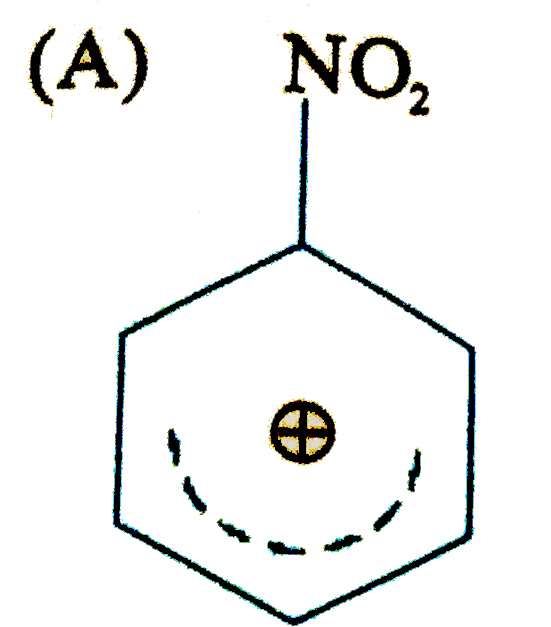
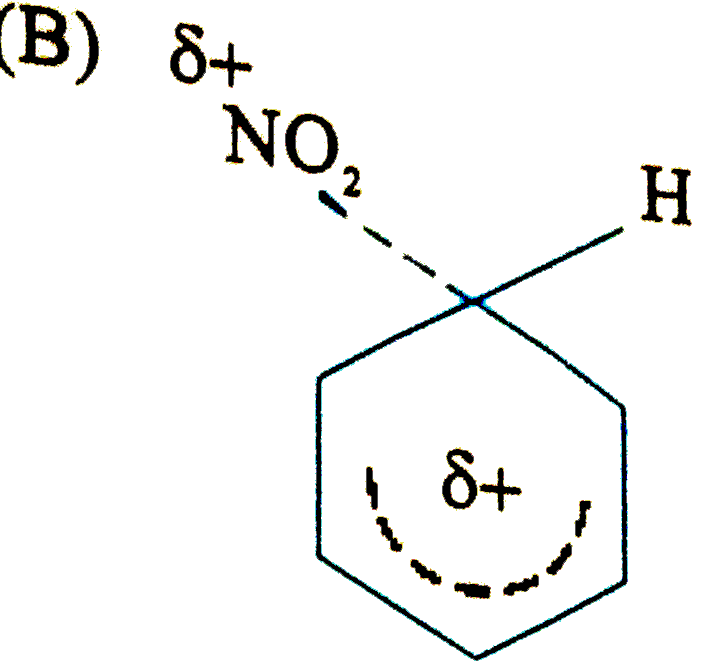
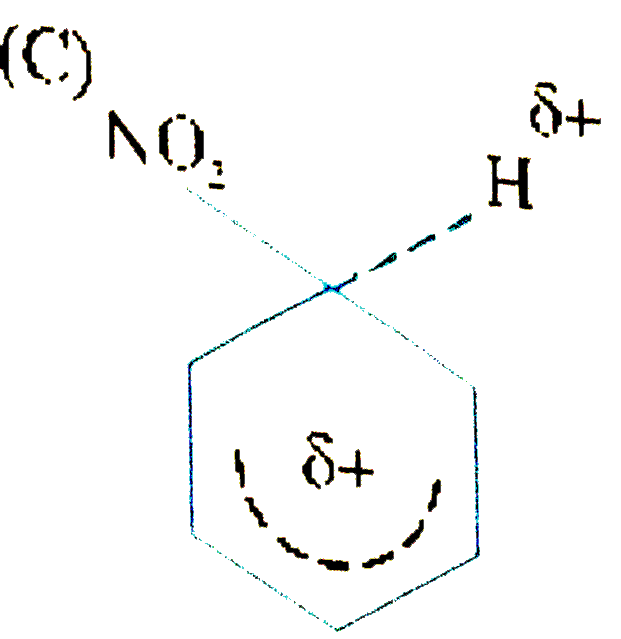
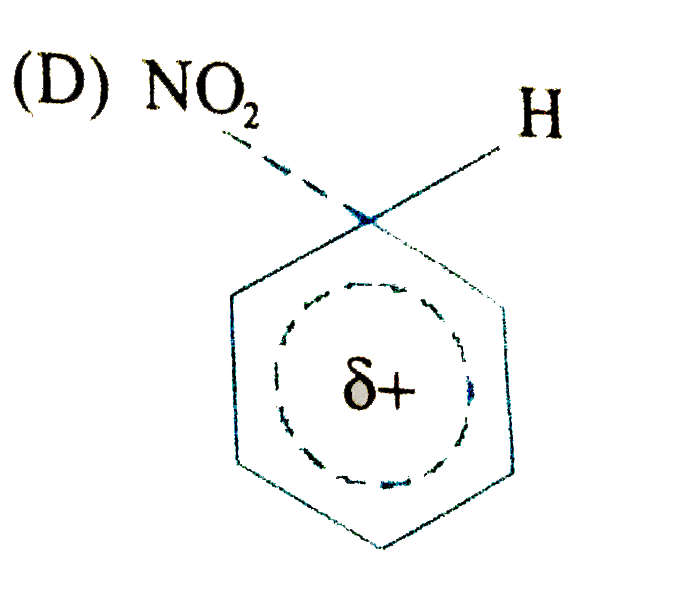
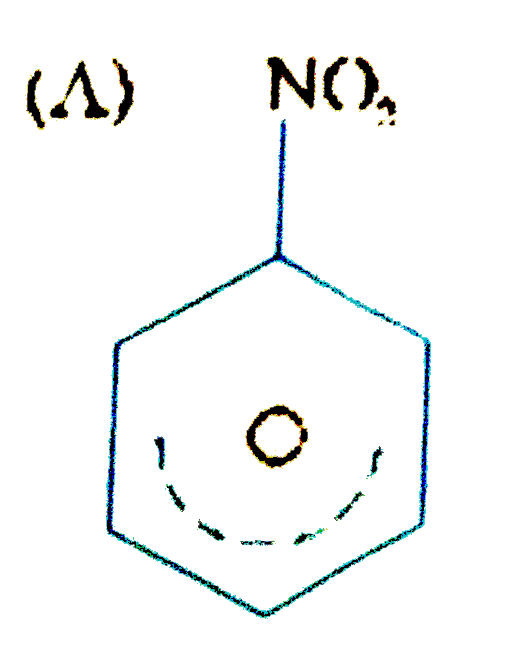
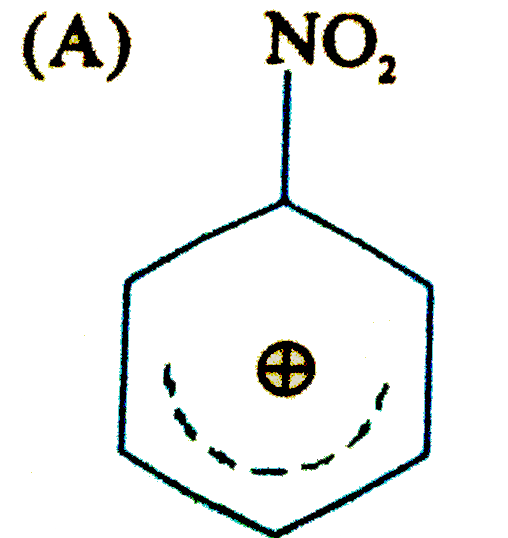
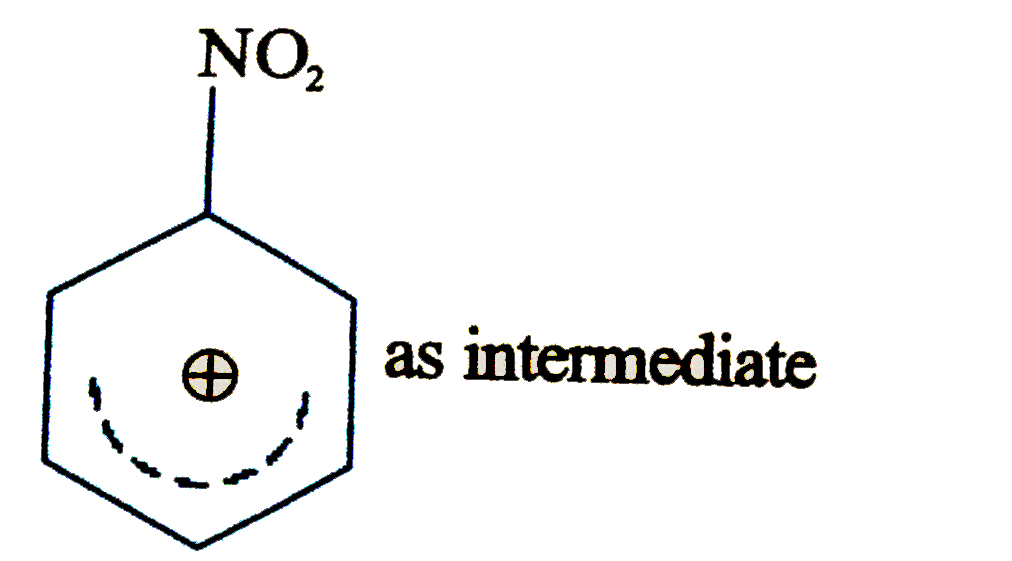
Given is the energy profile diagram of nitration of benzene using mixed acid (HNO_(3)+H_(2)SO_(4)) Q. Identify (X) in above reaction |
|
Answer»
|
|
| 32. |
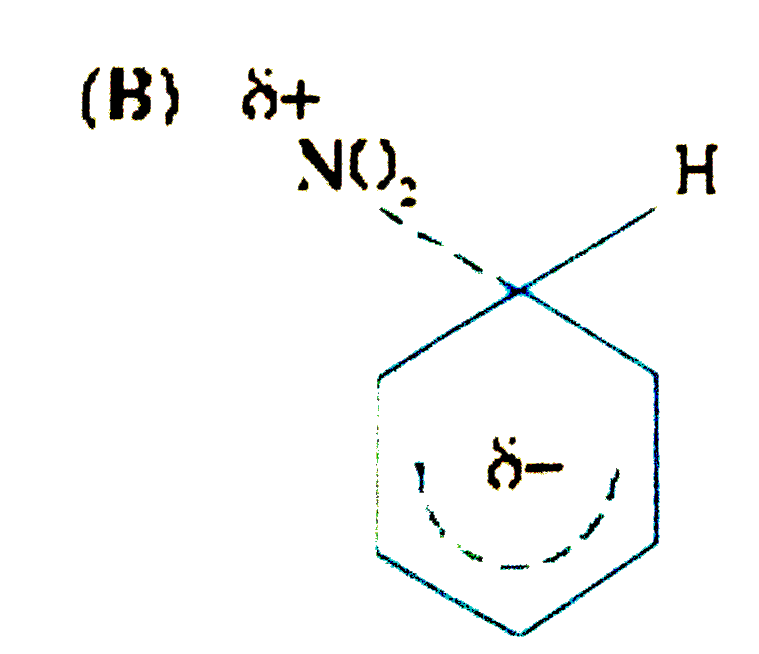
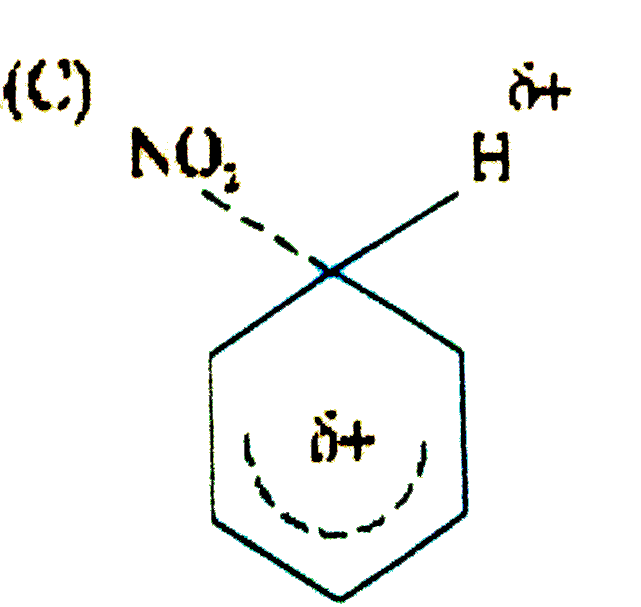
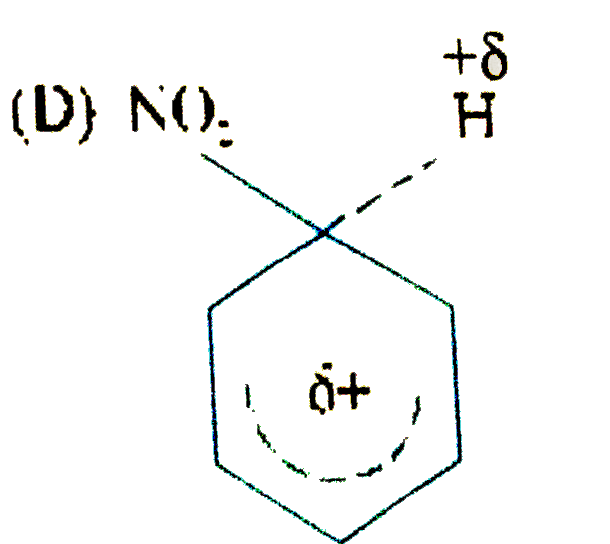
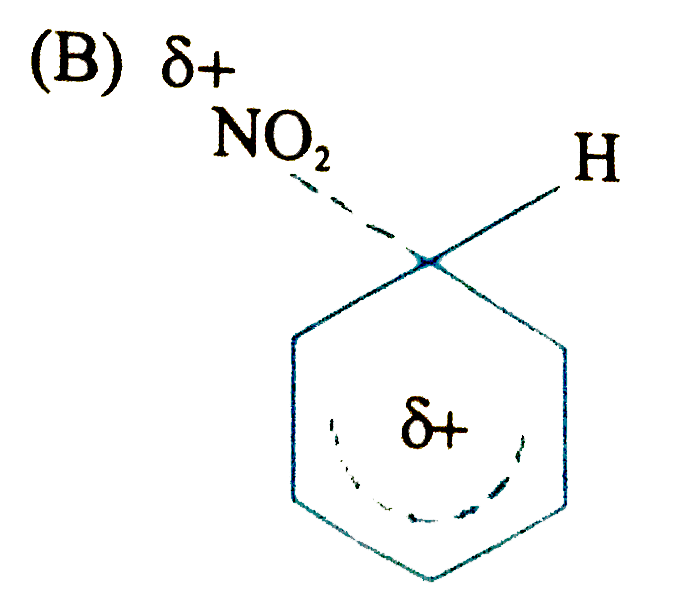
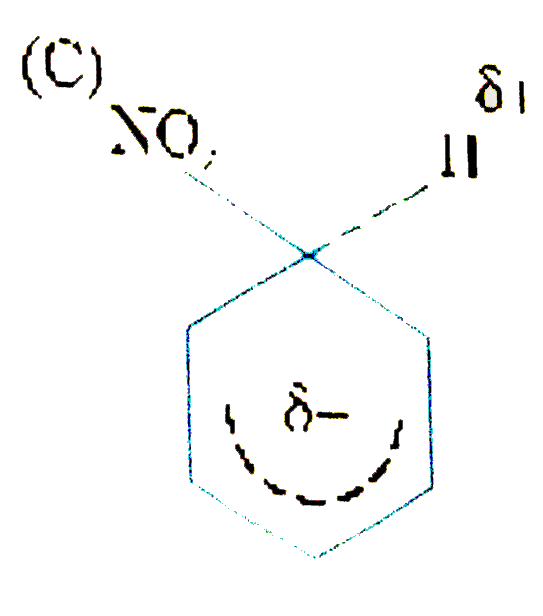
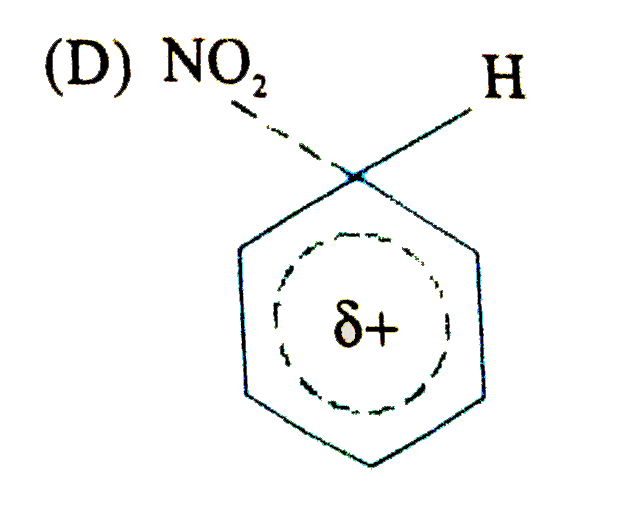
Given is the energy profile diagram of nitration of benzene using mixed acid (HNO_(3)+H_(2)SO_(4)) Q. Identify T.S_(2) in the above reaction |
|
Answer»
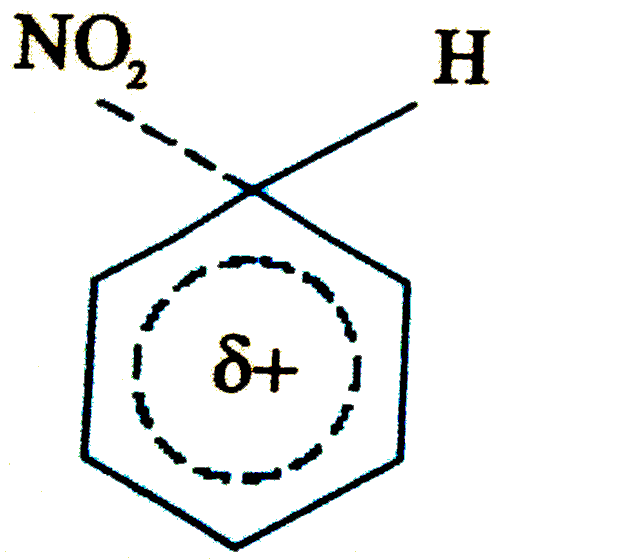 . .
|
|
| 33. |
Given is the energy profile diagram of nitration of benzene using mixed acid (HNO_(3)+H_(2)SO_(4)) Q. Identify T.S_(1) in the above reaction |
|
Answer»
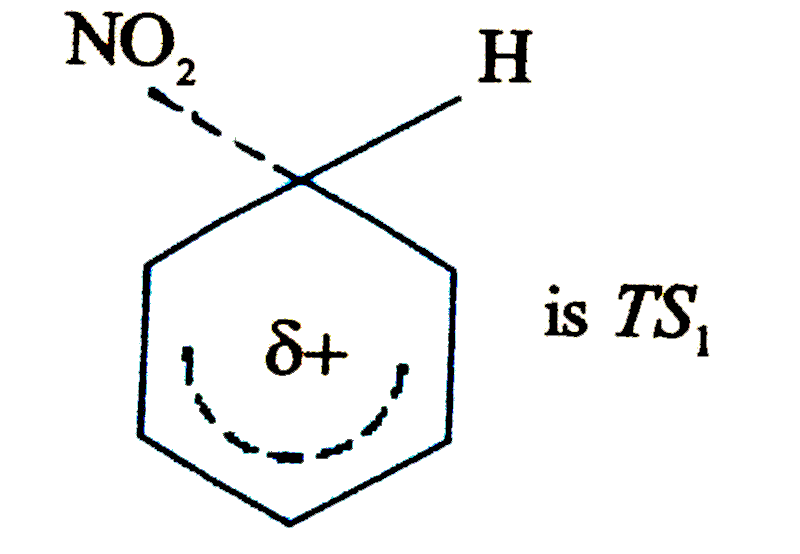
|
|
| 34. |
Given: i. H(g) +CI(g) rarr HCI(g) DeltaH =- 431 kJ ii. HCI(g) +aq rarr H^(o+)(aq) +CI^(Theta) (aq) DeltaH =- 75.1 kJ iii. H(g) rarr H^(o+) (aq)+e^(-) DeltaH = 1317 kJ iv. CI(g) +e^(-) rarr cI^(Theta)(g) DeltaH =- 354 kJ a. Calculate the enthalpy of hydration of HCI H^(o+)(g) +CI^(Theta)(g) +aq rarr H^(o+)(aq) +CI^(Theta)(aq) b. Calculate teh enthalpy of hydration of CI^(Theta) ions if enthalpy of hydration of H^(o+) is zero. |
|
Answer» SOLUTION :a. `H^(o+)(g) +CI^(Theta) (g) +aq rarr H^(o+)(aq) +CI^(Theta)(aq) DELTAH = ?` `DeltaH = DeltaH_(1) +DeltaH_(2) - DeltaH_(3) - DeltaH_(4)` `=- 431 - 75.1 - 1317 - (-354)` `=- 1469.1 kJ` b. `CI^(Theta)(g)+aq rarr CI^(Theta) (aq), DeltaH_(5) = ?` `H^(o+) (g) +aq rarr H^(o+) (aq), DeltaH_(6) = 0` Given: `H^(o+)(g) +CI^(Theta)(g)+aq rarr H^(o+) (aq) +CI^(Theta) (aq)` `DeltaH =- 1469.1 kJ` `DeltaH = DeltaH_(5) +DeltaH_(6)` `:. DeltaH_(5) = DeltaH - DeltaH_(6)` `= - 1469.1 - 0 =- 1469.1 kJ` |
|
| 35. |
Given (i) C("graphite") + O_(2)(g) to CO_(2)(g)Delta_(r)H^(@) = x kJ"mol"^(-1) (ii)C("graphite") + 1/2O_(2)(g) to CO(g)Delta_(r)H^(@) = y kJ"mol"^(-1) (iii) CO(g) + 1/2 O_(2)(g) to CO_(2)(g) Delta_(r)H^(@) = z kJ"mol"^(-1) Based on the above thermochemcial equations, find out which one of the following algebraic releationship is correct? |
|
Answer» Z = X + y `therefore` x = y + z |
|
| 36. |
Given (I) C(diamond) +O_(2)(g)rarrCO_(2)(g),DeltaH^(@)=-92.0Kcal mol^(-1) (II) C(graphite) + O_(2)(g)rarrCO_(2)(g),DeltaH^(@)=-96.0Kcal mol^(-1) |
|
Answer» `2.907KcalK^(-1)` C(diamond)`rarr`(GRAPHITE) `DELTAH^(@)=-02-(-96)=+4.0Kcal MOL^(-1)` Moles of diamond `=(2.6xx1000g)/(12gmol^(-1))=216.6mol` `DeltaH^(@)` (to convert `200mol` of diamond into graphite) `=216.6xx4.0Kcal=866.4Kcal` `:. DeltaS=(DeltaH^(@))/(T)=(866.4Kcal)/(298K)=2.907KcalK^(-1)` |
|
| 37. |
Given HF +H_2O overset( K_a) hArr H_3 O^(+)+F ^(-) , F^(-)+H_2O overset( K_a) hArr HF +OH^(-) Which relation is correct: |
|
Answer» `K_axx K_b =K_W` `(F^(-)+H_2OhArr HF +OH^(-),K_b )/(2H_2hArr H_3O ^(+) +OH^(-) ,K_W=K_a.K_b) ` |
|
| 38. |
Given H_(2)(g)=2H(g)Delta_(H-H)=103Kcal mol^(-1) The heat of reaction of CH_(4)(g)=CH_(3)(g)+H(g) |
|
Answer» `103Kcalmol^(-1)` `Delta_(CH_(3)-H)=103Kcalmol^(-1)` `H(g)+H(g)=H_(2)(g)""…(2)` `(Delta_(H-H)=-103Kcalmol^(-1))/(CH_(4)(g)+H(g)=CH_(4)(g)+H_(2)(g),DeltaH=103-103=0)` |
|
| 39. |
Given examples for the following types of organic reactions electrophilic substitution . |
|
Answer» `(##SUR_CHE_XI_VO2_S_MQP_02_E01_033_A01##)` |
|
| 40. |
Given examples for the following types of organic reactions beta- elimination |
Answer» SOLUTION :` BETA ` ELIMINATION :
|
|
| 41. |
Given examples for the following types of organic reactionsbeta - elimination |
|
Answer» `(##SUR_CHE_XI_VO2_S_MQP_02_E01_032_A01##)` |
|
| 42. |
Given equations for the reactions that occurs when Ehyene is treated with Baeyer's reagent. |
| Answer» Solution :`underset("Ethene")(CH_(2))=CH_(2)+H_(2)O+(O) overset("ALK" KMnO_(4))(to) underset(1,2"ETHAN") underset(OH)underset(|)(CH_(2))-underset("-DIOL")underset(OH)underset(|)(CH_(2))` | |
| 43. |
Given equations for the reactions that occurs when Eenthyene is treated with sodium metal in the ratio 1:2. |
| Answer» Solution :`UNDERSET("ETHENE")(CH_(2))=CH_(2)+2NatoNa-underset(1,2"disodium ethene")(CH=CH-Na)+H_(2)O` | |
| 44. |
Given electronic configurations of four elements E_1, E_2, E_3and E_4 are respectively 1s^2, 1s^2 2s^22p^1, 1s^22s^22p^5and 1s^22s^22p^6. The element which is capable of forming ionic as well as covalent bonds is |
| Answer» ANSWER :C | |
| 45. |
Given E_(Cr^(3+)//Cr)^(@)=0.74V , E_(MnO_(4)^(-)//Mn_(2+)^(@)=1.51 v E_(Cr_(2)O_(7)^(2-)//Cr_(3+)^(@)=1.33V , E_(CI_(2)//CI^(-))=1.36 V based upon thedata given above strongest oxidising agent will be |
|
Answer» `MnO_(4)^(-)` |
|
| 46. |
Givendifference of 1s and 2s |
Answer» SOLUTION :
|
|
| 47. |
Given Dalton.s Law of partial Pressure, its mathematical formula and explain aqueous tension. |
|
Answer» Solution :Dalton.s law : The law was formulated by John Dalton in1801. ..It states that the total pressure EXERTED by the mixture of non - reactive gases is equal to the sum of the partial pressures of individual gases... i.e., the pressures which these gases would exert if they were enclosed separately in the same volume and under the same conditions of temperature. Partial pressure (p) : In a mixture of gases, the pressure exerted by the individual GAS is called .Partial pressure.. Mathematical formula of Dalton.s Law of partial pressure : Where `p_("Total")` is the total pressure exerted by the mixture of gas and `p_(1), p_(2), p_(3)` etc. are partial pressures of gases. `p_("Total")=p_(1)+p_(2)+p_(3)+.....` (at constant T and V)..... (Eq.-i) Pressure of DRY gas :Gases are generally collected over water and therefore are moist. So we have to obtained pressure of dry gas. `(("Pressure of"),("Dry gas"))=(("Total pressure of"),("moist gas contains"),("water vapour"))-(("Vapour pressure"),("of water"))` `therefore p_("Dry gas")=(p_("Total")-p_("Aqueous tension"))` ....(Eq.-ii) Aqueous tension : Pressure exerted by saturated water vapour is called .aqueous tension.. Aqueous tension of water at different temperature is given in table.  Necessity to FOLLOW Dalton.s law : (i) Gases of Mixture are do not react with each other CHEMICALLY (ii) Temperature and pressure of different gases remains same. |
|
| 48. |
Given compound shows which type of icomersim |
|
Answer» CHAIN isomerism 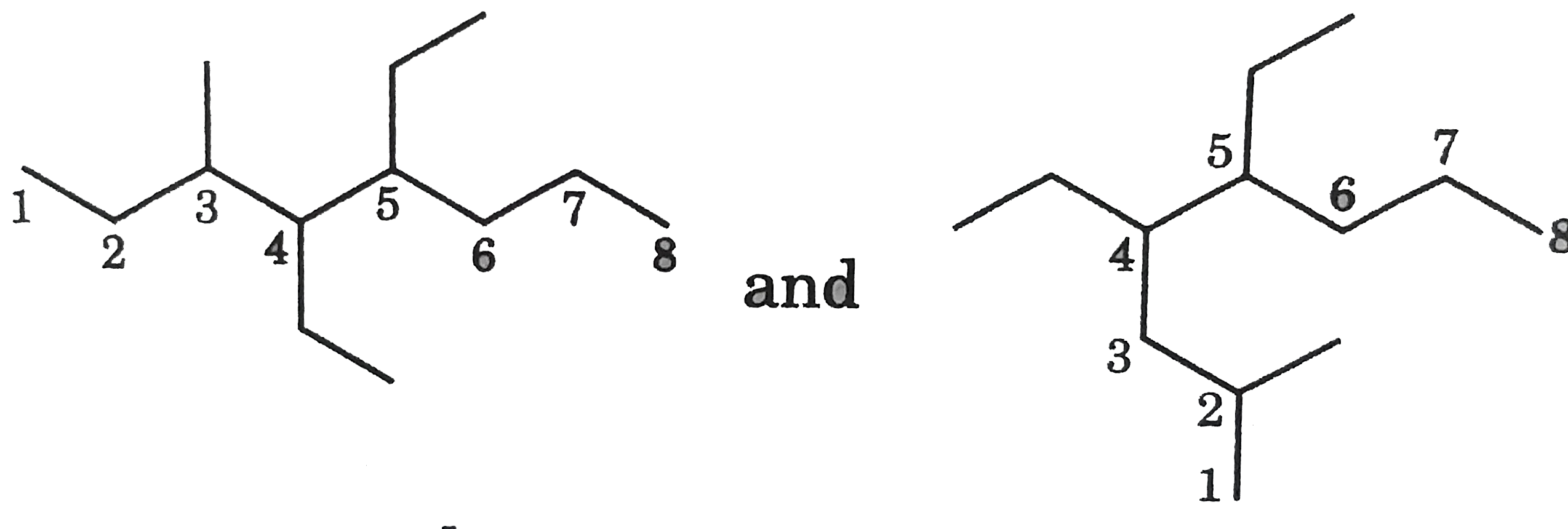
|
|
| 49. |
Given compound shows which type of isomerism |
|
Answer» Chain isomerism |
|
| 50. |
Given chemical equations for these reactions S(s)+O_(2)(g)toSO_(2)(g)DeltaH=-29608KJxxmol^(-1) H_(2)(g)+(1)/(2)O_(2)(g)toH_(2)O(l)Delta=-285.8KJxxmol^(-1) H_(2)(g)+S(s)toH_(2)S(g)DeltaH=-20.6Kjxxmol^(-1) What is the value of DeltaH for the reaction below? 2H_(2)s(g)+3O_(2)(g)to 2H_(2)O(l)+2SO_(2)(g) |
|
Answer» `-603.2KJxxmol^(-1)` |
|