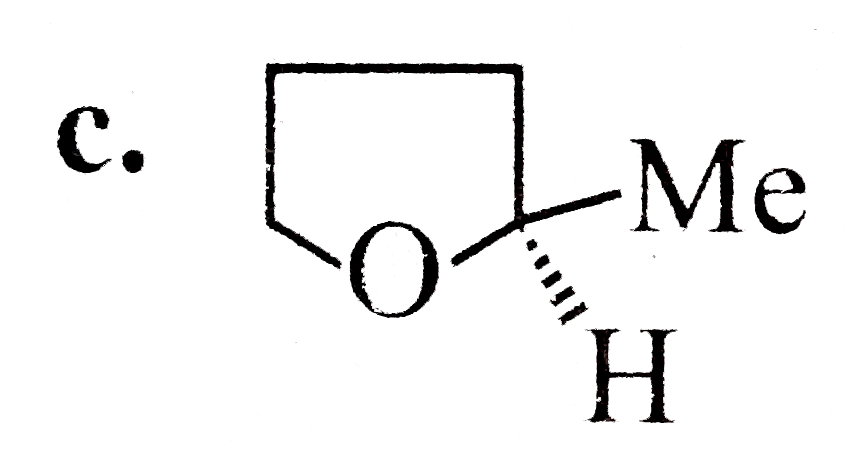
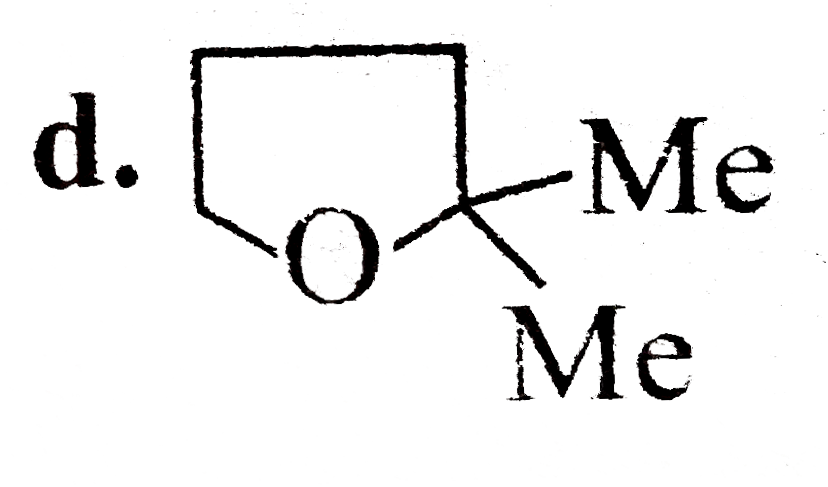
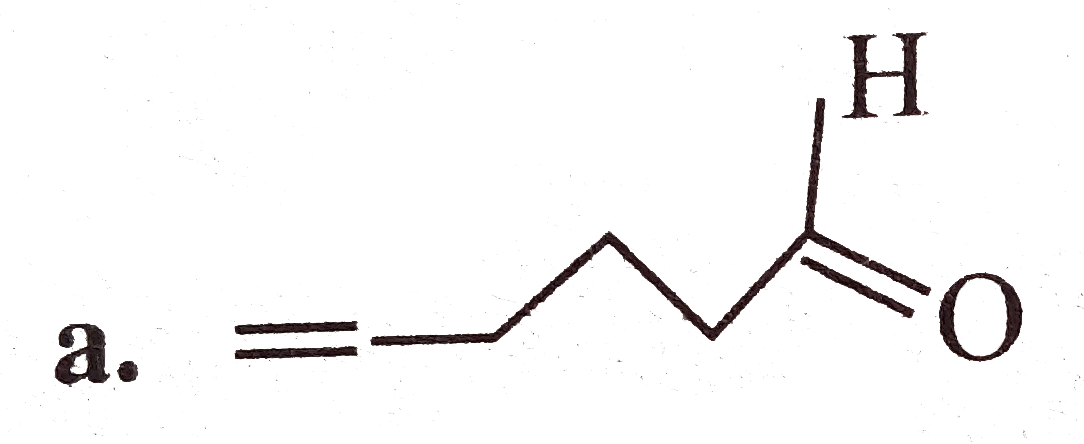
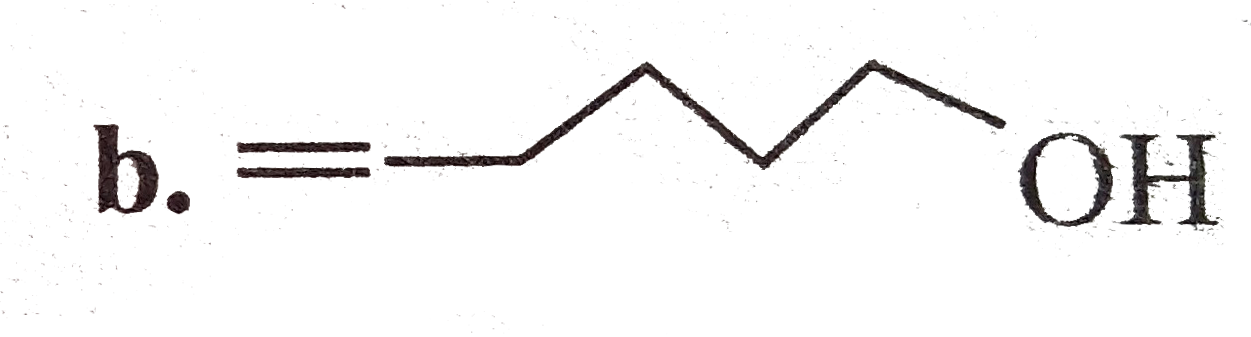
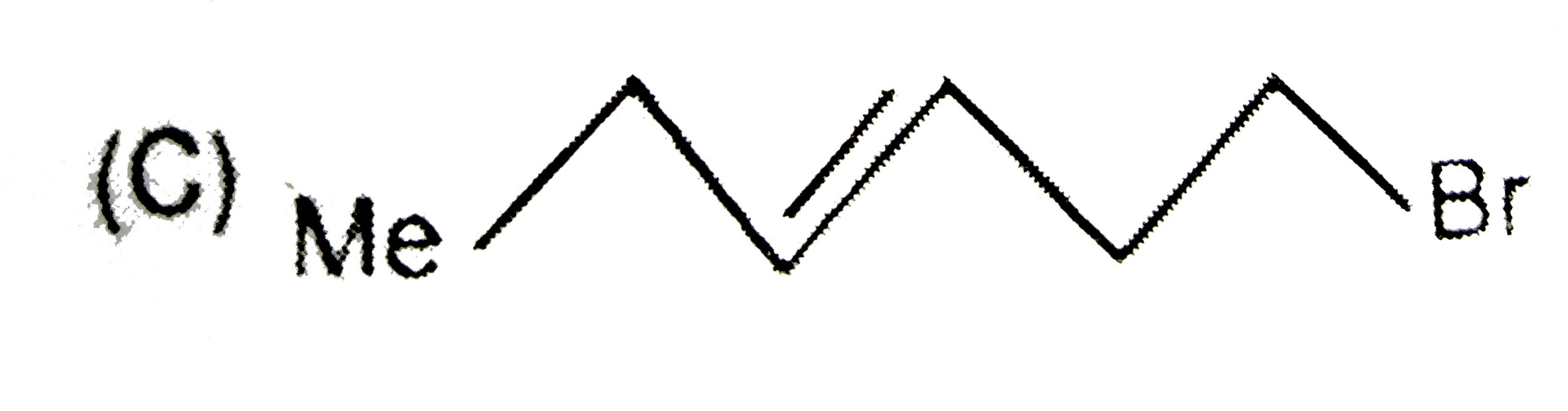
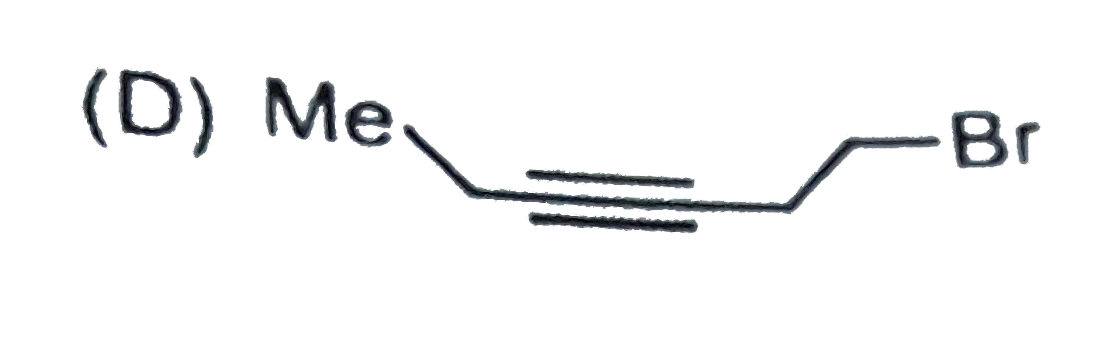
Saved Bookmarks
This section includes 7 InterviewSolutions, each offering curated multiple-choice questions to sharpen your Current Affairs knowledge and support exam preparation. Choose a topic below to get started.
| 1. |
In the following sets of resonating structure, lable the major and minor contributors towards resonance hybrid. (P)underset("(I)")(CH_(3)-overset(Theta)CH-C-=N)harrunderset("(II)")(CH_(3)CH=C=overset(..)N:^(Theta))"(Q)"underset("(I)")(CH_(3)-overset(Theta)CH-CH=CH-NO)harrunderset("(II)")(CH_(3)-CH=CH-CH=overset(o+)underset(O^(Theta))underset(|)N-O^(Theta)) (R)underset("(I)")(CH_(3)-CH_(2)-overset(o+)underset(""NH_(2))underset(|)(C)-NH_(2))harrunderset("(II)")(CH_(3)-CH_(2)-underset(""NH_(2))underset(|)(C)=overset(o+)NH_(2))"(S)"underset("(I)")(CH_(3)-overset(O)overset(||)C-overset(Theta)CH-overset(O)overset(||)C-CH_(3))harrunderset("(II)")(CH_(3)-overset(O^(Theta))overset(|)C=CH-overset(O)overset(||)C-CH_(3) |
|
Answer» <P> |
|
| 2. |
In the following sets of resonating structure, lable the major contributors towards resonance hybrid. |
|
Answer» II, II, I, II |
|
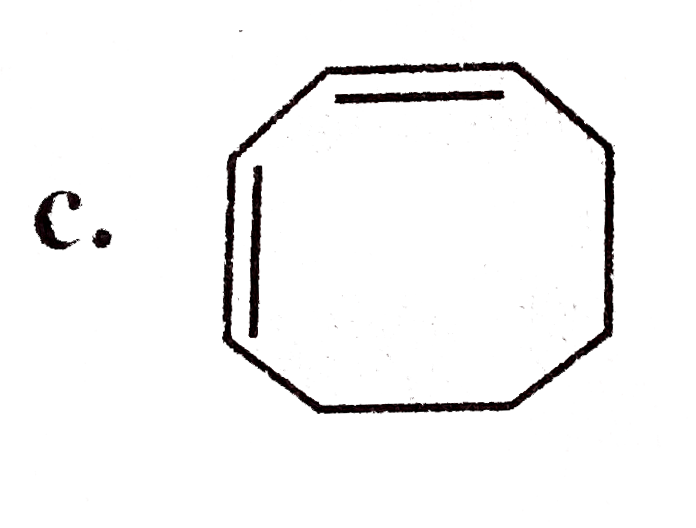
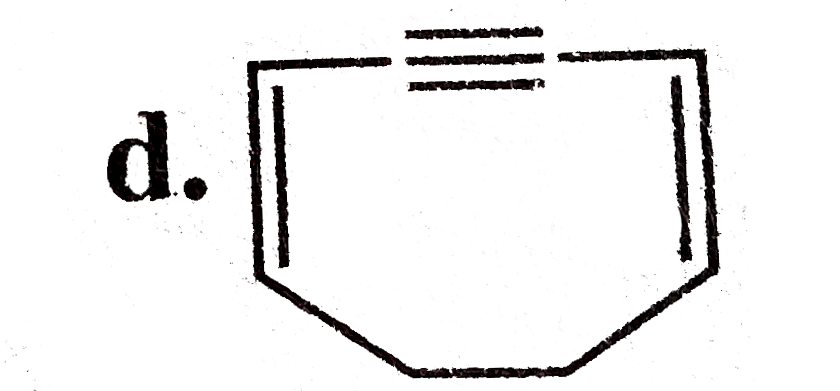
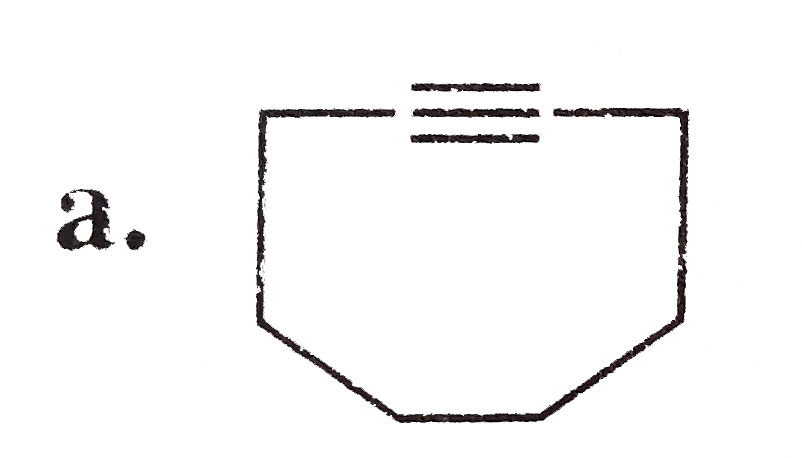
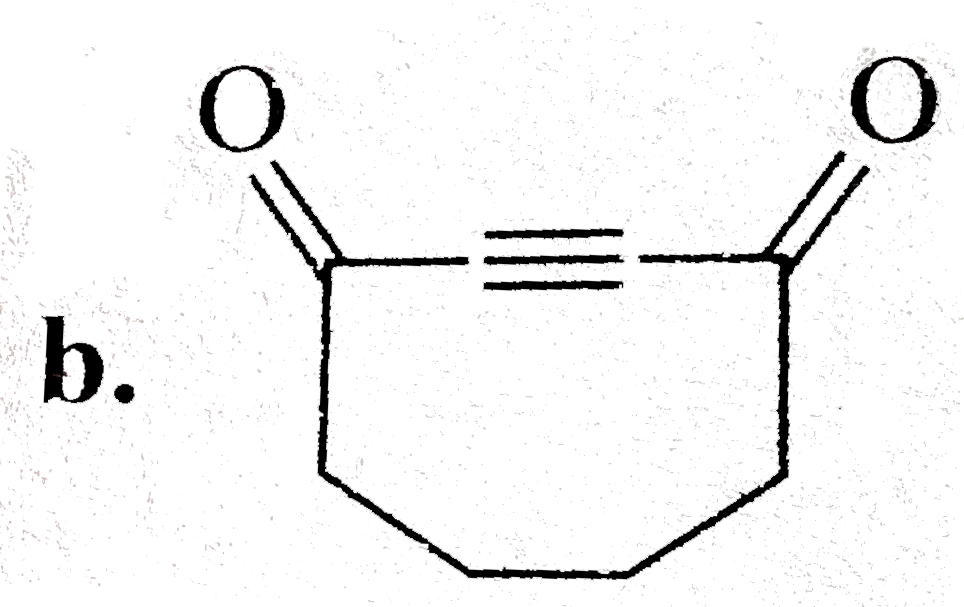
| 3. |
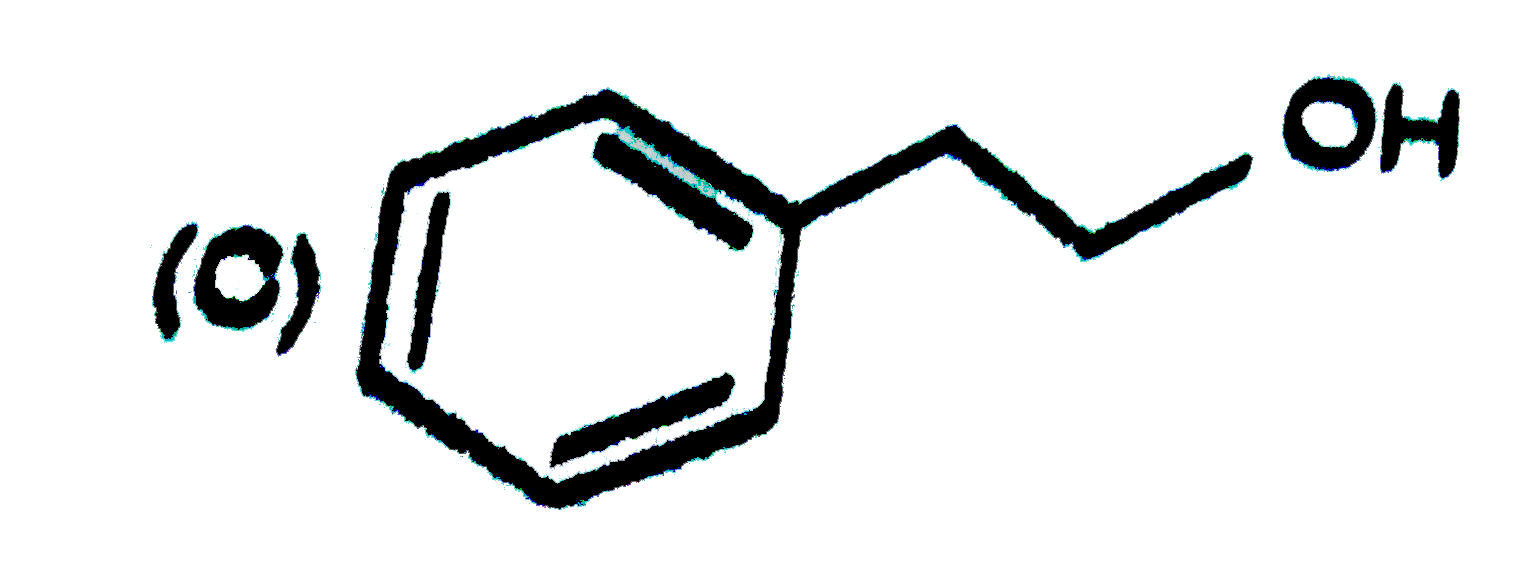
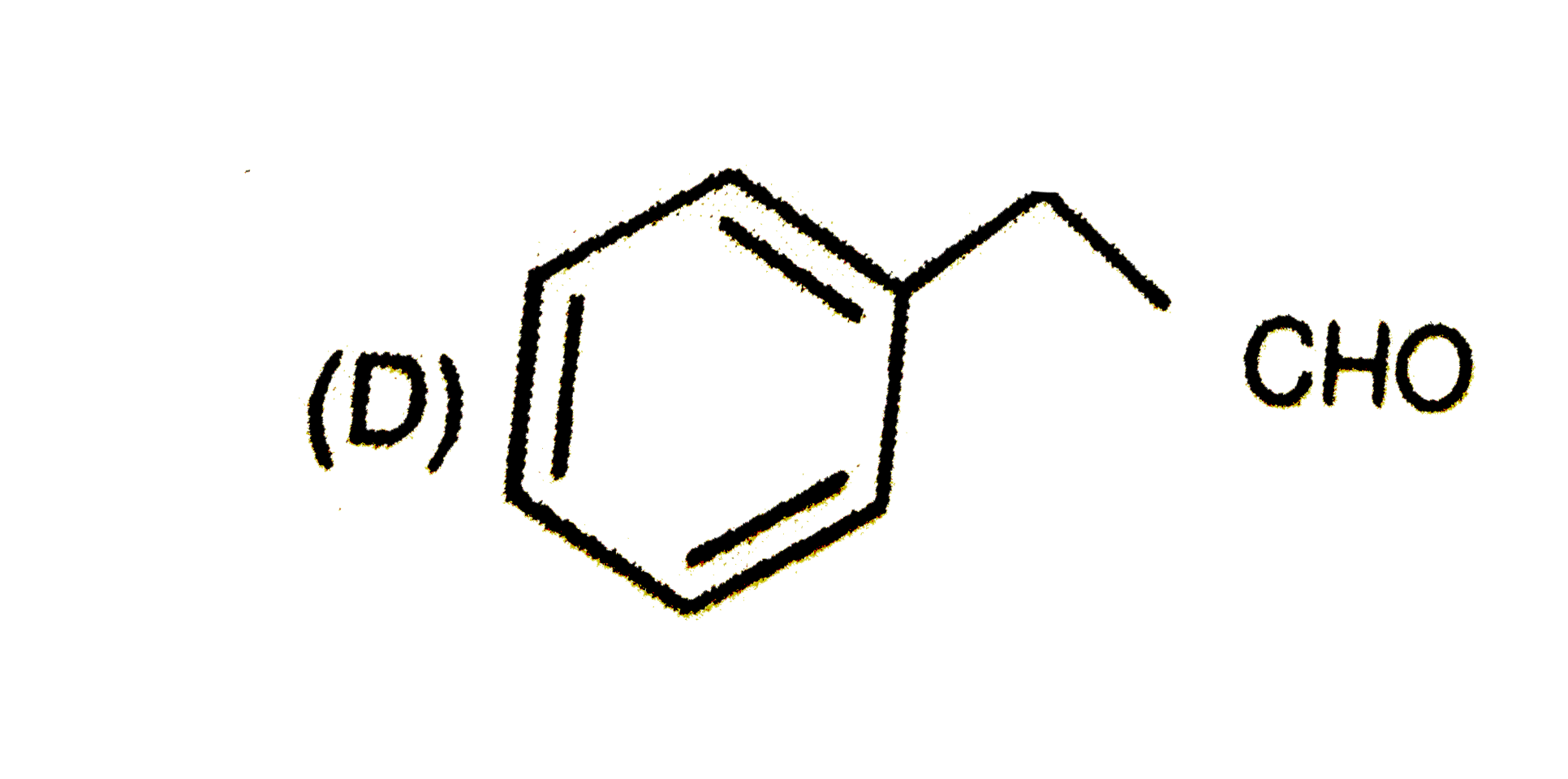
In the following sequence of reactions, what is D. |
|
Answer» PRIMARY amine 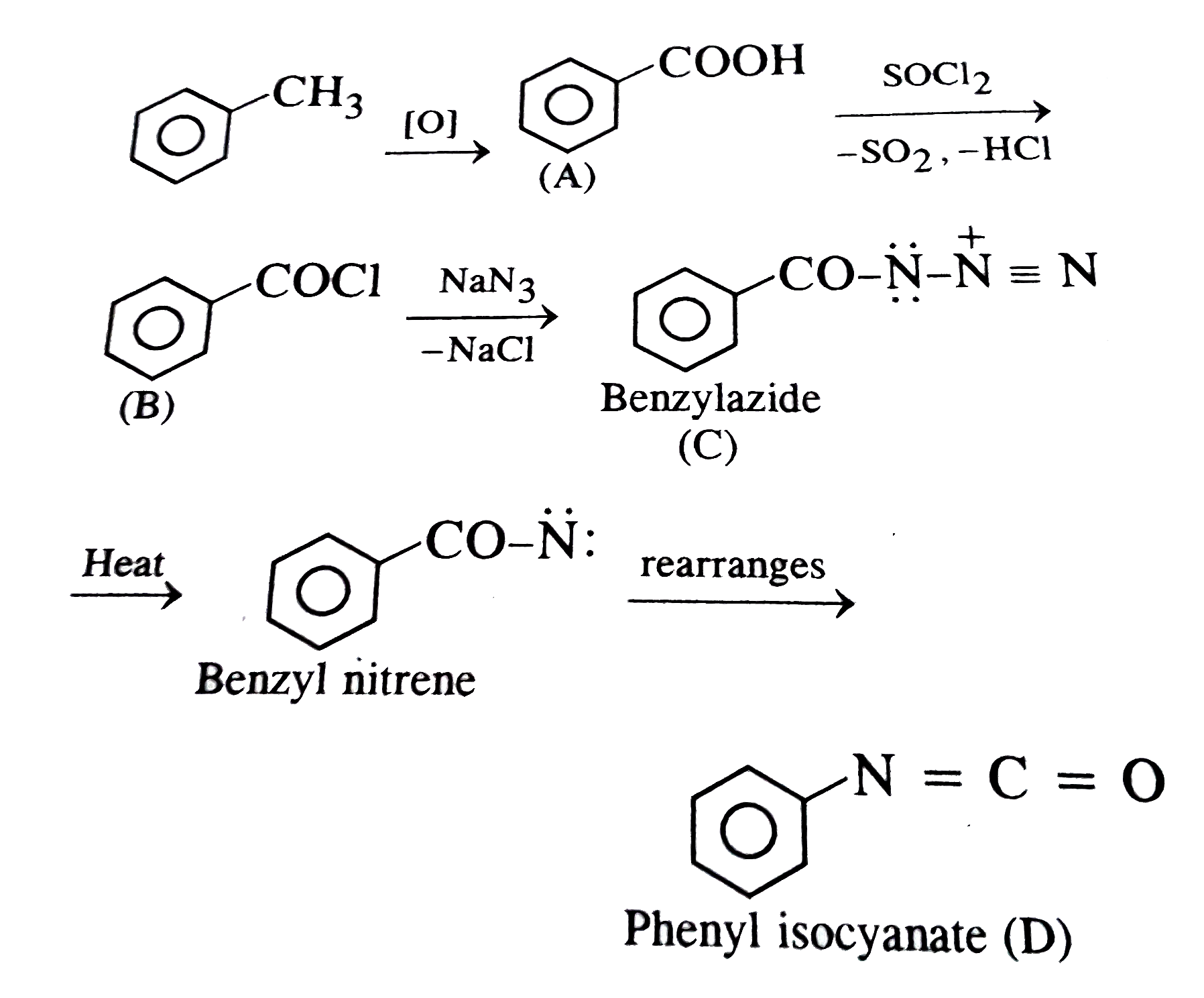
|
|
| 4. |
In the following sequence of reactions the products A to G are formed: (i). 2CH_(4)(g)underset(1773K)overset(Delta)toA(g)+B(g) (ii). 4 moles of Aunderset(Ni(CN)_(4)+THF)overset(Delta)tooverset(O_(3)//"oxidation")toD only (iii). Aunderset(C_(2)H_(3)I)overset("1 mole of "NaNH_(2))toEunderset("Red hot tube")overset(3" mole of E")toFoverset(O_(3)//"reductive")toG only Q. Compound G is |
|
Answer» 2-oxobutanal |
|
| 5. |
In the following sequence of reactions the products A to G are formed: (i). 2CH_(4)(g)underset(1773K)overset(Delta)toA(g)+B(g) (ii). 4 moles of Aunderset(Ni(CN)_(4)+THF)overset(Delta)tooverset(O_(3)//"oxidation")toD only (iii). Aunderset(C_(2)H_(3)I)overset("1 mole of "NaNH_(2))toEunderset("Red hot tube")overset(3" mole of E")toFoverset(O_(3)//"reductive")toG only Q. Compound C is: |
|
Answer» benzene |
|
| 6. |
In the following sequence of reactions : "Toluene" overset(KMnO_(4))rarr A overset(SOCl_(2))rarr B underset(BaSO_(4))overset(H_(2)//Pd)rarr C the product C is : |
|
Answer» `C_(5)H_(5)COOH` |
|
| 7. |
In the following sequence of reactions, the amountof D (in g) formed from 72 g of Mg is……….. (The yield (%) corresponding to the product in each step is given in the parenthesis) underset(72g)Mgunderset("Strong heating")overset(N_(2),"excess")tounderset(100%)Aoverset(H_(2)O)tounderset((90%))Boverset("conc."HNO_(3))tounderset((80%))Coverset("Heat")tounderset((90%))D |
|
Answer» `underset(("3moles"))underset(72g)(Mg)underset("STRONG heating")overset(N_(2),"excess")tounderset(A(100%))(Mg_(3)N_(2))underset(-3Mg(OH)_(2))overset(H_(2)O)to` `underset(B(90%))(2NH_(3))overset("Conc".HNO_(3))tounderset(C(80%))(2NH_(4)NO_(3))overset(Delta)tounderset(+2H_(2)O)underset("2 moles")underset(2xx44g)(2N_(2)O)` `:'` Mol.mass of `N_(2)O=44` amu Now, 72 g of Mg give `N_(2)O=2xx44g` Amount of D (in g) `=2xx44xx(100)/(100)xx(90)/(100)xx(80)/(100)xx(90)/(100)` `=57.024g` `=57.02 g` |
|
| 8. |
In the following sequence of reactions, the alkene affords the compound 'B' CH_(3)CH=CHCH_(3) overset(O_(3))rarrA underset(Zn)overset(H_(2)O)rarr B, The compound B is : |
|
Answer» `CH_(3)COCH_(3)` |
|
| 9. |
In the following sequence of reactions, the alkene affords the compound 'B'CH_3CH - CHCH_3 overset(O_3)(to) A underset(Zn) overset(H_2O)(to)Bthe compound B is |
|
Answer» `CH_3CH_2CHO` |
|
| 10. |
In the following sequence of reactions products (A) to (H) are formed. Q. Compound G is |
|
Answer»
|
|
| 11. |
In the following sequence of reactions products (A) to (H) are formed. Q. Compound F is |
| Answer» ANSWER :D | |
| 12. |
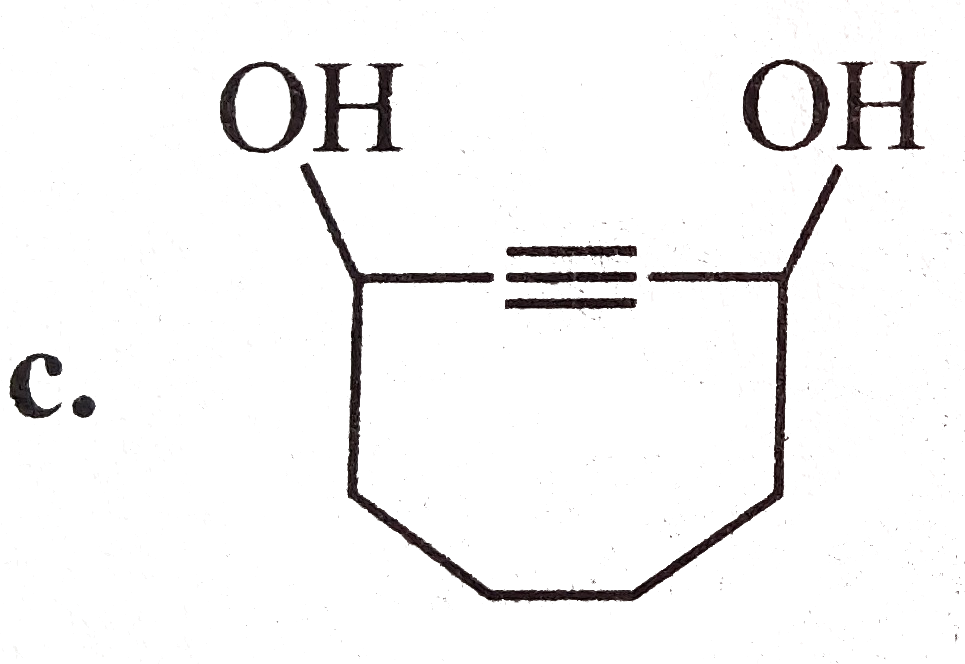
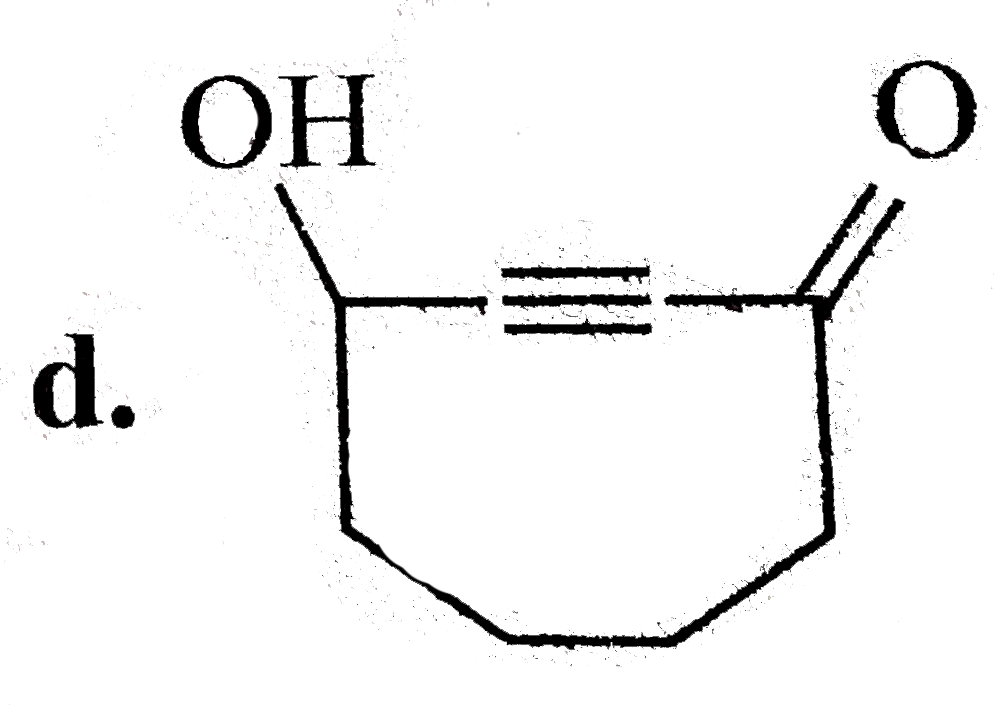
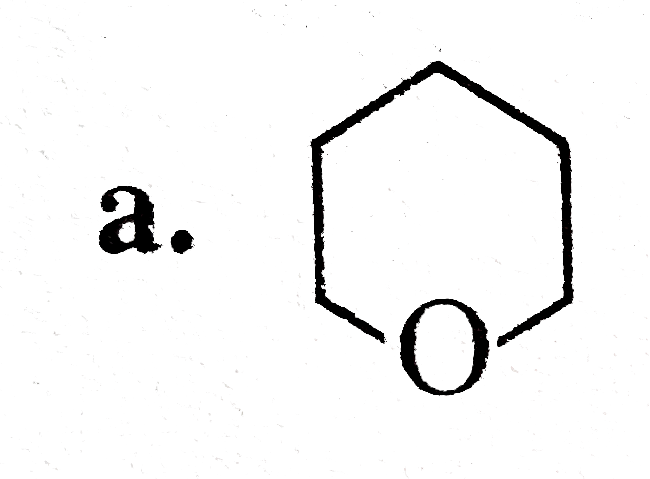
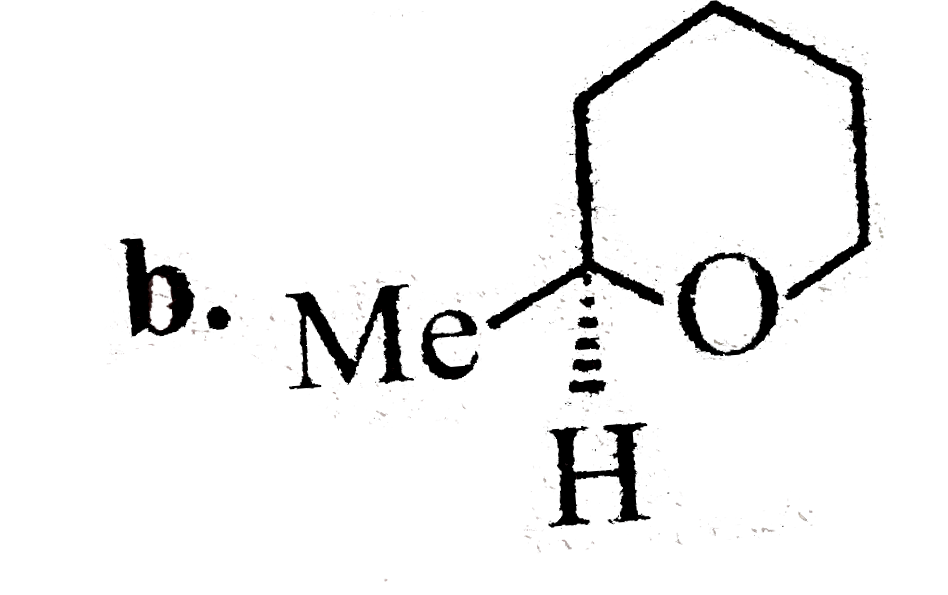
In the following sequence of reactions, products (A) to (H) are formed: Compound (H) is: |
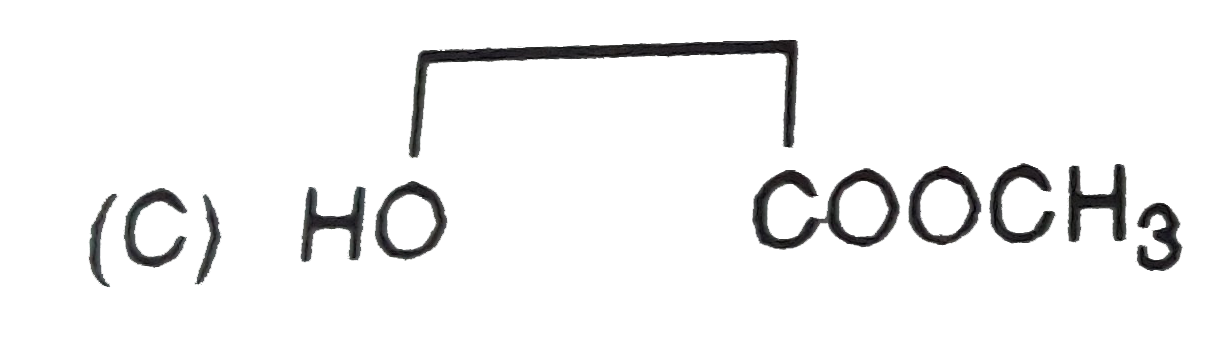
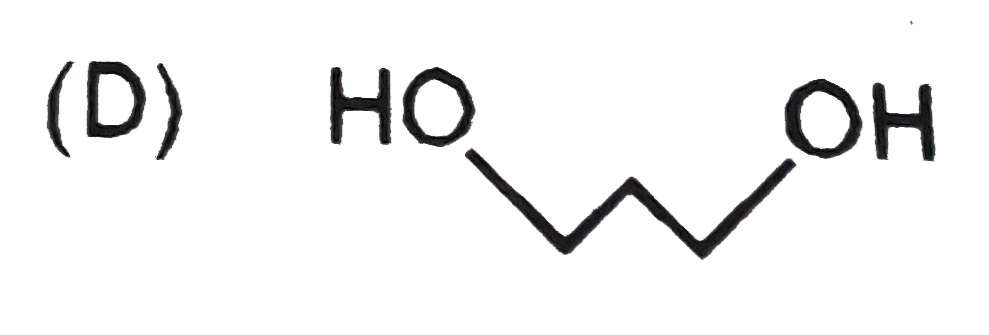
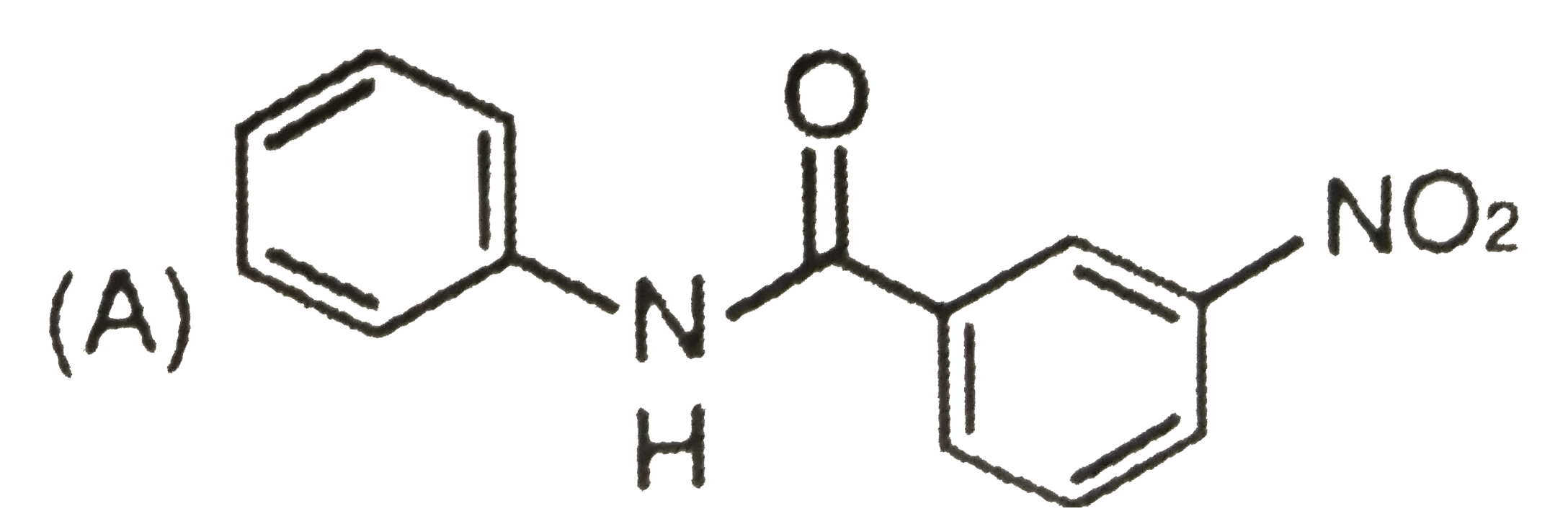
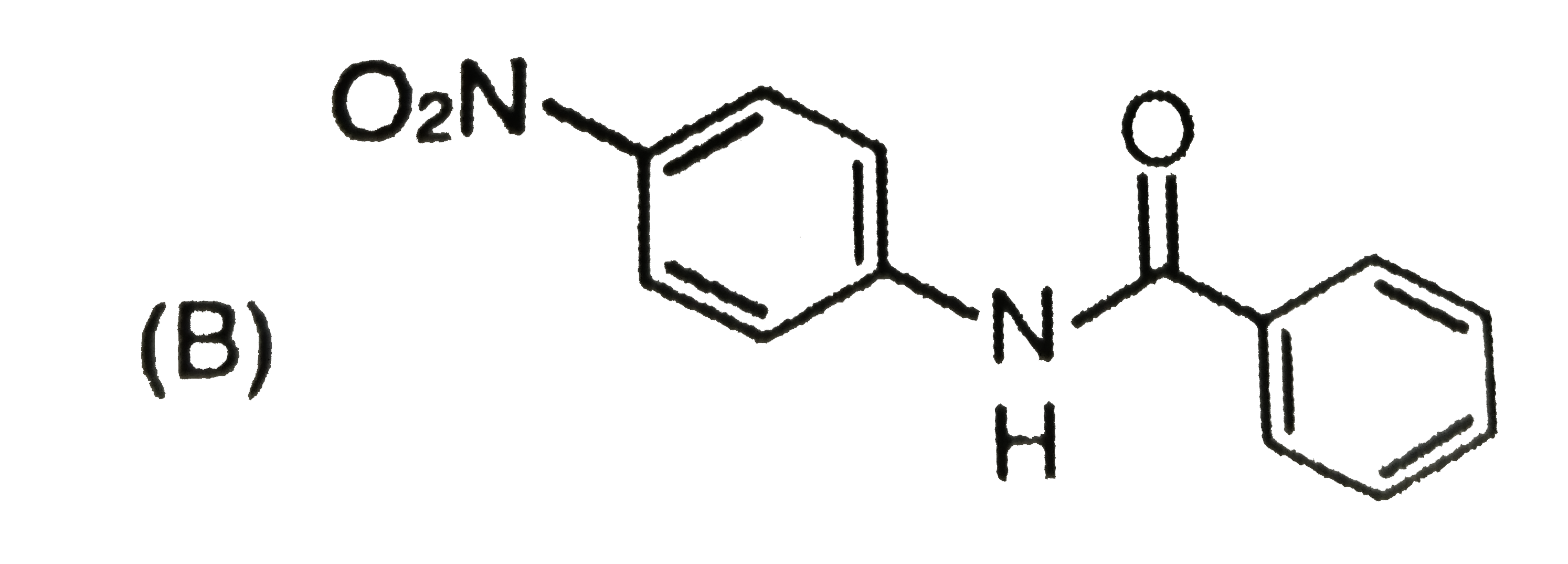
|
Answer»
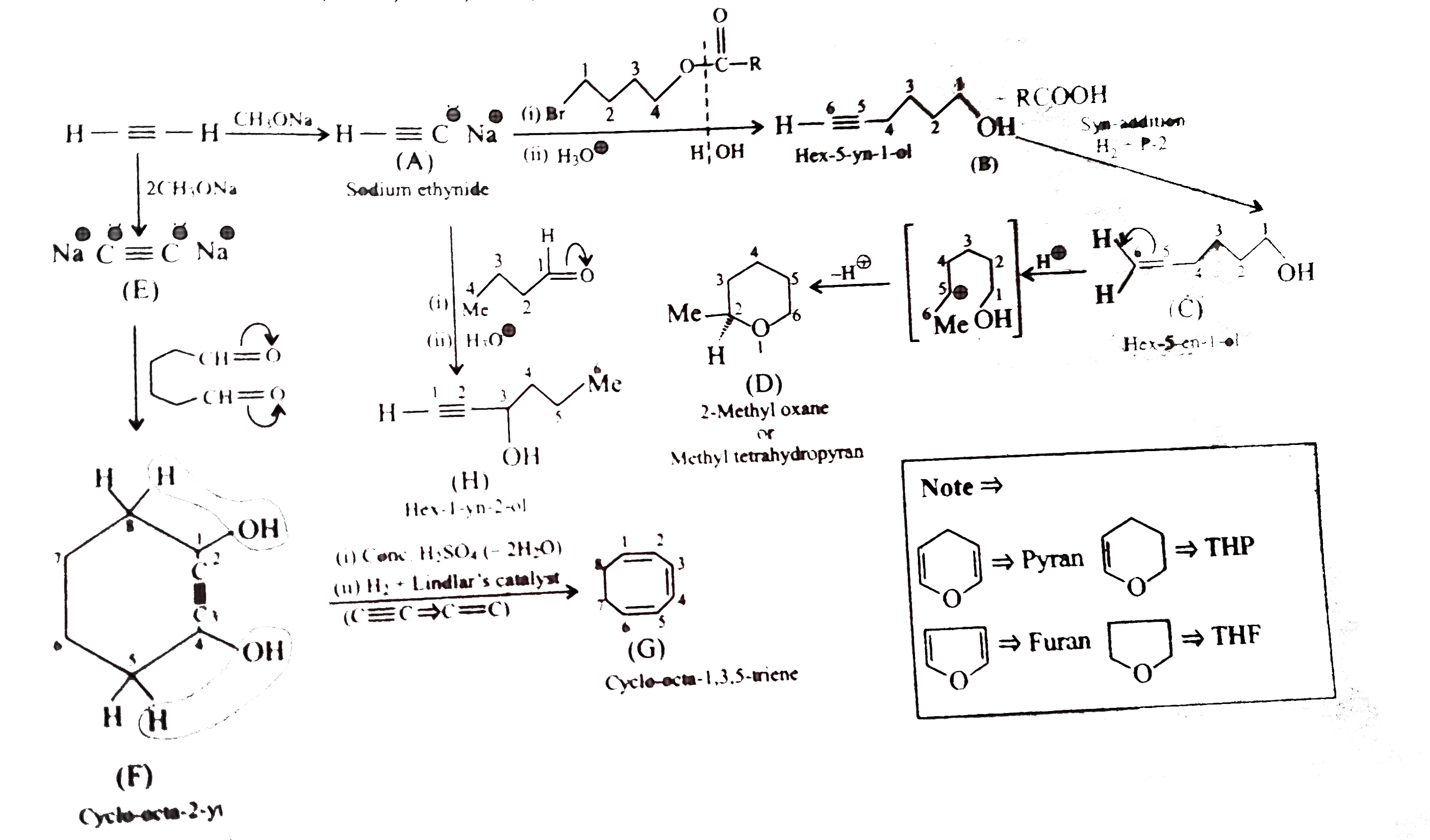 COMPOUND (H), ANSWER is (a). |
|
| 13. |
In the following sequence of reactions, products (A) to (H) are formed: Compound (G) is: |
|
Answer»
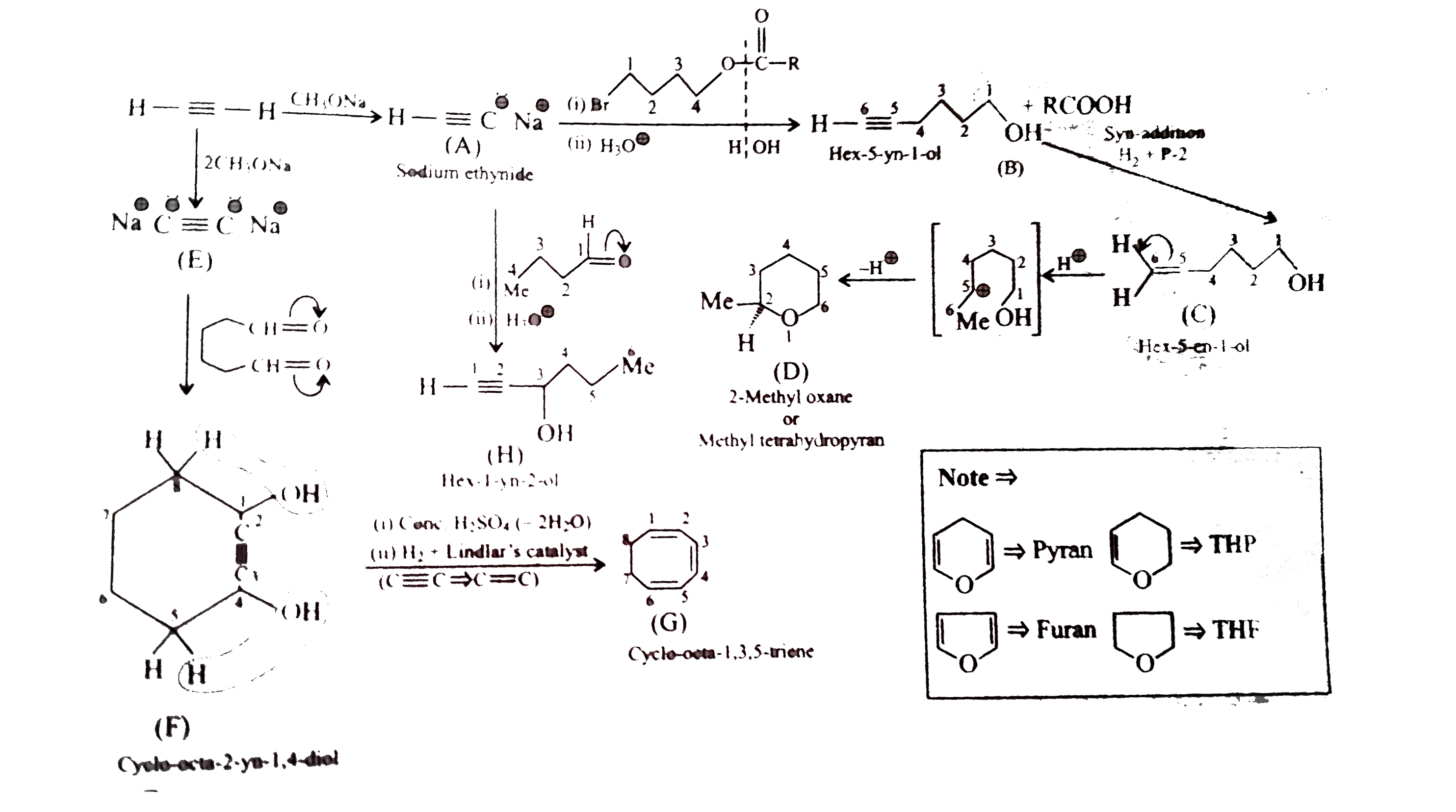 COMPOUND (G), ANSWER is (a). |
|
| 14. |
In the following sequence of reactions, products (A) to (H) are formed: Compound (F) is: |
|
Answer»
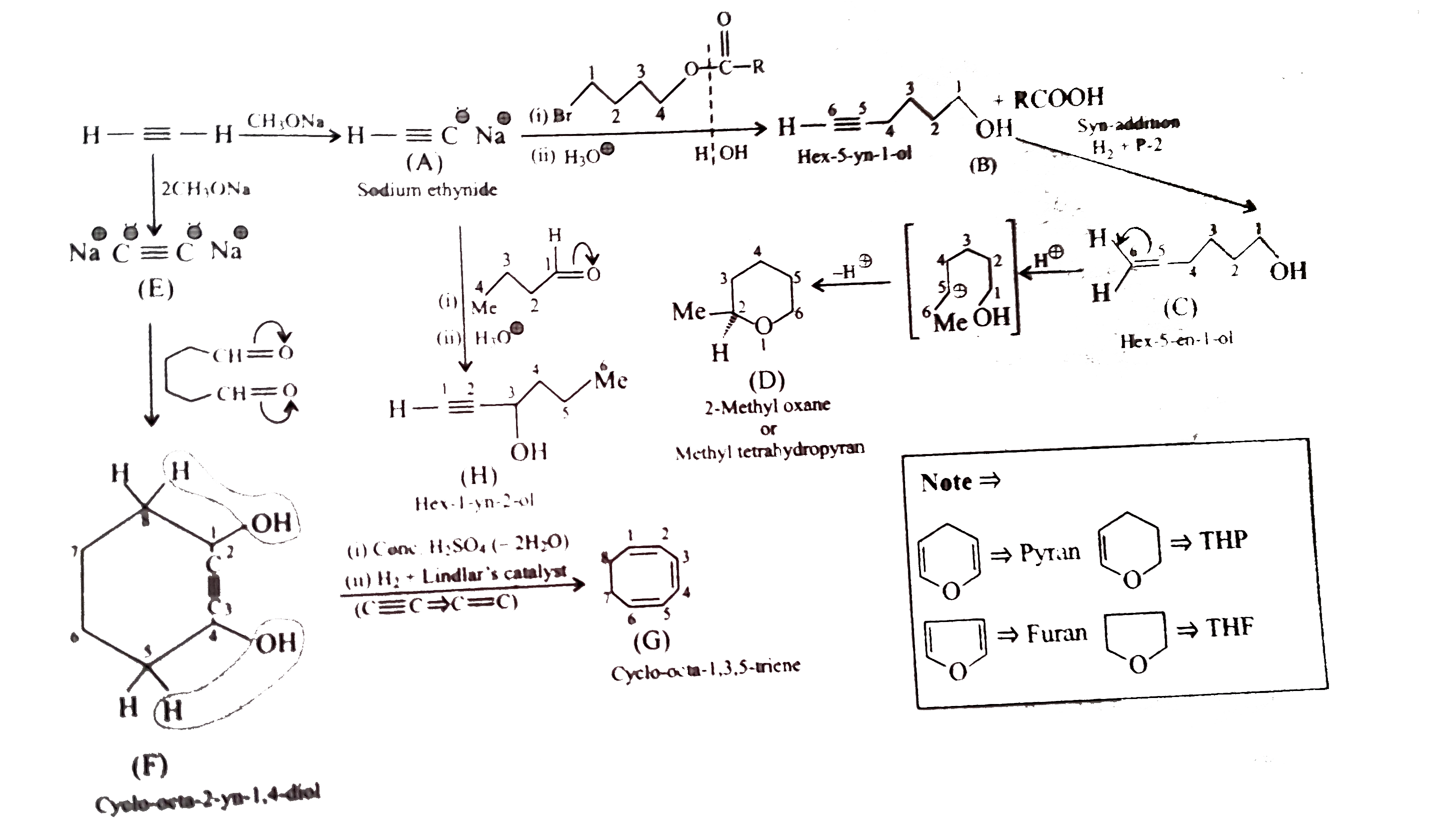 COMPOUND (F), ANSWER is (C). |
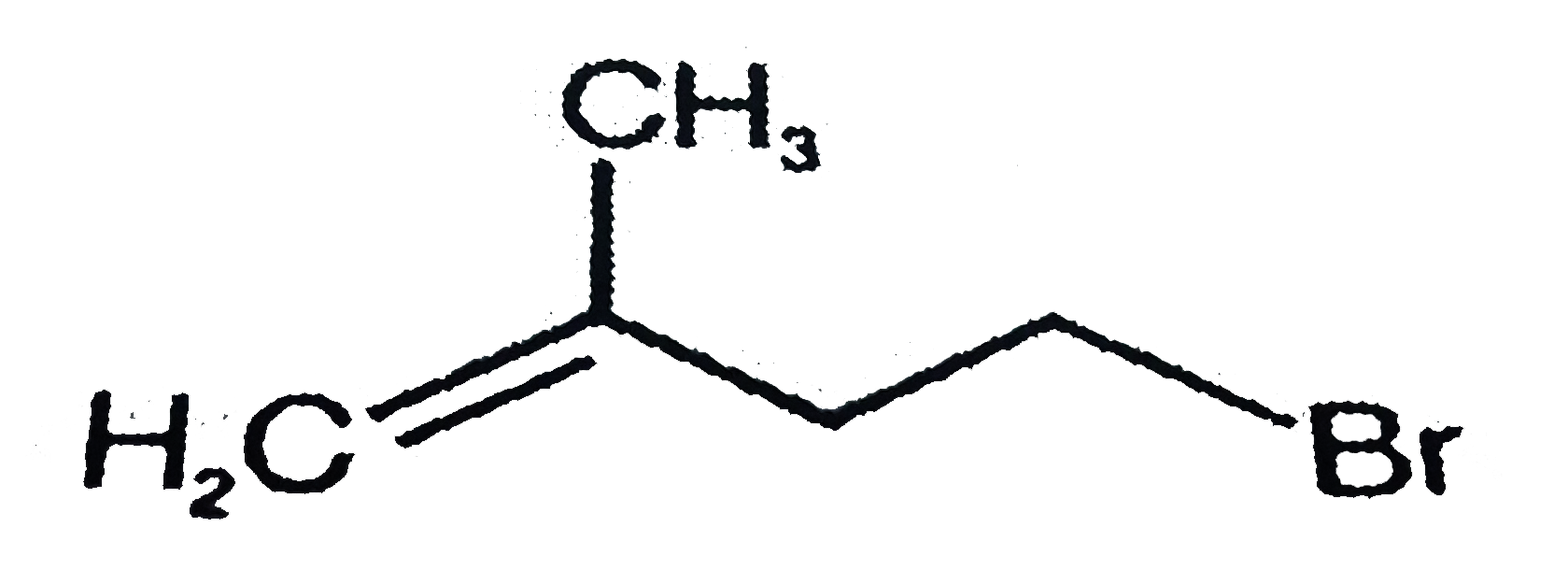
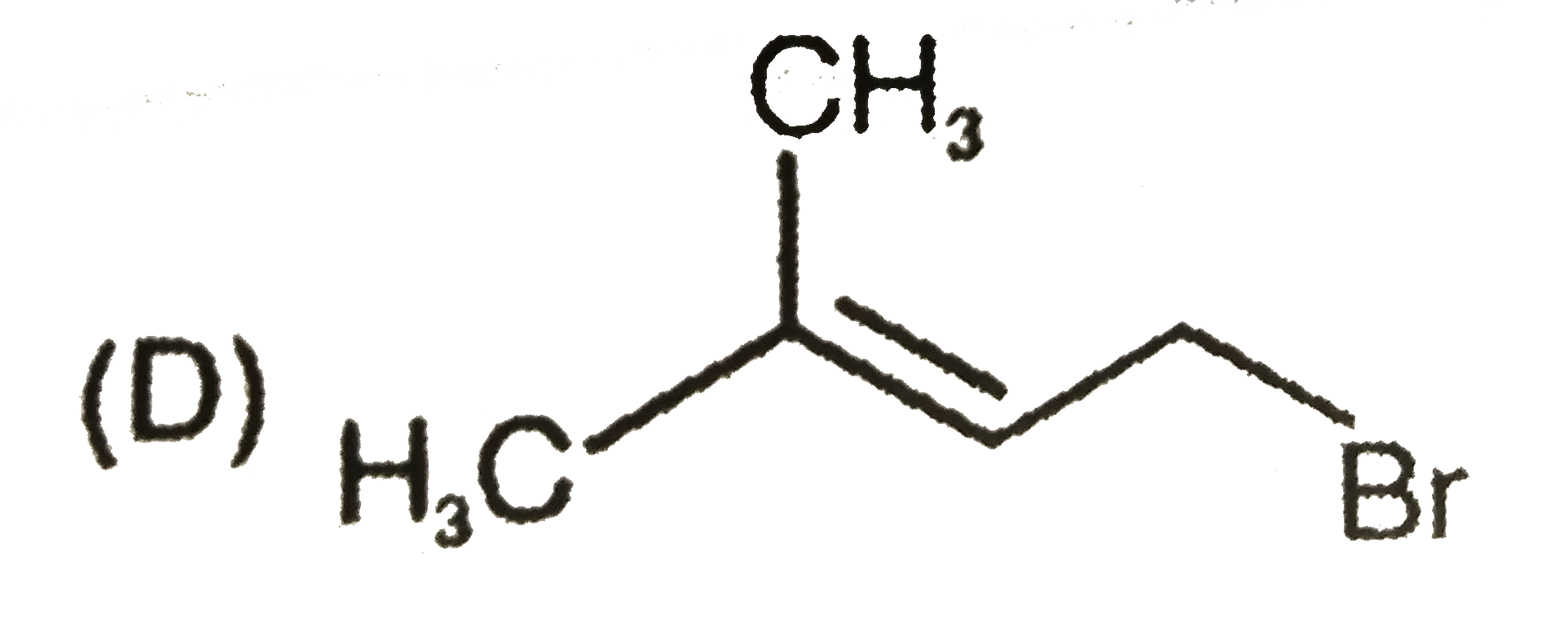
|
| 15. |
In the following sequence of reactions, products (A) to (H) are formed: Compound (D) is: |
|
Answer»
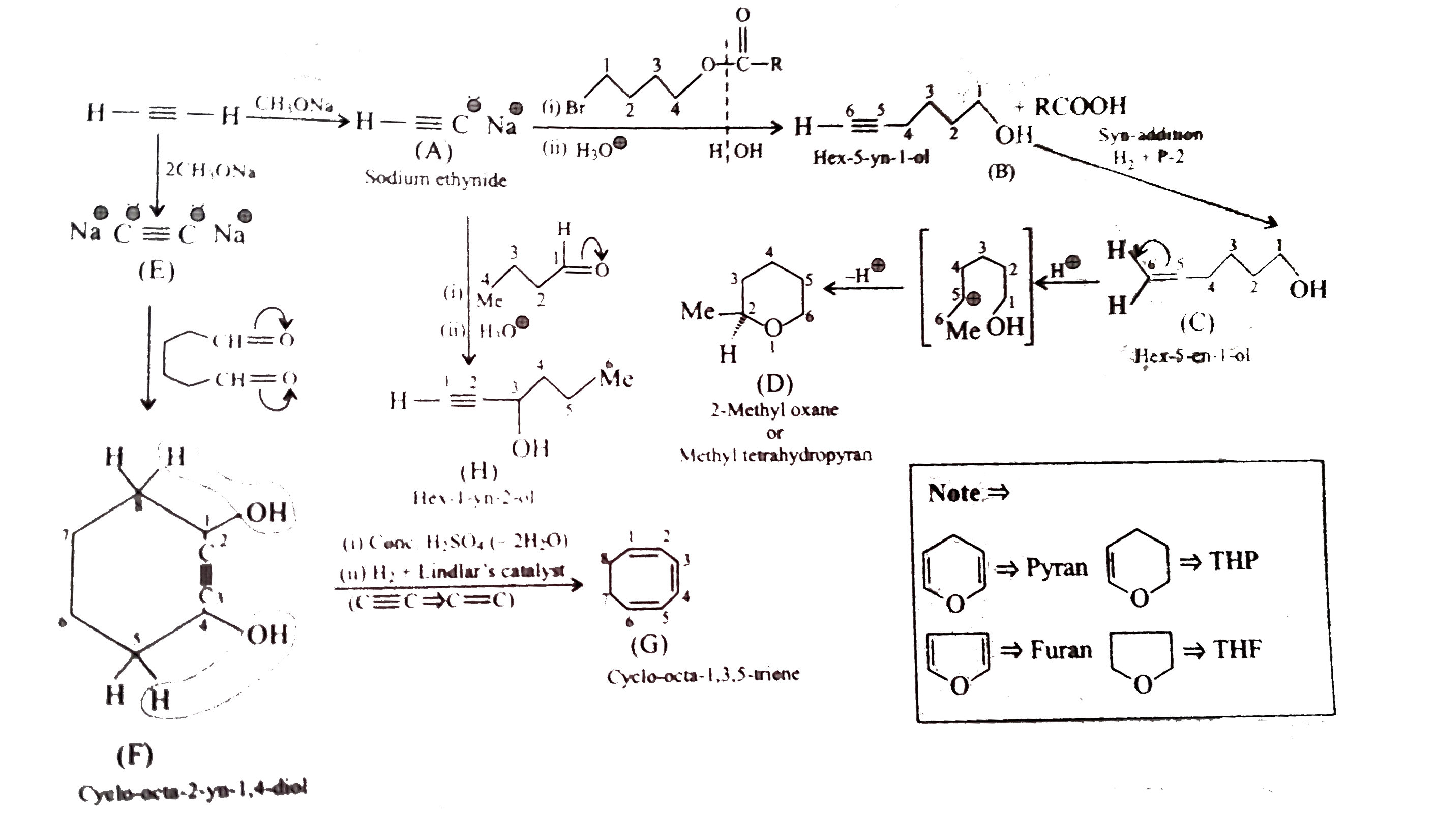 COMPOUND (D), ANSWER is (B). |
|
| 16. |
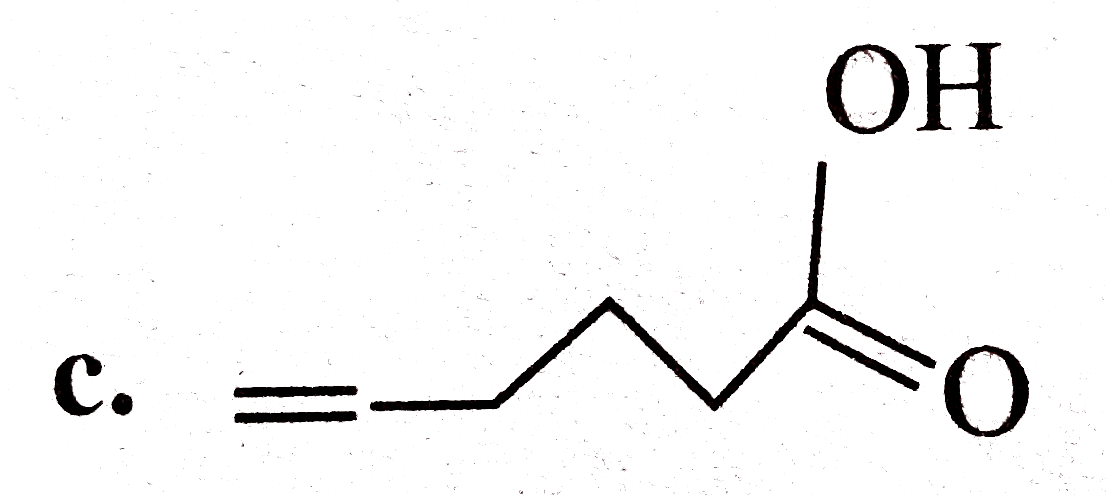
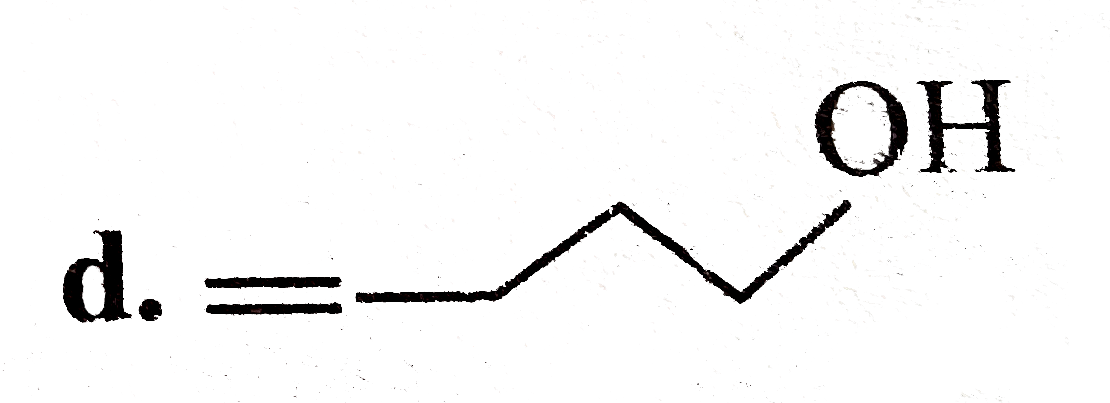
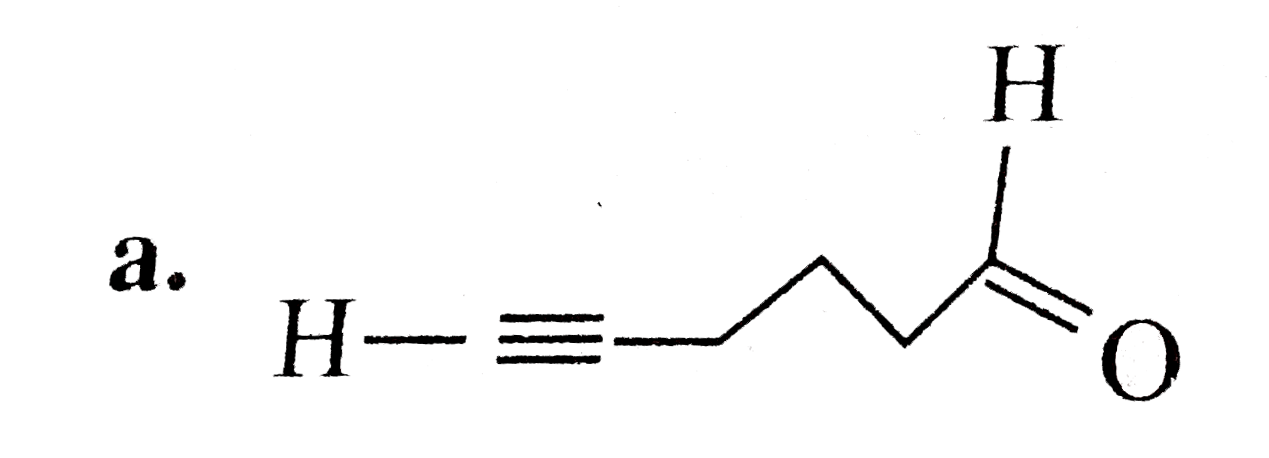
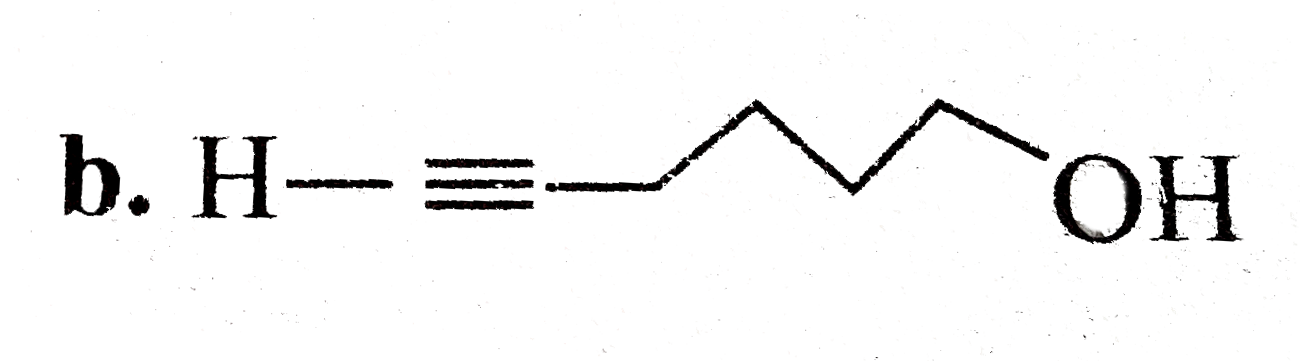
In the following sequence of reactions, products (A) to (H) are formed: Compound (C) is: |
|
Answer»
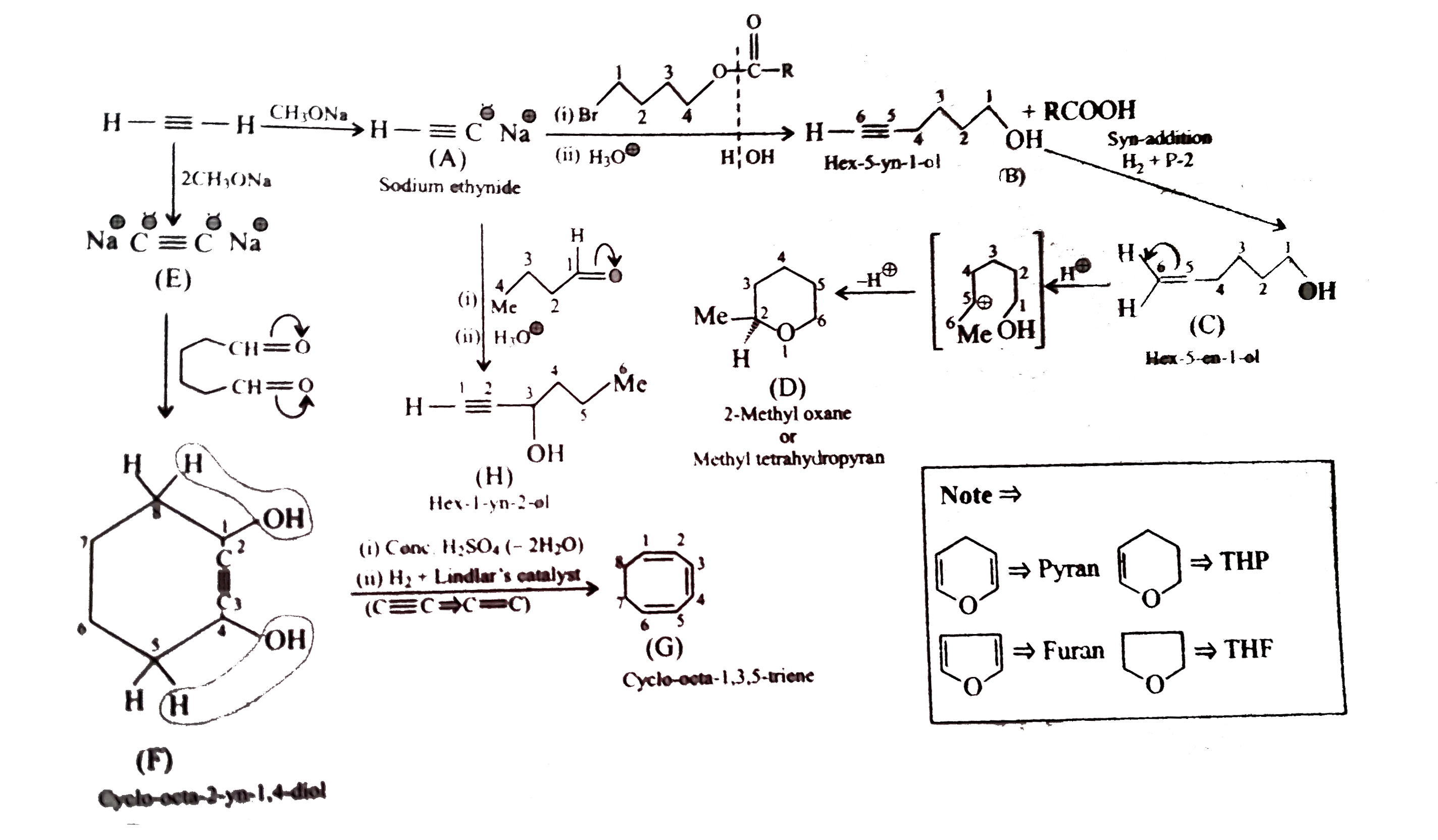 COMPOUND (C), ANSWER is (B). |
|
| 17. |
In the following sequence of reactions, products (A) to (H) are formed: Compound (B) is: |
|
Answer»
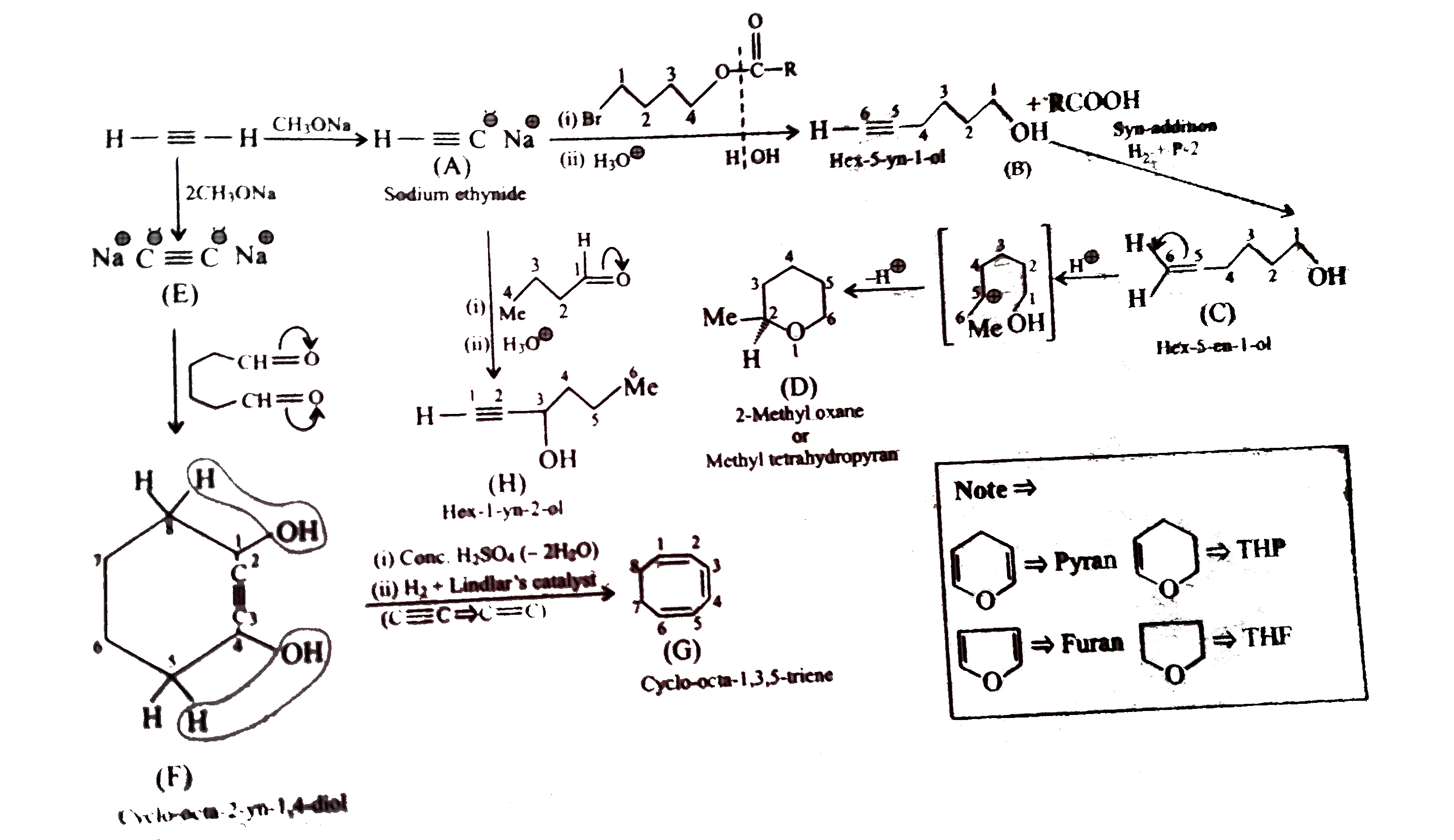 COMPOUND (B), ANSWER is (b). |
|
| 18. |
In the following sequence of reactions, identify the compounds (A), (B), (C) and (D) Na_(2)CO_(3)overset(SO_(2))rarr(A)overset(Na_(2)CO_(3))rarr(B)underset("Heat")overset("S")rarr(C)overset(AgBO_(3))rarr(D) |
|
Answer» `Na_(2)SO_(3), NaHSO_(3), Na_(2)S, Ag_(2)S` `2Na_(2)SOO_(3)+Soverset(triangle)rarr2Na_(2)S_(2)O_(3)OVERSET(AgNO_(3))RARrAg_(2)+H_(2)SO_(4)` |
|
| 19. |
In the following sequence of reaction the compound A is Aoverset(HBr)toBoverset(alc" "KOH)toCoverset(O_(3),Zn//H_(2)O)toCH_(3)CHO+HCHO |
|
Answer» ETHYLENE chlorohydrin |
|
| 20. |
In the following sequence of reaction the compound A is A overset(HBr)rarrBoverset("alc. KOH")rarr Coverset(O_(3).Zn//H_(2)O)rarrCH_(3)CHO+HCHO |
|
Answer» Ethylene `CH_(3)-CHO+HCHO` |
|
| 21. |
In the following sequence of reaction CH_(3)CH_(2)OHoverset(P+I_(2))rarrA underset("ether")overset(Mg)rarrB overset(HCHO)rarrC overset(H_(2)O)rarrD The compound D is |
|
Answer» propanol |
|
| 22. |
In the following sequence of reaction , CH_3CH_2Br overset(KOH(alc))to X overset(Br_2)to Y overset(KOH(alc))to Z , Z is |
|
Answer» `CH_2 = CH_2` |
|
| 23. |
In the following reactions, ZnO is respectively acting as a/an (i) ZnO + Na_(2)O rarr Na_(2) ZnO_(2) (ii) NzO + CO_(2) rarr ZnCO_(3) |
|
Answer» Acid and acid In (ii), ZNO acts asa basic oxide because `CO_(2)` is an acidic oxide Thus, ZnO is an amphoteric oxide. |
|
| 24. |
In the following reactions, ZnO is respectively acting as a/an …… (a)ZnO+Na_2O to Na_2ZnO_2 (b)ZnO+CO_2 to ZnCO_3 |
|
Answer» base and ACID (2)`underset"Basic Oxide"(ZnO)+ underset"Acidic Oxide"(CO_2) to ZnCO_3` |
|
| 25. |
In the following reactions, ZnO is respectively acting as a/an..... (a) ZnO + Na_(2)O to Na_(2)ZnO_(2) (b) ZnO + CO_(2) to ZnCO_(3) |
|
Answer» base and acid `{:((1)ZnO +Na_(2)O,toNa_(2)ZnO_(2)),("AcidicBasic",),("OxideOxide",):}` `{:((2)ZnO + CO_(2),to ZnCO_(3)),("BasicAcidic ",),("OxideOxide",):}` |
|
| 27. |
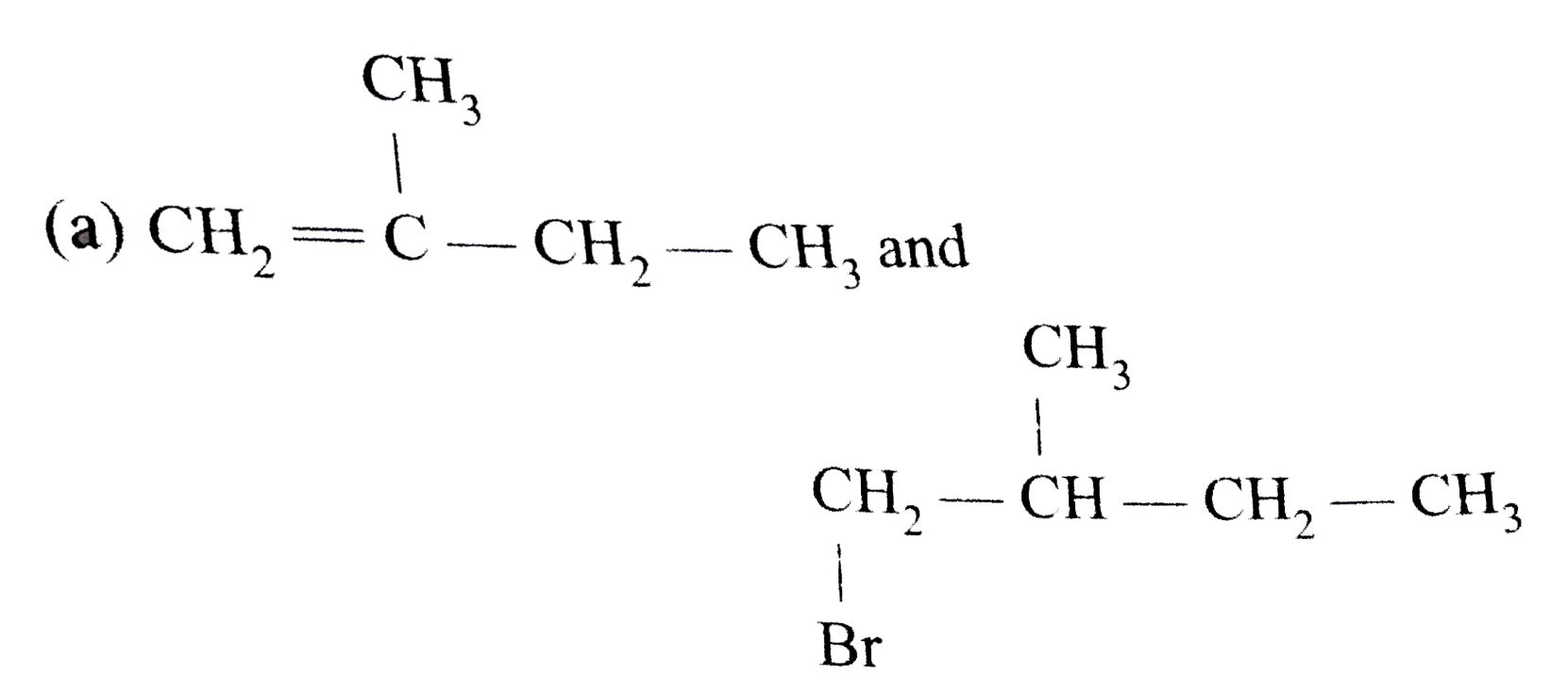
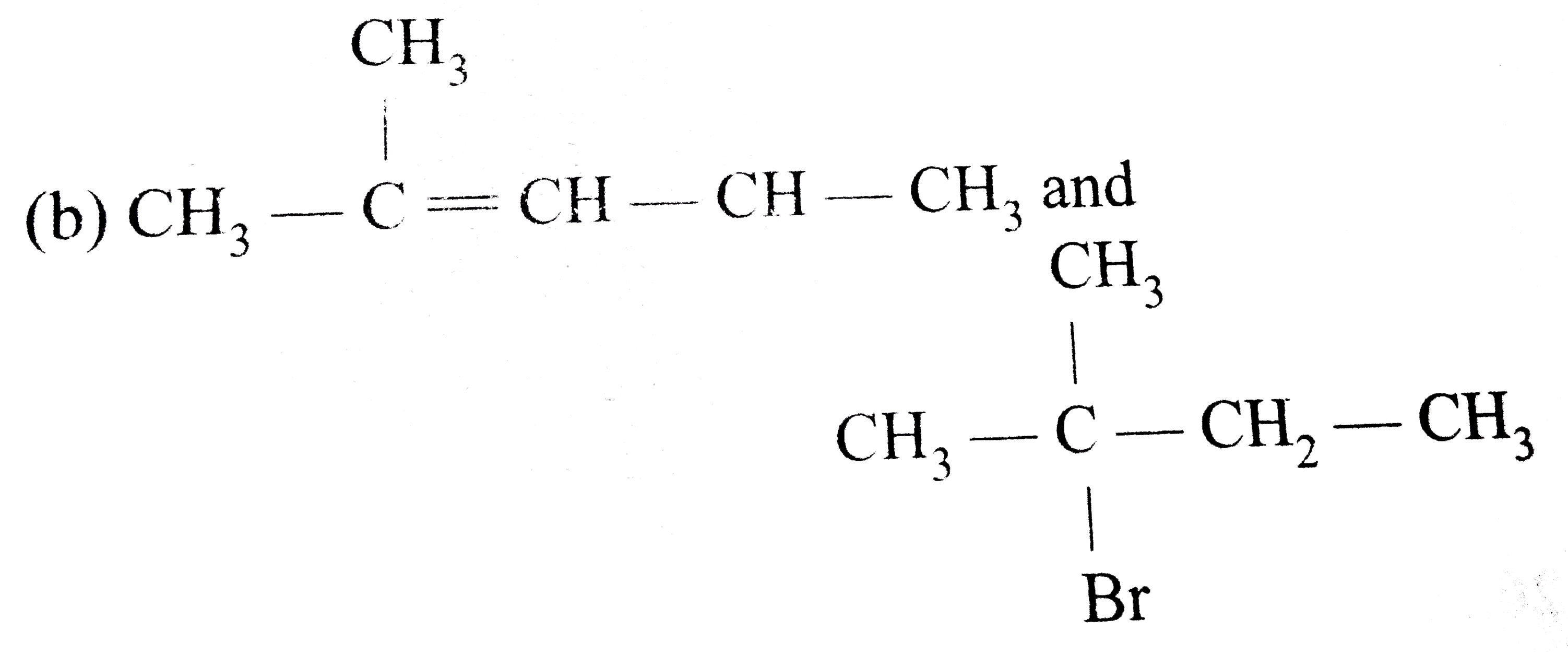
In the following reactions, Aoverset("HBr,dark")underset("in the absence of peroxide")rarrunderset(("Major product"))(A)+underset(("Minor products" ))(B) the major prducts (A) and (C) are respecitvely. |
|
Answer»
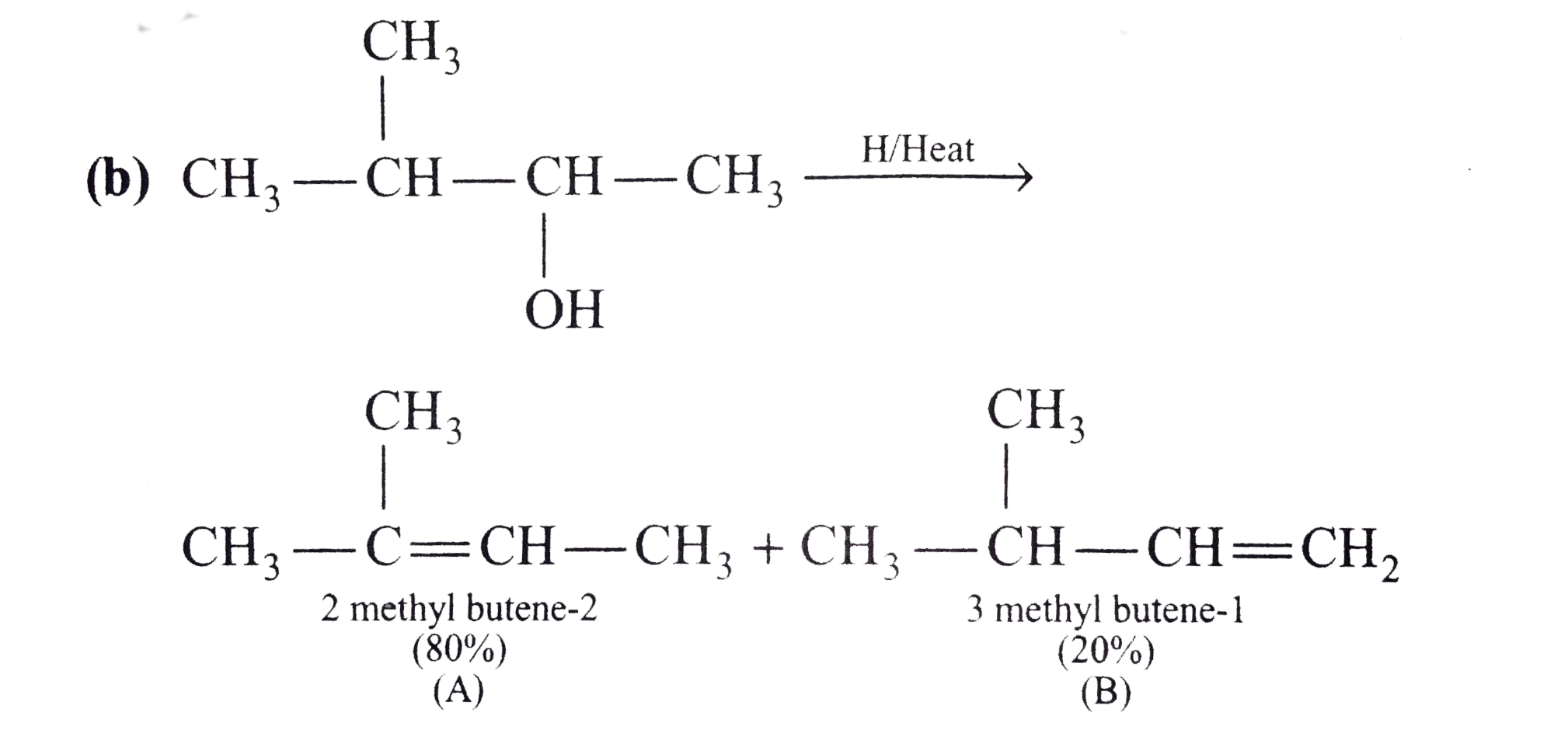 In this case dehydration is governed by Saytzeff's rule according to which hydrogen is preferentially eliminated from the carbon atom with fewer number of hydrogen atoms, `i.e.,` POOR BECOMES POORER. Thus, `2-`methyl butane `-2` is the major product. 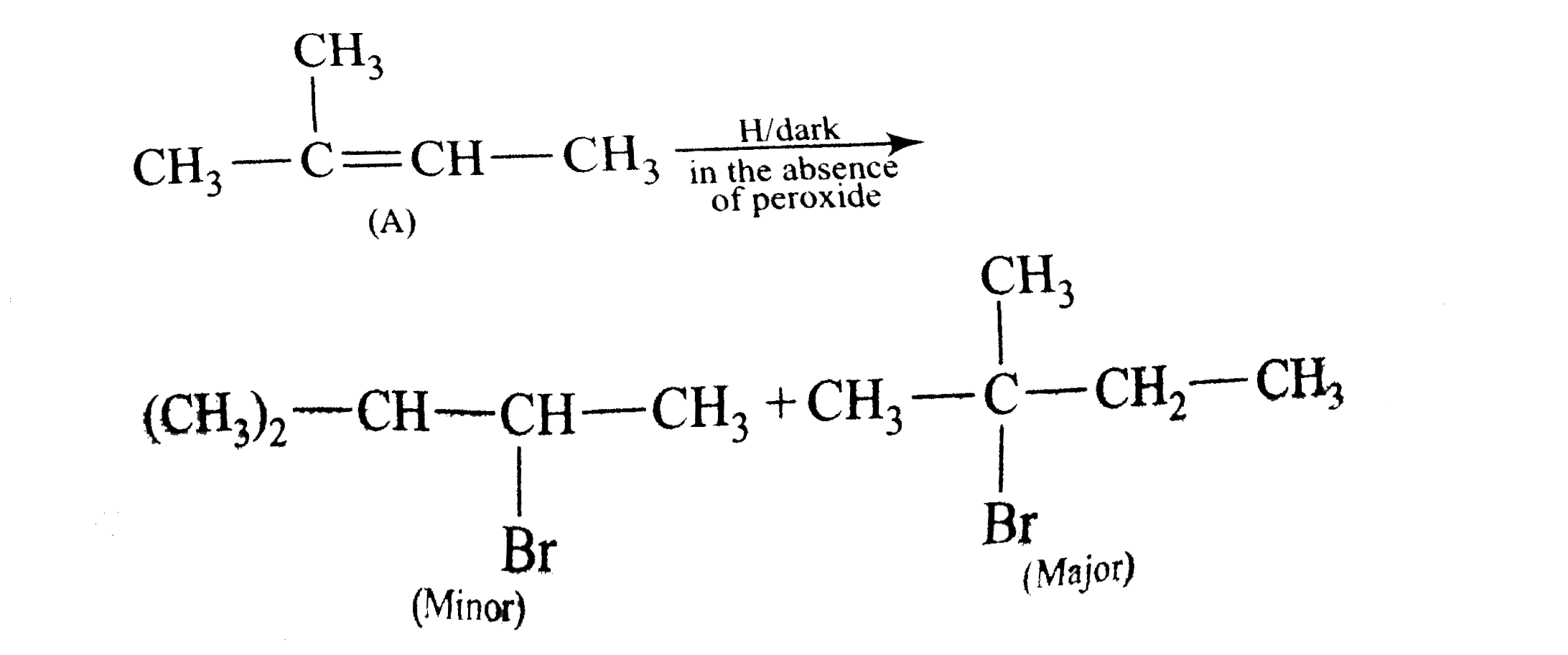 This reaction is governed by Maarkovnikov's rule according to which when an unsymmetrical reagent, `e.g., HBr` adds to an unsymmetrical alkene, then the negative part of the reagent is ADDED to that carbon atom of the double BOND which bears the least number of hydrogen atom. Thus, in the above case `2-` methyl `2-` bromo butane will be the major product. |
|
| 28. |
In the following reaction, X is |
|
Answer»
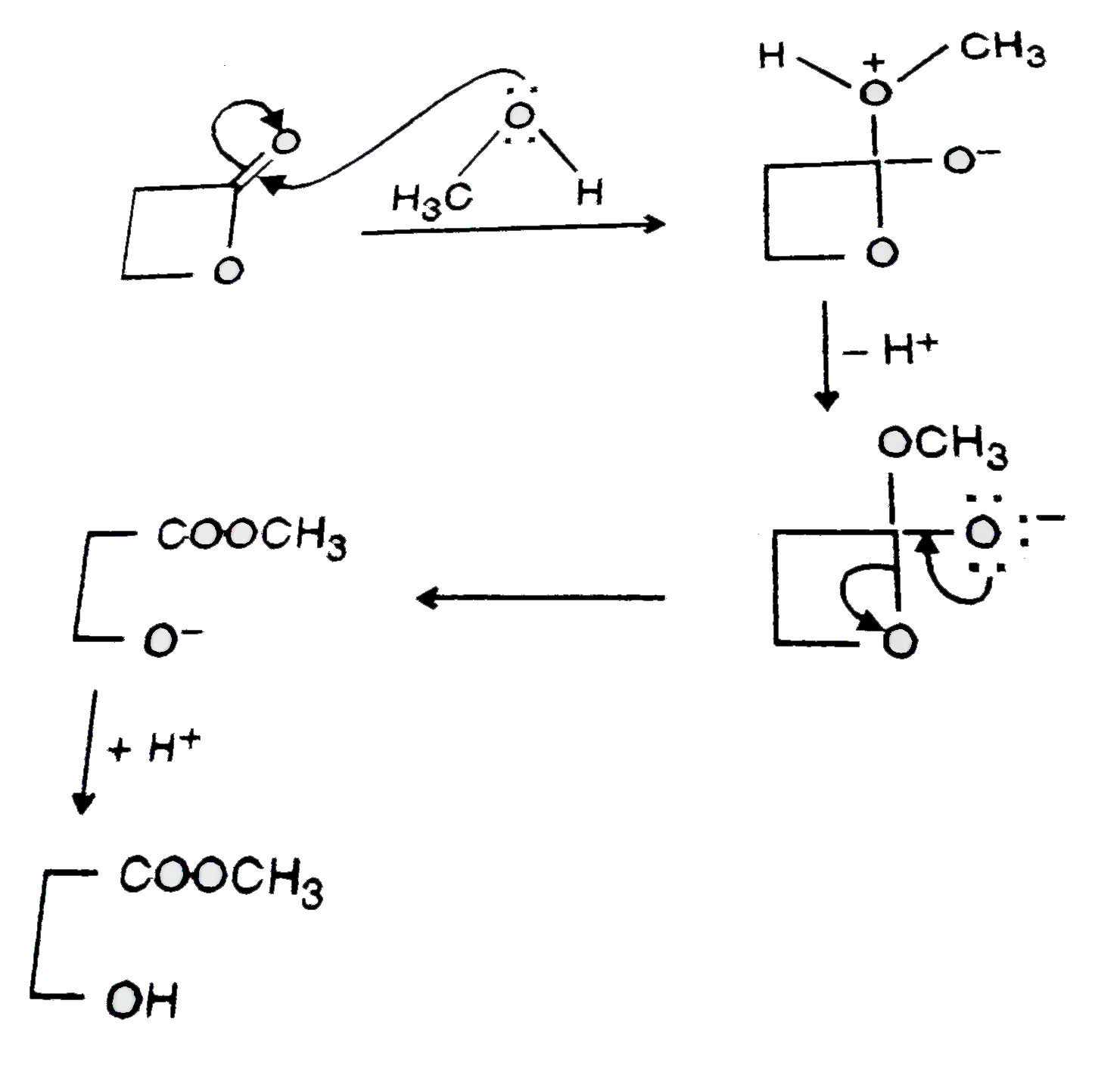
|
|
| 29. |
In the following reactions which is deuterolysis I) AlCl_3 + 3D_2O to Al(OD)_3 + 3DCl II) CaC_2 + 2D_2O to Ca(OD)_2 + C_2D_2 III) Mg_3P_2 + 6D_2O to 3Mg(OD)_2 + 2PD_3 |
|
Answer» I and II only |
|
| 30. |
In the following reaction, what is X? C_(2)H_(2)underset(HgSO_(4),H_(2)SO_(4))overset(H_(2)O,60^(@)C)rarrX iffCH_(3)CHO |
|
Answer» `CH_(3)CH_(2)OH` |
|
| 31. |
In the following reaction using isotopic .^(18)O in H_(2)O_(2), 2MnO_(4)^(-)+3H_(2)O_(2)^(18)rarr 2MnO_(2)+3O_(2)+2H_(2)O+2OH^(-) isotopic oxygen goes, |
|
Answer» with `O_(2)` |
|
| 32. |
In the Following reaction using isotope ""^(18)O in H_(2)O_(2). 2MnO_(4)^(-) + 3H_(2)O_(2)^(18) to 2MnO_(2) + 3O_(2) + 2H_(2)O + 2OH^(-) Isotopic oxygen goes : |
|
Answer» both in `O_(2)` So, all the `""^(18)O` LABEL appers in `""_(18)O_(2)` |
|
| 34. |
In the following reaction, the products formed is(are) |
| Answer» Solution :N//A | |
| 35. |
In the following reaction , the major product is : |
|
Answer»
|
|
| 36. |
In the following reaction the correct order of percentage of products X, Y and Z is |
|
Answer» X gt Y gt Z |
|
| 37. |
In the following reaction sequence, the correctstracture ofX, Y and Z are :H-C-=C-COOHoverset(HgSO_(4)//H_(2)SO_(4)//H_(2)O)underset((1))to (X) overset("Heating")underset((2))to(Y) overset(I_(2)//NaOH)to (Z)+CHI_(3) |
|
Answer»
(`beta-`keto carbozylic acid under GO DECARBOXYLATION on HEATING Followed by Iodoform reaction) |
|
| 38. |
In the following reaction sequence , product I,J and L are formed , K represents a reagent. The total number of alkenes possible by dehydrobromination of 3-bromo-3-cyclopentylhexane using alcoholic KOH is |
| Answer» | |
| 39. |
In the following reaction sequence, the amount of D (in g) formed formed from 10 moles of acetic acid is ….. (The yield (%) corresponding to the product in each step is given in the parenthesis) CH_3COOH overset"NaOH"to underset"90%""A"underset"630 K"overset"Soda-lime"tounderset"70%""B"overset(Cl_2,hv)tounderset"80%""C"overset"Na,dry ether"tounderset"70%""D" |
|
Answer» `underset"(2 MOLES)"underset"Acetic acid"(CH_3COOH) underset(-H_2O)overset"NaOH"to underset("Sod. acetate (A) 90%")(CH_3COONA) underset"630 K"overset"Soda-lime"to underset"Methane (B) (70%)"(CH_4)underset"Chlorination"overset(Cl_2, hv)to underset"Methyl chloride (C )80%" (CH_3-Cl) underset"Wurtz reaction"overset"Na, dry ether"to underset"(1 mole)"underset"ETHANE (D)"(CH_3-CH_3)` From the equations it is evident that 2 moles of acetic acid YIELD ethane = 1 mole `therefore` 10 moles of acetic acid will yield ethane =`10/2` moles Yield of D (in moles ) =`10/2xx90/100xx70/100xx80/100xx70/100=1.764` Mol. mass of ethane =30 `therefore` Yield of D (in g )= 1.764 x 30 = 52.92 |
|
| 40. |
In the following reaction sequence , product I,J and L are formed , K represents a reagent. The structure of the product I is |
|
Answer»
|
|
| 41. |
In the following reaction, product P is R - overset(O)overset(||)(C) - Cl underset(Pd - BaSO_(4))overset(H_(2))rarr P |
|
Answer» `R CH_(2)OH` |
|
| 42. |
In the following reaction overset(ɵ)(O)H+S_(2)O_(3)^(2-)+Br_(2)toSO_(4)^(2-)+Br^(ɵ) Starting with 0.15 " mol of "Br^(2) 0.01 " mol of "S_(2)O_(3)^(2-) and 0.4 " mol of "overset(ɵ)(O)H ions. How many moles of overset(ɵ)(O)H ions are left in the solution after the reaction is complete. |
|
Answer» Solution :BALANCE the equation in basic medium `10H+S_(2)O_(3)^(2-)to2SO_(4)^(2-)+5H_(2)O+8e^(-)` `underline(2e^(-)+Br_(2)to2Br^(ɵ)]xx4)` `underline(4Br_(2)+S_(2)O_(3)^(2-)+10overset(ɵ)(O)Hto2SO_(4)^(2-)+8Br^(ɵ)+5H_(2)O)` `{:[(mol es),(befo re),(REACTION)](0.15)(0.01)(0.4)(0)(0)(0)` `{:[(mol es),(REACTED),(and),(fo rmed)]:}(0.01xx4)(0.01)(0.01xx10)(0.01xx2)(0.01xx8)(0.01xx5)` `{:[(mol es),(l eft)]:}[0.15-0.04]0(0.4-0.1)(0.02)(0.08)(0.05)(=0.11)(=0.3)` So, molar ratio of combination is: `Br_(2):S_(2)O_(3)^(2-):overset(ɵ)(O)H::4:1:10` `[overset(ɵ)(O)H]` LEFT after reaction `=0.3` mol |
|
| 43. |
In the following reactionNaOH+SrarrA+Na_(2)S+H_(2)O, A |
|
Answer» `Na_(2)SO_(4)` |
|
| 44. |
In the following reaction H_(3)C-underset(CH_(3))underset(|)overset(CH_(3))overset(|)(C)-CH=CH_(2) overset(H_(2)O //H^(o+))rarr underset(("Major"),("product"))(A)underset(("Major"),("product"))(B) The major product is |
|
Answer» `CH_(3)-underset(OH)underset(|)overset(CH_(3))overset(|)(C)-underset(CH_(3))underset(|)(CH)-CH_(3)` 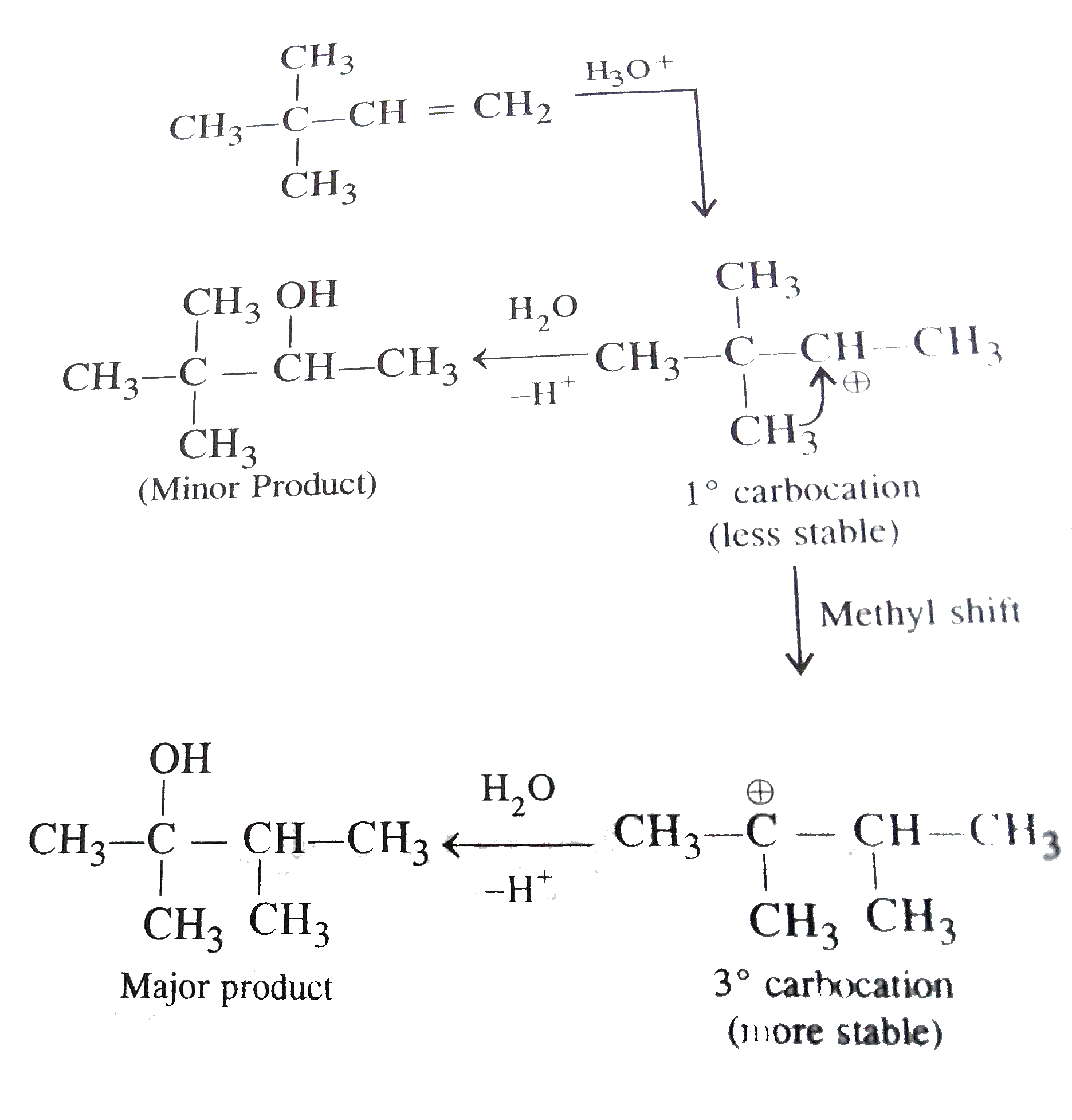
|
|
| 45. |
MnO_(4)^(-)+8H^(+)+n e^(-)rarrMn^(2+)+4H_(2)O The value of n is |
|
Answer» `(-1)+8+(-n)=+2 " or"n = 5` |
|
| 46. |
In the reaction: Cr_(2)O_(7)^(2-) + 14H^(o+) + 6I^(Ө) rarr2Cr^(3+) + 3H_(2)O + 3I_(2) Which element is reduced? |
|
Answer» Cr |
|
| 47. |
In the following reaction CH_(3)COOH + X overset("conc." H_(2)SO_(4))rarr Y + CO_(2) + N_(2) X and Y are respectively |
|
Answer» `NH_(3) " and " CH_(3)CONH_(2)` `underset(("Schmidth reaction"))(CH_(3)NH_(2) + CO_(2) + N_(2))` |
|
| 48. |
In the following reaction : C_2H_2 underset(HgSO_4//H_2SO_4)overset(H_2O)to X hArr CH_3CHO What is X ? |
|
Answer» `CH_3CH_2OH` |
|
| 49. |
In the following reaction C_(2)H_(5)OC_(2)H_(5)+4H overset("Red P+HI")rarr 2X+H_(2)O, X is |
|
Answer» Ethane |
|
| 50. |
In the following reaction As_(2)S_(3)+NO_(3)^(ɵ)+H_(2)OtoAsO_(4)^(3-)+SO_(4)^(2-)+NO+H^(o+) The number of electrons involved in the oxidation reaction is |
|
Answer» 22 `UNDERLINE(underset(3x=-6)(S_(3)^(2-)toundersetunderset(3x=18)(3x-24=-6)(3SO_(4)^(2-)+23e^(-)))` `underline(As_(2)S_(3)toAsO_(4)^(3-)+3SO_(4)^(2-)+28e^(-))` |
|