

Saved Bookmarks
This section includes 7 InterviewSolutions, each offering curated multiple-choice questions to sharpen your Current Affairs knowledge and support exam preparation. Choose a topic below to get started.
| 1. |
Number of carbon atoms collinear in CH_2 = CH - CH_2 - C-=C-CH_2-C -= CH |
|
Answer» |
|
| 2. |
Number of bonds in benzene is |
|
Answer» `6 SIGMA` and `3PI` |
|
| 4. |
Number of bonding electrons in N_(2) molecule are |
|
Answer» 4 |
|
| 7. |
Number of B-O-B bonds is borax is............... |
|
Answer» |
|
| 8. |
Number of atoms of iron present in 100 gm Fe_(2)O_(3) having 20% purity is |
|
Answer» `0.2N_(A)` No. of FE atoms = `(20)/(100)xx2xxN_(A)=0.25N_(A)`. |
|
| 9. |
Number of atoms in fcc unit cell is |
|
Answer» 1 =`8times1/8+12times1/4=1+3=4` |
|
| 10. |
Number of atoms in 558.5 gm Fe (At.wt of Fe = 55.85 g mol^(-1)) is |
|
Answer» TWICE that in 60 g carbon `60g C=(60)/(12)=5` moles `therefore` atoms = twice in 60 gc |
|
| 11. |
Number of atoms in 4.25 g of ammonia is |
|
Answer» Molecular MASS = 14 + 3 = 17 17 g of Ammonia contains `6.023 xx 10^(23)` atoms `:.`4.25 g of Ammonia will CONTAIN =`(6.023xx10^(23))/17xx 4.25 = 1.5055 xx 10^(23)` molecules. `:. 1.5055 xx 10^(23)` molecules will contain `4 xx 1.5 xx 10^(23) = 6 xx 10^(23)` molecules. |
|
| 12. |
Number of atoms in 12 g of ""_(6)^(12) C is : |
|
Answer» 6 |
|
| 13. |
Number of anti bonding electrons in O_(2) molecule are |
|
Answer» 10 |
|
| 14. |
Number of angular nodes for 4d orbital is.. |
|
Answer» 4 |
|
| 15. |
Number of angular nodes for 4d orbital is..... |
|
Answer» 4 |
|
| 16. |
Number of alkali metals which form complex hydrides K, Cs, Rb, Li, Na, Fr. |
|
Answer» |
|
| 17. |
Number of acidic hydrogen atoms in but-1-yne is |
|
Answer» 1 |
|
| 18. |
Nucleophilie is a species that should have…….. |
|
Answer» a PAIR of ELECTRONS to donate |
|
| 19. |
Nucleophilicity order is correct represented by |
|
Answer» `CH_(3)^(-) LT NH_(2)^(-) lt HO^(-) lt F^(-)` |
|
| 20. |
Nucleophilic addition reaction will be most favoured in : |
|
Answer» `CH_(3)CH_(2)CH_(2)- oversetoverset(O)("||")C-CH_(3)` |
|
| 21. |
Nucleophiles and electrophiles are reaction intermediates having electron rich and electron deficient centres respectively. Hence, they tend to attack electron deficient and electron rich centres respectively. Classify the following species as electrohiles and nuclephiles. (i) H_(3)CO^(-) (ii) H_(3)C-overset(O)overset(||)(C)-O^(-) (iii) Cl (iv) Cl_(2)C: (v) (H_(3)C)_(3)C^(+) (vi) Br^(-) (vii) H_(3)COH (viii) R-NH-R |
|
Answer» Solution :Electrophiles are electron seeking SPECIES or electron DEFICIENT species. These species may be neutral or POSITIVELY CHARGED. (iii) `overset(+)(Cl)` (iv) `Cl_(2)C:` (v) `(H_(3)C)_(3)C^(+)` are electrophiles. Nucleophiles are electron RICH species and may be neutrla or negatively charged. (i) `H_(3)CO^(-)` (ii) `CH_(3)COO^(-)` (iv) `Br^(-)` (vi) `CH_(3)OH` (viii) R-NH-R are nucleophiles. |
|
| 22. |
Nucleophiles and electrophiles are reaction intermediates having electron rich and electron deficient centres respectively. Hence, they tend to attack electron deficient and electron rich centres respectively. Classify the following species as electrophiles and nucleophiles. (i)H_3CO^- , (ii)H_3C-oversetoverset(O)(||)C-O^- , (iii)oversetdot(Cl) , (iv)Cl_2C , (v) (H_3C)_3C^+ , (vi)Br^- , (vii)H_3COH , (viii)R-NH-R |
|
Answer» Solution :Nucleophiles are electron-rich species . They may be neutral or negatively charge , i.e., (i)`H_3CO^-` , (ii)`H_3C-oversetoverset(O)(||)C-O^-` , (vi)`Br^-` , (vii)`H_3C-underset(ddot)OVERSET(ddot) O-H`, (viii)`R-oversetddot(NH)-R` Electrophiles are electron-deficient species. They may be neutral or positively charged, i.e., (III)`oversetddot(CL)`, (IV)`Cl_2C` : , (v)`(H_3C)_3C^+` |
|
| 23. |
Nucleophile is a species that should have |
|
Answer» a pair of electrons to donate |
|
| 24. |
Nuclei tend to have more neutrons than protons at high mass numbers because |
|
Answer» Neutrons have NEUTRAL particle |
|
| 25. |
Nuclear theoryfor atomwas givenby |
|
Answer» RUTHERFORD |
|
| 26. |
Nuclear reacations either exoeerge or endoregic shows the exchange of: |
|
Answer» Kinetic energy |
|
| 27. |
Nuclear power reactors are operated at low temperature and consequently will lower efficiency because |
|
Answer» nuclear HEAT is carried by ordinary steam |
|
| 28. |
Nuclear particles responsible for holding all nuclear composition of an atom would lead to a change in: |
|
Answer» electrons |
|
| 29. |
Nuclear fusion is the source of energy in |
|
Answer» atomic BOMB |
|
| 30. |
Nuclear attraction is often the deciding control factor for the association of neutral molecules to a given metal ion. Which onee of the following represents the correct order of stability of the ions? [Be(H_(2)O)_(4)]^(2+),[Mg(H_(2)O)_(4)]^(2+),[Ca(H_(2)O)_(4)]^(2+) and [Sr(H_(2)O)_(4)}^(2+) |
|
Answer» `[Be(H_(2)O_(4)]^(2+) GT [Sr(H_(2)O_(4)]^(2+)gt [Mg(H_(2)O)_(4)]^(2+) gt [Ca(H_(2)O)_(4)]^(2+)` `{:(,Be^(2+)LT,Mg^(2+)lt,Ca^(2+)lt, Sr^(2+)),("Hydration Energy "(kJ" "mol^(-1)),-2494,-1921,-1577,-1443):}` Thus, stability of hydrated ion is `[Be(H_(2)O)_(4)}^(2+) t [Mg(H_(2)O)_(4)]^(2+) gt [Ca(H_(2)O)_(4)]^(2+)gt[Sr(H_(2)O)_(4)]^(2+)` |
|
| 31. |
Nu^(-) +X= Y to underset(Nu)underset(|)(X) - Y^(-) This reaction represents which effect ? |
|
Answer» `+I ` EFFECT |
|
| 32. |
NPK like fertilizers induce which adverse effect in soil ? |
|
Answer» REDUCED PRODUCTION of crops and vegetables |
|
| 33. |
Nowadays in refrigerator ............ is used which is less hazardous.. |
|
Answer» CFC |
|
| 34. |
Note: In the following questions a statement of assertion followed by a statement of reason is given. Choose the correct answer out of the following choices. Assertion : All the C - C bond lengths in benzene are equivalent. Reason : The resonance energy of benzene is about 150.6 kJ mol^(-1). |
|
Answer» |
|
| 35. |
Not considering the electronic spin, the degenracy of the second excited state of H^(-) is |
|
Answer» `1s lt 2s = 2p lt 3s = 3p = 3D lt 4s = 4p = 4d = 4f lt`.... ,br. In case of multielectron atoms or IONS (e.g. `H^(-)` viz `1s^(2)`), the order is `1s lt 2s lt 2p lt 3s lt 3p`.... (i.e., they follows `(n + l)` rule) HENCE, in case of `H^(-) (1s^(2))`, the FIRST excited state would be `1s^(1) 2s^(1)` Second excited state would be `1s^(1) 2s^(0) 2p^(1)`. Thus, degeneracy of the second excited state `(2p^(1))` is three viz. `2p_(x) 2p_(y) 2p_(z)`, i.e., number of degenerate orbitals = 3 [In case of H-atom `(1s^(1))`, 1st excited state would be 2s or 2p and 2nd excited state would be 3s, 3p or 3d, i.e., number of degenerate orbitals would be 1(3s), 2 (3p) and 5(3d), i.e., TOTAL = 9] |
|
| 36. |
Not considering the electronic spin , the degeneracy of the second excited state (n=3) of H atom is 9, while the degeneracy of the second excited state of H^- is |
|
Answer» while energy order of `H^-` is decided by (n+l) rule ELECTRONIC configuration of `H^-` is `1s^2` its Energy order is decided by n+l rule `H^(-)=1s^2 2s^0 2p^0` Its `2^"nd"` EXCITED state is 2p and degeneracy 2p is '3' |
|
| 37. |
notconsideringthe electronicspinthe deggenercy of thedegeneracyof thesecondexcitedstateof H^(-)is : |
Answer» 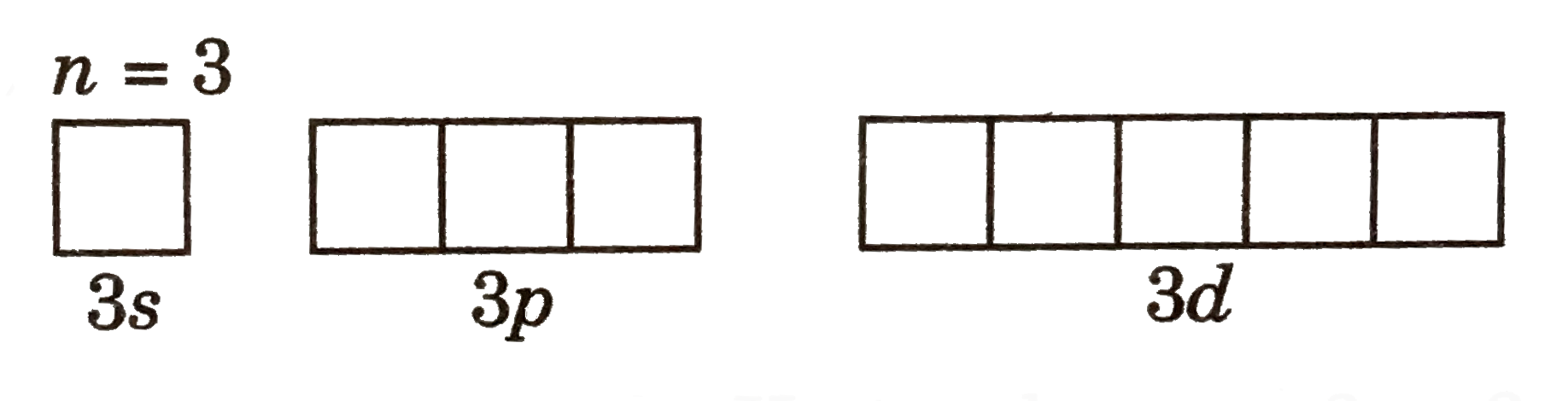 degaenargy = 9FOR H- atom because3s=3p =3d LTBR. For `H^(-)`1SLT 22slt2p lt3s lastexcitedstate2s 2ndexcitedsate2p Hence, degeneracy of 2nd excited state=3 |
|
| 38. |
Not characteristic of ethene is |
|
Answer» addition |
|
| 39. |
Normally pure substance and reagents are used in chemical reactions. Explain why in the preparation of dihydrogen by actiion of dilute sulphuric acid on zinc metal, impure zinc is preferred? |
|
Answer» Solution :Pure Zinc is not use in the preparation of dihydrogen because its reaction with dilute `H_(2)SO_(4)` is slow. The reason being that initially formed GASEOUS hydrogen forms an EXTREMELY then film on the surface of zinc which prevents further actioin of zinc with acid. However, the presence of impurities in zinc increases the RATE of reaction due to the formation of ELECTROCHEMICAL CELLS. |
|
| 40. |
Normally, benzene gives electrophilic substitution reaction rather than electrophilic addition reaction although it has double bonds. Explain why ? |
|
Answer» |
|
| 41. |
Normally no twoelements have thesamevalueof electrongain enthalpy. Butthereare twoinert gaseswhich havethe samevalueof electron gainenthalpy. Namethem. |
| Answer» Solution :Ar and Kr havethe samevalueof ELECTRON gainenthalpy (+ 96 KJ`mol^(-1))` | |
| 42. |
Normality of 2% of H_(2)SO_(4) solution by volume is nearly |
|
Answer» 2 |
|
| 43. |
Normality of a '30 volume H_2O_2' solution is: |
|
Answer» 1.6 `underset(68 g)(2H_(2)O_(2)) to 2H_(2)O + underset("22.4 L at S.T.P")(O_(2))` The mass of `H_2O_2` which gives 30 L of `O_2` at S.T.P. `=68/(22.4) xx 30 = 91.07 g` THUS, one litre of the given sample contains 91.07 g of `H_(2)O_(2)`. `therefore w = (N xx E xx V)/1000` `therefore` Normality (N) `=(w xx 1000)/(E xx V)` `=(91.07 xx 1000)/(17 xx 1000) = 5.36 N` |
|
| 44. |
Normality of 2 % H_(2)SO_(4) solution by volume is nearly : |
|
Answer» 2 |
|
| 45. |
Normality of 1.25 M sulphuric acid is |
|
Answer» `1.25 N` |
|
| 46. |
Normality of 100 volume H_2O_2 is |
|
Answer» 1.78 |
|
| 47. |
Normality of 0.04 M H_(2)SO_(4) is ....... |
|
Answer» 0.04 N |
|
| 48. |
Normality of 0.2M sulphuric acid solution is ........ |
|
Answer» 0.4 N Molecular weight `=2 + 32 + 64 = 98 g * mol^(-1)` Basicityof `H_(2)SO_(4) = 2` Equivalent weight of `H_(2)SO_(4)= 98//2=49.0. "equi"^(-1)` `N= "Molarity" xx "BASICITY"=0.2xx2= 0.4 N H_(2)SO_(4)` |
|
| 49. |
Normal water is mainly protium oxide, H_(2)O However, if protium atoms in normal water molecule are replaced completely by deuterium atoms, the resulting water is called heavy water. Acetone exhibits keto-enol tautomerism CH_(3)-overset(O)overset(||)C-CH_(3) hArr CH_(3)-Coverset(OH)overset(||)=(CH_(2)) Which of the following products is chained when acetone is treated with an excess D_(2)O sufficient time in presence of small amount of dilute NaOH solutions ? |
|
Answer» `CH_(3)-overset(OD)overset(|)C=CH_(2)` 
|
|
| 50. |
Normal water is mainly protium oxide, H_(2)O However, if protium atoms in normal water molecule are replaced completely by deuterium atoms, the resulting water is called heavy water. The ionization constant of protum water (H_(2)O hArr H^(+)+OH) is 1xx10^(-14) and that in heavy water (D_(2)O hArr OD^(-)) is 3xx10^(-15) is 3xx10^(-15) H_(2)O dissociates about |
|
Answer» THREE TIMES as MUCH as `D_(2)O` does |
|